
Smallest Audi electric aims big
/The new bookend to the e-tron range predictably plays for the premier league.
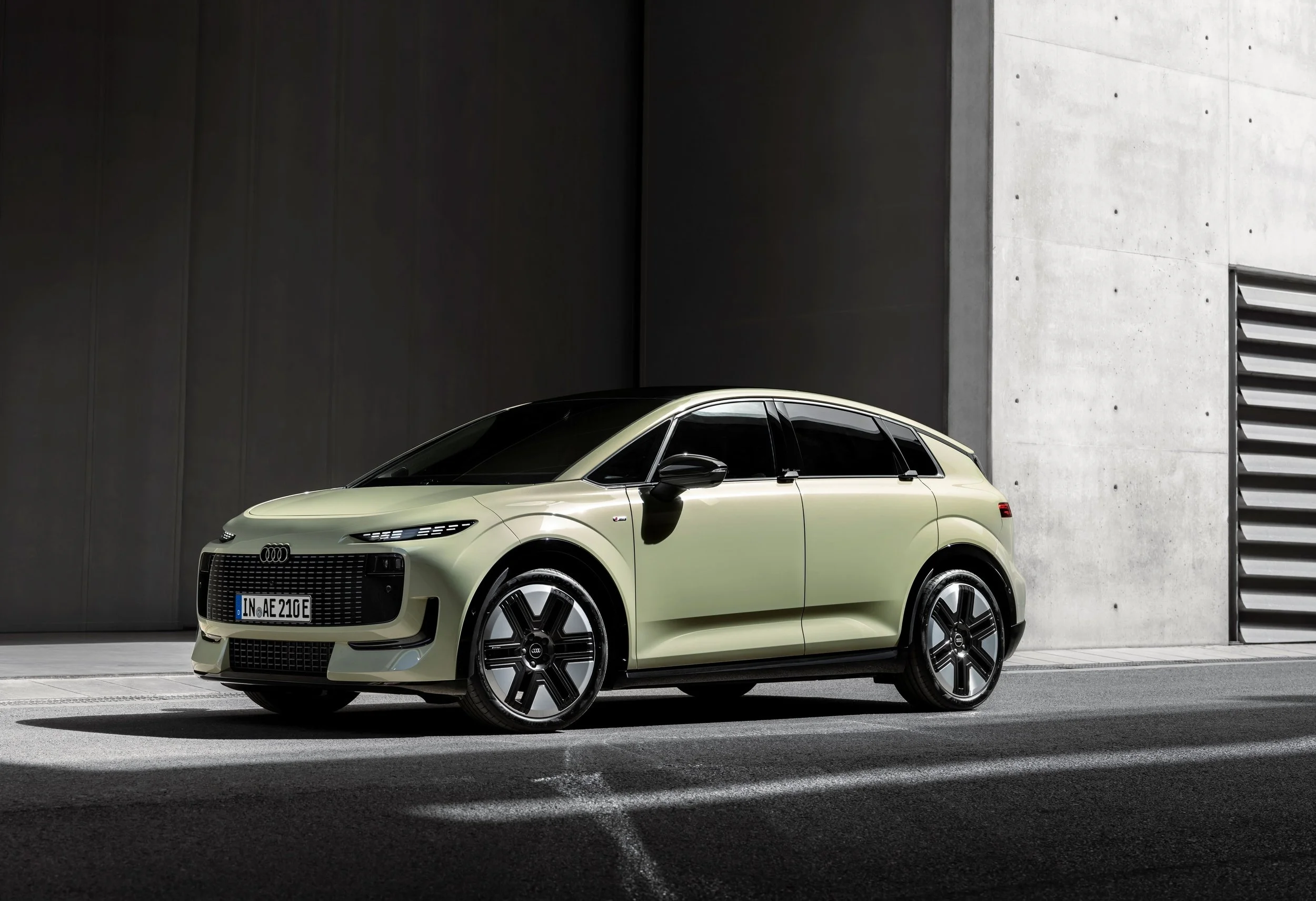
CHARGED with convincing chic rather than outright cheap can sell small electrics when they have pedigree.
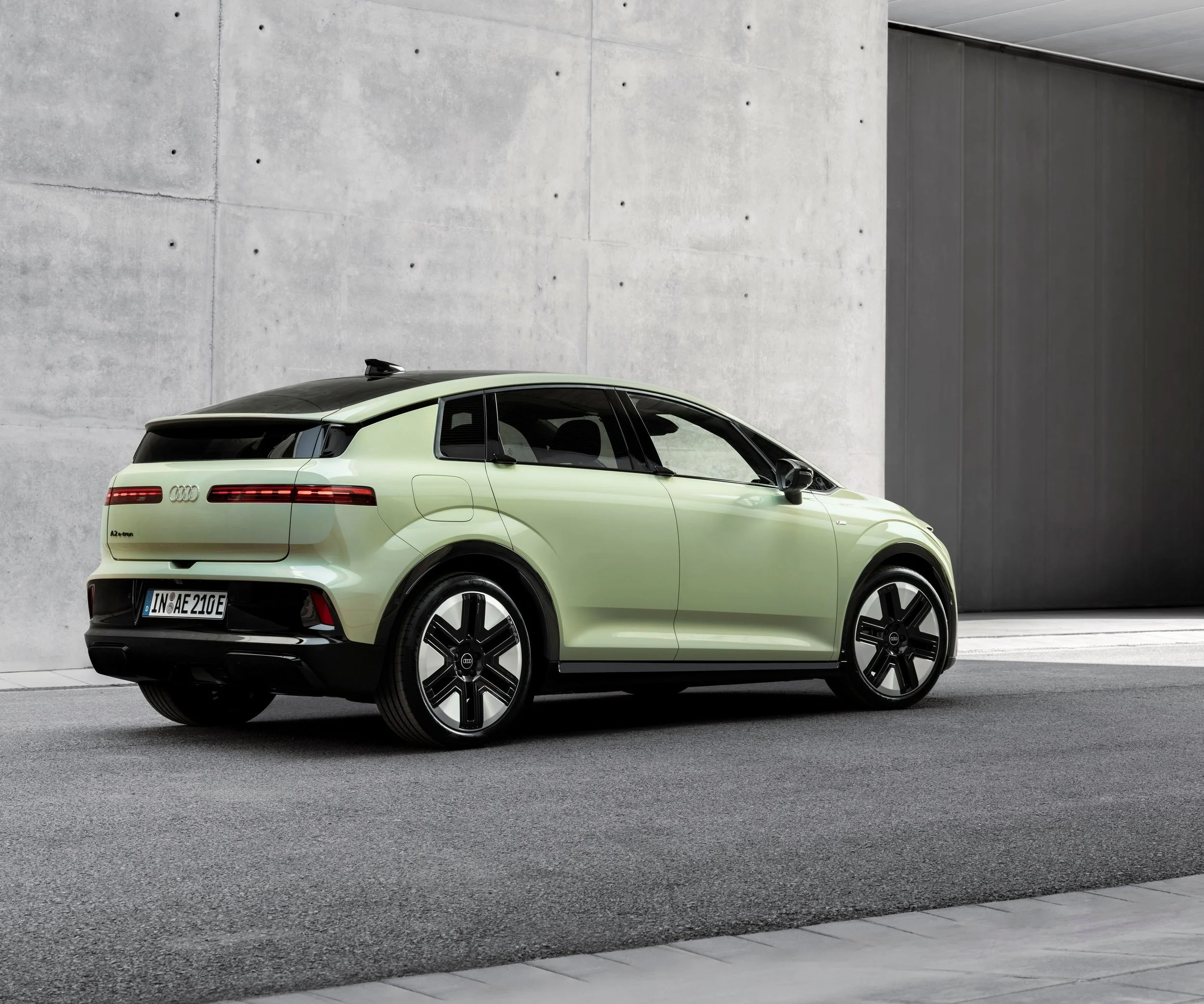
That’ll be a primary ask of the A2, the new Audi baby that resurrects a name last used more than two decades ago, once again a hatchback but now an e-tron and hitting the scene from end of this year, first for Germany but subsequently in export formats, including right hand drive.
Pricing in Germany starts the equivalent of $76,000 for the entry-level A2 e-tron with a 52kWh battery, rising to $102k for a range-topper with an 84kWh pack.
At 4.32 metres long, 1.79 metres wide and riding a 2.77-metre wheelbase, the new A2 eschew’s the original’s supermini status to be a family-hatchback choice, almost as big as the old Audi A3.
The last A2 was all about efficiency, but from lightweight design and a frugal petrol engine. This one’s ace card is all about aerodynamics - the drag coefficient of 0.24 is claimed as the best in Audi’s compact line-up.
The payoff is claimed consumption as low as 12.8kWh/100km on the 140kW variant fitted with an optional efficiency package, which Audi claims make it the most efficient model the brand has ever produced.
The car offers in Europe with three battery options and four power outputs. The starter with the 52kWh LFP makes 125kW and is credited with up to 423km WLTP range. Next comes a 61kWh LFP, with 140kW and up to 515km WLTP range. After that an 84kWh NMC, one with 170kW and up to 646km WLTP range and the other with 240kW and up to 630km WLTP range.
And which are Quattro? Actually, none. All variants are rear-wheel drive only, with no all-wheel-drive option currently offered.
The 170kW and 240kW models get a 13-litre front boot in addition to the 396-litre rear boot (1336 litres with seats folded). The smaller-battery variants lack the frunk.
Vehicle-to-load is standard, and in Germany, Austria, and Switzerland, buyers can also use the car as a vehicle-to-home battery via a compatible DC wall box. DC charging tops out at 183kW on the larger-battery cars, with a 10-80 percent charge taking just 24 minutes on the smallest battery and another five minutes on the biggest pack.
Performance ranges from 8.8-second 0-100kmh in the base car to 5.7 seconds in the 240kW flagship, which also gets a 200kmh top speed versus 160km/h for the rest of the range.
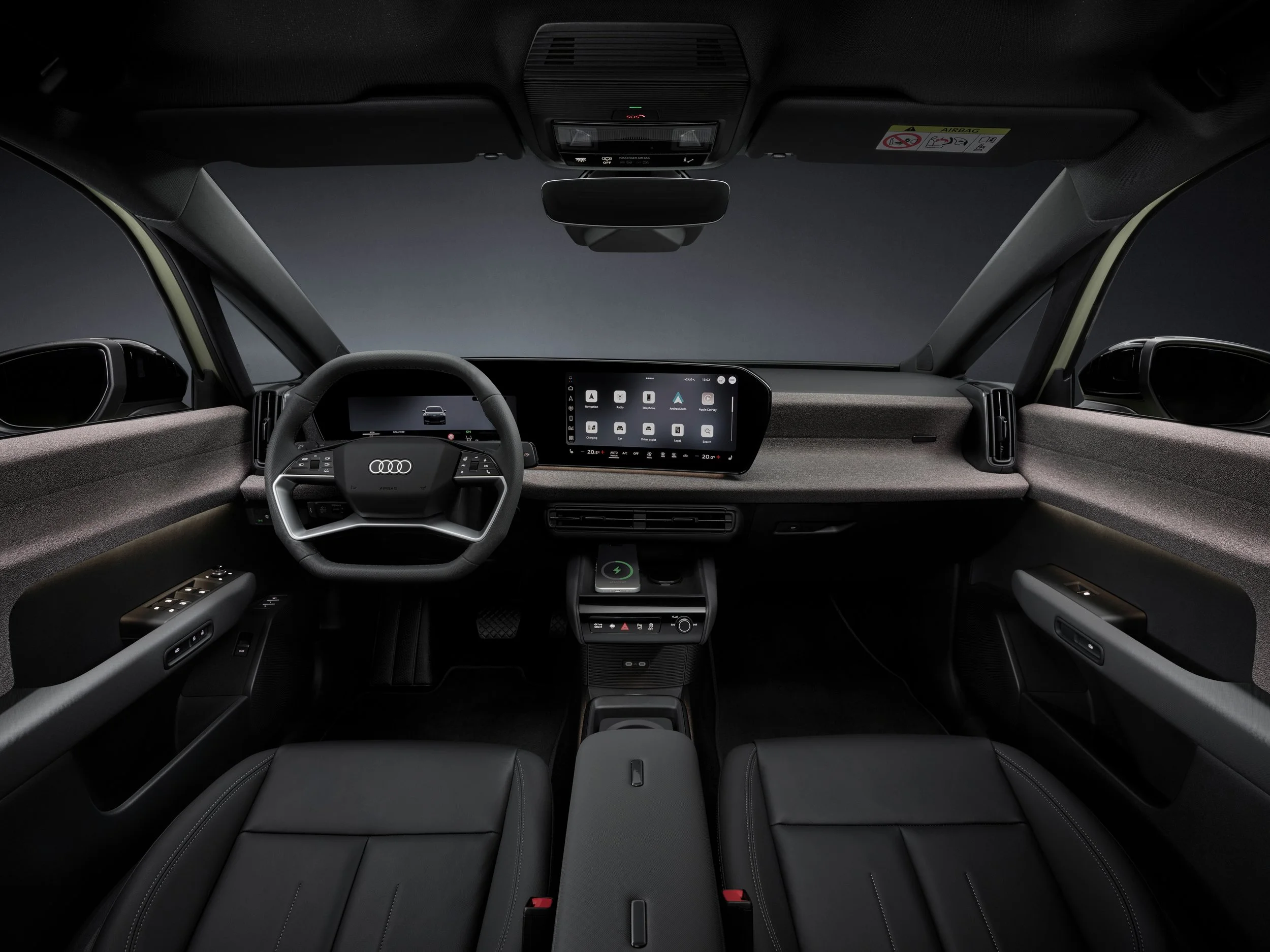
Inside, Audi’s signature move is a fabric-wrapped dashboard treatment it calls Softwrap, running from the instrument panel across the doors and into the rear cabin.
The A2 also introduces Audi’s Fidlock magnetic attachment system as standard – a first for the premium segment – allowing cupholders, cable bags, and other accessories to click into fixed mounting points around the cabin.
Instrumentation provisions via an 11.9-inch digital cluster paired with a 12.8-inch curved touchscreen, with an optional augmented-reality head-up display and up to 30-colour ambient lighting also available.
A 1.6-square-metre panoramic glass roof is optional, and sound system choices range from a standard seven-speaker setup through to a 14-speaker, 660-watt Sonos system at the top of the range.
Driver assistance is headlined by an optional adaptive cruise assist plus that can steer, brake to a stop at red lights and hold station in traffic up to 210kmh, with lane-change-on-indicator functionality flagged for a post-launch update.
Standard equipment includes autonomous emergency braking, evasive steering assist, front cross-traffic assist, adaptive cruise control, rear cross-traffic alert and a reversing camera.
Optional extras stretch to a trainable parking function that can memorise and repeat up to five parking manoeuvres, and a reverse-assist system that can back the car out of a 50-metre stretch on its own.
Audi says the A2 e-tron uses more than 300 components made from recycled material, over 100 of them from post-consumer sources, and has been engineered for easier disassembly at end of life.