BAIC X55/B30 roadtest review: For better, not worse
/Beijing Automotive’s first models hit high-potential market segments and prove sensible pricing can still buy a sensational specification.
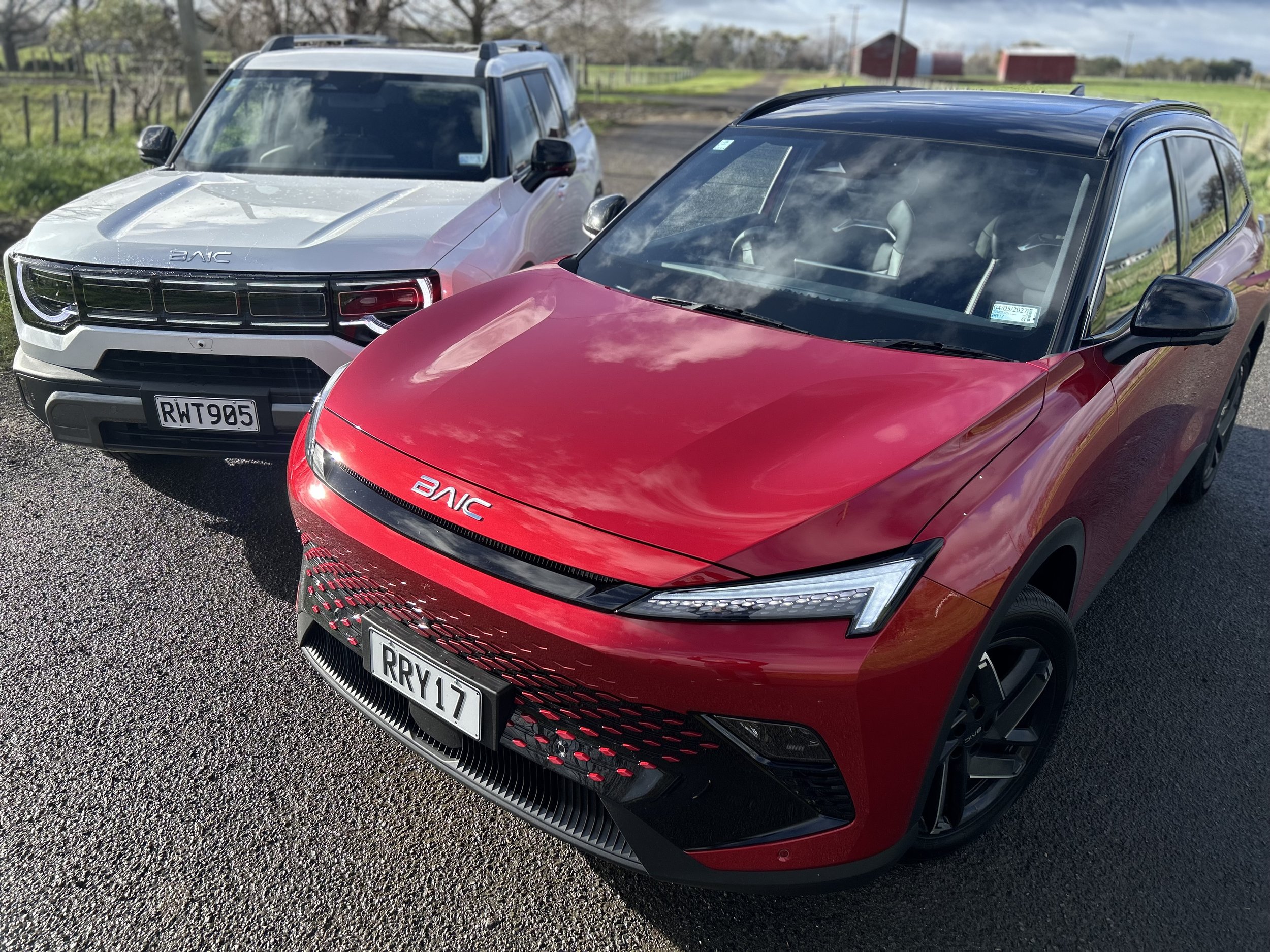
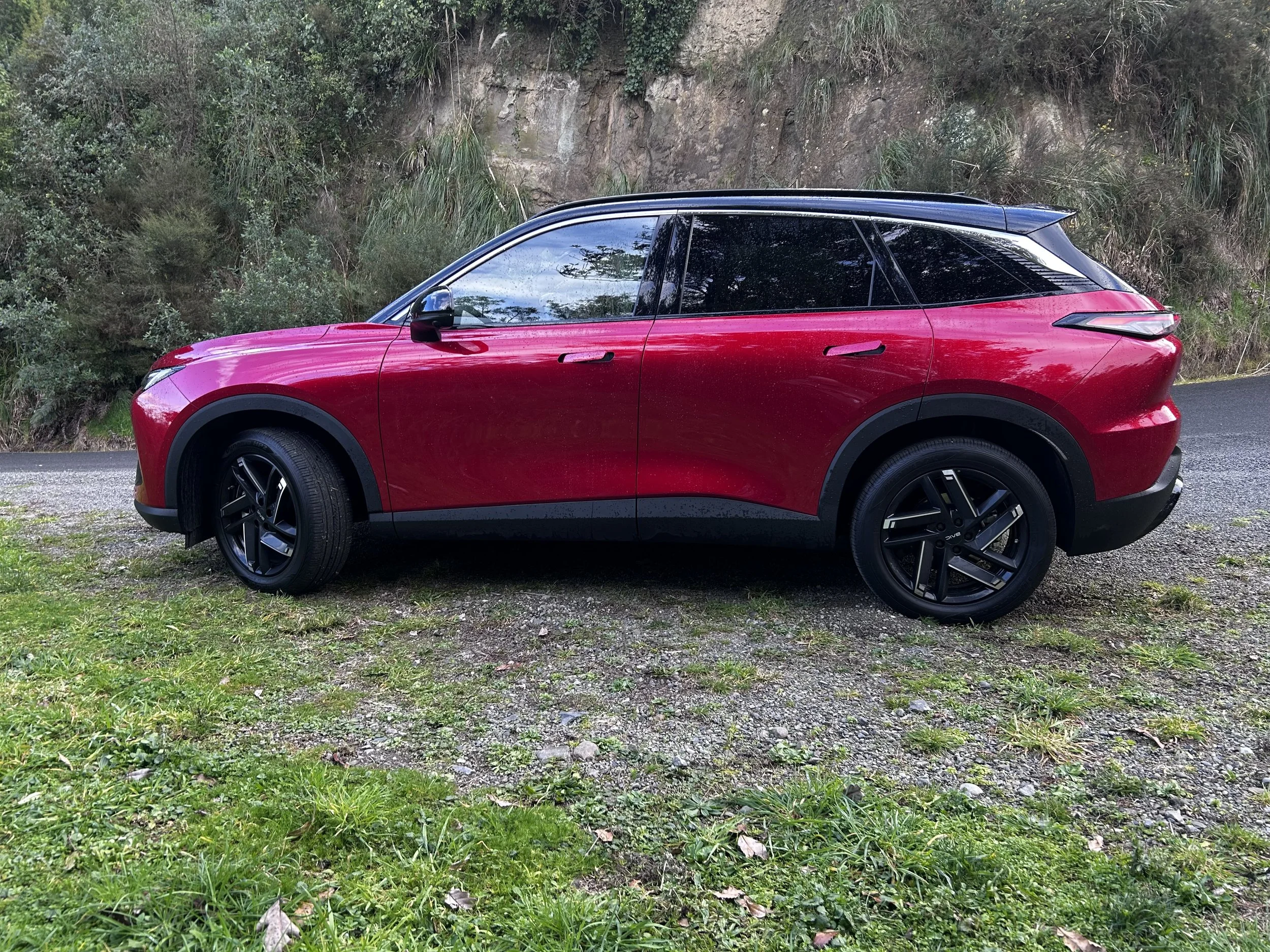
X55 Premium Plus
Price: $37,990
Powertrain: 1.5-litre turbocharged four-cylinder petrol, 138kW/305Nm, seven-speed dual clutch transmission.
How big: 4620mm long, 1886mm wide, 1680mm high.
We like: Good looker, generous specification, competent handling, rich picking for budget petrol crowd.
Not so much: Not overly powerful, sluggish touchscreen responses, small boot.
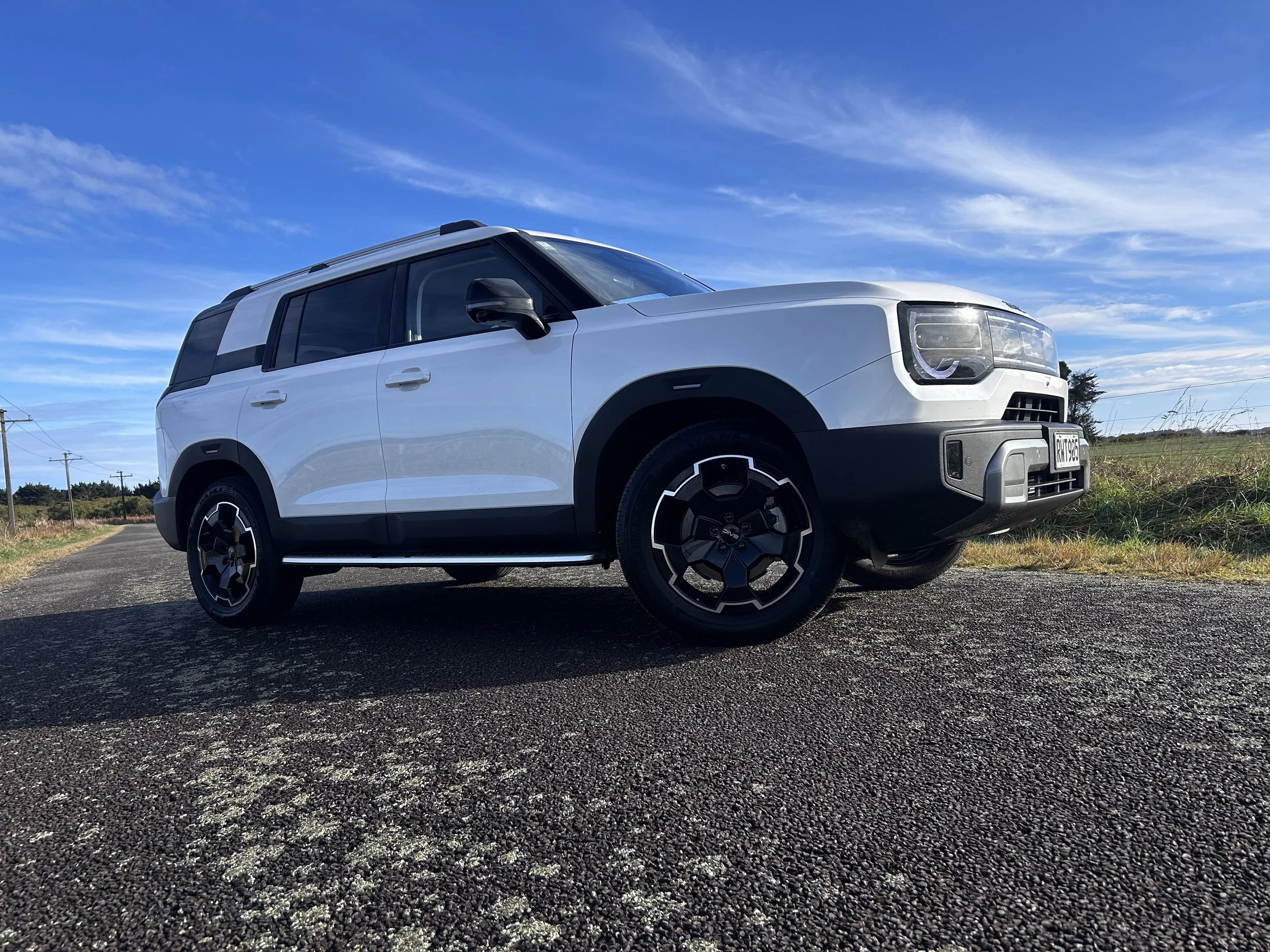
B30 Premium Adventure
Price: $52,990
Powertrain: 1.5-litre turbocharged four-cylinder petrol with ‘magic core’ hybrid, 246kW/550Nm.
How big: 4730mm long, 1910mm wide, 1790mm high.
We like: Impressive drivetrain, versatile and friendly concept, good comfort, aims into a promising market segment.
Not so much: Same infotainment issues as X55, doesn’t quite have same pricing appeal.
OUTCOME of a survey to find out just what we're most looking for in a new car ran up what possibly might seem a surprise finding.
Consensus from 19,000 respondents to a questionnaire by a car loan company in North America is what the average new car buyer values above all else is … a warm bottom.
So, a luxury feature? Stow that thought. Like a lot of high-end cars I’ve driven over the years, the X55 compact crossover and the B30 medium sports utility have heating in the seats.
But thing is … the cars on test aren’t expensive. Both aim firmly at budget buyers. And yet both have seat warmers; not just simple on-off types but with three stages of temperature. The seats also include ventilation. The B30 also has a heated steering wheel.
BAIC pronounces as ‘bike’ and stands for Beijing Automotive Industry Corporation, another of China's massive state-owned carmakers that has set up in New Zealand, via a distributor agreement with Armstrong’s Distribution Limited, wants to go big with a range of affordable vehicles.
Where have we heard that before? Well, it’s been a line spun by almost every China Inc make to land here. So many cars have come along offering keen prices, high levels of standard kit and strong warranties. The BAIC products tick those boxes.
Cars from China all seem to bring intriguing nuances. Again, the BAIC stuff sticks to tradition. While its technology application is profuse, some is a bit weirdly implemented.
Also, some trim materials demand a certain kind of taste and in respect to build quality, it’s a mixed bag. BAIC’s painters do a very fine job, panel fit is even and there were no rattles. But a look to determine the rationale for X55 requiring quad exhaust pipes - conclusion is that it’s a style thing - revealed some gnarly welding of the mufflers.
So be it. At least not everything is typecast: For instance, the usual Sino-centric criticisms of hair-trigger ADAS don’t stick. In fact, these are among the very few cars from any brand in which the driver monitoring can be all but completely deactivated, not just for a specific journey, but permanently. That’s potentially a bit foolhardy, but if you hate bings and bongs, it’s also potentially a plus point.
As said, the warranty on both is solid - seven years’ unlimited kilometres, with eight years’ unlimited kms on the traction battery - plus the cars comes with seven years’ roadside assist. Service intervals are one year and/or 10,000kms. BAIC also has capped cost service plans over three, four and five years.
The and the specifications and body sizes being keenly priced remind why Chinese carmakers are gaining serious consideration among NZ new-car buyers, with one in three now considering a Chinese brand when shopping for their next vehicle.
For a make that been a totally unknown quantity in NZ until recently, BAIC - and its electric sub-brand, Arcfox - therefore certainly deserve to be noticed.
In operation since 1958, the fifth largest automotive OEM on its home turf has collectively sold more than 31 million vehicles in its time and is currently banging out 1.7 million cars a year; that’s one third more than Mazda and double Subaru’s ability.
It is the biggest external shareholder in Mercedes Benz, with a 9.98 ownership stake, and had joint ventures in China with the Germans and also with Hyundai.
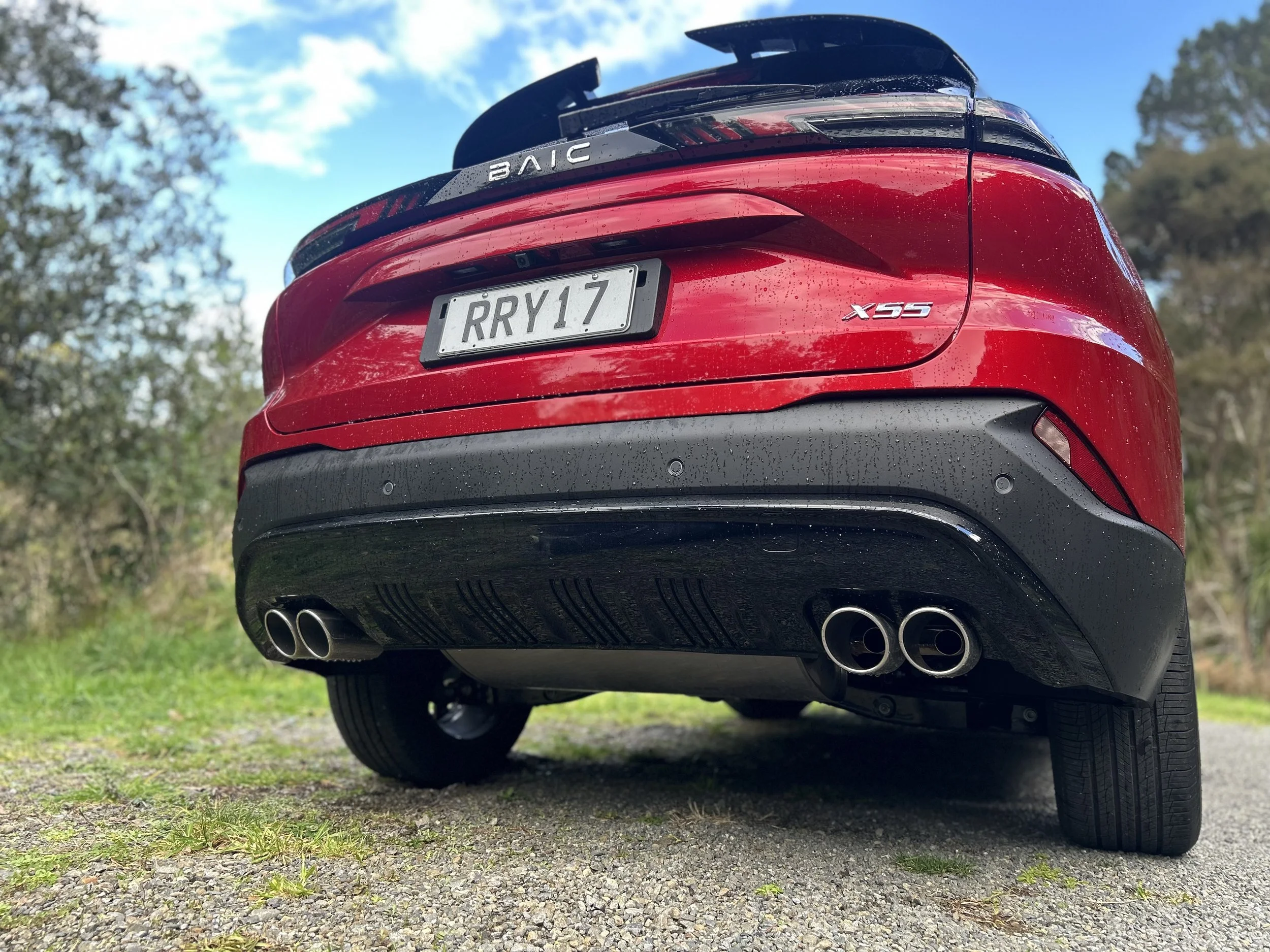
Strategy to create clear air with the other out-of-China makes Armstrong’s already has evidences in BAIC focusing on sports utility vehicles. Another point of difference is that it puts greater store on internal combustion than most. Most compatriot makes are donkey deep into electric and electrified. BAIC is also here with a hybrid, but you don’t need to buy into that tech. the 1.5-litre petrol that is assisted by an electric motor in the B30 runs pure on petrol-fired impetus in the X55.
That’s not unique - the new Mazda CX-5 and the Mitsubishi ASX - are also still pure petrol, but it is unusual.
The pricier B30 Premium Adventure have hybrid enhancement across front and, as tested here, flagship all-wheel-drive.
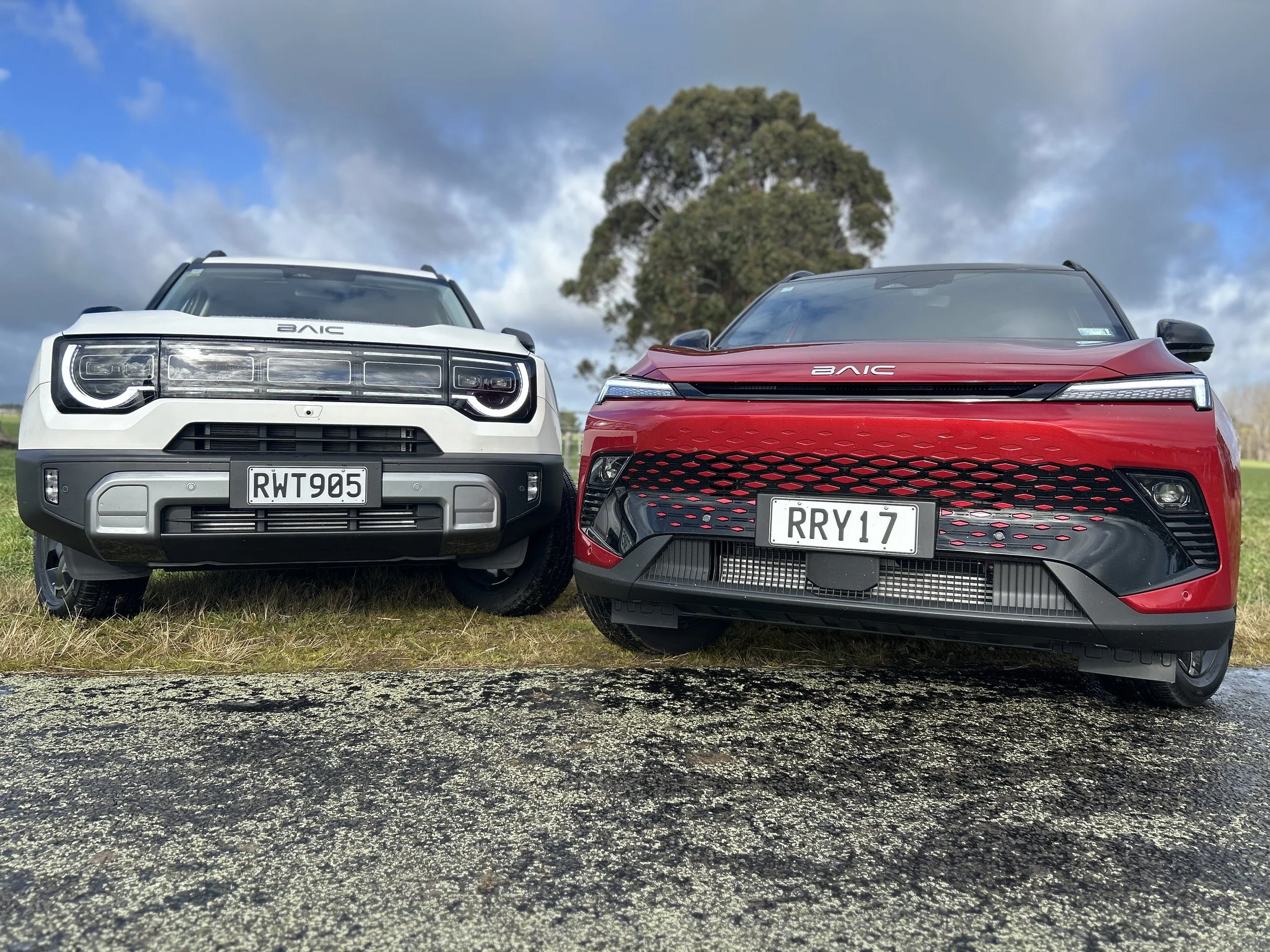
Apart from the mechanical element, the cars are very different insofar as size and shape.
Chinese makes as a rule see the sub-$55,000 zone as the best place to pick up rich pickings, and that’s where BAIC involves, but its stickers also remind there’s no love lost between it other Chinese like-for-likes, including well-established brands like MG and GWM/Haval.
When announced in February X55 and the B30 AWD Premium Adventure also tested were subject to $3000 discounts which have now lapsed, but another change is that the X55 has upgraded in safety spec. What kicked in as a Premium is now a Premium Plus.
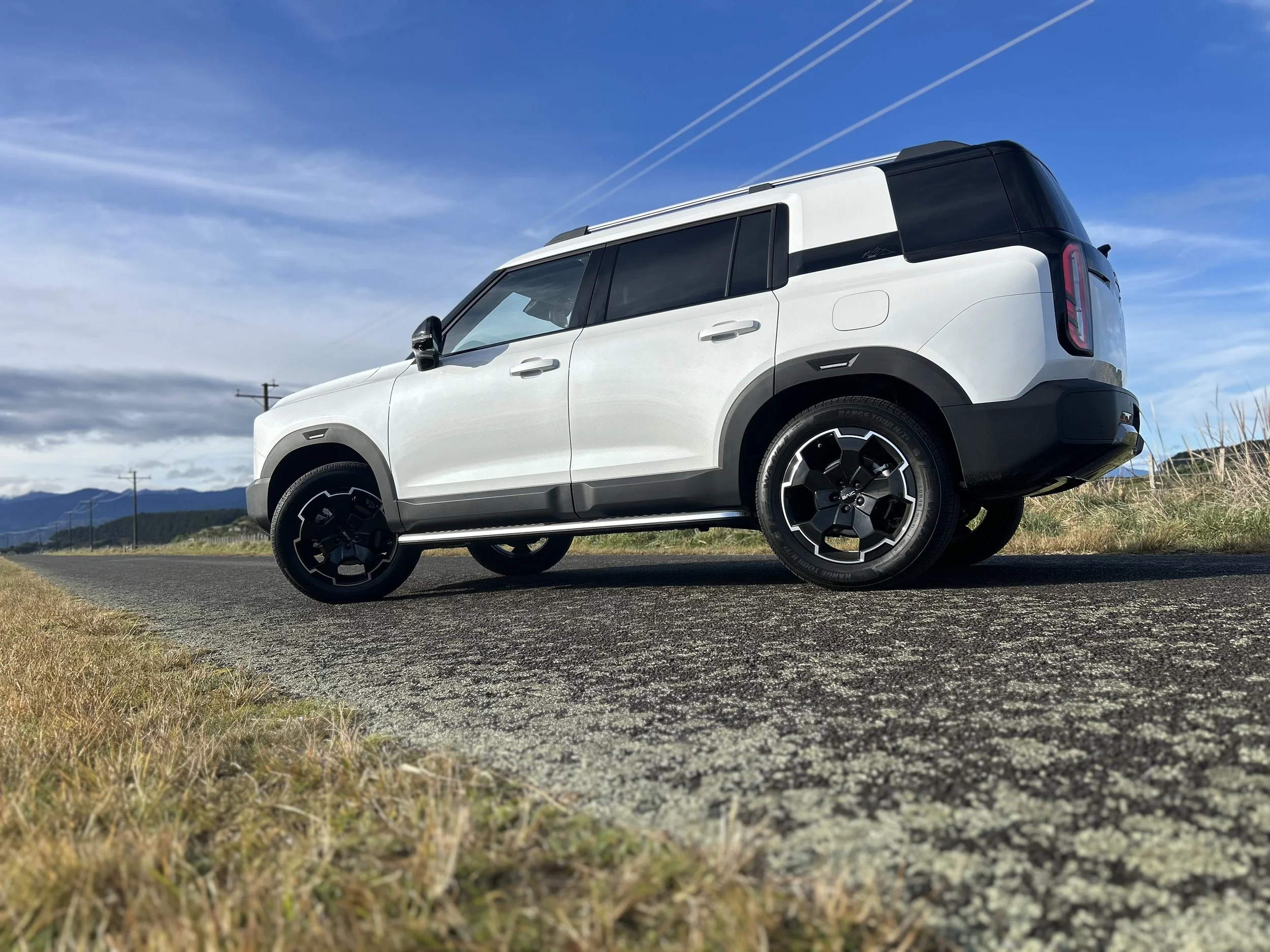
In its own right, the latter still surely stands chance of becoming an attractive opportunity to a wide audience, not least those who couldn’t previously afford a brand new car.
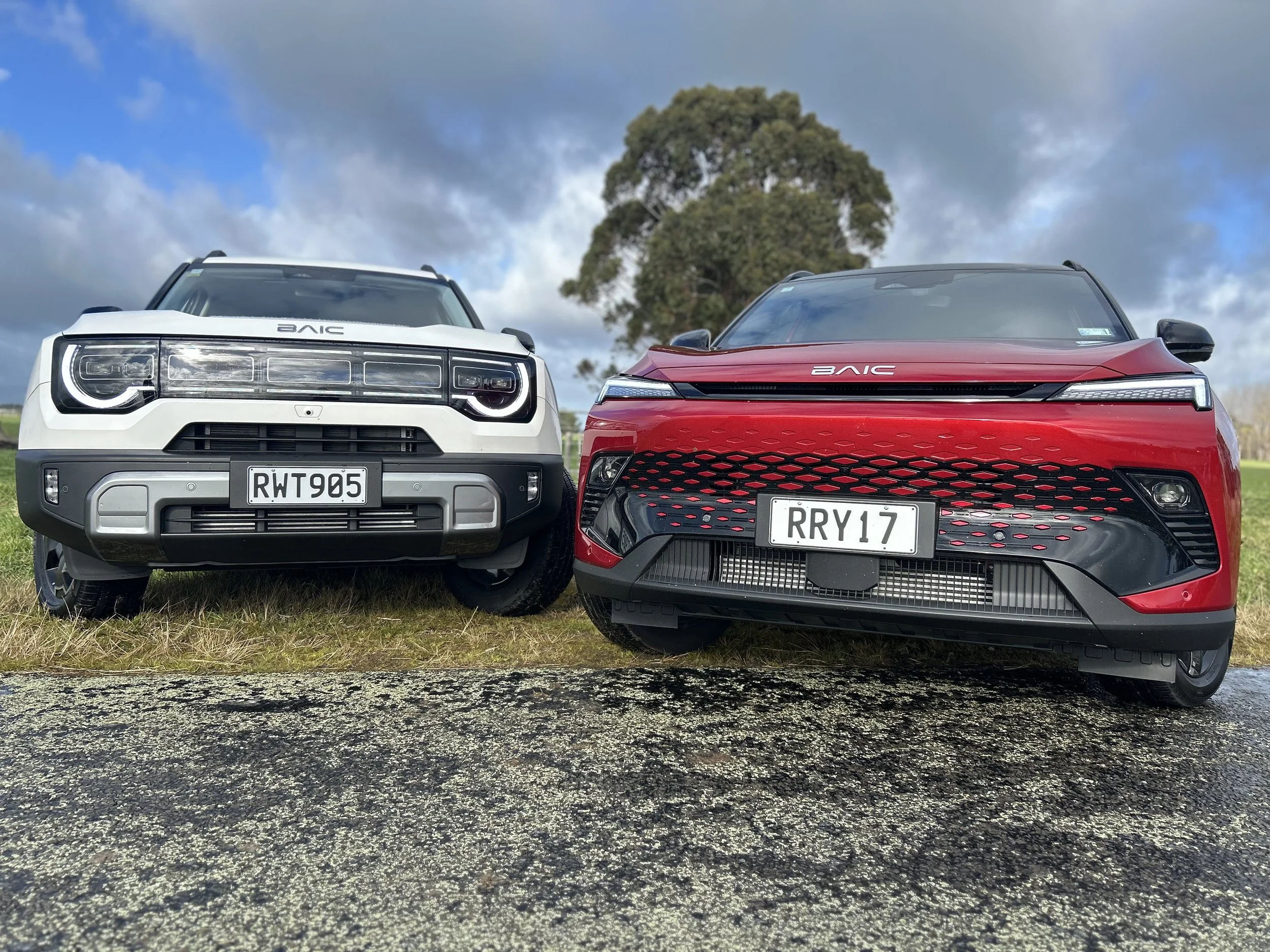
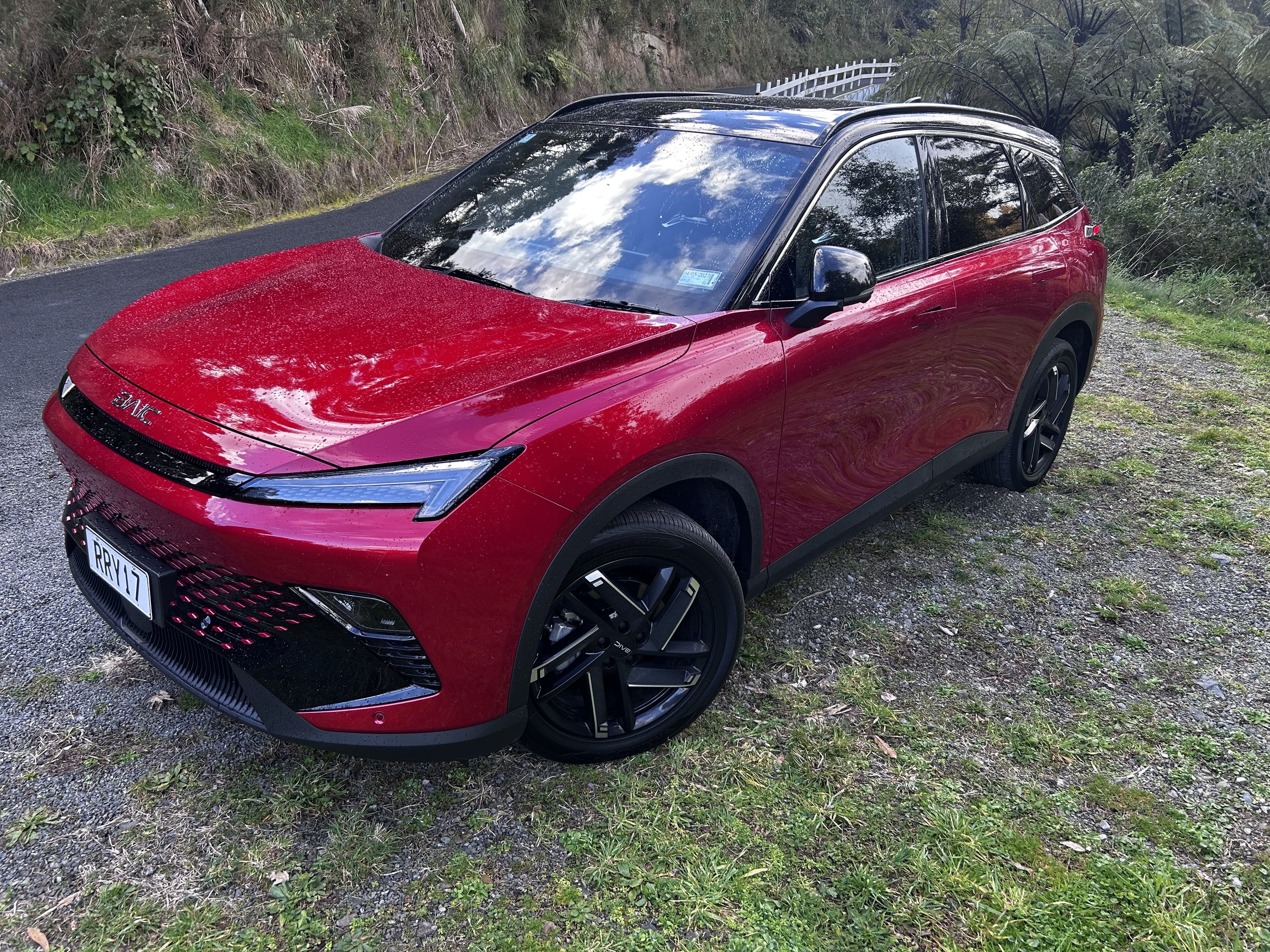
Aside from all the perceived value virtues, it is a handsome-looking model with enough individualism to stand out in the current sea of aesthetically meek rivals.
It has a more immediately modern appearance than the X30, but in packing in visual references to the Toyota Land Cruiser, the Ford Bronco and (tell me cannot also see it) even the old Lada Niva, the latter certainly doesn’t lack for character. Black plastic wheel arch extensions (with implanted LEDs), big front and rear bumpers, an image of mountain range etched in the dashboard … all contribute to its air of toughness.
As much as each has its own exterior design path, there’s a heap of commonality in interior configuration and ergonomics. Either way, it’s a largely digital cabin experience as you might expect, with a big screen for the driver’s instruments, plus a larger one in the centre of the dash for the primary infotainment and controls. You get a steering wheel loaded with controllers, including two Telsa-like rollers, and some chunky controls for gear selection and driving modes, and neither lacks for in respect to comfort features.
Standard equipment in X55 includes wireless phone mirroring, LED headlights and taillights, faux leather black upholstery with red stitching (with optional black pleather, with red stitching), wireless Apple CarPlay, wireless device charging, a 360-degree camera, dual-zone climate control, 19-inch front and rear parking sensors, adaptive cruise.
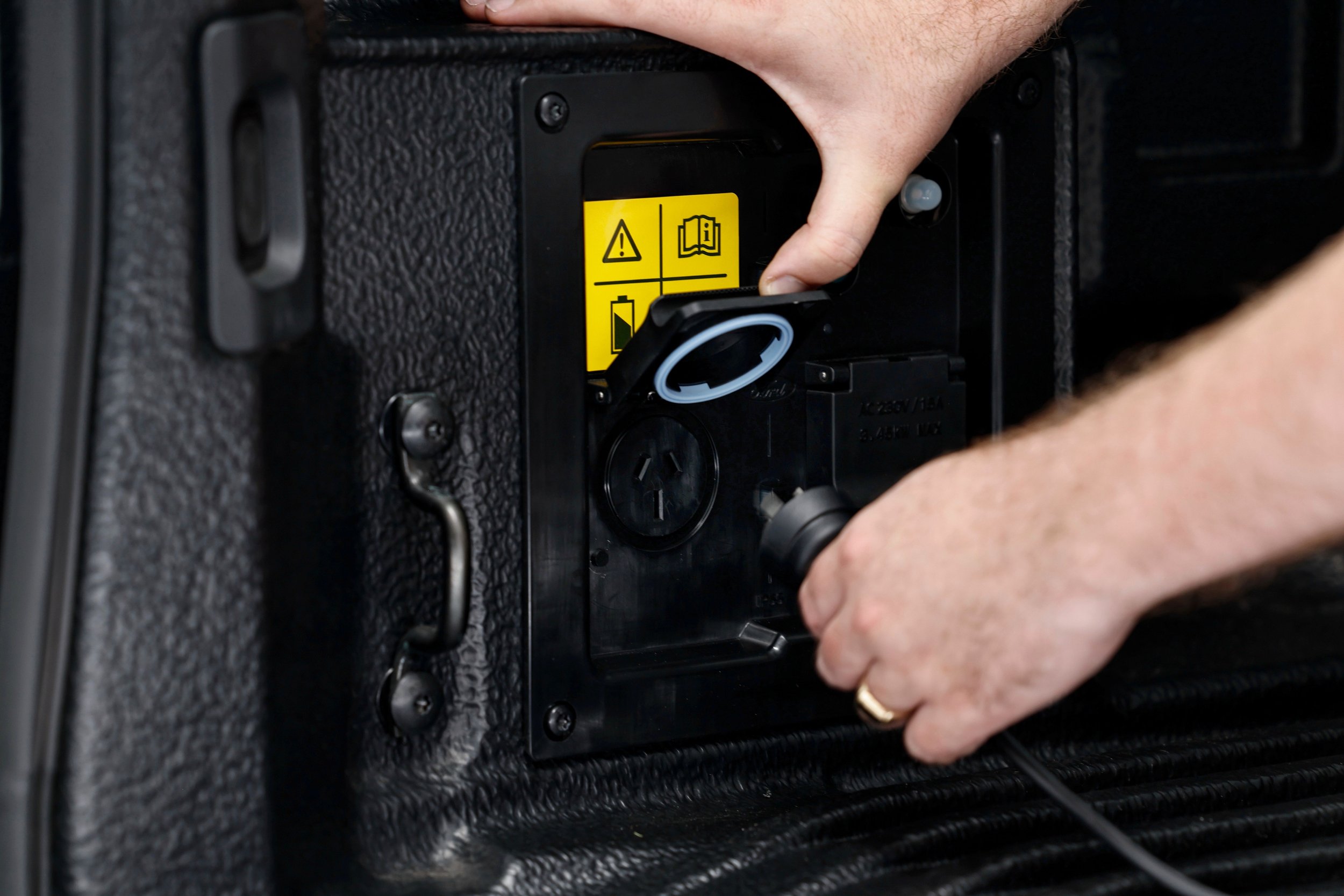
B30 in all formats has dual-zone climate control, and a premium sound system. The Premium Adventure FWD adds a 150W rear power socket, acoustic glass, 19-inch wheels and a 'launch' drive mode. The AWD further adds wheel arch side lights, also LED front fog lights, A/C pre-conditioning and additional off-road drive modes. Both front row chairs are power-operated and the driver’s has a memory setting.
Requirement to use the touchscreen for numerous in-car tasks, starting with sorting the climate controls, lends a minimalist feel but is also irksome. While the centre screens are reasonably sharp graphically, they are fiddly due to some odd menu configurations. Expect lots of screen-tapping to find certain functions and the significant lag suggests the system require more powerful computing hardware.
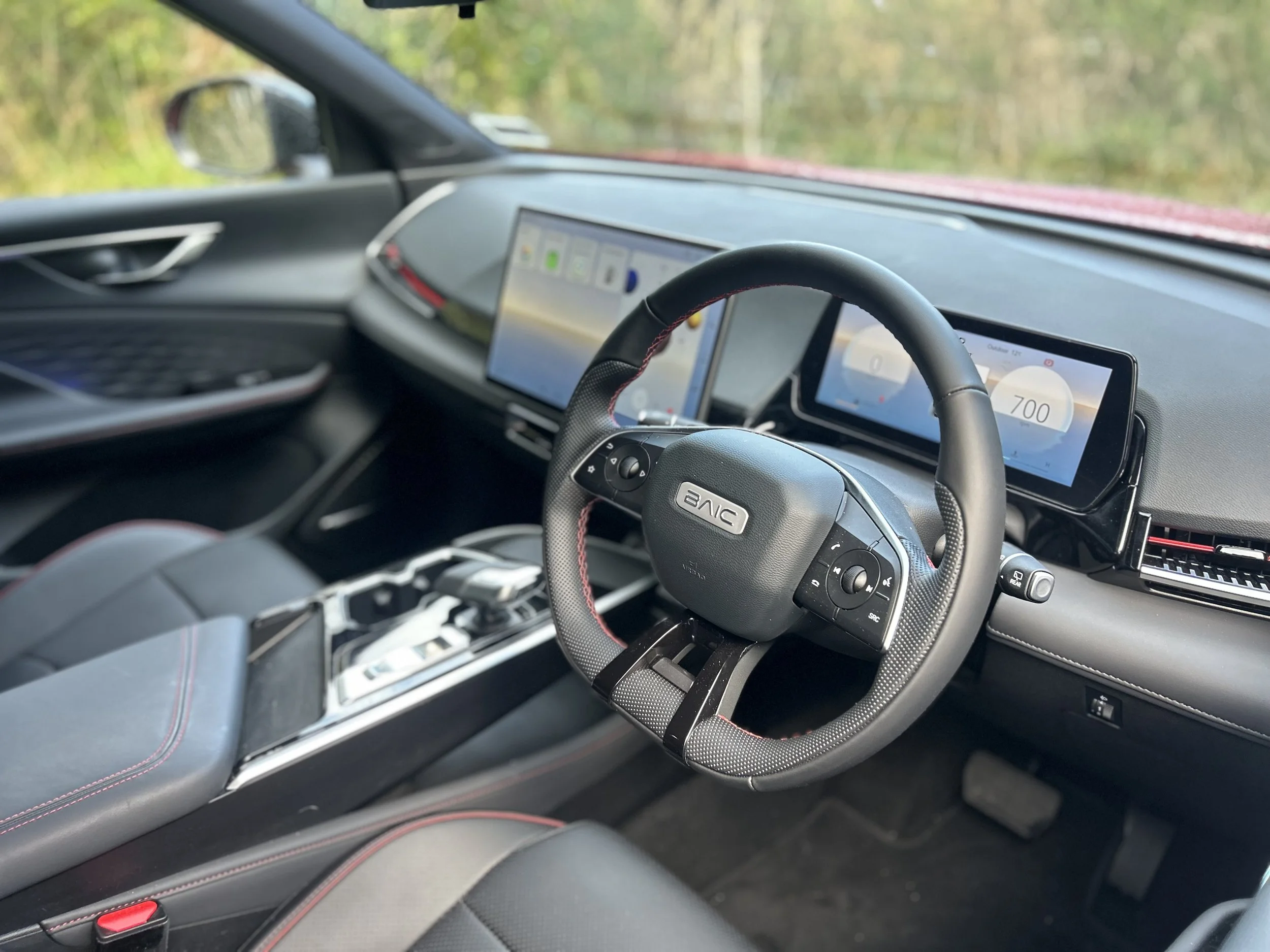
Android Auto fans are in for frustration. The car suggests it can accommodate a wireless connect, but the QR code to download an app is a dead-end. (By contrast the B30 does facilitate Android Auto, but with a third-party dongle installation facilitated by the distributor).
The Yilian mobile internet facility is an embedded Wifi still inactive outside of China, yet the set up pathway still acts to engage it. Steer clear. Exploration of that momentarily did weird stuff to my iPhone.
The technology take includes an in-built alarm, and with that comes another warning. If you decamp with keys pocketed, and intend to leave the vehicle unlocked, take care to repeat click the remote’s unlock, else the alarm WILL trigger. This caught me out on the X55 when unloading groceries from the boot and on the X30 when my wife stayed momentarily in the car, to check a phone message. The moment she opened the front passenger door, the horn began blaring.
The broader cabin environments are much the same in basic layout and more ergonomically solid. Each gets a big beefy gear selector atop a floating centre console separating the front seats, with twin cupholders alongside. Indicators are on the left wand, wiper controls on the right, access to the driver display functions is mainly via the right side roller ball on the steering wheel yoke.
With both, it’s the sheer roominess that will be huge selling points. The X55 is larger inside than anything else in its price point and quite a few cars that cost more; comparison with Toyota’s big selling Corolla Cross and RAV4 is worthy - it’s 20mm longer and 6mm wider than the latter.
Both models will seat four adult occupants in comfort, with excellent head room in the back and no shortage of leg space even with a tall driver.
The seats themselves are a bit squidgy, but well-shaped; suggesting comfort for long trips. From a driver’s point of view, visibility out of either cabin is decent in all directions. While the front seats are fairly high-mounted, a driver of average height should not feel perched too loftily above the steering wheel.
Both have power tailgates and in terms of boot capacity, you’ll find the X30 the far more generous and it has the added surprise of the solid luggage cover doubling as a picnic table, albeit one of low height. The stubby legs are in a underfloor compartment. The X55 isn’t so impressive. Capacity of 350 litres with all the seats up is below par. Both have power points in the rear.
BAIC’s endeavours to win owner interest is less resolute when it comes to tailoring the cars’ driving tune. That the B30 makes a stronger overall statement is heartening, as the SUV sector is very favoured here; it is not the be-all for performance and overall on and off-seal aptitude, but feels more resolved about meeting the category challenges.
But ambition to deliver above and beyond is less obvious here. For ride and handling in particular, neither seems particularly tuned for this part of the world, so ‘Unremarkable' is a good adjective to describe everything both do; to say they are nonetheless also good enough is also fair. Because, for many, they will be. They don't do anything particularly wrong from a kinematic perspective and should be easy to live with.
Common for both is that the steering is okay, with reasonable weighting and responses which don't feel inconsistent, but there's little meaningful feel to it. The brakes are calibrated nicely enough, yet there's not a huge amount of bite to them.
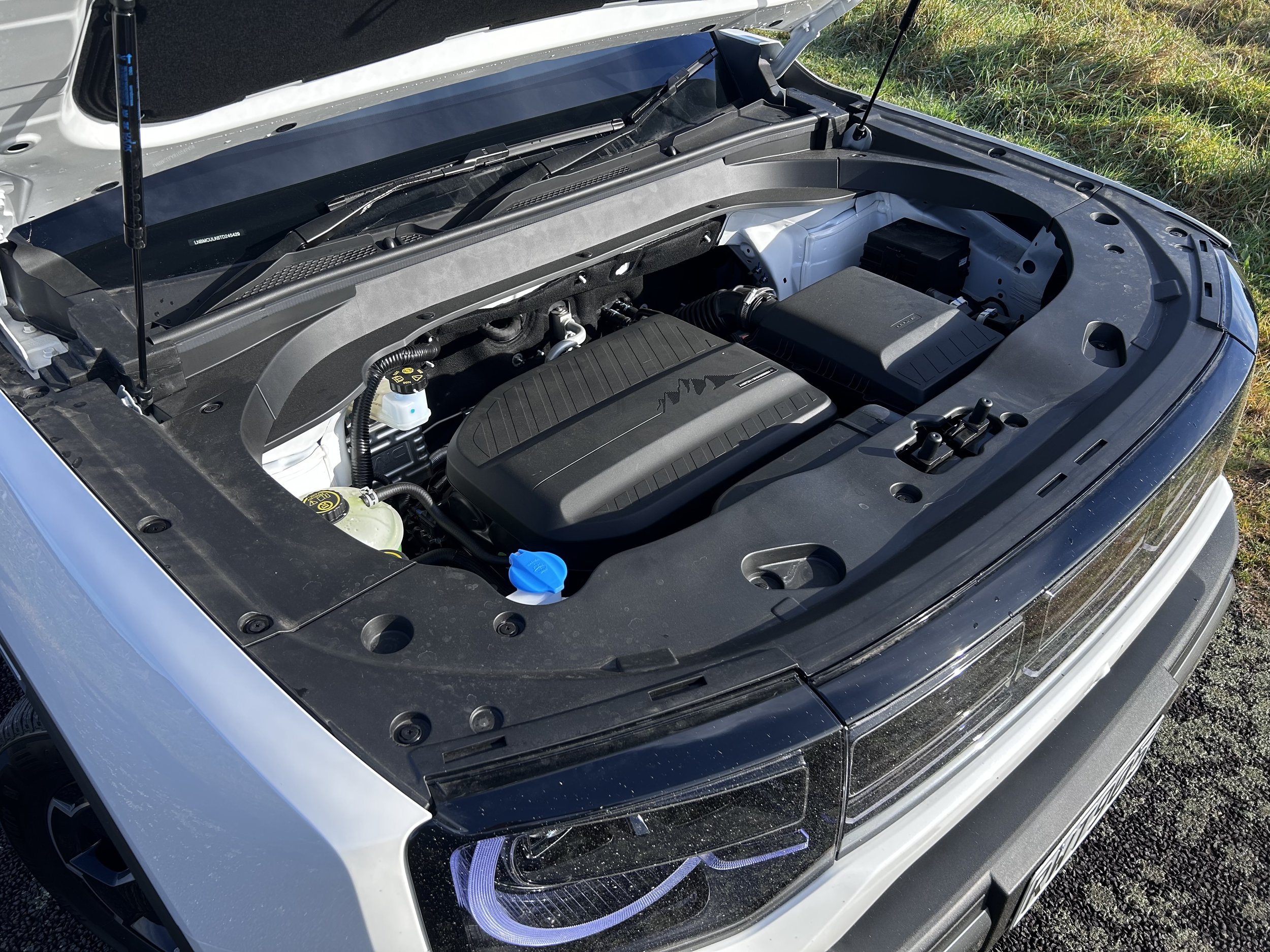
With the X55, the body control is acceptable, with just a bit of lean and squidge to the way the weight transfers. It’s fair to say day-to-day ride comfort and rolling refinement will be major attractions and in that respect it’s acceptable.
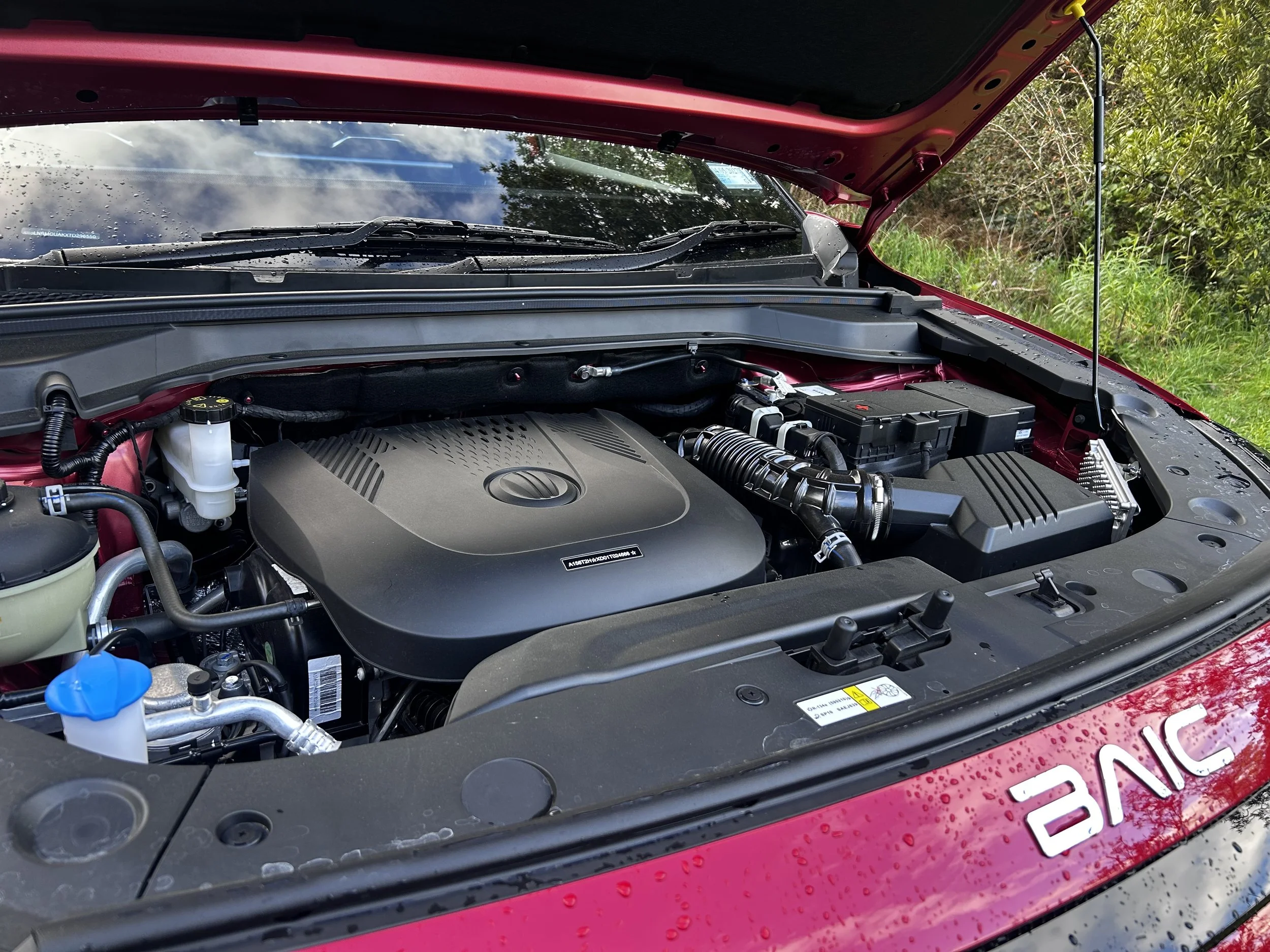
While it doesn’t lack for on-paper energy, the X55’s engine is not especially refined and proved only so-so for efficiency, with economy working out at 8.9 litres per 100km. If this car in time was to update to the B30’s hybrid format, it would be a game-changer. The electric-involved assembly is far more advanced and polished. Designed to prioritise the electric with the engine often working as a generator for the motor pack and its 1.67kWh battery, it delivers smooth and near-silent operability and genuine low six’s thrift.
While the engine detunes, with a 130kW/315Nm 'Magic Core Hybrid System' electric motor the combined output is 108kW/245Nm above that from the X55, so it just feels a lot beefier. The zest is more obvious when the electric side has priority than during instances when the engine becomes the lead element, but the latter scenario is not common. For the most part, it either runs on the electric or combines with the engine, and in in either mode the power delivery is linear and smooth.
BAIC’s use of a seven-speed dual-clutch transmission in both cars is an advanced choice for the price, but could do with some additional attention in this instance. The advantages of DCT are faster shifts and better economy. In respect to the first, shift quality in the B30 was markedly better, but both had tendency to jolt through the cogs when cold, and neither was always clean in engaging reverse.
The overall nature of both drivetrains points toward relaxed rather than highly rapid travelling, but that really suits the dynamic demeanour. Though it does place more squarely through bends than the X55, the B30 is also not a car to be overly hurried on country roads.
Conversely, though, where it does have rural appeal is with the sorting of its drivetrain modes; the specific settings for mud and sand seem sensibly sorted, and it drives very nicely on gravel. The 215mm ground clearance, 600mm wading depth, it having Hill Descent Control and Hill Hold Control, a 25 degree approach and 30 degree departure angle and a wading mode are appealing factors for those into outdoor pursuits.
Full-on beyond seal driving wasn’t undertaken, but perhaps it should have been. BAIC’s hope that this model might be chosen as a lower-priced alternate to something like a Subaru Forester is clear. Whereas for X55, extras amount to carpet mats and boot liners, the B30’s options include a roof platform, side ladder, a side window extension rack, a roof storage box, a side awning, electric running boards, nitrogen shock absorbers, engine and rear motor guards - all from China - plus a local tow kit.
NZ is awash with new car brands - with 28 from China now active and more on the way - and their survival will clearly depend on whether they can achieve sufficient sales volume, build market share and operate sustainably alongside established global competitors.
In that light, BAIC distributor proposal that competitive pricing alone is not be enough to succeed and that brands also need to offer strong overall value and a compelling ownership experience is surely a positive signal to its intent.
Both BAICs fulfil adequately for safety equipment provision, yet absence of ANCAP ratings has to be noted. Yet as much as each could benefit from more polish, neither is any way demonstrably poor and both aim cannily toward segments where growth potential is still obvious.
In short, these products are among those from China that demonstrate why market trends are changing here. The more of these, the harder it gets for well-established players - potentially some embedded Chinese makes included.