AMG onslaught: Old guard roar and new-age phwoar

Mercedes’ performance arm has made clear its eight-cylinder engine is on its final lap, with the future now reliant on an electric-assisted version of the four-pot that serves its smallest racers so well. How’s that going to work out?

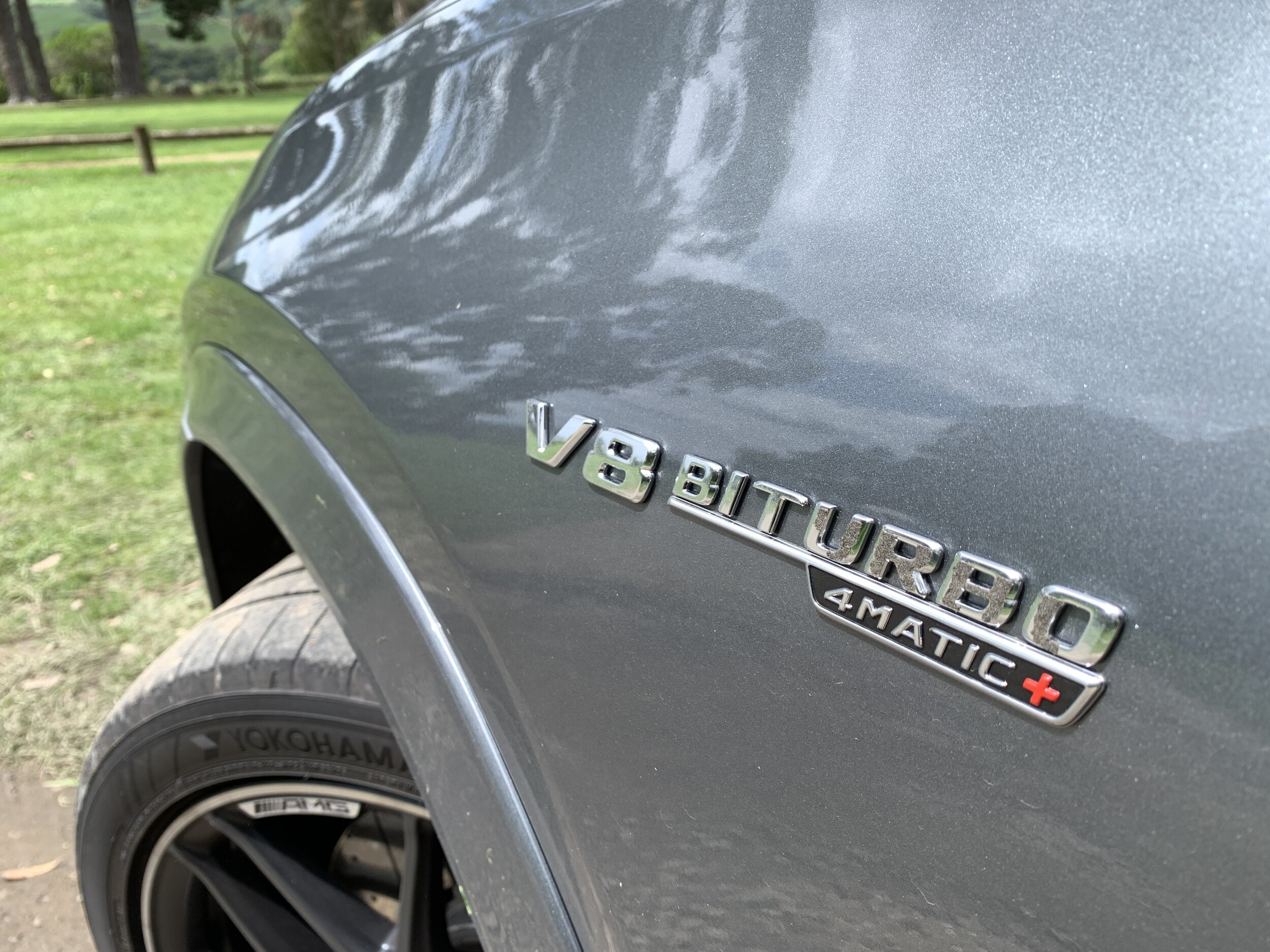
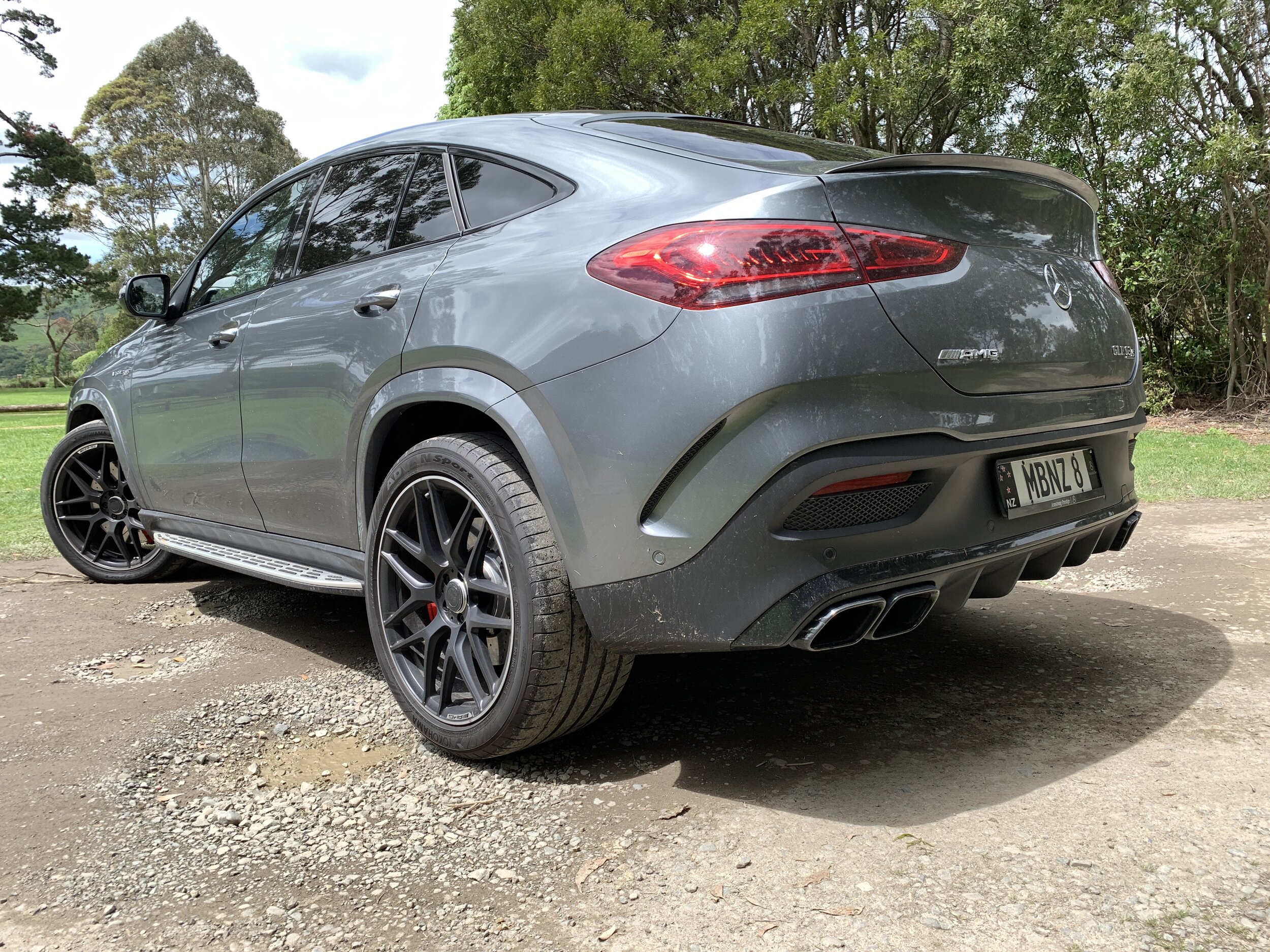
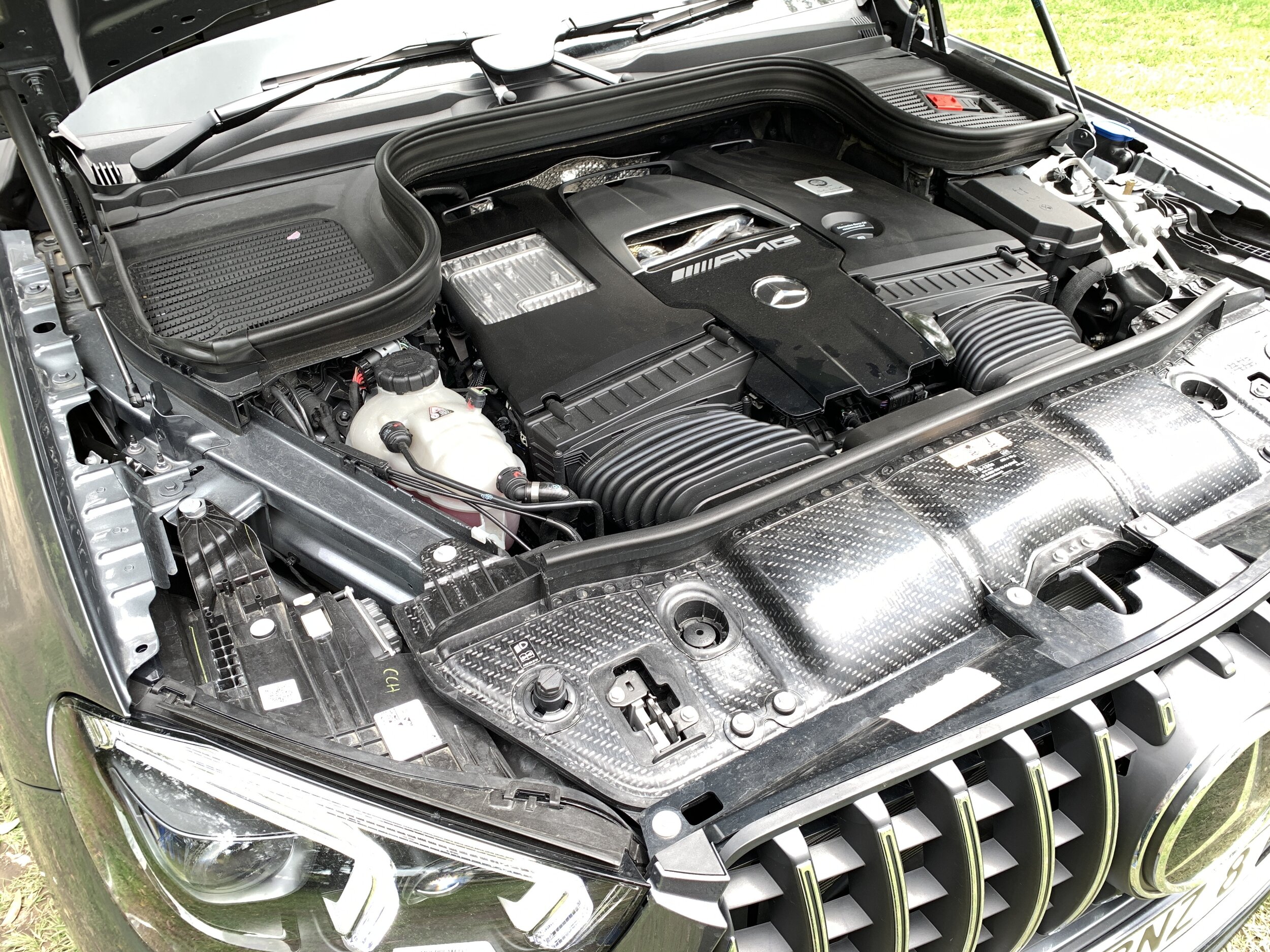
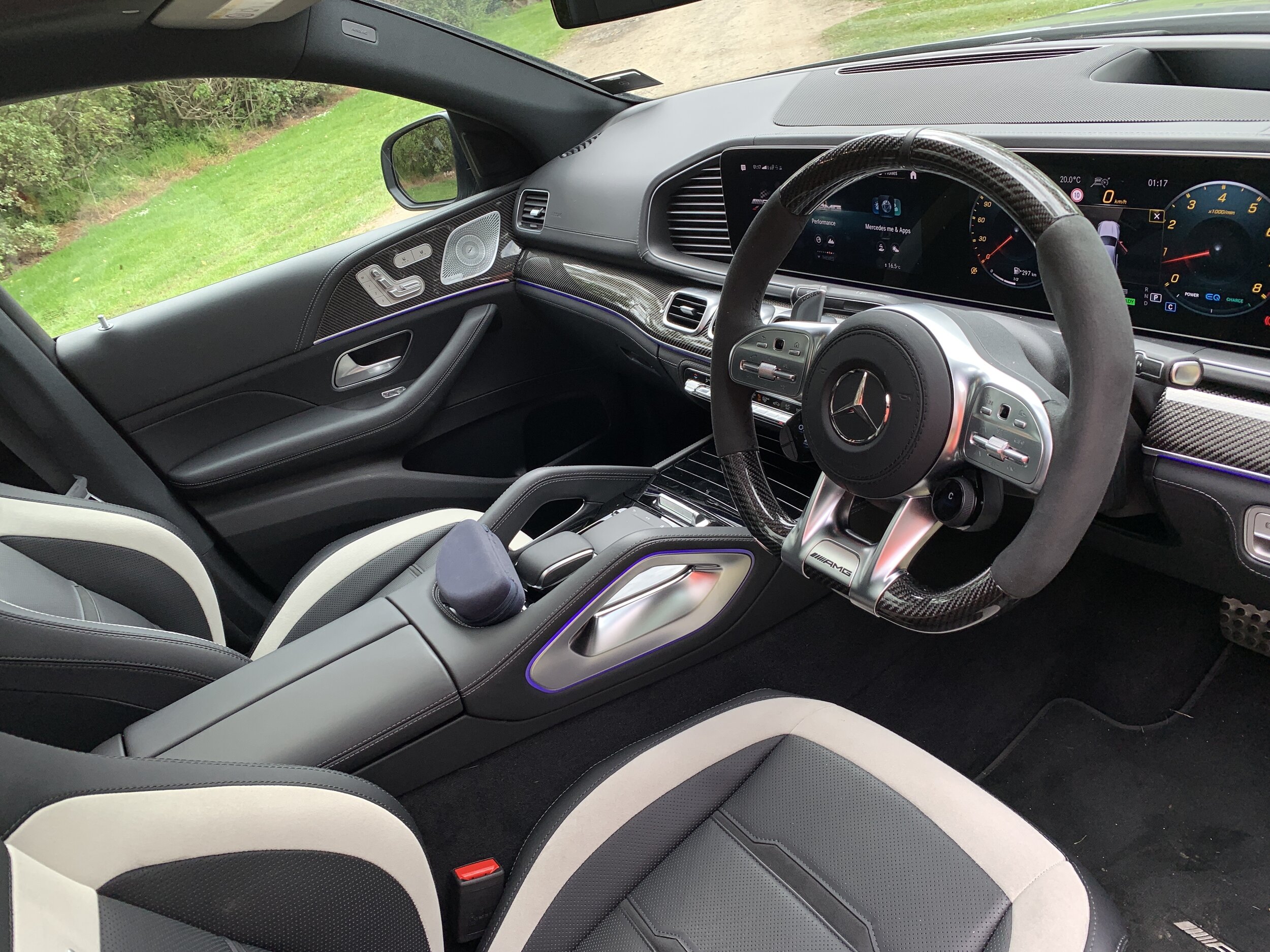
Mercedes-AMG GLE 63 S - call it goliath!

Mercedes-AMG GLE 63 S - call it goliath!

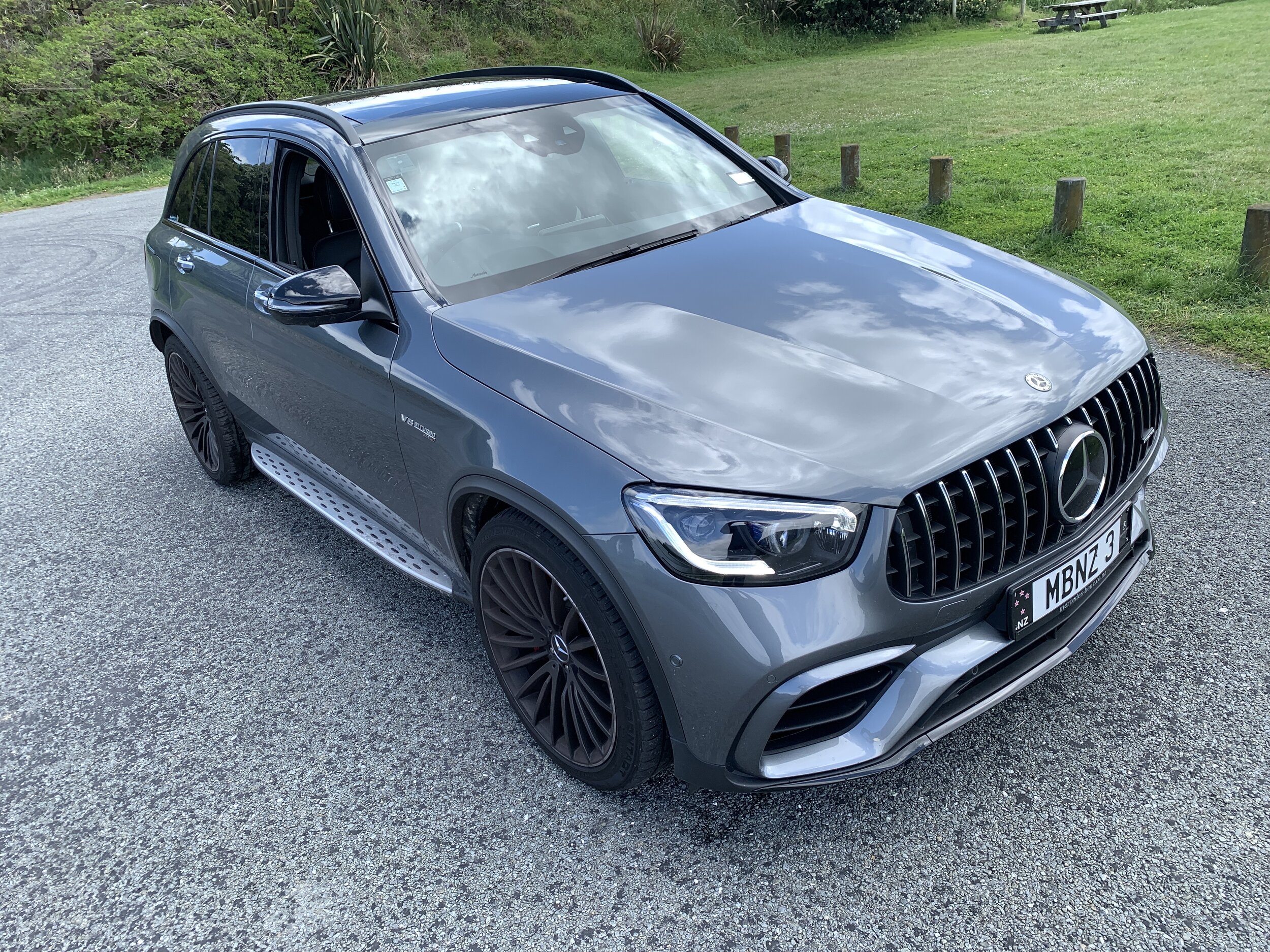
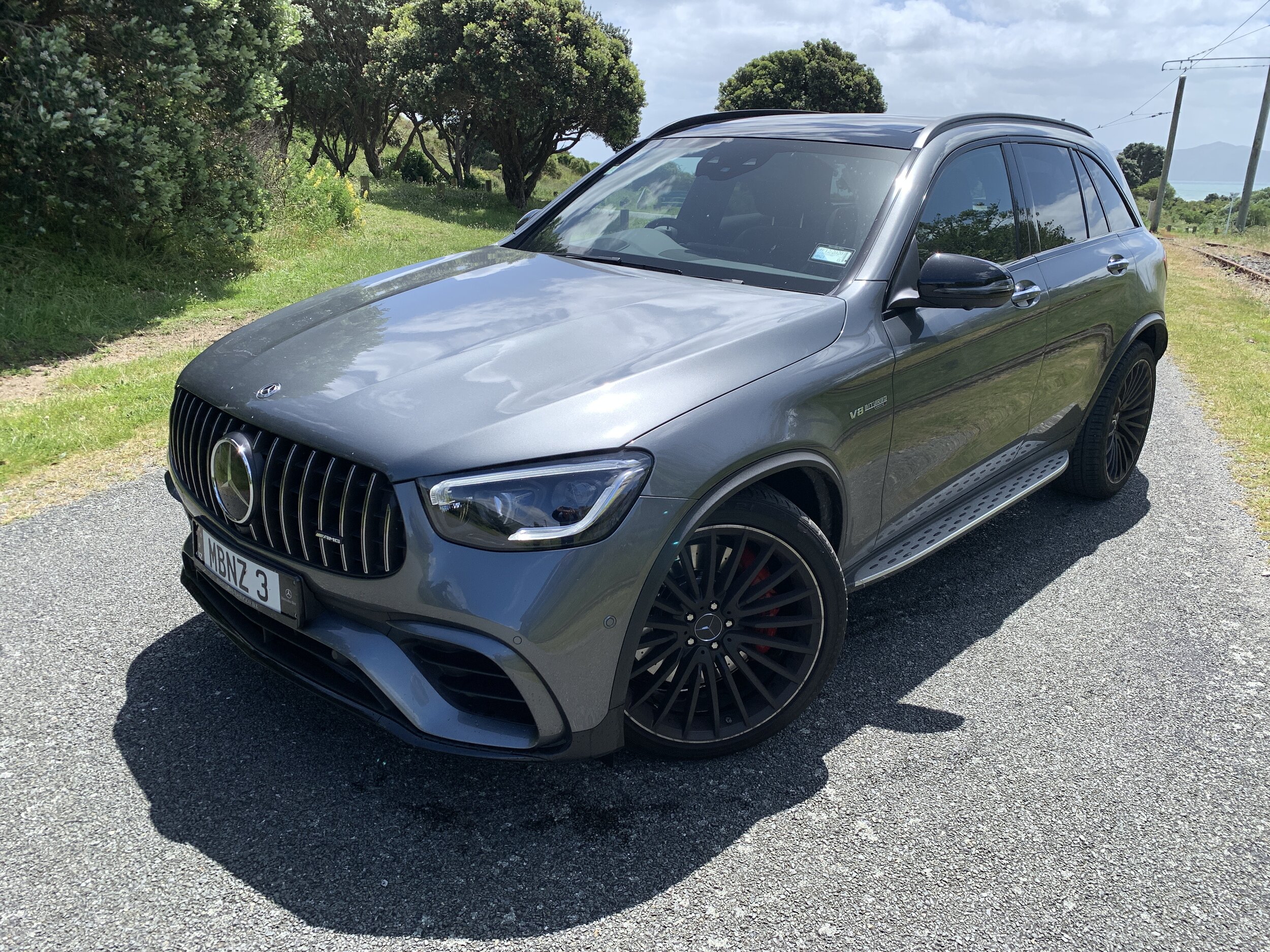
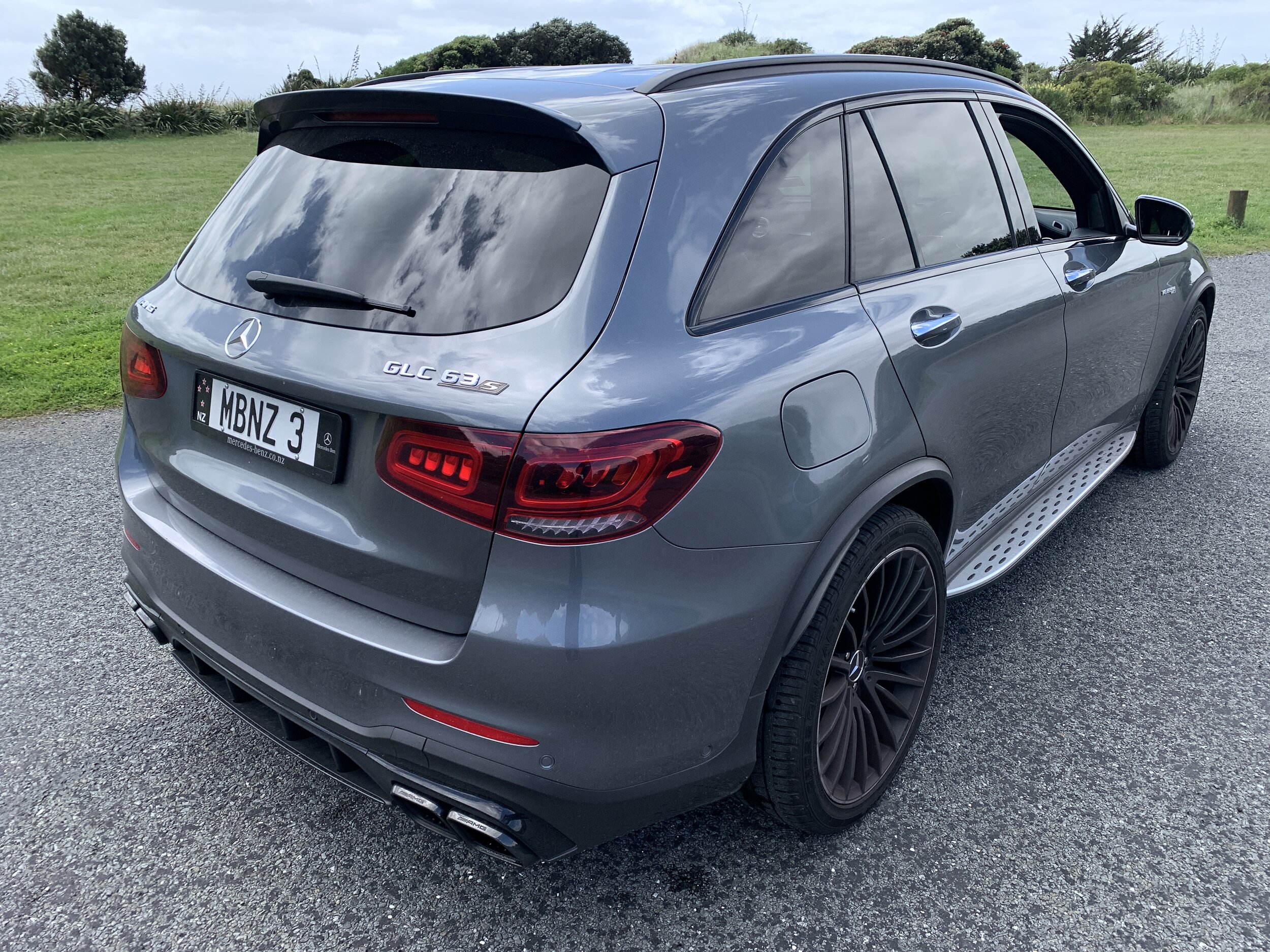
AMG-Mercedes GLC 63 S - a slightly smaller serving, better-suited to NZ tastes?

AMG-Mercedes GLC 63 S - a slightly smaller serving, better-suited to NZ tastes?

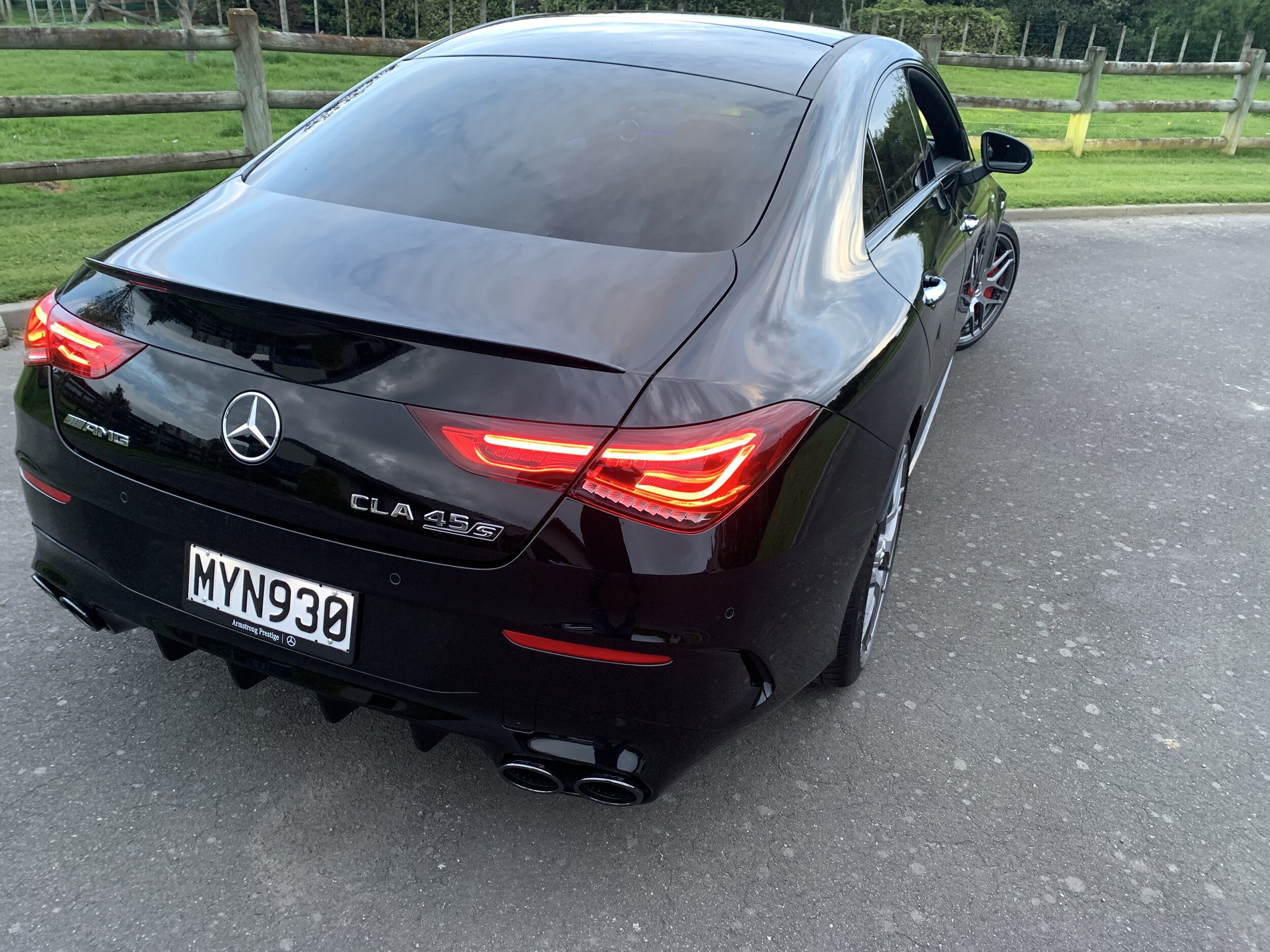
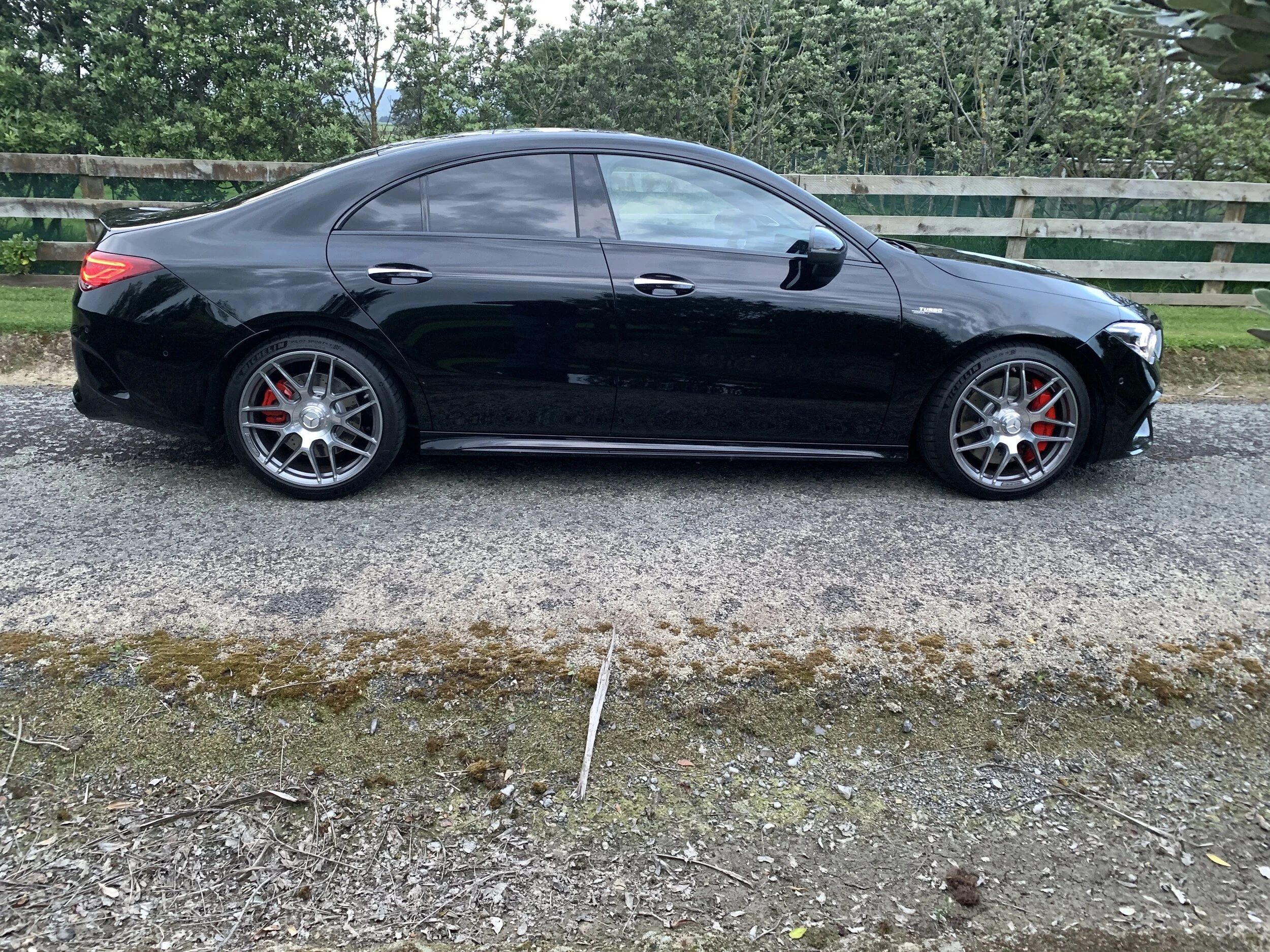
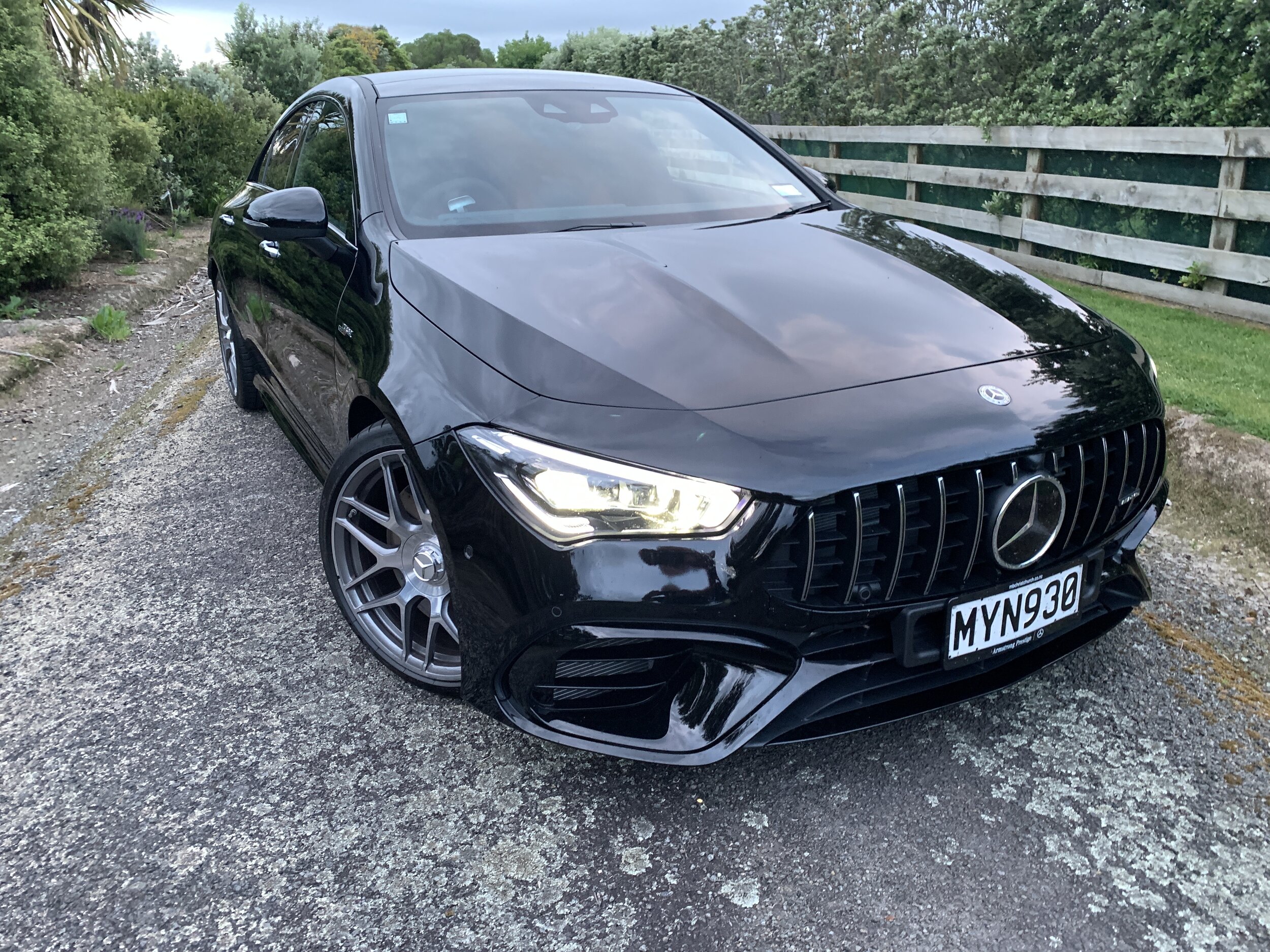
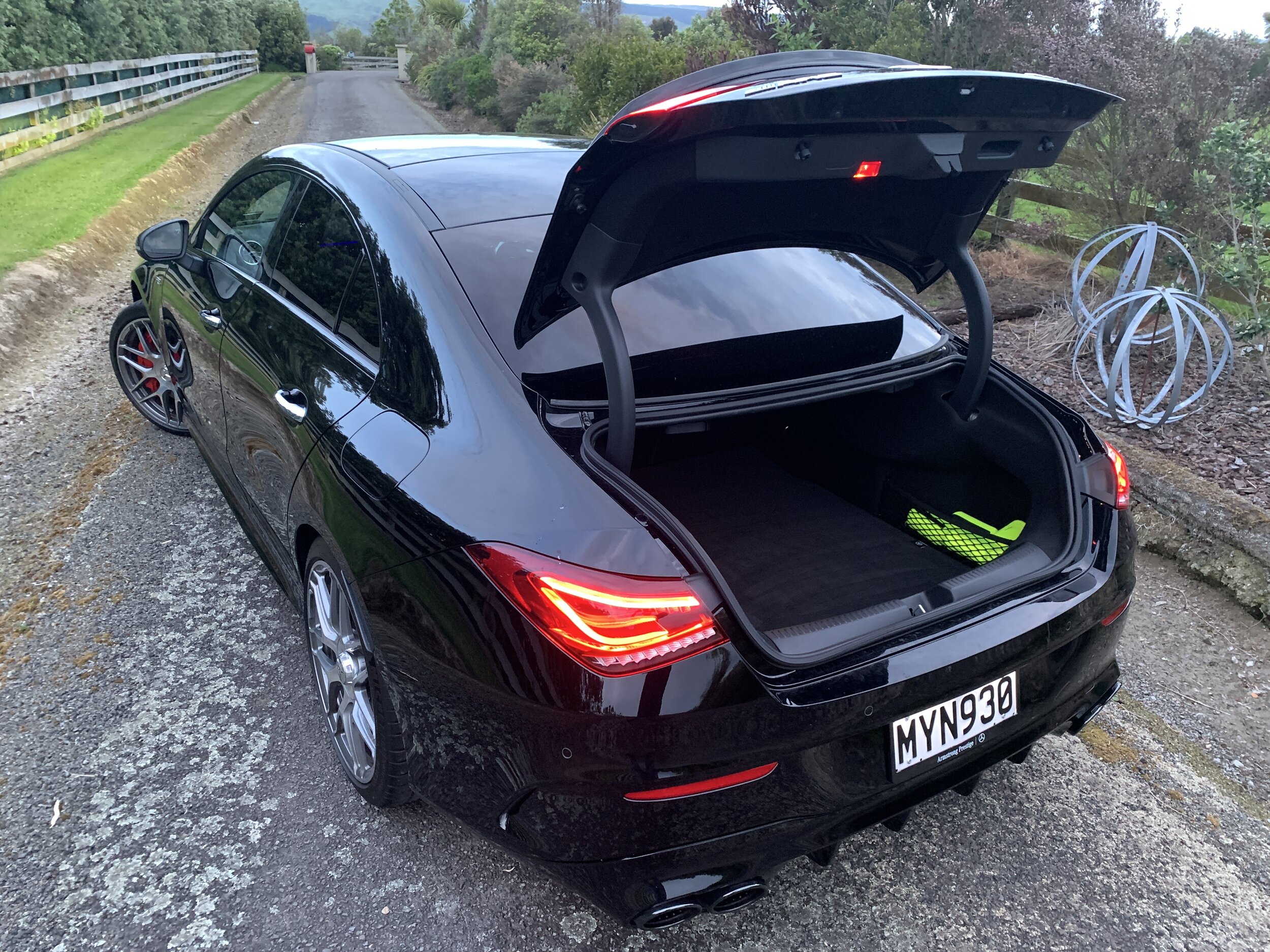
Mercedes-AMG CLA 45 S - a more upmarket alternate to the A45 hyper hatch

Mercedes-AMG CLA 45 S - a more upmarket alternate to the A45 hyper hatch


Mercedes-AMG GLE 63 S

Price: $236,000 ($241,000 as tested).

Powertrain and economy: 4.0-litre twin turbo petrol eight-cylinder with 450kW/850Nm, 11.5L/100km, nine-speed automatic transmission, AWD.

Vital statistics: 4961mm long, 2018mm wide, 1720mm high, 2350mm wheelbase, luggage capacity 655 litres, 22-inch alloy wheels.

We like: Roaring engine, impressive dynamics, technology.

We don't like: Overwhelmingly dominating presence, huge thirst. 

Mercedes-AMG CLA 45 S

Price: $138,300 ($129,090 as tested).

Powertrain and economy: 2.0-litre turbo petrol four-cylinder with 310kW/500Nm, 8.9L/100km, nine-speed automatic transmission, AWD.

Vital statistics: 4695mm long, 1834mm wide, 1404mm high, 2729mm wheelbase, luggage capacity  460 litres, 19-inch alloy wheels.

We like: Fantastic engine, nimble handling, chic look.

We don't like: Cramped cabin, hatch has more presence.

Mercedes-AMG GLC 63 S

Price: $184,900.

Powertrain and economy: 4.0-litre twin turbo petrol eight-cylinder with 375kW/700Nm, 10.7L/100km, nine-speed automatic transmission, AWD.

Vital statistics: 4682mm long, 1931mm wide, 1625mm high, 2873mm wheelbase, luggage capacity 550 litres, 22-inch alloy wheels.

We like: Roaring engine, impressive dynamics, technology.

We don't like: Overwhelmingly dominating presence, thirst.


WHAT kind of world is it where a 2.0-litre four-cylinder engine can end the reign of a V8 hugely respected for delivering beastly, brutal performance?

A cruel world, perhaps, but also the real world … which is taking us to a destination we cannot avoid, a place of change.

We’re pretty sure what’s going to happen. And we fully understand why it has to happen. We just don’t know quite when it’s going to happen, though most bets are on 2022 being the year, as that’s when the new C63 AMG reveals.

And where that car goes with its pathfinder new drivetrain, others will follow … including the AMG GLE S Coupe and GLC wagon tested here. Because they also run the famous 4.0-litre twin turbo V8 that has to be retired if Mercedes Benz’s famous performance badge is to survive.

When the V8 dies, another great AMG engine will rise: The 2.0-litre four-cylinder mill that has already made a name for itself in the make’s compact cars, including the CLA 45 S sedan also on test today. But in a different form than we know it at the moment. 

As amazingly potent as it is in current form, it needs even more muscle to sit comfortably in the heavyweight SUVs here. Three hundred kiloWatts and 500Nm now will elevate, once in marriage to a mild hybrid system and an integrated 48V motor, to more than 372kW.  

That compares well with the V8 as it features in the GLC 63 S on test – where you’re playing with 375kW - less so in the version that goes into the GLE 63 S; in that bigger car, the heat is turned up to a seriously searing 450kW. Electric-assist powerplants bust out big on torque – and the new one needs to be super muscular, because here the V8 peaks are respectively 700Nm and 850Nm.

So what’s coming isn’t exactly an easy ride.It’ll still be super fast, but certainly become more efficient, but probably will have different feel and certainly is unlikely to sound anything like the same.  

But, frankly, if you can think of another way to meet those European Union fleet CO2 emissions targets and avoid so avoid eye-wateringly huge fines, then AMG would like to hear about it. They cannot. Meantime, if you want to enjoy that old-school oomph behind an AMG badge, then best not dilly dally. As much as the V8 is still here for a good time, it potentially is not going to be around for a very long time.  

Agreed, the day of that final farewell will be tough. That old saw about the easiest way of improving a car being to slap a brawn-laden beast-engine into it? It still holds true. 
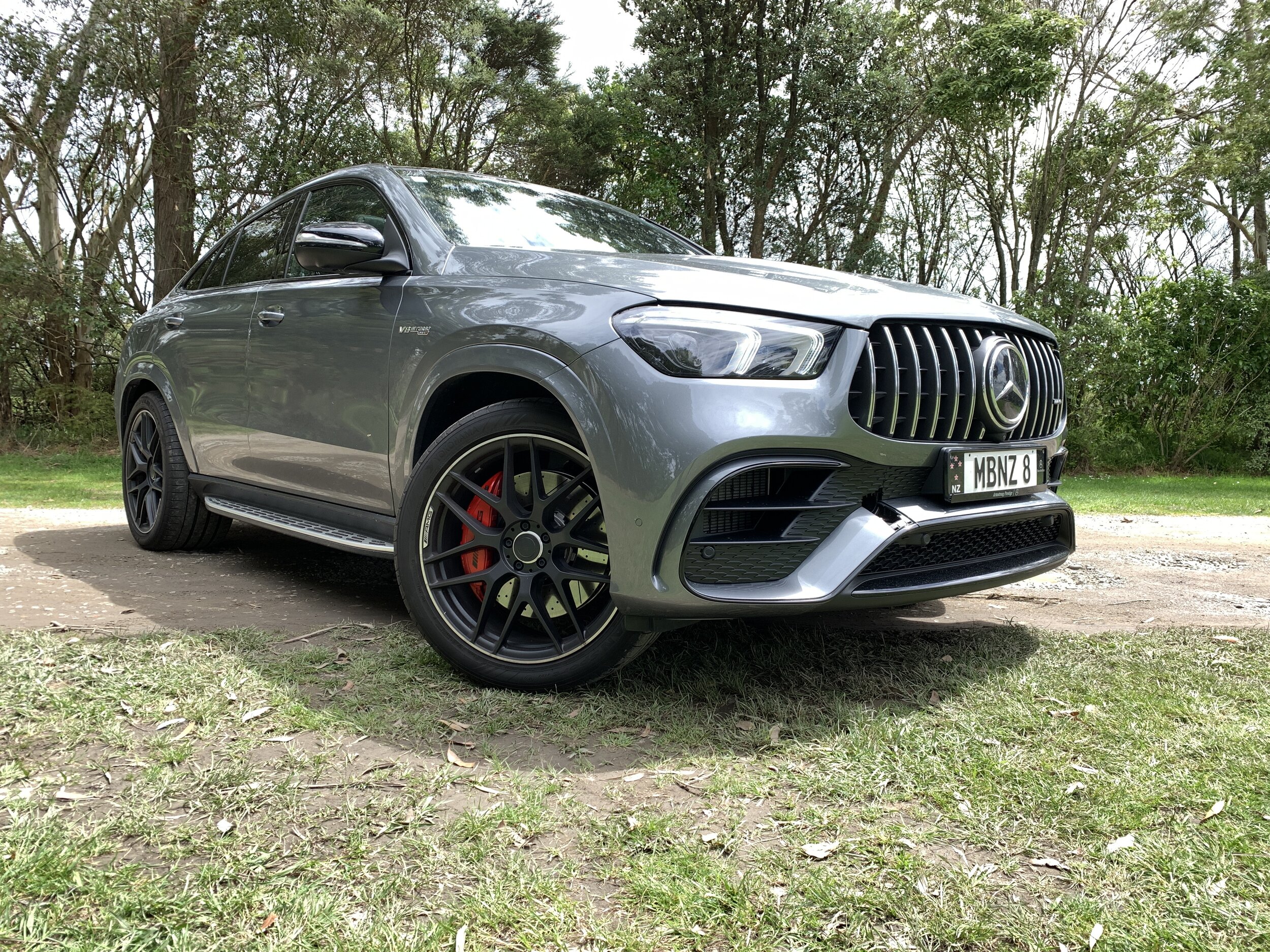
Starting at the top with the GLE, let’s say this: If you are chasing an expensive eight-cylinder experience in its most primal, ‘glam-bogan’ setting then the Coupe in full-fat AMG fitout is pretty hard to beat. It’s loud in every way. Even when not running, it’s a big enough noise to have the neighbourhood on edge. 

Nigh on quarter of a million bucks buys a lot of real estate; I’m not a total fan of this kind of design, but if you have to have to buy into a slope-backed SUV, it’s probably the best-looking of this peculiar breed, with an elegance about the rear-end treatment. While it's an imposingly muscular vehicle, it's not offensively gargantuan. The AMG elements of an airdam, colossal 22-inch alloys and trademark quad pipes at the back suit and some of the design detailing in stupendously good.

The interior is better still. Mercedes' MBUX infotainment screens are awesome for clarity and content and everything else is shot through with reassuringly high-class quality, the part-Alcantara, paddle shift-shod steering wheel being a particularly tactile delight. It's almost needless to say that the Coupe sacrifices both rear seat space and boot usability to its more prosaic wagon sibling, but the rear seating is roomy enough for tall adults. 

The packaging is really a secondary appeal; what you’re buying into here is powerhaus performance and, wow, does it deliver. To elicit such astonishing performance data as 0-100kmh in 3.8 seconds and a top speed of 250kmh, with more in store if you have the software to unleash it, from something that tips the scales at around 2.5 tonnes, you need power. Lots of it. Luckily, Affalterbach seems to have unlimited resources of the stuff. 

The other AMG cars here patently have potency, yet here the urge is something else still, bordering on downright astonishing. It piles on speed with utter disdain for any air stupid enough to get in its way.

And wow … the sound! AMG is one of the finest purveyors of V8 soundtracks and the biturbo at this level is no exception to this rule. It's fabulously deep-throated and resounding, with the requisite burbles and pops of the exhaust on overrun or when shifting gear.

What to do with this? AMG obviously has a game plan, but can you see yourself agreeing to play? I’ve seen AMGS at track days before, but they’ve generally been V8 sedans and coupes, plus the occasional A45. But always the hatch, not the sedan format seen here. And never a SUV.

And, yet, all three cars here definitely have the brakes, the suspension and the drive mode calibrations to enable a red hot go at fast lapping. Even so, as wickedly fast and racy as the GLC and A45 are, in this company they are both humbled by the GLE Coupe. It’s a total beast, thanks to elements that go way further than the usual ‘could if I wanted to’ nod of a fat Alcantara-trimmed wheel and quasi race seats up front, plus in this instance a carbon fibre trim kit.

 Here the suspension and drive modes span beyond the usual Comfort-to-Sport Plus provisions to include an outright Race setting that either relaxes or completely disengages some driver assists and turns the throttle, and gear change points, up to 11. It runs Yokohama Advan Sport tyres, a good choice for occasional circuit work.

The MMI menu includes a Track Pace page, you can select from racetracks around the world, and the screen will help you drive it better, showing not only delta times and absolute times but also instructional guides to best cornering points and “breaking points”. If any word had to mis-spelled, right. No New Zealand circuits are on the menu, but you can ‘import’ a layout simply by driving on it, then the application will map the track out. If you don’t want to risk the car in cornering, there’s a Drag Race function with its own set of bespoke telemetry and timing.

It’s so utterly Nurburgring-nutsy that you half expect to find a set of full logoed racing kit in the boot (it’s not, I checked). The challenge it lays down at every start up is so patent you just know the memory of seeing this goliath steaming hard around a track would be very special indeed. And yet, you know it would just be a fantasy; the probability of any owner meeting AMG’s expectation is simply so remote as to be negligible.

It’s not impossible to keep this explosive force contained in everyday driving, of course; but reality is that no more than a fraction of it immense oomph is being utilised in that situation and unleashing the rest, should you settle on any of the performance settings, is unnervingly easy. The awesomeness of the initial step-off is one thing, but what’s every bit as impressive is the tidal wave of thrust awaiting to unleash when you’re on the move; overtaking is ridiculously easy – the trick is learning to temper how it is accomplished; anything more than half throttle and it shoots forward at an incredible pace of acceleration.

The slightest lapse in judgement and … well, all you can hope for is a brilliant lawyer and a lenient judge. This is the sort of car in which just thinking about going fast can be risky; there’s nothing here to suggest the claimed 0-100kmh time of 3.8 seconds is a hard call or that there are any numbers on the speedometer that it cannot achieve. This is very much the big time.

There’s no getting around the fact that it can feel that way, though shorter than the GLE wagon, the Coupe is still 39mm longer and 7mm wider than the previous model and sits in the large car category; particularly in respect to width, which is noticeably accentuated in AMG format. That makes it quite a hulking sight on secondary roads, where it less fills a lane than subjugates it.

 Even so, it’s far from big-footed or clumsy; apart from having massive traction and grip and extremely decent brakes, it also very much benefits from having an active ride control that incorporates 48-volt active roll-stabiliser bars that, through offering continuously variable adjustable damping, result in deft handling and deliciously direct steering feel and accuracy that just don’t normally experience in this category. Ride comfort is also decent, even in the hard-out modes, though you do tend to dip into those at your peril; the car’s aggressiveness becomes all the more pronounced as soon as you switch away from a Comfort setting.
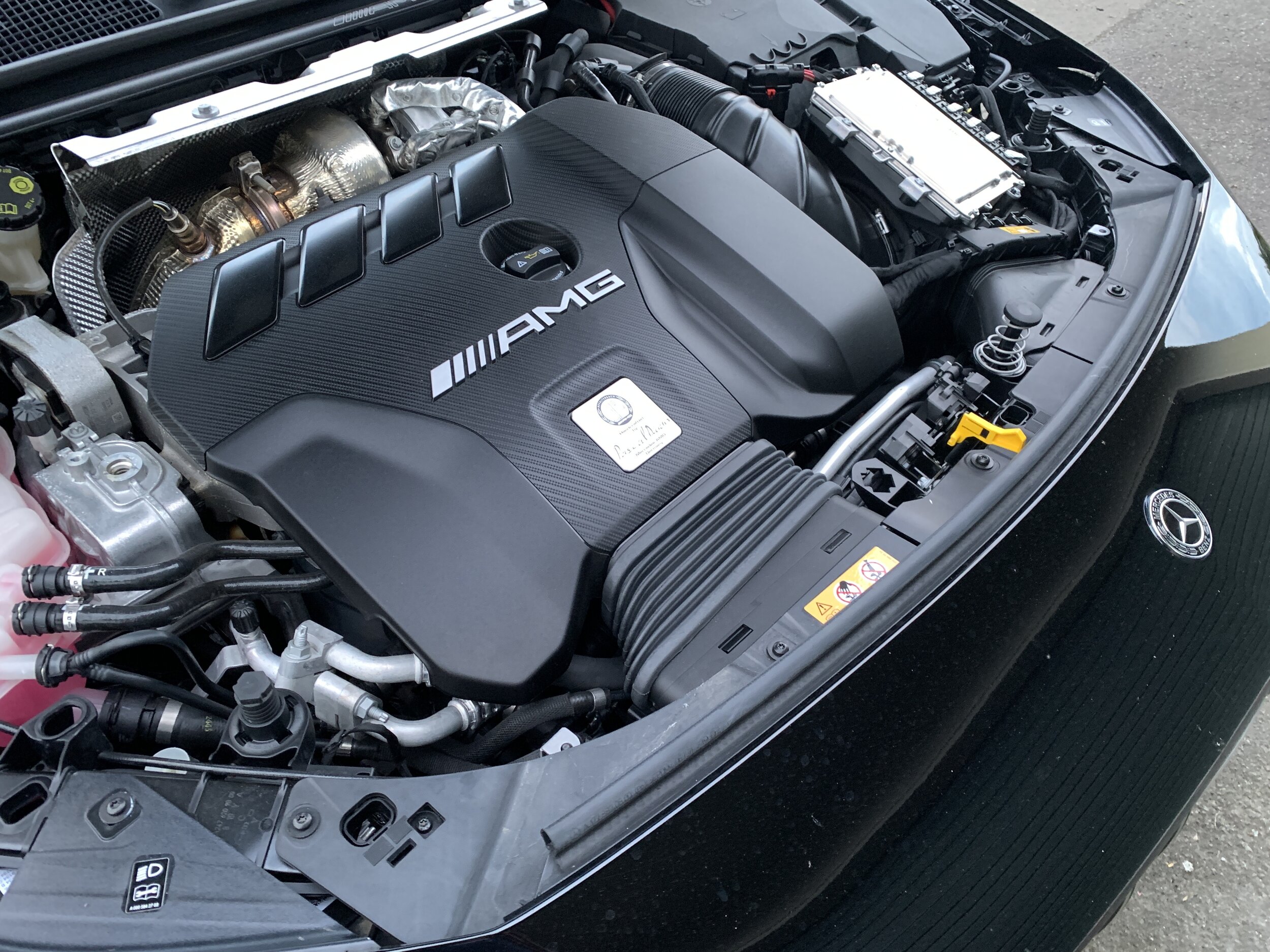
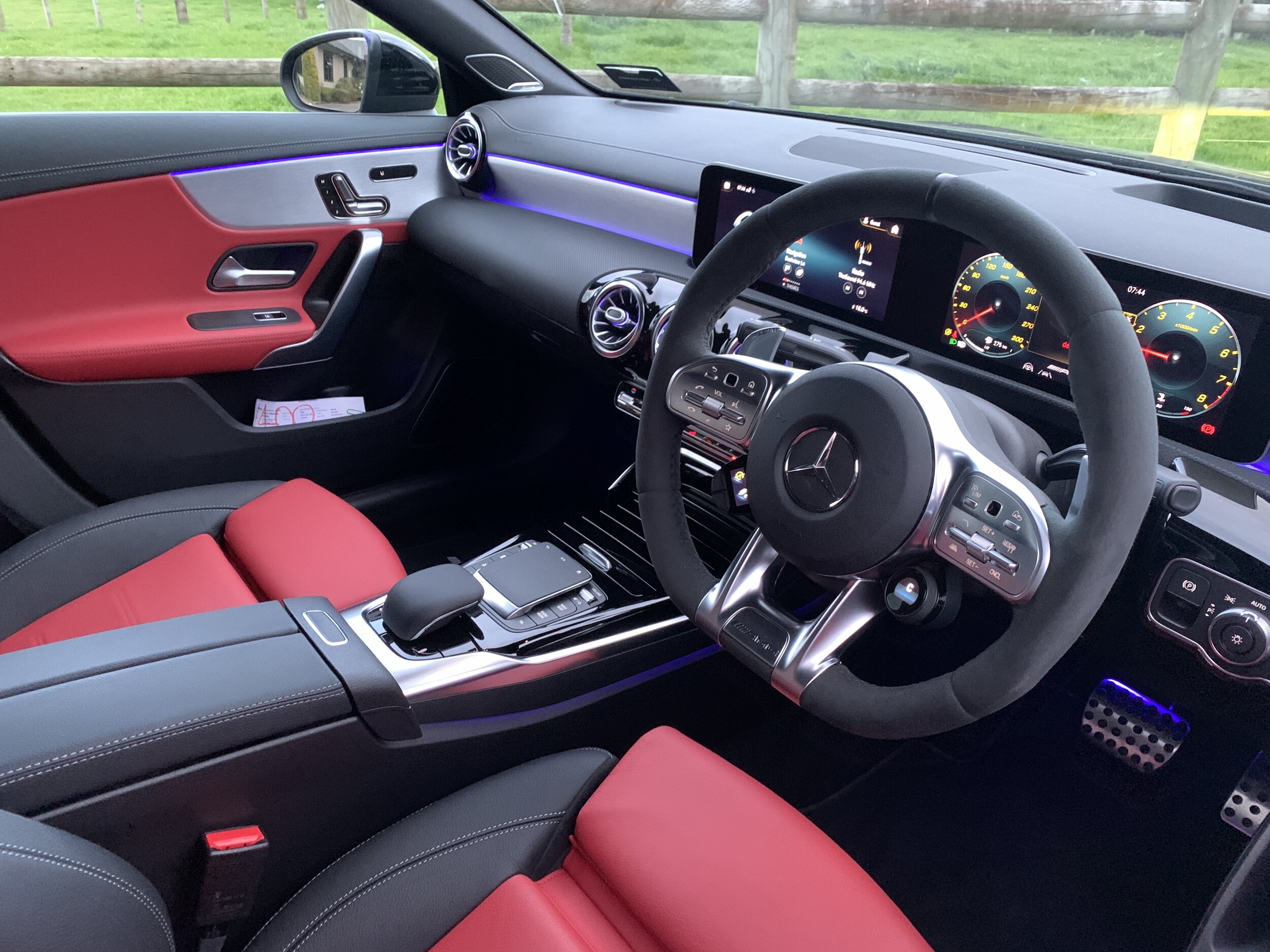
 Having the CLA 45 S and GLC 63 S as bookends to the GLE was an interesting exercise; neither are much slower and the CLA, having been dressed up with some interesting touches including chromium-finish alloys and delivering in an arresting red body colour (with a black Lugano interior), was really not much less extrovert in its kerbside appearance, yet they were undoubtedly easier vehicles to keep in check.

 The sedan positions as an interesting alternate to the A45 hatch; it has all the same attributes – all-wheel-drive, stonking engine, firm ride, nippy handling – and wins attention for having the appearance of a slightly-scaled down C-Class, albeit with more daring styling touches which remind that it’s genetic heritage is equally as relevant to the CLS.

 Establishing what it offers and why is an intrigue. You wouldn’t buy it as a C-Class alternate because the cabin is so much smaller; it’s a real challenge for adults insofar as rear legroom is concerns and that swoopy roofline really cuts into headroom compared to an A45. You might not buy it as a booted alternate to the A45 simply because the hatch is cheaper and also because the compact performance sedan market is … well, often overlooked.

 For all that, the car is far from undercooked. As much as an increase in track width and upsize in wheel dimension immediately sets it apart from the regular CLA, the extent of modification goes way further; with totally enhanced suspension, bigger brakes and so on. Dive planes on the front bumpers and a spoiler at the rear also give the car an aggressive look.

 The cabin is all but identical to that of the A-Class range and the AMG version gets the best of equipment. That means the full-width dual-screen setup for the instrument display, which looks excellent with vibrant colours and sharp resolution. You get a choice of control for the infotainment system, through the touch-sensitive tabs on the multifunction steering wheel or the large trackpad on the centre console.

 This 2.0-litre has the highest output ever generated for its capacity, so is patently a real firecracker, yet it’s not just the outright kapow that earns credit. As much as it might seem a cop-out, then engine’s civilised demeanour comes across as a bonus for daily driving; it can be smooth and even quiet if circumstances demand. You do have an active exhaust at hand, so more noise is easily achieved.

 Of course, step up the pace and the car becomes very feral; it’s really fun on tight winding roads, the all-wheel-drive lends huge confidence without sanitising the driving experience. The prodigious mid-corner grip is a standout feature and powering out of slow hairpins it has ability to surge forward at an incredible rate.

 With the sportier drive modes activated, it can feel more rear-biased, to the point where you can instigate dramatic rear-wheel-drift action with the Race mode, where the full talent of a trick rear axle, using an electro-mechanically controlled multidisc clutch on each half shaft to vary the power delivery from left to right, comes to the fore.

 Driving the CLA reminds how good the 'M139' engine is. Sure, you can understand why it is going to achieve electrical assistance for the job ahead, but in current state it is more than enough not only for a car of this size but those immediately above it.
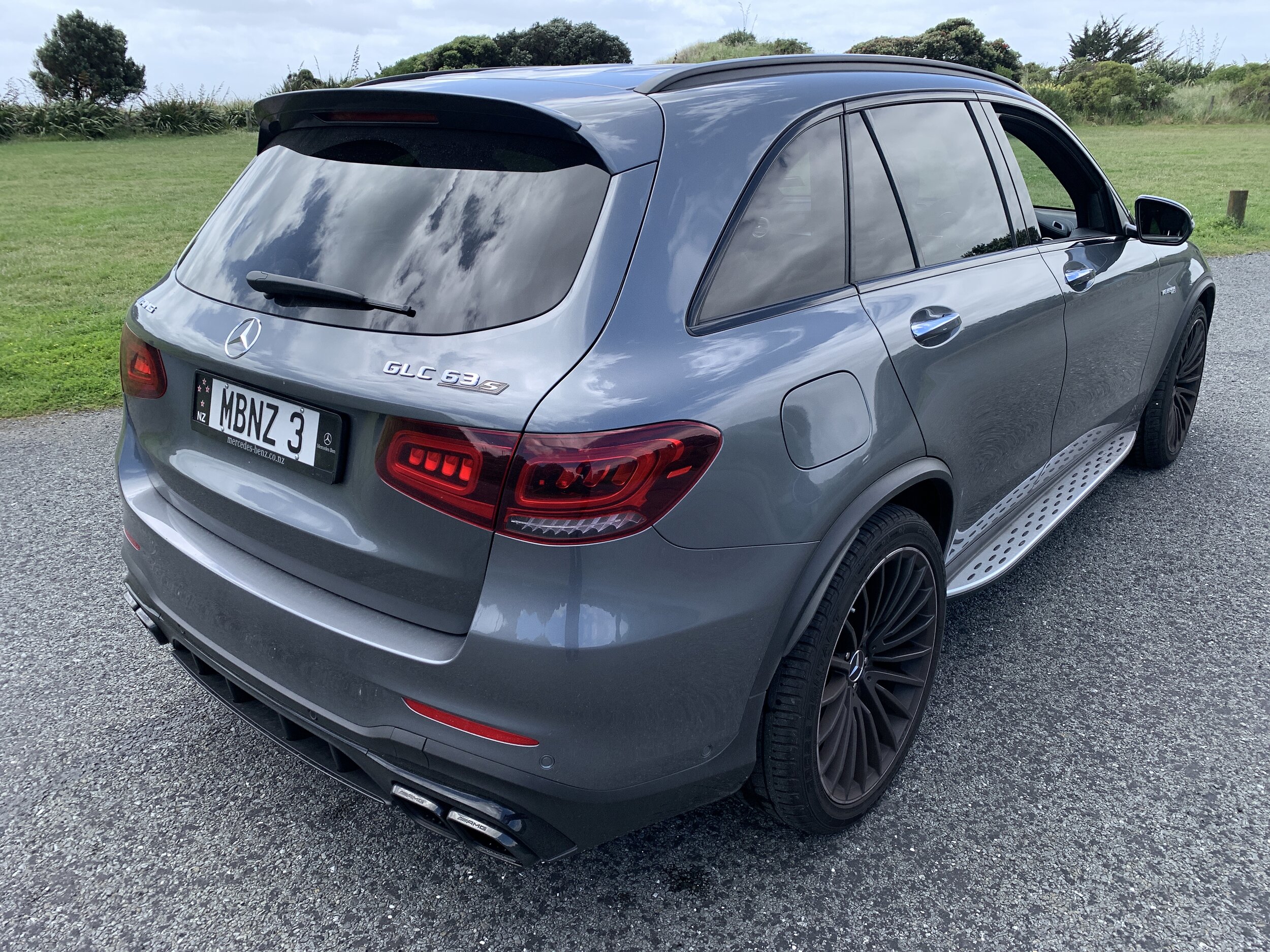
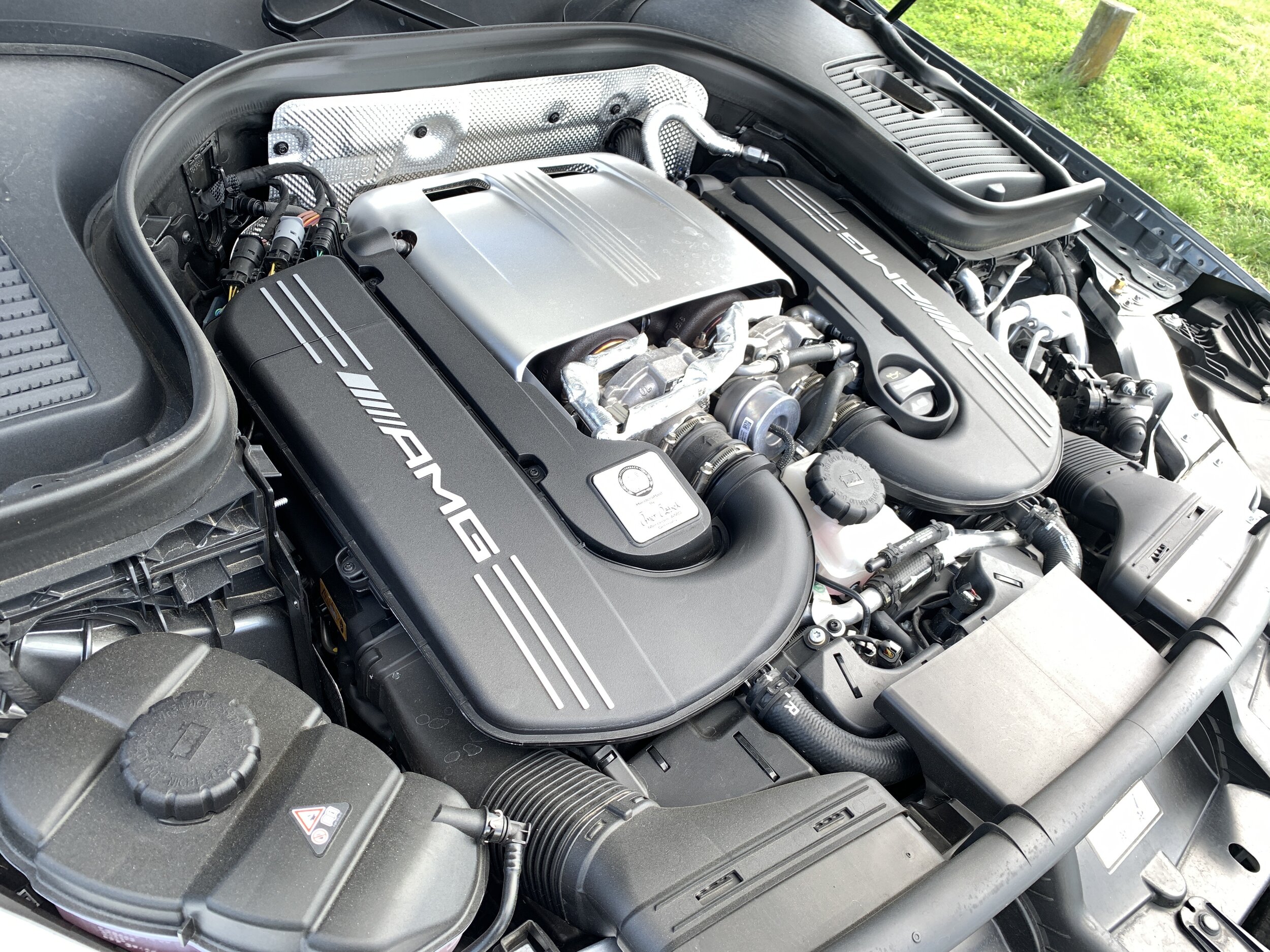
 That thought carried into the time with the GLC. It’s great with the V8 yet I cannot imagine it would be poorly served by taking the four-cylinder in the future, even just as it is now.

 The AMG is the latest of the current form GLCs to undergo a mid-life facelift that will likely carry it through to the point where the V8 retires and the new powertrain comes in. It’s certainly a car that deserves a good future, not least because it feels just so right-sized and conceived for our motoring condition.

 Being by far the most invigorating GLC carries obvious cachet, yet what also keeps this model looking good is that it potentially is one of easier AMGs to settle on when family friendliness and strong value also become important considerations. With this car, you can mount a truly valid argument on grounds of versatility and practicality; neither of those strengths are diminished by the road rocket configuration.

 Speaking of zoom, the 75kW/150Nm deficit over the GLE is less evident that might be imagined. Sure, it doesn’t sound or feel as fierce, but there’s still enough shove to warrant having that badge.

 As per the GLE, it has a nine-speed auto, with its wet start-off clutch instead of the usual torque converter to ‘optimise response to accelerator pedal commands’. The engine mightn’t snarl as brutishly, but it’s epic enough when given the boot, the gear shifts are just as snappy and it also entertains enough rear-prioritised driving feel to handle more like a rear-driven wagon than a fat four-wheel-drive.

 That electronically controlled diff lock does a great job but you cannot deny the positives from the newly-added AMG Dynamics electrical/software update that influences torque distribution, the locking diff and the stability control. In short, if were playing wing-man to the GLE, there’d be no great challenge keeping up, while for oncoming traffic the fact it’s so much smaller and less physically intimidating in look means it’d be a less frightening sight when met burling out of corners.

 The transmission is well-attuned to the tasks that AMG expects but the 4MATIC is what will keep you out of trouble. In thanks to fully variable torque distribution, it also factors more for fun than feel. Certainly, you learn not to let its size, semi-highish ground clearance standing or substance fool you – this thing will slip and slide with the best.

 The requisite mid-life visual changes inside and out are not huge; reworked LED headlamps, wider wheel arch claddings, redesigned LED tail lamps … that’s it for the external enhancements.

 The interior revision centres on adoption of the MBUX infotainment system, but as in integration that builds on the old layout rather than the full-blown version seen in the other cars, and the console gaining a new touchpad controller. The instrument cluster has been digitised too, with a multitude of AMG-specific displays, including Supersport mode to give you the low-down on Gs generated, power made, turbo boost levels, drive mode set-up, you name it. There’s also a new menu to data log your race track experience. How GLE, right?

 It also adopts the new AMG steering wheel and its dedicated buttons hanging off the spokes. Just like the regular GLC, the quality of the finish inside is excellent and though AMG Performance sports seats up front are bulkier than the standard items, they are no less comfortable.

 The stupendous thrust and exclusivity of an AMG does little to erode the high degree of practicality this model line delivers. Eligibility to tow seems unlikely – that’s not a thing for AMGs – but it otherwise looks reasonably well sorted as a family wagon. I’d be removing the sidesteps, though.

 OF the three models here, it’s the one that works best in the now. Of the two V8s, it’s the one that will adopt most easily to the new route ahead: It could be an epic journey.
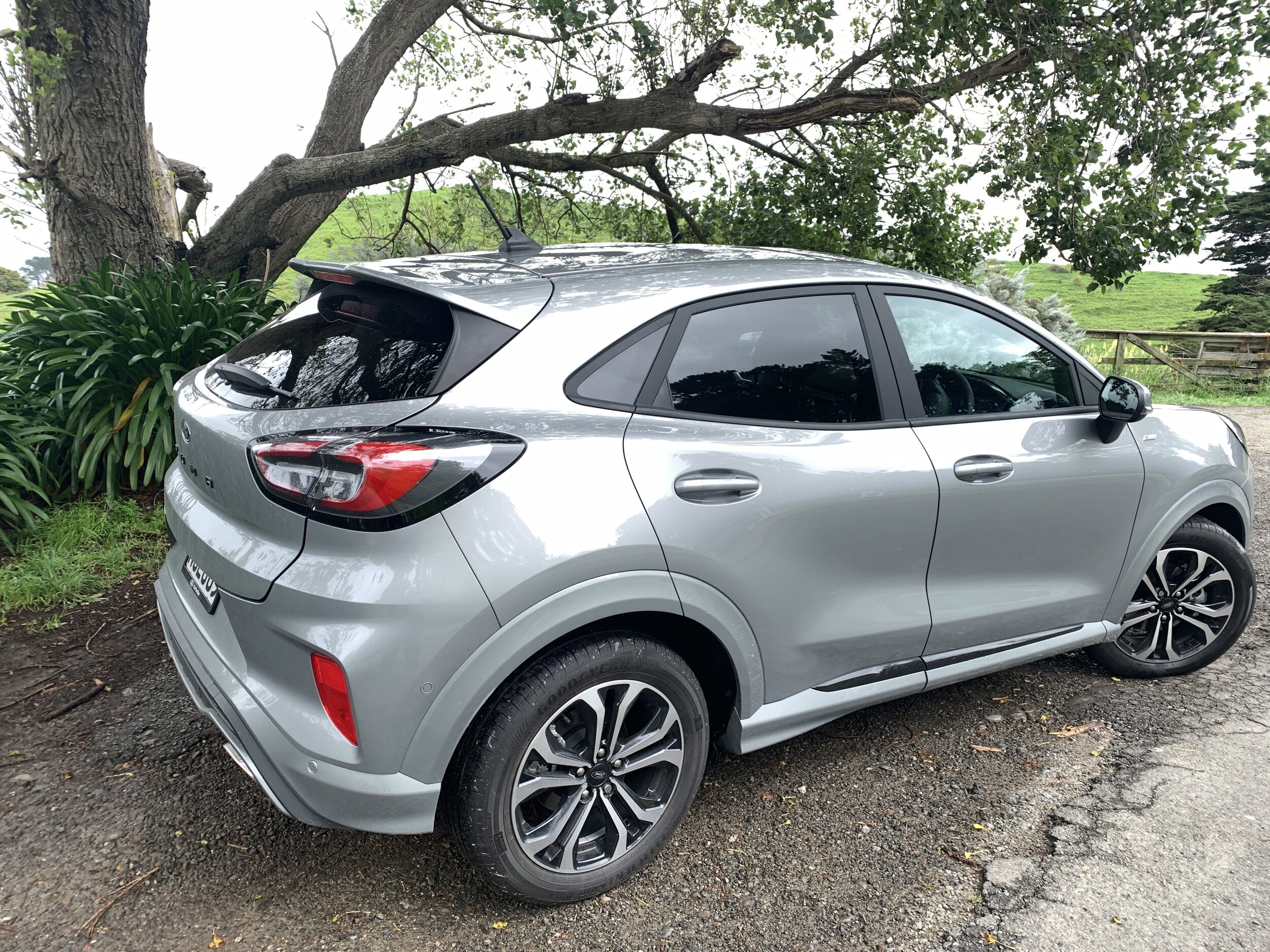


Ford Puma ST-Line: Back in the good books

Blue Oval’s latest small crossover mainly rights every EcoSport wrong – and should scare the heck out of category rivals. Shame it wasn’t a little cheaper.

IMG_7551.JPG

Price: $37,990.

Powertrain and economy: 1.0-litre turbo petrol three-cylinder with 92kW/170Nm, 5.3L/100km, 7-speed dual clutch transmission, FWD.

Vital statistics: 4207mm long, 1805mm wide, 1570mm high, 2588mm wheelbase, luggage capacity 468 litres, 17-inch alloy wheels.

We like: Equipment level, effervescent engine, great chassis.

We don't like: Slightly uncomfortable price zone; no 1.5-litre option.

A POOR drivetrain, second-rate finish, outdated infotainment and design awkwardness … for anyone holding conviction that crossovers, especially small ones, are the motoring equivalent of gunge on a shoe, the Ford EcoSport made for an easy target. 

It was terrible, delivering way too little, staying in the market way too long and serving only to make everything in the sector look great by comparison.

Unloved and unlovely, it demanded to be called out and I slept all the better for doing so. The best thing to be said about that car is that, as years of desultory sales suggest, it didn’t sucker too many cash-carrying consumers. 

Anyone who wondered how much embarrassment Ford felt about foisting that car on us for almost six years will find the answer in the replacement.

If ever a vehicle feels as though it’s here to make up for past wrongs, it’s the Puma: It’s the gift that’s required after you’ve made a total mess and need to do something truly extraordinary to put everything to rights.

After a week of driving, the only reason I don’t feel compelled to call the Puma a trump card is, well … America, right?

Like the preceding product whose name deserves no further mention, the Puma is a quasi-sports utility built upon on Fiesta underpinnings. Only this time the genetic modification required to create a crossover has maintained, if not actually enlivened, all the good DNA.

IMG_7561.JPG

When thinking Puma, it’s only right to also consider how it stands with the Fiesta given both are so closely related. They could be closer – I’ll get back to why in a moment – but it’s fair to suggest that if you know the hatch, you should know what to expect from the Puma: A mixture of good looks, incredibly sharp, engaging handling, and sensible old-school Ford practicality and mechanical simplicity.

Our market only takes the Fiesta in its ST hot hatch format, and has also selected the Puma with a less fiery drivetrain, yet perusal of the pricing sheets shows this hasn’t been enough to cause clear separation between the cars.

Regardless that the entry Puma has been launched with a tasty sub-$30,000 price tag (albeit a temporary inducement, the full RRP being $10 short of $34k), there is challenge with the alternate flagship ST-Line format as tested, in that it costs another $2500 over the $35,490 Fiesta ST. 

That premium would be easier to swallow had they common powerplants. Yet that’s not the case. The Puma delivers with a smaller capacity and lower output version of the three-cylinder petrol specific to this class of car; so, a 1.0-litre with 92kW and 170Nm against a 147kW/290Nm 1.5-litre.

Imagining a Puma with the larger unit? It does exist, as the Puma ST, a sister ship to the Fiesta flier, even more pumped for pep with another 30Nm but also tuned for similar dynamic result. I’d like to see it here. Perhaps you feel the same. Don’t hold hope.  

IMG_7565.JPG

It’s the gearbox. Puma ST is in the same camp as Fiesta ST; it’s manual or nothing. And while that non-choice is apparently fine for Fiesta ST cognoscenti, Ford NZ reckons it would be cold-shouldered by Puma buyers. Hence why we restrict to the 1.0-litre. It marries to a seven-speed dual clutch auto (a new gearbox with a wet clutch, not related to Ford’s previous and problematic PowerShift).

More relevant to the price premium a Puma ST-Line has over the Fiesta ST is the difference in equipment. As much as the Fiesta ST always seemed well-sorted, Ford has chosen the Puma to be a showcase for its best driver assist tech, so it picks up additional features that aren’t yet available to the hatch.

These include evasive steering assist, a more advanced (as it has pedestrian and cyclist detection) evasive steer assist, automatic park assist, all-round parking sensors (Fiesta is rear only), adaptive cornering lights, a power liftgate, a wireless phone charging pad and Ford Pass connectivity with an embedded modem, which allows remote checking, lock function and engine pre-start from your phone.

Standard across both Pumas are cruise control with adjustable speed limiting, emergency brake assist, a rear-view camera with 180 degree split view, speed limit sign recognition while the ST-Line adds black exterior detailing, paddle shifters on the steering wheel, auto high-beam, upgraded interior trim, full digital instruments, auto climate air, adaptive cruise and automatic parking.

The end result is that even though it hasn’t the punch to match a Fiesta ST, it does rather out do the hatch for panache; in the SUV, there’s a nicely quasi-premium air.

IMG_7559.JPG

So, there’s that to look at. Then there’s the look itself. A shape that suits some shades more than others was hugely appealing in the test car’s silvered grey metallic, which Ford calls ‘solar’. There’s just something about how this car sits and the smiley front end is a friendly element that’ll do no harm.

It's good inside, too. Yes, there's a lot of familiar carry-over from the Fiesta and the Focus as well, yet as much as that means a fair swag of dark plastic, and not all of it is soft to touch, it does deliver well for ambience and ergonomic quality, with a somewhat youthful aesthetic (check out the USB-C outlet next to the usual USB slot).

An analogue instrument cluster is complemented by a 4.2-inch TFT driver display nestled between the tacho and speedo, providing a host of information including speed sign recognition, fuel consumption and a digital speedo. It all works well enough and is intuitive to use and scroll through. 

Comfort is also good and though the cabin will not pass the Tardis test in respect to space in the rear, that section will be tolerable for children up to and including tall teenagers, as much as anything because there's plenty of head room. The front is plenty roomy. The boot is decent, by both the standards of the class and when compared to the Fiesta. It’s also highly practical, thanks to its clever height-adjustable floor and useful 80-litre MegaBox, a plastic-lined storage tub under the floor. Other storage options are also well considered, including a large central bin with two layers.

And now comes the bit where the engine gets bagged, right? Actually no. It doesn’t. For sure, it’s a wee thing and, yes, the outputs aren’t terribly amazing, but it really works hard to convince that a one-litre is well big enough for the kind of car it sets out to be.

The car was no sooner in my hands than it was put into a six-hour open road drive through which it was shown no particular mercy. No ignoring the lawful limits but certainly running right to those, particularly over the last 90 minutes after my wife phoned to say one of our dogs had decamped to a neghbour’s farm on a rabbit hunting spree and was showing no willingness to return (it all ended well).

IMG_7562.JPG

It needs to be rowed along, no argument, and you need to ready to manually stir the gear changes because sometimes the box can be a slow to react, but the effort it worth it. These tri-cylinder EcoBoost engines are really special and this one is eminently likeable. The higher it revs, the more effervescent it seems and though it doesn’t have the muscularity of the 1.5-litre – the 0-100kmh time is nowhere near as athletic, nor the cited top speed – it is a very willing, sweet, little engine, with surprisingly strong spurts of acceleration and a gently fruity exhaust note, too.

The overall abiding memory from our time together is that, even when given the stick and lots of redline-heading hand-shifting, it simply sips petrol; Ford’s claim of 5.3 litres per 100km was never touched, but on the big run alone it sat on 6.1, which I thought was pretty fare given the driving condition. The only reason I was almost out of petrol by the end of the run was that it has a small fuel tank, just 42 litres.

It’s not just this engine that makes the Puma a rewarding drive. The steering is just wonderful, communicating all the time and allowing you to feel every nuance of what the car is up to. 

The rest of the chassis keeps up, too. It’s the car the EcoSport never came close to being. The widish wheeltrack lends something a settled feel in cruising, but it’s only secondary roads with loads of twists and turns where Puma really becomes deeply impressive; it really makes the most of the Fiesta’s gifted chassis and its agility and confidence through bends is truly immersive. It’s a more involving and engaging experience than comes from Ford’s other newly-released SUV, the Escape, and surely that’s a result of the different genetic compositions, the latter being rather less Euro-centric.

If there’s perhaps one bugbear, it’ll be the ride quality. Those 215/55 17-inch tyres offer great grip, and from an aesthetic perspective the rims look decent, from the comfort perspective, there’s some cost, with a degree of jiggle and fidget over coarse chip, where tyre roar also becomes evident. Drivers might not mind, but passengers do tend to comment. 

All in all, though, this is a car that deserves consideration. The small-compact crossover category is very much a shoppers’ paradise at the moment, and the Puma has some stern opposition from all the over place. The year began with the surprisingly engaging and strong value Kia Seltos making a play and since the Puma came along Toyota has introduced the Yaris Cross.

 This version would be better if it had price equality with the Fiesta ST; yes, with Puma you get a bit more kit, but it’s not easy to argue why a smaller, less power engine should carry that premium. And while latest European design and build clearly comes at price, let’s not forget it also sources out of one the cheapest places to build cars, Romania.

Nonetheless, the ace cards are that it is strongly outfitted, has an interesting styling and drives and handles far better than it ought to. It’s the complete antithesis of the EcoSport in that regard – and, so, also proof that Ford now at least understands a small crossover needn't be a cynical marketing exercise, and can actually be as entertaining as it is practical, and that neither of those need be a compromise.


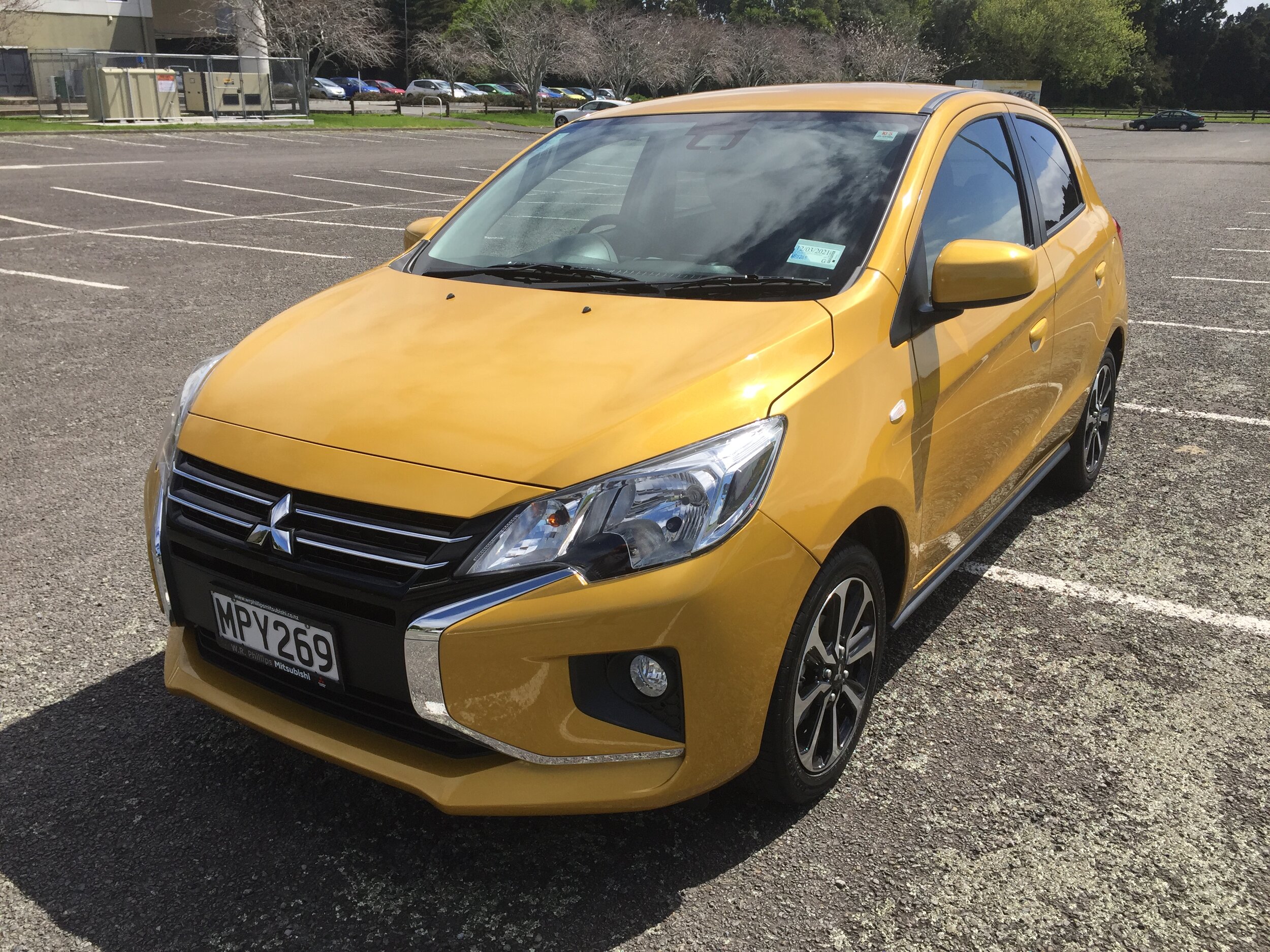
Ageing Mirage no longer a hoot

Mitsubishi’s facelifted and safer Mirage hatch remains one of New Zealand’s value motoring packages – if you can put up with that annoying noise.

IMG_8023.JPG

Mitsubishi Mirage XLS
Price:
$21,990 (down to $19,990 on special)
Powertrain and performance:
 1.2-litre three cylinder DOHC MIVEC petrol engine, 58 kW at 6000rpm, 102 Nm at 4000 rpm. Continuously variable automatic transmission. Fuel consumption 5 L/100km, emissions 115 g/km CO2.
Vital statistics:
Length 3845mm, width 1665mm, height 1510mm, wheelbase 2450mm. Luggage space 235 litres. MacPherson strut front suspension, torsion beam at the rear. 15-inch alloy wheels with 175/55 R15 tyres.
We like:
A motoring value package, excellent safety specification for the price, good interior room, easy to drive.
We don’t like:
That pronounced engine noise.

YOU’VE got have a certain amount of the affection for the Mitsubishi Mirage. But does it have the goods today for that affection to last?

For several years from the early 1980s the little hatchback was good enough to be the backbone of the brand’s market presence in New Zealand, to the extent that not only did it account for 35 per cent of all hatchback sales here, but it helped Mitsubishi rule as the country’s most popular new vehicle brand with a market share of close to 19 per cent.

These days it is Toyota that dominates, with sales more than double those of any other vehicle brand. But Mitsubishi continues to do well all the same – year to date it is in third place behind Ford with a share of 8 per cent.

But just like every vehicle brand, it is achieving its market share largely via ute and SUV sales. Triton ute and the ASX and Outlander SUVs all feature in the list of New Zealand’s top 10 best-selling  vehicles.

And as for Mirage, these days it’s well and truly out of the sales limelight as it performs its duties as the smallest, most economical and least expensive Mitsubishi on offer.

I suppose you could say the Mirage is now living the quieter life, which is probably reflective of the more senior age group that buys this type of vehicle.

IMG_8031.JPG

This year the Thai-built car received its second facelift, with exterior changes including a fresh take on Mitsubishi’s so-called dynamic shield design language. In other words, Mirage has a new nose complete with chrome detailing. The model also sports new 15-inch alloy wheels, and daytime running lights.

Interior changes include a black-on-black colour scheme with – you guessed it – black fabric seat material. There’s also a new combination meter cluster, cruise control is now standard, and the car gets its own unique smartphone link display audio (SDA) system that is compatible with both Apple Carplay and Android Auto.

It’s all rather good. So too are a number of safety features that have been added to the Mirage as part of its facelift.

The little car now has lane departure warning, forward collision mitigation with pedestrian detection, and a reversing camera with its view displayed on the hatchback’s 7-inch central touch screen.

All of that is an addition to numerous existing safety features that include active traction control, hill start assist, four-wheel ABS with brake assist, and driver, passenger, side and curtain airbags. All of that contributes to the five-star Ancap crash safety rating.

So the 2020 Mirage boasts a fresher look, improved interior, and it carries great safety specification for a model that currently retails for $19,990. All of that helps keep the model up to date, despite the fact it has been on the New Zealand new vehicle market since 2013.

But what is falling behind is its drivetrain.

Mirage continues to be powered by a 1.2-litre three-cylinder DOHC MIVEC petrol engine that develops 58 kW of power and 102 Nm of torque, mated to a continuously variable automatic transmission.

This CVT has a two-step planetary gear set that is designed to better match engine revs with the job at hand, and when the vehicle was last facelifted in 2017 the transmission was re-mapped to improve vehicle acceleration.

IMG_8038.JPG

I remember when the Mirage was first launched seven years ago, and even when it was facelifted three years ago, many critics enjoyed the experience of driving the hatch with its three-cylinder engine, with one fellow journo even going so far as to describe it as a “hoot”. In retrospect I suspect this wasn’t so much because of any lightening acceleration but more because of the car’s pronounced three-cylinder engine note.

Triple-cylinder engines traditionally have a rougher sound because there’s a slight gap in the timing of their four stroke internal combustion cycle. Trouble is many other car manufacturers have succeeded in reducing this engine note, while Mitsubishi hasn’t.

There are numerous cars with three-cylinder engines out there, too. They range from the more expensive Audi A1, through the more reasonably priced product such as Volkswagen Polo, Skoda Fabia and Ford Fiesta, to the very small product such as Suzuki Celerio.

In more recent times we’ve also received the latest Toyota Yaris and Ford Puma, both of which are powered by three-cylinder engines of varying sizes – culminating in the Yaris GR which pours 200kW out of its little triple.

I suppose it has to be said that the Yaris GR’s engine is 1.6-litres and turbocharged, while the Mirage’s unit is 1.2-litres and normally aspirated, so in a motoring sense they are as different as chalk and cheese. But other product such as the Fabia and the new Puma come closer in terms of engine sizes, and they are much quieter and more powerful.

But then again neither of those vehicles retail for less than $20,000, and that is what helps to keep the Mirage relevant in the small car class. It’s one of the least expensive cars you can buy, which helps present it as one of the value packages when all that new standard safety specification is taken into account.

And it remains an enjoyable drive too, although these days the experience is no longer a “hoot”. The car is easy to operate, there’s good interior space and comfort for the vehicle size, and it is safe. But it is also noisy, which is why this generation Mirage is now showings its age.

IMG_8022.JPG


Audi E-Tron 50 Advanced, e-Tron Sportback 55 S Line: Down to Earth, out of this world


Two additions to this electric SUV line reinforce why this tech can work for those who care to give it a go.

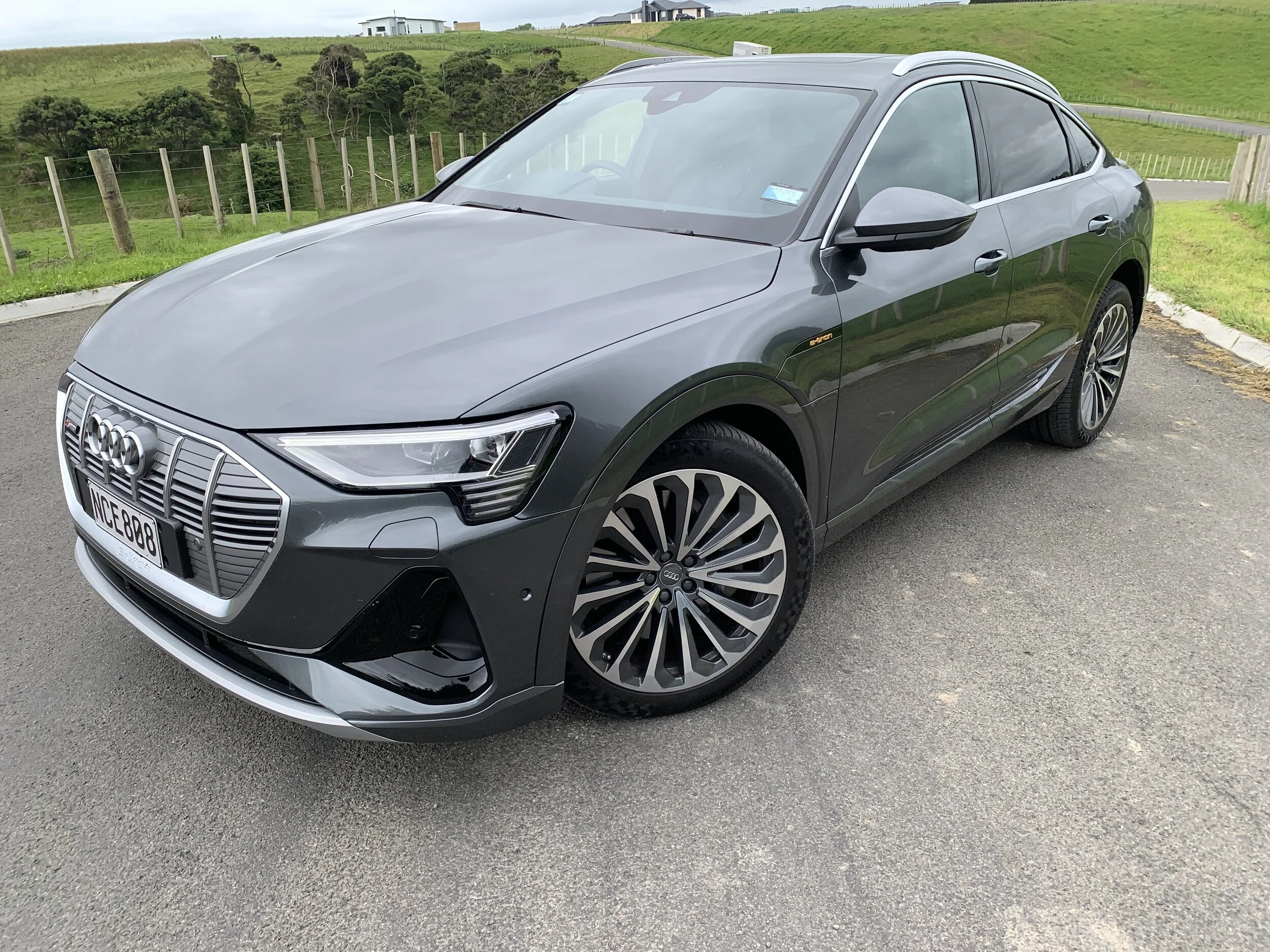
E-Tron 50 Advanced (above) and Sportback 55 S Line differ considerably in styling, specification and price, but both do an equally strong job of convincing why electric can work.

E-Tron 50 Advanced (above) and Sportback 55 S Line differ considerably in styling, specification and price, but both do an equally strong job of convincing why electric can work.

IMG_7675.JPG

Price: $119,500; $169,900.

Powertrain and economy: Two electric motors, 71kWh/91kWh battery pack, 230kW/540Nm; 300kW/561Nm (600Nm under boost), Single-speed transmission, 4WD.

Vital statistics: 4901mm long, 1935mm wide, 1616mm high, 2928mm wheelbase, luggage capacity 660 litres, 21-inch alloy wheels.

We like: Refinement, efficiency, ride comfort, quality build and design.

We don't like: Charging port would be better located in the nose; no superfast DC chargers where I live; hearing all those ‘glorified golf cart’ jokes.

 THIS time last year, the Audi e-Tron was an ‘it’ – now it’s a ‘they’ and the three around at the moment will, by this time next year, be joined by two more.

Still think electric cars are on the fringe? Low penetration in this country is no accurate barometer; almost all mainstream car brands we get to experience are plugging in, as are entire countries.

The United Kingdom made headlines with intent to ban sale of new fossil fuelled cars and vans from 2030, but it’s just following a Scandinavian trend. America’s giant car makers have signalled commitment to an electric future. China is already the world’s largest producer and customer for battery cars, with more growth ahead, and even with coronavirus, forecasters remain confident the market will be worth more than $900 billion by 2025. 

Hearing Audi NZ boss Dean Sheed recently express conviction that electric fare will account for 20 percent of his national volume in 2021 seems brave, but if anyone knows this market it’s him.

On that note, it’s good to see Government – which already has some e-Trons – is now pushing EV and hybrid adoption in its departmental fleets. Few countries are better positioned than ours to plug in to this tech. Almost all our electricity is from renewable sources.

Who knew, right? That’s the problem: Too few Kiwis are investing any level of interest. Our problem is a sheltered attitude; it’s hard to feel concern over Green issues, pollution and raising CO2 levels when you live in comfortable conditions. If only the rest of the world had it so easy.

IMG_7457.JPG

We still fret over range, cost and charging infrastructure; we’ve become deluded into imagining used and parallel import cars are a better choice; we still imagine EV choice contains to used import Nissan Leafs and new Teslas. We want to wait until Government provisions a subsidy. We’ve become riled by the dark side of battery-making, though that angst is not unjustified, let’s best remember oil production doesn’t occur without environmental harm either, and so much more cobalt and lithium has already gone into cellphones and laptops.

Yes, there’s a dark side: Making EVs generates high levels of greenhouse gas emissions, mainly because of the battery packs and other environmentally expensive materials, yet the environmental impacts are consistently being improved. Just recently, one German make (not Audi) announced intent to reduce its production line CO2 emissions by 80 percent by 2030.

In any event, for all the issues, change has to happen. While we don’t have to abdicate fossil fuel reliance right now, or even for years to come, making time to get to know and understand the new way is no bad idea, either.

On that point … deep breath, calm down fella … back to the e-Tron. What started out just a year ago as a single medium-large sports utility wagon (yes, I know about the preceding A3-based hybrid ‘e-tron’ that debuted this name, but for sake of argument let’s ignore it) called the ‘55’ is now bookended by a ‘50’ wagon lookalike that sits lowest in the price chain and a Sportback with a racier-looking body that places as the new pinnacle. Temporarily. It’ll be pushed down the pegging by next year’s performance-themed S and RS models.

Everything here now relates at base level: All SUV-style five seaters with towing and even off-road ability; a common platform, common battery tech, same core styling, the same all-wheel drive with an electric motor for each axle. All chasing the same tech-savvy customer.

IMG_7461.JPG
IMG_7668.JPG

Spend up, spend down. The latter appeal comes with the ‘50’, though ‘just’ $119,000 is still a decent sum, it’s $30k lower than a ‘55’ has been and, while the flavour is less intense, you still get the right taste.

There’s a little less plush – but not too much; a lower grade of leather, a couple of fewer comfort functions and some haptic controls become push buttons here – but mainly the savings are the drivetrain tech being detuned a bit.

The Sportback is at the other extremis; it is effectively a coupe-bodied alternate to the highest priced e-Tron wagon, the $155k ‘Advanced’, with specifications and comforts mirrored, but an $11k premium. It’s a Grand Tourer, with extra flair, yet hardly a show pony.

Audi quotes 0-100kmh in 5.7 seconds in Sport mode (power boosted to 300kW), dropping back to 6.6s in 265kW Normal, there are extra drive modes to enhance the dynamics and the 21-inch alloys are shod with 265/45 PremiumContact6 rubber. All of which contribute to it feeling sharper and quicker-witted on the road than the e-Tron wagons.

The ‘50’ is more relaxed and almost 2s slower in the 0-100kmh race, but no surprise there; the usual 91kWh powertrain being usurped by a 71kWh unit adds up (or down?) to 14 percent less power (230kW versus 265kW), four percent less torque (540Nm versus 561Nm). It charges eight percent slower (120kW versus 150kW) and delivers a lower range.

In that respect, the official optimals of 347kms’ versus 446km are very much ‘perfect condition’ figures. From this experience, the ‘50’ is more like a 290-310kms performer and the Sportback gives 370-390kms. Climatic condition can hit; a lot more depends on driving style. Leadfooting is as damaging here as with fossil-fuelled vehicles.

In absolute dimension e-Trons sit between Audi’s Q5 and Q8, yet slip inside and you’d imagine they’re larger still. Sure, the Sportback’s sweeping roofline erodes the wagon format’s generous rear headroom and boot capacity, and you sit a little higher than in a regular SUV due to the cabin being atop a foundation layer of battery, yet not having an engine, driveshafts and all the guff means the interiors are surprisingly spacious and considerably less cluttered than in a Q car.

 The lack of a transmission tunnel allows Audi to implement a large multi-purpose storage area, complete with a smartly designed sideways-facing wireless charger and covered cubby with flip-out cupholders, between the front chairs.  

Aside from that, and an interesting sliding drive selector, each feels much like an Audi Q7 in terms of comforts, ergonomic approach and general design. Lots of screens, near-perfect build quality. A good place to be.

IMG_7671.JPG

In either boot space is excellent, with up to 615 litres in play with all seats in use, and a further 60 litres up front in the 'frunk'. There's also another clever storage tub under the boot floor.

About replenishing: Few topics are as - if you'll pardon the pun – as highly-charged, right? It’s true, EV life demands a new approach: There’s no splash and dash at the pumps with electrics and battery size also influences (the 50’s draw rate is slower than the Sportback’s).

The ChargeNet franchise that Audi partners with has 144 DC rapid charging stations in the North Island and a further 65 in the South, plus at least 300 AC charge points nationally; an infrastructure so robust that, generally speaking if you’re running an electric car with 250kms’ range or better, then all real and perceived anxieties and challenges are by and large addressed. Yet in my area there’s generally only one ChargeNet unit per town. Even though you rarely have to wait, it doesn’t feel enough.

If ownership is considered, get a three-phase wall box for overnight charging and try to graze at the public options when necessary. Overnight charging also allows opportunity to fully recharge to 100 percent; in the public arena it’s better to stop at 80 percent for two reasons. First, the rate of charge over that last portion to ‘full’ slows significantly to protect the cells from the high temperatures involved in such high electrical currents. Also, it’s apparently not cool etiquette to do the 100 percent thing on a ChargeNet site; I encountered another EV driver trying (unsuccessfully) to unplug the Sportback over this point.

IMG_7466.JPG

Moving on. Or more accurately, moving off. Cars are cars are cars, but EVs are quite different right from start up (which you don’t hear) and step-off, which just a matter of slotting into Drive.

 What really impresses about the e-Trons is how they impart as real cars, with a feel that’s typical Audi, actually. Not hugely driver-oriented, but solid on the road, well-balanced and secure and effortless in their performance. Yet, they feel like cars.

Different? Sure, but it’s a good kind of different. Largely silent running, instant torque, the regenerative braking, the sense of everything being more relaxed – these are such intrinsic character differences with fossil-fuelled cars. That and the lack of a soundtrack.

 Yes, I know what you’re going to say: We’re used to sound equating to sense of ‘soul’. Audi is a brand born in noise - When it, Horch, DKW, and Wanderer brought the four-rings motif into life through forming their Auto Union, an early act was to start a racing team that begat the world's first rear-engined racing car, the staggering V16 Type-C.

All the same, I can’t see the e-Trons as being traitors to that history.  If anything, these cars being uncannily noiseless is actually a plus. The ‘50’ is particularly good at this; if the road is smooth enough, you can hear the birds chirping while driving. With the windows up.

 Without an engine to infiltrate, you don’t find it necessary to run the stereo loud, can talk on the phone (via CarPlay, of course) in conversational tone and get hooked on the air con fan being too loud. (on that note, you also discover the air con takes more time to get to temp without an engine involved).

 Do EVs make for safer driving? Running on batteries is calmer, more peaceful, less stressful, more thought-provoking. You certainly find yourself thinking more about space management, your surroundings, what’s ahead, particularly if achieving best efficiency becomes important.

 As but one example, when approaching traffic lights, I became rather fixated on how to best to glide to the perfect stop. Get it right and the regenerative brakes allow you to pilot it almost on the accelerator alone. There’s no stop-start, of course, you just sit in silence, waiting to schmooze off again. The operability couldn’t be more different to a fossil fuelled experience, but it reminds why electric assimilates so easily into urban driving, even if cars of this size really are too large to be considered truly city-friendly.

IMG_7469.JPG

 On the open road, they’re defiantly imperious cruisers. Electric cars are heavy and these clock the scales at around 2.6 tonnes. They feel weighty. But not weighed down. The benefit of all that mass is that these are the most comfortable cars to come out of Audi in a generation. That side of thing really plays out positively when you simply have to go with the flow. As much as the demeanour isn’t overly dextrous, pretty patently when you push the limits, they do a good job of wafting along.

 Acceleration-wise, you do notice the mass of both initially from a standing start, but once you're past 40km/h, the Sportback in particular is not at all lacking. And that’s before you tap the drive selector back once into 'S' mode. That enables 'Boost' mode, which gives you access to extra torque for eight-second stints. It’s not Tesla-beating, but still seems naughtily berserk. As with pretty much all EVs, that performance tails off as you reach higher cruising speeds, but the coupe in particular does a good job of keeping the propulsion going. 

 Either way, you can rely on a very efficient quattro system. How they’ve achieved calibrating the twin motors to emulate a 'virtual' all-wheel-drive system is the work of genius; but it’s fantastic. Audi’s confidence about how this system can augment itself faster than any mechanical set-up is supported when you drive these cars on gravel; the cited reaction time of just 30 milliseconds means you cannot outwit it.

 Good, too, are the brakes, which deftly judge the changeover from regenerative braking (where the electric motors slow you down, recovering otherwise lost energy for the batteries as they do so) to mechanical, friction brakes. That regenerative effort is helpful, especially around town, for keeping your battery from depleting too quickly.

 Convinced? Well, chances are the answer will be ‘no’; no matter how good electrics are – and these are pretty good – it’s just really hard to break our addiction to fossil fuels. I have yet to do it. And yet, it’s cars like these that make me think more positively about why I should.

IMG_7471.JPG


Toyota Yaris Cross GX hybrid: Moving on up

Timing couldn’t be better for a new Toyota compact SUV that’s basically a Yaris in name alone.

IMG_8279.JPG

Price: $33,990
Powertrain and economy:
1.5-litre three-cylinder petrol engine, 67kW/120Nm, total hybrid system output 85kW. Continuously variable automatic. Official combined economy 3.8L/100km, CO2 86g/km.
Vital statistics:
4180mm long, 1765mm wide, 1590mm high, 2560 wheelbase, 16-inch alloys and 205/65 R16 tyres.
We like:
Looks distinctively different to Yaris hatch, impressive interior room, good ride and handling, hybrid economy.
We don’t like:
Lane trace assist is quite touchy, rear doors don’t quite open wide enough.

TALK about perfect timing. At the very time when compact SUVs take over as the most popular model type in New Zealand, Toyota introduces its first-ever offering in that market segment.

The vehicle is the Yaris Cross, which is related to the new Yaris hatch in that it is built on essentially the same platform, has the same petrol and hybrid powertrains, and boasts pretty much the same interior.

But it is in fact a much different vehicle. It doesn’t share any body panels, it is bigger and rides on a longer wheelbase, and has the SUV-style higher ride height via 30mm greater ground clearance.

All this means that although Toyota New Zealand is happily marketing the Yaris Cross as a member of the Yaris family, just as it is with the stonking little Yaris GR hot hatch, the reality is it is a separate model.

And that places the vehicle in a perfect position to take full advantage of the booming state of the compact  SUV segment.

Consider these statistics. Last year it was medium SUVs that were the most popular passenger vehicle genre with a 19 percent share, while the compact models held 15 percent. But this year to date to the end of October this gap had closed to 20 percent for mediums and 19 percent for compacts – with a feature of October’s sales being a complete reversal of fortunes, with the compacts taking 23 percent and the mediums 18 percent.

IMG_8269.JPG

Expect that gap to become more pronounced over the last months of 2020, because since the end of October we’ve seen the arrival of Ford’s nice new Puma as well as the launch this new addition to the Toyota SUV lineup.

And something that gives the Yaris Cross a potential edge over all the competition is that it is available as a petrol-electric hybrid. In fact the majority of the Cross models on offer are hybrids. The range begins with a standard petrol-engined $29,990 GX, and then moves into the hybrids – an entry GX for $33,990, a higher-spec Limited for $38,990, and topping out with a Limited with two-tone paint scheme for $39,490.

It all impresses as a rather intelligent pricing structure. The entry GX petrol’s list price is exactly the same as several other small SUVs currently on sale here including the Honda HR-V, Hyundai Venue, Mitsubishi ASX and Suzuki S-Cross.

And then there are the hybrids, which are unique in the small SUV segment. So really, it could be said that from the powertrain technology perspective the only vehicles the Yaris Cross hybrids compete against are other Toyota hybrid SUVs – the slightly larger and more powerful C-HR which costs from $36,990, and the medium-sized RAV4 from $38,990.

In many respects it is notable that the Yaris Cross has arrived in New Zealand at roughly the same time as the Ford Puma. That’s because they have a certain similarity of looks, both of them light years away from the more traditional SUV-lite design menus of other compact SUVs currently on the market.

Maybe it’s because of their European design influences – the Puma is a Ford of Europe product and is assembled in Romania, and while the Yaris Cross comes out of Japan, it is the result of a collaboration between Toyota design studios in Europe and Japan.

Compared to the swept looks of the Yaris hatch, the Yaris Cross has more chunky and rugged styling, particularly a distinctive frontal area and big squared-off wheel arches. As I said before, it doesn’t share any body panels with other members of the Yaris family.

IMG_8288.JPG

While the Cross shares Toyota’s new TNGA-B vehicle platform with the hatch, it has a slightly longer wheelbase, the bodyshell is 240mm longer, and the roof is 90mm higher, all of which translates to superior interior room.

Our drive has been in a GX hybrid, which being an entry model is fitted with 16-inch wheels and tyres that to my eyes don’t seem quite big enough to fill the vehicle’s very large squared-off wheel arches that are framed with protective cladding. The Limited models have 18-inch wheels which I’m sure would look better.

Yaris Cross is a nice-looking small SUV though, with a particularly distinctive frontal design. The rear opens up to reveal 390 litres of load space with all seats in use, which is among the best of the compact SUV class, and the cargo area features a rear seat that can be split 40/20/40, and a 60/40 split adjustable deck board, for better versatility of use.

Interestingly, the Cross is also rated to tow 400kg. Being a hybrid, that’s less than the 1250kg tow rating of the standard petrol model, but at least it can tow – which is something the likes of the Yaris hatch hybrid and the Corolla hybrids can’t do.

Under the bonnet is exactly the same powertrain as the hatch hybrid. The petrol engine is a de-specified 1.5-litre three-cylinder Atkinson Cycle unit that for the hybrid application delivers 67 kW of power at 5500rpm, and 120 Nm of torque from 3800 rpm to 4800 rpm. When combined with the electric motor the total system output is 85kW.

That’s sufficient to give the vehicle totally acceptable urban performance. Under accelerator load the little petrol triple can get a bit noisy in a three-cylinder raucous sort of way, but overall things are very good.

During our time with the Cross we took it on a decent road trip, and I was impressed with its open road performance, ride and handling. It really does drive like a slightly higher-riding hatch, improved visibility and all.

IMG_8267.JPG

Obviously helping things along in this regard is the Yaris Cross’ TNGA-B platform which gives it exceptional rigidity. The vehicle also carries the latest generation of the Toyota Safety Sense active safety and drive assistance package, which features such items as a pre-collision system with autonomous emergency braking, blind spot monitor, lane tracing assist, all-speed dynamic radar cruise control, automatic high beam, and eight airbags.

There are also two new safety features – emergency steering assist, and crosswind assist.

Emergency steering assist kicks into action when there is a possible collision risk in the vehicle’s lane of traffic, and the driver needs to swerve to avoid an impact. The system provides additional steering torque to help get the vehicle out of the way.

Crosswind assist uses the vehicle’s stability control system to help reduce unintended lane departure caused by a sudden crosswind gust. When it detects such a deviation, it calculates the necessary brake force required according to vehicle speed and the intensity of the deviation, and it operates the brakes on the side of the vehicle hit by the gust.

It wasn’t particularly windy during our drive, so crosswind assist wasn’t put to the test – at least I think it wasn’t, as such systems are normally so fast-acting that they have started and finished their tasks before those aboard know it.

An obvious feature of any hybrid vehicle is fuel economy. Toyota claims an average fuel consumption of 3.8 L/100km with the Yaris Cross, which I was unable to achieve. But that was because such official figures are never attained in real-world conditions anyway, particularly on New Zealand’s coarse chip highway seal. But I did achieve a 4.7 L/100km average.

The interior of the Yaris Cross is essentially the same as the Yaris hatch. At the GX level of specification the seats are black fabric with khaki-accented side bolsters. There’s also felt material used for the door trim.

Audio and entertainment is access via a 7-inch touchscreen, and the system enables both Apple CarPlay and Android Auto. Surprisingly, the vehicle doesn’t feature satellite navigation which I thought was just about a given in all vehicles these days. It is available in the Limited models, however.

IMG_8264.JPG

Something else the GX doesn’t have, which also surprised me a little, is push-button start. I lost count of the number of times I chucked the keys into the centre console before realising I had to use them to start the vehicle. It wasn’t an issue – just a surprise.

Overall though, the Yaris Cross interior as spacious and comfortable. It has more room thanks to the fact the vehicle is longer, wider and taller, and it eats the hatch in terms of rear luggage space – which I should add, is close to double that of the larger Corolla hatch which is notorious for its lack of cargo room.

In fact the whole of the Yaris Cross experience is comfortable. I like the concept of a small SUV that is practical and rated to tow, offers the environmental and economic benefits of hybrid technology, and is a good drive both around town and out on the open road. This vehicle does all of that in spades.

IMG_8262.JPG

Nissan Navara N-Trek Warrior: Champion achievement set to improve

It’s as much an exercise in engineering as styling, but with Navara updates announced, are its best fighting days behind it?

IMG_7543.JPG

Price: $76,990

Powertrain and economy: 2.3-litre twin turbo four-cylinder diesel, 140kW/450Nm, 7-speed automatic, 4WD, combined economy 7.0L/100km, CO2 186g/km.

Vital statistics: 5385mm long, 1920mm wide, 1895mm high, 3150mm wheelbase, 17-inch alloy wheels and 275/70 R17 tyres.

We like: The concept; excellent ride, assured handling for the type.

We don't like:  Donor is dated, shown up for driver assist functions, pricey.

ENTIRELY coincidental but really poor timing all the same - on the day I took command of the ‘newest’ kind of Navara, it became just a bit old and less attractive.

Having brought the N-Trek Warrior home, I had barely settled into behind the computer when that an e-mail pinged to alert incoming news from Nissan, revealing long-expected updates, arriving early next year, to the Navara model line that provides the basis for the special edition on test. 

This was an international announcement, so it wasn’t specific in respect to what the future is for the N-Trek Warrior, a derivative that is availed purely to customers in New Zealand and Australia. An equivalent, of sorts, to the Ford Ranger Raptor in delivering with a wide wheelarch, lifted-suspension and big wheel appearance and intent, it’s nonetheless different.

Whereas the Raptor is factory-built and fully Ford-designed, the N-Trek Warrior is more akin to Toyota’s New Zealand’s Hilux Mako, in being a factory product – this case the ST-X Special Edition doublecab - that achieves attention from an aftermarket specialist, Premcar (the the current embodiment of the Prodrive, Tickford and Ford Performance Vehicles dynasty) in the state of Victoria, with brand sanction and a full factory warranty.

Good idea? Very much so. For one, from a visual perspective, it looks the way so many people are modifying their otherwise stock double cabs to appear more interesting. The specification is also improved and there are pluses to the dynamic side. On those grounds, it seems to be the right kind of model for this market.

IMG_7547.JPG

So you’d hope Premcar will get dibs to rework the facelift in due course. Australian media have speculated this is going to happen; they reckon what I was driving for this test will re-emerge, in due course, as an adaptation of the new flagship, which is to be called Pro-4X. Navara Pro-4X Warrior is being bandied already.

 I’d be happy to drive it. What I’m less certain about, though, is whether taking the N-Trek Warrior – or any Navara – in current form is all that sensible, given the level of change that is incoming. Although the base elements are unaltered – there’s no revision to the chassis, engine or suspension – the update will modernise a vehicle that has been around for quite a few years now and, frankly, is gagging for attention.

The unavoidable styling revisions are expansive – there’s a surprising level of sheet metal alteration to enable it to tie into a more familial look with North America’s impressive next-size up Titan - but really the hook is what sits behind the styling.

As positive as the N-Trek experience was – for reasons I’ll get back to – it couldn’t disguise that the donor truck has really slipped behind for driver assist technology. Bad news: It’s not going to take the full gambit of revisions required to bring it up to pace with the new class barometer, the Isuzu D-Max/Mazda BT-50. But, good news, it will at last adopt autonomous emergency braking, forward crash alert, lane departure warning, rear cross-traffic alert, and blind zone warning. Having those items on board will have to enhance the Navara’s prospects for family use, still very a role being undertaken by doublecab utes.

As with the Raptor and Mako, the primarily intent with the N-Trek Warrior’s enhancements and modifications is to make it the more proficient off-road. That’s been an all-out job; the model has a taller ride height, a wider foot print and more ground clearance. The enhanced approach and departure angles and under body protection and Cooper Discoverer AT3 tyres are standard with the package. Basically, it looks set to succeed in places you wouldn’t normally take a regular ute. 

IMG_7539.JPG

Those places were not on the test itinerary. But keeping it out of the rough was hardly underutilising the package because the end result of the revisions also delivers positively in everyday driving. It’s much less compromised by its off-road capability than the Ford or the Toyota.

The standard version’s coil-sprung rear has never delivered the improvement you’d hope for over the leaf-sprung opposition in standard trim; the brand made three updates to the tune over the ute’s life and still never got it quite right. They should have gone to Premcar; their set-up truly shines. Those longer springs and larger diameter dampers with Warrior-specific valving bring a quality of ride that is as controlled and comfortable on gravel as it is on seal.

It also has a nicely secure road stance, which wouldn’t be expected as the suspension job and the move to larger 32.2-inch all terrain tyres lifts the ride height by 40mm. That’d be enough to be get something tippy-toed if not done right. That the N-Trek Warrior has an assured and settled feel, not just on seal but also gravel, demonstrate the expertise at play here. The 275/70 R17 tyres are also a surprise; the tread cut is quite pronounced, so you’d expect plenty of road noise on chip seal surfaces. Yet it doesn’t occur.

Wet weather driving on this sort of tyre can be interesting, too, but again the vehicle felt okay at highway speed. It paid not to feed too much power in at take-off, though. Like most of its ilk, this ute is only four-wheel-drive when that’s enabled. In normal driving, it is expected to operate as a rear-drive model; a light rear, tall stance, knobbly tyres adds up to being a shortcut to off-the-line wheelspin if you’re not careful.

In respect to its power, it’s a pity the remit to Premcar didn’t include taking a look under the bonnet. Many Navara owners tend to performance chip their engines because they feel the standard tune from the 2.3-litre, twin-turbo diesel four-cylinder isn’t quite potent enough. That impression carried through into the test.

In typical bi-turbo style, it has reasonable off-idle response with its maximum torque on tap at just 1500rpm with a keenness to rev, yet there’s not enough muscle overall to suggest it’s among the powerhouses in the segment. The Warrior’s extra hardware adds some 200kg, and the taller tyres raise the overall gearing by just over seven percent, which also impacts on performance. The engine is relatively noisy and even harsh under load; again, moreso than many rival units. It was intriguing (and perturbing) that the sound-proofing material attached to the bonnet was scarred right above where the engine was closest to it. What was going on there?

IMG_7538.JPG

The seven-speed automatic is a fairly decent accomplice and has close ratios that keep the engine working in its torque band. The Navara’s cited 7.0L/100km combined cycle consumption figure is even more optimistic in this setting than with the standard truck; the Warrior is sitting up higher in the airstream on bigger tyres. I saw 9.4 litres per 100km. 

The Navara’s utility abilities are well-known; the tray is reasonably-sized (though the wellside depth is set to improved in 2021) and Nissan still scores extra points for those sturdy, adjustable rail tie-downs that no-one else have ever copied, more’s the pity. The N-Trek Warrior takes a plastic tub liner that’s a lot better than a bare-metal floor. Navara’s capability to haul 23.5 tonnes is maintained in this trim, and accordingly the N-Trek Warrior also comes with a towing kit, though it has to be wired up in New Zealand, as our requirements are different to Australia’s. That hadn’t been done for the test car, which also lacked a tow ball. So no hauling. The tow bar is specific to the Warrior to compensate for the raised ground clearance and accommodate the larger spare tyre.

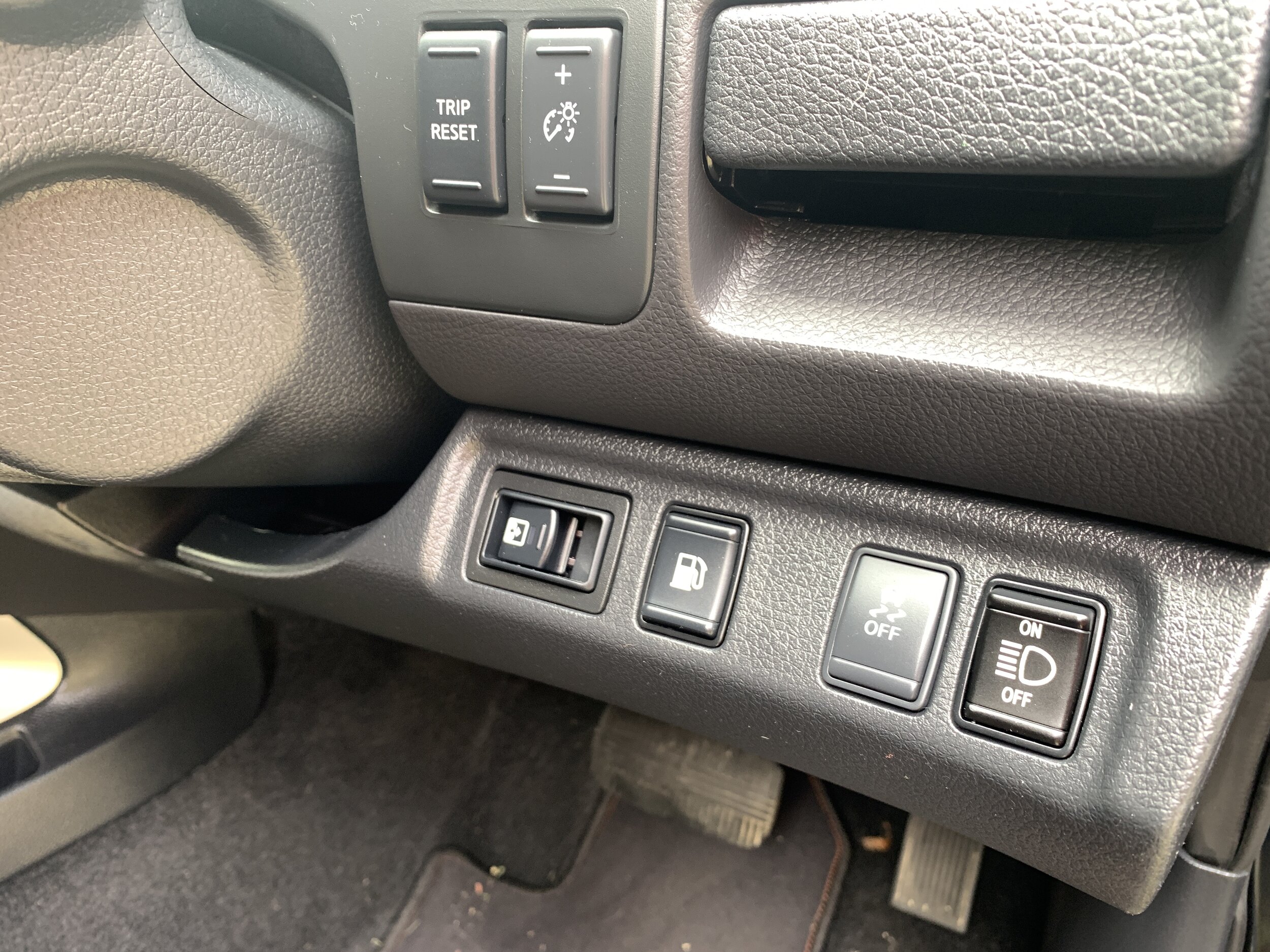
Navara’s cabin architecture is quite dated it’s a bit of ergonomic mess; button in weird places and awkwardly configured (no more so than the control for the Warrior-specific front bumper-mounted light bar that, curiously, is the only switch in the cabin that doesn’t illuminate). The tilt-only steering wheel adjustment and a lumbar support too low in the seat are issues for tall drivers.

 Being based on the ST-X Special Edition means it has the improvements made last year, including the new 8.0-inch infotainment system with Apple CarPlay and Android Auto plus native sat nav and reverse camera function. And at this level dual-zone climate control, two-stage heated front seats, an eight-way power adjustable driver’s seat with power lumbar adjuster also feature, while the leather/cloth combo seat trim achieves orange stitch highlights for this variant. It’s comfortable, save that the steering wheel adjust is limited, and offers good visibility, but in terms of general ambience, isn’t as plush nor as modern as the Hilux, Ranger or D-Max/BT-50.

IMG_7544.JPG


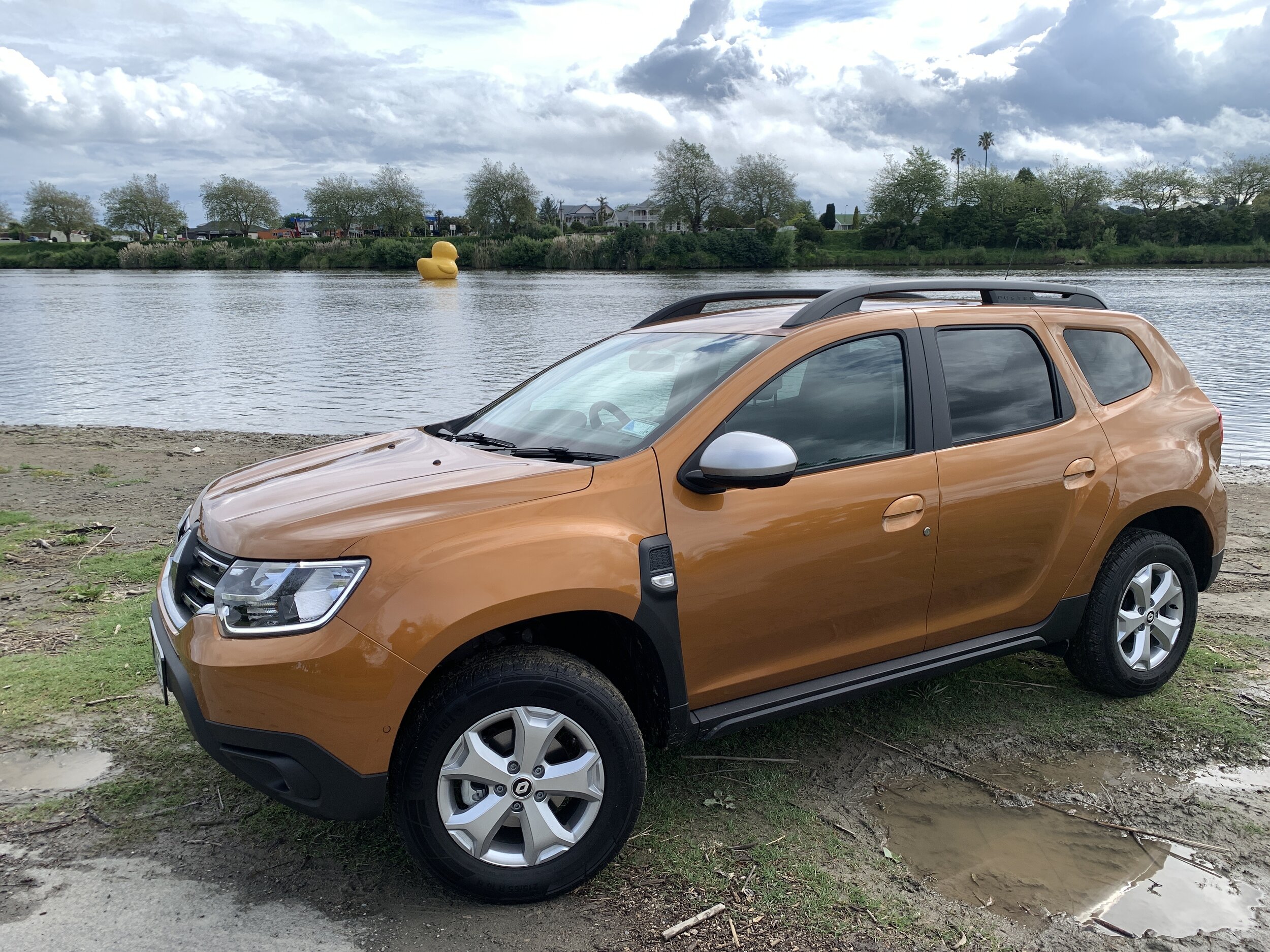
Renault Duster: Budget in a beret

Bargain basement with a touch of French flair is a cunning plan to establish Euro infiltration of the sub-$30k bracket with good-sized, practical car.

IMG_7574.JPG

Price: $27,990

Powertrain and performance: 1.6-litre petrol inline four-cylinder. 84kW/156Nm. Front-wheel-drive. Combined cycle fuel consumption 6.9L/100km.

Vital statistics: Length 4341mm, height 1693mm, width 1804mm, wheelbase 2674mm. Wheels: 16-inch alloys with 215/65 R16 tyres.

We like: A mid-size SUV for the same price as a low-end city car changes perceptions of vehicular value; roomy and rides well.

We don’t like: Some ergonomic executions, poor seats, tardy powertrain.

NOT this brand, but one in a similar situation of working to establish its presence in the market, made a point recently about provenance: Basically, the argument went along the lines of ‘where’ a car came from is pretty much inconsequential these days.

There’s solid reason to this: Cars are truly international objects, what hits the road can be a combination of technologies and components from multiple sources.

More than this, they can be as the Renault Duster on test today is: A vehicle whose branding is totally for convenience of easiest market placement.

It could just as easily be what it is in Europe, a Dacia, but then that’s a wholly new thing for Kiwis to get their heads around. Renault already has a solid and long-lived presence, so easier to present it as one of those.

That might not have been possible were only New Zealand doing this; we’re a tiny market, after all, and the volume for this car might be modest. Fortunately, South Africa also wanted the Duster, wangled the French connection, so we get to benefit.

Still, there’s no shame in telling the whole story. Wholly owned by Renault, Dacia is Romania’s only domestic car brand. It specialises in what the Duster clearly evidences as; robust and no-nonsense products developed to suit buyers too budget-constrained to buy into the very latest European fare, even at mainstream level. That’s what it is there. That what it does here.

IMG_7571.JPG

The idea of being a product of a country many New Zealanders might not easily be able locate on a world map isn’t as much of a novelty it might seem.  

Many countries in eastern Europe have become favoured locations for car-making; you’d be surprised how many western brands have set shop there. Rumania is admittedly one of the more obscure, but it’s getting on the map.

 A reminder of this came during the week with the Duster. Two days after it arrived, a Ford Puma also turned up. Wanna guess where that’s also built? From my reckoning, its birthplace is just a few hundred kilometres from the Duster’s. Who knows, they might have even travelled out here together.

Anyway, if you didn’t know the background, you’d have no idea of the birthright. At best, as with the Puma, the Duster identifies as European, simply because of the usual reversed indicator and wiper wand placements, while the only giveaways to it being different to other Renault cars here is that there’s less of an obvious upmarket ambience.

But then, being what some would call ‘honest’ is a real strength, given how little this car costs and much it gives in respect to that sticker.  

For sure, it does not deliver the same degree of polish you get from truly the modern European products; comparing with the Puma at that level really highlighted how the Duster is a car with more focus on tried and true.

IMG_7581.JPG
IMG_7578.JPG

 Yet the biggest criticism during this drive time was aimed at the drivetrain’s relatively tame performance. That might simply have a case of it need to ‘free’ up, as ours was a very low mileage car, but perhaps that’s not going to be the case, given the 1.6-litre engine is only rated to put out 84kW/156Nm and it’s also hooked up to a continuously variable transmission that, in respect to its operability, appears to be of the older versions plucked from the Renault-Nissan alliance parts box. 

Yes, even the flashy Atacama Orange paintjob (it’s the launch colour) cannot disguise that the styling isn’t all that avant garde, an impression that carries into the interior.  

The kerbside walkaround ended in debate about the faux vent behind the front wheels. Dacia is hardly the first make to do this sort of this, but here it does seem to be such a strange styling weirdness I imagined – and have since confirmed – it was there to disguise a really awkward panel join. 

And yet, as much as it looks a bit yesteryear, and as obvious – when you sit inside it – that everything is built down to a price (that is the whole point, of course), it's much less hair-shirt than you might imagine. 

One big points score in its favour is that it also picks up all the salient features you’d want from something that presents as being in the here and now.  

The core safety functions are all on board (it comes with a five Euro NCAP score), plus blind spot monitoring and a multi-view camera, and though the seats are too formless to be comfortable and also awkwardly hand-adjusted, in a car that could have conceivably left electric windows and air conditioning on the shelf (don’t worry, it doesn’t), that it also has remote central locking, a multi-function trip computer and a touchscreen infotainment system with Android Auto, Apple CarPlay and embedded satellite navigation is … well, very much ‘quelle surprise.’

Sure, they’re budget versions of upmarket features, so you have to expect some crudity. That infotainment system is a low tier thing with a tiny 7-inch screen. There’s just one USB input point in the whole car for phone integration and it’s in the most utterly inconvenient place possible: Right above the screen so that the cord dangles down over it when in use. The door key looks like it came from the 1990s. On the other hand, while the plastics are hard and a bit basic, they’ve got a nice matt finish. 

IMG_7584.JPG

But there’s no point being picky, because it absolutely does not pretend in any way to be more than it is. And, in that respect, you have to give it … well, deep respect.

And, let’s agree, that when it comes down it, you get a lot of car in the physical sense. Notwithstanding that the sticker attached at the moment is an introductory offer so might not last, that spend is pretty attractive: It’s virtually a medium-sized and very practical model at the same money usually charged for a considerably smaller, more city-considered type. And that aspect alone surely has to sell it: Room for five adults and a load of stuff in a huge, well-shaped 445-litre boot is plain to see.

As said, when driving, you won’t want to be in a hurry. Basically, it’s not a quick car. As tested, the engine wasn’t gutsy, struggling with two adults on board to maintain a steady 100kmh up hills that usually don’t present any particular challenge.  The transmission is fussy, as well; hand shifting stirs things up, but if you rev the engine out then it sounds and feels wheezy. So, it needs some thought to keep up with open road traffic. It has a lot less trouble around town, where the engine is actually quite muted until about 3000rpm, the point at which the box tends to shift up.

Handling is also in keeping with the type of car it is and the patform it has; which is one that did the rounds with Renault quite a while ago (initially being for trhe Clio small hatch). It doesn’t drip with sophistication, but gets the job done. Ride comfort is the best aspect. It is above par, dealing with even mediocre road surfaces. It’s quite a light car but has a decent stance and don’t seem to get buffeted by crosswinds.

But it’s no more showy in driving than it really is at the kerbside. But don’t be embarrassed by this. The whole point of the Duster is that it is a cost-effective, unpretentious and utterly sensible solution. If you could afford something a bit better, you probably would spend extra. If that’s not an option, you could do a lot worse.


Mercedes-Benz GLA 250 4Matic: Social climbing comes first


Don’t get at too hooked up about judging this car by what its badge implies.

IMG_7351.jpeg

Price: $86,500.

Powertrain and performance:  2.0-litre four-cylinder turbocharged petrol engine. 165kW/5500rpm, 350Nm/1200rpm. All-wheel-drive. Combined cycle fuel consumption 7.5L/100km (claim), 8.7L/100km (road test).

Vital statistics: Length 4417mm, height 1494mm, width 1804mm, wheelbase 2699mm. Wheels: -inch alloys with 235/50 R19 tyres.

We like: MBUX interior, smart looker, a hatch with extra ability.

We don’t like: The $6000-dearer GLB 250 makes more sense in the SUV role and has seven seats, no adaptive cruise control.


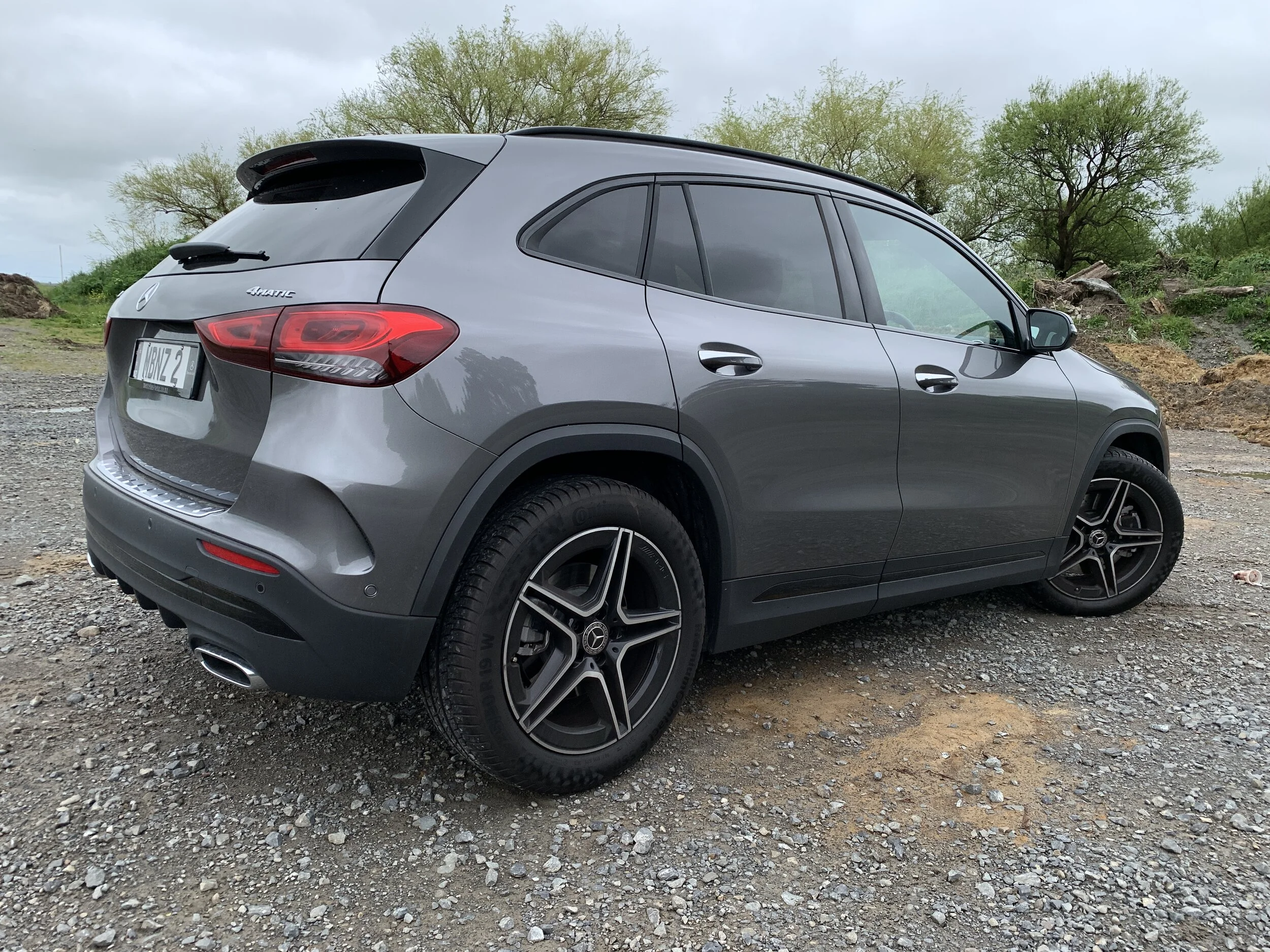
IN ‘Mercedes speak’ GL stands for Gelandewagen - literally ‘off-road vehicle’ but suggestively more akin to ‘go anywhere over any terrain with jaw-jutting confidence’ – but when meeting the GLA 250 4Matic, it’s really quite obvious the translation is, erm, a bit optimistic.

That’s not to say it lacks a degree of robustness; more a reminder that, as is often the case with this kind of vehicle, ‘road’ has more relevance to ‘rugged,’ so it’s tailored accordingly.

 Take in this shape at the kerbside and it come as across much more strongly as a sporty, if bulked up, five-door five-seat hatchback than something that’d be up for joining a four-wheel-club endurance outing. 

There’s certainly nothing junior G-wagen about how it drives, either. As much as Mercedes will attest that the AWD variant as tested are handy when the metal road turns to a dirt track, chances are the one function on the Dynamic Select system least likely to be used with frequency is the Off-Road mode. As rugged as the whole car in engineered to be, it just feels way too premium to risk for mud-plugging.

No problems there. When did you ever see one its rivals – and, to Benz, they include the Audi Q2 and Q3, BMW X1 and X2, Jaguar E-Pace, Lexus UX and Volvo XC40 – clambering to a mountain top, smashing through a boghole or taking on a windswept beach? Exactly.

IMG_7347.jpeg

 What also comes into question here, as well, is the ‘A’ part of the name. The obvious inference is that you’re looking at a bulked up member of the A-class family, The most compact, mainly (with exception of the AMG 45 hotshot) city-contrived hatchback that aims at everyone from young first-car buyers to those seeking a second set of wheels for town and around.

Can you see it? Erm, not really. Appearances again speak to a different bloodline and unpacking the development makes association seem all the more tenuous.

Really, it’s actually more correct to track that to the Mercedes B Class and GLB, as they are the other models on the platform that the GLA establishes upon. Put them together and it’s plainly obvious that the GLA picks up elements of both co-shares in terms of its exterior and interior styling and layout.

Don’t think this is a whinge. If anything, this car being not quite as it seems is a strength. The big appeal of this car is as with some rivals; it steps out of a proscribed zone. It’s a bit different, a bit edgy and, because of that, it’s a bit more interesting. 

The styling direction is one appeal. The general design influence is plainly from the larger SUVs in the line-up. The manner is which everything is beefed up is certainly set to raise comment and, agreed, the vibe from some angles is better than from others. Yet nothing looks bodybuilder-on-a-steroids-binge obscene. One immediate plus is that the glass to metal ratio looks just right.

 This is Benz’s second tilt at designing this car. Alterations over the previous blueprint are mainly to do with scale. The second-generation is most obviously larger than its predecessor, not in length but in height – it’s a good 104mm taller – and the wheels are 30mm further apart front-to-rear, too, so the overhangs are much shorter. That’s conceivably better for the off-roading no-one will ever entertain, but is not wasted effort, as it also enhances the way it presents.

 Mercedes is on a real roll in respect to its interiors; not just in general look and ambience – which is always swish – but also with its technology. The MBUX displays and functionality is likely the envy of all category rivals and though the ‘hey Mercedes’ voice control function is a bit frivolous, it’s impressive how it synchs neatly with Apple CarPlay’s Siri.

IMG_7353.jpeg

You do have to be careful avoiding your hand or wrist across the touchpad that sits just ahead of the display console; even the lightest touch can trigger unintended consequences. There’s no great chance of this happening with frequency because it’s another of those many Benzs that have a steering column mounted drive selector in place of a centre-set gear stick, so as to free up space in the centre console. The gear wand is likely something that will become second nature if you were a permanent owner, but for those who don’t have that chance, it’s invariably going to mis-interpreted as an indicator at some point. That’s only an issue for left hand turns, as you’ll pop it into neutral.

The cockpit feel is more car than off-roader, but there are a few details to remind you of it being a SUV, in classification at least. Most obviously, some of the controls are chunkier and the seating position is higher than in a pure road car. By a full 140mm compared to an A-Class, apparently, I mention that because, while it’s obviously a bit taller standing, the GLA doesn’t have much in the way of an SUV stance. So, it’s not a car that you need lift yourself up to get into.

The GLA is potentially not going to cry out of attention as a family car, and not just because it’s probably too plush to risk being besmirched by crayon-wielding junior terrorists, with a panoramic powered sunroof and heated electric front seats. 

It’s also not the best size. For one, it is a touch too compact and, for another, even though the back is not too bad for head, shoulder and lower leg room, the seat is set low and the roof and rear window shape do make the back part of the car feel a bit claustrophobic.  

IMG_7354.jpeg

Performance is decent. The 250 variant packs a turbocharged 2.0 engine that is good for 165kW and 350Nm, running through an eight-speed twin-clutch gearbox. It’s an eager but smooth engine, not overly hot hatch snappy at kick-off, but very responsive once it gets moving and endowed with good mid-range muscularity. The torque spread is wide and rich; conceivably, that’d be useful if you were heading onto non-sealed terrain. As if. 

Even when the driver’s chair is set to its lowest point, you’re sitting relatively high up. There's great visibility in all directions and its comfortable, because the driver's seat and the steering wheel have loads of adjustment.

The driving is brand-typical solid, but there’s a degree of enlivening sharpness; the AMG Line specification does sacrifice suppleness, but it's not anything like outright harsh. The 250 achieves what’s called the Lowered Comfort Suspension setup, which aside from being odd-named makes it look nice but does introduce some fussiness into the ride. For all that, wheel and body control is quite decent, in fact, and more large hatch than small SUV. The only letdown for push-on is that the car will at times outrun the actions of the eight-speed gearbox, at least when it is kept in the default mode. You’ll find yourself livening it up by utilising the gearchange paddles behind the wheel.

There are plenty of incredibly good crossovers and SUVs just in the premium end of the market, but so improved have a number of less expensive mainstream models in this category also become that, really, some of those could be considered as relevant rivals, as well. Really, it does come down to how important a prestige badge is to you.

If the GLA is to outdo its rivals in any key area, it’s in respect to its technology inplementation and functionality; though big screens with lots of trick functions and touch and voice activation are spreading across more vehicles, the MBUX set-up really is still in a class of its own.

So there’s that, and there’s the GLA also being quite stylish in how it looks, plus it drives more like a sporty hatchback than any kind of SUV. 

On the other hand, this is the cheapest variant with all-wheel-drive and it’s exactly inexpensive.

 Tick a few options, such as our car’s AMG Line and must-have Driving Assistance packages, and you’re up into $90k bracket, where the GLB with the same powertrain, all the same kit and fundamentally far more family-friendly functionality awaits.

If you want the look are seeking to escape some of that hit, then why not the GLA 200: Smaller engine, one fewer cog in the gearbox and front-drive … but frankly, none of that probably penalises if making an impression counts most.

IMG_7362.jpeg


Land Rover Defender 110 P240 SE: From the back, to the future

The new Defender is everything it was … and everything it never used to be. Which makes it hugely alluring.

Photos Callum Crawley

Photos Callum Crawley

Price: $114,900 ($120,150 as tested).

Powertrain and performance:  2.0-litre four-cylinder twin turbocharged diesel engine. 240kW/2400rpm, 430Nm/1500rpm. Four-wheel-drive. Combined cycle fuel consumption 7.8L/100km (claim), 8.4L/100km (road test).

Vital statistics: Length 5018mm, height 1969mm, width 2008mm, wheelbase 3022. Wheels: 20-inch alloys with 255/60 R20 tyres.

We like: Smartest Land Rover yet, makes all rivals feel very old indeed.

We don’t like: Seeing it in black, quirky gearshift trigger.

RELEASING any new model inevitably seems to be a tin hat time for Land Rover – everyone’s a ‘know-better’ armchair expert, right?

So, to the Defender. The target painted on a model whose sales success is so vital seems large indeed.

Depending on your degree of pride or prejudice, the oldest and longest-serving nameplate in this  Green badge garage represents all that’s great – and all that grates – about Britain’s famous off-roader brand.

As has so often been said, the original, as ancient and as outdated as it had patently become (even well before it was dropped) nonetheless was so loved it was always going to be a tough act to follow.

So much so that, realistically, Land Rover demonstrated Victoria Cross-earning valour simply by determining to go ahead with a new one, let alone one that is exactly that. New. Not a modernised reproduction but a proper ground-up reinterpretation. That’s bravery beyond the call. Cue the condemnation.

So now it’s out. And now it’s been driven. A delight or a disgrace? The following is based on strength of a week with the 110 (that’s the five-door) in its mid-level SE specification with the 2.0-litre turbodiesel in its most potent state of tune (so, 147kW and 430Nm), an example not quite standard but not too heavily blinged (basically, a $120k example of a car that costs $114,900 bog standard). You can read all the way through or skip to the end.

IMG_6436.jpg

Or you can accept what I say here and now. Basically, it’s advice to stow that vitriol and any enduring vindictiveness and at least give it a chance. This is no half-pie effort by any means. If anything, it’s the most completely-sorted Land Rover I’ve experienced. Truly.

Just me? It was honestly pure happenstance that past close association with truly off-road sorted Land Rover product – so, either the previous Defender or the Discovery – tied almost all those who rode in the test vehicle during its run.

There was a self-avowed tragic for the old car. He seemed quietly impressed after a 20-minute ride in the new. So too, by and large, were the experts in off-roading who allowed access to their farm, and specifically areas they often use to test latest popular models and suspension and drivetrain mods (cos that’s their day business), and also briefly directly tried out its skill set. A wee quibble about the gear selector aside – they’re right, there’s a bit of a knack to its action – they were smiling.  

Final contestant was a mate who was a passenger during the towing exercise (handily, my race car needed taking to the local circuit for testing, so …). He really had least reason of all to lend this brand any more love. He’d just had a pretty torrid time running a two-generations’ old pre-owned Disco (admittedly, he knew it was a risk, given the low price). And yet? Well, after a while, he began to warm as well.  

What touched their hearts? Well, it’s possible more than packaging than the package itself: Like every recent Land Rover, it has opinion-splitting styling, potentially accentuated by the tester being black. In that hue, insofar as handsomeness went, it was more striking when viewed from the front and sides than from the back. Just like a Discovery then? Exactly, though better-looking overall. 

The sheer dimension of the machine takes some getting used to. After a week, it felt less gargantuan than on first meeting. But it is big.

The dimension has pros and cons – it’s tall and offers a fantastically commanding view, and all-round visibility is not too bad (what you can’t see physically is more than adequately covered by sensors and cameras), but although it is not too long to cause issue for parking, it is wide enough to make normal angle, if not so much parallel, parks seem a squeeze. It’s in that latter, though, where the side-opening tailgate mightn’t do you any favours.

IMG_6490.jpg

Likewise, it comes across as being quite a dominant force on urban streets you’re always doubly aware of how close it gets – or, more correctly, you imagine it gets – to parked cars.

So maybe it’s not those aspects that make best impression. What does, though, is the comfort – is really does have brilliantly good seats and there’s heaps of head, shoulder and leg room where ever you place in the main cabin (though yes, the third row seats that pop up from the boot are more child-sized).

 Yes, it’s best to remember – and I didn’t always to – to set the air suspension to its lowest setting so as to make egress and access easier, not least for the vertically challenged. But once you’re in, it’s a good spot, roomy and comfortable; the front chairs are extremely good.

The fact that you can sit naturally in it is, for one, a major improvement over the original, whose driving position in particular required significant and painful contortion.

The interior treatment also steps up; it’s still obviously utilitarian, but takes industrial ruggedness to an art form, mixing bare-metal items with high-grade leathers, mixing soft and hard surfaces, rubber floor mats, a tough-looking carpet … it’s all muddy boot-ready, yet there’s still an air of luxury, more so than you’ll find in a Jeep, easily as much as comes with a Land Cruiser.

The ace card within the cabin is what makes the whole car: The technology loading, mainly running through the Pivi Pro infotainment system, which is a big step forward for Land Rover. Quick responses, a clear and concise display. Going to and from Apple CarPlay can be a trick, but overall it’s a winner. 

Yeah, I know what you old-hands think about all this. You’ll tell me the old Defender being as rudimentary as a tool could be was a strength and that you wish the new was too.

Yes, I agree, the fundamental elements of the old model’s design, with the time-honoured basics like live axles and coil springs, and basic square body bolted onto a steel ladder chassis, really made the previous rig a faithful friend.

But that didn’t mean it couldn’t be bettered by Nature. I’ve been in situations where Defenders have been overcome by situations that haven’t stopped rival models. In its last few years, it was sitting at the back of the pack in as much respect to that as anything else.

Nowadays, Land Rover is heavily committed computer-driven wizardry; the advances with this car are such that the Terrain Response system that in other models is a big dial becomes just a switch here. Other switches are touch screen prompts.  

Will it be 100 percent reliable 100 percent of the time? Well, like you, I’ve seen YouTube footage posted by early owners disgruntled by issues. But, then, I’ve seen lots of films made by lots of people angry with lots of different cars. 

IMG_6535.jpg

All I can is that the Defender didn’t look remotely set to disgrace itself when I had it.

Also, I’d remind that we’re in a technology age. All Land Rover has given us is a machine to suit. Asking for a Land Rover to step back to old-school is like proposing that the Nokia 1100 phone I had 15 years ago is better than the iPhone I have now. It isn’t.

So there’s that. And then there’s the fact that this model was field-tested extremely rigorously all the way up to release.  

Its ambience imparts strength. So, for all that it is likely to settle in as a very useful lifestyle choice, Land Rover doesn’t hide the fact that it has nonetheless tailored this model to also appeal those who will use it for work; everyone from farmers and country vets to outdoors adventure operators. 

So it’s obviously more of a workhorse that the Discovery, let alone anything from Range Rover. A pragmatic vehicle that puts priority on practicality and good honest toil, with stellar off-road ability thrown in for good measure. You don’t expect to get the polish of the more family-minded models and, true enough, in many respects it doesn’t provide it. It’s not rough, but neither is it upper crust schmooze. But it is tough and it is clever. 

When it comes to smarts, well prepared to be as stunned as we all were. What you’re getting is basically the equivalent of a working-class lad who also happens to be a Rhodes Scholar.

It delivers, and in a delightfully no-big-deal manner, features and functions I suspect no other brand that plays in its field – and these days, that’s really just Jeep and Toyota predominantly - had potentially not even given consideration to. But might, now that Land Rover has. 

For example? One that I really useful was the towing assist logic, which crops up as an option on the main display screen. There’s no necessity to use it – the car will happily allow a trailer to be slung on its hook – but I’d advise considering it, because it’s really fascinating.

Basically, once the trailer is attached, you simply slide back into the cockpit, hit the screen prompt and that takes you into a sub-menu which asks, first, what it is you’re. All the usual suspects are identified by icons (boat, caravan, rubbish trailer, and yes, car trailer). Hit that and next question: How many axles? Mine has one, but again everything’s covered. Third: Punch in the dimensions of the trailer. Two minutes with a tape measure, I had that input.

IMG_7294.jpeg

And then? Well, impressive magic. For one, the wing mirrors self-adjusted outward a touch, to give a better view of what’s behind. The surround cameras also sorted their views to take the trailer into account and also give a better view of the tow hitch. The car also adjusted its trailer sway, braking force and stability  control in calibrate for a heavier, longer load (though the weight itself is not required). All in all, it just drove better with this done, than without. I’ve seen anything like this before and neither had my mates.

And that’s just one thing. Taking it off-road was also great fun, even though I really thought I’d pushed my luck too far in the paddocks when striving to ascend a steep hill. We’d come down, there was only one way to get back and this was it. First go, not good. The tyres lost grip, the thing slid backwards, for quite a way. Since I’d already put into the correct mud/grass setting and locked into low range, I thought I’d run out of options. But now; there’s a further low-grip setting. I tried that … and it danced all the way up, the power delivering far more evenly and more precisely to each wheel (and you could see it happening on the screen).

Is that good enough? From the launch drive, I already know so. Buying into the Terrain Response 2 kit – not a retro-fit, unfortunately, but something that has to be implemented during build – gives it more skills and assistance features, including the entire gambit of e-diff options. Giving it brawnier all-terrain tyres would also benefit. The standard rubber’s treads do clog quickly; losing bite on wet grass and mud underneath was half my trouble. 

However, the basic package is really well-engineered. The core reason for the car’s basic shape is to give it best chance of not snagging anything off-road.  The bobtailed rear is brilliant; you achieve a 40 degrees departure angle in off-road mode. Ground clearance measures in at 291mm thanks to the lack of live axles underneath. The wheelbase, relatively long at 3022mm pushes wheels out to each corner. That yields a 38-degree approach angle and 28-degree ramp-over angle. That’s military grade. Likewise the generous amount of ground clearance, which of course is adjustable.

Going to independent all-round suspension shouldn’t allow it to be as outright flexy as something with coil springs and long control arms, and yet the manner in which the Defender copes with ruts, climbs and side angles completely deflates that point of view.  

IMG_7337.jpeg

Those independent control arms, made of cast aluminium, mimic the natural articulation of a live axle by cross-linking air springs, allowing the car to sense the tucking and drooping of each wheel, and compensating accordingly. It all happens so swiftly and accurately the body remains impressively stable. Ultimately, yes, it’ll only stretch and tuck so far, but the underbody is a tidy design, with nothing obviously set to snag and all the fixtures look robust.

Everything’s attached to a modified, heavy-duty aluminium monocoque platform that promises to be 300 percent stiffer than a ladder chassis. Steel is used for strength in important subframe components. A previous driver reckoned the car had rattles. His hearing must be keener than mine. Personal impression was that it is a very tight construct. No shimmy, no shake. So different from the old one.

What you do notice, off road even more than on, is the weight. Even with the lightweight aluminium monocoque design, this Defender weighs at least 400kg heavier than its predecessor, comfortably clocking over two tonnes.

With that in mind, talk – yet to be reconciled – of the current four-cylinder 2.0-litre engines being bumped sometime next year by a 3.0-litre six cylinder diesel, the same engine that already goes into the D300 variant but in lower states of tune, would have weighing up the pros and cons of the current unit.

There’s nothing bad about the four-cylinder; it has decent torque and doesn’t ever seem to feel, let alone sound, strained, but neither does is it up to being especially hustled or rushed. You notice, too, that the eight-speed automatic gearbox shuffles ratios about quickly to cope with demands for acceleration.

In saying that, I’d suspect any version of Defender won’t stand being driven like a hot hatchback. Regardless that roadholding is secure, overly-enthusiastic cornering will have the tall body rolling. It feels easy-going at 100kmh, with a lot more in reser4ves, but charging up to that 225kmh top speed would require special resolve and a high degree of talent, I’d think.

 Still, while the steering is relatively heavy and typically inert for an electrically assisted system, it’s accurate enough, allowing you to place the Defender with ease. From thereon it’s just a matter of having the patience to allow the body time to settle before powering on again. Hey, it’s a large 4x4 yet, in saying that, is tidier than available opponents and certainly worlds ahead of the old Defender.

For all its mass and massiveness, the car has a reassuringly commanding feel and what’s impressive during all this is the rolling refinement. The engine gets gruff as you accelerate, yes, but once you’re holding a steady pace, it settles down. And this allows you to appreciate the isolation of road noise. For a car on 20-inch alloys and 255/60R all-terrain rubber, it’s very good indeed.

IMG_6560.jpg

In summary, and apologies for taking so long to get to it, the Defender is … well, still a Defender, but a much, much better kind. More to the point, it’s a vehicle that not makes it forebear look ancient, but also does much the same to other contenders in the current market. Just compare it with a Land Cruiser in the same price range to get what I mean. Toyota’s erstwhile model is literally from an earlier century.

One aspect I admire about the Defender is that its evolution is set to continue, particularly in respect the drivetrain. Today we have diesel and petrol, next year there will more engines, with better efficiency, and something else new for the class: A plug-in hybrid.

 Another is that, in the time I had, every day brought a new discovery about what it had and could accomplish. And, as each day passed, the attraction and bond seemed to strengthen.

I hope it succeeds beyond all Land Rover’s dreams.

IMG_6408.jpg


Toyota Hilux 4WD SR5 Cruiser: New tricks for the top dog

The plush edition of this toiler accounts for almost half of Hilux volume. So it needs to be good.

Images: Colin Smith and supplied.

Images: Colin Smith and supplied.

Price:  $58,990

Powertrain and performance:  2.8-litre four-cylinder 16-valve turbocharged diesel engine. 150kW/3000-3400rpm, 500Nm/1600-2800rpm. Four-wheel-drive. Combined cycle fuel consumption 7.9L/100km (claim), 9.3L/100km (road test).

Vital statistics: Length 5325mm, height 1815mm, width 1900mm, wheelbase 3090mm. Wheels: 18-inch alloys with 265/60 R18 Dunlop Grand Trek PT tyres.

We like: Comprehensive safety and driver assist features and improved response from the upgraded diesel engine. Larger touchscreen and long-awaited addition of Apple CarPlay and Android Auto.

We don’t like: Unsure if the claimed fuel consumption improvements are achievable.

IT WAS a very brief reign for the 4WD SR5 Cruiser as the flagship of Toyota’s upgraded 2021 Hilux range.

From an evening press conference till afternoon tea the next day the SR5 Cruiser was king of the hill in the Hilux family.

Then the Raptor-hunting Hilux Mako arrived from out of the sky – slung below a Blackhawk helicopter – and immediately the SR5 Cruiser seemed like just another Hilux.

Only available in Double Cab configuration with an automatic transmission, the SR5 Cruiser is positioned to showcase the full extent of 2021 upgrades across the Hilux range.

It’s only in partnership with the six-speed automatic transmission where the latest 50Nm torque boost to 500Nm from the 2.8-litre diesel engine is available.

And it’s the double cab configuration which benefits from the full scope of suspension upgrades that deliver noticeably more settled medium-speed and highway ride comfort.

In spite of a $2500 price increase the MY21 SR5 Cruiser still finds an important sub-$60k price position at $58,990 (including on-road costs and the other benefits of Toyota’s Drive Happy programme).

Other aspects of the MY21 upgrade have seen the 4WD SR5 Cruiser specification boosted with the introduction of a nine-speaker JBL audio system, an auto-dimming interior mirror, stylish blue ambient lighting in the door trims, new matte and piano black interior surfaces, an upgraded instrument cluster and multi-info display and a new leather accented two-tone grey/black seat trim.

Exterior highlights include new 18-inch alloy wheels in a two-tone grey/black finish, the addition of welcome lights in the door mirrors, a unique black tailgate garnish and Cruiser-specific darkened detailing around the grille, bumper, headlight and fog lamp accents to give a much more defined front-end look to the Hilux.

50381028438_d8606abaa4_k.jpg

It’s not just a 20kW power increase and 50Nm torque boost for the 2.8-litre diesel. It’s more refined with quieter cold start and warm-up idle characteristics.

It’s not only evident the revised engine has stronger low-rpm muscle but it also continues to deliver power toward higher revs which has benefits for highway overtaking response.

The boost in power and torque is achieved by a new cylinder block and pistons, a bigger turbo, new exhaust manifold, increased fuel injection pressure and cooling improvements.

The new output figures are 150kW and 500Nm but the big torque number only applies when the Hilux has the six-speed automatic transmission. With the manual gearbox (not relevant to the SR5 Cruiser grade but available in SR5 level) there is an unchanged 420Nm torque peak.

Improved performance is accompanied by a claimed 10 percent reduction in fuel consumption and 11 percent lower CO2 emissions.

Toyota now claims a combined cycle figure of 7.9L/100km but even with much of my driving on the highway I could only manage 9.3L/100km and was left wondering how much the number would improve with a bit more mileage.

Toyota engineers have made chassis and suspension improvements that achieve more compliance and control from the initial suspension response across bumps and corrugations.

Shock absorbers, spring rates and suspension bushes are all updated for 2021 while a new variable flow power steering pump requires reduced low speed steering effort but provides a pleasingly direct feel on the highway and back roads as the assistance level reduces.  

The more settled feel of the highway ride quality also comes from an extra leaf spring being added to the rear suspension of all diesel double cab models.

The refinement focus is continued with changes to the cab mounting points for improved vibration insulation.

The overall feel of the new SR5 Cruiser is a more refined on-road performer with crisper throttle response. The driving characteristics include a more precise feel and suspension that copes better across both higher frequency corrugations as also single input bumps and broken surfaces.

The other significant MY21 Hilux changes come within the cabin with the immediately noticeable change being a larger 8.0-inch touchscreen – in place for previous 6.0- and 7.0-inch screens – for all models.

That change is accompanied by the long-awaited introduction of Apple CarPlay and Android Auto functionality. That least when Toyota finally makes the move it is adopted as standard across the full range including the entry-level WorkMate models.

The revised 4.2-inch multi-info display now includes a digital speedo readout.

While rugged off-road capability remains a key part of the Hilux 4x4 skillset there is also the on-road benefit of the standard across-the-range Toyota Safety Sense package.

TSS content includes Dynamic Radar Cruise Control with pre-collision safety and autonomous emergency braking, lane departure alert and road sign assist on all models. There are seven airbags and the 2019 5-star ANCAP rating carries over.

Hill-Start Assist Control is standard and all 4x4 models now have Downhill Assist Control (previously the SR Double Cab 4WD manual missed out on this feature).

It’s been interesting to follow the fortunes of the eighth generation Hilux since it launched in late-2015. The Ford Ranger had taken ute market leadership the previous year as the previous generation Hilux became very long in the tooth.

Since then Hilux has sold in record numbers but has never dislodged the Ranger from No.1 spot for more than an occasional month. Yet last month, it’s first in the market, Hilux beat the Ford on count to take the top step. How many of these were old models at an attractive run-out price; how many were dealer demonstrators? Still, it outwardly seems a good start.

The MY21 is the best-looking Hilux yet and with its improved performance and refinement plus new technology features it has the best chance yet of ute market leadership.