Ford Mustang Mach-E Select roadtest review: Jolly green giant
/The entry level of Ford’s electric offer here lacks race horse performance, but mid-life improvements make it more of a noble steed.
How much: $74,990
Powertrain: Single motor, rear wheel drive, maximum power 212kW, maximum torque 470Nm, single speed transmission.
How big: 4713mm long, 1881mm, 1634mm tall.
We like: Upgraded suspension delivers improved ride comfort; far more useful centre console; still a highly practical family car.
Not so much: No home charging cable; daft door releases and pointless key pad access.
THREE years on from introduction, the whine has gone.
Not from the car. It’s the crowd I’m talking about. All that bleating about this ‘not being a REAL Mustang’ at last seems to have finally abated.
It was always stupid, head in a certain kind of hole argument. One, incidentally, that didn’t actually come into consideration in the country where it should have logically have been an issue. Yet, when this medium sports utility rolled out, Americans actually welcomed it taking that most hallowed name.
Such a shame that we didn’t initially have the same lucidity as the home crowd. But it seems the dust might have finally settled. Fingers crossed.
The revered petrol two door four seater sports car and this five seater battery model being totally different horses for very different courses is a fact.
But with fuel price rises and supply uncertainty having re-energised interest in electrics, it’s also obvious that not only are they destined to always co-exist in the same stable, but potential is that the new kind will once again start out-selling that famous, born in the 1960s’ forebear.
I’m happy with that scenario. The Mach-E is a car we all need to be get better acquainted with, not least in the latest format, which irons out a few wrinkles and well as returning recommended retails back to pre-discount settings.
Removal of a previously available dual motor mid-spec model means choice has winnowed to extremes; you either take a single motor rear-drive base car - now called Select - or the full-out flagship GT, holding a considerable $42,000 premium.
My initial view was that culling the midway model was a shame; to me it seemed a really good halfway house; a handier price than the GT, better ride quality, a reasonable specification and better range and performance than the original entry point choice.
Now I’m not so sure. As much as having all-paw in a sub-$100k Mach-E was a nice thing, the Select has improved its game in every respect to point that it become a stronger candidate as the most sensible choice.
The car now is very different to how it was, for good reason. Out here, it might be very soon to achieve a mid-life facelift, but we have to remember than in fact this model has been around for a lot longer than for the period we’ve had it. It unveiled all the way back in late 2019 so, to first adopter eyes, is beginning to look dated. Maybe that’s another classic Mustang trait, but the refresh was well overdue.
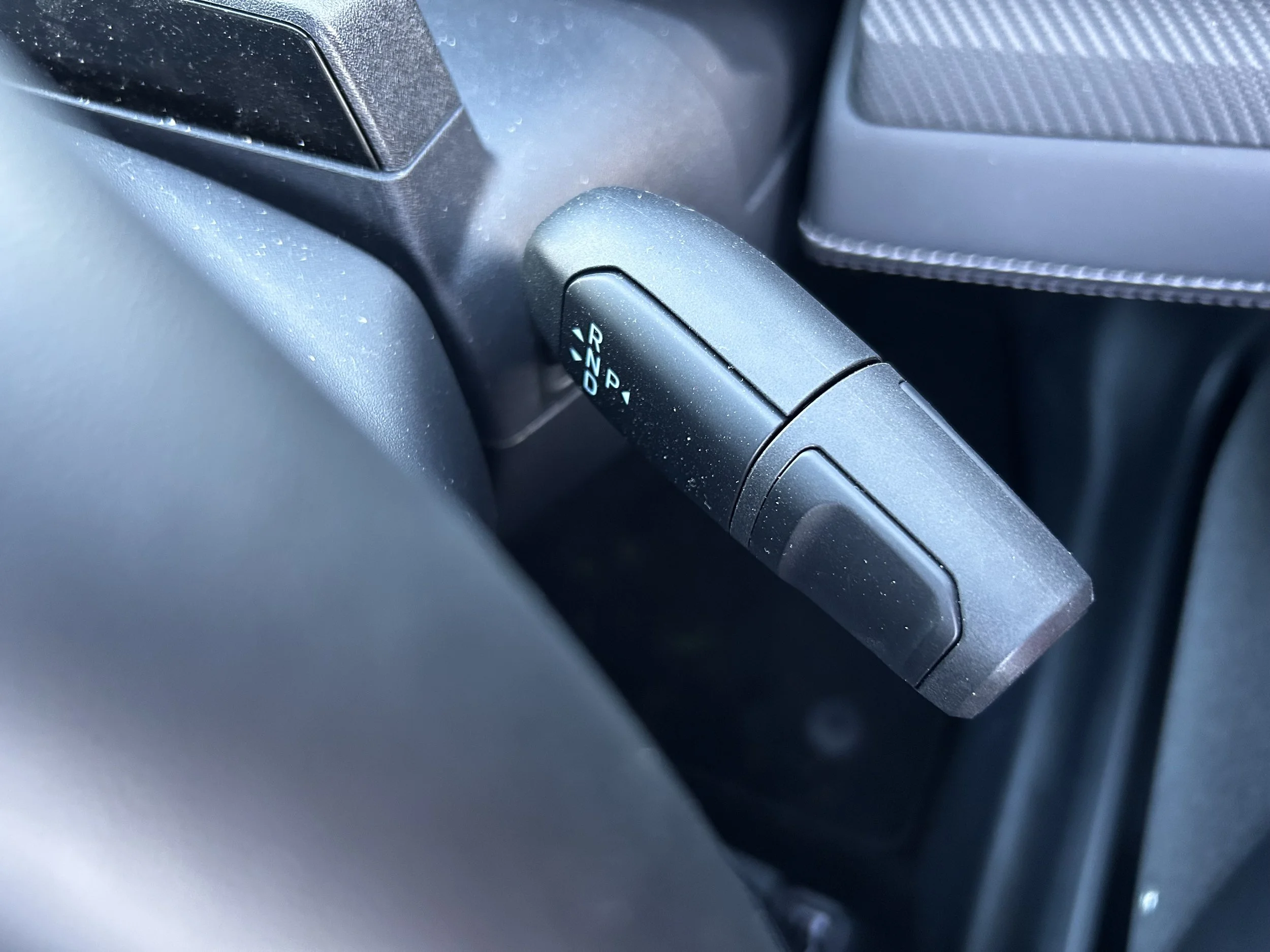
This model gains a myriad of alterations, the most obvious being that it takes a whole new transmission selector design; gone is the rotary dial selector on the centre console. Now it has a right side column shift arrangement behind the steering wheel.
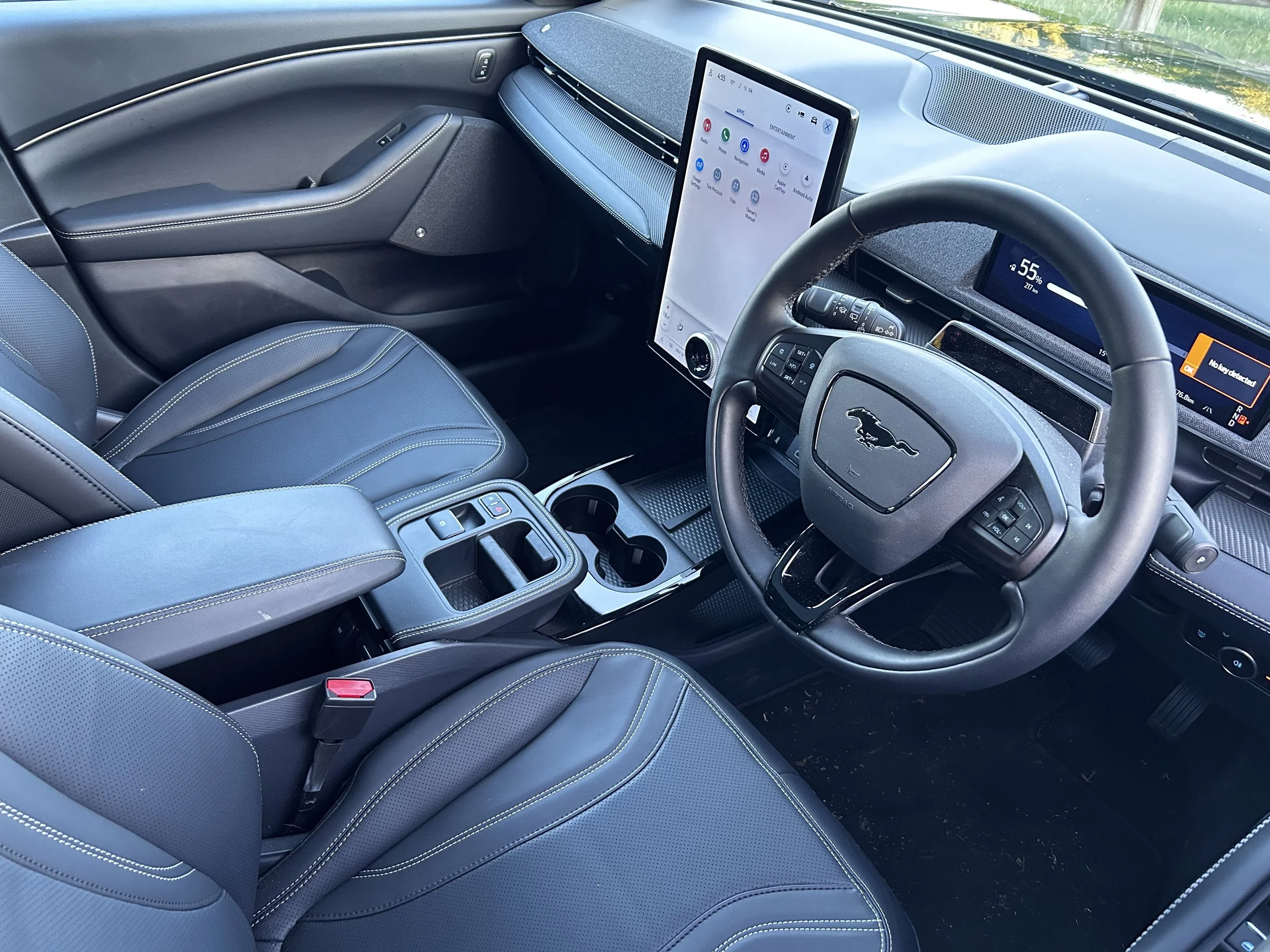
There’s much more. The redesigned centre console, which delivers subtle improvements to the menu structure and ergonomics of the large 15.5-inch centre touchscreen.
When driving at night, it’s patent the headlight performance is way better. That’s a result of it taking the fancy LED headlights that once only came with GT.
It warms up faster on cold days, having achieved a heat pump to boost efficiency, and maintains a long list of standard items. including artificial leather, heated and powered front seats, a panoramic roof, dual-zone climate control ,adaptive cruise control, a 15.5 inch touchscreen, 360-degree-view camera, wireless Apple CarPlay/Android Auto, a wireless charger, 10-speaker premium audio, a powered tailgate and 19 inch alloys, which are also to a new style.
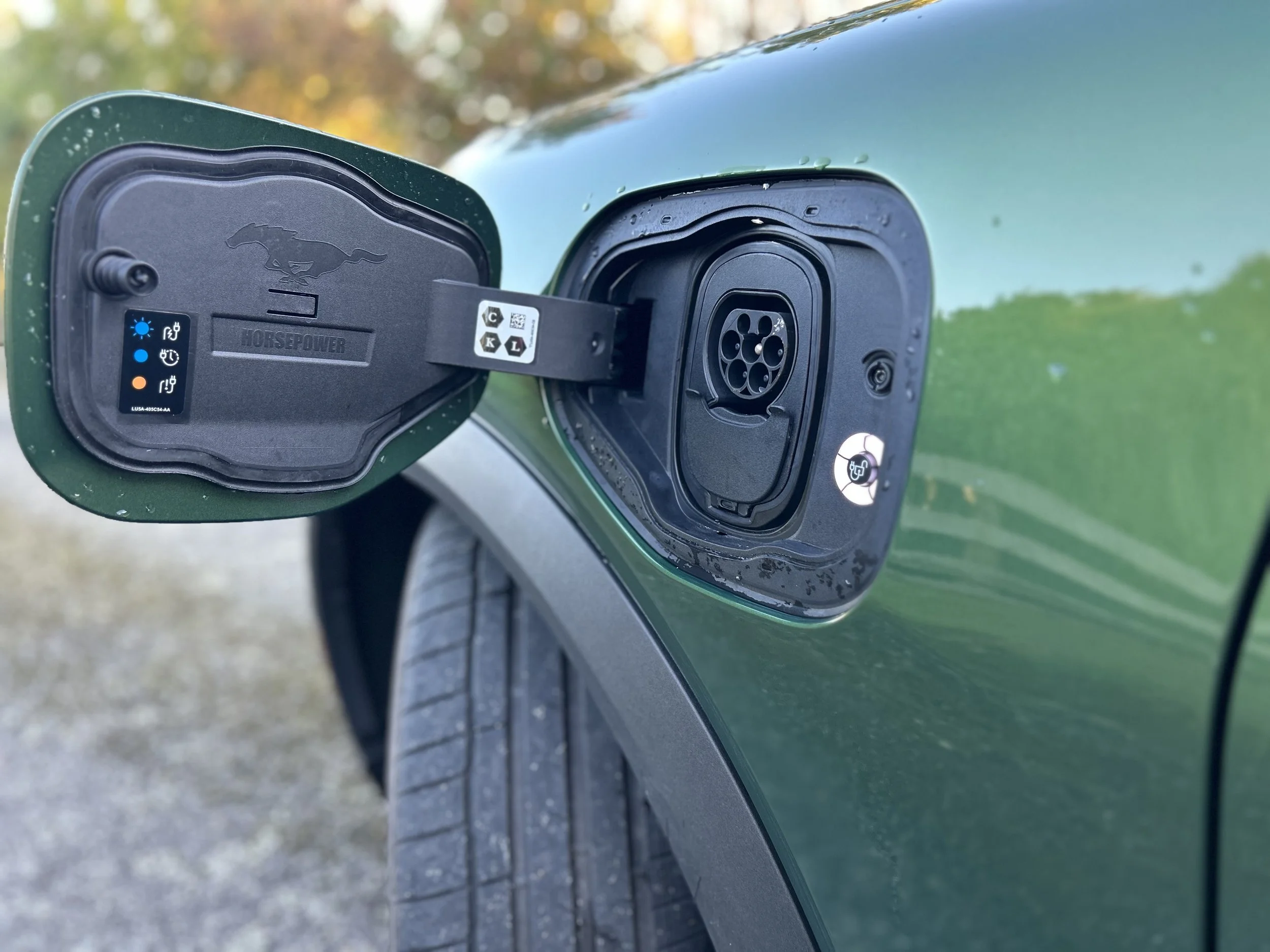
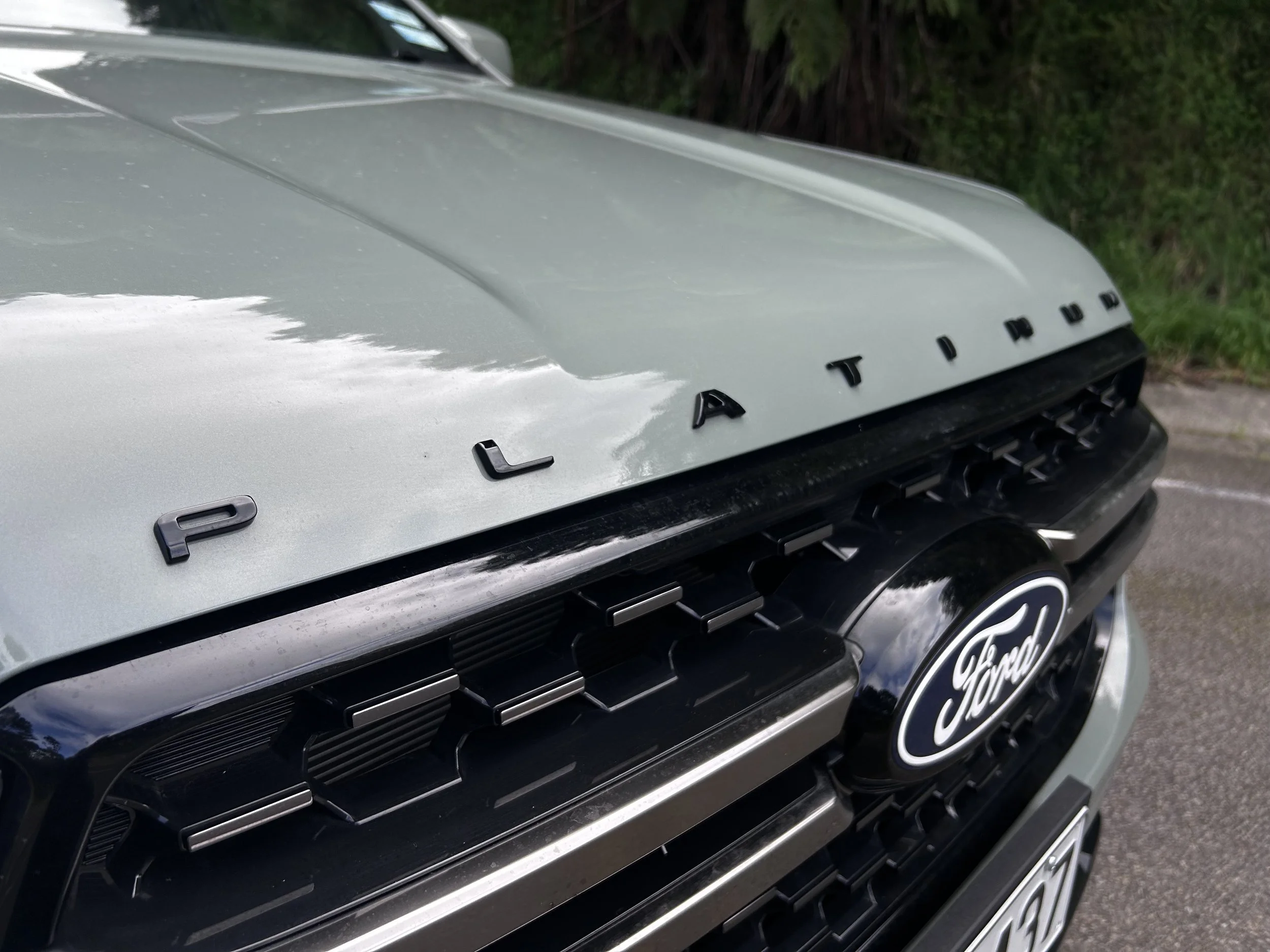
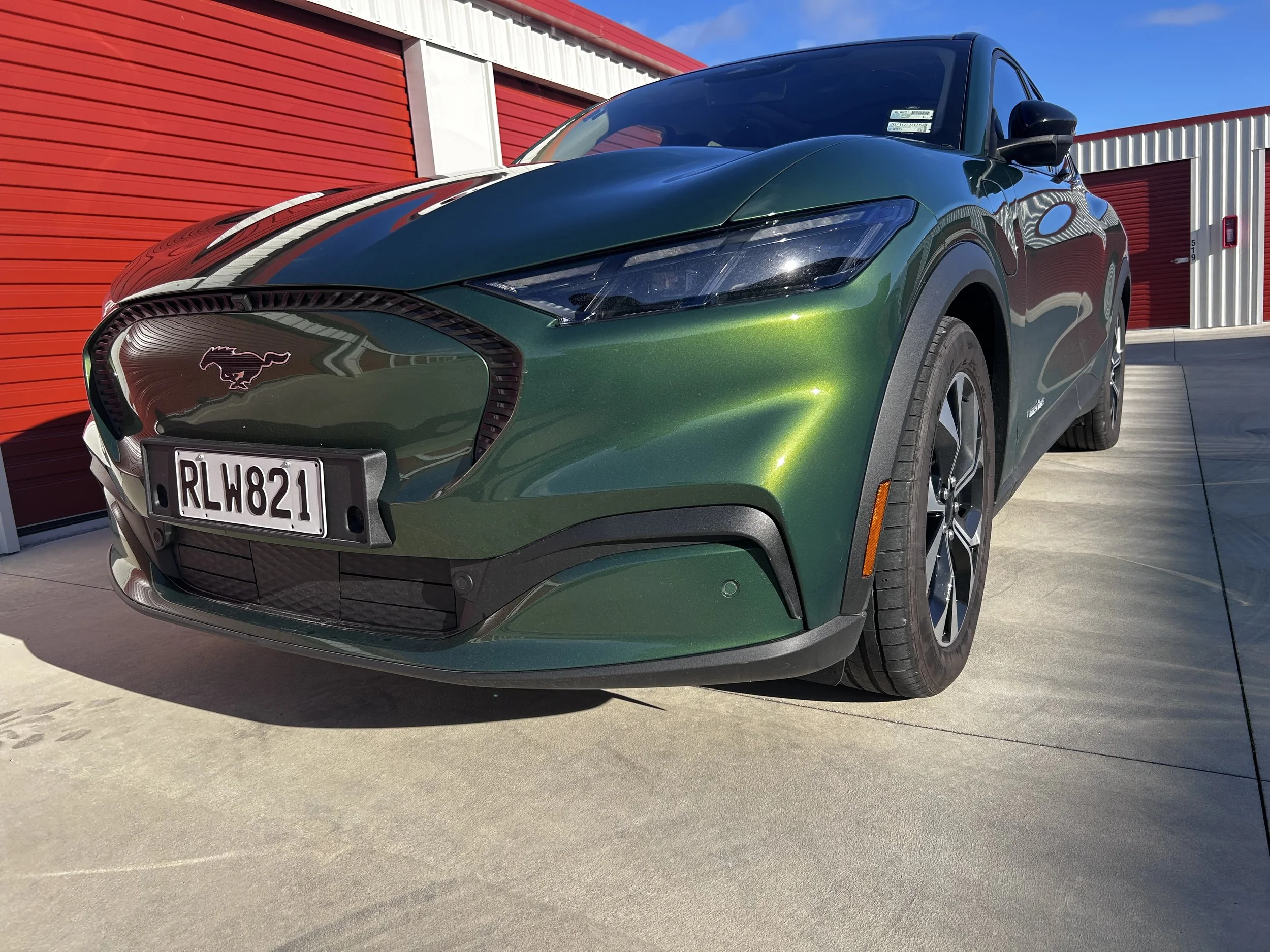
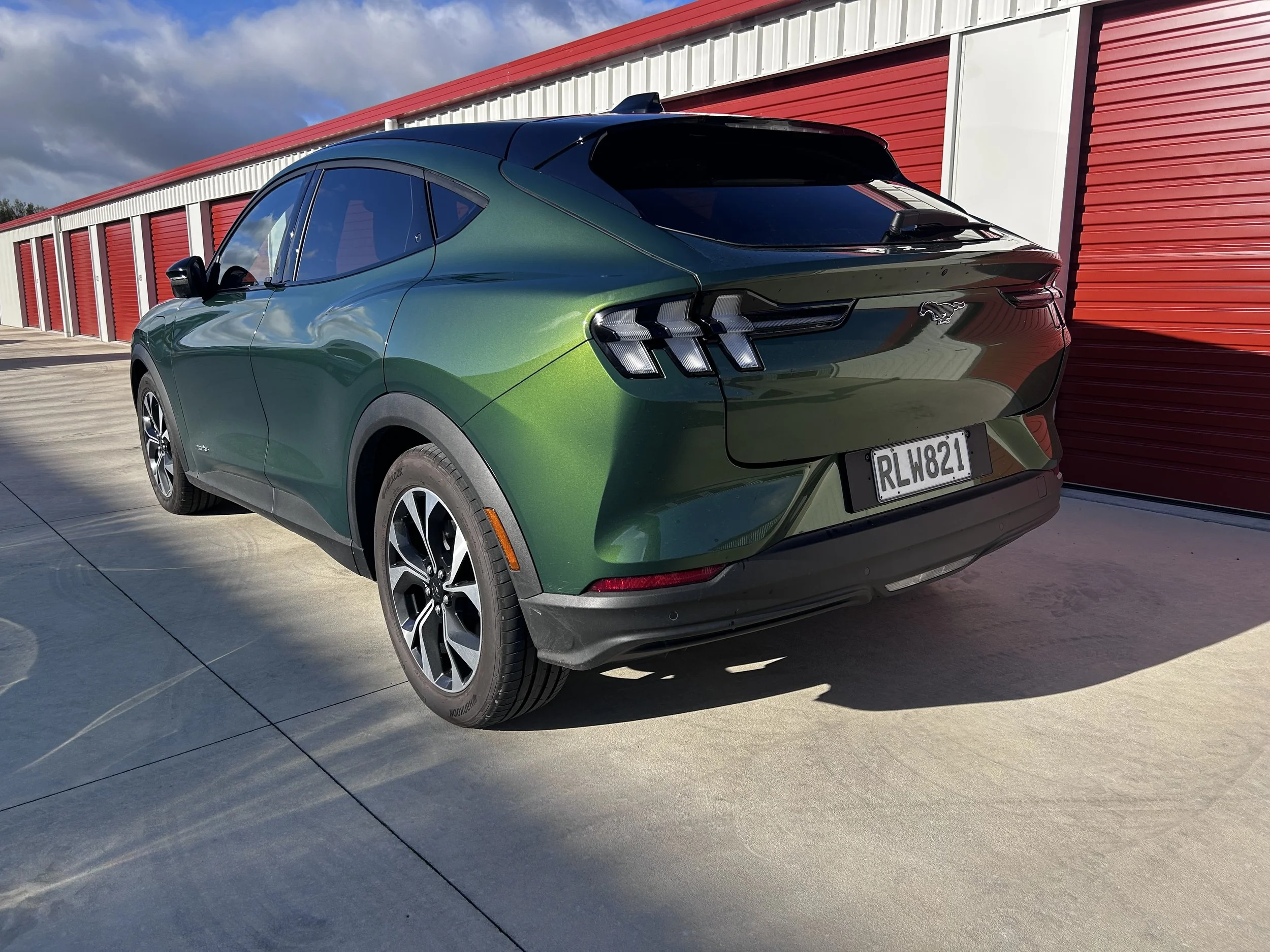
There are fresh colours, too, including the test car’s Eruption Green, which some liked, some less so much. Either way, all agreed it ensured the car was noticed.
Could it have benefitted from more tweaks? Those who find good use of regenerative braking will doubtless be annoyed there are no paddle shifters to control that. Also, it still lacks orthodox external door handles. I assume the redesign required to retire the weird push-button door release was just too expensive. Ford still also uses quite a few hard plastics in the cabin, which is a bit of a shame.
The update’s arrival was certainly not rushed; the freshen-up hit North America more than a year ago. We first reported on it on April 11, 2024.
Regional implementation began in Australia some months ahead of NZ. Ironically, we probably benefit from the long wait, because at least now the EV market is out of a rut.
No changes have been made to the chemistry or energy densities of the batteries. It’s a pity the entry car still has a 75kW usable Lithium Ferro phosphate (LFP) battery type whereas the GT gets a 91kWh long range unit.
Had Ford settled on just the larger for all the entry car could conceivably have lifted to become a full-out competitor to a lot of same-sized and configured product coming out of China. Not just for zip and range but also recharging speed.
Only the larger battery achieves faster charging, Ford citing 36 minutes (a nine minute improvement) to fast charge from 10-80 percent under ideal conditions, which means with a charger capable of delivering 150kW.
Still, efficiency from the Select’s battery seems to have improved and while the estimated 470km range is still 35km short of the GT, on its own standing is now good enough to be considered a strong choice for family use. Ford estimates to the NZ-recognised WLTP scale.
What’s also noticeable, too, is that it is a more responsive powertrain. The power increase to 212kW and 525Nm of torque is up 14kW and 95Nm, as result of it taking a different motor than first offered.
The improvement to output doesn’t make it a lower-price spoiler to the GT; the latter remains the performance king. But the Select is a slightly quicker to 100kmh, with a respectable 6.2 seconds’ claimed, on the way to a 180kmh top speed, and has good mid-range oomph.
What makes even more positive impression for the Select is that it also scores new springs, dampers and sway bars. Ford confidence in this having elevated its real-world performance and ride comfort is very much on the button.
Potentially, it could have become even softer, as some of the low frequency firmness that was irksome with the original formula still remains, but at open road speeds is its a much more settled car that now flows over bumps that used to send a juddering jar into the cabin.
While the interior isn’t overwhelmingly upmarket, it does feel comfortable. The front seats are superb for tall frames and the driving position is solid. As an interesting aside, when you sit in the driver's seat and you'll notice still there's not a single physical Ford badge to be seen - in the centre of the steering wheel is the Mustang pony logo.
The new column shifter takes a little while to acquaint to. Like me, you might well mis-use it as an indicator stalk initially. But only the once. EVs are generally not hand-on cars for gear shift use, so it might as well be tucked away up there.
The shifter relocation makes the centre console a better spot. Ergonomic pluses continue with the super-clear instrument pod, which keeps things simple by still just relating speed (labelled as Ground Speed a kitsch nod to the car's namesake, the WWII P-51 Mustang fighter aircraft), range and battery level and not much else. It's clear and simple.
Likewise, the SYNC4A operating system is proving to be one of the more logical set-ups offered by any EV maker, at any price.
True, some of the menus and setting options are a little bit 'deep-dive' but for the most part it's straightforward and simple to navigate. In respect to that word, the display for the navigation look very classy. The integrated central volume knob in the touchscreen that also allows adjustment of the climate control is design genius.
In respect to functionality, the car reflects its US market side by offered lots of large-sized storage options. There's a large tray big enough to hold a small bag and under the adjustable armrest there's a storage area with a sliding lid that's usefully deep and roomy, and which houses one of a number of USB outlets.
As said, with the Mach-E interior you kind of have to take the good with the bad. The bad stuff is that there are too many cheap-looking plastics on display. At least the interior does seem to be rattle and squeak-free, which suggests it is built well. For that don’t thank US assembly workers. This car comes from the other side of Trump’s never-finished wall, Mexico.
In look, the Mach-E is something of a classic coupe SUV, but it’s especially roomy for that genre, moreso than of the Euros cut to that shape.In saying that, if only adults are involved, occupant-wise it is potentially more a four seater than a fit out for five, as the rear seat is a touch too narrow for three adults side-by-side. But the seat is comfortable, offers decent head and legroom and passengers get the same USB-A and USB-C sockets as those up front.
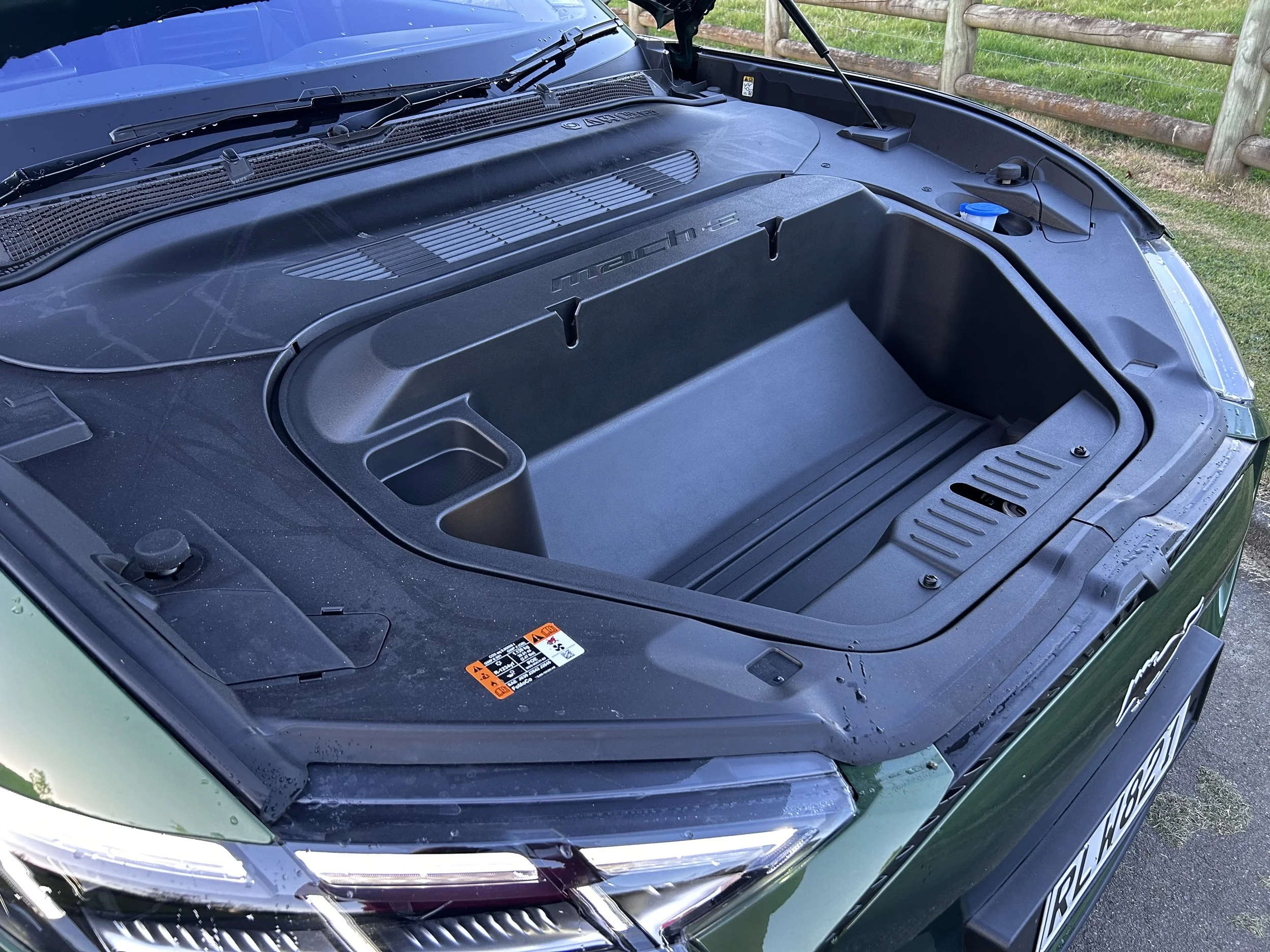
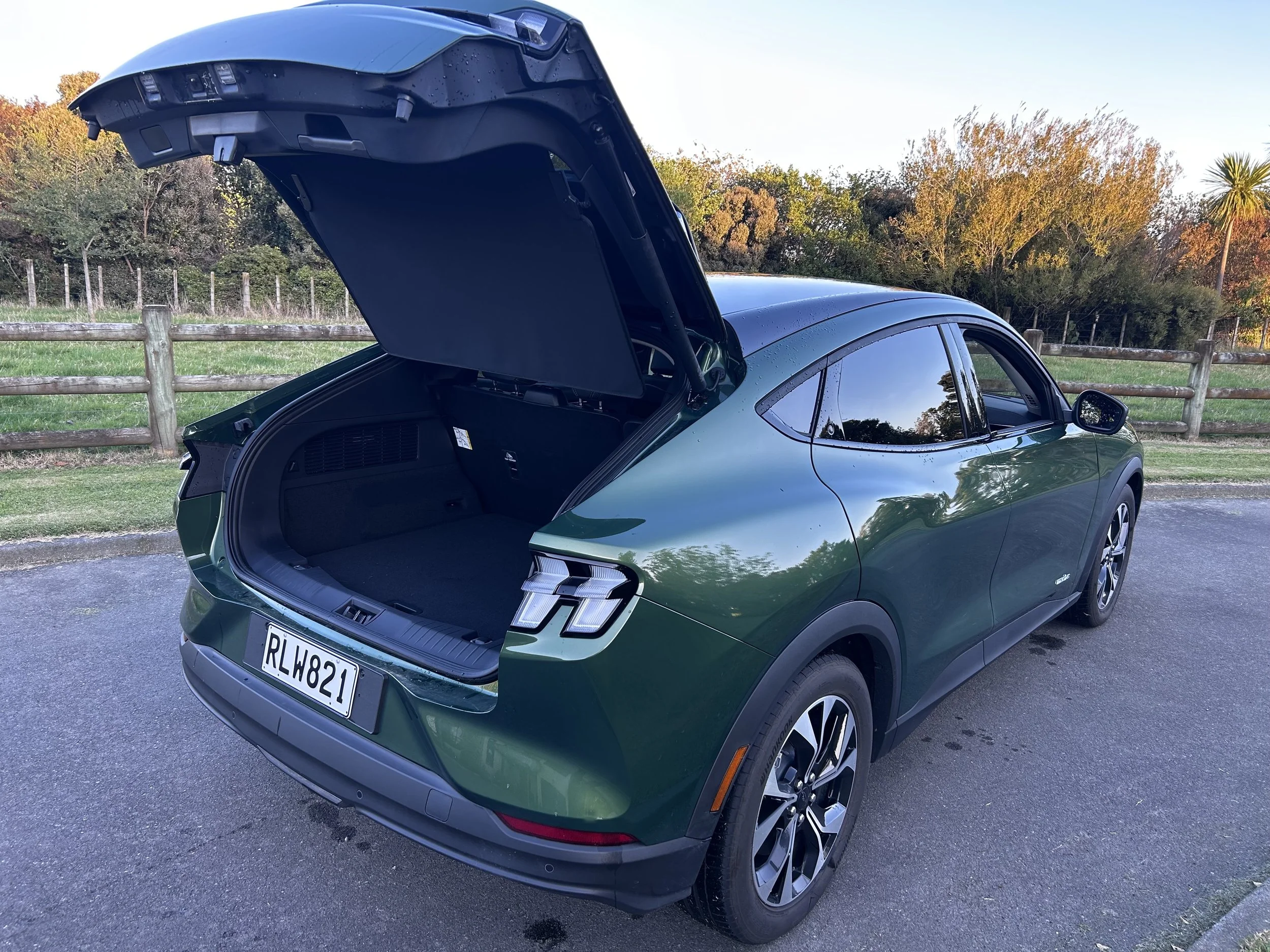
The boot is wide, flat and square in shape and while the 'frunk' storage space in the nose is surprisingly useful, swallowing charging cables and some shopping, it is 50 litres’ smaller than it once was, due to the need to fit in that heat pump. That additional involvement is also why the compartment there now lacks a drain plug. In the old car it was a novelty 130 litre ice chest, but now draining liquid into an area now containing more electrical ingredients wouldn’t be smart. Also, likely as not if the air con is working hard, the heat pump would generate enough warmth to risk those ice cubes turning to slush.
By general EV standards, the Mach-E delivers more driver feedback than many; aside from feeling fast enough to be frisky, and riding well, it has good grip, nice steering feel and well sorted brakes.
At same token, it’s no competition for the ‘other’ Mustang. The GT come closer, but even then it’s also different, not just due to the weight, but also because cars with all-wheel-drive fundamentally feel different to those in rear-drive. Plus, no engine noise.
The Select has three selectable driving modes. There's a catch-all mode called 'Active'; a range-saving mode called 'Whisper'; and, in keeping with the horsey theme, a performance mode called 'Untamed.'
The latter delivers weightier steering, snappier accelerator response and frees up the stability control setting. Plus a synthesised sound track that supposedly emulates a V8 growl. But it’s not really especially dynamically gifted in that setting, so why bother?
Honestly, for the most part it’s better to accept the car for what it is, an easy-going electric made all the more pleasing now it’s no longer as firm or fidgety. So driving it in Whisper makes sense, with Eco only needed if you’re running short of juice and need to lean things out a bit.
With these revisions, the Mach-E becomes much less of an enigma of a car.
It's not fully brilliant, still, but save for the stupid door releases (which include a numerical touch pad that serves utterly no purpose here) much of the stuff that annoyed or bewildered in the first issue format have now been either improved or fully resolved.
One curiosity with this car was how it replenished seamlessly on 50kWh chargers, but went on a go-slow with a 350kWh fast charger, when the draw fixed to 48kWh, which is one third it’s actual ability. Turned out this was a software issue that can easily be remedied by a patch, undertaken at the dealership. I alerted them to that, so hopefully it’s been fixed.
I don’t like that we’re in a state of uncertainty right now about fuel prices and supply; but I do like that attention is again turning to electrics. Especially to a car like this, which overall offers excellent value and good all-rounder opportunity.