BMW iX 45/Volvo EX90 Ultra road test review: Big scene stealers
/In the market for a big family hauler with all-paw aptitude, plenty of posh and full electric performance?
SPORTS utility wagons have taken over the market, no doubt about that.
And electric is starting to regain favourability. Something to do with a seemingly unresolvable disturbance in a hot part of the world.
But, anyway, consider this as a scenario: You’re well heeled and want a quality, sumptuous top-of-the tree European large SUV.
But because the cost of running one seems to be going up by the day, you cannot be bothered by having an internal combustion engine.
What’s out there?
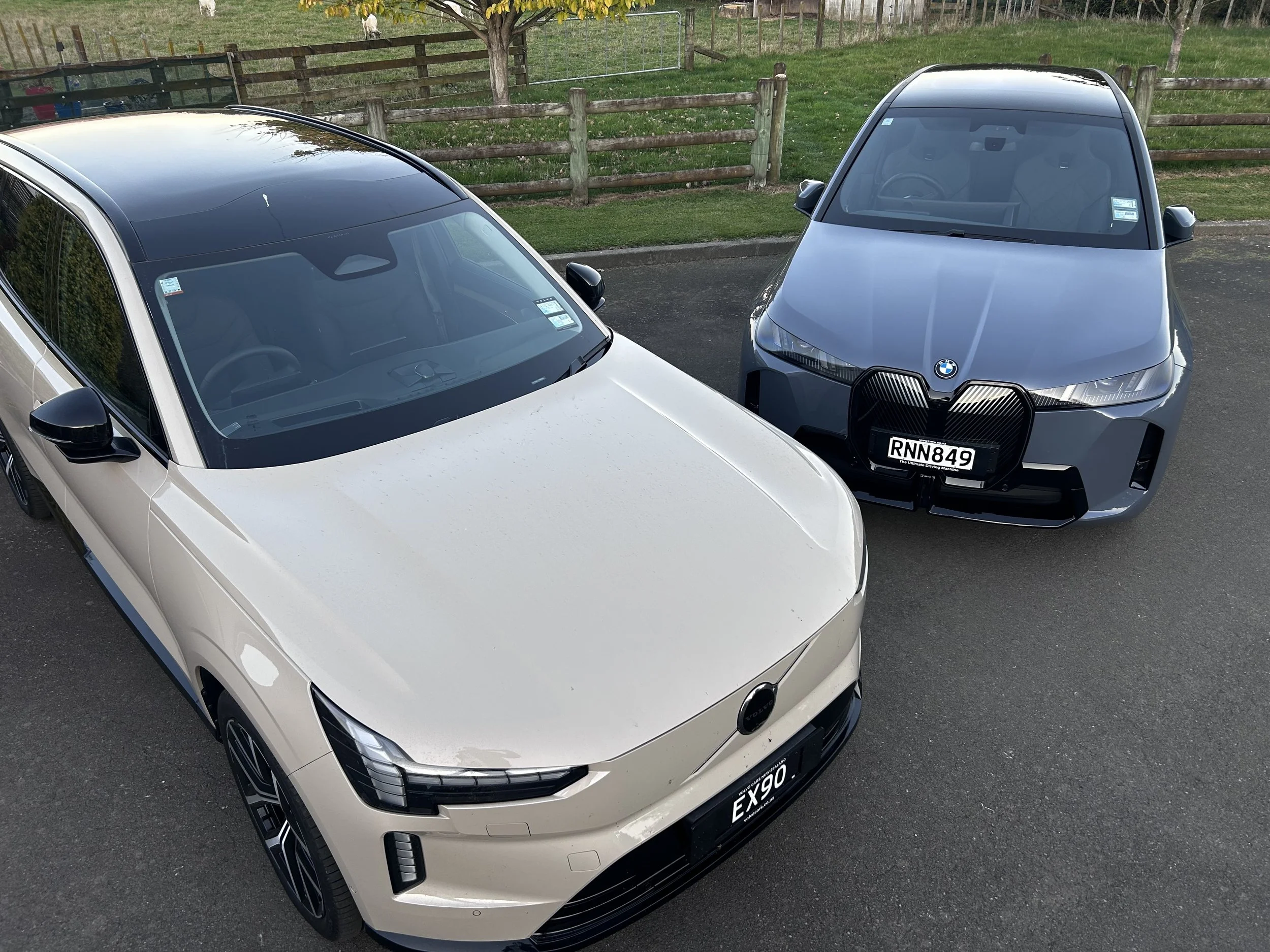
Opportunity to sample during a common period a Volvo seating seven and a BMW, outfitted for five, both roomy, both packed with tech, both guaranteed to win approving nods when they are parked in all the ‘right’ places seemed providential.
BMW iX xDrive45
Price: $169,990
Powertrain: Dual electric motors, all wheel drive, 300kW and 700Nm combined.
How big: 4965mm long; 1970mm wide; 1695mm tall.
We like: Improved range and performance; seems a less confrontational car now; beautiful build quality.
Not so much: Firm ride quality; overly try-hard interior design; now trounced in almost every way by iX3 (and Volvo EX90).
SUCH is the rate of progress from Munich that barely has the iX had time to settle into life out here than, first, along comes a big facelift and, second, all the technology it uses has lost headline status.
Now all the focus is on a completely new electric car platform, set to debut with the iX3 that is but a few months from arrival, which promises greater efficiency, faster charging and much range than the iX can provide.
Named after the original BMW 1500 saloon that saved BMW from bankruptcy in the 1960s, the ‘Neue Klasse’ underpinning will be used by an entire new generation of BMW models, including the all-important new electric 3 Series due in early 2027.
BMW has optimism Neue Klasse could be something of a tipping point for electric motoring. That’s not likely to happen with the iX, because regardless of the pluses and minuses of what it offers at technical level, simply has a narrower market appeal. Being too expensive, too big and debatably too challenging for its styling approach to ever gain the same consumer appeal.
Not that BMW isn’t trying to keep it in the frame, so it has rolled out significant improvements to this now four-year-old car, more than might be apparent at first meeting.
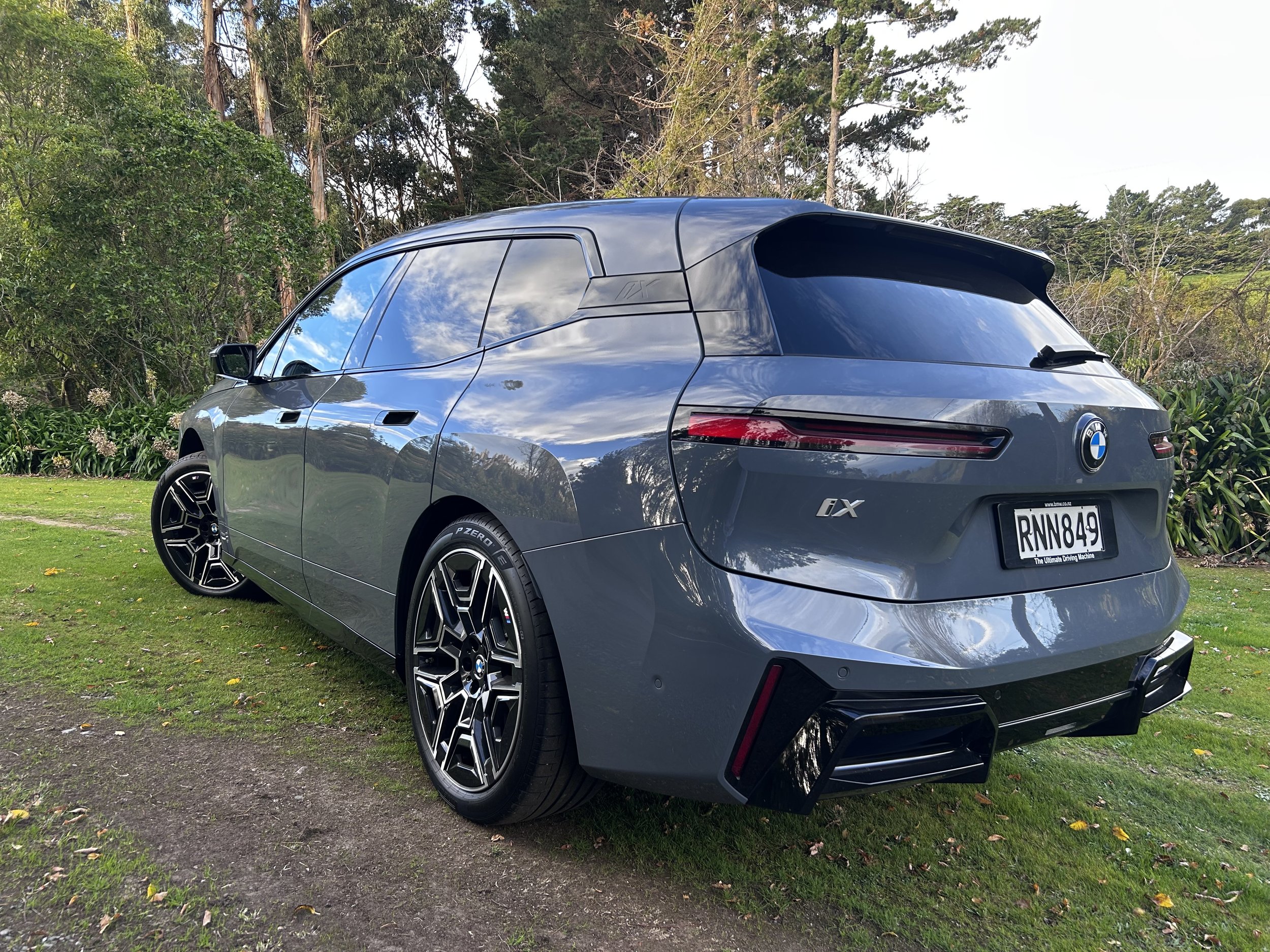
This mid life facelift - or ‘life cycle impulse’ in BMW-speak - doesn’t provide much solace for those who found the current car’s styling too divisive.
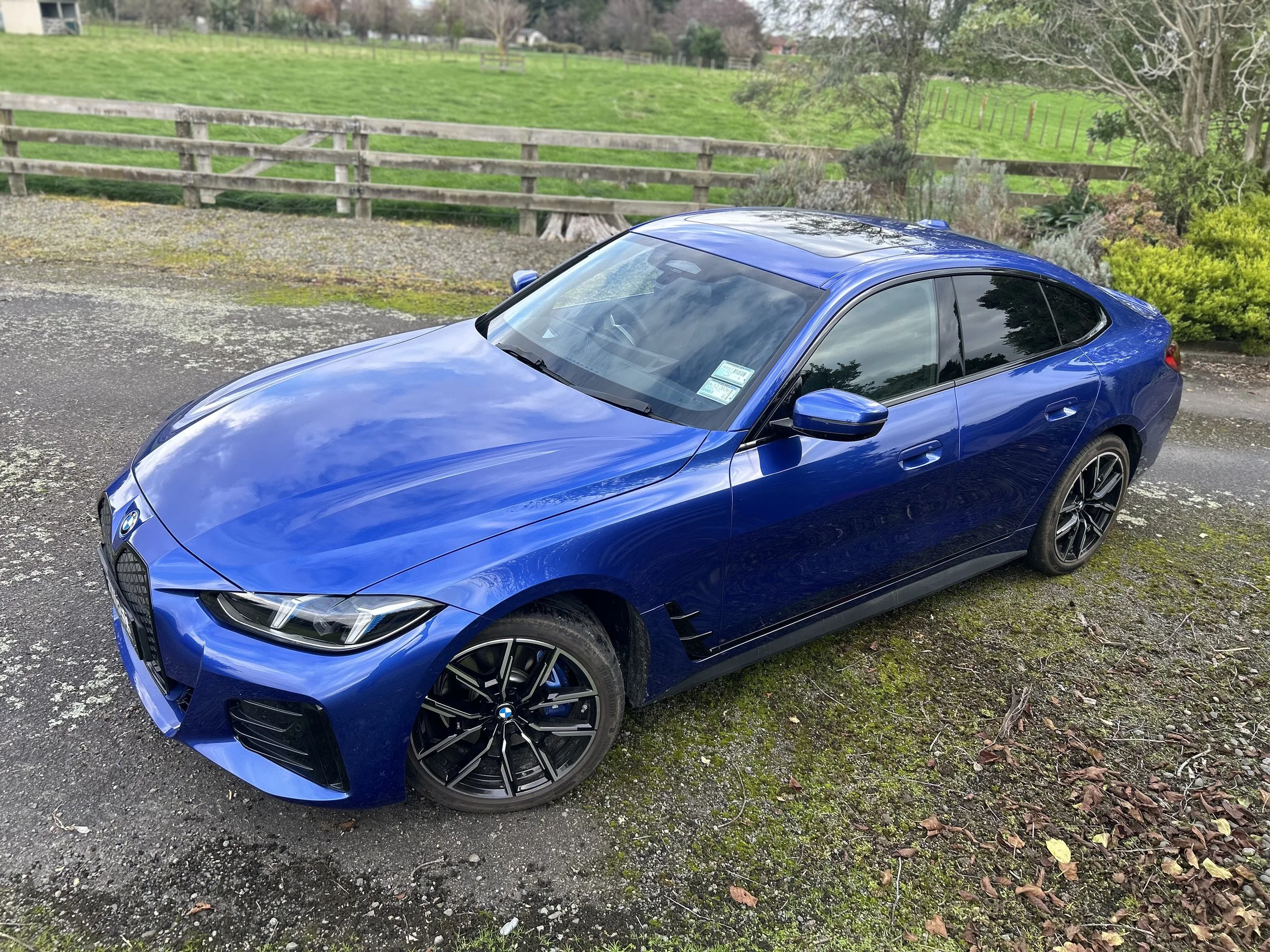
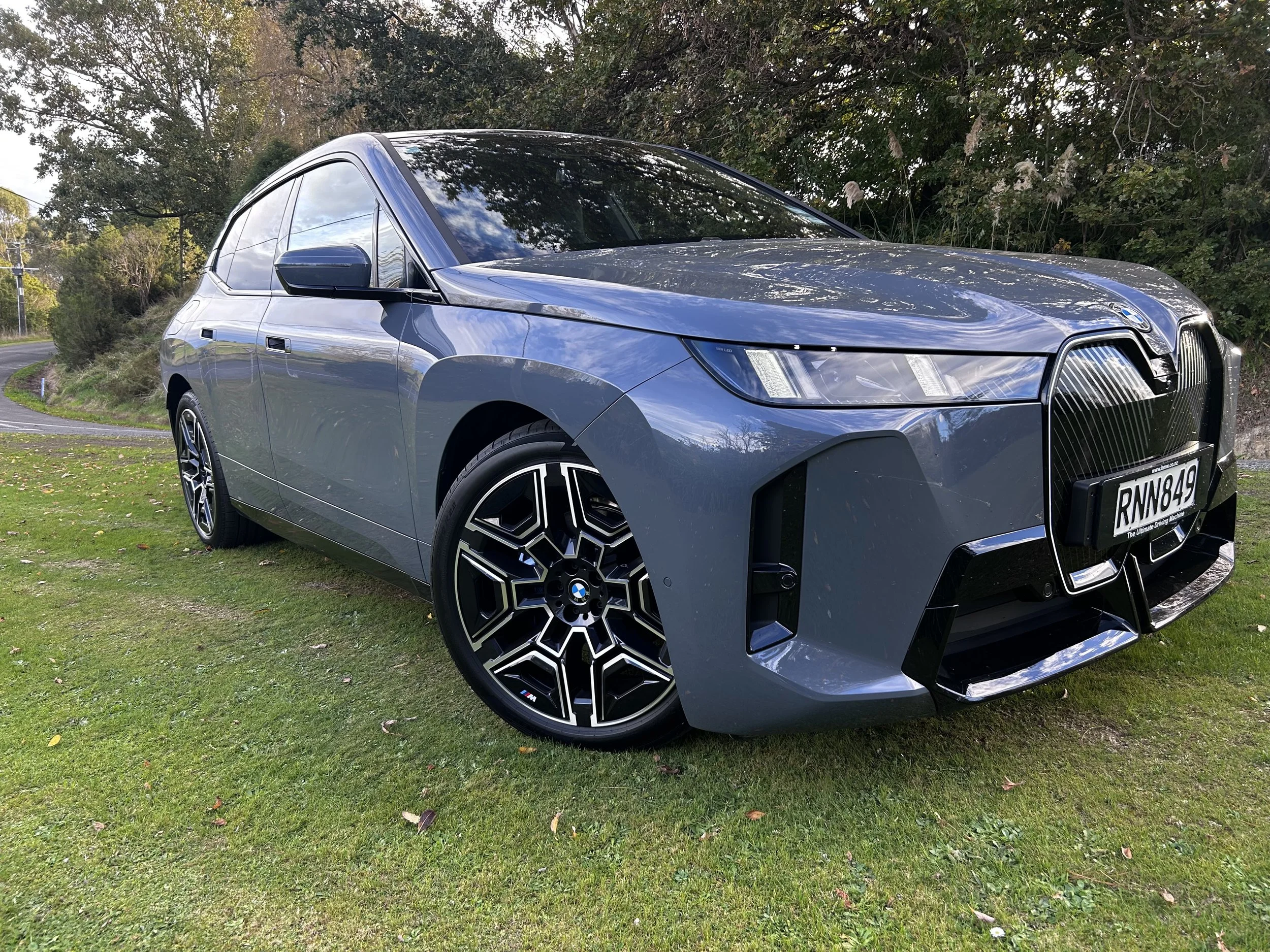
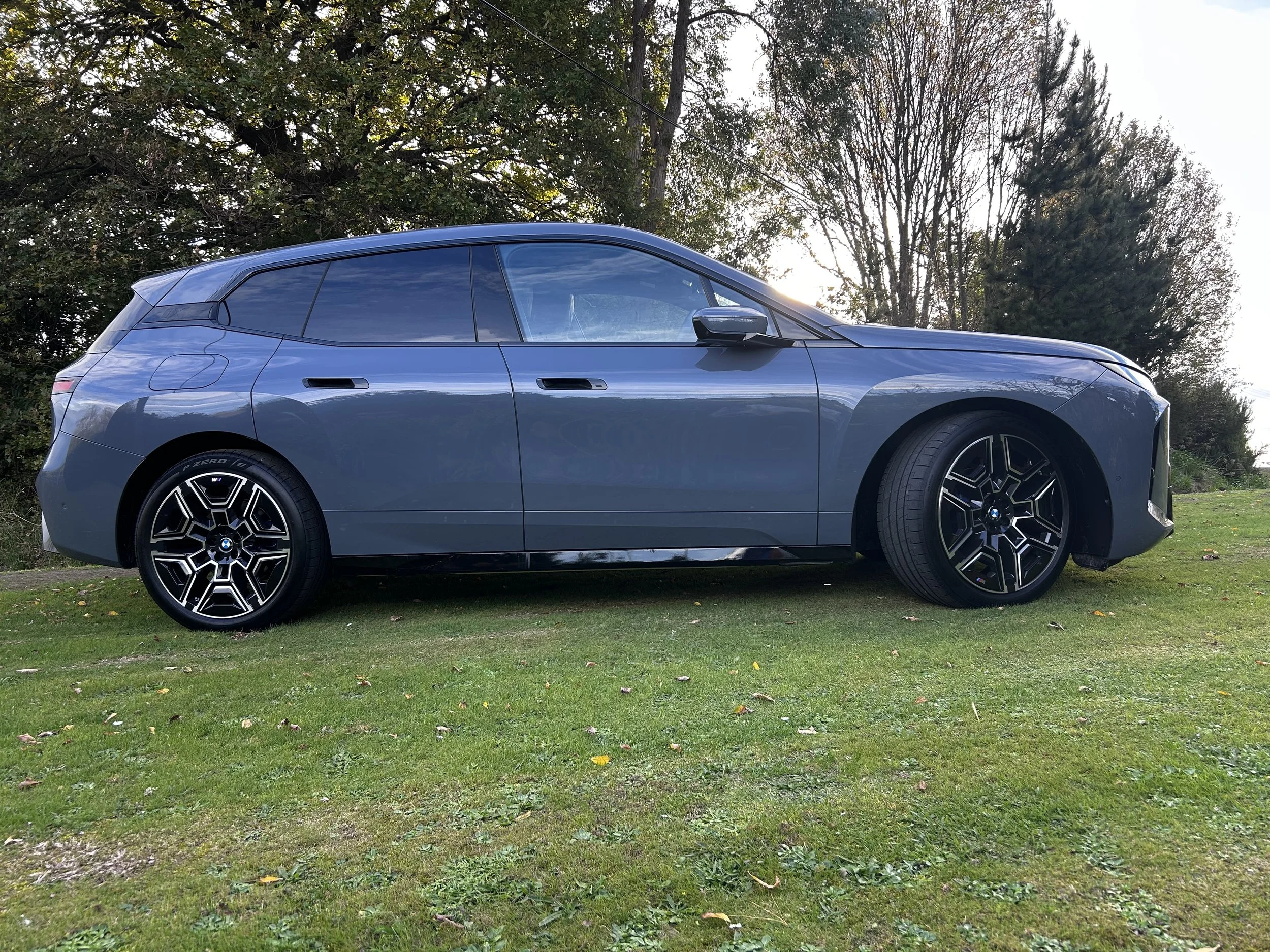
As is obvious from the images, the exterior style of the new one hasn’t changed much. The front lights look a little different, and the test car has a new M Sport package, the first time it’s been offered to this car, plus a new rear bumper and fresh design of alloy wheel. The contentious, upright ‘grille’ remains because . well, how could it not? Buyers can draw even more attention to it by adding the optional ‘Iconic Glow’ lighting.
As for the interior? So little has altered you’d say it had been rather subtly massaged, except in one respect: The steering wheel thankfully no longer resembles a flattened hexagon but is instead a proper circle.
Still, overall it has a stronger kerbside ambience than before, so doesn't look noticeably cheap or impoverished now. Also, perhaps it’s just the passage of time, but some of the shock value of its angular, aggressive styling seems to have dissipated. It’s not handsome, agreed, but it is less likely to be labelled hideous, a wordI heard all too often when driving the original evolution of this car.
The iX45 here has a big job, in that it effectively replaces previous ’40’, ’50’ and ’60’ derivatives that respectively cost from $163,000, $197,900 and $242,500.
As before, it uses two motors for xDrive all-wheel drive, but a comprehensive overhaul of the electrics including fitment of improved batteries has resulted in better efficiency, significantly more range and more performance.
Not enough to set precedent within BMW-dom, but definitely a step up from the original proposition.
In its original form, the very best model for range was the iX 50, for which a range of 550km.
The iX40 that the iX45 relates closest to in pricing and specification delivery, offered 240kW/630Nm, had a 76.6kWh battery pack (that's the net figure) and offered a theoretical range of 414km, but notes relate that on test we chickened out at 370km, because the car was all but on the electric equivalent of fumes by then.
The iX45 takes things significantly further. The motors are ramped up to 300kW and 700Nm, the battery is up to 94.8kWh usable capacity and it will deliver 600km of range according to WLTP measurement.
Obviously anyway up to speed on BMW electrics will know that still is not as impressive as the Neue Klasse models, which will deliver in excess of 800kms, or close to 1000kms with the 3-Series.
But by iX standards the iX45 is now a far more encouraging car in which to take reasonable distance drives.
With the iX40, you really did want to stray too far from the city, or at least from where the best charging spots were. Leaving the low speed zone and stepping up the pace simply asked it to consume more energy more rapidly, which in turn just amplified range anxiety. Not the case with the iX45, which therefore becomes a much more useful car for getting out of town and off to that weekend getaway.
In addition to allowing more time at the wheel, it also asks for less down time re-energising. The new batteries replenish off a DC charger more briskly than the older cars, and though in iX 40 format the maximum charging rate of 175kW is 20kW shy of some others in its fold, it’s still going to seem good enough to warrant bypassing those 50kW chargers for something meatier. Time on a 350kW unit was a joy; it simply ramped up maximum intake and stayed there. That performance reinforced BMW contention it can perform a 10-80 percent charge in just 34 minutes.
In between those times, you’ll find it is a zestier car to drive. The 0-100kmh time being 5.1 seconds now is bordering on frisky, but what you notice is that it is less laggardly in stepping out of intersections. Where I live there’s a crossing that demands quick-smart stepping straight into a 100kmh zone. EVs are the best cars for this, but the iX45 is better than the iX40 was and it maintains a zestier ambience from thereon.
Easy-going muscularity is a plus point at this level; mega-power EVs are great for generating headlines, but with BMW’s past efforts - yes, thinking of you, BMW XM - it’s surprisingly how quickly the novelty wears off. The iX 45 being quick, but not insanely fast, is a good thing, then. What it could do with is a bit more suppleness to the damping; back on Germany’s smooth tarmac, this car is probably a dream. But our coarse chip does it no favours. It’s not outright brittle, but is often a bit busier than some, which might be a turn-off, and you’ll work to keep those big tyres from striking potholes, because when that happens the thud is felt by all.
Still, the BMW-ness of the driving feel as a whole cannot be denied. Sheer physical size (and not inconsiderable weight), doesn’t inhibit the iX 45 from being a nimble dancer. Along with impressive body control, it also has good braking feel - without or without regenerative effect - and pleasingly direct steering. Variable ratio steering is fitted to all iXs as standard and really suits, making it feel more agile around town and through tight corners.
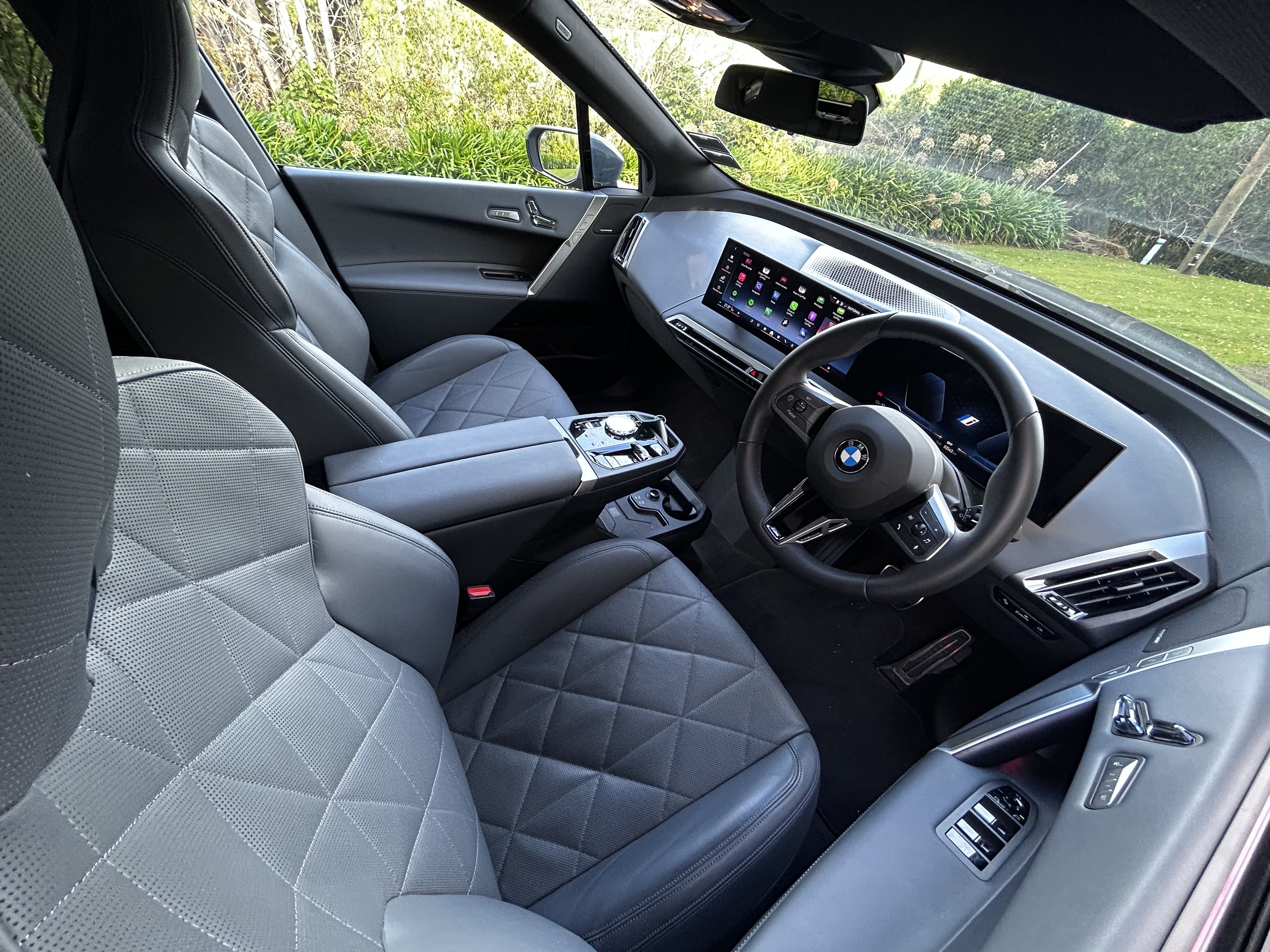
Surface quality also lends to road noise which can be combatted by sounds generated by the composer, Hans Zimmer. Depending on the drive mode selected you can have outlandish, sci-fi noises or something akin to a celestial choir. or nothing at all.
If you feel that kind of thing is not to your style, then perhaps the iX will also jar in simply how it presents. Posh materials and plentiful room for five are pluses here, but you also front up to a cabin that’s of an especially space-age design. From comparing to how the iX3 presents, it’s clear the iX was a bit of a testing ground to sift good ideas from the bad.
As in the Neue Klasse car, the iX dashboard is almost entirely button-free, but the curved digital display that dominates in the iX, with much dedicated to the driver, has been junked in the latest product. The configurable digital instrument cluster seems less fussy now, but overall, it’s not as good as where they have now gone.
That the iX remains a strict five-seater despite the fact it is physically about the same size as a seven-seat BMW X5 seems a bit of a waste, but there’s no arguing that it provisions well for passenger space and boot volume. Three adults can comfortably fit in the rear seats thanks to the width available and a completely flat floor. The iX front seats are a new design, with an integrated headrest and highly distinctive quilting and stitching; they look wonderful but for me were lacking in lower back support
As an M Sport the specification includes big wheels- the 22-inch wheels shod in 275/40 Pirelli P Zero tires here are an optimal size option - LED front and rear lights, the BMW Live Cockpit Plus infotainment system with a Harman Kardon surround-sound system, electrically adjustable and heated front seats, a heated steering wheel, dual-zone climate control, and Parking Assistant, so it feels very well provisioned and properly premium.
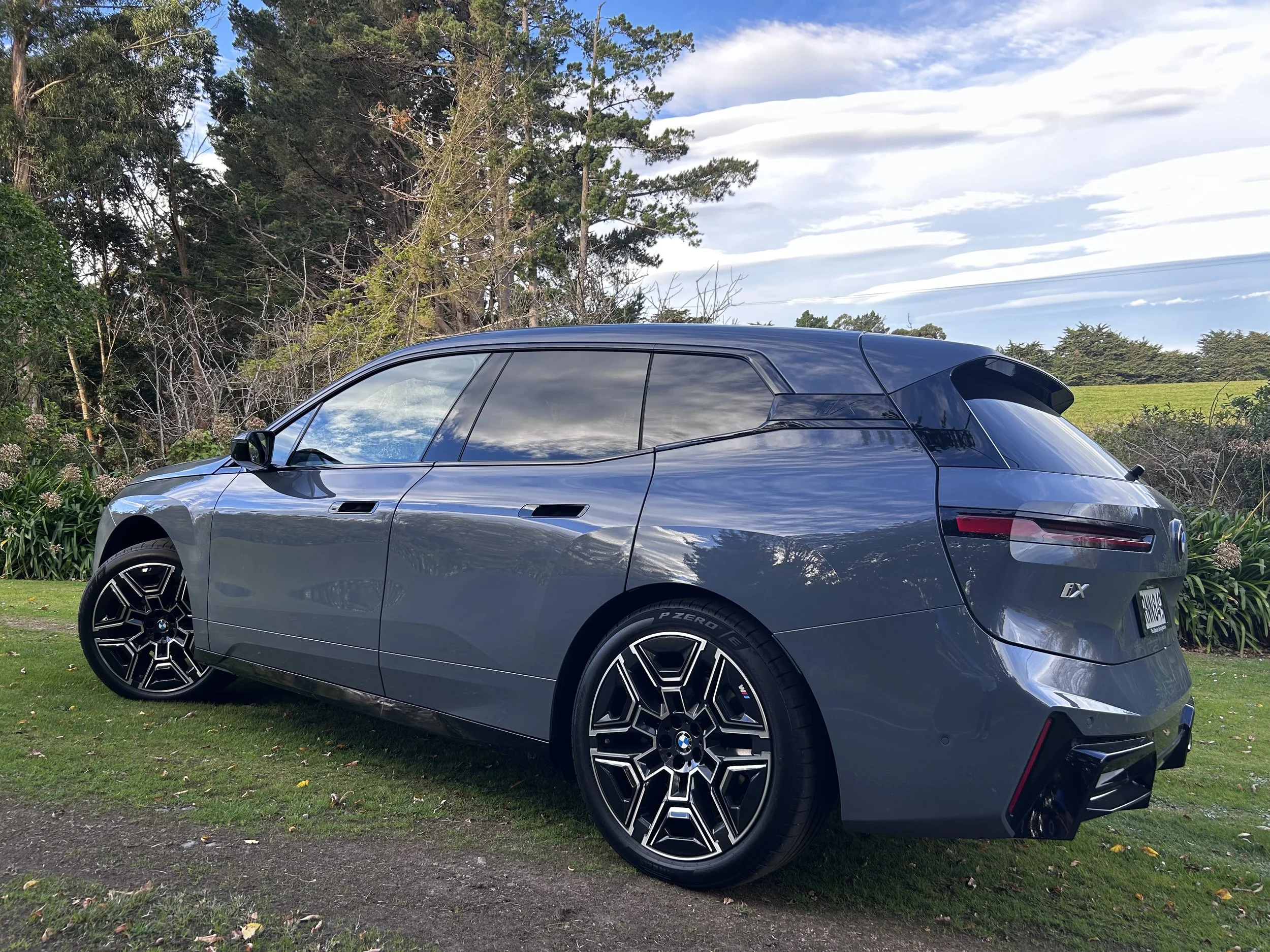
All the same, nominating the gear shifter, iDrive selector and seat adjusters to be made of actual crystal is a BMW bling I’d not personally box tick; not just on grounds of tenuous taste but also because they simply cause refraction issues in late afternoon sun.
The drivetrain and battery revisions alone have improved the iX, but it’s still a model whose design that is simply confronting for many. This look seems less extrovert now than it used to, yet the nicest thing you might still most often hear is that it has presence.
For all its modernity, it’s also become a technological also-ran now Neue Klasse is out. I’ve only seen and sat in the iX3, but een that’s enough to impress why the latest is going to push its big sibling away from the spotlight. As much as the iX has improved, it’s simply no longer the electric SUV that sets BMW’s pace, now.
VOLVO EX90 Ultra
Price: $159,990.
Powertrain: Dual electric motor, all-wheel-drive, 500kW and 870Nm.
Dimensions: Length, 5037mm; width, 1964mm; height, 1704mm.
We like: Magnificent design; extremely well-kitted for the price; best ride in the class; a properly useful seven-seater.
Not so much: Key card operation a faff; door mirror quirks.
FIRST, a fond salute to the one that didn’t make it. In some ways, Saab’s passing has made Volvo a better brand.
As good as both were in respect to engineering ingenuity, safety-first and care to comfort, Sweden having two globally-aspirational car producers was one too many.
Ultimately, both were snapped up by larger international brands and while it’s unfortunate Saab sadly succumbed, by going to General Motors. Volvo being kept alive by its migration through to Geely, via Ford, has been great. Gears of the Gothenburg side being asset-stripped then dumped on a quiet roadside have proven wrong. The brand is looking good; the future is bright: Mega-casting, artificial intelligence, cell-to-body construction … all being part of the Volvo vernacular now speaks to great confidence. ‘I roll’ is a big roller, and while the ‘Sino’ part funds it all, it’s still utterly, brilliantly Swedish.
Everything of course pins on electric. In that corner, as great hope products go, the five-seater medium EX60 here later holds more potential than the EX90 on test today. But, as said in the introduction, if you’re looking to go fully large, then the bigger number is more prime.
The seven chair, battery-fed SUV segment is niche but set to grow; at the moment, the EX90 stands tallest in it, though that’s not to say it couldn’t be better still.
A big promise point with what’s essentially the fully electric version of the XC90, a product also renowned for its space and safety, was that it would come with lidar technology, which would have allowed significant hands-free driving operation with greater surety than the brand best known for that provisions. But that’s no longer happening, because the third party provider of this tech proved unreliable. That, and software challenges that also delayed production, reminds that high tech solutions are not always as easily introduced as some believe.
Even if it’s not quite the car it could have been, the EX90 is still better than anything else within its cosy club right now and might well stay that way until the likes of the Lexus TZ comes in next year.
Out of Chengdu, China (the other plant is Stateside), Volvo's flagship presents appropriately.
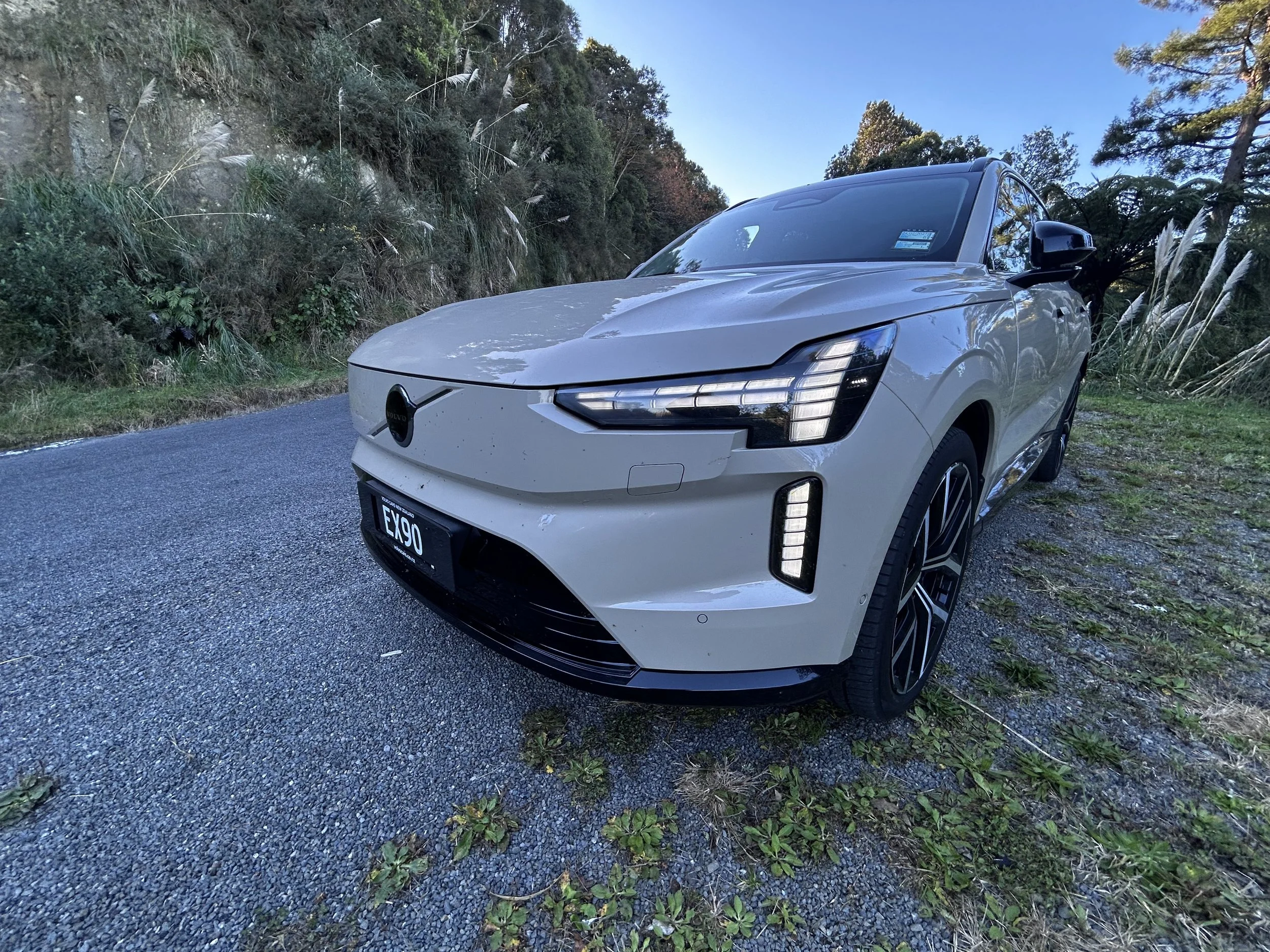
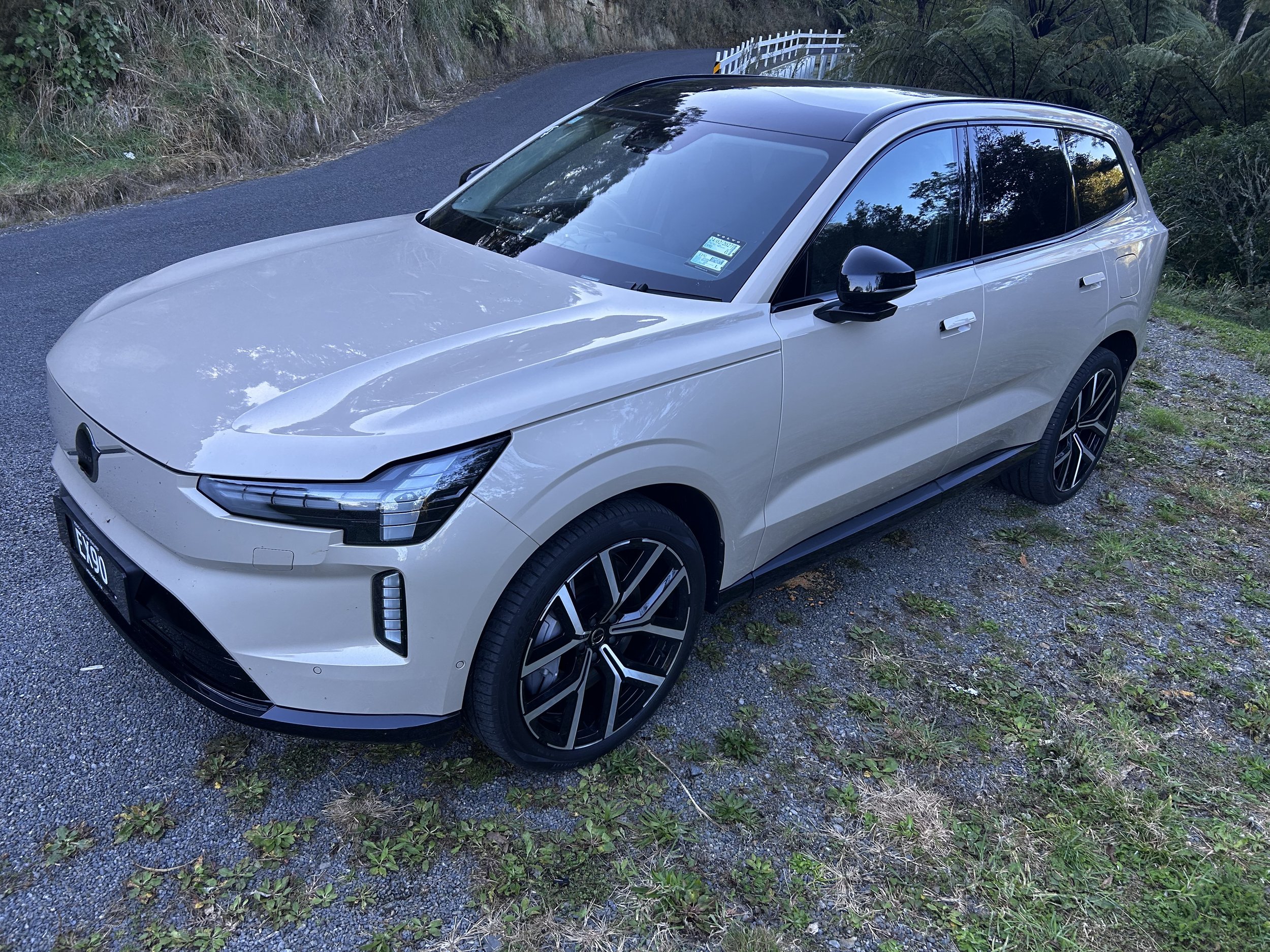
Volvo’s design path has gone deep on pared-back, minimalist styling that expresses very well here. The ‘Thor’s hammer’ headlights integrate neatly into a shape whose lines, we’re told, are yacht-inspired.
That, a gorgeous, spacious interior plus a driveline strategy that is all about the Twin Motor four-wheel-drive editions makes it a powerful force.
The Ultra edition on test has a $10,000 premium over the alternate Plus that is easily accepted.
Both run a huge 111kWh battery (107kWh useable) with 600 kilometres’ range and both top out at 180kmh, but Ultra gets to 100kmh faster, clocking 4.2 seconds against 5.5.
Ours being to Model Year 2026 means full facilitation of 800 volt charging; so seriously fast DC charging is enabled. There's vehicle-to-load if you need to use the EX90 as a big, rolling power bank. It’ll tow 2200kg. And that’s an Nvidia supercomputer at the car’s heart, with ability to process up to 250 trillion operations per second.
Ultra has a panoramic sunroof, front comfort seats, heating for all chairs and the steering wheel, LED headlights, adaptive cruise, parking and pilot assists, and a 360 camera among highlights, but spend a bit more and there are a lot of tasty additional and finishing touches.
The Plus adds air suspension, 22-inch rather than 20-inch rims, full pixel lights, ventilated and massage seats and has a 1610-watt, 25-speaker Bowers and Wilkins stereo with Dolby Atmos for surround sound (and ability to replicate the soundscape of sitting in the famed Abbey Road recording studio). It is very, very good.
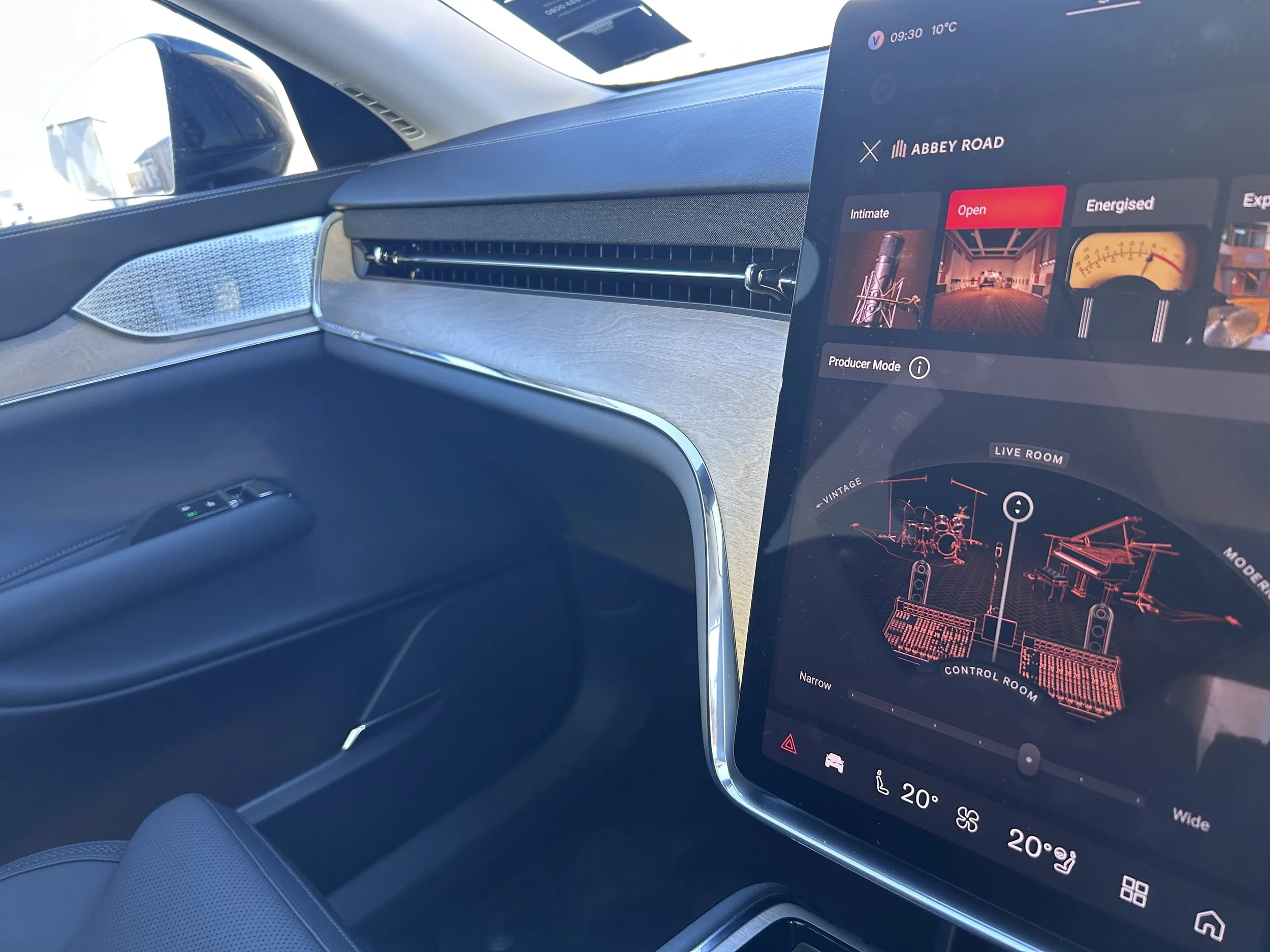
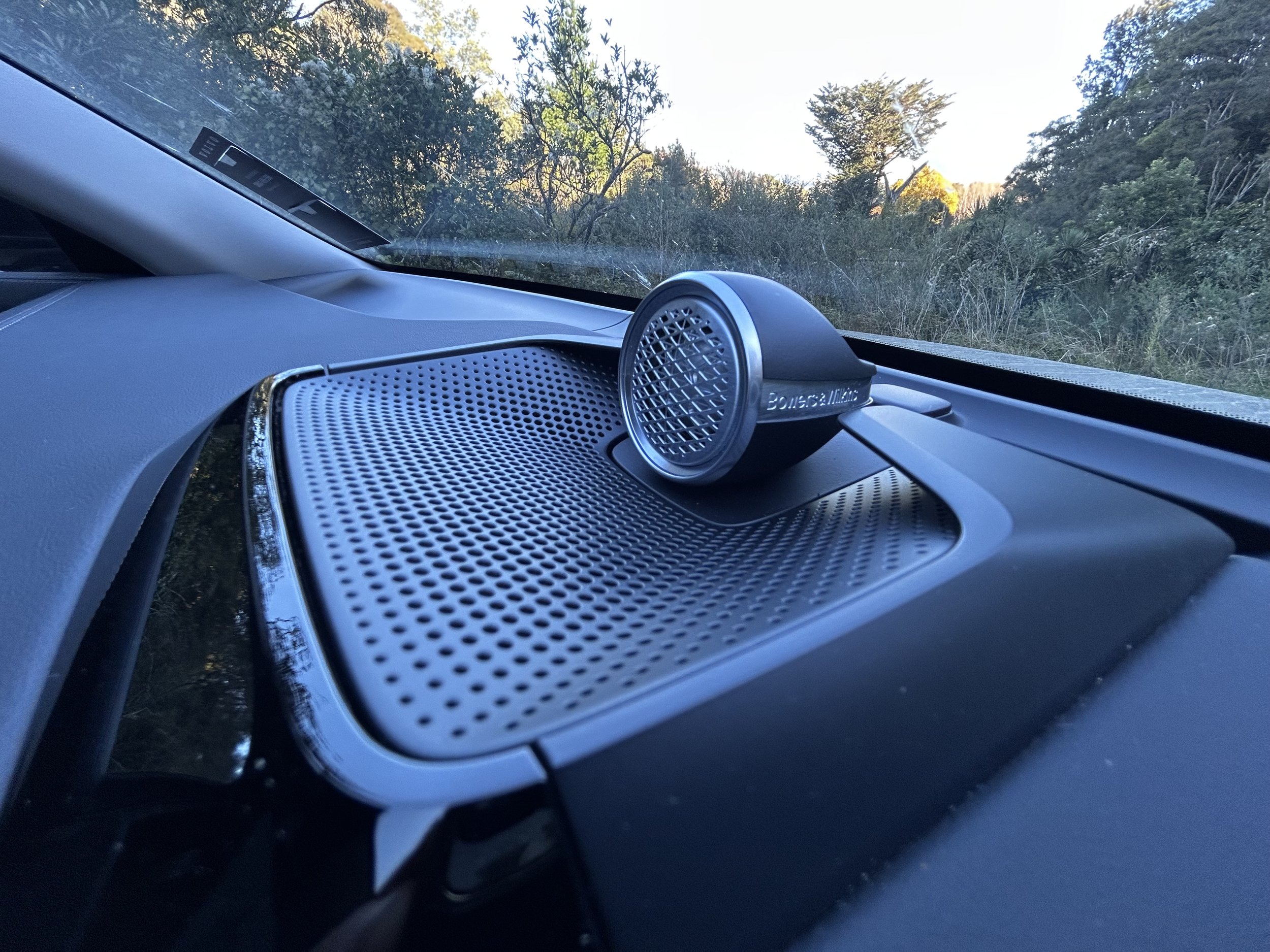
When attending the launch, the EX90 left impression it was the kind of car in which you feel it’d be easy to drive for ages. That impression was simply further cemented by time on seven day test.
As much as the Ultra is set to deliver brisk performance, to point of being a seven-seat sports car hunter, greater appeal is that it’s simply more civilised than some other all-out ultimate performance EVs.
It gets places fast, no argument, but what’s more brilliant is how it maintains incredibly decent comfort while doing so. I simply cannot think of another large electric SUV that has anything like the quality of ride. How they’ve managed this with a product that is 2.8 tonne hefty and has a unitary chassis is beyond me.
Many electrics of all size and substance have tendency to feel wooden and are troubled by road roar. Not the EX90. It’s beautifully suppressed and supple. You get the sense even Rolls Royce would be impressed about how well it copes with bumps and ripples.
There’s no abject brutality to it. Be gentle with the accelerator and it settles into a highly pleasant languid driving style, with exceptional levels of comfort and refinement.
When wide, low-profile tyres usually meet coarse chip, resonance is expected. Yet not here. This a car in which the ride is almost always smooth and in which front seat occupants can maintain low-voice conversation.
There are soft and firm modes for both steering and suspension if you venture far enough into the multimedia menus to find them, but left to its own devices it feels sure-footed and solidly dependable.
The sense of the car’s size is less evident on the open road than when travelling through streets. As much as it is generally manageable in the urban environment, one irk requires addressing.
When manoeuvring those mirrors don’t dip when you go into reverse. If you are in a tight parking scenario when you might wish to fold in the mirrors for a moment, it’s a faff, as activating the appropriate control, within a sub-menu on the main screen, can occur only if the car is in Park.
Aside from it having such a flowing gait, the other appeal of driving the EX90 for any period of time is that it allows opportunity to enjoy its seats.
No position lacks for comfort here, but the front chairs are the prime spots, being gloriously comfortable. If you cannot nab those, settle into the second row. Row three is more for small bodies, though as said the seat design is very decent there as well. The main issue is the usual story: Not a load of space.
The front chairs are both heated and ventilated at Ultra level and fully electrically-adjusted using a small cube-like switch on the side panel of the seat.
You can change the sections of the seat that each twist and turn moves by tapping on the touchscreen. It's a slightly fiddly system, but you do get used to it and it's worth working with it to find the right driving position.
There's plenty of adjustment in the steering wheel too, but this is a point of issue in also being screen-centralised. To actually move it, you have to work your way through menus and then use the buttons on the right-hand spoke of the steering wheel itself.
That’s one of several ‘very Tesla things’ that I’m stunned Volvo has adopted. Another is the awkward key card that demands touching a very specific spot on the driver’s door handle to unlock the car and then must be placed, if momentarily, on the phone charger pad to get t started.
This is a very sensible brand and this sort of thing simply isn’t. With the unlocking and starting, you can in full ownership use a phone app and keep the key somewhere safe, but in respect to the steering column adjustment I’d much prefer if they just fit a simpler manual kind using a lever.
At least when adjusting the wheel position you won’t ever risk losing sight of the eight-inch driver's panel as it is attached to the steering column. So no matter where you position the wheel you'll have a clear view of your instruments, backed up by a head-up display legible when viewed through polarised sunglasses.
As is normal convention now, there’s an avoidance of buttons within the cabin that almost seems like an over-zealous eradication. The only physical buttons you will find here are for stereo volume and track skipping, plus the column stalks behind the steering wheel (the right hand one is the gear selector) and some small buttons in the ceiling for the interior lighting.
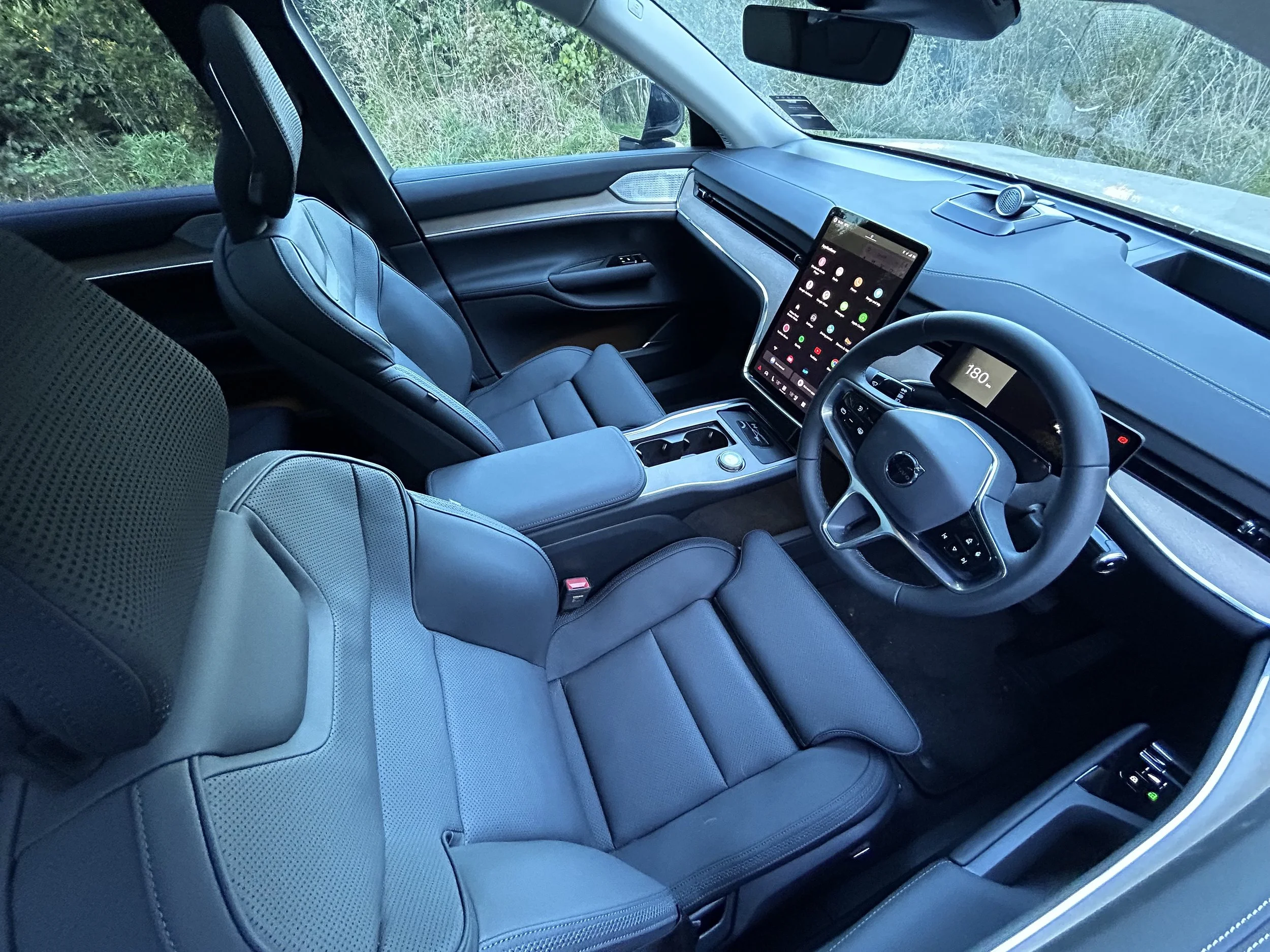
Volvo's imposing 14.5-inch touchscreen, mounted vertically on the dashboard, does nonetheless have extensive merit in that it functions seamlessly and the underlying Google-based software is fast and clever; plot a charging station rendezvous and it can trigger battery reconditioning.
Practicality? Volvo is an ace at that stuff. Here there are large door bins up front, a big storage area under the front-seat armrest, a useful open space under the centre console, which has two cupholders and an angled wireless phone charger with a grippy surface.
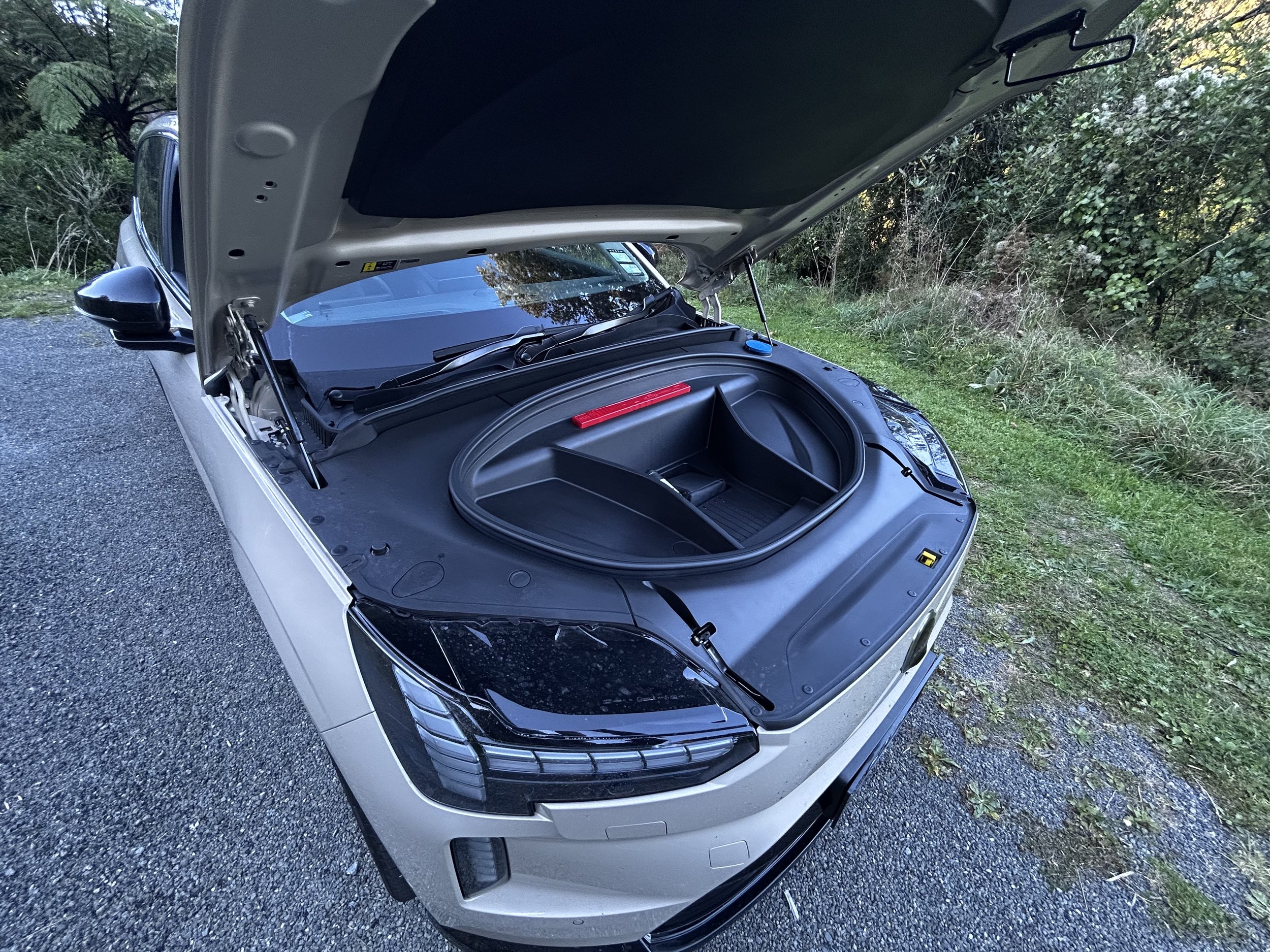
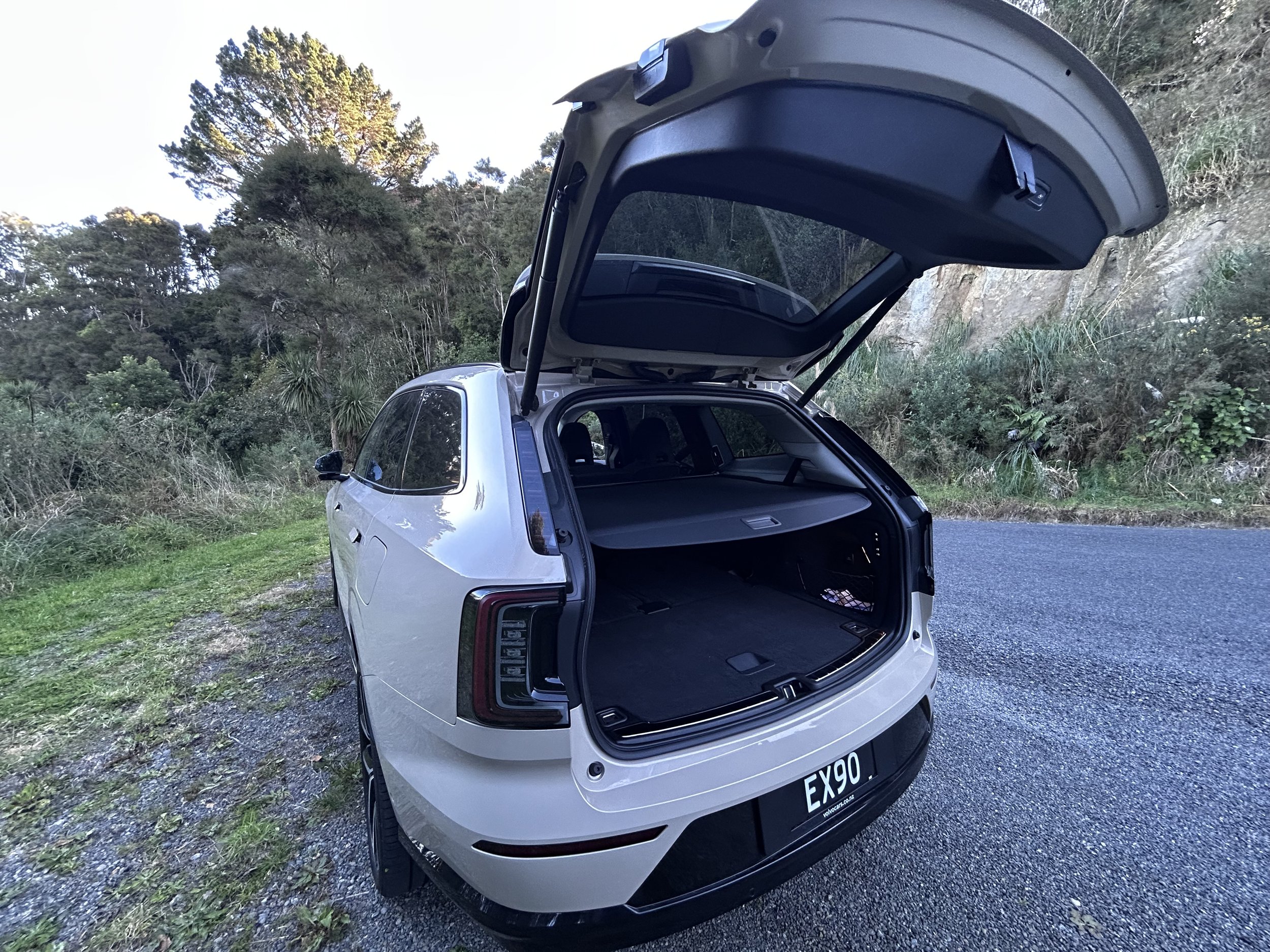
The boot has useful bits like hooks, straps and lights and 690 litres of load volume, up to the luggage cover. Fold down all the seats behind the front chairs and you get a flat floor. In addition to the in-cabin stowage, there is a useful 'frunk' in the nose, large enough to stash charging cables. But no obvious location to stow the rear luggage cover seems odd for a brand that’s generally good on detail.
The Ultra’s air suspension is put to good use, with buttons in the boot to enable it to 'kneel' at the back, making it slightly easier to load up heavier items.
Within the seating area, you will notice the outer two seats of the middle row seem quite firmly up against the doors. This to ensure there’s a proper seat in the middle, but those either side need to watch their elbows in when closing the doors. All three mid-row chairs tilt, recline, fold and slide so you can juggle the space around as needed. Provision of four ISOFIX anchors, located in both outer middle row seats and in both of the third-row seats, will appeal to parent.
On the driver assistance side, the EX90 is fundamentally well-provisioned, but with light detecting and ranging - a system that uses pulsed laser light to measure distances and create precise, 3D models of objects and terrain - as a complement to its eight cameras, five radars and 16 ultrasonic sensors, the potentials would have been astounding.
Safety-wise the car’s integrity is nonetheless solid. A full five-star score - delivered by Euro NCAP, adopted by Australasian NCAP - included 90 plus percent scores in both adult occupant and child occupant safety.
An 82 percent rating for vulnerable road user protection is also very impressive, especially for such a big, heavy vehicle. It has a very clever anti-whiplash system and run-off-road mitigation, a system to help prevent and protect against the invariably violent crashes where the car swerves off the road and impacts with something solid.
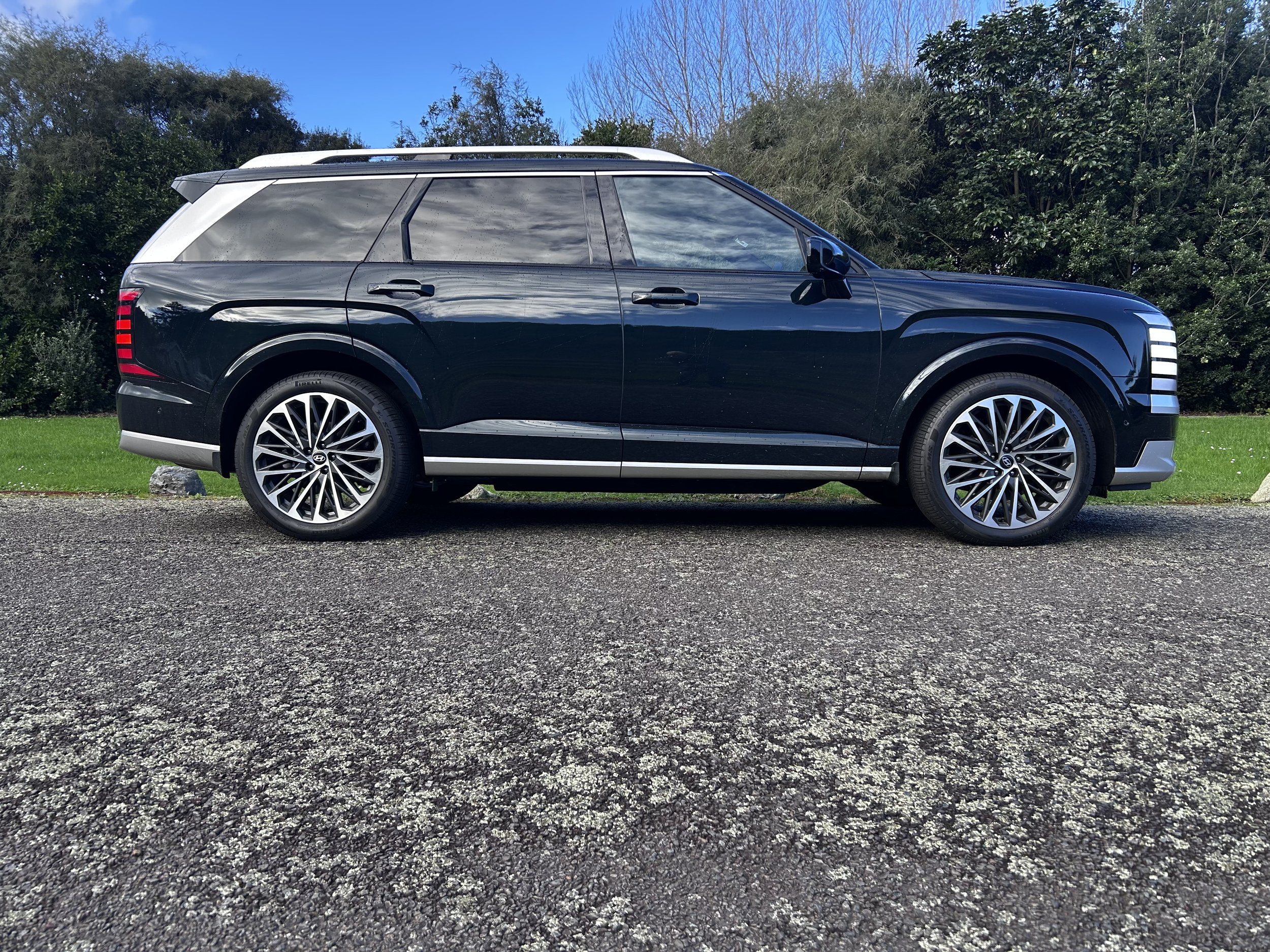
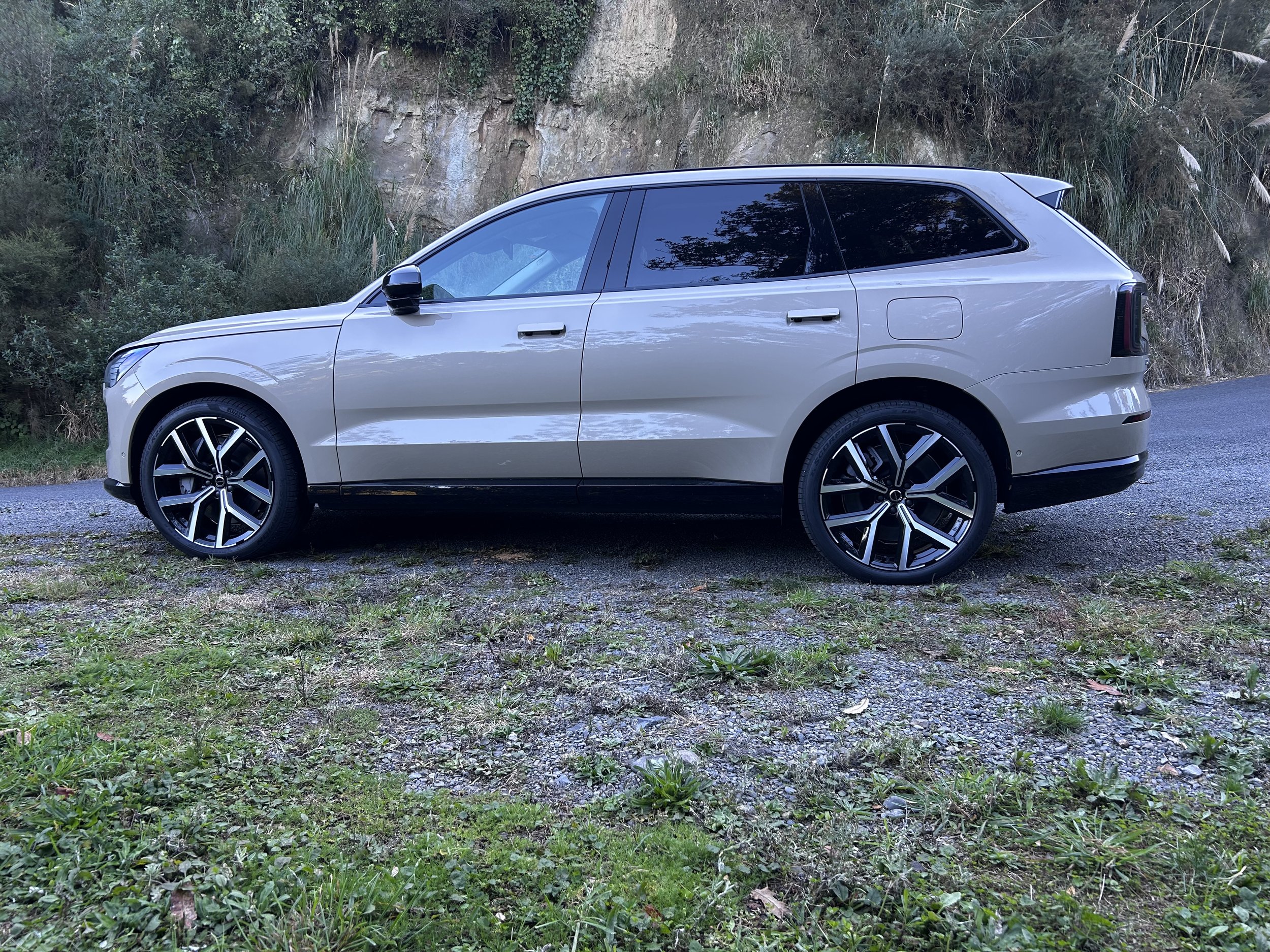
All this in a car that also stands out for being super cool in its kerbside look. It’s hard to make large SUVs look visually compelling - as said, that’s where the BMW iX fails - but with Volvo's design language unavoidable bulk is nicely disguised. There’s just no angle from which it looks awkward or cumbersome.
There’s no logical need in my life for a family bus. But I’d happily make exception for this one.