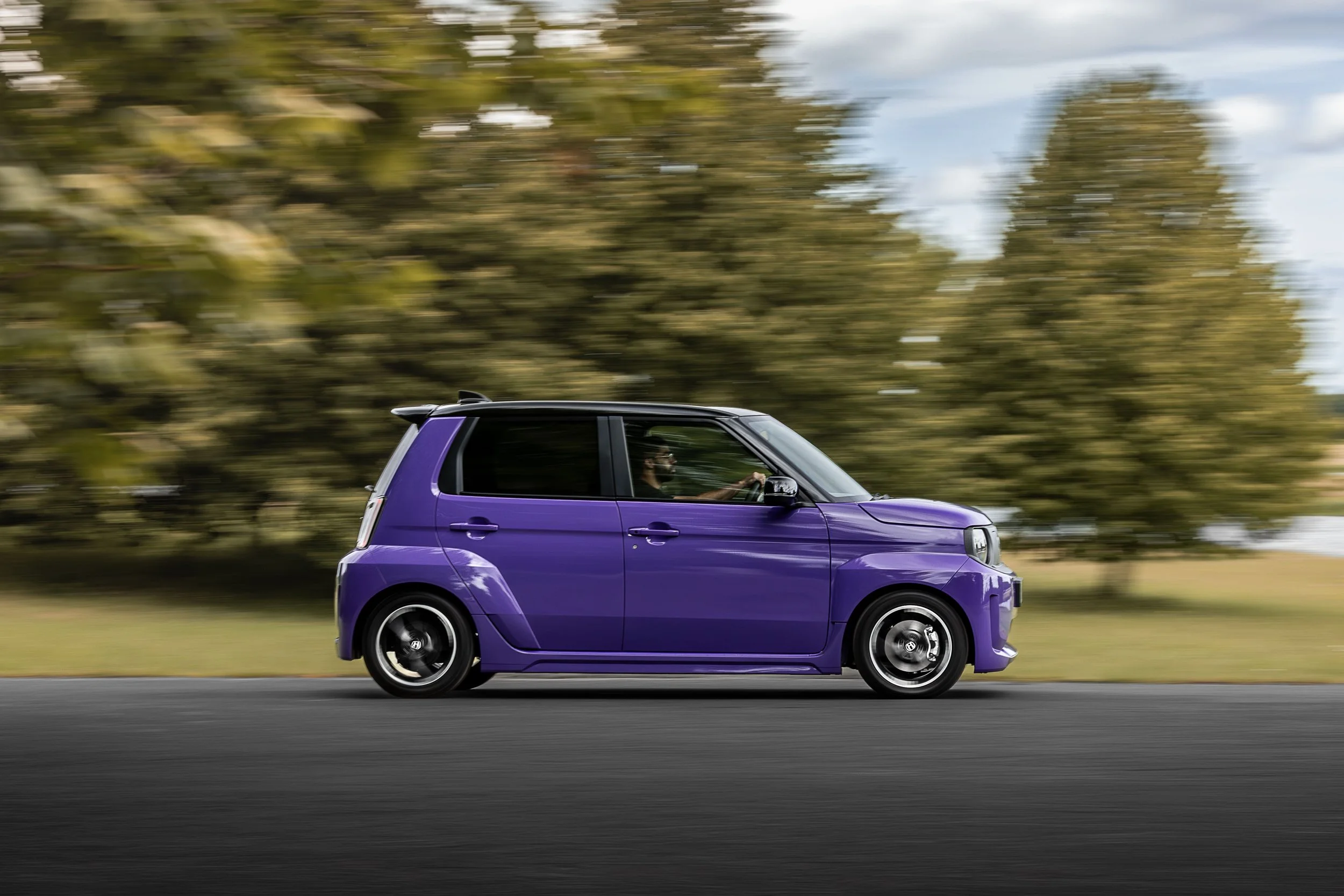
Honda Super-ONE first drive: Start of a new baby boom?
/Cleverly packaged, hugely characterful and aching to be seen in all the right places. Is there any challenge beyond this wee marvel? Erm, maybe …
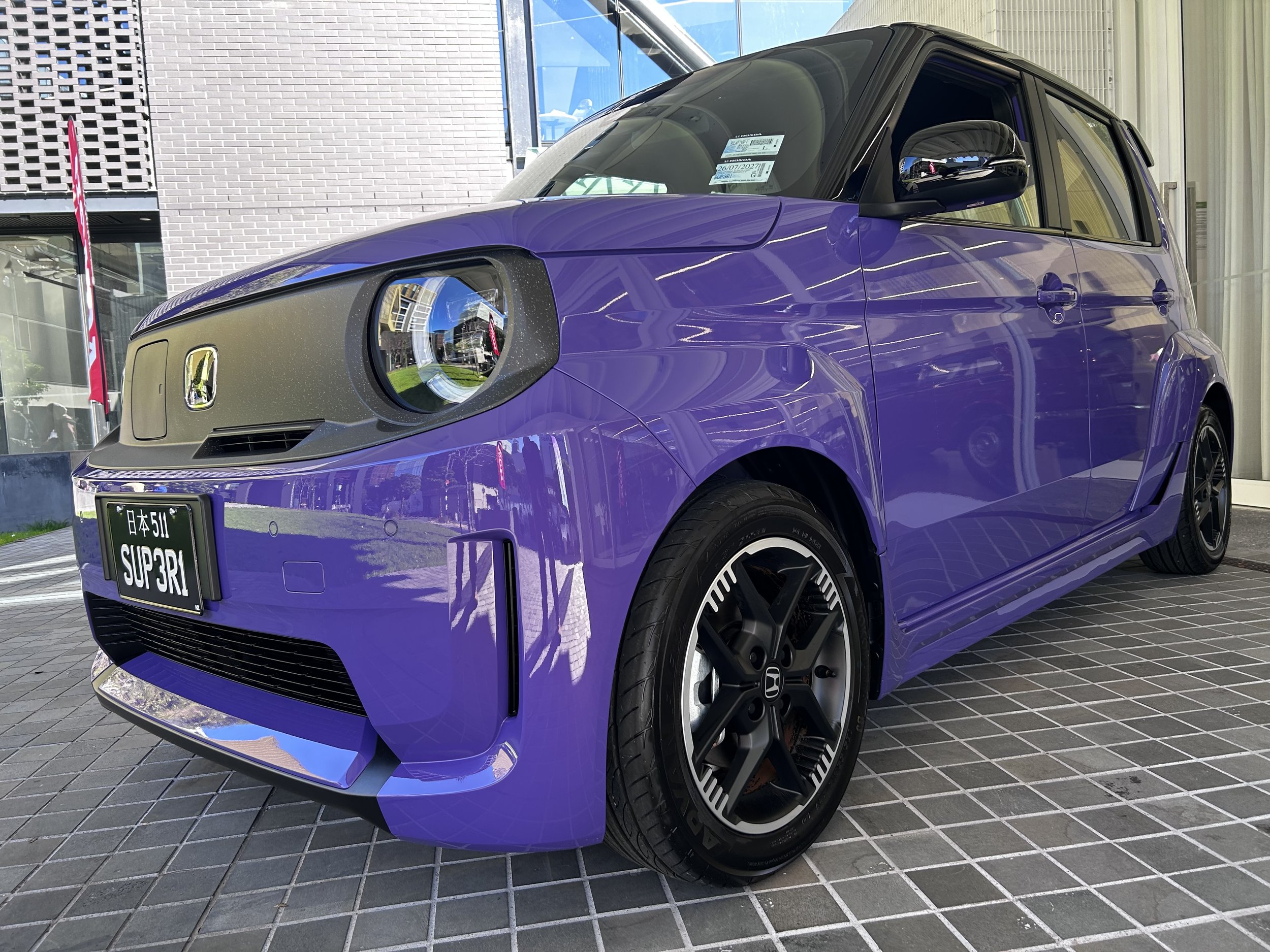
KEI cars and big kay driving - historically just too daunting to contemplate; these baby cars are definitely designed for city flits, but the Honda Super-ONE is just so madcap you can understand why it’s got some concocting crazy schemes.
Would you attempt driving this wee thing for hundreds of kilometres at open road speed between major cities? To me, that seems an overly bold initiative, but some at Honda NZ appear keen to give it a go nonetheless.
Good luck to them. At 3.6 metres long, and just 2.4m wide, and weighing barely more than a touring motorcycle, this Lego-look offer has virtue of being the smallest and lightest hatch here.
And that’s not all that’s insubstantial for a big adventure. Everything being to small scale includes the battery. At 29.6kWh capacity Honda’s is basically as small as that in those early generation Nissan Leafs, if far more advanced in chemistry.
Some data suggests that, even if restricted to just judicious city use, a Super-ONE will be lucky to see 300 kilometres’ running. But Honda concurs that notional count drops far more when approved formulas based on combined city and open road calculation are used.
The factory determination comes down to 253km, though that in itself is highly suspect, as it relies on NEDC, which no-one should trust. The more relevant, but still not wholly realistic WLTP scale says around 207km.
Add in a myriad of on-the-day potential factors - traffic flow, road surface, weight onboard, anything climatic, the mere whiff of a head wind - well, it’s a challenge of some magnitude.
We’ve been here before. Honda’s pitch now was first tried with the limited-edition Mitsubishi i-MiEV in electric, and its petrol i-Car equivalent, of 2013. That battery model had an even smaller battery, and lower range; just 160km tops. It simply wasn’t trustworthy for any trips beyond city limits. Will the Honda become a much more prudent accomplice?
Very careful planning makes it conceivable, the Honda NZ staff who intend to give this a go believe. That’s almost understatement, given one proposed trip will cover 400kms. During discussion about this, a colleague who took an early Leaf from Auckland to Wellington some years ago said his venture demanded 13 stops and took two days.
At least with the Super-ONE, replenishment won’t be as laborious; the NMC chemistry supports DC recharging and while that’s only up to 50kWh, because of the battery size it’ll get back from low charge to 80 percent in around half an hour.
But to me it seems the automotive equivalent of a blindfold tightrope walk between skyscrapers.
Still, also in keeping with the car’s crazy vibe, right? As much as the Super-ONE evidences as the genius epitome of function - as evidenced by its ability actually seat four adults and/or stow decent loads, including a bicycle - it is also about fun.
References to its chirpy character and larger-than-life personality were peppered during yesterday’s media introduction.
The descriptives were hardly necessary. You can plainly see the car’s spirit in its wee bulldog look, and can definitely feel it in the driving.
Setting aside the obvious range anxiety, I cannot say prolonged time behind the wheel wouldn’t be that bad. I’d have personally liked to have had much more than the half hour allocated.
Whizzing around Auckland’s Wynyard Quarter and taking a quick flit over the Harbour Bridge cemented that if any car launched this year is set to make you giggle, it’s going to be this madcap midget machine.
Even though I’m almost too tall for the type, it’s quite cool to see the return of kei.
A specific category of ultra-compact, lightweight city vehicles developed primarily for the Japanese domestic market - the name’s an abbreviation of kei-jidōsha, literally translating to “light vehicle” - these were eagerly adopted by cost-conscious Kiwis back in the late 1980s and first decade of 2000, when export availability dried.
Electric lends opportunity to rekindle that fire, though the technology uplift means one element of the old sales pitch has time-expired.
Right to point of departure in 2010, the favourite pick Suzuki Alto held firm as our least expensive new car. The Super-ONE doesn’t reinstate that proposition.
At $41,900, lifting to $44,900 for a limited-run Kuro Edition, Super-ONE is siting above several larger electric hatches with way more range and kit. You can guess where they are from.
Can it stand the China challenge? Honda NZ believes so. Still, it has just 50 coming between now and end of March, 2027, and though availability will improve thereon, it intends to keep a close eye on buying patterns.
Let’s hope it catches on. Innovative cars always deserve a fighting chance and here there’s obvious attraction to anyone looking for something a bit different.
Also, aside from its tangible kerbside zing, Super-ONE seems impeccably engineered, designed and finished.
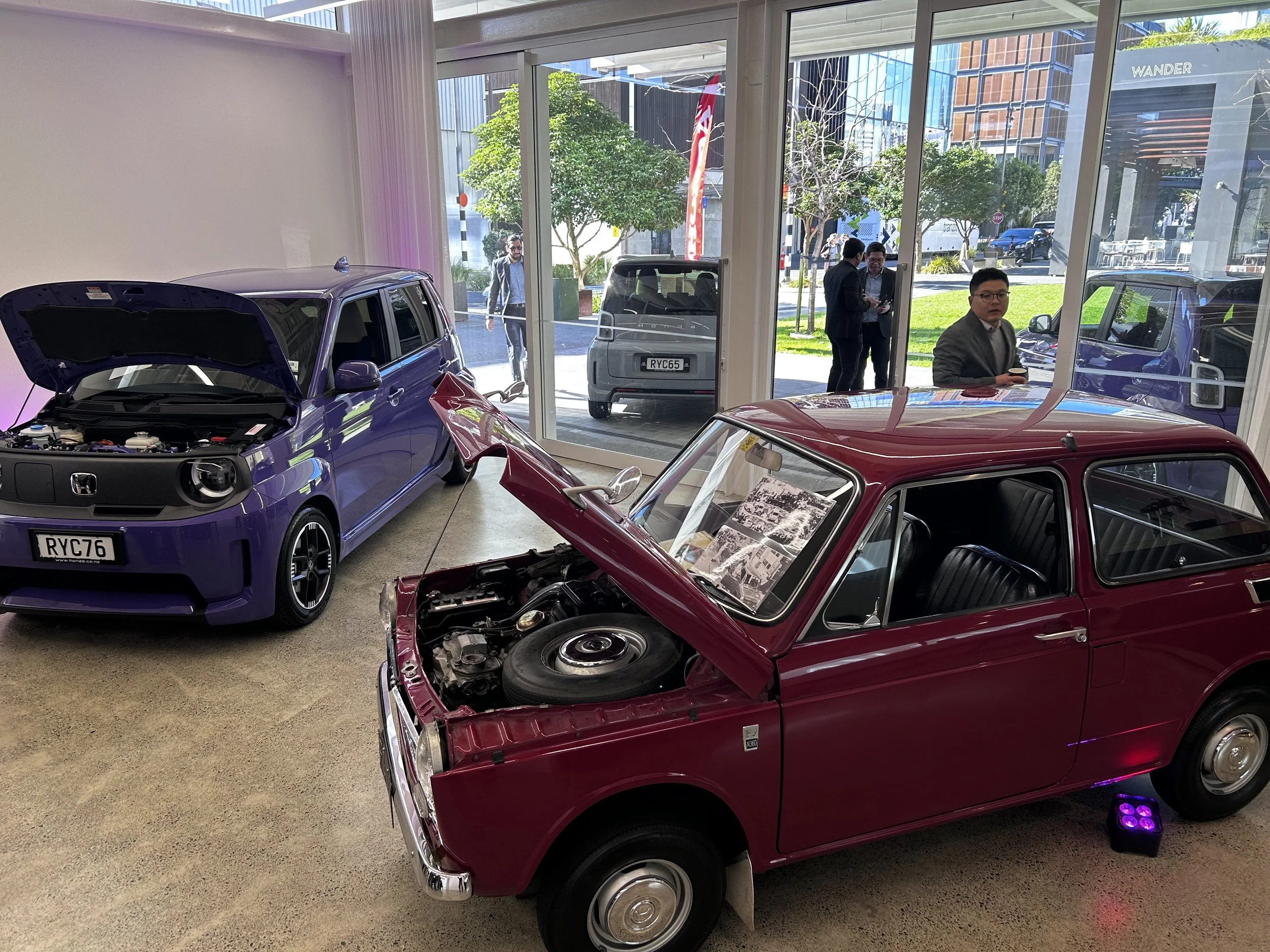
Honda has been in the kei game for a long time, and the very first tilt, the N360 that came out in 1967, that is credited as being the Super-ONE’s great grand-daddy is a landmark of the genre.
Honda NZ has a N360 and brought it out yesterday. In truth you can barely see any familial resemblance.
The new entrant takes more obvious cues from another small hatch, the City from the 1980s, which did sell here - though the City Turbo II format that was the specific styling muse was a used import only - and wasn’t actually a kei car. But minor details.
Anyway, the N360 evolved into the Life and finally, in 2012, into the N-One, reprising some of the N360’s styling cues.
The current, second generation of N-One, the car from which the Super-ONE derives, continued as its predecessors did, with a 658cc three-cylinder petrol engine and does well with it; holding position as Japan’s best-selling kei in that configuration.
The bright sparks who worked out an electric conversion were hardly answering home turf demand. In Japan, EVs account for a fraction of new car sales. Around two percent o the overall market.
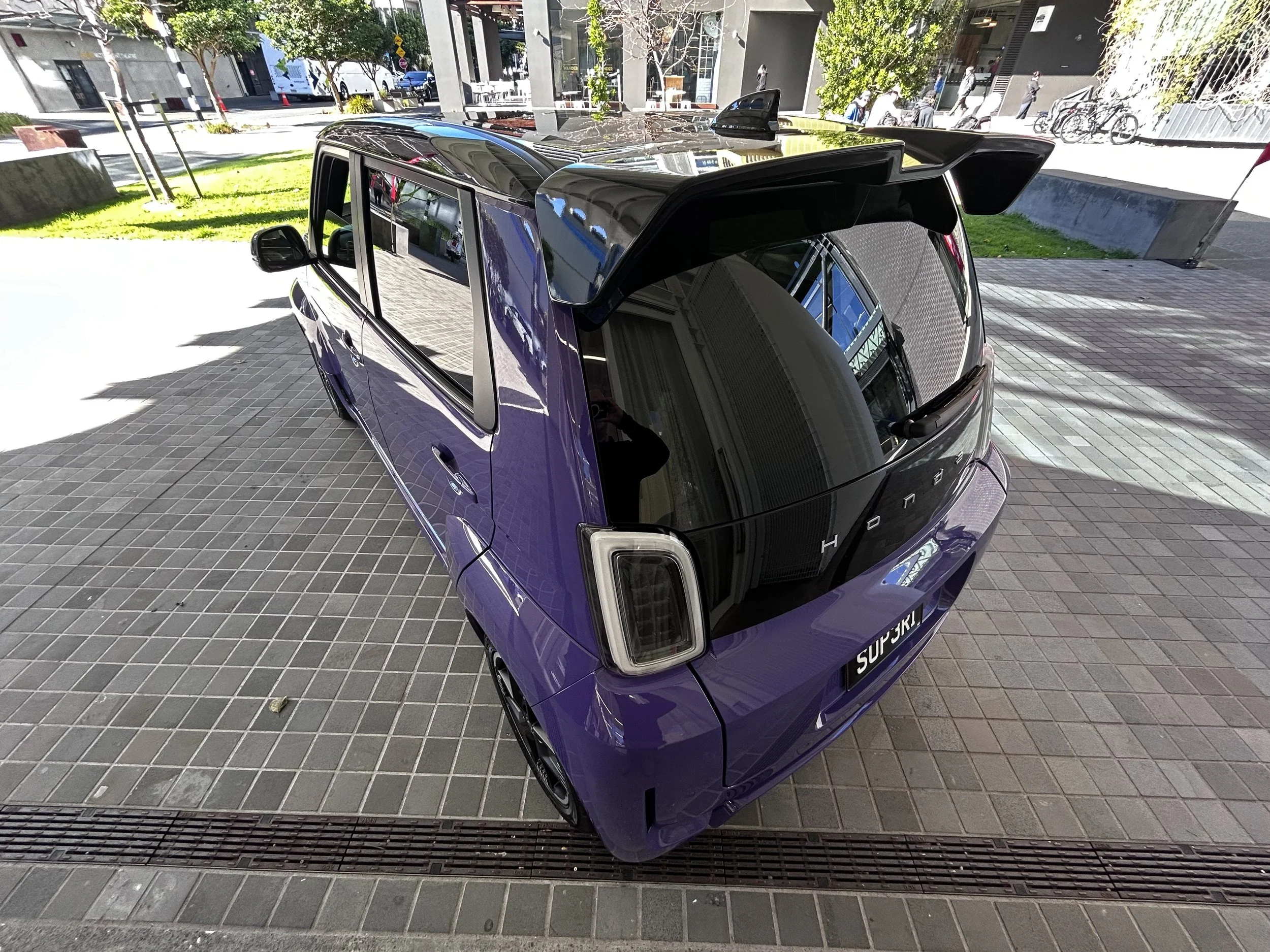
Overseas, of course, the enthusiasm in many of Honda’s markets is much higher. So, while a battery-wed N-One E has gone on sale in Japan, the real potential comes from the Super-ONE export edition, which stands out by getting a wider track, chunky arches, uprated brakes, bespoke alloys, a proper little spoiler and protruding bumpers.
To tech-heads, though, the Super-ONE’s powertrain is all th more interesting. Generally it’s making 162Nm torque and just 47kW, in line with kei car standards.
But as another salute to City Turbo II, and also the kind of enthusiast driver they believe it could pull in, it has an extra-zing option. Hit the purple button on the steering wheel marked ‘Boost’ and it unleashes 70kW.
The difference in performance is palpable, but not unnerving. Think frisky rather than frenetic. The 0-100kmh time in Boost smartens almost two seconds, but it’s still in the 10 seconds class and with the extra meatiness most evident in its 70-110kmh performance, it’s fine for smart overtaking but not an element to make it a king of the fast lane.
But, still, it’s good fun and lends more confidence for merging into open road traffic than you’ll get from staying in standard power setting.
Boost also delivers as a sight and sound show, with lighting and simulated engine noises.
The idea of it delivering a modern reproduction of how those old three-cylinder petrols ran when absolutely punished - revving them to the redline was … erm … necessary to keep them on tightwire-thin power bands - might seem Super silliness, but honestly, there’s no harm done.
The effect is not quite as polished as in Hyundai’s electric N cars - and outside the car it’s a silent show - but it’s an illusion that will make you laugh.
The ‘engine’ sounds like a high-performance four-cylinder turbo engine, and it will chatter at the limiter, and the paddle shifting is engaging. It keeps the brm-brm sounds in next step down Sport, but not the gear changes.
Getting a full handle on the car’s handling and ride wasn’t possible; with 15-inch wheels, tight dimensions and the simplicity of a torsion beam rear axle and rear drum brakes, it’s patently and unavoidably of a certain genre. All I can say is that it feels quite jaunty.
Independent overseas’ information says transformation from N-One to Super-ONE makes it the smarter driving car. The widened track adds to assertiveness and there’s a faster-steering rack with bespoke tuning and equal-rigidity (albeit not equal-length) driveshafts to reduce torque steer. The 185/55 R15 Yokohama Advan Fleva tyres for export seem grippy and don’t squeal easily.
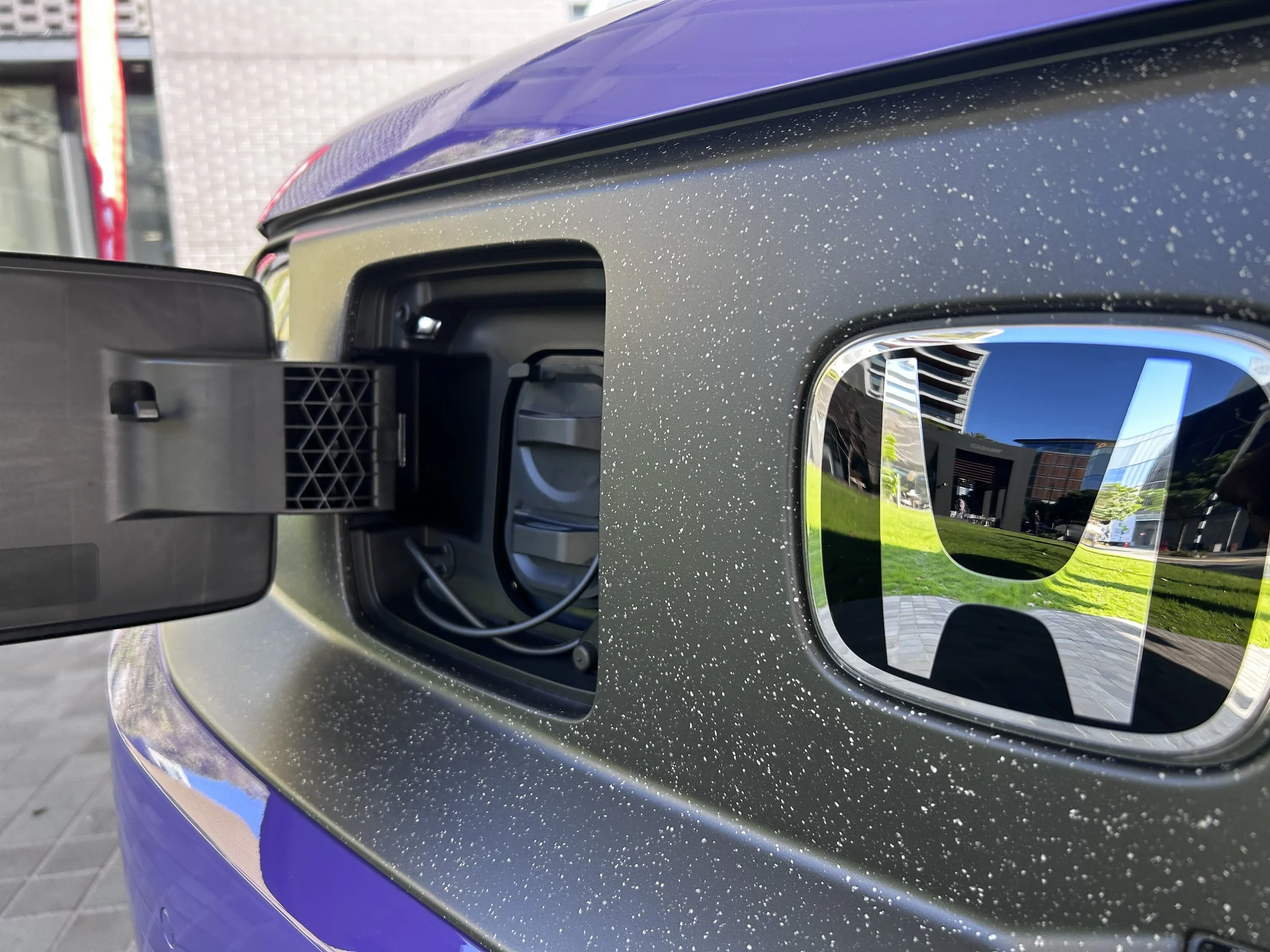
How much that matters is likely to be moot. For some, it sporting a turning circle of just 10.2 metres and having a front charging port makes more sense.
Even if its kept in the lower-performance modes, which allow for one-pedal driving, the Super-ONE cannot get away with being a low key kei.
It comes in vibrant colours - the hero hue being the very brave purple - and, of course, takes City Turbo-inspired alterations of swollen wheel arches and deep bumpers absented from the donor N-One E as they make it too long and too wide than Japan’s domestic rules allow.
Super-ONE is still of such super-compactness you wonder how it conspires to accommodate four adults. It actually does, with genuine ease.
Though some aspects if visibility were a touch limited, my 1.8 metre frame was comfy at the wheel and, without shifting the driver’s chair, I could just get in behind, though headroom there was tight.
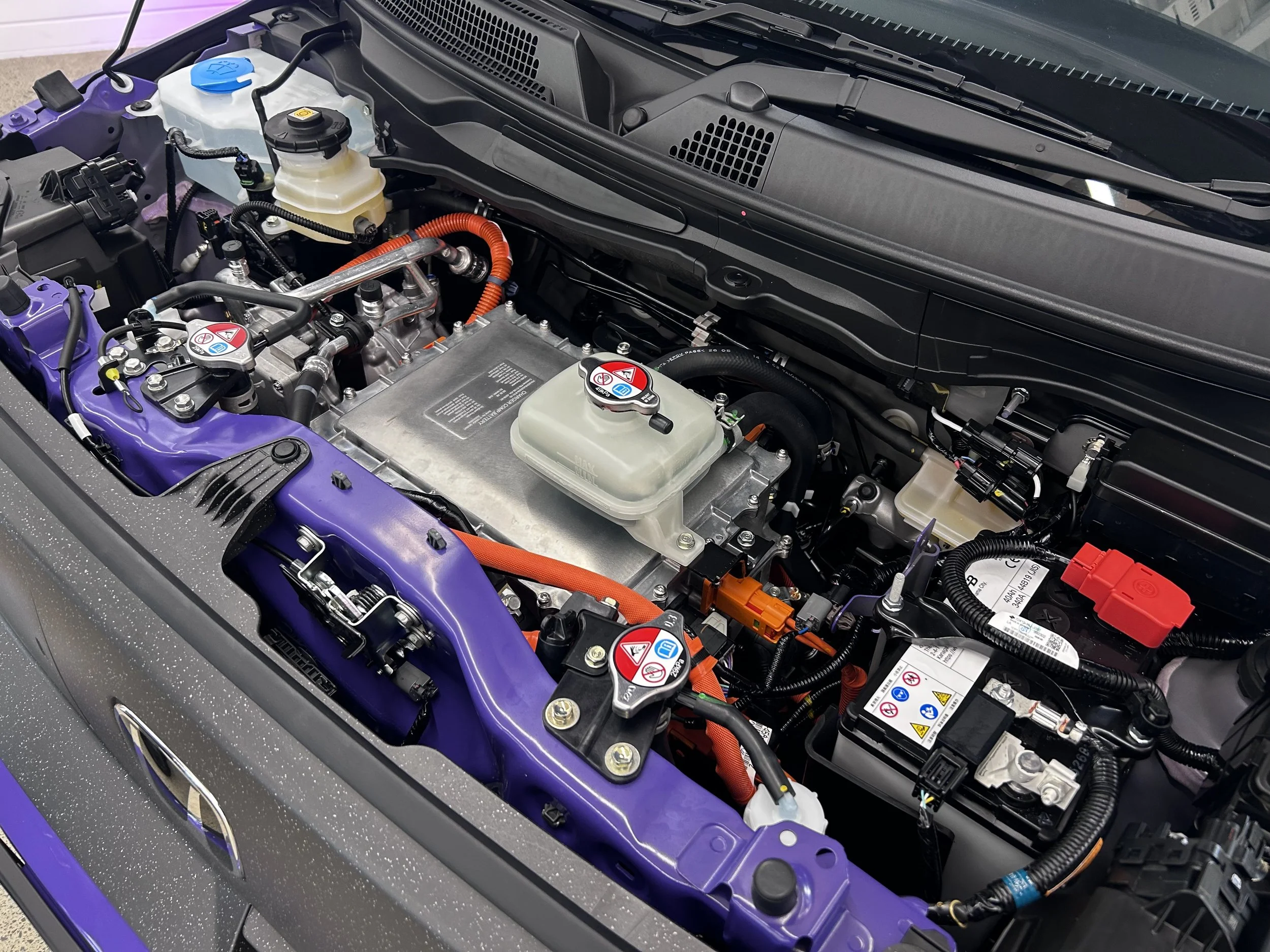
Going electric didn’t infringe whatsoever on cabin space. The battery fits neatly where a fuel tank was designed to go, in a space under the front seats, and ancillary electronics go under the short bonnet.
While the rear seats don’t slide back or forward, they do include the proprietary flip-flop-fold Magic Seat mechanism to provide additional flexibility for carrying larger items.
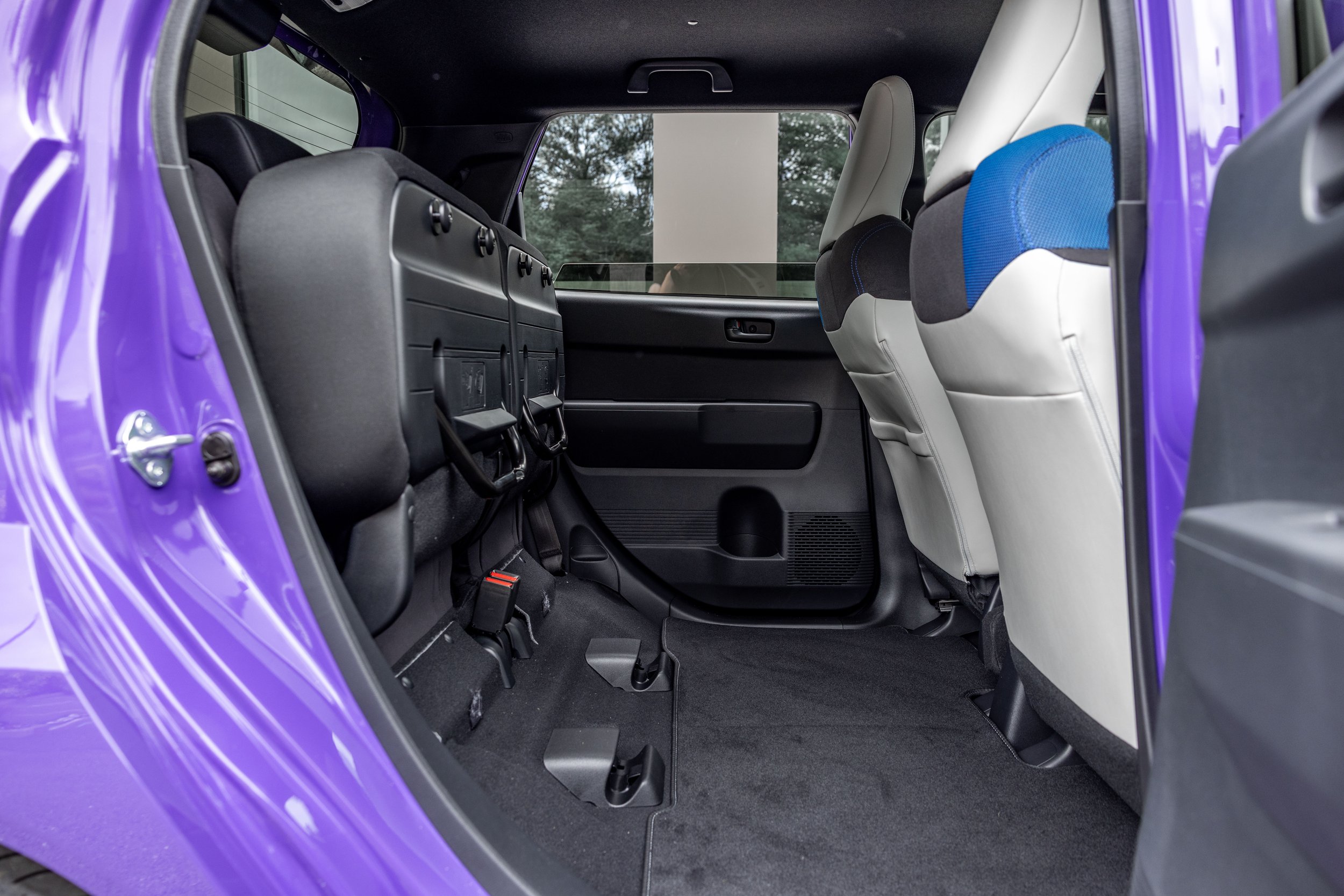
That’s what the ‘long mode’ and ‘tall mode’ settings are all about. You can make a tall pass-through space that can fit a bicycle or put down both rear seats to create a tiny van. With the seats up, boot space is predictably rather limited, but 162 litres is still okay for a kei.
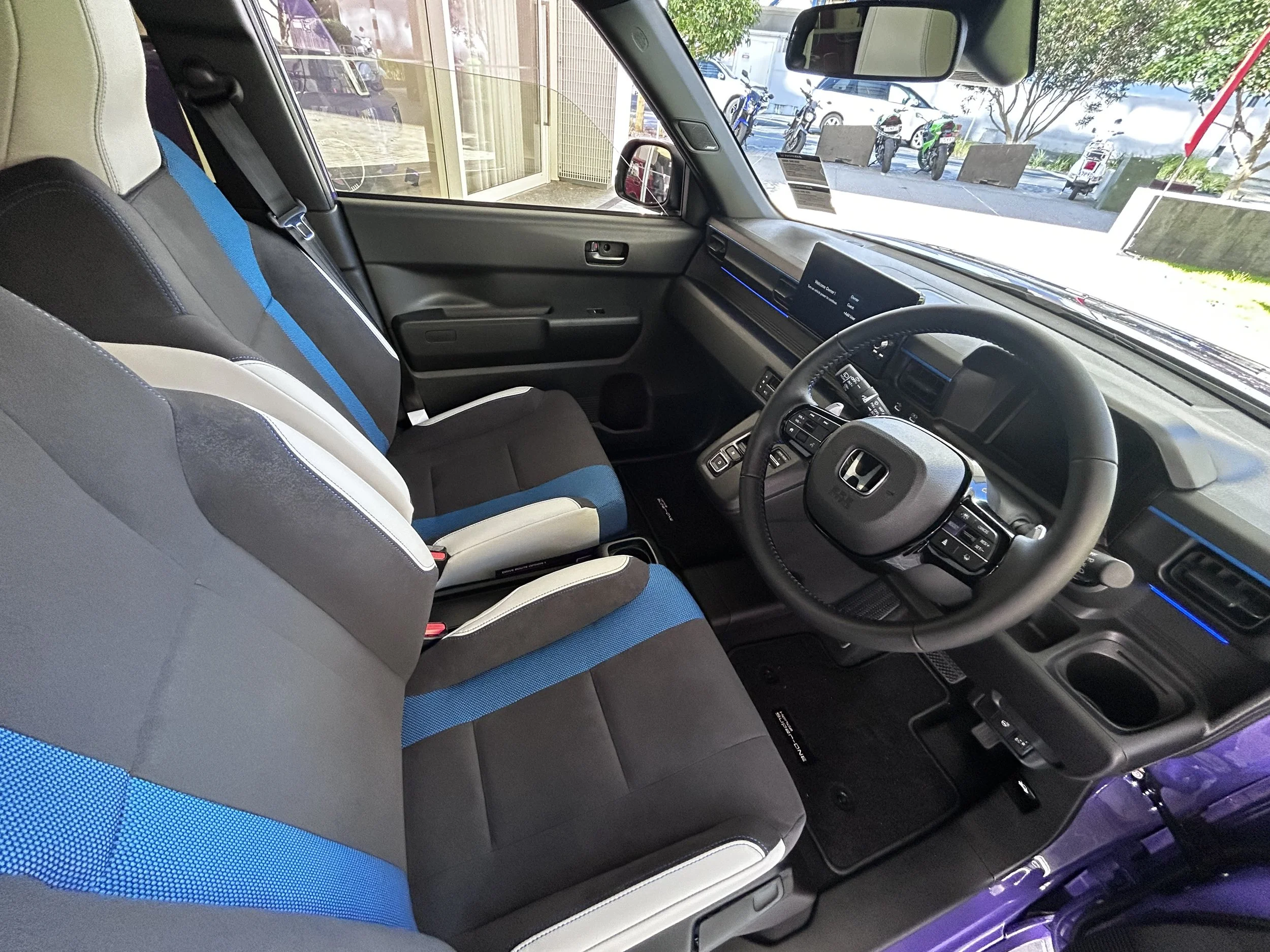
City influence also flavours the upright, but quite comfortable driving position and why those sports-style front seats have integrated head rests and heavy bolstering. They feel good; padding is soft and comfortable and the base angle supports your thighs.
The interior is nicely dressed with black microsuede and blue fabric lifts the mood and diverts immediate attention from the hard plastics and fake leather.
The dashboard has a three-tier design with useful storage space on the middle tier and a cupholder to the right of the steering wheel. There’s a reasonable glovebox and more storage on the floor between the seats.
Main controls get chunky physical switchgear and while the digital side is fairly basic, that kinda befits the car. The small driver display has simple graphics and offers a number of layouts. It’s the first EV I’ve met with a specific battery temperature gauge.
The main infotainment screen is the same as in all other modern Hondas. It doesn’t offer many functions – not even in-built navigation, so for that you need phone mirroring. That’s wireless for all devices but as it lacks a wireless recharging pad, you’ll need to cable in regardless if intent on keeping your device charged. Honda not thinking things through or more it steering you toward using the Google involvement it already provisions to other models that starts free but ultimately becomes a subscription service. I didn’t look fully into what that all lends the car, but it seems EV route planning will require your own brainwork. There doesn’t seem to be a way to set a charge limit, or schedule charging, simply using the embedded tech. As for the infotainment side? I’d stick with CarPlay, thanks.
Eco vibe is also seen as a positive, and addressed with use of some recycled materials. Bumpers from old Hondas are reconstituted for second-use in that role; the white fleck to the grille comes from it being made using ground-up old tail-light lenses.
The Kuro package is literal; the word means ‘ black’ and its liberally used. The roof, wing mirrors and a brash rear spoiler are in this hue.
You’ll ask about crash-worthiness. And you might have to take Honda’s word about it being up to task as there might not ever be an independent answer.
Kei cars aren’t exempt from crash testing and in fact several years ago Japan’s government mandated certain changes to ensure they performed better. Even fore then, they sometimes didn’t do too badly. Alto had a four-star ANCAP.
Honda says it has no plans to put offer the Super-ONE for ANCAP assessment, on grounds it is such a low volume car the cost cannot be warranted.
A risk? It’s loaded with the right kit and Honda’s engineering is highly regarded. But ‘she’ll be right’ assurances these days are not easily accepted … the mantra about how stars sell cars seems all the more relevant in a vehicle of this size.
For some, the lack of that accreditation might seem more off-putting than the idea of chancing a long drive in the country away from the comfort zone of a well-sorted urban charging network.