Nissan Navara Pro-4X roadtest review: New approach, familiar ground
/There’s no disputing the closeness to a certain other, but that doesn’t necessarily detract.
Price: $59,990
Powertrain: 150kW/470Nm 2.4-litre dual turbocharged four-cylinder diesel; six-speed automatic transmission.
Dimensions: Length, 5320mm; width, 1930mm; height, 1815mm; 3130mm wheelbase.
We like: Based off a reputable donor; bespoke suspension tune does make positive difference; attractive styling pack; assured tow vehicle.
Not so much: Hard to reconcile full RRP premium over its donor; drops some tiny, but pleasing, features from Triton.
TO answer the obvious question: If you were to draw up two columns, the one marked ‘commonalities’ will register far more entries than the one marked ‘differences.’
Shared to the Nissan Navara from its Mitsubishi donor are everything you see - doors, most exterior panels, roof and windows - and many components that are hidden. The 2.4-litre twin-turbo diesel engine is identical. Within the cabin there’s nothing much to differentiate, either.
So, as much as some factors do keep this from being more than a rebadge, acceptance the D27 Navara results from something less than wholesale re-engineering of the ‘MV’ Mitsubishi Triton is nonetheless demanded.
Going over the history that led to why two previously divorced projects have developed into one sharing most of the same body parts is pointless. Suffice to say that as much as ‘cross branding’ can be divisive, this programme was signalled some years ago and shouldn’t surprise.
Nissan is sure most Navara buyers will understand why the ‘Nis-subishi’ path was taken. It will be sorry to lose patronage from the few who don’t. It will also strongly contend those who maintain allegiance will agree this remains a fully competitive product.
Navara delivers simply. Dual-cab with an automatic transmission and four-wheel drive, spanning SL, ST, ST-X and Pro-4x.
The last is on test and seems set to be the one most of Nissan’s Kiwi customers will want. The equivalent in Mitsubishi’s family is Triton VRX.
They have different warranty and servicing packages but right now exact match on sticker price, which wasn’t always the case. Navara has come down more than a tad; the regular recommended price is $67,690.
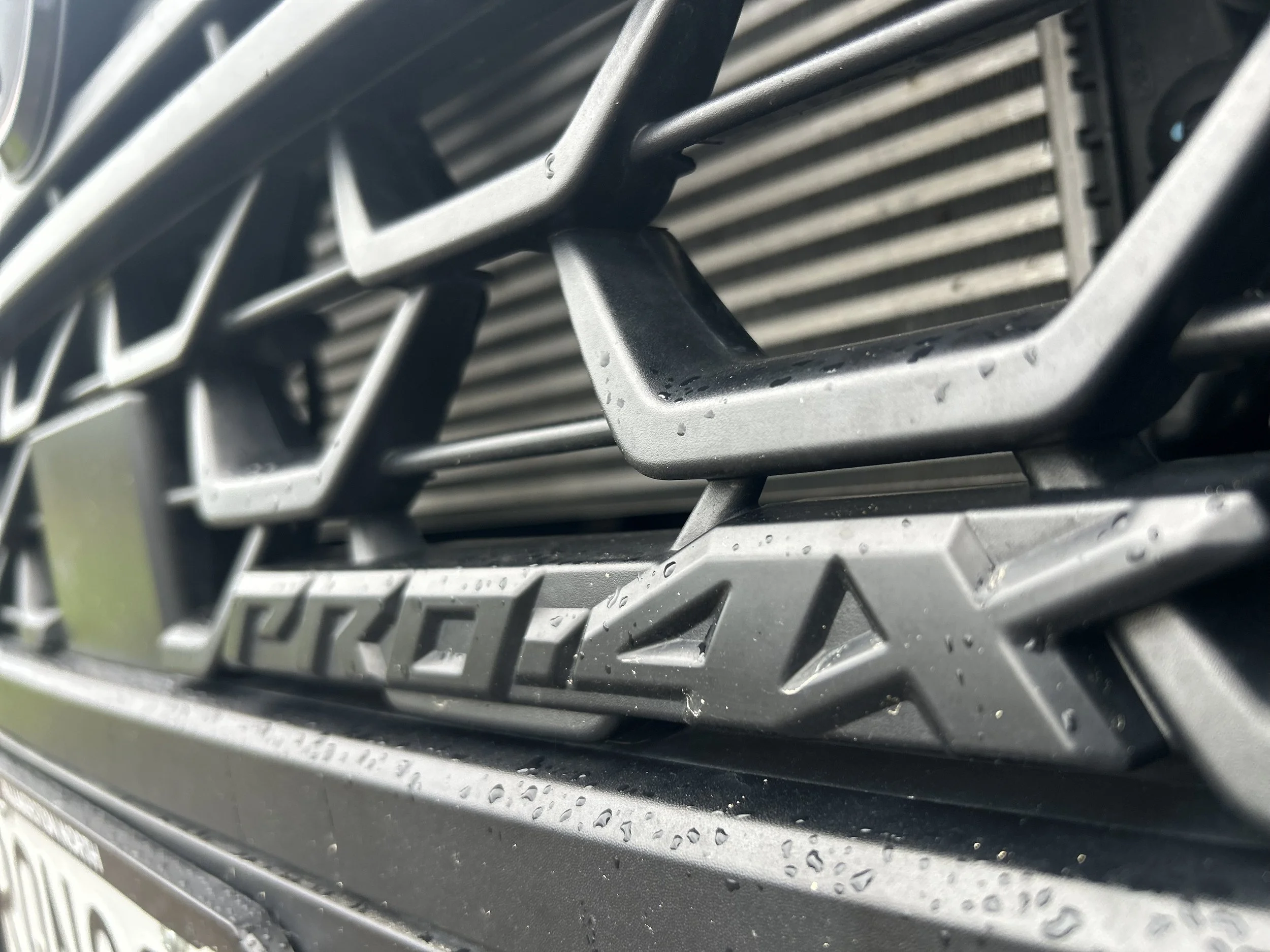
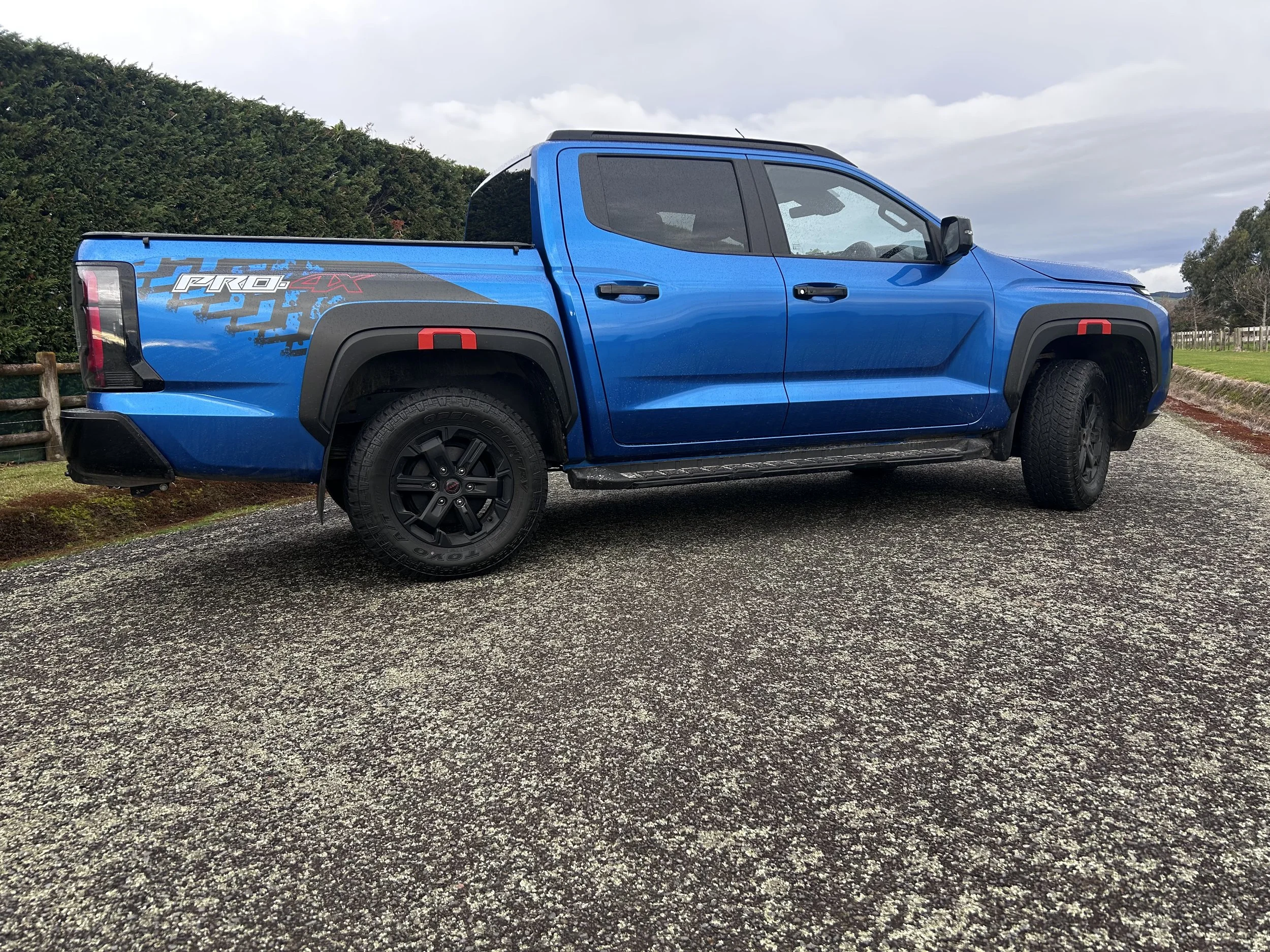
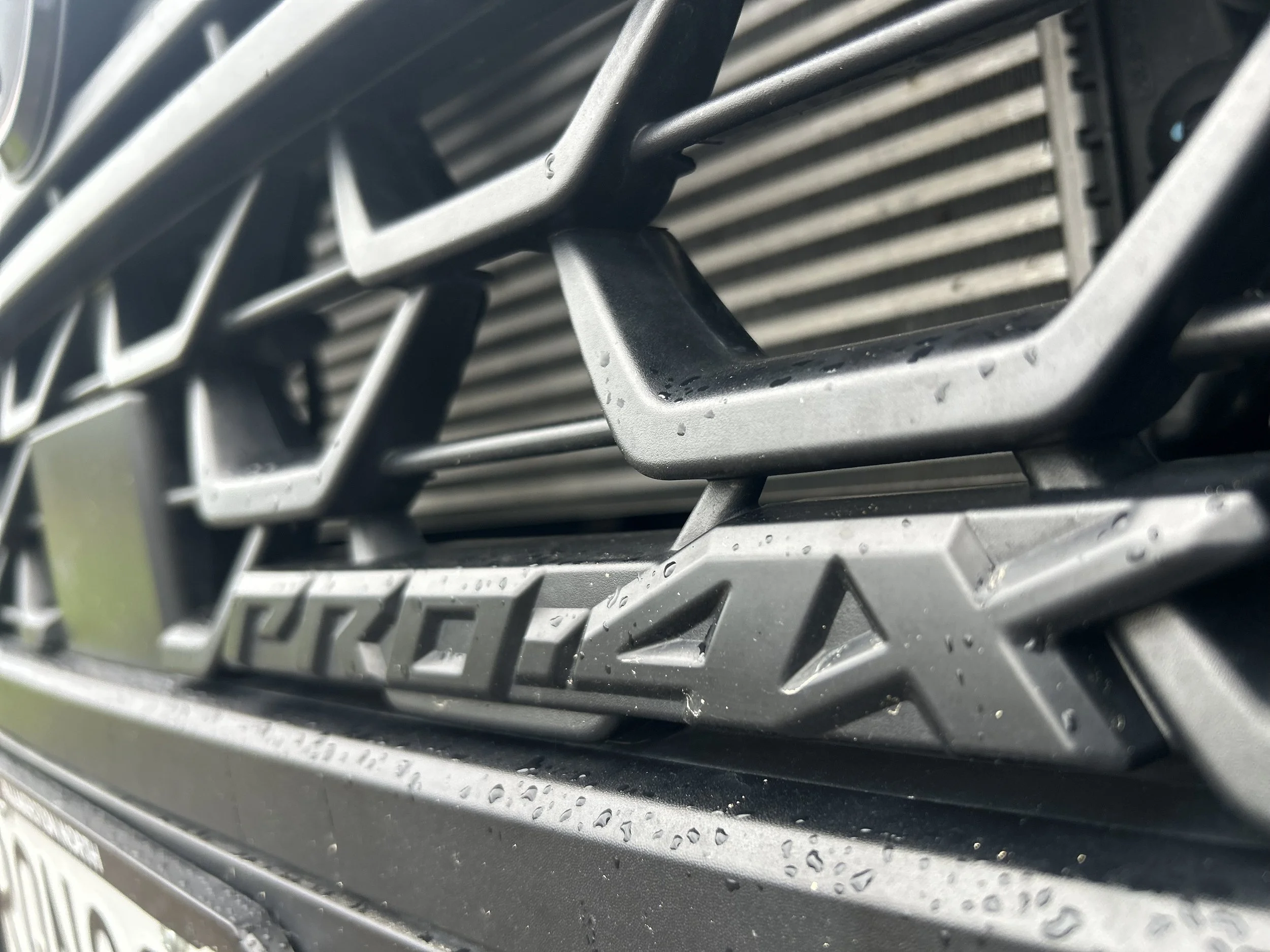
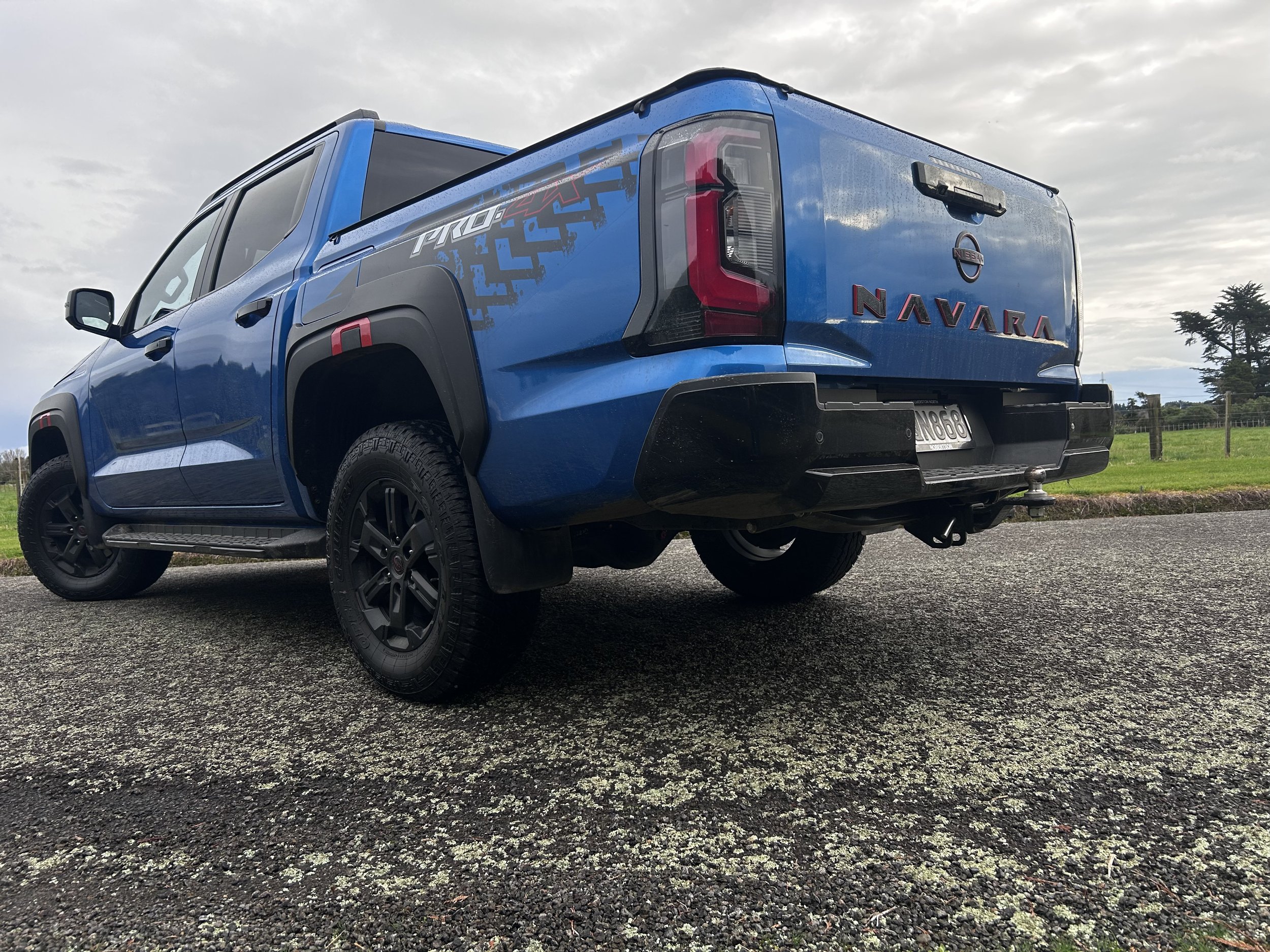
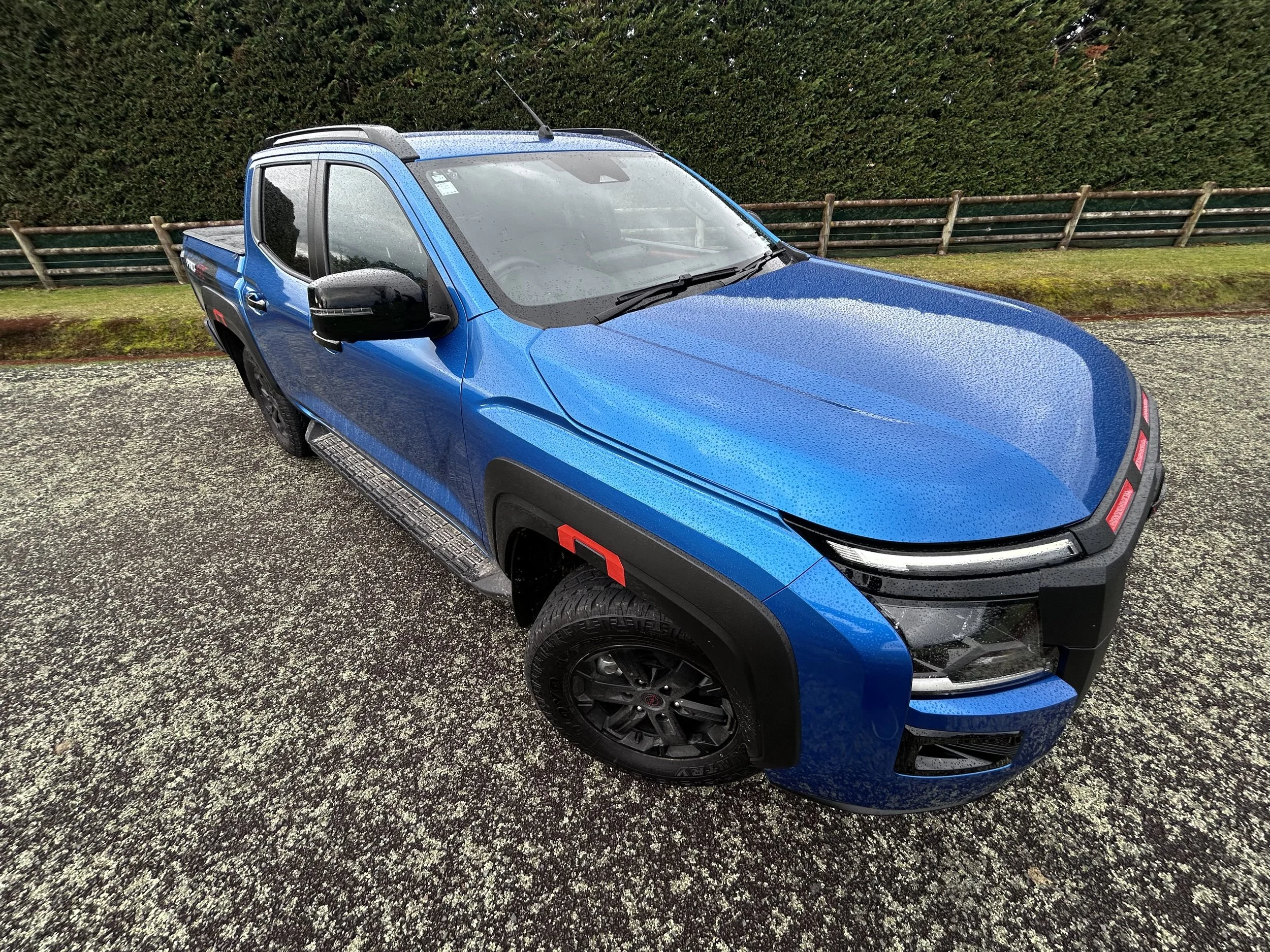
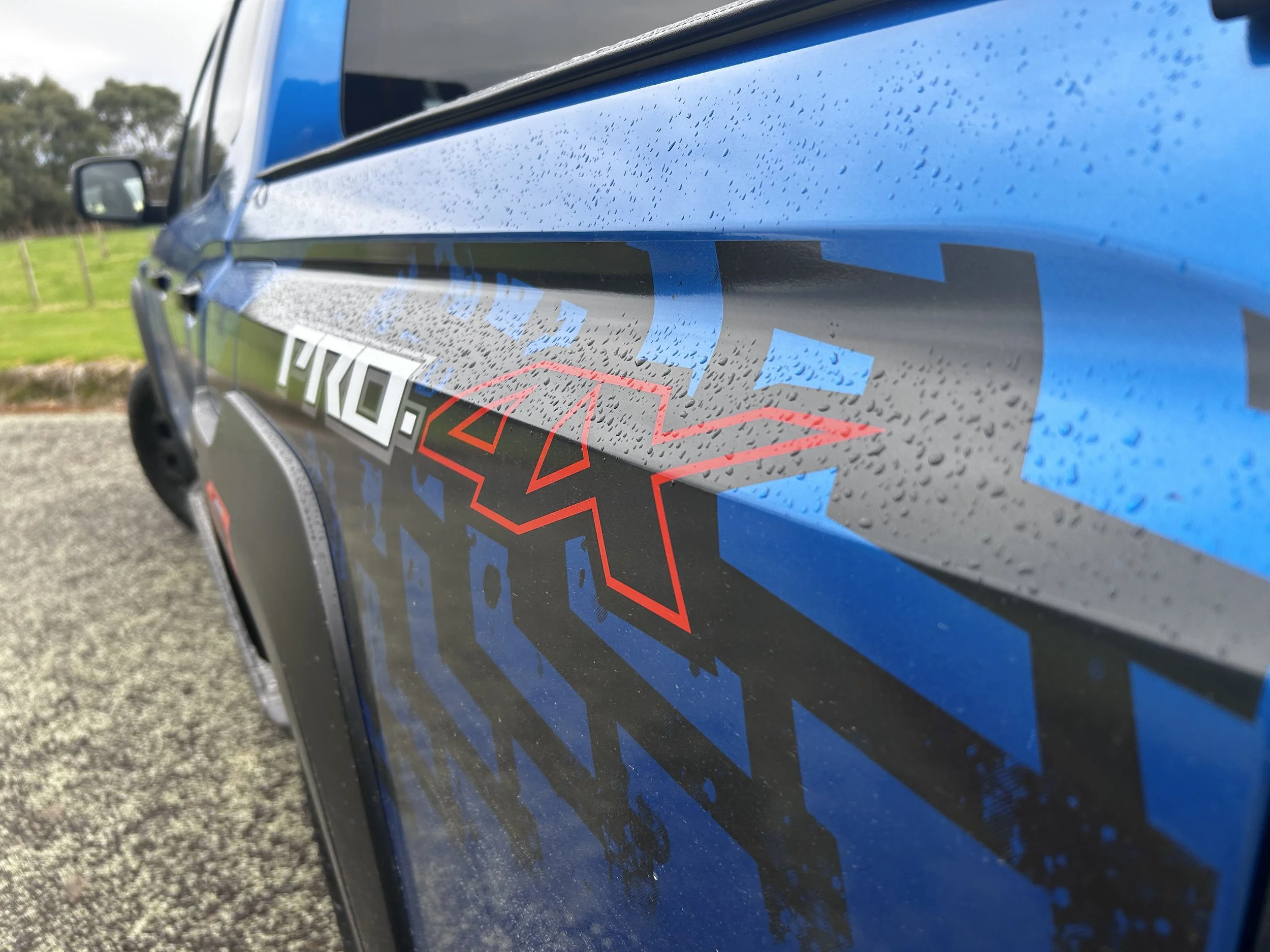
Nissan delivers an impossible-to-miss hero colour - the Horizon Blue seen here - and big Pro-4X decals, black wheel arches that include two vertical red stripes, a bespoke interior trim (with more red on black) and their own wheel, tyre and suspension pack.
Nissan’s grille and headlights are all its own. Tail-light signatures and wheel designs are also disparate. Everything in between … erm, moving on, right?
The overall architecture and presentation of either cabin hasn’t been fundamentally altered. Neither has the seat design, just the coverings.
Rather than using full leather, Nissan has applied a suede-leather blend. It’s a simple change but one that improves comfort. It also creates a racier impression with red bolsters and Pro-4X embroidered on its front seats and centre console lid.
Each brand has its own logo/name on the steering wheel centre hub, but looking forward that’s about it for a point of visual difference.
The central infotainment display is a good thing. The resolution is sharp, the operability sensible and its quick-witted: Apple CarPlay enables through both wireless and wired connections (Android just the latter).
Native navigation is standard. Along with a regular analogue speedometer and tachometer, you also have a 7.0-inch digital multifunction display in front of the driver for the regular range of driving and trip information. That one can get a bit busy, but nothing confuses.
Look around and you’ll see the cabin is just more car-like in the detailing: USB-C as well as USB-A power, a wireless charging pad, pop-out cupholders on the dashboard and second glovebox in front of the passenger to enhance the usual everyday storage options.
The second row benefits from the increased external dimensions; ultimately taller types will still prefer the front row, but there is a bit more space and comfort overall. I’d suggest it's better suited to seating two rather than three in the rear.
In respect to the load area, two minor but fascinating specification differences crop up. Triton provisions facility to include the tailgate release into the central locking. Navara doesn’t. And the reason why Pro-4X’s tailgate lift and drop carries more weight is that a dampening device Mitsubishi offers is also absent.
Other pub factoids? You might also notice the same infotainment screen has been in the X-Trail. Also, that Triton has a Nissan-style key.
Navara adopts the same safety suite of autonomous emergency braking, blind-spot monitoring, driver monitoring system, front cross-traffic alert, rear cross-traffic alert, lane-keep assist, emergency lane-keep assist and traffic sign recognition.
The driver monitoring system is more of driver distraction set-up. Talk about hair trigger. Divert your gaze just a fraction and it’ll go spare, yawn more than once and it’ll insist you take a break. Deactivation is possible, but not simple. It requires deep dive into a sub-menu and, of course, it re-sets to factory on every fresh start.
Powertrain output behind the Nissan badge is as per the Triton, but as this turbocharged 2.4-litre produces 10kW and 20Nm more than even the most powerful diesel mill in the outgoing Navara, it’s a win for anyone trading from old the new.
Both models require AdBlue diesel exhaust fluid, both tow 3.5 tonnes braked but Navara’s deck loading peak of 964kg is 66kg lighter than Triton’s.
It’s a powerful engine, but noisy, not least under acceleration. Quieter in the Navara? I cannot see why it would be, yet some say that’s the case. Their ears are better than mine.
The dual turbo set-up is typical in having a small unit to get it stepping off nicely then a larger one taking over to maintain strength at higher running speeds.
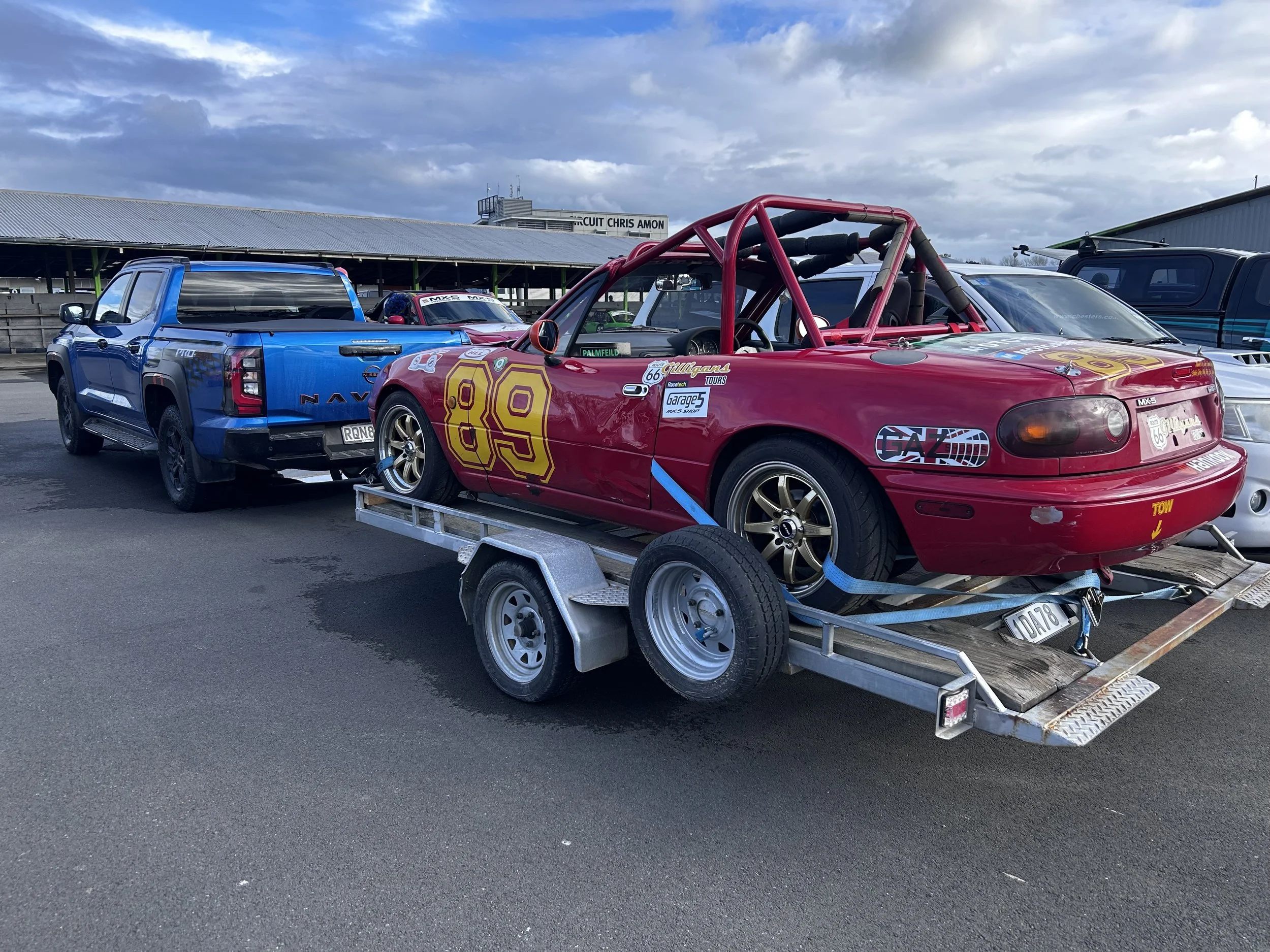
Low-down response seems very smooth. Where it settles in very nicely is in the circa-2000rpm mid-range; peak torque on tap from a healthy 1500rpm is also a welcome involvement. It was effortless in towing my MX-5 race car; a journey which included a steep climb.
Outgoing Navara featured a seven-speed auto, this tie-in relate it to a six-speed, which might seem retrograde when others are going to eight and 10 speeds.
Mitsubishi has an eight-speed in the outgoing Pajero Sport behind the 2.4-litre engine. They reportedly chose not to use it because of costs and complexity.
I don’t mind the six-speed, but it’s not on my ‘things to love’ list, either. Common comment is that it can occasionally too eager to step up through the ratios; on winding roads when you’re on and off the throttle it’d be handy if it self-held a ratio.
Nissan’s ‘Super 4WD’ system is Mitsubishi’s Super Select, a personal favourite, and comes to Pro-4X (and ST-X) as it does in VRX. So two-wheel-drive and four-wheel-drive, high and low ratios, a Torsen limited-slip differential and seven terrain modes: Normal, Eco, Gravel, Snow, Mud, Sand and Rock.
Suspension and steering, wheels and tyres. This is where it gets interesting.
The old Navara was unusual for a ute in offering rear coil springs. The new generation goes back to class conformity in moving to rear leaf springs.
But it then steps out of the pack by Nissan provisioning its own shocks. It has also followed Mitsubishi in moving to an electric power steering setup.
Whereas the Triton VRX has Maxxis 790 Bravo 265/60s on 18 inch alloys, Navara Pro-4X sites on 17 inch rims; also alloy, with Toyo Open Country 265/65s.
Nissan claims their model has 228m clearance, which is 6mm more than the Triton. But … Mitsubishi believes that comes down to the measurement being taken from a different point. It suggests doing as it does, running a tape from under the rear axle, is the most accurate way.
Driving feel is going to be a point of discussion. At time of having the two together, the models were definitely different.
Mitsubishi this year made adjustments to Triton's front suspension and body mounts and also altered the shocks. They say this has improved the Triton's ride comfort.
Nissan has made a lot of noise about having gone further still for Navara. Rather than use Mitsubishi’s dampers, it has sourced from Premac, an Australian firm that specialises in off-road kit.
Navara’s kit is dealership-fitted; when the car rolls down the (Mitsubishi) assembly line in Thailand and ships all th way to that point, it’s on the Mitsubishi kit.
The rework puts focus on improving everyday comfort and control. The new dampers include internal rebound spring technology on the front shock absorbers, something claimed to provide a plusher ride while still providing decent control.
Nissan holds that these revisions, along with the reputation of the developer, will sway buyers towards the Navara and it brings out the Nissan-ness.
Premac was also recruited to revise the power steering in effort to improve steering response and feel.
To get a handle on the end result, I and a friend drove the Pro-4X and a Triton VRX on a common route, traversing seal in various states of quality - from smooth to rough coarse chip - and then onto gravel, with driver swaps.
That experience lent no reason to doubt Nissan’s claim. This damper exercise does improve body control and ride comfort. But this is an evolving story. Mitsubishi now says it has retuned the Triton even more, as it has now gone to yet another damper tune, this one developed by its Ralliart motorsport team. This has become a running change for VRX and, they say, has allowed full compatibility. I’ve not driven that variant.
What was apparent at time of assessment is that Pro-4X gets a softer suspension tune than its stablemate. When driven unladen it has a compliant ride and while road texture influence was not wholly supressed, it was simply more settled.
One of the big improvements from Triton that has passed across to Navara is how pleasant it is to take over gravel. Both previous generations were less settled, more skip and skid prone. In respect to road noise, it’s hard to say if Nissan’s meatier-cut compounds deliver more roar, but you can certainly hear them.
Steering feel-wise, the Navara is nicely weighted. It’s not outright heavy, but in the straight ahead there is less movement and on turn-in it just feels the slightly more accurate than the donor’s.
In isolation, the Pro-4X is a positive step forward over a well-regarded predecessor. It’s talented, better sorted to compete with the historic big guns but also better prepared to defend against improving offerings from China.
Typecasting utes can be a touchy business; but as much as they are tuned to put work before play, we all know why ‘too plush for mush’ flagship types draw attention.
As with its competitors, Pro-4X support can rest on it being comfortably-appointed and fulsome in its content. At time of test, Pro-4X was the only Navara that comes fitted with a towbar; put to good use in our evaluation.
Additionally offering a specific dynamic tune that works well is a point of difference worth considering.
The strong safety accreditation will also play well for family-minded users; conversely, the still overly-intrusive driver monitoring will be a bugbear. Navara achieved the same software update given Triton last year but this experience suggests more finessing is warranted. Turning it off through the digital display housed in the instrument cluster is possible, but that surely defeats the purpose?
Beyond that, it imparts as Triton does; like a tough ute maintaining traditional values.
The four-wheel-drive is brilliantly set-up and its always active status and simplicity of operation is a boon for those who are not highly attuned to such technology. Just having a mechanical handbrake lever, at time when many in the category have gone to push-button electronic types, provides reminder that the maker(s) believe some old-school elements shouldn’t be re-thought. I like that.