Hyundai Palisade Calligraphy road test review: Biggest box development
/The largest serving has become even more generous, yet also cuts down on calories.
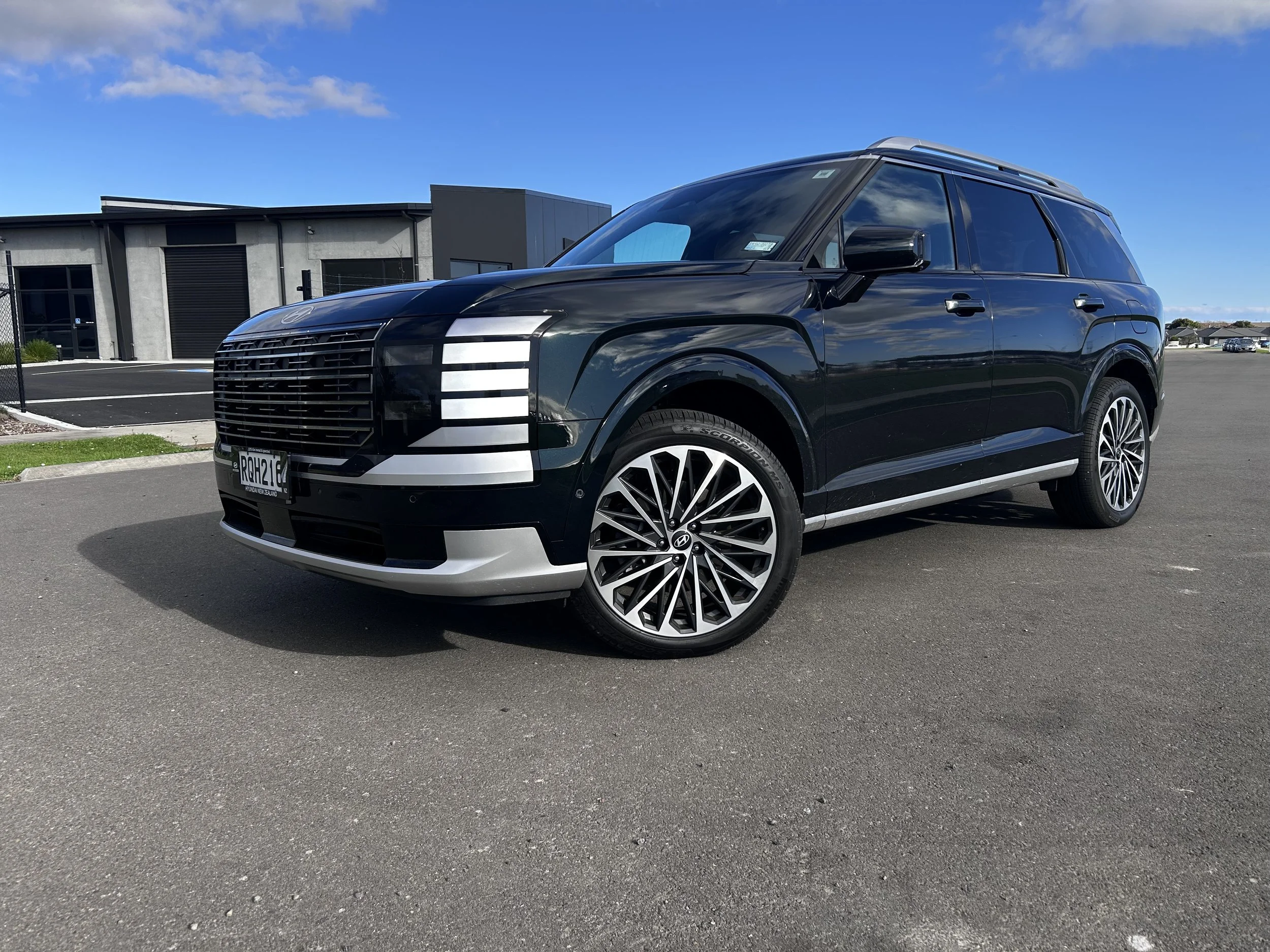
Price: $129,990
Powertrain: 2497cc direct injection four cylinder petrol with dual electric motor assist with 1.65kWh battery, maximum combined power 245kW, maximum torque 460Nm; six speed transmission.
How big: 5065mm long; 1980mm wide; 1805mm tall; 2970mm wheelbase.
We likę: Tangible step forward in luxury and overall quality; extremely refined; better hybrid drivetrain than Santa Fe’s.
Not so much: Reduced tow rating; over-involving ADAS; some ergonomic quirks.
TAKING the latest Hyundai Palisade off road is conceivably possible, but I wonder if anyone will ever try?
Sponsorship of Country Calendar lends some terrific ‘man of the land’ credibility for this brand, and indeed the very vehicle I drove is very probably the same one that features in the show’s opening credits.
But Hyundai simply has yet to roll out truly authentic off-road sports utility and regardless it has some smart electronic assists tailored for various beyond-seal scenarios, this machine isn’t like to pass the Grylls test.
Visiting a farmer friend’s property coincided during this test. The property was free to roam … had I chosen to. As much as conditions appeared fairly solid, I didn’t. My bad, really, because to meet consumer relevance, road tests should be complete evaluations. But I’ve witnessed too often how plush preen-mobiles of this calibre become all too easily bogged in seemingly innocuous scenarios. The one thing I’ve learned is that traps that are all too easy to fall into are a great more difficult to extract from.
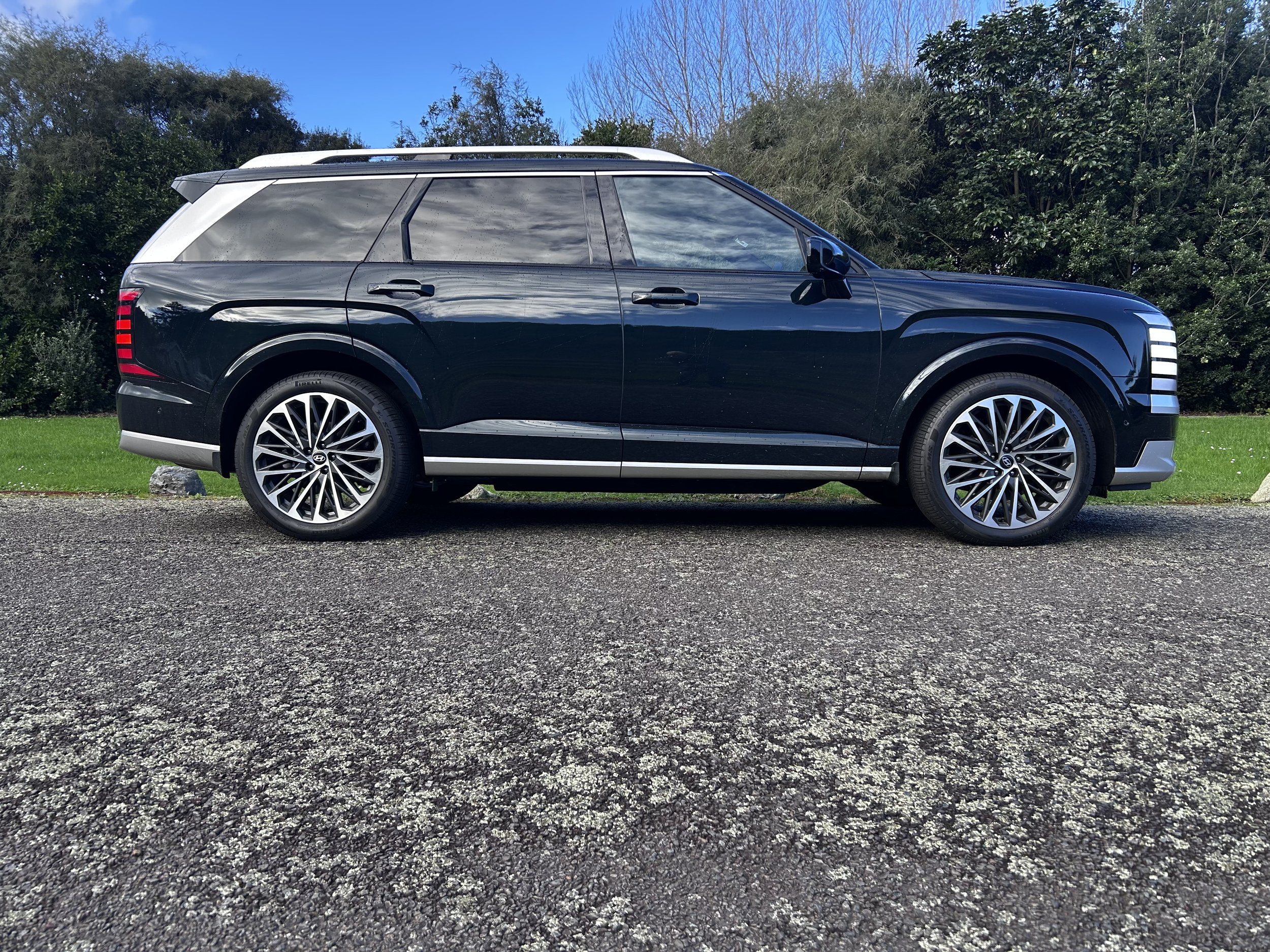
And just from visual scrutiny, you can see the Palisade is more for Lord Muck’s than for mucking in. Already very evident with the previous car, premium-ness is nonetheless all the more obvious with the new. More class, more appointments and additional luxury in an upsized setting.
There’s very little on this car that doesn’t express five star; even the boot carpet is plush. If you wondered where Bentley people moonlight? Here’s your answer.
Mind you, we’re seeing the best of the best. Whereas last time around their were two grades, for now Hyundai NZ has simply chosen the family flagship.
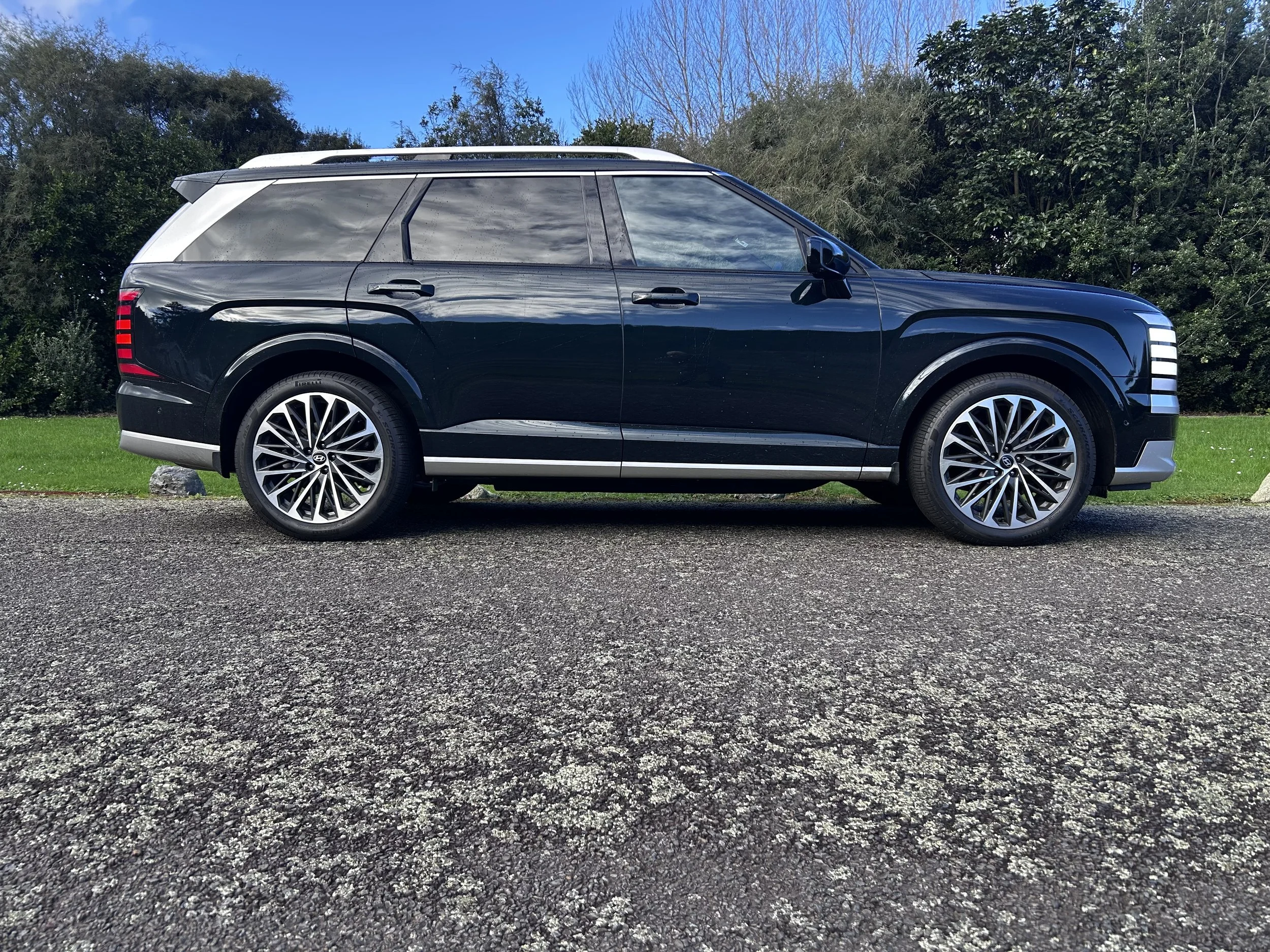
While reducing selection to just the very best Calligraphy grade and ignoring - at least for now - the more (though barely so) utilitarian Elite grade means pushing customers into a relatively high pricing zone, you can at least see what you’re paying for.
Given the upper end product was the more popular in the previous format, that it weighs in with a more substantial sticker possibly isn’t a risk, but even if that isn’t the case, there’s potentially a Plan B. Being clearly regionally available, having recently been picked up by Australia, the Elite is conceivably good to go. If need be.
Every large SUV these days is a big box development, but you cannot miss the Palisade all the same.
The new look delivers continuity with Santa Fe in respect to overall blockiness, but Korean brands are rarely shy about being brash, not least when a product is developed foremost for North American tastes.
Let’s agree ‘Seoul going Stateside’ delivers an even more decisive direction than Sante Fe, which itself is far from low-key.
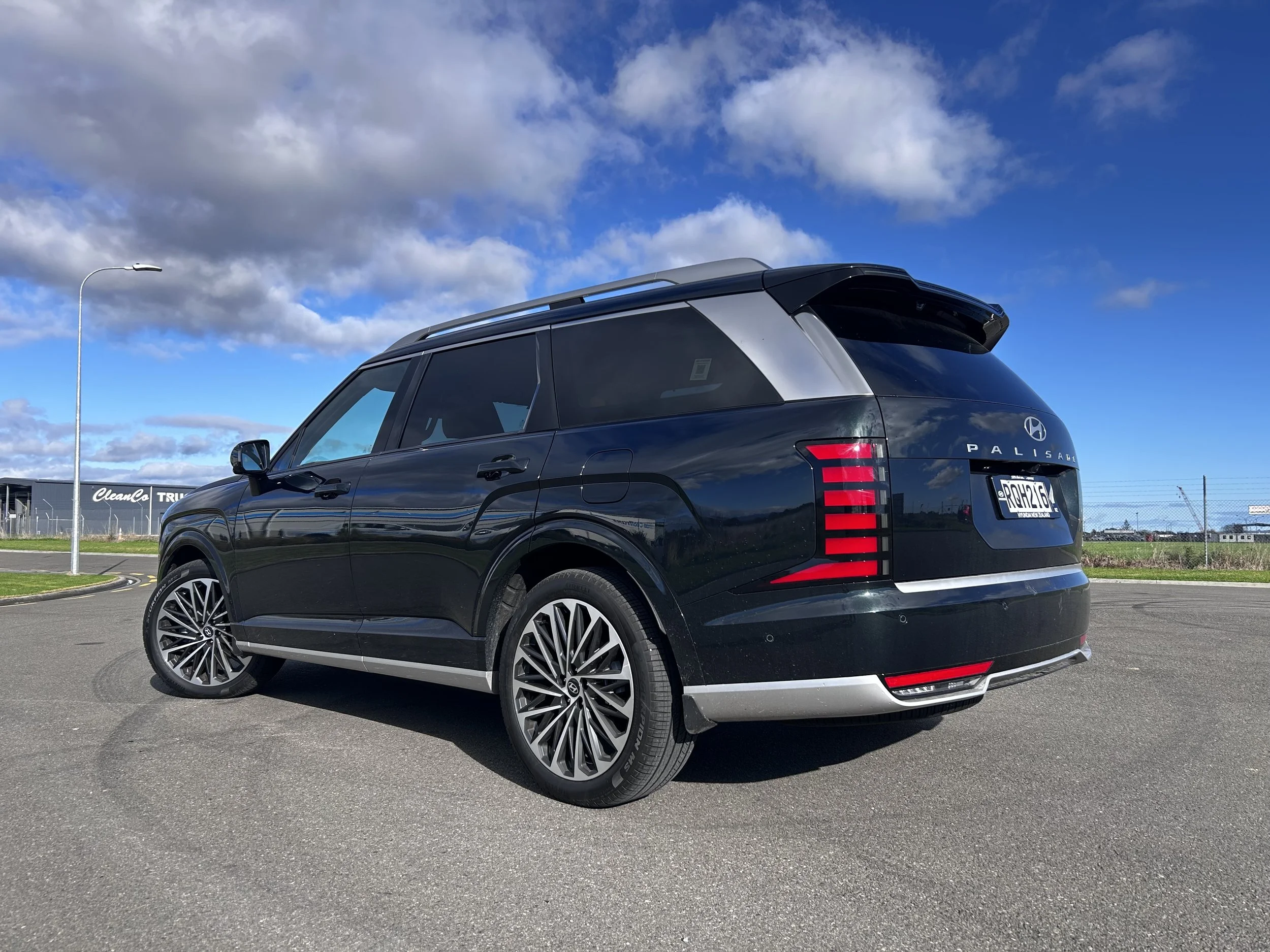
The set of distinctive vertical LED daytime running lights and a horizontal centre positioning illumination patter are a big singular throw-down.
It also takes a bold new-look grille with active aero shutters. Also obvious is a much shorter front overhang, as per the Santa Fe direction, while the D-pillar and larger side glass are reshaped to provide a more spacious third row and improved outward visibility. It also has a 68mm lengthened wheelbase to create more interior room; overall it’s 63mm longer than the current choice.
Large diameter alloy wheels continue to be a thing. As per the previous car, it abides up to 21 inch rims.
Some will call it beautfil; more will determine it bold and brash. The signature lighting alone is seriously attention-grabbing.
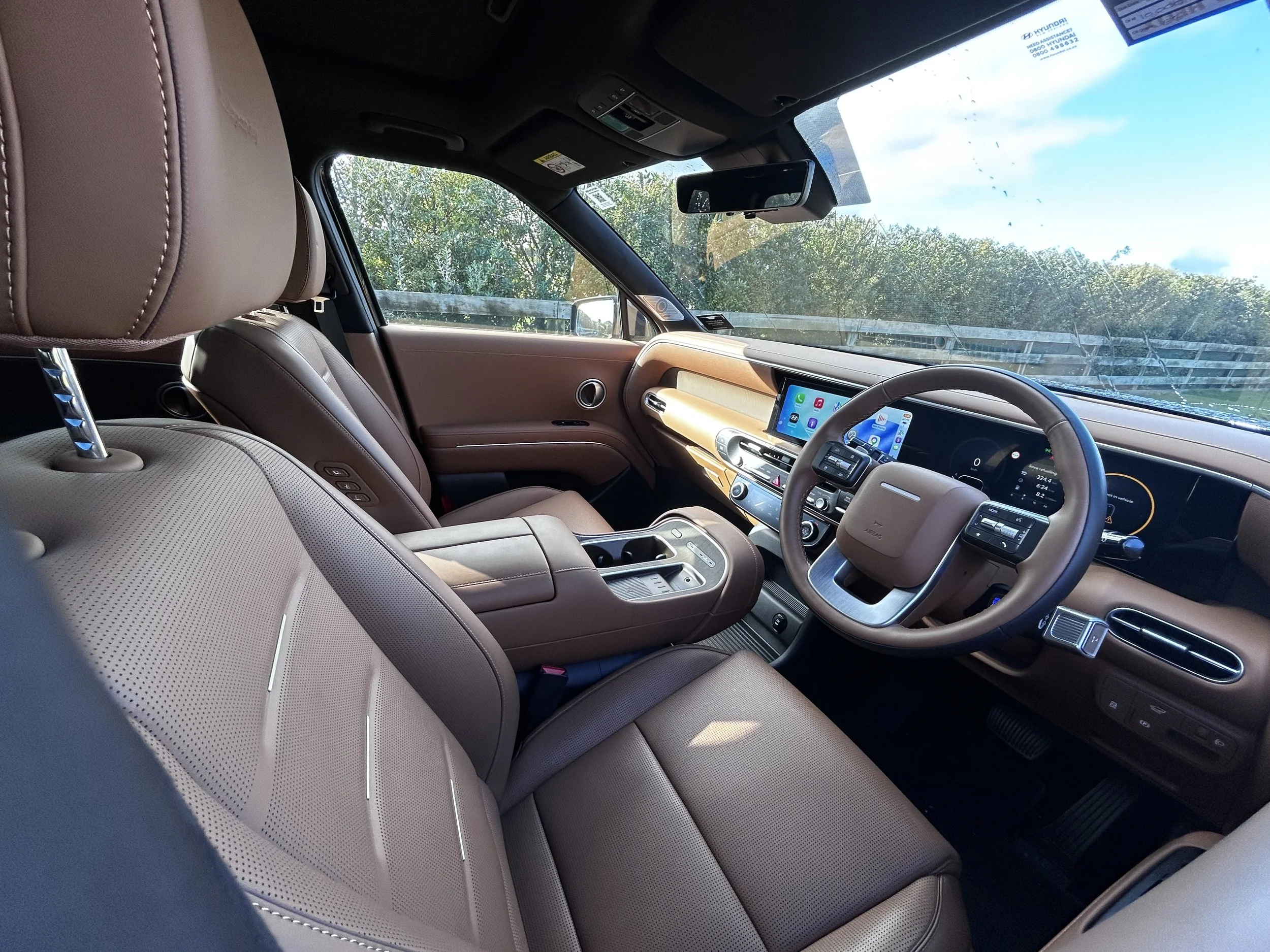
As said, Hyundai has turned it up a notch in terms of its premium feel inside, with added tech and good quality materials which will help it appeal to not only family-car buyers, but also those who may be considering a seven-seater from premium rivals.
When cup holders and 100-watt-capable USB-C ports are available to every occupant and there’s leather or leather-like trim almost everywhere you touch, it’s fair to ask if this is now Hyundai’s Range Rover?
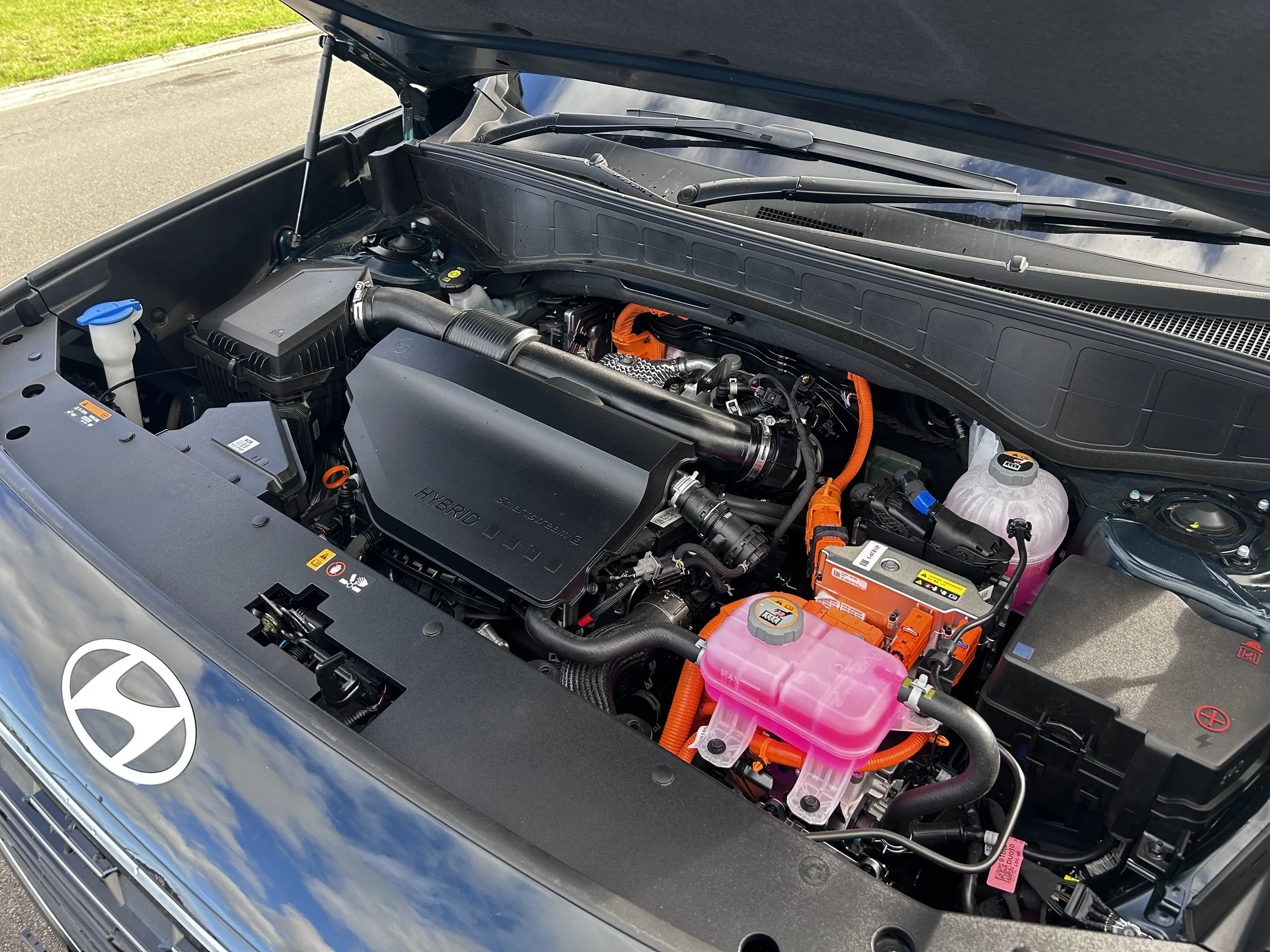
The single most massive change is, of course, under the bonnet, with divestment of previous large capacity petrol and diesel choices for a new 2.5-litre four-cylinder turbo-petrol hybrid that’s mated to a six-speed automatic transmission and an all-wheel drive system as standard.
Though technically similar to the engine we now know in the Santa Fe, the one for Palisade is larger capacity and much brawnier - a 2.5-litre four, with twin electric motors to assist, rather than the Santa Fe’s 1.6-litre with a single electric involving.
The Palisade powertrain offers 245kW/460Nm, a big lift on Santa Fe’s 172kW/376Nm. those outputs mean you have the power of the previous V6 engine but with the low-end torque and efficiency of the previous 2.2-litre turbo-diesel.
What works equally well for the brand is that it’s making more favourable economy and emissions statements, with 6.8L/100km for combined fuel consumption and 154g/km for CO2 emissions.
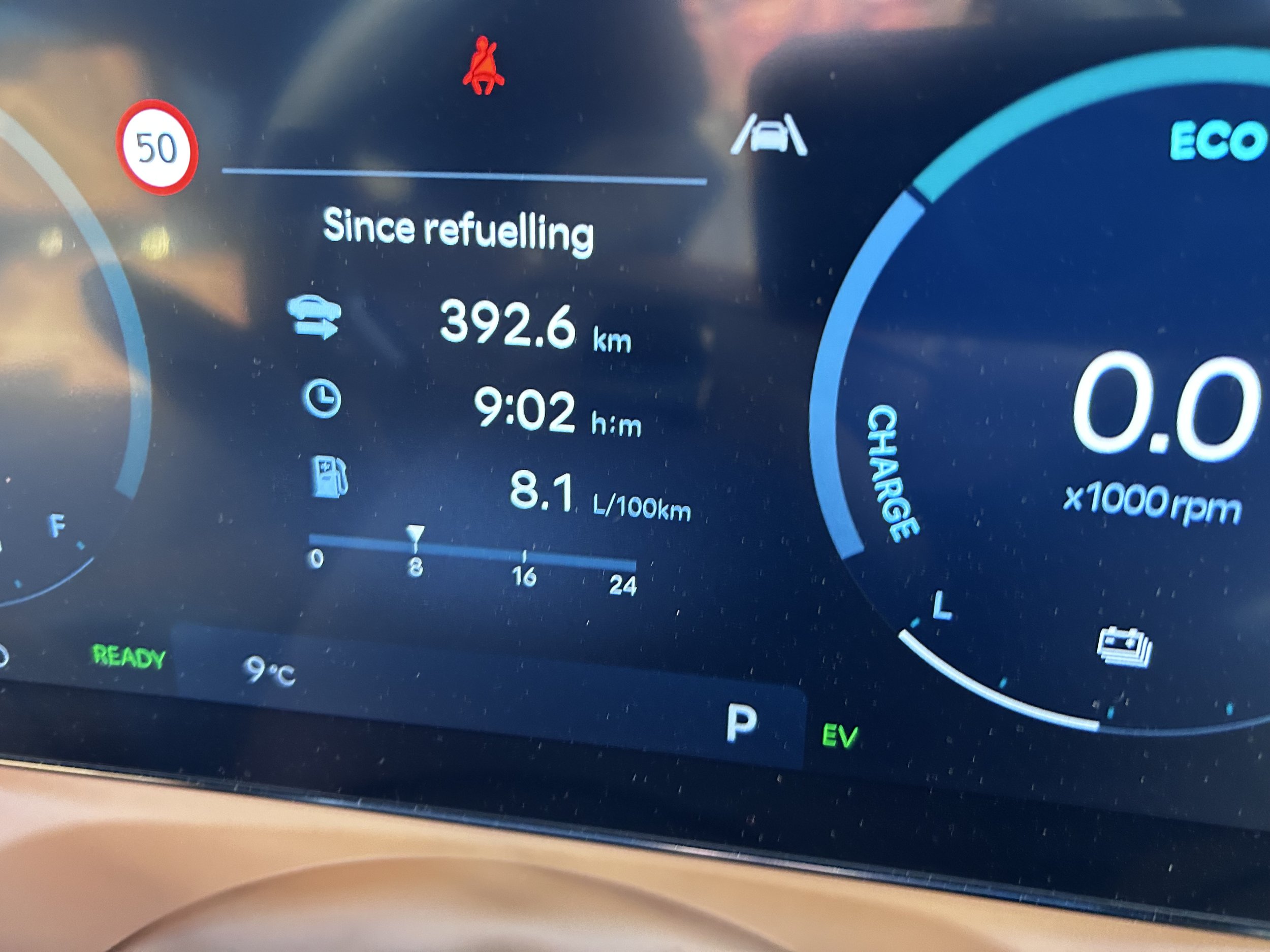
The latter couldn’t be independently tested but seeing an overall, if higher, 8.1L/100km result, to me seemed still quite good for such a big vehicle. Even after 400 kilometres’ clocked it seemed to have plenty left in its 72 litre tank. The Palisade works best on high octane grew, but is tuned for 91 as well.
While all the numbers stack up, you do of course have to re-attune to how it sounds and lays down. The diesel was as much a favourite in this model as in Santa Fe, accounting for eight in every 10 sales.
The driving and performance dynamics from petrol- electric are very different to those from compression ignition.
Diesel gruffness being lost is not such a bad thing, but also discarded is the old compression ignition’s units creamily seamless locomotive-like lug.
Rather, you can get occasional surging and ‘slipped clutch’ slurring as the drivetrain elements transfer across duty or, conversely, strive to work as one.
It’s a hybrid trait that is nothing major, and doesn’t hinder the impetus, but it is different and, when heard, might raise some comment until you realise the rate of progress is not actually being in any way checked. The latest Santa Fe does much the same.
But though the engine capacity difference between the medium-large and fully-large SUVs is pretty modest, it’s the larger-lunged unit that feels the more pleasing, more assertive.
There’s just more muscularity where it’s need most; in step off and in overtaking, the Palisade has less hesitancy to act. As much as I enjoyed the previous diesel, I can’t argue against why Hyundai needed to steer a new course. The next step, if it’s ever taken, will be even more fulsome, or even wholesale, electrification. A whole new challenge, that one.
Palisade’s driving feel is clearly attuned to comfort, but it’s not as soft if it might have been. Regional fine tuning of its frequency-select front dampers and self-levelling rear dampers has likely been useful.
We’re assured it delivers more firmness than is delivered to the primary South Korean and North American markets. As is, it has decent confidence in cornering, and takes bumps in its stride, but you soon learn it isn’t a car to chuck around. Ride and handling competence are impressive given its obviously a larger and heavier product, but on country roads it isn’t to be rushed.
Taking more measured approach leaves more time to appreciate its impressive refinement. You’d forgive those large tyres being a bit grumbly across coarse chip, but truth is wind and road noise are very well subdued. We and two friends drove a distance for a lunch, and conversation between the front and middle rows was at normal tones. It’s not electric car hushed, but isn’t far behind.
There’s no argument that such a large body is put to good use in respect to overall cabin space; it’s a big improvement compared with the previous Palisade.
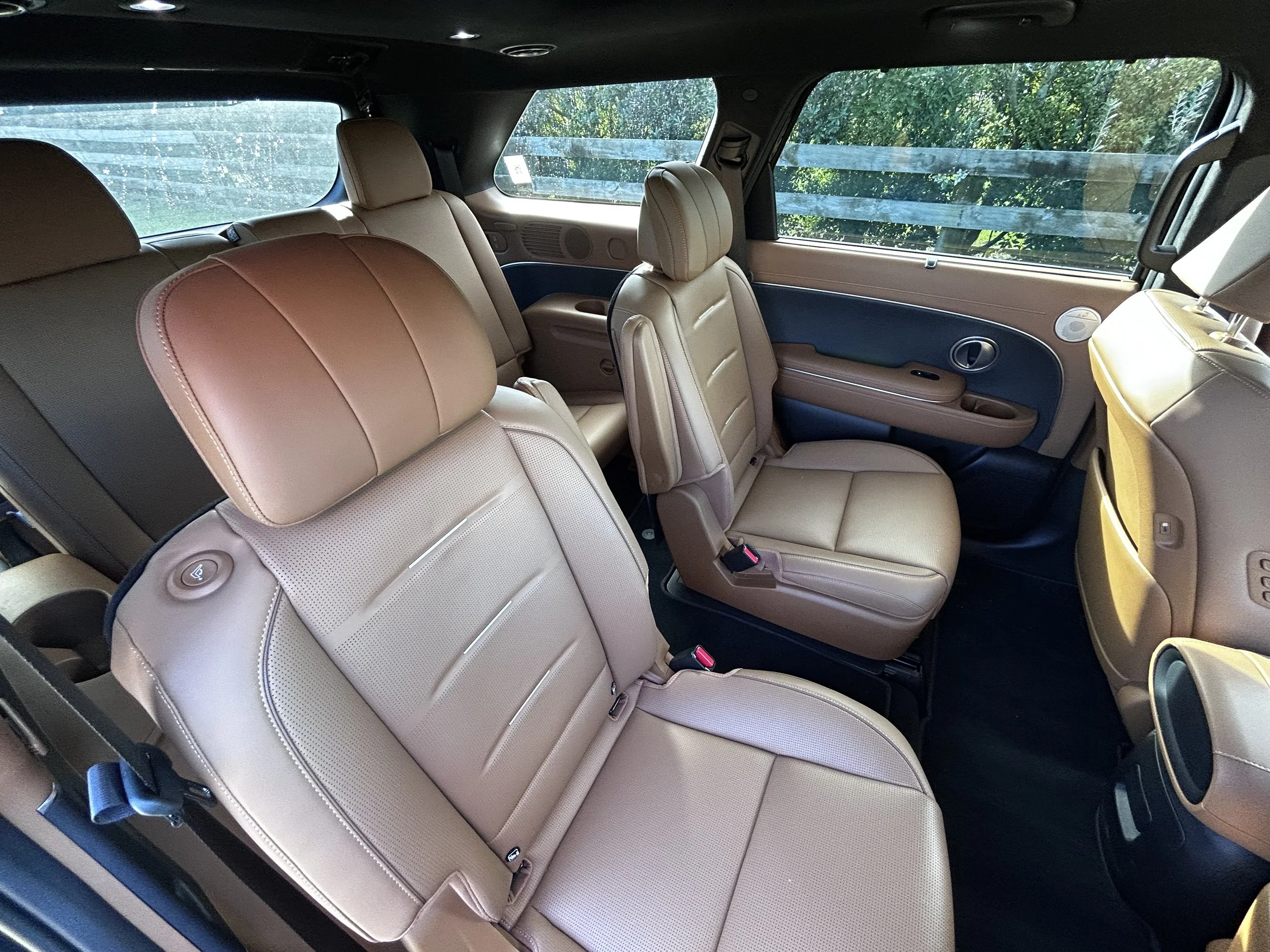
Calligraphy has the seven seat layout that’s especially affluent; the mid-row chairs are individual and electrically adjustable to enable an easy walk through to the third row.
Third rows that are functional for everyday use by folks of many sizes are rare – most are small and only for kids – but the Palisade’s is far more adult friendly nn respect to its head and leg space than many. That’s not to say they’re the very best seats to gravitate to, but conversely having to sit there won’t feel like a short straw outcome, either.
Saying that, if you’re down to passenger and want to enjoy the best space, then the second row is the pace to be. There’s ample room even for people above 1.6m.
Wherever you go, there are amenities to enjoy. The rear section has a separate climate zone, multiple charging options, sun shades, door pockets, over-ride adjustments for the 14-speaker Bose audio.
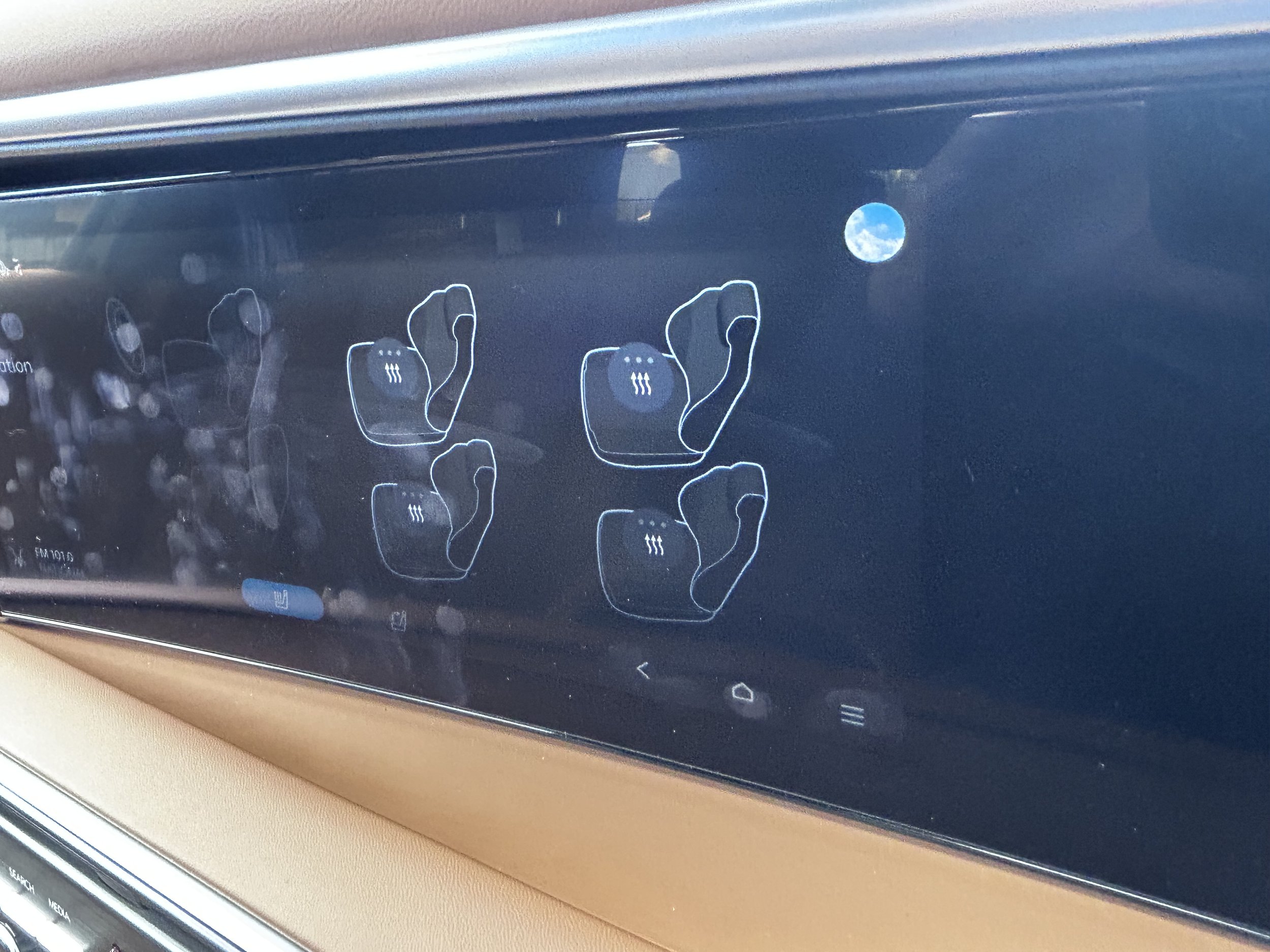
The very back row gets it’s own air vents, speakers, charging and cup holders. In respect to the comfort features, just be aware that some controls are in interesting places. For instance, middle row passengers will find the panel for their climate settings and so on is set within the roof lining ahead of them. Other controls for heating the front and middle row chairs are touch-activated off the forward touchscreen, but tucked with a sub-menu.
Those with child seats will be happy to know that the third row features two both top-tether and ISOFIX points as well. All the chairs fold away with electric adjustment; early on Hyundai had an unfortunate issue with the back row’s movement, but that’s all been sorted now. If an impeding object is detected, it stops trying to fold down. In respect to the electric activation, the driver’s seat is most heavily-influenced; it has 18 ways of adjustment. One of those is only for when the vehicle is at a stop; that’s the ’relaxation’ mode that throws the seat back in an almost lie-flat mode.
With all the seats erect, there’s 300 litres of space in the Palisade’s boot, which expands to 712 litres with the third row folded. The boot features hooks, side storage, under floor storage and even a full-size alloy spare wheel. Folding the second row unlocks 2081 litres of space.
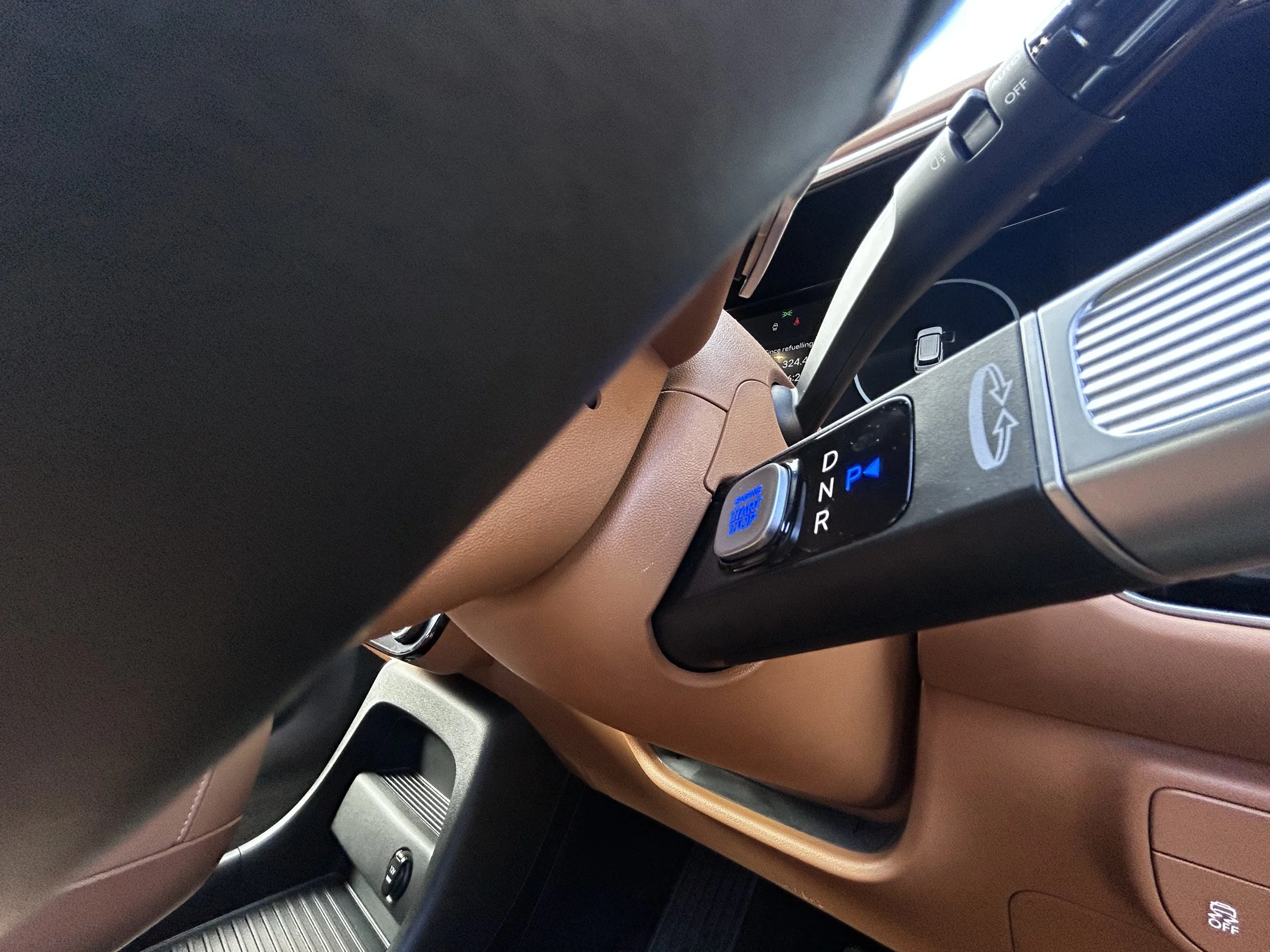
Palisade has gone to the same control layout found in Santa Fe, which means a stumpy wand gear selector and a dual 12.3-inch screen layout. The touchscreen layout is very easy to use, and the screen quality is sharp.
Even moreso than Sante Fe, the Palisade stands more strongly as an expression of comfort-biased character than one of utilitarian competence.
The enhanced and enlarged cabin space has benefit for practicality, but one on the other hand, and as with the smaller choice, the switch from diesel to hybrid-petrol has resulted in diminishment to towing brawn that was never class-leading previously.
Previous Palisade in the 147kW/440Nm diesel format could haul 2200kg. The new model is pulled back to 2000kg. In North America Palisade continues with a 3.5-litre V6 petrol engine with a braked towing capacity of 2250kg, but there’s no intent to send that drivetrain to this part of the world. Even in that form, if you need a big rig to haul a hefty caravan or boat, this is simply not the SUV that sets the bar.
On the other hand, if you want to go big but are also chasing improvement in efficiency? Well, that’s where the Hyundai direction does deliver strongly.
The factors that require Palisade to be given careful consideration are obvious. That is is a bigger vehicle than Santa Fe doesn’t necessarily make it a better one in a New Zealand context.
If your daily driving habit is mainly in an urban and inner-city setting, then chances are the smaller of the two will already feel quite big enough. U-turning and threading through heavy traffic are a test of nerves in this model.
Going full large also of course makes you think more carefully about parking spaces because even those of generous size are well filled.
While Palisade has decent visibility, you’ll be as grateful for the parking sensors and cameras as you would be in anything else from this category, while those who find it all too much might find comfort in the remote smart parking, which seems pretty well calibrated.
Hyundai drawing attention to this generation having an expanded suite of active and passive safety technologies is for good reason.
The suite includes a built-in dash cam, available digital rear-view mirror, advanced rear occupant alert, digital key access, and updated adaptive cruise control, autonomous emergency braking, blind-spot warning, driver attention alert, high beam assist, lane keeping and rear cross-traffic avoidance.
The powertrain being a whole new thing to get to grips with? Well, there’s no going back. Local fan preference has cut no sway with headquarters in South Korea. Seoul is on a emissions-lowering mission and diesel doesn’t work for that.
On the positive side, this model’s hybrid is even better than the one in Santa Fe. Given they site on the same platform, and appear to have very similar-sized and shaped engine bays, you wonder if Hyundai might in time allow this powertrain to share into the smaller product. You’d have to say it’d be a hardly detrimental transplant.