Volkswagen T-Roc R-Line Launch Edition roadtest review: Not such a hard place
/Hybrid helps this model step into a new era, but the new styling is the most singularly electrifying element.
Price: $65,490.
Powertrain: Front drive, 1498cc litre four-cylinder turbo petrol with 48 volt integration, maximum power 110kW, maximum torque 250Nm; seven-speed direct shift transmission.
Wheels and tyres: Alloy wheels, 225/50 R18.
Dimensions: Length, 4373mm; width (excluding mirrors), 1828mm; height, 1573mm; wheelbase 2629mm.
We like: Handsome styling; quality ambience; practical; Launch Edition spec.
Not so much: Stronger hybrid would do no harm; average rear seat space; gets pricey if ordered in Life with options.
WHAT chance that anyone still in the market for a hatchback these days will end up driving something like the T-Roc?
Rhetorical question. Hatches are great but, like station wagons - also brilliant, in my view - they’ve lost a lot of ground these last few years.
Statistic relate the size of the shift. Around seven in every 10 new passenger products being sold are in varying semblance of sports utility format. Is there any going back? Deep down, you know the answer.
That’s why the Tiguan has risen to be Volkswagen’s most popular car here.
And why, even though Golf remains on sale, there is a sub-Tiguan sibling in crossover format that’s roughly Golf-sized and only slightly more than Golf-priced - when like specifications are the measuring stick - that has effectively become the new Golf.
While it’s almost as solidly established as the Tiguan, the T-Roc is hardly in relaxation mode.
For one, it places in a hugely congested sector that’s also highly competitive. For another, it is increasingly facing rivals undergoing significant technology change, with upward embrace of electrically-enhanced drivetrains.
That the latest evolution T-Roc has just landed with a powertrain delivering with a hybrid drivetrain is conceivably a good play, though questions might immediately raise about what it is signalling.
There’s growing evidence people look out for hybrid badges when they buy. What’s to be made of the T-Roc not having one of those?
When internationally unveiled almost 12 months ago, the head office in Germany went to great lengths to explain it had various electric assistance options for this car, all offering different levels of battery-influenced interaction.
What we currently see in New Zealand is effectively the starter kit.
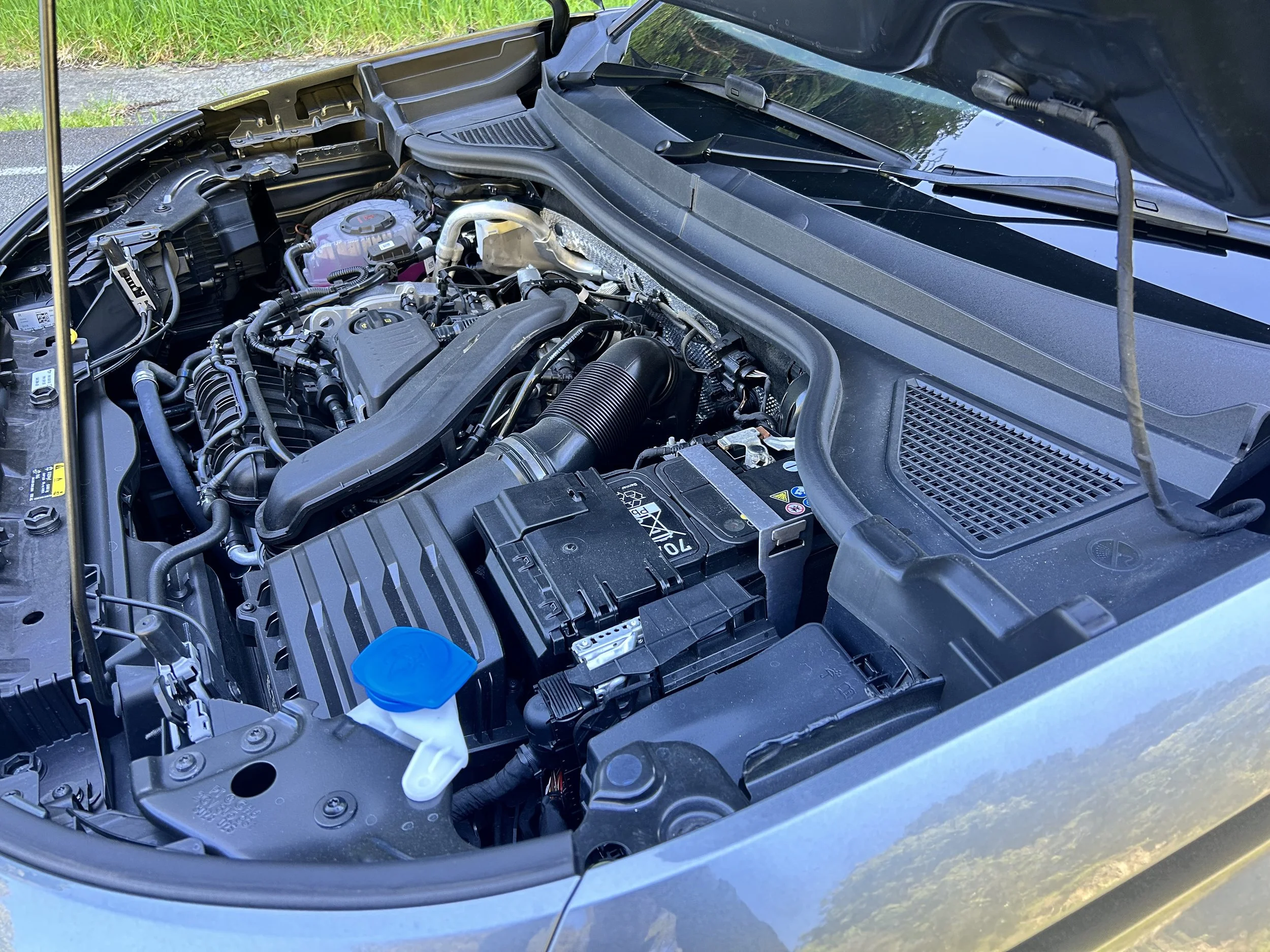
It pairs the make’s familiar 1.5-litre 'e-TSI' four-cylinder petrol with a 48 volt mild hybrid electric assist, combined as standard with a seven-speed, dual-clutch (DSG) automatic transmission.
The 48 volt side is a first-time application that lends obvious assistance, with influence on both consumption and impetus. But the car cannot run on electric alone at any point. So it’s acknowledged by the factory and the distributor as being mild.
The powertrain change comes with a new body design, so cumulatively all this amounts to a highly significant update for a nameplate that landed here in 2018, but not so much as to alienate the established customer. Someone who needs a compact car of similar dimension to an orthodox hatchback, but taller, will still find satisfaction.
Even so, being built on the latest MQB Evo toolset from the Tiguan, Tayron and Skoda Kodiaq quite literally raises (and widens and lengthens) the nameplate’s standing.
At 122mm longer, with 28mm of that in the wheelbase, 9mm wider and a touch taller than its predecessor, it becomes a more welcoming choice in a well-provisioned sector.
Increasing key exterior dimensions allows for more interior space and also creates 20 litres’ extra capacity in the boot, taking that to 465 litres. While the largest rim size here is 18 inches, it’s also now possible to fit 20-inch alloy wheels for the first time.
Regardless that it’s bigger than the previous T-Roc, nothing is to disadvantage when nipping through urban streets. It’s still compact enough to remain true to the overall proposal of being a confident halfway point between a hatchback and full SUV ownership.
This will be welcome news to the 3000-strong national fanbase keen to shift from old to new, as will the styling changes.
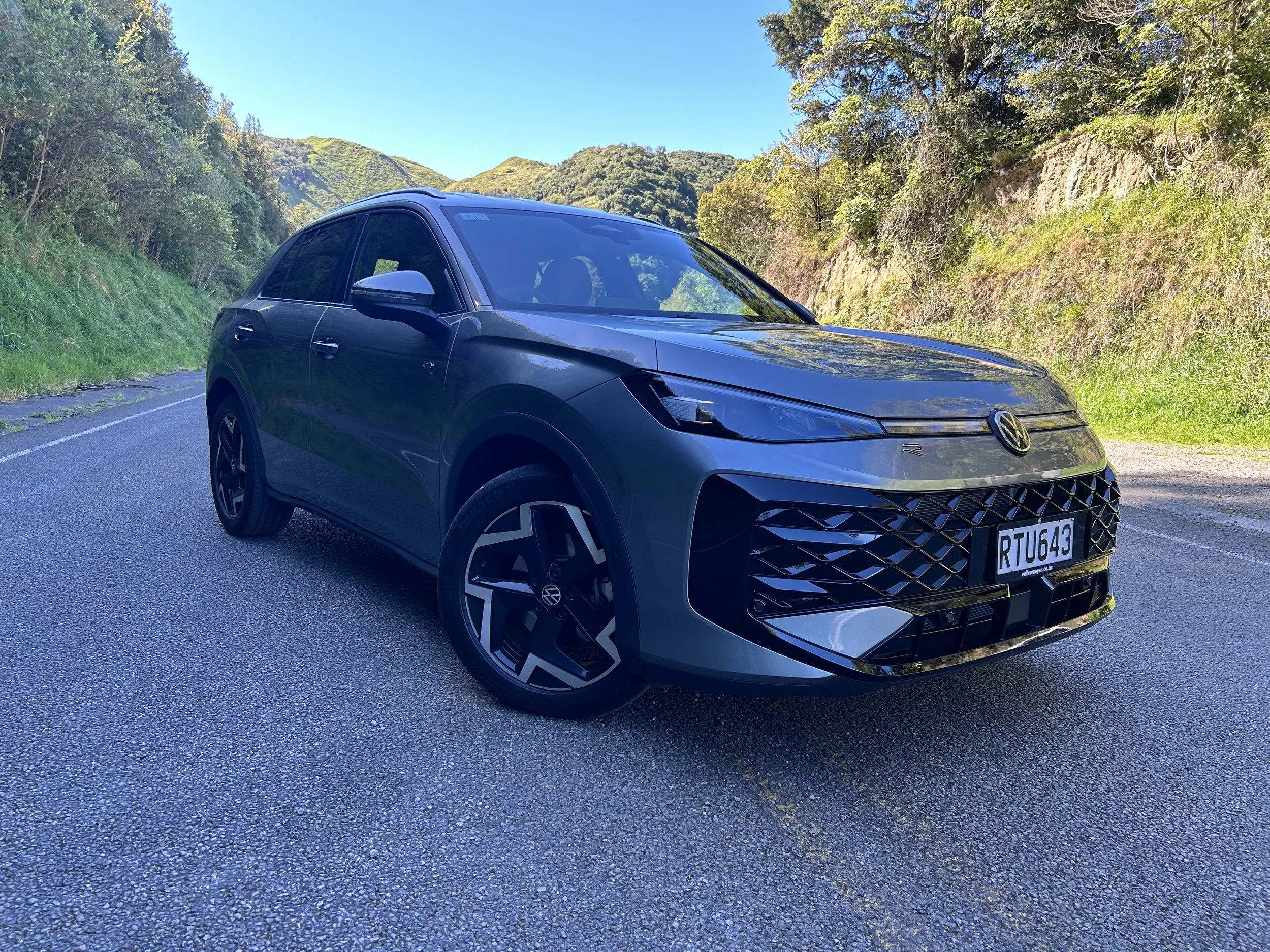
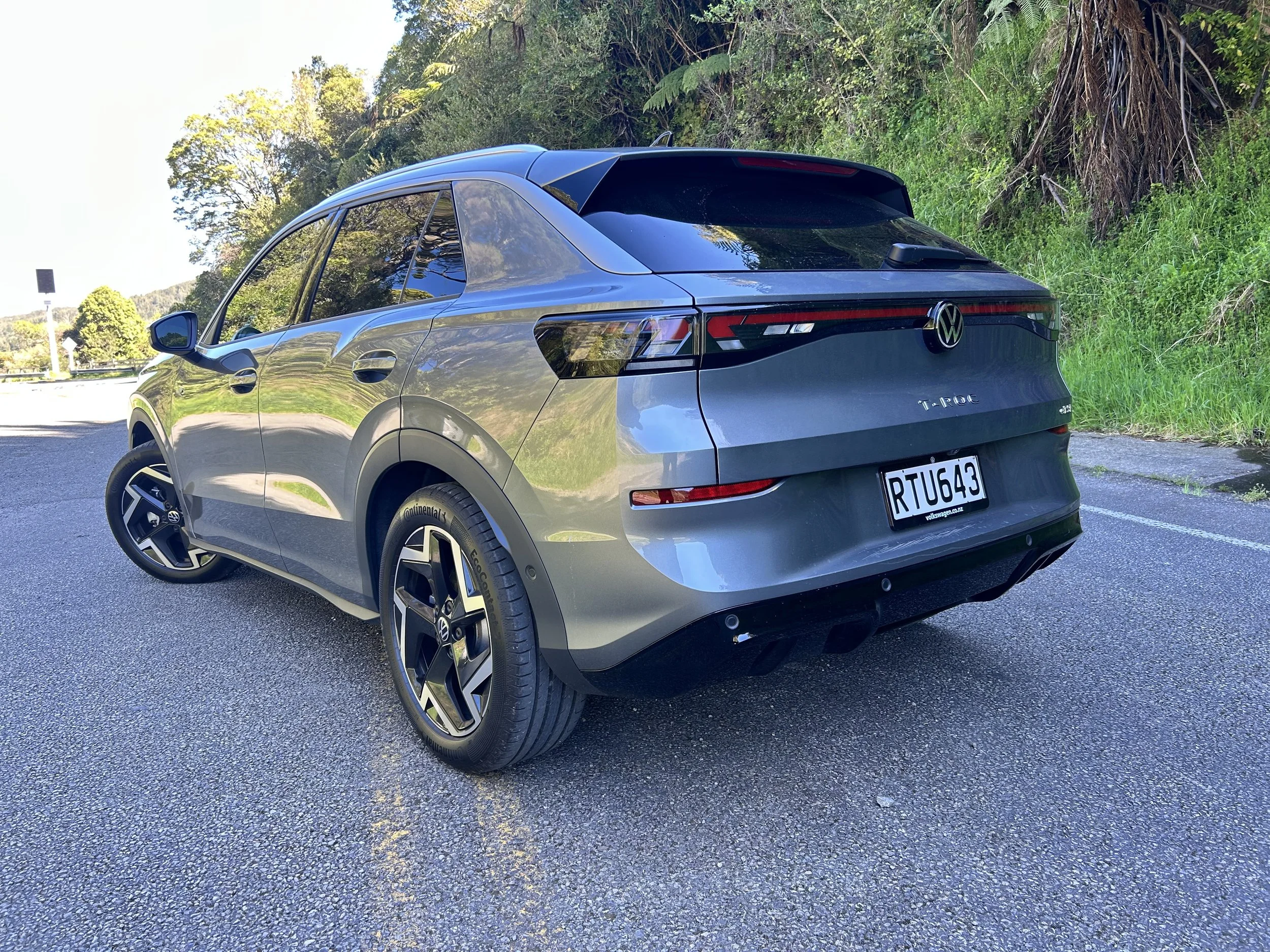
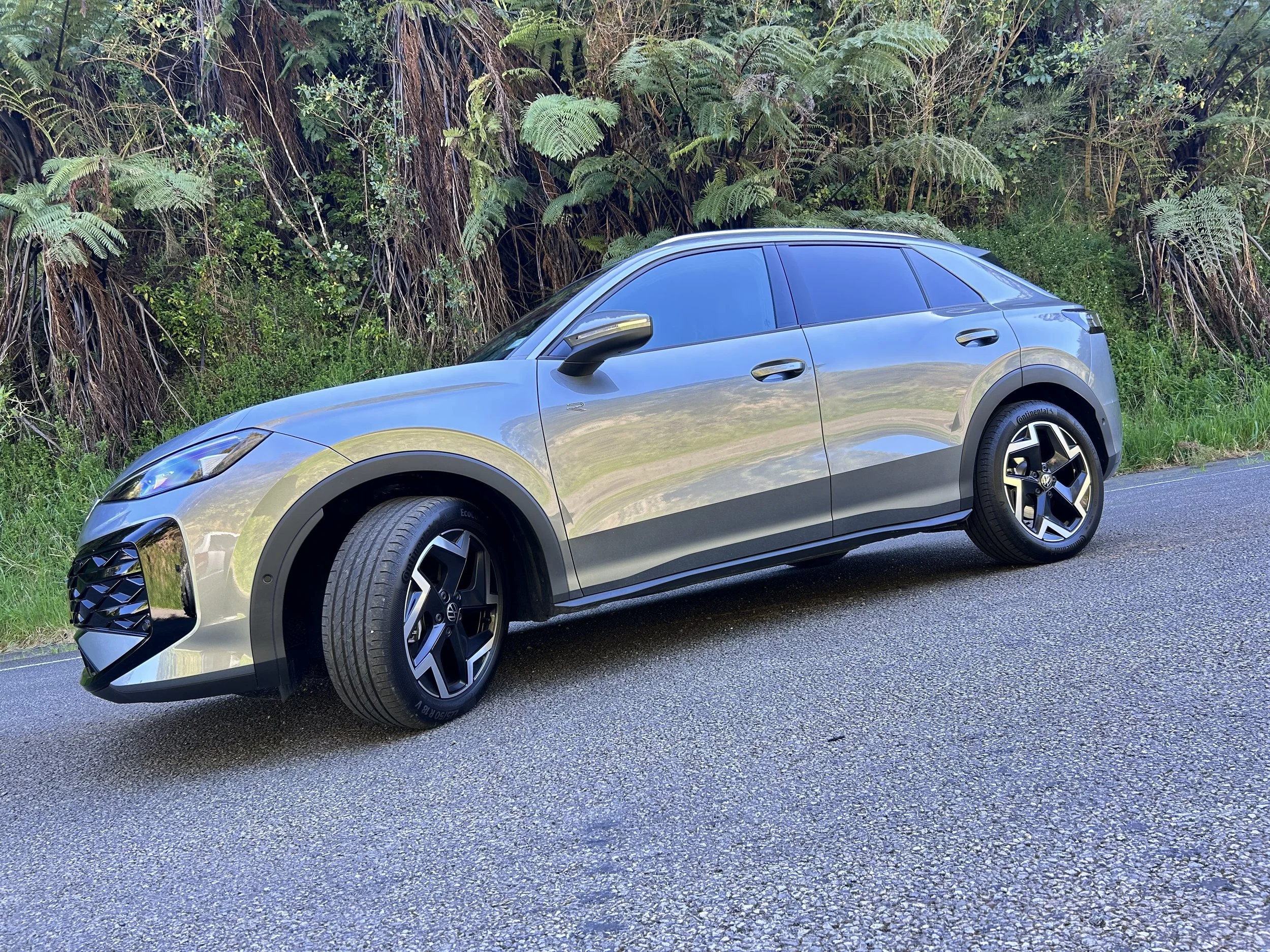
The predecessor’s 'hockey stick' roof line and stylised rear wings continue, but overall the car now is much modernised.
That’s particularly obvious at the front, where the curvy styling lifts influence from both the Tiguan and from the ID electric car lineup.
The longer shape has subjectively given the T-Roc a lower, sleeker silhouette though, and it looks more distinctive and appealing than before.
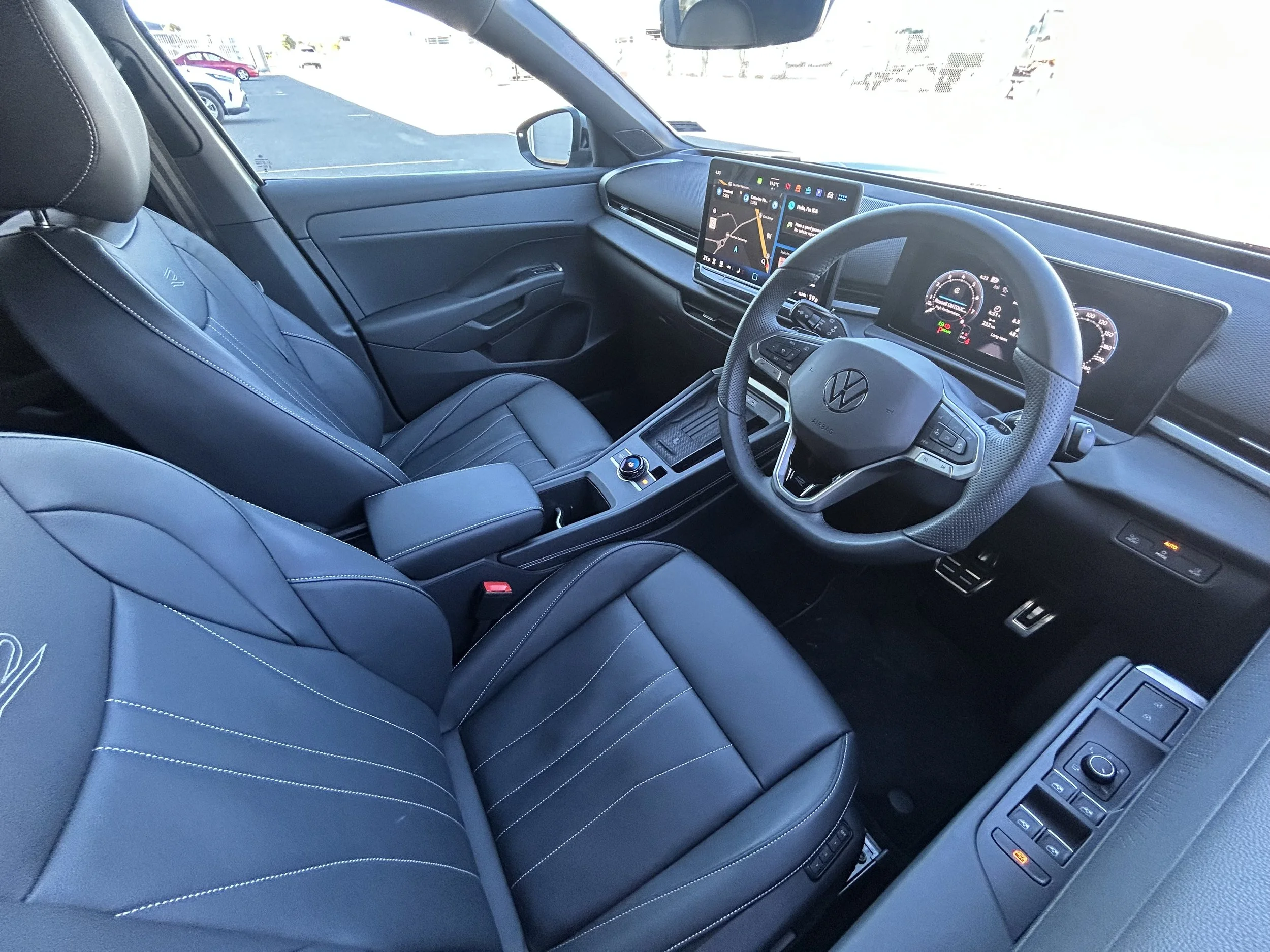
The driving position, when you have the height-adjustable driver's seat on its lowest setting, is surprisingly low-slung by SUV and crossover standards. The car also adopts a minimalist dashboard , with a large touchscreen as well as a 10.0-inch digital cluster.
Featured today is the very best-dressed choice. Brought in to induce early bird uptake, this R-Line Launch Edition stands $11,500 above the Life version that is intended as the long-term showroom resident.
As in common with launch packs, it’s a richly presented attraction. Bumping up from 17 to 18 inch rims and delivering with progressive steering and sports suspension, it also gains leather-appointed sports seats, a heated sports steering wheel, heated front and outer rear seats, a 12.9-inch infotainment touchscreen, a 10.0-inch digital instrument cluster, wireless Apple CarPlay and Android Auto and embedded satellite navigation.
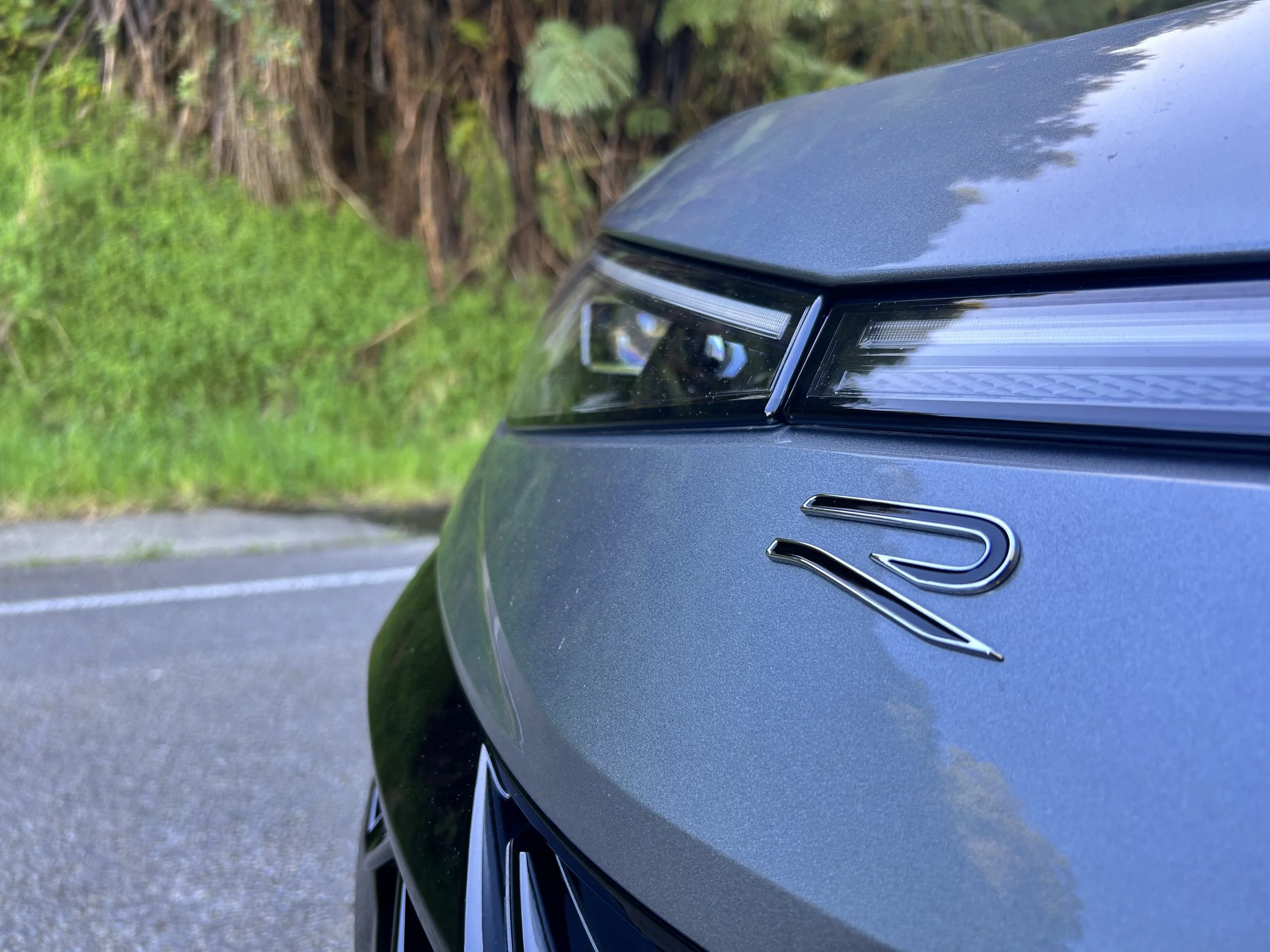
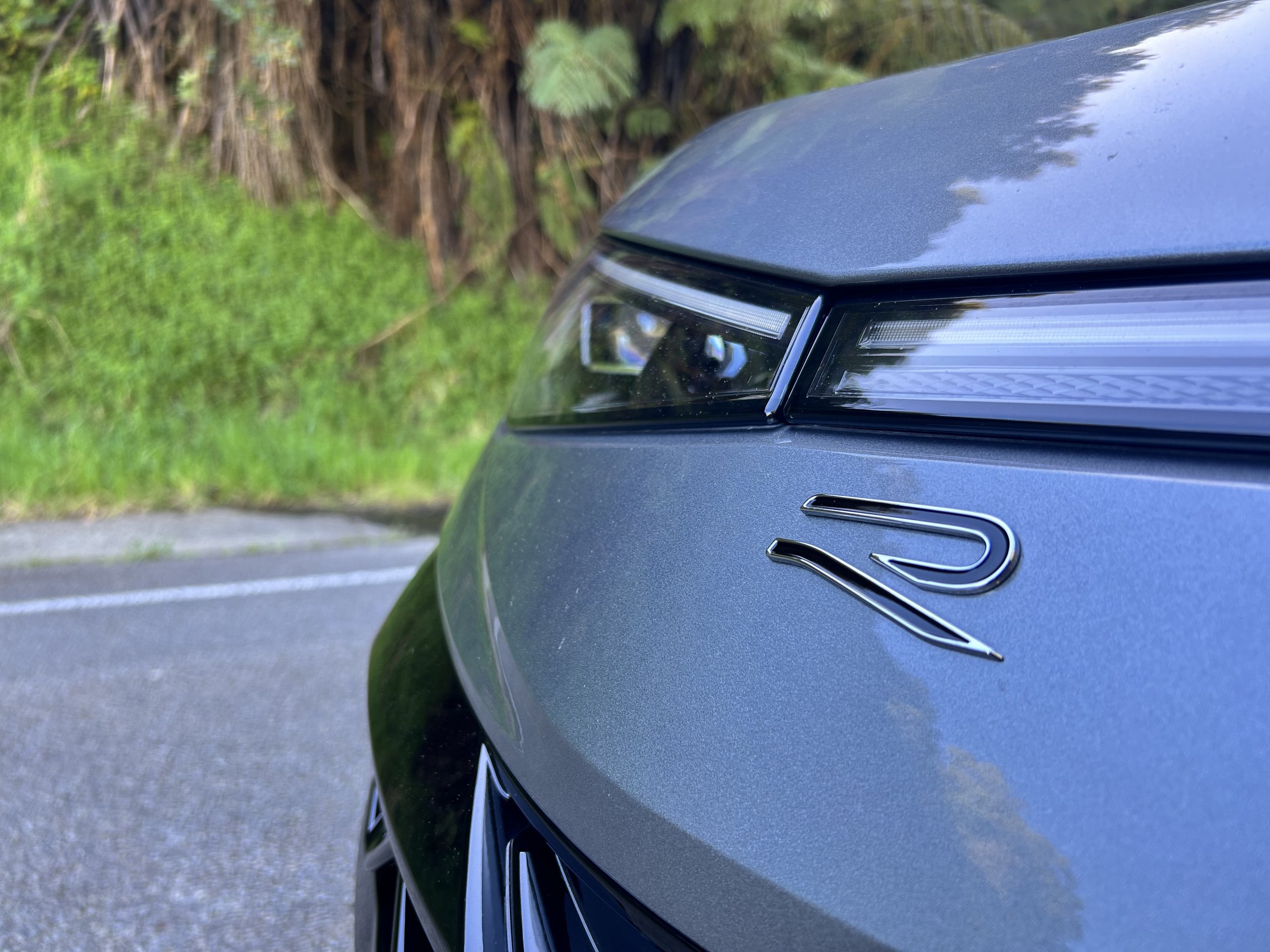
Full-width LED light strips front and rear, high-tech headlights and illuminated VW logos strike a bold touch this time around; you get every element of that with the launch model.
Pretty much all of that can come to the Life as well, but to access means buying a Touring pack. The premium for this comes to slightly above what you would pay for the R-Line Launch Edition, because the pack further adds a sunroof.
T-Roc is a major global model for VW, effectively serving as an SUV alternative to the Golf and is Europe’s fourth best-selling vehicle so far this year.
NZ specifically provides a highly competitive compact SUV sector, but T-Roc isn’t expected to battle for attention against every offer.
VW NZ has finessed its marketing approach in proposing it as being more as a rival to similar-priced fare.
Conceivably that’ll mean the Kia Seltos, Mazda CX-30, Toyota C-HR and perhaps the impending Mitsubishi Eclipse Cross. Some will of course say same-sized fare from China, not least products that often holds price advantage, should also register. The counter-argument to that comes down to the value, if any, of badge credential.
Aside from its Euro-chic look and driving feel, the model will obviously rely on the acceptance of the powertrain.
NZ does well for exposure to electric-involved drivetrains; it’s reasonable to suggest we see all the world can deliver.
Seemingly because of rollout decisions that favour Europe over export markets, what we’re not seeing - yet - is the best hybrid VW can provision to this model.
The 48 volt system is better than some, in that it does more than just assist the engine during acceleration.
It also enables extended idle stop/start functionality and allows the engine to either switch off while coasting on flat roads or at least utilise its active cylinder management technology total back from four to just two cylinders, under light loads.
But given how well the likes of Toyota and Honda do with their more involved hybrids, it might seem a pity VW has restricted to Europe its primary hybrid that involves dual electric motors and enables the petrol engine to act as a generator to enable electric-pure driving.
The car we see is thrifty. VW claims combined fuel consumption of 5.6 litres per 100km using the NZ-preferred WLTP scale. That’s a significant improvement over the outgoing model, but not as good as it gets, and going by this experience getting close to the maker-cited optimal might require no small amount of dedication.
The average from my week in the car came to 6.5L/100km, so 0.3L/100km better than the previous generation’s optimal and still decent by overall standards.
Still, having run this test in a week when 95 octane petrol, which this car demands, was at least $3.67 a litre in my area reinforced why anything with coherently electric edge is back in our mindset. There are cars at this price delivering just that.
The T-Roc is nonetheless pleasant to drive. Performance isn’t hugely perky, so the local arm having taken a tune that makes 25kW and 30Nm more than a base format offered in Germany, is patently sensible.
Should NZ ever get to adopt the more fulsome dual motor hybrid, it would step up again. But if outright fizz is required, then you might either look to the last of the previous generation car in its hard-out R spec, now on runout, or await the equivalent in the new generation car, which Wolfsburg has in development.
The R-Line look adds appealing visual fizz to the NZ-issue, but we’re getting a car whose drivetrain is much less about belligerence, no matter how hard you work the seven-speed DSG.
The harder you rev it, the more you bring out the gruffness, but overall it feels enthusiastic, this helped by a relatively trim kerb weight and well-weighted steering that feels impressively direct.
If you’re looking for a soft, quiet ambience, then the R-Line pack’s suspension and wheel selection might need some consideration. Suspension tuning is both stiffer and lower than the standard model, so it has a sort of firm comfort. The rims and their sports rubber likely also induce a bit more fidget than might occur with the standard tyre and wheel.
That might be a bit much if you intend to do all your driving around town. Conversely, though, as much as the R-Line’s ride felt a bit to busy in a low speed environment, in the 100kmh arena it morphed into a more grown-up aptitude, leaving impression it would be a better choice among compact cars for distance driving.
Comfort is a strength. For those behind the wheel, you get a seat with plenty of adjustment in the seat, but as a tall driver I would have preferred the steering wheel adjusted a bit more for reach. With my long legs had to sit a touch closer to the pedals than I like.
The operability and presentation of the 12.9-inch infotainment screen in the centre of the T-Roc's dashboard shows VW has learned the harsh lessons of its earlier touchscreen efforts.
The menu layout is far easier to find your way around than the previous pitch, and the ability to create your own shortcut icons at the top of the screen makes life much easier.
Response times have sharpened and wireless connections for both Apple CarPlay and Android Auto took no effort Volkswagen has its own digital voice assistant, 'Ida', but I never had much need for it.
The haptic touchpads on the steering wheel of the previous T-Roc have been binned in favour of buttons. There’s a set for the cruise control and another for the stereo, the latter being especially useful as on the main infotainment it still sticks with a touch-sensitive 'slider' volume control, which some will find annoying.
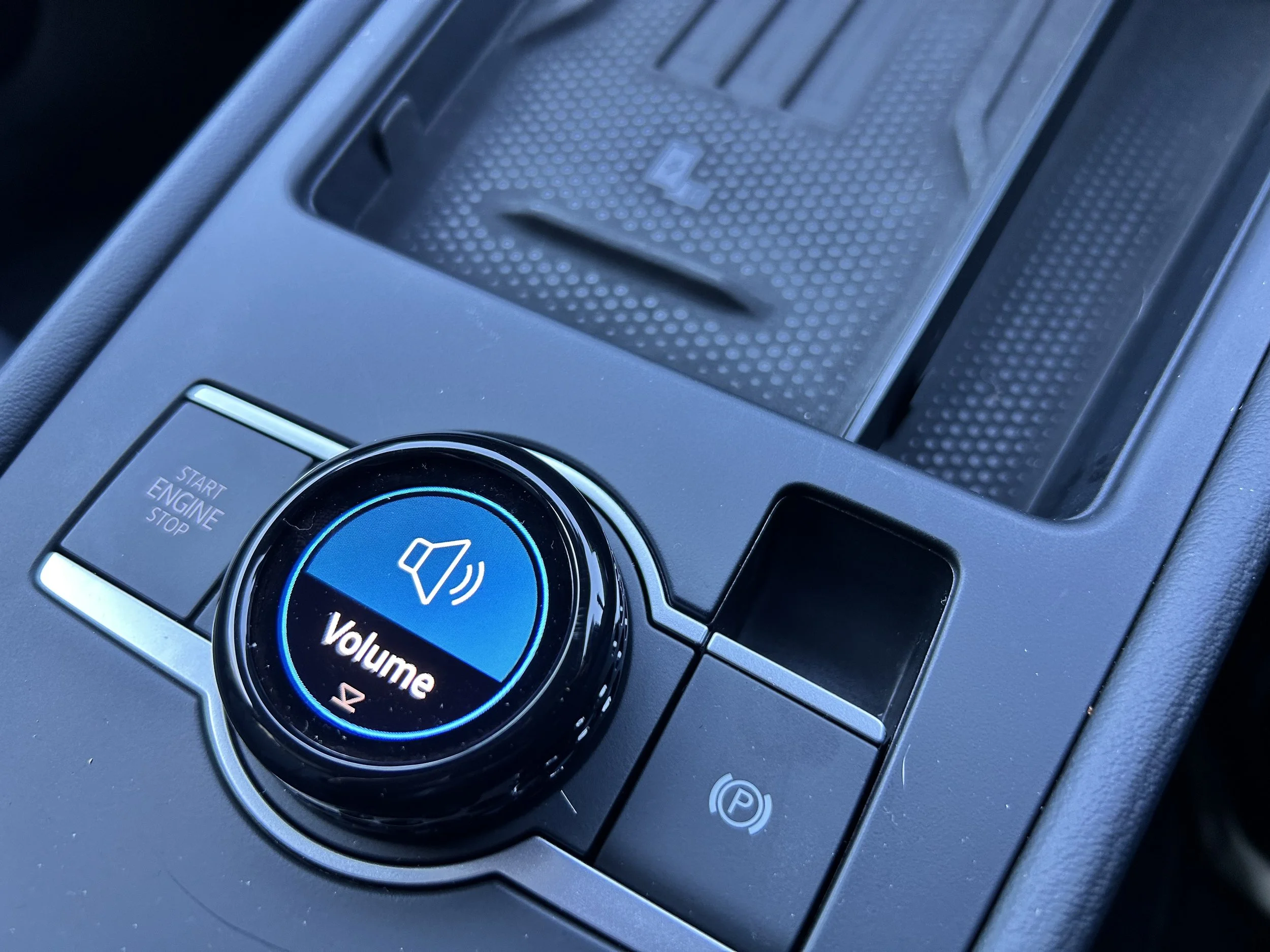
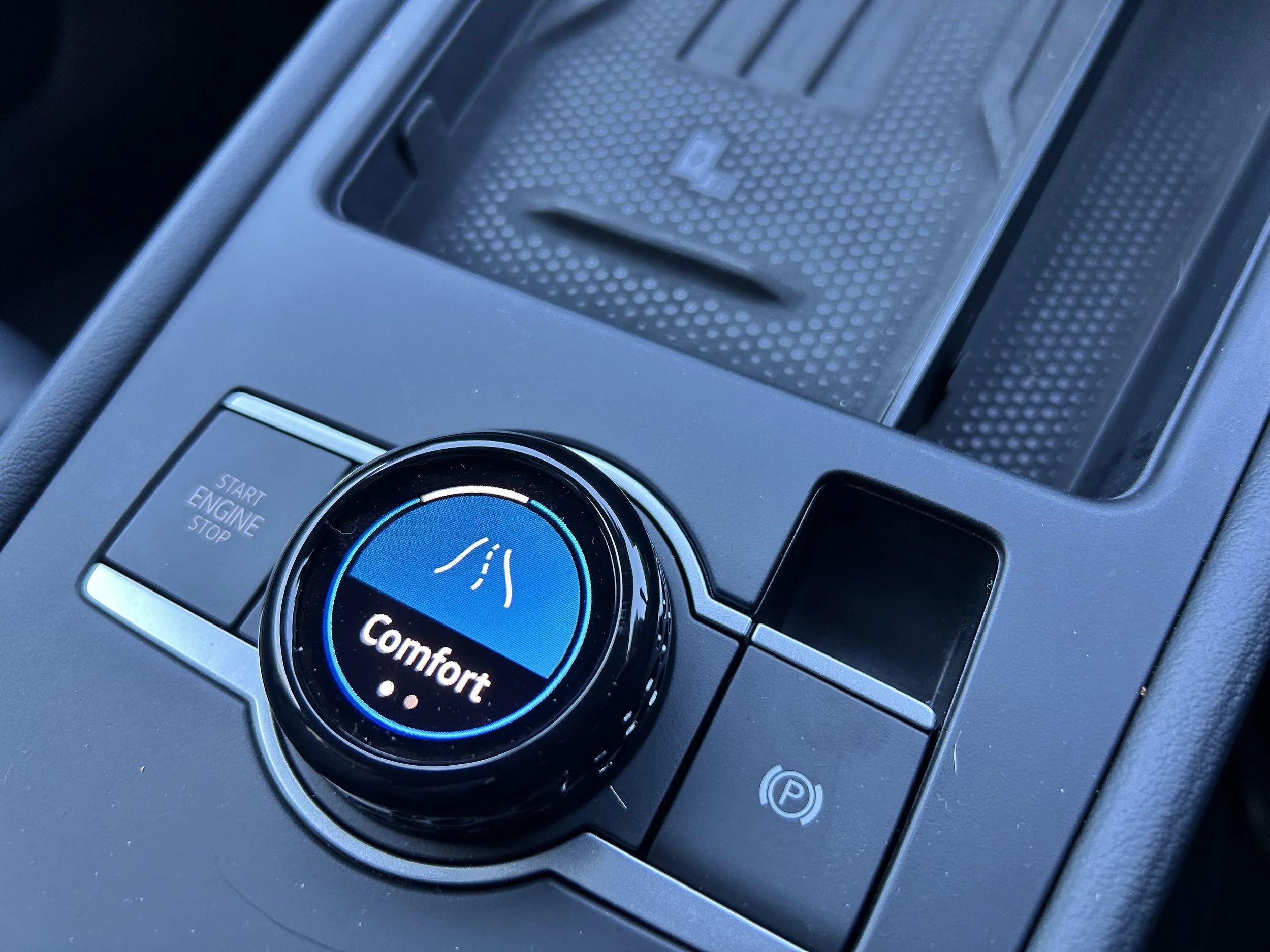
There’s a third way of changing the volume and that’s with the cabin’s largest single physical control, a rotary knob that, at a press of its centre, also allows you to change the driving mode or the 'atmosphere' - a pre-set series of cabin colours and on-screen themes. You can chop and change according to your tastes, but all PlayStation-like and don’t really seem to be in keeping with the image of Germanic quality.
Speaking of. The door tops and cards being in quite hard plastics might seem a bit cheap for a car in this price range, but conceivably it’s because Volkswagen has focused on sustainability. Around 40kg – or approximately 20 percent – of those cabin plastics are made from recycled materials. Surfaces that look and feel hard are a price for this feel good.
There’s a handy wireless phone charger in the centre console, which has a rubberised finish so that your phone won't slide around, and which has channels so that cooler air can reach the back of your phone. There are also four USB-C sockets - two in the front and two in the rear.
The door bins are a touch tight, with only just enough space for a water bottle, but at least they are lined with fabric, so items won't rattle around inside. There’s a useful, partly open, storage within the centre console, where you'll find a deep tray that extends past the armrest to include adjustable cupholders.
The rear seats are comfortable and supportive, but legroom has to be considered no more than adequate, not least if there's anyone tall in the front seat. Even though the roof slopes somewhat toward the tailgate, headroom in the back is fine.
The T-Roc gets three ISOFIX anchor points for child safety seats, with two in the back and one in the front passenger seat.
The boot floor is adjustable, so you can raise it up to have a flat load lip or drop it way down for maximum space. There’s a moulded-in bag hook, on the left-hand side of the boot, and a handy 12-volt socket too.
The rear seats split-fold in 40:20:40 formation. Dropping down the centre section will accommodate long, narrow items but leave the seats available. With all the back seats folded there’s 1350 litres of load space. The T-Roc can tow, but with 1500kg being the braked maximum, it’s not for strenuous jobs.
Safety equipment features include autonomous emergency braking, adaptive cruise control, blind-spot monitoring, rear cross-traffic alert, traffic sign recognition, and driver attention monitoring.
The T-Roc scored a maximum five stars on the Euro NCAP tests, with a 91 per cent rating for adult occupant protection; 87 per cent for child occupants; 87 per cent for vulnerable road users; and 77 per cent for its active safety systems.
To some, a car like this might seem incomplete without all-wheel-drive, on the usual grounds that if anything that’s going to look like a car with off-seal aptitude should at least have some. But market preferences simply shoot down that argument.
T-Roc isn’t one of those cars that necessarily comes out best on pure cost comparison. Also, for all that the step up to this powertrain is genuine progress, it’s still a shame the very best hybrid VW has created isn’t installed.
Neither of those factors diminish impression that this is still a convincing and captivating car offering a quality of experience above that from cheaper choices.
This Launch Edition is worth seeking out. Look beyond the obvious use of hard plastics and the cabin here is all but Audi-esque in fit out, feature count and comfort.
Above that, it’s a great looking, practical choice, of a design suited to the segment. While the R-Line treatment doesn’t make it a hot hatch wearing an SUV disguise, it certainly has pizzazz and in general it's good from behind the wheel, with enough driver entertainment to raise a smile.