
Electric Outback now … and again in 2029?
/Subaru’s plan to go alone with its battery-wed products raises speculation about the new Trailseeker eventually being one of two.
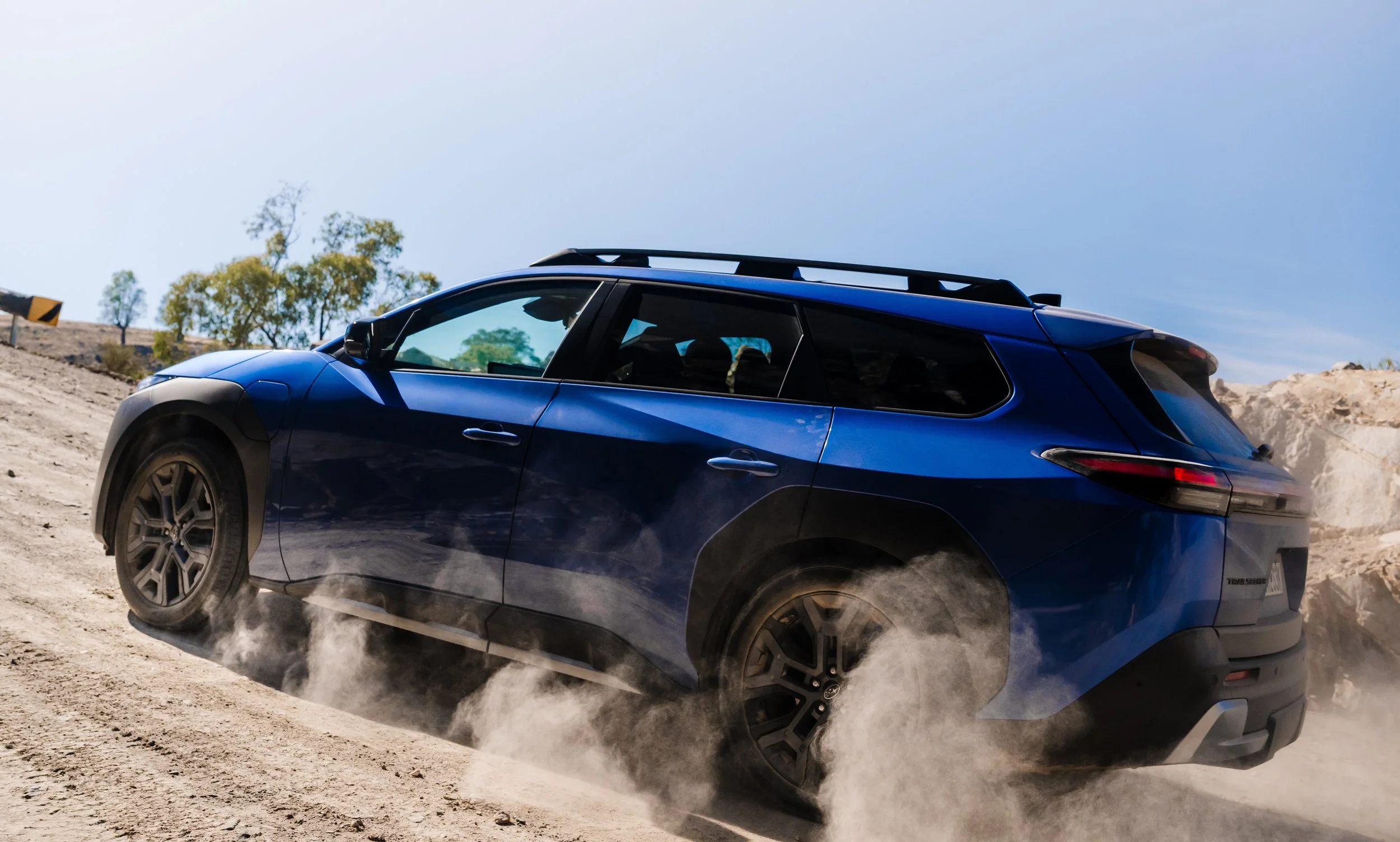
AN electric equivalent of Subaru’s sales staple, the Outback, here now possibly being joined by another battery-reliant wagon in as little as three years from now is not being discounted.
Subaru Japan previewing its first EV platform developed independently from Toyota is a big development that raises questions.
The prototype it revealed recently has been explained as an insight of a new family of performance-oriented EVs as Fuji seeks to reduce its reliance on Toyota and dramatically accelerate vehicle development.
The mystery car was expected by Subaru New Zealand, but timing of the announcement did surprise, MotoringNZ.com learned today.
The local arm agrees Japan head office’s confirmation its prototype is based on the platform used by the latest petrol Outback could fuel speculation about what manner of vehicle might be seen in 2029, if not sooner.
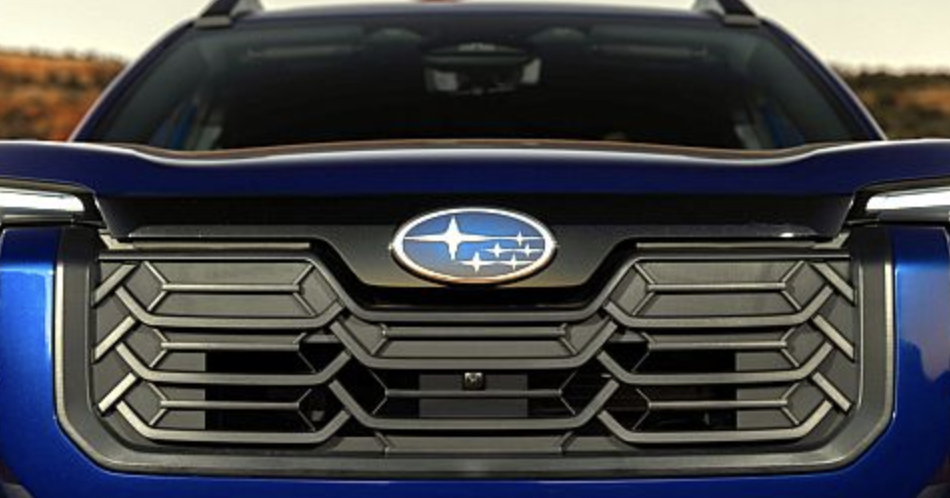
There’s suggestion it might yet be a of the same flavour as the Trailseeker (above) it has just launched here - a car being referred to as an e-Outback in North America, Subaru’s most vital market - but perhaps to slightly larger scale.
Toyota and Subaru worked together on Trailseeker, just as they did with Subaru NZ’s first electric, the platform-sharing Solterra that came along two years ago but was hard to sell then.
Subaru NZ’s electric push is expected to strengthen within months, with the Auckland-based outfit confirming likelihood of it adding a refreshed Solterra and the Uncharted.
The last is a smaller coupe-roofed compact crossover that’s a revision of the Toyota CH-R Plus. Subaru NZ has two Uncharteds here for evaluation. It has sought dealer input into pricing and welcomes public comment as well.
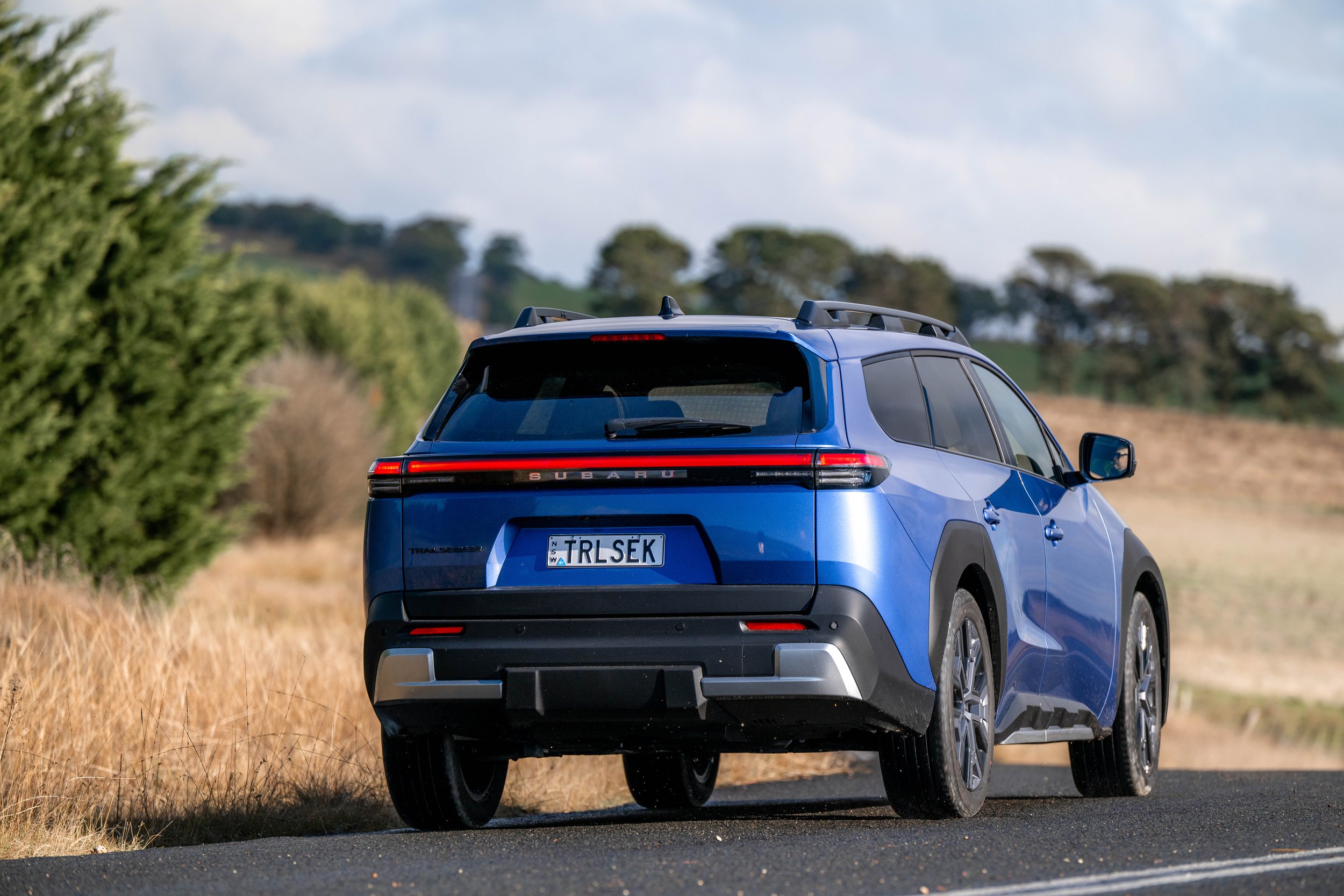
Ultimately, though, the brand wants to break ties with Toyota and have its own, wholly in-house-developed electric car.
That’s the design study it showed off 10 days ago.
“I think that's the future,” says Subaru New Zealand general manager Paul Mallard.
“We always knew there was going to be a next car after this car (the Trailseeker).”
It’s still only presumption the home-grown product will reveal as a big station wagon with off-seal cred, though with that kind of car being a brand 101, the likelihood seems reasonable.
However, whatever happens, Trailseeker should not be seen as a stop-gap nor an intermediate choice, Mallard says.
“I don't necessarily see it as stepping stone. I think it stands on its own two feet.”
Mallard said marketing Trailseeker as the e-Outback locally was mulled, but never taken seriously.
Nonetheless, it seems existing Outback owners are among early birds for Trailseeker, which he agrees is virtually Outback-sized and in fact has a larger luggage capacity.
“We are seeing some of our traditional Outback owners who have been very loyal to Subaru who have been waiting to go into EV and they're jumping into Trailseeker.”
Could it be that others from that fanbase will wait an additional two to three years for the in-house car? Perhaps, he says.
But, he adds, the Subaru-pure car “… is quite a long way away from today.
“I suspect based on what a lot of our Outback owners own, if they're moving into EV now, they'll go Trailseeker and then that'll be the next car.”
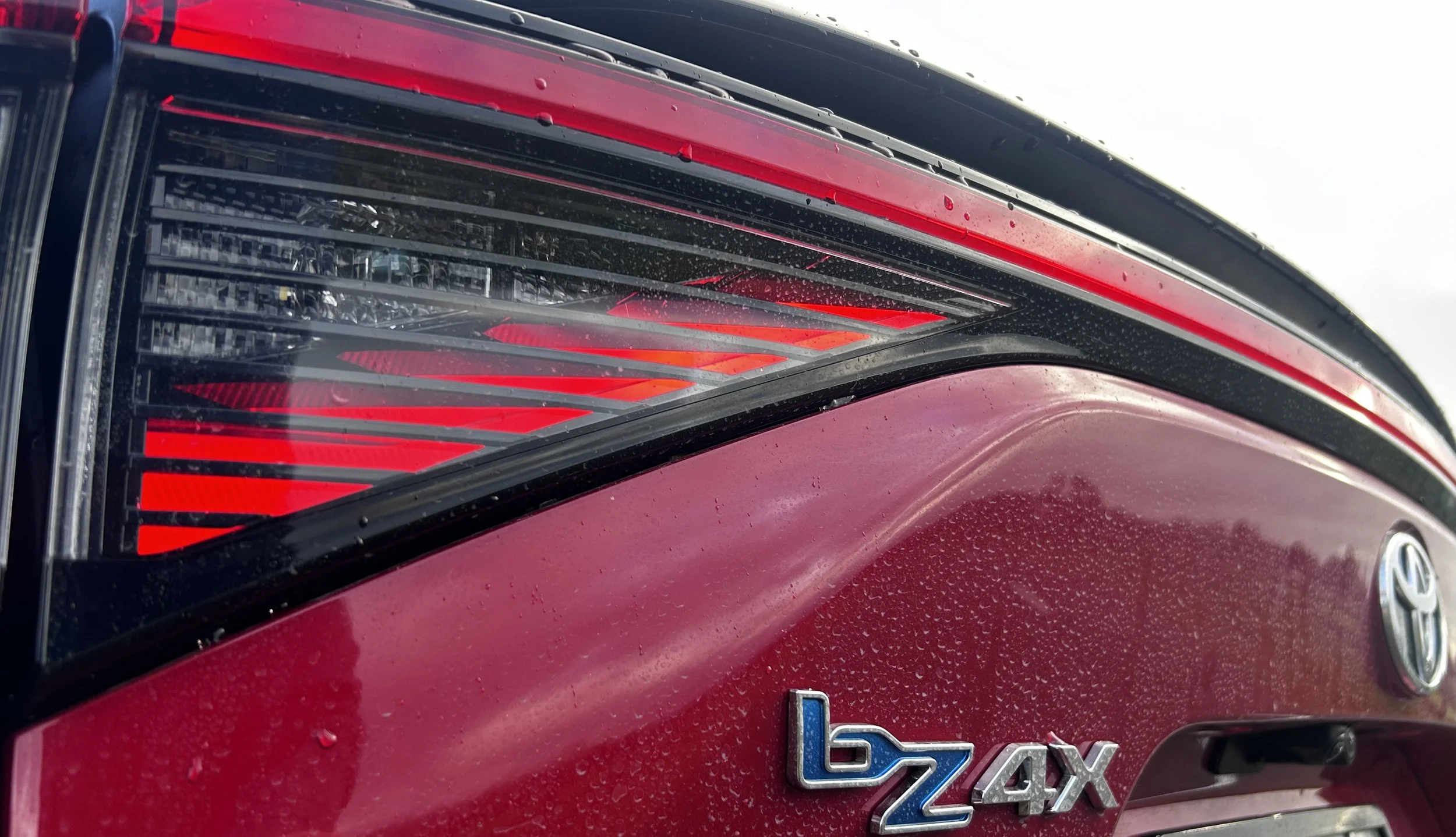
Aside from some styling changes and one potentially important specification difference - the availability of a spare wheel - the Trailseeker is a doppelgänger for the well-established bZ4X Touring, with the same performance attributes.
It avails in two formats, pricing either side of the Toyota twin, and while stock count is low - with fewer than 100 units set to land before end of this year - so far the order bank is favouring the top spec, which sells for $72,490 (against $71,990 for the Toyota).
The entry Trailseeker, simply labelled the AWD, is $3500 cheaper and runs an identical drivetrain, but loses some comforts and divests the top model’s 20-inch rims for 18s, a change that boosts the WLTP range from 488 kilometres to 533km.
Subaru NZ sees Trailseeker as being of great importance but cannot say yet what change it will make to the overall market share. But it’s so far been an especially quiet year, with year to date market share of 1.9 percent, coming from 1573 registrations.
Normally it would expect to accrue up to 3000 registrations a year, but at the moment a brand boss who has only been in the job for a couple of months will not guarantee even a 2000 unit annual count.
Subaru Japan has committed to keeping building conventional combustion cars using the famous flat four engines, but has also said it sees need to move beyond the hybrid drivetrain it only offers here on Forester in NZ and into full electric.
The car unveiled to journalists at the company’s Japanese proving ground is a powerful statement.
It features a dual-motor all-wheel drive powertrain producing 380kW (150kW front, 230kW rear), a newly developed battery system, and electronic architecture designed to accommodate artificial intelligence and over-the-air software updates.
Subaru cites it delivering sufficient performance to accelerate from 0-100kmh in less than four seconds, making it a match for Trailseeker, which with a cited 0-100kmh time of 4.3s stands as the quickest of Subaru’s current cars.
The concept’s electric motors have been developed in collaboration with Toyota Group supplier Aisin Corporation and are claimed to be smaller, lighter and approximately 30 percent more efficient than the industry average.
The battery system has been jointly developed with Panasonic Energy and incorporates approximately 4000 cylindrical cells. Battery capacity, driving range, and charging performance have not been disclosed.
Subaru says some of the technologies will enter production by 2029, although specific models and launch dates remain unconfirmed.
Subaru’s decision to pursue greater engineering independence is intended to preserve its distinctive all-wheel drive chassis configuration, performance, and safety characteristics while reducing vehicle development times by approximately 40 percent.
The dedicated EV platform also incorporates structural revisions designed to improve occupant protection and shield the underfloor battery during a collision.
Subaru is targeting an overall platform weight reduction of approximately 100kg compared with its existing architecture.
Beyond vehicle hardware, the manufacturer is placing considerable emphasis on simplifying electronic systems and accelerating development.
A new integrated electronic control unit will consolidate functions previously handled by separate modules, including powertrain operation, chassis control, infotainment, and advanced driver assistance systems (ADAS).
Developed around a customised semiconductor architecture created with US technology company Advanced Micro Devices, the system will support artificial intelligence and over-the-air software updates.
Subaru also intends to manufacture the control units internally and standardise their use across electric, hybrid, and conventional petrol-powered vehicles, reducing development complexity and component costs.
The architecture will underpin a new generation of the company’s EyeSight - a driver assistance technology Trailseeker lacks - incorporating artificial intelligence to improve the recognition and interpretation of surrounding traffic conditions.
Subaru is also working with semiconductor specialist Infineon Technologies on controller technology intended to reduce latency and improve coordination between vehicle safety and dynamic control systems.
In respect to its internal combustion engines, Subaru says it intends to deliver major efficiency improvements for future petrol and hybrid powertrains.
Its engineers are targeting thermal efficiency of 50 percent for next-generation combustion engines, a step up from today’s most efficient production hybrid engines.
As much as it wants to take its own path, Subaru’s longstanding partnership with Toyota is not over. Japan’s No.1 remains its largest shareholder and a major contributor to its existing electric and hybrid technologies.