Skoda Elroq Sportline road test review: Upsize down attracts
/This handy compact SUV sets a good pace, but absence of some Euro-market tech affects its smart standing.
Price: $79,000.
Powertrain: Single electric motor, rear drive; maximum power 201kW, maximum torque 350Nm; single speed automatic; lithium ion phosphate battery, 82kWh (77kWh net).
Dimensions: Length, 4488mm; width, 2148mm; height, 1654mm.
We like: Clever design elements; good ride and handling; comfortable and roomy cabin; right-sized for its category.
Not so much: Diluted tech provision; price point.
OUR favourite pizzeria serves up Italy’s famous pie in two choices of diameter; same slice count, but one circumference slightly greater than the other.
Often there’s a deal that allows purchase of the two smaller for a bit more than you pay for the largest. Obvious which way to go, right?
Well, yes, but … either way, you end up with more pizza than the two of us can manage in one sitting. Basically, it’s Friday night dinner and remains for Saturday lunch. We never feel short-changed.
Might it be the same with Skoda’s two electric cars here?
Enyaq has been around for two years now and it’s a massively tasty thing. Now there’s Elroq.
Same platform, a lot of shared technology, but in a slightly smaller serving.
A shame the pizza analogy doesn’t apply in respect to price, but let’s get realistic. Not even China’s most outrageous discounters could get a two-for-almost the price-of-one deal going here.
The more pertinent point perhaps is that both are tasty. The Elroq because of its positioning set to be more so. The pricing plan has the new model in its most fulsome spec topping out $10,000 below the entry version of the larger choice we’ve known since start of 2023. It’s one very patent reason why Skoda NZ sees it achieving seven sales for every three to Enyaq.
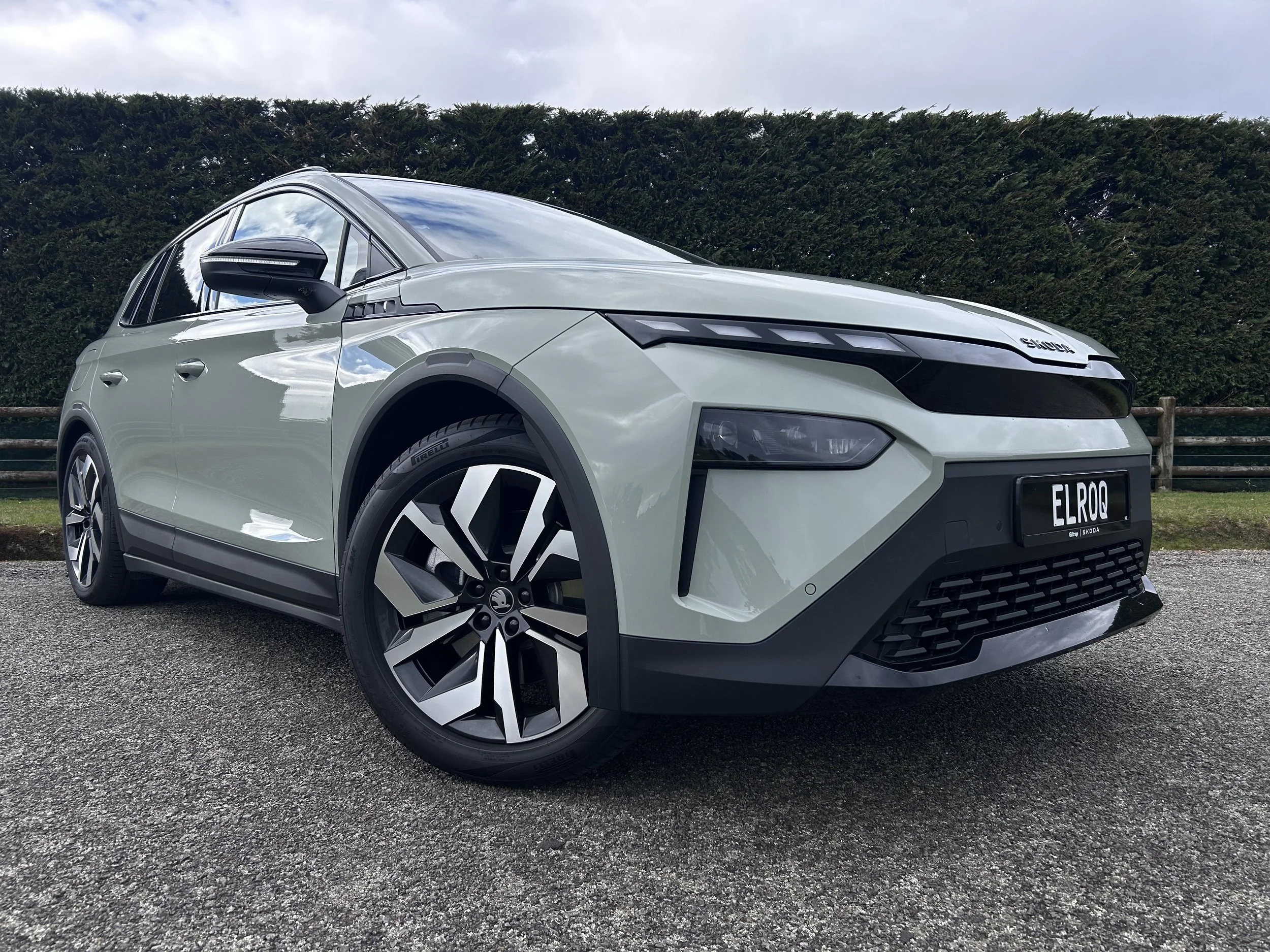
What’s to like about the whole size thing is that it quirkily seems to work both ways. Skoda calls Elroq a compact SUV and when side by side it’s clearly a bit shorter. Tighter front and rear overhangs also give it a more upright, monolithic stance. Yet from that walk up and walk around, chances are you’ll suddenly realise just how big it is, nonetheless. That’s no trick of the eye.
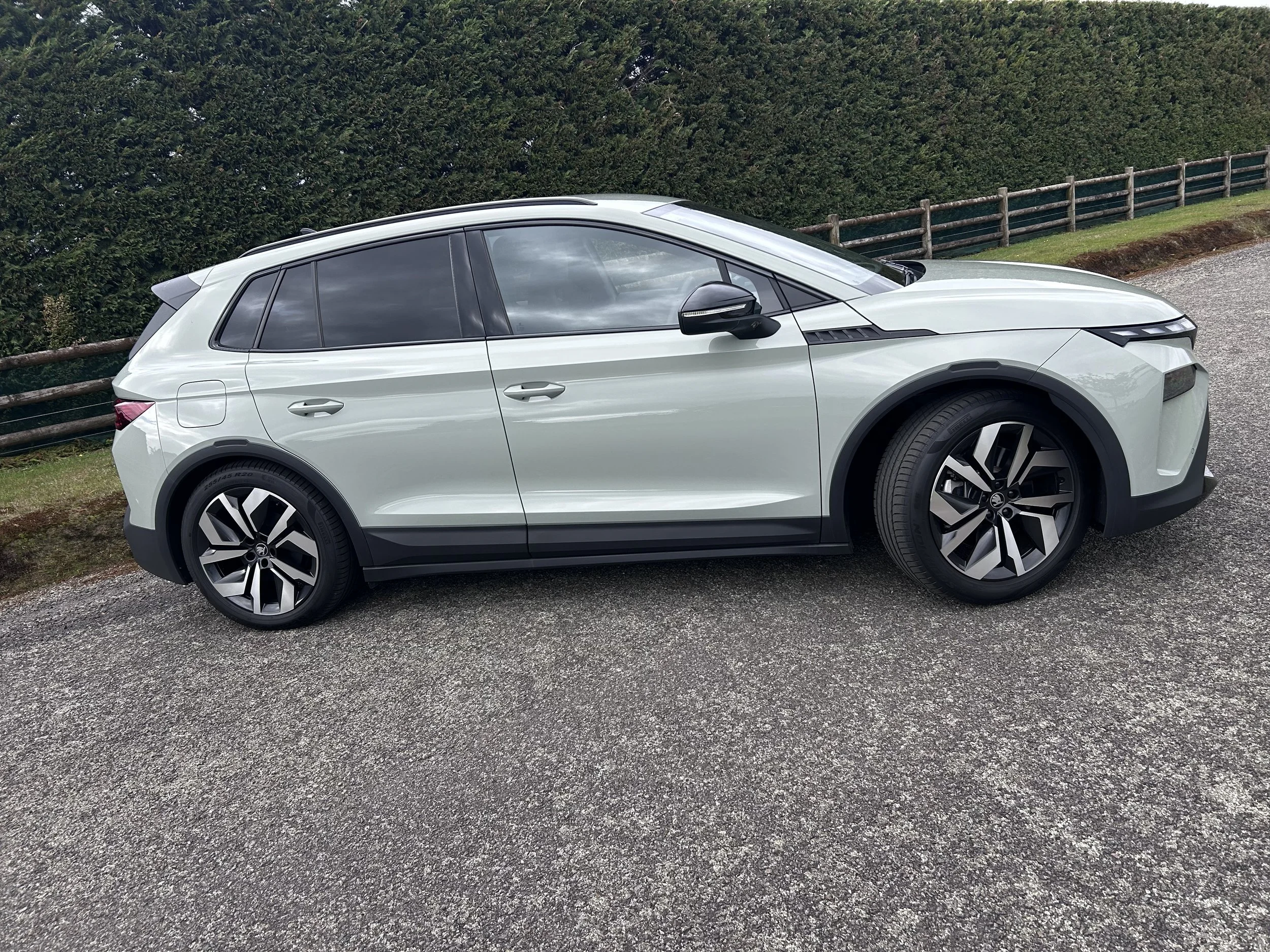
The wheelbase – the distance between the front and rear wheels – is identical. Because of that, passenger room is very similar across both cars. Yes, Elroq is a bit cosier, but it’s millimetric. It’s the bit behind that back seat that is most altered. Elroq gets a smaller boot. The 470 litres mimimum is 115 litres short of Enyaq’s. But they even out a lot more when seats are folded.
This sort of thing is not new for Skoda. In the internal combustion side, the Kodiaq and Karoq are in the same situation. The Karoq, in fact, is about the same size as Elroq, but that’s no happenstance.
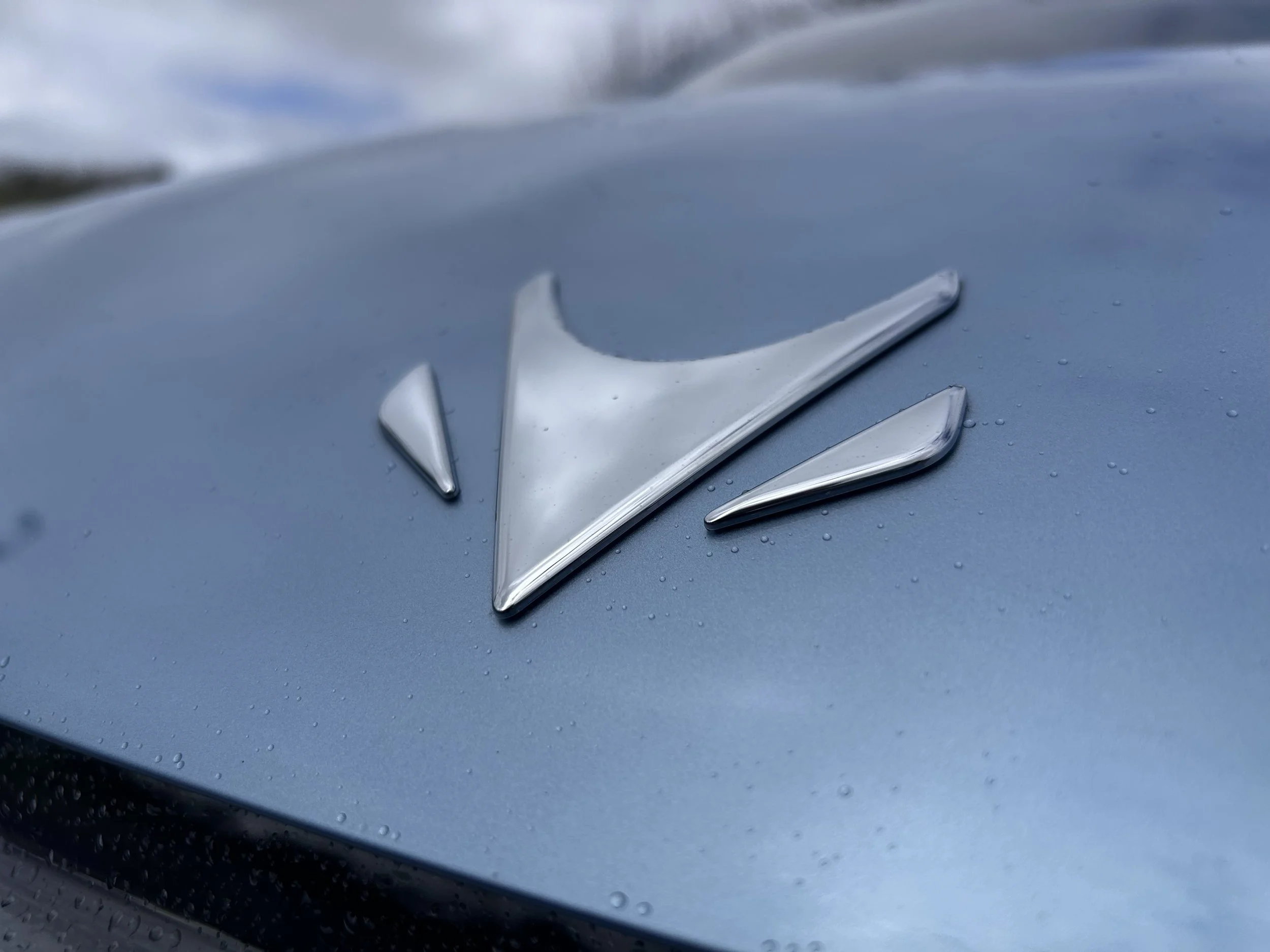
The electric car’s name is a big clue to why: ‘El’ is for ‘electric’ and ‘roq’ is from ‘Karoq’ (whose name, incidentally, is a portmanteau derived from the language of the Alutiiq, an indigenous Alaskan tribe. It blends the words ‘kaa’raq’ (meaning ‘car’) and ‘ruq’ (meaning ‘arrow’). The Skoda badge design includes an arrow. (Agreed, I should stop there, because it’s all getting a bit too nerdy). Anyway, in Skoda’s eyes, the ICE age Karoq and electric Elroq are peas in a pod. Just that one is wholly battery-wed.
Anyway, I’m a Skoda owner - of a Superb wagon - so obviously that feeds my positivity about the brand. And having previously owned a Karoq likely feeds my enthusiasm for Elroq.
But I had friends with no affinity to the brand or its cars to check out Elroq, and they got good vibes, too.
Skoda doesn’t seek, as many others do to overwhelm with fancy specification; here the equipment provision is solidly measured, but it doesn’t go especially overboard.
Absenting ability to entertain over-the-air updates independent of the service provider might seem a pain to some who prefer to upload tech upgrades directly (it’s a VW Group data protection thing the parent is working to resolve). Also on the ‘set for improvement’ list is that both EV models for now lack facility to enable bidirectional charging and cannot access the MySkoda app or its many functions. Beyond all the usual tricks such as locking and unlocking the car, setting charging times, controlling the interior heating and cooling, it can be made an automated payment portal for public charging.
Dynamic Chassis Control suspension, that electrically adjusts damper settings, is popular with top end ICE Skodas. But it isn’t featuring on NZ spec electrics.
Where it attempts to balance out is with a good, Euro-centric driving feel - which it accomplishes - and by delivering a package of patent practicality. With the Elroq being among EVs that lack a ‘frunk’ in the nose, you might think it gets off on the back foot in this regard. But in fact it honestly ticks that box, through some extremely nifty stowage ideas in the cabin and the boot.
A mate who owns an EV from a popular emergent brand was delighted by some of the small design ideas he saw in the Enyaq and perplexed why they are not adopted by others.
Charger cable stowage is a bugbear; once out of the packaging, so often you can never get them back into the spots they come out of. It’s messy in his own car, but never stands to be in the Elroq.
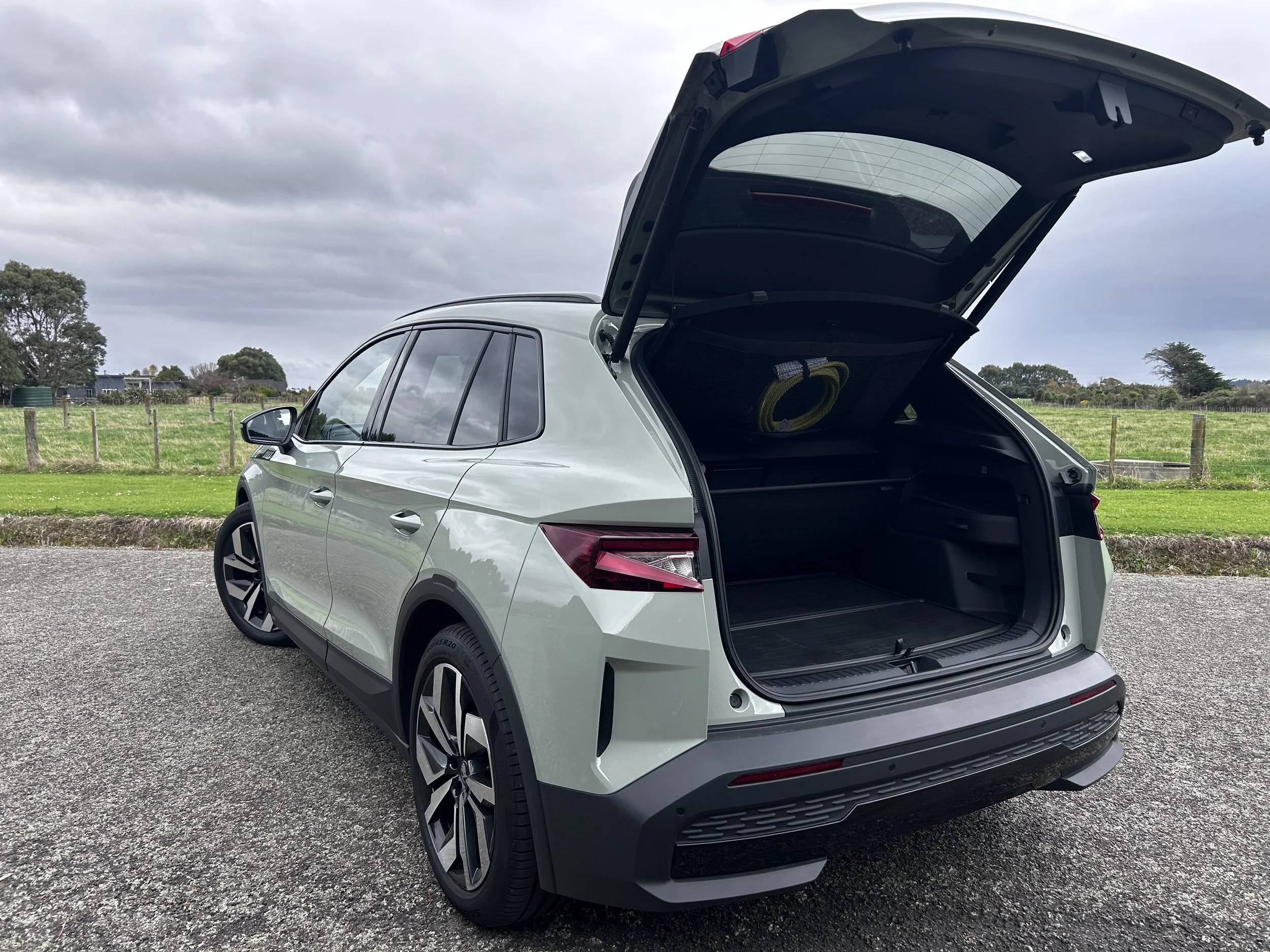
His delight from seeing how the Skoda provisions a netted stowage underneath the parcel shelf in the boot into which the Type 2 charging connector will snugly tuck into was massive. Such a neat, cost-effective and eminently tidy solution. And there are so many more examples of Skoda cleverness.
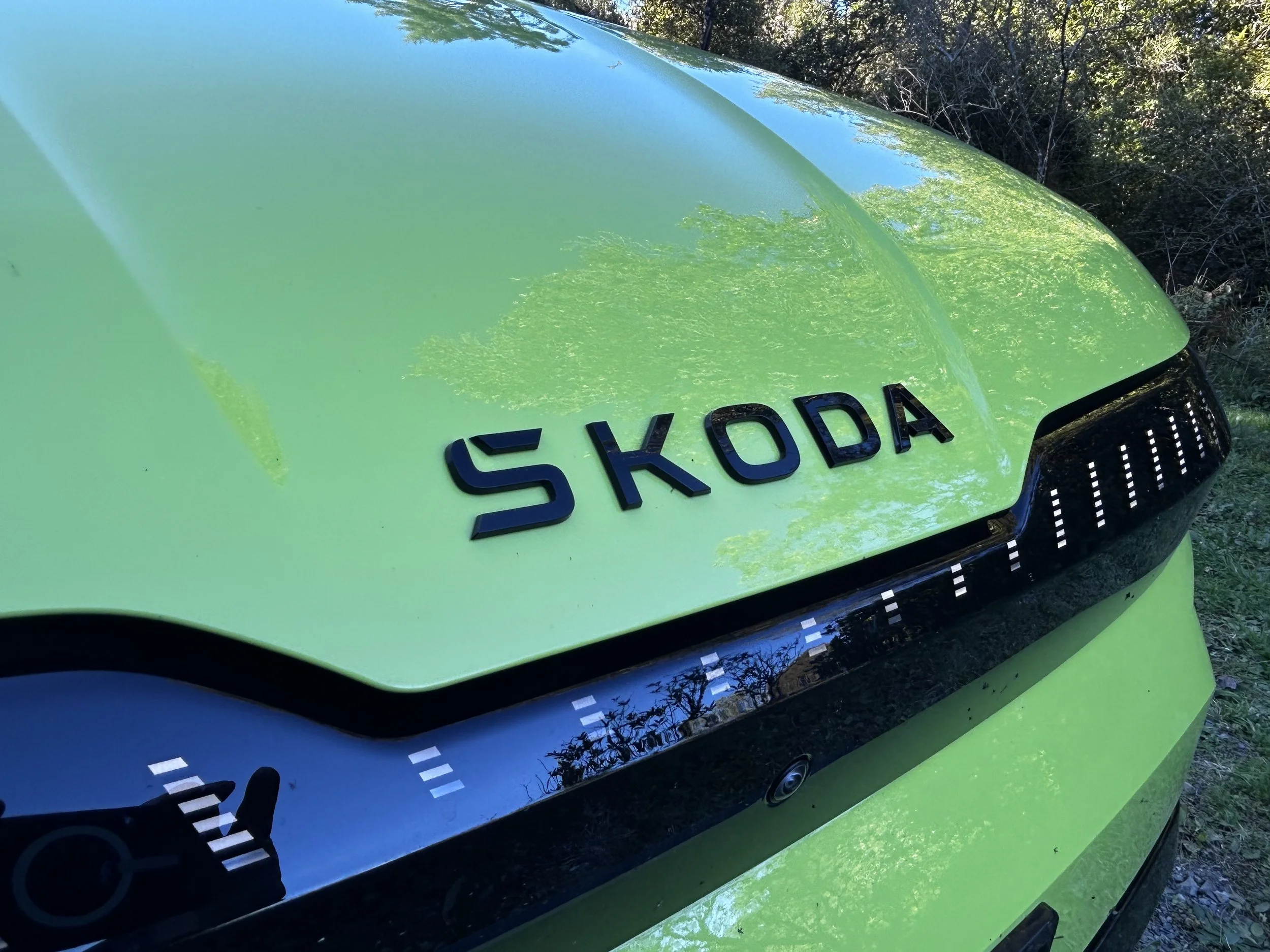
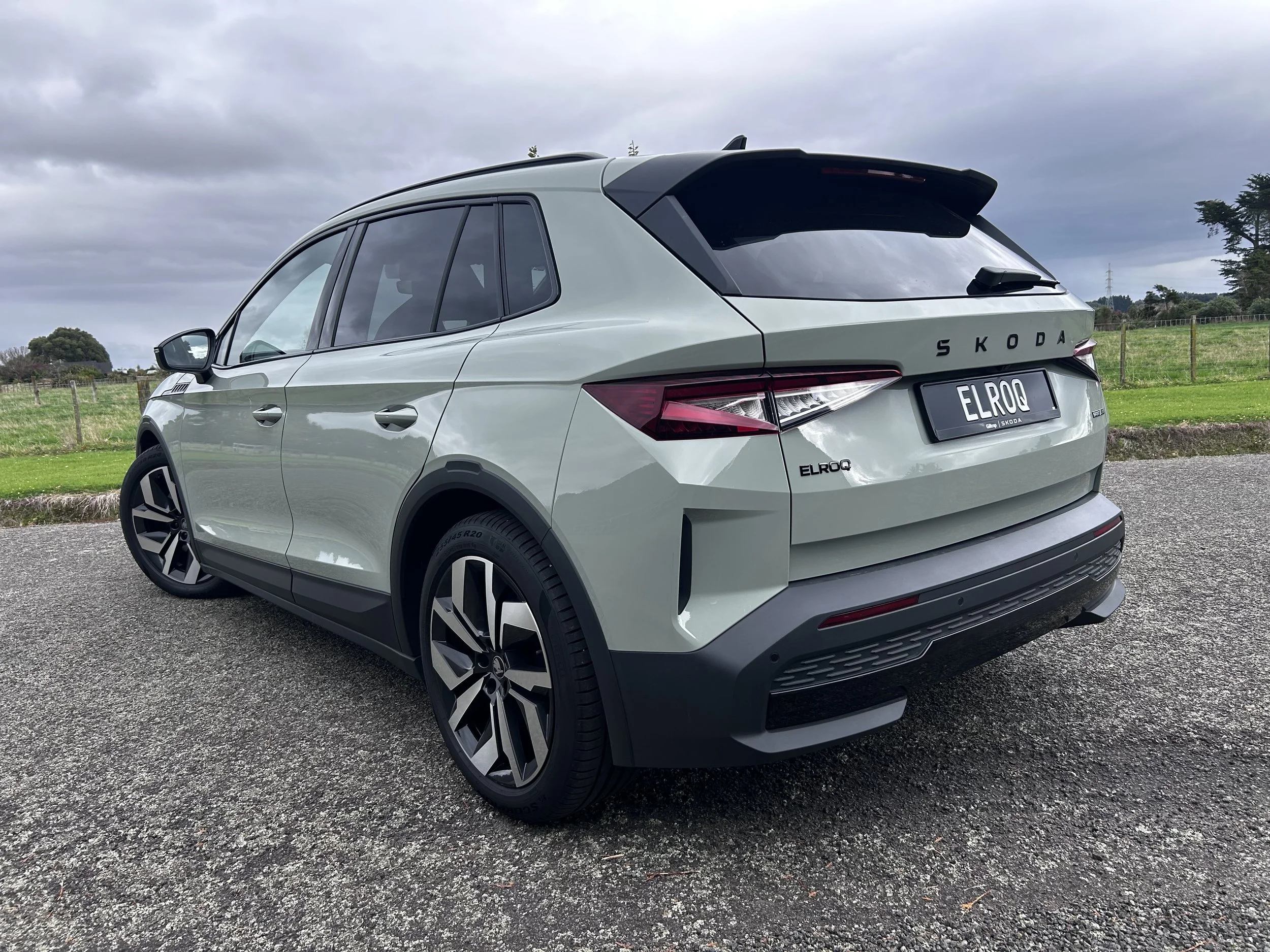
What will also attract attention is the make’s latest ‘Modern Solid’ design language, coming to all new Skodas, but looking particularly good on the baby.
While it isn’t the most outrageous looking car in the medium-sized chunky-SUV ledger, the new ‘Tech-Deck Face’ - a flat, wide structure that sees the previous look of a pseudo radiator grille and separate headlights replaced with a full-width illuminated light band up top, accompanied by secondary lamp units beneath - works well. The general look of the car is crisp and clean.
Elroq has dual motor in its future, but starts here in single motor, rear-drive, with two battery sizes - Sportline taking the larger, of 82kWh capacity - but same power and torque either way, but big difference in range. The Elroq Sportline sets out to deliver the same WLTP-sorted 530km range as the Enyaq Sportline that costs $10k more. That return wasn’t achieved on test, but there was also no evidence to suspect Skoda is massively cooking the books. It’s very much among those EVs that can be expected to deliver comfortably above 400kms’ range in normal driving conditions, with four adults aboard.
Where it stands out is with the comfort that comes with the driving experience. Again, Skoda isn’t setting out to do anything overt; they simply want the car to deliver a sensible, solid experience.
The first impression on heading off is smoothness and very little noise; beyond that, it’s the ride quality. It’s not a hard-riding car, but seems to deliver better compliance over everyday driving surfaces than Enyaq, which rides on the same platform and has the same wheelbase. I’m guessing it all comes back to wheel and tyre size. Elroq provisions on smaller rims than its big brother. Low-slung weight also tends to keep EVs stable, and in respect to that Elroq isn’t much lighter than its sibling.
The Sportline accreditation is not a signal of it having any particularly strong performance tendency. For a start, it doesn’t seem to whoosh forward in the dramatic fashion that some people seem to love in EVs. I actually like that. There’s enough oomph for easy overtaking, and is more than swift enough for anyone's daily-driving needs.
To get the maximum drivetrain outputs you seem to need to be in Sport mode, but once there you shouldn’t feel emboldened to dare Porsche drivers into a showdown.
It drops both peak power and torque a little when you step it into Normal mode, the default, and dips even further for the battery-saving Eco setting, though that one didn’t seem to make any discernible difference to the battery range.
There’s a ‘B’ driving mode which ramps up the regenerative braking effect, but it’s never quite strong enough for true one-pedal driving. Leaving the car in D and switching on the automatic brake energy recuperation setting seems more fruitful.
Its handling is quite enjoyable, but far from flairful. There’s an Enyaq ES to fill that role. The Elroq’s strength is that it's a highly refined, comfortable and supple vehicle to travel in.
The steering is well-weighted and it has an engaging handling quality, but it’s more about the ride and the refinement. It’s pleasant in an accomplished and amenable fashion. Ability to smother out the worst imperfections in the road surface whether it's driving around a city, operating at higher pace out of town, is a highlight.
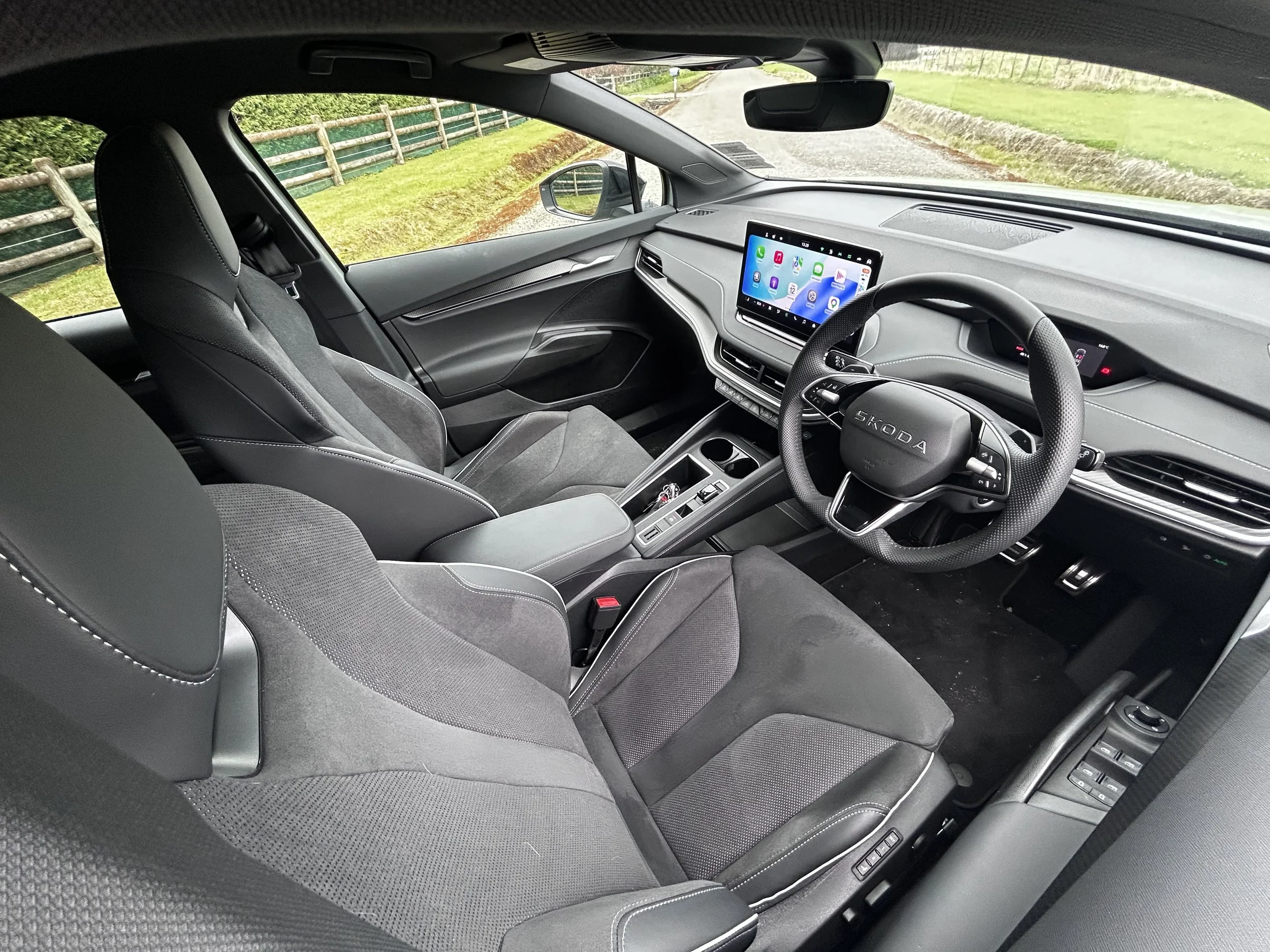
The cabin colours are a bit sombre and there’s nothing flamboyant about how it all lays out, but in operability and comfort-wise it is welcoming. The high use of recycled materials do not diminish the tactility; all but a few of the plastic surfaces are of high grade.
Space and comfort levels up front are excellent. There’s a large storage area under the centre console, and a deep storage bin under the front seat armrest as well. There are two relatively small cup holders, and ahead of those an angled storage space which is home to two wireless phone chargers. The door bins could be a touch wider, perhaps, but they’re reasonably spacious. Visibility is good, thanks to relatively slim windscreen pillars, and there’s a general sense of airiness.
That only the driver benefits from a seat with full electric adjust is a bit sad for anyone sitting alongside; they have manual controls to achieve the same outcomes, but the handles are tricky to reach.
The cabin has plenty of headroom front and back and, even with a tall driver, there’s no need to radically re-set the front chair to allow anyone seated directly behind some decent lower legroom. Being electric means the floor is, of course, flat.
Rear seat comfort is decent; the seat back is more raked than in some competitors, allowing you to lean back more.
Given it’s likely role in life as a family hauler, the Elroq usefully comes with three ISOFIX locations. Two are in the outer two rear seats, and the third is in the front passenger seat, which of course includes an airbag cutoff switch.
Five-seater opportunity effects most convincingly solidly with smaller bodies across the back seat. If adults are sliding in there, whoever gets the centre-rear seat has to put up with a narrow and perched up positioning. It’ll be tolerable for short journeys. The windows in the back are square and wide, and the belt-line isn’t too high so kids should be able to see out.
Bringing the Elroq permanently into my life would require some understanding from my dogs. It’s the boot. When taking our beagles to their favourite walking spots, we load them into a cage that is of course easily swallowed by not only the Superb, aka ‘the world’s most commodious station wagon’, but also slips into the Enyaq. But it’s too big for the Elroq. Vertical height and width are fine. The challenge is there’s not enough room between the tailgate and the rear seats.
Dropping those down frees up the space from 470 litres to 1580, but doesn’t resolve the issue’ the cage would then fit, but at an angle, as one side sits atop the the rear seat back which doesn’t quite go fully flat. Plus, there’s nowhere to stash the parcel shelf.
For all other usages, though, the space is surely good enough. Within the boot itself, there’s a flat load floor, and handy storage trays at either side, along with flip-down bag hooks. Sportline has a storage pack, which includes a handy adjustable hammock for items you might prefer weren’t squashed (in our case, loaves of fresh bread). BTW, the previously mentioned net strung underneath the parcel shelf has a 6kg load limit, hence why it’ll take that cable and more. The parcel shelf itself is adjustable to two levels, allowing you to divide up the boot as you see fit.
Elroq comes with seven airbags as standard - for the driver and front passenger, head airbags, front side airbags and a central airbag between the front seats. There’s plenty of electronic safety kit too.
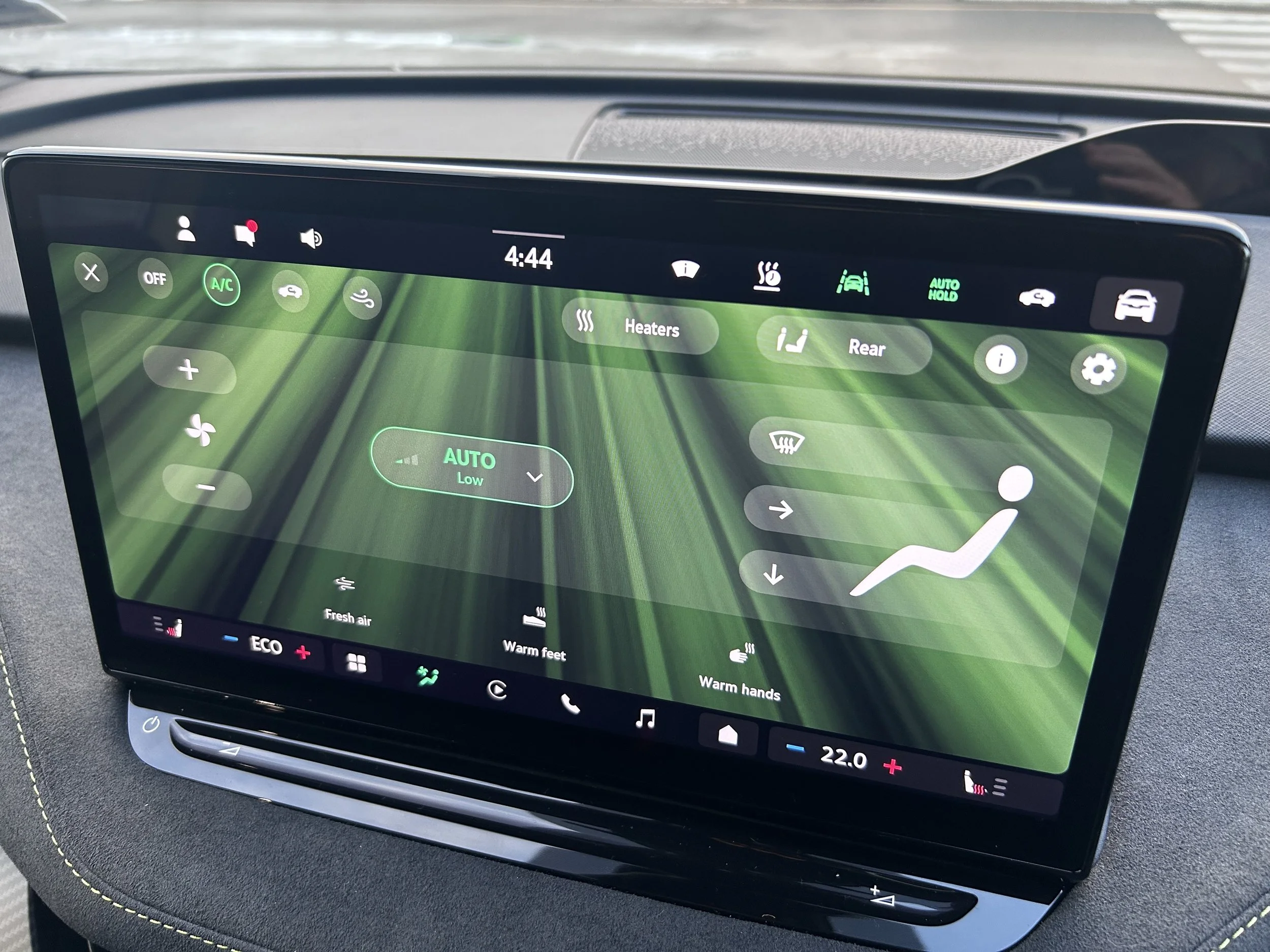
Elroq has plenty to relay through its 13-inch central touchscreen, so fortunately the layout is fairly easy to use and mostly easy to find your way around. Having on-screen climate controls has become something of an issue these days, but at least here the controls are always present at the bottom of the display. There are also customisable shortcut bars at the top and bottom of the screen, allowing you to set up your most commonly-used items for quicker access.
The driver’s main instruments are the same as those found in the Enyaq, and so provision on a modest but clear, seven-inch screen under a small hood behind the steering wheel.
Sat nav is reliant on whatever mapping is on your phone. Again, that’s simply a result of the connectivity issues VW Group has to sort on this side of the world. They would do well to make this a priority because, in NZ market guise, the car isn’t anything like as smart as it is in Europe.
Over there, for instance, it can draw on ‘swarm’ data from other cars via its connected services setup, which can provide live warnings of any potential dangers on the road ahead. That information is sent directly to the standard adaptive cruise control system, automatically slowing the car as it approaches any point of possible trouble. That could be handy here.
What would be useful, at the very least, would be access to Skoda’s app to allow for a host of remote functions; pre-warming or cooling the cabin before driving, remote lock and unlock and so on. They’re all becoming prevalent on other products now, and would be useful here. The concept of using in-built sat nav to search out and prep for a public charger, and then also facilitate a pre-pay transaction, is an EV norm for Elroq, but here few brands can manage it; VW Group needs to sort this side of things.
Uplift of those finishing touches in NZ trim would be useful to Elroq given that, while delivering price advantage over Enyaq, it’s nonetheless still a dearer product than rival fare from South Korea, Japan and China.
That’s not to say it is inferior; in driving feel and in design, and for fit and finish, this is one Europe’s better mainstream choices. Assuming you still consider Skoda to be in that category. These days the Czech outfit seems to consider itself more of a quasi-premium brand. The pricing here backs that up. But does public perception?
Electric is back in the spotlight right now, which is no bad thing. Also, when the default decision when choosing a family car these days is to plump for a crossover or SUVs, Elroq is looking pretty handy. There’s no pineapple on this pizza.
Still, there are umpteen choices in this format so we’re not short of choice. Regardless how well the Elroq appeals for what it already does, provisioning it here will all it configures with in Europe would add to the flavour, given the price.