
Audi’s supersized SUV here in early 2027
/Ingolstadt has built a bigger boat - the new Q9 brings a new scale to family hauling.
ONCE the Audi Q7 seemed more than big enough for Kiwis drawn to substantial premium sports utilities, but no longer.
Ingolstadt has now unveiled an upsize of this familiar luxury SUV concept, a new flagship called the Q9.
Audi NZ has been quick to announce intent to import it. It’ll be here early next year with pricing and local market specifications set to share in October.
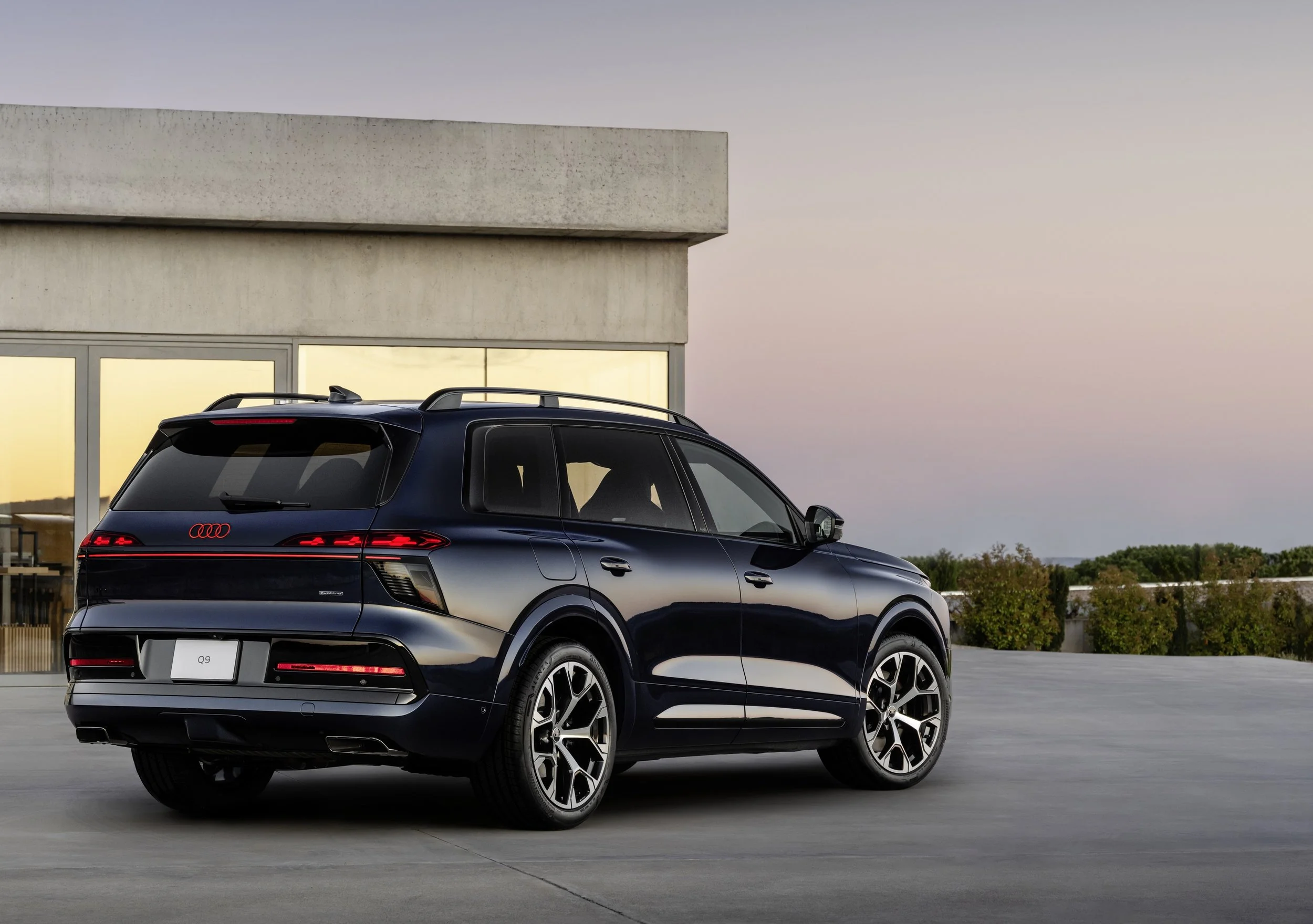
Aimed at other luxury SUVs such as the Mercedes-Benz GLS and BMW X7, the Q9 keeps the same overall styling ethos as the Q7 but simply goes bigger.
At 5.31 metres in length, 2.21-metre width, a wheelbase of 3.14 metres that’s the longest ever to feature on an Audi, it’s no wonder wheel sizes start at 20 inches and top at 23 inches in diameter.
All in all, this new model has a lot of … ahem … presence.
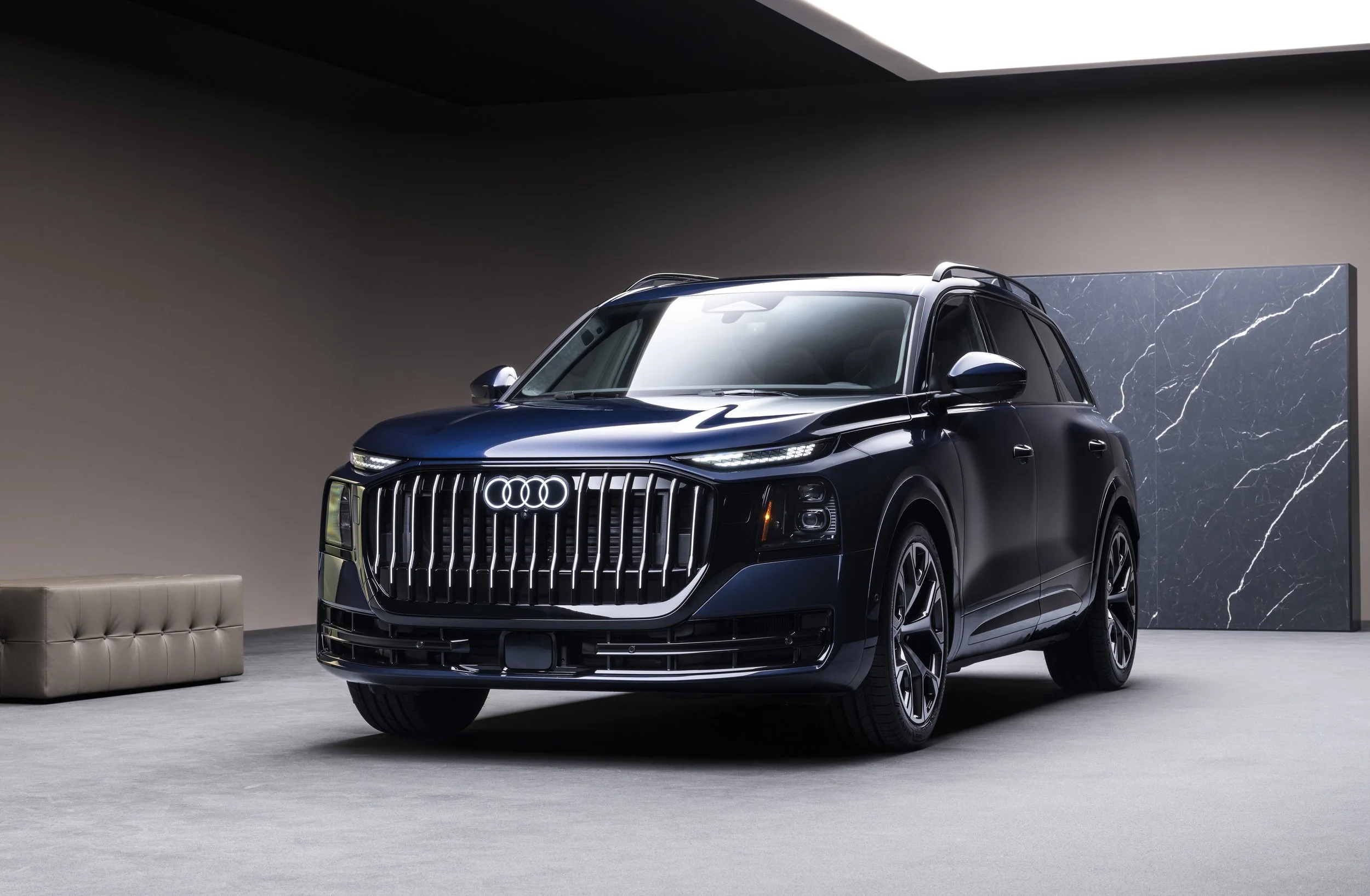
Intending buyers will doubtless be keeping an eye on fossil fuel price movements, as there’s not a lot of electrification involved. Talk for now is of a plug-in hybrid for some markets, otherwise everything has total reliance on the Strait of Hormuz being open.
From launch, it will be offered with a turbocharged 3.0-litre V6 diesel, producing 223kW and driving all four wheels via an eight-speed automatic transmission with permanent quattro four-wheel drive.
Audi intends to expand the range with a 189kW version of the same engine.
Also coming is a 4.0-litre petrol V8, making 440kW. The latter is strictly reserved for the SQ9 performance variant, which also has a more performance-themed suspension setup and bulging wheel arches, along with all the other usual signatures.
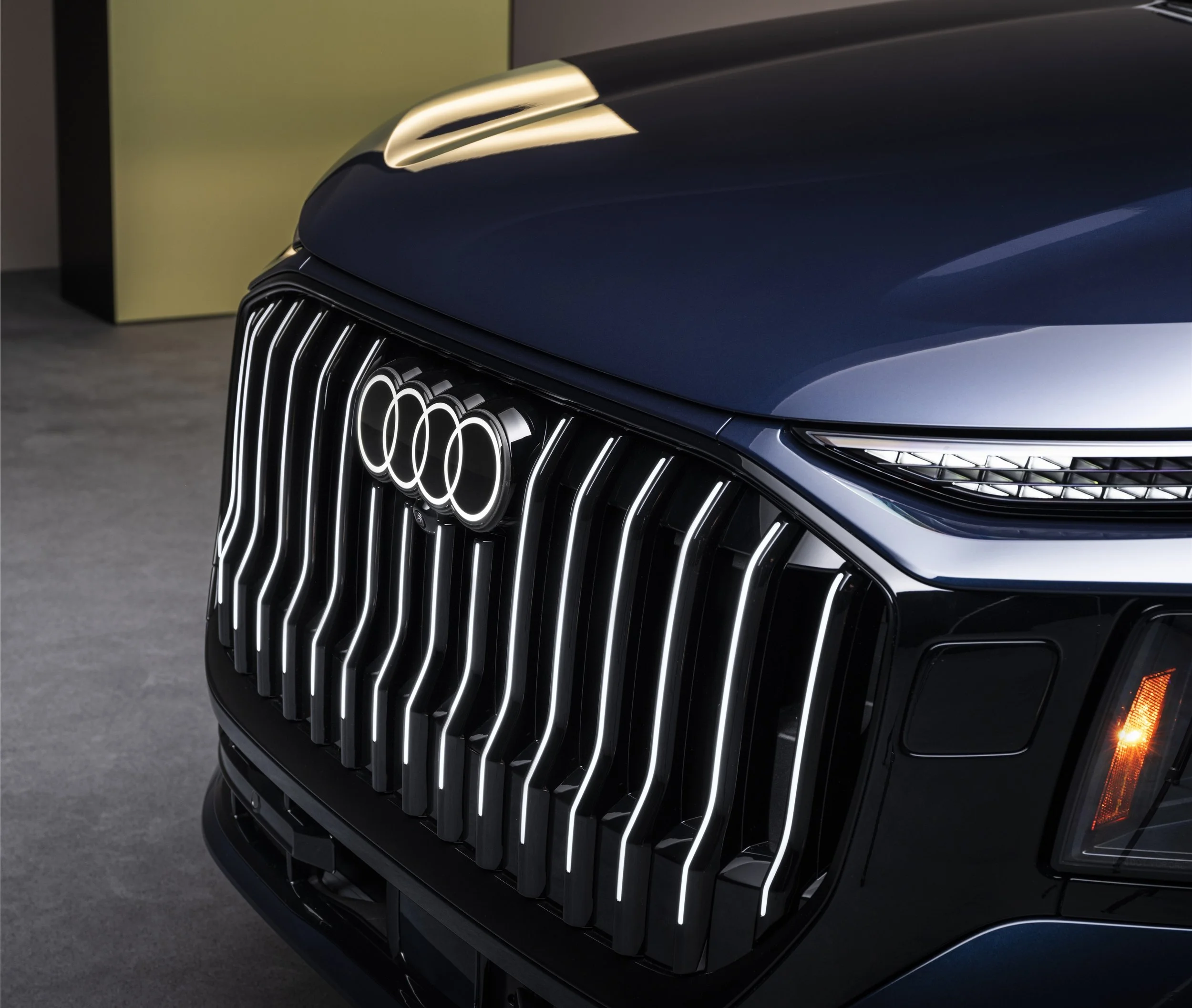
As much as the silhouette suggests ‘Q7 plus 20 percent’ from the photocopier, styling-wide it does in fact differentiate. For instance, it brings heat another different take on the company's signature 'Singleframe' grille, which is enclosed in a gloss black surround that also takes in the main headlight units.
Vertical strakes can be illuminated to give it a very distinctive appearance, while the lower bumper has a more upright appearance than Q7’s.
Sitting above these are the daytime running lights, made up of a collection of pixel-like LEDs which can display a selection of pre-programmed signatures.
Optional Digital Matrix LED headlights comprise 25,600 micro-LEDs in each unit, each measuring a mere 40 microns across - or half the thickness of a human hair.
Combined, these can create one of the most dynamic and versatile curtains of illumination available on a vehicle to dynamically shade other vehicles on the move. The system can also detect pedestrians at night and specifically highlight them with light to ensure the driver sees them.
Around the rear, Audi once again sets new standards for vehicle lighting with the fitment of curved OLED panels. With a total of 512 segments in six panels, the back lights follow the curve of the Q9's bodywork and give it a highly technical and modern appearance.
Aside from aesthetics, Audi is also implementing light as a safety feature with the introduction of 'Advanced Turn Signals'. Available in conjunction with the Digital Matrix LED headlights, this system projects arrows onto the road surface around the side of the vehicle when the driver indicates to give a clearer signal that it is turning.
It also works when changing lanes on the motorway, and Audi anticipates that it will help to reduce the number of accidents.
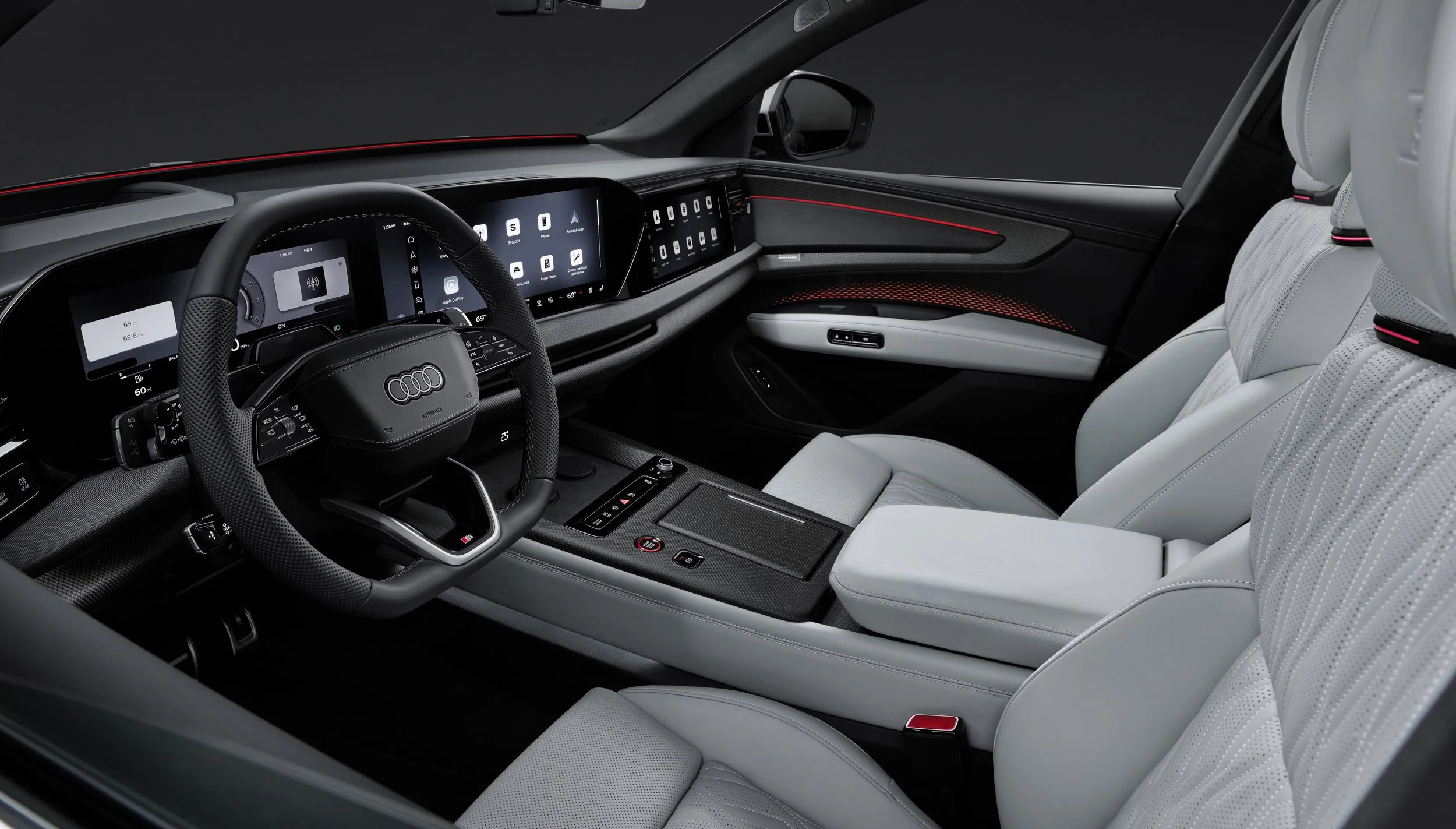
The dashboard layout of the Audi Q7 follows the look of the smaller Q7, with the 'MMI Panoramic Display' curving around in front of the driver.
This panel combines a 12.3-inch digital instrument display with a 14.5-inch touchscreen for the native infotainment system.
A third touchscreen, also measuring 12.3 inches, is in front of the passenger, and it enables them to use the infotainment system independently. When there isn't a passenger in the front, the screen displays a simple placeholder.
There are wireless charging pads on the centre console and USB-C ports, while cupholder sizes have been increased to accommodate larger drinks bottle.
Audi has added a new function of automatic doors which are electrically operated and can be controlled either via a smartphone app or through the key.
Alternatively, just pulling on the door handle will initiate the function and each door gently glides open while an array of sensors checks to ensure it won't collide with anything or anyone. Any or all the doors can be controlled via the infotainment system too, so the driver can easily open or close a rear door if needed.
As standard, the Q9 comes with seven seats, with the middle row getting a three-seat bench layout. This can tilt and slide to allow easier access to the rearmost row. All seats in the Q9 are controlled electronically as standard to make it easier to configure.
All seats bar the driver's are also equipped with ISOFIX mounting points, and due to how the second-row seats slide forward, there is no need to remove child seats when providing access to the third row.
Optionally, buyers can specify a six-seat layout that uses two captain's chairs in the second row, which offer yet more comfort and provide a walk-through in the middle of the cabin to get to the third row.
The Q9 has 280 litres of boot space when all seats are in use. Fold down the third-row seats, and that increases to 700 and 850 litres depending on the position and type of the seats in row two.
Every version has adaptive air suspension, designed to work with continuously variable damping and enabling an adjustable ride height. It's claimed to provide the best response to the driving conditions at any given moment.
Drivers can also manually adjust the Q9's height via the Drive Select function through a total of 90 millimetres and, for added convenience, it is possible to lower the Q9 by 62mm to ease ingress and egress.
Optional for the adaptive air suspension is 'sport' function, which is designed to provide a more agile and dynamic driving experience.
Its rear-wheel steering can add to the Q9's agility by turning the rear wheels by up to five degrees at low speeds in the opposite direction to the front axle to decrease the turning circle. The opposite happens at higher speeds as they turn in phase to produce more stable direction changes.