Ford Ranger Wildtrak PHEV roadtest review: Out of the black
/Pump price disruption could well be helping this petrol-electric find its place, but does it beat diesel for ease of application?
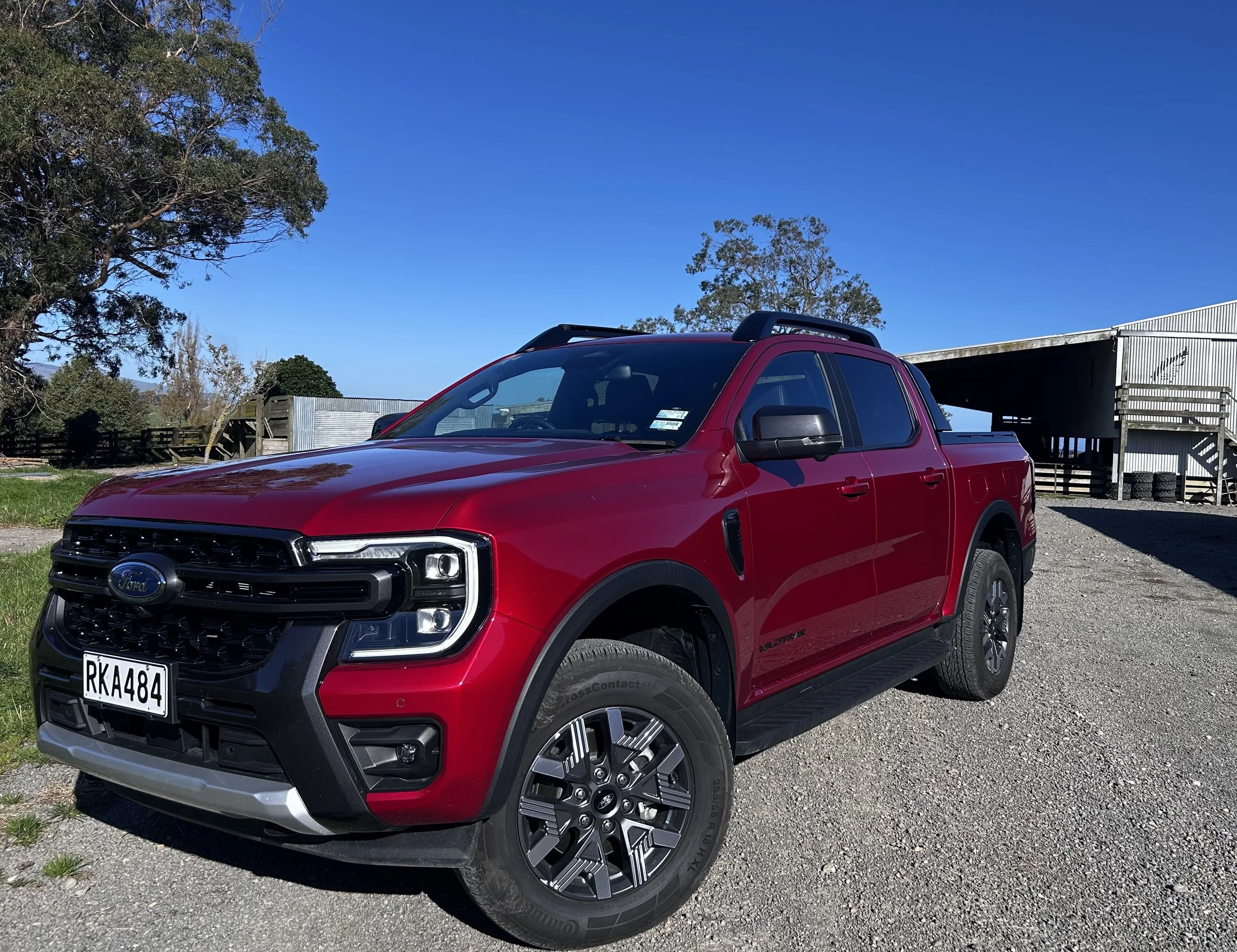
Price: $89,990
Powertrain: 2.3-litre turbocharged petrol with electric motor integration and 11.8kWh battery; maximum combined power and torque 207kW/697Nm; 10-speed auto.
How big? 5367mm long; 2015mm wide; 1878mm high.
We like: Polished engineering integration; refined powertrain; matches diesel for ute-ability.
Not so much: Limited electric involvement, slow AC set-up and premium price all leave it exposed to China Inc.
INTEREST in utility vehicles hasn’t lessened since since the Middle East ‘war’ (skirmish, excursion, journey … pick your favourite Trumpism) began, but thinking about what fuel works best for the country’s favourite one-tonner seems to be altering.
For decades diesel, the default fuel for almost all one-tonne utilities has been cheaper than petrol at the pump, so this having flipped two months ago was a huge jolt.
You’d be excused for being blind-sided. Diesel has always been more expensive to produce than petrol because of the way crude oil is refined, but taxes on petrol have historically masked the price differential. It required a cataclysmic effect to change that. That’s exactly what has happened.
At time of writing, the average price of diesel had fallen back to just under the average price of 91-octane petrol for the first time in more than a month. But industry analysts anticipate prices for both fuels may soon resume an upward trend. Tighten those belts.
Ford Ranger delivering with a petrol plug-in hybrid was a big story of the last two years, but fair to say the first edition to embrace some form of zero-emissions future was a slow-burner starter.
As much as it intrigued and clearly saved - an overall economy of just 2.9 litres per 100km is a BIG improvement in consumption - it also cost more to buy.
So what’s changed? Not the stickers. More the scenario. I’d suggest it’s been largest spike in pump prices in 15 years.
Maths isn’t my strength, but feedback out of the dealer network is that fleets in particular are recognising operational savings from going petrol-electric are now better balancing against outlay. So perhaps a mindset shift is in the air.
All the same, any fleet manager would surely want to see a better outcome than I provided. An overall fuel consumption of 8.6 litres per 100km would surely demand a ‘please explain’ conversation with the company accountant.
More about that soon, but first let’s address how it went overall, because in that light, impressions are largely positive, but with caveat.
Ford kind of hinted at the constraints it faced when it said it limited the electric capacity of the Ranger PHEV to ensure it remains a truly capable working ute.
Packaging constraint and desire to keep weight in check have also led to it having a small battery and modest electric drive. There are positives from doing this, but not enough. In current state, limitations are obvious.
Working out how to bulk up the electric involvement, preferably without hurting the kilo count, needs to be a priority. The good news is that this is conceivably possible, as tech is moving on at rapid pace.
The bad for Ford is that others are ahead - and already were even before the Ranger hit sale. The main rivals are two lower-priced and more EV effective, and another of that ilk is incoming.
They all have larger batteries and offer more EV range than Ford’s 11.8kWh unit can deliver and more pure electric oomph as well. On electric and petrol combined, Ranger PHEV is a powerhouse. When locked into fully electric drive, it’s pretty puny, mustering just 75kW. That output is fine for low speed stuff, but insufficient for pace.
In overall sense, all the same, that this is the right time, and this is the right ute, to take this direction. And while for now the best defence Ranger has is its reputation and superior overall engineering, those factors alone mean a lot.
There’s good reason why the fifth generation line stands solidly as the category barometer.
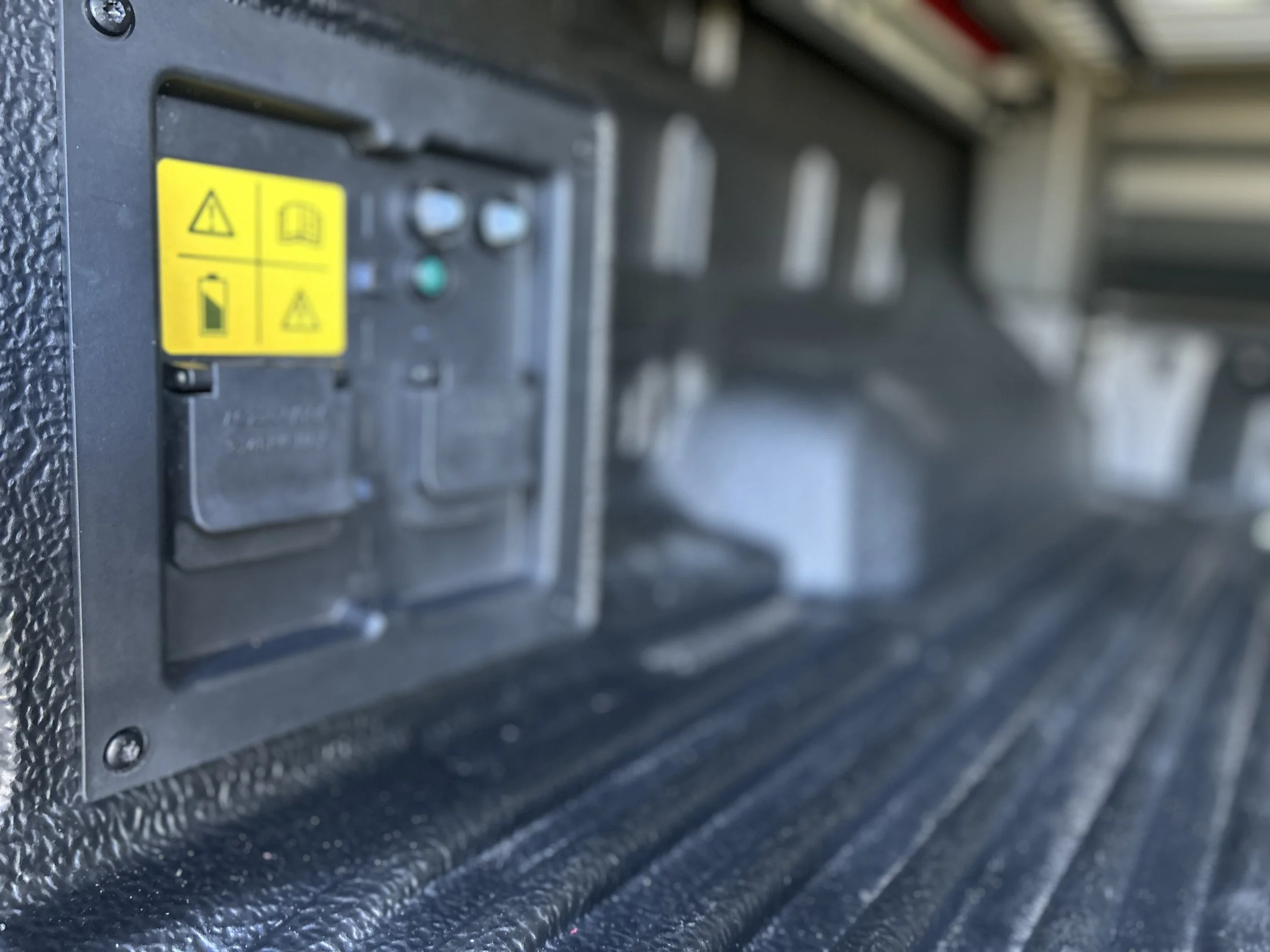
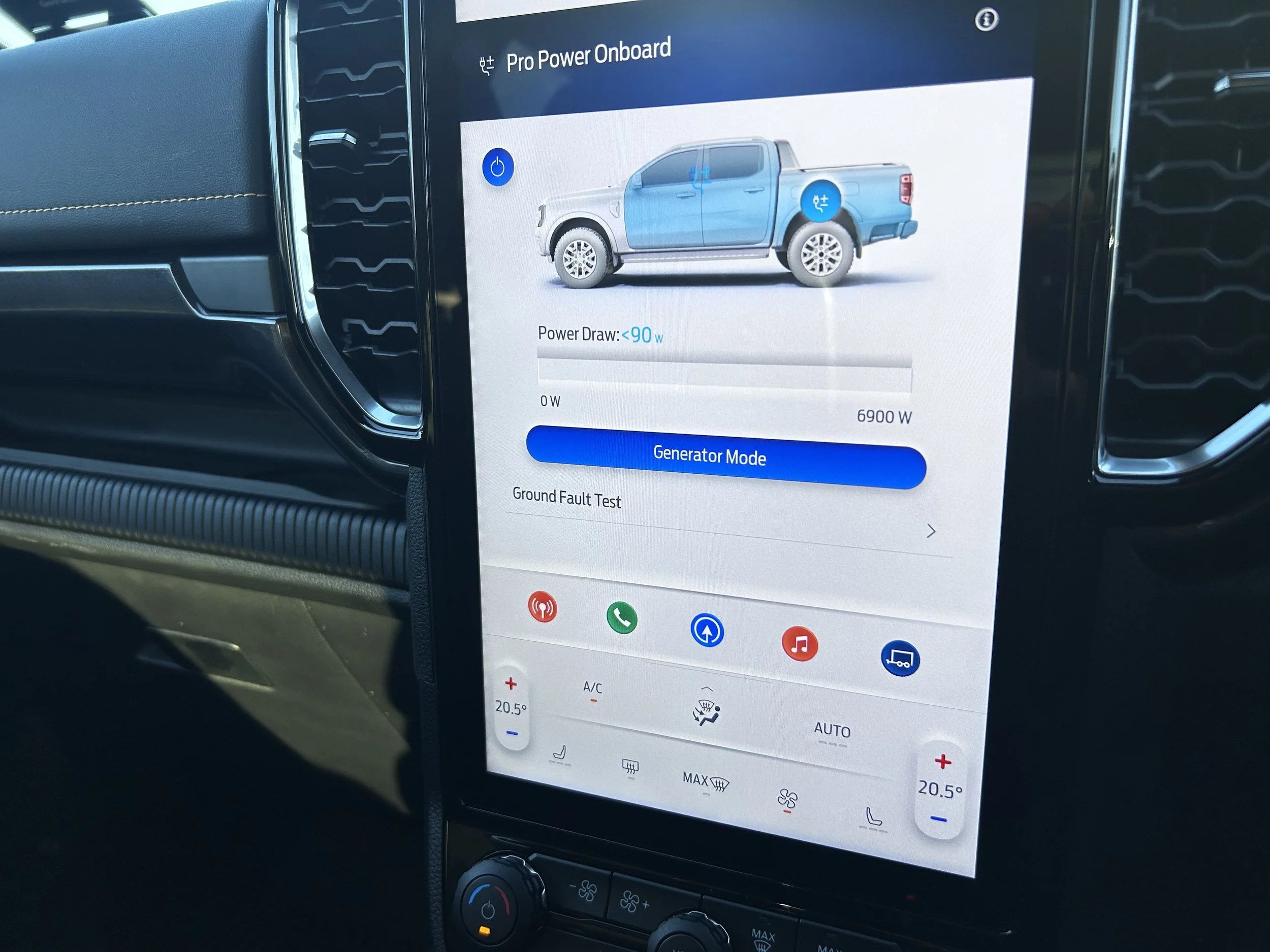
Also appealing here is that the PHEV stays true to its utilitarian load-bearing abilities, with one huge additional benefit. Vehicle-to-load (V2L) capability is always tasty and here it is properly sorted as a work or camp site power source.
If you truly get on the tools hard, then the traction battery’s feed via twin 3.45kW (15 amps at 230 volts) sockets in the tray and a single 2.3kW (10A at 230V) socket in the cabin will ultimately need the engine running in support. But the genuine usefulness to those using their Ranger for activities off the grid is patent.
Further you can see why Wildtrak is the sweet spot specification. While it’s no full SUV substitute, this variant delivers a generous package with plenty of creature comforts and good tech.
Ford’s latest SYNC4 infotainment system headlining a giant 12-inch portrait touchscreen, bolstered by a 12.4-inch digital instrument cluster, is an impressive ingredient it itself.
Side steps, smart keyless entry, dual-zone climate control, leather seat trimming, eight-way powered and heated front seats, a power roller shutter, and illumination and a drop-in tubliner for the load box are nice touches. A tow bar with an integrated trailer brake receiver is standard.
Sure, there’s some cost-saving evident and you need to go to the highest-level Stormtrak to get the superior matrix LED headlights (with auto levelling and dynamic bending), plus useful elements of traffic-sign recognition, lane centring, intelligent stop and go, cruise control that can react to speed limit changes, a 360-degree camera and trailer reversing assistance added.
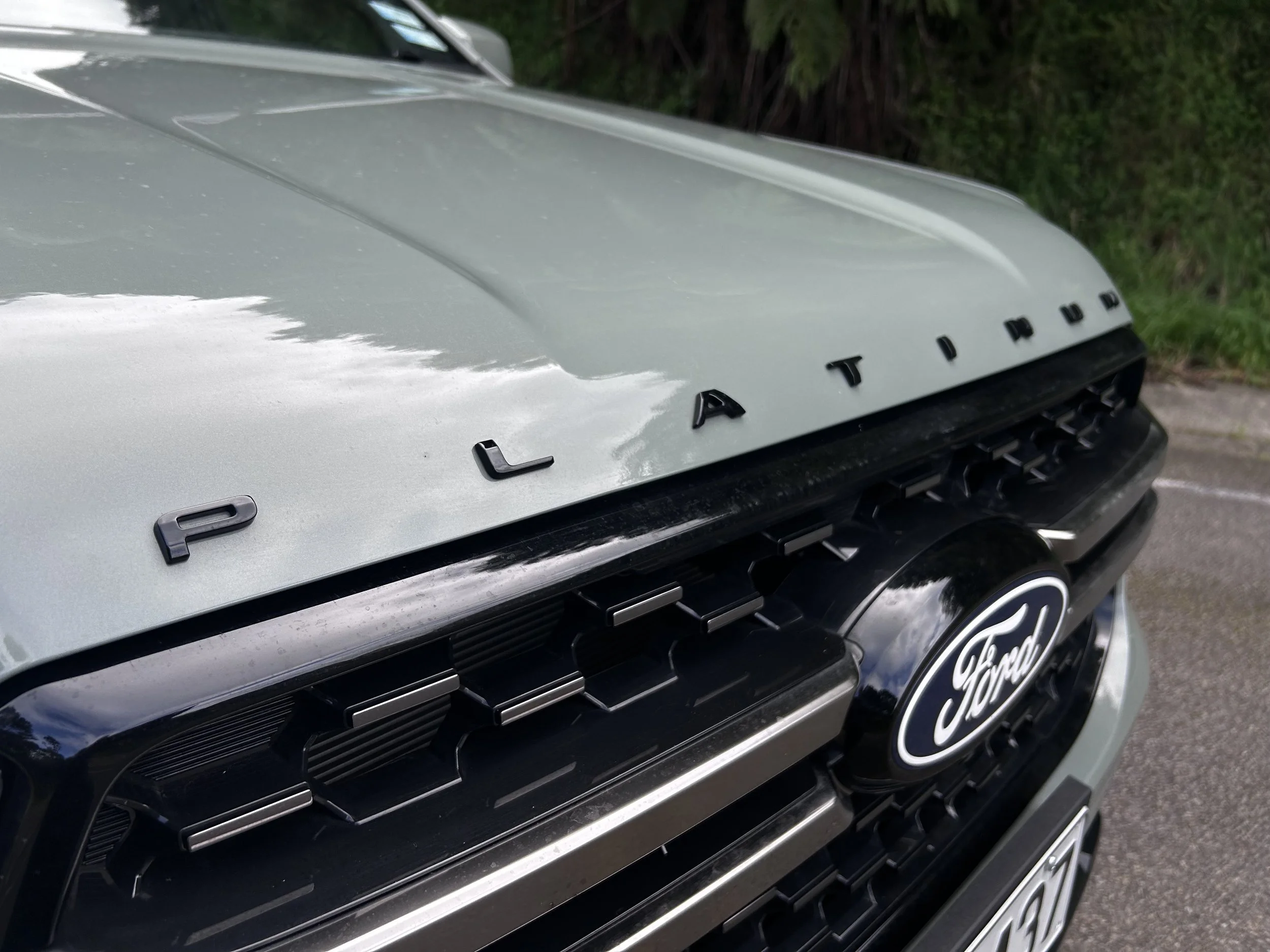
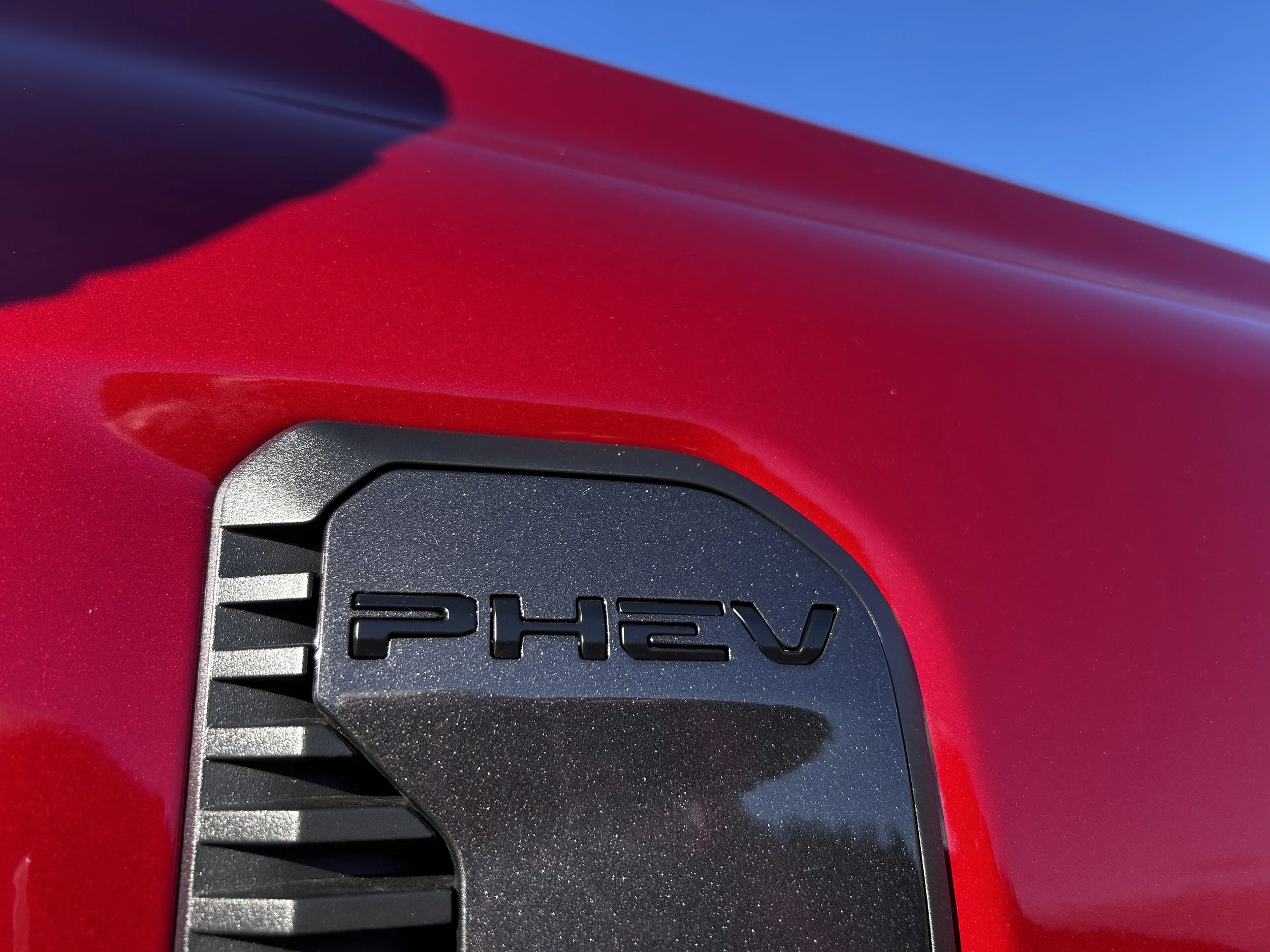
For a lot of users, Wildtrak will easily seem good enough. It also blends into the family as design changes aren’t massive. You’ll probably spot the dual flaps before noting the subtle PHEV branding on the wing insert an that is has a specific 18-inch alloy wheel design. You might miss noticing the deck is slightly higher (to allow fitting in the EV stuff) .
Safety equipment level is car-akin, with autonomous emergency braking, adaptive cruise control, lane keeping, evasive steering and reverse braking assist, blind-spot monitoring, tyre pressure monitoring and front and rear parking sensors all include. It has nine airbags – including front-centre – and two ISOFIX and two child seat top tethers in the rear seat.
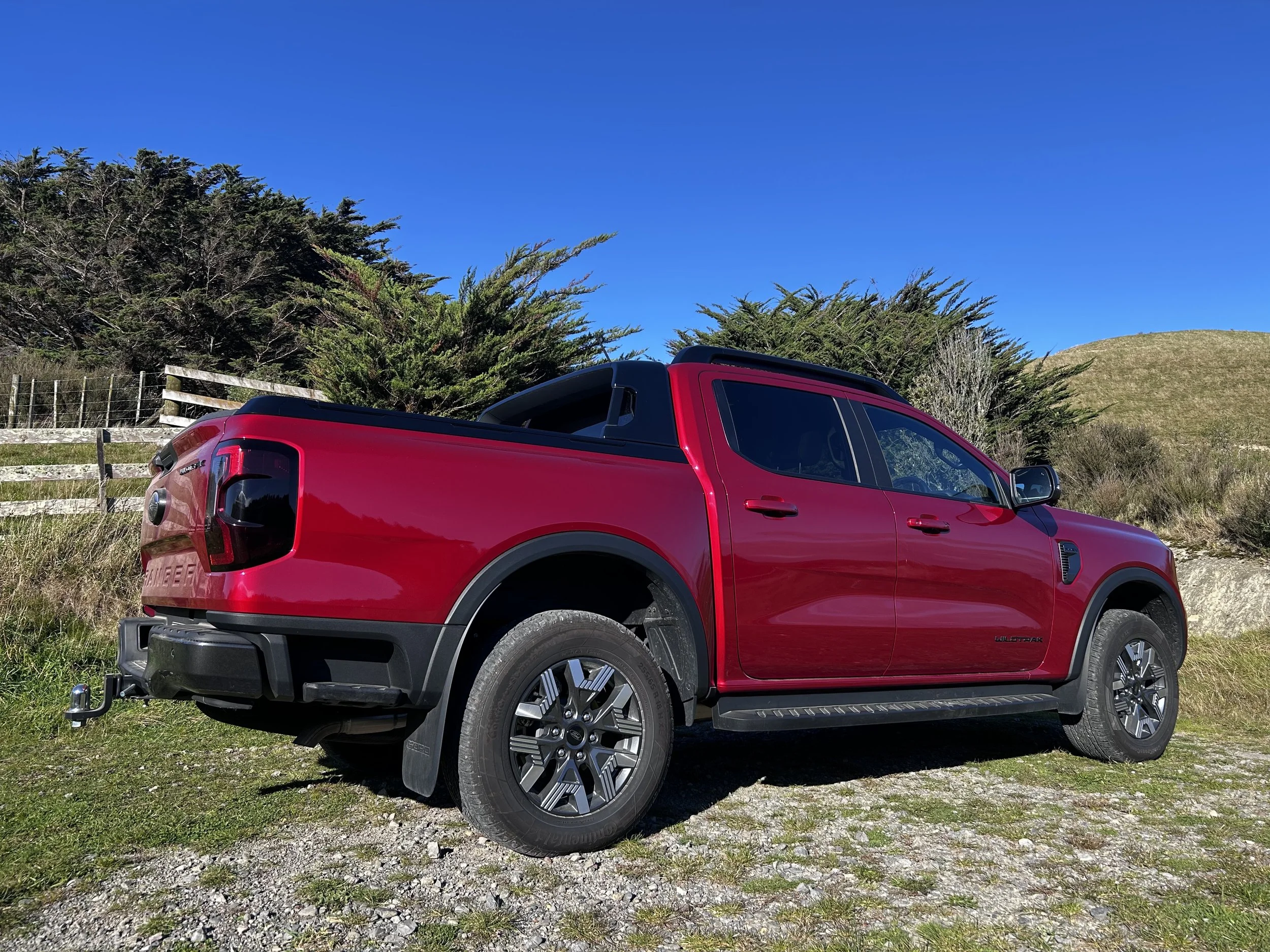
The marriage of a 2.3-litre Ecoboost petrol to an electric motor and battery was a pragmatic decision; the engine has served well in other Fords, including the Ranger sold in North America and also the Mustang.
Wedding to the e-motor required the engine to be detuned but it still delivers a combined 207kW and 697Nm. That’s more torque than any other Ranger and more power than any Ranger besides the twin-turbo V6 Raptor.
But if you’re prioritising electric for driving, then be aware the traction battery isn’t likely to offer that good time for an especially long time.
The drive began with the high voltage battery at 90 percent health, so it seemed right to start off by configuring straight away into ‘EV Now’. the full electric mode, and heading onto a hour-long route that mixed mainly urban with a touch of open road. Ford says the Ranger should deliver 43 kilometres, which in itself is less than its rivals promise. The Wildtrak demanded the engine’s involvement just as the tripmeter ticked into 35 kilometres.
Blending both power formats makes it a better thing. The default ‘EV Auto’ function that allows this operates to a number of factors, seems sensibly sorted and the interactions are pleasingly low-key and seamless.
Ford tailoring ‘EV Now’ so that you have to consciously leave it is a step away from convention. Rival product doesn’t do that. Their engines kick in when onboard gizmos determined its needed.
I imagine the Ranger will ultimately default, but it’ll first flash up a request to involve the engine. In low-speed driving, you might’t see that often. At open road pace, though, it comes up quite quickly. A reminder of how much energy is required to move a vehicle of this substance.
Also outside the norm is ‘EV Later’, which stores the current state of battery charge for later in the journey. It’s a highly useful function and I continue to be surprised how few PHEVs have it, though I also began to wonder if in the Ford it was still actually feeding in some electric assist regardless.
That’s a lot of technology to play with, so kudos to Ford for in the main making the various functions not just easy to access but also to understand. It could be improved - a graphic showing real-time power distribution would be useful - but is far from the worst I’ve experienced.
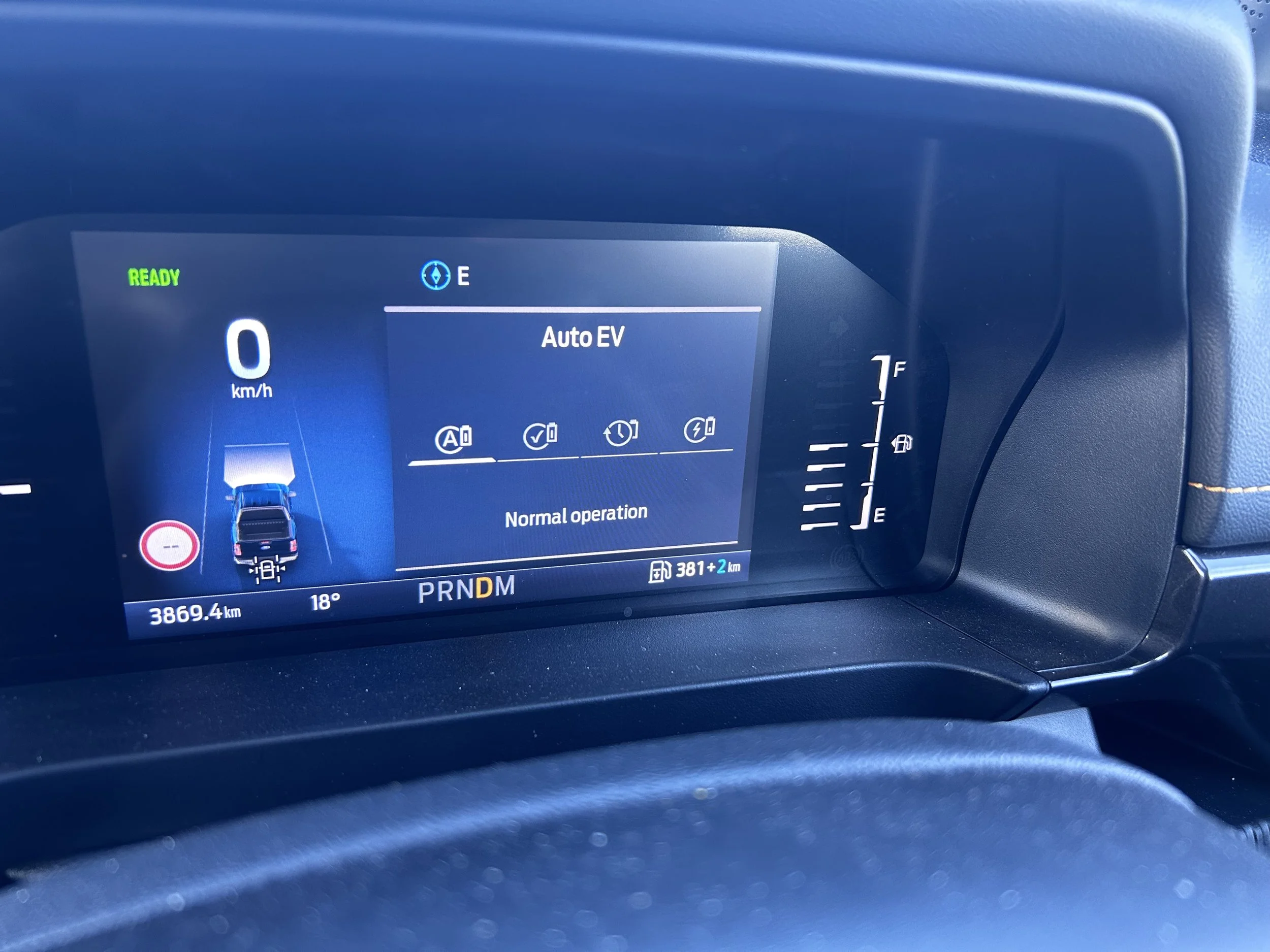
Sub-menus for battery charging, instant and average economy and Pro Power Onboard are clearly relayed on the infotainment screen while electric consumption, range and distance travelled can be viewed in the trip computer array within the cluster. It also has an ‘EV coach’, which shows the energy captured through brake regeneration.
As with all PHEVs, the potential running cost savings can only ever be achieved if you keep the battery charged up. Having exhausted the battery on the EV-pure run, I needed to recharge it.
Which brings us to the fourth EV function, a regenerative setting using the engine. Even though this engine will stomach cheapest grade 91 octane petrol, and holds 70 litres of it (10 litres less than a diesel), burning fossil fuel to revive the battery should be a final recourse, because it isn’t at all ecological or particularly efficient.
Obviously the better option is to plug the Ranger into a power outlet, though that’s a test of patience as the PHEV is just AC only and has a very low draw rate; if you’re relying of replenishment from a household plug, expect the car to sit idle for best part of half a day.
It’s not a lot faster even from a peppier public charger, if you can find one that suits. The network is now mainly going CCS, favouring DC. The plug type Ranger needs is fast going out of fashion.
Anyway, hooking up wasn’t an option. The factory-provisioned charging cable was absent from this vehicle. Securing a replacement wasn’t possible.
So, I took to recharging the battery while driving; hence the consumption being higher than Ford’s cited average, though that wasn’t the only effect. The engine also had to step up its exertions to accomplish dual roles; revs rose, it was more audible and briskness absented from acceleration. And it isn’t a fast process, either. I never had the battery back to more than 50 percent replenishment during the remaining time with the vehicle.
Because modern battery chemistries never allow full exhaustion, it was never actually at zero. Which means that you’ll always get some level of electric involvement with the engine. What happens in the Ranger is that the specific electric prioritised elements simply unavail; the display literally puts a line through them. But the engine continues to get electric assist and, so, continues to relay a level of strength that is sweet and smooth.
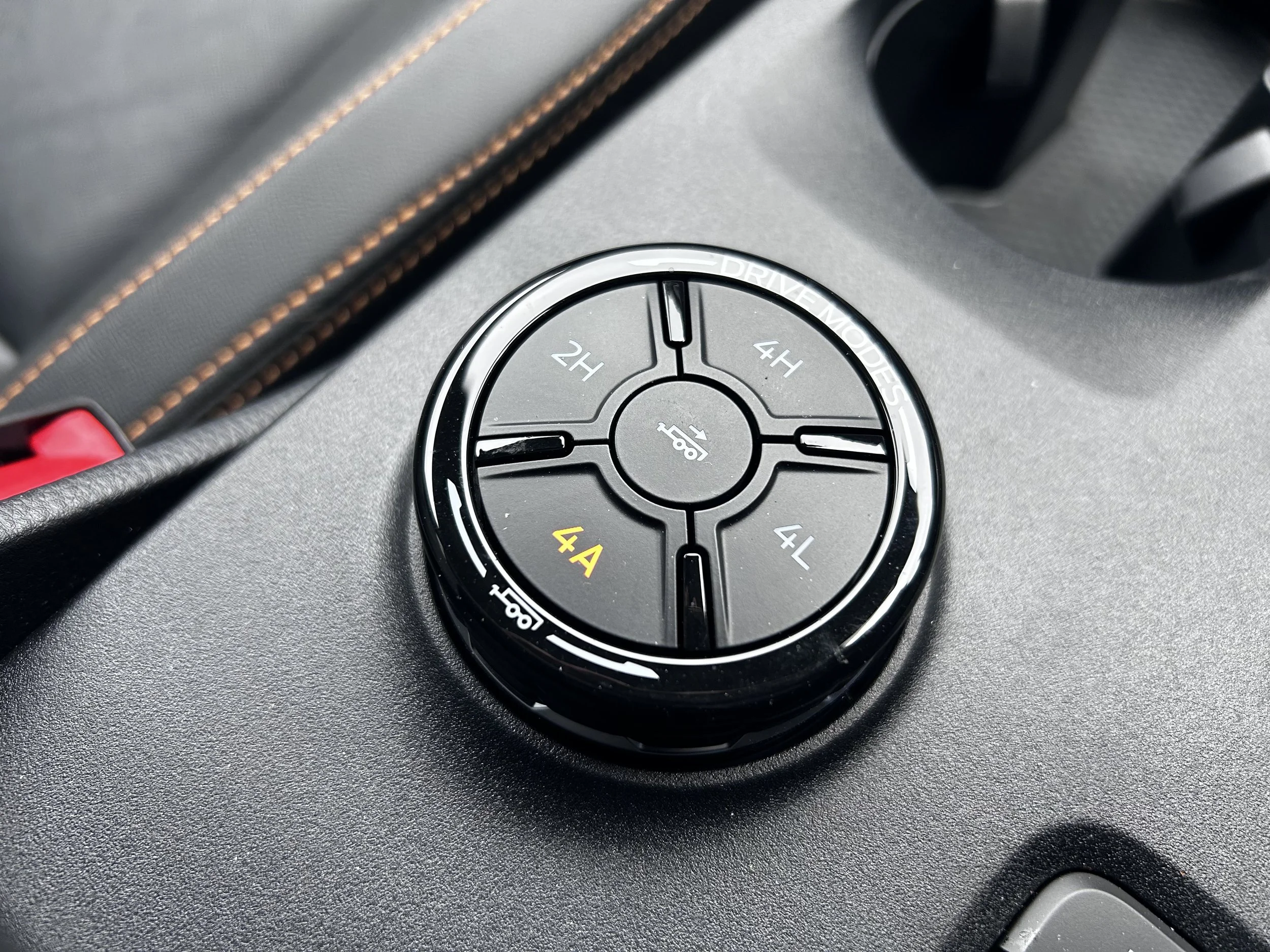
Ford’s integration of the electric motor between the engine and the transmission's input shaft is worth a salute. This approach allows the PHEV to retain two- and four-wheel-drive capability regardless of which is driving the vehicle, alongside low- and high-range drive. It is brilliantly sorted.
As per convention with any modern ute, you’re spoiled for drive modes: Normal and slippery allow all four powertrain choices, eco excludes EV Charge, while sport, tow/haul, mud/ruts and sand only allow hybrid mode. Execution is easy; no searching through sub-menu screen as per China Inc convention. Here everything contains to a couple of buttons and a rotary controller positioned on the centre console between the front seats.
Even with such a compact battery, the PHEV carries another 250kg over the four-cylinder diesel Wildtrack. That’s more than a marginal weight increase, but Ford has felt no need to adjust the suspension.
I wondered if that was prudent, but after driving over many different surfaces, I can understand why they were right not to bother. Excellent ride, whether laden or otherwise, and handling dexterity are hallmarks of all Rangers thoroughly maintained here. The steering is comfortably light too, without feeling over-assisted, so you can always tell with a degree of precision what the front wheels are doing.
It’s a step up into the cabin, made easier thanks to the running boards and handles on the inner sides of the A-pillars, but worth the effort.
Ranger’s driving position and seat design is an example to all ute providers, likewise the multifunction steering wheel being manually adjustable for reach and rake over a broad range.
The cabin ergonomics are very pleasing and it’s a comfortable place to be, by ute standards. The upright seat back for rear seat occupants is where it falls behind a SUV.
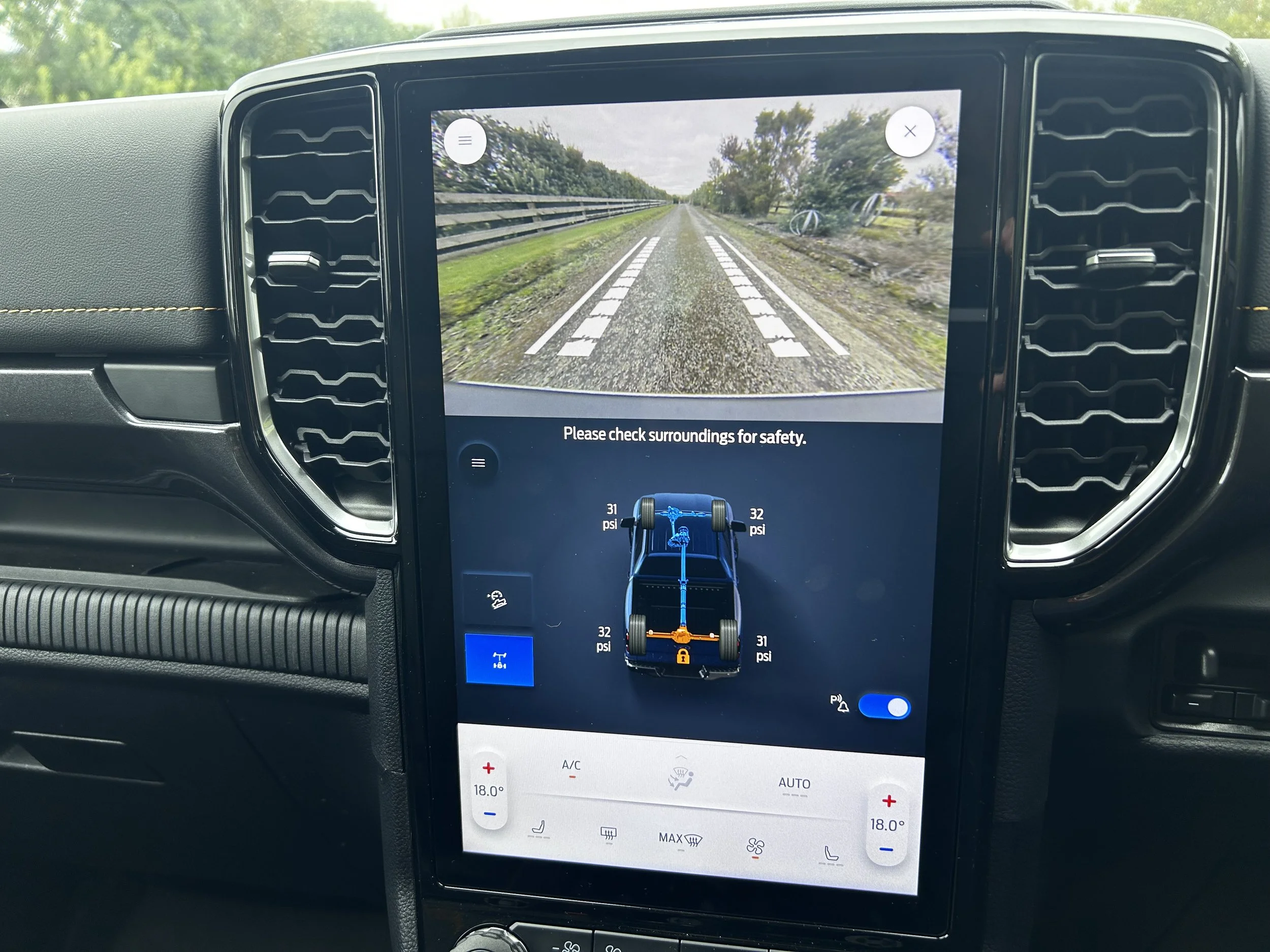
Deck load limit is 940kg, so a bit less than some, but spoacice-wise it is the same as other Rangers, though the co-parent shape is slightly altered; lengthened via scallops up front and in the tailgate to compensate for being higher. The gap between the wheel arches will still accept a standard pallet. There are four hooks in the box and corner steps aid access.
Towing is an interesting one. It can haul up to 3.5 tonnes, the same as a diesel, but add that to the 2615kg kerb weight and you're over the six tonnes allowed on a car licence.
There’s so much to like. And it does well with what it has. The trip computer determining that almost one third of my entire travelling distance for the week was covered by electric was an eye-opener. I really didn’t think the EV involvement was that assiduous.
Let’s hope Ford considers how it configures now as being just stage one of an ongoing process; the modest battery size isn’t a deal-breaker, but it is a nuisance. PHEVs only truly make sense when they’re kept in decent state of charge. The smaller the battery, the more frequent that requirement.
At present, the best daily opportunity for the pure EV application is probably short distance urban driving, which really isn’t what utes are about. Unless your driving style works for this approach, the pump and play simplicity of diesel is simply better. Technically, if not perhaps financially.
Some might wish Ford had gone further and created a fully electric Ranger, to take on the battery-wed Hilux. They have skin that game, having created the battery-wed F-150.
While Trump cards are being played with little regard to the international repercussion, it’s hard to imagine a better time than right now to start thinking about alternates to the status quo.