Ford Tourneo Courier Active road test review: Little big feat
/Will the smallest of the Blue Oval’s van-based ‘multipurpose vehicles’ be fully appreciated?
Price: $55,990
Powertrain: 1.0-litre three cylinder turbo petrol, 92kW/210Nm, seven speed automatic.
How big: 4343mm long, 1800m wide, 1836mm high.
We like: Stands out from the crowd; versatility; nimble driving dynamics.
Not so much: Perilous pricing; feels less handy on open road than predecessor Fords; potentially better suited in electric form.
THEY’RE everywhere, scurrying around on family-focused duties, in readiness to revert to what they essentially are.
Everywhere in Europe and the United Kingdom, I should say.
Kiwis can be excused for fessing to perhaps never having previously seen something like the Ford Tourneo Courier Active. It’s a rare breed in this part of the world.
In the ‘old world’, repurposing small vans as compact multi-functional people carriers has long been a thing. They’re hugely popular and you see them in every street, rue, calle, strasse or strada.
To New Zealand, the concept has been an outlier idea, most commonly expressed via an assortment of whacky domestic Japan products delivered here in pre-used condition, but not often seen as a new car consideration.
Not to say others prior to Ford haven’t had a stab. The Vauxhall/Opel rebadged as a Holden to become the Combo, the Peugeot Partner, Citroen Berlingo and Volkswagen Caddy. All tried to set a precedent, but proved short-stay and unicorn-rare. in the traffic stream.
So to the passenger-fied edition of Ford’s smallest Transit van. The Tourneo Courier is genuinely roomy and practical, delivers with a decent platform and one of the world’s best small engines. Conceivably, then, it stands a decent chance. Doesn’t it?
What makes this model a bit of a punt, and then some, are the local market unfamiliarity with what the whole small van as a compact MPV thing is all about.
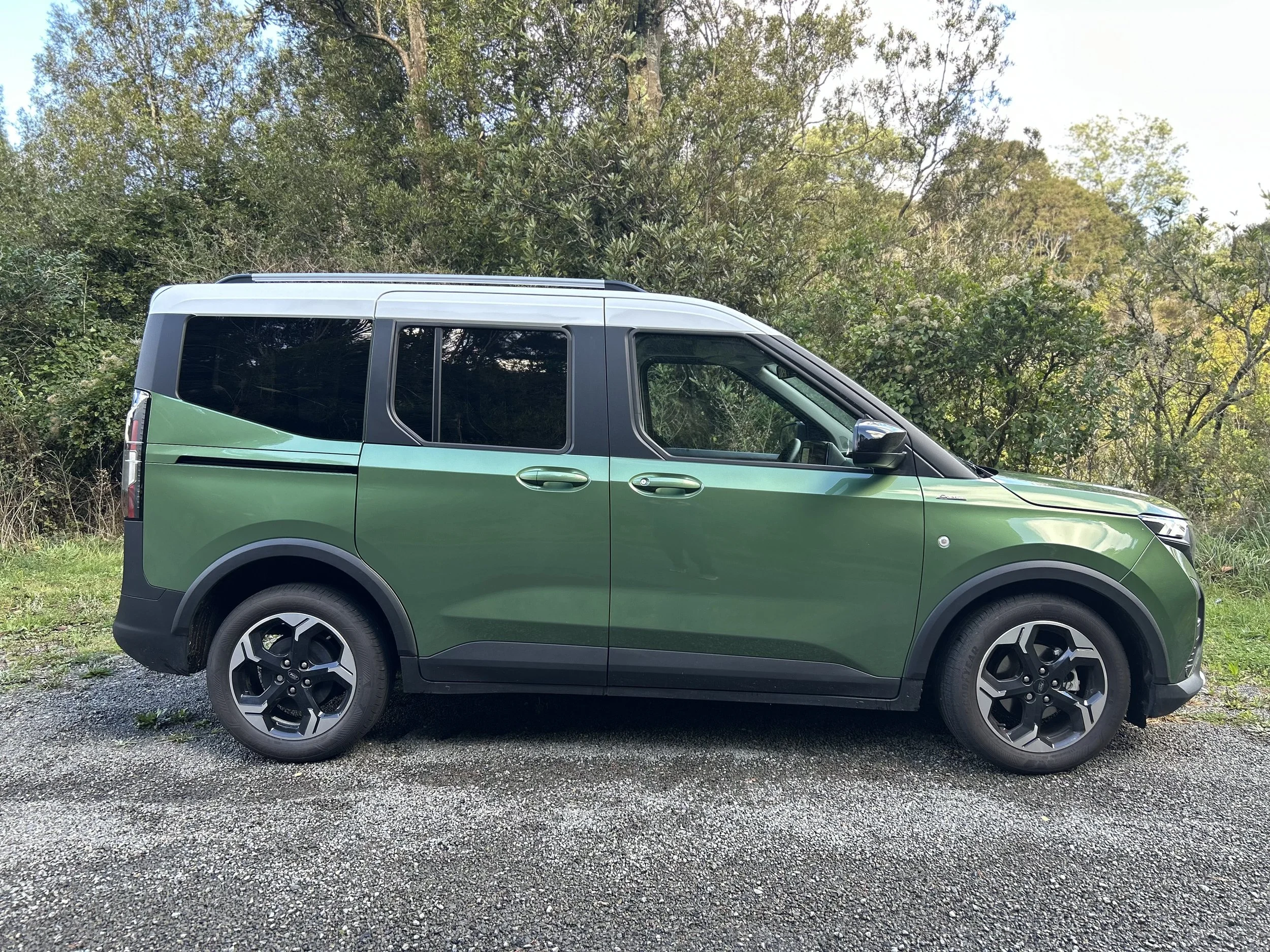
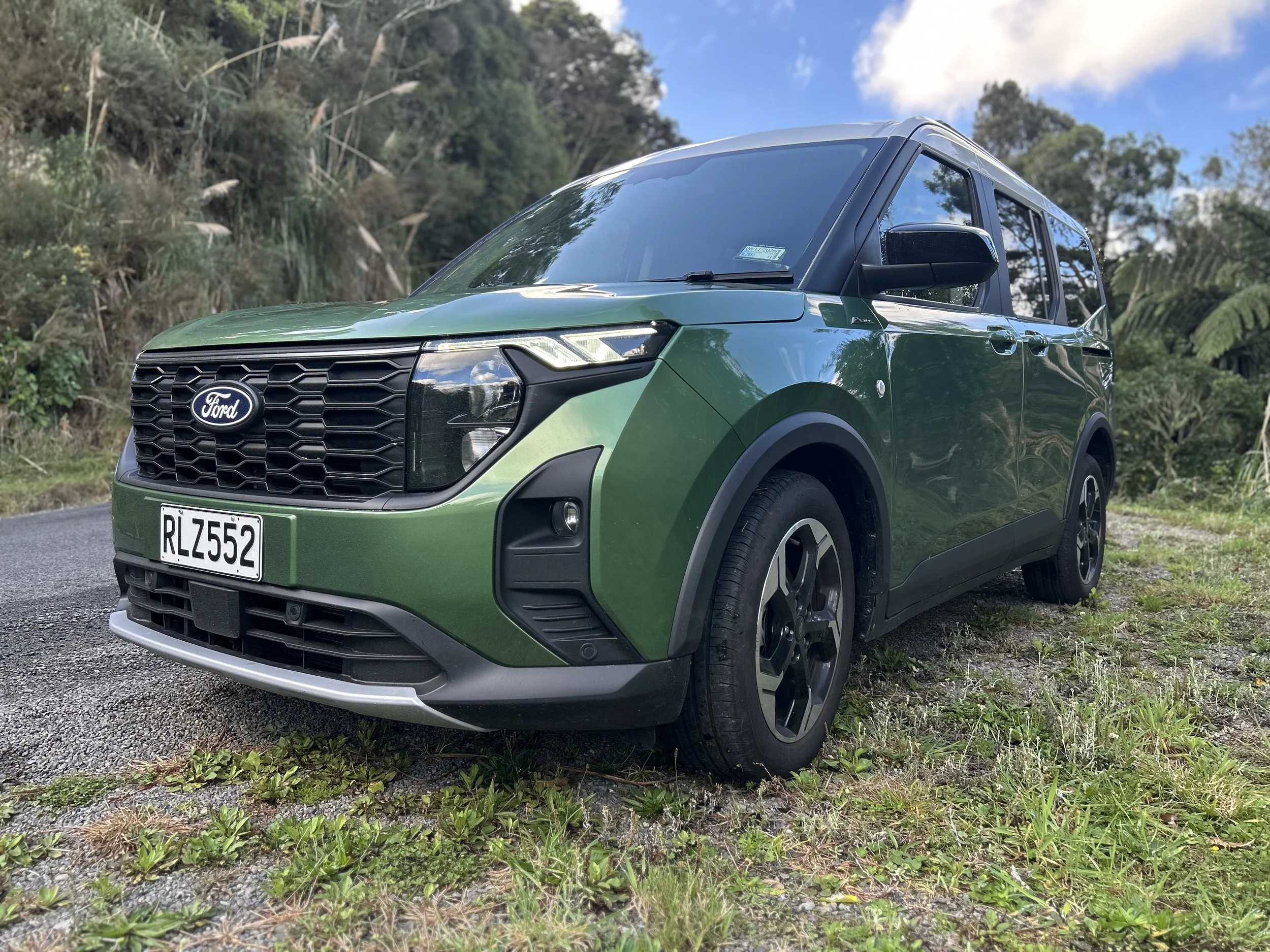
Ford insistence on this being a “five-seat, multi-activity vehicle” with “SUV-inspired looks” didn’t fool anyone during this test. The ‘v’ word was all I heard, occasionally with “Postman Pat’ references. I called it Thunderbird 2, on account of the colour scheme. Plenty of blank looks for that one. Showing my age, I guess.
Being a van is why it works. But also why it it will also be regarded with circumspection, if not outright suspicion.
The price doesn’t help. This model suffers as the most expensive offer here yet with underpinnings and an engine that used to deliver as budget buying.
All the same, it’s understandable why Ford has put it out there nonetheless. With Mondeo, Focus and Fiesta long gone, the Escape now also off the menu and Puma ‘under review’, this brand is not exactly well-stocked with traditional passenger cars right now.
The market’s sudden spark of renewed electrics conceivably elevates the logic of adding options to the Mustang Mach-E. The Puma Gen-E that was u-turned on two years ago likely remains available; likewise the also Europe-sourced VW ID-born Capri and Explorer. China is about to share electric Transit vans so maybe they have some cars, too. But none of these things happen at flick of a switch.
So right at moment you’re looking at a make whose bets continue to basically place as they have for almost a decade; primarily on Ranger and, to lesser degree, on the (same thing but in SUV) Everest.
Every other product in the Ford showroom has been minor in annual registrations’ contribution. In past years, they’ve done okay with that. But sooner or later, the ute sector will hit saturation point. That, and the sudden and dramatic rise in the price of diesel … well, we’ve seen how fast tastes can change.
With all that, perhaps just having the Tourneo Courier in the line-up at least gives another option, even if it’s real and perceived role and abilities stand likelihood of having to be examined minutely. Mainly because of the whole ‘not a van yet still a van’ thing.
It comes with clear talent. The B2E platform and these Ecoboost engines have been brilliant for Ford. Fiesta was great and Puma still is a fantastic car to drive. Tourneo Courier doesn’t quite have their dynamic acumen, but if considered in company of other commercials it is very much better than most. Here the wheel feel is precise and smooth and there’s plenty of grip, good braking and overall it still remains more like driving a family hatchback or compact SUV.
So there’s that. And if you have feeling that MPVs are not traditionally considered cool anyway, then the idea presented here might send a industrial chic vibe that could be appreciated.
Tourneo transition occurs with all Transits and, no matte what size they roll out in, the premise isn’t out to disguise the commercial background because … well, it’s simply impossible not to see, right?
The concept is to persuade how hangovers from its commercial roots can be positive things for family life. It’s all about how ultra-practical can uplift to genuine comfort and family friendly functionality. There’s no argument, for one, that the large, rectangular cargo area behind the seats is surely going to be big enough to take anything that a family of five can throw at it.
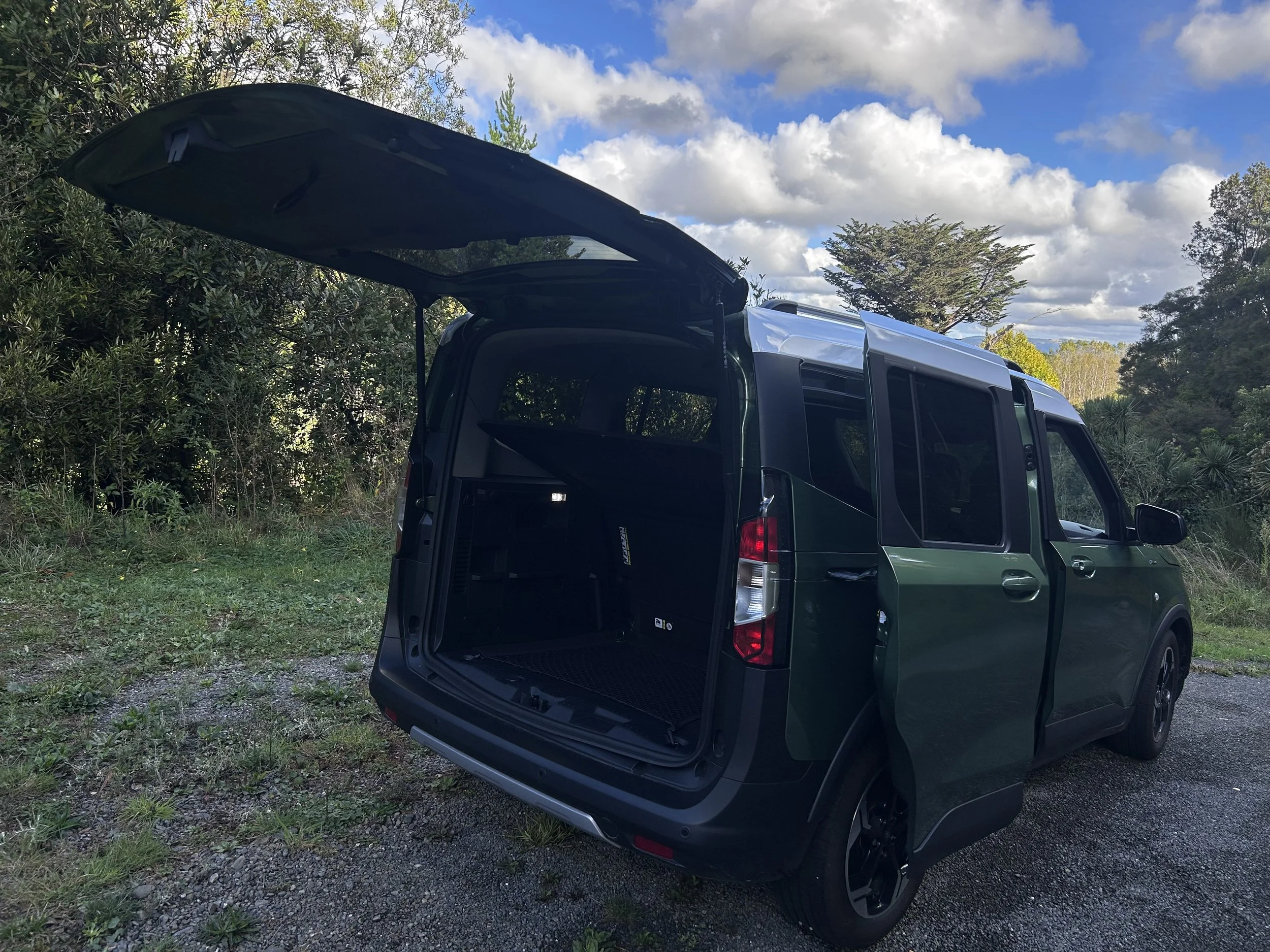
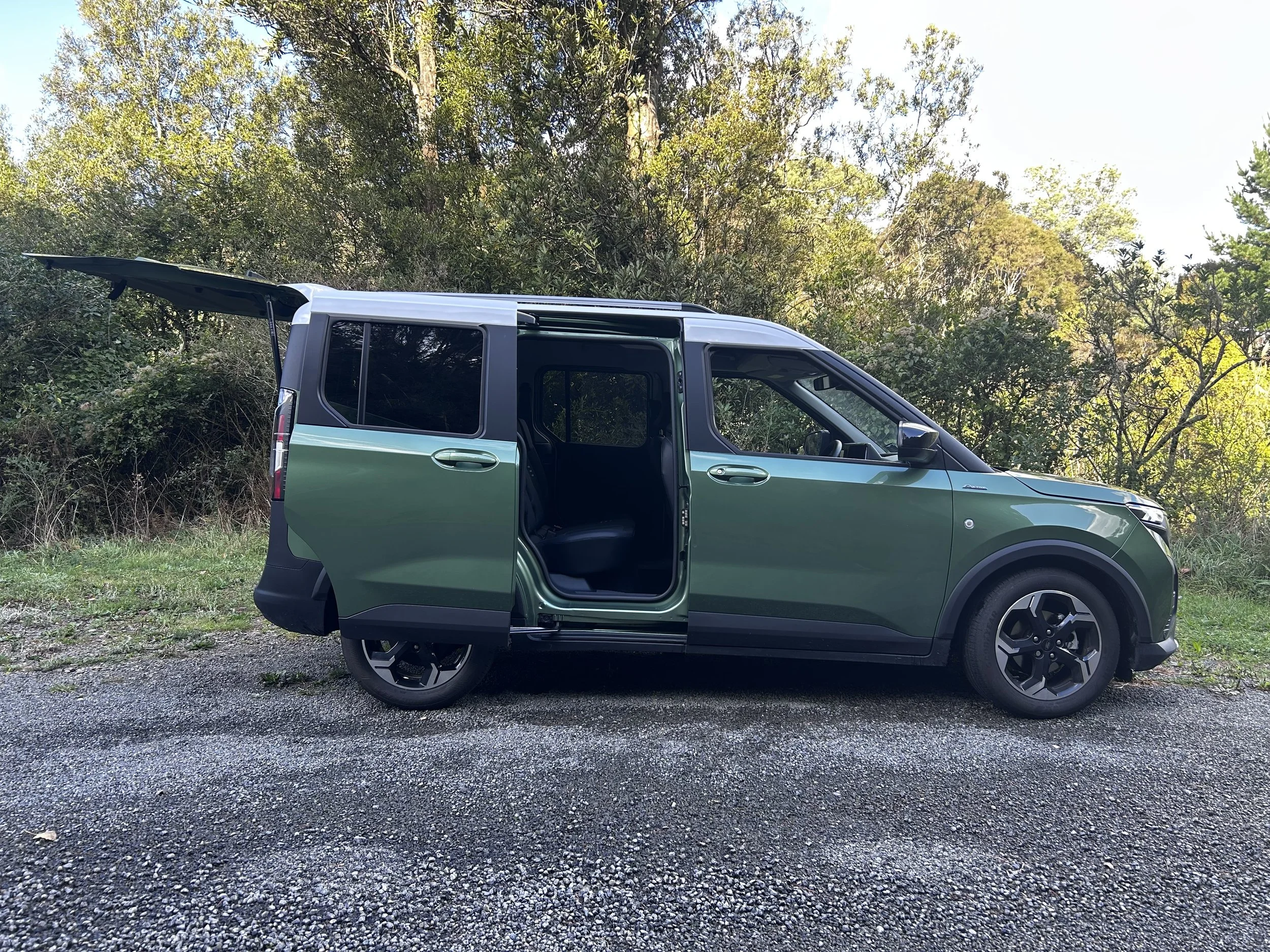
The Active trim for Tourneo Courier was selected for NZ because features additional body cladding. As extra armour for car park gladiatorial wars? Well, that might be one reason, but the other for this rugged-looking edge was to create a vaguely off-road-orientated aesthetic. All purely to do with look, as it hasn’t the benefit of all-wheel drive. The two-tone paint is another vibe lift.
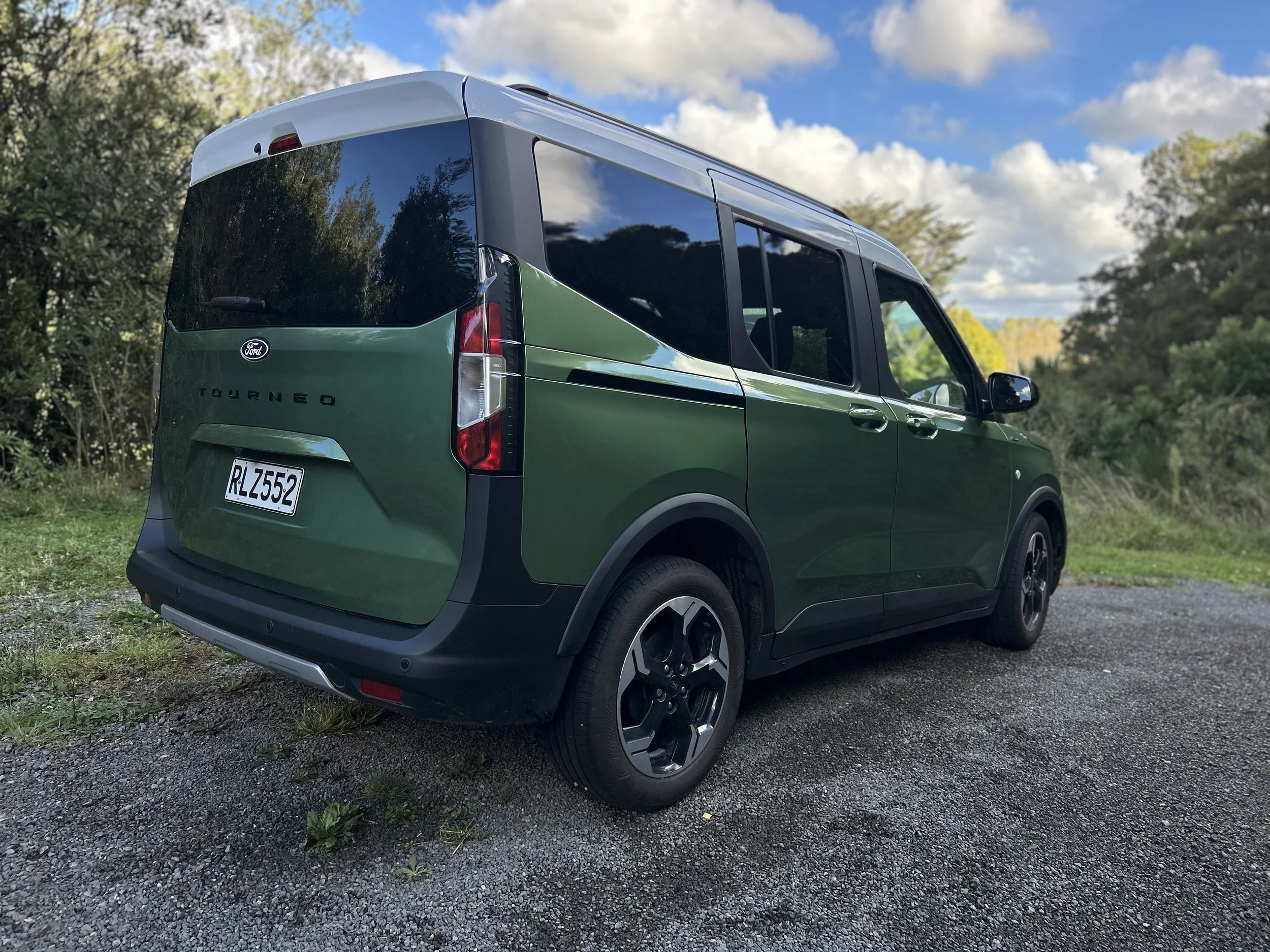
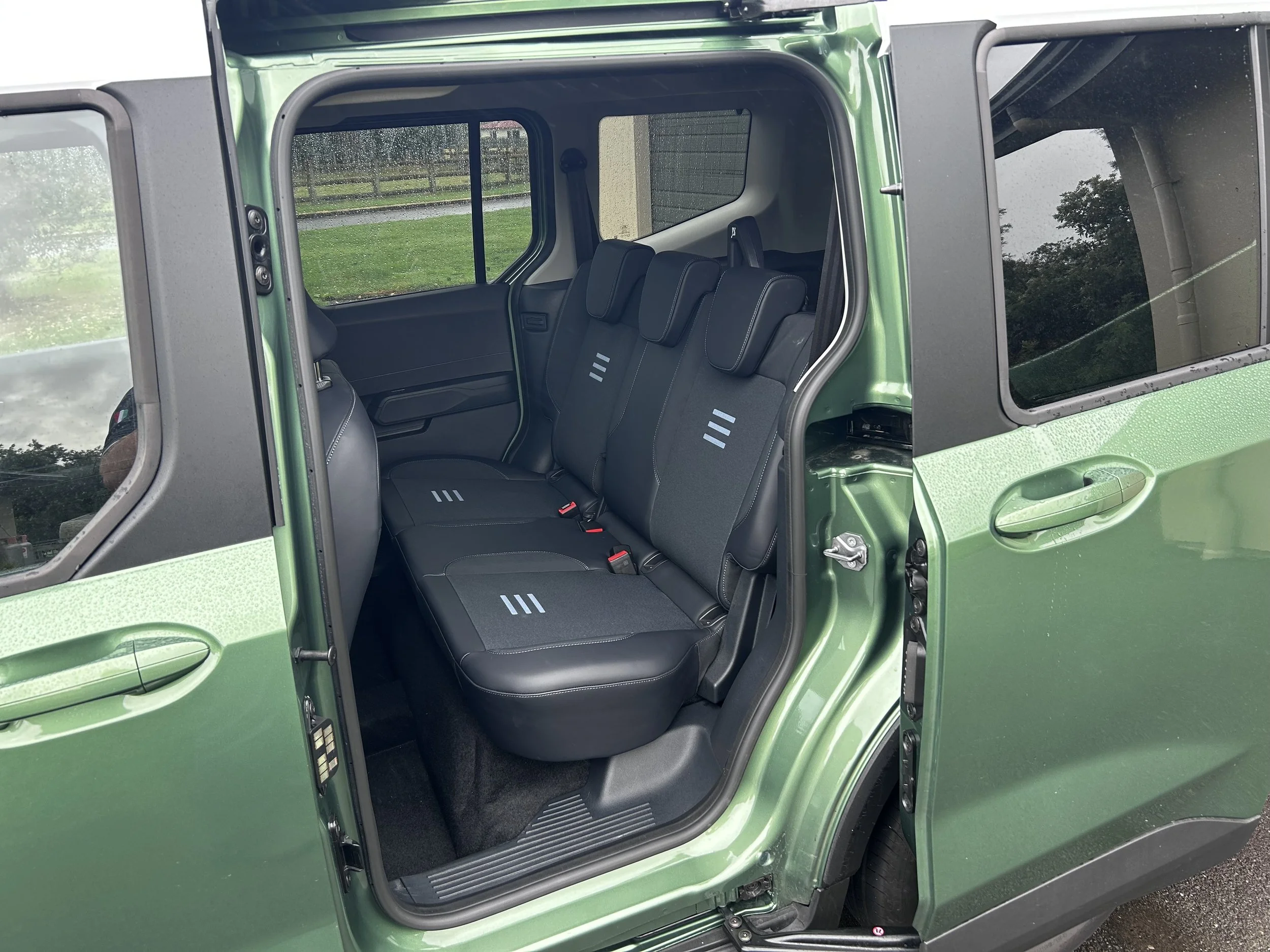
In end result, as much as this is perhaps not the most obvious-looking family car on the market, it does impart a kind of happy, quirky kind persona. But not a complete disguise. The top-hinged tailgate and the sliding doors to access the second row are tell-alls to its roots, of course.
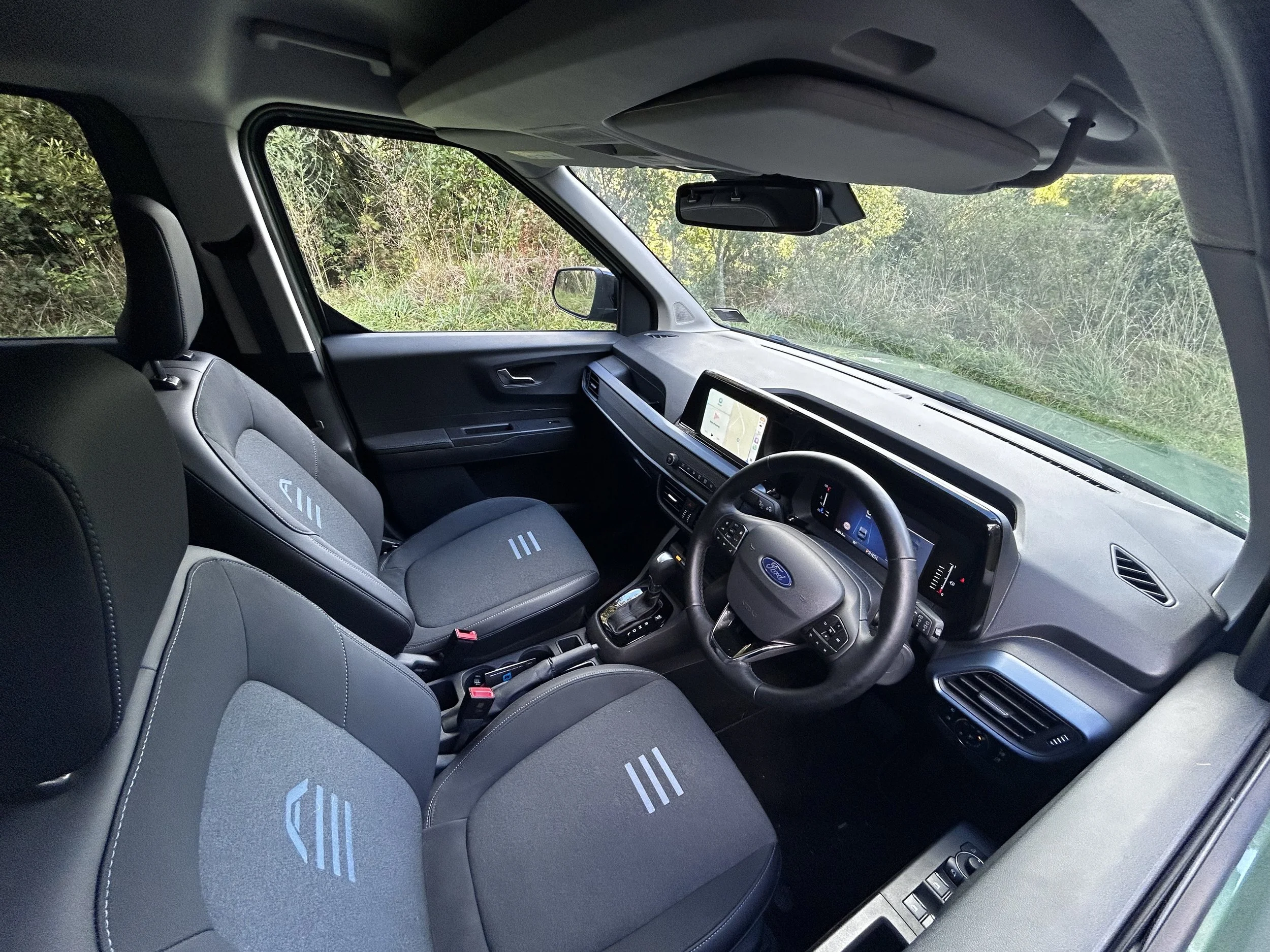
Slip inside and you’ll find most of the bits that would have been left as bare metal in a van application have some kind of covering, mainly in plastic, here, and it has good carpet on the floor and comfortable seats. To be sure, the fit-out isn’t what you’d call premium. Plastics seem chosen to withstand the rough and tumble of everyday use. But it having a steering wheel from a Ford passenger car are well-received.
The specification is strong, too, but it’s the space that will sell this concept. It’s the epitome of a big little vehicle.
As is Transit-typical, the (fully-lined) roof is well above your head and the windscreen is huge. Space in the rear is incredibly generous, too.
It’s almost a shame there’s no seven-seat option. The boot space is that large, with 570 litres’ capacity when all seats are upright. That’s if you measure to the luggage cover. Fill to the roof and there’s much more space than that (Ford’s calculator comes up with 708 litres).
The back seats aren’t designed to be entirely removable - a bit of a shame, because that was a great feature of a Renault Megane Scenic I once owned - but even in folded away position, you get 1656- 2020 litres’ (again, depending on how it’s measured) capacity. Not quite big enough an average adult to sleep in, but certainly more than large enough for shopping and your dogs. Bikes, wheelchairs, flat screen televisions, quite probably even small items of furniture should also be accommodated.
When having to fully open the tailgate, consider how much room will actually be required; it’s one of the model’s largest pieces of bodywork.
Big enough for a whole family to take refuge on a rainy day, yes, but with no opening glass hatch, getting anything in via the back door necessitates making sure there’s plenty of clear air to operate in. You absolutely need to consider parking rather further away from a wall or another vehicle than you would with any hatchback. The sliding doors allow better practicality in confined spaces, but getting anything of size into the car will be more awkward and might well require folding up at least one seat.
Seating room front and rear is fair; Ford has sought to free up foot room for back seat occupants by positioning the front chairs a little higher than they might be in a regular car. That doesn’t affect comfort for those in the first row, but means it does present a bit of a Noddy car feel to the driving position, though the decent all-round view that feeds into is certainly appreciated. It’s such a glasshouse you get pretty much 360 degree viz even before relying on the usual sensors and camera tech.
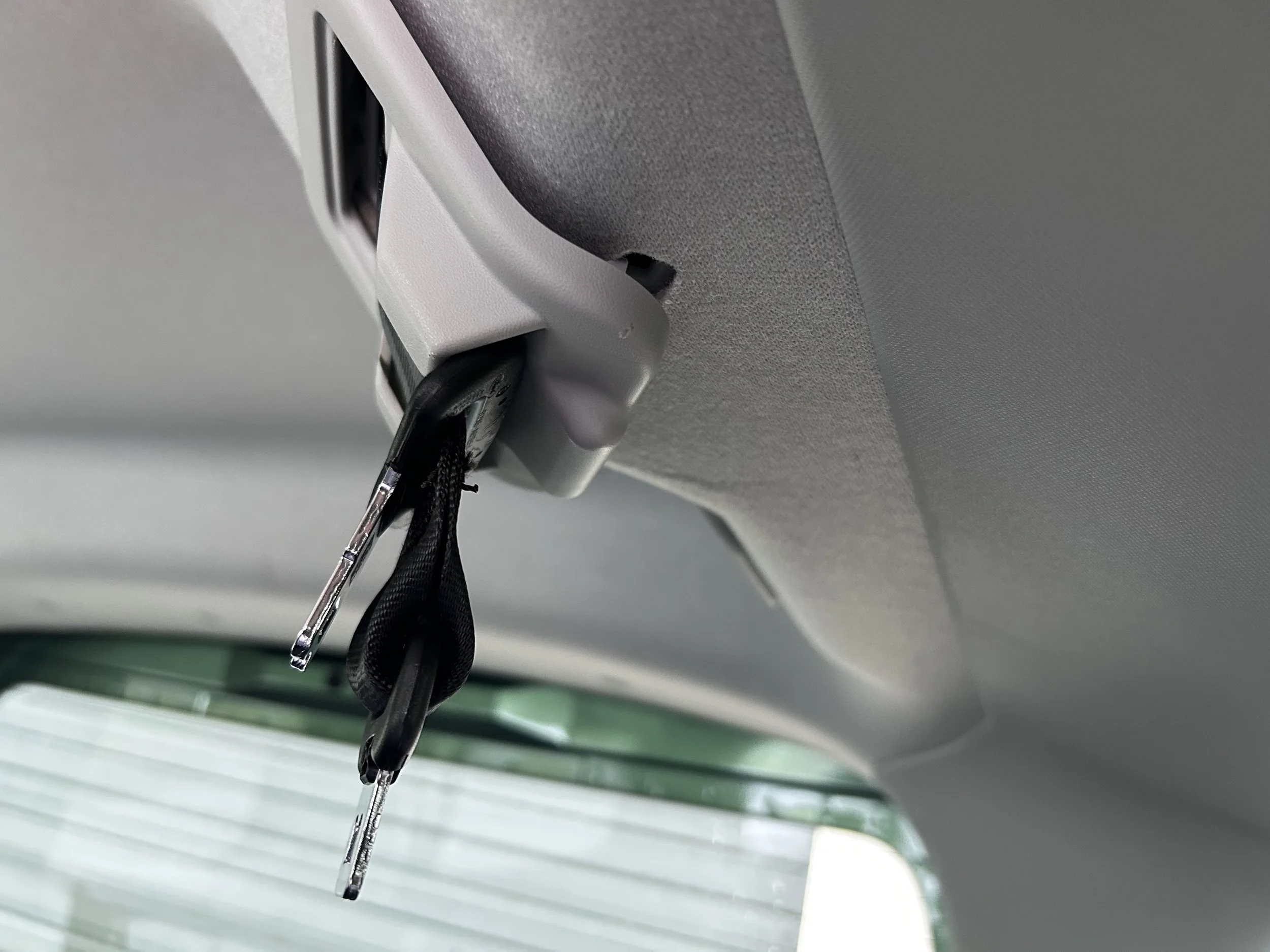
A point of interest about the back seat is that it only comes with two ISOFIX child seat mounting points, one on each of the outer rear seats, probably because it’s unlikely a third child seat will fit in the middle of the other two in the back. The seatbelt for the mid-section seat spools out from the roof on the left hand side; someone in the past had perhaps been a bit rough with it as the cover for the retractor was broken.
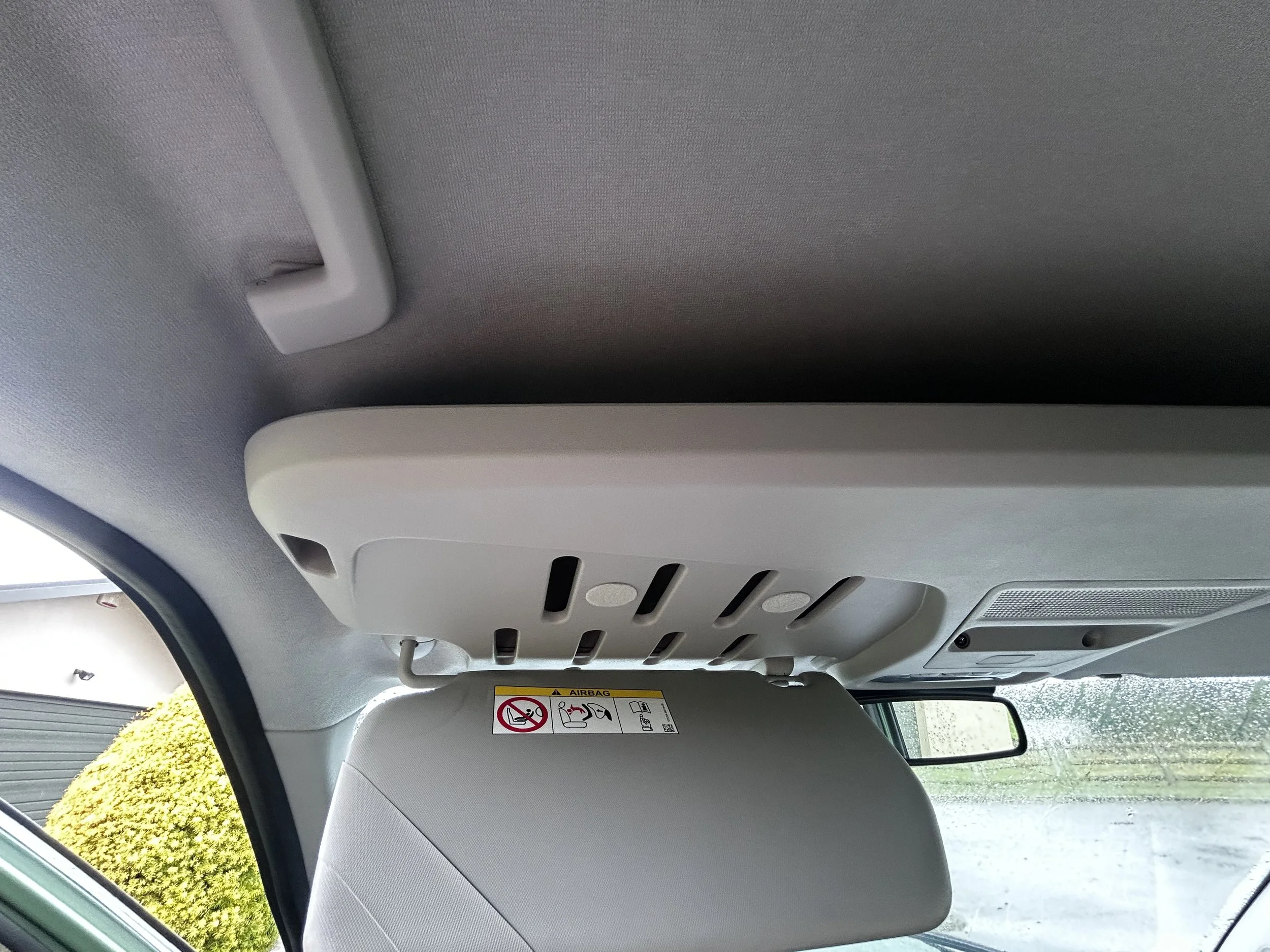
The van heritage also shows in storage solutions; particularly the big shelf above the windscreen that one presumes was designed for clipboards and shop samples. A wide slot running the width of the dashtop behind the touchscreen is another stowage spot plus, the glovebox is roomy and the door bins are generous for a car of this size, too. Logic for the strange cuboid indent into the dashboard escaped me.
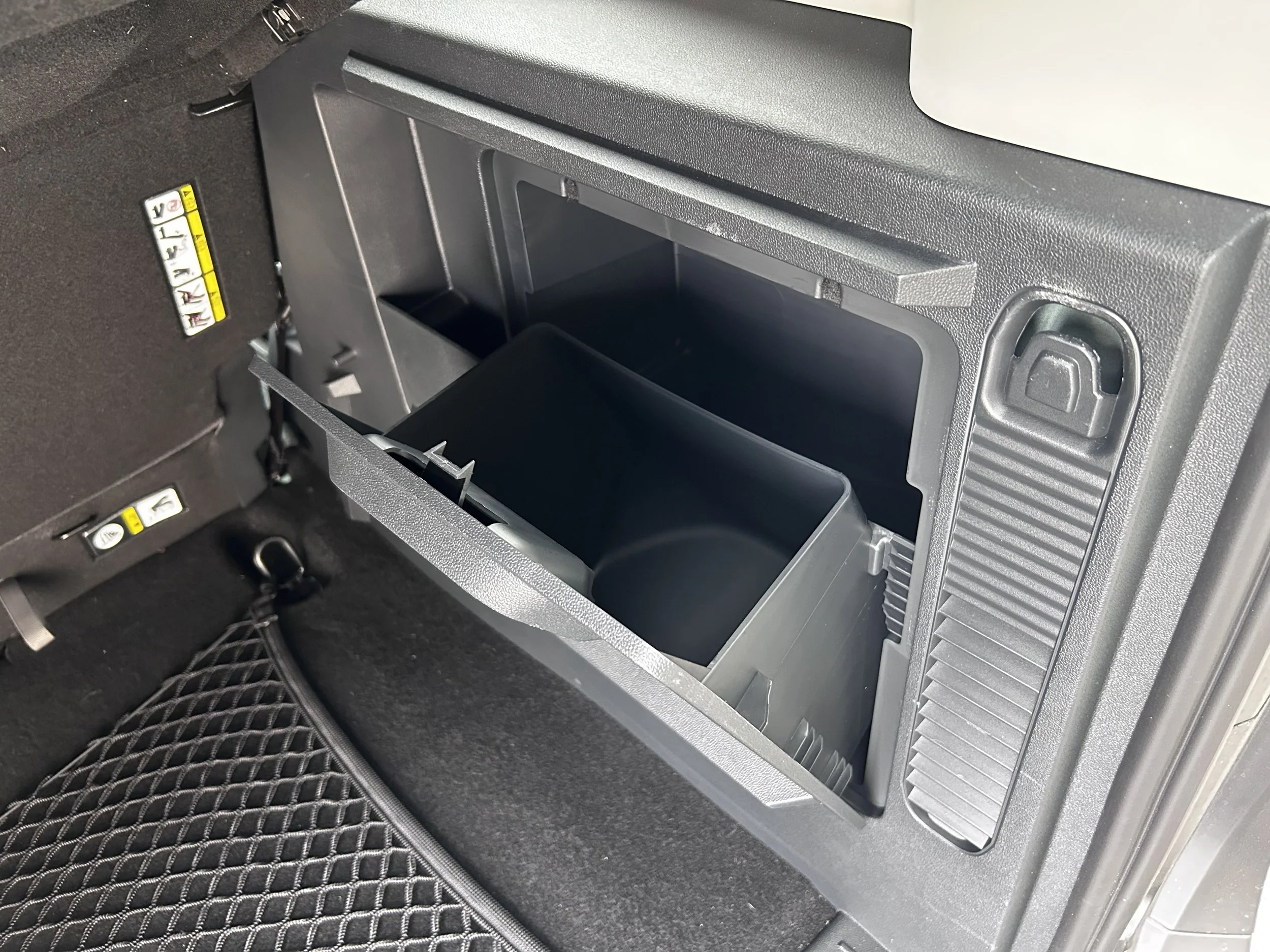
The boot has storage cubbies on either side for carrying smaller items, while the parcel shelf can be conveniently stowed against the rear seatbacks if you need to load the car to the roof.
Features include a digital instrument display and a eight inch touchscreen infotainment system; though the latest has Ford’s latest software, in design, layout and customisation terms, these are more useful than fancy. The displays look grainy by modern standards, not least for the reversing camera. But they do the job and are easy to follow.
The touchscreen having to be used to use the climate control shows up a bit of an ergonomic issue. If you’re using Apple CarPlay or Android Auto and want to adjust the temp, there’s requirement to back off out of those device-enacted functions to return to the proprietary system, from which you can access the temperature settings.
Tourneo Courier comes with a fair amount of safety technology. Autonomous emergency braking is standard, as are lane departure warning and traffic sign recognition. It achieves .
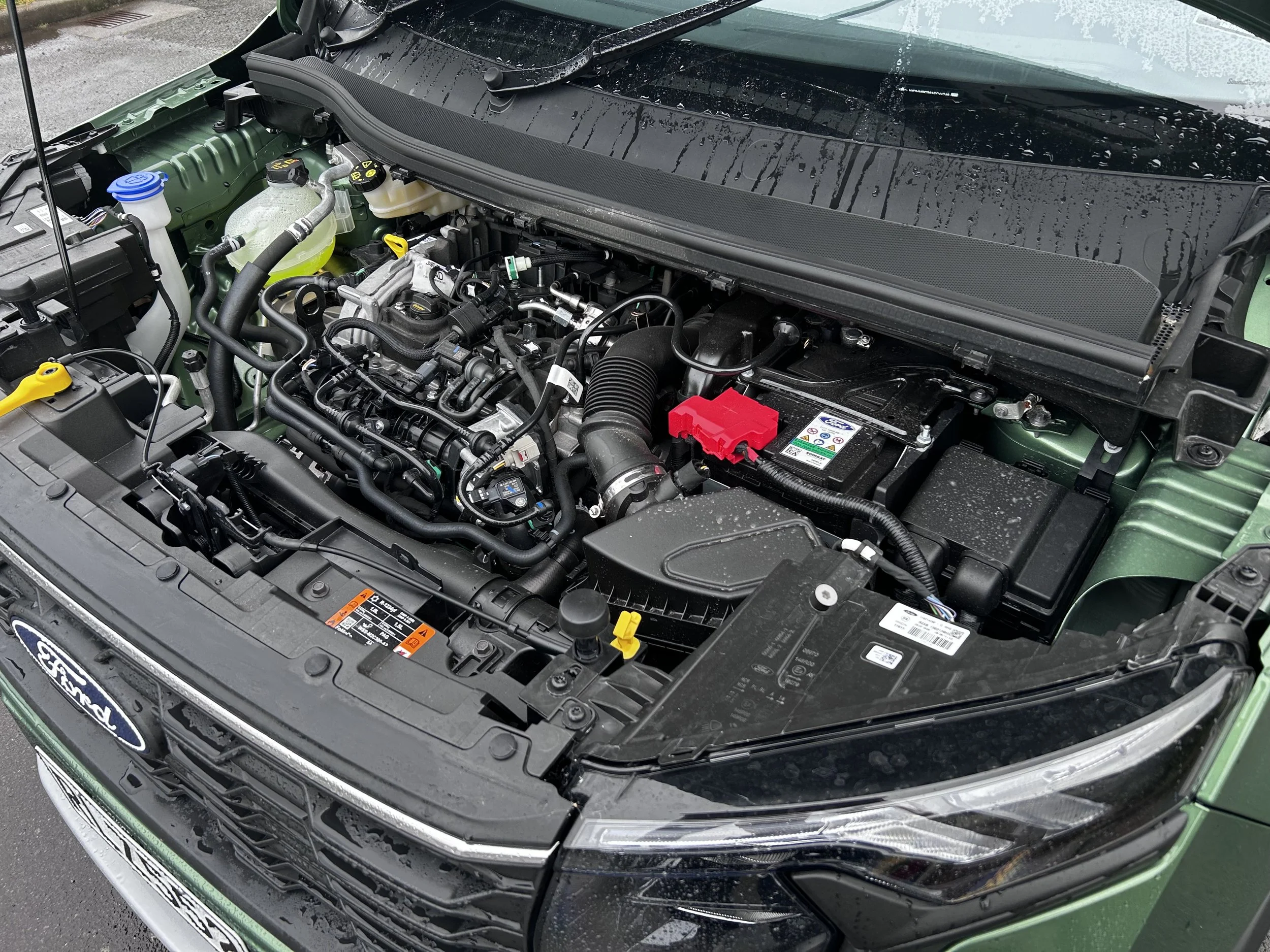
The 1.0-litre EcoBoost turbocharged three-cylinder petrol engine is the sole power plant here and hardly requires any introduction. It’s been involved with Europe-sourced Fords for more than two decades. In addition to products we’ve known directly; it has also served up in the Focus and the Mondeo.
It’s a cracking engine, not the most potent choice any longer but still holding up well for efficiency and sheer effervescence; even the mechanical sound is quite engaging when you give it beans, which it really encourages, without accelerating fuel burn.
This has always been a lean engine and though the cited economy of just over seven litres per 100km wasn’t quite achieved, it’s certainly not a hog. of course, you’re reminded that there are now mild hybrids that can achieve just as much parsimony and poke these days. Ford’s engine is responsive enough when there’s only two or three people on board, but it’s likely to struggle with a full house and weighty stuff in the boot.
Ford says the seven-speed automatic here doesn’t get quite the efficiency as the six-speed manual that hasn’t made the journey from Germany, where this car is built, but that’s not such an issue. It’s a slick box, otherwise totally-attuned to how the engine operates and makes it an easier drive, not least n heavy or slow traffic.
As said, Fiesta and Puma have shone for their driving feel; in fact, a larger part of their appeal has been a giant-killer aptitude. While they were/are very playful on country roads, they also had/have surprising acumen for sensible long-distance driving. Moreso than many small cars.
This one isn’t quite of the same calibre; I suspect just an hour or two on the open road would be quite enough. It’s not as driver-attuned.
It leans a bit in corners and the jauntier unladen ride reminds that it has suspension presumably designed to deal with lots of weight over the axle.
Nor is it as refined as those others. Most obviously, the box-like body shape is clearly not as aerodynamic; economy remains sharp but requirement to speak louder in conversation reminds that this one is less well insulated against wind, mechanical and road noise.
Keep it foremost in an urban scenario and that side of things won’t be an issue. It shines in city driving in being not just easy to see out of but also to manoeuvre. The footprint isn’t at all enormous, so it’s a cinch to nip into parking spots and the 10.7 metre turning circle allows it to u-turn in anything wider than a laneway.
That side of things, plus the packaging proposal, should make this car worth considering. Should.
But it’s all a matter of mindset and, in respect to that, it’s got a lot of work to do. For all that it does well, and even brilliantly, it comes across as a car that is a long way from its comfort zone. Key to acceptance is being able to understand the genre. And on that side of thing, we lack education.
Price-wise, the Tourneo Courier is somewhat perilously placed. What stands out as a cheap solution development-wise is far from inexpensive on arrival here.
Ford cars with this engine and platform have progressively priced upward over the years; Fiesta that started it all sold in the mid to high $20,000 band. Puma on taking over in 2020 lifted the admission to $37,990 and the sole current choice ST edition sites at $42,990.
The Tourneo Courier holding a $13k premium above that seems …. a very, very bold marketing move. Exchange rates and shipping costs hurt European product, but even so. It’s hefting by a sticker that can buy much larger and more powerful SUVs with similar utility, as many seats and at least equally smart specifications.
Electrification is making its presence felt in the van-based MPV arena and, frankly, the $55k positioning held by the petrol Ford would logically be more coherent for the electric E-Tourneo, said to be under trial for national selection. All feedback during this test suggests, with the petrol, it’s a matter of asking too much for too little.