Subaru BRZ Kiiro roadtest review: Hue to a thrill
/This year’s special edition is just like last year’s, except for having a striking new colour that costs extra. But that’s still enough excuse to reacquaint.
Price: $62,990
Powertrain: 2.4-litre naturally-aspirated four-cylinder, 174kW/250Nm; six-speed manual, rear drive.
How big: 4265mm long; 1775mm wide; 1310mm high.
We like: That it’s here; that it is so totally driver-centric; attractive styling.
Not so much: Significant road noise; engine’s growl has unwelcome harshness; looks better in last year’s blue than this year’s yellow and was cheaper.
BOTH are front-engined, rear drive, so dedicated to purity in design and engineering they seem almost simplistic for this day and age.
But the ethos driving the BRZ/GR86 is the same that fuels Japan’s world-famous roadster, the Mazda MX-5.
With either, intrinsic appeal is not about high power figures or quick sprint times. It’s the vibe that comes from both taking a lightweight, back-to-basics approach.
When they get together? There’s good natured banter between owners, but nothing nasty. Respect is mutual. Two different looking peas from the same pod.
BRZ buy-in now is different than it is for other Subaru products. With the likes of the Forester, Outback, XV and even the WRX there’s good to reasonable chance you can saunter into a showroom and buy one there and then. That’s much harder to do with it’s only pure sports car.
BRZ now it only avails in limited count special editions that come only sporadically and are sometimes all sold even before they hit our soil.
Last year there was the Tsubasa, a Japanese kanji script word that translates to ‘wings’. Obviously an ethereal descriptive.
They could have just as easily called it ‘ the blue one’ as it only came out in World Rally Blue (K7X if you need the code), a hue that once only applied to the WRC cars.
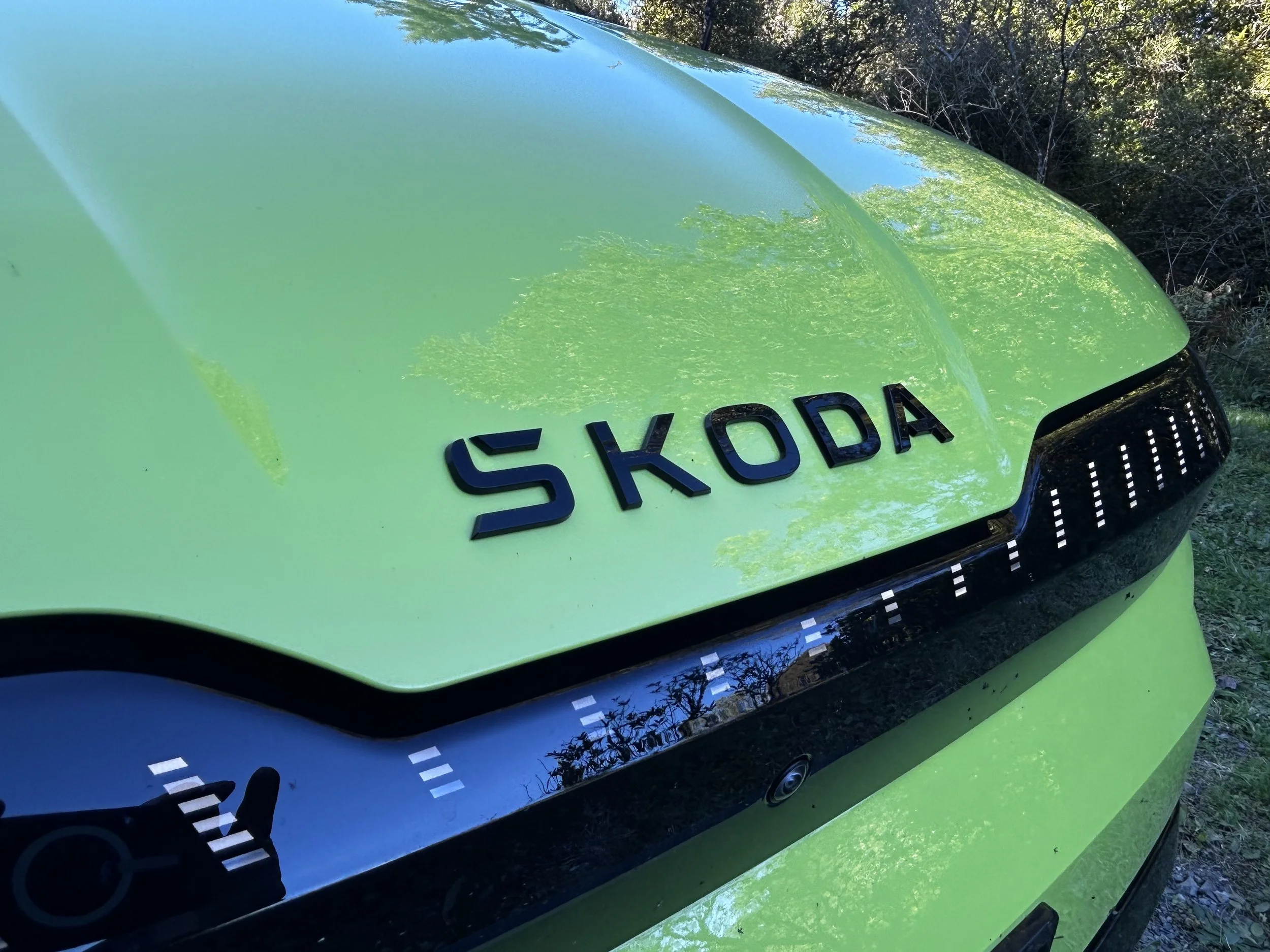
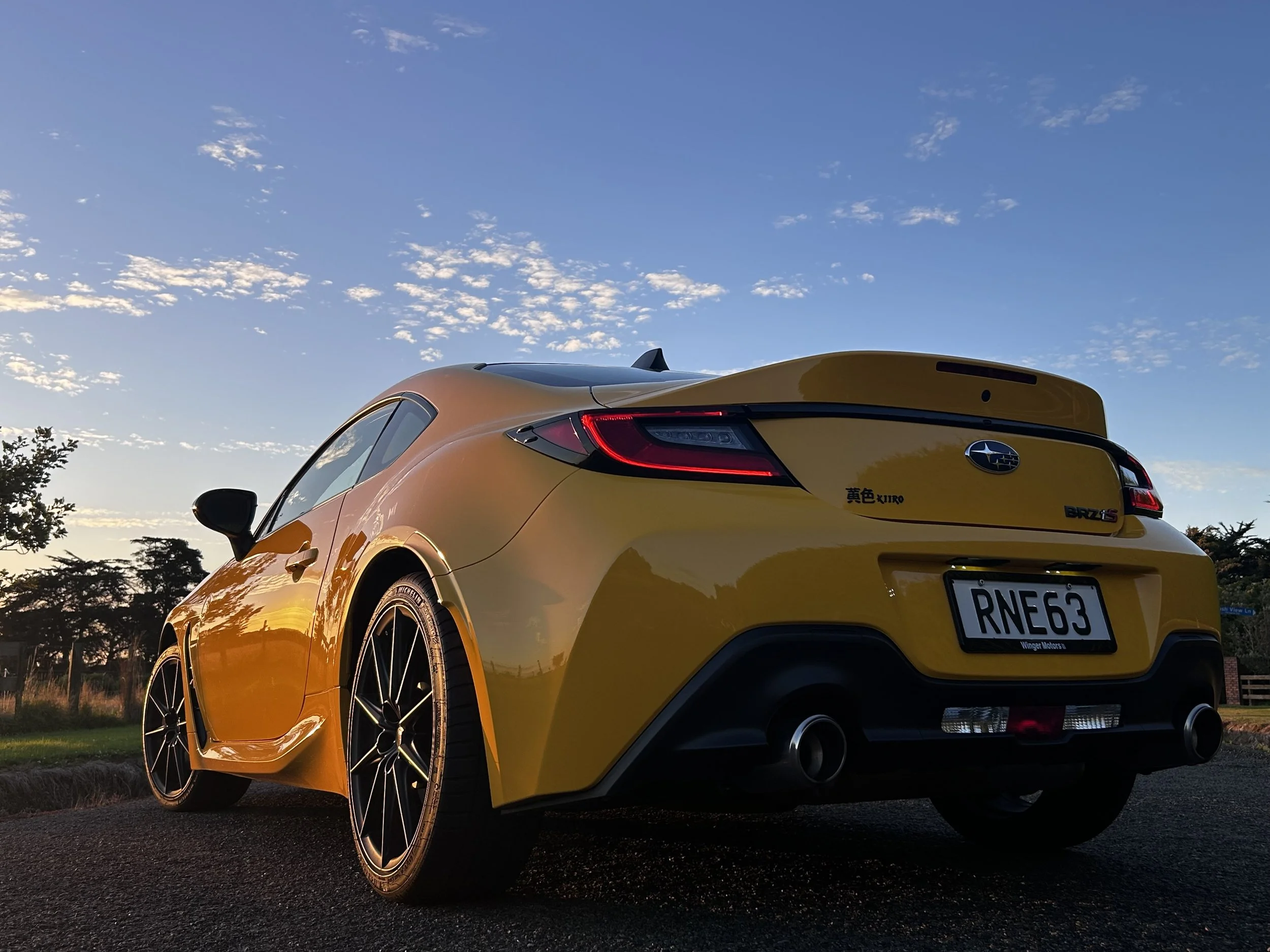
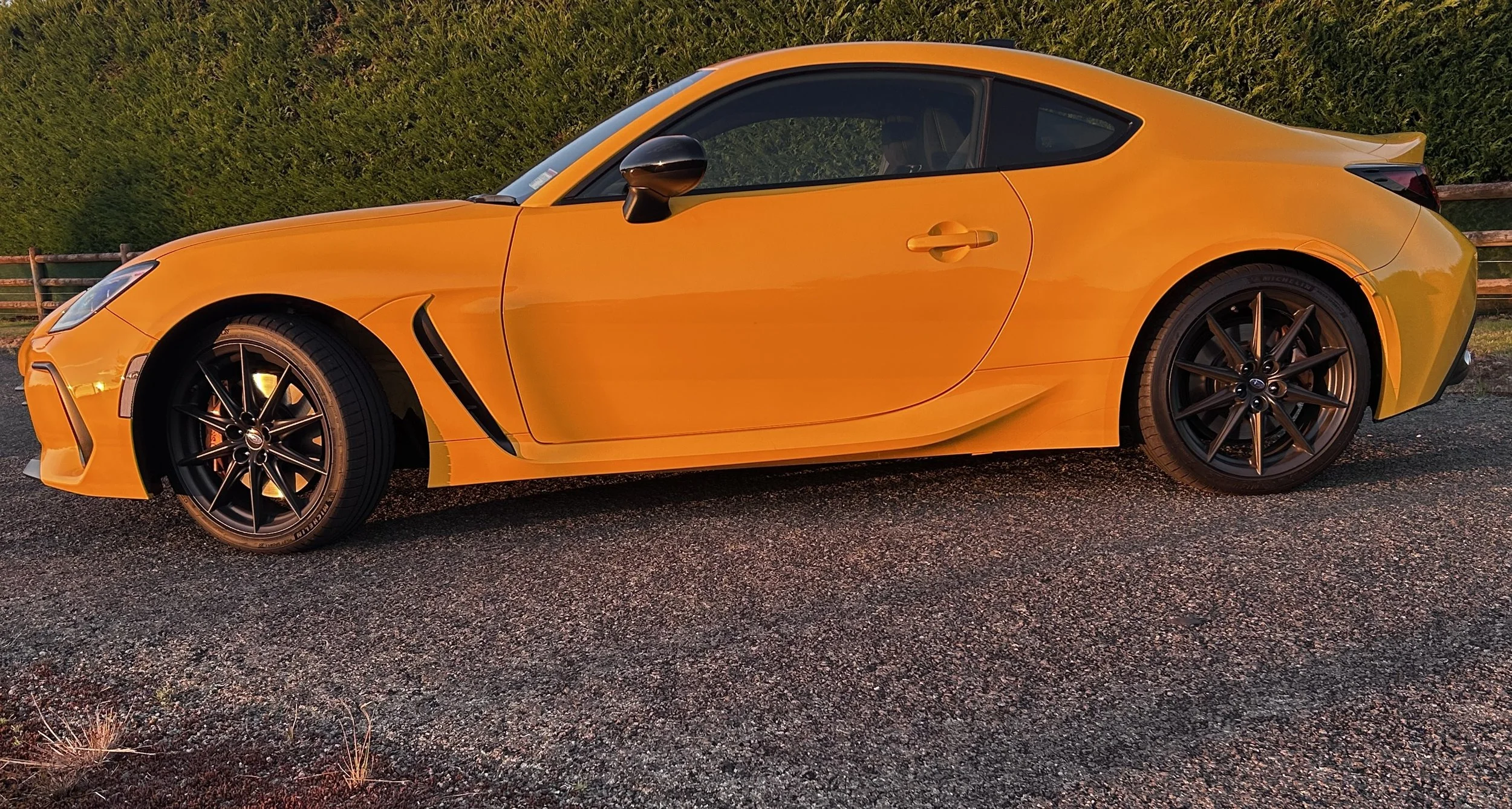
Now comes the Kiiro, the Japanese word for yellow. Obviously a literal descriptive. Because it is emphatically that.
That single colour choice (which also pervades the interior, though not overwhelmingly) aside, what distinguishes a Tsubasa and Kiiro?
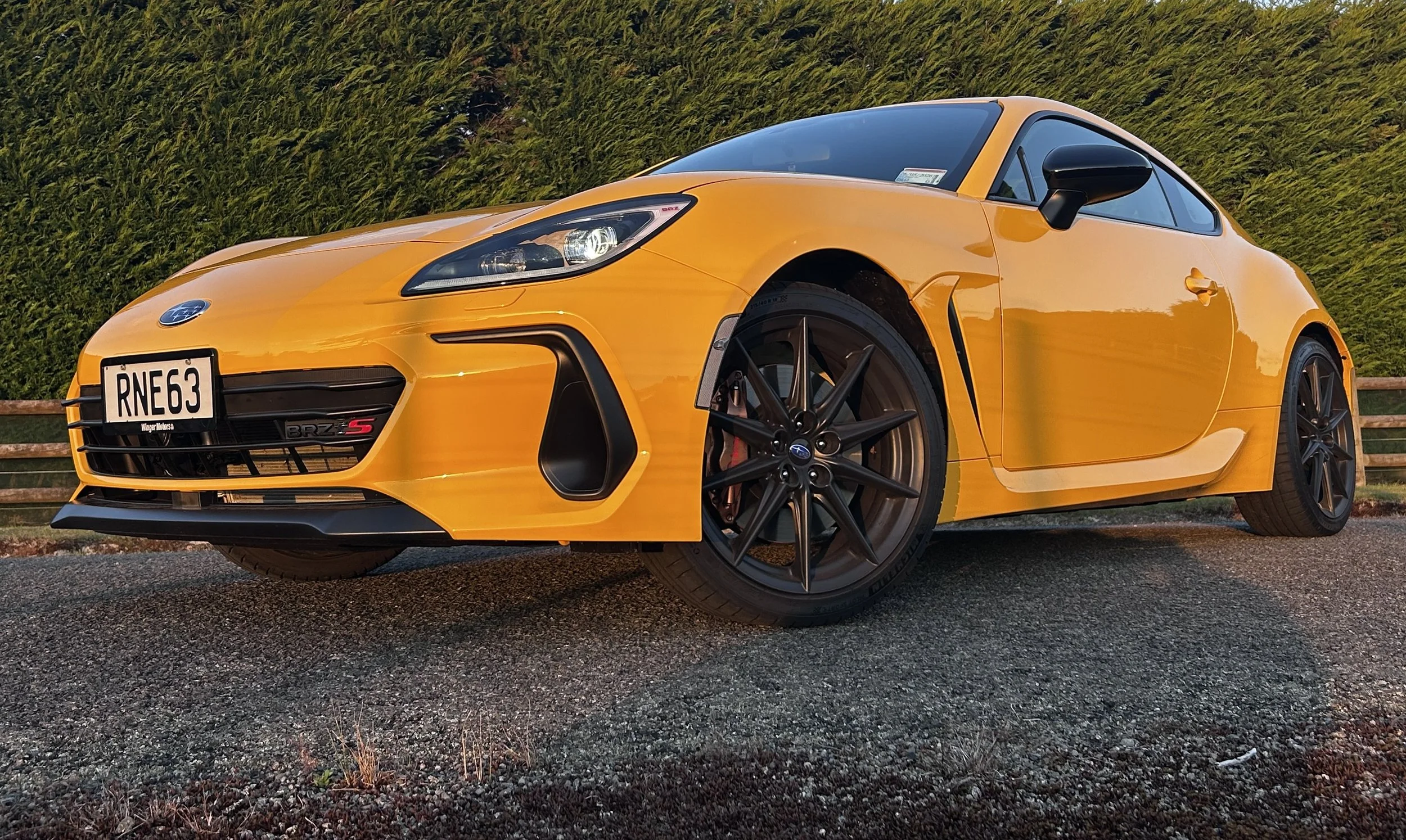
Erm … nothing really. Aside from the small matter of a $3000 premium. Simply because the Kiiro comes with a more vibrant colour than last year’s $59,990 offer? Hard to see it any other way.
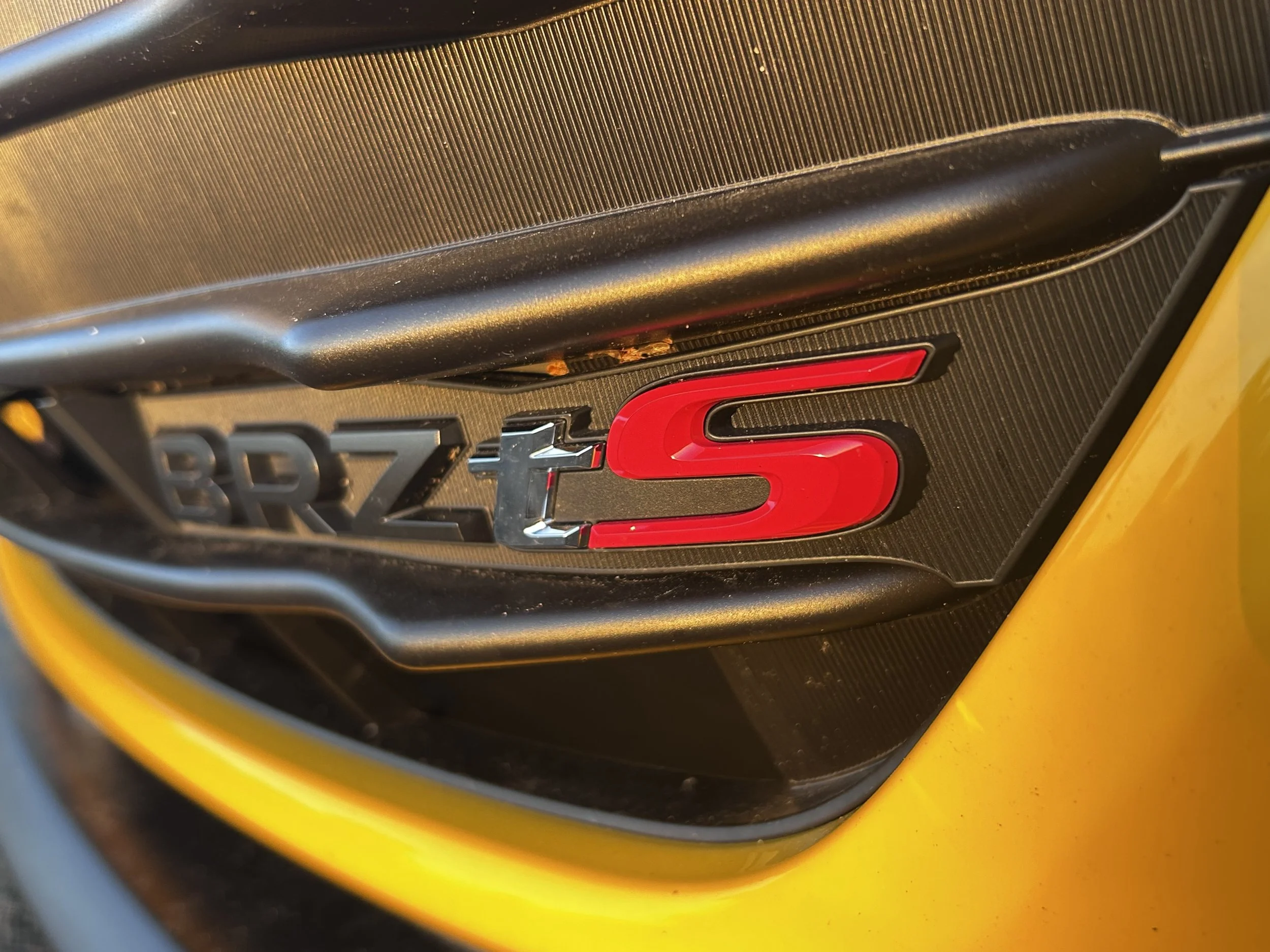
Other than this, it’s another ‘ooh aah’ special that’s a factory development of the tS, the higher-specced of two BRZ editions in build in Japan, whose designation is shorthand for ‘tuned by Subaru Technica’, the make’s performance partner.
‘Tuned’ is a bit of stretch here, as it leaves impression that they’ve dabbled with the engine. Which isn’t the case. In all the specials so far, whether with the original 2.0-litre or with the second generation 2.4-litre now firmly in circulation, everything under the bonnet is left alone. It’s the wheels, brakes and suspension that get the work.
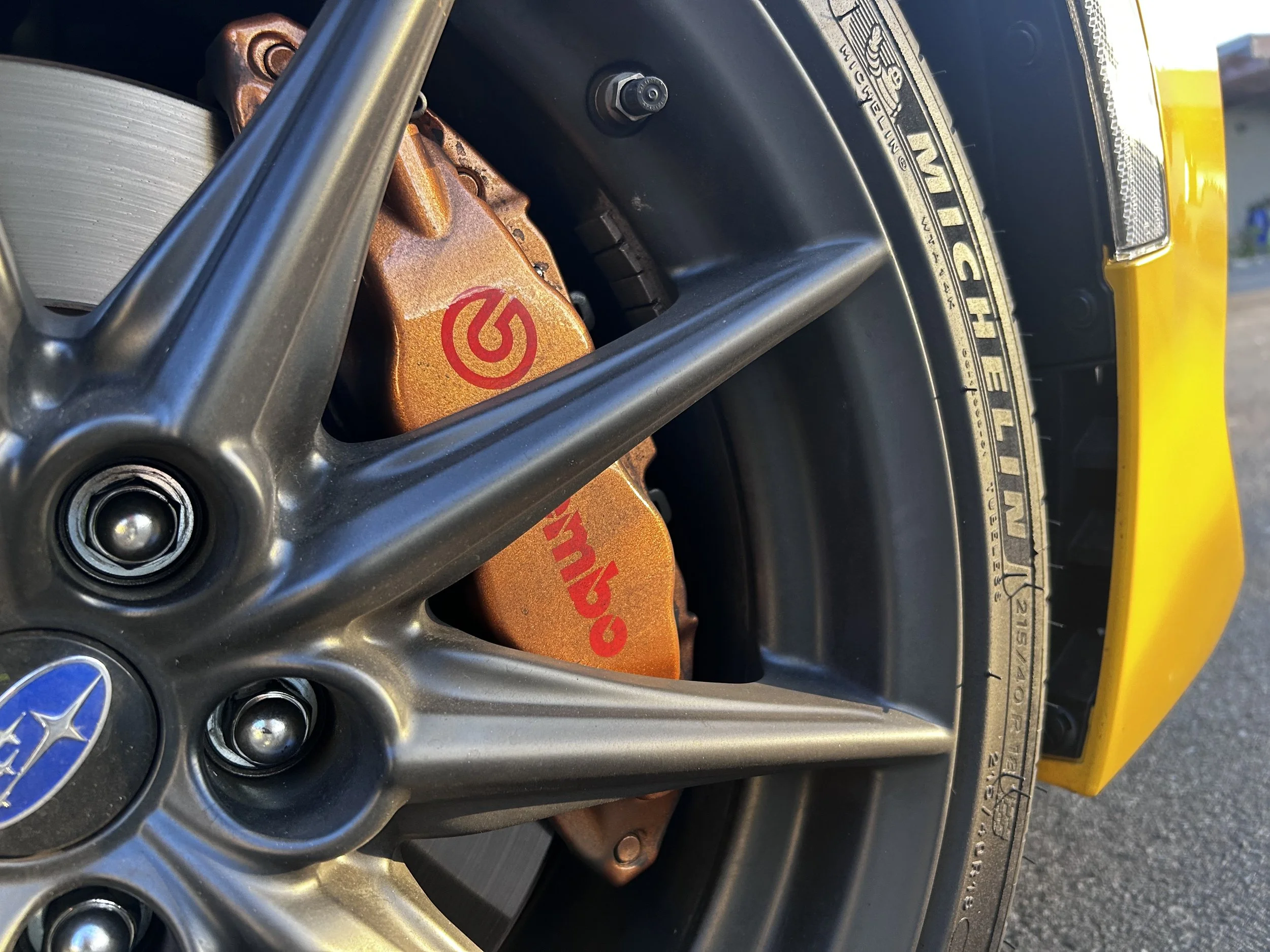
With the Kiiro, you get - and will appreciate - the same Brembo brakes, circuit-suited 215/40 R18 Michelin Pilots and shock and spring adjustments meted the Tsubasa. As both are sold as a ‘special edition’, each one comes with a individual number. Each has a presentation box for the key. But that’s just for actual owners. the press unit lacked the box. Or at least did by the time I saw the car.
And that’s it. Having driven the Tsubasa for a week, it really didn’t seem logical to dedicate an equal period of time to spend with the Kiiro. But of course, I did, because there aren’t many manual, cost effective sports cars around any more. So whenever opportunity comes along, you take it, in case it’s the last chance for doing so.
So in saying hello to this yellow … well, not for me, basically because I suspect it won’t do well long-term in our ultra violet light-rich sun condition. Still, I’d agree it’s a colour that really zings in photographs.
Pick up arrangements meant my first drive of this one came early into the evening of what had been a glorious sunny autumn day, so I wasted no time in getting the static snaps here. I’m no ace behind the lens, but was pretty pleased with shots taken right on cusp of sunset, when the altering light brought it out in an almost orange-ish glow.
With that sorted, the next challenge was to sort where best to drive the car? The Tsubasa had been put down a selection of favourite roads and didn’t disappoint. I could of course have gone for a repeat run.
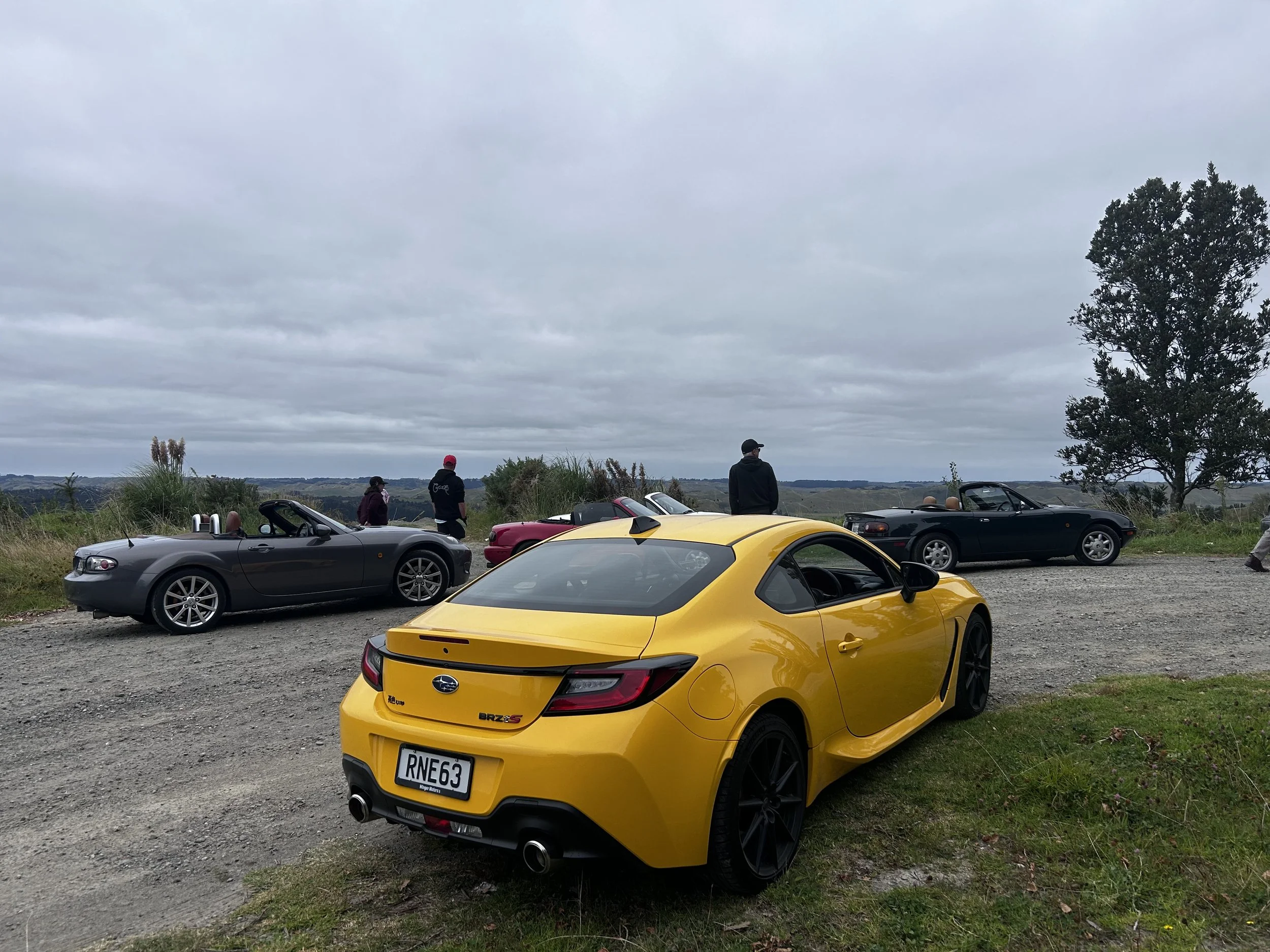
But then a chance conversation with a mate. Like me, Guy is an MX5 tragic; we’ve raced together and, back when I owned a NA road car, we were in the same local fan club. He’s got on to be the club’s convenor. We occasionally catch up for a coffee. The latest time for that was the day after I’d started driving the BRZ. Guy mentioned there was an MX5 club run that Saturday. Normally, these are type-bespoke but, as the sign-up for this looked set to be light, I was welcome to tag along on this one.
So we all met at 10am, outside the local Mazda dealership. Which is also the local Subaru dealership. Me, with a couple of NAs, some NCs and an ND; drawn from up to an hour away. After introductions and route instructions were shared, we were off, with the Kiiro tailing.
What a great fun day. MX5 outings always tend to focus on winding, secondary sealed rat runs. I think I my home region well, but Guy still found some roads I’d not taken before; so well-suited to one of the all-time-great affordable sports cars. And also to the BRZ.
I don’t disagree with those who say Subaru’s (and Toyota’s) product might sit a little in the shadow of Mazda’s brilliant pitch; this outing reminded, as others previously have, that the flat-four running in the Toyobaru is simply not as jewel-like as the engines Hiroshima places into its evergreen roadster. And maybe the slightly smaller, slightly lighter open top car is the better one in terms os chassis balance.
But on strength of this day, and my previous BRZ wheel time, I’d say everything measures millimetrically.
I wasn’t working hard to keep pace; the BRZ is equal to the MX5 is how it lets you get on the throttle a bit earlier and with greater vigour when exiting corners, roundabouts and junctions, with same potential for a touch of cheeky oversteer.
We ran briskly, but never at berserk pace. That’s not the idea of these outings; it’s all about appreciating the car, the road, and the scenery without going stupid. An average on road speed of around 80-ish kmh suits the BRZ. While it is never risking at any point being called really ‘fast’, just like the Mazda it makes the absolute most of what limited resources it has at its disposal.
The BRZ’s drivetrain is less elastic; torque is more evident from the horizontally-opposed unit, but there’s no denying this engine has less oomph from kick off and runs out of breath earlier. There’s some nice snarl when extended, but conversely it also has a touch too much of the ‘concrete mixer’ when cruising at 100kmh, when it is pulling 2700rpm. If you’re gunning to match the claimed 0-100kmh time of just over six seconds, which is a noticeable improvement on the previous type’s 7.6s time, take the time to get used to the clutch action. It’s very abrupt and too high in the pedal.
Really, though, the bigger challenge when ragging the BRZ is getting the gear changes right. MX5 owners are so lucky in this regard; with their car, it is an unmitigated joy to stir the stubby little ball-topped lever about the H-gate, revelling in a click-clack movements completely free of any slop. With the Subaru, there is less precision and more rubberiness. It is still good, but is less involving.
But, with both, you still find enjoyment and satisfaction. With either, because they are adequately rather than overwhelmingly powered, you get to enjoy their full-bore delivery without fear of immediately losing your licence the minute you get out of second gear. And, with both, the limited levels of oomph means you have no choice but to work them; which means you learn just what a diamond chassis each has.
The Kiiro is more firmly sprung than any MX5, so its body will move around less on quieter back roads. Either way, they each convey very well where their outright limits of grip are. With either choice, you sense what the marvellous steering is doing, how much braking effort you’re applying and so on. In respect to that, the BRZ’s ace card has to be those brilliant Brembos. They’ve very succinct in feel.
Drive briskly and, of course, you’re going to make a dent into the economy. But if you really expect to take the cited combined figure of 9.5L/100km seriously, go find another kind of car. My week delivered 12.3L/100km, which is still fairly decent.
Quite a lot of the Tsubasa story went into how much effort went into keeping all the weight as low down in the bodywork as possible, in a bid to maximise cornering performance. Using aluminium for the roof, bonnet and front wings has shaved away some weight, as has the use of lighter front seats and a lightweight drive shaft. And that has still made a difference despite strengthening of the platform, using more high-tensile steel in the body to ensure the car is as rigid, and therefore as responsive, as possible.
It’s no different to what Mazda did with their car, so don’t expect MX5ers to express any kind of surprise on hearing about that. To their way of thinking, everything that gets BRZ fans enthused is just a 101 logic to making a good sports car.
But it is worth reminding how that long bonnet and a stubby rear end, with the driver positioned pretty much halfway between the front and rear wheels, doesn’t just work for engineering excellence. It also makes for highly pleasing design aesthetic.
There’s no great need to go deeply into the packaging side, except to point out that the BRZ is no less a two-seater than the MX-5 is, the difference being that with the BRZ would get a rear bench with two belts that will get used because it’s simply a pointless space.
BRZ being so low to the ground enhances its sportiness ad it has an excellent driving position to match its sporty nature, but on the fun run, I envied those running their roadsters troop down because the visibility for them was so better. Marginal side and poor rear visibility are the BRZ burden; it has blind spots that can make lane changes a challenge. The rear-view camera and some parking sensors removes some stress out of low-speed manoeuvres, but reversing is still a risky business because the camera is very low rent.
The cabin treatment was a bone of contention with the old car; it just felt a bit cheap, all in all. The new is improved, but let’s just say Subaru still hasn’t exactly pushed the boat out in respect to the look and feel of the furnishings.
While the car doesn’t want for equipment – you’ll find climate-control air-conditioning, cruise control and electric windows and mirrors – it’s still plain and functional, moreso that the Mazda. The boot is small, of course, and I was highly surprised to see the Kiiro came with something the Tsubasa went without; a full-size spare in the boot.
Which is better? It’s a 50-50 call. I long ago sold my soul to the cult of MX-5; though the ND is now long in the tooth, it continues to stand out as an exceptional car. The more recent special issue ones do look really tasty. And there’s just something about driving an open top manual car, so … yeah, it’s an allegiance that’s hard to break.
Still, on this day, in this crowd, on those roads … the BRZ Kiiro came in as an outsider, but imparted as a true friend. For the most part, every bit as as engaging and involving and exciting. It’s not as polished as the MX-5, but is a rare gem all the same, and advantages by being more practical, better in bad weather and not especially expensive - it is cheaper than the Mazda. Plus it comes with a pukka motorsport heritage (albeit created here by Toyota).