MG U9 Explore Pro road test review: Big, bold and bountiful
/It’s not your usual kind of one-tonne ute - and that’s why attention is deserved.
Price: $68,990
Powertrain: 2.5-litre turbodiesel, 160kW/520Nm, eight-speed automatic.
How big: 5500mm long, 1997mm wide, 1860mm tall.
We like: Highly impressive drivetrain; spacious cabin, big deck; very good ride; some very clever tech implementations.
Not so much: A bit awkward in look; a big thing for urban use; some overly-smart functionality.
SELLING small cheap cars got MG back into business, but it’s clear this Chinese make has aspiration to be a much greater force.
The span of vehicles already massively betters what this brand was able to achieve in British hands, but the push into grander sectors shows no signs of losing pace.
Now to the one-tonne utility sector. As much as the preference takes heat - at time of writing yet another survey suggests excessive urban use - Kiwi commitment likely keeps Ford and Isuzu in business and is highly important to Toyota, Mitsubishi, Nissan and Volkswagen.
That this is a less easy playground that might outwardly appear (just ask Mazda and Mercedes Benz, whose respective BT-50 and X-Class being derived from worthy winners could keep them from failing) hasn’t deterred China Inc. MG’s compatriots LDV, GWM, BYD and JAC are also seeking to take a share. Chery is soon to follow.
MG and LDV are both part of the SAIC (previously Shanghai Automotive) empire and the numerical commonality between their respective U9 and Terron 9 products is to remind those models share the same platform, 2.5-litre diesel engine, and most - but not all - structural, mechanical elements.
But not the same market ground. LDV’s product tops out slightly below where the least expensive of MG’s three variants come in; the flagship U9 Explore Pro here is $9000 above LDV’s Elite.
No-frills-function is an anathema to any China Inc product, and the Terron 9 in isolation delivers more kit than can generally be bought in its price range. But go to MG and you get an even posher, more polished, presentation and specification.
Esepcially setting U9 apart is it having a completely different rear suspension design. Effected without injurious effect on deck load or towing limit, the U9 having a multi-link independent rear end, rather than the solid rear axle and leaf springs of most rivals (including Terron 9), cements the ideal of the MG being more specifically SUV-oriented than the national favourites and potentially satisfying all the more as a primarily recreational choice.
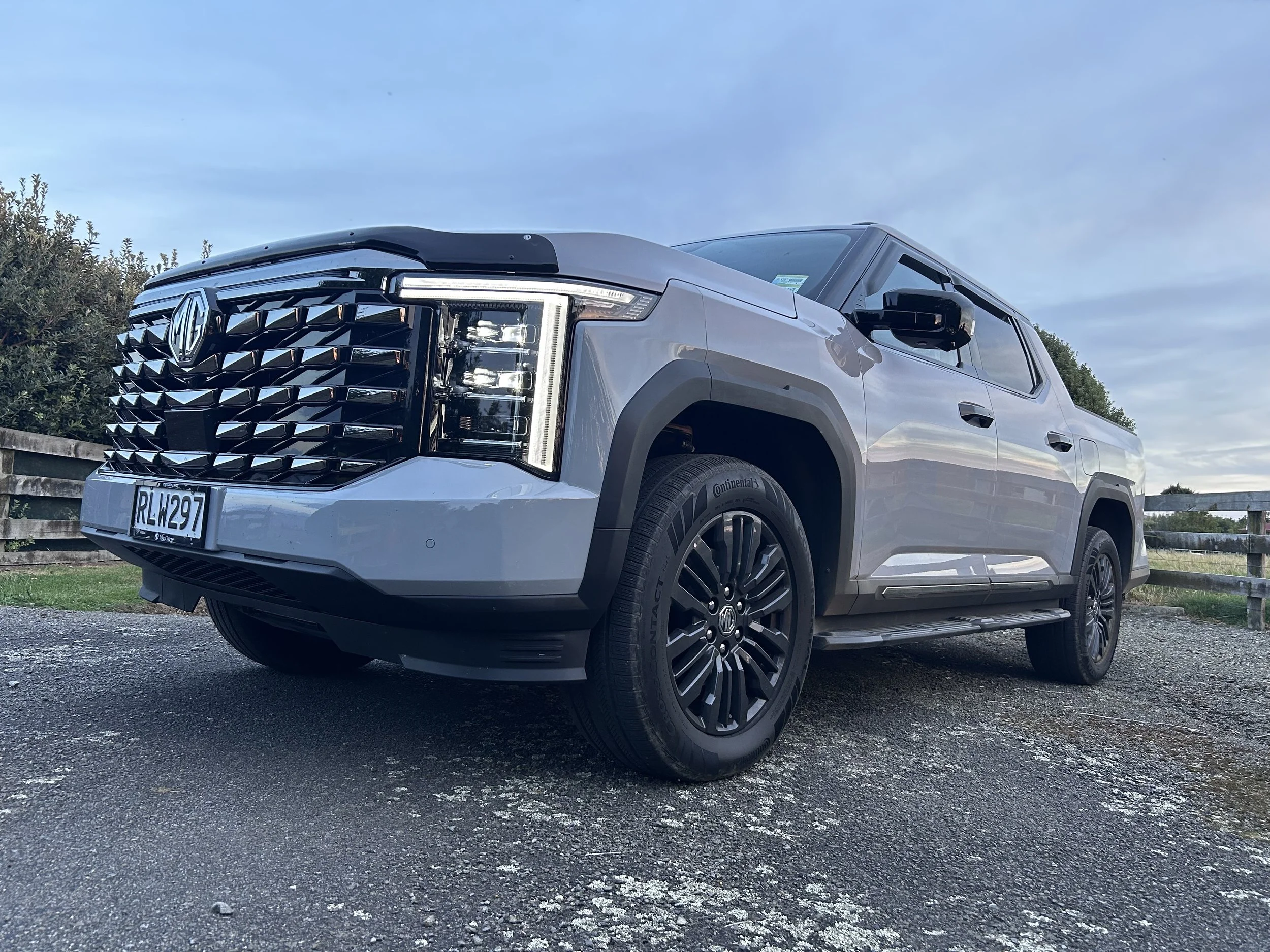
The latter ethos also drives the reason for heavier styling embellishment, the MG adding more make-up, most notably the heavily-chromed grille. Awe or awful? I’d say the front-end design doesn't quite fit in with the rest of MG's current portfolio and is an especially in-your-face element of what, overall, is a strangely eye-catching thing, though really more than just the design alone is set to draw attention.
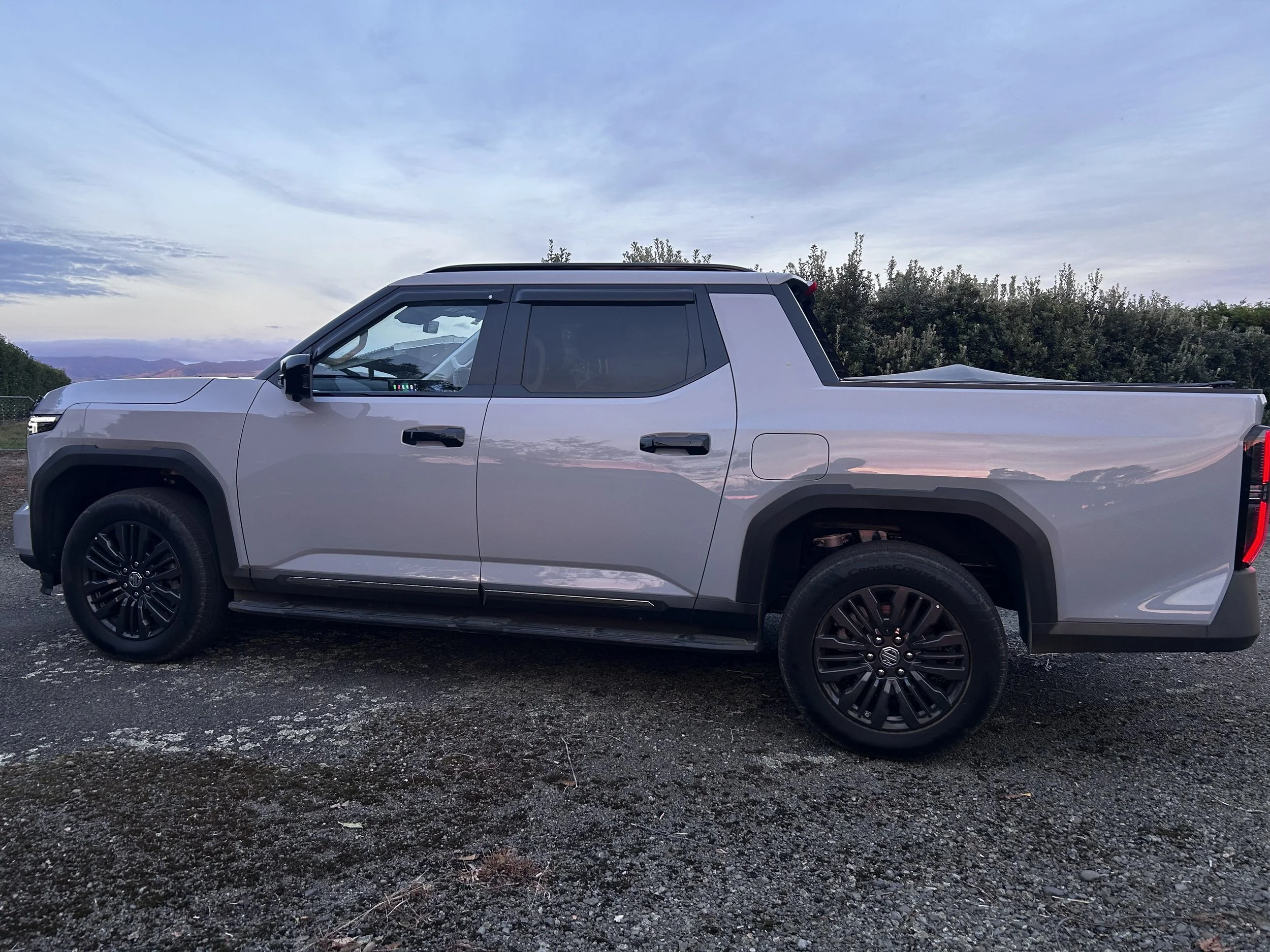
American in styling ambience is not the end of it; impression the U9 has somewhat more than class average dimensional substance is absolutely proven by the measuring tape. It’s not just that this offer is longer, a bit wider and - for the most part - stands than a Ranger, Hilux, Navara, Triton, Amarok and Tasman.
What really reinforces where it stands is how it isn’t all that much smaller than Traydeck Town’s biggest inhabitants, the Chevrolet Silverado and the Ram 1500. The MG’s imposing stance helped by the range-wide fitment of 20-inch alloy wheels.
Around town driving is most obviously when might have to cause to wonder why the U9 needs to be quite so large. Even so though it has a full inventory of sensors and cameras, you nonetheless tend to think awfully carefully when sizing it up for a tight parallel park. Even when there’s room aplenty, you tend to snug it into the kerb to keep whatever extremity is exposed to traffic doesn’t jut out too far.
The plus of having so much substance is that it marries a usefully-sized deck to a very roomy cabin that offers genuine stretch out space in the back for adults. While there is penalty in respect to kerb weight - even the lightest of these tips the scales at a porky 2450kg - that doesn’t impact on performance.
The 2.5-litre, turbo diesel, four-cylinder engine is a simple start for a model with a full electric (and possibly a hybrid or plug-in hybrid system) in its future, and might seem a light-lunged unit for such a large vehicle, but veracity of extremely decent on-paper power and torque outputs is proven by nippy step off and the tow rating being the class-standard 3500kg.
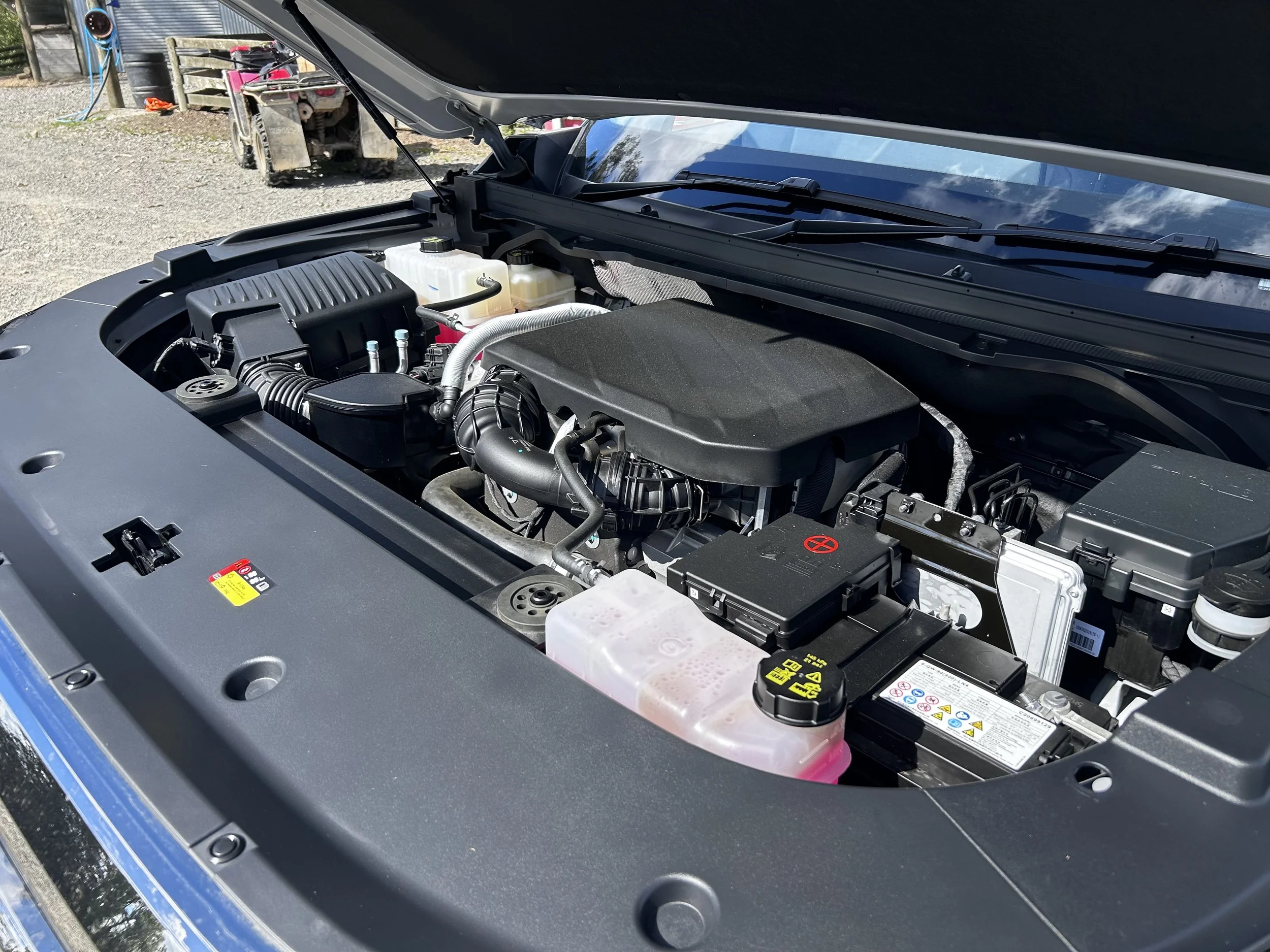
What also feeds confidence is the type’s use of high-quality components from known, respected third-party suppliers.
Rather than develop its own transmission for example, MG has opted for the excellent eight-speed ZF that has performed well in multiple Audis, BMWs and many Land Rovers. There’s a Borg Warner 4WD system, and Bosch electronic stability programming. Knowing those ingredients are included could well help mitigate any sense of foreboding about the risk of buying a vehicle from a challenger brand.
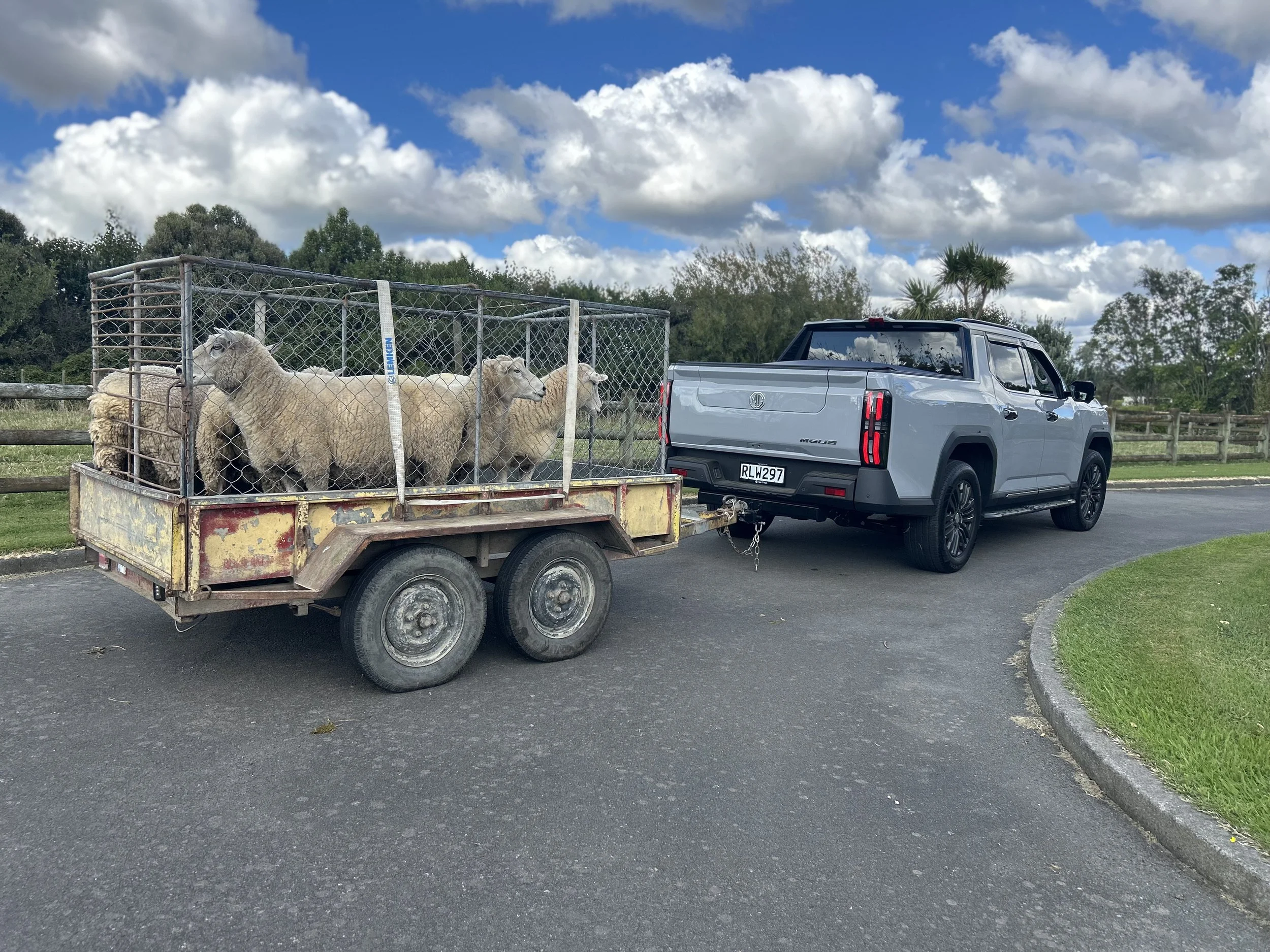
While the credibility of its hardware was tangibly proven by the U9 being used in applications expected of a fully practicable utility - notably when hailing a trailer-load of sheep not just to, but onto, a friend’s farm - you cannot escape this version being very much attuned to attract those see more attraction from using a ute as a weekend pleasure craft than a week day work site toiler.
Those who look to the utility side will see the deck itself is pretty orthodox, with decent tie downs, an electric plug in point; this one had a sturdy plastic liner and a fold up deck cover. A cargo security railing system is fitted to the top sides of the tub, with adjustable cleats to ensure your load is locked down. The status of when, or if, a canopy is coming is a grey area, but all in all it’s as well-designed as any other.
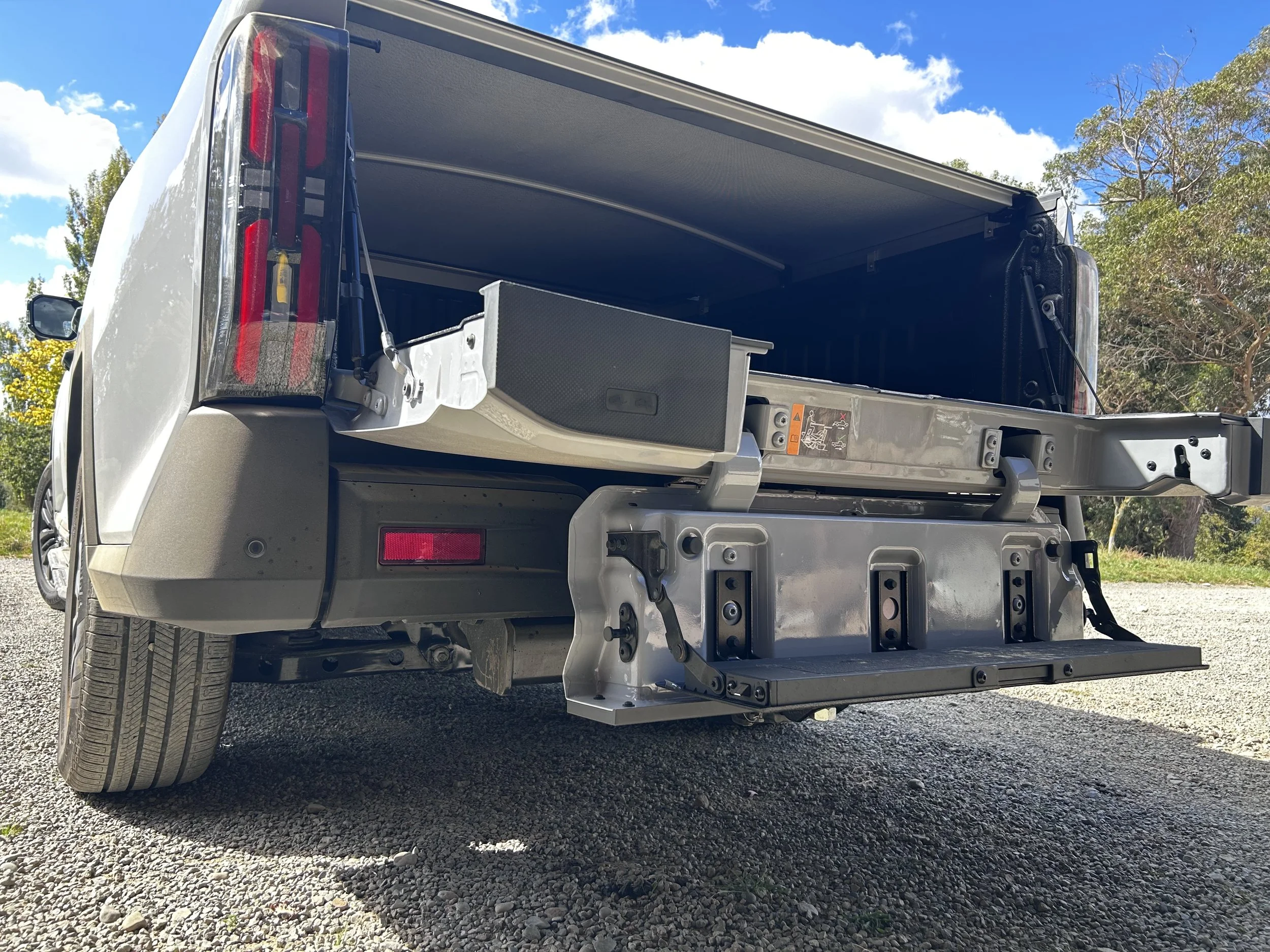
The tray end is where you start to first appreciate the outright clever touches. It seems a bit sad only this grade achieves the retracting step built into the tailgate, rated to take up 160kg; logically a person lugging a feed sack.
It is also the sole version for which you can factory option in, for $6190, the ‘smart hatch’ - a rear firewall that drops down to open the rear of the cab right out to the tray. This liberates more than two metres of load length, but it’s not quite flat and has a weight limit of 120kg, so stands more as a cool point of difference than a genuine game-changer, but still ….
One neat feature across all U9s is the soft touch pad for dropping the tailgate. Whether it proves to have the long-term robustness of a simple mechanical latch remains to be seen, but it’s neater avoidance of dirtying up your hands with road grime residue.
There are supposedly 32 storage zones. Smart solutions abound within the cabin, where in addition to the usual cup and bottle holders it has nice sleeve space in the door, a reasonably large centre console, and a glovebox that locks when the doors do.
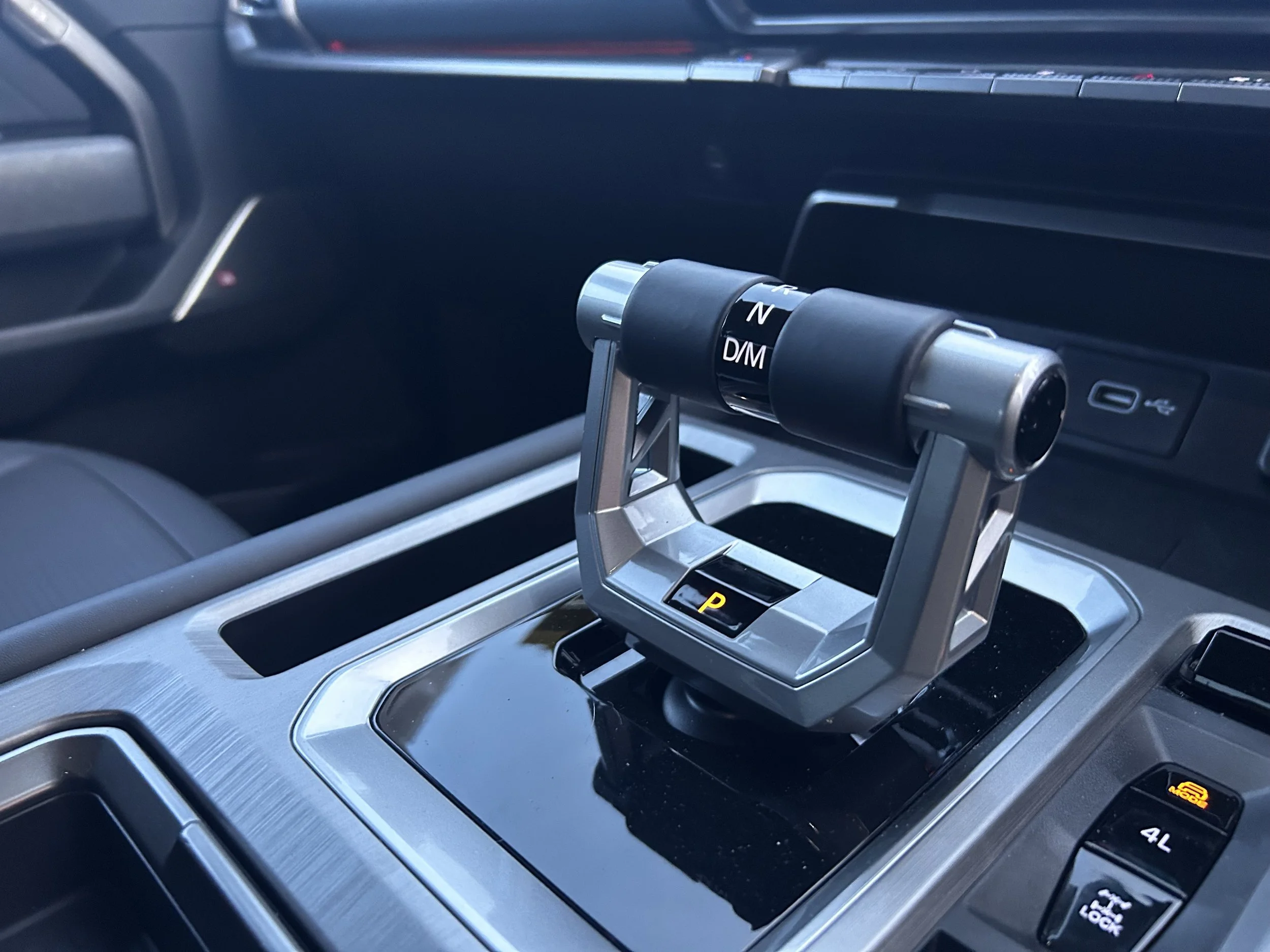
Inevitably, so design goes a bit too far. What to make of a gear selector styled to look like a dual throttle control from a multi-engined aircraft? Answers on a postcard. Personally, I couldn’t quite fathom any advantage over a trad great shifter, or MG simply doing as LDV has - making the selector a wand behind the steering wheel.
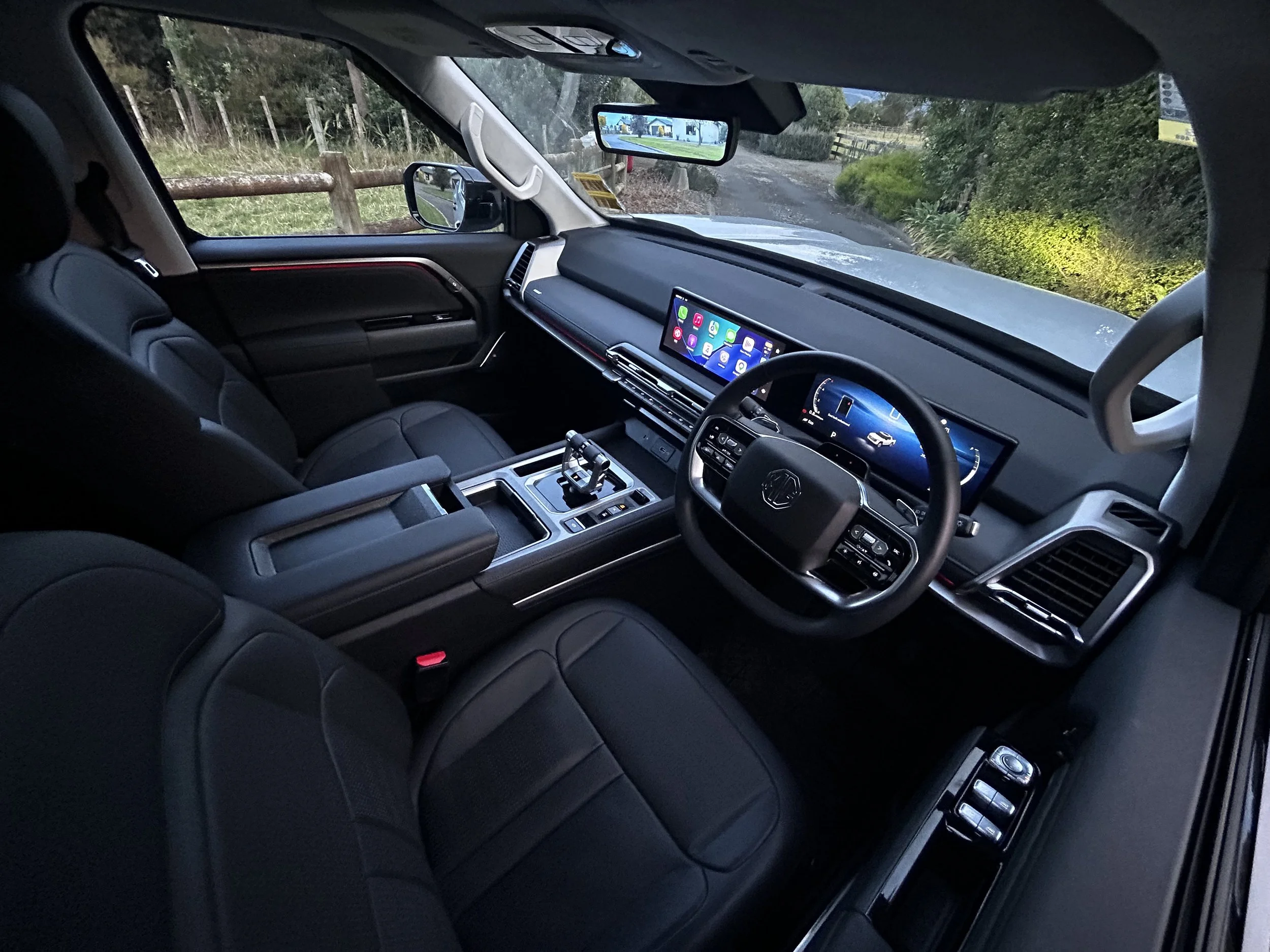
The rear vision mirror being a camera view is a classic tech one-upmanship on shaky ground, and another fundamental is too try-hard. It’s strange to see huge handles on the A and B pillars, but overhead grab handles for passengers to use when driving on rough ground.
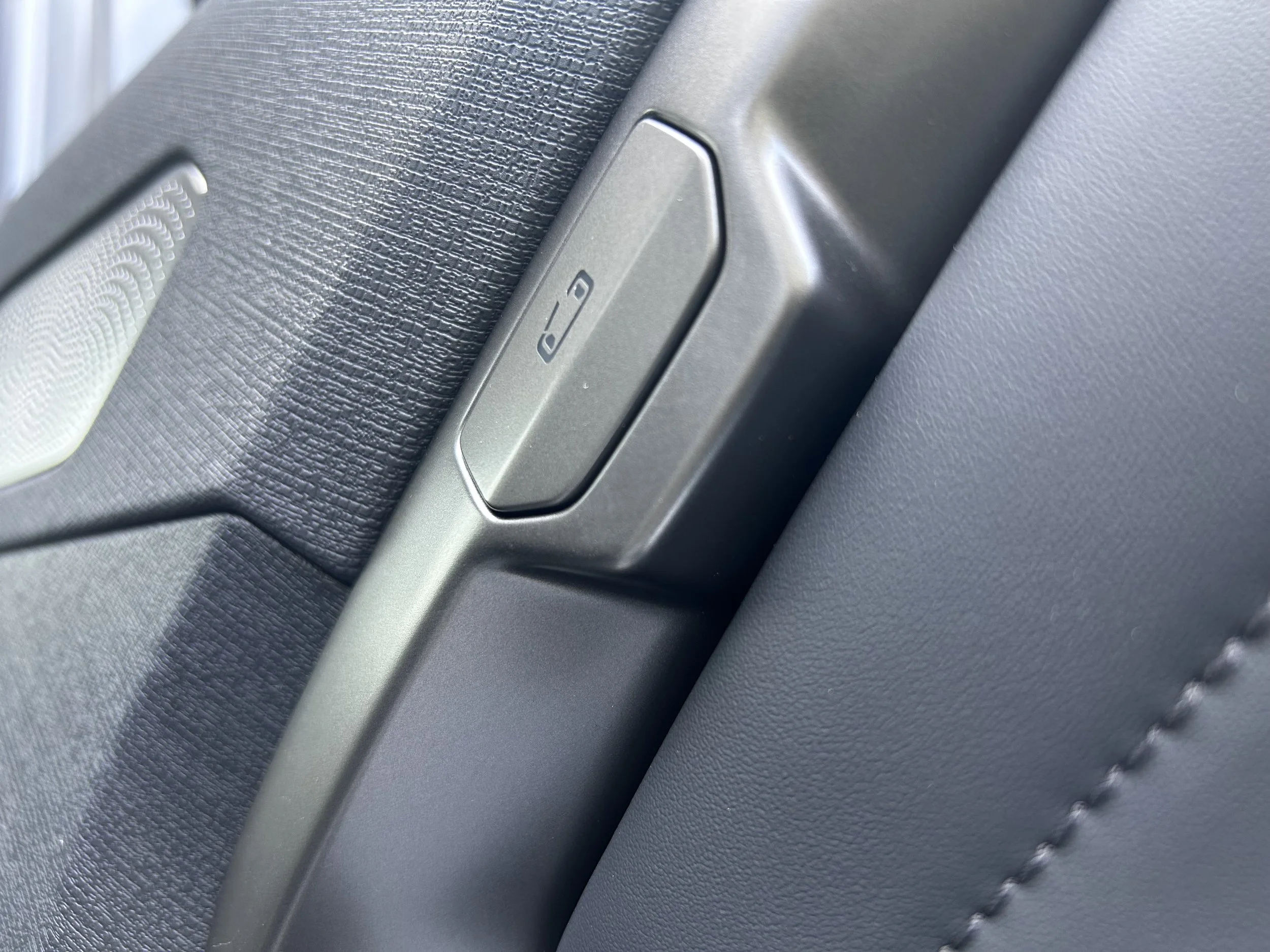
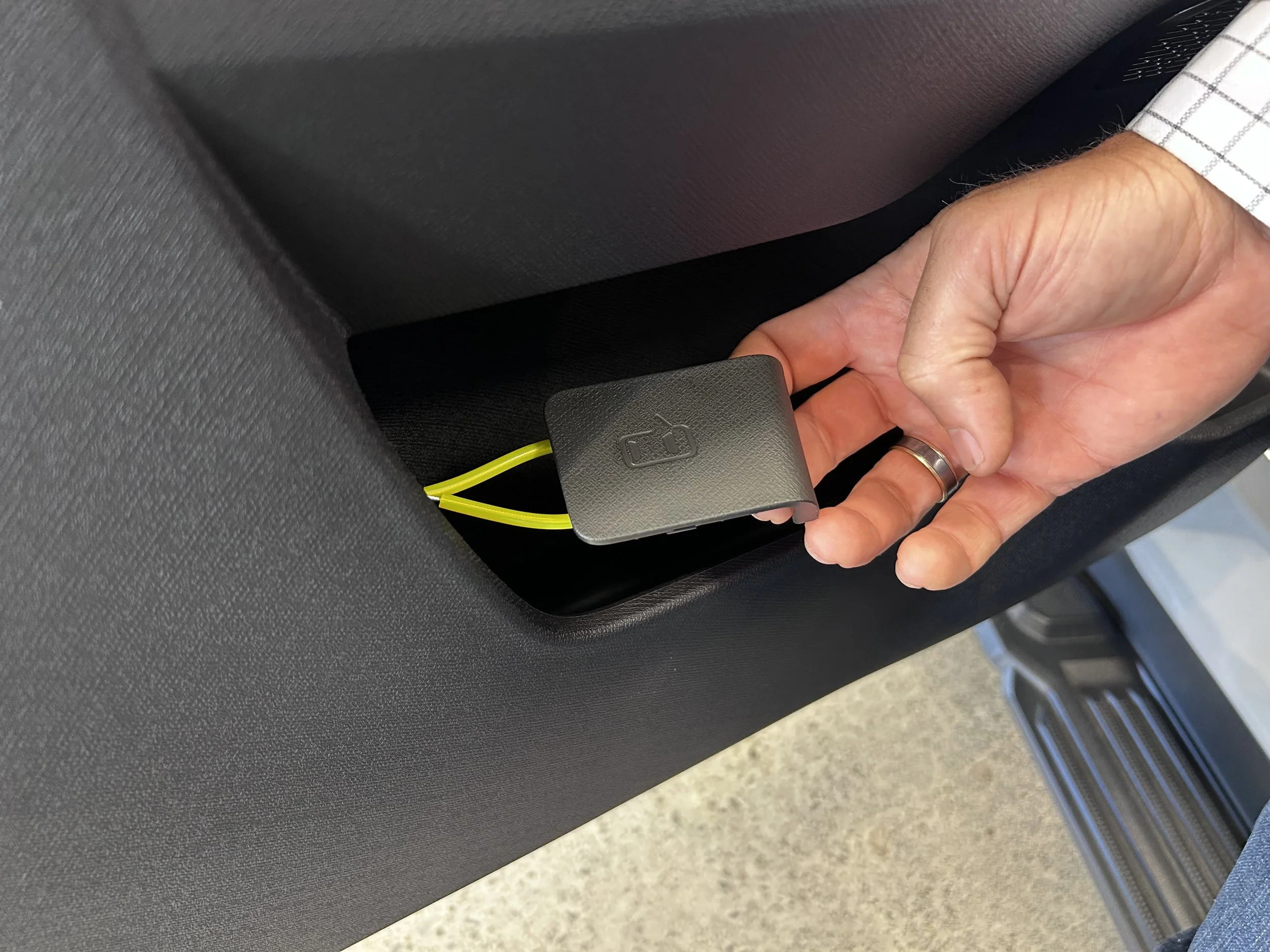
Haptic inner door releases in a vehicle of this kind does seem over-egging; during our rural escapade the father and son farmers on board were also annoyed the U9 wouldn’t even allow them to decamp until it was at a full stop and in Park. These are blokes used to decamping as their own vehicles are still rolling to a stop. Not necessarily smart, but the kind of thing that you find happens with workhorse utes.
The elder couldn’t work out how the door opener operated initially; it hardly helps that the secondary mechanical latch that regs mandate it has to have is so well hidden. I’ll admit the location remained a mystery throughout test; a salesperson revealed all subsequently. The design which requires the occupant to detach a plastic handle and then use it to pull a cable is clearly for emergency use only.
So much about the U9 at this level reminds is more about family fun than work face function, but given buyer patterns that’s hardly an impediment.
At highest level plush materials abound and it looks too nice to treat harshly. The vegan leather seems hardy, but those carpets would surely not abide too much mud being caked into them.
The delivery of twin 12.3-inch digital displays – one for the driver, with a range of information on show, and another for media and car controls - is quite snazzy and it is comprehensively kitted.
Wireless Apple CarPlay and Android Auto is getting to be the norm, now, but the eight-speaker JBL sound system is especially good for this price. So too heated seats front and rear and vented seats up front.
Big screens are a big part of life, now. MG’s here are some of the best high definition types I’ve found; the 360 degree camera images are extremely good. The towball hitch view makes for easy line-ups, and there are favourites that you can set up for a caravan, box trailer or boat trailer.
In overall operability, all the same, this is a better version of MG Pilot that earlier renditions. The system is responsive to commands and having a menu bar on the side, which, stays there even with your phone connected, is highly useful. You can nip back to anything in the native menu system pretty smoothly.
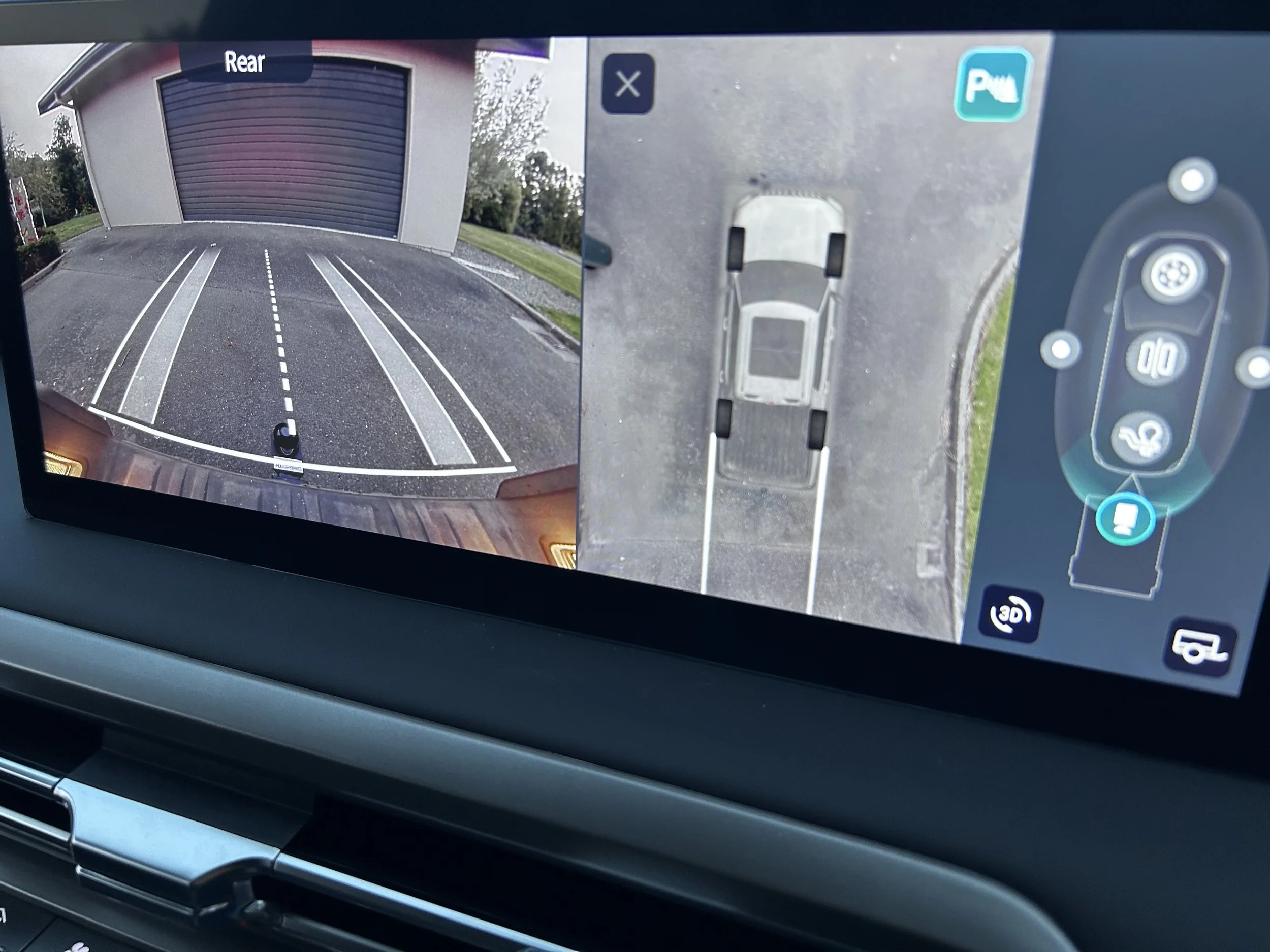
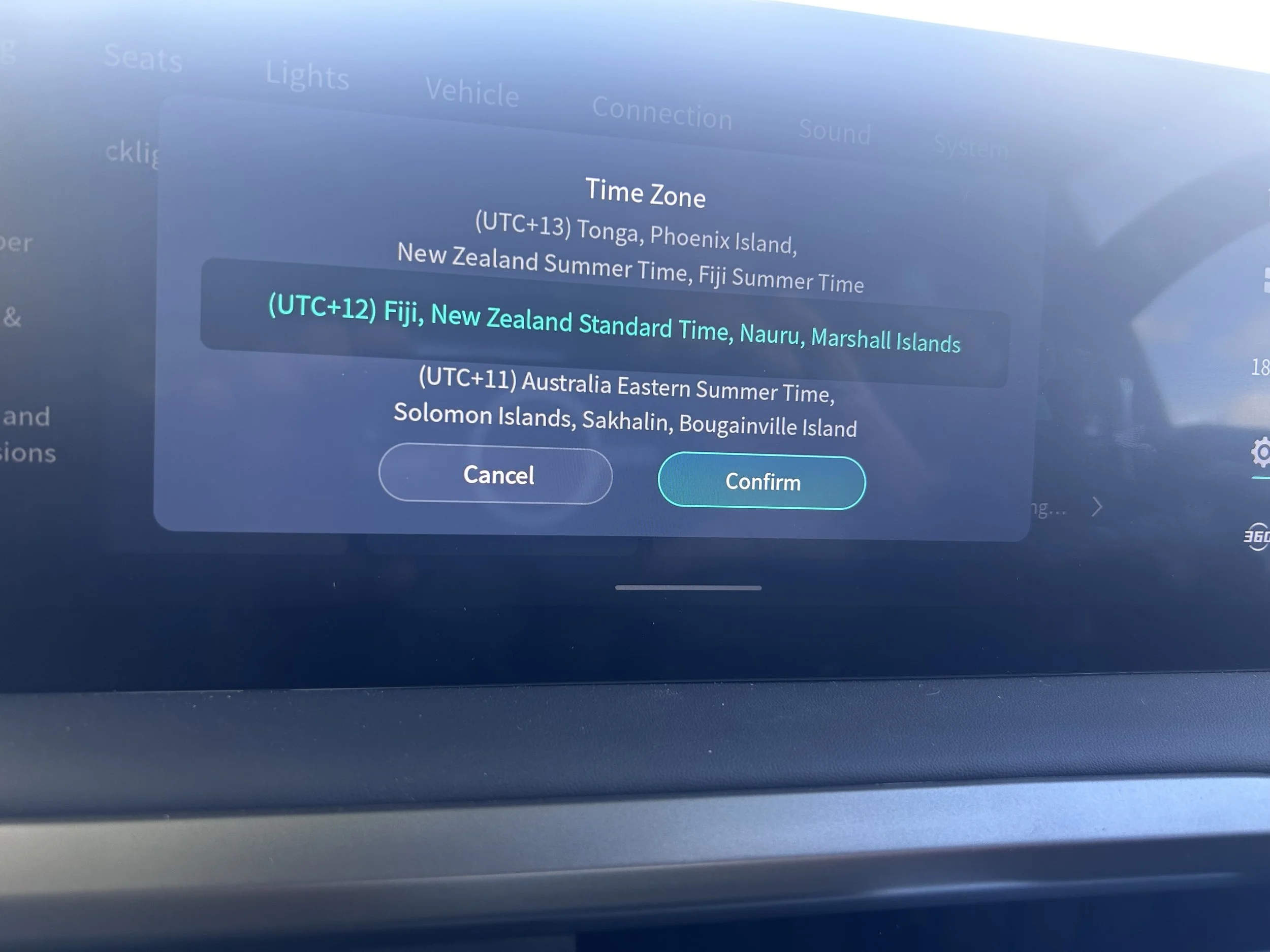
That’s not to say infotainment doesn’t ask for some acclimation, and some quirks still linger. Daylight saving ceased midway through test so the clocks required adjustment. This proved a whacky submenu chase ending on a page that denies you ability to directly adjust the numerals but instead asks that you go to the most appropriate of numerous pre-set international time zones. I mean ….
Thankfully it is better attuned than earlier MGs to defuse the driver assist irks that are part and parcel of every experience with cars from China’s domestic makers. You cannot stand all those bings and bongs when you yawn, fail to drive to a speed sign posting or keep tidily in your lane? In the past, the best idea was to put a tape over the driver monitoring camera.
Now you can simply deactivate them, with every change bundled so that a simple touch of a steering wheel shortcut button keeps them silent. Admittedly, this function has a curious twist, in that it only works when the car is working, but only at slow speed, but better than nothing.
It’s worth exploring all this because there’s an absolute abundance of settings and adjustments. Connected services are included as well with an app you can download to your phone to adjust climate settings among other things.
As screen-centric as it is, it’s great to see MG provision physical controls, including dual climate zone toggles and fan buttons, along with demisters. Weird you still need to turn on the recirculation using the screen controls.
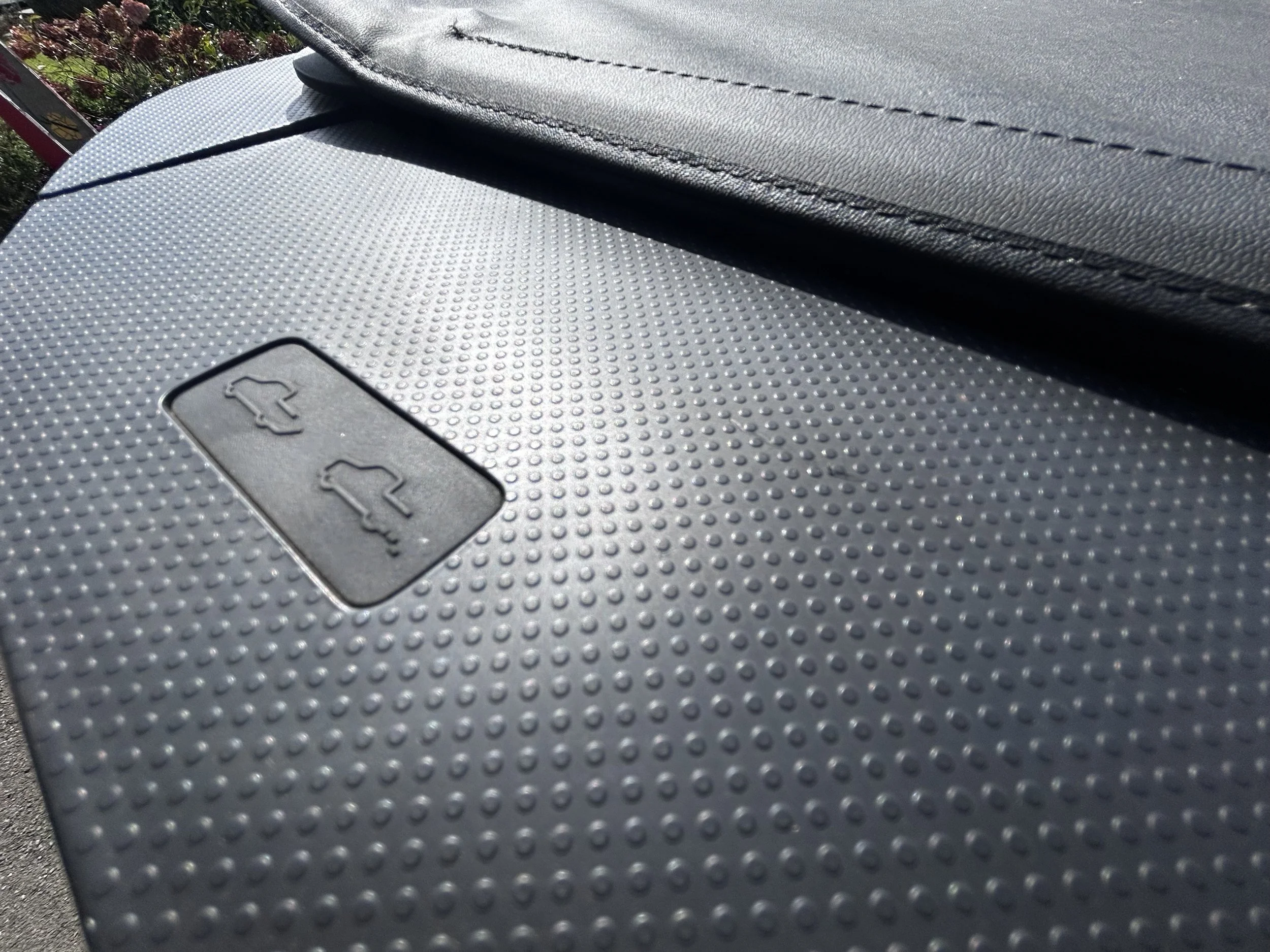
The U9’s adoption of entirely electronic operation for its park brake, drive modes, 4L (low range), and differential locking system (yes, it has front and rear diff locks) will doubtless be treated with caution by old-schoolers, but in general operability it all seems to be reliable enough.
The test unit was driven mainly unladen; the single biggest job it was given was to tow a tandem trailer loaded with five fully-grown sheep; our flock of ewes was heading to a friend’s farm about 25 kilometres away, so they could be put in lamb. That drive included not just getting them to the property but something unexpected: We have to drive up a series of formed tracks the paddock where their beau awaited.
The ute hadn’t felt particularly lardy or lead-footed on the move, but how would it go in the slow-speed off-seal stuff? Not too badly, actually, though that episode did highlight need for caution about one aspect, that being the drivetrain’s calibration to regress to Eco setting at start up. Doing so rather than beginning in the next-up Normal is curious.
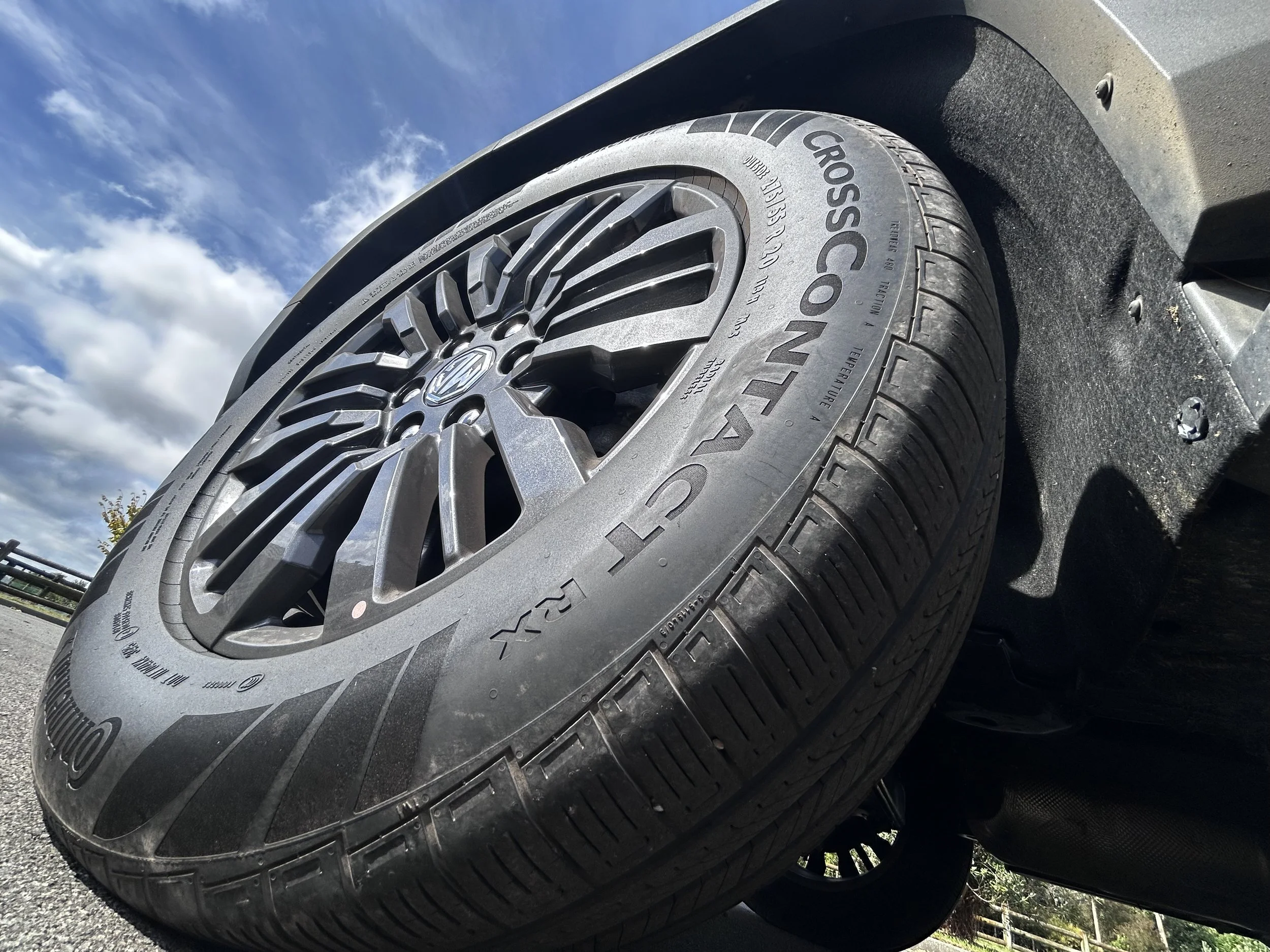
Eco isn’t hopeless for on-road use, but it caught me out of the farm when I forget to alter this before tackling a gravel ascent; it simply ran short of puff then started to skid up the seal-tuned Continental Cross Contact tyres as well.
It was simple enough to reverse back onto flat ground, where I not only reset the engine mode but also enabled low-range (which you need to shift into neutral to do), and selected the rock driving mode. With that, there were no issues climbing to the top with very minimal slippage. Throttle modulation seemed to be smooth too. We subsequently played with th diff locks and found it all the more adept.
Put a ute on a car-like suspension and there’s give and take; but honestly, it’s unlikely the buyer type this edition clearly aims at feel too much of a burn.
The deck can still accommodate decent load, it tows well enough and the level of compliance from the unladen ride quality is pretty good. Everyday driving is smooth, but it’s when heading down a rutted gravel road when you appreciate the balance and stablity. I’m saying it’s the best way of doing things if you want a ute to work, but if it’s needed just for convenience and play then … yeah, why not?
What helps the U9 isn’t just that it ride well, but that it also feel stable and solidly placed, with good steering and brake feel. Sure, it’s not the kind of vehicle you want to chuck about too much, but that’s almost all utes. As is, it delivers a genuine weight and precision which bodes well for everyday users.
The suite of electronics seem able to take care of any unnecessary wheelspin or tail-happiness without numbing it down too much, plus it is really refined. Suppression of tyre and wind noise is commendable. It’s just the thing’s sheer bulk that will challenge; even for those of us who sit tall, the view down that bonnet alone is surely akin to how it must feel fro an aircraft carrier captain looking down the flight deck.
It seems remarkable that, a few years ago, the best utes from China were still fairly rudimentary, hard-to-like vehicles that basically sold on strength of being cheaper than anything else and that’s about it.
Now they’re pushing hard for acceptance on grounds of being better value and often technology leaders - it’s fair to suggest the most obvious immediate rival for the U9 is the GWM Cannon Alpha, in plug-in hybrid. A very different approach again in being petrol-electric, but like-sized and kitted and $1000 more than this Ultra.
In isolation, U9’s biggest challenge is probably it’s size - in respect to dimension, it’s arguably a bit too much of a good thing for some occasions - and that it has yet to stake any credibility for long-term integrity. Ute people are fussy about that sort of thing.
Live with that, though, and if you want a vehicle that has to fill in as much to meet familial needs as fundamental requirements, it could well be ticking a lot of boxes.
Having gone to this vehicle with some degree of scepticism about its actual chops, I happy to admit there’s plenty about the U9 that deeply impresses.
The all-electric variant is eagerly awaited.