MG IM6 Performance road test review: Mensa in motion
/Cutting-edge electric tech, a lot of kit and astonishingly powerful. Could it get any better?
How much: $89,900
Powertrain: Dual electric motors, single speed transmission, 572k/802Nm, all wheel drive, four wheel steer.
How big: 4904mm long, 1988mm wide, 1669mm high.
We like: Genuinely fast and refined; decent cabin space; pricing edge.
Not so much: Confusing technology with some functionality flaws; usual ADAS grumbles; inert handling; poor rear visibility.
TESLA baiter yes … but a Tesla beater?
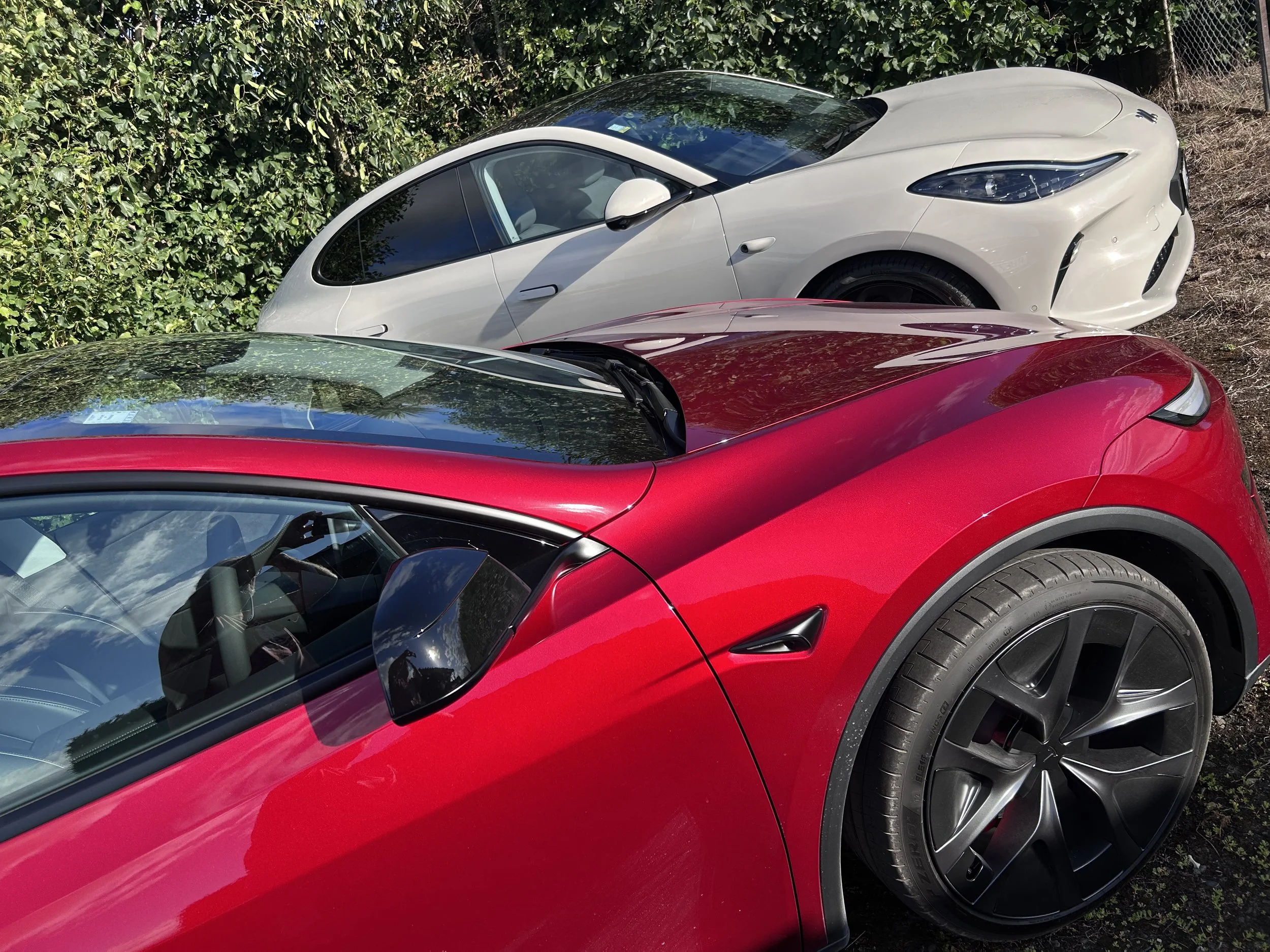
When there’s a Tesla Model Y Performance in the driveway and the IM6 out of MG - sorry, the IM ‘presented by’ MG - comes along to share that space for a few days, the question is of course impossible to ignore.
Especially when both are in their optimal dual motor, dynamically-finessed flagship Performance guises.
So if those variants are on your shortlist, which to have?
The only Model Y sold here that doesn’t come out of Shanghai (but Berlin, Germany), the hunkered most aero-aide affected and biggest-wheeled one that for $100,900 offers 343kW/741Nm, 0-100kmh in 3.5 seconds?
Or the new threat ‘born in China, built by Sino-Brit MG but presented as a wholly different entity’ flagship of the three-strong IM proposal? A slightly larger if somewhat vaguely lookalike model packing so much more stonk - 572kW/802Nm - feeding off a bigger battery (100kWh NMC) and a conceivably more advanced suspension, also with top-drawer rubber, big brakes, is 0.1s quicker to the legal limit and is $10,910 cheaper?
Spoiler alert … if it’s just between those two, and driving enjoyment is your priority hope, then a six figure spend could be more rewarding.
Reasons will be be explained in an upcoming test of the top Tesla but from this experience it comes across as, in the main, the more focused, more enjoyable, better considered of these cars.
Surprised? You wouldn’t be alone. Honestly, I truly imagined the IM6 would run closer, perhaps even ahead. Similar technology, minimalism, zip, zap and range, after all.
In reality, the gap seemed as wide as the price difference and they really didn’t even feel like full competitors, to be frank.
Before getting into that, some background about IM, given as it has arrived as a clean sheet idea.
This is an MG project, but not by badge. The “MG Motor” script on the tailgate is only included for some export destinations, such as ours, where the brand(s) anticipate customers being so unwitting they need an icebreaker clue to what IM is all about.
Which is? 'Intelligence in Motion', a joint venture between MG's Chinese parent company, Shanghai Automotive (aka SAIC), the Alibaba Group - yeah, the on-line seller of everything - and Zhangjiang Hi-Tech, which is China’s Silicon Valley. TIM’s aim i to be known for advanced, innovative, high-performing EVs of a particularly refined and ‘elevated’ kind.
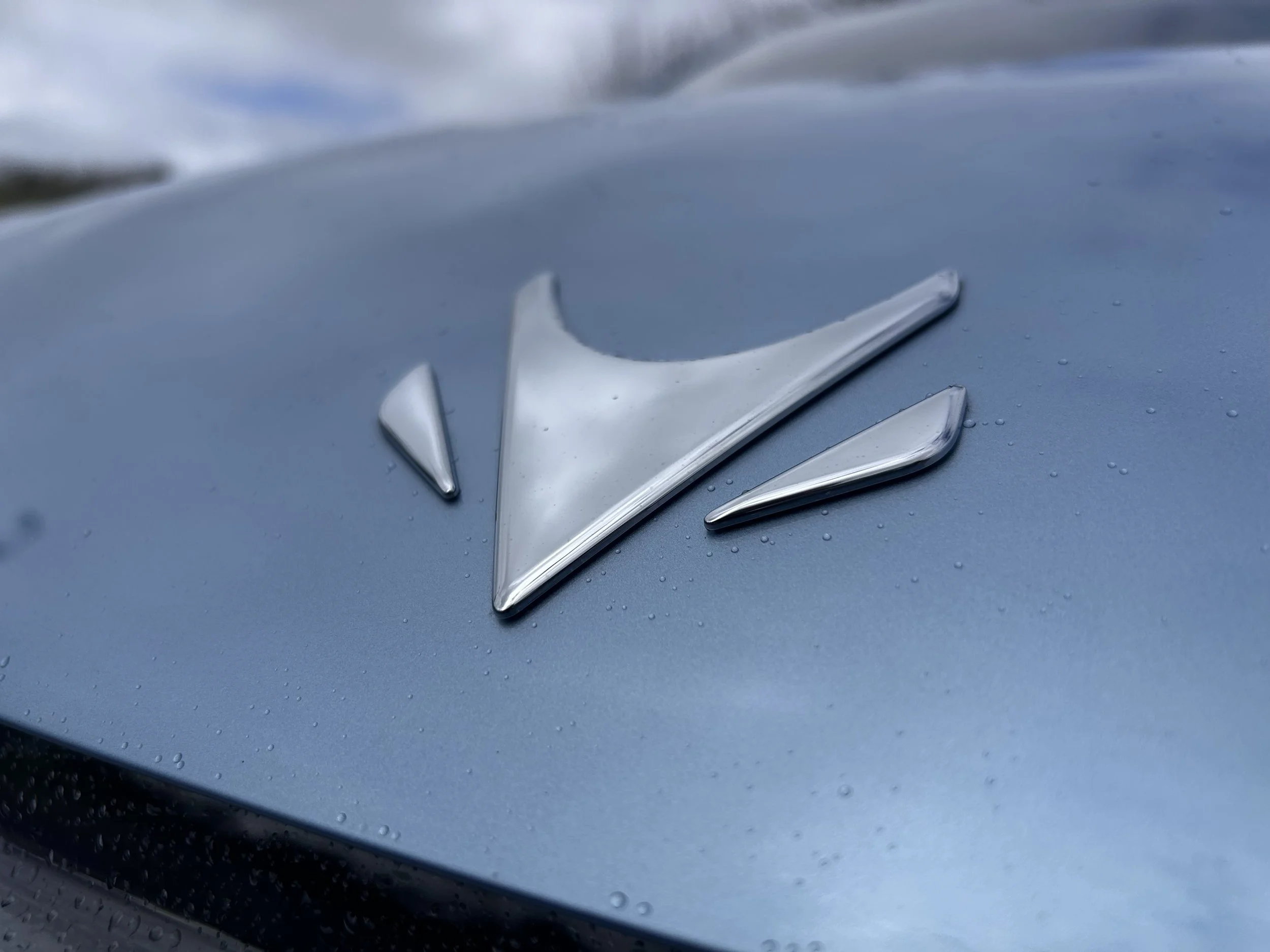
The dual lozenge logo on the nose and tail is a stylised representation of 0-1 binary code, “embodying the digital future of the brand.”
IM intends to give MG a leg up into a more premium zone than the main brand operates in. But it isn’t like Lexus is to Toyota and, out here, the ideal is surely complicated by MG having a car that’s more expensive still: The Cyberster.
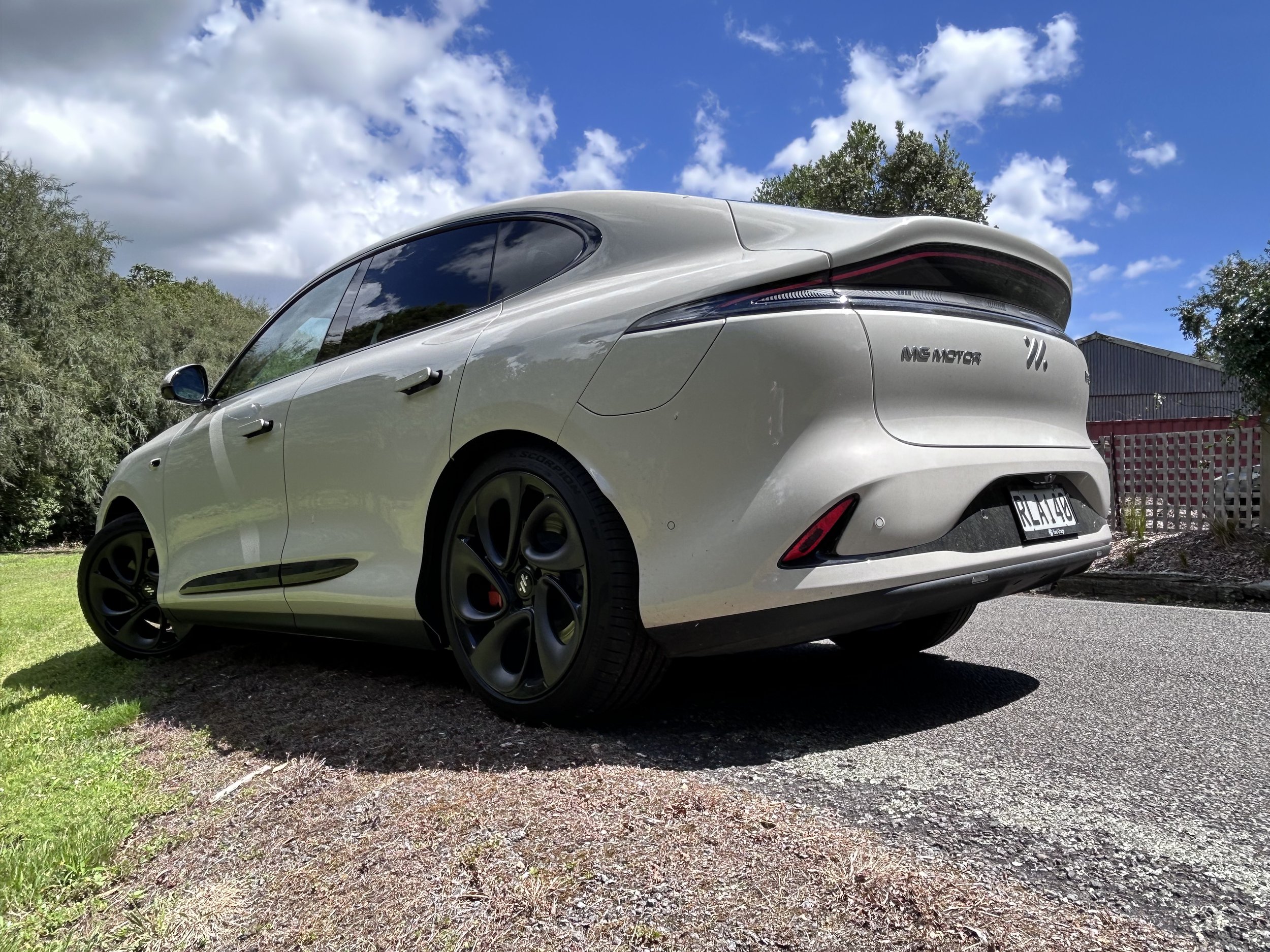
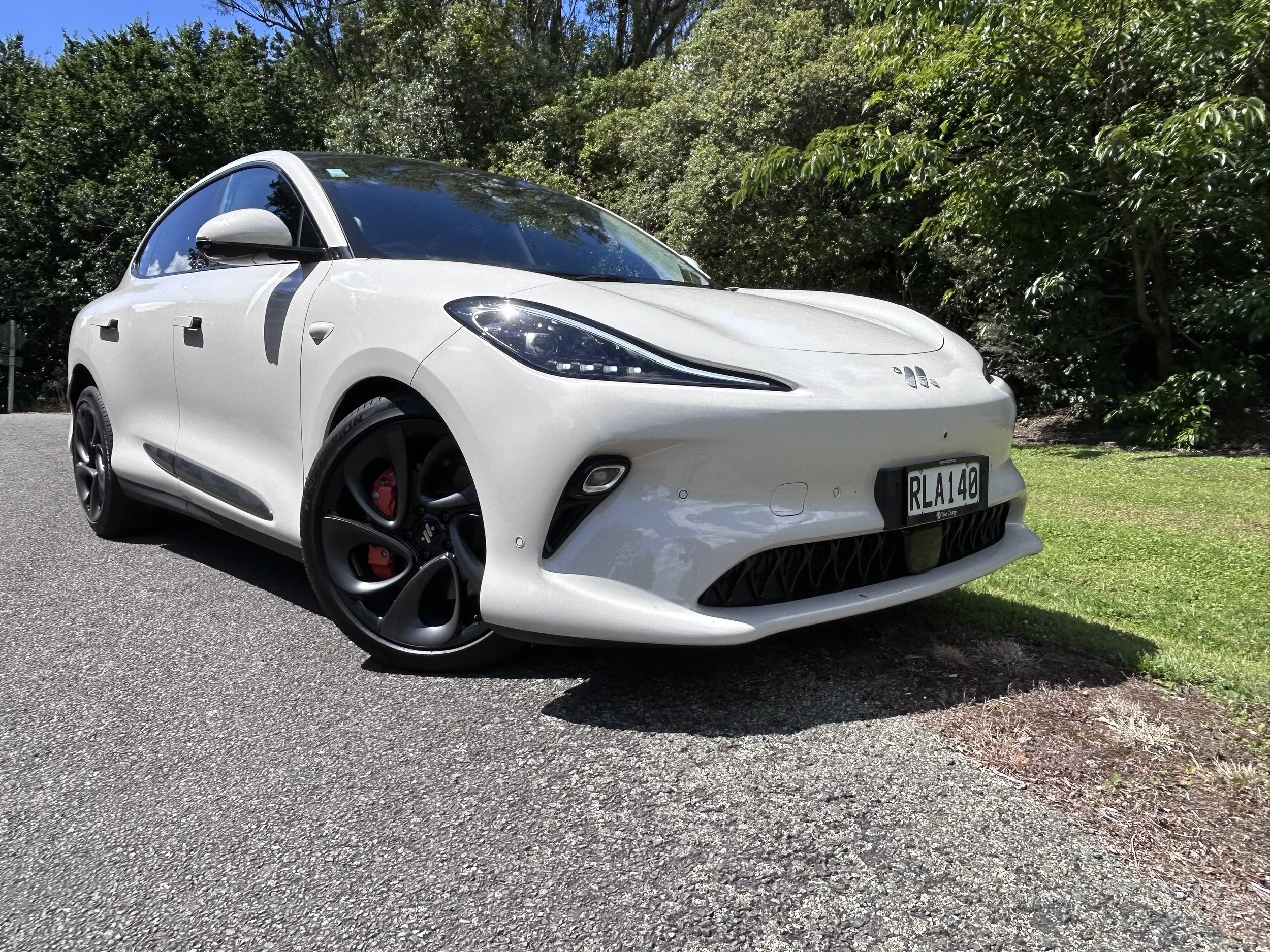
If you see an IM, you might agree it doesn’t look like an MG and that nor is it a blatant rip-off of that benchmark Tesla, at least not entirely - the silhouettes aren’t exactly dissimilar. But, fair dues, the IM6 is more curvy and rounded.
The maker prioritised aerodynamic efficiency, which is not bad thing, but while handsome in its own way, it's a slightly generic design that is unlikely to win over conquest sales on its appearance alone.
You definitely need to consider your colours. The test car’s white was an upmarket finish, with lovely metallic flecks, but to my eye it made the blobbiness to point the 21-inch (Alfa Romeo-style) rims look a tiny bit lost in the arches. One close to me called it whale-like and rather unkindly wondered if ‘beluga’ was available as a personalised plate.
The sheer size of the machine.look makes it a bit difficult to work out how big the IM6 is compared to the Model Y, but putting them side by side shows the IM to be fractionally larger.
If the IM6's exterior feels a bit Tesla-like, then wait until you see the interior.
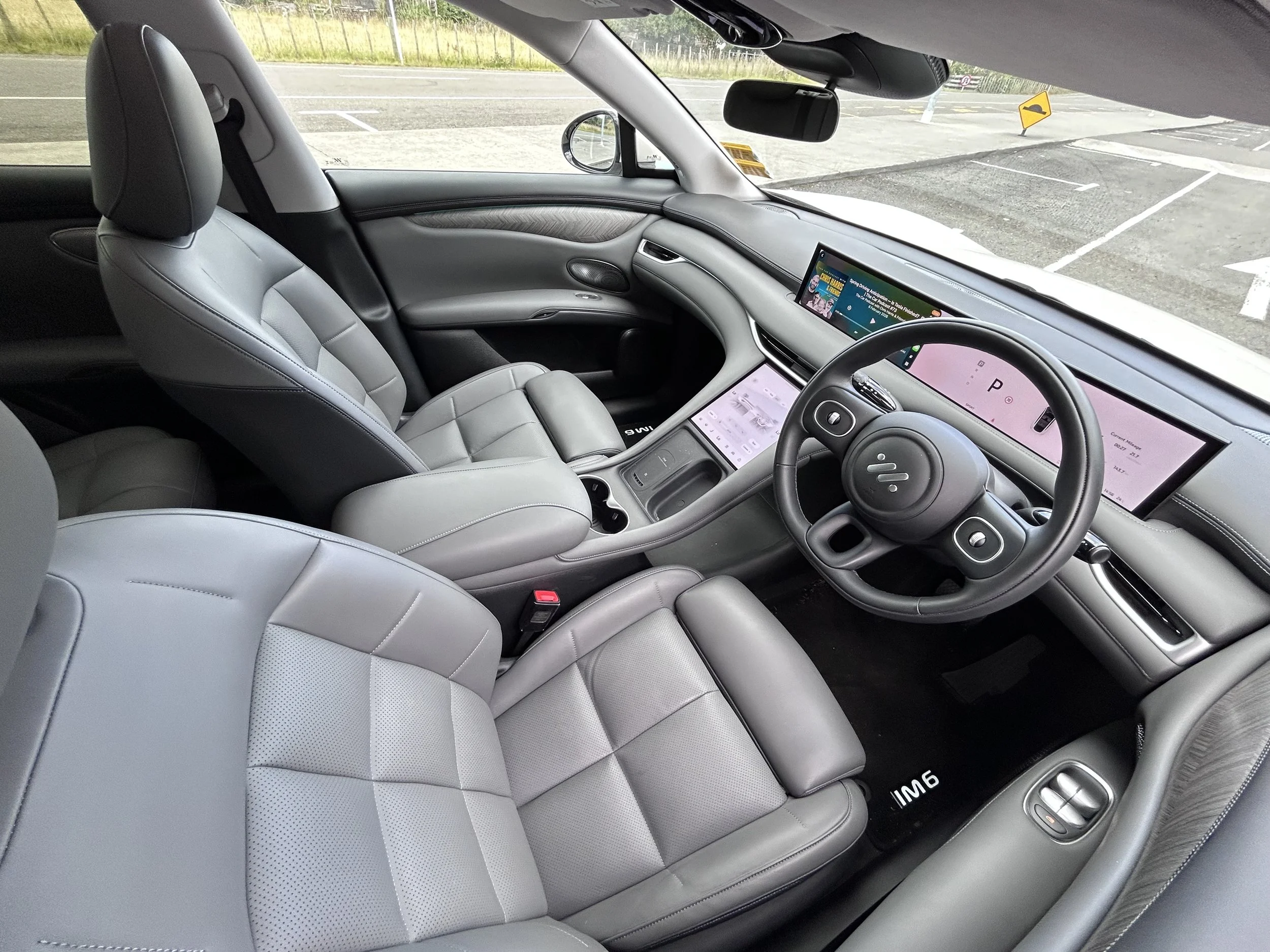
Minimalism is trendy right now and IM immerses pretty fully. The dashboard doesn't have much to it, except for two massive screens, a wireless phone charging pad and a few air vents.
Buttons are almost entirely eschewed, save for two four-way controls on the steering wheel (scroll controls just like those that are a signature of some other brand whose name escapes me right now), and the stalks behind the wheel, one of which is the drive selector.
The cabin trim is what I’d call budget affluent. Even though it costs a lot less than a lot of other premium cars, to cement that it’s part of the club demands something better than the faux-leather trim seen here. Also it’s odd that while the drivers seat has a full range of electrical movement, the steering column has a simple mechanical adjuster.
Still, attaining a suitable driving position ought to be easy for people of varying builds and statures, it is tidily assembled and, as we have come to expect from China Inc, is heavily loaded with lots of safety kit, as well as goodies such as cameras, heated and ventilated seats, and software.
Climate control, navigation and the panoramic glass roof are all standard, too, plus it lends some show-stand-to-road implementations.
One comes in form of a camera setup that can do everything from replace the interior rear-vision mirror, to point you fold the physical mirror away completely - which you might as well, as the view through the rear window is very limited - to creating an “invisible” A-pillar to improve visibility in city driving.With nine cameras, and 12 sensors, around its body, it’s likely ever-watchful.
All that’s a reach beyond the already rich MG level of gadgetry, but is it any better?
Erm. A hard one. After week of interaction, it was still hard to warm to it. The tech is … too techy. Those screens. I well used to working with haptic systems, but here only some long-winded involvements are avoided by shortcuts. Many others are just too immersive so, when driving, become distracting (or, at least, distracting enough for the driver monitoring to go berserk).
A big revision to make the set-up more simple and straightforward would probably be welcomed. Then it could be quite good, as the displays are sharp and by and large the processors respond quickly.
Chinese makes like a big screen. IM has decided to have two, a 26.3 inch “immersive” screen along the dashboard and a separate 10.5in display embedded in the centre console, which is an immediate separation from any MG. Dual screens sounds grand, but in usage isn’t as smart an idea it sounds, as it only makes already overly-complex systems even more confusing to navigate.
Some of the icons on the screens being a bit small is just the start of it; you can have the situation of finding that a common function requires using both screens.
One example of the sense of it being overly complex is provided by the cruise control. Activation requires inputs through the touchscreen, the drive selector and paddles on the back of the steering wheel. With no labels, it isn't always easy to work out what does what.
The active cruise element was so quirky in its actions in any case that it often seemed more trouble than it was worth, but it’s better conceived than the car’s ultimate trick of hands-free assisted driving.
In theory, the IM6 is capable of largely emulating Tesla’s Full Self Driving (Supervised), which though in itself is far from foible-free, is nonetheless the standard setter for Level Two driving on the autonomous scale.
In reality, in this test the ‘piloted’ set-up was simply awkward; what’s promoted as a particularly sophisticated system often failed in its primary attraction of semi-autonomous lane keeping. It struggled to maintain a central position in its lane, over-reacted to other traffic, demanded to be re-engaged after every lane change and often dropped out for no apparent reason. After a brief trial, it was ignored.
After a short time, too, the driver attention monitoring was determined to be so onerously over-attentive it was also deactivated, by the same expedient often used in MG cars. Placing a strip of tape over the in-cabin camera.
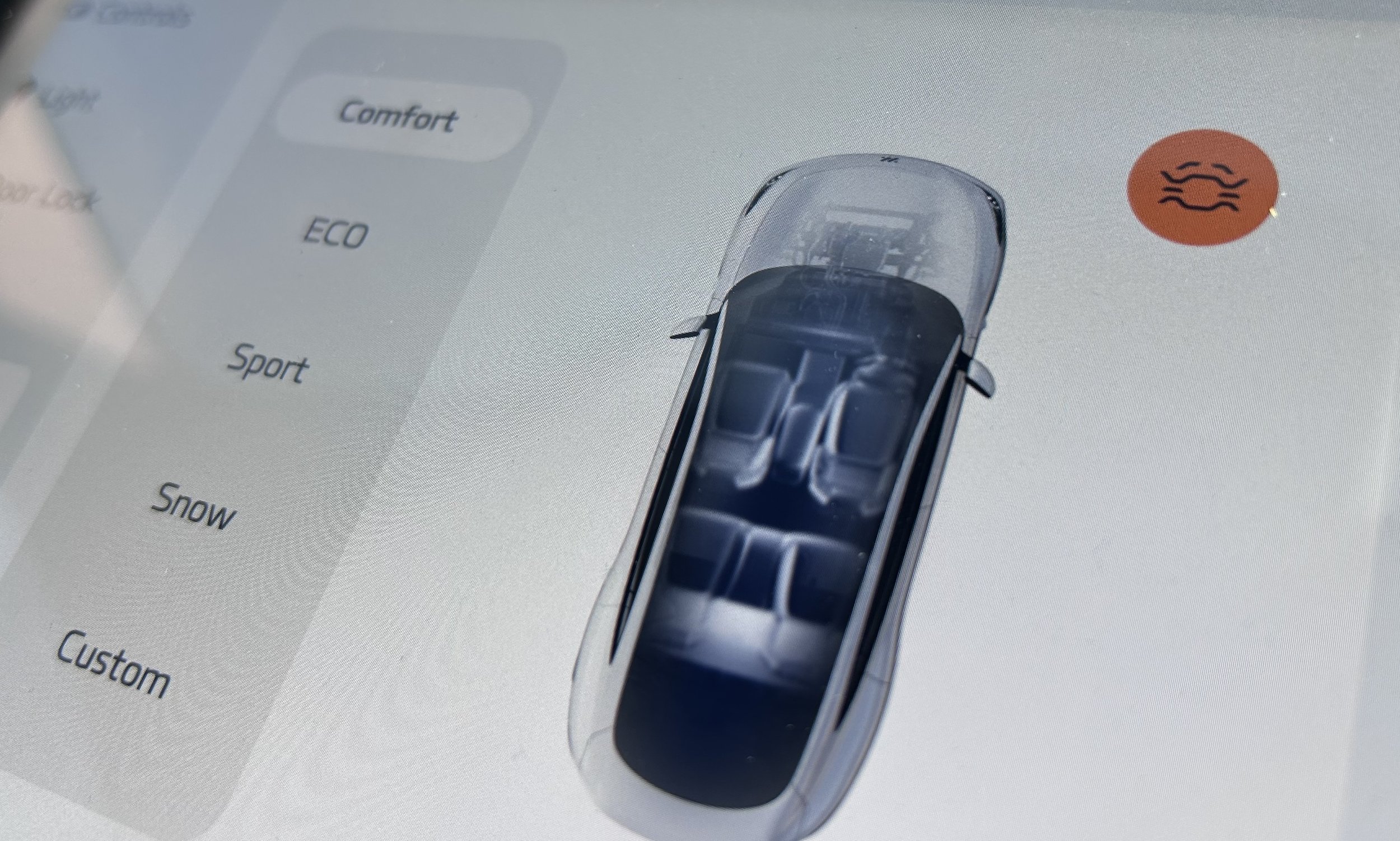
The crab mode (above) which uses this model’s four-wheel-steering system to move the car diagonally into and out of tight spaces without the driver having a hand on the wheel was fun to play with, though the real world application is perhaps tenuous. It permits just a maximum of six degrees of rear-axle steer in parallel with the front wheels, and depends on generous space to move into either ahead of or behind it’s allocated parking spot to work acceptably well. Even with that, the car takes its time and there’s some to-ing and fro-ing to settle it into a conventional park.
It’s interesting that it reaches to all that advanced tech yet ignores using the paddle shifts for regenerative braking. Those, instead, dedicate to adjusting the piloted cruise control. To enable regen and also one-pedal driving, you have to dive into a menu in the lower touchscreen. You can’t tell me that’s an improvement over what’s become an EV convention.
The cabin environment overall is more welcoming. The space is welcomingly airy, and what’s also appealing is the ample rear cabin space. And some nifty design touches I’ve not seen elsewhere: Those embroidered spots on the seat backs and dash labelled “IM Mag”? They’re built-in magnetic mounts for a phone, even a tablet.
The massive integrated panoramic glass roof is a wonder of design; every occupant sits under it, and potentially that can cause headroom issues, but the car’s slightly bulbous roofline allows this to implement without ruining at practical level. Tall rear-seat passengers will find adequate headroom and, anyone anywhere will discover lots of legroom.
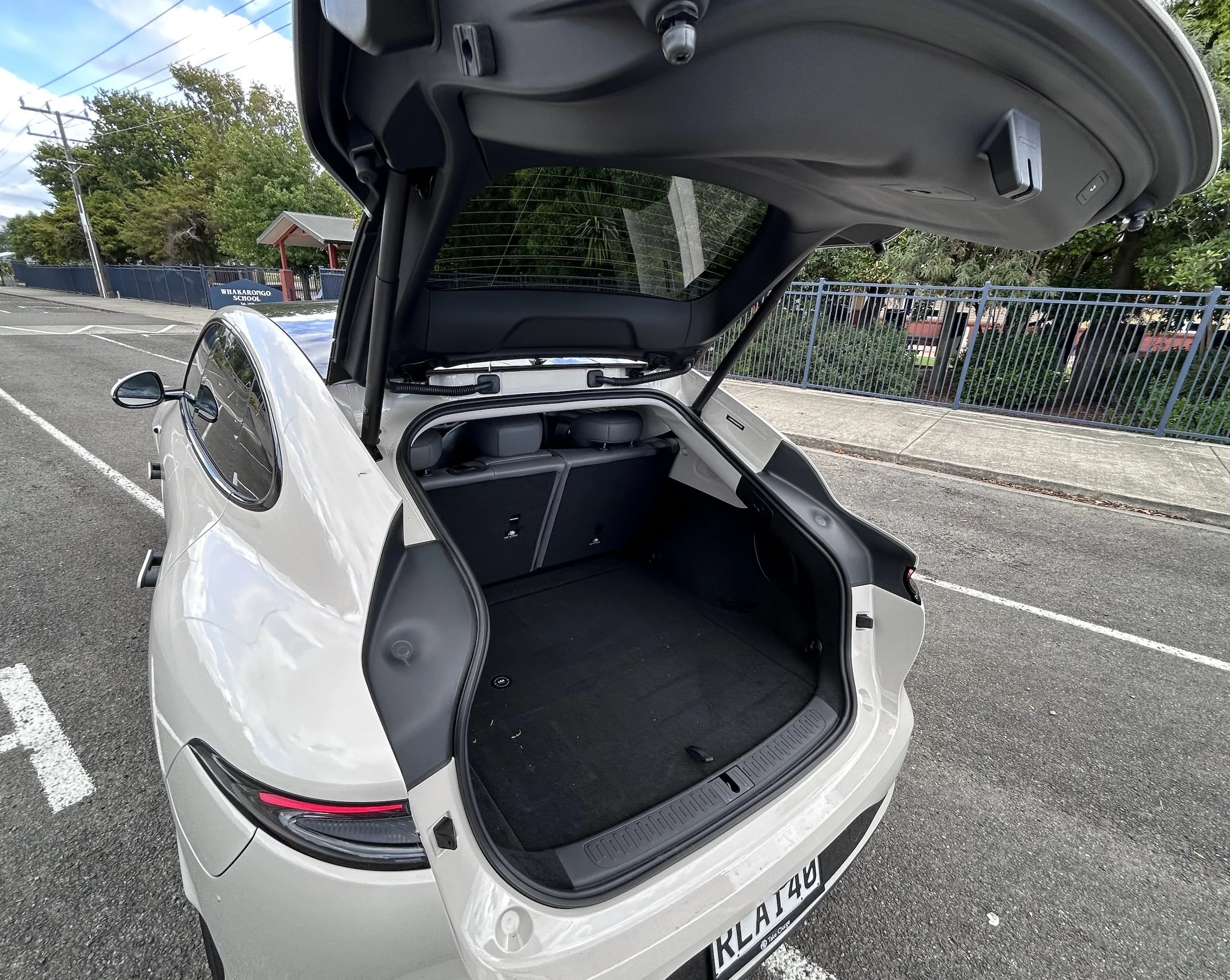
There’s a lot of room in the boot, which delivers an above-average 665 litres’ capacity, even before considering the underfloor storage compartment. The 32-litre 'frunk' under the bonnet is much more modest, but is enough to store charging cables. In-car storage solutions include a central cubby, cupholders, a decent glovebox and an under-tunnel storage tray, plus narrow door pockets.
IM6 presents as a range, with three different powertrains featuring in three different models. Anyone considering the potential of the $66,990 Premium or $77,900 Platinum delivering quite enough without going to the $89,990 Performance on test won’t hear argument from me.
The Premium and Platinum are both rear-drive, making 217kW/450Nm and 300kW/500Nm respectively, with ranges of 450km and 555km. The entry car has a 75kWh LFP battery, while the Platinum is fed by the same 100kWh NMC unit as the Performance. But just the latter is dual motor, and has a lot more grunt, so range drops to 505km.
Meantime, massive on-paper advantage on oomph - respectively 355kW/352Nm and 272kW/302Nm more than the rear-drives - is tangibly apparent; you don’t need to be told it is 2.7-2 seconds faster to 100kmh than the others. You can feel it.
The others will seem quick, but given fully wally, the Performance is as brutal as you’d expect. There's no hanging around. It just rampages forward the moment you touch the pedal, and relentlessly continues to do so until you're absolutely into the realms of illegality.
What good is an almost supercar level of stonk to a family SUV? To some, that’ll be no kind of question at all. You either get on the programme, or look elsewhere. But in this case it is worth asking, because the car’s overall dynamic mannerisms tend to stop short of being outright sporty.
There’s no argument this is a car that is eager to move quickly. The driving modes that tailor the motor’s impetus are a reflection of that. Sport brings a lively step but in truth even the Eco mode, despite being designed to maximise range by damping down the accelerator response to reduce consumption, really doesn't blunt the pace much at all.
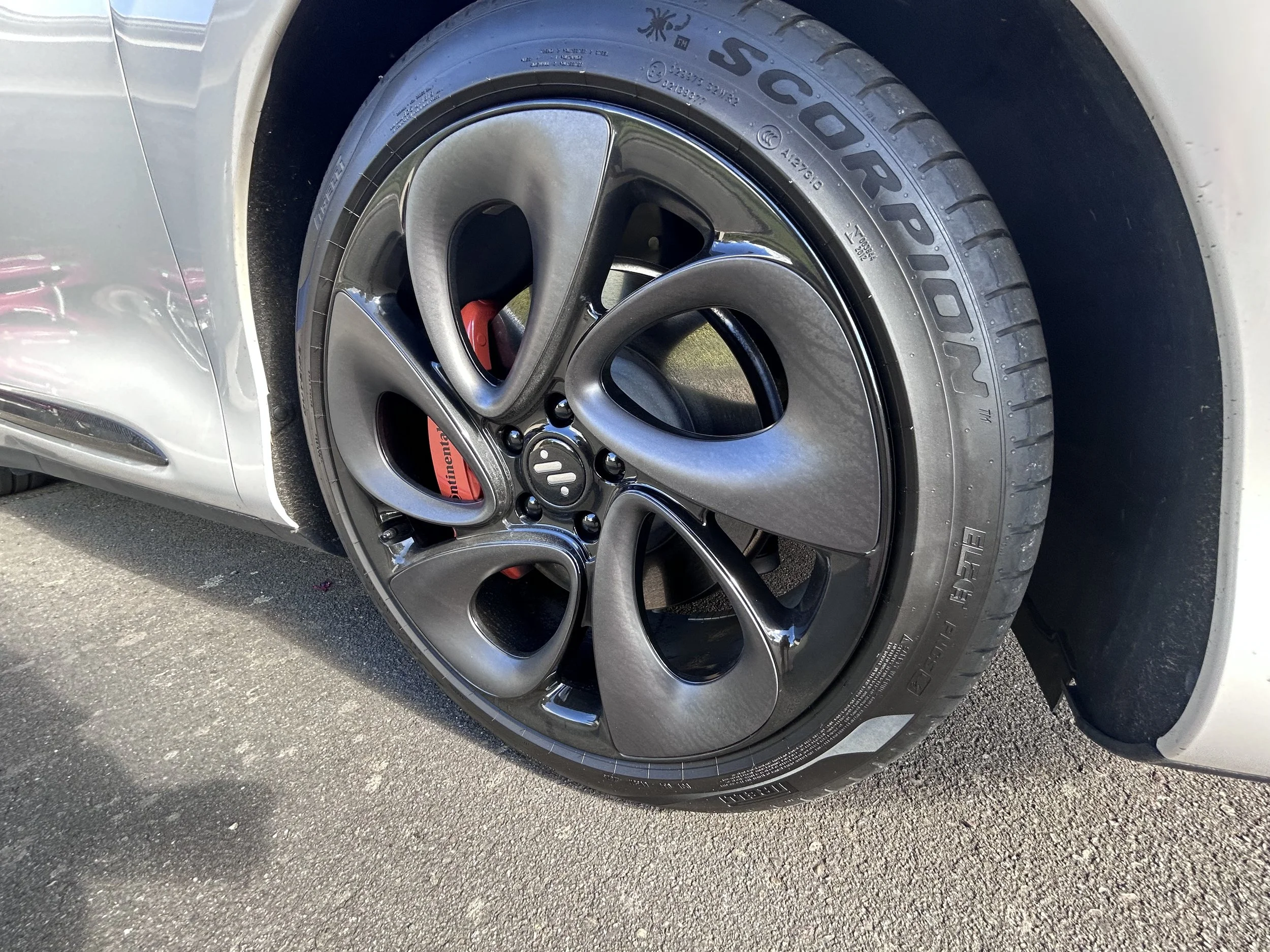
Yet as much as its ingredients of Pirelli Scorpion tyres and brakes developed by Continental, clearly defined driving modes, all wheel drive and, on top of that, an active air suspension with a latitude of settings would seem ideal for a car said to be capable of 240kmh, driving the Performance over some favourite roads was underwhelming.
In that environment, it seemed very big, bulky and hefty. The exoticness of that four wheel steering and the Advanced Air Suspension with Continuously Control Damping (CCD) function - which allocates five levels of adjustment, including hunkering it down 15mm above 90kmh and another 15mm above 120kmh - aren’t beneficial enough to keep its eye-widening 2340kg bulk in entirely confident check.
Sport made for sharper cornering, but never left it feeling truly agile. The greater imprint from selection was that it made the car quite jolty and steering feel remained curiously remote. Thought that compliance is clearly inherent in the chassis is all the more cemented when going to the other extreme, Comfort. This nicely softened all surface impacts, but made the car rather pillowy in corners.
Overall, nailing down the one ride setting that could become a perfect default for daily use seems difficult; but what’s clear is that, if driving attitude is dialled back, the car is all the better. Where IM has done well is in respect to refinement; there’s very little wind or, despite its large wheels and low profile rubber, road roar, so at cruise the car tends to be a capsule of serenity. Double glazing, yes, but it has active noise cancellation as well. It is a very quiet EV by any standard.
If driven with circumspection, it also delivers best chance of meeting claimed efficiency out of what is, by an measure, a very large battery. The car was replenished well before it ever depleted, mainly because a log open road run lent opportunity to visit a charger best suited to its tastes.
With 800-volt technology under the skin, the IM6 can accept charge at up to 396kW, and though NZ is not at that standard yet, it seemed only right to allow the car it to make full use of the sole 300kW charging point in my area.
MG says that, at maximum speed, this model can charge from 10 to 80 percent in 17 minutes; seeing the test car’s uptake briefly peak at 287kW was quite a sight. At a slower kerbside or carpark AC charger, the IM6 can manage up to 11kW, which would mean a very long drinking session to hit full.
The IM6 is a fantastic achievement fuelled by hope and optimism. It reaches high. In current state, just a little too high.
But the concept is worthy and it’s quite probable the cheaper editions, both almost as plush in their treatments, could be far more persuasive. I’d be looking to drive those on their standard suspension before thinking about whether the optional (for the 100kWh rear drive) air system was really needed.
For the Performance, taking a step back, reconsidering and improving the fundamentals and also thinking about what kind of car it really does want to be, would be beneficial.
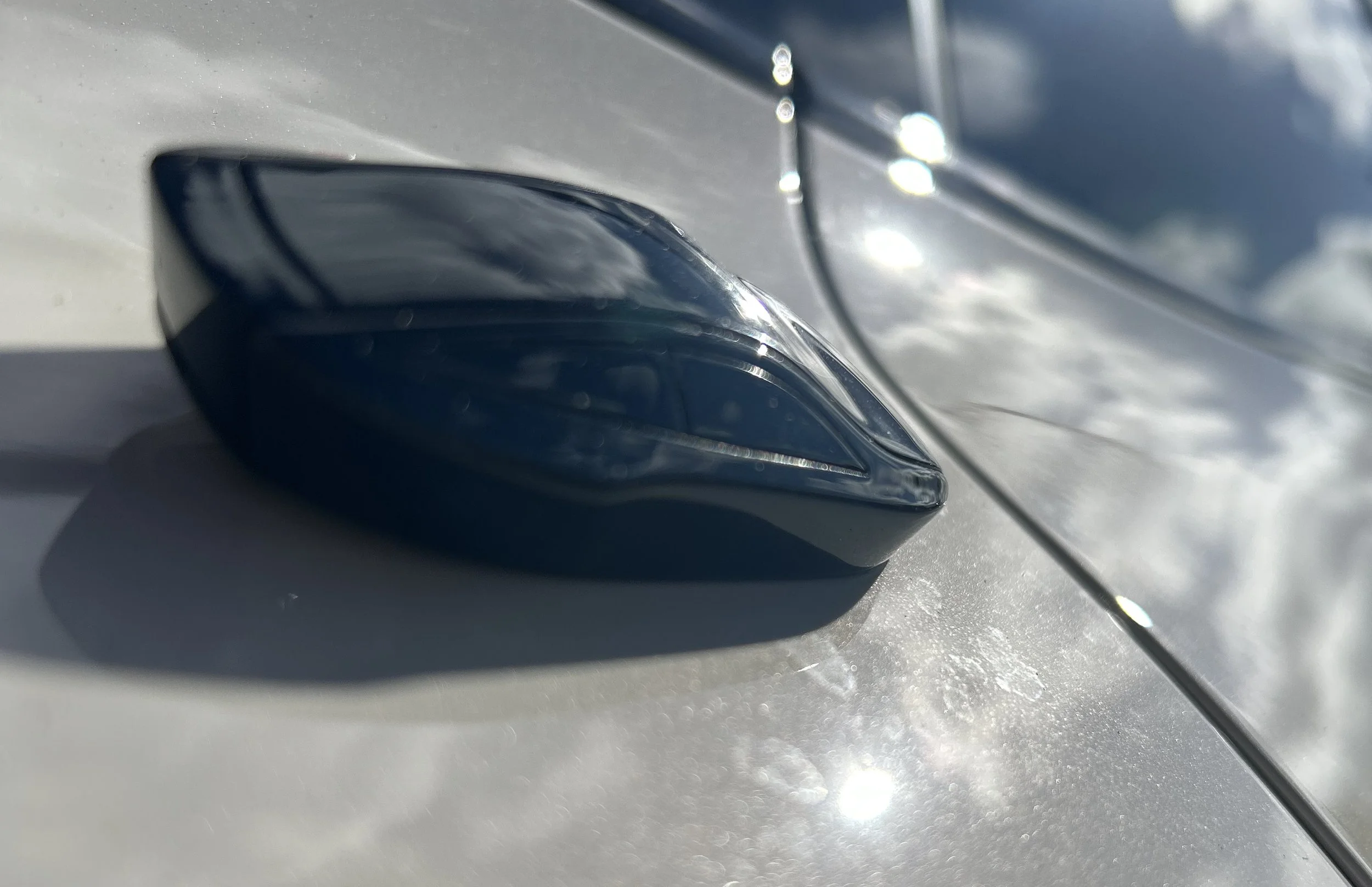
As is, it comes across as a car asking for more finessing. From the big things - like the chassis and suspension tune - to the little, like the key. Which, incidentally, in being shaped to look just like the car, in miniature (below), is both a bit fabulous and potentially a bit flawed.
Something like that stands high risk of being filched by a child, who would easily mistake it for a toy. If only they’d thought to create a key ring attachment, which would have meant I didn’t have to keep it as provided, stowed in a small plastic bag.