Geely Starray EM-i road test review: Solid but no supernova
/Standing as a cost-effective entry to plug-in hybrid tech, this five-seater SUV also has a comprehensive list of standard kit. But the driving side cries out for polish.
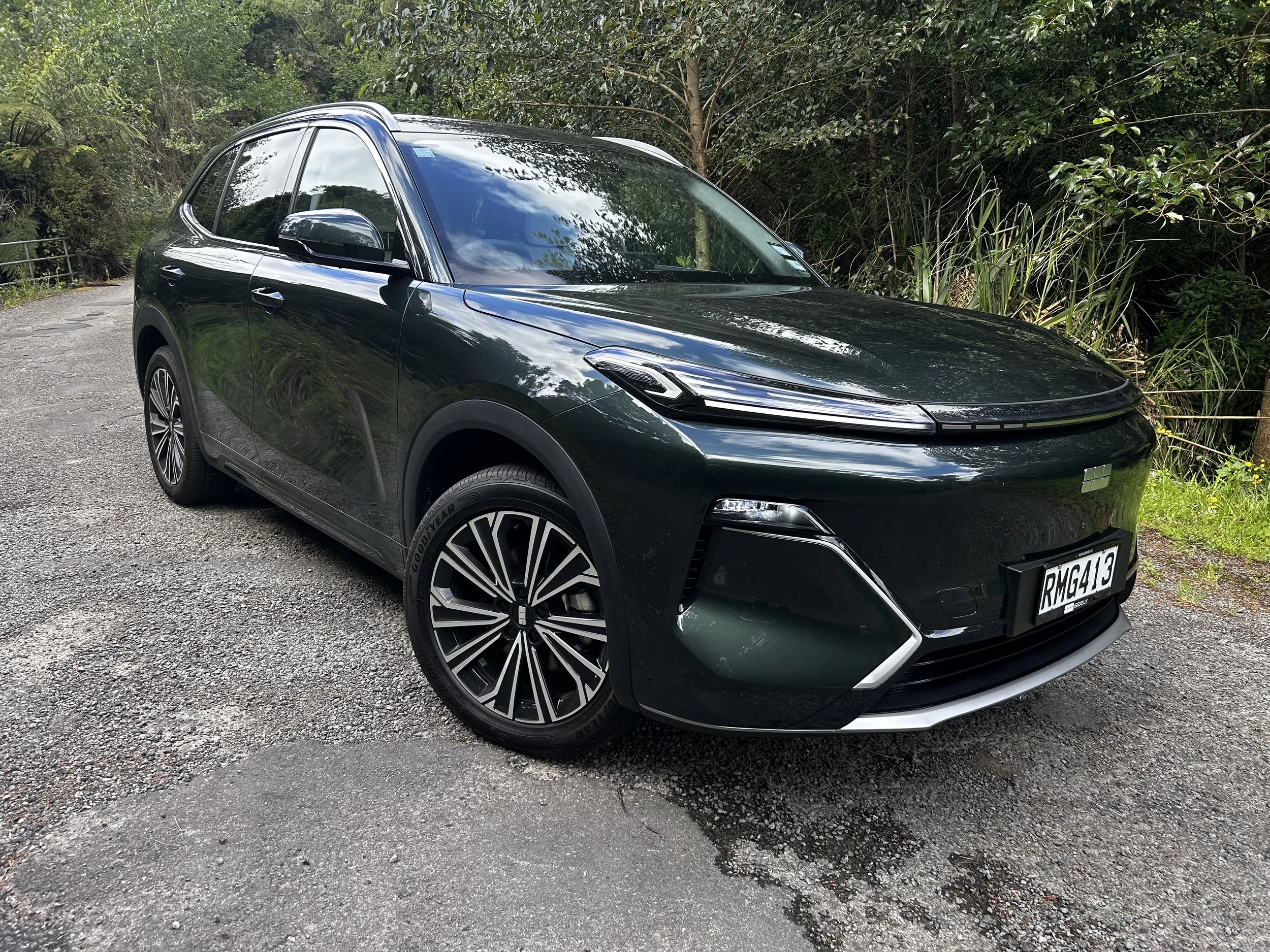
Price: $49,990 (as tested $50,440).
Powertrain: 1.5 litre four cylinder petrol with plug-in replenished hybrid electric motor, 193kW/387Nm combined, front-drive.
How big: 4740mm long, 1905mm wide, 1685mm tall.
For: Meets ‘value’ pitch (regardless all colours bar white cost $950); roomy; PHEV beneficial to urban driving.
Not so much: Unremarkable to drive with average performance and poor body control; blighted by ADAS infuriations, unreliable cruise control.
WE’RE just getting to know Geely now, but the name should be familiar.
Several Chinese automotive groups own or have significant stakes in well-known European and UK brands; We all know how SAIC, which used to be known as Shanghai Automotive, saved and resurrected MG.
Soon to land BAIC has a decent stake in Mercedes-Benz.
Geely really pulled a stroke in achieving high-brow assets. In addition to holding shares in Benz and, additionally, Aston Martin, it owns outright Volvo, Polestar and Lotus.
You have to imagine those acquisitions aren’t just for whatever passes for country club kudos over there.
China’s car industry has gone from being a pup to a powerhouse in very short time, and having saturated their domestic scene, the big ones are eager to make hay from exporting.
It’s a mad, mad rush and the pace here is frantic; 30 brands expected to settle by end of this year, most new names.
Geely presently represents in NZ with two contenders in country’s most packed category, the midsize SUV class.
The Starray EM-i and marginally smaller EX5 both categorise as ‘new energy’ vehicles, and they share a common platform, hard points, and basic suspension design.
Whereas the EX5 is fully electric, the Starray presents as plug-in hybrid, in two trims; the $45,990 Complete and the $49,490 Inspire subject to test today.
Both variants come with the same powertrain; a 73kW/125Nm 1.5-litre naturally aspirated four-cylinder petrol paired to two electric motors making 160kW/262Nm, an 18.4kWh battery pack, and front-wheel drive.
Pure electric range is rated at 83km, combined range is rated at 943km and it thrift as low as 2.4 litres per 100km is also cited. The engine’s primary role is as a generator, though there are circumstances when it will direct drive the front wheels.
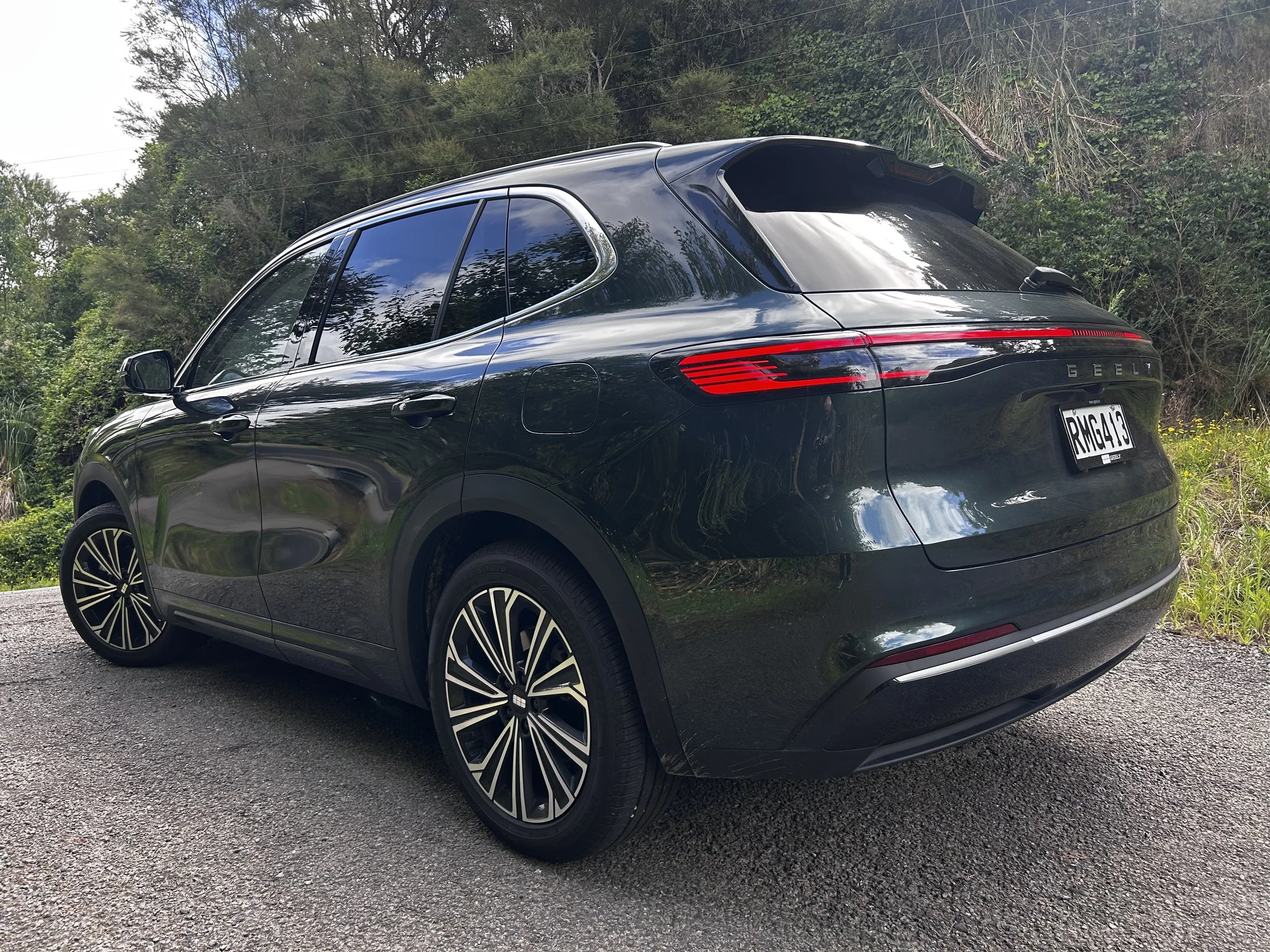
Both variants fall in similar territory to other recent entries from Jaecoo, MG, and Haval.
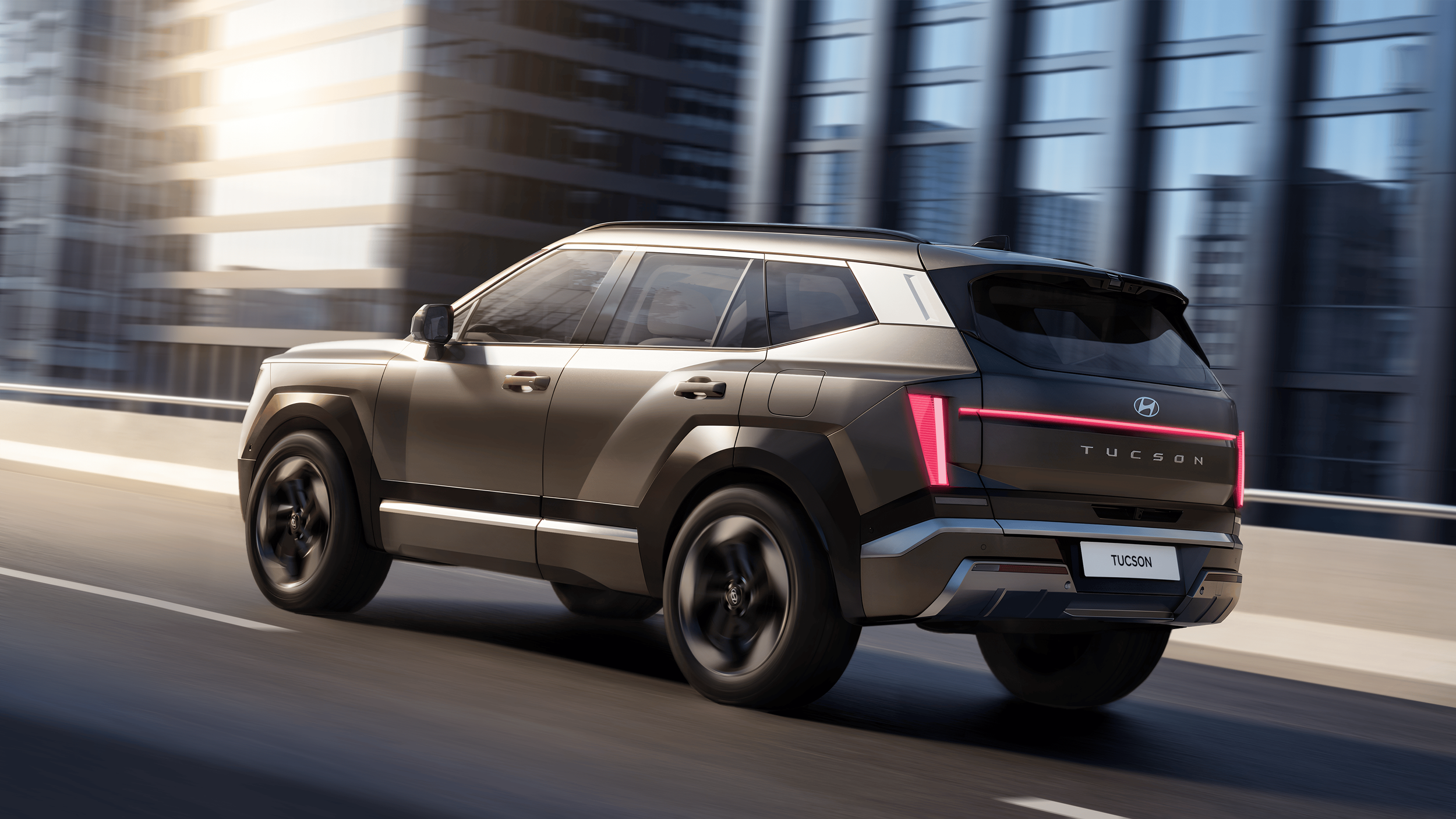
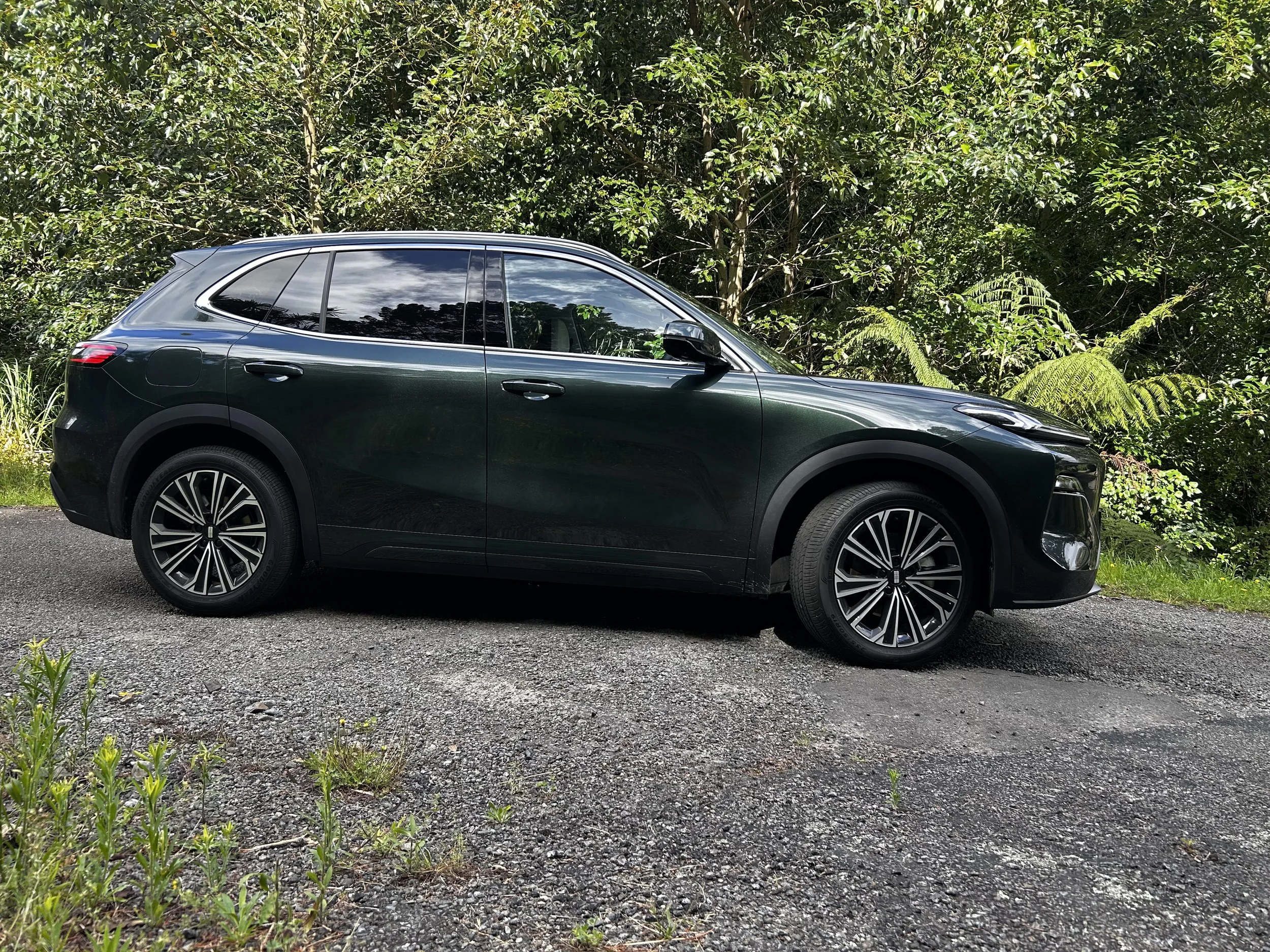
Starray also shows up as medium five seater with a smooth, inoffensive but not particularly imaginative body into which is stacked more tech and comfort appointments than you might imagine would normally come for price.
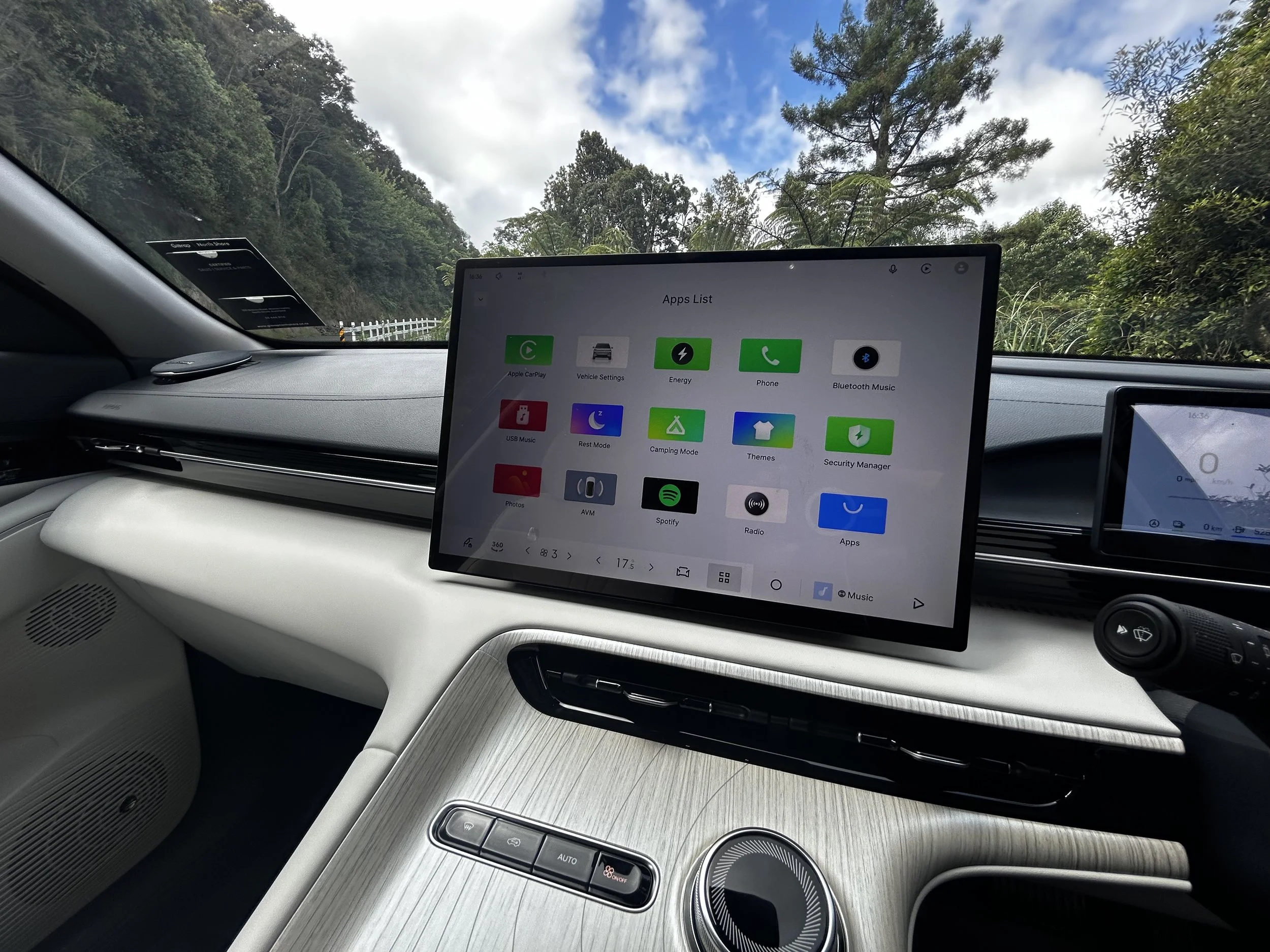
The base level brings 18-inch wheels, faux chrome trim, silver roof rails, LED headlights, artificial leather upholstery and powered six-way driver/four-way passenger seats, plus a 15.4-inch touchscreen, 10.2-inch digital instrument cluster, six-speaker stereo, wireless Apple CarPlay (with Android Auto coming), climate control, rear parking sensors, 360-degree camera and front seat heating.
Moving up to the Inspire would seem highly worthwhile, as it goes to 19-inch rims that better fill the wheel arches, plus adds a panoramic sunroof with shade, 16-speaker premium stereo, head-up display, ambient lighting, front seat ventilation, driver’s seat memory, power tailgate, wireless device charger and front parking sensors.
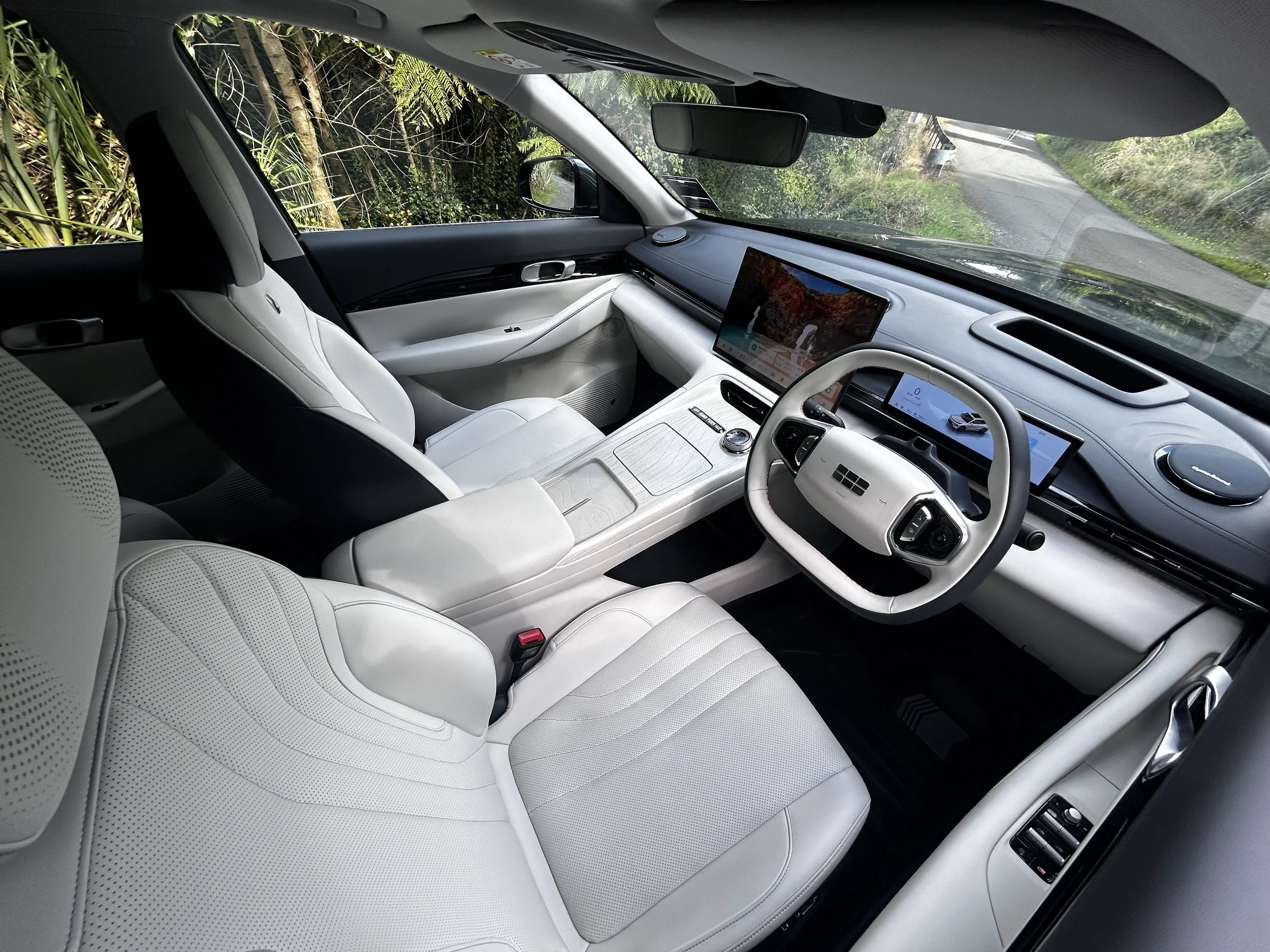
Bent to express concept-drawn modernism is patent within the cabin, where there’s emphasis on button minimalism and screen maximisation. Again, this is becoming par for the course but, even so, if you’re buying on a budget, it stands to add to the attraction.
The cabin and boot capacity are decent for space and it has won star recommendation from our independent crash test auditor. The Australasian New Car Assessment Programme is a tough crash test audit. For this car to earn a maximum rating, with some facets earning special mention, is no bad thing. On top of all that, it has a strong warranty.
Inasmuch as China Inc seems to be banging our cars of this ilk on almost weekly basis right now, the Starray when assessed purely on the credentials listed could stand consideration.
Assuming we’re interested. To be noticed, it needs to beat market whim, which at the moment isn’t at all especially welcoming.
It’s an unfortunate scenario for electric-involved petrol cars with a plug right now, in that China likes them rather more than we have since Road User Charges hit and Clean Car incentives dropped.
As the only tech double-smacked by legislation, PHEVs have pretty much universally lost favour, no matter how compelling the thrift and range story.
For those still committed to this tech, the Starray does a fair job. It’s among those PHEVs that absolutely prioritises urban driving which seems fair enough, because that’s where the best benefits arrive.
Conversely, though, at open road pace, E-Motive intelligence isn’t as smart as some. It seems prone to deplete the battery too quickly. I was halfway through a 200km drive when the engine became more involved, primarily pushing charge back into the battery pack. When it does this, you know - it can feel harsh and noisy as it whirs away.
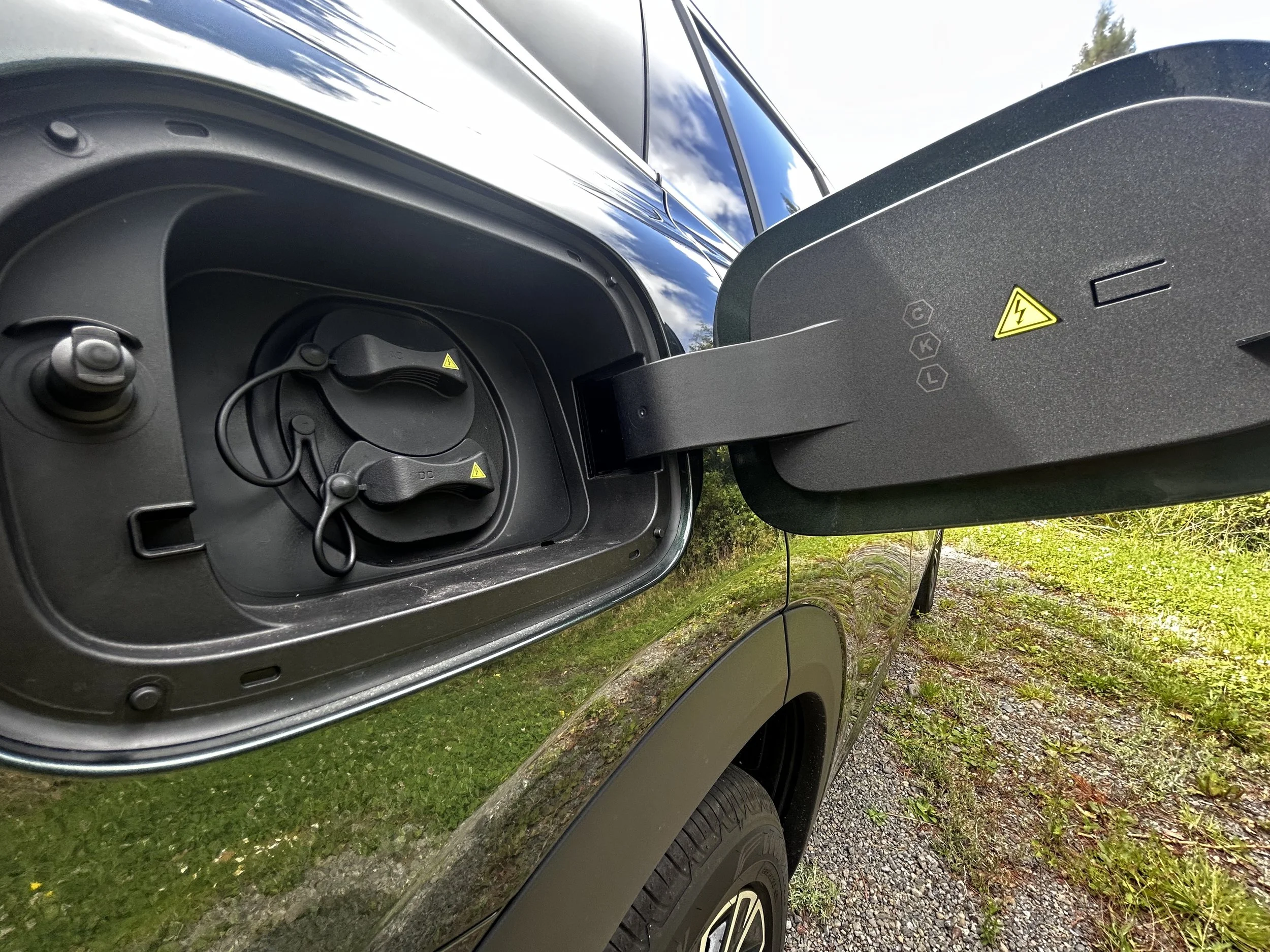
For all its modest size, the battery asks for time to recharge. Upload maximums of 6.6kW AC and 30kW on DC puts it firmly in the slow lane for replenishment and make brand contention of a 30-80 percent top-up being possible in 30 minutes seems tenuous. It’s a reminder that the EM-i set-up is Geely’s most basic.
Reality also bites firmly in the Starray’s general driving demeanour. Family-sized SUV that strive to be the last word in fast driving dynamics are rare, but many at least deliver fairly useful interactivity and enjoyment.
Unfortunately, this car is some way off the average cars in this class, never mind the best.
Various factors weigh in when forming that assessment. Tiresomely meddlesome driver assist and accident avoidance tech seems an unavoidable from China Inc; I’m now firmly convinced the majority of makes rely on a single supplier, whose settings are simply maddening.
I get that modern advanced driver assistance systems, aka ADAS, are an absolute must-have for any maker seeking credible safety score. But the Starray’s calibrations aren’t good.
The lane keep’s steering intervention is simply harsh. It and the active cruise control are prone to freaking out for no logical reason. Even when working properly, the cruise also has a mind of its own in approaching corners, often seeking to radically reduce the pace for bends that did not demand that. The speed limit system that reads road signs was simply utterly unreliable.
Putting up with the consistent misdemeanours of all three is highly wearying. All that can be deactivated, though the effect is only for the duration of a single journey. The moment the car switches off, everything resets to factory preference.
On top of this, working out ‘how’ to quell their inputs is not easy; it involves delving through sub-menus and more; the checks are so layered you really have no choice but to stop first and then work through a labyrinth of cross-checks. What also puts you off attempting fixes on the move is that anything more than a quick glance at the centre screen will send the driver monitoring into frenzy.
Again, that’s not an issue for this car alone - a lot of products these days do this - but it nonetheless seemed really poisonous here, as aside from changing the the climate control (which has its own panel) there’s simply no way of operating the car without using that screen from time to time. The longer you look, the more the car wishes you didn’t.
But you will tend to look because understanding everything about the screen is not a matter off a moment. Large and very high resolution, it has a few too many sub-menus for my liking, displays icons at a dismayingly small size and some of those seem to be dead-ends for usability.
Coming home late from a concert in another city highlighted what happens when the mood lighting across the base of the dash is set up. A previous user had put it into a mode that altered the intensity of the effect, either to whatever was playing on the audio or to close the car was to other traffic. I couldn’t quite resolve the cause. But the cabin going from preferred darkness to pulsating with light to night club intensity was very, very off-putting. And utterly impossible to resolve then and there. You need to go deep into the handbook, which is still printed (most these days are electronic format).
What irks about those issues is that you know that, were this a car behind the Volvo or Polestar badge, it would be far more ergonomically sensible, because their cars just are.
Geely’s interior is nice in that, in look, it all seems far more premium than is actually the case. Only a few surfaces feel carefully built down to a cost and while the all-white interior will not be to everyone’s tastes, it does add to the sense of the being a bit more exotic than some environments. But a lot of it is simply for show.
Had Swedish design logic applied, the screens would be less populated and more logically laid out, the window switch actions would be reversed and the front seats would be better sorted. Starray’s are shapely in appearance, but the lack of under-thigh angle and lumbar adjustment tells when you’re at the wheel.
What talent could Lotus, a British sports car brand, lend to this kind of product?
Geely says it did borrow some know-how from Hethel engineers to refine the Starray and also says the damper settings for this part of the world are also attested to be markedly firmer than the domestic setup.
It needs more attention, nonetheless. The tune is still markedly underdamped. Comparison with anything out of Japan, Europe and South Korea will not serve it well. But maybe that’s not the biggest issue. Those who shop Chinese alone will find MG and GWM cars are more resolved. Beware hitting a compression at open road speed. Should that occur mid-corner, the body will heave and wallow. Hang on tight.
The braking and steering also simply cry out for some semblance of feel. The stoppers can be adjusted to alter the regenerative feel, but seemed snatchy in any setting. The steering also has different settings, but all come with a dead zone on centre.
Speaking of. The primarily reason for buying into the Starray will come down to how efficient it is.
As with all PHEVs, when electric involvement is high, commendable thrift can be demonstrated. And when the zap runs out, the fuel burn rises somewhat.
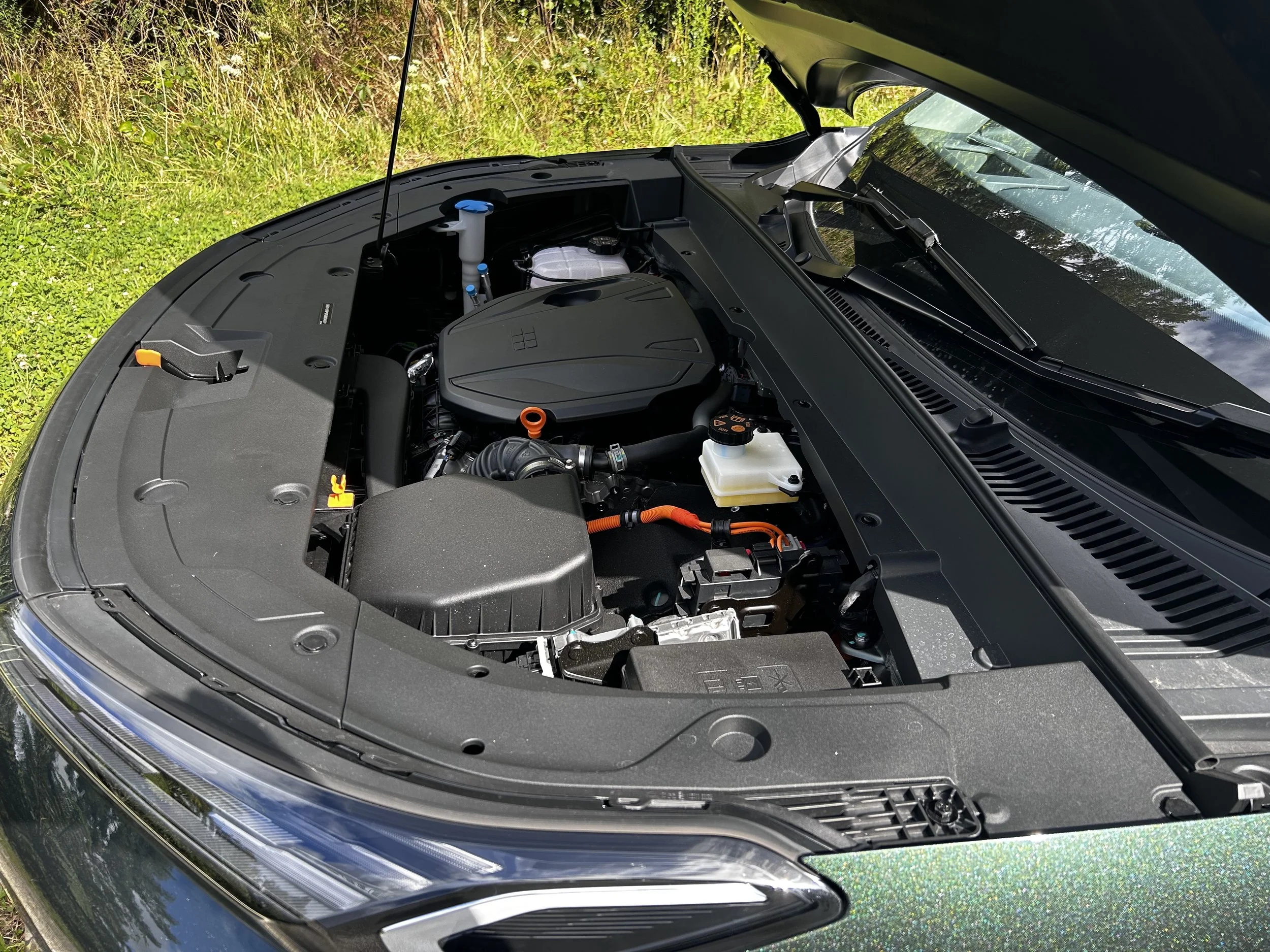
The Starray system has default electric/series hybrid and driver-activated parallel hybrid (Sport) configurations. The latter puffs the pep from the usual 160kW to as much as 193kW, but the former is the smarter for best economy.
Even when the battery is ‘dead’ it of course really isn’t. It won’t degrade to anything below 20 percent, so that the overall cited powertrain output can be maintained. However, when the battery is to that state, you will hear the engine more, as by then it will be actioning heartily as a generator.
These traits impact on the refinement, which can go from really excellent when the power sources are in great shape to somewhat less so when the engine is being asked to work hardest. The more occupants aboard and/or the more weight being moved, the more likely you might expect to hear the engine getting strenuous from time to time.
In respect to passenger involvement, the rear bench is genuinely spacious, possibly more comfortable than the front chairs. Headroom and legroom are sufficient for the tall. The boot is not whopping in size, with 428 litres’ capacity, but it is usefully shaped and can expand to 528 litres if you abdicate the flat load-through to the rear seats, because you can drop the floor down a level. Note that there’s no spare wheel.
The automotive landscape is more varied now than it has been for years and that's a reflection on the hectic pace of change, with new releases coming in thick and fast, almost all from Chinese firms, which are all out to prove themselves the best.
In the main, that effort is based on who can offer the most technology - including safety features - and comforts for the best price. But pumping out value-oriented cars is a speciality from China. You have to wonder how long before another that is perhaps even better comes?
Considering the package as a whole, the Starray could still be about what owners will expect, but on the PHEV side it has no more aptitude than anything else and is less talented than some. Geely importer NordEast says it’s considering an even larger 29kWh battery, which would give 130km EV range and presumably better flexibility. It would also likely lend more usefulness to the car’s vehicle-to-load and vehicle-to-vehicle (V2L/V2V) capability.
Overall, it’s the car’s dynamic mundanity that hurts more. While no one should expect fizzing feedback in a car like this, some sense of integrity simply wouldn’t go amiss. Even a small whiff could be a big help. Geely knows full well where to find it.