Cadillac Lyriq Sport road test review: America’s electric earworm
/So-named because its maker is said to be the most-mentioned car brand in songs, this SUV is largely in tune with expectation.
Price: $125,757 full RRP at time of test.
Powertrain: Dual electric motor 388kW/610Nm, single speed automatic, all wheel drive.
How big: 4996mm long; 1977mm wide; 1623mm tall.
We like: Compelling styling; schmoozy driving feel; distinctly different to competing luxury EVs (all from Europe).
Not so much: Less feature-rich than rivals; quirky right hand drive workarounds.
LARGE luxury electric fare with giant batteries and entry into Formula One, whose tech edge includes reliance on eye-wateringly expensive Green fuel.
The Cadillac that gave the world giant finned, long bonnet tail draggers running slow-turning V8s with enough thirst to keep a sheik smiling is now only found in a car museum.
While it has not wholly ended oil addiction - the gargantuan Escalade remains intent on keeping finest petrol-gulping tradition alive - this historic American brand enters its 124th year riding on hope of eking its living on electron eaters from now on.
The first bespoke electric car from Cadillac to hit New Zealand landed last year and two sister ships, one smaller and the other even larger, are set to follow soon.
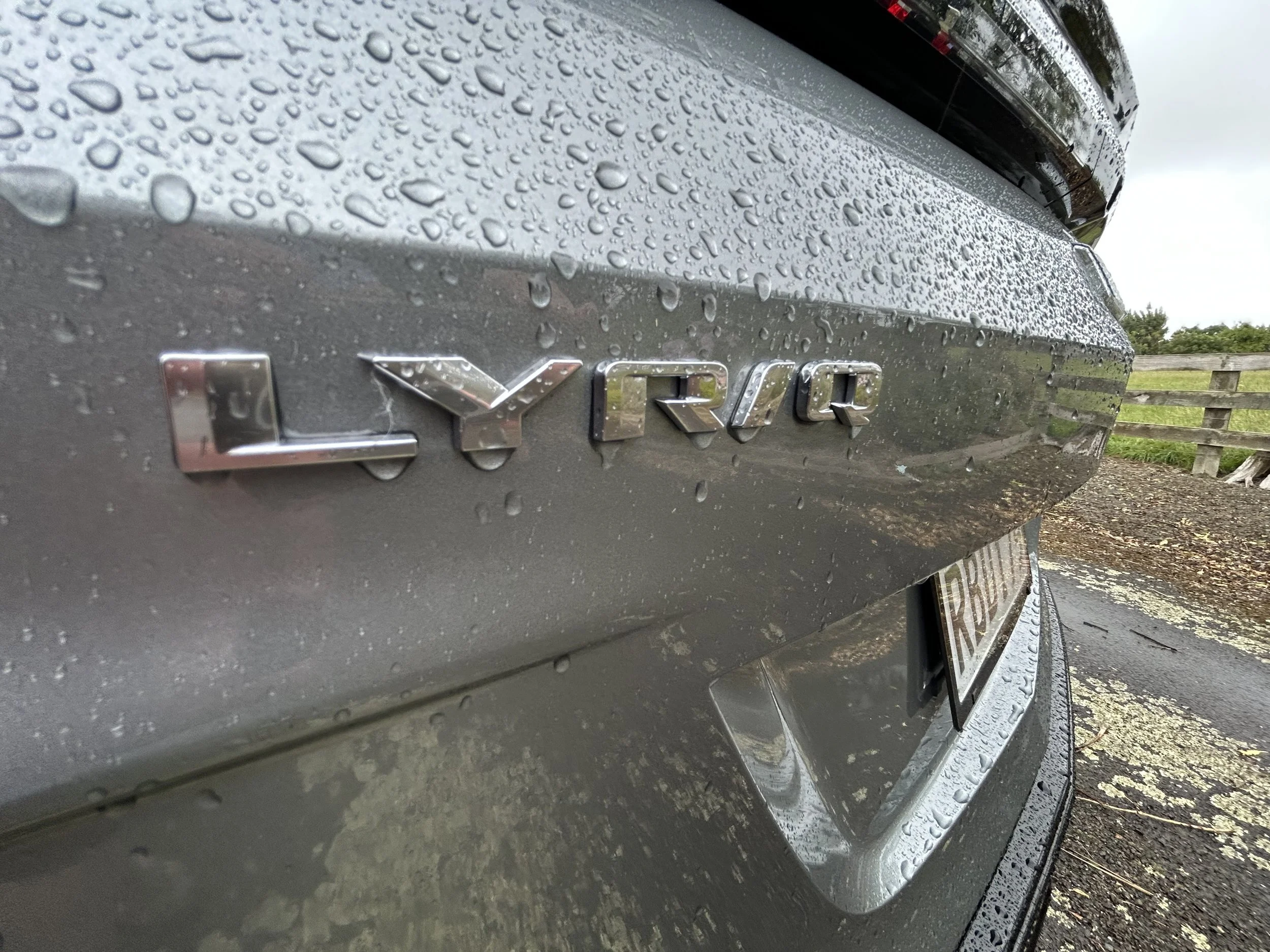
Cadillacs are rare enough to turn heads, and the Lyriq - so-named because Cadillac is said to be the most-mentioned car brand in songs - is certainly still in early days of establishing presence.
It only sells from a single outlet … sorry, ‘experience centre’ … in Auckland, and sales count from that first year likely hasn’t frightened any cited foe.
Perhaps that’s why pricing seems to be all over the show. These are such crazy times for EV at the moment. For Lyriq, the RRP listed today doesn’t merit; it seems to be a much cheaper car. A GST-off discount that took prices to under $110k applied for the latter part of last year and looked attractive. But at time of writing, according to the brand’s website, Lyriq is currently availing for $99,888 in either of its formats.
Even at full sticker, it’s well below the BMW iX, Audi Q8 and Mercedes EQE cited as competition; also undercutting the Audi Q6 that also deserves consideration.
The pricing strategy adds flavour for a car already causing a scene by simple dint of being in the roadscape. The tester certainly caused a major WTF moment with another EV-ist in a Peugeot also frequenting New Plymouth’s major charging spot, where I’d hooked up mid-way through a big roadie.
Hitting Taranaki was to view one of the region’s big events - the astounding Festival of Lights (if you have’t seen it, you must) - but unfortunately preceded the city’s other big visitor draw, Americarna, which stages annually in late February.
What would those who mainly come from around the country but occasionally also arrive from elsewhere in the world to celebrate old-school American iron make of the newest from one of the world’s oldest brands?
I’ve always been led to understand Mustang Mach-E and Teslarati have had to tread warily.
Still, if anyone was brave enough to include a Lyriq, they’d be in company of some illustrious ancestors. After all, as much as this push to break new ground and win new customers with new cars is something big for Cadillac right now, it’s misconception to call this a new brand for us.
What’s happening now builds on sporadic past involvements in this country by one of the longest surviving marques in the General Motors’ portfolio.
Caddy count here spans numerous vintage models, starting from early 1900s’ fare and including a Type 55 - the car accredited with having the world’s first production V8 and known as the ‘The Great War Cadillac’ as it was a staff car on the Western Front, starting a long association with the US Army.
You’ll see the occasional hearse - one enterprising funeral director has a stunningly massive 1959 Sayers and Scoville special - and a one-of-two Elvis Pink example was seized from infamous internet hacker Kim Dotcom. And, of course, we took distressed stock of right hand drive V6 CTS sedans, sold off cheaply after a planned launch in 2008 was cancelled.
Will anyone familiar with those find credible link to the Lyriq? probably not easily. There are some design cues to the past, but overall the first five-seat passenger vehicle GM has factory-built in right-hand drive for Australasia since the demise of Holden is a fresh start. Same goes for the smaller Optiq five-seater and ultimate flagship seven-chair Vistiq following on this year.
Potential of it having to create a whole new buyer base, comprising customers who care little if anything about the past and have thought only the future, is high. But Tesla has shown it can be done and, assuredly, likely few if any Mach-E owners also run two-door Mustangs.
NZ sees the car in two presentations. The Sport here at full RRP stands as being slightly pricier than the alternate Luxury. The grades are differentiated purely by trim. The cheaper type’s chrome is blacked out on the Sport, which also has a unique front grille insert.
They utterly align on features and their combination of dual electric motors and a 102kWh battery pack. Luxury clearly isn’t about Sportiness, but neither is Sport - at least, not to extent it could be considered a foil for Mercedes AMG and BMW M. There’s a V-series version coming to take on those.
As much as it puts comfort ahead of sharp dynamics, this is no wallowy barge. Yet it is simply more preferable to dial back and enjoy the languid refinement, which is genuine. That side of things shows in how it lays down the performance. Yes, it has a lot of grunt, but there is a definite softened edge to the way it unfurls.
The great American road trip is a holy grail for US motorists; you get the impression this car was engineered to meet that remit with ease.
NZ-market cars are on a suspension tune shared with European examples, which is firmer than the ride of US-market Lyriqs, and on top of this it has frequency-selective damper technology, which allows the suspension to react differently based on the road conditions. But it’s still overall quite compliant, and reliance on coil springs when most rivals in this sector now have adaptive suspension with air springs means it is not the ultimate for sophistication.
It was a good choice for a six-hour open road run; where a sense of silken urge and suaveness stood out. If you could imagine a Chrysler 300C wagon in electric, and upscaled around 10 percent, that’s the Lyriq.
The car seems to be exceptionally well sound-proofed. Suppression of wind noise and tyre roar is to luxury expectation. Coarse chip rumble will occasionally intrude, but name a car here that doesn’t have that issue. Just push up the volume of the 19-speaker AKG sound system, which is one of the best I’ve experienced in any car ever.
It was that degree of cosseting comfort I’d really hoped to experience had a pitch to drive a Lyriq down Route 66 in 2024 come off.
The remit then, on behalf of a major news group, was to achieve a heads’ up to what was then coming. Just parking up by ‘Cadillac Ranch’ in Amarillo, Texas, the art installation comprising 10 Caddys of different vintage buried nose first in the ground to showcase the evolution of finned rear ends would have been a highlight. (Another I only learned about en route was to do with a tiny, easily missed pub near the famous Chain of Rocks bridge outside St Louis. It was often visited by Al Capone, a famous Cadillac owner).
Sadly, that arrangement didn’t work out. We slummed it in a Kia EV6 instead.
Life on NZ soil is set to be a different experience than Stateside; for several reasons.
One is that we miss out of the Level 2 assisted-drive tech that GM provisions its home turf customers. Having that would have stepped up appeal, particularly now Tesla offers FSD Supervised. There are other reasons why it is less perfect for our situation that it could be.
Going SUV isn’t one of them. That format attunes to majority taste here and on its home turf. Adoption there has been strong; in part because Americans don’t have an issue with a make that once only provisioned sedans and coupes now branching out.
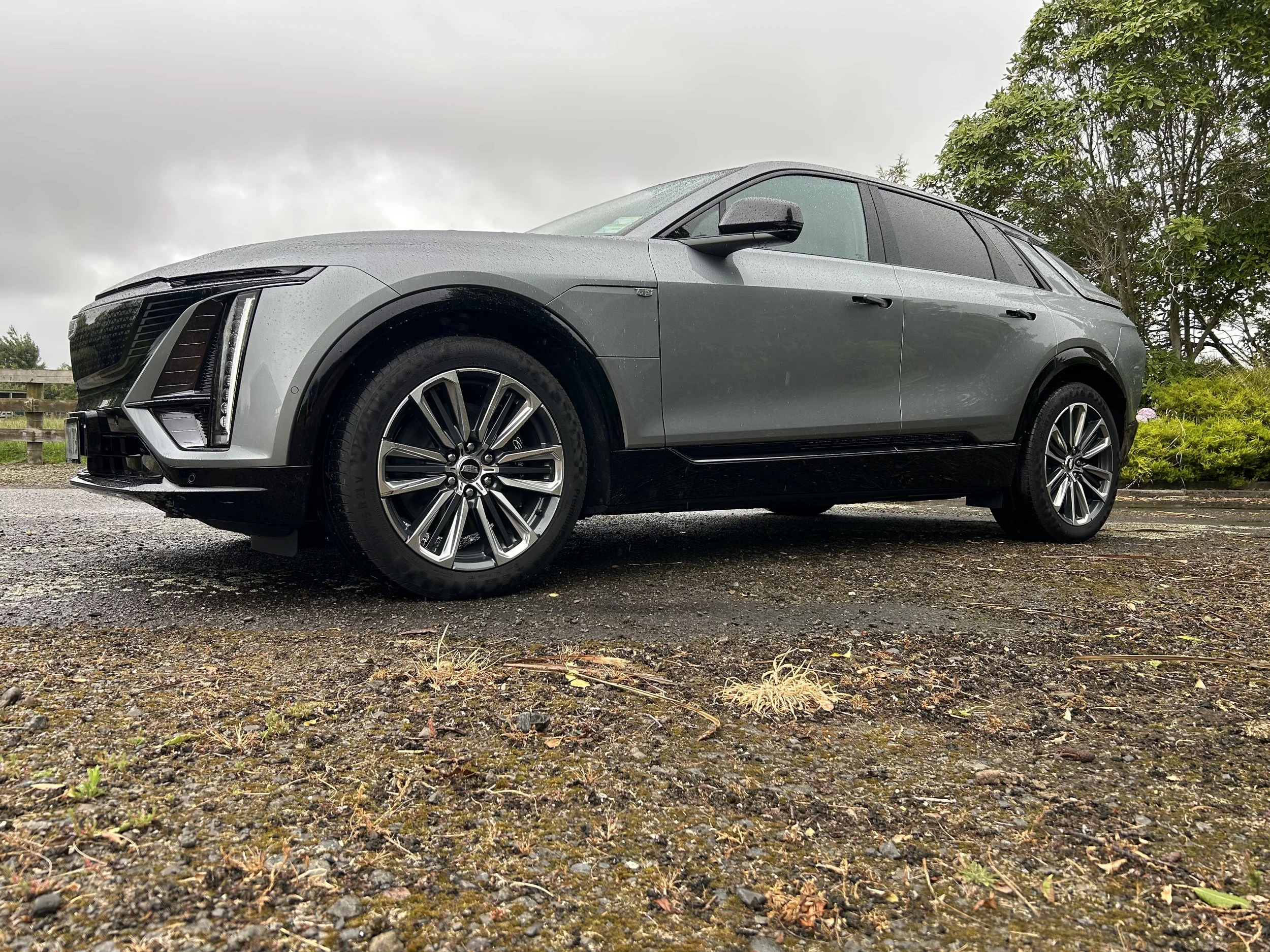
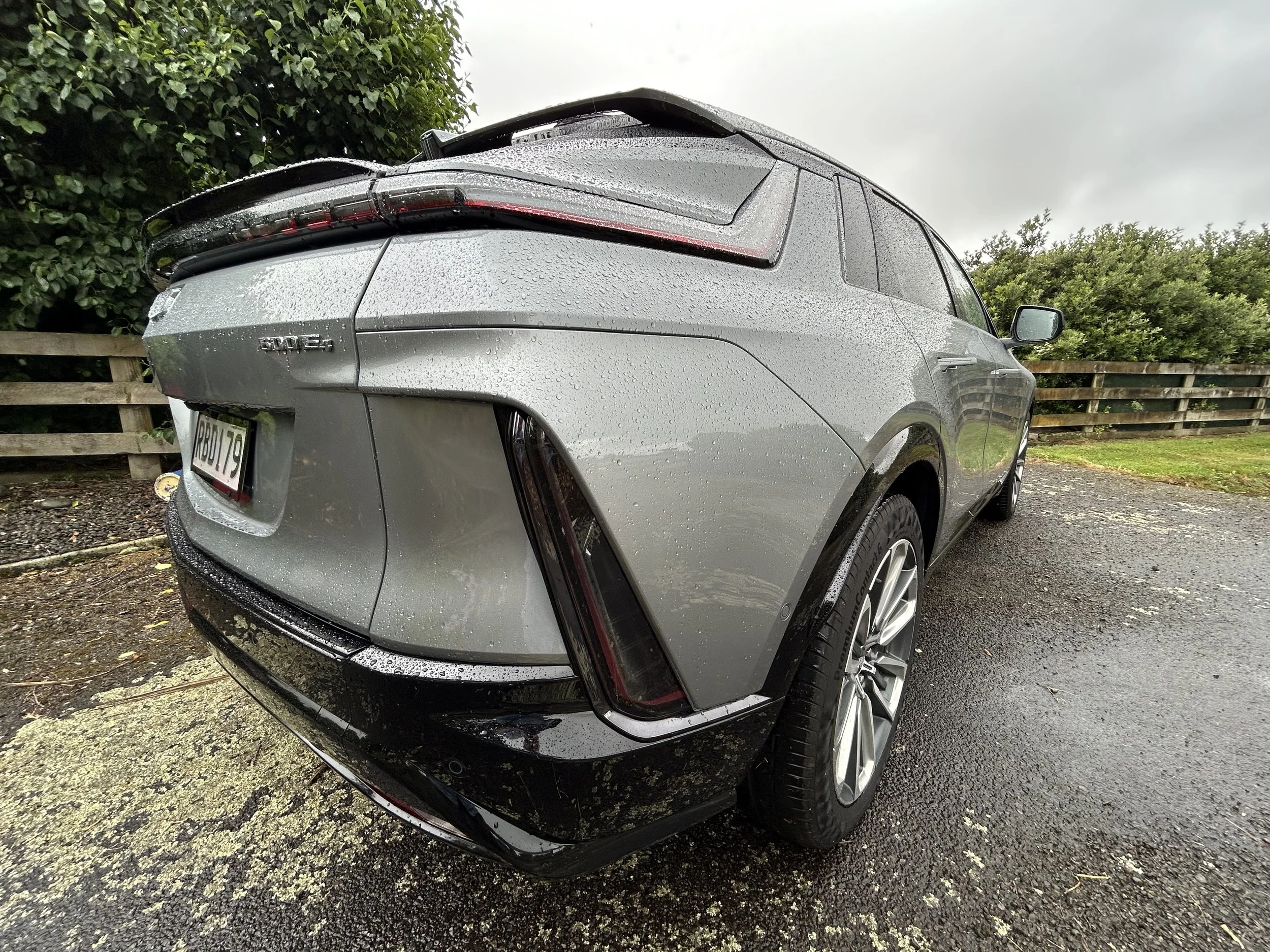
Neither should we. There’s still Caddy-ness to the design; to keep true to the past, the bonnet is long and the car’s grille retains a distinctive trapezoidal shape and the digital front end features some extravagant LED lighting patterns that speak to history. There are also L-shaped lights in the rear pillar, which hark back to 1960s Cadillacs.
Plus, it’s true to perceived historic form in being big; at 4996mm long, with a 3093mm, it’s not quite a limo length, but is on the large size for the market. Parking spots feel barely big enough. Those 21-inch rims aren’t over-sized.
The car’s size was enforced by building on a bespoke electric Ultium platform developed by parent General Motors.
Featuring here in its ultimate dual electric motor and 102kWh battery pack configuration, this architecture underpins the even more substantial GMC Hummer EV that remains Stateside. It was designated for the Chevrolet Silverado EV pick-up that seems less likely now.
Aside from ensuring an imposing road presence, the benefit of going large shows when you get inside. The long 3095mm wheelbase and it having a flat floor make this a car in which everyone can stretch out a bit; even shoulder room might not be too tight if there are three across the back. Any tall electing to sit behind the first row might find need to hunker down a touch, as the slightly slammed roofline does impede more on headroom there than up front.
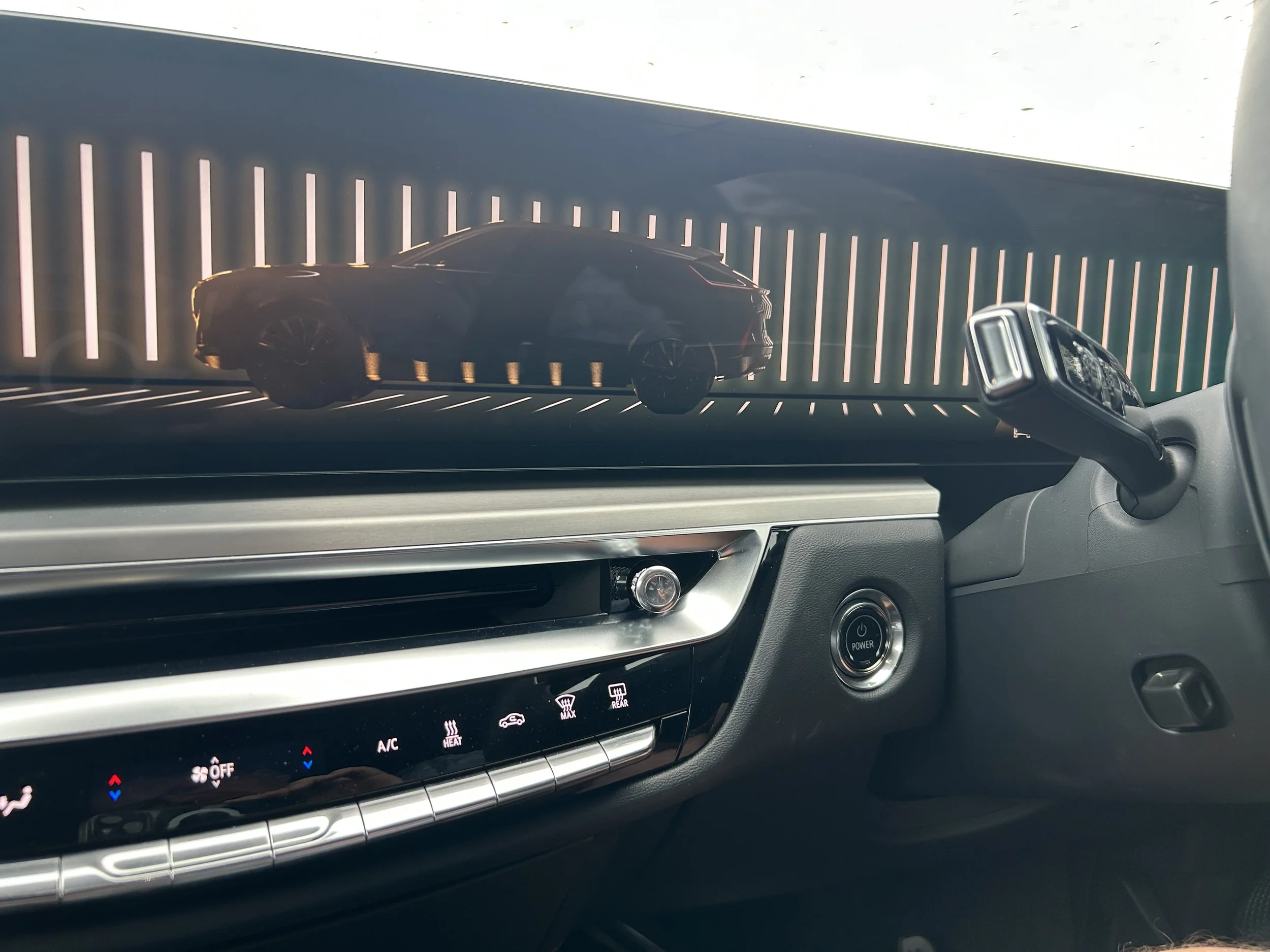
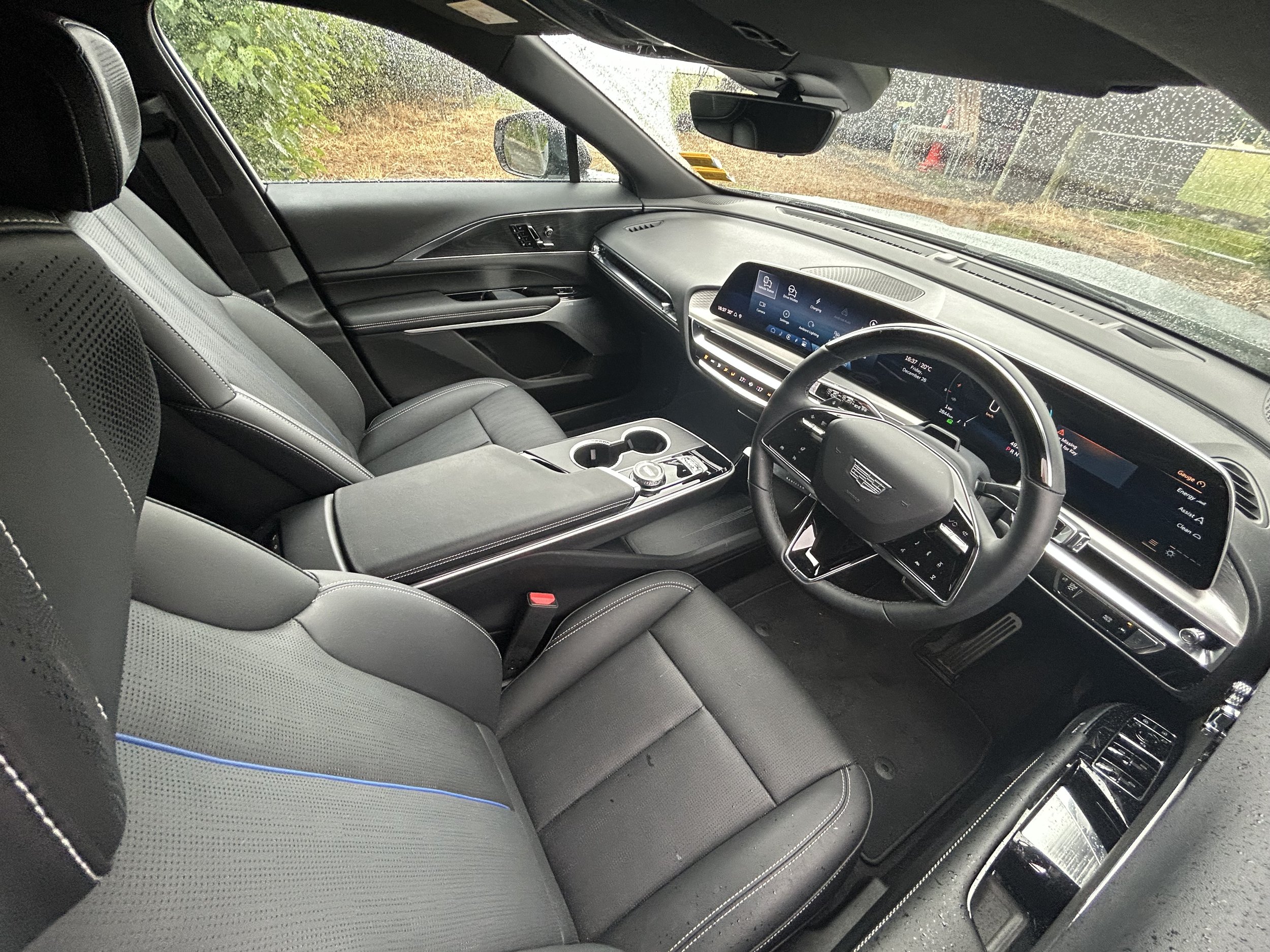
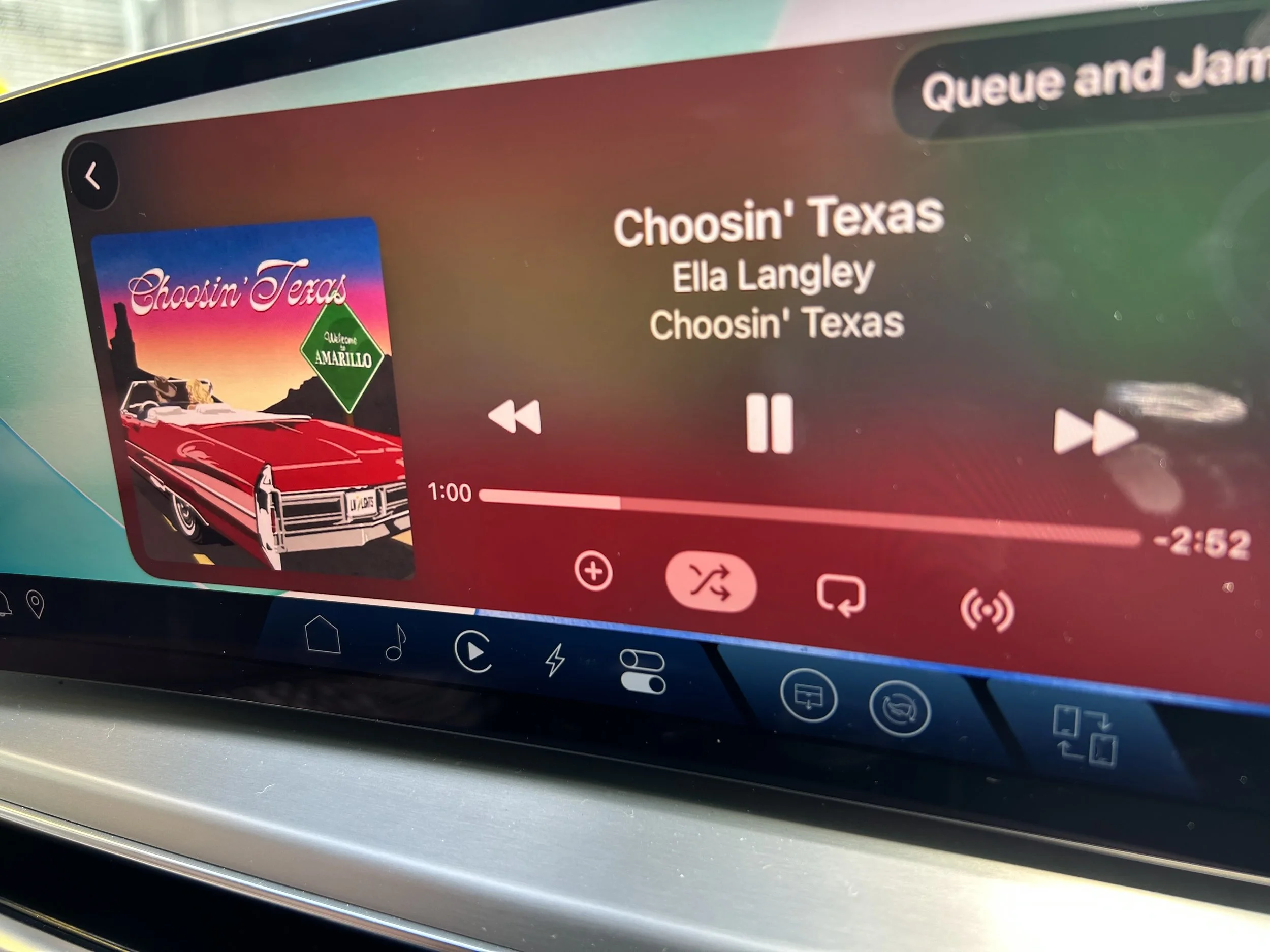
The interior presents as a largely agreeable environment, with a neat retro-futuristic vibe. Driver and front seat passenger face a 33in curved digital screen – an actual single unit, rather than a set of angled separate units – that serves as both a digital instrument display and the infotainment. The operating system includes built-in Google services. Wireless Apple CarPlay and Android Auto are standard.
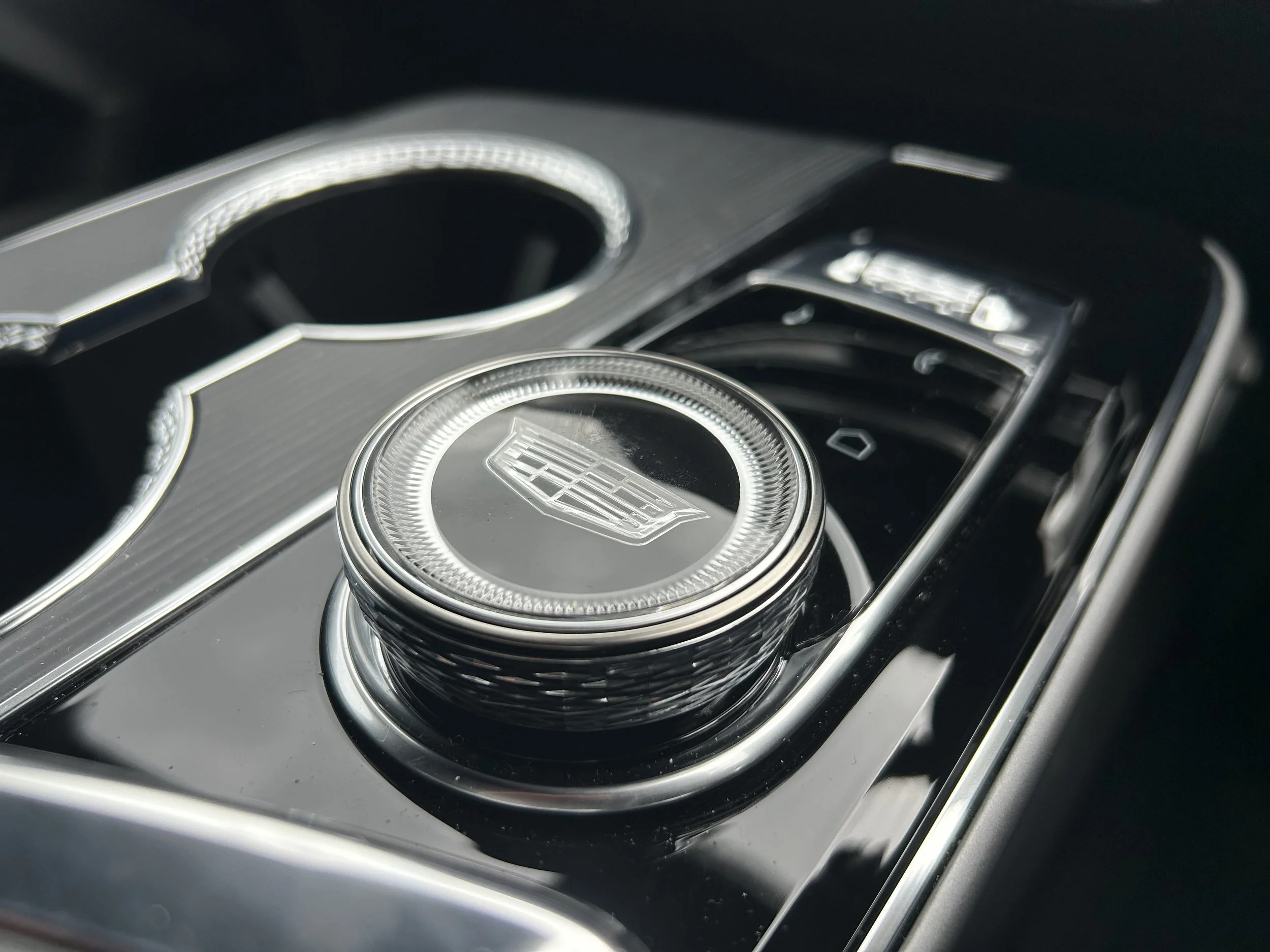
Controlled through haptic touch, or a rotary dial on the floating centre console, the infotainment exhibits quick load times and sharp graphics. Most but not all functions are screen-involved; heating controls are by physical switchgear below.
American premium quality is different from European or Japanese; but apart from some metal looking, but actually plastic, knobs and dials, a lot of what you touch and see looks and feels modern and right for money. Laser-cut wood trim and backlit lighting create a cool, sophisticated aura; the nappa leather on the seats is very nice, likewise those soft-touch surfaces on the doors, armrest and dashboard.
While the front seats are a bit flat, they have plenty of adjustment, eight ways for the driver, six for the passenger. They also get heating, ventilation and massaging functions, controlled on the doors like a Mercedes-Benz.
The driving position is good, with power-operated height/reach adjustment in the steering column.
Range and performance is all for electrics. Lyriq has a big nickel-manganese-cobalt (NMC) battery and seems to use it prudently. Actual overall energy consumption appeared to be 25.1kWh per 100 kilometres, so above the factory cited 22.5kWh but not outrageously so. It was driven in hot weather with the air con always on, a fair bit of the driving was at open road pace. And it’s a heavy car, close to three tonnes.
The 530km of claimed driving range in European WLTP lab testing is competitive with key rivals and seems reasonable. What also impressed was how quickly the car recharged; if you fall into a regime of stopping at 80 percent, time spent on a charger isn’t huge.
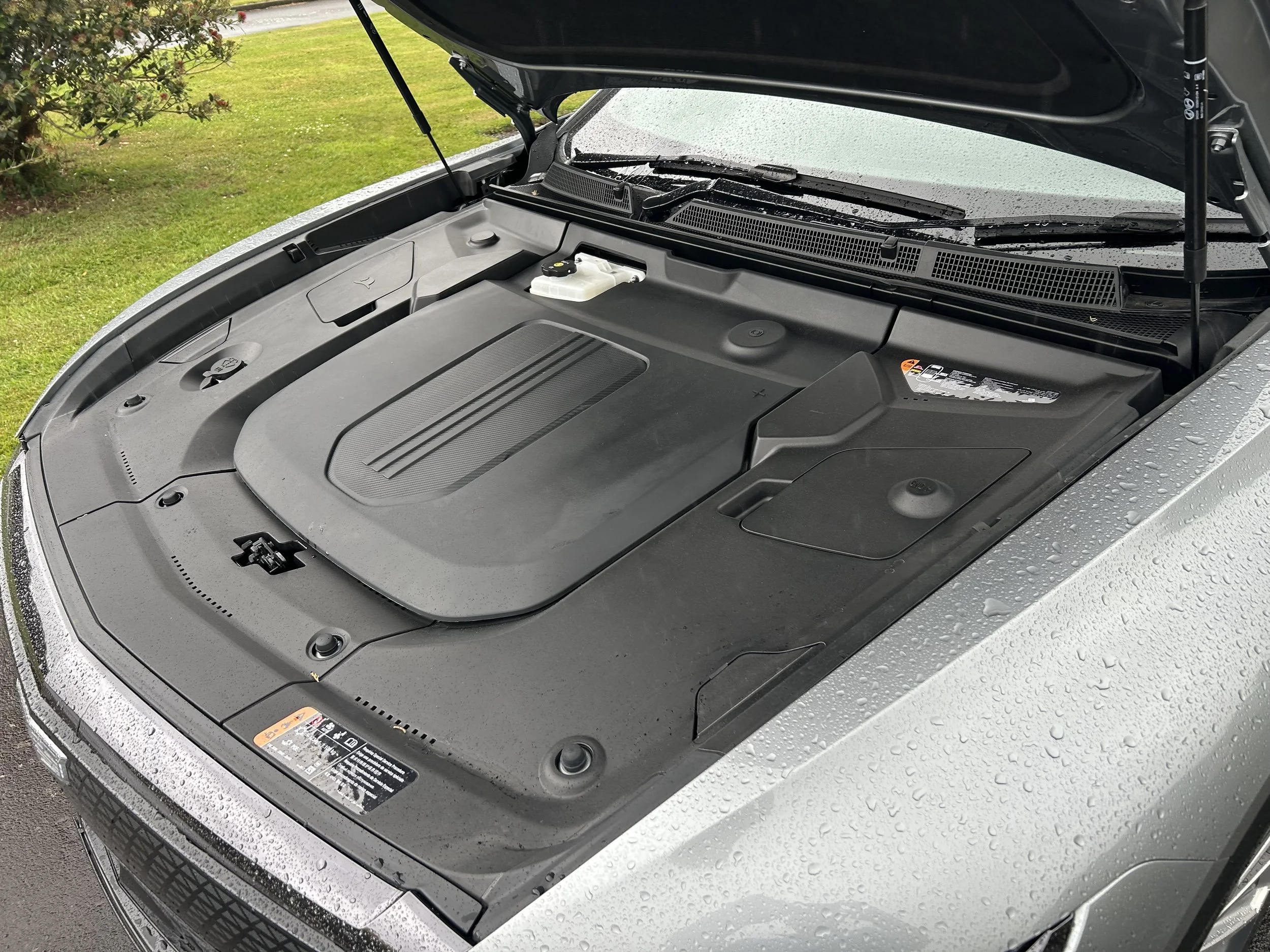
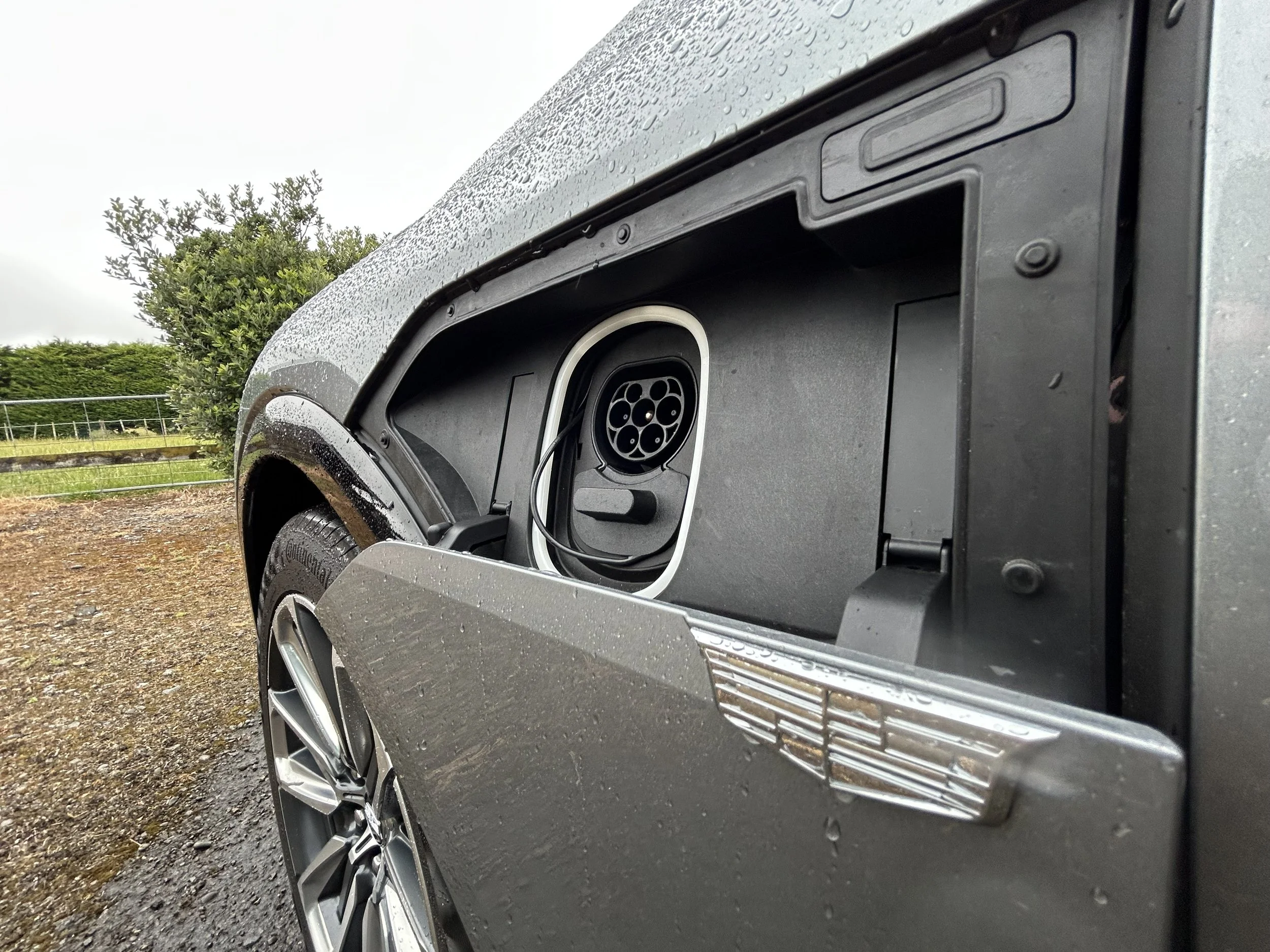
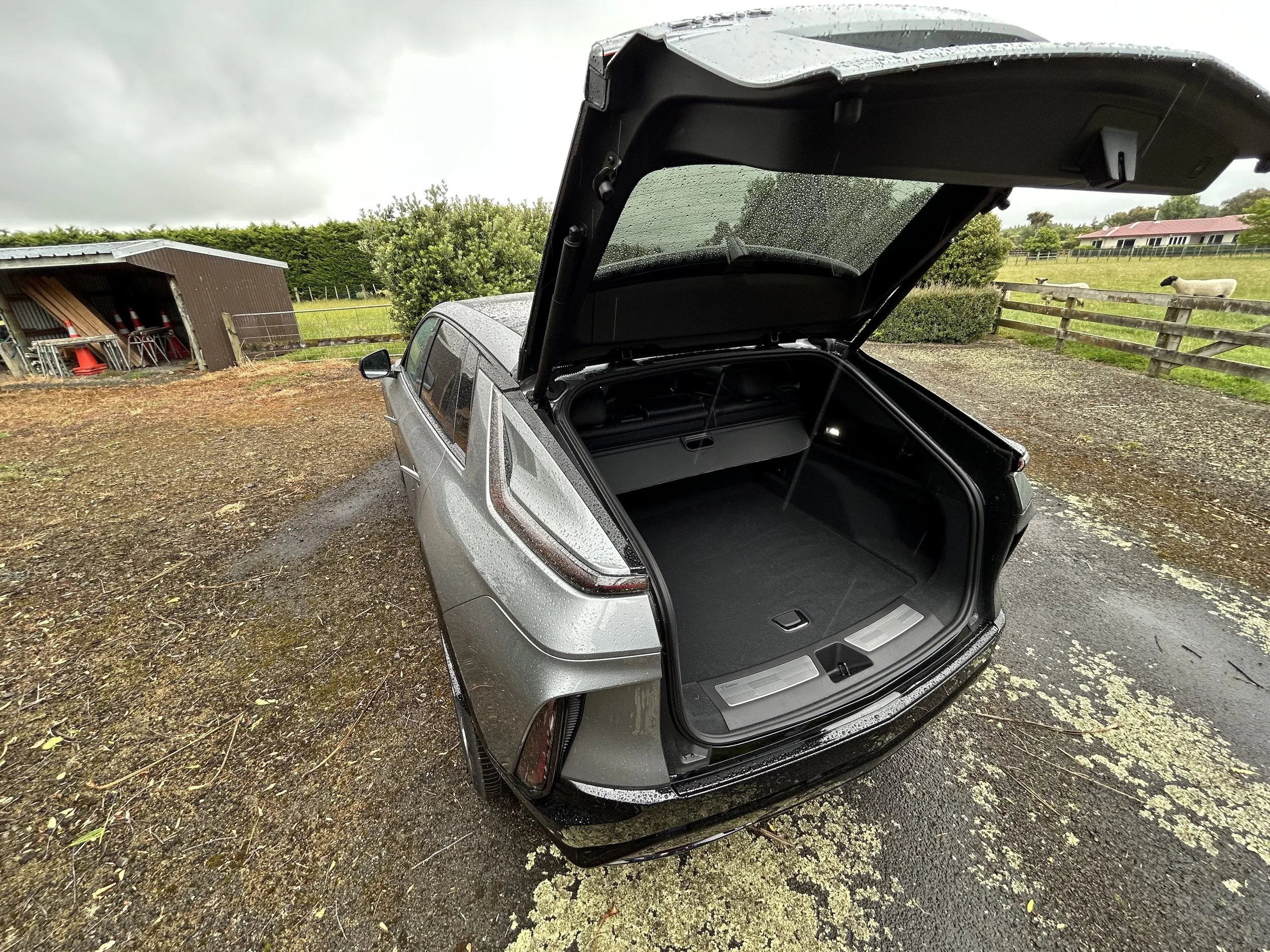
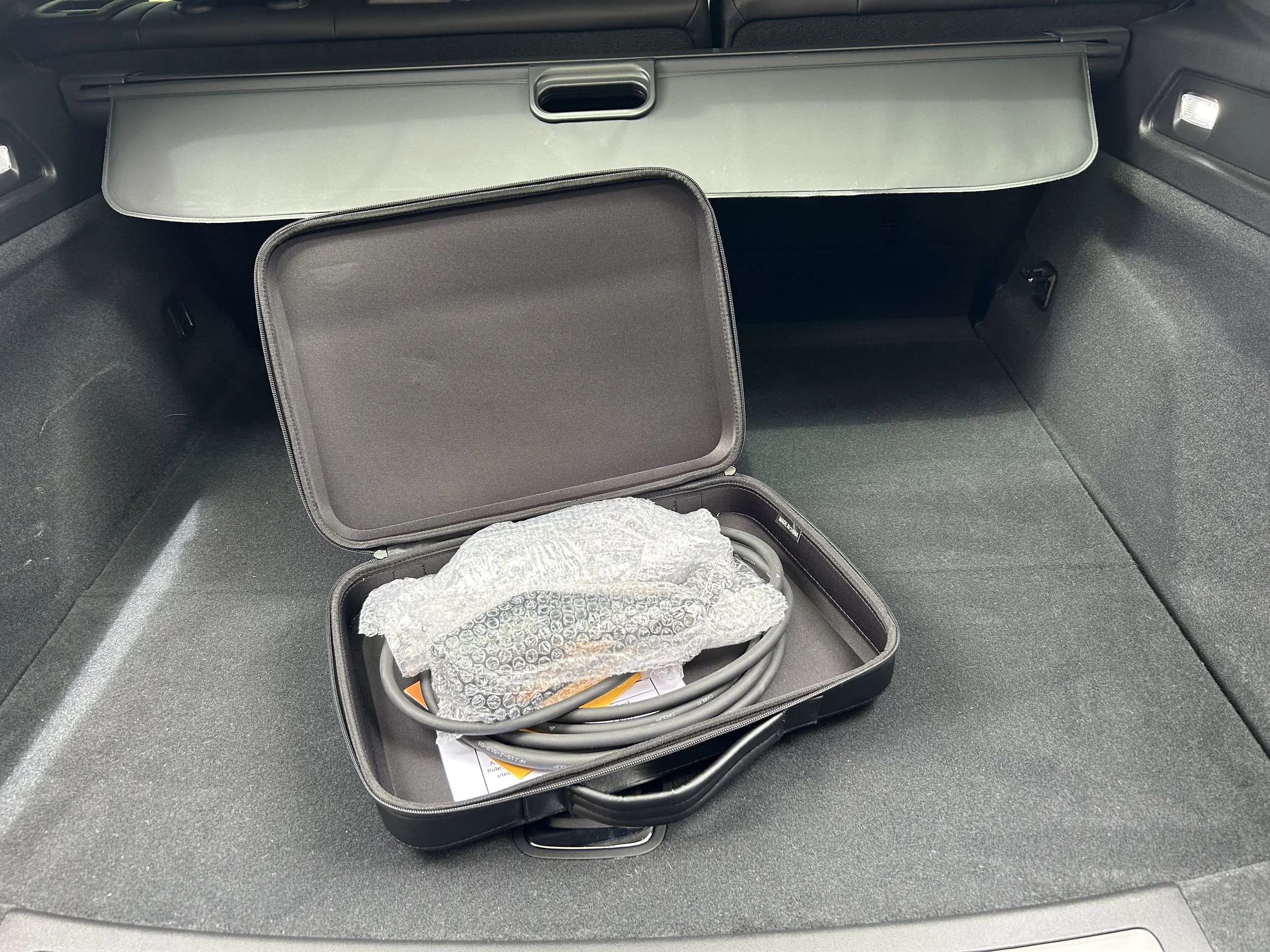
Speaking of hooking up. If doing so at home, you will be appreciative the charging apparatus comes in a smart valise-style bag that can be stowed beneath the boot floor - which is just partitioned spaces, once holding a tyre repair kit as there’s no spare wheel - leaving all of that substantial, 793-litre space for suitcases and large items. Drop the rear seats, which can be done from the boot, and it’s even more voluminous. There’s no frunk but neither does there need to be.
So what might keep you from signing up?
First up, the right hand drive conversion is a bit clumsy; Ford and Tesla do a better job with their respective products. Cadillac could also learn from sister make Chevrolet, which rolls right hook Corvette off its production line.
A grab handle on the driver’s side windscreen pillar is clearly for passenger use back home. It pointlessly remains in situ, while front seat passengers here have nothing to hold onto. Not addressing such a fundamental aspect seems sloppy.
The brake pedal design also speaks to a shortcut being taken. Right hand drive requires the pedal to hinge from a long bar stretching across to just behind the centre console. Anyone wearing large-sized footwear needs to take care when using the footrest; slightly angle your foot and there’s potential to snag the bar enough to trigger braking effect.
Reason for the car releasing with a price advantage that’s so much wider now is likely multifold, including being the new kid on the block. But maybe it also reflects that it is less completely kitted than most of those rivals.
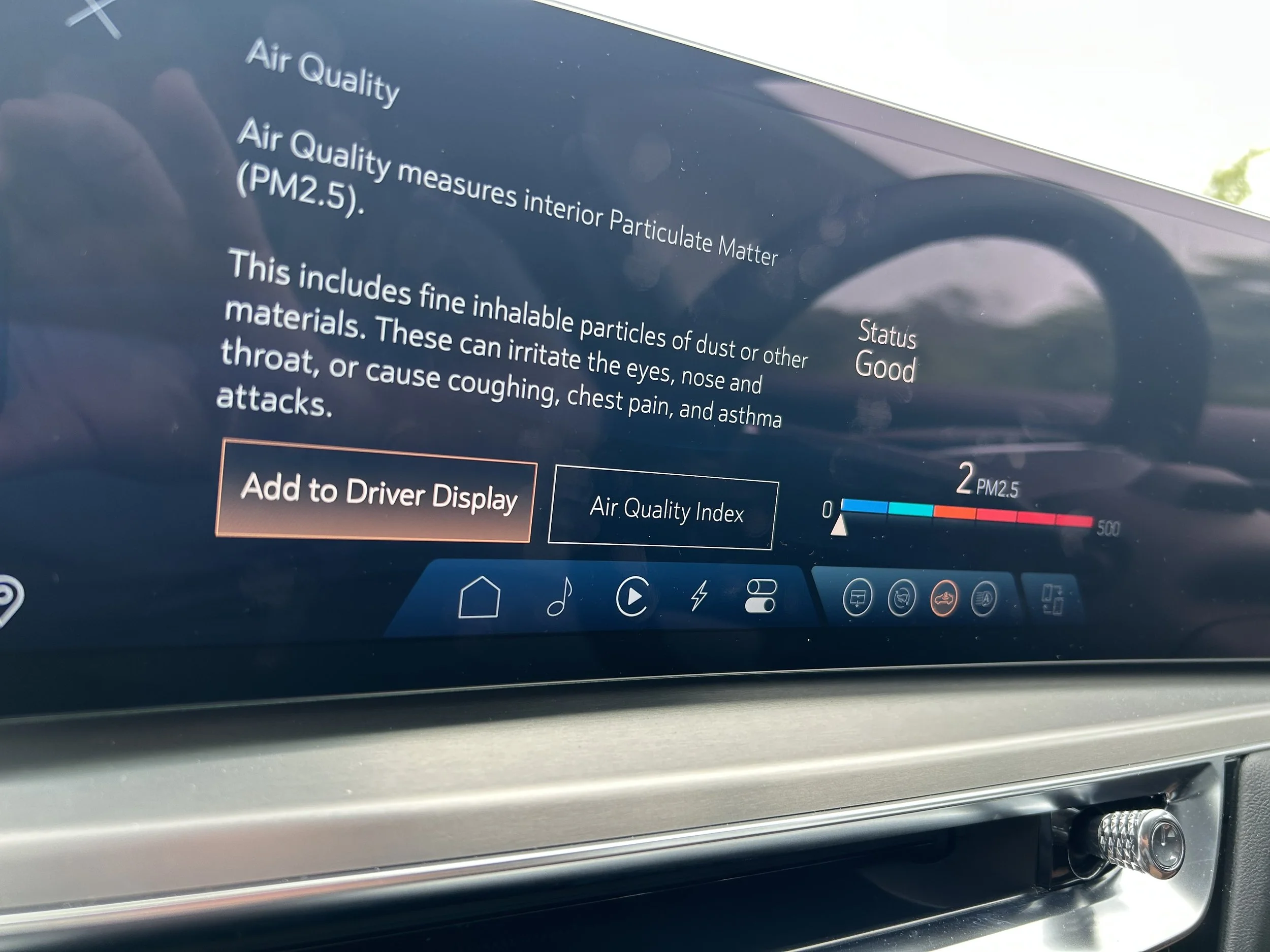
Admittedly, thats not initially apparent. Amenities include wireless phone charging – stored in a handy pocket so you’re not tempted to touch your phone while driving – tri-zone climate control, two USB-C ports, a 12-volt socket, multi-colour ambient lighting, keyless entry and start, and a panoramic roof. There are plenty of cameras and sensors to assist with parking, and though the screen view is not the largest by any means, clarity is decent. It also measures for air quality; that’s rare but likely to be important where it comes from.
There are no screens or the like for rear seat occupants, but they achieve their own climate-control panel, a fold-down armrest with cupholders, two USB-C ports and bottle holders in the doors.
Most tellingly absent from the car are a head up display, embedded satellite navigation and two key and increasingly common driver assist features - lane-centring assist and traffic sign recognition.
There are also some irks from how the technology operates or is calibrated.
The adaptive cruise control was simply flakey - it would randomly deactivate for no logical reasons - the driver attention monitor was very judgemental and while the headlights have excellent reach but the auto dip was not working seamlessly. Which is needs to be because, judging from angry flashing from oncoming motorists, the lamps are clearly very bright.
Sorting out consumption could be easier. Lyriq displays energy consumption in either miles or kilometres per kilowatt-hour, rather than the industry standard kW per 100km.
Finding that information also requires some sleuthing if you’re unfamiliar with the screen layout, because the trip computer is a sub-section on right size of the main instrument cluster, hidden from sight unless you touch a prompt.
At least it doesn’t bing and bong - unless you chose to switch to an audible alert. Cadillac’s default safety alert delivery is via a traditional US market preference: If something triggers, the driver’s seat base vibrates. Works for me, not least when driving home late at night with a passenger who was feeling dozy.
I like how the car facilitates a volume roller dial and a row of customisable shortcuts along the bottom of the screen for commonly used apps, as well as functions such as the one-pedal drive mode and the glovebox release (Which, as per current US trend, operated purely through the display).
It’s another modern car whose infotainment screen contains a few menus to learn. It’s better than a BMW, but having three settings menus – Controls, Settings and Vehicle Status – each with different functions within, can test a tired brain.
So it’s not quite as polished as you might wish. But there’s no issue that removes all the shine.
First up, beyond it simply being great that Cadillac is in the game here, with a broadly competitive car and two more to come, they’re doing it with real style.
It’s not a Caddy that you’ll ever see sporting gigantic cow horns on the bonnet, but it has a truly distinctive styling; there’s boldness tempered by elegance to the metalwork and though it is substantial enough to make you pay particular attention to how and where it will be parked, the car as a whole manages to be both functional and special.
The focus on luxury could be stronger, you still achieve a leather-clad and tech-heavy cabin with tons of space that’s nailed the comfort remit really well. Plus a battery this size means you can set out to run a decent distance without paying too much attention to the range.
As an electric offer that stands out for being big, brave and more than a bit different, it’s as memorably tasty as a fried onion burger from Sid’s Diner in El Reno, Oklahoma.
#Since this test published the Lyriq repriced to $100,000 RRP.