BMW X3 30e xDrive PHEV road test review: Halfway there the right spot?
/If full-scale fossil fuel reliance doesn’t feel appropriate yet going fully electric seems a step too far, there’s the edition that relies on the pump yet comes with a plug.
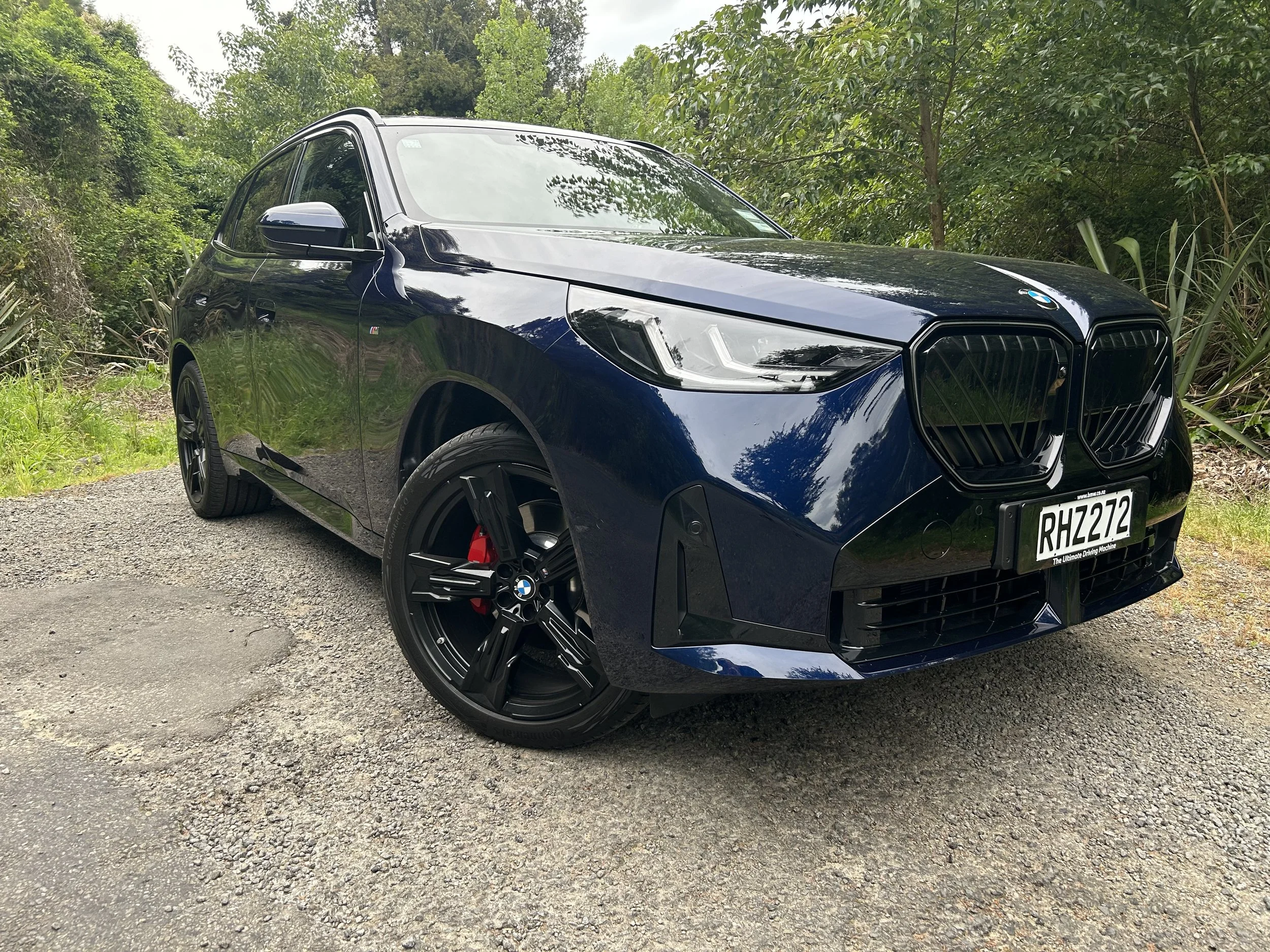
Price: $118,900 ($129,500 as tested).
Powertrain: 1998cc four-cylinder turbocharged petrol making 140kW/310Nm with 135kW/250Nm electric motor fed by a 19.7kWh lithium ion battery, combined power and torque 220kW/450Nm, eight-speed automatic transmission, all-wheel-drive.
How big? Length, 4755mm; width, 1920mm; height, 1660mm.
We like: Beautifully styled; drives with confidence.
Not so much: AC-pure charging is out of step; reduced cargo capacity.
BEFORE electric comes electrified and the way things are right now for battery-enabled cars, it’s hard to say which has the best chance of winning interest.
BMW is well versed in meeting changing and challenging consumer whims.
Full battery, plug-in hybrid with petrol, fully combustion with both kinds of pump fuel … BMW has been there, done that with the X3 for some time now.
As much as Kiwis have gone off fully electric at the moment, insofar as Munich is concerned, weaning off fossil fuel and onto electric off a mains-replenished battery is still the future.
The iX3 that wholly unveiled a couple of weeks ago is arriving in 2026.
It’s completely new, from ground to cloud, a very different looking car to this one. With a bajillion BMW bucks having gone into the 800 volt Neue Klasse platform, it has to succeed. All the initial reports are positive but doubtless some here will never be convinced.
And there’s the problem. In our part of the world right now, who would know what makes sense? Kiwis were absolutely hot on electric from 2020 to 2023 … but since then, the temperature has dropped and some are reverting to delusions they need to snap out of. There IS a climate crisis. The Earth ISN’T still in the business of replacing the oil we’ve pulled from it.
For that reason, BMW conceivably cannot dare forgo the similarly-sized and styled internal combustion variants on a different underpinning.
If full battery seems too much of a reach, how about the ‘hallway there’ solution, a plug-in hybrid?
Sure, it's not for everyone, either, but time with the X3 30e xDrive suggested having this technology doesn’t demand the same leap of faith asked by a full EV, nor does it diminish the car’s classiness or dynamic edge.
The ideal of being able to fuel from a pump and make long journeys without needing to plan regular stops for recharging is met. And in its latest format, the BMW is also a good choice for silent, zero-emission driving for short distances.
Commitment to putting the battery side first is strong. That begins at start-up, when the car will revert to electric. Very civil for early morning starts. A user can fine-tune the mix of power flow, but there’s no way to absolutely sideline the electric influence.
It’s always been the case with PHEV that if you keep within a regime involving easy, short distance driving, you might go without need to burn petrol at all. The X3 is up for that.
To a point. This PHEV is no different to any other. Best result rely on rigorous adherence to good practice. Regular battery replenishment during lay ups is a habit you simply have to fall into.
With the BMW, this asks for more time than some require. Sticking to AC replenishment is doubtless a cost consideration, but when the battery size is now bigger than before, it highlights why others have gone to DC replenishment.
I’m not arguing against the benefit of achieving a 19.7kWh battery in marriage to what’s otherwise a rinse-repeat of the previous layout. So, a 2.0-litre four-cylinder petrol engine married to an electric motor. The electric pure range now of 91 kilometres is so much more useful than the old car’s 55km, and also looks good against the Lexus NX450h Plus (87km from a 18.1kWh battery).
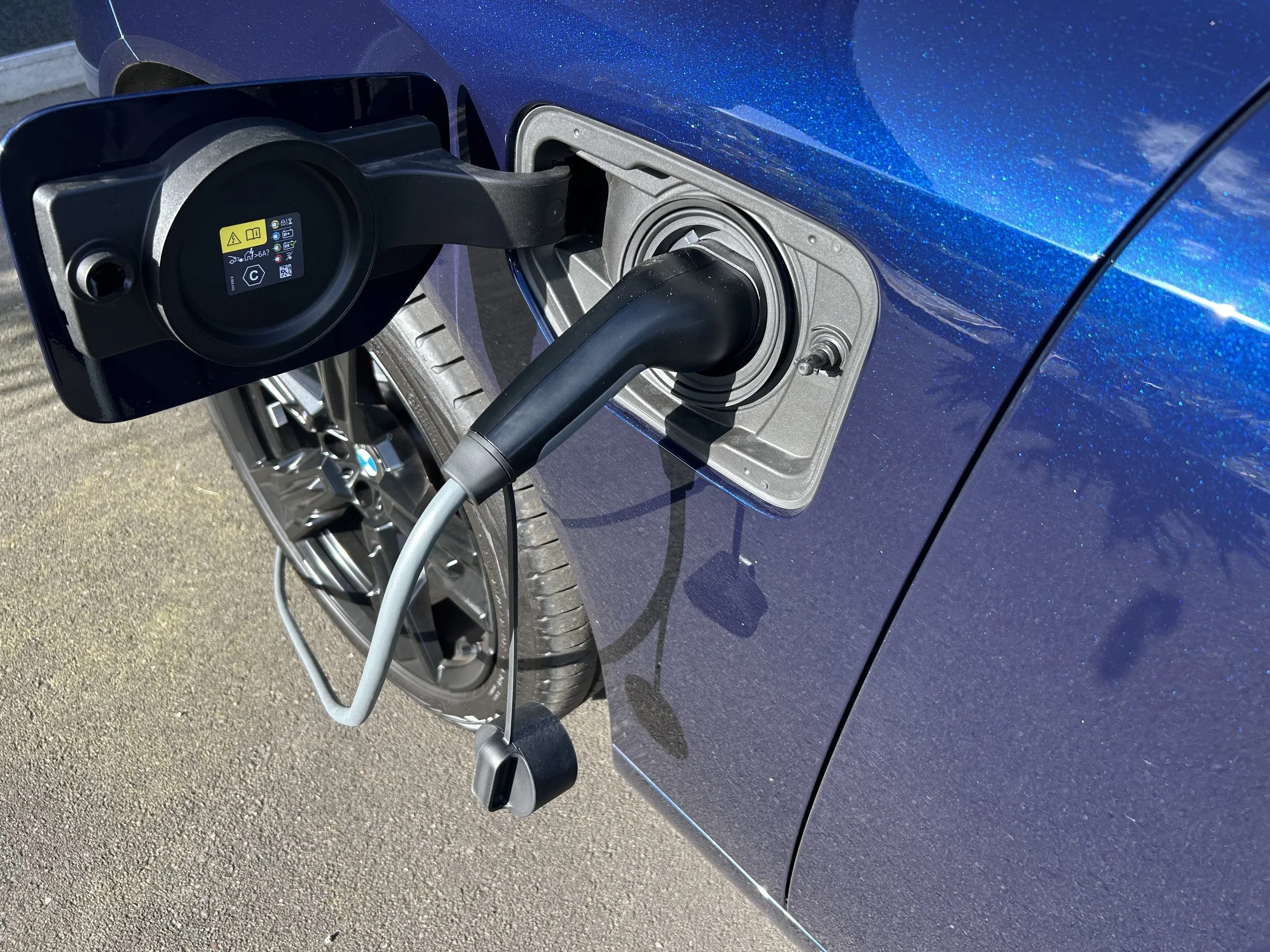
But BMW assertion of being able to hook up and get the X3 back to tip top state in just a couple of hours suggests their electricity is stronger than mine. My primary option, trickle replenishment off a three-point household plug, was tedious.
When both engine and electric work optimally, it would seem to be honestly lean, though the best-case consumption of 1.1L/100km wasn’t troubled in my care.
What happens if you neglect the battery and allow it to deplete to point electric driving becomes unavailable? That actually took concentrated effort, but I got there. It was why the car returned with an average of 6.7 litres per 100km.
The consumption would very likely have improved had I used the car less on the open road and more around town. But that would hardly be fair to the X3’s overall personality.
As good as it is for urban driving (you sit high, have great all-round visibility, and it has very good parking assists), the open road is so much of a happy place for any BMW it’s cruel not to use it there.
Driver appeal is surely by now recognised as being a core reason why this medium five-seater has a good record for taking the fight not just to the obvious German-born rivals, Audi Q5 and the Mercedes-Benz GLC, but also emergent outliers, notably the Lexus NX.
BMW’s ‘small’ SUV has certainly grown up over the years – it’s now easily the size of an original X5. Also, this format has a bit more weight to heft, due to the battery. That’s likely why, despite outputs having climbed by 20kW and 30Nm, it asks for 6.2 seconds to reach 100kmh from a standing start, having previously required 6.1.
Still, it otherwise patently it picks up where its predecessor left off, with excellent dynamic appeal. There is a degree of off-road capability, too. All versions are four-wheel drive and have ample ground clearance. But everything about the incisiveness it brings to general road driving suggests mud work isn’t really the BMW’s focus.
The steering offers more feedback than most cars in this class and is combined with a well-sorted chassis that controls body movement well. While there is still some lean in corners, it sets a very good standard. The powertrain is responsive in any state, doesn’t seem to lose much pep when the battery depletes (which suggests it really never fully exhausts) and interacts well with the eight-speed automatic that’s now the sole choice of transmission.
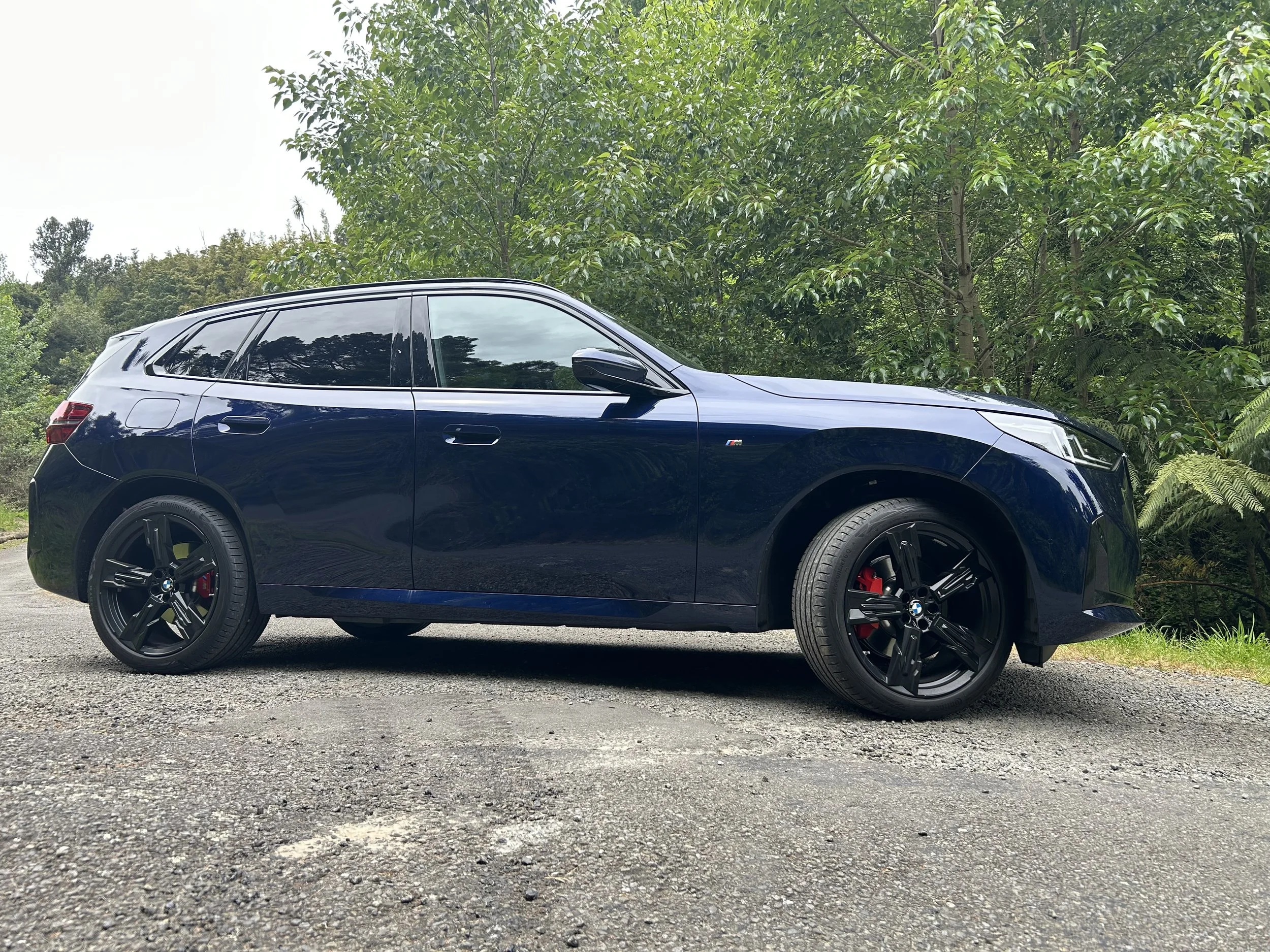
The X3 is not an inexpensive car, and if you add options, the base price increases easily. The test car’s siting $10,000 above list resulted from it having Tanzanite Blue metallic paint and M Sport Pro package, each costing $2000, a $4000 ‘enhancement package’ and also a $2600 retracting tow bar.
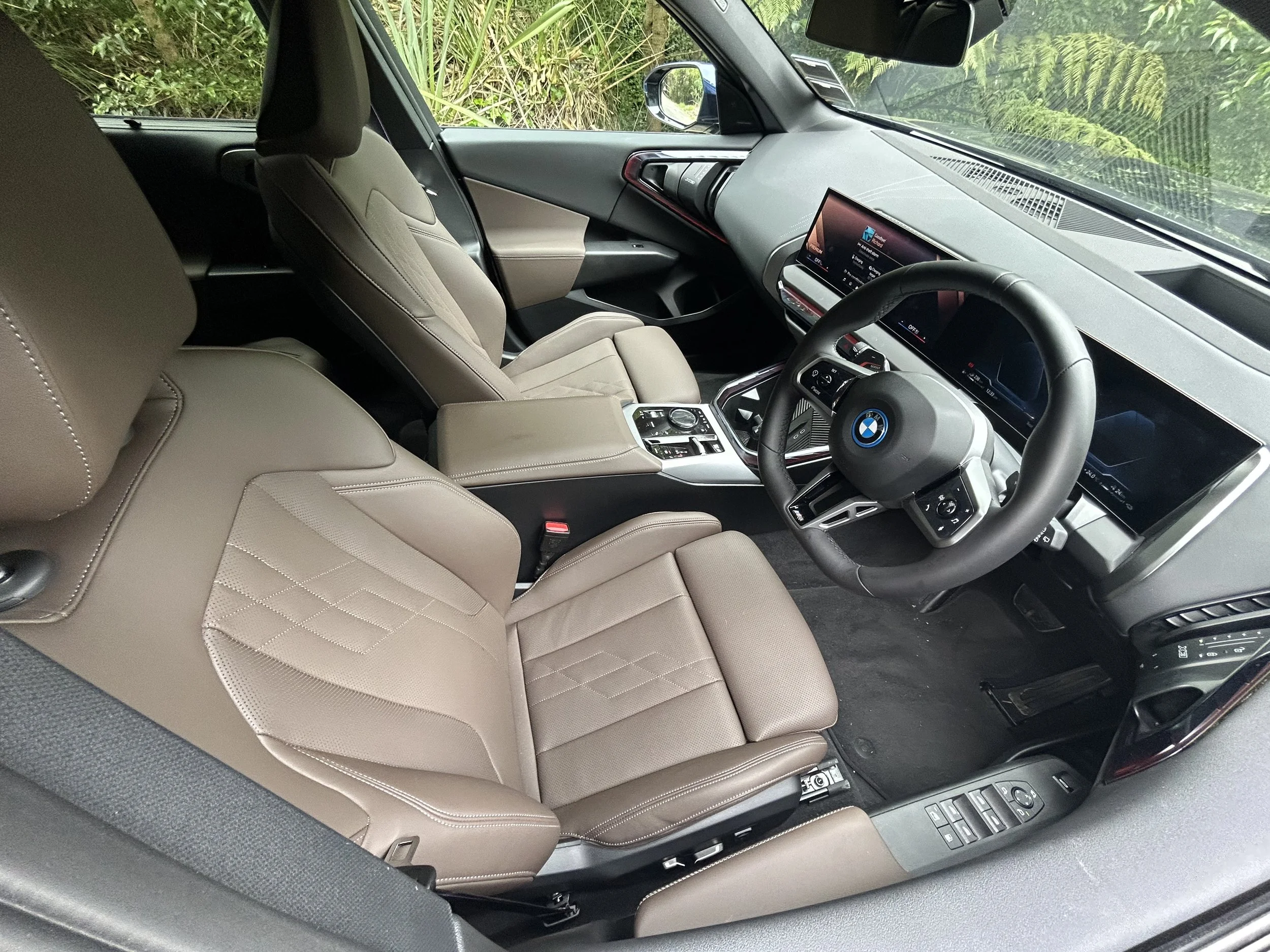
Standard fare includes adaptive LED headlights, leather upholstery (in a Veganza Espresso Brown that beautifully complemented the paint hue), three-zone air conditioning, an automatic tailgate, a head-up display, parking assist, comfy-from get-go sports style front seats with electric assist, connected services and a panoramic sunroof. The latter has changed in design. The old car had an opening roof, with tilt and slide function, but now it’s a fixed glass section with a shade cover.
Safety provisions include autonomous emergency braking (AEB), lane-centring assistance, adaptive cruise control with stop-and-go, blind-spot monitoring, lane-keep assist, and rear and front cross-traffic alert. What’s appealing is that all are nicely tempered; you aren’t in fear of the dash lighting up and electronic screaming the moment the car gets a sniff of a white line or goes above a posted limit.
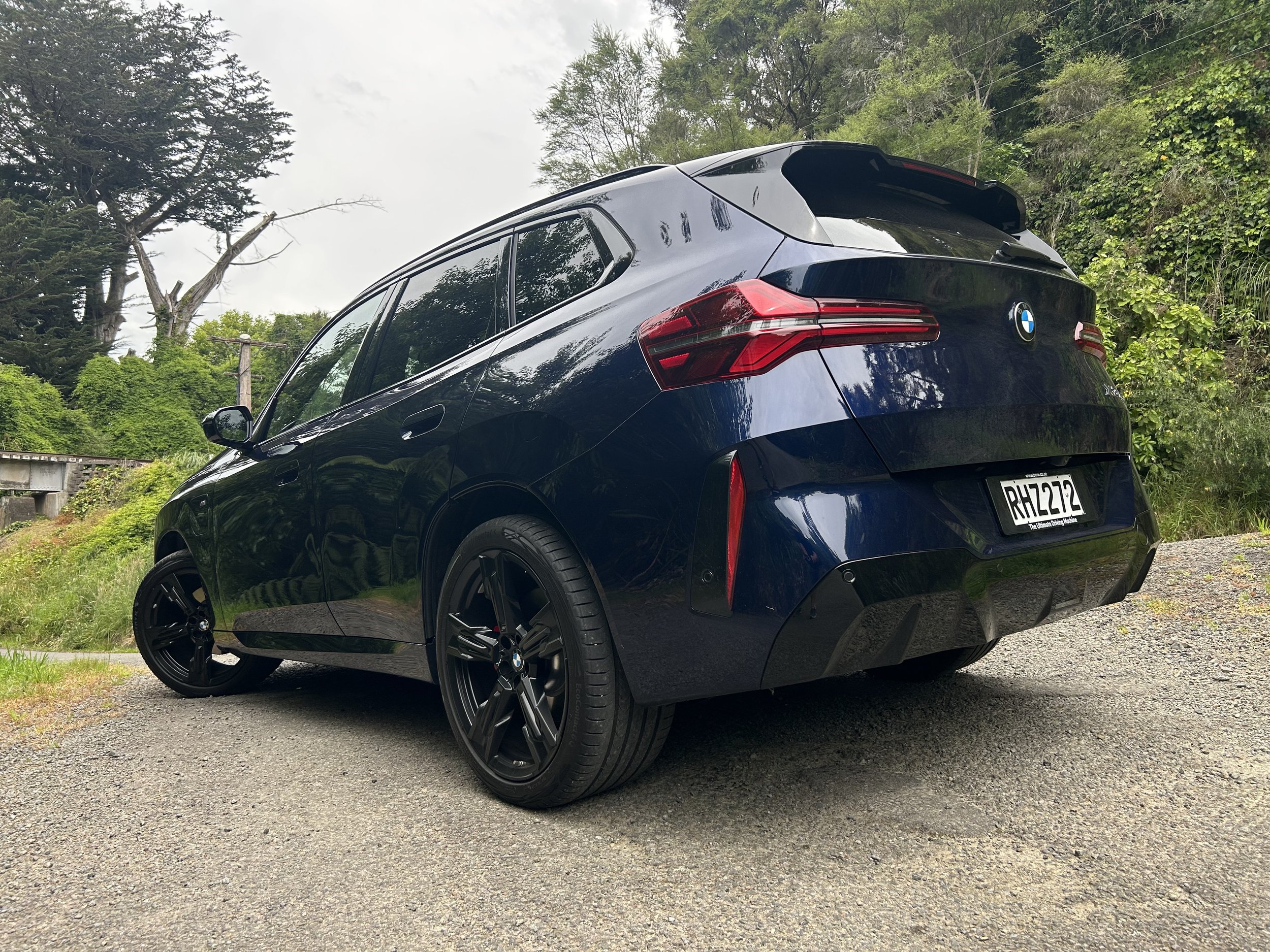
The car’s new look is an attention-grabber; and not just because of the illuminated grille. The “monolithic” approach intends to make the car look as though it’s all one lump of metal. Adoption of the sharp-edged lines and flat panels align it with BMW’s existing electric SUVs yet it’s not set to be confused with the iX3 - that’s all different again.
Within the cabin, design flamboyance extends to slightly strange door handles with integrated fan speed controls specific to the inbuilt air vents. That take a bit of getting used to. Overall though, criticism about the previous model’s cabin being outdated in its look is hardly likely to carry on now it steps to an emphasis to minimalism with heavier reliance on in-vogue technology.
The ‘Curved Display’ features prominently, combining the touchscreen and digital instrument cluster in one housing, and there’s little else on the dashboard; overall, in fact, it has just a few buttons on the centre console and steering wheel.
If smudging up the screen isn’t your thing, there’s still an iDrive rotary controller in the centre console that allows you to use the system. I’d advocate taking the time to learn its ways, as this means you can navigate the screens almost by touch, reducing the chance of distraction. Inclusion of permanent heating and ventilation controls at the bottom of the display is sensible for temperature adjustment.
Instead of a traditional gear knob, a small toggle switch to cycle between Drive and Reverse are considerations that free up considerable storage space about the centre console.
There’s a large upright panel with an integrated phone charger, dual cupholders, a large, lidded centre console compartment, and twin USB-C ports.
What elevates the premium-ness is the ambient lighting technology lifted from the 7 Series and 5 Series models. The effect adapts depending on the drive mode and the situation; in Sport, the theme turns red and blue in honour of BMW’s classic racing colours. Also getting a nod is BMW’s greater use of sustainable materials than before, with a fully ‘vegan’ interior available.
On the other hand, there’s a load of black plastic in there as well. BMW has admitted cost constraint is why some of the materials are less premium than it might have liked. It wouldn’t be so bad if this was kept low key, but unfortunately that’s not the case.
In respect to occupant room, it does well. Taking four adults out for dinner was no stress; it has lots of room in the back; one of those occupants did whinge about how firm his seat was. Given how new the test example was, he might have been breaking it in.
BMW provisions the rear area with tri-zone climate control and the outboard seating positions are heated. There are also tablet slots in the seatbacks, USB-C power ports for devices, window shades and a fold-down centre armrest housing a pair of cupholders.
The weekend I had the X3 coincided with a historic car race meet I was competing in. Ability to haul 2000/750kg braked/unbraked raised hope, of it being a towing hack, but no luck. A trailer with an imperial coupling and a metric ball are not friends. But I still had it as a runabout between track and home.
That undertaking put focus on boot capacity; I had a bit of gear to carry. The boot is wide and sensibly-shaped, but the battery packaging intrudes on capacity; 460 litres’ makes it 110 litres short of the fully ICE types.
On top of that, much of the available space is taken up by charging paraphernalia. It’d be much preferable if BMW had designed an underfloor cubby for the cables. Instead it puts all that stuff into two bags that secure to the luggage hooks. One holds a wall charger and cable you use at home, another a connecting cable for AC-bespoke inlets you might encounter here and there. The luggage space is expandable up to 1600L with the second-row seatbacks folded flat.
One strength of the X3 range is that, even without full electric, there’s plenty of choice. If cross-shopping for frugality, though, it’s really just the $4k cheaper 2.0-litre diesel that raises as a compelling alternate.