Dongfeng Vigo first drive: Electric for SUV look, city zip
/Clever packaging, lots of kit for the cash, some intriguing options and reasonable range.
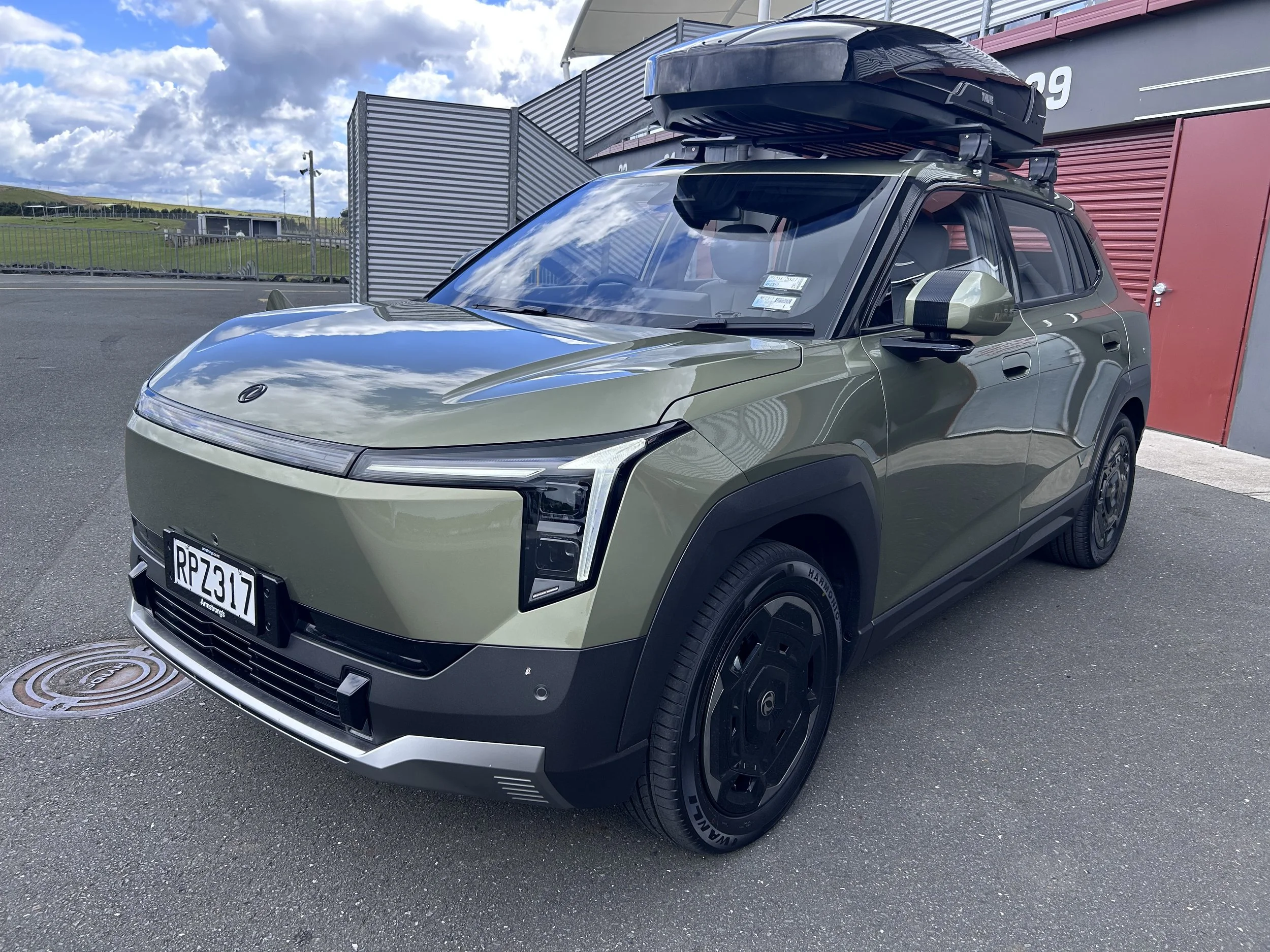
AS a compact SUV Dongfeng’s second volume car here is pitching into the largest single new-vehicle segment, a space containing several dozen choices.
As a compact electric SUV, however the Vigo is only sizing up a very small territory just now, one of … well, several.
Entering a zone which is light on competition is a good thing. But s is well known, consumer enthusiasm for electrics of every kind is clearly tempered. Cars that rely on battery urge alone account for but six percent of new car sales.
That brand representative Auto Distributors Limited simply won’t air any kind of volume prediction whatsoever is therefore to be expected. That it also defers on citing any rivals is, however, a touch demure.
Conceivably it’s of the same genre as the Skoda Elroq that arrived just a few weeks ago and also the Kia EV3. Though only in type.
At $37,990 plus on-road costs during its launch period (rising to $39,990 afterwards) it is way cheaper than those.
ADL is comfortable calling it the country’s “best value new EV”, a distinction to ensure it stands clear of its first arrival here, the Box small car that arrived last November. That one positions as the cheapest, at $29,990.
Which will sell more? Conceivably, the Vigo, they say.
Argument pins on acceptance as a well-priced urban runabout with acceptable range and performance, merged with plenty of technology and more kit than you can usually buy for this money.
Dongfeng is another make out of China recognising that, as a new and unknown quantity in a market where there are alternatives, it has to load up big and price ultra-sharply - perhaps to point the factory is making a loss - in order to stand chance of winning attention.
Vigo places on its maker’s bespoke‘Quantum Architecture 3 platform’, in this instance involving a 52kWh LFP battery feeding a single 120kW/230Nm motor driving the front wheels.
WLTP range of 340km is fair, but downtime replenishing might be low, as peak charging rate is an unusually impressive 167kW, with a claimed 30 to 80 percent time of just 18 minutes.
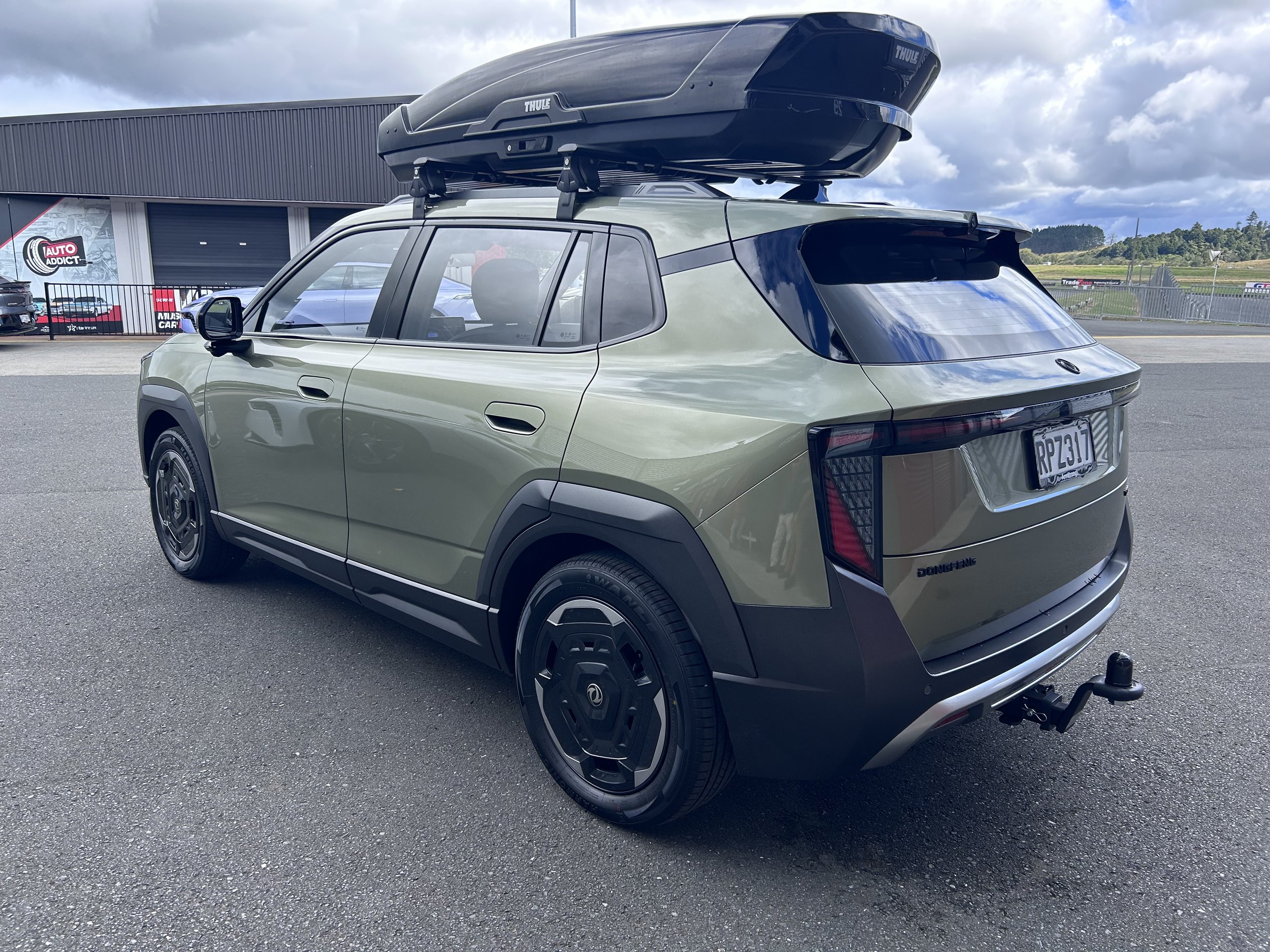
Styling-wise it lends the air of a SUV that doesn’t overtly copy any one specific rival yet nonetheless leaves impression of a small degree of aesthetic plagiarism. The look is a touch suggestive of it having an off-seal aptitude that the technology lends no actual ability to entertain.
What might pull interest is its utilitarian potential for the school and shopping run.
The overall length, width and height are class competitive at 4306mm, 1868mm and 1654mm respectively. But it’s the 2715mm wheelbase that is more noteworthy.
At just over 66 percent of the overall length, it’s why this car feels so capacious within the ‘people-prioritised’ part of its cabin.
The boot, meanwhile, is claimed to have capacity of 500 litres. Can’t see it? Well, exactly right. It’s not immediately obvious, being a packaging thing that asks for … erm, unpacking.
When you open the tailgate - which is split, with a lower drop down portion that can support 150 kilos - you see a compartment that looks, and is, modest in capacity, just 313 litres. It’s also a bit of a funny shape.
But wait … there’s a second compartment underneath at 115 litres and, hang on, yet another under that, with 72.
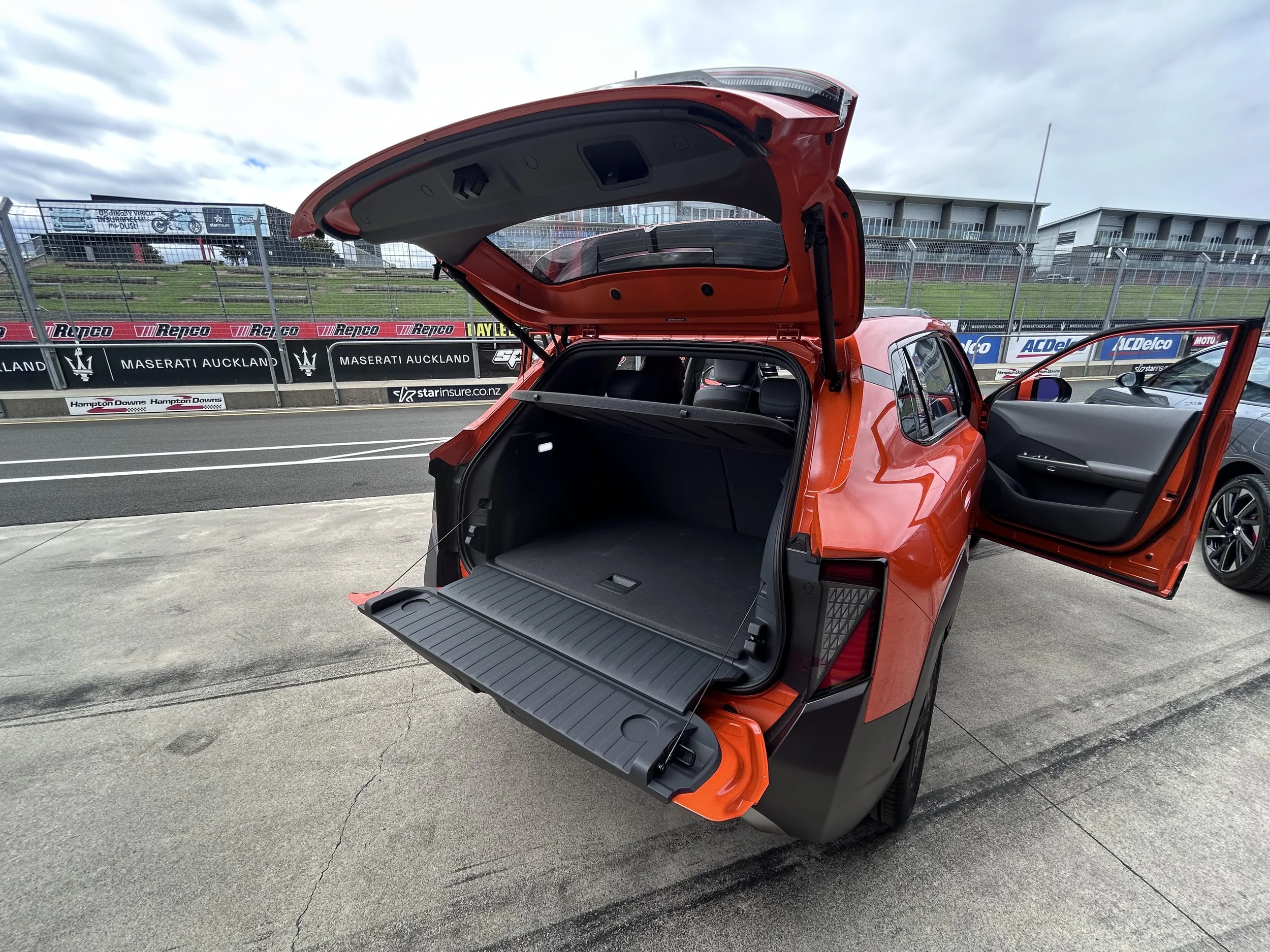
Clever, really, though those prone to forgetfulness will need to be careful where they stow those smelly sports clothes or anything from the fish market.
Some of the interior materials aren’t that classy. The door inner plastics in particular betray exactly where the development costs have been kept to a minimum. On the whole, other materials seem fairly decent and speak to robustness.
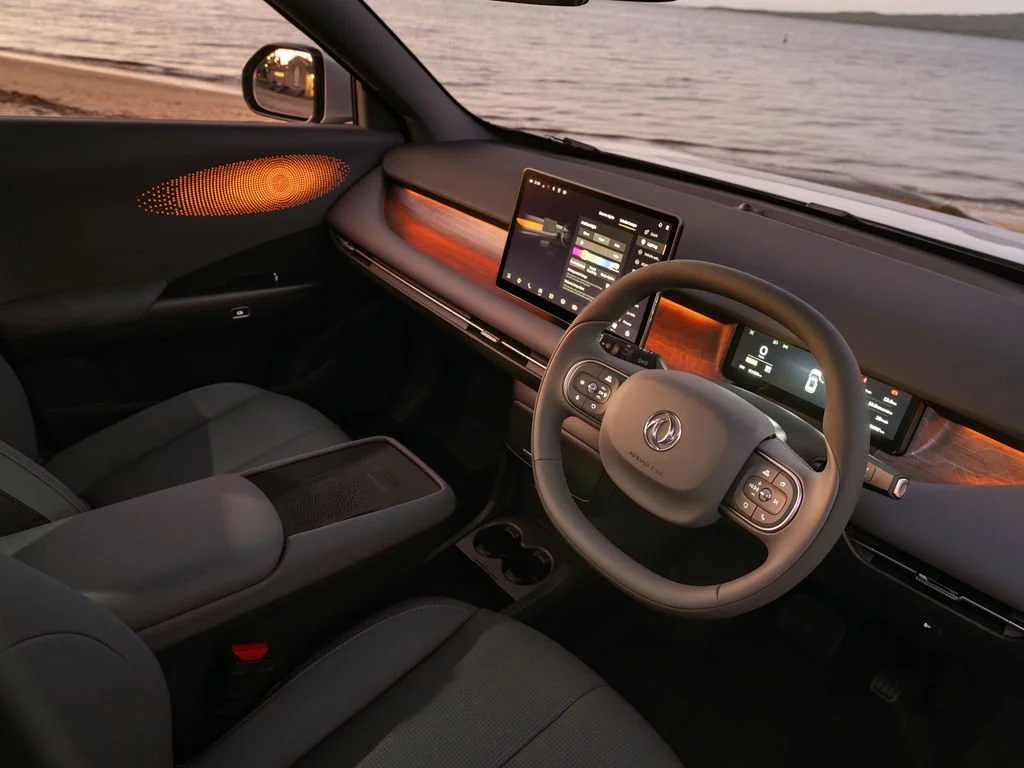
A big central touchscreen and a digital instrument display brings sharpness to the tech edge and though it is not the flex it once was, Vigo has still executed it acceptably well. The screen layout isn't especially snazzy but is cleanly styled and sharp.
The bigger hook is the usual thing of it having more comforts and gadgets than you’d normally get for for the price.
Standard fare runs to six-way power-adjustable seats for driver and front passenger (plus memory, ventilation, heating and welcome function for the driver), climate control with rear-seat outlets, ambient interior lighting, 12.8-inch infotainment screen, adaptive cruise control, 360-degree camera and LED lights.
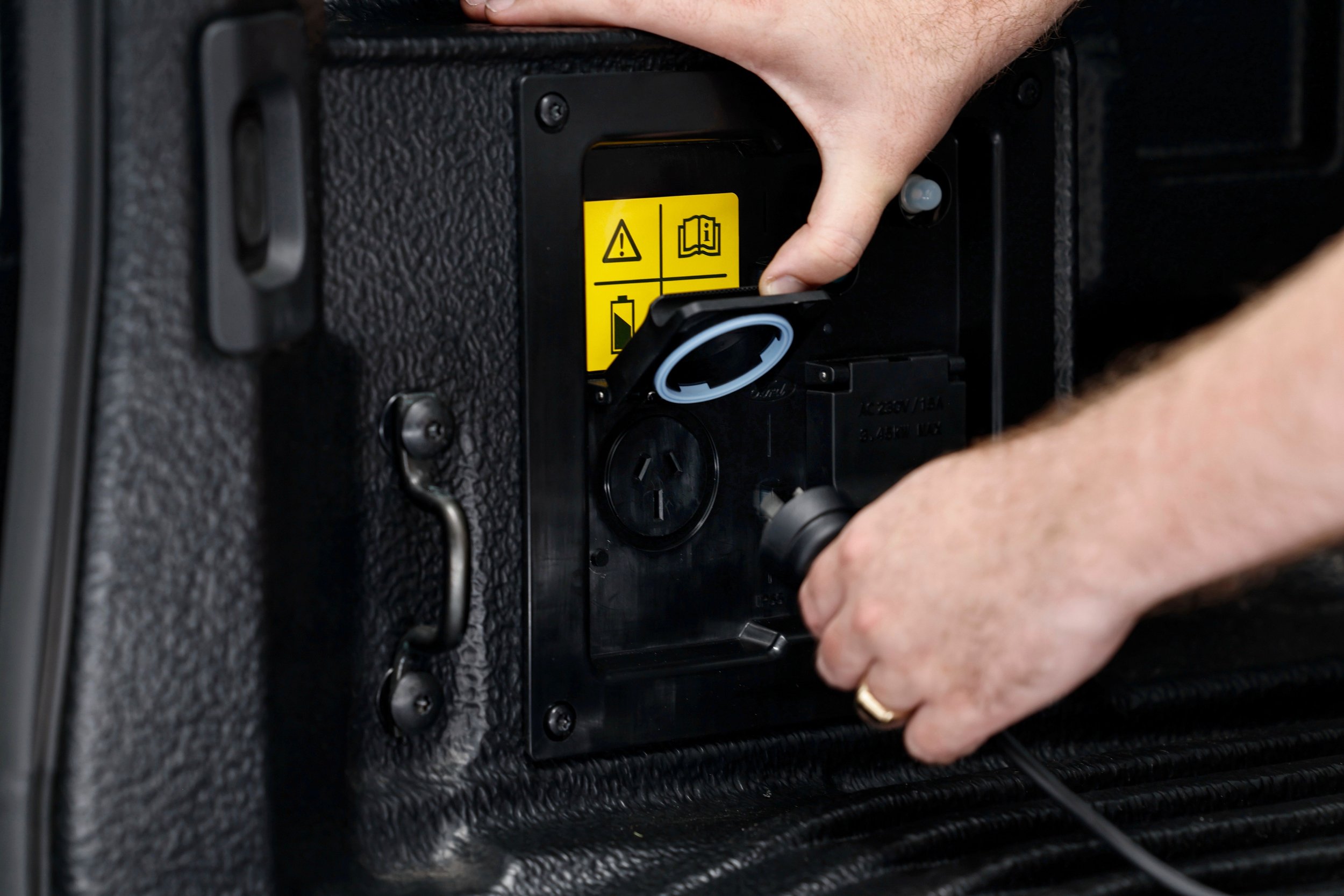
It also has Camp Mode, which envisages someone camping out in it overnight and basking/sweating in a cabin kept to above-balmy 25 degrees even when the vehicle is off and locked up, providing continuous power supply and vehicle to load (V2L) capability.
The latter requires an adaptor, which is a $440 item. As are quite a few other little finishing pieces. As well-equipped as it is, they’ve clearly also had to pare back to achieve that sticker.
But if you do want more … well, a trove is there for the plucking. No fewer than 12 items were listed, of which just a sun blind for the panoramic glass roof (that’s included for no cost for early cars but in time will a $1500 choice) is still undecided.
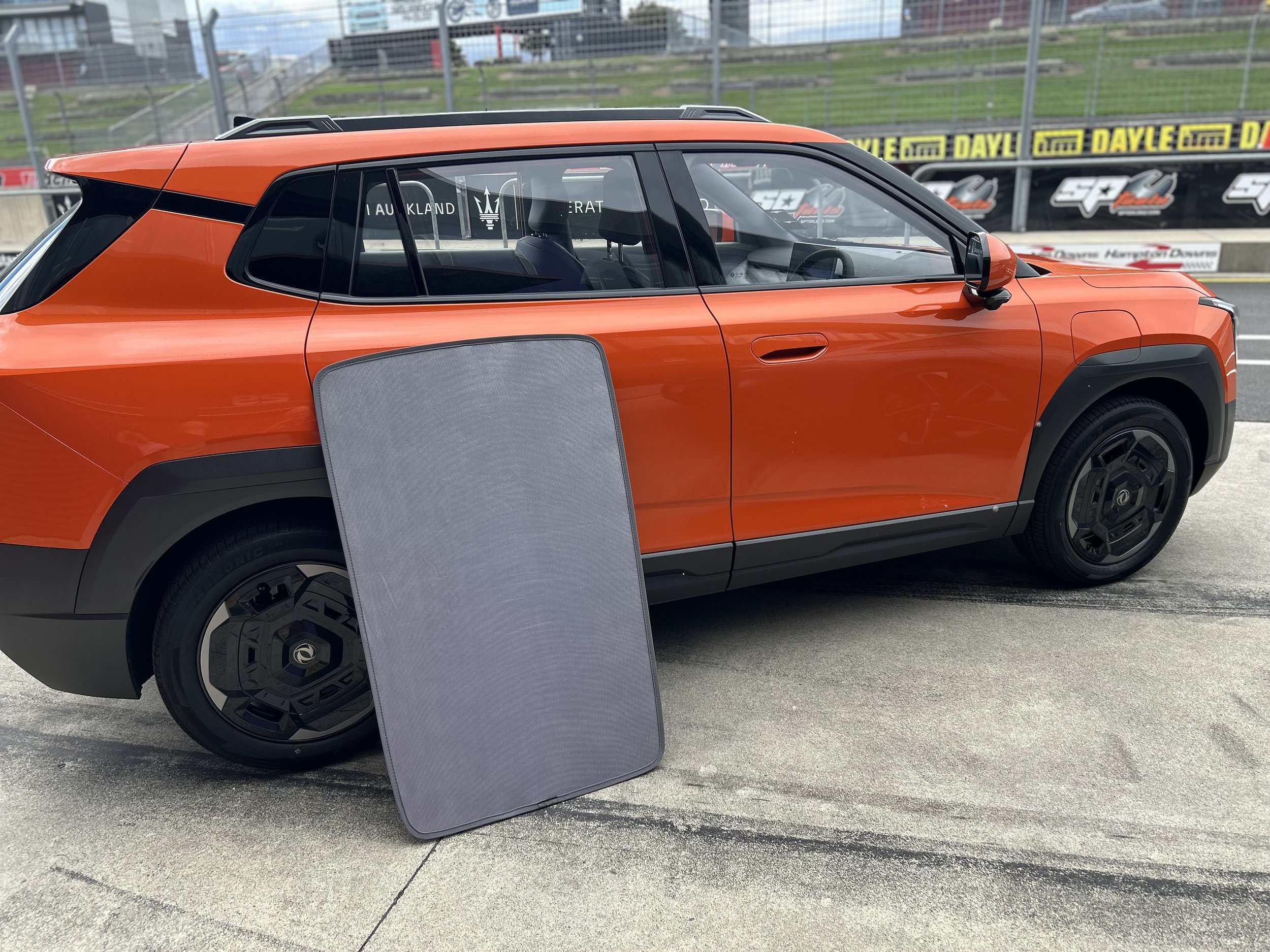
They likely won’t bother. For one, it’s a Temu-flimsy insert (above) that dropped off when lightly touched when investigating how it integrated. Also, The glass has two layers of UV protection built in already. If concerned, wear a hat.
To fully furnish that camping comfort, you can box tick a $250 tent that mounts off the back door, a $440 mattress, a $250 edging awning and something called a ‘trunk partition table’ ($320). A boot mat is $220, a roof rack $570. A tow bar (it’s rated to 750kg) and roof box are factory-allowed, but remain unpriced; a display car’s Thule capsule was simply for show.
The dearest single additional item is a powered element to the tailgate. That’s $1690. Honestly, it’s not that heavy, so again …
Given CarPlay is integrated, it’s a bit rich that Android Auto is not. To make any phone with that work requires a $390 projection package. That’s also been the case with the Box, in which a weird dongle is employed. ADL won’t say if it will install the same solution in the Vigo.
The driving? First impression is that this five-seater seems likely to sit most comfortably as a cost-effective practical city-first all-rounder has yet to be put to test.
That thought is also tempered by having only spent 10 minutes at the wheel, the day’s schedule being too busy to allow more.
One quirk noted on heading off; at low speed you can hear faint music. That’s not the audio being left on one-notch-up-from mute but the car’s safety system designed to alert pedestrians to the car's presence. Get above 30kmh or so, and the melody switches itself off.
A quick zip up a country road left sense that a car reliant on MacPherson front suspension and torsion-beam rear suspension isn't really built to drive quickly or with great brio. The body leaned in corners, the front wheels scrabbled for grip, the steering felt light and vague and the brakes weren’t wholly assertive. Zero to 100kmh in 7.8 seconds is fair, the top speed tapping out at 150kmh also reasonably conventional.
Dongfeng cars have yet to be tested for crash integrity by the Australasian NCAP we fund and hold in high stead, so for now it gets five star rating from our domestic Vehicle Safety Risk schedule, which cannot be construed as the same as a five star ANCAP, as no independent crash testing is involved. VSR is normally used for used import cars that lack ANCAP/NCAP credential.
Waka Kotahi NZTA gave the Box an ‘unrated’ standing based on utilising the VSR assessment protocol.
Dongfeng plans to expand its New Zealand dealer network to seven retail locations by the end of this month, as it rolls out two new models locally.
The brand is currently sold through Armstrong’s dealerships in Auckland, Wellington and Christchurch.
New retail partners Takanini Auto Group, Auckland Auto Group in Albany, Waikato Auto Group in Hamilton and Tauranga Motor Group are set to join the network next month.
The writer attended this event as a guest of Auto Distributors Limited with flights, a small gift and a meal accepted.