Trayed deal: How closely related ARE Navara and Triton?
/A quickfire comparo between the Nissan and Mitsubishi one-tonne flagships shows plenty of same-same … but also suggests contention of some character difference is reasonable.
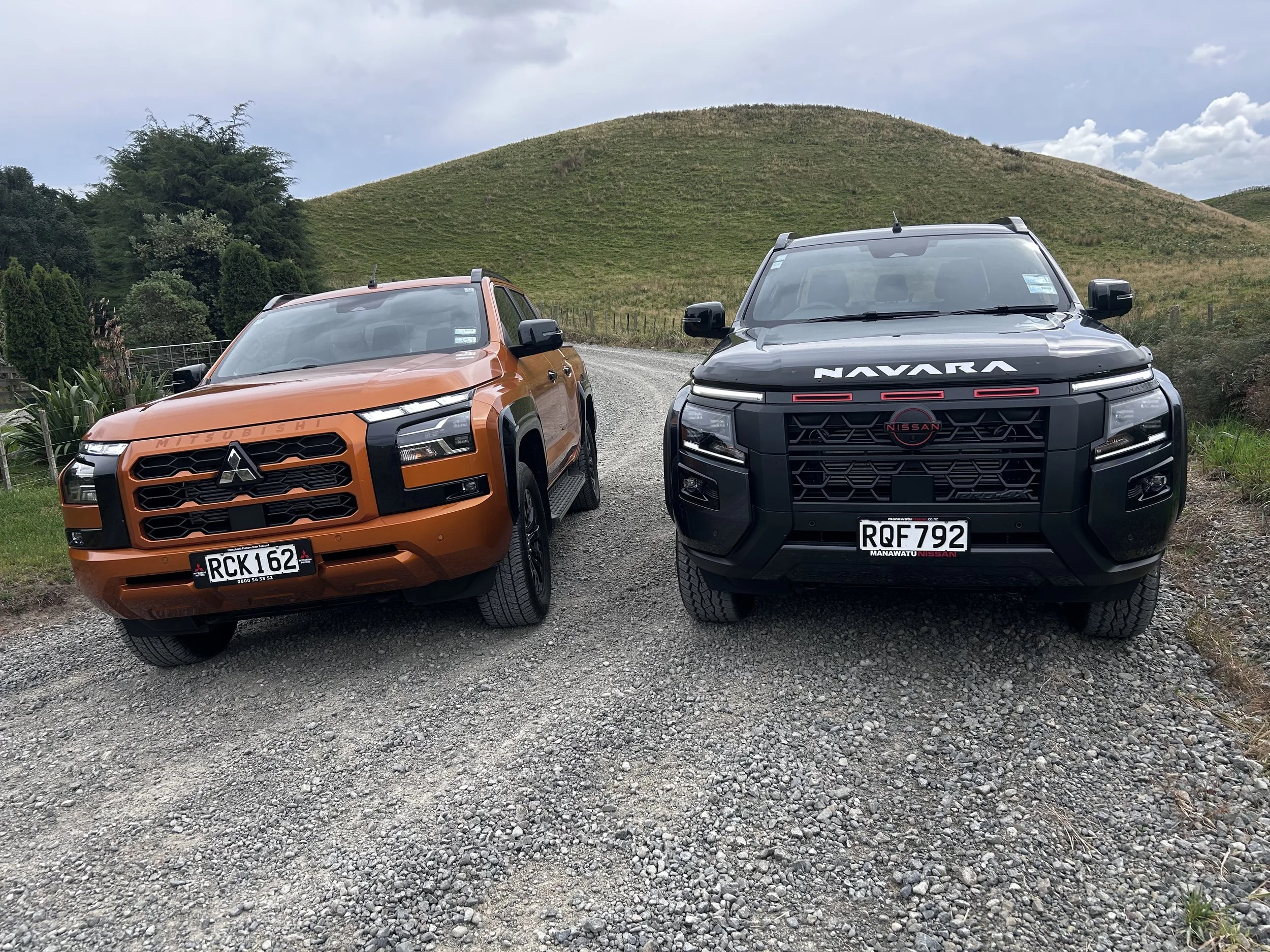
NISSAN has joined the game others in ute-dom have been playing for years, which means now the Navara is a lightly restyled Mitsubishi Triton.
Don’t say you could tell that the new generation ‘D27’ Navara has the same metal panels, interior layout, underpinnings and powertrain as the ‘MV’ Triton. Some figure the parts commonality might come to about 92 percent.
Well, they’re hardly the first. What’s been historically labelled as badge engineering, but in this instance is preferred by Nissan to be described as a matter of ‘cross branding’, is rife. Of course, it can be divisive. We’ve heard already how some Navara fans are blacklisting the new model simply because it is, in their eyes, no longer a pure Nissan.
But they could be in the minority. The boss of Nissan Australasia recently claimed the cross-pollination won’t count for diddly squat with the majority of buyers.
Indeed, Andrew Humberstone believes many customers would have "no idea" which came first when parked side-by-side (for reference it’s the Triton, by a full three years). If there is a stoush, it’s not one he will bear witness to. His tenure ended yesterday. A big role in Europe awaits.
Now Navara stock has started to reach the showroom, it seem opportune to find out if everything the one does is entirely emulated by the other.
Navara starts out as a dual-cab, with an automatic transmission and four-wheel drive mandatory. Triton does best in that format.
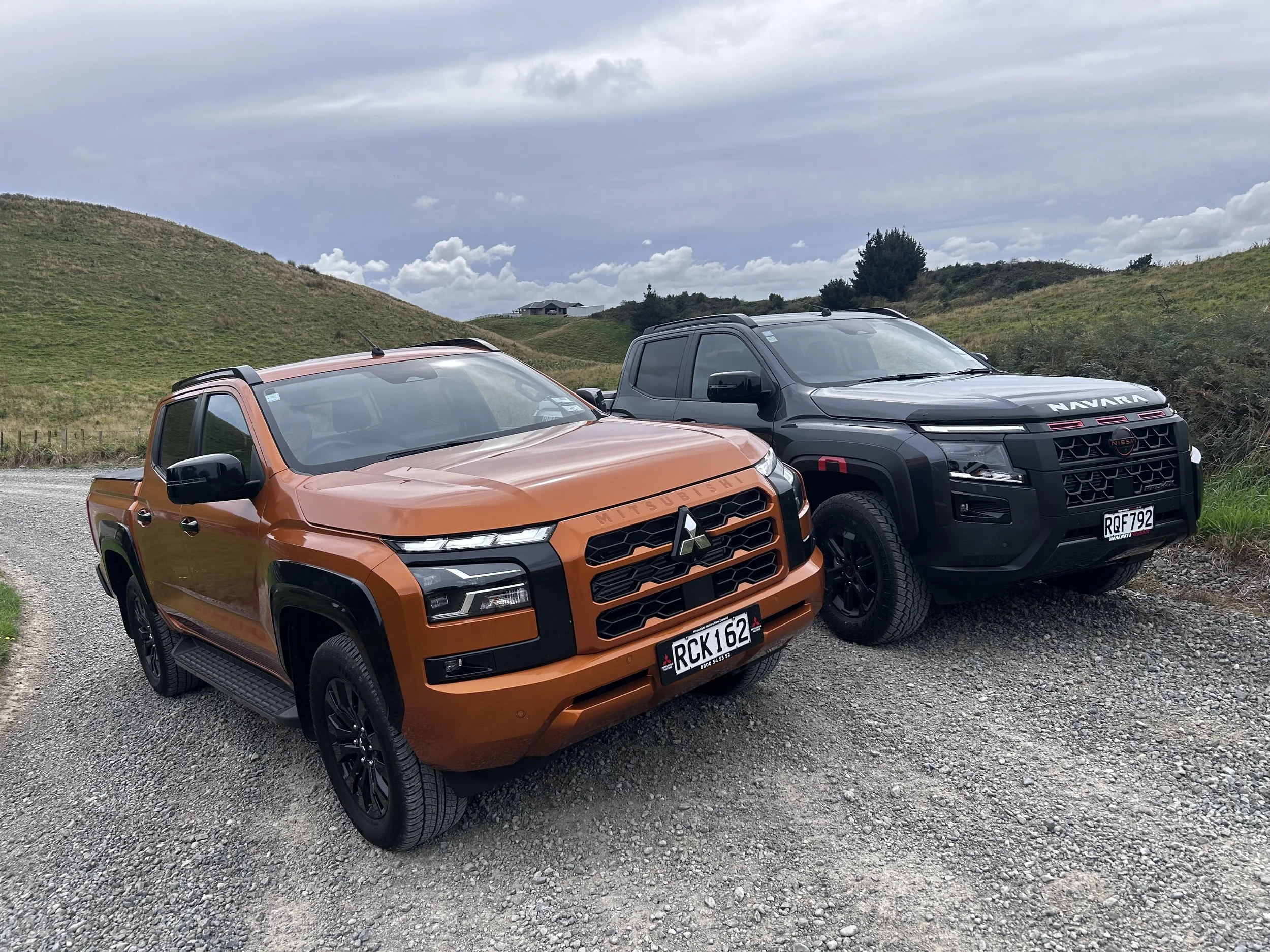
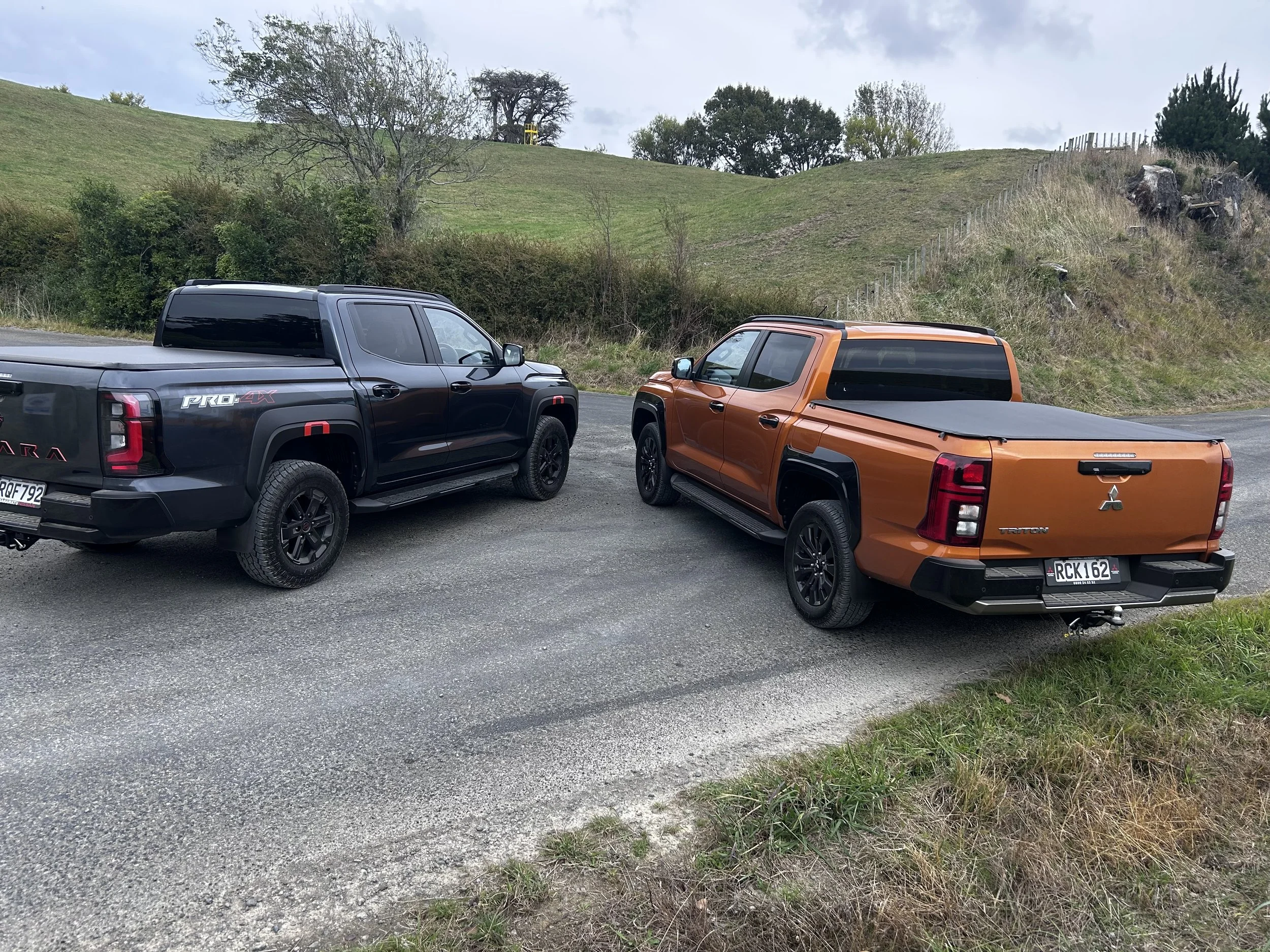
So, for this, we’re zeroing in on the Triton VRX, Mitsubishi’s customer favourite since it went on sale in 2023, and the Navara Pro-4X that seems set to be the one most of Nissan’s Kiwi customers will want.
This wasn’t an in-depth assessment by any means. Time spent to taking on the task was basically a taster, though also perhaps about as long as a customer might get on any given day. So, around 90 minutes.
But in that time, I and another driver were drive together across an assortment of roads; smooth tarmac for a bit, some more rugged corse chip and then onto gravel. No time for full out off-roading, sadly, but enough for both of us to get an appreciation of where they synch, and where they stand apart.
Some thoughts:
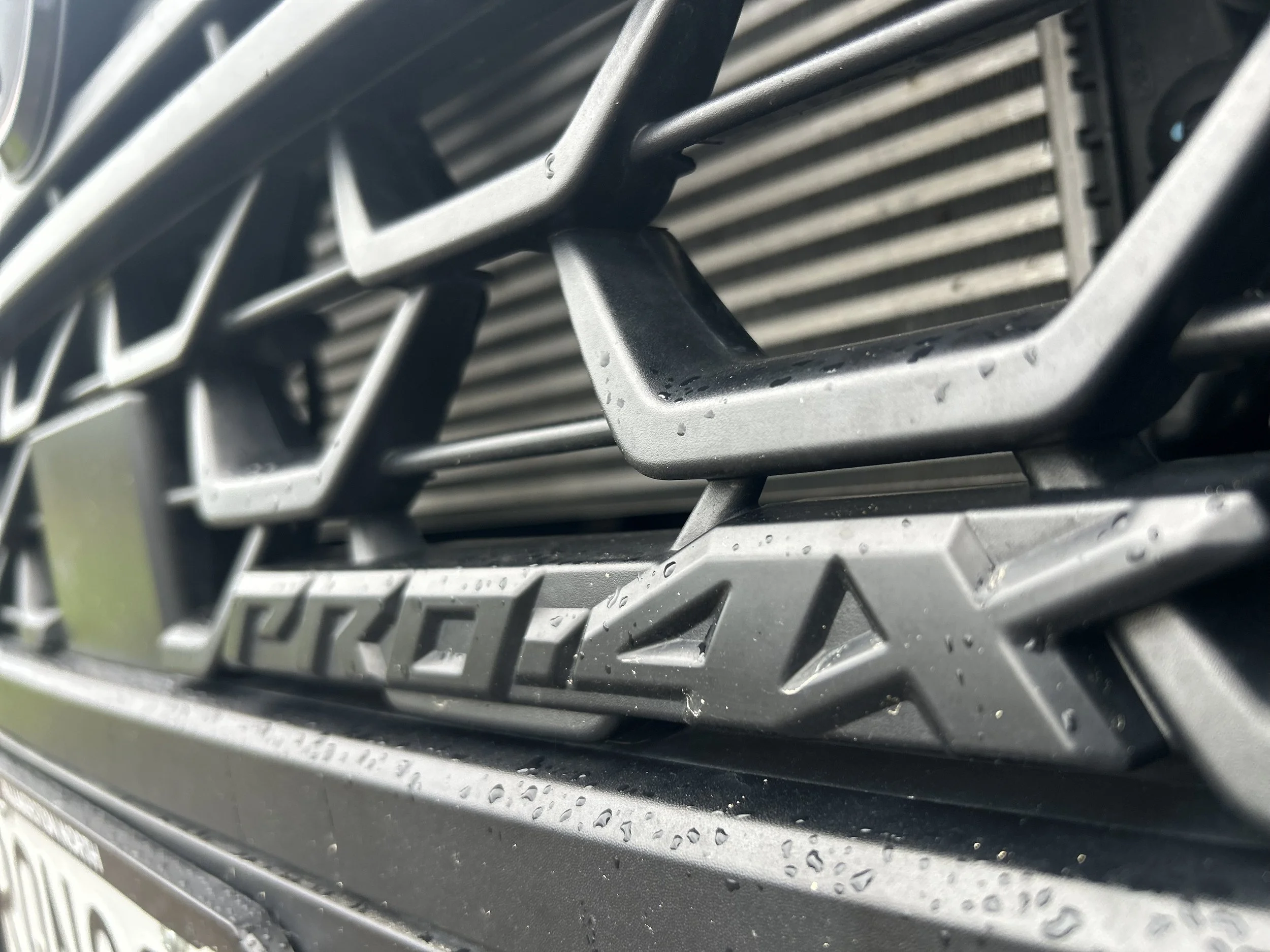
In respect to exterior styling, the most obvious visual differences between the new Navara and Triton come from the front-end design and grille, headlights, tail-light signatures, wheel designs and badging. Nissan’s front fascia is a stronger signature than down back, where it’s about different tail-light internals. There are different badges, naturally, but that’s about it.
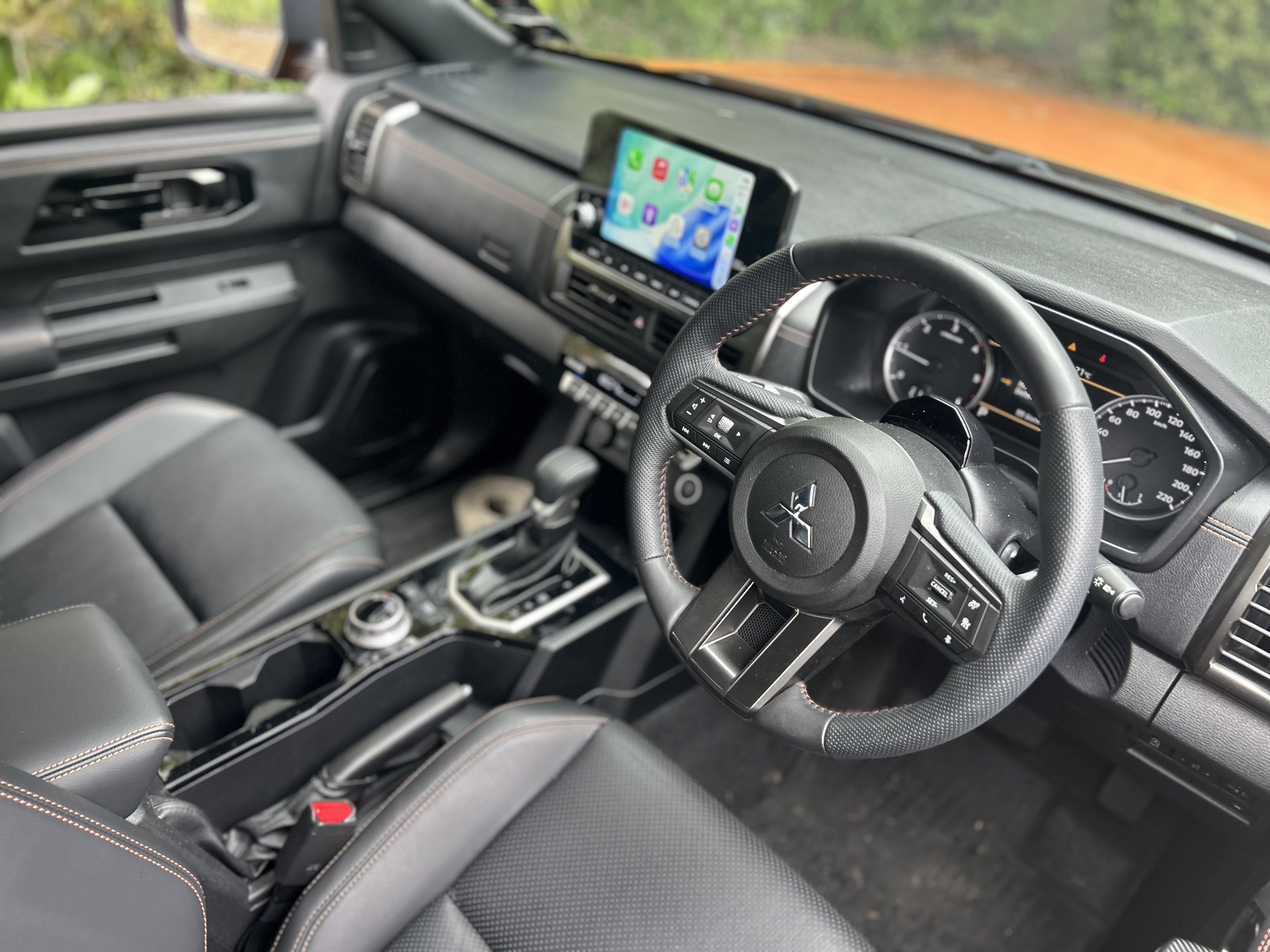
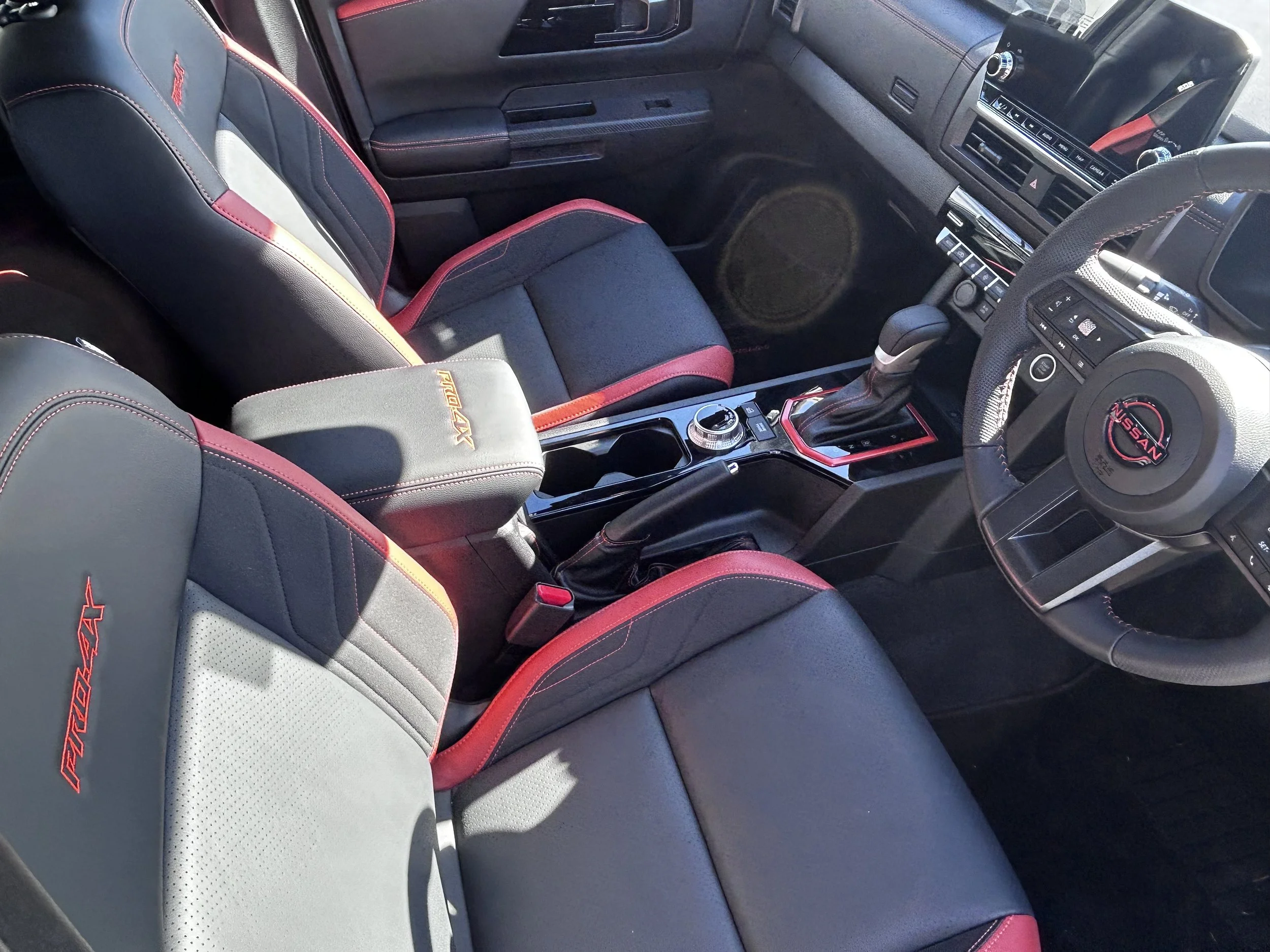
Insofar as the interior goes, buy a Triton VRX and you get leather seats in grey; go to the Nissan and it’s a racier impression, with suede/leather blend upholstery with red bolsters and Pro-4X embroidered on its front seats and centre console lid.
The actual seats are the same, including in shape and cushioning, but perhaps because of the cloth, the Nissan’s driver’s chair seems to be a touch comfier.
Aside from that, the overall architecture and presentation of either cabin is identical. Each has its own logo/name on the steering wheel centre hub, but looking foward that’s about it for a point of visual difference.
Yes, there are specification differences between the two grades, but mainly it’s all minor stuff: For instance, facility to activate the central locking off the Triton’s tailgate release doesn’t transfer. Both have the same safety suite of autonomous emergency braking, blind-spot monitoring, driver monitoring system, front cross-traffic alert, rear cross-traffic alert, lane-keep assist, emergency lane-keep assist and traffic sign recognition. Both DMS systems are infuriatingly set at hair trigger - divert your gaze just a fraction and it’ll go spare, yawn more than once and it’ll insist you take a break - and turning it off requires the same deep dive into a sub-menu. (And it re-sets to factory on every fresh start).
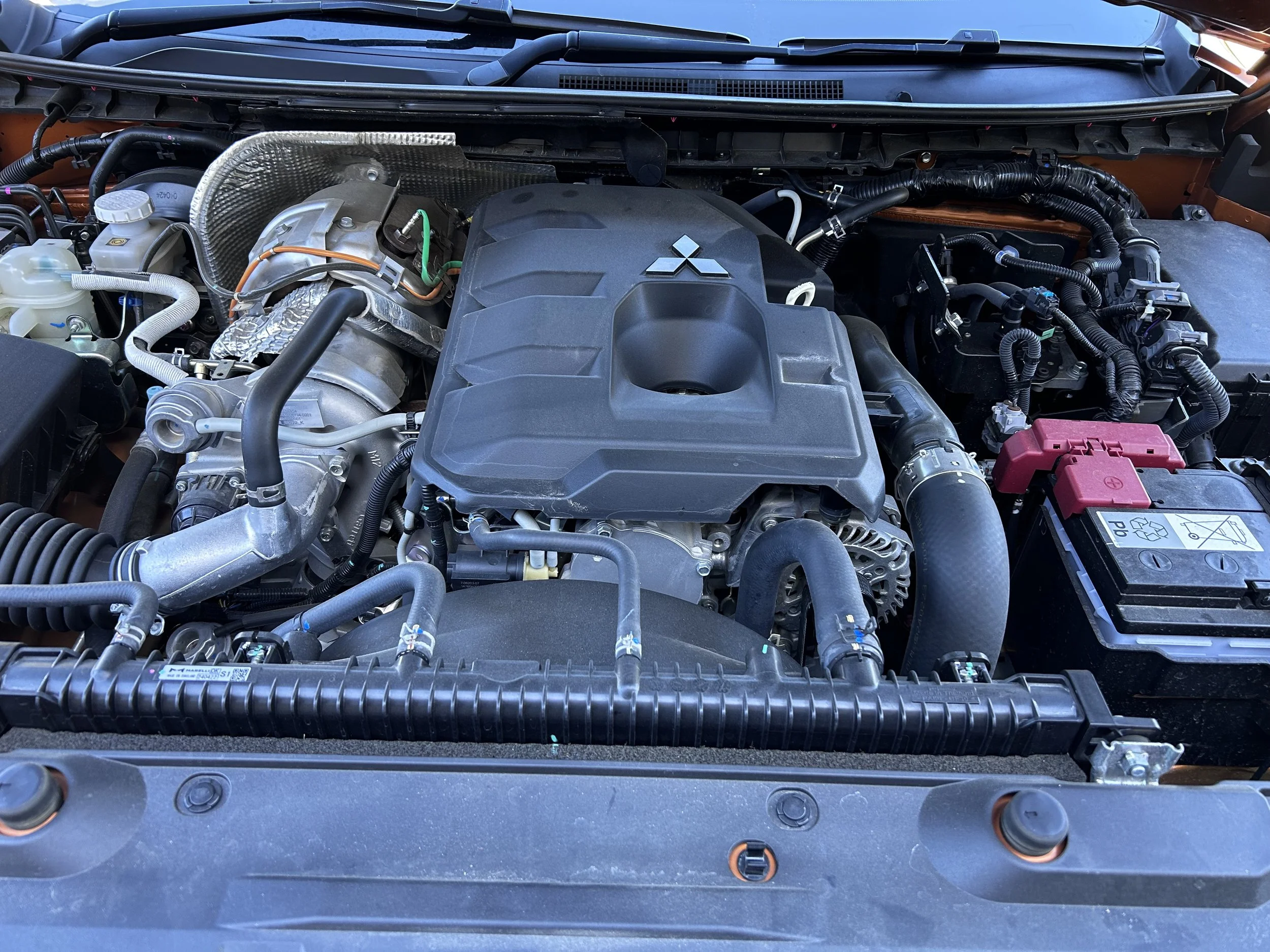
Powertrain-wise, they have the same 2.4-litre engine, which in making 150kW/470Nm produces 10kW and 20Nm more than even the most powerful diesel mill in the outgoing Navara.
Both models require AdBlue diesel exhaust fluid, both tow 3.5 tonnes braked but all Triton grades can carry slightly more than an equivalent Navara, here 1030kg versus 964kg.
It’s a powerful engine, but noisy, not least under acceleration. The roped-in driver thought it was a tad less so in the Navara than in the donor. I disagreed.
The six-speed automatic seems identically geared across both vehicles. For context, the outgoing Navara featured a seven-speed auto. Performance, economy? Said to be identical.
Nissan’s ‘Super 4WD’ system is Mitsubishi’s Super Select, a personal favourite, and comes to VRX and Pro-4X (and ST-X) with 2wd and 4wd, high and low ratios, a Torsen limited-slip differential and seven terrain modes: Normal, Eco, Gravel, Snow, Mud, Sand and Rock.
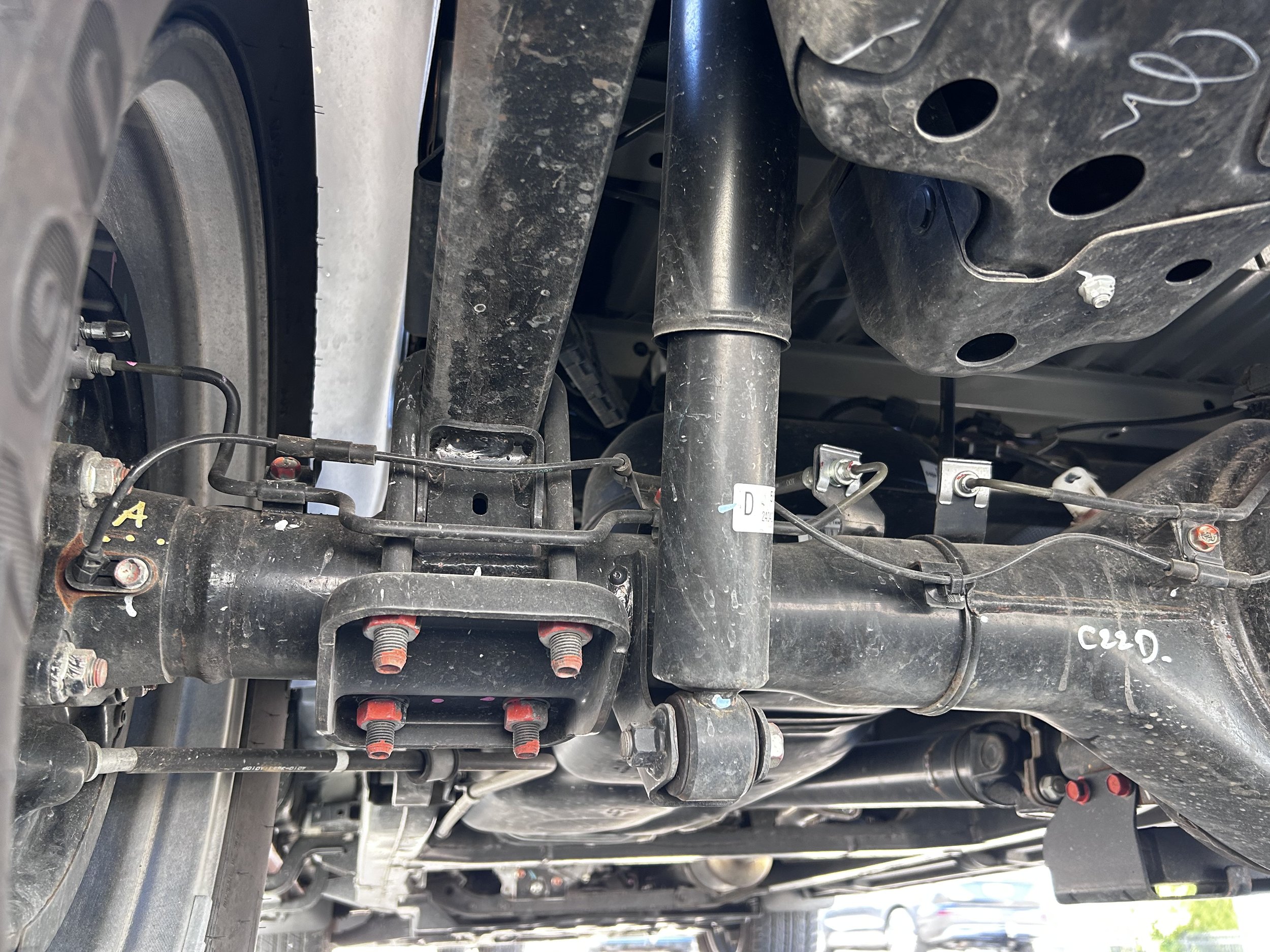
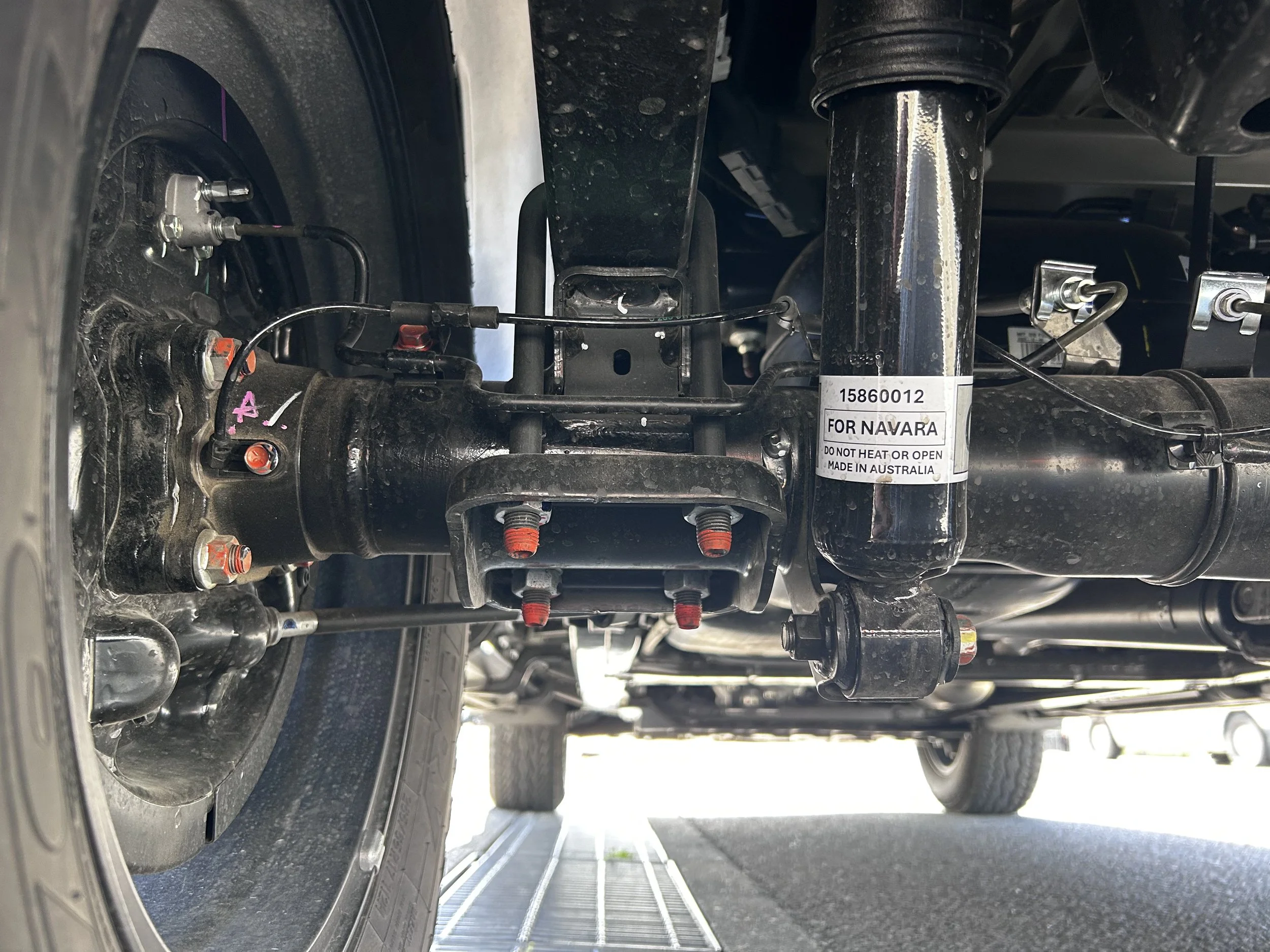
In respect to suspension and steering? The previous Navara was unusual for a ute in offering rear coil springs. The new generation goes back to class conformity in moving to rear leaf springs. But it then steps out of the pack by Nissan provisioning its own shocks. It has also followed Mitsubishi in moving to an electric power steering setup.
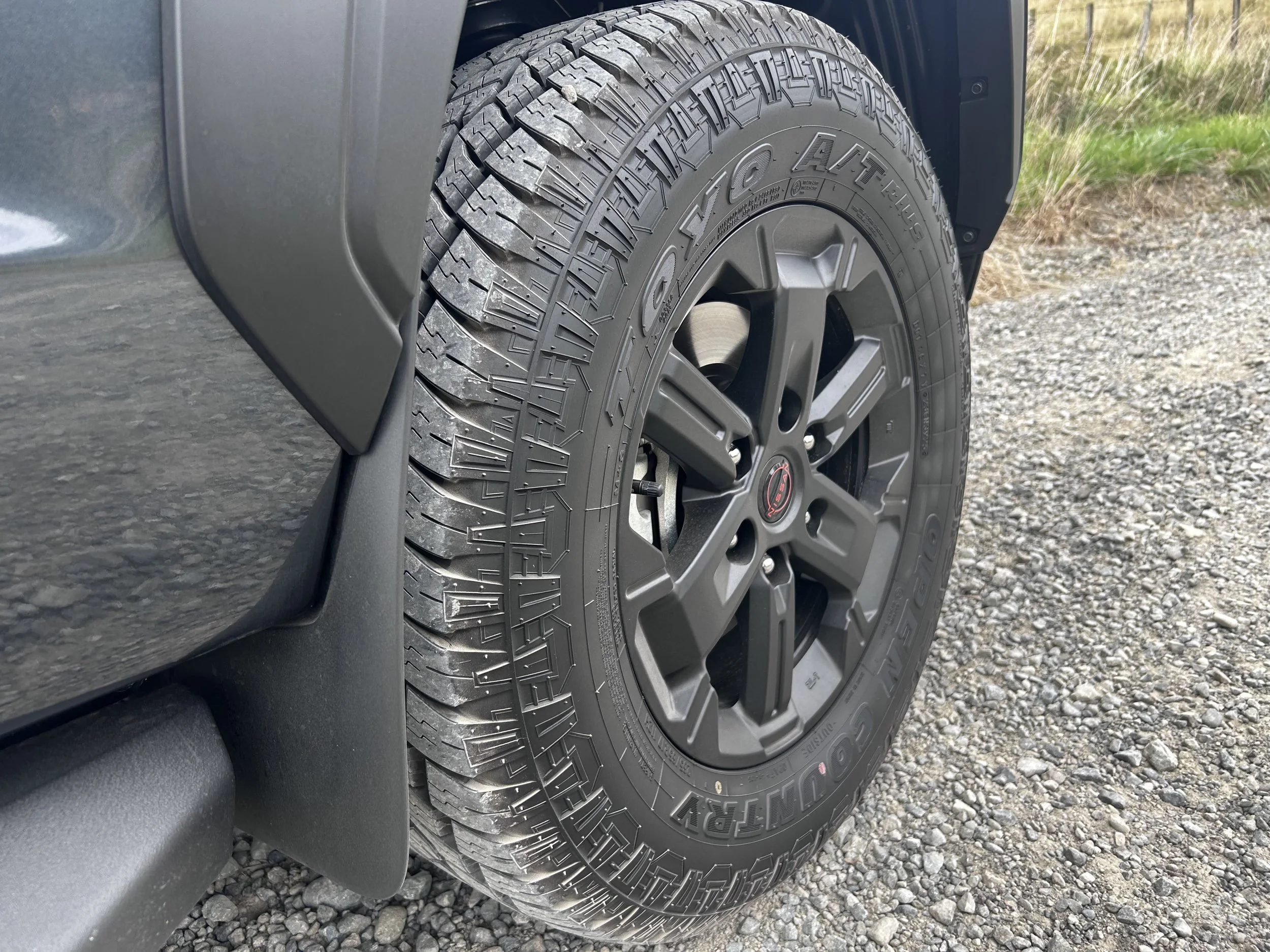
Both are on All Terrain rubber, but buy a Triton VRX and you take Maxxis 790 Bravo 265/60 on 18 inch alloys. Go the Navara Pro-4X and it’s 17 inch rims; also alloy, with Toyo Open Country 265/65s.
One influence of this comes to ground clearance. Possibly. Nissan claims their model has 228m clearance, which is 6mm more than the Triton. But … Mitsubishi believes that comes down to measurements being taken from a different point. It suggests doing as it does, running a tape from under the rear axle, is the most accurate way.
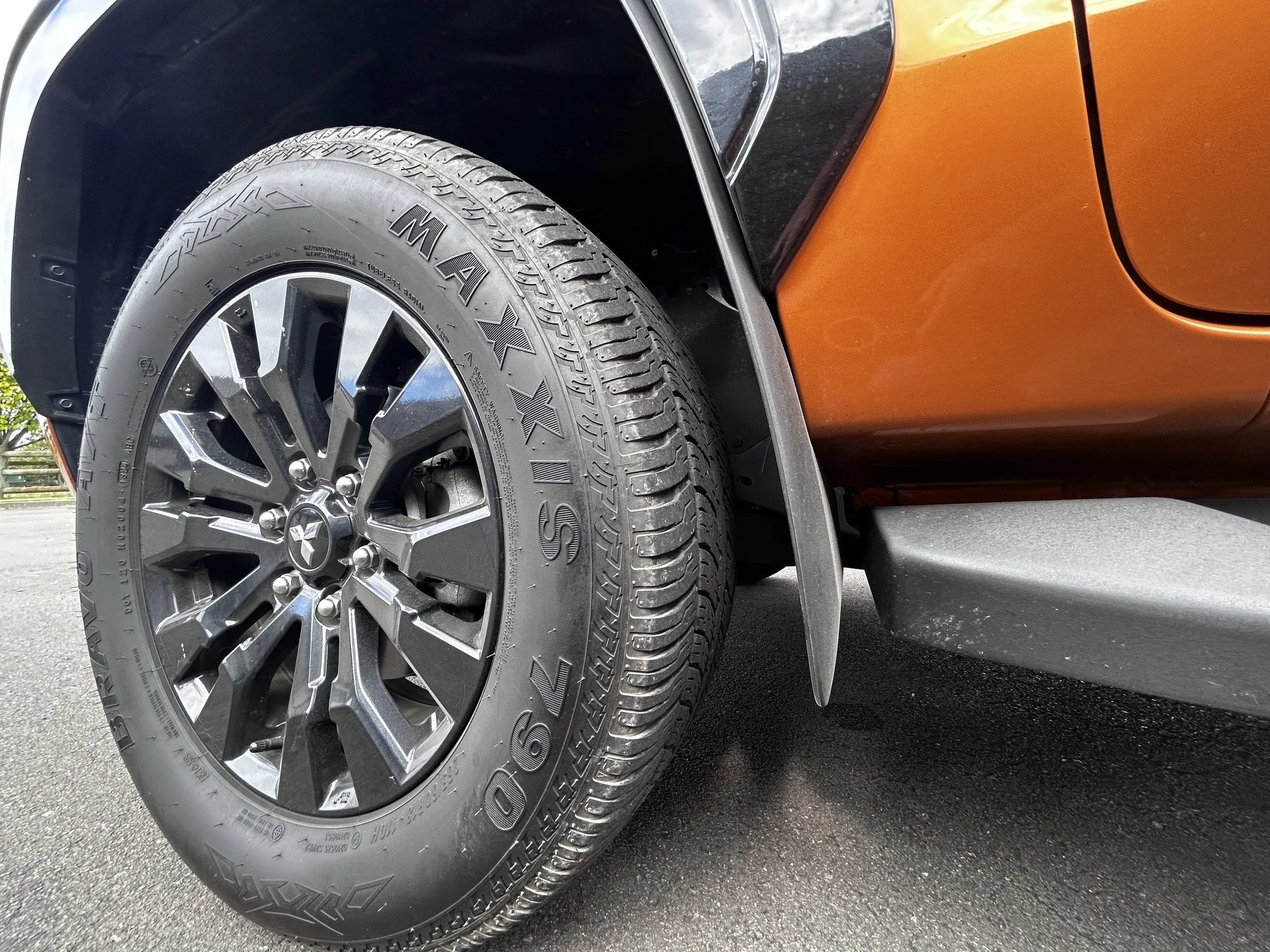
Driving feel is where they ARE definitely different. And it’s apparent on any surface.
Mitsubishi has also made adjustments to Triton's front suspension and body mounts for 2026 issue. They also altered the shocks. They say this has improved the Triton's ride comfort, as well as reducing "up and down shaking when going over bumps" and "vibrations transmitted from the engine".
Nissan has made a lot of noise about having gone further still for Navara - rather than use Mitsubishi’s dampers, it has sourced some from a third party, having worked with Premcar, an Australian firm that specialises in off-road kit.
Navara’s units sourced from Tenneco are fitted in dealerships before delivery to the customer. Why they cannot be fitted when the car rolls down the (Mitsubishi) assembly line in Thailand has not been explained. Also raising a question, perhaps, is why Nissan insists the original items be broken apart, rather than recycled.
Additionally, Navara’s front dampers are also equipped with internal rebound springs, optimised to manage the rigours of rough roads and off-road driving.
And, again with Premcar involvement, the make has also played with the power steering in effort to improve steering response and feel.
The vehicles were driven over seal, in various states of quality - from smooth to rough coarse chip - and then onto gravel, including a reasonably sipped section, with driver swaps.
From that experience, there’s no reason to doubt Nissan’s claim that its damper exercise improves body control and ride comfort. We thought it did by some degree; maybe Ford Ranger now has a really relevant rival in this respect.
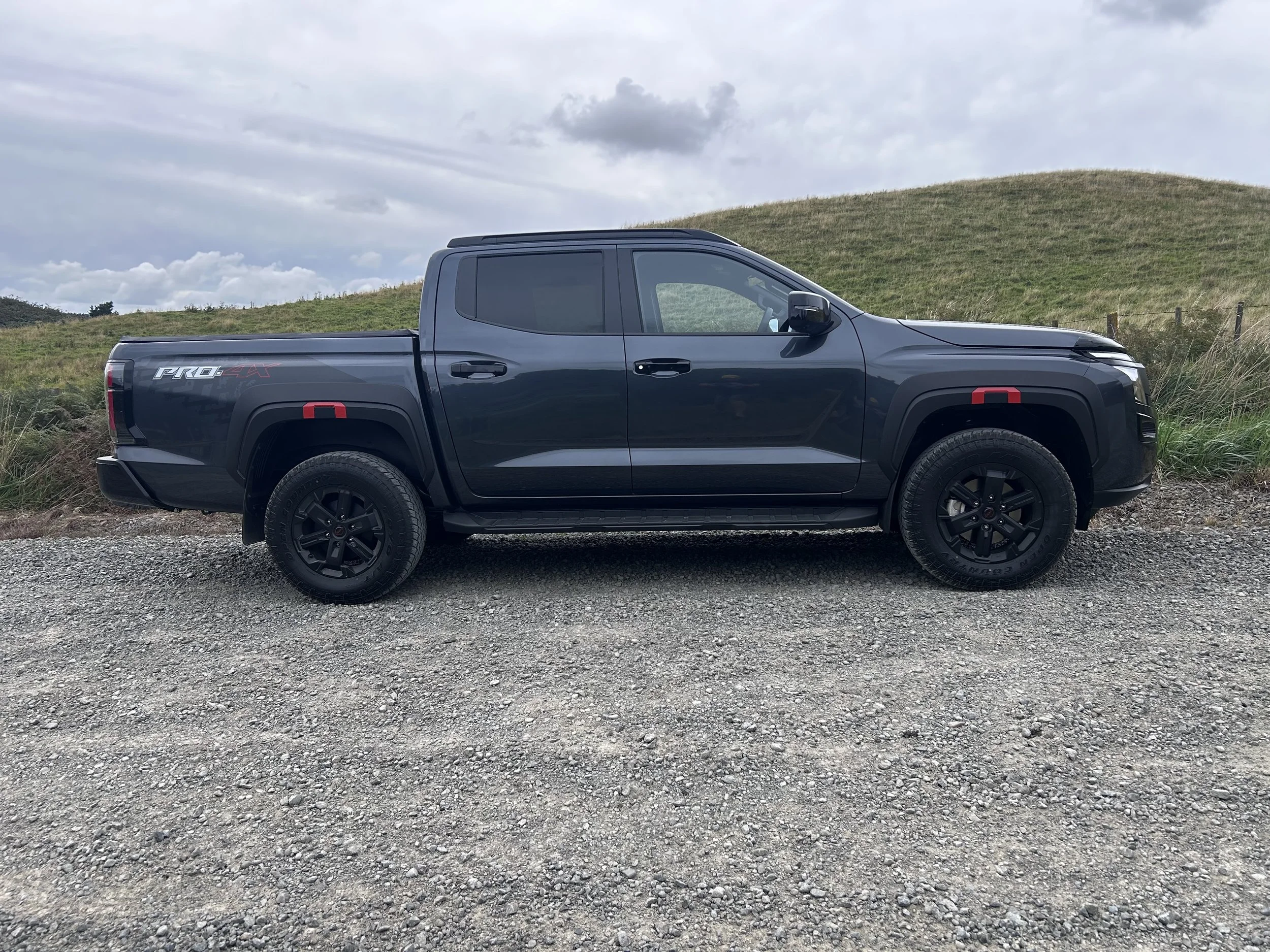
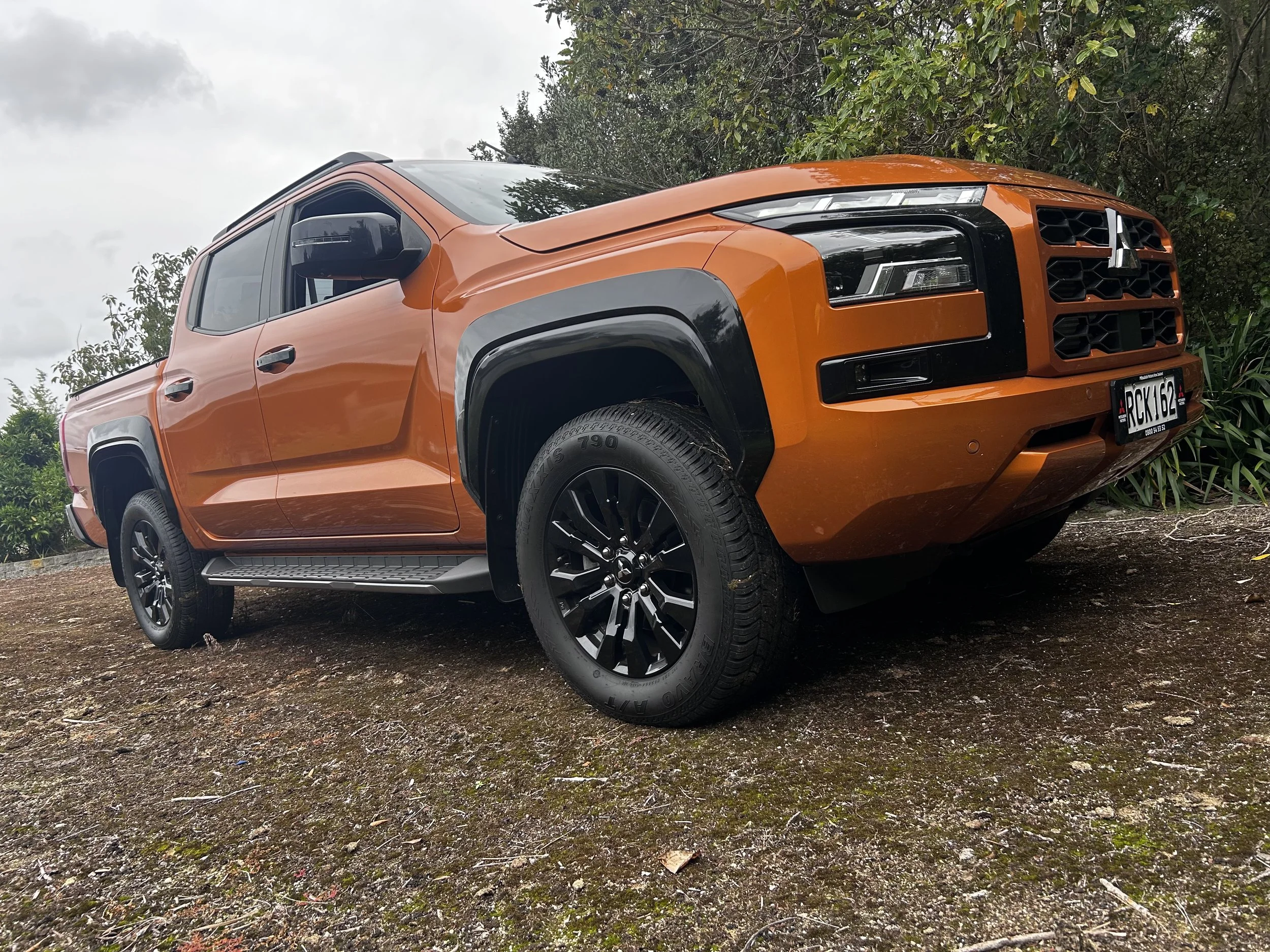
We take note that Pro-4X gets a softer suspension tune than its stablemates, and also would remind the utes were driven unladen. But as things stand, this variant has a more compliant ride than VRX, and while road texture influence is not wholly supressed, it was simply more settled. Taking both through ruts and across a rail crossing was a good test; the Triton bucked more.
Steering feel-wise, the Navara is more weighted. It’s not outright heavy, nor is Triton’s so light as to eradicate road feel, but in the straight ahead there is less movement from the Navara’s wheel, on turn-in it just feels the slightly more accurate.
The differences the tyres make? Hard to tell from this exercise. The Navara’s have a meatier tread pattern, but one of the big improvements to this Triton over the past generation is much more pleasant it is to take over gravel. It’s settled, less skip and skid prone. In respect to road noise, they both generate some, but it’s hard to say if the Nissan’s deliver more roar.
What’s next?: There’s a beefed-up Pro-4X Warrior Navara in the future. There’s also talk that Triton will later this year adopt new 'performance' dampers, derived from the Triton AXCR rally car and supplied by Yamaha Motor, as a special edition treat.
Who wins? Sorry if this sounds like a cop-out … ut it’s too soon to say. Just to remind; this was just a taster. Triton is already quite familiar, but Navara demands far more time at the wheel to determine exactly what’s going on.
If you can’t wait, or it just doesn’t matter, then arguably everything comes down to price. In which case Mitsubishi has patent advantage. The Triton VRX is $59,990. Navara Pro-4X comes in at $67,690. Big gap.
This exercise also lent insight into an issue raised in previous stories: That pricing for potentially cross-shopped parts needs to be carefully considered.
The Triton had a tonneau cover, tray liner and tow bar. All are cost extras. These respectively added $1071, $695 and $1744 to the sticker, according to dealer advice.
The Navara here had a $950 tri-fold hard cover. A tray liner from Nissan is $1250, a commensurate tow bar kit (so, wiring included) $1850.
Today Nissan raised its warranty cover (to exact-match what it offers in Australia). So, 10 years/300,000-kilometre limit if exclusively serviced at a Nissan dealer. Mitsubishi has a 10-year/160,000-kilometre powertrain, five year, 130k new vehicle limit, also with a dealer servicing stipulation.
This was certainly a cursory comparo - was it also fair? Nissan argues the more appropriate Navara to compare to VRX is the STX, which costs $62,690 full RRP and is subject to a $3000 introductory discount.
Mitsubishi’s dealer advisory kit disagrees. It has historically held the Pro-4X to be the more natural competitor and sees no reason to alter that view.