Suzuki e-Vitara first drive: All the dirt
/This compact battery-wed crossover is a big leap of faith for Japan’s small car specialist. Will it hold its own?
HERE’S a moment in brand history which isn’t ignoring heritage.
That seemed the ethos defining the media launch programme for Suzuki’s first electric car.
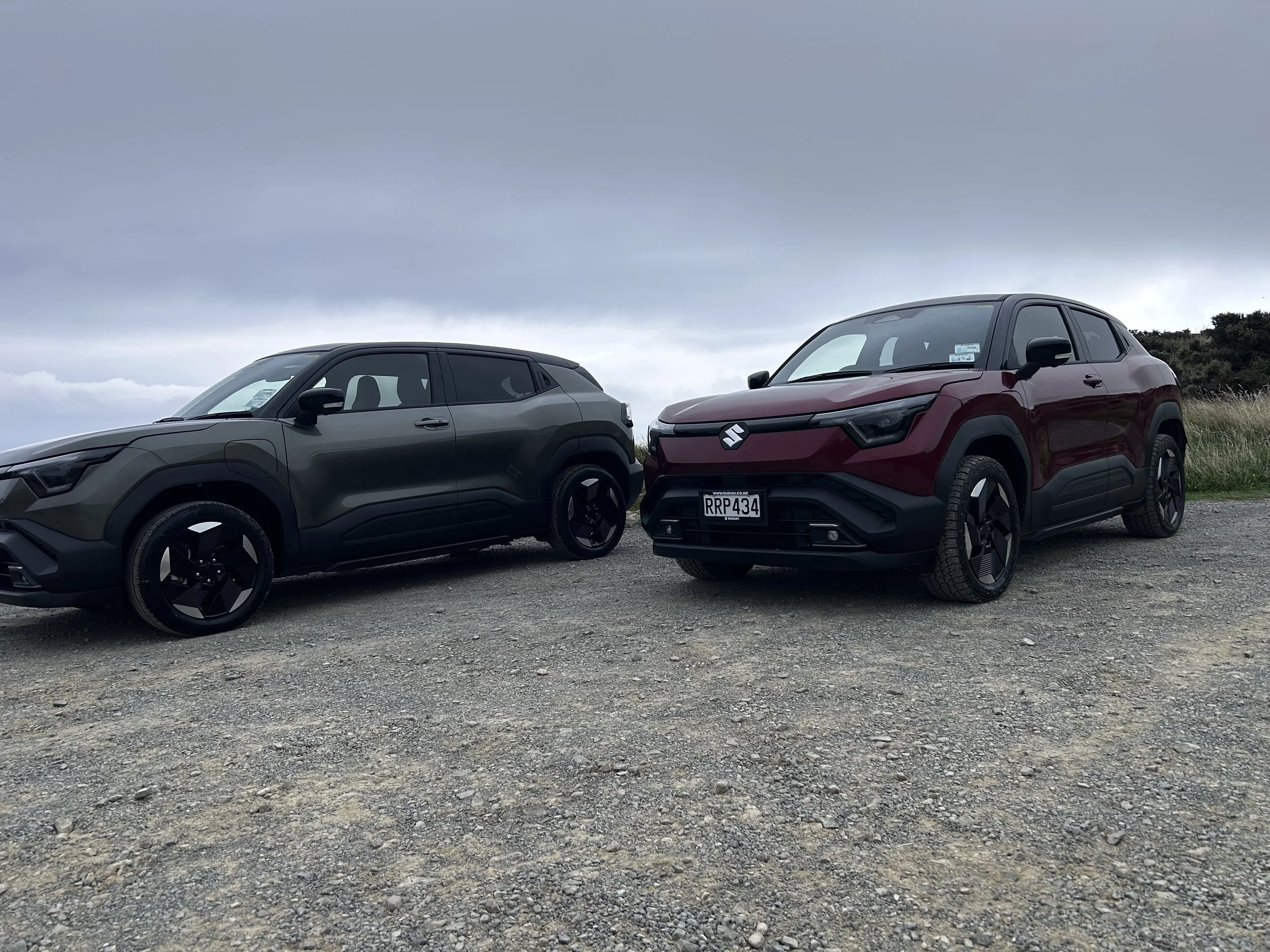
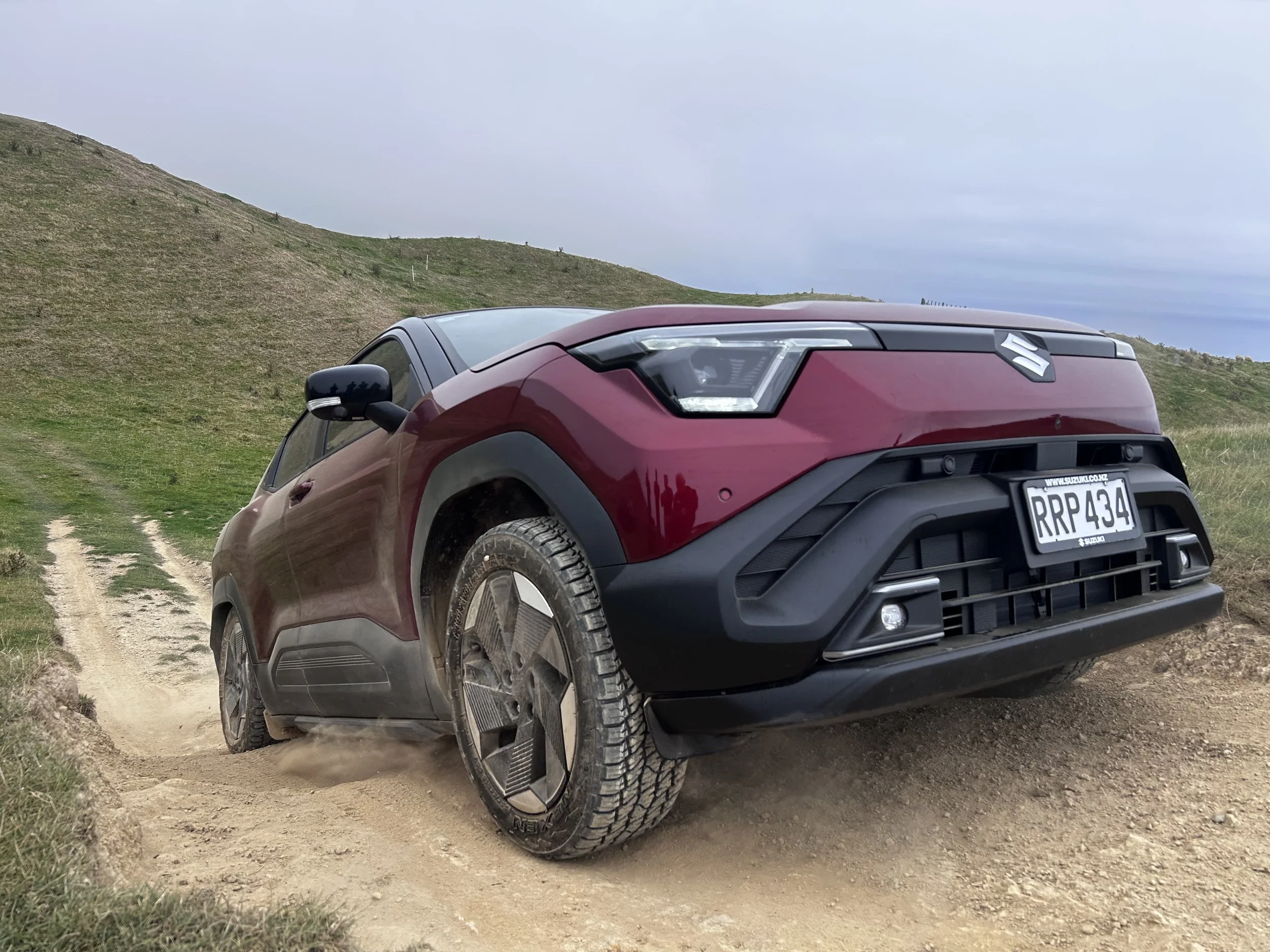
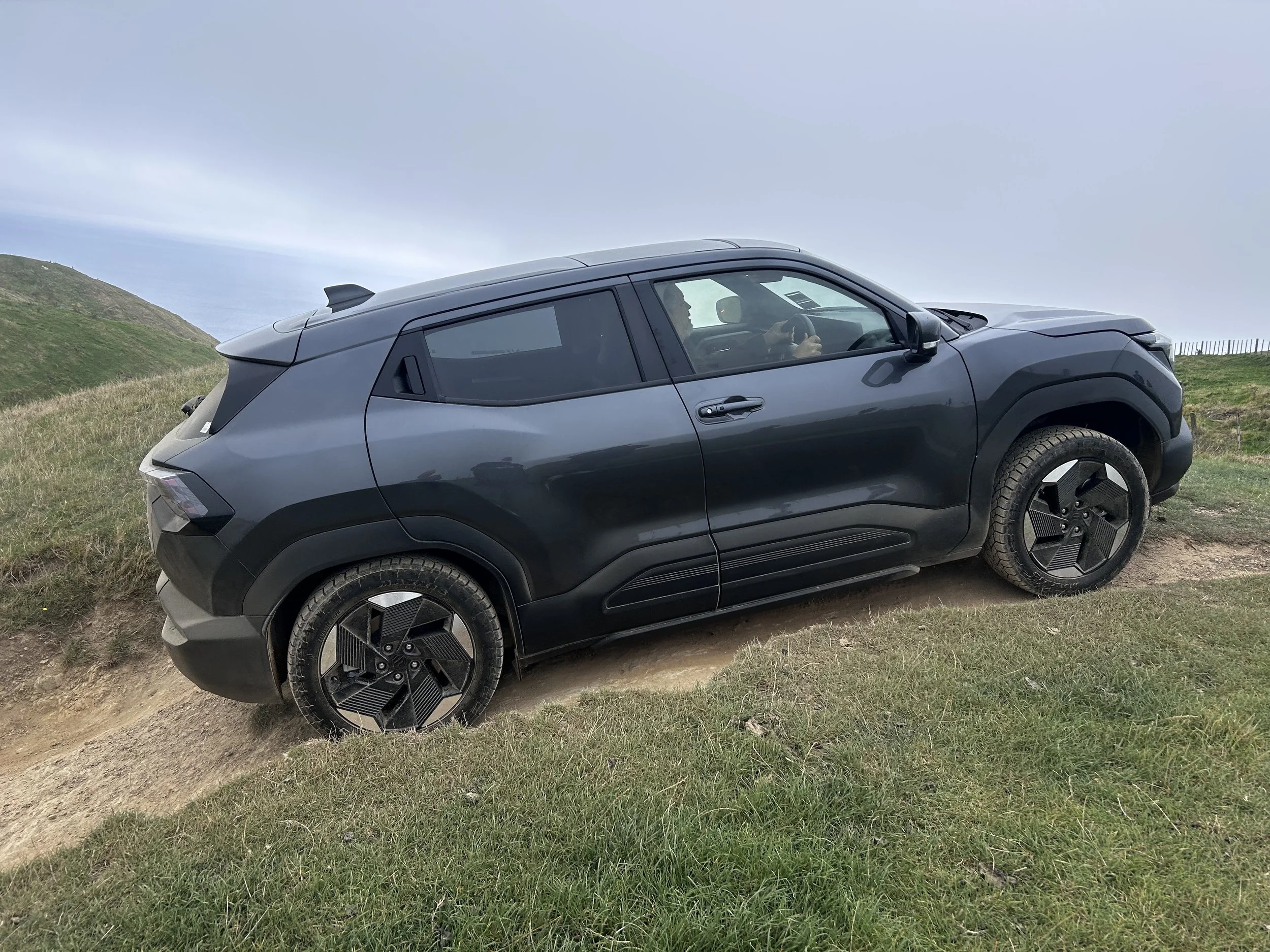
Starting the day at Boom Rock, an off-road facility near Wellington, meant initial wheel time was spent tackling one of the venue’s dirt tracks. Only after that were we given reign to drive on sealed roads.
The implication? Regardless Vitara in its outgoing version, and also in the generation before that, has become more familiar as a street-wise small sports utility, let’s not forget this nameplate did start out in the late 1980s as a pukka sludge-sorted, country-first vehicle.
Earliest Vitaras, in three and five-door bodies, were fitted with proper low-range gearboxes and sported elastic suspension, generous ground clearance and stubby overhangs to enable real off-road prowess.
The e-Vitara isn’t out to wholly reinstate that history; it’s no more a full-blown off-road adventurer than the last one.
Overall character is more in keeping with that of the more recent conventional road-biased crossover cars that have carried this nameplate, if in slightly larger scale, with 4275mm length and a 2700mm wheelbase.
Which is a safe call, because consumer tastes have changed. Demand for the kind of vehicle Vitara was almost four decades ago is much more subdued than it is for the sort of vehicle it has now become.
Which is why, Suzuki NZ vouches, the front-drive version that is least capable for off-seal antics will in all likelihood be the better seller of the two, by a factor of three to one.
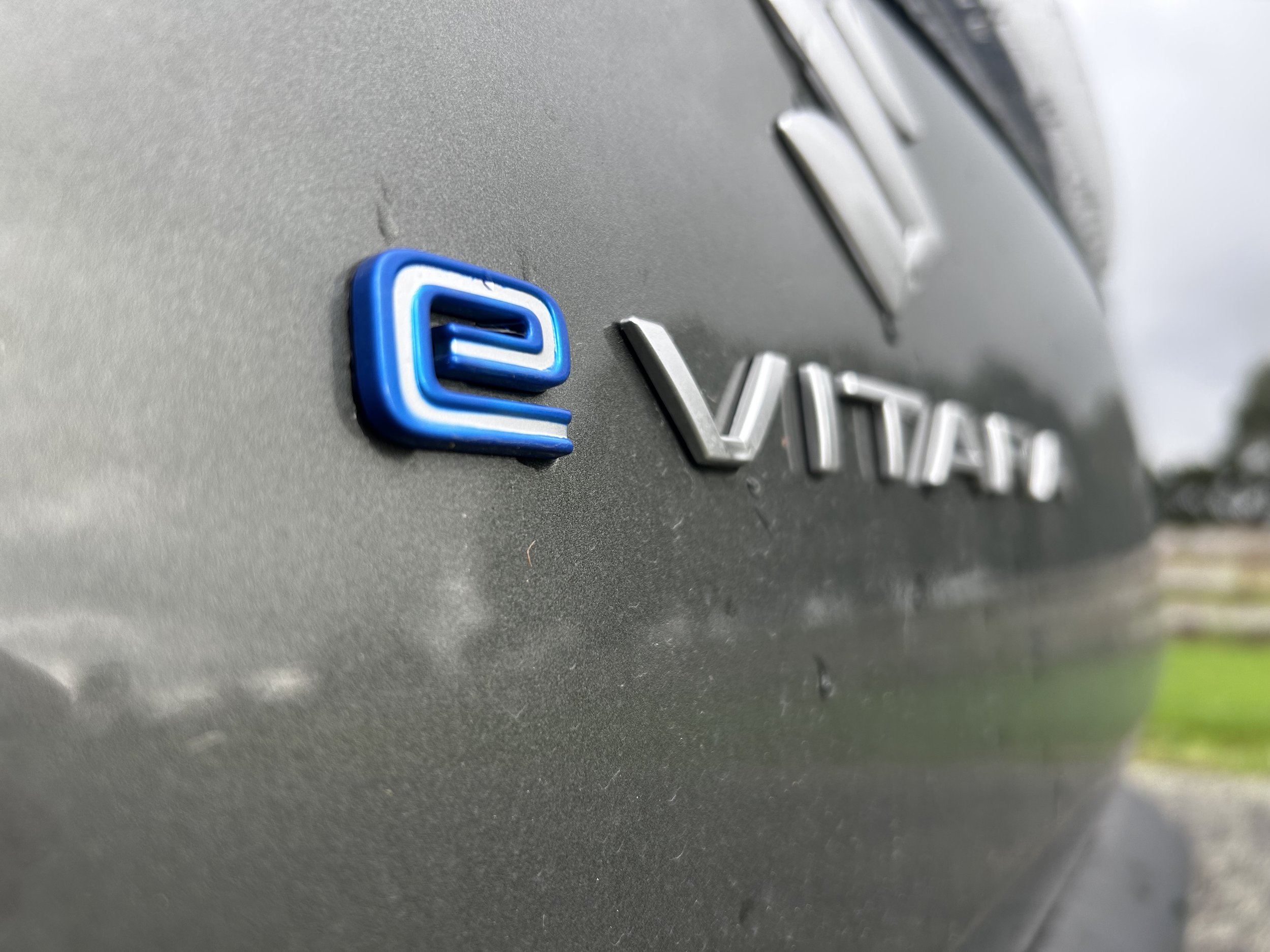
But still … there’s also a dual motor, which means all-wheel-drive, which in turn allows opportunity to keep a historic designation on the tailgate, though now it has an ‘e’ suffix.
With the Allgrip-e there’s no differential to lock, no low range, just 180mm clearance … but it does have off-road modes.
So in Trail setting and Downhill Assist engaged, we took to some hills, tackling a pre-set paddock course that in probability will be a more extreme challenge than most owners might tackle. The downhill assist is perhaps a bit extreme in setting to 9kmh, and there as some wheelspin on the steepest climbs, but overall it really wasn’t an issue.
But was that exercise a fully representative demonstration of what the car can truly accomplish in its factory fit out? Concern about prospect of rain meant the test cars were swapped off their factory 225/55 R18 road tuned Maxxis rubber for wider, gnarlier cut MRF mud/snow types. What would seem something of a cheat became an overkill with the showers staying away. That fat farm-set rubber stayed on for the subsequent on-seal driving element. An impediment? I feel so.
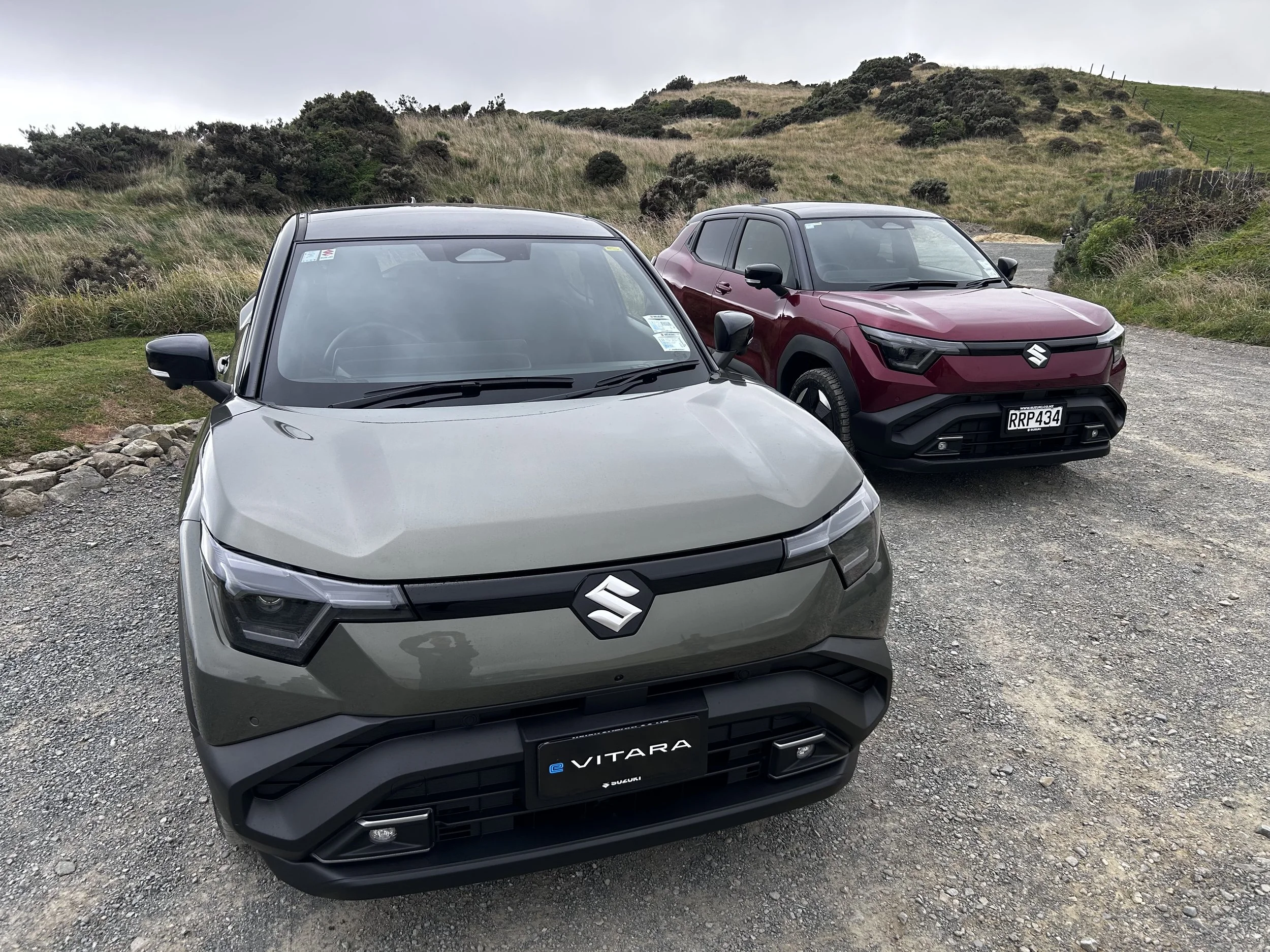
But still … the exercise did at least cement impression that in putting that small 'e' in front of arguably its most famous nameplate won’t erode the subconscious link for customers between the old combustion-powered models and this new start car.
Which it is. Nothing but the badge carries over from the old Mk4 1.4-litre petrol hybrid model. At same token, what’s new is that this is the first Vitara whose development required phoning a friend.
The make whose speciality is producing cars that are generally small in size, and whose factory outputs are smallest by volume, became the very last of Japan’s car makers to do so by choice, mainly biding its time to raise the revenues.
Still, developing EVs costs billions. Regardless the bulk of the development work was undertaken in-house, achieving mass production demanded partnership with Toyota, which has it’s own version. Even then, they shopped the drive battery from a third party. The 61kWh lithium-ion battery pack’s ‘blade’ designation is giveaway to supplier FinDreams being a subsidiary of China’s BYD.
Chance of that technology twinned Toyota Urban Cruiser (also from Maruti Suzuki in India and enough of a doppelgänger to stand coming off a common assembly line) ever arriving is unknown; but were Suzuki pricing emulated it would seem unlikely. The Allgrip-e places $4000 short of the physically larger bZ4X (Toyota’s Subaru Solterra), that gap halving when e-Vitara introductory pricing ends.
A single untitled (Ultra overseas) specification here means decision-making comes down to whether you’d be happy with front-drive, with 128kW/189Nm or spend another $8k for 135kW/300Nm and 31 kilometres’ less range.
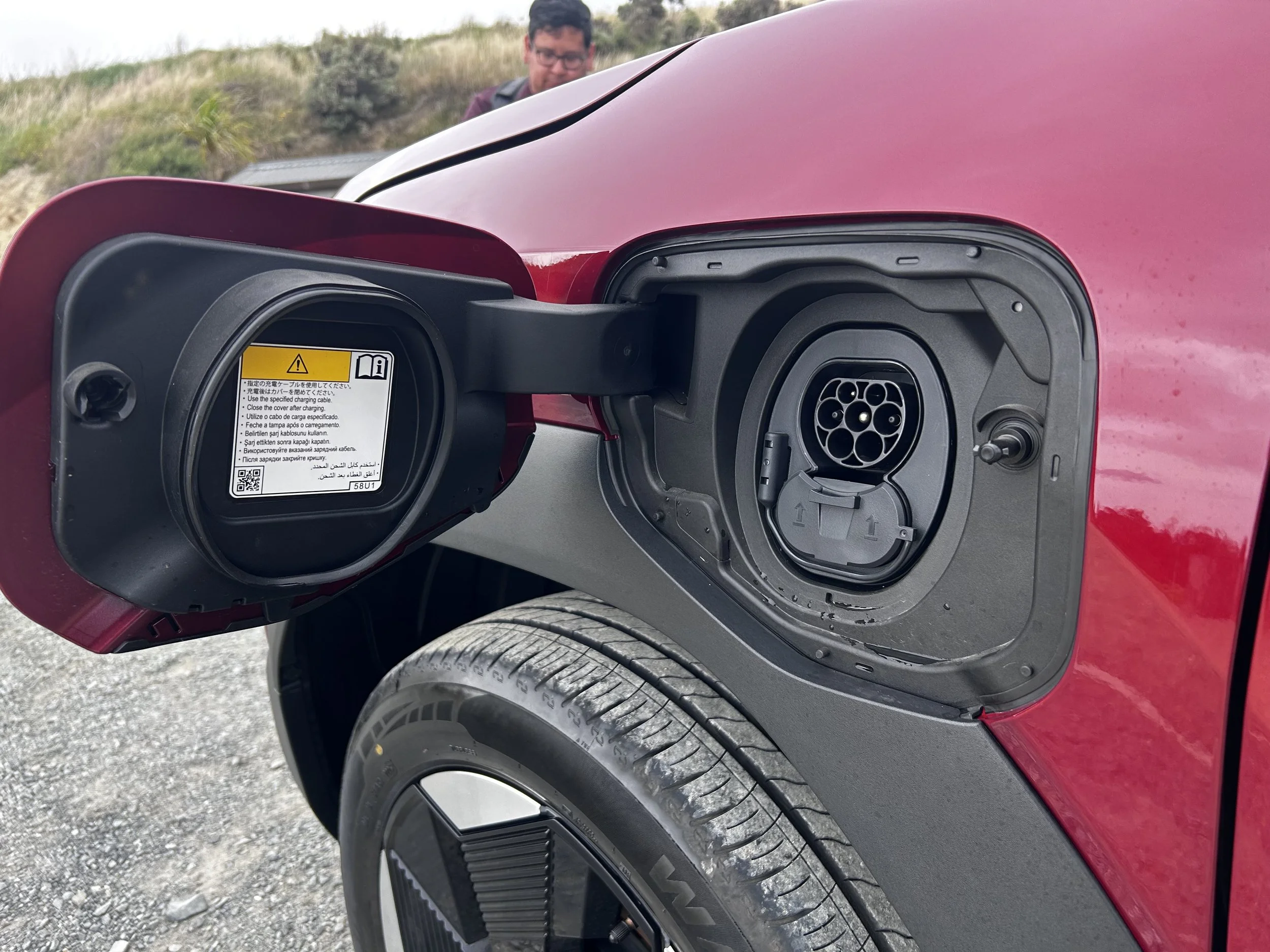
Insofar as its design goes, e-Vitara could be called a bit less Suzuki-like in styling, but isn’t too overtly Toyota-ish, either.
The exterior shape as a whole is sector solid, elevated from the masses by those triple-lamp daytime running light signatures, echoed in the clusters at the rear, providing a neat element of individualism.
Decision to add as a colour lift a set of tan-coloured interior highlight panels enlivens the Suzuki's otherwise black-hued cabin. Hardy textured plastics pervade, with a chunk of shiny piano-black as well;. it’s not cheap, but it’s not plush, either, with many touch points being hard.
The main fascia is dominated by a 10.25-inch instrument cluster and the 10.1-inch nav-enabled main infotainment. Displays seem fine from a graphical perspective, as well as in operation. Physical switchgear seems agreeably placed, but there’s not too much of that; high delivery of ancillary controls through the touchscreen will doubtless raise comment. Just to turn off the lane keep assist and excessive speed warning is an intensity.
You shouldn't have much problem getting comfortable behind the Suzuki's rake/reach-adjustable steering wheel, with a good range of adjustment available to cater to drivers of different heights. Front seat shape is decent and visibility out in all directions seems reasonable.
NZ trim includes ambient interior lighting, pairs of USB sockets in both the front and rear, a wireless smartphone charging pad and an Infinity premium audio system with boot-mounted subwoofer. The seats are fabric with faux-leather inclusions, and are heated up front, with the driver’s chair also having power adjustment. The only option is metallic paint, for $1000.
The cabin is orthodox for stowage options in the doors, and aside from a large glovebox there’s a central storage cubicle in the front armrest, a tray for items beneath the central tunnel and four cupholders; permanent ones up front and two secreted away in the fold-down armrest in the rear.
The latter is, in effect, the middle portion of the 40:20:40 second-row split-folding backrests; using it delivers a complete opening into the boot behind.
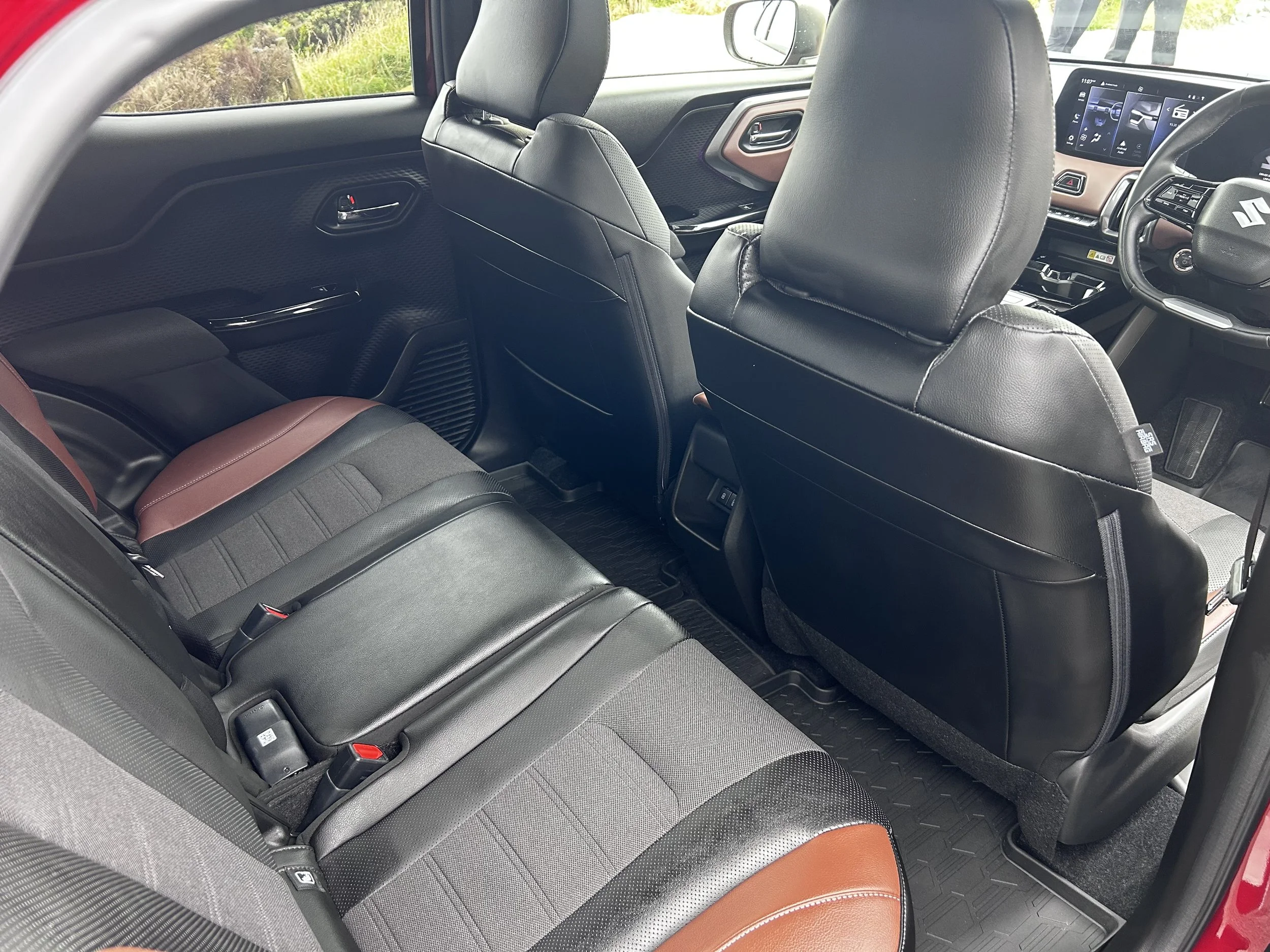
The rear seats fold down, but also slide backwards and forwards so owners can choose if they want more passenger space or extra cargo volume accordingly, but it’s a cosy car either way. Boot space is not a high point if full-out occupancy is also required. Recharging cable storage is beneath the boot floor, because there's no front boot at all.
Even though the rear bench feels low-seat, headroom for the tall in the back is compromised by the roof lining being shaped for a sunroof, but kids will be fine. There are two ISOFIX positions there; while the Euro NCAP rating for this car came out at four stars from a possible five, it did record its highest individual score in the child occupant category.
As well as a quick tootle around the paddocks, we were allowed two laps of the facility’s compact and tight test track, too compromised to get sense of the cars’ performance, and then onto the open road for a couple of hours, with largesse to explore. In our case, we headed north, trying it out on the motorway then the winding route around Pauatahanui inlet, before nipping back to the drop-off point in Tawa. About 50 kilometres’ clocked, give or take, all in the same Allgrip-e I’d driven on the dirt.
Vitara’s customer base has eroded over the years and with the 1.4-litre hybrid being retired to make way for the electric, comparison does seem a bit semantic, though it probably wouldn’t have have helped persuade pump to plug abdication.
The petrol car was significantly cheaper - the last-in-stock front-drive stickers $20,000 less than it’s battery-wed equivalent - felt frisky and as efficient.
Past experience with electrics is that achieving efficiency close to WLTP claim is easier in some than others; our endeavour was insufficient to give accurate insight into that. Suzuki data showing the Allgrip-e being up to providing 395km of driving capability and the front-drive having a maximum one-shot figure of 426km suggests it is relevant among like-sized electrics for range.
But also well behind the outgoing Vitara, which at best could eke up to 714kms’ running from a tank. If Suzuki here elects to also pick up a base e-Vitara, with a 49kWh battery, it’ll be simply as a price leader, not for extra parsimony. That solely front-drive version has a maximum official range of 344km.
Pluses and penalties of going electric are most pronounced in small to compact cars. So it goes here. Old Vitara in heaviest form was barely 1300kgs; including the battery pack makes it a 1.8 tonne car.
The plus for that comes with it being more settled in its ride. But there could well be trade-off in nimbleness; it was hard to define exactly how much on our day because of those MRF tyres, which squealed very easily and likely also affected the car’s surface sensitivity.
That it was a bit lively on bumpy sections suggests it is less settled than some, but conversely pitch, dive and lean in corners seemed relatively well contained.
In all probability, the all-wheel-drive advantage will be enjoyed by those who expect a dynamic edge, but not to great degree. It’s doing the job here in fairly straightforward style. The Allgrip-e has the front-axle motor as the front-wheel-drive car. To effect four-wheel drive, they simple took the usual approach of adding a secondary electric motor, in this case a 48kW unit, on its rear axle.
Peak power actually isn't much more, but the torque swells considerably and thus the 0-100kmh time is the best availed from the model; 7.4 seconds versus 8.7s (and just 9.6s from the 49kWh model).
Overseas’ sentiment that the Allgrip-e is the only one that feels EV brisk seems fair, though in broader context that isn’t necessarily a glowing compliment.
Difference between the three drive modes is mixed; there’s nothing really to separate Eco and Normal and even though accelerator feel is perkier in Sport, actual drivetrain response is less so. While smooth enough in the way it picks up pace to suit most daily needs, even in most potent form the e-Vitara is tangibly less fizzy than some alternates.
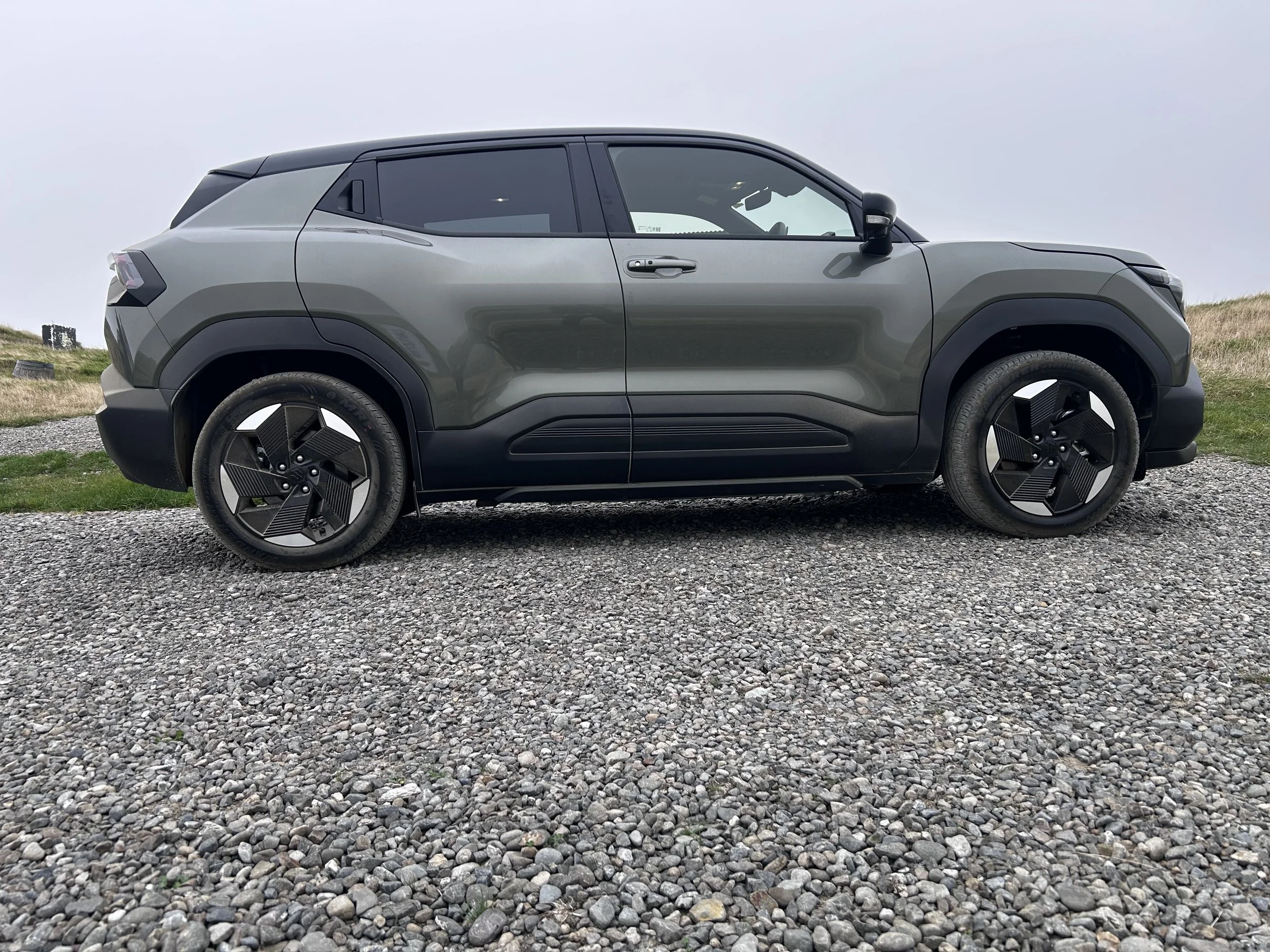
Then again, the car’s style isn’t really to push the envelope. The steering calibration is a bit odd, being so feel-free to point of being overly light at low speed, but ramping up to become oddly heavy at pace. And while braking performance is good, it’s not sports-tuned.
If you push the car up to speed, the drivetrain is quiet, but there are other extraneous noises, notably an elevation in wind noise around the B-pillars.
Another point about the brakes is that set-up to involve regenerative effect seems clumsy. Three different strengths of braking are allocated, but rather than include paddle shifters you have to use submenus in the touchscreen. No facility for full one-pedal driving means the car won’t achieve a complete halt simply by lifting off its accelerator pedal.
Another sign of expedience shows in the car’s charging rate. The fastest charging rate on a DC public connection is 70kW, which though not rock-bottom is also well short of some alternates. Most people charge their EVs from home, in which instance it will ask for nine hours to replenish from 10 to 100 percent.
The Vitara has never been one for hauling boats and caravans, but it was a handy trailer hauler. Now owners will have to give that latter consideration more thought, as both new variants are rated to tow 750kg of braked trailer; exactly halving the limit of the outgoing car.
The car falling short of gleaning full marks from Euro NCAP was down to some glitches with how it accomplished meeting some finer points rather than on how it provisioned overall in respect to advanced driver assistance systems.
Blind-spot monitoring and rear cross-traffic alert site alongside expected features such as lane keep assist and lane departure warning, traffic sign recognition and a proprietary Dual Sensor Brake Support. Front and rear parking sensors are standard, along with a rear-view camera, adaptive high-beam assist and a 360-degree camera system.
The pricing is subject to $2000 off to stir up interest but at full RRP the Allgrip-e maintains as the cheapest electric all-paw in the market, if narrowly.
Both versions have lots of competition from other electrics in the same size bracket that, while all two-wheel-drive, are as well equipped, offer commensurate or longer ranges (and pep) and can cost less (in respect, especially, to Chinese brands). For all that, Suzuki is advantaged by being one of the most trusted brands in the country. It’s an ace card all those rivals would love to hold.
The writer attended as a guest of Suzuki NZ, with a meal provided.