
Electric Hilux: It’s go for Green
/Battery model will avail from end of this month, but price still to reveal.
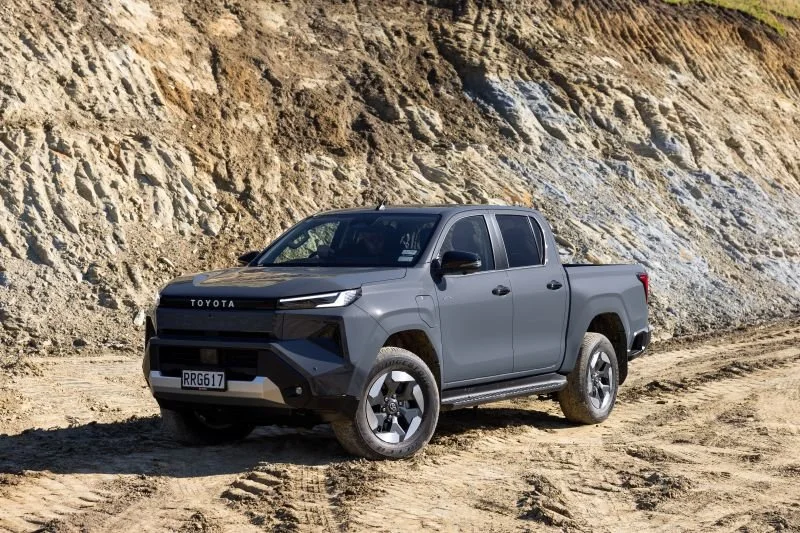
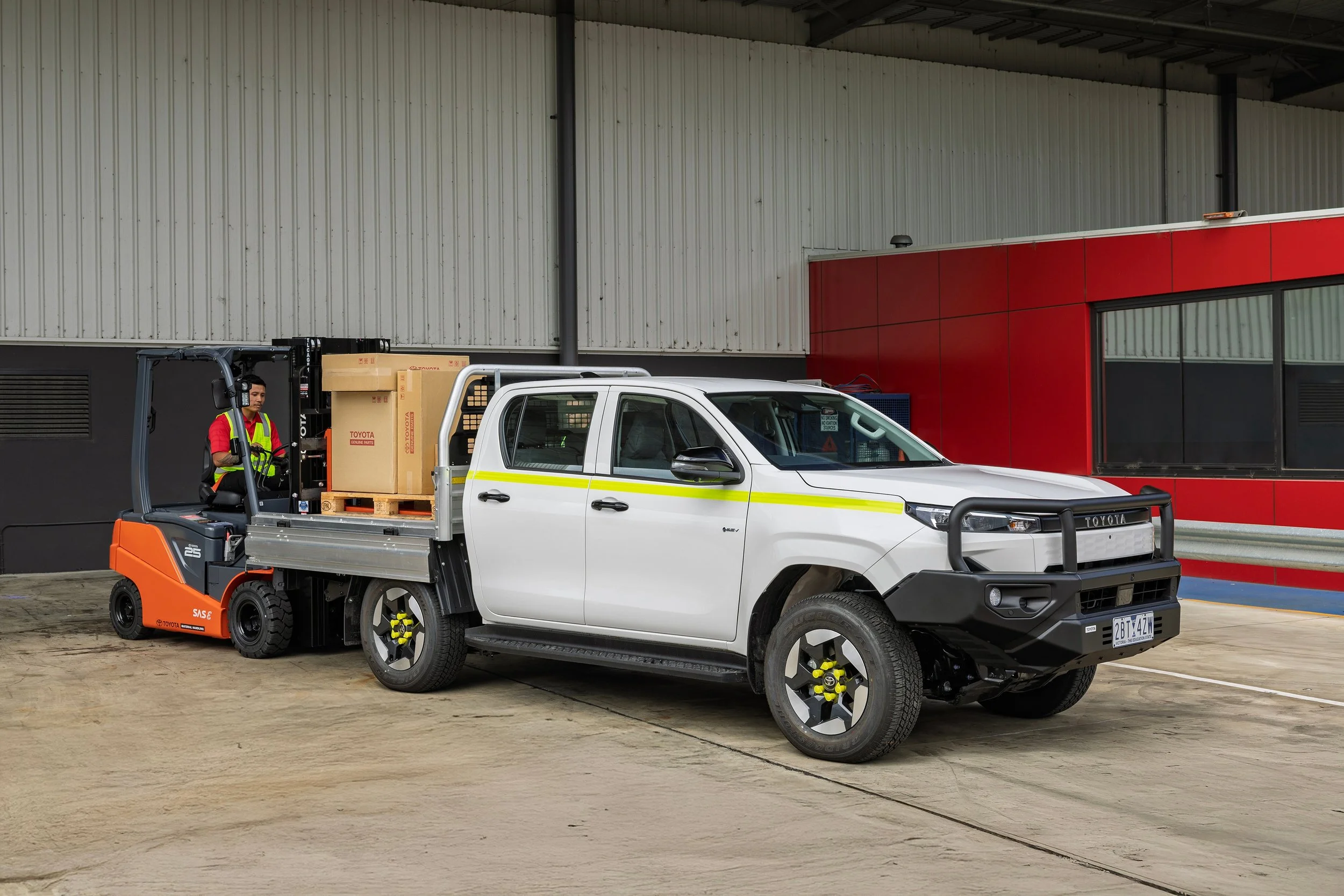
COMMITMENT to the fully electric Hilux has been confirmed by Toyota New Zealand, with pricing set to announce soon and dealership arrival before end of this month.
The model has been a premium product in every market it has already hit.
In Australia the flagship SR5 edition confirmed for NZ circulation sells for a fraction under $100,000, which if applied locally would mean a near $40k premium over the most expensive diesel Hilux here.
That also puts it well above sole full electric ute here, the Geely Riddara RD6, which starts at $69,990 but isn’t quite the same thing, as it is on a car-like unitary platform, whereas the electric Hilux apes the diesel kind in having a properly rugged separate chassis.
Toyota NZ’s confirmation today also comes just days after MG signalled that a battery-wed edition of its U9 is limbering up for regional position before year end. MG has hinted its target is to price competitively with the Geely.
Toyota’s model will configure here as it provisions across the Tasman. So, an entry-level SR cab-chassis, the SR wellside pickup and the SR5 wellside pickup, all of which are available as dual-cabs only and all dual motor. If our neighbour’s pricing were to transfer, the SRs would be $90,275 and $92,080.
Underpinning the Hilux BEV is a reworked chassis, which Toyota says now features frame frame reinforcements, stronger MacPherson strut front suspension, and a De Dion rear leaf spring setup, which allows a rear electric motor to be mounted.The Multi-Terrain Select six-mode traction control system is retained, but the low-range transfer case and locking differentials of the diesel models are not featured.
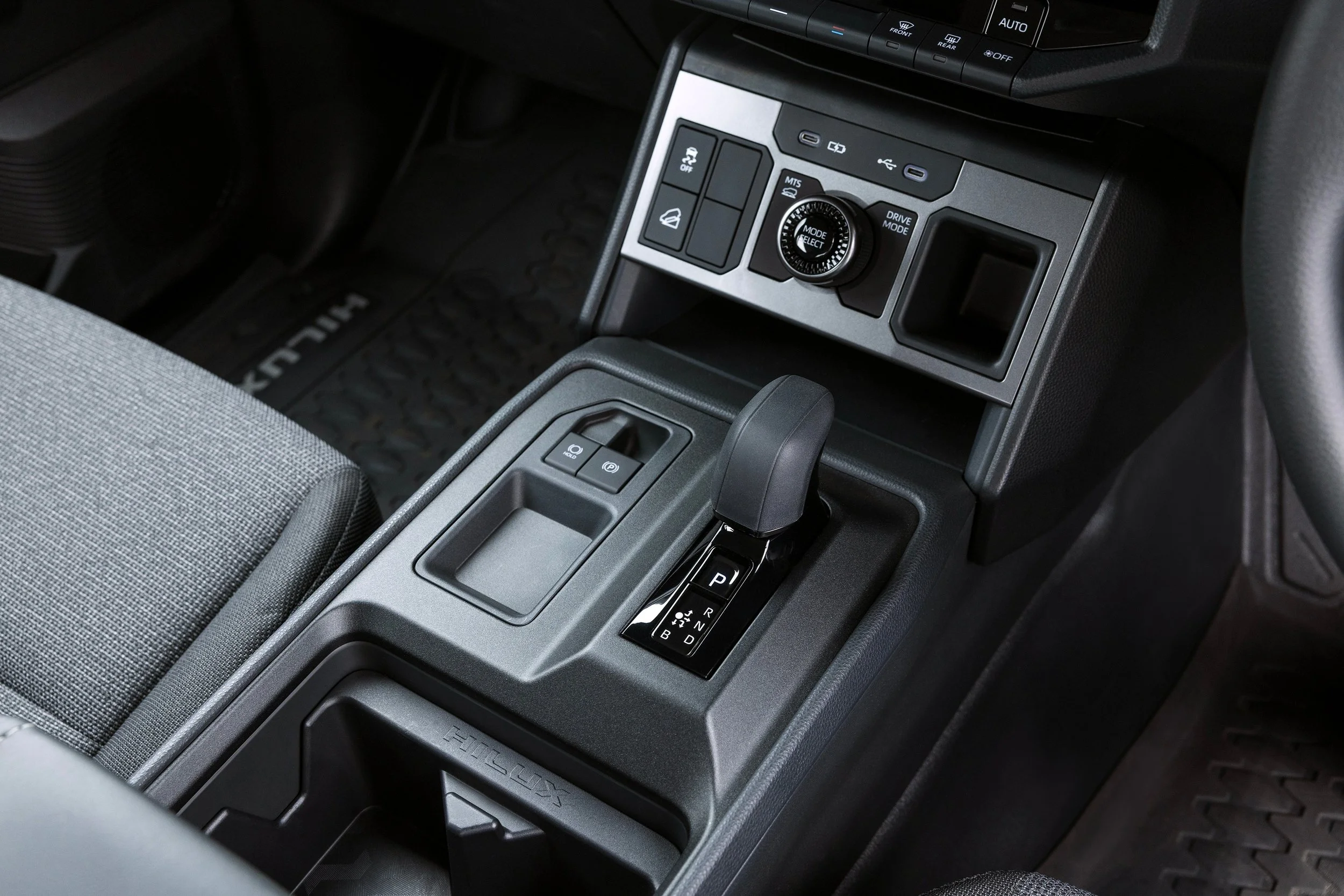
Those electric motors comprise a 82kW and 206Nm unit at the front and a 129kW and 269Nm motor at the rear, developing a combined total of 144kW and 468Nm (rather than the 474Nm originally announced overseas). By comparison, the turbodiesel makes 150kW and 500Nm.
Feeding the electric motors is a 59.2kWh lithium-ion battery that offers DC charging capability, which can replenish the battery from 10 to 80 percent in as little as 30 minutes. The 10kW AC charging capacity can take the battery from 10 to 100 percent charge in approximately 5.5 hours.
In respect to range? As previously reported, like the price, that’s potentially a thorny one.
Toyota NZ has chosen to use calculations achieved using the NEDC scale. That means up to 315km of claimed driving range in the pickup and 245km for the cab-chassis. But are those counts relevant?
NZ now fully favours WLTP, which is more accurate but also somewhat less optimistic. Using the European WLTP scale - which is basically like ours, save theirs includes a high-speed element disregarded here - a driving range of just 240km is cited for the pickup. Which conceivably means that if one set off from Toyota New Zealand headquarters in Palmerston North to reach Wellington, a trip of 142 kilometres, it would need to replenish at some point during the return leg. As point of reference, the Riddara claims up to 360km WLTP from a 73kWh battery. It also makes 315kW and offers 3000kg of braked towing.
TNZ chief strategic officer Andrew Davis has suggested his edition “will be ideal for everyday operational roles and for predictable routes. It would also work best where charging is easily accessible and daily travel distances are less than 200kms.”
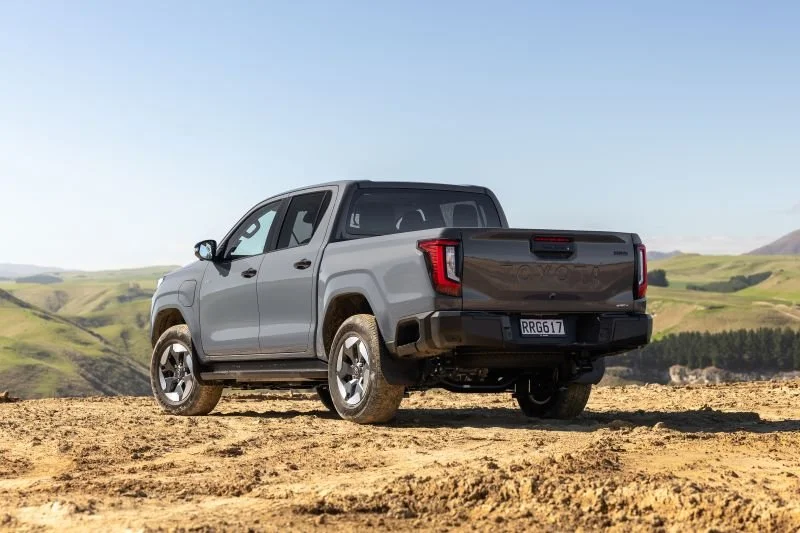
The electric ute will avail in just two choices of colour; white or grey.
Ventilated disc brakes with energy regeneration are standard, and the BEV can tow a 2000kg braked trailer – 1500kg less than diesel variants - and 750kg unbraked. TNZ makes a point of saying that the tow ratings are specific to it being fitted with a factory towbar.
The electrics identify from the outside by having a closed-off upper front grille and 17-inch alloy wheels. Full specifications have yet to share, but in Australia standard features largely mirror the diesel models, but not wholly. The BEV SR adds a 12.3-inch digital driver’s display, body-coloured mirrors and door handles and dual-zone automatic climate control over the diesel SR, though loses four speakers, a wireless phone charger, a leather-look steering wheel and front fog lights.
Davis said the type marks a significant milestone and strategic addition to Toyota’s multi-pathway approach to electrification.
“Critically, we have been able to secure both the wellside and cab chassis variant … giving customers the flexibility to customise, as they would any other Hilux powertrain in our range, to suit their needs.”
TNZ’s executive thinking is that the type would work well for infrastructure and construction companies, farmers, horticulturists, trades, eco-tourism operators and local government contractors operating within defined areas and where charging would take place back at the base or farmyard.
The lack of emissions and very little noise is another advantage for working with livestock or in orchards, it proposes.
TNZ says comprehensive testing in Australia with mining fleets will pay off for NZ application and ensure the battery model “can tackle many of the NZ environments that both its diesel and diesel Hybrid-powered sibling is so familiar with.”
It sats the trials in Australia were in real‑world, high‑demand environments, from hot temperature remote outback operations to off‑road terrains, providing Toyota with robust insights into performance, durability, and capability.
The model has stood up against its diesel cousin in challenging off-road situations here “and did not miss a beat.”
Davis says the Hilux BEV gives organisations more options to match the right powertrain to the right role. Diesel remains essential for heavy-duty tasks such as carrying a high payload and towing, while the Hilux BEV suits roles with different demands.
“The Hilux BEV fills an important gap, offering ute size, space and comfort with zero emissions where it makes sense.”