VW ID.Buzz GTX roadtest review: Love beats bugs
/A stiff price is a shame yet the charming, nostalgic design is massively endearing.
Price: $150,000.
Powertrain: Dual permanent electric synchronous motors, 250kW 134Nm front, 560Nm rear; single speed; 91kWh (86kWh usable) liquid cooled lithium ion battery.
How big: 4962mm long; 2211mm wide; 1896mm tall.
We like: Design execution is spot on; interior puts people-first; comfort; fast charging.
Not so much: A larger battery would be useful; ripply ride at this level.
SOMEHOW I ended up wearing a favourite sweatshirt featuring the profile of a 1960s’ Kombi.
Wouldn’t you know, my wife chose to wear a t-shirt also showing an image of the original bus?
And on top of all that … while driving the ID.Buzz on that very same day who did we happen to catch up with but an old mate, Mark?
Back in our teen days we used to rock around in his Type 2 camper; stacked with wind surfing gear and sun-faded beach gear. The endless butt of jokes. Every trip in this wheezy clattering old thing seemed a gamble.
A remarkable series of coincidences? Of course not.
When you feel the vibe, you make the effort to salute the past, right, not least when it’s such a bold reminiscence.
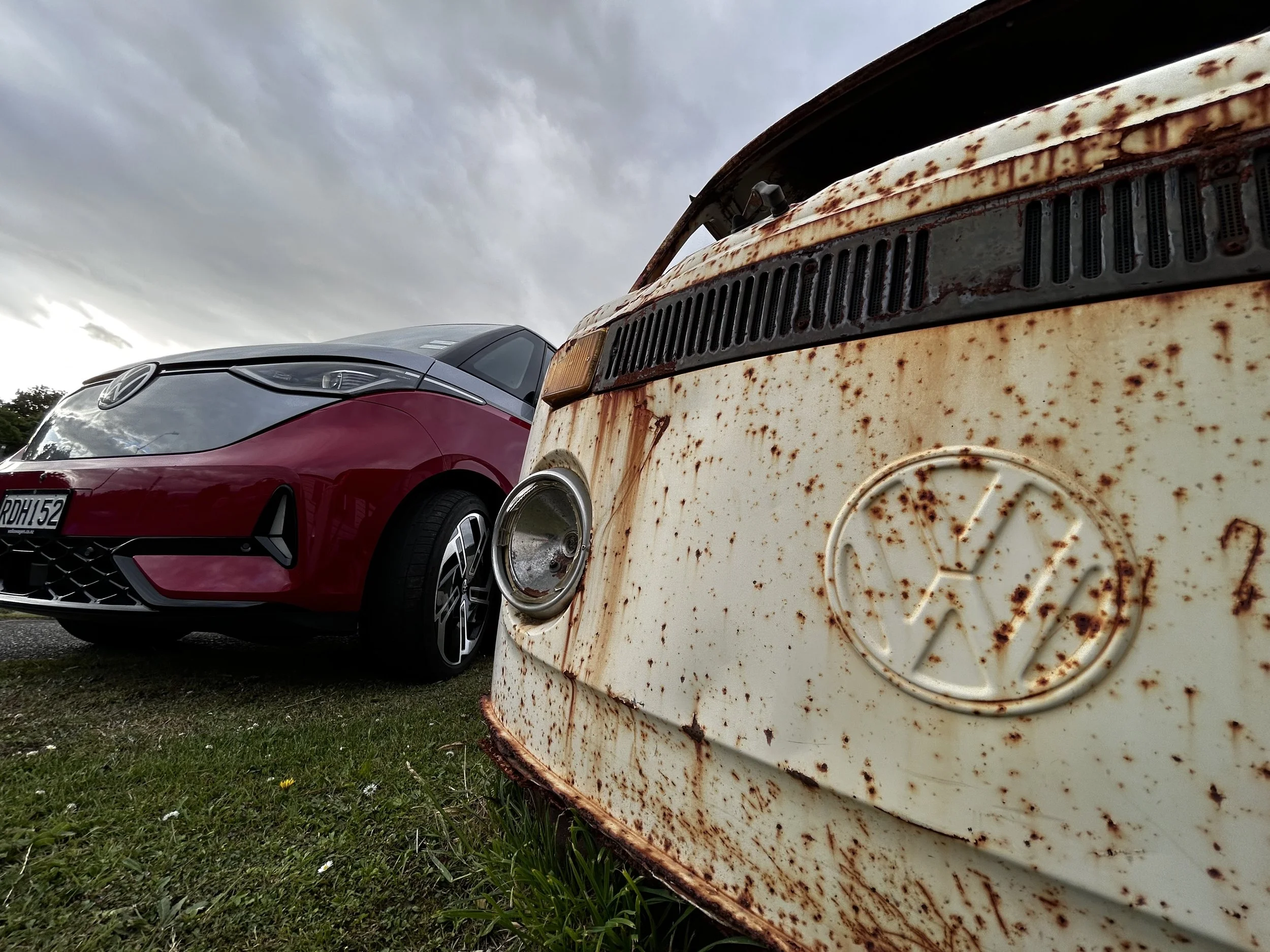
Surely everyone by now recognised that the design of the ID.Buzz commemorates the German company’s iconic original microbus - the VW Bus for short.
And while, technically-speaking, the ancient and the modern variants of this concept are simply worlds apart. Galaxies, really. As a trigger for wistful emotion, the Buzz is bang on.
Even those who don’t want to succumb …. do. Mark had never seen a Buzz before. He had never driven any electric. He didn’t imagine anything good would come from either. And yet, after a couple of minutes behind the wheel … yup, there he was, on the same nostalgia trip we’d been taking.
All part of the master plan, of course. There was tremendous hype around the ID. Buzz well before it launched in 2022. Every preceding concept looked tasty. Being atop a variant of the MEB platform found under many of VW’s all-electric vehicles doesn’t make it any less exotic.
As much as the Buzz seemed assured an easy ride, in reality it has hit a rough road. It took way longer to get into production than it should have. There’s the price: Regardless platform-sharing saved on spend, nostalgia costs money. It took way longer to reach New Zealand than it should have. There’s the price. It’s been blighted by teething issues with some of the tech. There’s the price. Buy-in doesn’t wholly depend on those of us whose memory of the past is strong and still treasured, but it cannot hurt. There’s the price. Did I mention how much it costs?
Right. Here you go. The GTX flagship here is yours for $150,000. Before options. The cheapest Buzz, the one in which all but the front seats are stripped out to suit commercial use, is $110k. That’s a lot, too.
Too much? That VW NZ prefers buyers to settle on exactly what they want, and only then will they have it built, says everything. If there’s any consolation, Buzz is expensive in every market it reaches. And, because of the money, it’s hurting in almost all those places.
In America, such a spiritual home of the original it had absolute priority for the new, they’ve decided not to take any fresh shipments in 2026, so they can clear out a backlog of 2025 arrivals.
So life hasn’t been easy. But … personally, I’m so very glad VW took the plunge; so very happy to have achieved a week behind the wheel. It’s a controversial and quirky car, yet such a cool one. Bursting with delightful details, it’s absolutely the most instantly feel-good of all the products on the VW Group’s MEB platform.
Stating that doesn’t stand as a denial of the obvious impedient. In respect to that, I’d agree that as much as the GTX presents as the ‘best of the breed’, logically it’s really not.
The Pro single motor in the same seven seat configuration for $10,000 less? That’s the more pragmatic one. It’s not as punchy, loses a bit of design flair, but is just as practical and very likely will be better protected from depreciation.
But, then, if you nonetheless prefer the top choice, then basing that decision on argument that logic isn’t anything the driver for any Buzz as the element of emotion isn’t without foundation.
Expect debate. One constant question, not least from old hands, was why it doesn’t come a the old one did, as a camper. Honestly, I cannot say how many times people asked me what it’s like to sleep in.
Pass an eye over the interior and you might think it’s a crying shame it isn’t a camper. Such a roomy and modular space. Plus VW’s long history - going back to the original T2 - of producing campers gives it a tonne of experience. They’re all ICE of course, so a Buzz going that way would make sense. One day, maybe.
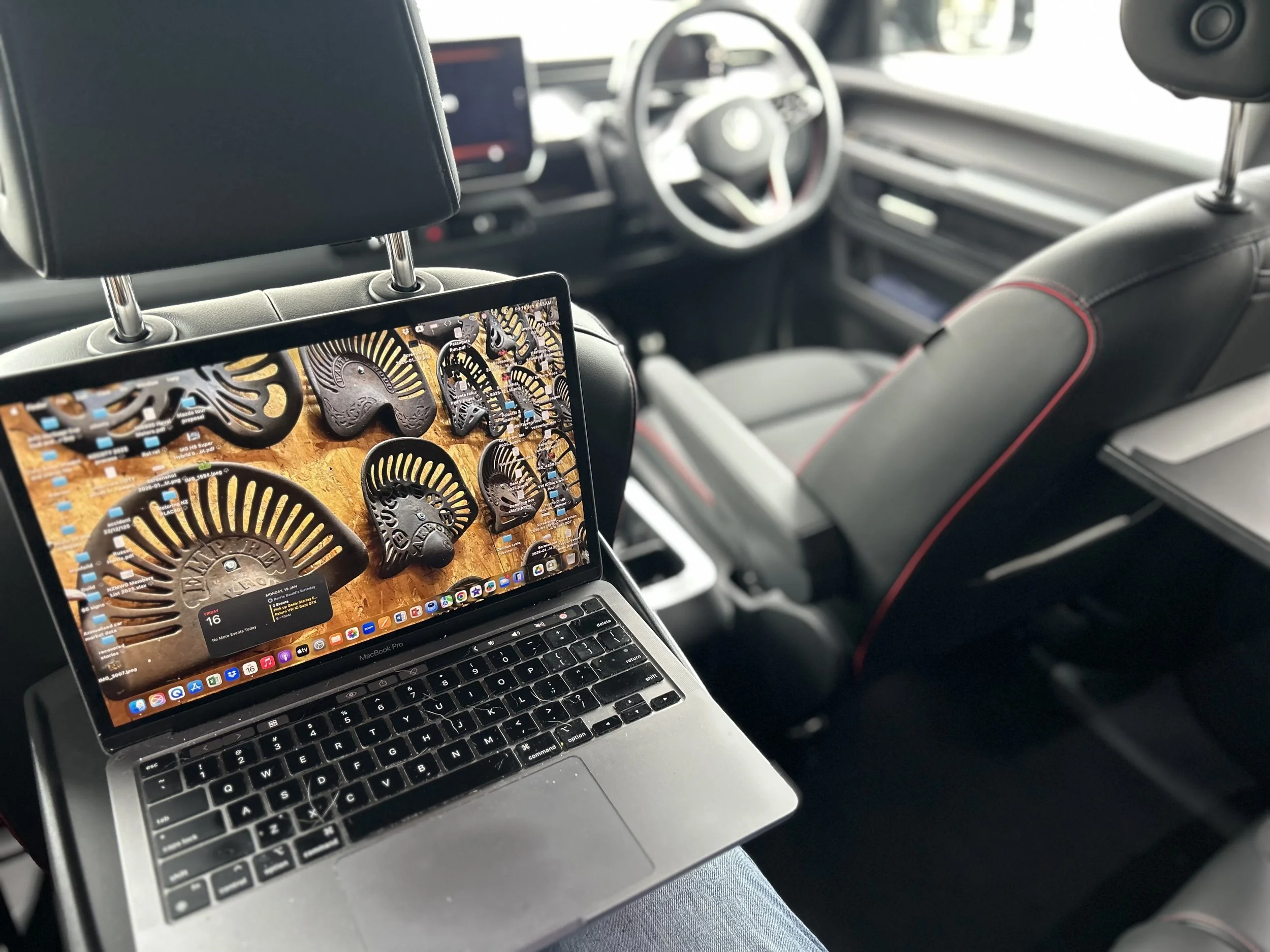
In current form, it’d be an uncomfortable night. In an interior loaded with lots of clever features - everyone in an outboard seat gets a USB-C slot, there are cubbies galore, the aircraft style tray tables on the back of the front seats are sturdy enough to hold a laptop. But turning the seats into a sleeping platform hasn’t been sorted.
So it’s more attuned to being a regular ‘bus’. And, as a transport option for anyone of any shape or size, it’s very decent, making the most of every advantage from being electric and a box, with cleverness beyond the obvious elements of power-sliding doors, cubbies, cupholders and device input slots galore and great seats.
VW NZ was smart to await the longer of two wheelbase lengths for the passenger types; it’s perfect for a seven-seater (six is an option)
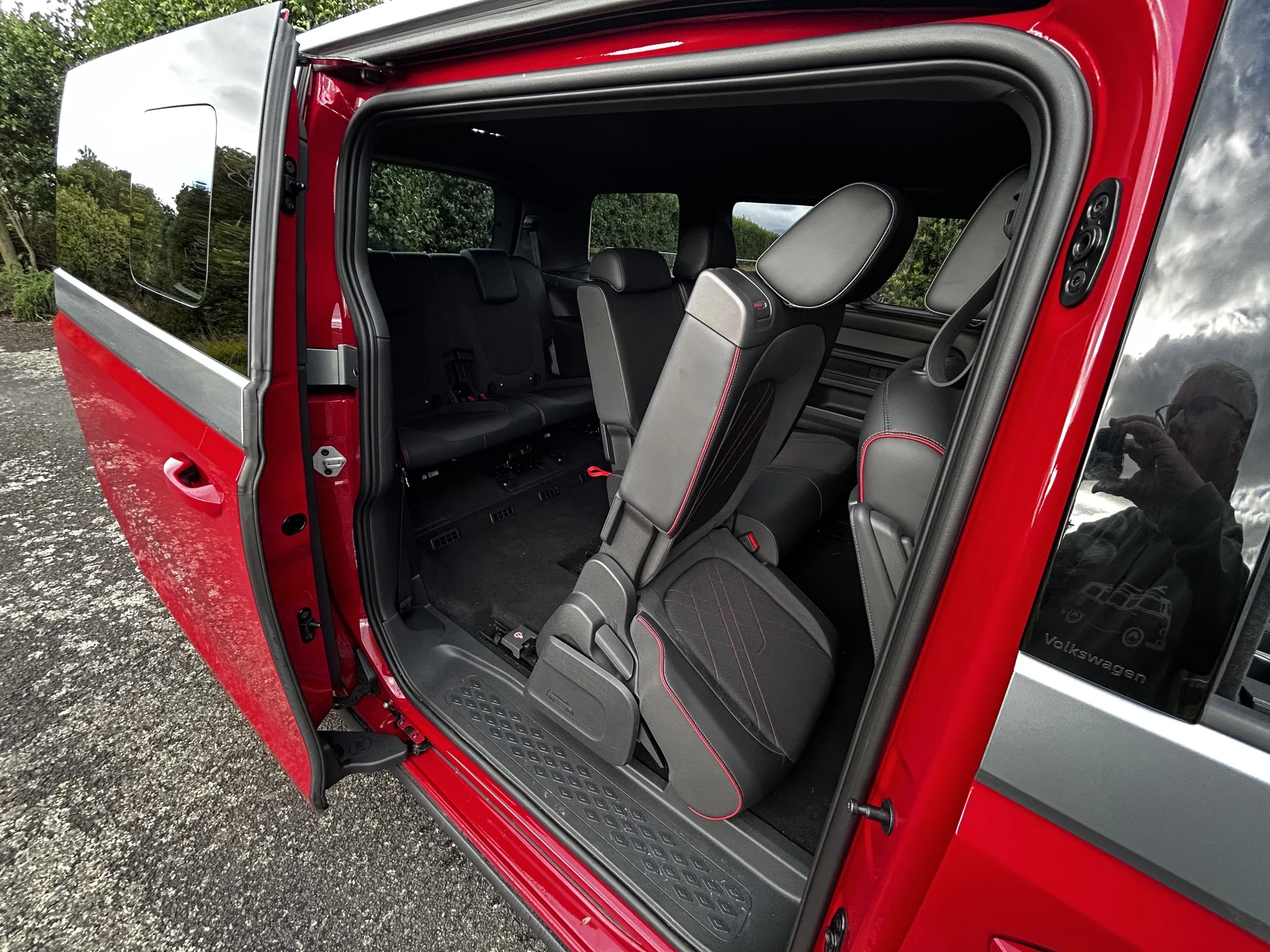
Either way, with a 3239mm wheelbase, the LWB delivers an extra 250mm between its (192mm longer) rear doors, so whatever your size or shape, there is a ton of room wherever you land. Also, whatever seat you end up in is highly comfortable. In fact, it is the one van/people-carrier with a back seat zone adults won’t shy from opting for. Access and egress to the rearmost seats via the large sliding doors and simply-smart tilt fold mechanism for the mid-row is easy, and the space is as airy as anywhere else thanks to the large glass areas.
The seven-seat option offers four ISOFIX points in total; two in the rear, two in the mid row; the middle position misses out though it’s likely wide enough to accommodate a small booster.
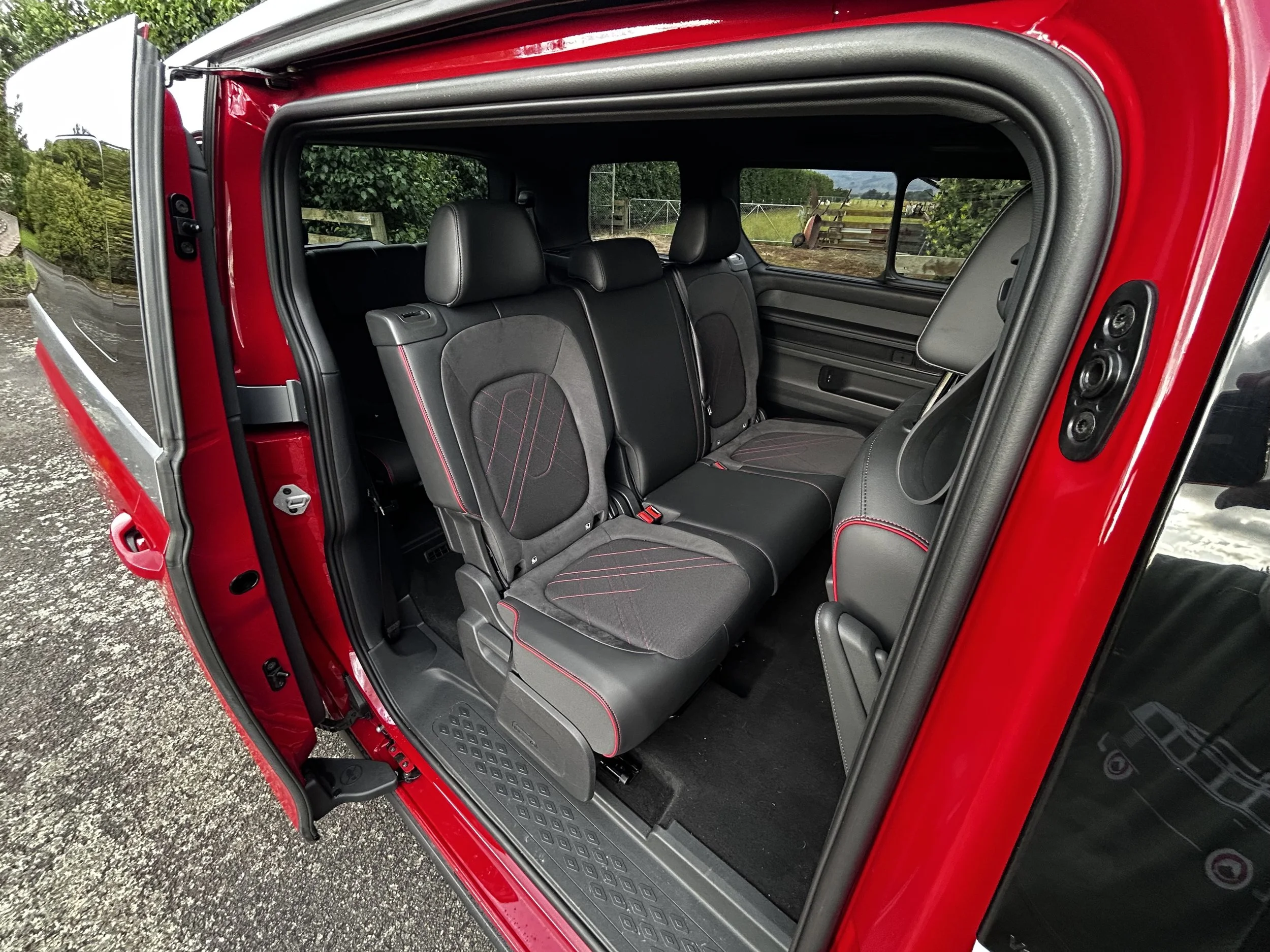
Boot space? With all seats in position, not brilliant, really. There’s a neat box device, absent from the tester, that makes rear stowage more practical, but with or without that, you’re really looking at shopping bag space.
The GTX is another new direction. VW has made sportier versions of its most popular models under the GTI moniker. It’s doing the same with its electric vehicles, only these use the GTX name.
But a Kombi? They were never fast; at best the vehicle that towed race cars to circuits. So a GTX Buzz in that light is … hmmm, interesting.
Drive sensibly and you won’t appreciate the zip that comes from adding another 140kW power, with torque of 560Nm abetted by 120Nm more, as result of that extra motor up front.
Considering the size, weight and shape, it has to potential to surprise. All electrics have spirit, but 0-100kmh in 6.1 seconds is not bad and, when full zap is unleashed, this love bug lends zesty performance for an MPV. You should see the faces from those being zapped when it hits the passing lane.
Two types of motors involve; a permanent magnet synchronous motor in the rear produces up to 213kW and 560Nm and is supplemented by an asynchronous motor (ASM) on the front, which has maximum outputs of 81kW and 134Nm.
For most of the time, the GTX remains in rear-wheel-drive mode, leaving the ASM motor in a standby setting. It consumes very little energy when operating in this way and can instantly come on stream when traction levels at the rear begin to drop.
It is nonetheless energy efficient than the single-motor versions, which in themselves are not that brilliant. The seven chair Pro is the best, and even it only gets 403km; Kia EV9 drivers will sneer at that. On WLTP, the GTX falls silent just 7km short of the Pro. But reality isyou will be a regular visitor to a charger in a Buzz.
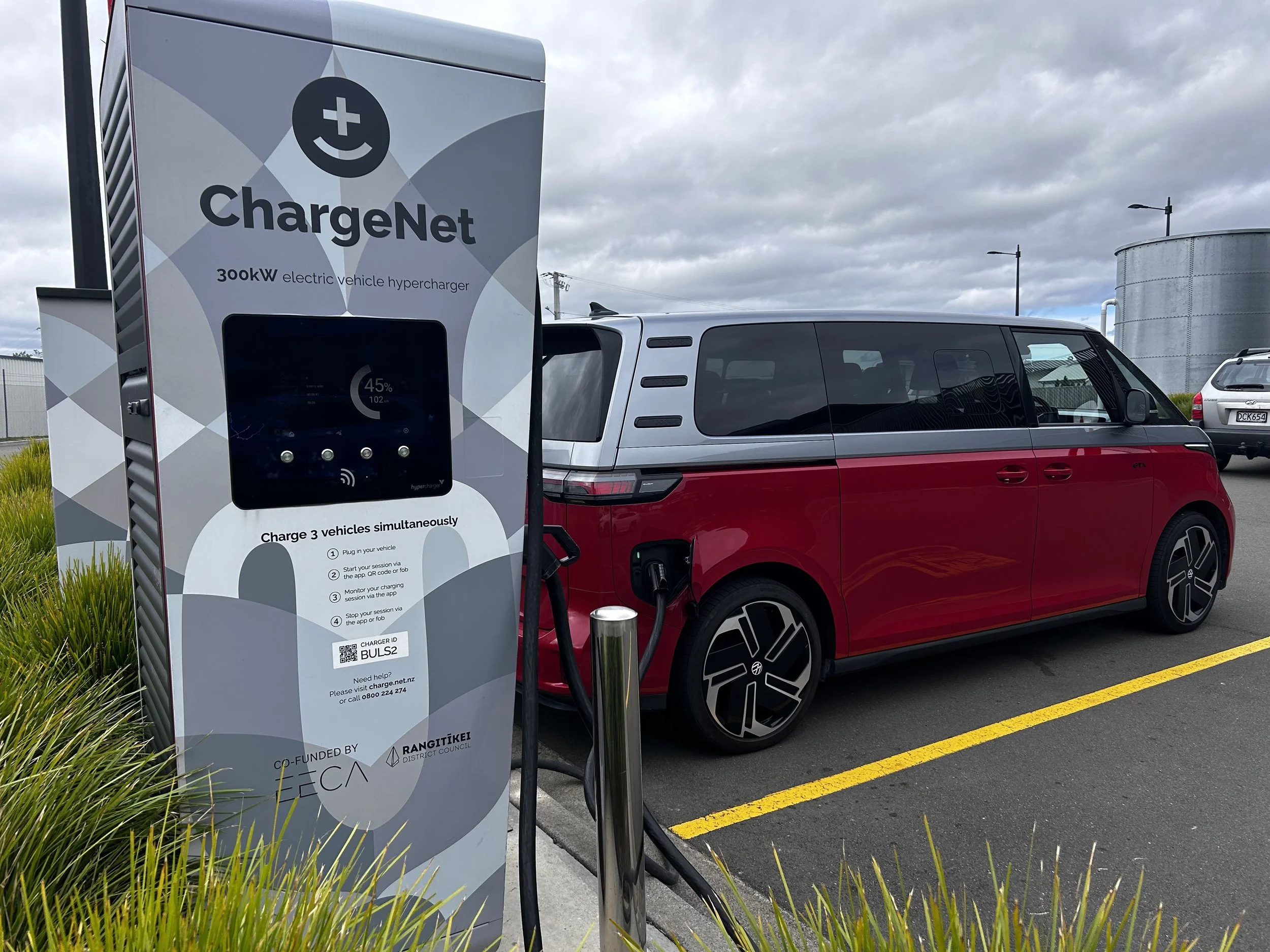
During test close to 500km was clocked and it was replenished four times, though never from empty and only once to full. Staying in the 30-80 percent zone mostly seemed prudent, and is certainly the pathway to fast ‘refills’.
It’s shame you will likely always have to keep that next charging opportunity in mind because long distance driving seems a natural forte otherwise.
Like all the MEB cars, the Buzz feels planted and stable on the road, even though faster bends. It’s a large vehicle, but the van-like layout with the high driving position close to the front wheels gives good visibility and a tight turning circle, so it avoids feeling cumbersome.
The ‘4Motion’ all-wheel-drive system is icing. There is no physical drive connection between the front and rear electric motors, but they work in tandem when needed to provide all-wheel traction. The added traction when needed is useful and makes this a vehicle that is very capable.
When driving various Buzz on the launch, common consensus was that it has a firm ride, but that the GTX was least fluent.
With 10,000kms on the clock when it arrived, the very same car seemed to have settled down a touch, but it’s probably till true that there is a penalty for taking the one with 21 inch rims and low-profile rubber. Even so, it seemed a relatively quiet car on the move, other than a small bit of road noise from the tyres.
Around town the size is a thing that takes getting used to. Well-weighted steering and a decent turning circle helps improve manoeuvrability, yet at nearly two metres wide it’s a large object on tighter city streets and when settling into car parks. There are parking sensors all round, including side monitors that can detect obstacles beyond the view of the door mirrors, and an auto-braking system applies the brakes if it thinks an impact is imminent. They’re nannying, but needed. Wide-angle lower mirrors for extra visibility would be useful.
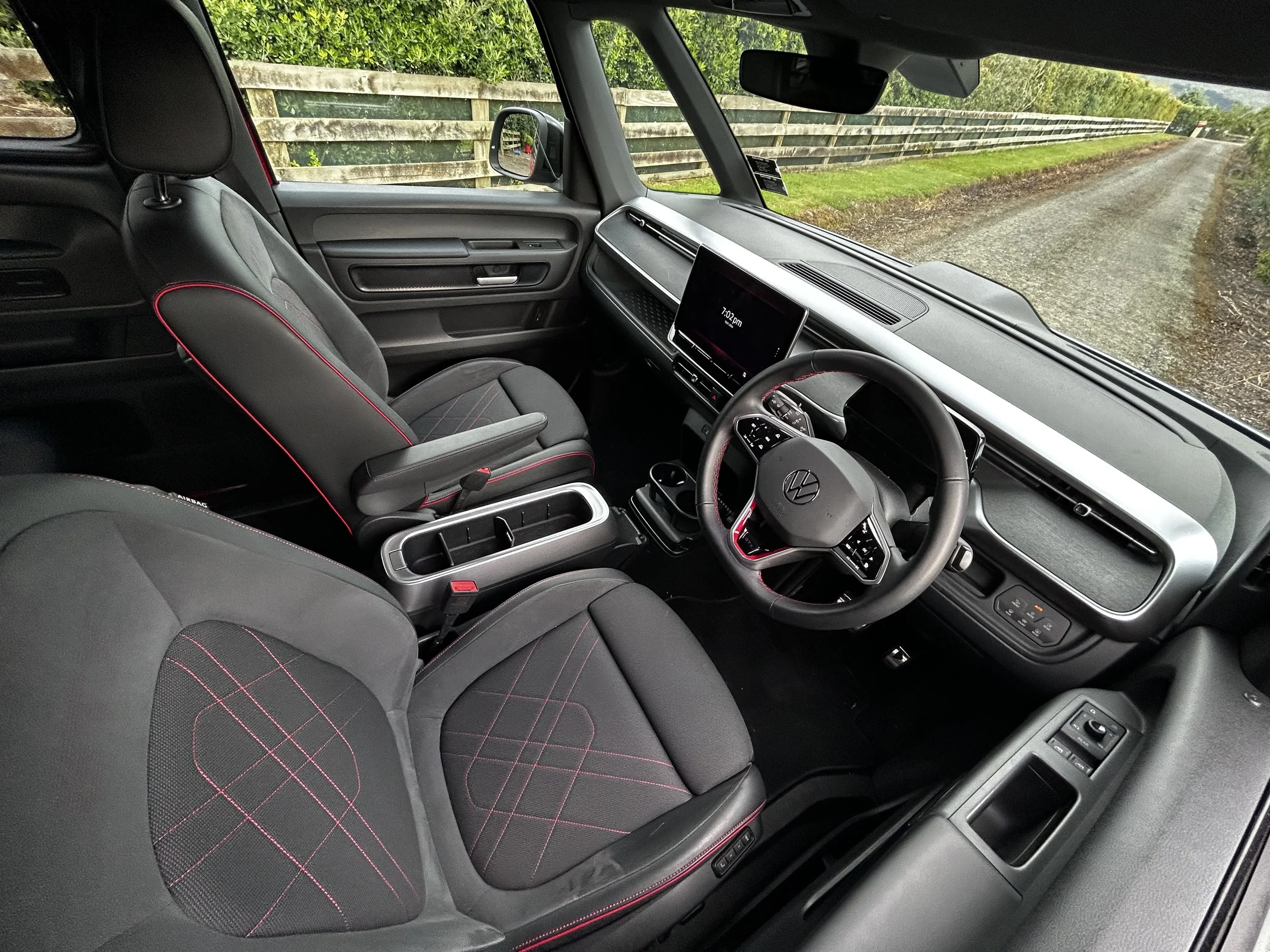
The original’s bus-like driving position isn’t replicated, but neither is it car-like. As a tall person, I had expected entry and egress to be a simply slide in, but actually even at my height it asks for a slight step up and slip across tha’s a touch awkward until you refine the technique. When established, it’s like being in the front row at a film screening. You sit highish and and have a huge glass area ahead, with nothing to impede as the end of the stubby bonnet is out of view there’s a clear view of your surroundings.
One benefit for having to wait for the Buzz was that, by the time it got here, there’d been a update to the control controls that sorted out some user criticisms.
The 12.9-inch touchscreen display at the dashboard’s centre and its infotainment involvements are better. The layout now benefits from an illuminated touch bar along its base, where the volume and cabin temperature controls are found, and actual operabilities, though VW familiar, are slicker. Consensus from overseas is that it’s a much better user experience than initially offered; from my part, there were no mysteries. It’s not overly flash, but seems fundamentally solid. VW doesn’t bother with a head-up display, but nor does it need it, not with the teensy display panel above the steering column.
GTX’s mood being more serious is why it gets dark, mainly black, colours within; spend less and you get bright and colourful cabins. I dunno … it’s all nicely rendered - the microfleece and the red stitching on the seams and matching piping is very GTi - but it does make it a bit of a cave. Sunroof? You need to pay extra.
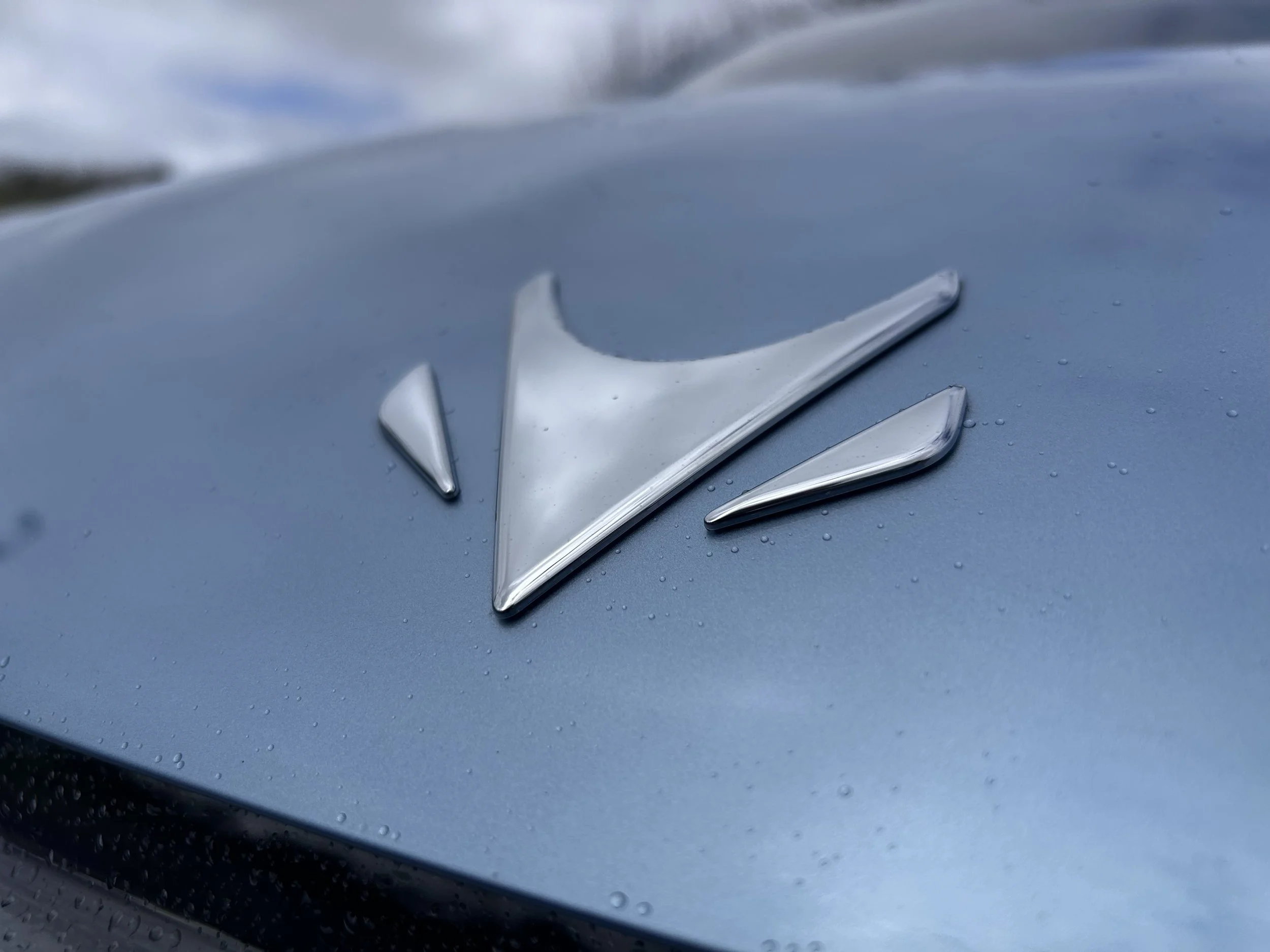
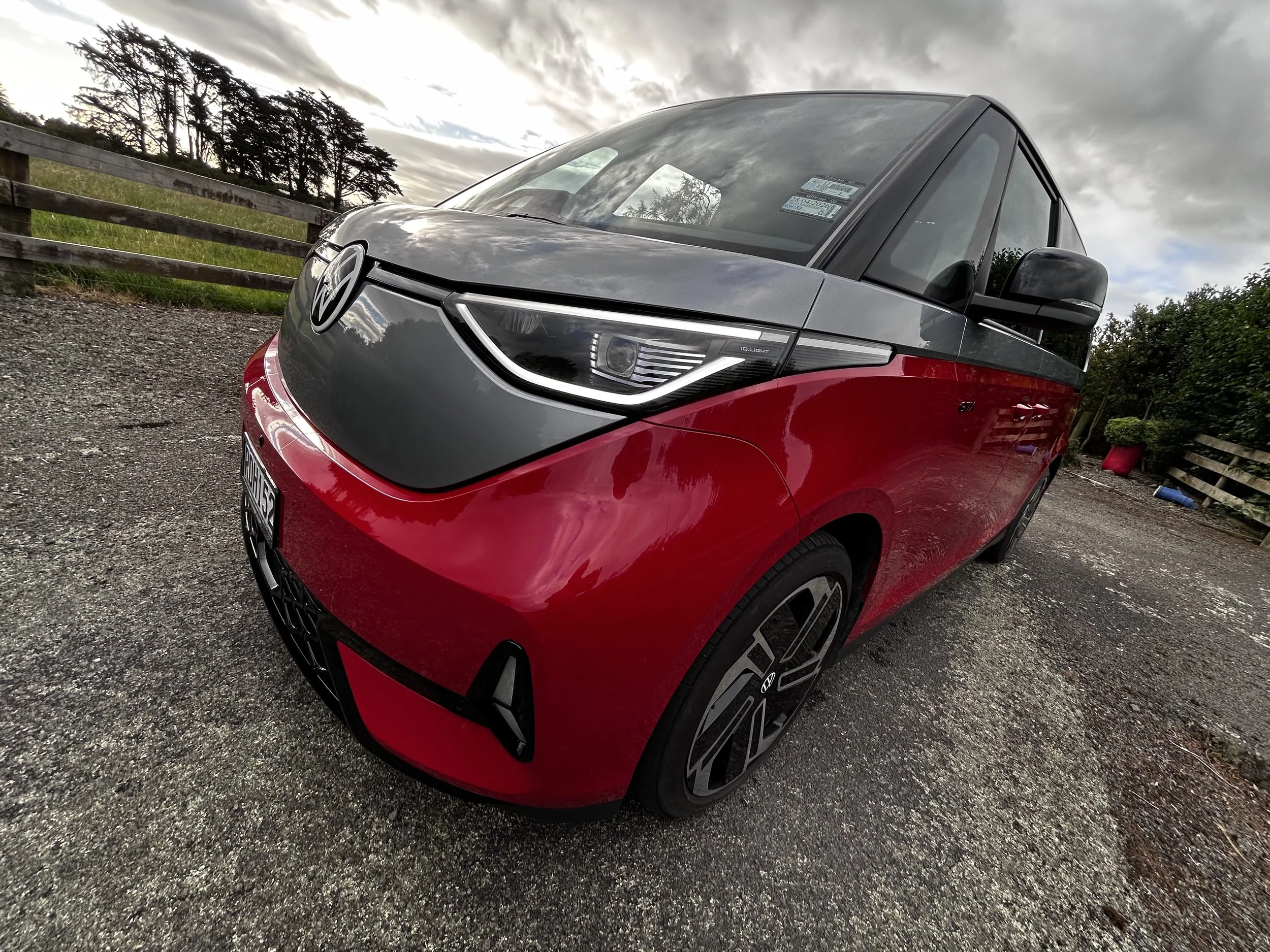
The exterior enhancements include the lower section of the front bumper being bespoke, featuring a large honeycomb structure with a gloss black finish and a winglet appearance on either side; presumably to lift the Nurburgring vibe. Small vertical LED daytime running lights are integrated into the sides of the bumper, taking the shape of two triangles on top of each other to form an arrowhead design. The door mirror housings and badges also receive a high-gloss black finish.
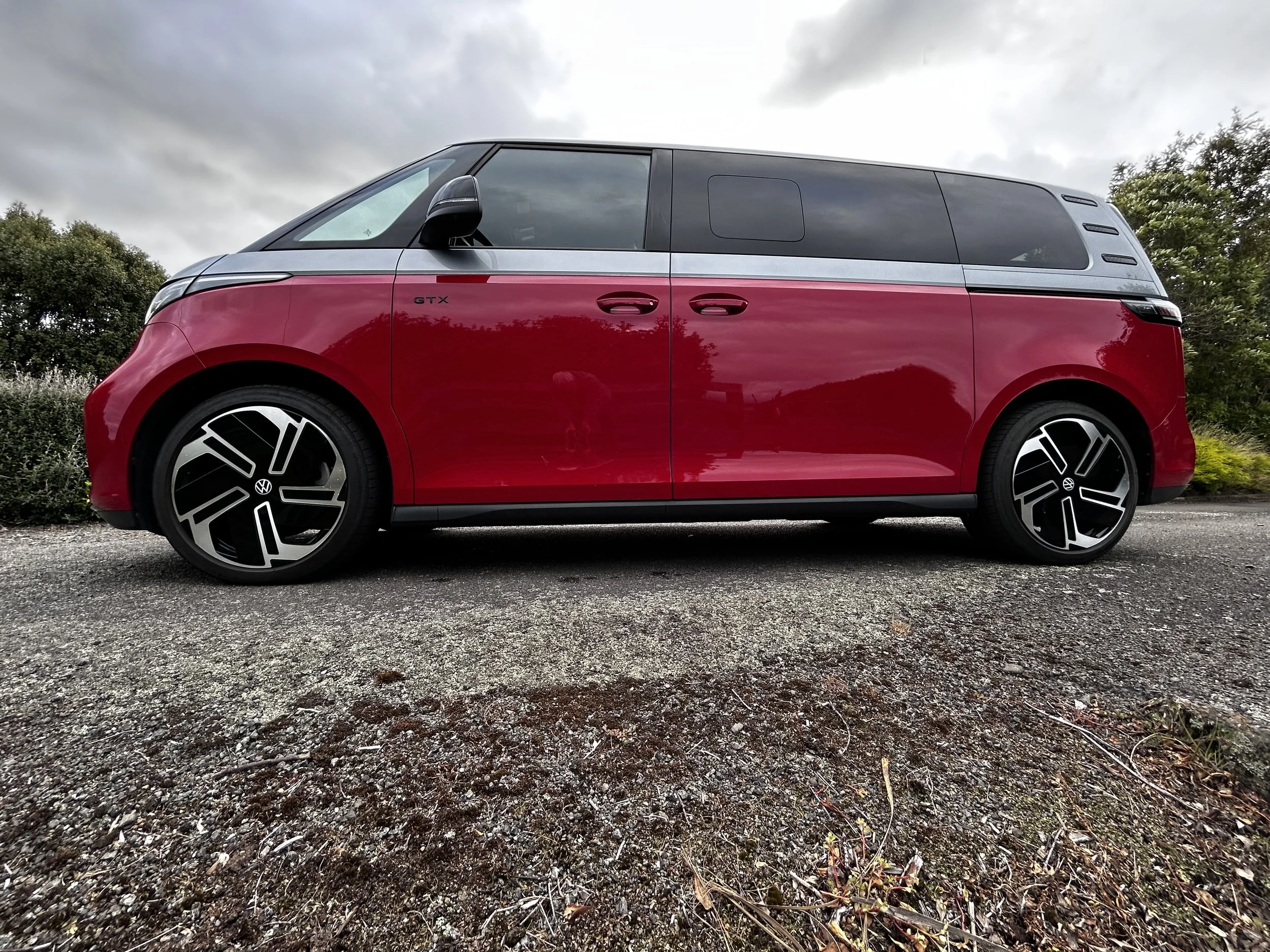
The Cherry red paint option here is an exclusive hue which can be configured as a solid colour over the entire body but has far more punch when as seen here, as part of a two-tone package with Mono silver.
Dress-up has perils; this retro surfer bus is from the same crowd that gave us the hot-hot-not Neue Beetle. With Buzz ‘retro futuristic’ is more pronounced, simply through drivetrain change, but you never know, right?
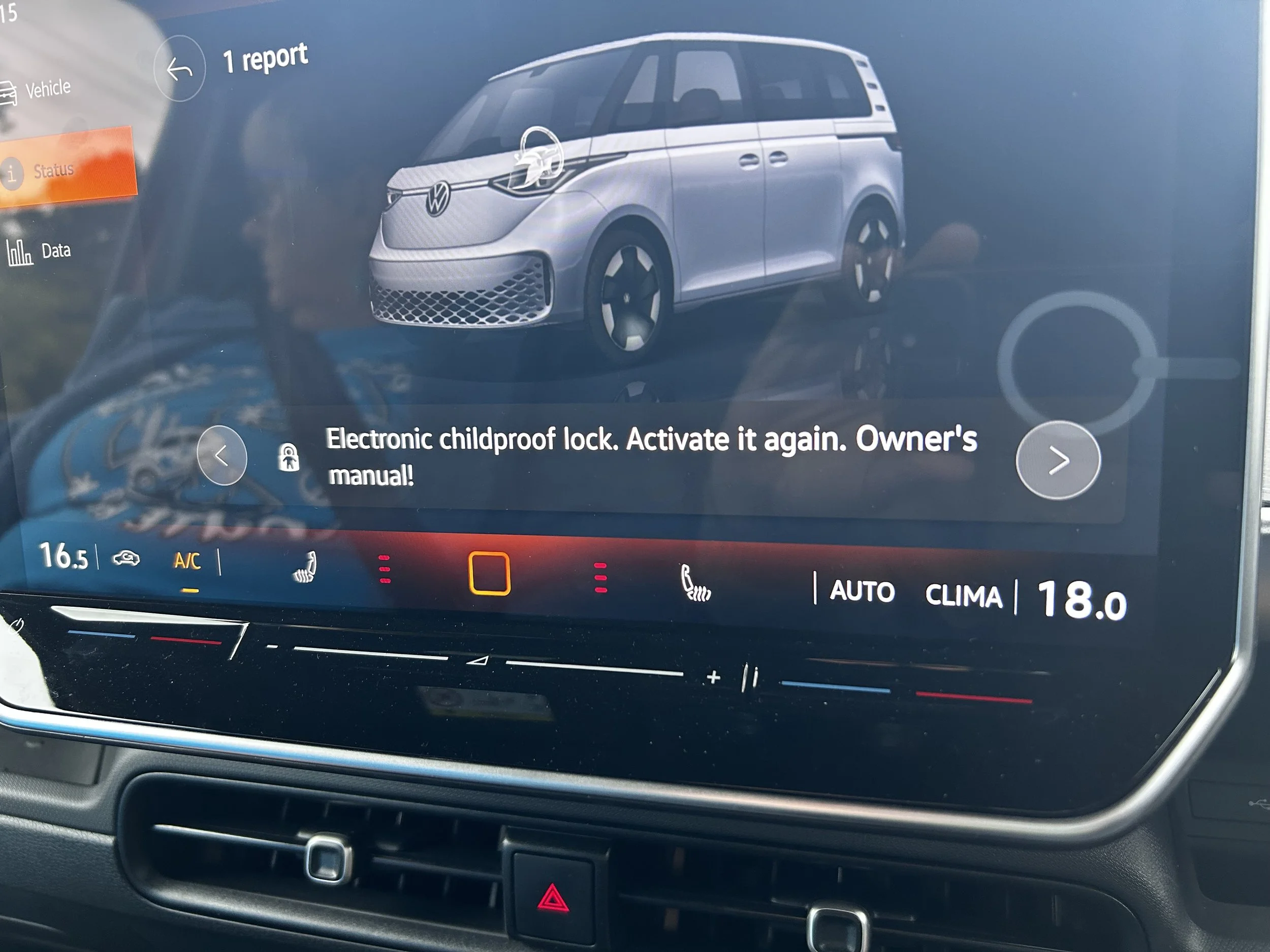
The downers are obvious. The only electric models in the wider VW Group portfolio are Audis and Porsches, range isn’t poor, but could be better. This example had a couple of little glitches, with the tailgate proving occasionally relucxtant to open off the fob. It also consistently reminded about having to sort the child locks (regardless they appeared fine).
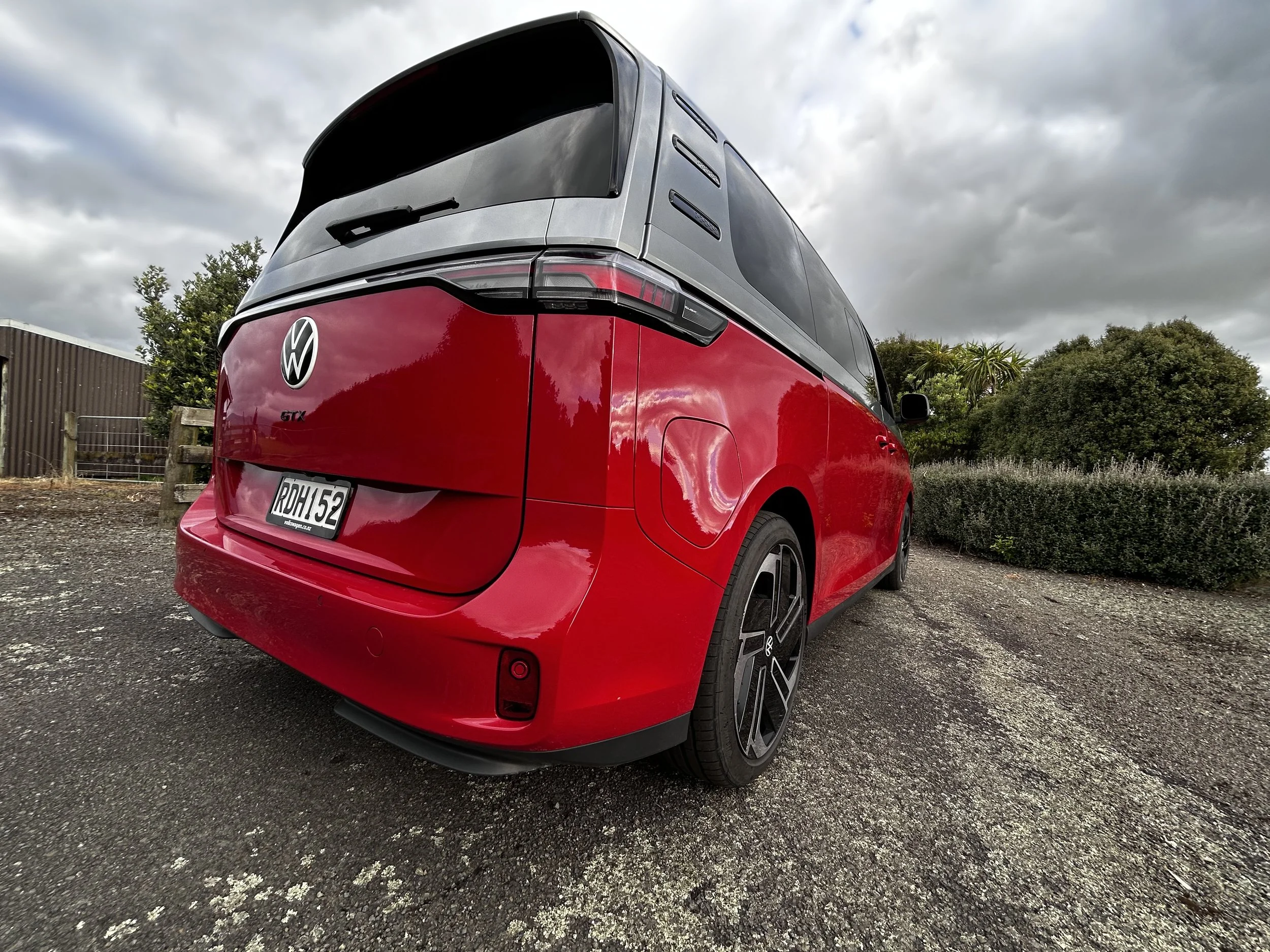
But the sensibilities from this nostalgia play should be ignored, the smiles it raises are genuine and you’ve got to admire the commitment to work with the shape, however hard to engineering commitment. The flush side glass dictated rear side windows that slide sideways rather than roll down are just one example. This is still a van, yes, but onee that is brilliantly executed.
Ten candidates are vying for NZ Car of the Year, set to be announced soon. Every one has potential, but when it comes to stuff like charisma, the only other one to raise a Buzz-like tingle is Cadillac Lyriq.
A world still grappling with the whole electric thing needs battery cars it can talk about; moreover it needs cars that evince real smile-inducing feel-good.
That’s the Buzz. As soon as I saw one, I wanted to drive it. When I got to drive it, I didn’t want to say goodbye. Having done that, I can’t wait to have another go.