Skoda Elroq, Enyaq first drive: Second tilt, this time with two
/An established, now updated, EV being joined by a smaller, highly similar sibling raises prospect of this make’s electric ambition reaching a broader customer base.
Seventy. Thirty.
If that was a weekly sales expectation for the Skoda’s newly added electric models, the brand new Elroq and a mid-life revised edition of the big brother Enyaq? Well, hallelujah.
Sadly, its a return beyond the realms of the most extraordinary miracle.
As a monthly count? Far more conceivable, but also a reach. Electric car adoption is rekindling, but the challenges are well documented.
The past two years have been a nightmare for all involvers. In the few brief months before things went bad at end of 2023, with the cessation of rebates, the original Enyaq occasionally hit 60 units a month. Not since. Not even close.
A huge lapse in that plan fed into why Skoda slipped to just 960 annual registrations in 2025. A nightmare, national general manager Alex Brown asserts flatly.
He and product and planning manager Matthew Markby see the climate improving this year. Not massively, but there’s enough confidence in the air to make putting two new electrics into the fray seem safe.
Would they feel more confident still if the past incentive was reinstated? There’s nothing in the air. Labour, which introduced Clean Car, has made no mention of seeking to reinstate the financial assist the current National-led administration abolished.
Management view is that EV interest was certainly fired up by “free money” and past pricing strategies - for Enyaq included - centred around putting cars under the $80,000 compliance barrier.
While they sense broader considerations are in play now, with feeling there’s more coherence of broader pluses from corporate and private buyers, they also say even though CO2 count penalties are currently frozen, the intent to force distributors into reducing fleet emissions is still there. A solution can only come with introduction of an increasing count of EVs.
That could accelerate when petrol cars are also hit by Road User Charge - a promise made by the current Government - but Skoda cannot see that highly complex task occurring before the general election in November.
Says Brown: “It’s difficult. Logically if you've got a penalty in one space, you should have a rebate in the other. But that's not how the world works. But that would make it an even playing field.”
Rebates ending, EVs soon after being walloped with RUCs and elevated ACC levies are, along with a softening of the economy, prime reasons why the small but growing consumer swing toward battery product was cold-shouldered in 2024 and last year.
The slump coming so suddenly and hitting so harshly is why stock became distressed and only shifted with hefty discounts; those lowest paid prices are now the starting point for residuals.
Skoda avoided the worst of that. It received all those first gen Enyaqs in three shipments, all landing within a few months of 2023, and cleared them off early. The only fresh supplies since have been a consignment of around 80 cars intended for Singapore and diverted when the market condition there turned tricky. Skoda NZ snapped up those highly-specced, tastily priced examples last year. They have almost gone, now.
From now on, it wants to settle into selling product it has specified for NZ and at regular retails. Says Brown: “You do have to be mindful of both the business and the end consumer, right? There's nothing worse than launching a car and then distressing. It's not good for the customer journey. It's not good for the brand, it's not good for anyone.”
So anyway, to those numbers. If you haven’t worked it out already, 70-30 is the projected sales split for these common platform, common powertrain and all but commonly sized and styled five-door SUVs.
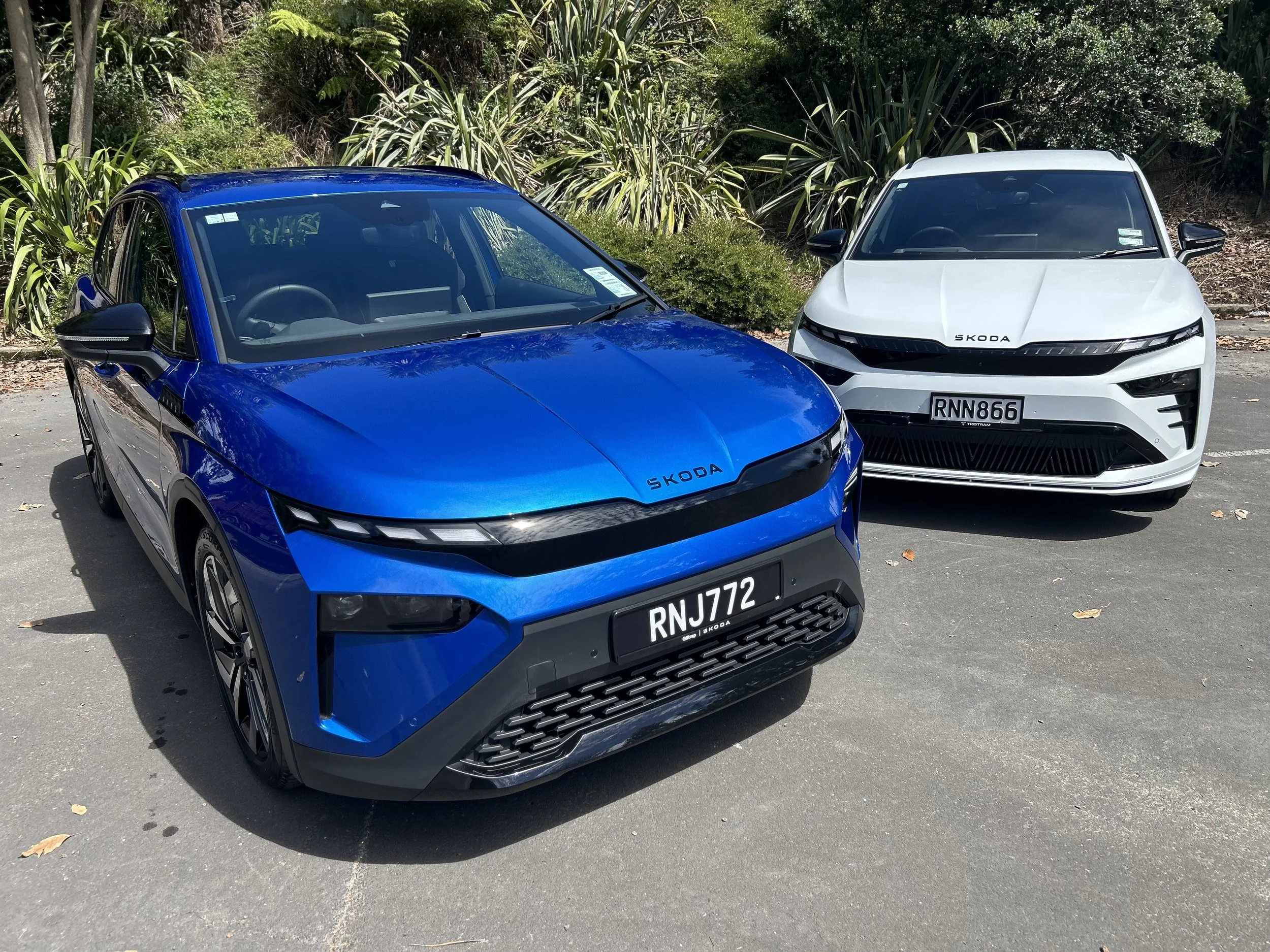
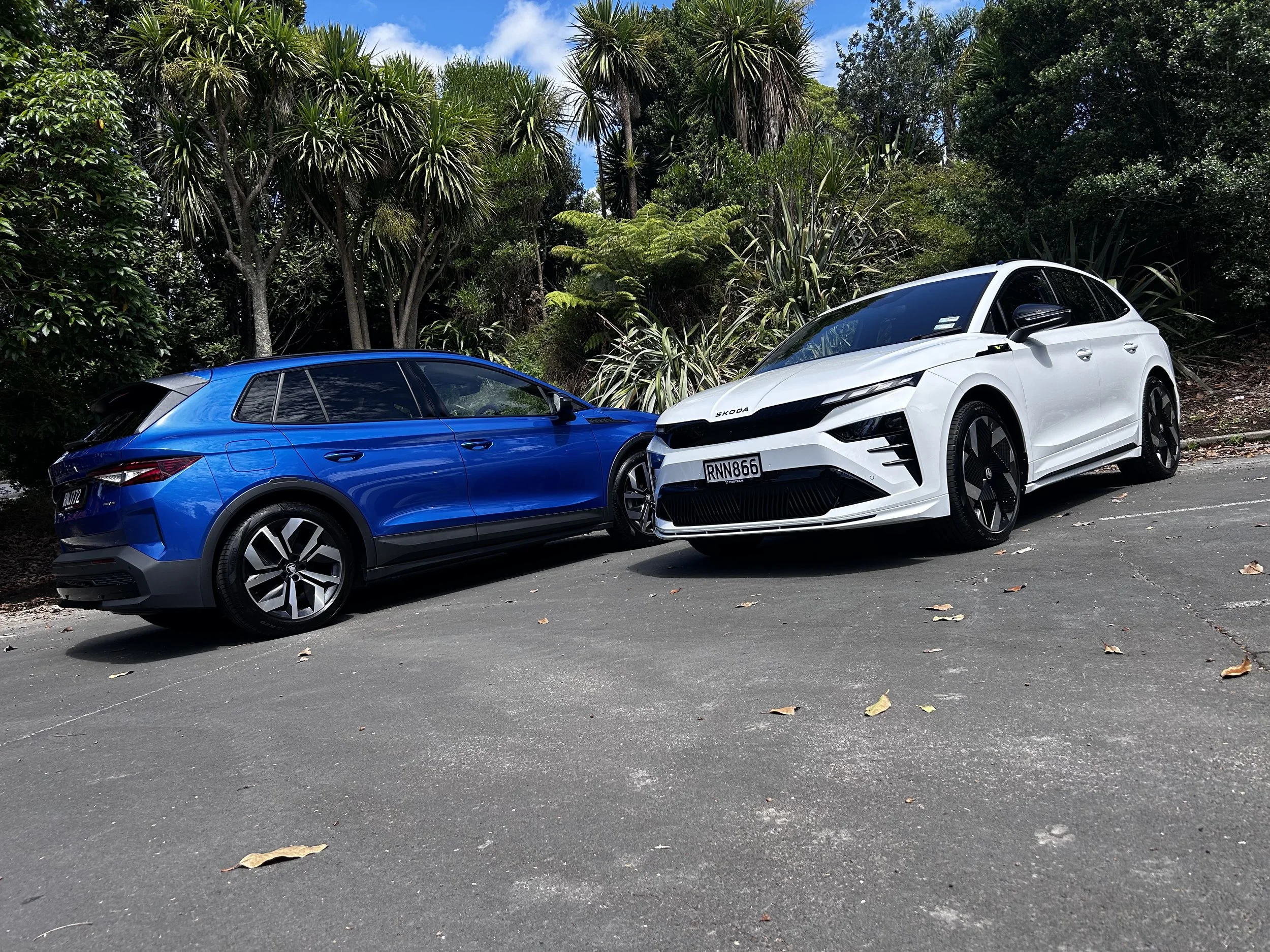
The bigger share is believed probable for the ‘smaller’ of the two - the measuring tape relates the differences more clearly than the eye; even when parked side by side its barely noticeable that Elroq is just that little more truncated.
That’s as much as expectation of how much business is expected from the Elroq, a wholly new car, and an updated Enyaq. Yes, the Auckland-based operation has a target count. But, no, it won’t be making that public.
The local introduction event that followed up on earlier release of line-up details and pricing gave first chance to steer the cars, albeit just their respective top-end formats and only briefly in either.
It reminded why Enyaq seems certain to remain a star among all the cars on the Volkswagen Group MEB underpinning but also gave insight into why Elroq should shine even brighter.
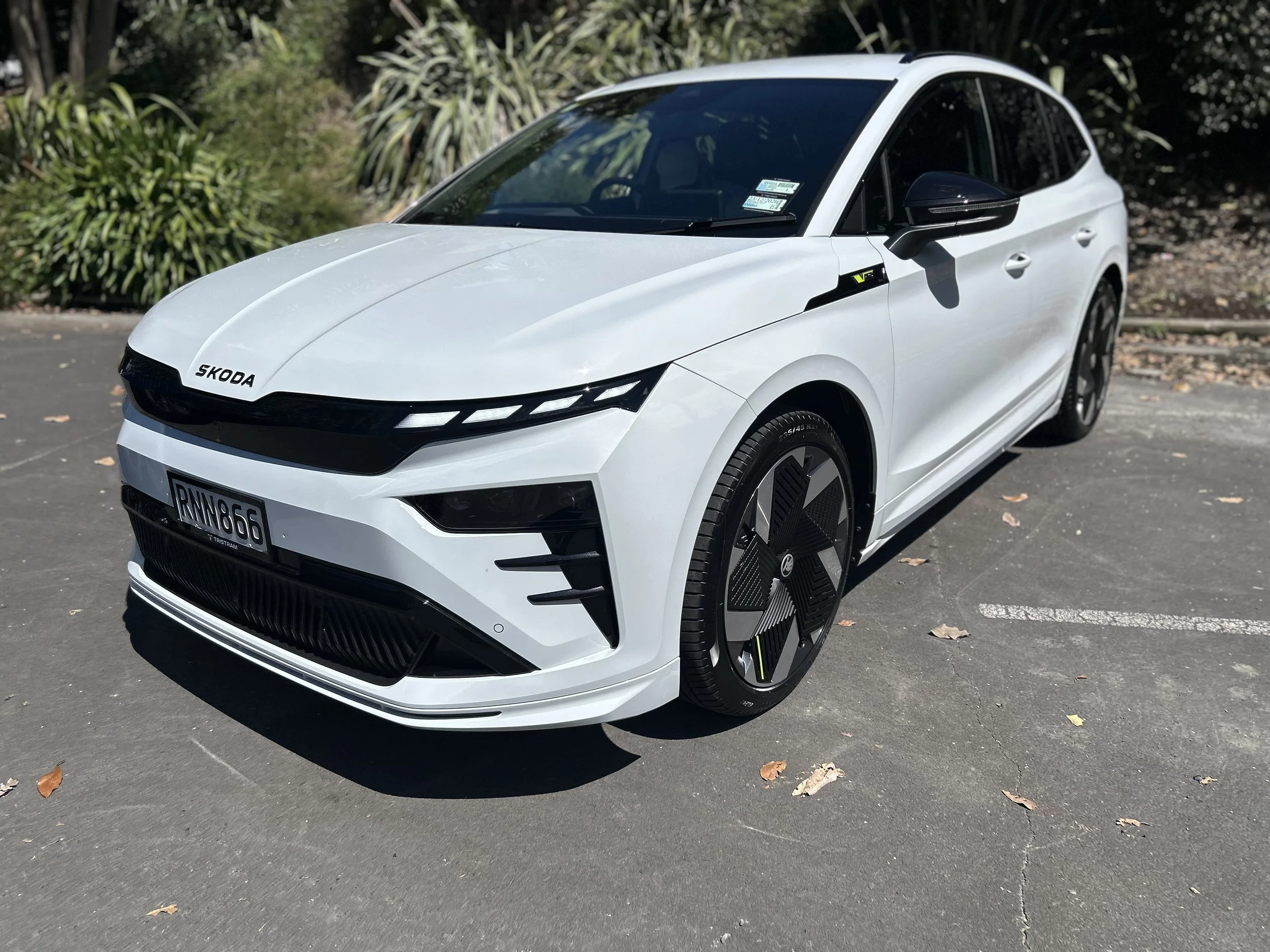
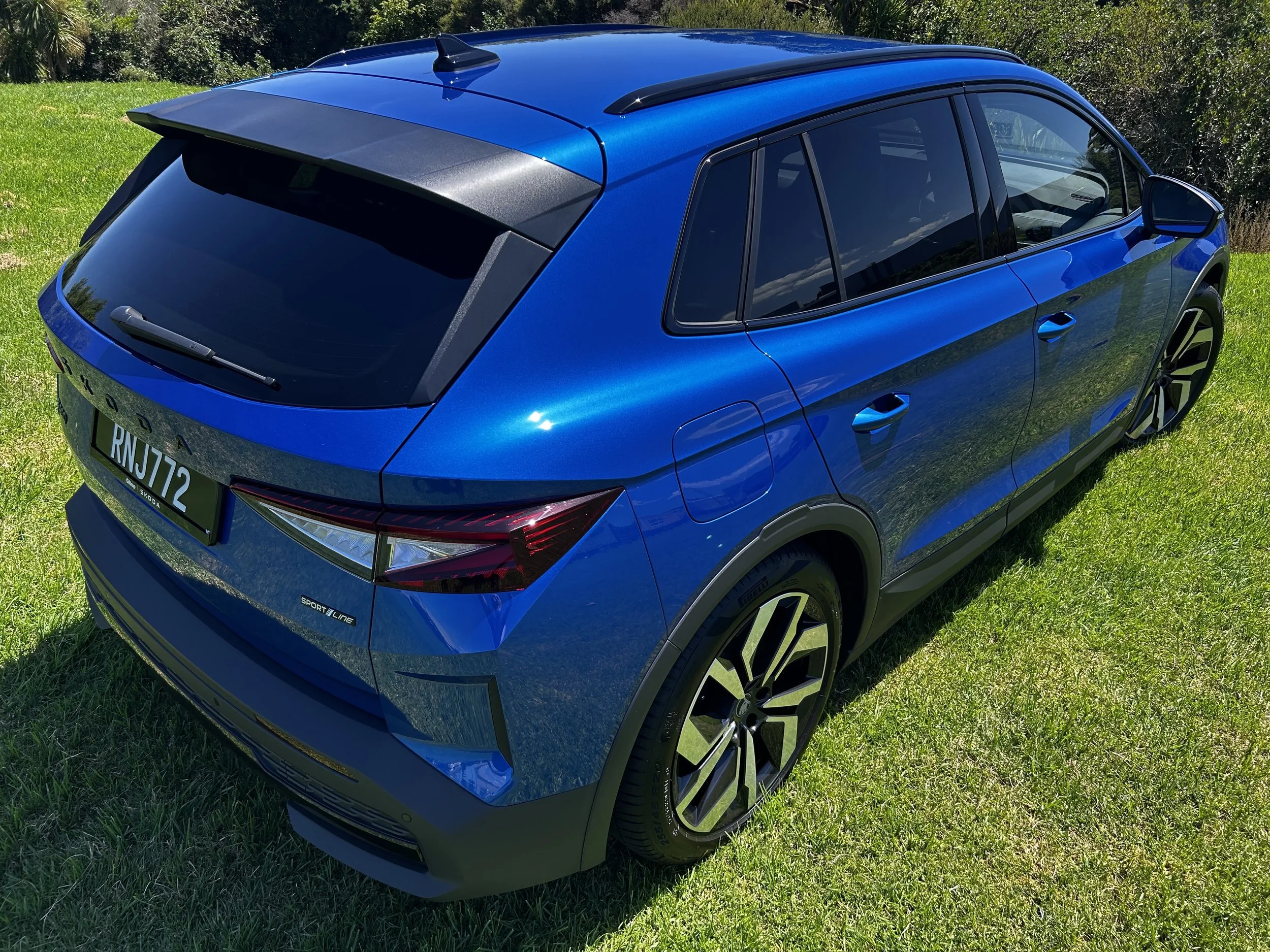
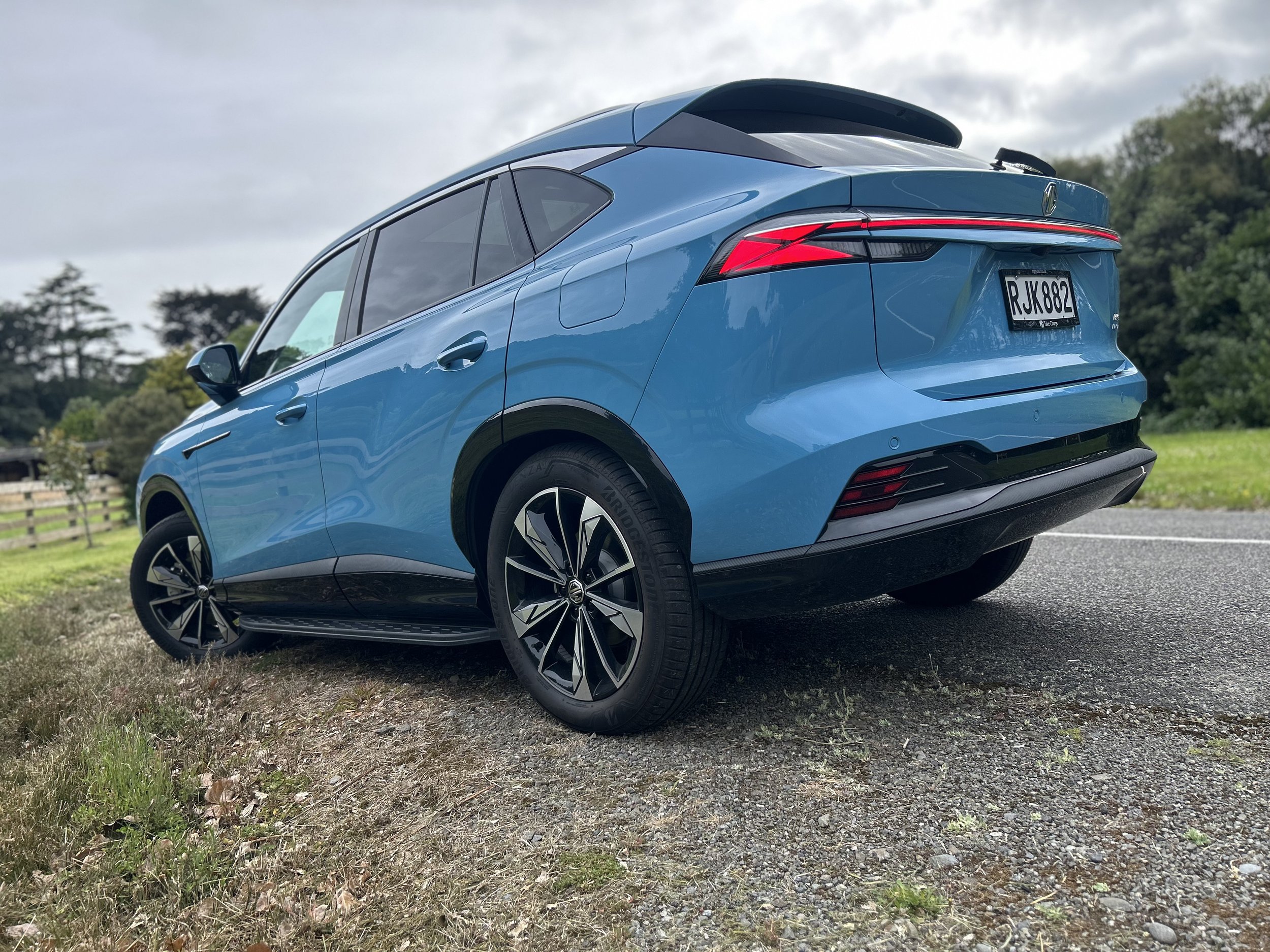
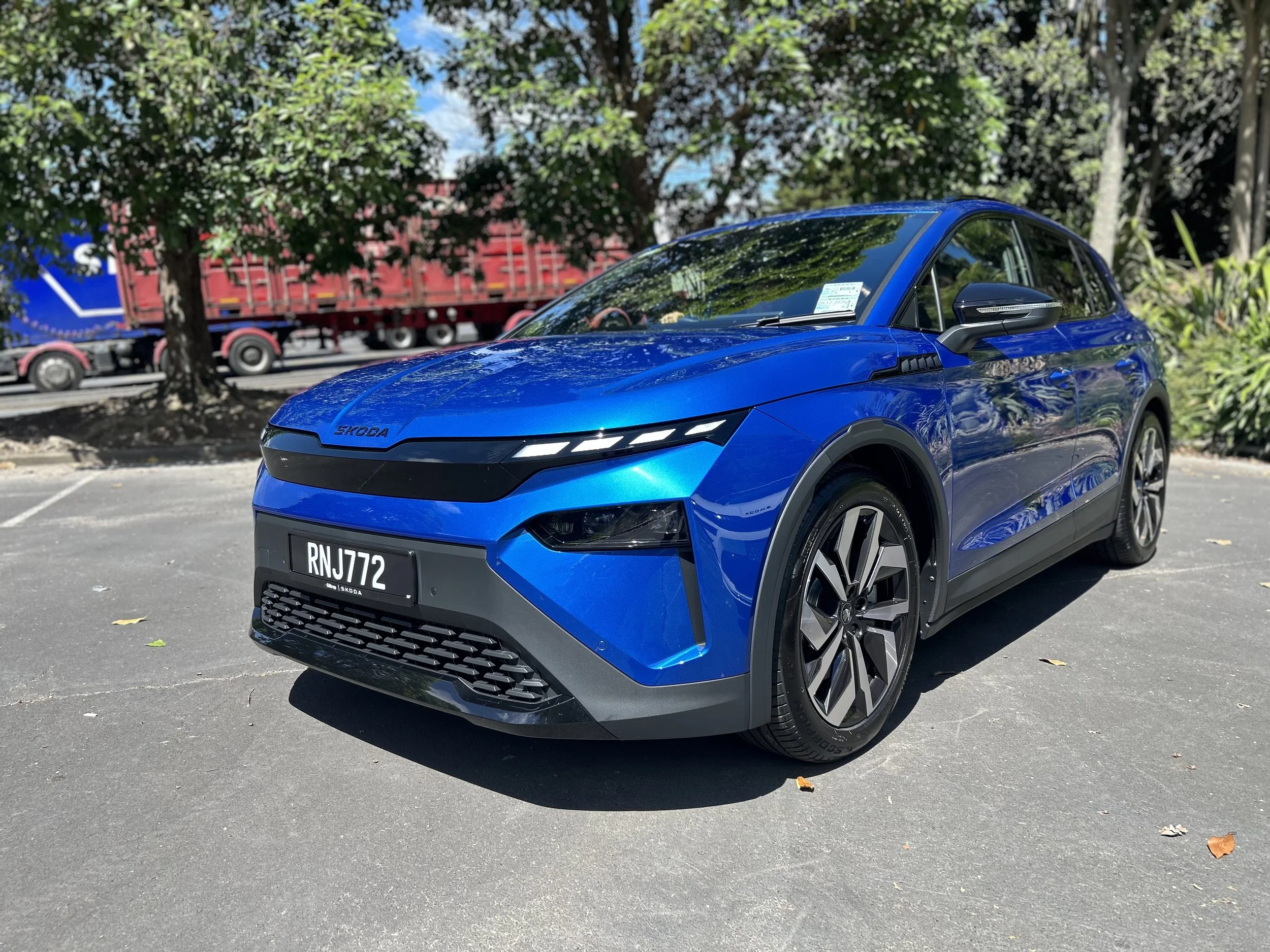
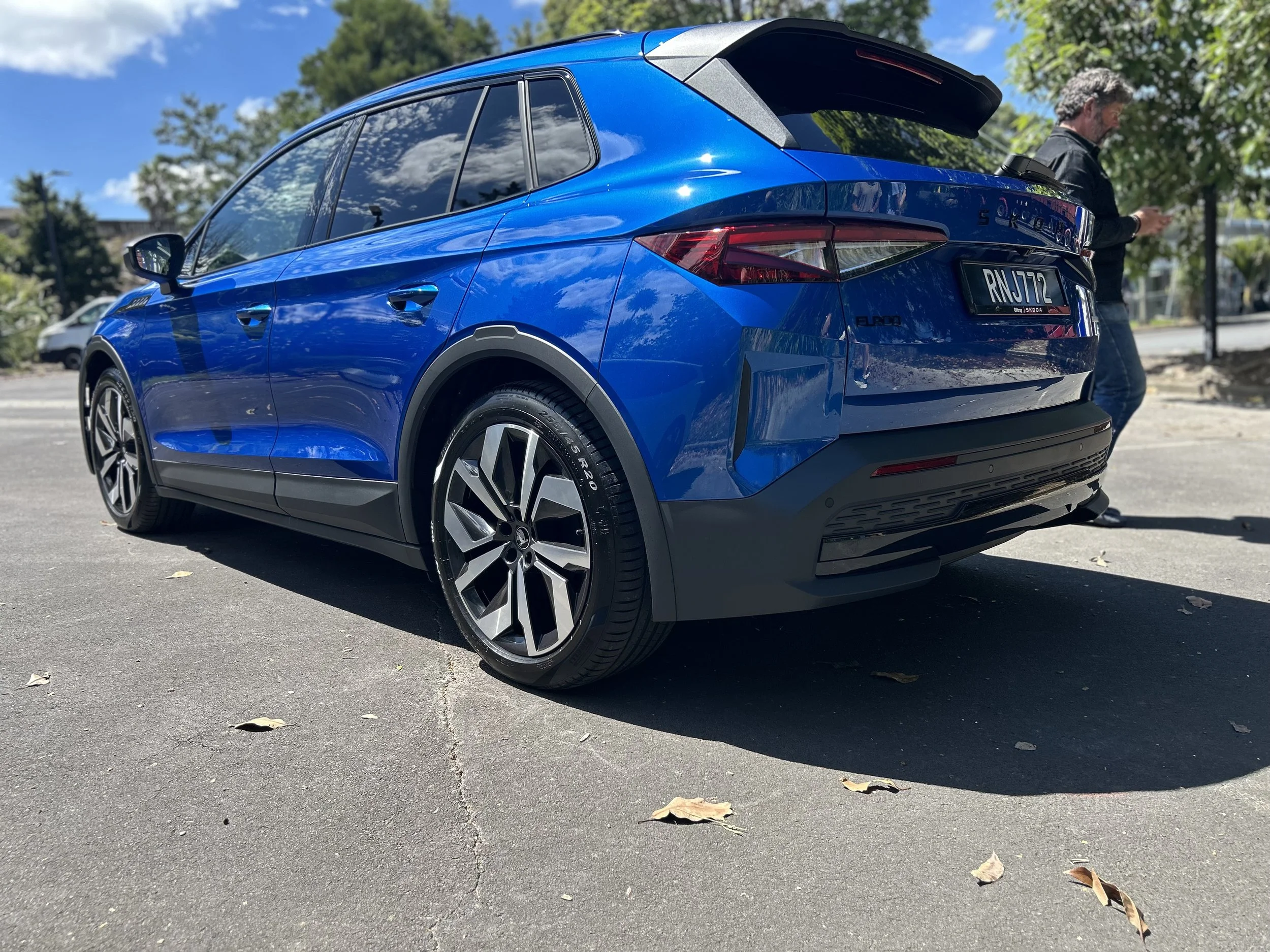
As much as Elroq siting on an Enyaq platform, using Enyaq drivetrains and tech and both now adopting similar styling suggests two peas from a common pod, Elroq - the blue car here - even from brief acquaintance potentially seems a slightly better fit.
Plus it seems a slightly smarter car for those small thing Skoda has always been really good at. Check out the packaging brilliance of the boot, including that clever netted stowage underneath the parcel shelf.
Although Skoda calls Elroq a compact SUV, it is not much smaller than the Enyaq, aside from losing 161mm in overall length, which stands at 4.49m.
The Elroq’s shorter front and rear overhangs also give it a more upright, monolithic stance.
The wheelbase – the distance between the front and rear wheels – is identical and though Elroq gets a smaller boot - at 470 litres, it has 115 litres’ less capacity (and no ‘frunk’ front storage compartment is offered) - cabin space is similar in both cars.
The cabin design also mirrors the Enyaq, featuring a perforated leather steering wheel ahead of a 5.0-inch digital cluster and a 13.0-inch central touchscreen, but feels a touch cosier front and rear.
With both having the same new nose, Enyaq also updates to a new alloy wheel design and with this facelift loses the rear window wiper and ‘iV’ moniker.
The biggest plus for re-igniting interest? Look at the stickers. It is decidedly cheaper.
The pricing plan has the new model topping out $10,000 below the entry version of the larger choice we’ve known since start of 2023.
Elroq has dual motor in its future, but starts here in single motor, rear-drive, with two battery sizes but 150kW power and 310 Nm torque either way.
The Elroq 60 with a 63kWh (59kWh net) battery and 400 kilometres range is the price leader at $69,000. That car arrives in March.
The Elroq Sportline in the mix for $79k was driven on launch. Its sticker is around where original Enyaq discounted to back in 2024. Now the entry Enyaq is a $89,000 Sportline. Potential for cross-shopping nonetheless surely seems inevitable when both run the same powertrain - an 82kWh (77kWh net) battery feeding a single 210kW/545Nm motor - and have the same 530km range.
The larger car has a more affluent trim, but not massively so. While entry Elroq was unashamedly trimmed to meet a price point, it still gets plush touches, notably front seats with electric adjust and massage function and memory.
Wheels painted silver rather than presenting in pure alloy are a cost cut, so too it having a manual tailgate whereas on more expensive types it’s electronic. And it rides 15mm higher. But the entry Elroq has the same 13 inch touchscreen as the Elroq Sportline, gets a decent - if eight speaker - audio and has been smartened by a black exterior pack.
The other Enyaq coming is a new pitch, a performance-themed RS, for $99k.
Possessing the fastest (albeit by a tenth of a second) 0-100kmh time of any production Skoda seen so far, a headline-grabbing 5.4 seconds (not bad for a 2.4 tonne car), it is nonetheless no faster overall than anything else now presenting, as top speed is capped to 180kmh across the lot.
Still, the RS is the only dual motor Enyaq being proposed at the moment and it has a bigger battery, with 84kWh (79kWh net) cited, that has fastest charging of 185kWh and most punch.
Maximum power is 250kW and the rear motor delivers 545Nm and the front has 134Nm. WLTP range seems to be around 535km. Most obvious difference from this encounter was that the low-speed ride is firmer-edged than Elroq’s.
When Enyaq first came, it was provisioned in three choice; two SUVs and a coupe. All single motor, with an 82kWh (77kWh usable) battery, 150kW and 310Nm, and around 518kms range.
Nothing from that era exactly correlates with what we have for 2026. However, the entry car now is $1100 more than original range’s base choice, the Sportline 80 Max. Back then we also had a $92,990 Sportline 80 and a $102,990 Coupe.
About the latter. Skoda produces both Elroq and Enyaq with a slinkier, low-roofed look, but that shape hasn’t found a place in the NZ distributor’s thought process and probably never will.
Arrival now puts the cars half a year behind schedule. The configuration is still not as the brand ultimately wants. The product lacks facility for over the air updates, which means it lacks embedded sat nav. So bring your phone.
The cars also for now lack facility to enable bidirectional charging. Dynamic Chassis Control suspension, that electrically adjusts damper settings, is popular with top end ICE Skodas. But it isn’t featuring on NZ spec electrics.
Only the RS has a head up display, with augmented reality features, and it also benefits from some sporty bucket seats (with with lime-green stitching) up front. The bigger battery editions achieve more complex LED Matrix headlights. Plus, in respect to air conditioning, Elroq has dual zone, whereas Enyaq has tri-zone. All models are on 20 inch rims save RS, which goes to 21s.
Skoda has refined its battery-involved strategy to point that the ‘iV’ hybrid petrol-electric variants of Octavia and Superb are now retired, but Brown insists “EV is and will remain a part of the Skoda strategy.”
In that respect, there is intent to further refine the Elroq and Enyaq at end of 2027; a timing that tailors in with factory intent to have them retested by our independent crash test auditor, ANCAP, as by then the original five year scores will have lapsed. If all goes well, the cars reconfigured to meet ANCAP’s now tougher regime will also have OTA.
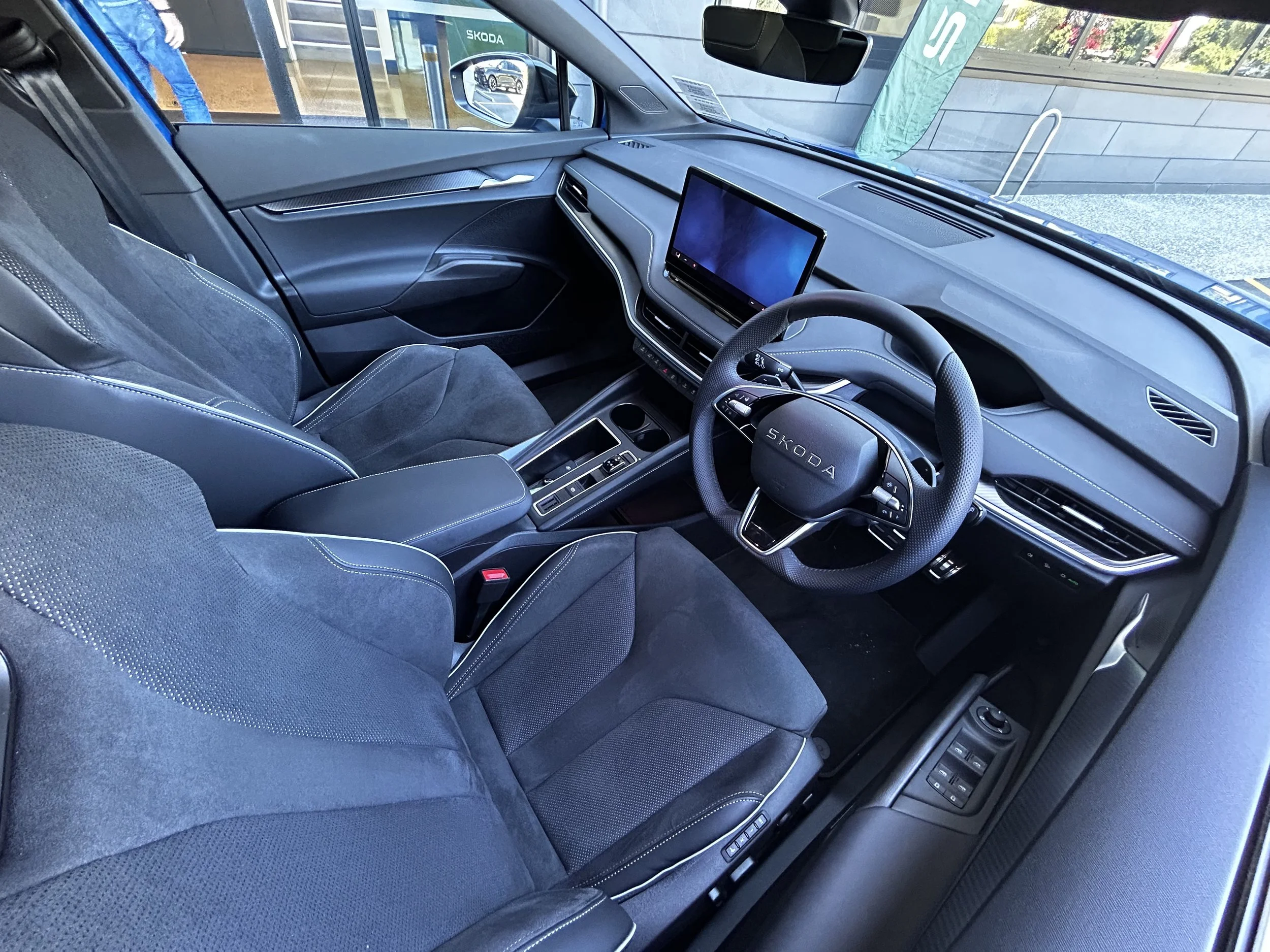
As much as the distributor is confident it has got Elroq right, if Kiwis do ask for something different, the factory can conceivably oblige. It can furnish the model with four electric powertrain options and three different battery packs. Among those in the Elroq RS, in 250kW dual motor.
Proposal to make Elroq its lead electric choice for all the markets it furnishes is so far working out. Production has been racing; they’ve recently knocked out the 100,000th example.
Meanwhile, while will also attract attention is the new cars having smartened up by adopting make’s latest ‘Modern Solid’ design language, coming to all new Skodas.
For Elroq and Enyaq RS, this aesthetic includes the ‘Tech-Deck Face’ - a flat, wide structure that sees the previous look of a pseudo radiator grille and separate headlights replaced with a full-width illuminated light band up top, accompanied by secondary lamp units beneath.
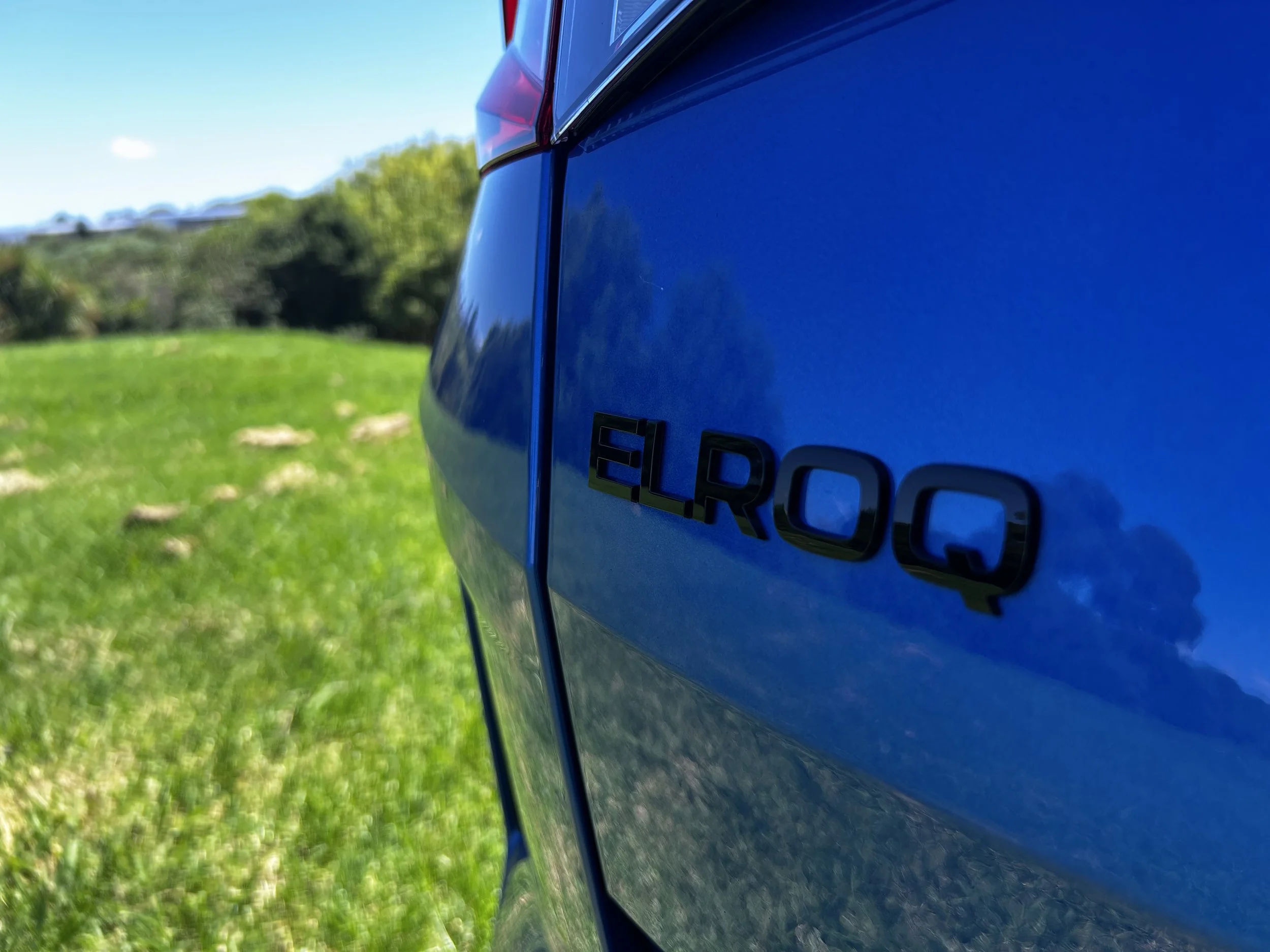
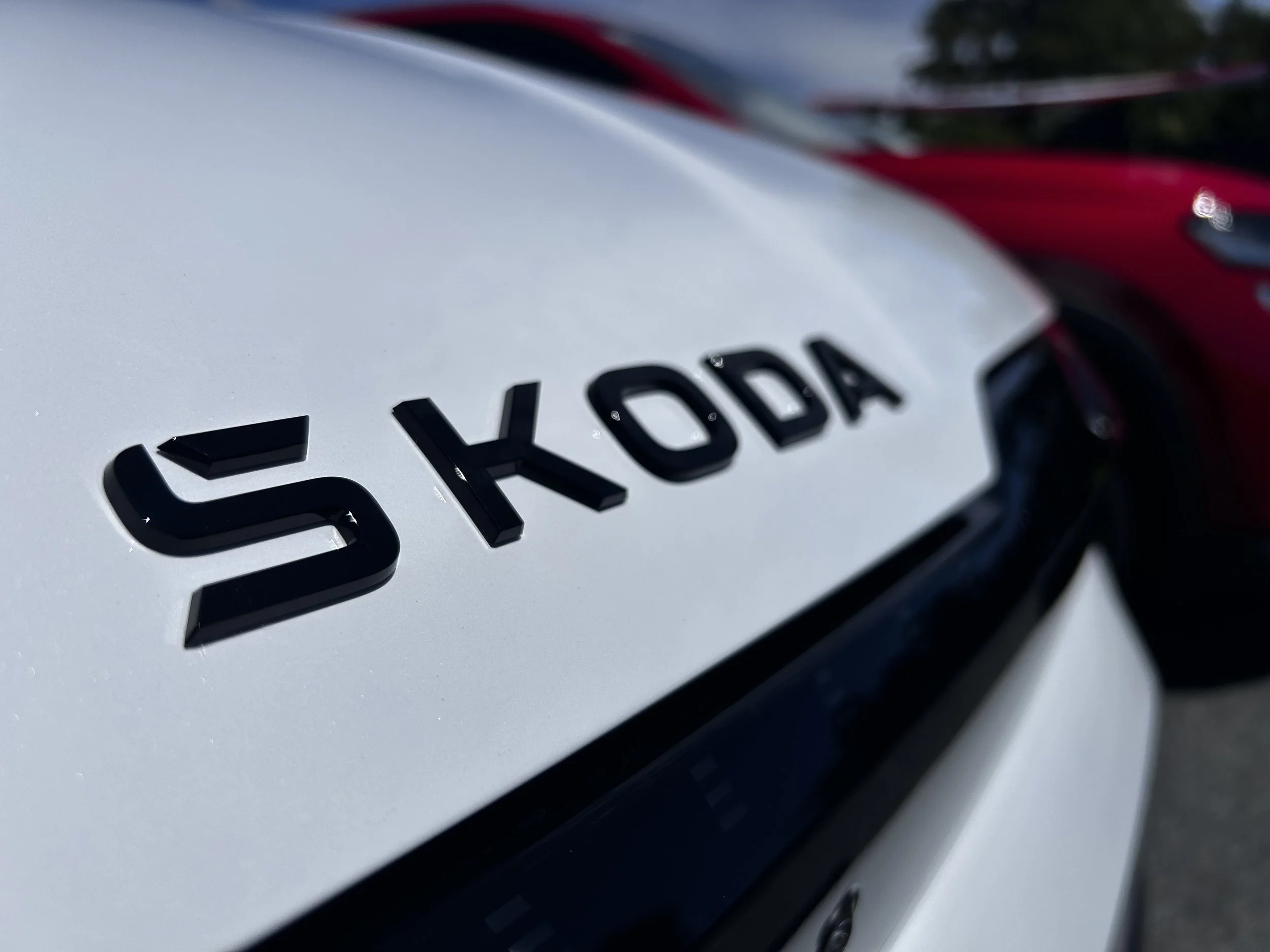
Also, both cars replace traditional external badging with prominent SKODA script.
The writer attended this event as a guest of Skoda NZ with flights, a meal and a small gift accepted.