MG HS Essence Super Hybrid road test review: Does this ‘ultimate reach’ edition go far enough?
/Frugality arrives easily, but with AC-charging and operability quirks, it’s not quite on pace in all areas.
How much? $56,990.
Engine: 1.5-litre turbo petrol four-cylinder hybrid, dedicated hybrid transmission, 24.7kWh battery and single electric motor, 220kW/350Nm.
How big: 4670mm long, 1890mm wide, 1655mm tall, 2750mm wheelbase.
We like: Styling; nice cabin; attractively positioned; non-nonsense PHEV.
Not so much: That crazy DMS; laggy and infuriatingly over-designed screen; AC-pure recharging.
NEXT step in China Inc’s effort to change the face of motoring is the entry of ‘super hybrid’ … every brand that is already a big name here or aspiring to achieve that status is involving.
By combining the extreme efficiency of long-range plug-in hybrid technology with high-performance, affordable, and feature-rich designs, these particular products could well be huge earners. Maybe. The Government’s current attitude toward PHEV hardly helps.
Still, now that key players like BYD, Geely, GWM, MG and Chery are leveraging advanced, high-efficiency engines to challenge traditional market leaders like Mitsubishi and Toyota, you have to wonder what the automotive environment will ultimately look like.
‘Super hybrid’ is a snappy title; highly marketable, doubtless highly covetable. And wholly Chinese.
It’s not clear if any car brands in the hybrid game that headquarter outside of China can use ‘super hybrid’. Yet it is also apparent every domestic makers within that country has free access. Because?
There’s talk this is one of those Government edicts. Everything China’s car industry does is ultimately at Beijing’s whim because .… well, it’s easy to forget perhaps that the world’s largest car market, home to the world’s largest count of car manufacturers, is not run as a democracy. Different rules apply.
There’s been talk someone high up thought it necessary to dispel the complicated jargon associated with the different types of hybrid technology available, and instead conjure a single ‘one name fits all’ title. Good call.
As result, all the Chinese car brands have ‘joined forces’ to create a term that applied to any vehicles with engine, but also used electric power, in isolation or in connection, generally with cited ability to achieve 1000 kilometres’ range or better on that combined motivation.
How that occurs is thereafter down to the manufacturer. Which is why no two ‘super hybrid’ systems here have been exactly the same. The petrol engine isn’t necessarily turbocharged; some run on 91 octane fuel, and some need 95 or higher. Maybe the battery only recharges AC in some, while it will DC fast charge in others. Some are front drive, some have two or three electric motors for AWD.
The one in this MG HS on test is fairly straightforward. It’s a PHEV done to 101. The same 1.5-litre petrol engine and single electric motor, also in front-drive, as the MG HS Hybrid Plus, but the seven-speed dual-clutch transmission for the cheaper car has been exchanged for a two-speed automatic.
Also, it differs in packing a considerably larger battery, of 24.7kWh capacity. The result is that cited outputs and efficiencies are also very different. This became noticeable during test.
The hybrid and petrol made positive impact in their respective past tests. The hybrid, with its 165kW/340Nm, cited combined fuel economy of 5.2 litres per 100km and electric impetus drawing off a 1.83kWh battery has always seemed a useful choice for those not wanting to bend a knee to Toyota.
The PHEV also aims at Japan Inc heavyweights; the Mitsubishi Outlander immediately and, in a few months, a Toyota RAV4 PHEV.
MG’s product seems well enabled to stand up to either. Both cost more. Also, neither had advantage for grunt or cited economy.
The MG’s system claims 220kW, with the electric traction motor contributing up to 154kW when working in tandem. The engine in isolation makes 105kW, a result of it having adjusted tuning and also a consequence of the two-speed gearbox.
Maximum torque is 350Nm, and economy when electric and petrol and working optimally falls to 0.7L/100km.
In its conventional hybrid mode, the type will automatically kick-start the petrol motor at any speed over 80kmh, but it also has a considerably enhanced electric-pure range.t MG has attested its software has been tuned to suit regional driving conditions, which essentially means electricity is employed as much as possible at lower speeds, and the petrol engine chimes in as speeds rise.
A maximum of 120kms’ is claimed when evaluated to the NZ-preferred WLTP standard. When the NEDC format is used, this climbs to 135km, but ignore that. While still acceptable in Australia, where MG’s regional office bases, NEDC has become utterly redundant here.
That’s the pull. What’s the reality?
From evidence garnered from this seven day test, the MG HS PHEV’s technology very much meets its promise.
Achieving more than 1000 kilometres will require dedication, but it’s conceivable. If you set your real world expectations more reasonably, it behaves very effectively.
The test began with it in fully charged and fuelled state. The tripmeter was set to zero … and it attested immediate competence to nail 982 kilometres’ range, no issue.
After 20 minutes’ driving, at urban pace, I noted the system had recalibrated. Driving style within that period had clearly impressed. Now it determined I was, in fact, worthy of its best efforts: 1020kms’ was mine for the taking. Could or would?
Had I simply continued at that pace, to point where battery and fuel tank exhausted, yes it likely would have.
But that wasn’t ever going to happen. The car arrived at a busy time; lots of stuff to do locally. Stuff that couldn’t be put off. So it was put, instead, to the usual gambit of some driving around own, and some between cities.
However, in that usage, it did as expected. For the first couple of days it strove to offer all-electric driving as a priority. Only when the battery depleted significantly did it then revert to act like a normal hybrid.
The ultimate economy of 0.7L/100km was not reachable outside of full electric operation. In fact, the week ended with overall average economy of 8.8 litres per 100 kilometres. So, nowhere near. Having put in 584kms’ driving, the tank was barely half emptied. Range-wise, the trip computer contended I could have eked the same again, with care. Really truly?
You can tell that the HS isn't a powerhouse in spite of the overall system power output, but it gets along nicely when both energy sources are working at optimum. When one or other is to the fore, it’s a bit different. If reliance favours electric, it’s refined, quiet and still quick, with pick up being smooth and smart. When it regresses to rely more on the petrol? Yes, the effect is noticeable different. There is no getting away that this is a small engine pulling a big, hefty car. It isn’t as quick and you can hear the engine working.
Even if you agree that it is on the money technically, whether it makes financial sense to stretch to what MG assures is going to be the top rung of the HS ladder - meaning no full electric is planned - requires careful calculation. Such is the premium that comes with adding a plug.
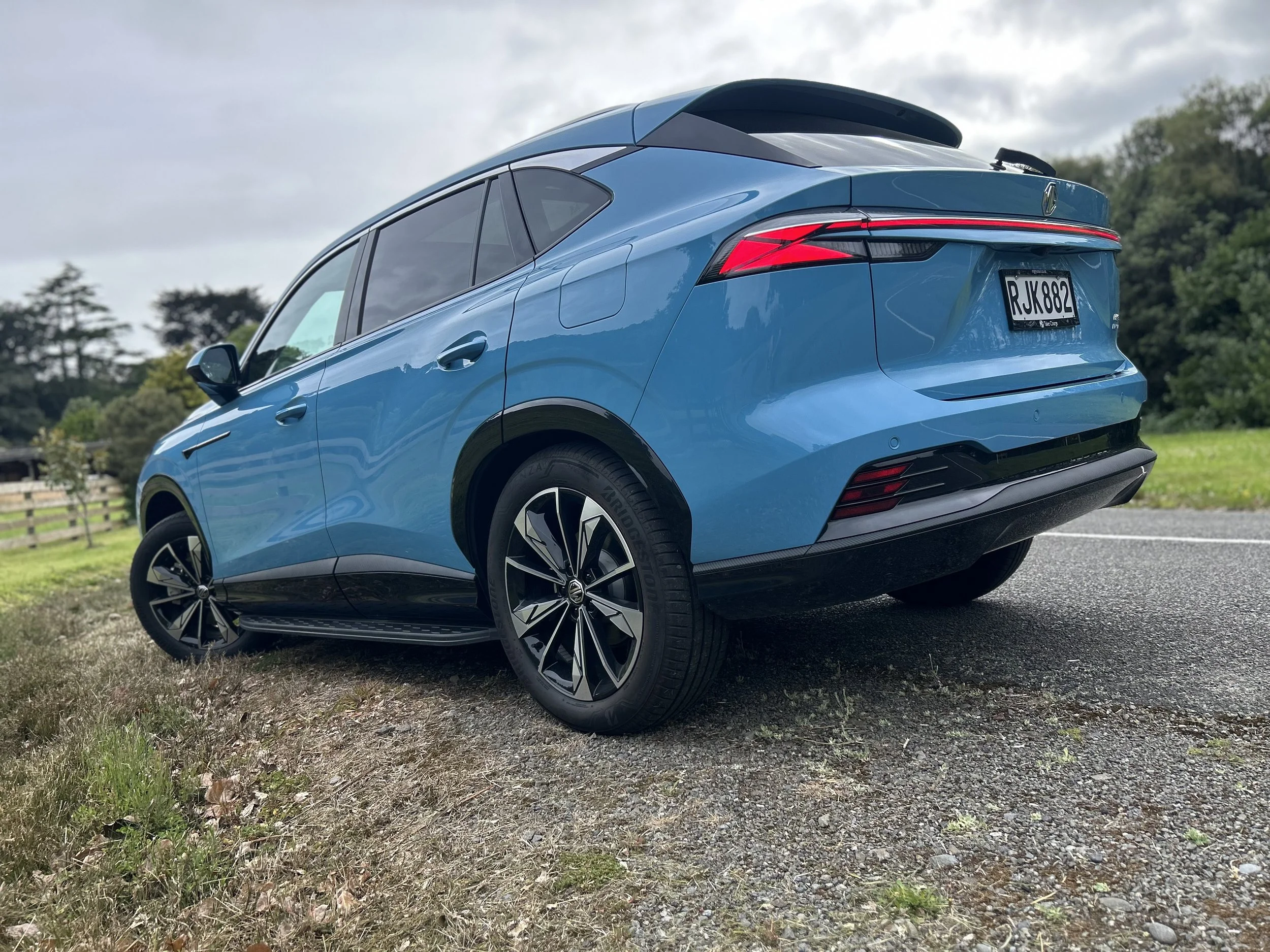
Within its own category, it is - ahem - less overly obvious as an all-rounder car than the Outlander or the Toyota rivals, let alone the best for taking beyond the mild into the properly wild, the Subaru Forester (now also hybrid, albeit plug-less). So as much as it is cool that the HS now has vehicle-to-load (V2L) technology, assumption that you’ll be compelled to take this car on a camping expedition is a bit of a stretch. It just doesn’t have the look of being cut out for such activity.
The model avails in the same two Excite and Essence trims as the hybrid, but with exactly the same specifications command $8k premiums over those. The pure petrol kinds are up to $14k cheaper than the PHEVs.
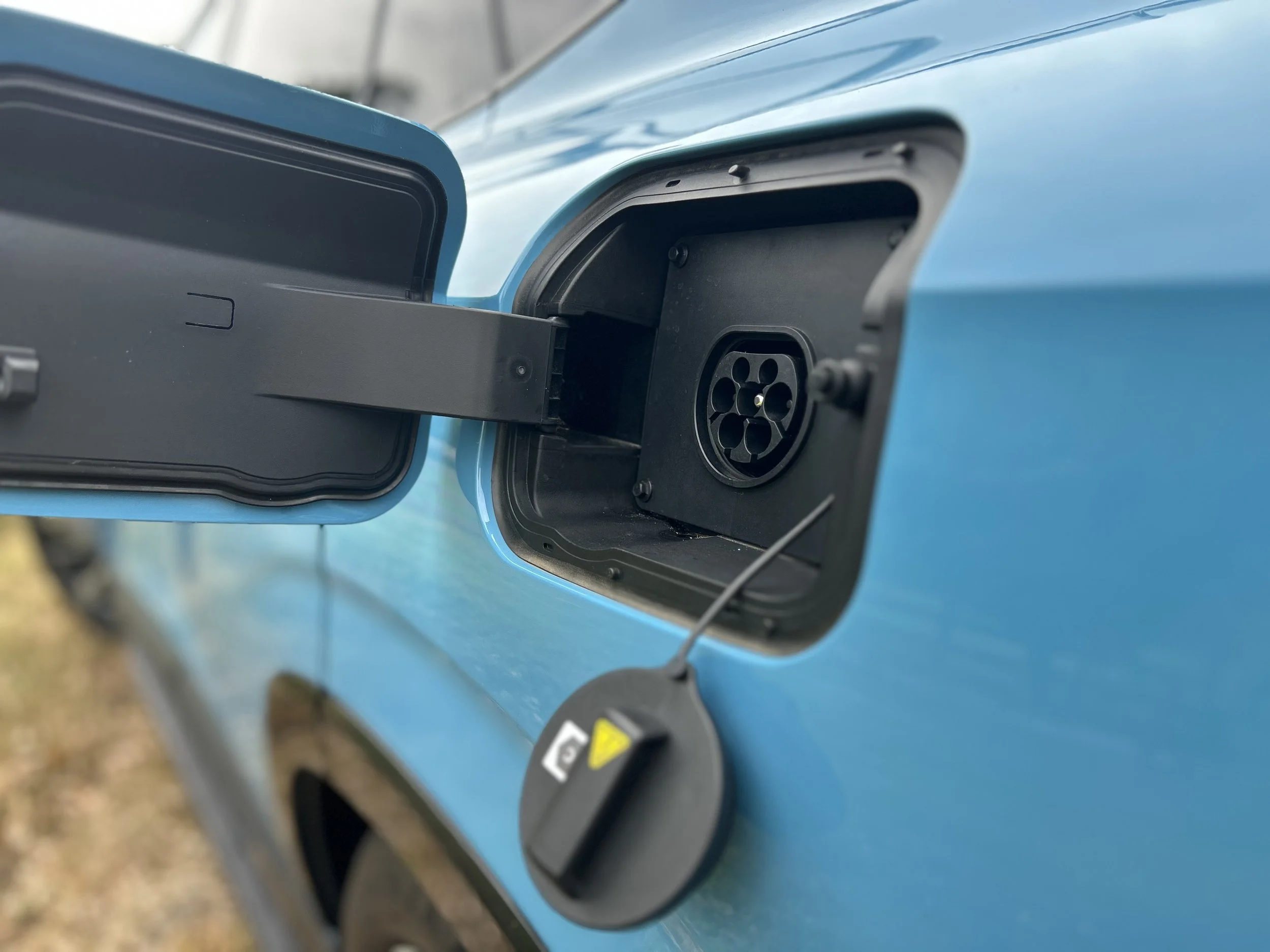
Electric’s edge is dulled in one respect. Hook up for mains replenishment and you very soon realise it absolutely cries out for faster charging. The MG being AC-pure is an issue in itself now DC is very much to the fore, but what makes it all the more untenable is that the rate of replenishment is so very, very slow.
Another annoyance are the electronics. I’ve banged on in the past about how the tuning of driver assist systems from almost every domestic brand car from China is … to be out it kindly … rather over-exuberant.
MG Pilot has all the right ingredients. It includes adaptive cruise control and intelligent speed limit control, lane-keeping assistance and blind-spot monitoring.
But it’s not brilliant in this car; the software is not the latest in MG-dom - that’s reserved for the elite end IM - and calibrations are infuriatingly inconsistent.
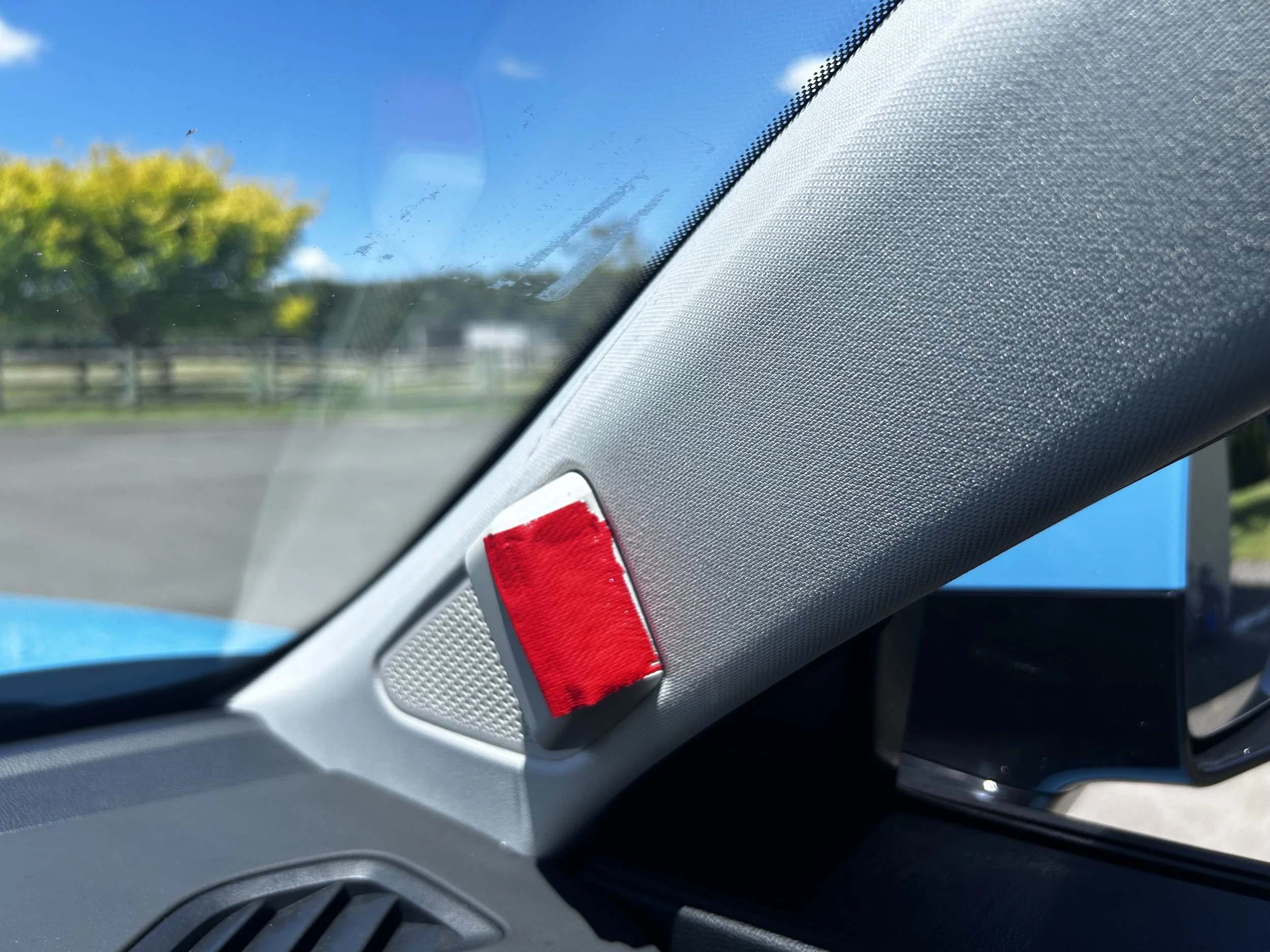
As is now so often the case, covering over the driver monitoring camera with tape will be a matter of step one priority for those overly-sensitive to intrusive bing bongs, but onward from that the car continued to stretch patience.
The speed sign recognition acting over-zealously was a continuing quirk. There’s a corner near my wife’s workplace. On the outside edge runs a border with a zigzag design. But no speed warning sign. Yet, on every traverse, through car consistently insisted it had ‘seen’ a 40kmh bend, an so instantly sought a diminishment below the actual posted speed limit.
It produced the same result when I drove onto a multi-lane motorway; the entry point has a 100kmh sign .. which it noted, and advised. All good. But just along the way, there’s a slip road to a parking zone. That’s a 40kmh zone. That was the problem. Even though the sign for that thoroughfare was well off the motorway, it still caught the MG’s eye. Consequently, for the next 10kms … bing bong, bing bong.
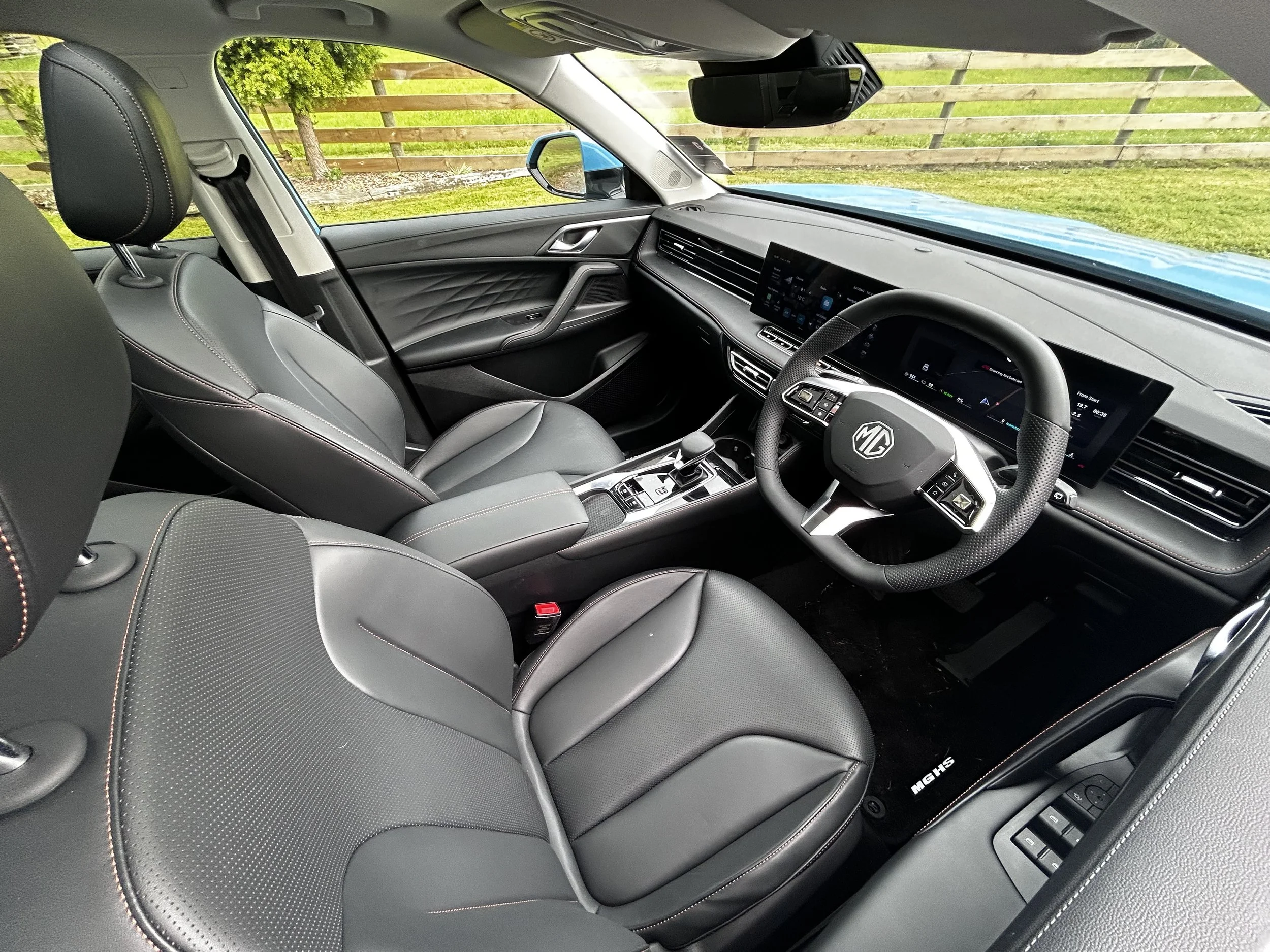
Will it ever shut up? Yes, with human intervention. Which is possible, but not easily involved. But turning the feature off simply isn’t a matter of touching a button. The process begins with navigating off the main screen into a menu with a menu, each heavily populated with features for other accesses. It’s a maze. Navigation requires more attention than other occupants might think is prudent, and the lag from the haptic prompts makes it worse. It needs to be faster, slicker, smarter. Nothing a newer system couldn’t fix.
There is a multi-function button on the steering wheel, which is meant to help you navigate more quickly around various on-screen options on both screens, but that it changes function depending on which menu you're looking at just ends up being confusing. Sometimes it controls the stereo volume, and sometimes it doesn't, for instance.
This side is a shame, because it threatens to spoil a car that, while hardly bursting with character or any particular flair, is overall perfectly acceptable for the functions asked of it.
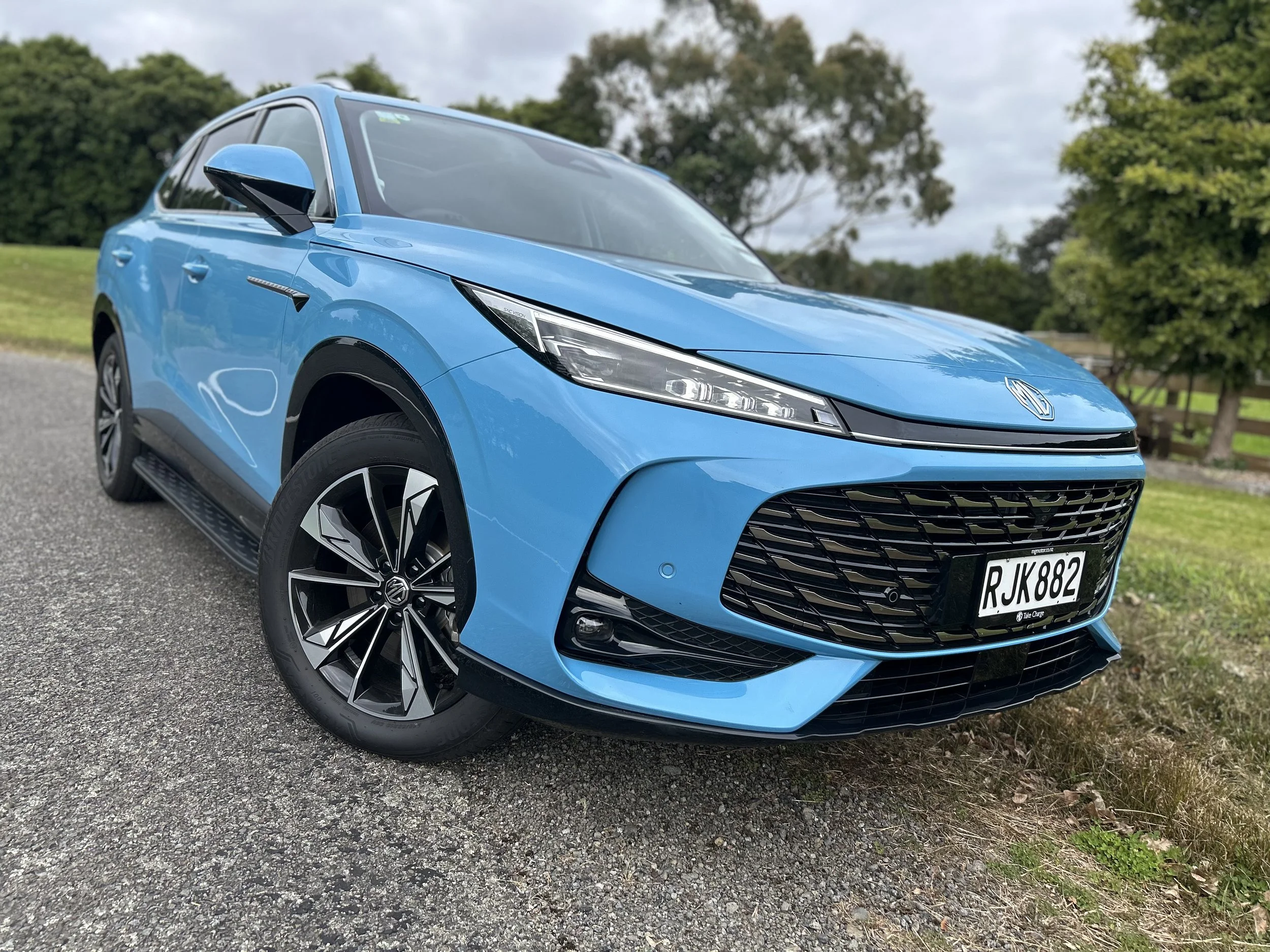
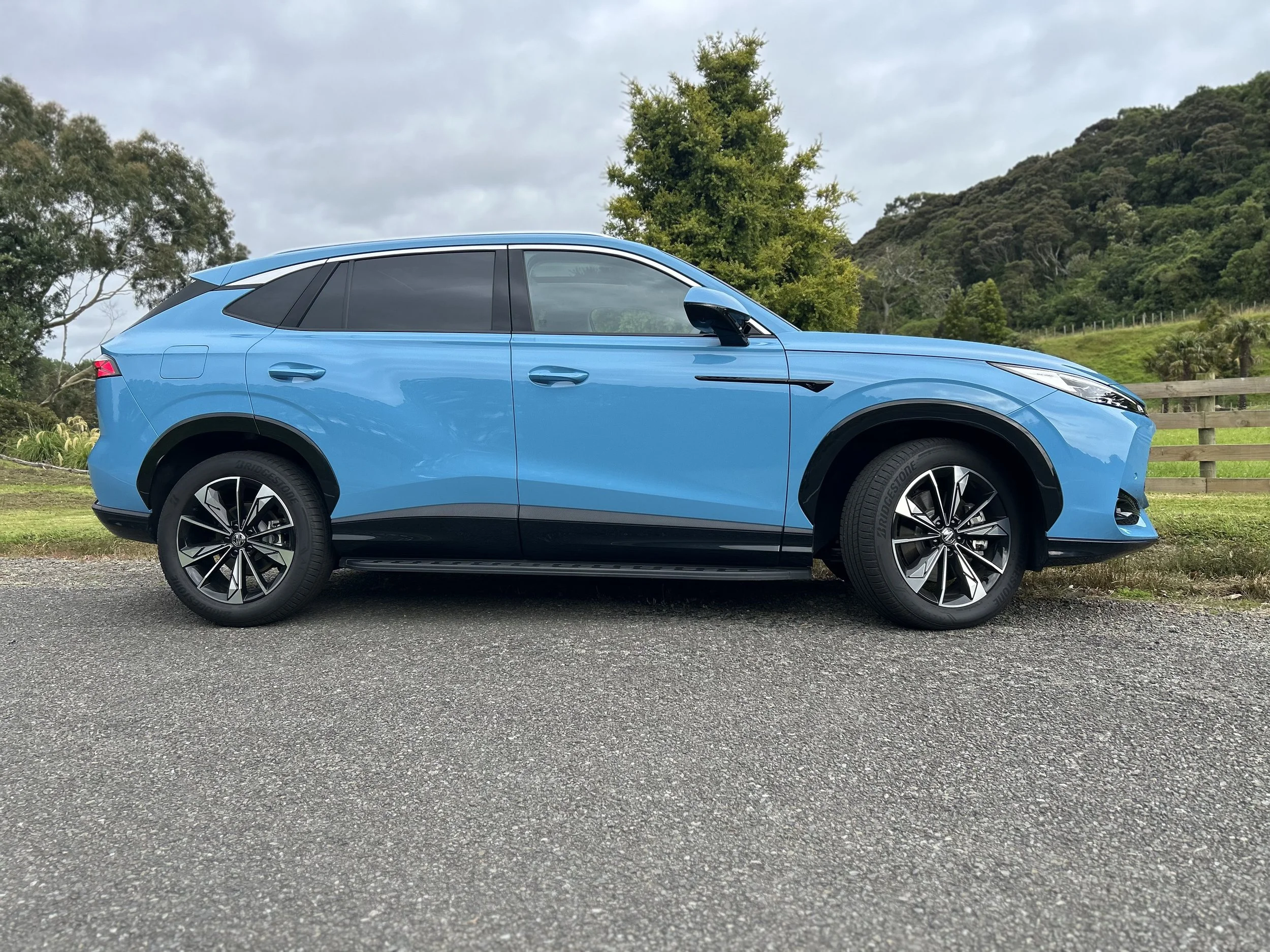
Judging on presentation, would you believe this wasn’t an $80k car? The exterior appointments, and the paint hue and finish, alone suggested it was in a higher price bracket. Inside, too, it seems far more plush in its appointments that you expect for the spending level. MG has seriously gone to town with the interior of the HS, and it both looks and feels like a major step up in quality, compared both to previous models.
The seats are plump and, in this version, covered in a nice synthetic leather. The door cards have an intriguing, quilted pattern on them, and pretty much everything you touch feels pleasantly un-costed. It's truly impressive.
Space in the back is excellent too, and while there's no seven-seat option, there are reclining seats for those in the rear, where there's almost enough space to get three adults sitting comfortably across. The boot is usefully large at 507 litres up to the luggage cover.
An unavoidable of a big battery is additional weight; a full 200kg in this instance when all is considered. Not an inconsiderable encumbrance, and the reason why all that extra potency isn’t as apparent as you might imagine. The extra magnitude of the pluses and minuses would demand across the range comparison, not undertaken here.
As said, it takes on any drive with confidence and I’d say the impost helps settle the ride, but what it potentially does for the dynamics is more open ended.
If you concur that, in any form, this is not an especially sporty car any way, it’s probably not really here nor there. Body control isn’t bad in that context. In respect to how engaging it is to drive, I’d say there are plenty from China right now with less flair. But the steering could do with a bit more sorting, mainly in respect to sharpness but also feel; that’s one of a number of consistencies with the other versions.
The gearbox is a simple two-speed automatic affair might sound a bit rudimentary, yet really it’s not. Because the electric motor forms an integral part of the drivetrain, thanks to its instantly variable speed those two speeds generally seem up to covering all bases, though you do have to be careful at step off. That’s when there’s chance of wheel slip, especially in wet conditions.
So, would you? As is often the case, now, the leap to PHEV is not as clear-cut as might outwardly seem.
The maker-cited electric-only range is appealing, but the cost of buy-in hangs over everything, because even the HS in pure petrol trends toward economy, which when put to test seemed possible to achieve. The one constant between all three versions of this car is that they seem to be in no hurry to empty their tanks; probably just as well, as the engine demands the top shelf stuff, 95 or higher octane fuel.
The other is that driver monitoring, which simply requires complete re-consideration. Likewise, the screen’s operability in general. It’s just too smart-arsey.