

Toyota’s sunny prediction for solar project
/The whole of the brand’s corporate headquarters and adjacent warehousing can now be truly a powerhouse.
ELECTRIC urge has captivated the country’s largest new car brand at time of emergent fossil fuel price crisis - but it’s not a road product push.
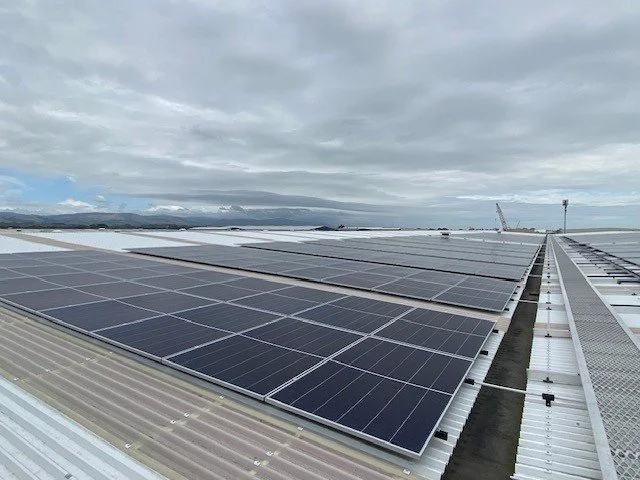
Today Toyota New Zealand announced sign off on a major project; placing one of the country’s largest rooftop solar systems atop its national logistics hub in Palmerston North.
The solar array sits atop the company’s 35,000 square metre warehouse and the brand’s national corporate headquarters, the National Customer Centre.
The system is expected to generate about 921 megawatt hours of electricity annually – enough to power about 132 homes each year – while avoiding roughly 93 tonnes of carbon dioxide emissions
With ability to churn out up to 700kW at any one time, it is expected to produce the equivalent of around 60 percent of the site’s electricity needs.
Any excess power will be exported to the local network. By TNZ’s calculation, there could be enough to theoretically supply up to 35 Palmerston North homes over the course of a year.
A media share from TNZ quotes Toyota New Zealand chief risk and value chain officer Mark Young.
He says sustainability has been a key focus for the facility, which was expanded in 2018 to the equivalent size of five rugby fields.
“We’re incredibly proud of the solar array going atop the building and the benchmark this will set for future Toyota developments in New Zealand. Already 11 of 63 Toyota Stores have installed solar power on their roofs.”
TNZ has not said how much the solar install has cost but based on the centre’s historical energy consumption, the solar system could well pay for itself in just over five years, it believes.
The panels are expected to continue producing more than 90 percent of their original capacity after 30 years of operation. The scale of the installation means the building will generate more electricity than it consumes during peak sunshine hours.
Around 350MWh of excess power a year is expected to be fed back into the local electricity network.
Young says the project also makes strong financial sense.
“While we have made a substantial upfront capital investment, the panels will reduce the average monthly electricity bill by around 50 percent,” he says “We expect to have a total return on investment of more than 600 percent over the life of the panels.”