
EV sales set to better ’24 and ’25 combined
/MG boss’s prediction bases on sense that ‘Trump effect’ and arrival of its own cost-effective entry car will rekindle electric interest.
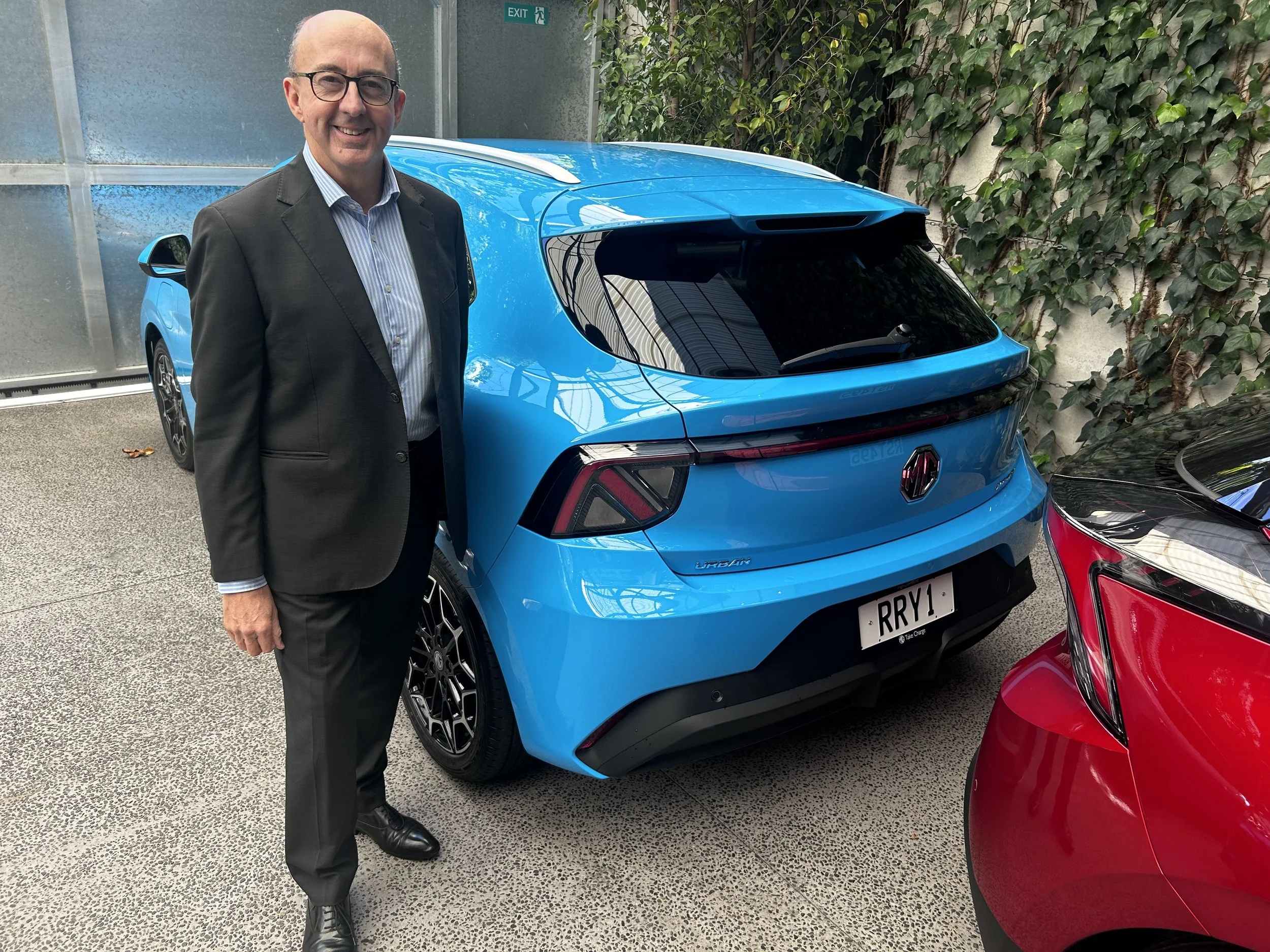
AROUND 14,000 new electric cars will find homes in New Zealand this year - a ‘Trump effect’-driven tally higher than the combined count from the past 24 months, but still well short of peak.
This forecast comes from MG Motors New Zealand’s boss, at an event for fresh electrics - the launch of the new MG4 Urban, a small urban-strong car for budget minded drivers - and release of mid-life revisions to the like-named by wholly different MG4.
The call from the make’s country business manager Dean Sheed (above) comes at time when concerns about pump fuel price increases and uncertainty about ongoing fossil fuel supply triggered a big surge in sudden renewed interest in EVs last month.
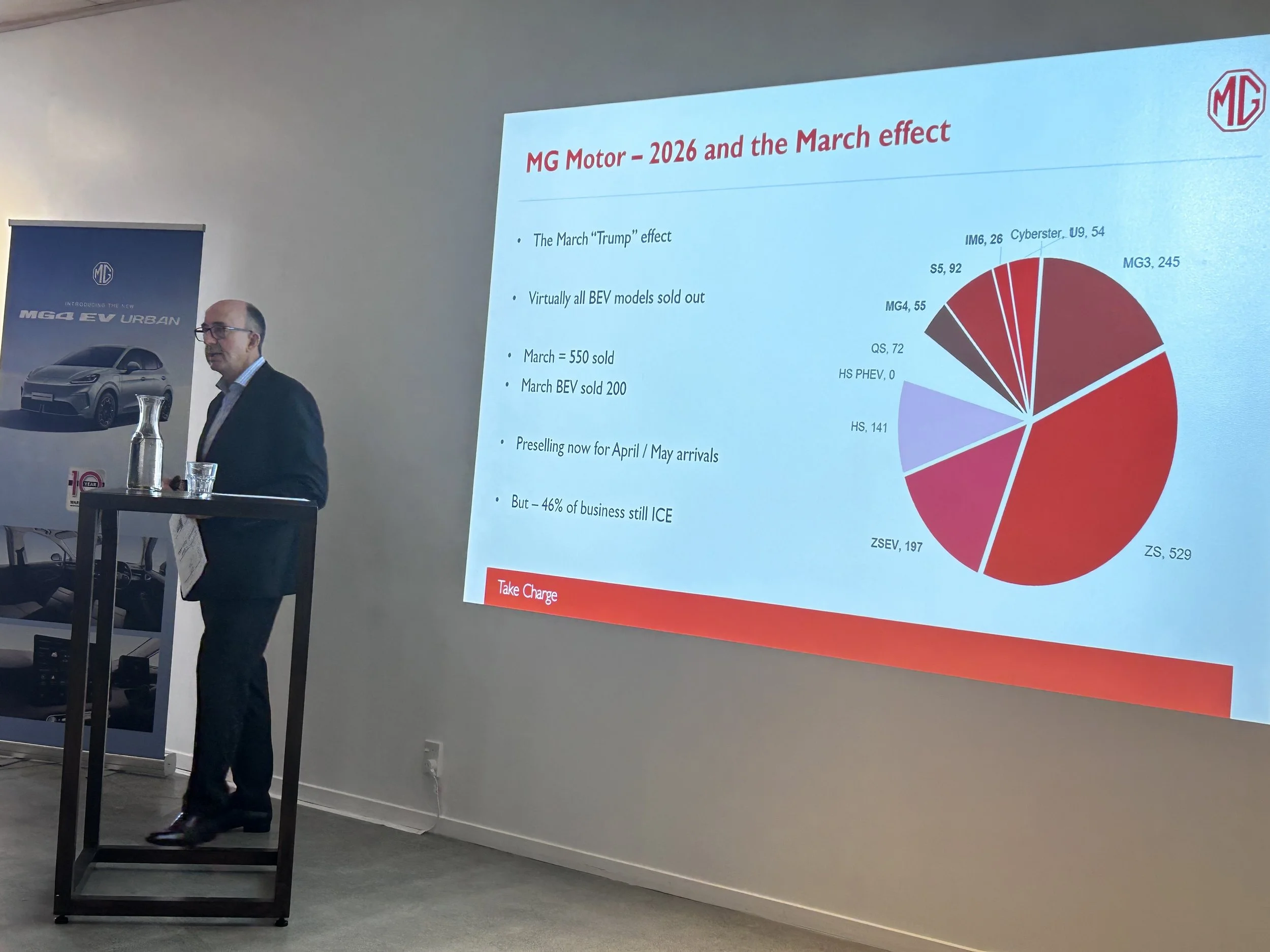
The race to buy has effectively exhausted stock levels for many of the 95 nationally-available choices. Consumer excitement saw MG sell 200 electric cars in March.
Chinese brands likely have the best chance of delivering fastest resupply - due to their huge manufacturing capacities and sailing time between China and NZ being relatively short delivery. MG is preselling for April and May deliveries.
Electric sales were steadily rising between 2020 and end of 2023, which was the best ever year for EV registrations, with 25,800 sold that year.
Curtailment of the Government subsidy since then - plus subsequent introduction of Road User Charge - and a slump in economic conditions then all but killed the sector.
Last year 6878 were registered, a slight improvement on the previous year.
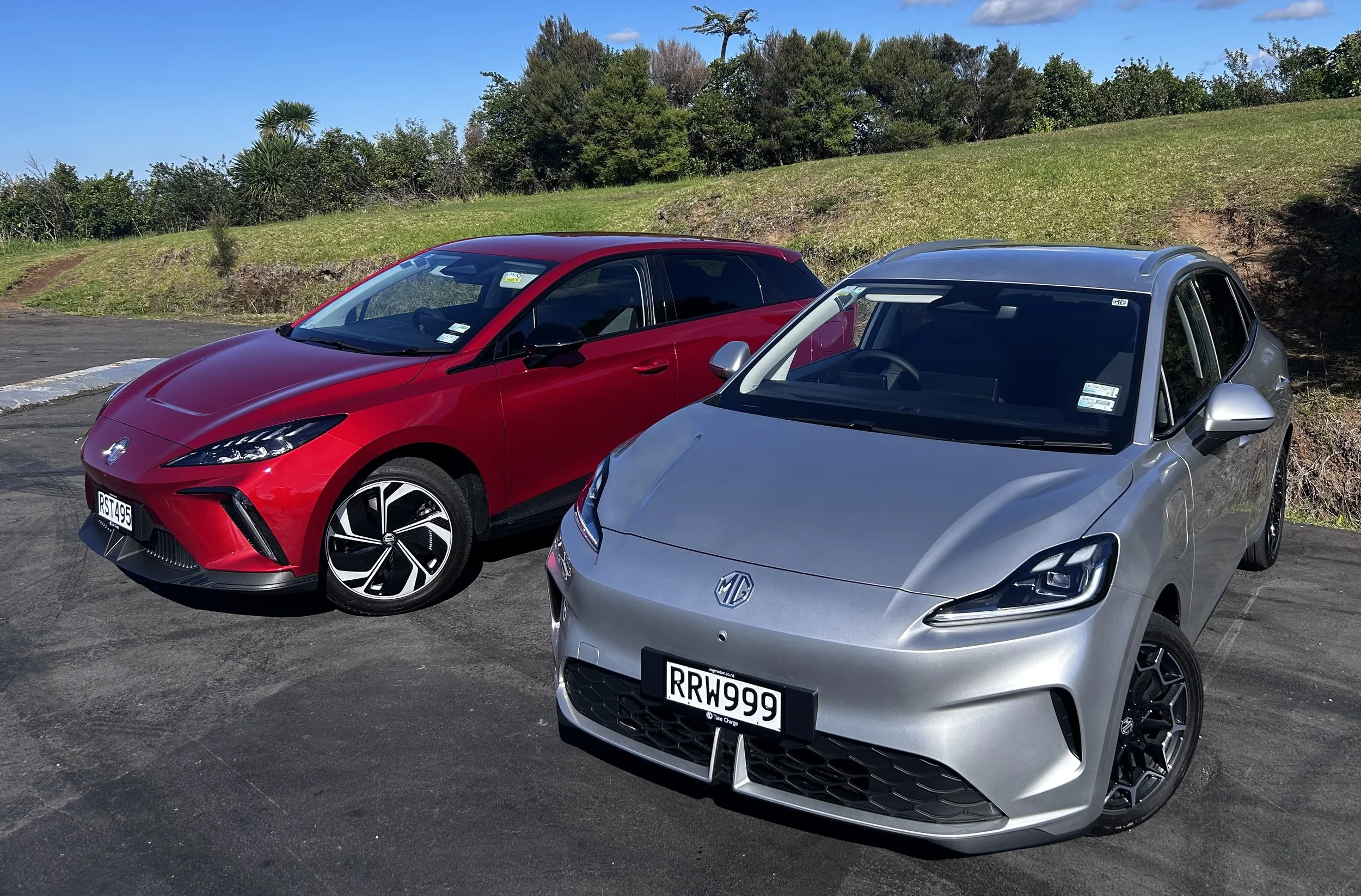
MG has three electrics behind its own badge in the the market - MG4, now down to two versions from four, the new MG4 Urban in a single specification and the MG S5. It also represents the IM6, a luxury off-shoot behind a bespoke badge.
It has indicated the MG S6 sports utility and electric edition of the MG U9 are coming, both before Christmas.
Those new cars will see the tally of new electric cars and light commercials offered to Kiwis creep closer to becoming a three-figure count.
As of today, Sheed says, the 70 brands serving a new car market that last year fell just short of 140,000 units already cumulatively have 95 wholly battery-wed products on offer.
Is that saturation point? It’s a matter of fact biggest recent movers in this sector are from China, which in 2025 built nearly as many vehicles as the next six largest auto-producing countries combined.
MG’s parent, SAIC (formerly Shanghai Automotive) was a significant contributor to the national output last year, with 4.5 million vehicles rolling off its assembly lines, a 12 percent increase on 2024. Just under a quarter of those were exported.
Analyst thought China’s domestic car demand has reached saturation has also fueled speculation that many of the 130 domestic brands there will progressively fail or be subsumed into other, stronger operations. Perhaps no more than 10 big mega-operations (each with lots of brand families) might survive.
As one of the biggest and longest-established operators, SAIC is expected to be too big to falter. It’s a top-five domestic performer and was the sole one of those to build more than one million cars in the first three months of this year. Of those about one third were ‘new energy vehicles’ - the designation for vehicles with electric assist and a plug.
A very seasoned and highly respected industry figure who fronted for Ford, Volkswagen and Audi before going to MG, Sheed has a good handle on the local industry and is watching the changing trends in China with interest.
He acknowledges NZ and Australia have been a magnet for a huge and still growing count of Chinese makes and while not about to publicly pick winners and losers “my gut tells me that there will be rationalisation over time.
“I'm not a gambler, so I'm not going to pick ones that will survive and not, but I look at the infrastructure required in this country, I look at the size of our market. And I think of dealers and networks and infrastructure, buildings, people, finance facilities … all of that stuff makes our industry work. So there will be tears before bedtime, there will be a consolidation.”
About half the cars sells in NZ are still internal combustion models - in March they represented 46 percent of business and took more sales than MG’s EVs. But electric is an imperative to growth here.
“In 2024, we clipped over 3000 vehicles. Last year we finished with 37 percent growth - just shy of 4200 vehicles … the industry was only growing at seven percentage. Quarter one this year, we are up again, up 23 percent where the market is up 13 (percent).”
That performance, and announcements made today, are hoped to cement that it is one of the stayers.
Having previously been a subsidiary of of MG in Australia, MG Motors New Zealand now has become a wholly NZ company. Though the two will continue to work together on much product planning, the NZ set-up now has more autonomy and becomes a factory subsidiary in its own right.
This change of status opens the door to it putting in full scale commitment to securing fleet business, including rental, which the previous arrangement didn’t easily allow.
“Being an Australian registered company in New Zealand, opened doors, but also shut some,” he explains.
“We've been here some time, we're not going away anywhere, and this will give us a whole lot of operational efficiencies.
“To that point, what it allows us to do is to enter the fleet business … they've been desiring our product. We haven't been able to service that.
“When I say fleet, I mean small to medium size enterprises, corporates, Government, rental, and any big fleet leasing organisations. We can now have serious conversations with them because we have a product range they desire.”
He says MG’s impetus is to “double down our focus on the marketplace” A network of 21 dealerships nationwide lends great strength and asserts the make is well sorted to supply parts, with a large warehouse in Auckland and three more in Australia.
“We purchase our parts either directly from Shanghai (where SAIC bases) or via Australia. If a vehicle is off road, we can get a part quickly … I have an over 90 percent fulfilment rate of parts today.”
Earlier this MG Finance was established with Heartland Bank which means dealers have a whole stream of finance products, he says. Another initiative is to sharpen service plans. To signal the spirit, dealerships are undergoing signage refreshment.
The MG4 Urban has launched in single specification, with a 54kWh battery, for $38,990 while the MG4 choice has, as previously reported, reduced from four derivatives to two.
Having initially represented in Excite 51 form for $40,990, $46,990 64, an Essence 64 at $49,990 and an XPower for $59,990, the line now comprises just the Essence 64 and XPower, with stickers of $44,990 and $55,990 respectively.
Sheed says reductions of $5000 and $4000 were result of negotiation with the factory in light of the car now facing more more competition now than it had when launching three years ago.