VW Tayron R-Line road test review: No slumming on the school run
/The replacement for the popular Tiguan Allspace and, in time, the larger Touareg being a plush ride in its flagship form is both a strength and a challenge.
Price: $96,990.
Powertrain: 2.0-litre four-cylinder turbo petrol, 195kW/400Nm, seven-speed direct shift transmission, all-wheel-drive.
Dimensions: Length, 4792mm; width, 1853mm; height, 1666mm.
We like: Stylish; strong ergonomics; good engine.
Not so much: Pricey for the job profile; tight third row; R-Line brings sharper handling but firmer ride.
RECENTLY I suggested a fairly innocuous seven seater sports utility from China could well be sitting at the front of the bus as a prime candidate for a tough gig.
Lore has it that taking kids to their places of education - actually anywhere - can be a school of hard knocks for any vehicle; it’s one reason why parent look so frazzled.
You know why. Children can often become artful destruction experts. They twist, twiddle and tear; they scribble, some might slash. Stains, smells, scratches .… surely the pain of that can be offset by knowing you at least hadn’t paid a fortune?
So, anyway, the MG QS stood out simply because it was a low price choice within a genre that’s at high risk of coming out of ownership in worse state than it started out.
Soon after handing back the Sino-Brit model, I began driving the Volkswagen Tayron (pronounced ‘tie-ron’). Same ilk, much more upmarket and more expensive. Too cool for school?
Germany's mainstream marque has long been keen to sit on the periphery of premium; Tayron R-Line here has especially good viewing of that scene. One of these could almost buy two examples of the Sino-Brit.
The R-Line spec isn’t mandatory. There’s also the Tayron Elegance, an entry version with the same drivetrain for $18,000. More logical? Likely, yes. But the R-Line fit out has long been been popular here. During test I met a man who has the predecessor to what I was driving, a Tiguan Allspace. It’s been a great car for carrying his three pre-teens, but it was time to move up, and all the way, to the variant here. I was keen to hear his view.
In respect to my theory? He didn’t disagree. He’d checked out the MG. It wasn’t too bad, and yet …
In this case cost wasn’t a particular consideration. Competency, badge cachet and driving charisma were. On all those, he perceived, Germany did it better.
So a new Tayron was a certainty. And the risk of the kids besmirching the interior? A ‘pre-flight’ regime of ensuring anything likely to in any way marr was safely stowed had worked out fairly well enough with the Tiguan. It would continue with the Tayron.
You’d wish it’ll be so. Tayron and last year’s new-gen Tiguan are closely related, and the larger choice presents many of the same cabin features which, for Tiguan, represented a big step up in interior quality.
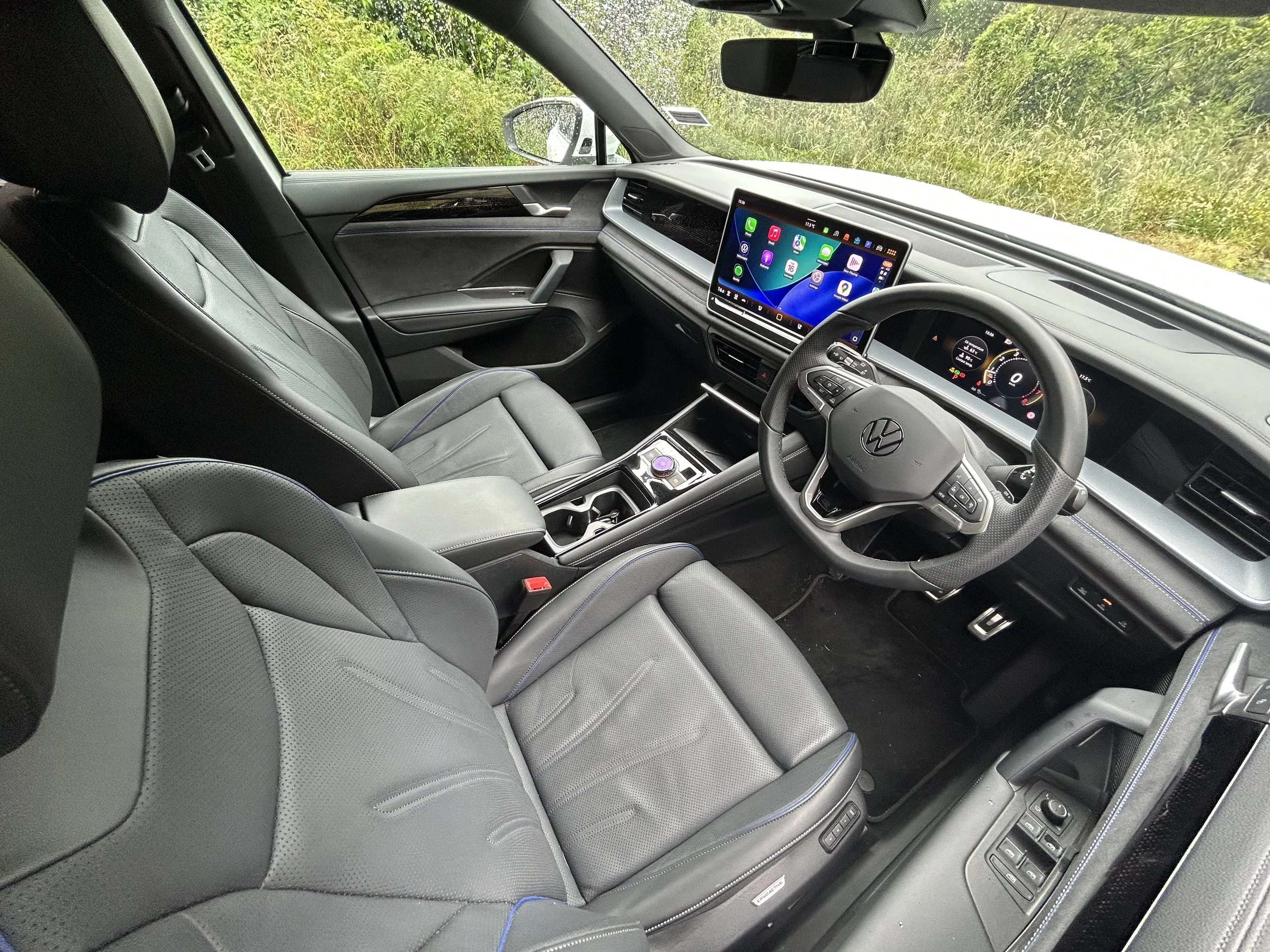
While the cabin is not exempt of hard-wearing plastics, most surface materials are soft to touch, while the appearance overall is abjectly premium. The ambient lighting is extensive, creating a more high-tech vibe, while the central touchscreen is massive and very top-end in its look and operability. During my test, only adults rode in the car and almost all - without any prompting - felt compelled to comment on how luxurious it was.
My week did not fully utilise the passenger potential; the mid-row seats were occupied from time to time, but the rear-most pair were never used. For the most part, they were tucked way to enable a five chair configuration that provisioned decent boot space.
In respect to practicality, it seems pretty good, though the view from the ‘dad driver’ was that it still holds the same ‘five plus an occasional two’ status as its predecessor.
It is better sorted to fit child seats, though in respect to that the mid row remains the optimal site. The outer positions of the bench holds two of the three ISOFIX anchor points. The other is in the front passenger seat. That none are in the third row might seems a pity, but the engineering considerations for that are apparently too complex to overcome.
There's not really enough space in the third row for adults (or perhaps anyone much over primary school age).
The rear seat sliding back and forth, to juggle the legroom available between the second and third rows to allow for more boot space without folding down row two is nonetheless a neat design touch. and even with all seven seats in place there’s still a usable amount of boot space.
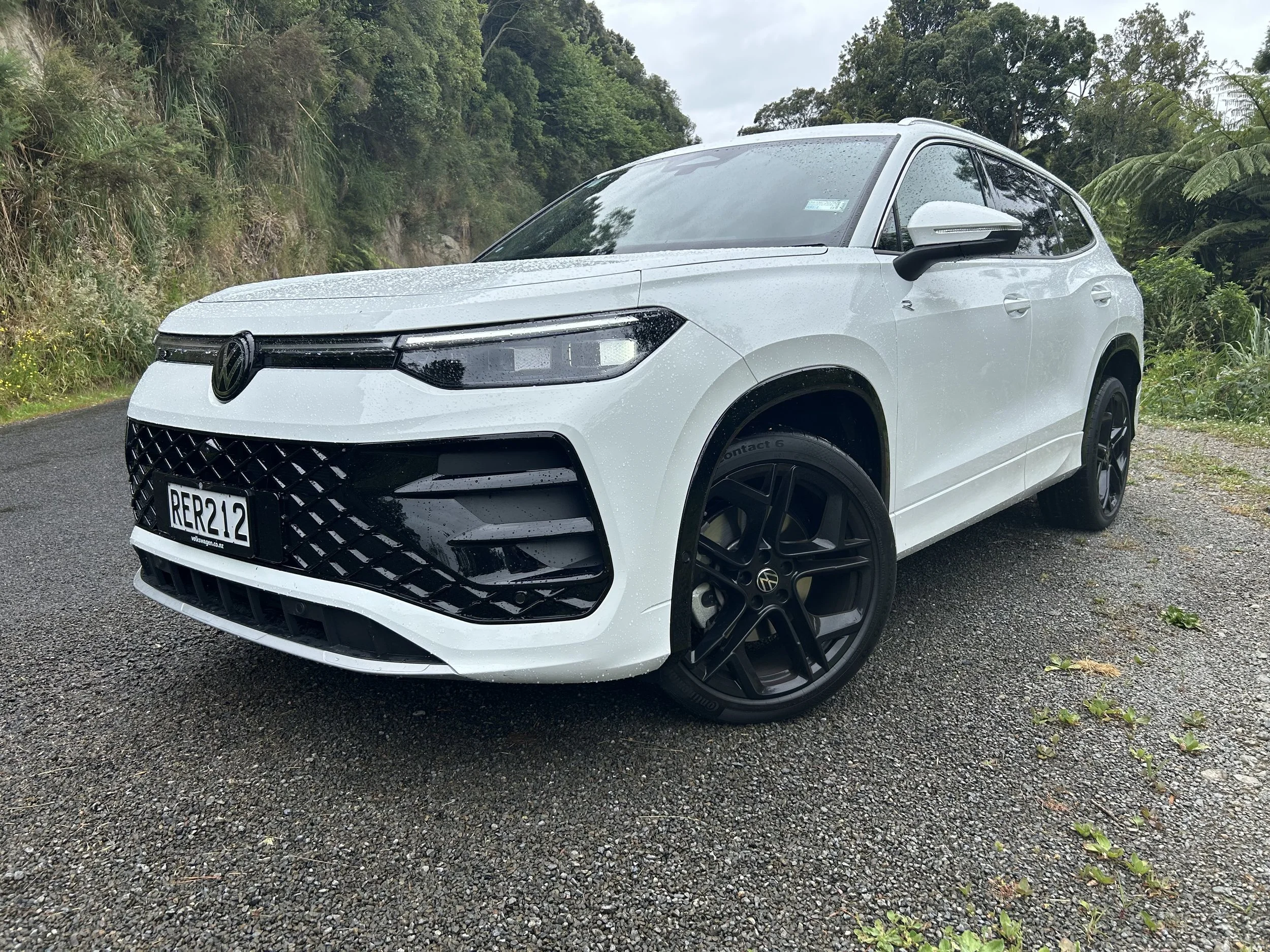
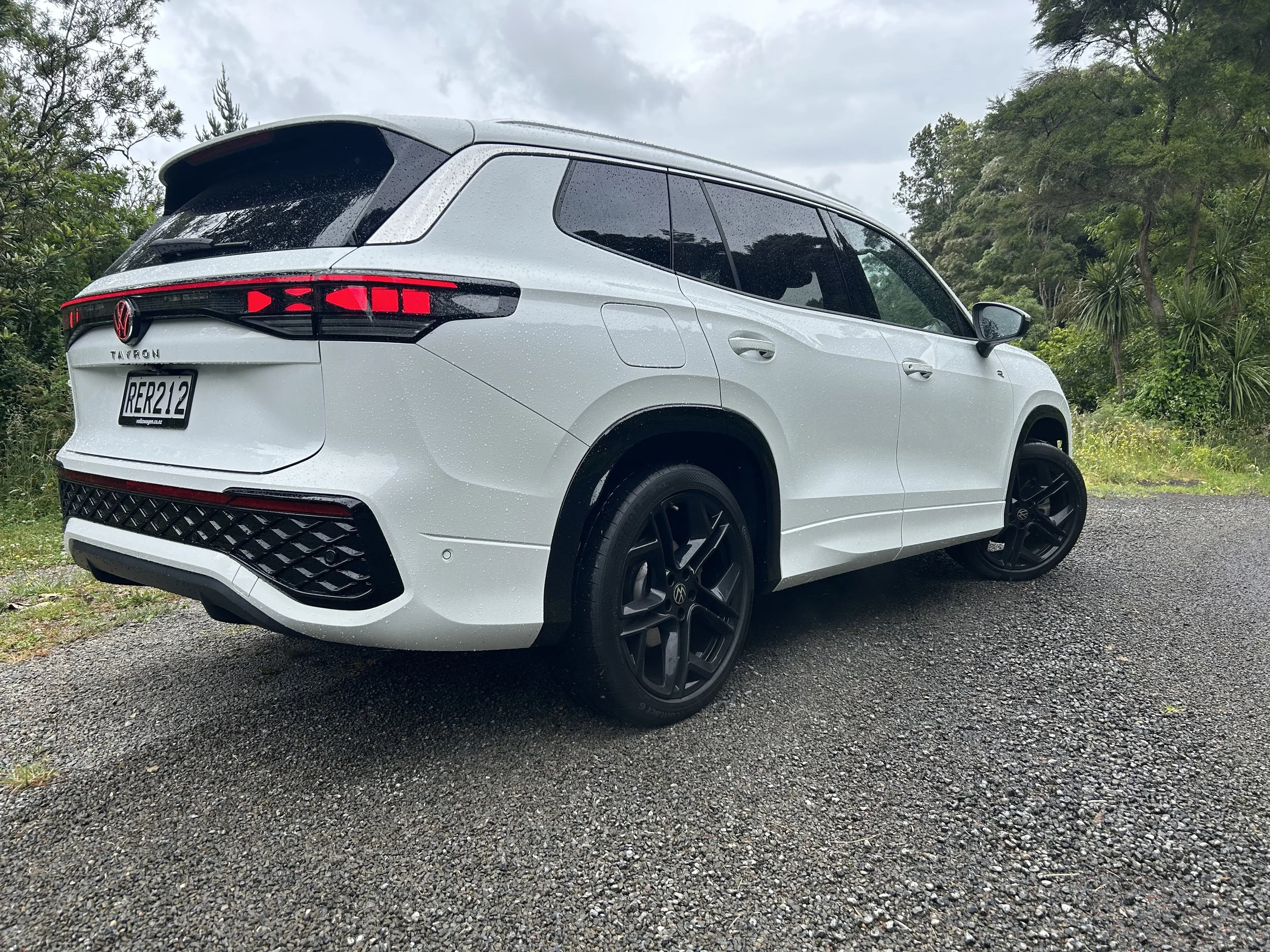
VW’s R-Line treatment lifts the visual pizzazz with different bumpers, seats and wheels but true sportiness only goes so far. Track driving is hardly set to be the remit of a large, practical family SUV, after all.
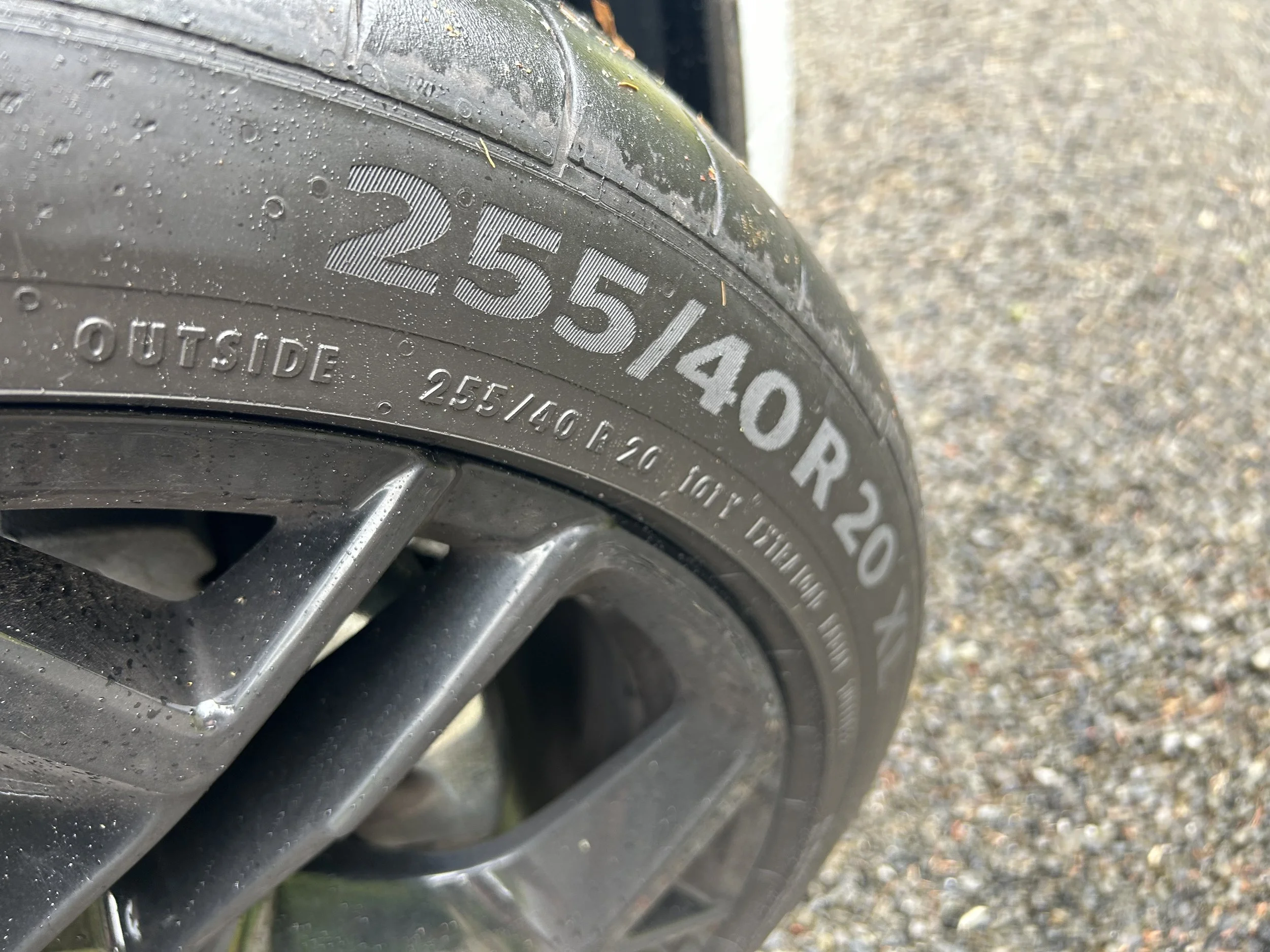
Yet the 255/40 tyres, the broader range of ride adjustments and the engine’s extra zest really do enliven the car’s driving feel. It has a vibe. All the same, if you were going to use one primarily as an in-town runabout, the Elegance on its smaller rims would be better, because with R-Line the ride is potentially just a touch too firm at times.
The other reason for staying with the entry is that it furnishes very good equipment. Tri-zone climate control, a heated steering wheel, ambient lighting, power tailgate, heated and massaging front seats with lumbar support, keyless start, parking assistance, dual wireless device chargers, wireless Apple CarPlay and Android Auto and a full suite of electronic safety assistants are standard now.
Up front, the dash is the same as that of the Tiguan's, which means you get clear and simple digital instruments and a single physical rotary controller, meaning interactions with the car’s many and various systems are much easier than on previous VWs.
The controller nonetheless takes a little learning, as it looks after not only stereo volume but also driving modes, plus the slightly twee 'atmospheres', which change the colour and tone of the ambient lighting. This variant also adds in the handy ingredients of a head-up display and 360-degree camera.
The R-Line achieves a 15-inch central touchscreen that delivers a better configuration and superior clarity to the entry car’s 12.9-inch unit, though prepare to set aside time to learn it all. The majority of the buttons, including for climate control, are now located inside the touchscreen. This creates an overall cleaner look but because it’s got so many features packed into it, the touchscreen takes some familiarisation.
The memory and ventilation front seat setting are good upgrades; the LED Plus headlights very worthwhile on otherwise unlit country roads. Speaking of illumination. The R-Line also has illuminated VW badges; on this example only on the tail. The nose should also light up, but the very first cars that arrived lacked that facility.
Leather also comes to the flagship and seems commensurate with the price. While you’d cry if it was damaged, my advisor reminded how it is more stain-resistant to spilled drinks and yoghurt than cloth.
From my experience, what appealed straight away about Tayron is that, operability and design-wise, it feels like a better considered product that its predecessor. Whereas Allspace was a stretched Tiguan, Tayron despite continuing with Tiguan roots stands out much more as a singular car.
Volkswagen’s intent to create a standalone model to fill the gap between the Tiguan and Touareg, which never met full family remit because it couldn’t be engineered for three rows (that functionality might yet arrive should VW develop a new large SUV at some point) is very much more evident.
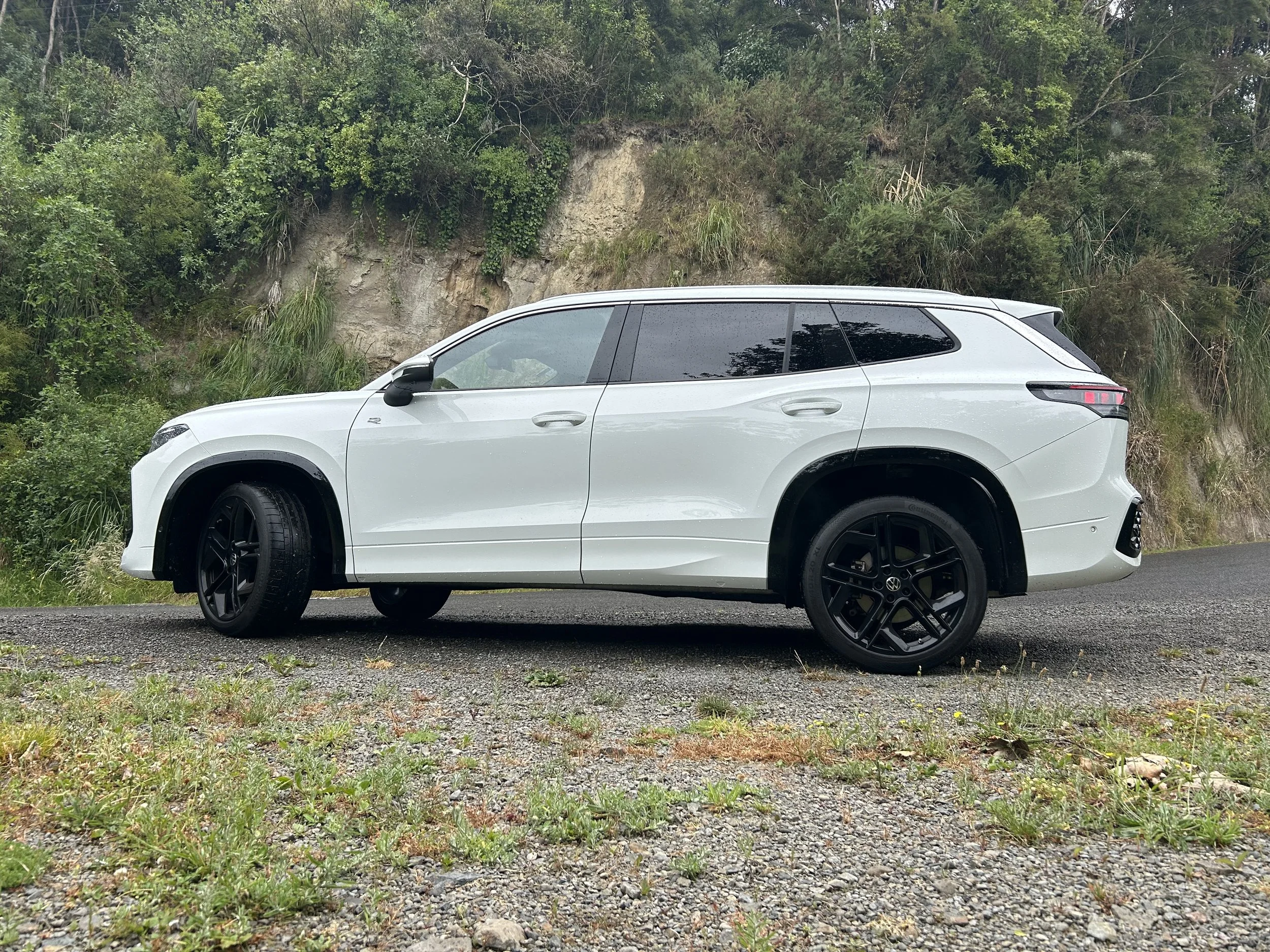
At 4770mm long, 1852mm wide and 1660mm tall, on a 2791mm wheelbase, the Tayron is a touch longer and wider than the Tiguan Allspace, but shares its distance between the front and rear wheels. That allows it to sidestep the ‘stretched’ appearance that became a love/hate issue of the old product.
With an additional 230mm from nose to tail, and 114mm between the wheel axles, it becomes an obviously larger car but keeps the donor’s rather handsome lines, at least as far back as the C-pillar. After that point the extra rear overhang and body bulk is well enough integrated that I doubt most people will notice any visual difference.
When driving Tayron doesn’t feel as lane-filling as the longer, taller and wider Touareg, but it is still clearly larger than some. Outward visibility is decent and while the turning circle isn’t truly tight - three-pointers are the go in most city streets - it’s not too much of a handful.
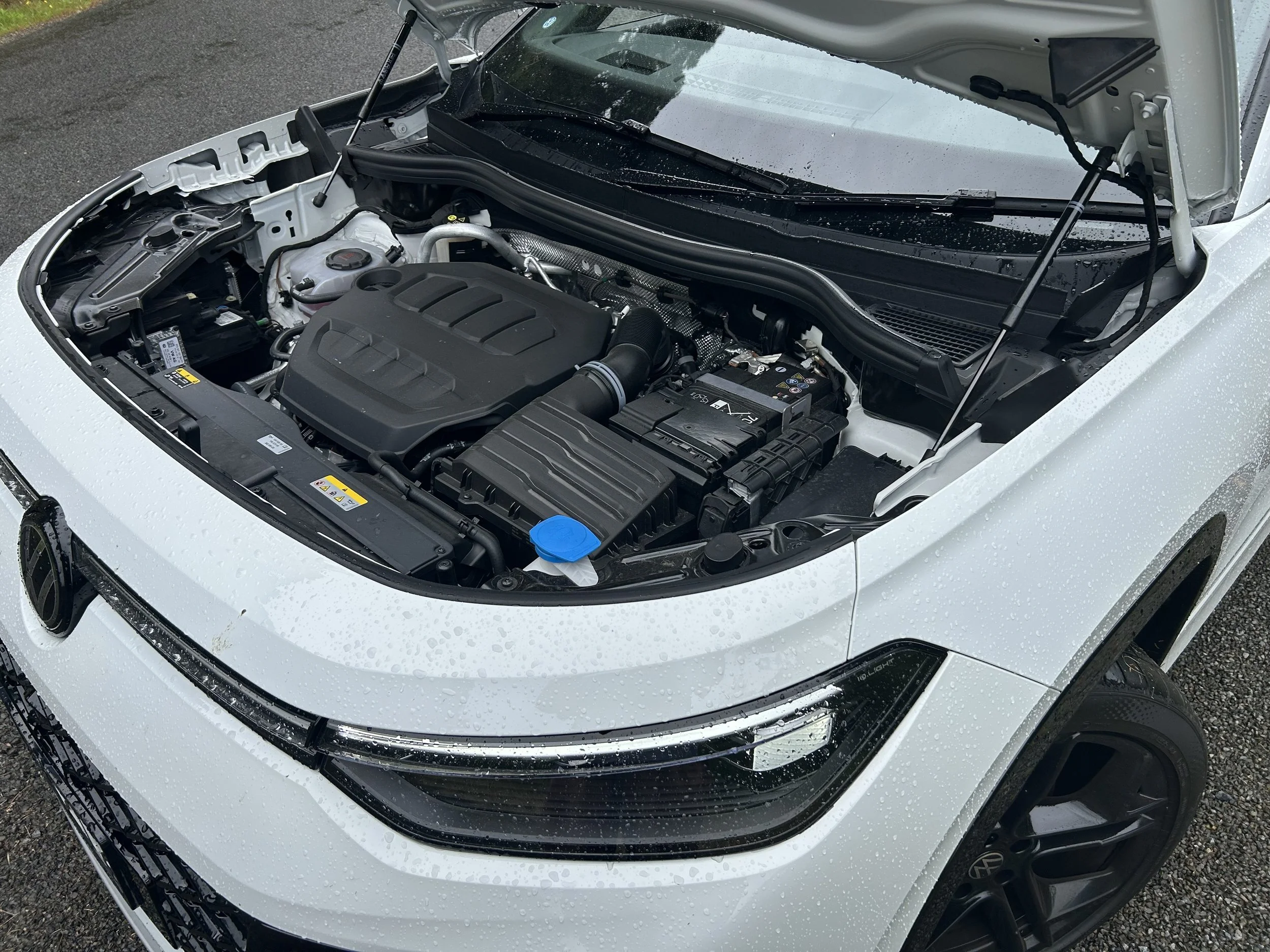
The 2.0-litre has widespread use throughout the VW Group and is the same as went into the top Tiguan, but with elevated power and torque, so 195kW/400Nm now against 162/350Nm previously.
In this setting it’s a smooth, strong unit with masses of midrange torque. It doesn’t lack for overtaking oomph and get up and go, but how invigorating the Tayron is to drive quickly will depend on whether anyone else is on board. While the body is reasonably well tied down, it’s not a nimble car.
Impact on fuel burn is well contained. VW cites an official optimal of 8.8 litres per 100km; I saw 9.1 from a week’s driving. Having put no particular effort into chasing parsimony - the ‘eco’ mode was trifled with, but not regularly employed - I was happy with that, not least given it restricts to 95 octane and above.
The engine selection here has been more cautious than in some markets. There’s no full electric version but internationally it still nonetheless offers one of the widest powertrain selections of the Volkswagen range, with petrols, diesels, mild hybrids and plug-in hybrids all on offer.
It is still understood plug-in hybrid power is also set to become part of the Tayron family here, which means a turbocharged 1.5-litre petrol with a 85kW electric motor married to a 1.9.7kW lithium ion battery. So 150kW and 350Nm, 118 kilometres’ electric pure driving, 850kms’ overall range and just 0.4 litres per 100km optimal fuel burn.
But also, because of the space requirements for the battery, the PHEV is a five chair selection and front-drive, and has a slightly smaller boot.
Additional Tayron powertrain and trim choice will make sense, because this is an important car.
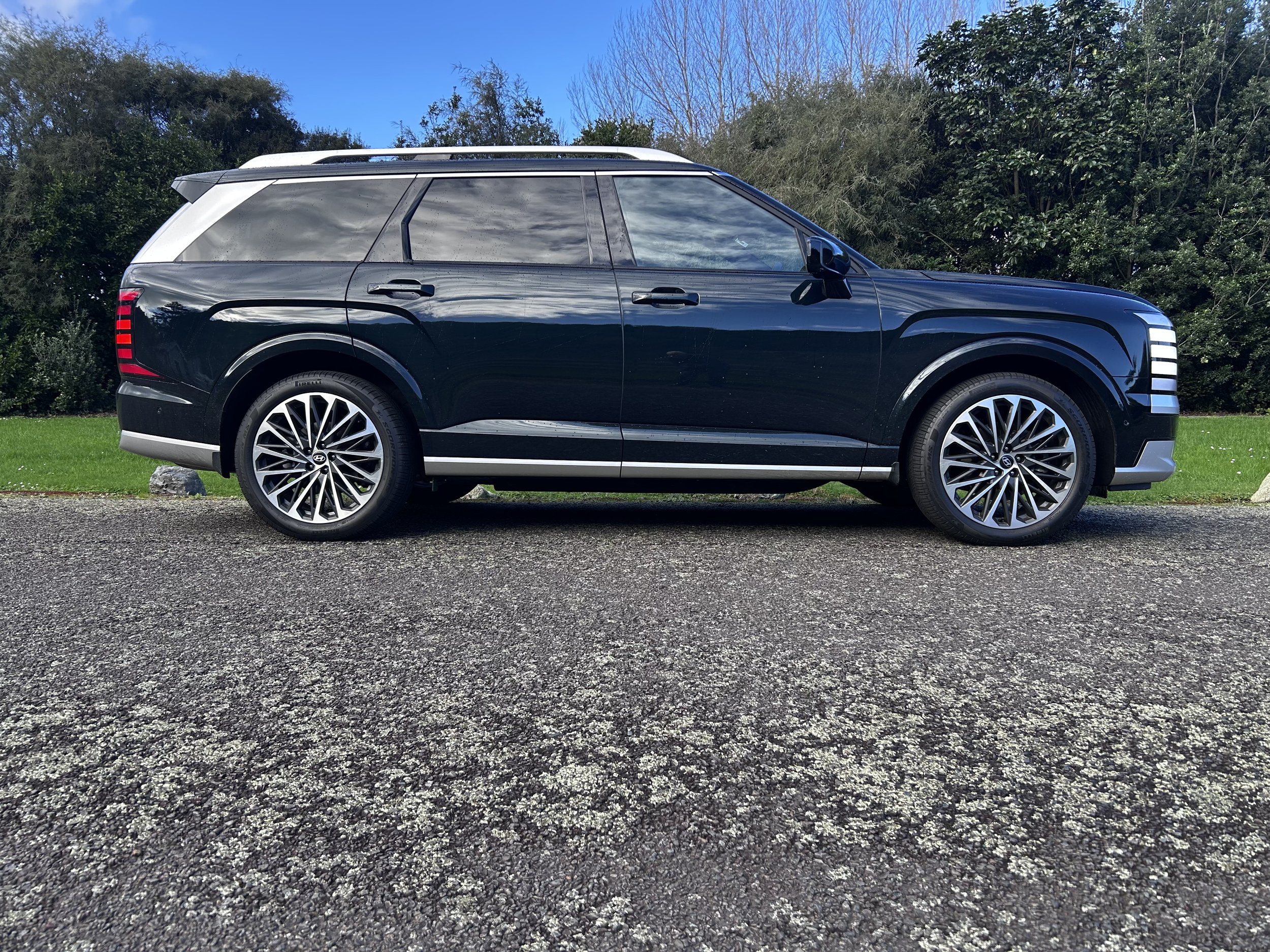
In addition to presenting as an alternate to the Hyundai Santa Fe, Kia Sorrento, Toyota Highlander and Skoda Kodiaq in the here and now, it potentially will also become the largest SUV VW sells here once Touareg retires.
Conceptually, the Tayron meets the same expectations asked of Tiguan Allspace, but with a markedly more premium feel - and price. But look around and you’ll see all the aforementioned rivals have become more expensive than they once were; also because they’ve generally got larger and more extravagant as well. European product also feels the heat from an exchange rate less favourable now than it once was.
But, yes, for those who were used to shopping for an Allspace in the under $60k to almost $85k zone are going to have to check behind the sofa for more coins this time.
The entry Tayron Elegance is just under $80k and the R-Line here is $3000 under $100k even before Black Package and more expansive Touring enhancements are considered. Ours had the rims from the Black Package, but nothing else, and was otherwise standard.