GWM Tank 500 PHEV roadtest review: Is tough terrain an ohm ground?
/This petrol plug-in hybrid closes in on diesel in so many ways, including for wilderness skill.
ON FINALLY nabbing the one that got away, severe punishment had to be incurred.
Water immersion, a good stoning and a prolonged bashing. Even before it was treated to this prolonged pummelling, there’d been electric shock therapy.
It didn’t wilt. Just got on with the job of making a trip around a renowned off-roading venue seem like a country stroll.
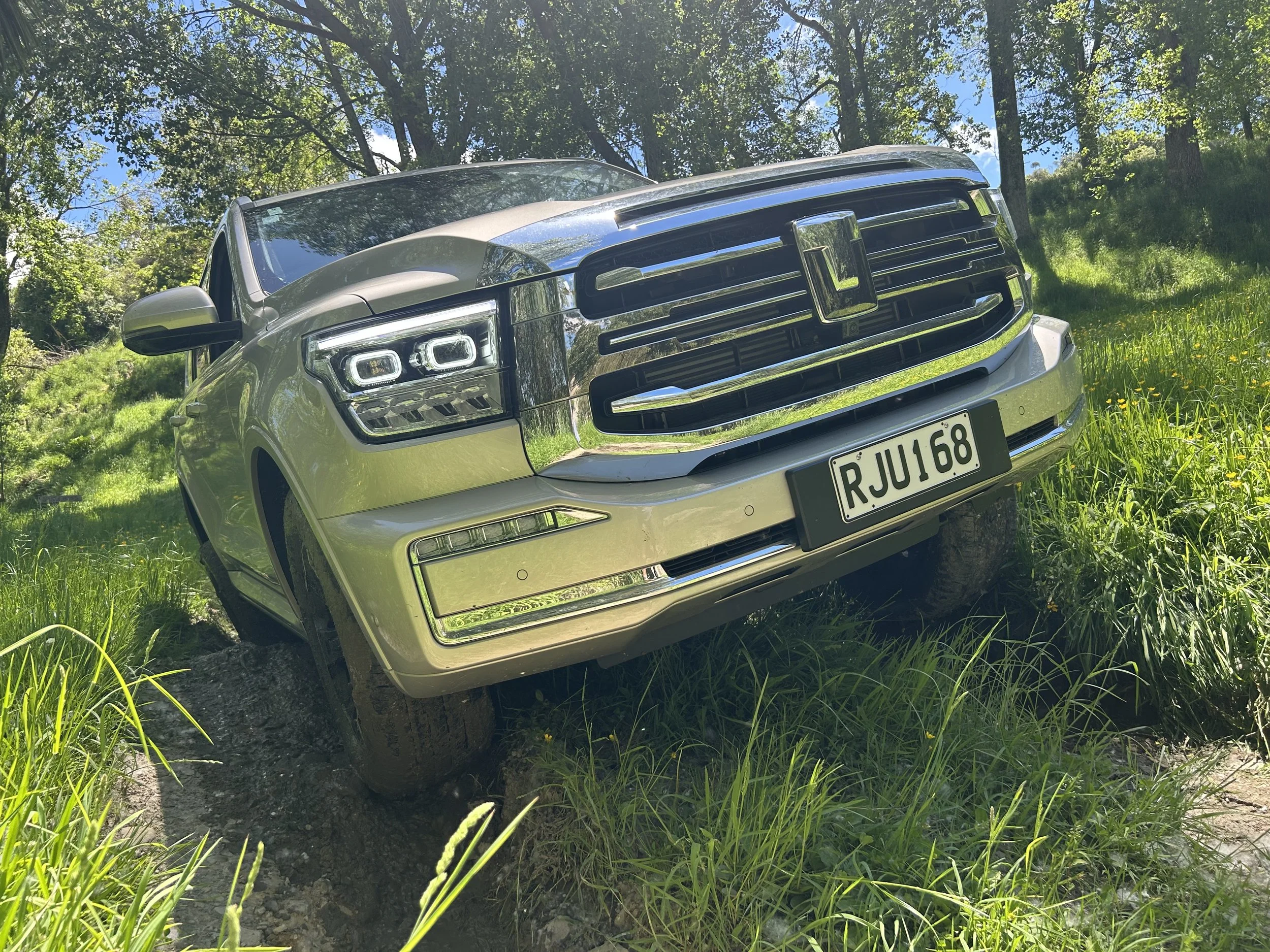
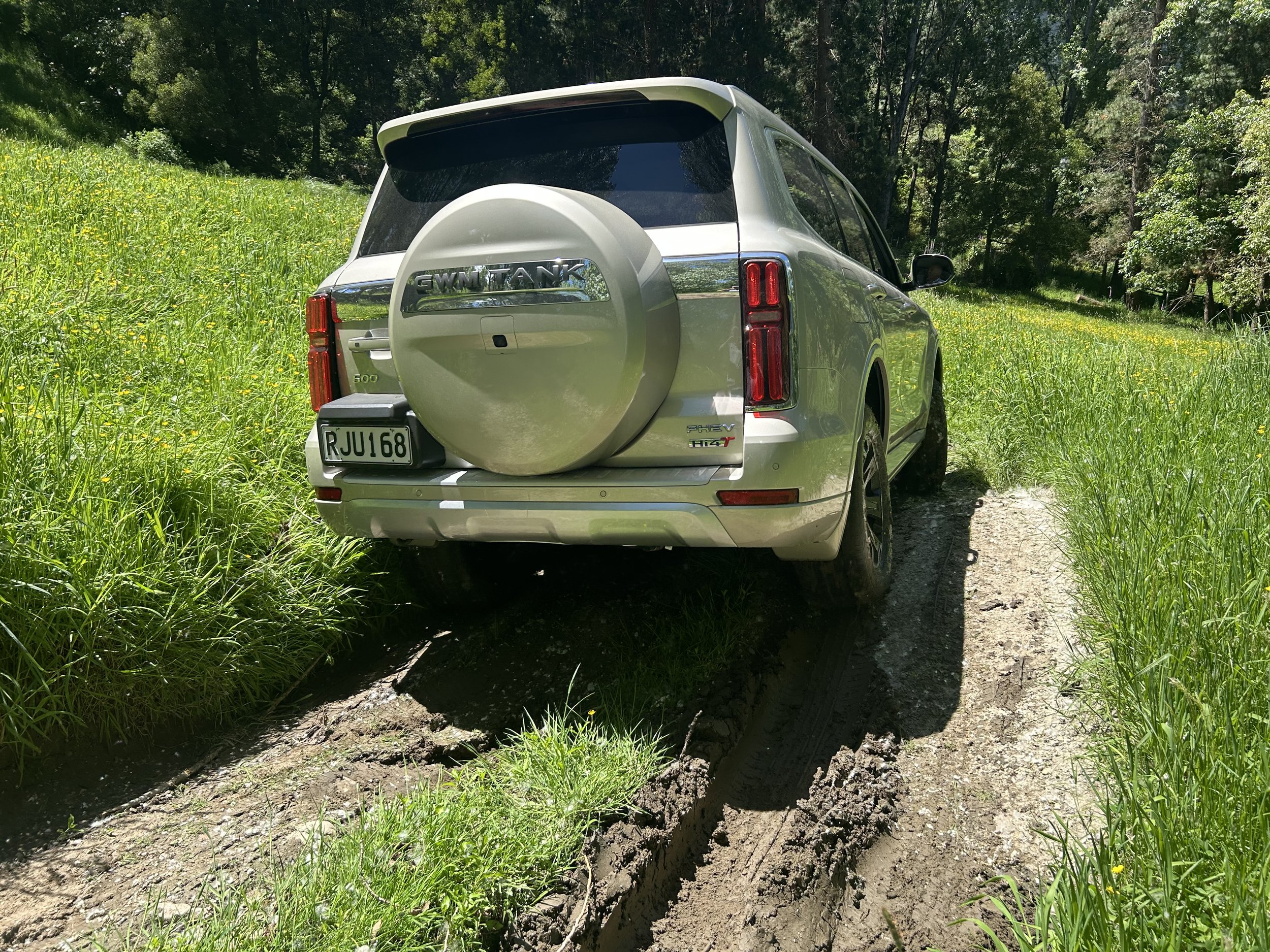
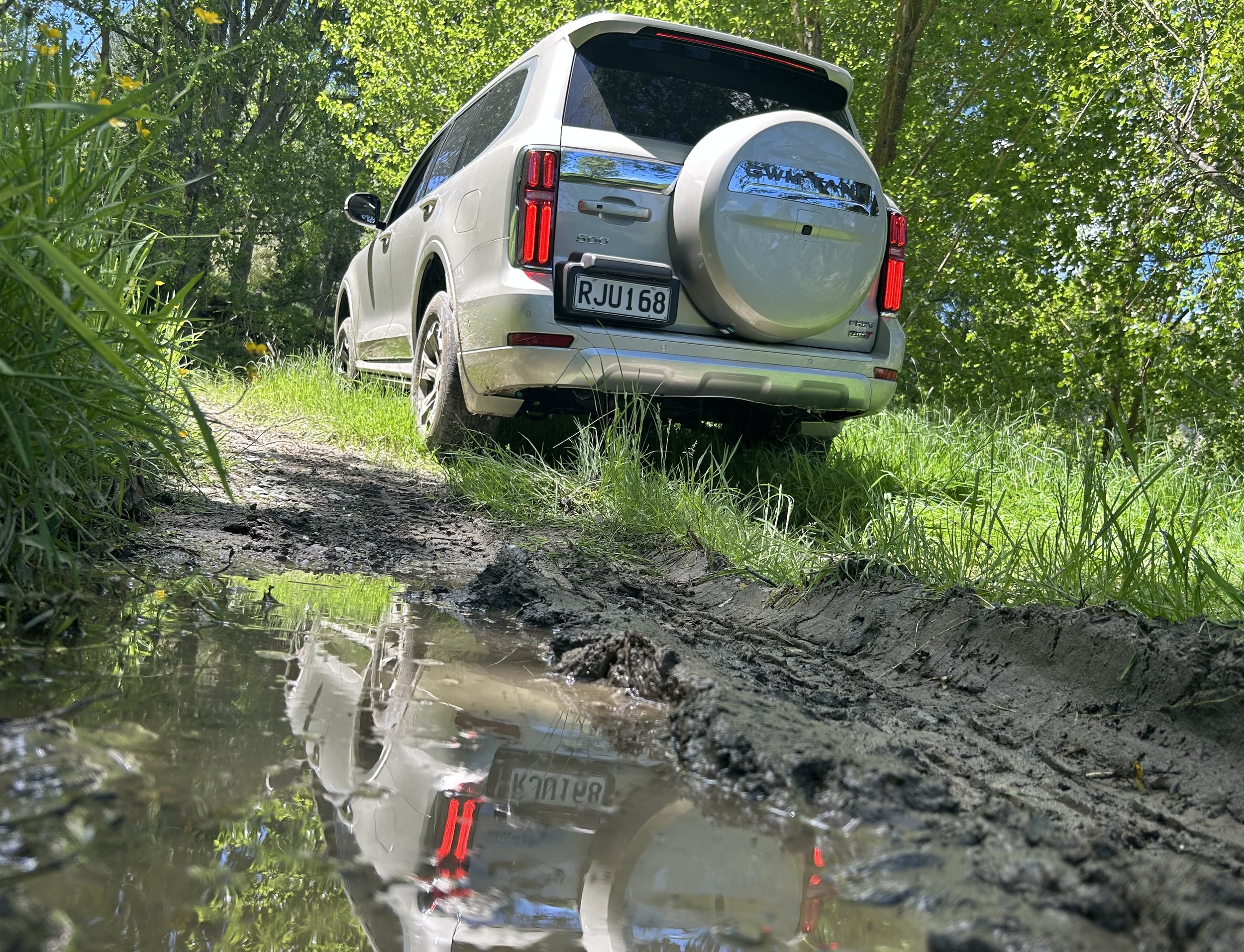
If there’s terrain too tough for the first plug-in hybrid ladder-frame sport utility to come to market, it wasn’t to be found at the test ground I took it too.
And given that the chosen venue has a good reputation for uncovering flaws, that’s not a bad credential.
A recent afternoon trekking off seal in the Manawatu resolved a question left hanging from attending GWM’s ‘Tech Day’ two months ago.
Had all gone well, initial assessment of the new technology flagship of the GWM Tank 500 range, the Hi4-T plug-in hybrid, would have filed straight after that original event.
The idea was to put the new model through its paces at the Lang Lang testing ground, the former Holden holding outside of Melbourne that’s home to a brilliant off-roading circuit.
Thing was, there were a number of other products to be tried first and … well, everything took time. More than was allocated.
Need to break away early in order to catch the flight home, meant flagging opportunity to hook the biggest catch of the day.
In hindsight, the subsequent solution concocted by GWM NZ boss Cameron Thomas provided much better exposure.
Instead of chance to sit behind the wheel for maybe 20 minutes’ tops, I could have it on home turf for a week. And rather than just once around a closed track, it could be driven for unlimited distance.
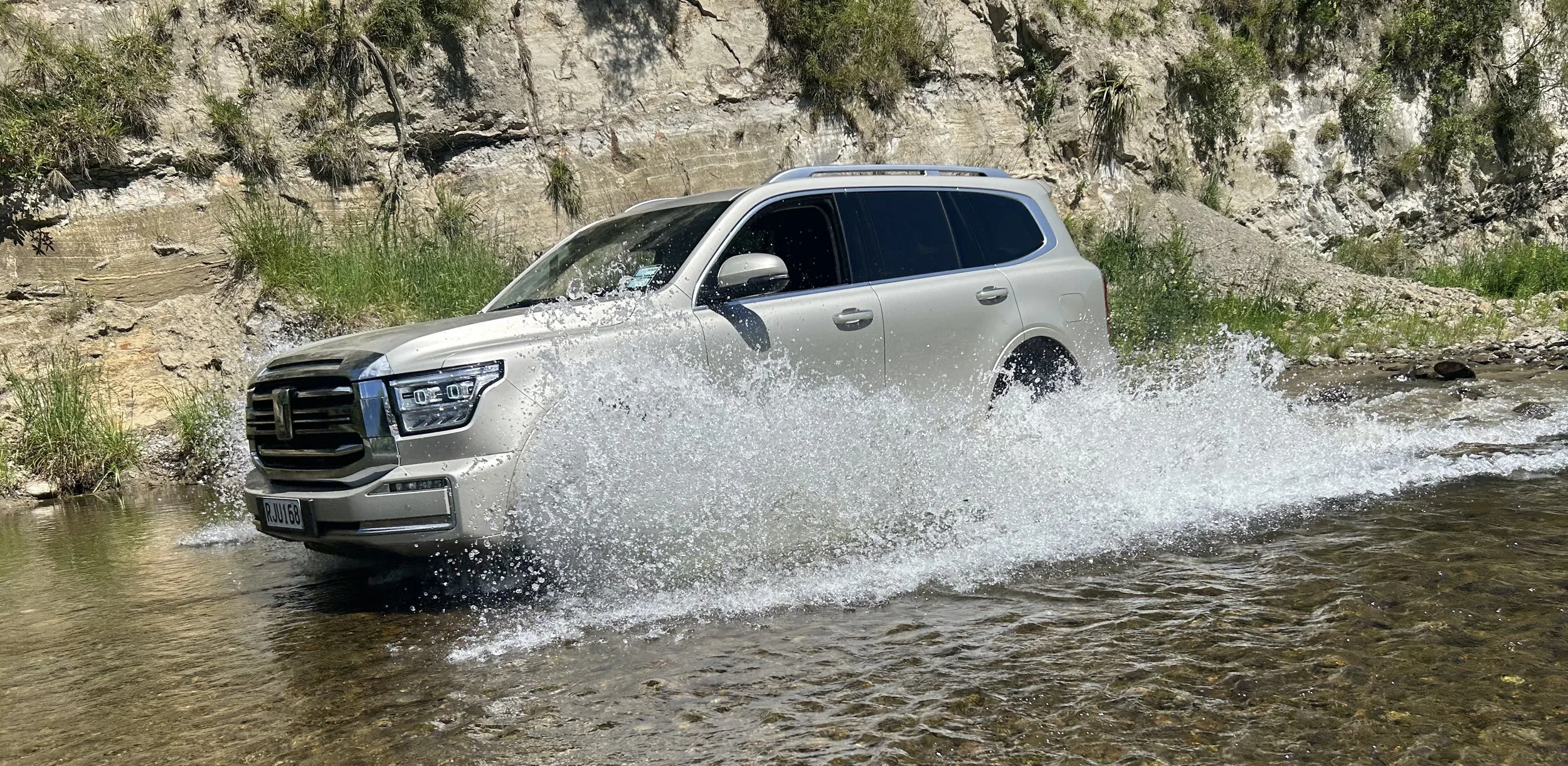
Anywhere? Well, basically, yes. Indeed, going off-seal wasn’t just encouraged but had been booked in by Cameron and local dealer Glyn Theobald.
You might have heard of Makoura Lodge in north Manawatu. It’s home to plenty of challenges, not least the famous ‘axle twister’ and the ‘staircase’.
I had the run of the place for an afternoon, with course creator Hugh McIntyre tagging along, not just to guide but also learn. He’s done countless hours here in orthodox off-roaders; this was his first chance to experience electric.
Tank brand is nicely established here and, so too, the 500. As much as this PHEV technology is fresh to the type, it’s also already put up some mileage in the platform-sharing Cannon Alpha ute. Next stop, early next year, is the Tank 300.
All have the HEV’s 2.0-litre 180kW/380Nm turbo four-cylinder petrol engine. The PHE applies a more powerful 120kW/400Nm electric motor feeding off a 37.11kWh nickel manganese battery pack, again routing via a nine-speed automatic.
Combined outputs of 300kW and 750Nm are claimed, up from 255kW/648Nm in the regular hybrid. Thanks to the electric motor’s low-down power, this giant achieves a spritely 0-100kmh time of 6.9 seconds in the most aggressive of the 11 drive modes.
It’ll also deliver 120km electric driving range, 950kms hybrid range and even eke consumption down to just 2.1L/100km at optimal. Also, it matches the other Tank 500 variants in having a 3000kg braked, 750kg unbraked tow rating (such a shame the test example lacked a tow hook).
Tasty enough? Petrol-electric with a plug is a future not every maker of big luggers is yet to accept, but uptake is growing. Two of the biggest names of off-roading - Jeep and Land Rover - have gone there, Toyota’s Land Cruiser 300-Series is the next adoptee.
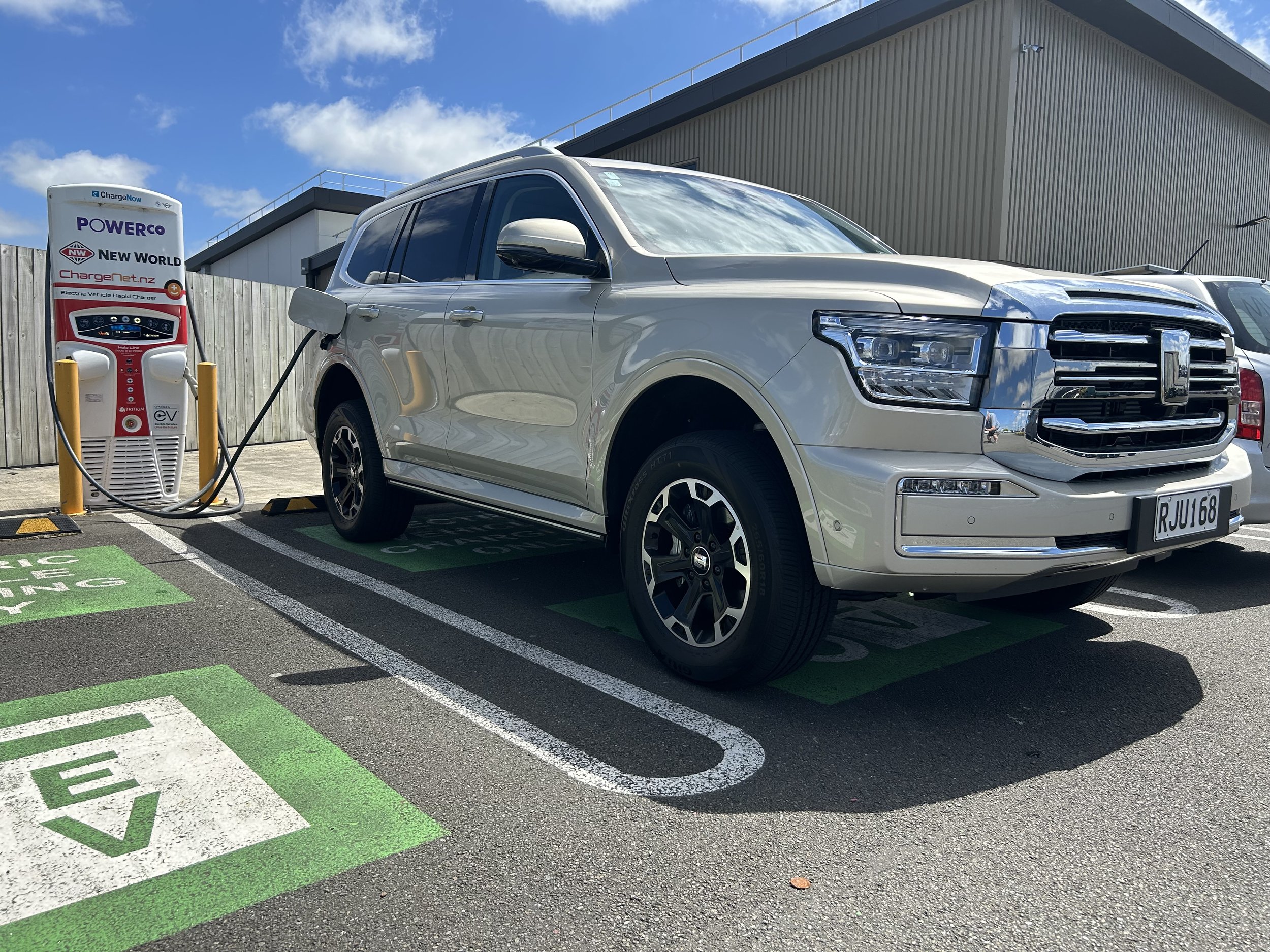
GWM is foremost among China’s big SUV makers that likes this tech. It has gone in boots and all and, remarkably, the Hi4-T set-up here isn’t their strongest brew.
Conceivably, we could have had almost as much eco with even more urge. Back in China, the next step up from Hi4-T is Hi-4-Z, which nails out a huge 635kW/1139Nm.
What kept it from here is thought about how and where owners might operate the type. GWM calls the Hi4-Z a more urban-focused application, by dint of it utilising a software-based system with an e-motor powering the rear axle.
The implication is that the latter’s fine if your idea of a big adventure is to tool around the urban jungle and nothing more. But not such a good thing for actual off-road exploring in actual off-road conditions.
That might nonetheless still suit Kiwi tastes, but not the neighbour’s. In GWM eyes, NZ and Australia are one. Australia is a rugged country; sentiment is Hi4-T, with its full-time four-wheel-drive with rear drive, all wheel drive high- and low-range gearing and locking front, centre and rear differentials is more suited regionally.
All the same, give the Hi4-T a quick once over and you might question how ready it is for the rough.
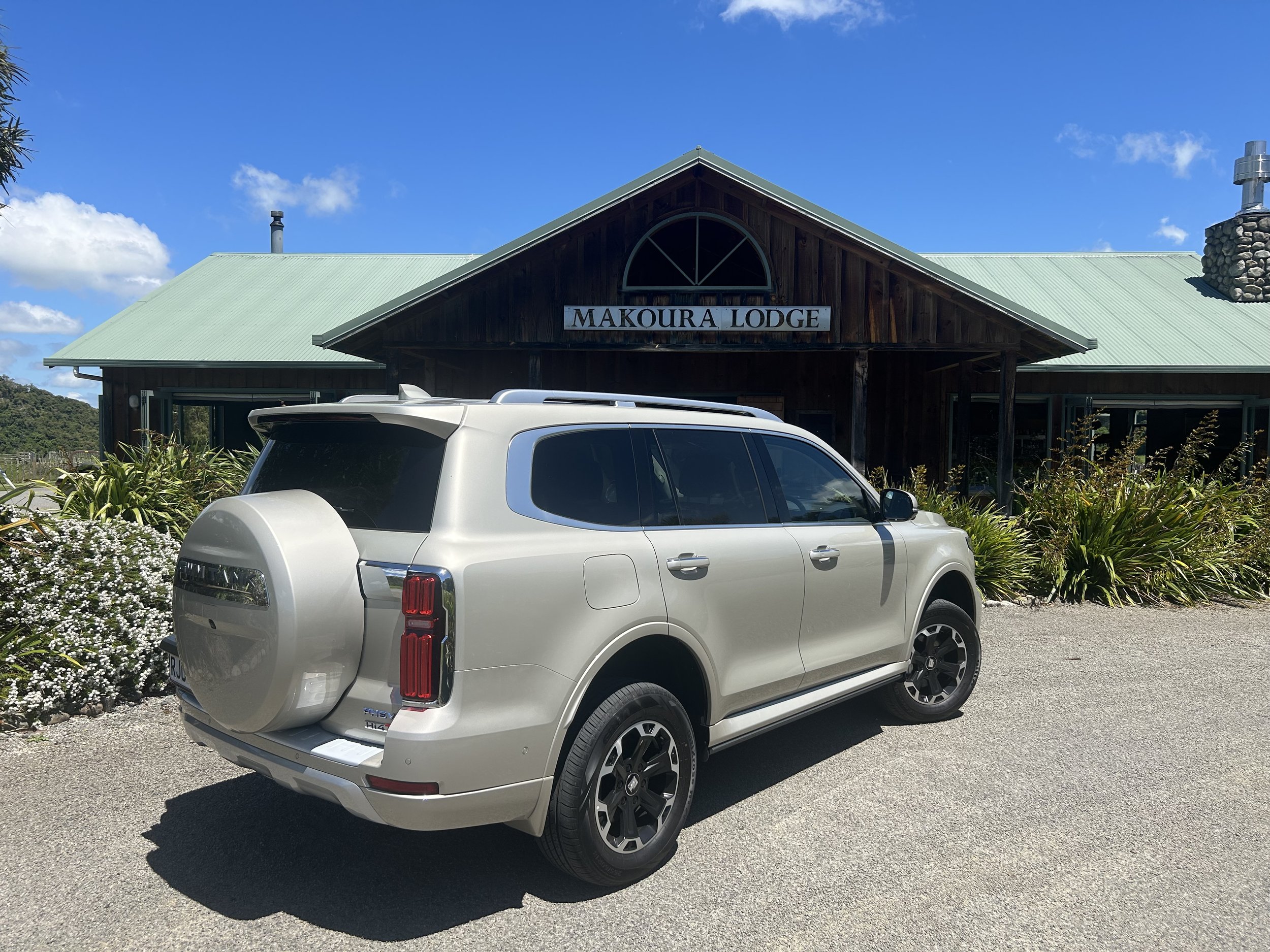
Ambition to present its biggest and best here as a byword for luxury is taken seriously; this thing takes the ‘refined comfort’ ideal very seriously. Lots of chrome on the outside, polished side steps that automatically lower on your approach relate that intent, but it really reinforces when you slide inside.
That’s real Nappa leather upholstery on the seats; all the carpets are soft and plush carpet. There are wooden inlays and silver highlights. the front seats are electrically controlled and multi-functional. And so on and so on … high-brow on a relative budget is a China 101. GWM excels at it.
Even though the control panels certainly remind it can have a go, if you want to - the 2H, AWD, 4H Lock, 4L Lock buttons are impossible to ignore - in overall look and ambience, it’s speaking far more loudly about aptitude for the school run than any sludge-readiness.
Yet as with regular hybrid models, it has more fortitude than you might believe is possible.
In addition to the Normal, Sport and Eco driving modes you’d use on the road, it also has Rock, Snow, Sand and the one chosen on our expedition: Mud. An ‘Expert Mode’ – complete with legal disclaimers – allows you to choose custom combinations from the raft of settings and preferences.
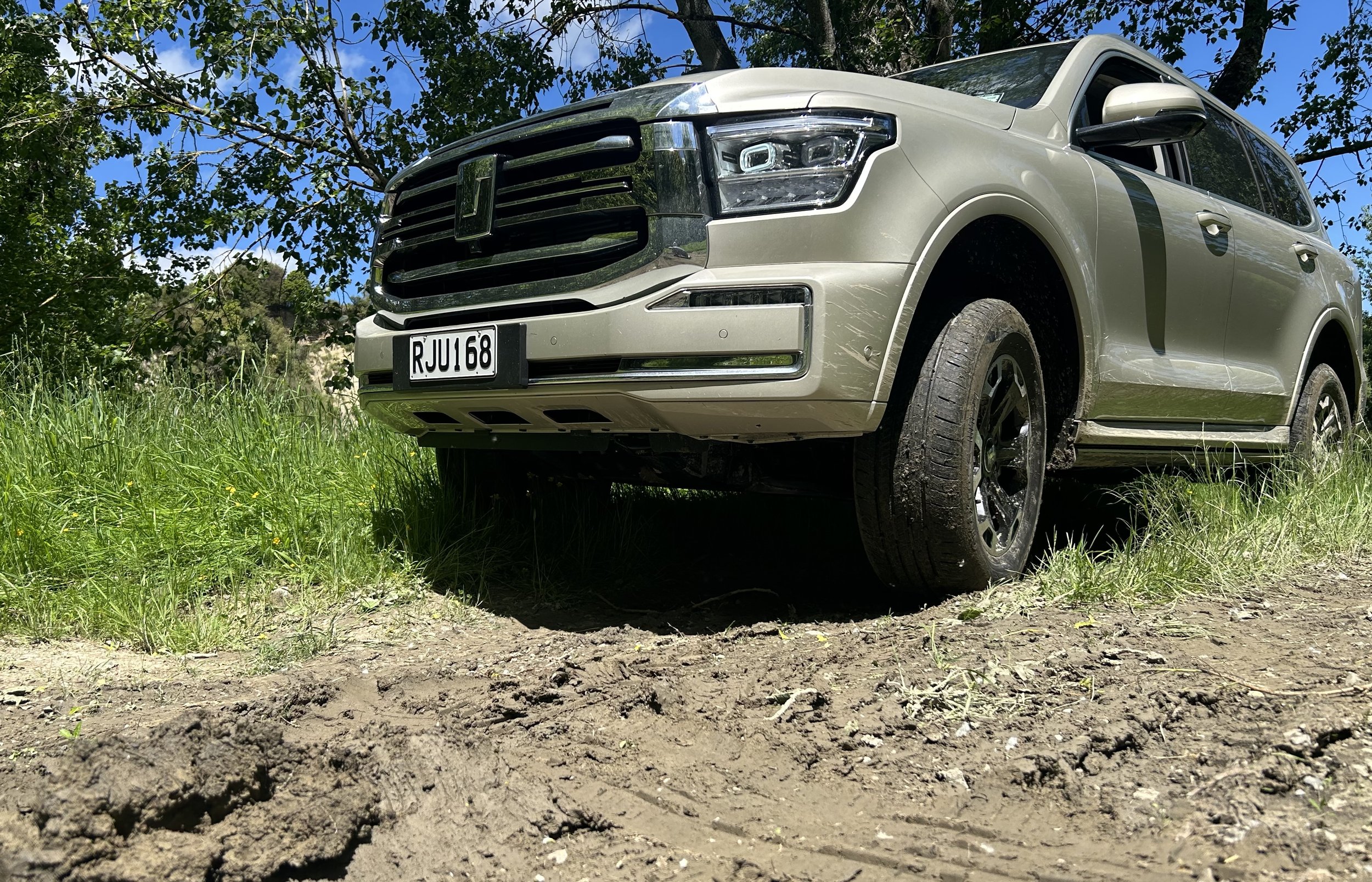
As much as ground clearance could be considered a bit marginal - the cited 213mm means it is 7mm lower than the other 500s, none of which are that lofty - yet it never bottomed.
Approach and departure angles are a relatively generous 29.5- and 24-degrees respectively, with a break over angle of 22.5-degrees.
The Hi4 architecture is engineered specifically for heavy-duty applications. They don’t get any heavier than this one. With the bigger battery and so on board, a 2.6 tonne giant in other formats resets the scales at 2.8.
That’s a lot to cart around, and while GWM admits this is about as far as electrification of this platform can reach because of engineering constraints - bigger, more powerful batteries exist, but packaging is the problem - kudos to them for getting it even this far.
Given the kind of vehicle it is, that even some genuine electric-pure operability is achievable is impressive in its own right, moreso even here than with the ute.
It means buyers who spend most of their time in town or on short journeys finally have the option to travel emissions-free in the kind of large, luxury-themed vehicle that is so often is derided as being the worst kind of choice for that application.
Silent running makes what is already a highly luxurious car even more so. It’s a big step up from the hybrid, which with a 1.76kWh battery pack is rarely able to engage any electric pure operability beyond a crawl.
As with any PHEV, though, it’s the usual story. The best of times relies on best of applications. If you end up depending on the engine on a longer trip, get out of the habit of regularly plugging in or insist on driving it in the sportiest mode, expect the consumption to increase.
Rather than the ultimate economy achievements, then, more relevant to long-term use is the factory’s combined fuel consumption of 8.8L/100km. That is 0.3L/100km higher than from the HEV, but don’t be disheartened. Plenty of smaller, lighter crossovers achieve no better.
The off-roading day was the third after pick up. I’d put around 150km on the clock over the preceding period, but it set off showing pure petrol range of 775km, 835km overall and average economy of 8.6L/100km.
It was 65kms to Makoura, accomplished in Smart mode. On arrival the average fuel burn was 6.3L/100m. EV range down to 84km. After tromping around the tough terrain, the fuel burn was up to 10L/100km. Given the workout, very acceptable. The 500 returned after three more days’ driving, in which time it clocked another 250kms.
Could it be better? In some ways, yes. For one, it’d be great if GWM could simply dumb down it’s on board computing for economy; the instant and average economies for fuel and electric all bundle as one display, which can cause confusion.
Also, while it’s great that PHEV tailors to run in pure electric, or in settings that blend electric with ICE, ability to 'save' the battery's power for use later in the journey - a function Land Rover has - is not furnished, which is a lapse.
That would have come in handy for our outing. Prep for Makoura included topping the battery to full charge; not a prolonged process as the battery can be topped up to 80 percent via the 50kWh DC fast-charger chosen in as little as 24 minutes (far preferable to the 6.5 hours via an 11kW home charger). We took on 22.2kWh before a Leaf owner tired of waiting her turn pulled the plug (yeah, this sort of thing STILL goes on); enough for 94 percent state of charge.

Keeping it there was impossible, sadly. Even with effort to allow the electronics best chance of managing the energy between the battery and engine, the battery had nonetheless depleted by 30 percent even before it went into the off-road section.
Not a big issue as it turned out, but still an annoyance if you have intent to use the EV aspect to the max off-seal, but have to drive a distance to reach that opportunity.
As it happened, we had more than enough zap to allow the Tank to zip over some of the obstacles with just the electric motor involving, and also drive off the property afterward.
On strength of that performance, GWM claim that the hybrid powertrain hasn’t detracted from the model’s inherent off-road ability won’t be easily contested. Electric alone very much helps with off-road response and control.
More latitude would make it even better. Most of Makoura’s course required low range and generally with at least the rear diff locked. When set to that, electric alone bows out. I can understand why, but it’s a pity it does. The stealth opportunities for, say, wildlife spotting would be amazing.
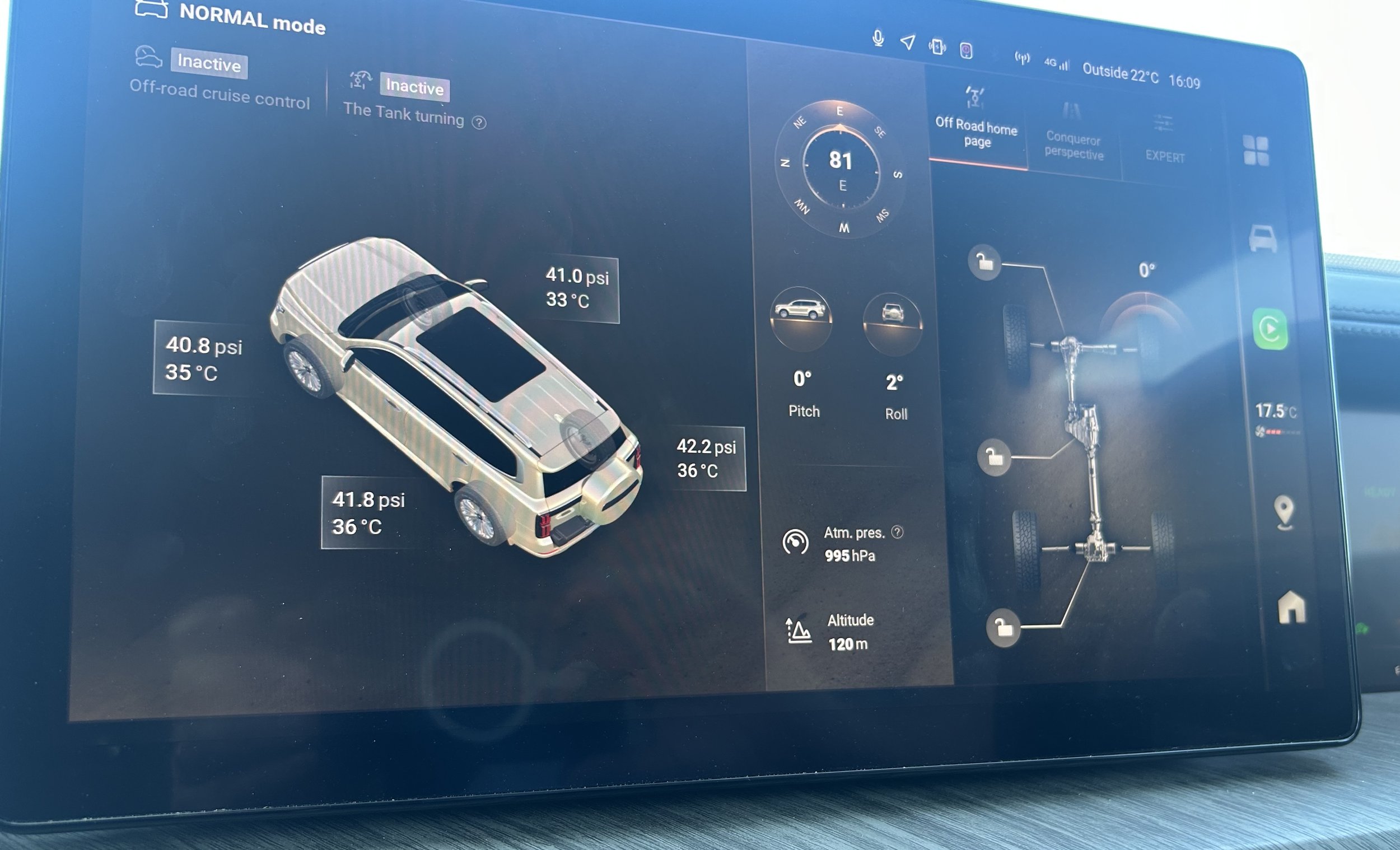
The hardest challenge at Makoura is a steep, rocky ascent. The Tank asked for a couple of goes to conquer that one. For sake of experimentation, we first tried in EV pure and failed; it just ran out of impetus. The same in low range with the diffs. Locking the latter and nailing the throttle once it settled into the climb did the trick, albeit with plenty of noise and revs. In hindsight, lowering the tyres from their road pressures of 39 PSi all round would have been smarter.
The 500’s tall driving position provides a clear view of your surroundings, but off road there are plenty of blind spots; but GWM has technology that by and large addresses this.
Of particular benefit is the ‘Off-road screen’, which shows information like tyre pressures, pitch and roll angles, whether the front, centre or rear differentials are locked, as well as even air pressure and altitude above sea level. Also invaluable are the camera views that show the terrain, especially the areas right in front of the nose, that a driver would otherwise simply not see. All very useful for a large vehicle demanding room to manoeuvre, with 3.5 turns lock-to-lock.
A bit more refinement of those aids wouldn’t go amiss. With so much dedication to all that, it does seem odd the parking sensors cannot be rendered fully inactive when trekking. The binging and bonging drives you crazy.
Also, on one occasion the hill decent went a bit haywire, allowing the Tank to unexpectedly gain speed when I would have preferred it had not. And we also learned to think carefully about what modes, and drive settings, to be in before taking on a challenge.
Revising to Low halfway through an uphill section became a necessity, but for this you need to select neutral shifter before pushing a button, that sites between locking front and rear diff buttons. It’s not a clever regime because it momentarily leaves the vehicle at risk of moving. I had the brake pedal down hard, but this action still caused the car to slip momentarily backward. A bit disconcerting for all aboard.
But as an accomplice for adventures, it shows promise. You might well think about exchanging the standard, obviously road-tuned Giti HT71 XRosso 265/60 rubber for something more rugged, but the significant suspension articulation and the dexterity of the four-wheel drive system is pretty decent, and the battery seems well protected from being bashed.
One nice Easter Egg appeal that’ll surely make it a star guest at a remote camping spot is the vehicle-to-load (V2L) capability to operate electrical appliances and campground lighting.
Apart from the PHEV aspect, the obvious thought that might occur when considering this model is the same one that crops with HEV consideration: Is a 2.0-litre four cylinder engine large enough for this size of vehicle?
Actually, it is. Even though it can sound strained in circumstances when it is clearly picking up most of the workload, and feels gruff when it kicks in, it never seems overwhelmed by anything asked of it.
And the key is that it is not really ever operating alone; even when the battery is unable to feed pure electric impetus, it always keeps enough in reserve to act as an accomplice to the ICE, so you always benefit from combined power and torque.
What potentially helps is that Tank 500 itself is not the kind of vehicle you will feel compelled to drive too hard.
It will stand a certain degree of assertiveness, but beyond that point there’s clear reminder from the swagger and sway about how much weight is being thrown around. So as much as it has ability to step off very smartly, really it’s a vehicle whose dynamics demand sensibility.
For all that it rides quietly, and offers reasonable grip, it does seem curious that GM has gone for an 18 inch tyre rim, when most rivals go larger. But that’s more a visual thing than anything else.
Raising the appeal is that it actually sites as the second-most expensive Tank 500, coming in for $3000 less than the Ultra Hybrid.
The reason why becomes obvious when inspecting the interior.
If you buy the hybrid, it comes as as seven seater, but with PHEV the battery is so large tha’s not possible, so it loses that third row. This is also the reason why the petrol tank capacity is reduced, from 80 litres in the HEV to 70 here, and why cargo capacity drops from 795 litres to 646, though when the second row is folded, the 1400 litres’ offered is only 59L shy.
Seven seat functionality is a strong SUV selling point, but the third row in a HEV Tank is very child-first. Either way, row two is spacious, with good head and leg room and enough space for three adults shoulder-to-shoulder.
The fit out here also provisions climate and seat heating/ventilation controls in the rear, plus there’s a 7.0-inch digital screen in the centre rear armrest, which also controls climate and other functions. Move over Lexus and Range Rover.
The Tank is also kitted a panoramic sunroof, 14.6-inch infotainment unit, Infinity audio system, and heated and cooled front seats with massage function all featuring. This one came in Dune Gold, one of the three metallic paint options that carry a modest extra cost.
The front chairs are well-padded and lend an armchair-like feel and every fitting is to high quality. The analogue clock sitting proud between two air vents is a curiosity when so much else is - to coin a Trumpism - “computer”. All touch functions operating via a 14.6-inch touchscreen, plus digital instruments for the driver.
Gear stick? Not exactly. It’s a chunky shifty. There’s also a rotary dial that allows you to spin your way to a different driving mode.
The PHEV has all the safety equipment meted to the hybrid but the five-star ANCAP safety rating decided for the non-plug model doesn’t apply.
How will the market react to it? We’re not giving PHEVs the interest they deserve just now, but conceivably even if it fills a niche, then it’s worth considering, though with some acceptances.
One obvious key is understanding the limitations, like battery level and using specific driving modes for optimal grip. Another, in respect to the GWM, is coming to grips with how the system acts. PHEV is fundamentally simple, but unfortunately here the drivetrain functions do seem more complex than they surely need to be. Mind you, this is a car which seems to be going for a world record count of on-screen widgets. You know you’re in trouble when even basic adjustments, say to the infotainment and temperature settings, have you second-guessing. Some functionality options on this model simply mystify.
The big question is where it stands in the overall scene. It is clearly superior to a full-on petrol in any given scenario, but that’s not what people will be thinking about.
Diesel is the fuel of choice in this sector. It has its obvious drawbacks and the environmental aspect is not brilliant. Even the cleanest diesels are dirty. Compression ignition is about the worst thing for a function PHEV nails brilliantly; short cold runs around town.
But the reason why most large SUVs haven’t budged from the diesel zone is obvious. Brilliance for long-distance towing with heavy loads or when asked to carry out real hard yards in tough environments without draining the fuel tank rapidly is an acknowledged strength that has yet to be bettered by anything else. ICE-electric has narrowed the gap, but no more.
GWM acknowledged as much at the Tech Days event when signalling that the next development for the Tank 500 is adoption in 2026 of a 3.0-litre turbodiesel, which won’t be hybridised and seems set to have markedly more power and torque output than the current oiler on this platform, the 135kW/480Nm 2.4-litre.
Also likely in 2026 is that GWM will expand its SUV family to include the physically larger Tank 700. We saw it in Melbourne with a turbocharged V6 petrol PHEV credited with a combined 385kW/850Nm. That’s the primary engine for China. But from tenor of talk at the event, it seems more likely to roll out here with the big-lunged diesel.