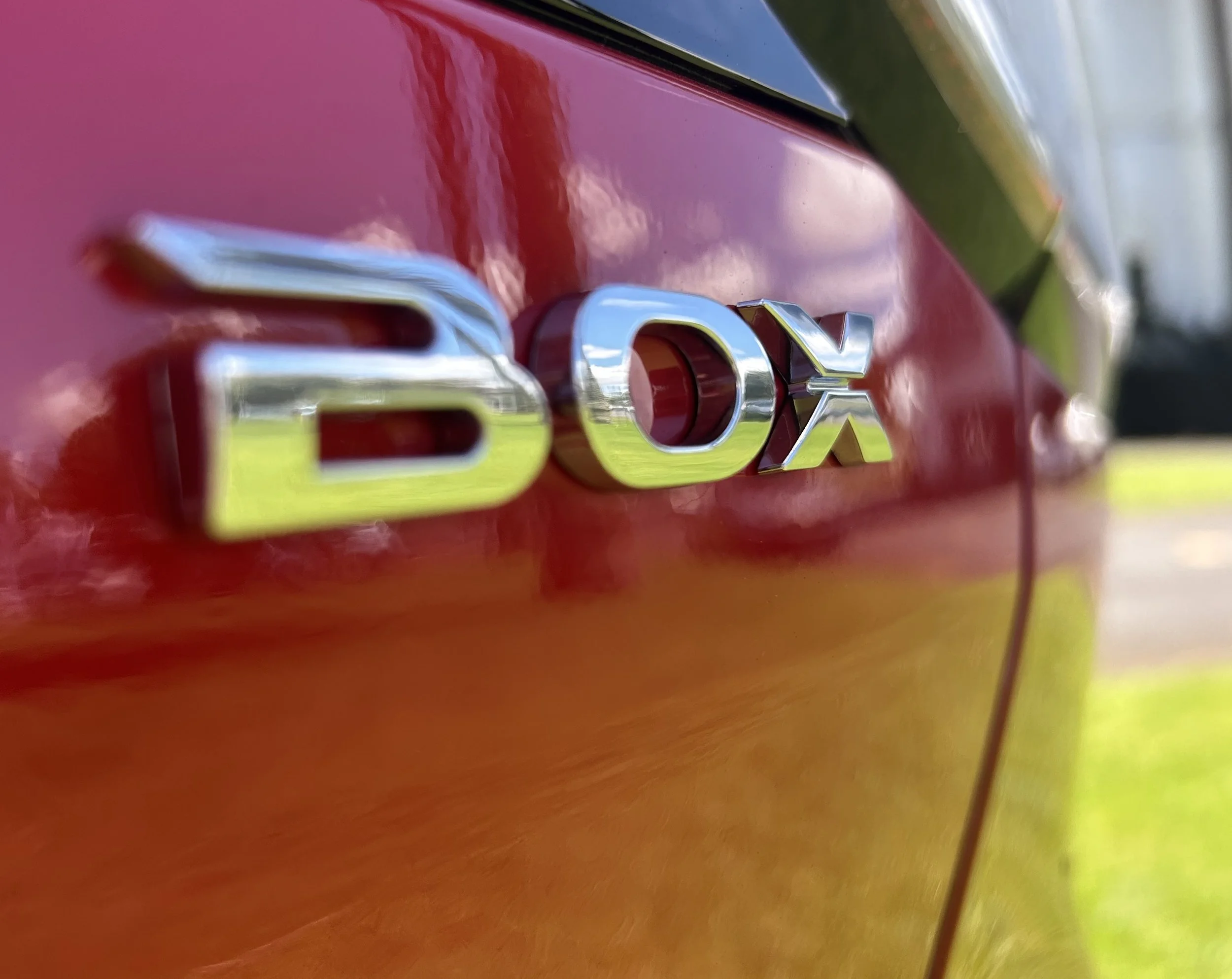
Dongfeng Box first drive: Cheap, quirky, charming … and a cat
/A heavily loaded electric car for much the same money being asked for popular small petrol products is certainly an intriguing proposition. Will it take on?

WITH sticker price parity all but achieved, choosing a small electric car over one of like size committed to fossil fuel becomes a matter of considering what’s more convenient - visiting a petrol station and spending big dollars or replenishing off the mains at home for perhaps little more than cents?
That’s among arguments being put by the distributor of Dongfeng in favour of the Box, the second compact electric car from China within a week to release for $29,990, following the BYD Atto 1.
Even though the Box’s sticker is a launch special, and will lift to $32,990 in time (probably at end of January), Simon Rutherford, chief executive of Armstrong’s Distribution Limited, says his car’s positioning is a “barrier breaking milestone” that will do much to establish Dongfeng here as a serious player.
Box is proposed as a cornerstone of an ambition that will deliver two larger electrics - the Vigo sports utility and 007 sedan (both on show at yesterday’s media event, neither available to drive) - next year then potentially more products beyond. Some potentially with internal combustion, some perhaps representing under Dongfeng’s other sub-brands.
Delivering more car for less money seems a typical of all China’s brands here, yet Dongfeng - a big state-owned enterprise whose name means ‘East Wind’ and whose logo is a representation of two swallows riding said breeze - aspires to position as the “absolute value” brand out of the world’s largest car making country.
Box is the hero of the moment in respect to that ambition. With it there’s opportunity to show that a car that costs no more than the popular petrols in its price range, is likely to be as cheap to run overall (impending road user charges on petrol are required to emphatically cement that) and easier to operate - to point it doesn’t even have a start button - while being better provisioned is the better choice.
“When people consider Box they will understand the actual ease of ownership and the ease of use count for a lot,” Rutherford says.
“For a small vehicle, it punches well above its weight across a number of criteria, especially when it comes to value for money.
“And, when combined with nimble handling and a compact size complemented with an impressive city-based pure EV range, it is breaking barriers to EV fun and really is the perfect urban vehicle.”
Sentiment is that Box not only shows up usual suspects in the conventional petrol corner of the small car sector but also its sole ohm ground rival, Atto 1.
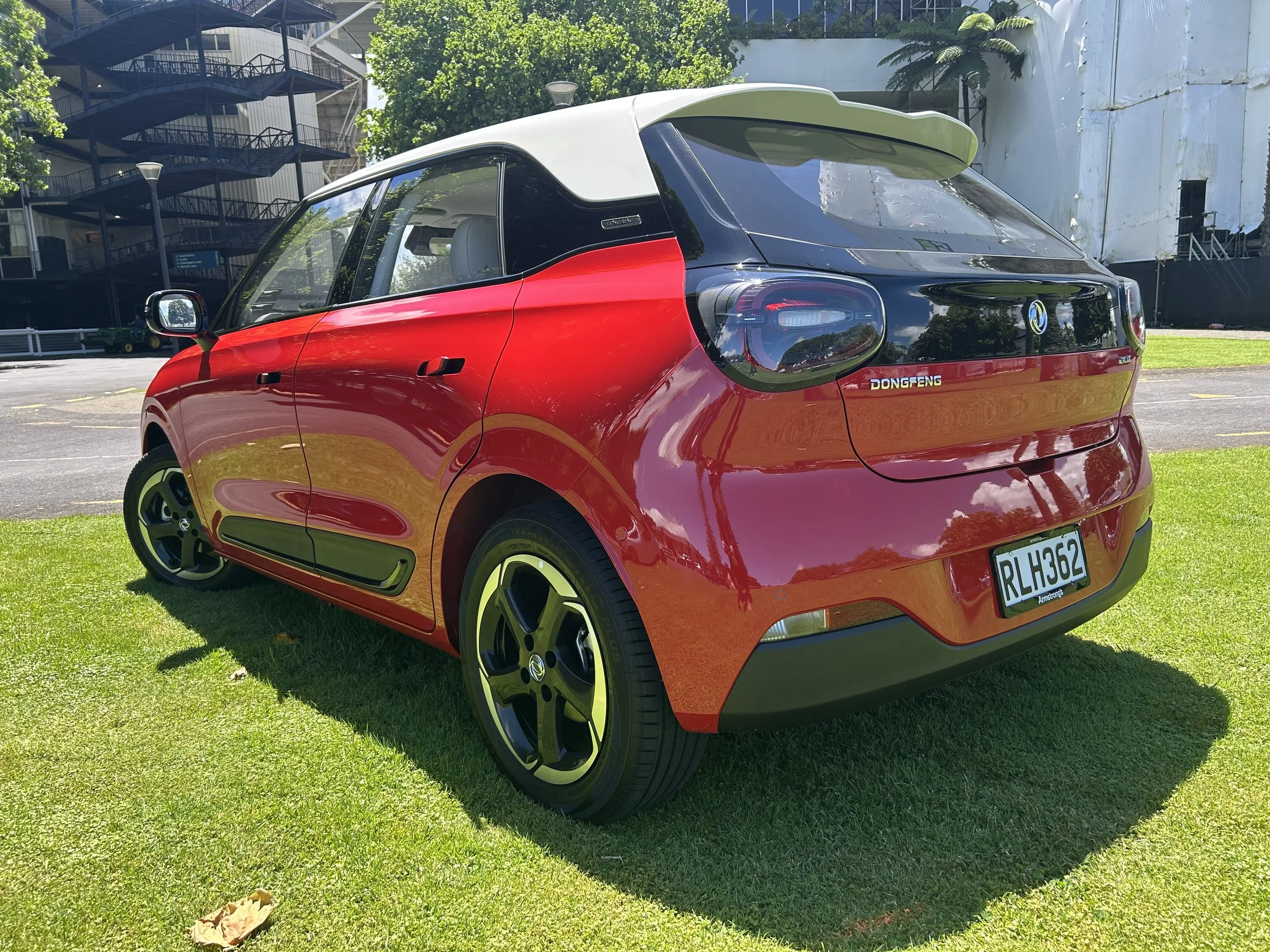
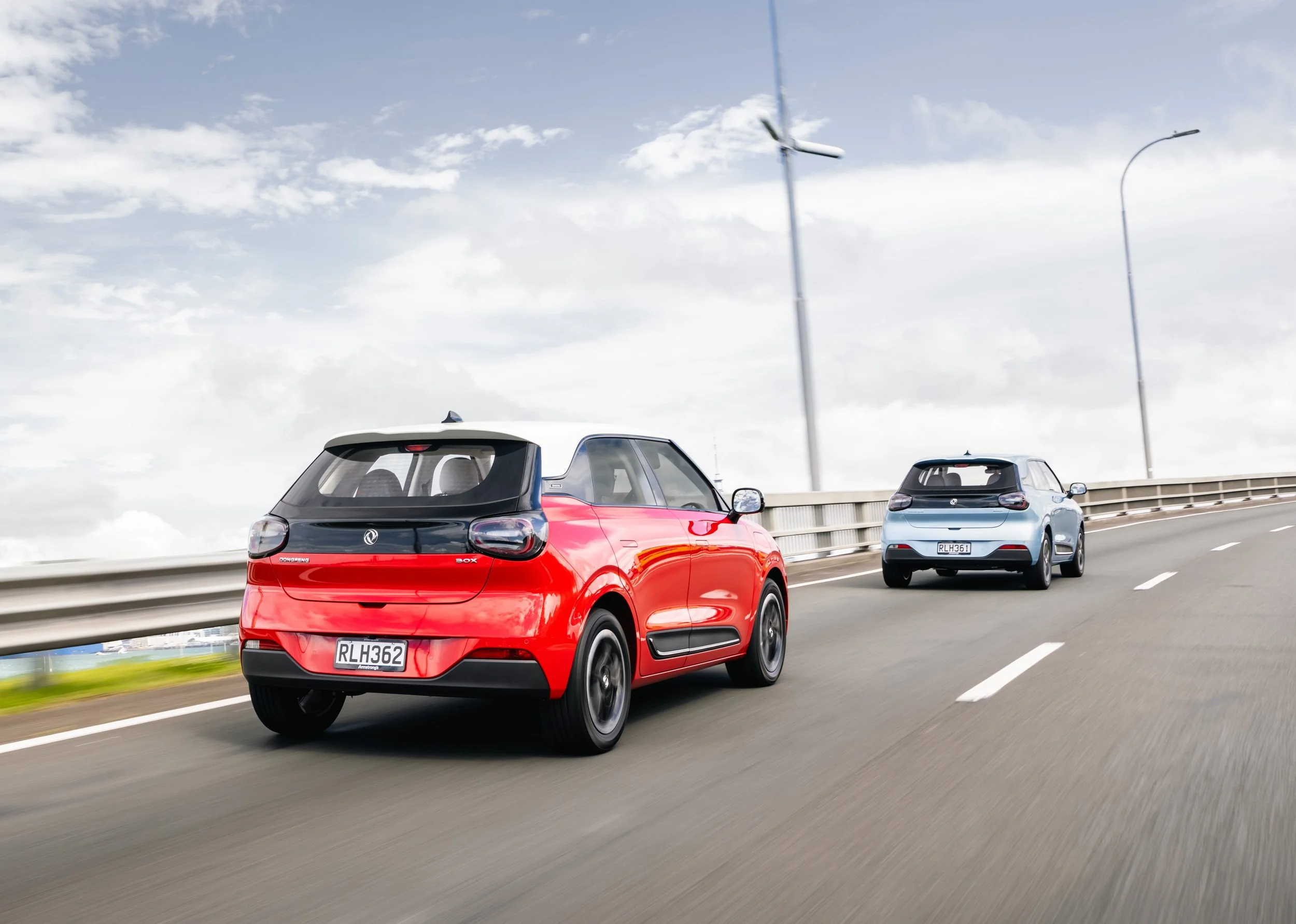
At 4020mm long, 1890mm wide and 1570mm tall, Box is physically larger and roomier than BYD’s baby; it has a more capacious cabin and a large-ish boot (326 litres all seats up, raising to 945L back seat down).
What’s more telling, Rutherford and his cohorts feel, is that their front-drive single motor car goes further with a 317 kilometre WLTP-cited range, is more powerful (with 70kW/140Nm) and has a specification advantage. The Atto 1 that most closely mirrors the Dongfeng five-seater costs $6000 more than the version Box prices against.
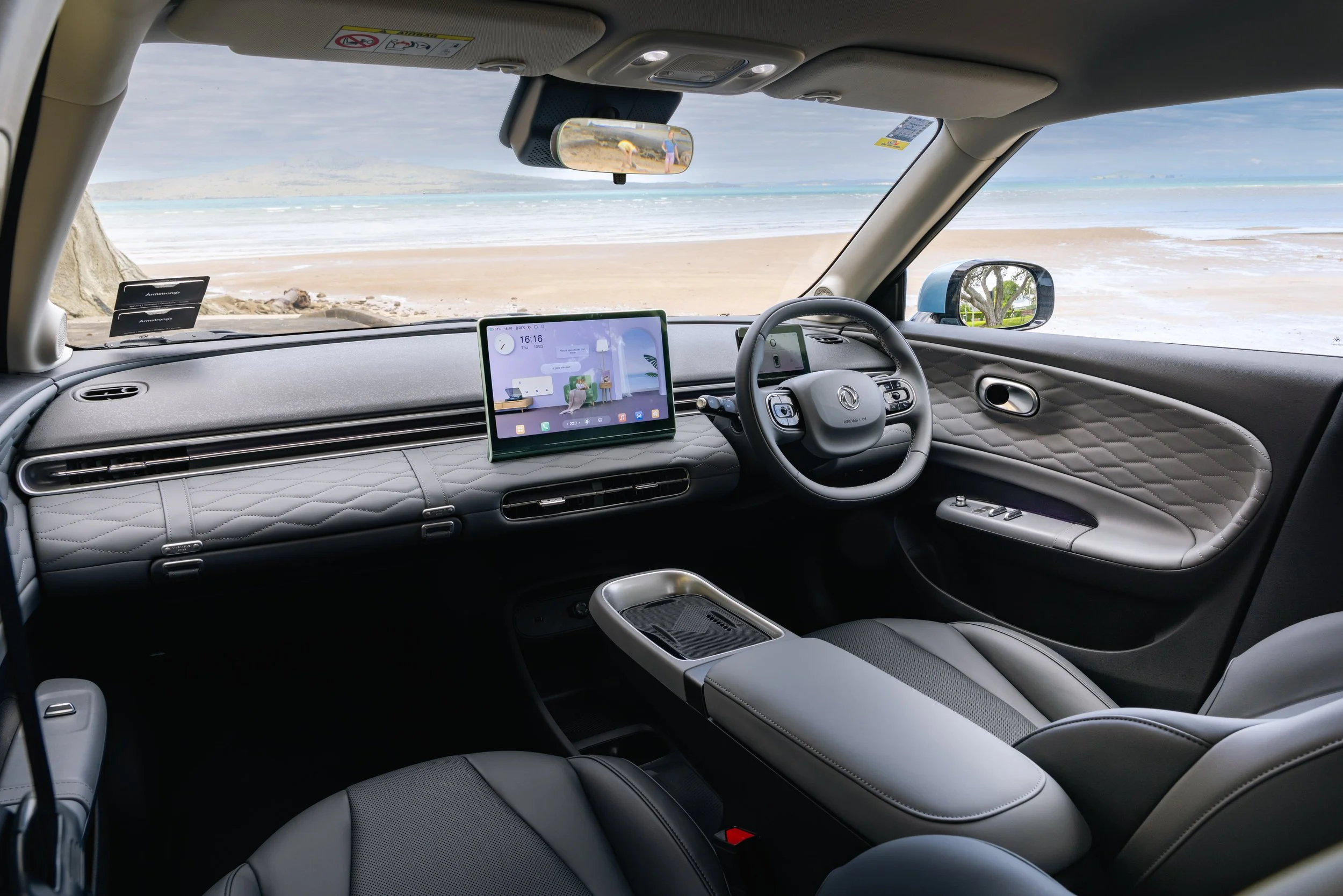
Budget-minded products tend to be delivered with budget ingredients. The heavy use of vinyls and hard plastics within the cabin conforms to that ideal. Yet in ambience and how it outfits, this is far away from being your average ‘cheap’ car.
A six-way electronically adjustable driver seat with four memory presets plus offers heating and ventilation functionality is a rare provision in any car at this price. A self-parking feature that works not just for parallel but also angle parks using cameras and (take note Tesla) ultra-sonic sensors is also not usual at this spend.
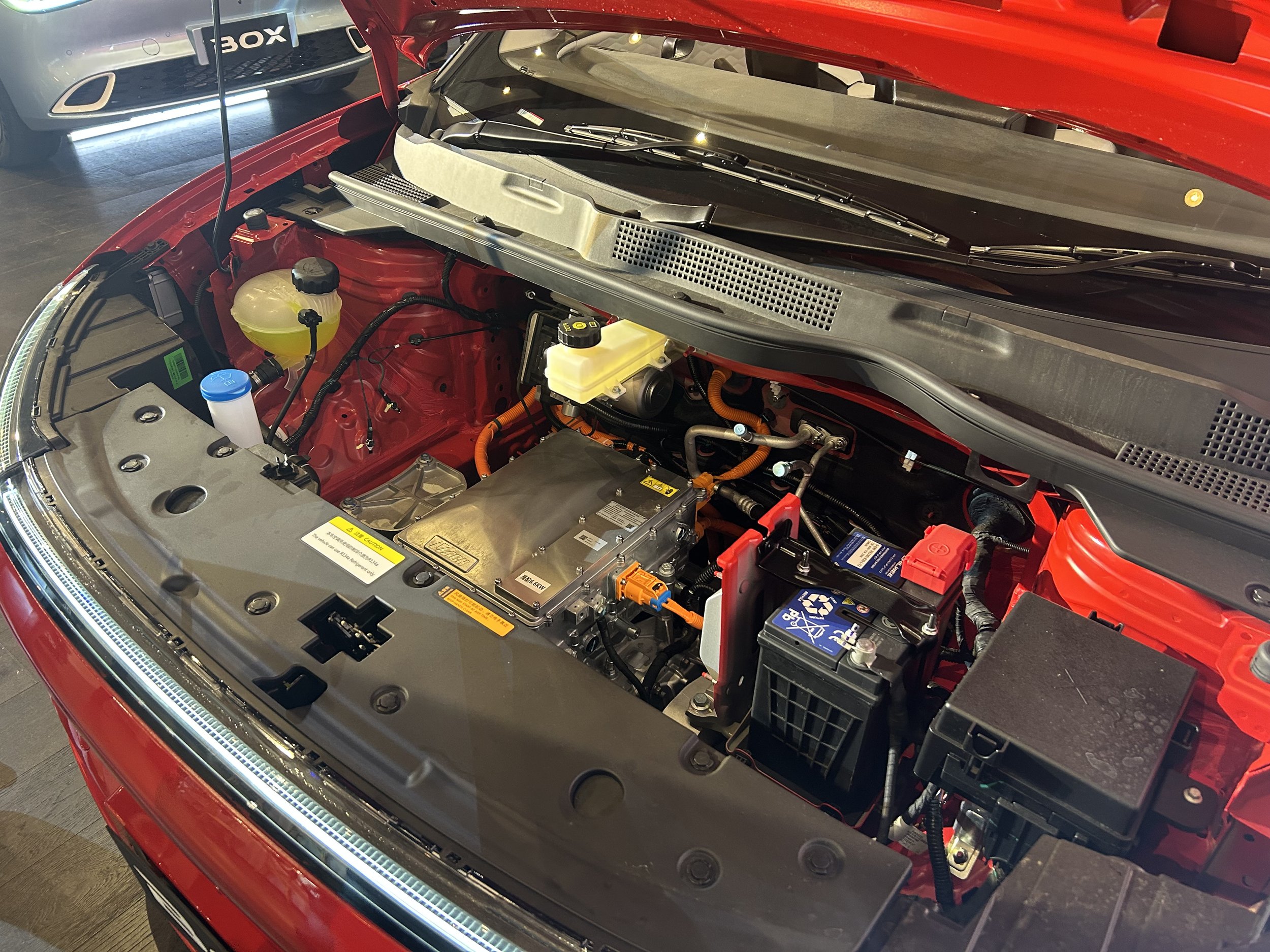
Box is one of a few EVs here of any size or price with included-price vehicle to load, enabling it to act as a power source for appliances and external devices.
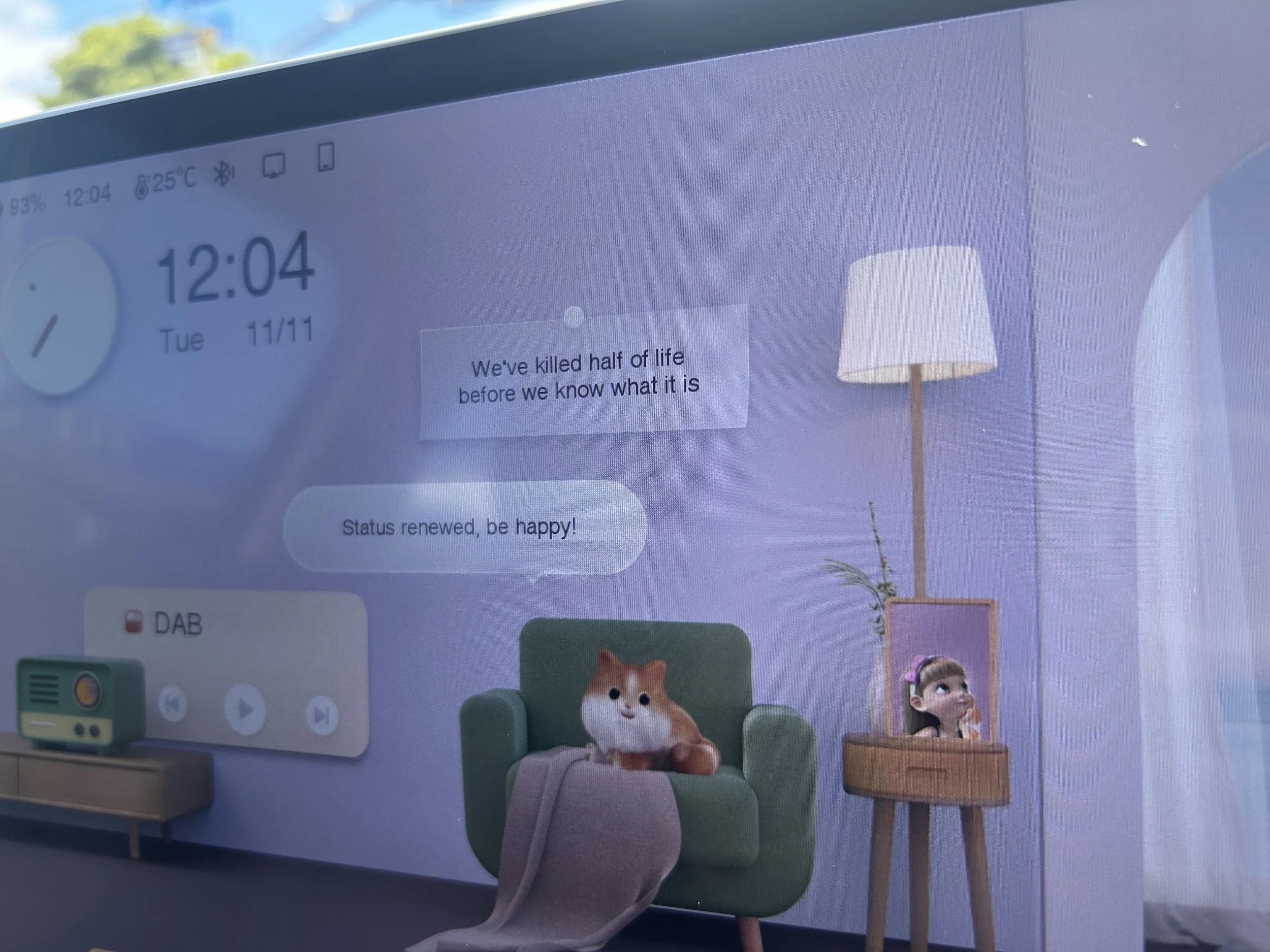
It’s not a Chinese car unless it has a few quirks. I cannot name another one in which the front seats can be completely swivelled and folded flat to create a kind of bed. The infotainment seems to operate with a very fast processor but the home screen having an animated cat as your voice control prompt and a guide is a bit of a giggle.
Maybe that’s a case of someone mis-hearing the first word of the phrase ‘feeling good’ as ‘feline’. Other some function prompts haven’t come through translation well, either. ‘Voice reminder for charing (sic) device forgotten’ and ‘voice reminder for freezing under low temperature’ demand more good-natured investigation.
Quilted interior panels and handbag straps on the dash are an exotic touch; likewise some of the colours. It might ask a certain degree of bravery to select purple as an external colour and also an internal hue, with white. Alternate interior trim mix alternates are grey and white and black and white.
Options are few - the primary one is a frunk luggage box that sites above the front-mounted motor for $450 - and though some paints add $500 to the sticker, that’s also the premium for getting the car with a trendy, if patently MINI-derived, white roof/red body scheme. Most brands charge somewhat more for dual hue combos.
Radio committed to Digital Audio Broadcasting gets ahead of NZ; we’ don’t have that. So to receive FM and AM by traditional analogue waves means using a radio app on your phone. Likewise, it asks for an after-market Bluetooth dongle to sort out wireless Apple CarPlay and Android Auto, which you need enacted if you want to use sat nav. This might also seem a fussy fix for older buyers.
No bones: ADL is working hard to secure business. It has sorted a finance package and will venture into guaranteed future value; always a brave call at a time when residuals of all cars, but EVs in particular, have been all over the place.
The car comes with a compelling six-year/ 200,000km warranty and eight-year/ 200,000km traction battery warranty. Scheduled servicing will appeal; from brand new, it doesn’t ask to be looked at until it clocks 15000kms.
No-one is saying Box is for everyone. Though it has ability for sustained open road driving, the top speed of 140kmh a modest step-off - Dongfeng usually cites 0-50kmh (in 4.6 seconds), rather than -100kmh - and it outfitting with 215/55 R17 rubber reminds it is primarily aimed at the city.
This reinforced in a 40 minute exploratory run through Auckland yesterday, using the motorway initially then scooting around back streets.
The driving position presents good visibility, the car isn’t overtly dynamic, but seems to sit nicely on the road, is peppy and isn’t too noisy (on smooth tarmac, at least), with just a touch of motor whine but little else.
China has around 200 car brands and, it seems, just as many tyre makers: Wanli is a fresh brand name to me and its Harmonic Plus formulation is very quiet. Dry surface grip seems acceptable.
There are the usual performance modes that simply seem to alter the throttle feel, it has a steering weight adjustment and you can mess with brake regeneration feel, all accessed via sub-menus.
Box has the usual swathe of active and passive crash avoidance, safety and driver assist features - some a bit too intrusive (halfway through my drive, I had the lane keep assist deactivated).
It didn’t do too brilliantly in independent testing by Europe’s NCAP, a sister to our own ANCAP which has yet to consider it - likely subsequent to the car releasing in Australia, which has yet to happen. There’s strong sense Euro NCAP’s three star assessment will transfer.
That score could rule the car out from being chosen by those fleets which prefer five stars. Rutherford reminds the Box was just one point short of being rated four stars, that the Suzuki Swift is also three star (and hasn’t suffered any drop in uptake) and says some rental operators have shown interest in Box nonetheless. All the same, it’s a factor in why the push for private buyers is so obvious.
It stands out for being different. The small EV push here by China Inc has caught brands from Europe, South Korea and Japan on the hop - they might not have anything like this car here for at least a year.
Rutherford plans to use that head start to good advantage, by taking the fight to established small petrol cars that do well here.
The Toyota Yaris and Honda Jazz are already disadvantaged in sticker comparison, the Mazda2 and MG3 hybrid are exactly line ball. The sector dominant Suzuki Swift is cheaper, but just by $2490 in its most popular form. And none are as well specified.
Enough for owners to switch? Regardless of past buy-in patterns, buyers potentially aren’t as brand loyal as might be imagined, Rutherford contends.
He also sees big potential from Dongfeng Finance, a Heartland Bank product, being set to break barriers and make EV ownership easier and more affordable.
That’s a tool that’ll help pull purchasers beyond those shifting from new cars, says Arek Zywot, general manager of Dongfeng New Zealand.
“We also recognise that the current used car market in terms of people who are considering a used car … will be another target, which works for sure.”
That pitch could be especially appealing to one powerful buyer set that already knows electric and must surely, by now, be considering moving up. That’s the Nissan Leaf fanbase.
There are 25,365 of those in circulation here, the majority very old examples, brought here as used imports and now increasingly at end of their useful lives. For those buyers entertaining hope of moving into the modern world while containing spend, then surely Box will be ticked as a strong maybe?
ADL is careful not to advocate for any further political involvement to sway EV buying trends, but how to get it out of the deep rut it is now in is a huge challenge. Even with a budget proposition, the only way is up.
Steady volume rise effected under the previous Labour Government from 2020 to 2023 basically went into free fall when the current National coalition came in and axed rebates and put RUCs on electric.
Less than 84,0000 EVs being in circulation represents a 5.6 percent share of the total national fleet; well below the rate predicted when times were good.
October was another bad month for electric, with just 593 units weaving into a count since January 1 of 6394. That stands as a 1.8 percent penetration of the year’s total so far. Bear in mind that Suzuki Swift count alone last year came to 2704 units.
Rutherford is confident the greater availability of well-priced and provisioned products can and will make a difference. But exactly when is the hard one.
However, a new tranche of tightened emissions standards hit from end of this year which make it more imperative for distributors to have low to no emissions cars as an offset to those that do pump CO2.
“Whilst the public might not see it directly, the clean vehicle scheme the Government's operating does put down price pressure on EVs and so it makes them more accessible than they would otherwise have been.”
He believes the market is heading into what he sees as being a more normalised adoption of electric after a period of tumultuous highs and lows.
“We've so far seen heavy early adoption, sponsored by rebates, full withdrawal, then the market sort of collapsing, everybody distressing their products and that upsetting people who'd bought those products at a higher price.”
And from now on? Transition, though likely to be slower, should at least be smoother, and having cars that clearly deliver good value for the asking price will help.
Dongfeng is a state-owned giant that’s knocked out 60 million cars, almost all for China, but is now exporting to 100 countries. It has had joint ventures with Honda, Nissan, Peugeot and Citroen and has six research and development centres around the world.
There isn’t any plan to follow GWM in establishing a regional team (their’s in Australia) to fine-tune products for our specific road scapes and driving style, but Rutherford says engineers have been here and considered those matters and made some adjustments accordingly. He’s satisfied the cars, as they are, will do fine.
“Everyone who's had the opportunity (to drive Box) has basically said it's great how it is.”
As much as Dongfeng is completely fresh here, his view is that Kiwi confidence in buying Chinese product is established. That’s why ADL was keen to secure the brand, a project that took 18 months. Though NZ already supports more than a dozen Chinese car marques, there’s room for more, not least when the pitch is all about value.
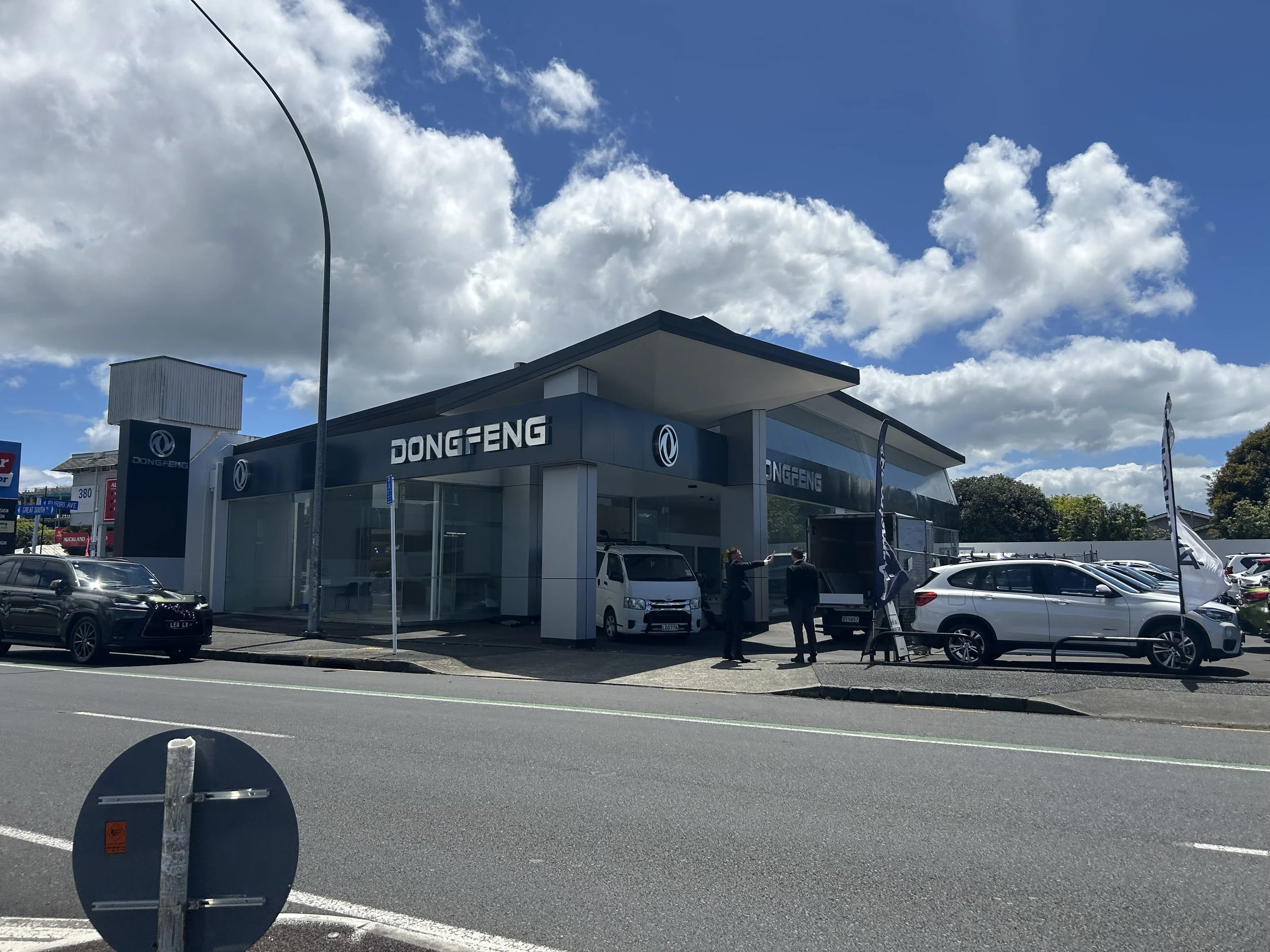
Here, it’ll start in three dealerships - one each in Auckland, Wellington and Christchurch (the only one good to go, the others are almost there) - with more regional representation in the wind.
Dongfeng’s mantra is ‘drive your dreams’. But at what pace? A commonality among all Chinese brands seems to be unfettered expectation for quick and rapid success. Can it happen here; how much pressure is coming from Dongfeng Motor Corporation head office in Wuhan?
“Every one of the brands that I represent through my team has targets,” Rutherford says.
“But we have is a good understanding of where to go first and why to go where first. Our New Zealand market is quite different … really what they're focused on with us is our showrooms being up to their standard, making sure that we're delivering service and that those early customers who come to us feel rewarded.”
“We are trying to give customers the opportunity to access features they wouldn't otherwise do at a price that is new to the market.
“What we mean by that is absolute value. We actually want to be the first in the market to be in a position to actually start delivering a true EV price parity,” he says.
“We know there'll be others, but our mindset is that it’s … got to be true parity and it has to be representing more value than our competitors.
“We recognise everybody has a different package out in the market. We believe that our combination of features and capabilities and package and character are going to be really key for success.
“We want to deliver an amazing shopping experience.”
The writer attended as a guest of the distributor, with a meal, a small gift and travel provided.