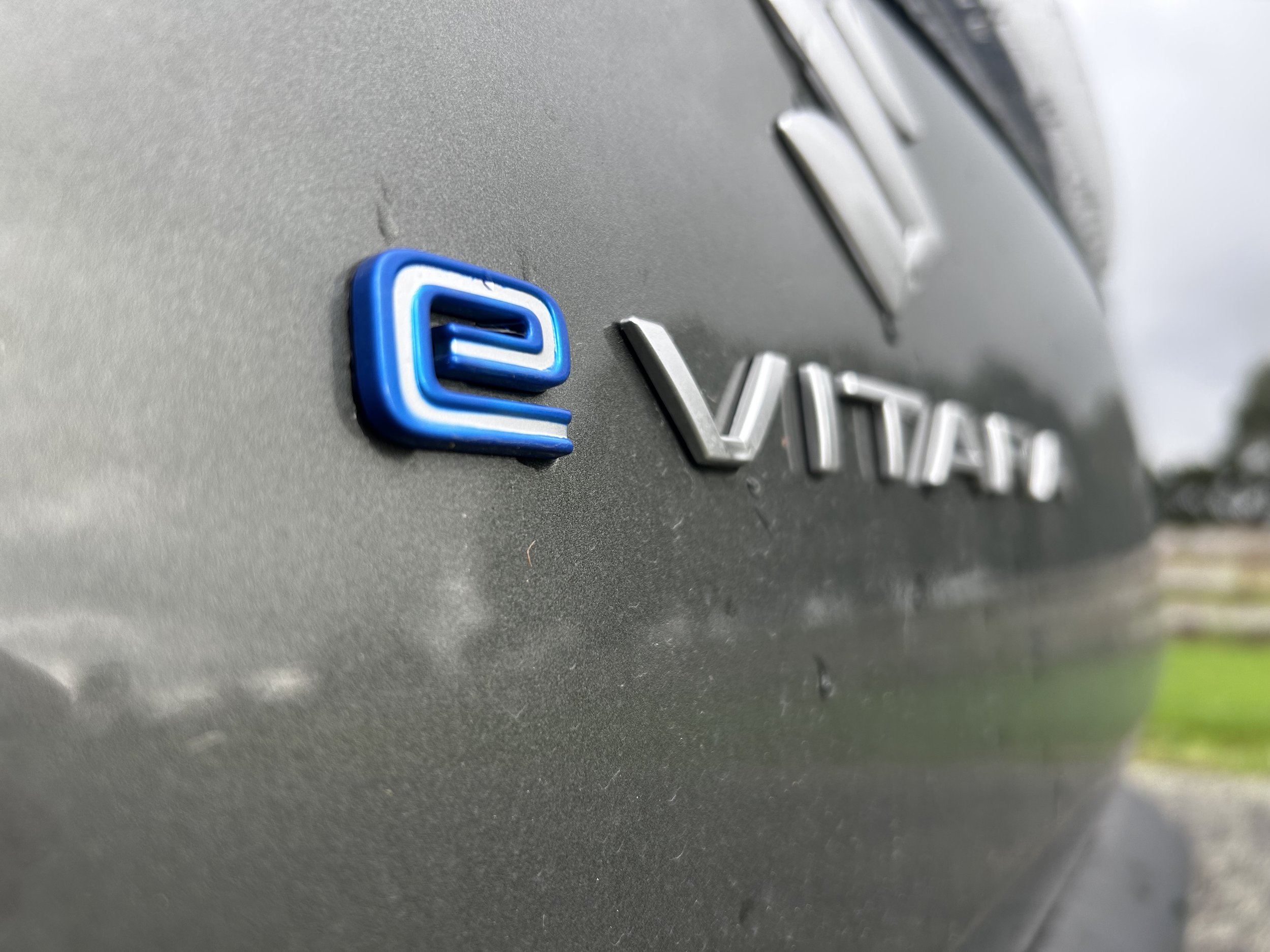
Leapmotor B10 first drive: Jumping into the main game
/The compact crossover/SUV category is a congested space, but one Kiwis love to shop in.

QUICK reactivity to addressing potential opportunities is a talent that has helped China become the global leader in electric vehicle adoption and development.
That’s the view of Brian Carr, whose job is to steer the Leapmotor brand into prominence at time when Chinese makes are flooding into the market - 16 landed as of this week with more to come over the next couple of months.
B10 is the second Leapmotor car here, following a larger and similar looking car, the C10, with which it shares a platform and some technology.
As a mid-sized model designed to be budget-friendly while still providing modern tech and a lot of space inside, B10 is out to secure more interest, albeit in the compact crossover/sports utility space that is already crammed with contenders.
It starts out as a single motor full electric, with a range-extender petrol-electric choice coming in 2026, and arrives in entry Life - $44,990 at full retail but subject to a special $2000 discount likely to last until early next year - and higher-spec Design ($47,990 now, $49,990 ultimately).
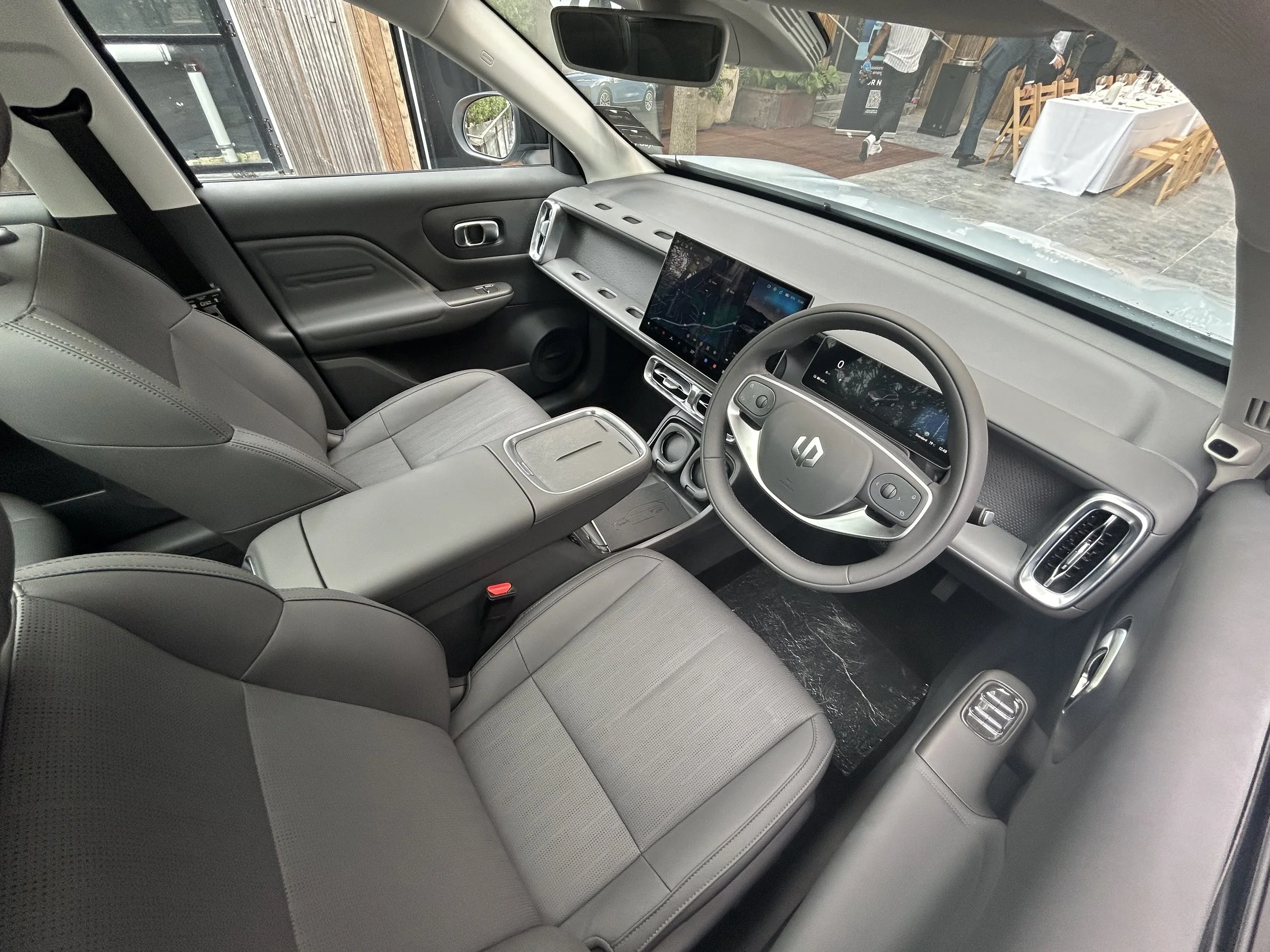
Both variants feature a 14.6-inch central infotainment screen, an 8.8-inch driver display, wireless phone charging, vehicle-to-Load (V2L) functionality for powering devices directly from the car and phone app-based controls for keyless entry, remote air-con operation and to schedule charging.
The Design has more premium elements of ventilated eco-leather seats, a 12-speaker audio system, heated steering wheel, and an electric tailgate.
The lithium iron phosphate (LFP) battery pack is in two capacities, a 56.2 kWh for Life and a 67.1 kWh in Design, so while they feed a common rear-mounted electric motor making 160kW of power and 240Nm of torque, for just under eight seconds in the 0-100kmh sprint time.
There’s tangible difference in the overall range figures and replenishment rates. The respective WLTP-attested ranges are 361 and 434 kilometres.
When using DC recharging, the base battery has a peak rate of 140kW, while the larger has a peak rate of 168kW. But both will recharge from 10 to 80 percent in around 26 minutes.
Sitting on a 2735mm wheelbase, the B10 measures in at 4515mm long, 1885mm wide and 1655mm tall, so isn’t much more compact than the C10 at 2825mm/4739mm/1900mm/1680mm, so also furnishes room for five passengers.
The B10 is Leapmotor’s first global product and so considered vitally important for volume aspiration by its maker, a company that was only founded in 2015 and didn't sell its first vehicle until 2019.
That’s an astounding pace for any car company outside of China, but just normal evolution for those born there.
China primarily went to electric cars to counter a massive air pollution issue. The world has increasingly gone to Chinese electric cars because they’re cheap, plentiful and the drawing board to showroom turnaround is astoundingly fast.
Before coming to his current role as general manager of Leapmotor, Carr worked for Mercedes Benz.
The German brand of course holds historic renown for being a leader in technology roll-out … but right now it’s being left eating dust by the Chinese, who are not only bringing future tech into the present faster, but have habit of delivering it at much lower price availability, so that it reaches a much broader audience.
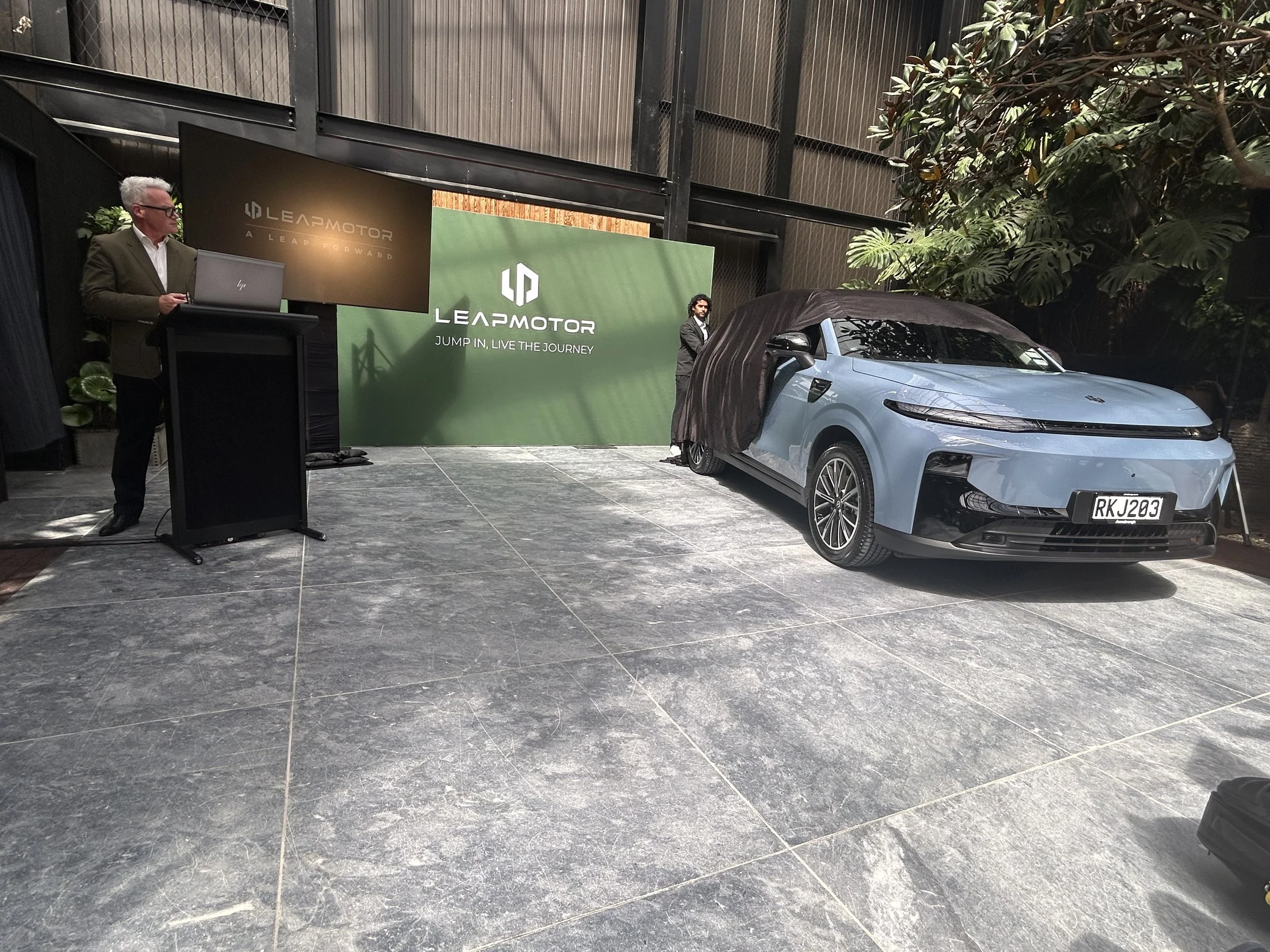
In his presentation for B10, Carr reminds: “One of the factors of the Chinese manufacturing automotive industry is that it has significantly changed the expectations of consumers and its ability to develop vehicles in a significantly shorter timeframe.
“There is no question about that. And what used to take four or five years tends to now take some half of that, give or take. It's a much quicker and more efficient way of being able to achieve the same results with the more traditional approach.”
Ambition for the B10 is being carefully worded here; no sales forecast or registration count predictions are being aired publicly.
There is tacit admission that, while the EV sector is expected to regain at least a greater part of the health it held prior to the collapse that occurred at end of 2023 and still hurts now, all that will take time.
B10 electric will sell comfortably, they say, but perhaps the B10 range extender arriving next year could claim more interest. That one also leverages the EV’s 800-volt architecture, with the engine acting as a generator to feed a battery that will power a front-mounted electric motor to drive the rear wheels.
Either way, the brand’s presence is set to enhance. Leapmotor has the backing of Stellantis, so is represented in New Zealand by Armstrong Group, which has some but not all Stellantis brands here.
The local brands’ operation - Auto Distributors - is now run by Simon Rutherford, a Briton who came to New Zealand to run Ford.
Leapmotor is expanding its retail network to support the arrival of the B10 and its future models.
Armstrong’s Leapmotor dealerships are already established in Auckland (Greenlane), Christchurch and Wellington, with a new location recently added in Auckland (Botany). More locations will follow as the brand continues to grow.
Being a brand founded by an expert in that field, Leapmotor takes pride in gaining particular recognition for delivering sophisticated electronics at a price level that allows for everyman accessibility.
One point of pride is that the 'LEAP OS 4.0' infotainment system is powered by the latest Qualcomm Snapdragon 8295 chip. This means it has video game-like graphics and is very fast to react to inputs; a small matter to older driver, perhaps, but likely to raise interest with youngsters coming into driving.
Also, while the NZ-spec car doesn’t have ability for supervised self-drive, that’s simply because the lidar that avails in China has yet to fit here. It cannot be retro-installed, but the NZ-spec product already has all the hardware and enough computing power to run it.
Driving was limited to urban Auckland and just for a short time. The impressions gained from that might well alter when, for instance, it is taken into a 100kmh arena. And, of course, it might be different at prolonged exposure to the road network beyond our largest city’s motorways.
The B10 uses a cell-to-chassis design which means the battery is integrated into the body of the car. This is primarily to deliver more interior space.
However, past exposure to other cars going this way suggests they can benefit dynamically, as well, as the battery becomes a structural element that improves body stiffness.
Speaking of … a busy ride quality was a downside noted when the C10 was put to test. The B10 possessing from the get-go a more pleasingly fluent feel, with none of the large car’s annoying patter suggests Leapmotor’s chassis engineers - who include a continent from Italy (they’ve mentioned Maserati involvement) - have noted and acted accordingly.
Some of that assurance comes from it being an EV. Electric cars of this type generally have a lower centre of gravity than an internal-combustion-engined equivalent.
Yet I felt it took on speed bumps with far more ease. It that characteristic is accurately assessed, there good chance the B10 will do better at restricting disturbance for those inside the car. That it rides on 18-inch wheels also likely contributes it being friendlier than its big brother.
Performance-wise? The motor produces sufficient power for a car of its size and makes it feel all quite normal. From this experience, it seems to about its business without fuss. There is an exterior pedestrian warning sound at up to around 20 kmh that one fellow writer reckons “sounds like some kind of depressed robot.”
The feel of the steering, throttle and braking can all be altered electronically; there was no time to play with any of that. Adjustment of the energy recuperation levels is always of interest to EV drivers; in this instance Leapmotor doesn't provide a way of doing this with steering wheel-mounted paddles like many of its competitors.
Badge awareness is a currency Leapmotor has yet to cash in on. The car’s exterior body styling arguably won’t help with that engagement; it’s tidy enough but so utterly amorphous that not just maker mis-identification but even geographic sourcing is possible. There’s a bit of Volkswagen ID to it and perhaps some BYD too.
It’s not poorly done but distinguishing features to make it stand out from the multitude of rivals are far from front and centre. The days when a light bar across the front with the main headlights tucked in below used to stand out as something new and different are none; that’s almost an every EV signature now. Likewise the emphasis on keeping it aerodynamic with no major surfacing details.
That includes the hot topic of facilitating door handles that sit flush against the bodywork when locked. (Perhaps in respect to recent safety concerns about those, raised by accidents in China where electrics have caught fire and the occupants have failed to egress, Leapmotor has highlighted that the B10 is designed to unlock all doors automatically after a collision so as not to hinder emergency services).
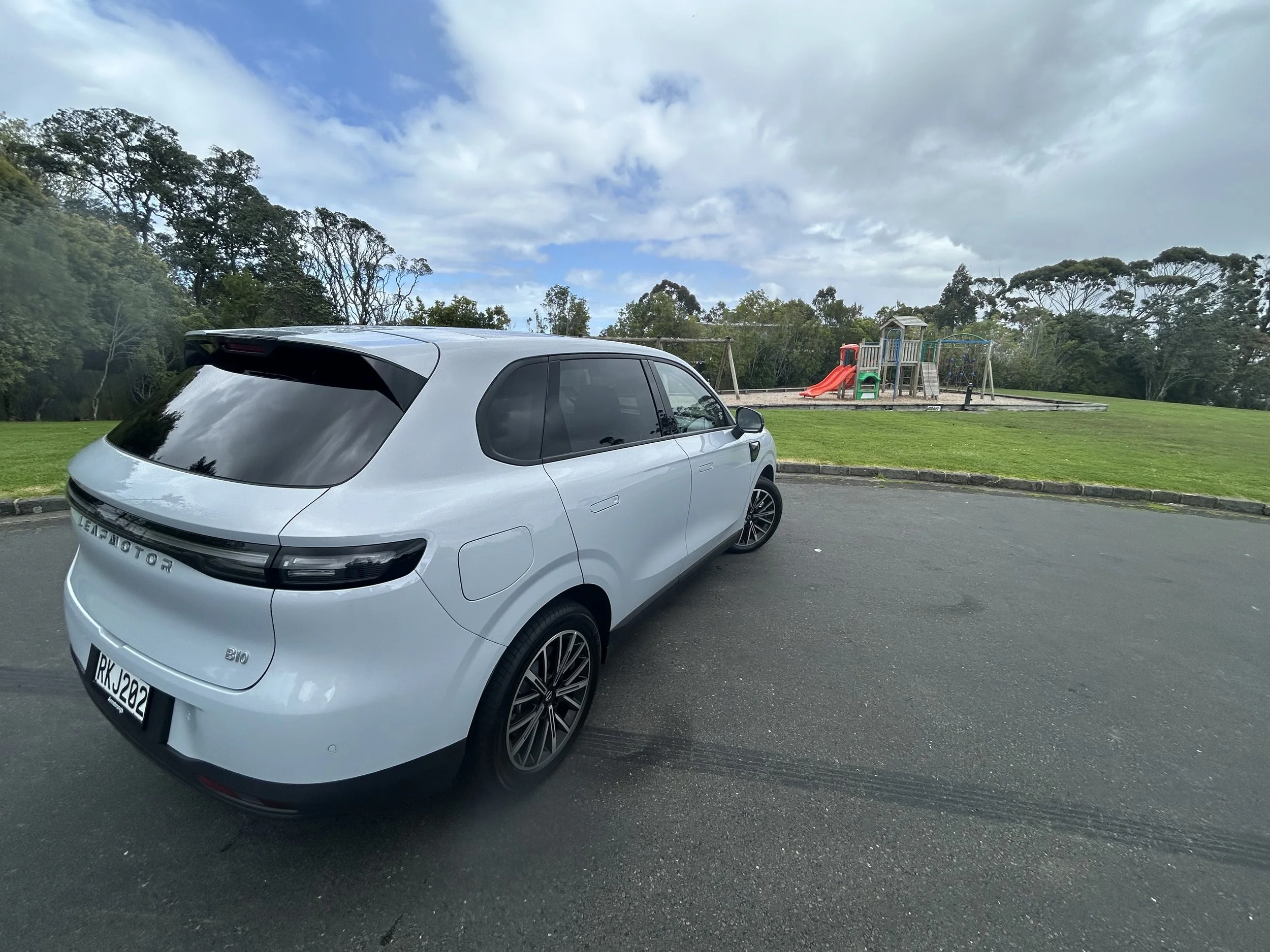
Even though it’s the only part of the car with a Leapmotor word mark large enough to read in traffic, the back end is also utterly generic. It’s another EV so reliant on the aero to divest a rear wiper. Hyundai tried that with Ioniq 5. Guess what the facelift edition of that product now has?
In respect to the interior environment, ’just like a Tesla’ is something you can expect to hear. Because it is. Leapmotor is just another Chinese brand that has decided it can pattern on the Elon approach of delivering fundamental of two pedals and a steering wheel with thumb controller and a big screen to do everything else.
In that spirit, you can also lock/unlock with a key card or by phone app that can be shared, with restrictions on operability if the primary operator desires (so, if the kids are out, they can be monitored).
As on the C10, the key card’s sole external touch point is the driver side door mirror, so he/she will need to get there first if the family are also incoming and it’s raining. Another small faff is that to activate ignition, the card seems to also needs to be placed on a flat surface next to the wireless phone recharger pad. Tesla at least allows you to keep it in your wallet.
The seats seem comfortable. The driver’s seems to offer decent side support. The Design model was driven; it has the 'ECO Leather' upholstery which is an artificial leather material that doesn’t look that convincing but at least is soft to the touch. Seat heating and ventilation for the front seats is here.
The car’s large glasshouse and the slightly raised driving position enables the view outward to be quite good. It has an excellent reversing camera and lots of sensors.
It’s a shame a head-up display isn’t provisioned. As is, a lot of info is crammed onto an 8.8-inch driver instrument screen that fills out as a long, thin landscape shape. It shows vehicle information at the centre, with vehicle speed and charge remaining on the left, but has ability to configure a portion to show navigation info. So, it’s busy and, unfortunately, some of it is obstructed by your hands when driving and turning the wheel.
The wireless charging pad on the top of the centre console is abetted by USB charge ports, with more of those in the back.
One small but useful benefit of Leap OS 0.4 is that B10 enables a wireless Apple CarPlay and Android Auto functionality that is set to be denied the C10 until facelift (right now, there’s a ‘computer says no’ incompatibility). But the new car is still a bit a odd in that the setup for those apps is still a workaround, as they avail via a smartphone mirroring app in the infotainment system. That's not likely to be as slick as in some other systems. You can also connect to these via a cable.
One of the big positives of the B10 is the cabin space, particularly in the rear. Leapmotor claims to have the best-in-class headroom and the largest passenger space in the segment. It could become a good Uber choice for that alone. As per EV convention, it does well from having a completely flat floor. Rear seat occupants will also note the front chairs are high-set enough to make it easy to them to stretch their feet out underneath them.
Open the boot - yes, that can be a first-timer challenge as the button activating the electric tailgate is very discreetly designed - and you find a useful 525 litres of space that enhances to 1700 litres when the 60-40 split rear seats are reclined.
The luggage space has a split-level floor that sits flush with the load level when in the upper position. Lifting this reveals a separate section that could be useful for charging cables and also contains the tyre inflation kit. The floor panel can be placed into the lower setting to create one large area if needed.
It is possible to tow with the B10, but the maximum weight is limited to 750kg whether the trailer has braking or not.
It comes will all the expected provisions and no less than seven airbags, including side curtain devices to protect passengers in the rear. The launch presentation also reminded that the model arrives with 17 advanced driver assistance systems (ADAS), spanning all the usual functions including the love-hates of speed limit warning, lane centring control and lane departure warning, blind-spot detection warning and driver attention warnings.
A Euro and/or Australasian NCAP rating has yet to publish. Leapmotor is expecting the B10 to score a maximum five-star safety rating with the first to likely reveal Euro NCAP determinant, mainly on account of its multiple driver and safety assistance systems.
The writer attended as a guest of Auto Distributors, with travel and a meal provided.