Volvo EX90 first drive: Totally Thor-some
/This new flagship gets a big tick for staying true to brand values while also presenting positively in regard to electric opportunity.
FIRST shown in 2022, entered production in 2024, expected in 2025, here in 2026 lacking one ingredient … and the electric ‘replacement’ for a backbone car for Volvo is still, for the time being, a supplement.
As background: The XC90 has been a massive part of Volvo's success story over the past two decades, appealing to family buyers that like the big SUV's seven-seat layout. EX90 was designed and determined when Volvo’s firm plan was to achieve electric-only commitment by 2030.
The corporate line of thought about that target seems less clear just at the moment. So for now EX90 is set to share sales space with a facelifted XC90 PHEV. Having two pulling much the same duty allows Volvo to cater to both the EV and ICE buyer, but also it also means a very packed showroom. So be it.
Win and win? By happenstance, a launch event that provided two full and highly informative days’ driving the EX90 ended with a short ride to the airport in the XC90 PHEV.
That exposure left no reason to doubt the local distributor’s confidence expressed in respect to both cars. Old is still worthy. New is, in all respects, even better. Eschewing the pump for the plug still seems a big leap of faith to many, but those who dare will surely be rewarded. The EX90 is one of the best electric cars I’ve driven, for reasons that go beyond pure pep and decent range.
Interesting how neatly these models synch. There’s not complete DNA difference because they kinda share a common platform, they have no common parts. So EX90 isn’t really an XC90 with batteries in technical sense. Vibe-wise, though, they’re very much in tune.
And, yes, before we go any further, it does impart as a pukka Swedish design, regardless ours source from the closest of two plants, in Chengdu, China (the other is just outside the US city of Charleston).
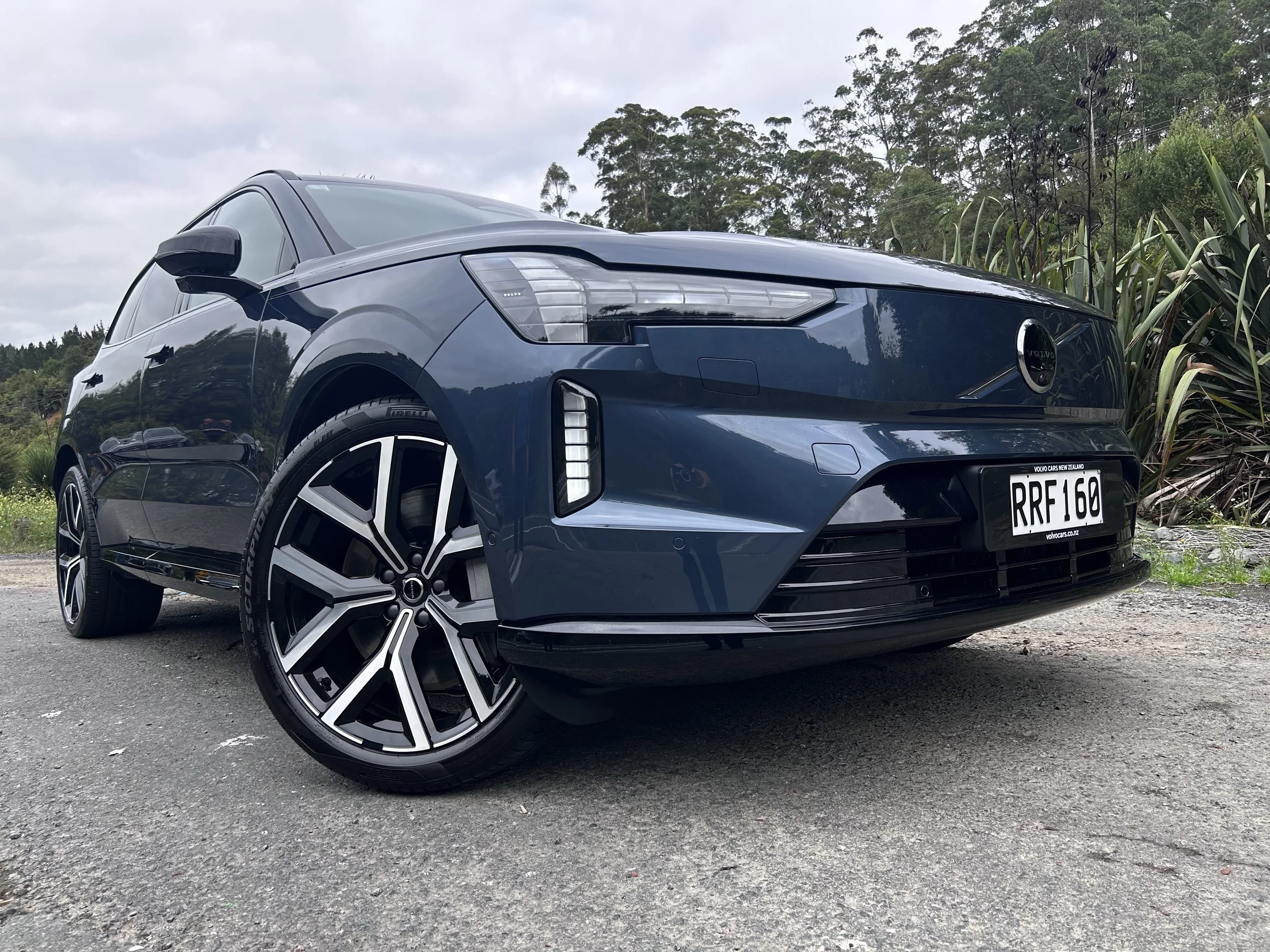
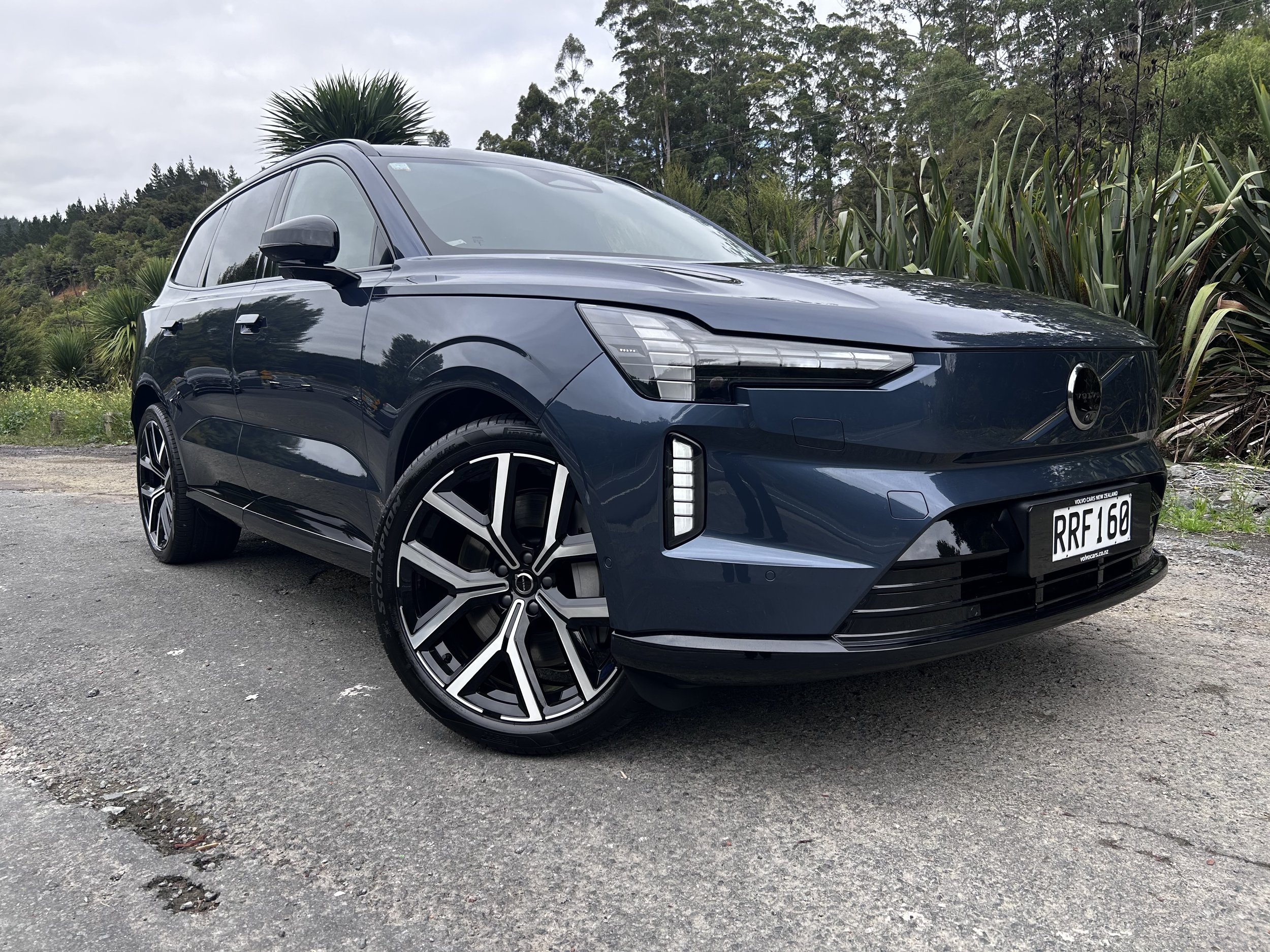
This is Volvo's flagship, and it looks every inch of that, from its imposing exterior with ‘Thor’s hammer’ headlights that flip open, yacht-inspired lines and styling, to a gorgeous interior with more space and more sustainable materials and touch-points.
Delay reaching here was mainly to reconcile its electric architecture and, reconcile some glitches with the Nvidia supercomputer at the car’s heart. As has been said, today’s cars are ‘all computer’. Ability to process up to 250 trillion operations per second is very impressive, but the next-along EX60 is a smarter, faster-thinker still.
Anyway, that’s all sorted and the extra time taken to reach us has, if anything, been fortuitous, given how suppressed consumer interest in new electric cars has been since end of 2023.
This year is seen as a green shoots moment, at least for premium fare. Latest political events might hasten that; there’s agreement it’d be remarkable if rising petrol prices didn’t spur EV interest, but for the record Volvo’s prediction was based on other factors as well.
We shouldn’t expect to see EX90 in the hundreds. Nor are we seeing all choices in this family. Absent is a single motor 92kWh rear drive base offered in Europe.
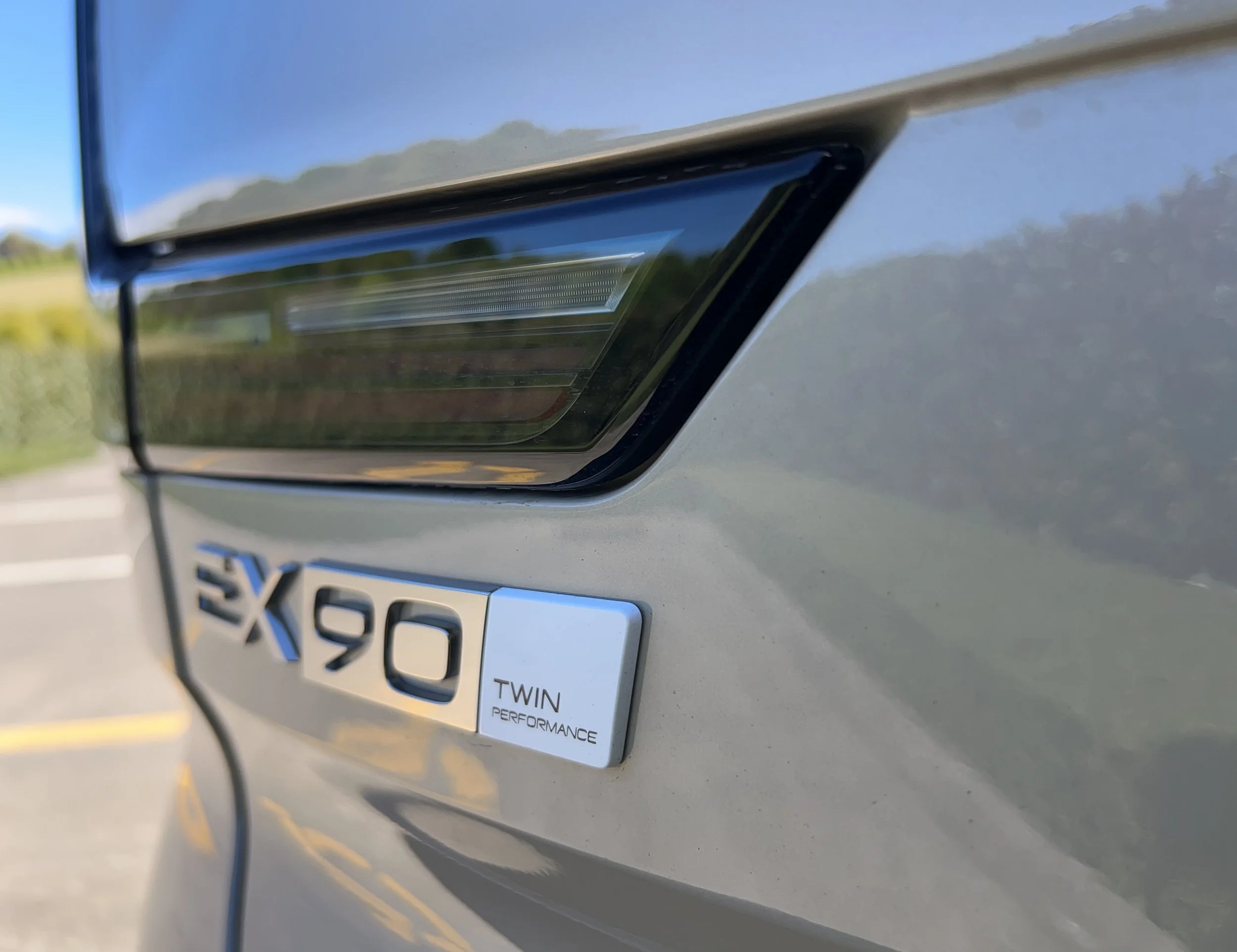
The NZ plan is all about the highly plush Twin Motor four-wheel-drive editions, in $149,990 Plus and $159,990 Ultra formats, and even then the latter is expected to be the star, hence why it’s first on the ground here.
Both run a huge 111kWh battery (107kWh useable) with 400V architecture. The Plus has 335kW/670Nm, Ultra packs a whopping 500kW/870Nm and trims the 0-100kmh time from 5.5 seconds to 4.2s. Range? Volvo NZ says ‘up to’ 600 kilometres, which is more conservative than the factory figures given at the international launch; 624 and 602 kilometres respectively. Estimates are to the WLTP scale.
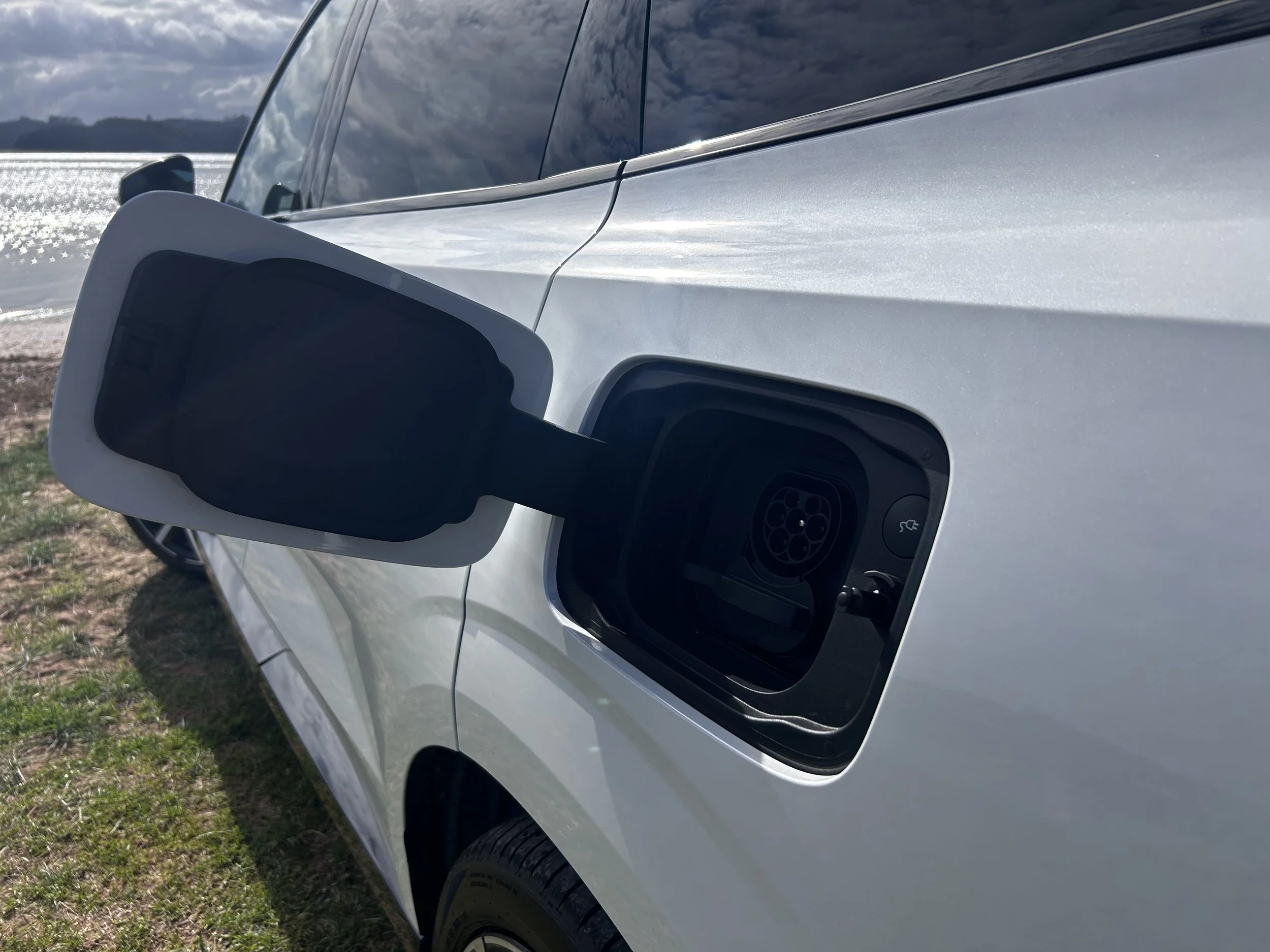
Our being to Model Year 2026 means full facilitation of 800 volt charging; double the original ability, so seriously fast DC charging is enabled. With a maximum speed of up to 350kW, the EX90 promises a 10-80 percent top up in as little as 22 minutes, which is going some. There's 11kW AC charging too, and vehicle-to-load if you need to use the EX90 as a big, rolling power bank.
All this and it’s also exclusive; ’the only premium seven seater electric on the scene.’
Say what? It seems a bold call, but they’re right. A quick text to Mercedes Benz as soon as that claim aired during the presentation confirmed the (very much pricier) EQS that arguably already title has silently left the scene and won’t be back.
If other multi-chair electrics are to be considered, then there’s the cheaper Kia EV9, which has a 99kWh battery and the 86kWh Volkswagen ID.Buzz. Hyundai Ioniq 9 (same battery as Kia’s) might also yet be a foil, but South Korea’s pre-eminent brand has still to confirm that car, ditto the newly-revealed Mercedes Benz VLE, with 115kWh.
Some multi-seater models out of China - from Zeekr, GAC and GWM - might also be in the mix, though those entertain as firmly road-attuned people carriers rather than SUVs with off-seal ability. BMW iX has several battery sizes from 94.8 up to 111kWh, is in the same price band as the Volvo, but seats five.
Even those with the same badge cachet would struggle to match the Volvo for cabin design and quality, or performance. If this kind of car is needed, then the choice simply comes down to which variant.
Base loading across Plus and Ultra is very rich, yet you can see why there’s prediction most, of not all, sales will be of the top spec.
The cheaper buys a panoramic sunroof, front comfort seats, heating for all chairs and the steering wheel, LED headlights, adaptive cruise, parking and pilot assists, the 14.5 inch display and a 360 camera among highlights, but spend a bit more and there are a lot of tasty additional and finishing touches.
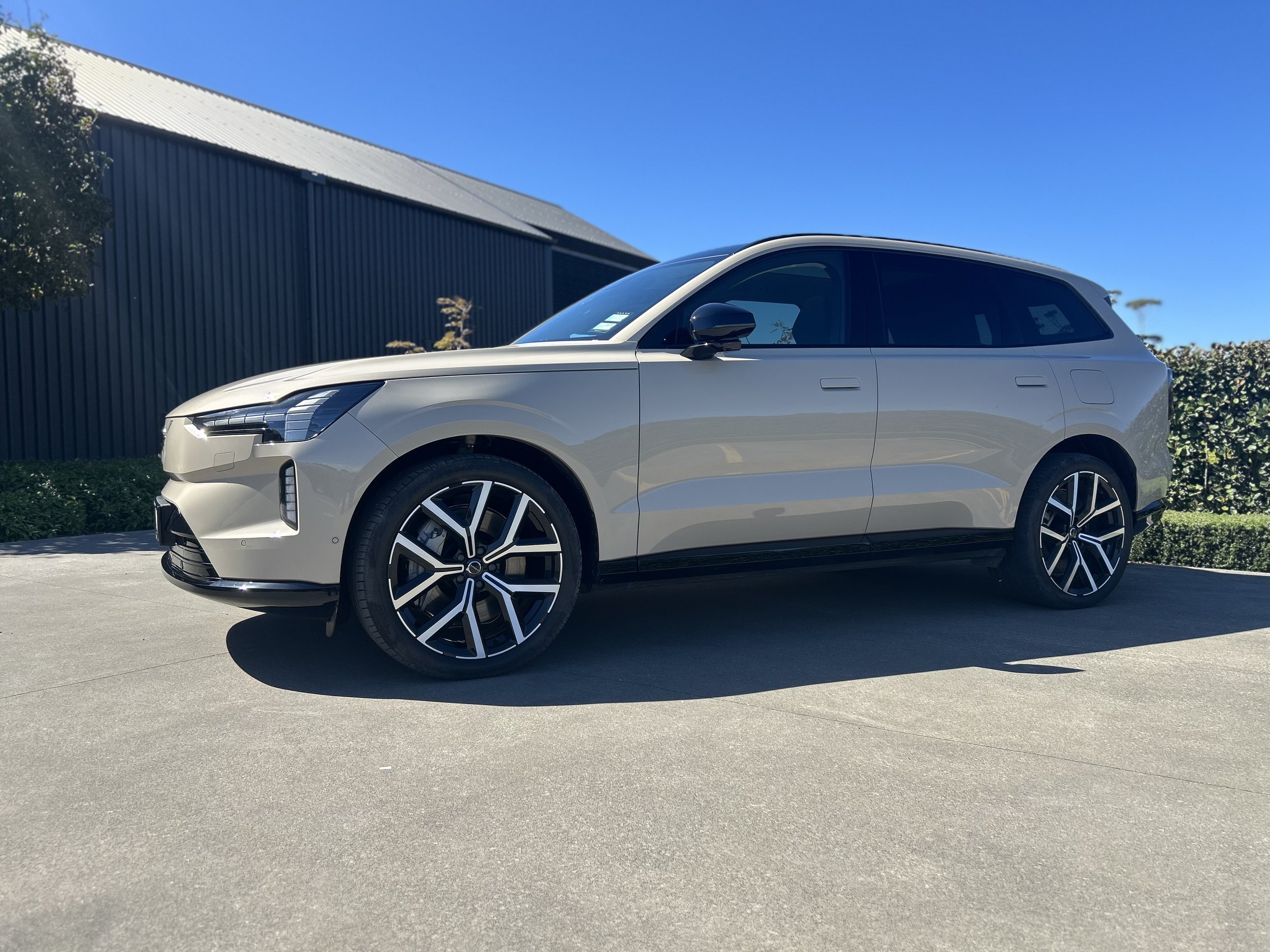
The car as driven with air suspension, 22-inch rather than 20-inch rims, the full suite of pixel lights, ventilated and massage seats is better. The standard Bose stereo is doubtless great, but the higher cost car’s 1610-watt, 25-speaker Bowers and Wilkins stereo that includes speakers in the headrests (so you can take a phone call while your passengers keep listening to music), which includes Dolby Atmos for surround sound (and the ability to replicate the soundscape of sitting in the famed Abbey Road recording studio) is very, very good.
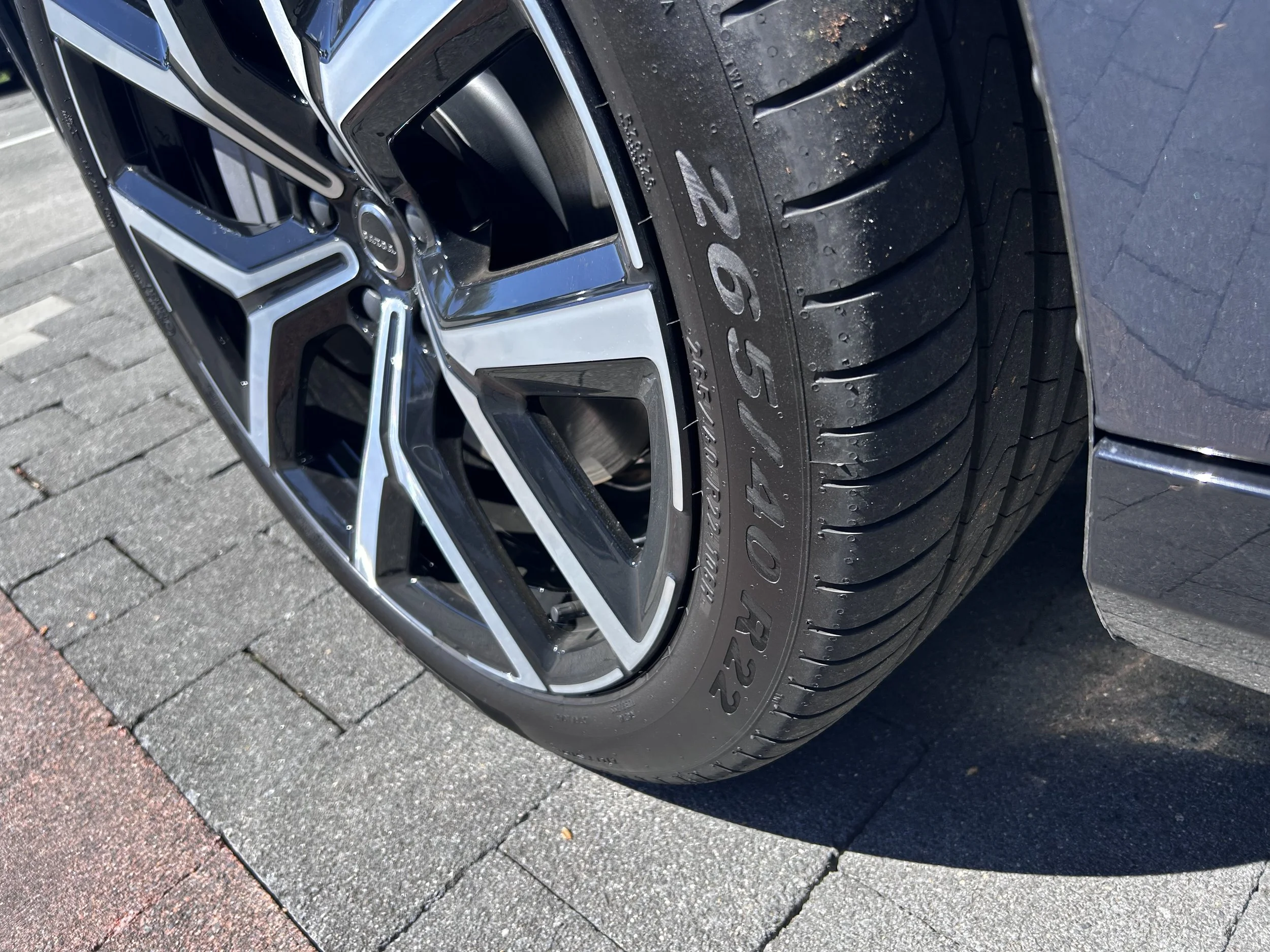
And if you are going to have a panoramic glass roof, why not get it with electrochroamatic function that, at a button push, goes from opaque to crystal clear? The drive cars’ wheel design, presenting a combination of diamond-cut pale metal and gloss black inserts, is an option that would be hard to resist.
It’s the kind of car in which you feel it’d be easy to drive for ages, and Volvo NZ lent that opportunity. Kicking off from its dealership on Auckland’s North Shore, our small fleet headed north to the Bay of Islands; 246 kilometres up, 218 back, total driving time of just under seven hours. Some main roads, some less so. Easy peasy.
All on a single charge? It’s the usual story. On paper it has more than enough, and when getting to Waitangi, there was still plenty in the ‘tank’, but it’s the usual EV thing. If there’s chance for replenishment, you take it, so accordingly they were given an overnight refresh. Not to absolute capacity, but enough to comfortably see them back. At end of journey, ours still had 200kms’ range remaining.
Suffice to say the Ultra’s performance is all you need, but the greater appeal than the sheer stonk is how it delivers that power in a very refined way. It’s simply more civilised than some other all-out, nothing-then-everything ultimate performance EVs.
In the performance setting, it is of course extremely reactive when you step on the throttle - there is more than enough oomph to shade more than a few petrol-powered sports cars. All with seven seats and a big boot.
But while breath-taking, there’s no abject brutality to it. More pleasing was how, when you get off the accelerator; it reacts with calmness. Some electrics are too touchy, but here the off-power imprint is beautifully modulated, almost like a ICE car.
Be gentle with the accelerator and the EX90 settles into a highly pleasant languid driving style, with exceptional levels of comfort and refinement.
That’s where it absolutely stands out, actually. Some electrics of this size and substance have tendency to feel wooden and are troubled by road noise. The EX90 is certainly hefty - they say 2.8 tonnes and there’s no reason to doubt it - and an element of it being the first Volvo to adopt the firm’s EV-specific SPA2 model platform means it has a unitary chassis made predominantly of high-strength steel.
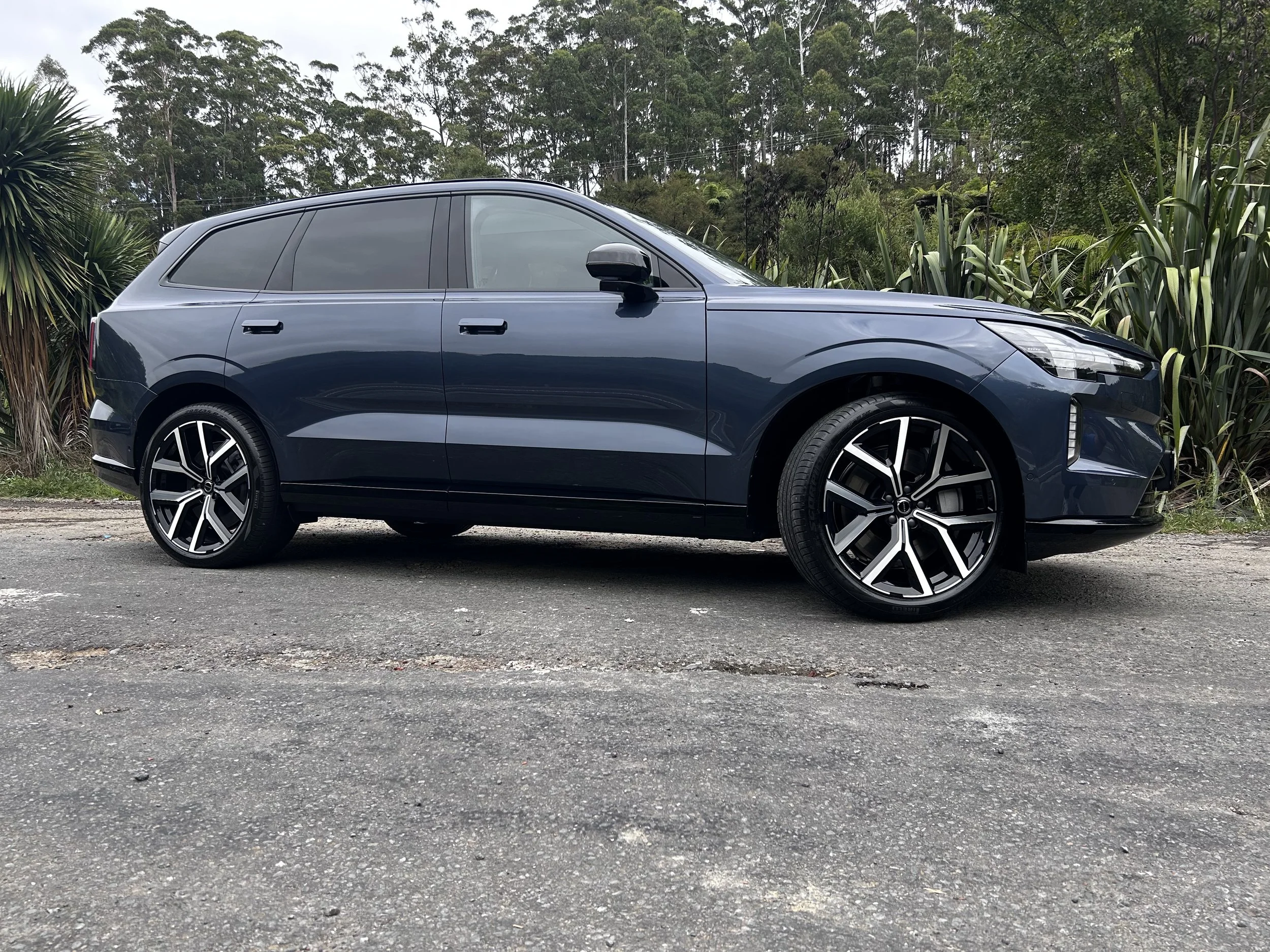
That suggests a high level of rigidity but that doesn’t translate poorly in road feel; if anything it has a uniformly nice ride compliance and is generally very quiet. Not just wind noise is very well contained but also road rumble. When wide and low-profile tyres - 265/40 Pirelli Scorpions here - usually meet coarse chip, resonance is expected. Yet even that has been very well quelled. This is a car in which front seat occupants can maintain low-voice conversation while it’s rolling over basically any surface at pace.
As with many air setups, the Ultra’s suspension can get occasionally caught out by smaller bumps at lower speeds but overall it’s pretty decent.
While it’s not outright sporty, it seems to have inherently good chassis responses, so is more capable when faced with a tight and twisty road than you'd think. There are soft and firm modes for both steering and suspension if you venture far enough into the multimedia menus to find them, but left to its own devices it feels sure-footed and solidly dependable.
The sense of the car’s size is less evident on the open road than when travelling through streets. At two metres across even when the mirrors are folded, it does feel its size in the urban environment, but generally manageable.
When manoeuvring you do find issues; one irk here is that those mirrors don’t dip when you go into reverse. If you were in a tight parking scenario when you might wish to fold in the mirrors for a moment, it’s going to be a faff. That requires going into Park and activating the appropriate control within a sub-menu on the main screen.
Buttons would make that much faster and easier, but the only physical buttons you will find here are for stereo volume and track skipping, plus the column stalks behind the steering wheel (the right hand one is the gear selector) and some small buttons in the ceiling which control the interior lighting. Everything else is on the screen.
So I wouldn’t be upset if Volvo come facelift time for this model found a way to install physical buttons and toggles for the mirror and steering column adjustment, and for turning on the dipped-beam headlights and fog lights. And opening the glovebox.
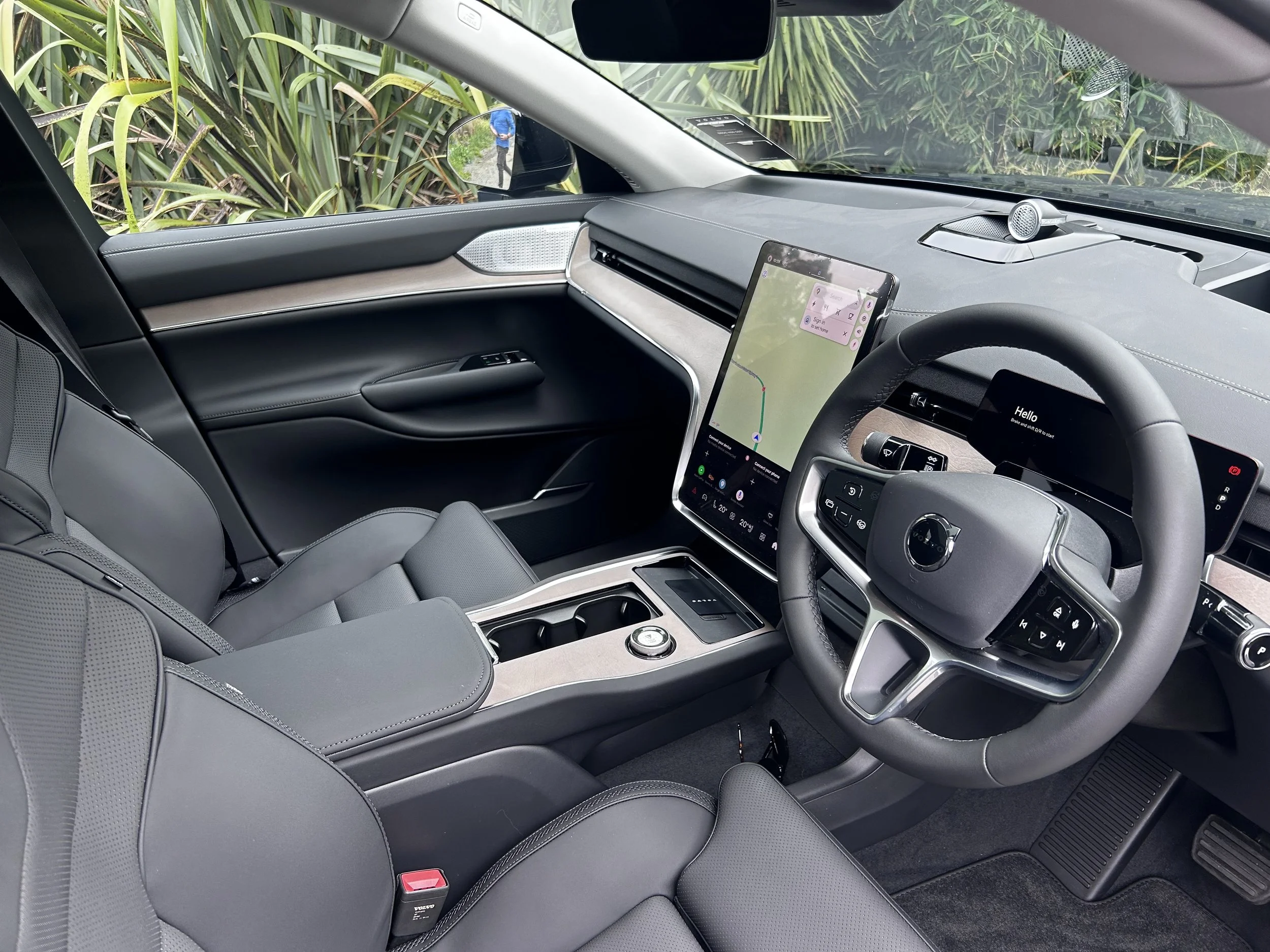
All the same, there’s no denying the overall interaction with Volvo's 14.5-inch touchscreen, mounted vertically on the dashboard, is a positive experience. While quite imposing by touchscreen standards, it functions seamlessly and the underlying Google-based software means that not only everything is sharp, both graphically and in terms of response time, but quite sensible.
The built-in Google Maps, into which you can sign and bring with you your favourite and recently searched locations, is super-slick, and it apparently works with the car's battery too, pre-conditioning it when you enter a fast charger as a destination.
In overall effect, Volvo cabin design is also hard to surpass. The mix of high quality, minimalist design and the usual Volvo levels of comfort for the brilliant seats have mighty appeal.
The smart simplicity of Scandi design shows in the front seat adjuster. Initial action to sort comfort on the main planes can be made using a little cube-shaped controller on seat base; further refinements to sort the side bolsters, seat angle, headrest and so on or to enact massage, ventilation and heating is off the screen.
Sorting a good driving position is pretty straight forward, and when adjusting the wheel position you won’t ever risk losing sight of the eight-inch driver's instrument panel as it is attached to the steering column. So no matter where you position the wheel you'll have a clear view of your instruments, backed up by a head-up display that remains legible, if barely, when viewed through polarised sunglasses.
Ownership experience will rely on an app, in which all facets of personalisation can be arranged; a bonus over using the key card, which demands being touched onto the wireless phone pad every time the car is restarted.
Practicality? Volvo is an ace at that stuff. Here there are large door bins up front, a big storage area under the front-seat armrest and another useful open space down on the floor and under the centre console, which also includes two cupholders under a sliding cover, and an angled wireless phone charger with a grippy, rubberised surface.
The boot has useful bits like hooks, straps and lights and, with 690 litres of load volume, up to the luggage cover, is big. There’s also a nice flat floor right through to the backs of the front seats if you fold them all down. No obvious stowage location for the luggage cover seems a rare failing. In addition to the in-cabin stowage, there is a useful 'frunk' in the nose, large enough to stash charging cables.
The Ultra also has buttons in the boot to enable it to 'kneel' at the back, making it slightly easier to load up heavier items.
Looking forward to the seating area, one thing you will notice in the middle row, is that the outer two seats seem quite firmly up against the doors. This liberates enough space so that there's a real, proper seat in the middle, but outboard occupants will need to keep their outer-side elbows in when closing the doors. The mid-part of that second row zone can be dropped down; all three tilt, recline, fold and slide so you can juggle the space around as needed.
Access to the third row seems good; I didn’t get my tall frame right into the back, and likely wouldn’t prefer to be there, but our restaurant return run had full-sized adults in there with no complaint. Headroom in row three seems a bit compromised for adults, but legroom could be okay. It’ll be entirely fine for the kids who will most likely be sitting back here.
Provision of four ISOFIX anchors, located in both outer middle row seats and in both of the third-row seats, will appeal to parent.
A tow bar is an option worth considering as it has a maximum 2200kg of braked trailer weight capacity.
On the driver assistance side, the EX90 is fairly well-provisioned, but would have been far more ground-breaking with the LiDAR that was promised four years ago. The reason why that technology cannot be facilitated is covered here.
The inability to provision what could have been a ground-breaking level of assisted driving, to point of offering some hands-free operability, is a shame.
Even so, safety is what Volvo does best and, in respect to that, the car’s overall integrity is solid. Not only does the EX90 take home a full five-star score - delivered by Euro NCAP, adopted by Australasian NCAP - but it also gets 90 plus percent scores in both adult occupant and child occupant safety.
An 82 percent rating for vulnerable road user protection is also very impressive, especially for such a big, heavy vehicle. It has a very clever anti-whiplash system and run-off-road mitigation, a system to help prevent and protect against the invariably violent crashes where the car swerves off the road and impacts with something solid, like a tree.
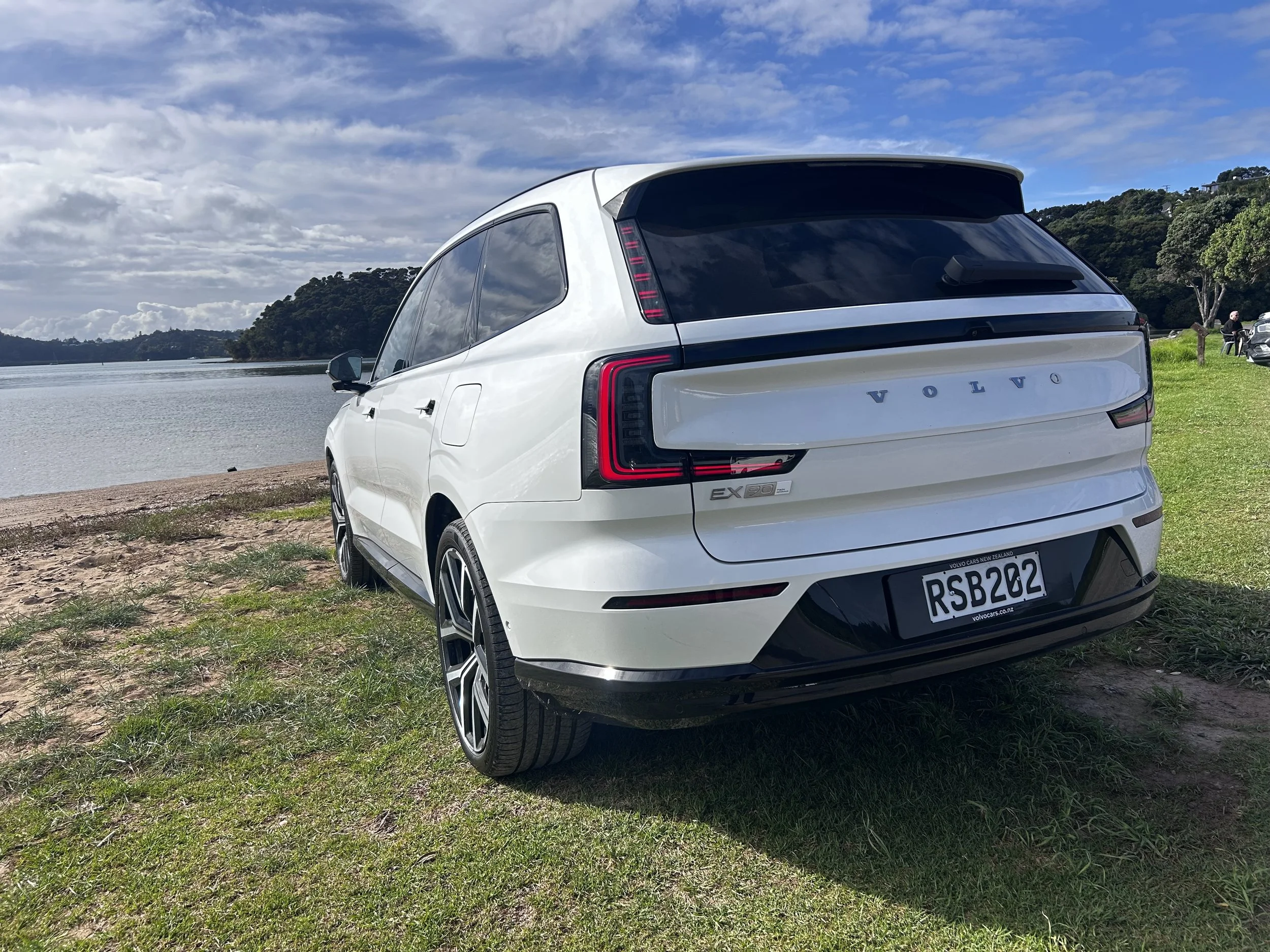
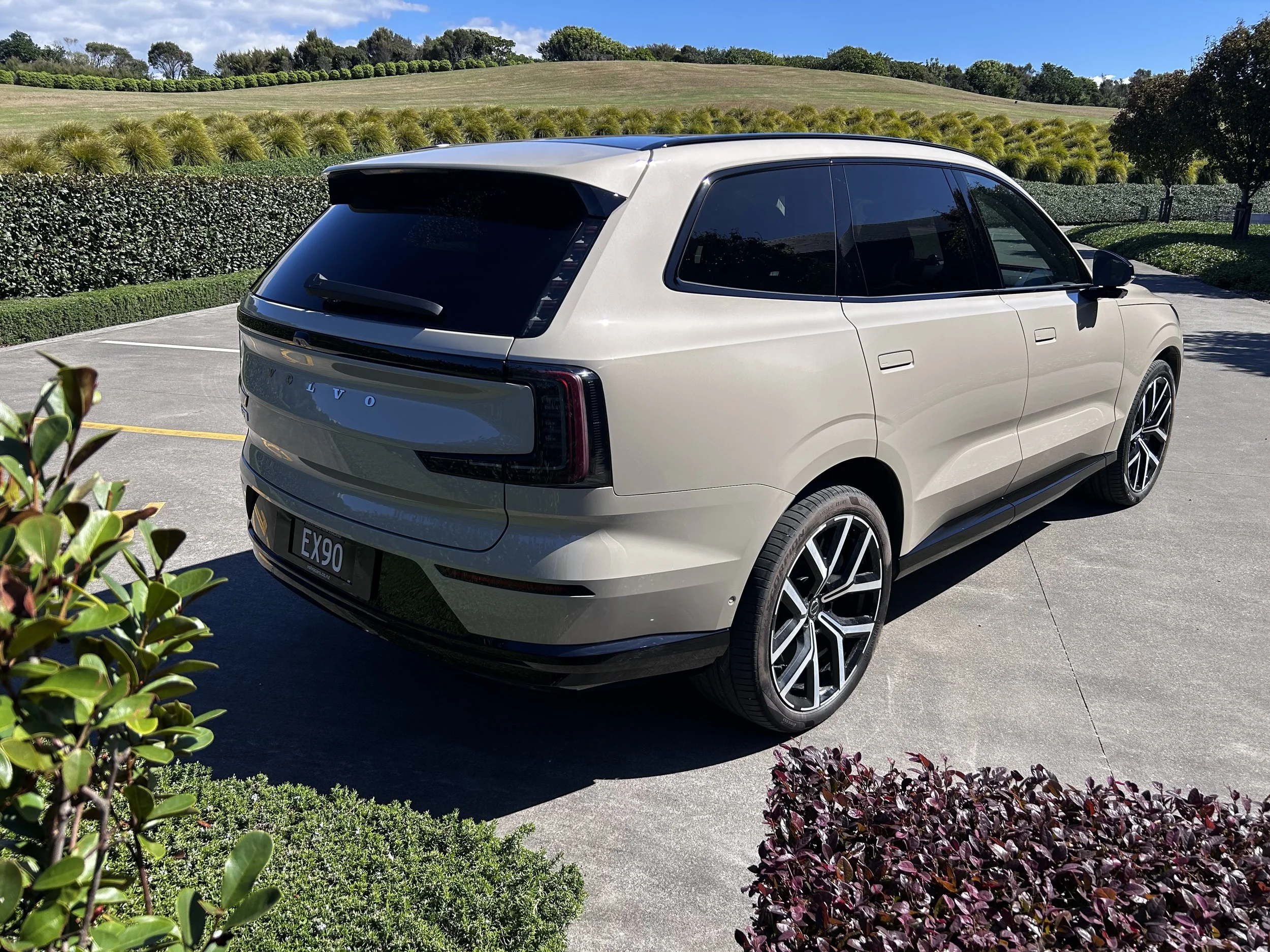
All this in a car that also stands out for being super cool in its kerbside look. It’s hard to make large SUVs look visually compelling, but with Volvo's design language unavoidable bulk is nicely disguised. No small feat given it is about 90mm longer than the XC90, putting it at a little over five metres at the kerb.
Though ultra-clean and devoid of any overt decoration, the areas of plain metalwork are beautifully sculpted and the cool 'Pixel' style lights at the front and rear integrate naturally. It perhaps looks more handsome on some colours than others, but there’s just no angle from which it looks awkward or cumbersome. Rarely can that be said about family buses.
Unfortunate and unpalatable international issues could facilitate resurgent interest in all EVs, but even if that were not the situation, this car makes a powerful case for why electric is now fully equitable to ICE in this particular segment of the market.
Yes, others have tried and struggled. It’s a tough arena. But from first exposure, there seem to be no real impediment to why the EX90 shouldn’t find the success it deserves.
The writer attended as a guest of the distributor with flights, overnight accommodation and meals provided.