Honda Prelude first drive: Shaping for a new direction
/Stimulation through simulation is the way forward for this revived nameplate. How convincing is it?
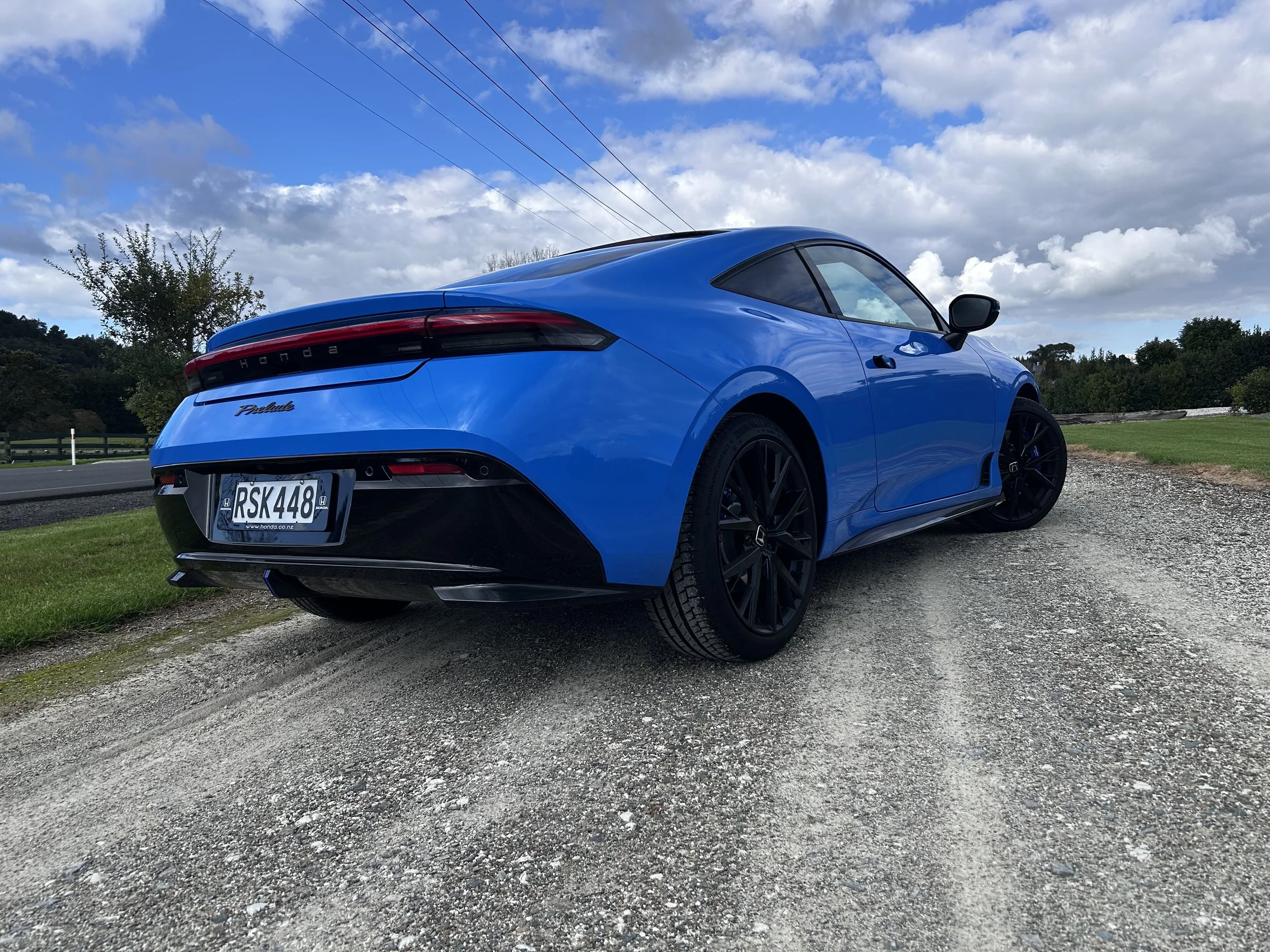
FINESSED ‘feel-good, look good’ sports coupe for cruising or a more fully feral sports car?
With the latest evolution of the Honda Prelude arriving, 25 years after the last, the great debate resumes.
Does it really matter what side of the ledger this low-slung eye-catcher flagship sites?
Honda NZ is straight out spruiking Prelude’s aptitude, with managing director Carolyn McMahon saying it will stack up beyond the merits of being a head-turning car with an attractive price ($69,990 plus on roads).
But the matter of where it exactly sits beyond that point is one, she agrees, likely to always spark debate.
Proposed as a niche product for which 10 sales per month would satisfy, the two-door, two-plus-two is quite an amalgam of current Honda technology.
Underneath its strikingly styled body delivering in a single grade with the only option being colour choice, it uses the same platform as the five-door Civic hatch with a hybrid powertrain - comprising a 2.0-litre Atkinson cycle petrol engine paired with two electric motors - shared with the Civic and CR-V SUV, teamed with chassis components, brakes and suspension derived from that devised for the Civic Type R hot hatch.
A fresh recipe a world away from previous editions, which built off the now defunct Accord, presented a challenge for pricing and positioning.
As much as corporate view is that it doesn’t have any straight out rivals, it nonetheless categorises with the Mazda MX-5, Toyota 86/Subaru BRZ, Nissan Z and Ford Mustang.
Honda suggests it’s not really in the same club as those but also concurs that pricing just $990 above the searingly hot Civic Type R might raise chance a customer might look to both the famous hot hatch and this newcomer as common pod peas. Fair call?
“It's a very interesting question,” McMahon acknowledges.
On the one hand, Prelude is “bringing the best of a number of different elements of Honda. So the chassis from the Type R is underpinning it. We've now got arguably best in market hybrid technology in it as well.”
Evidence presented from an hour-long drive on rural roads south of Auckland suggests Prelude is also one for fun roads, but with less chutzpah.
Precise steering, almost competition-ready braking responses, good grip and an ability to take on corners at pace with confidence … all also come with Prelude.
Though Honda’s talk of a Type R suspension transfer is stretching things a tad - they’re not literally from the hatch, since the mounting and geometry is different - and the chassis is softer than on the Civic Type R, the whole body structure is stiffer, so there’s genuine dynamic talent nonetheless. Prelude also having the hatch’s dual-axis front struts, to reduce torque steer and lend more feedback, and adaptive dampers is of worthwhile benefit on winding roads. You can configure the driving experience toggling a mode selector through comfort, GT, sport, individual settings; each selection commensurately alters the character.
GT and Sport are not just progressive steps in ride firmness; the latter alters the car’s attitude in other ways, too; making it perkier and more athletic. I’d swear roar from the 19-inch Pirellis also increases in Sport. Certainly, you do notice there is fluidity to the rise, almost too little perhaps. Striking an unseen pothole banged it harshly, which raised thought that maybe it’s not so much a compliance thing as it simply running out of travel.
Enthusiast drivers will enjoy the low-set, almost straight-armed driving position, one of the best performance car seats not to come from Recaro and a perfect-shaped steering wheel.
As for the drivetrain? Well, you’ve doubtless already been schooled by overseas’ reports. Let’s agree, Preludes have never been extremely high-powered animals.
I would also suggest that had this one adopted the Type R powertrain, it could be a far more ferocious product. Potentially a more fulfilling one, too. Nothing left me thinking the chassis couldn’t have coped.
The Prelude’s drivetrain doesn’t lack for spirit. But maximum outputs unaltered from as it delivers in the Civic e:HEV leave it 100kW and 75Nm short of the Type R Civic, so it’s simply less intent on smashing up the scene.
Quick overtaking is possible, but fully smart step-off less so. A cited 0-100kmh time of 7.3 seconds being almost 2s slower than the last Prelude, itself not considered an overtly sporty car, has raised much comment. All fair, I feel now.
The difference over the other cars with this engine comes down to the transmission. Manual gearboxes are now consigned to Prelude’s past history. It now favours the same electronic continuously variable transmission (e-CVT) as every other Honda (bar the Type R), but with a clever function.
With a name inspired by older models right back to the S600 of the 1960s and the brand’s last open-top sports model - the S2000 of 1999 to 2009 - ’S plus Shift’ sets out to represent the “joy of driving” by mimicking the sound and feel of a responsive multi-ratio automatic transmission.
You activate it by pressing a large S+ button on the centre console, which then brings up a rev counter on the digital dial display that ‘redlines’ at 6000rpm.
How good? Better than you might give it credit before trying. Sure, there’s a lot of going on here reliant on programming genius and no small amount of sleight of hand.
But you have to hand it to Honda; the calibre of a unit designed to simulate a dual-clutch automatic transmission is pretty convincing. There’s a power 'cut' when changing gears, it’ll blip the throttle on downshifts and though it cannot hold gears for long, you can effect the impression of changes by pulling the metal paddle shifts left for down, right for up. All this was expressed admirably on the test drive.
The car feels faster when driven with driver influence, but it’s all in your head. Plenty of tests suggest it is at least half a second slower to 100km from a standing start when shifted manually than when not.
Maybe that’s why Honda is said to be thinking hard about creating the one kind of Prelude it has never bothered to devise previously - a Type R.
When it comes is anyone’s guess - the nameplate’s 50th anniversary is just four years away. McMahon won’t speculate on the likelihood and says her team’s immediate focus is purely on Prelude as we see it now. As for a Type R being warranted? “Anything that comes up in the future, any new developments we'd be putting our hand up for.”
That comment also stands for a confirmed update out of Mugen. Honda’s long-time tuner and performance parts partner has released enhancements that will be available in Japan from June.
The list of components includes front and rear under spoilers, a rear spoiler and diffuser trim, and side garnishes, all in carbon-fibre.
Also available is a sports exhaust system which Mugen says is “designed to deliver a powerful, impressive sound and deep bass from low to high rpm” and “a more linear and uplifting sound when used with S Plus Shift”.
That alone would be a good addition. In current format engine noise is played through the speakers and is most prominent in Sport mode, but while Honda enforces this is a real engine note that’s amplified rather than being a completely fake sound, it’s not all that loud. Basically, most of the time it can only be heard by occupants. I don’t think the car has to be outright anti-social, but it should be heard a little bit by those outside.
Honda NZ has enjoyed adding Mugen kits to many products here in the past. Says McMahon: “We’re going to have a look at what's going to be available to us. So we're in talks at the moment about what's going to be available.”
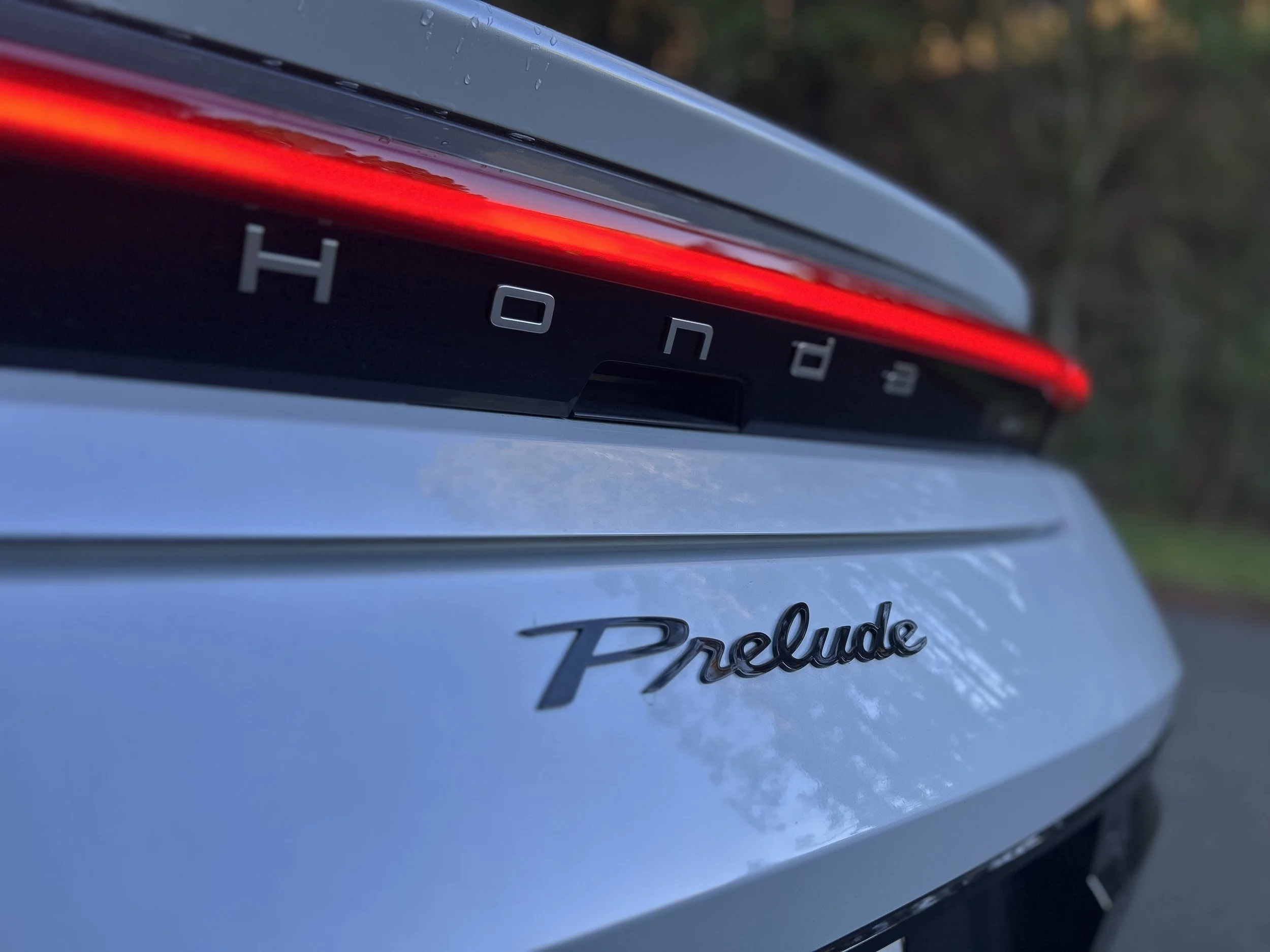
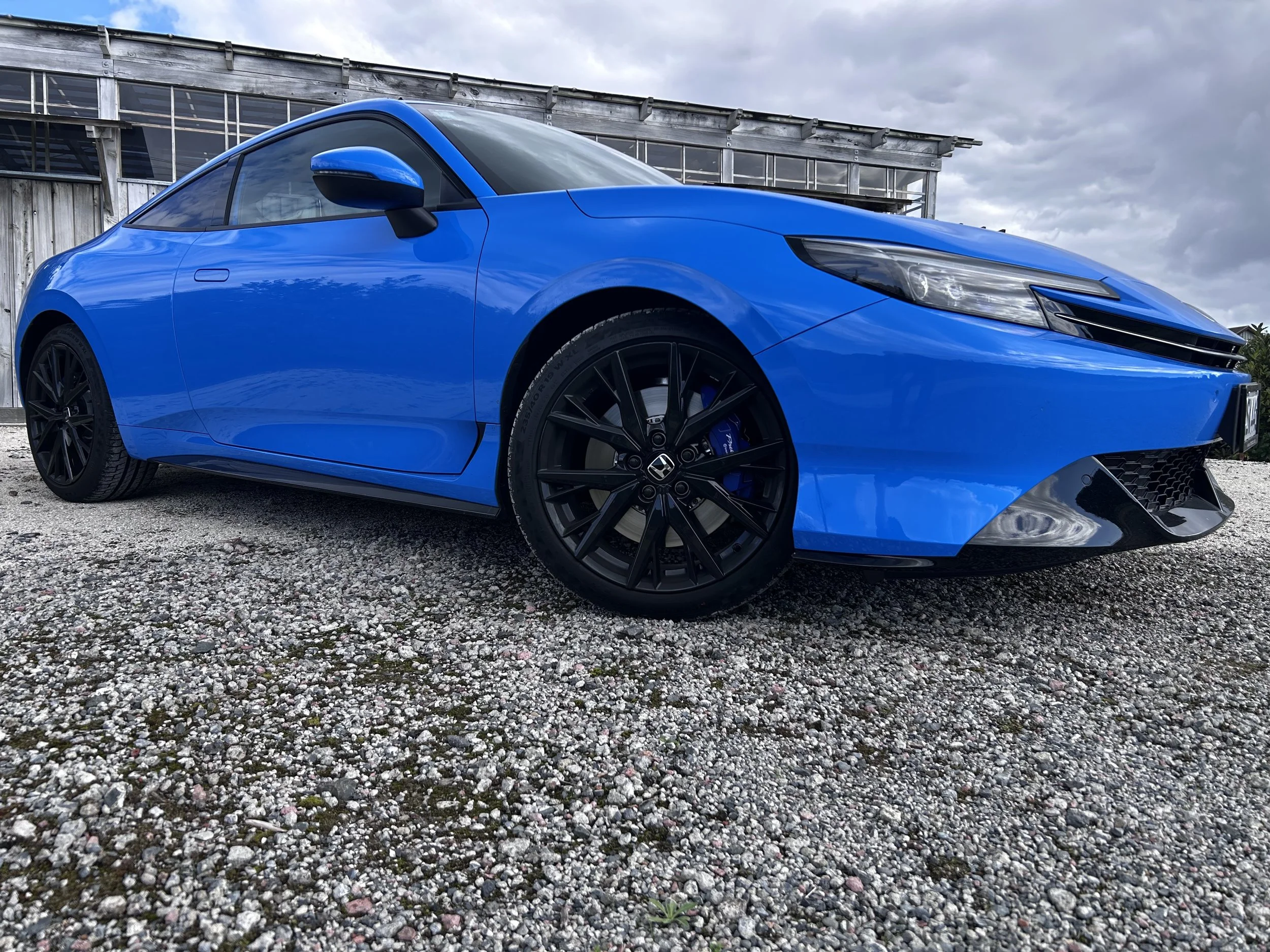
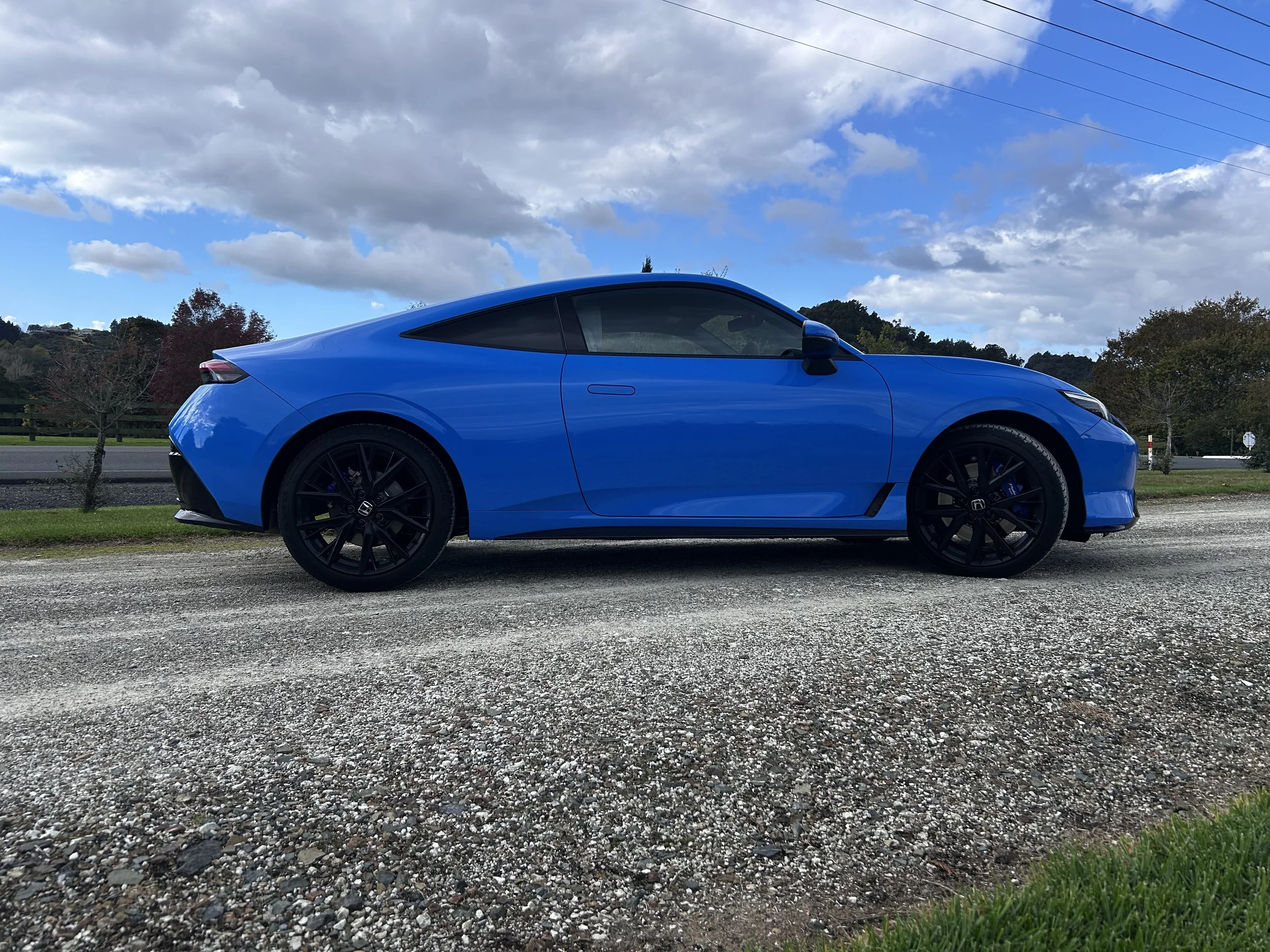
In unembellished presentation, the Prelude’s shape is good enough to draw attention. Going to Civic DNA brings a particularly compact dimension, but arguably it is more proportionally ‘right’ than some past generations and the sculpting is impressive.
The roofline shape and the way the rear end falls away from it speaks to aero efficiency, but also an artist’s touch. It’s said Honda took inspiration from a glider. Some colours - the new blue in particular - are particularly good for it, but none are bad. It’s a sharp looker with an edge of stylistic difference compared to most rivals. Those dark-finished, diamond-cut alloy wheels set things off nicely.
The interior is mostly Civic, just with a bit more pizzazz, so the quality levels are very good and the control layout is so simple and intuitive, with plenty of physical controls.
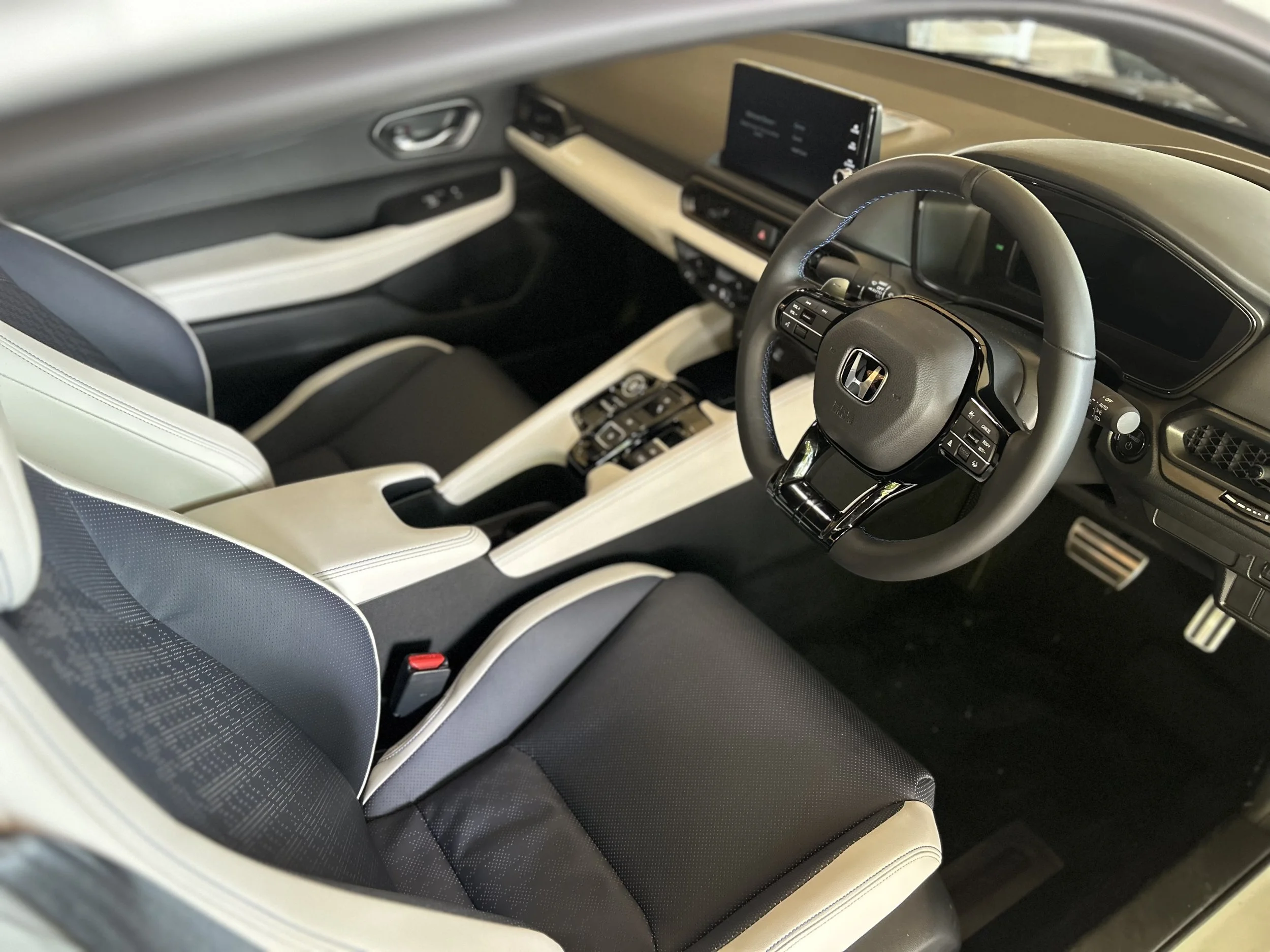
The driver’s seat offers a good range of adjustment and space so that you can get into a suitable position; though it has more headroom than some previous Preludes, tall types will still be ratcheting it down to floor.
The driving position isn’t any lower than in the Civic, but the seats are a bit sportier, and though both front chairs appear identical, the driver’s has more lateral support while the other has a slightly softer cushion.
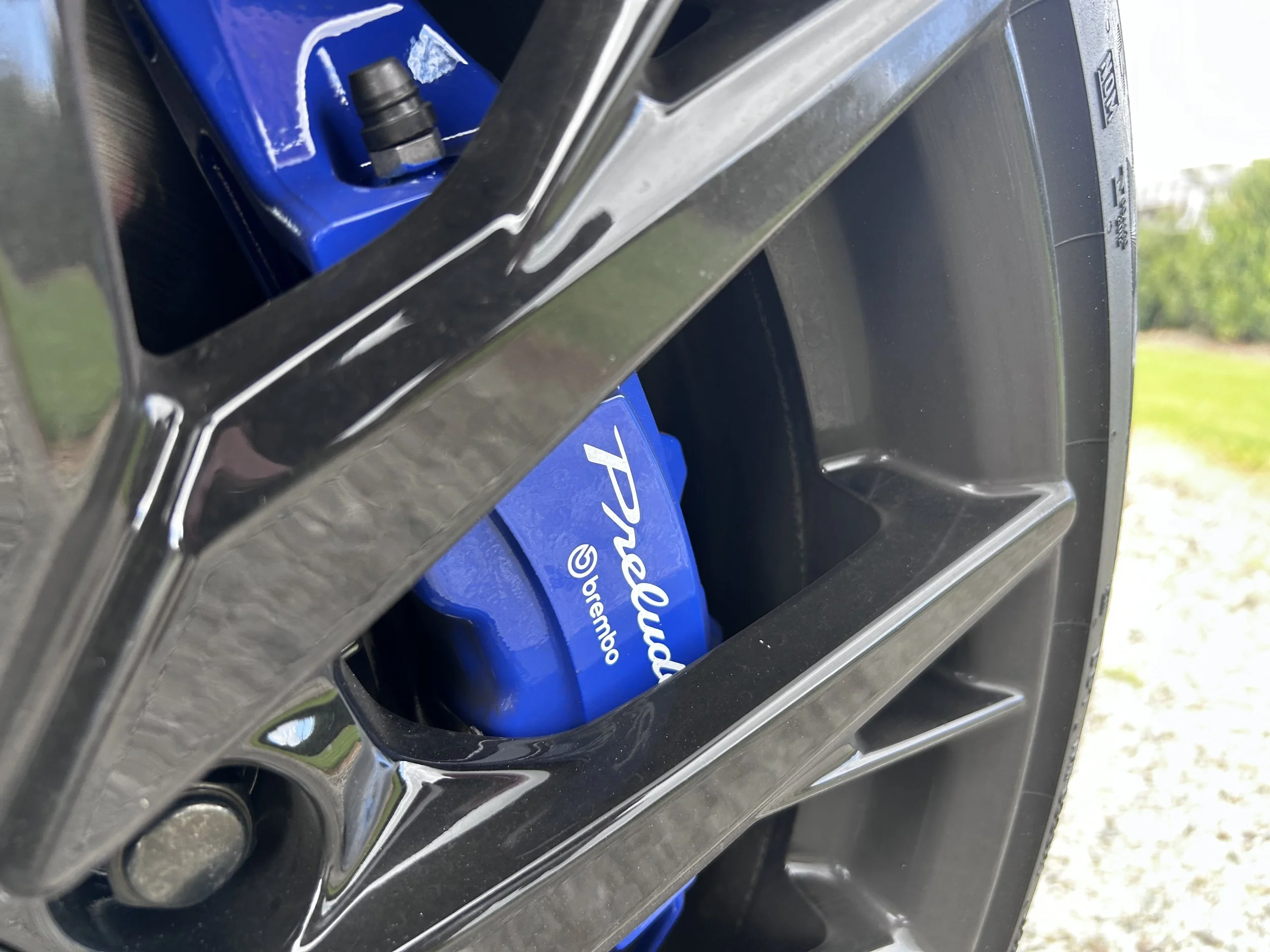
Depending on the exterior colour, there’s a choice of either all-black upholstery or a blue-and-white scheme favoured on the cars on hand. Blue is to emphasis an eco-sporty ideal and also shows externally, on a central segment of the radiator air intake and, of course, those Brembo brakes.
Seating for four? That brand proposal is disdainful. Only acrobats will find it easy to get in or out of those low-backed rear chairs. That the back seats are cloth rather than leather like the fronts says as much as the very tight leg and head room.
The boot is surprisingly deep. There’s supposedly a pull out luggage cover, but not in the car I experienced.
Back to the engine. The everyday benefit is one already proven in those other applications; whatever you might find challenging about e:HEV, it has impressively strong credibility for clean living and low cost running, more so than many engines in sporty cars.
While the combustion side can direct drive the front wheels via a lock-up clutch, in normal driving you’re far more often relying on the electric traction motor.
When you can be running steadily at 100kmh and the engine is hardly showing revs at all, it’s a reminder that it is then powering a generator motor which converts the engine’s output into electricity and either uses it to charge a very small - at 1.05kWh it’s a true tiddler - battery, or to power a second electric motor which then drives the wheels
That’s an aspect that’s very different to the usual sports car aptitude but the bright side is that you’re looking at very low consumption indeed.
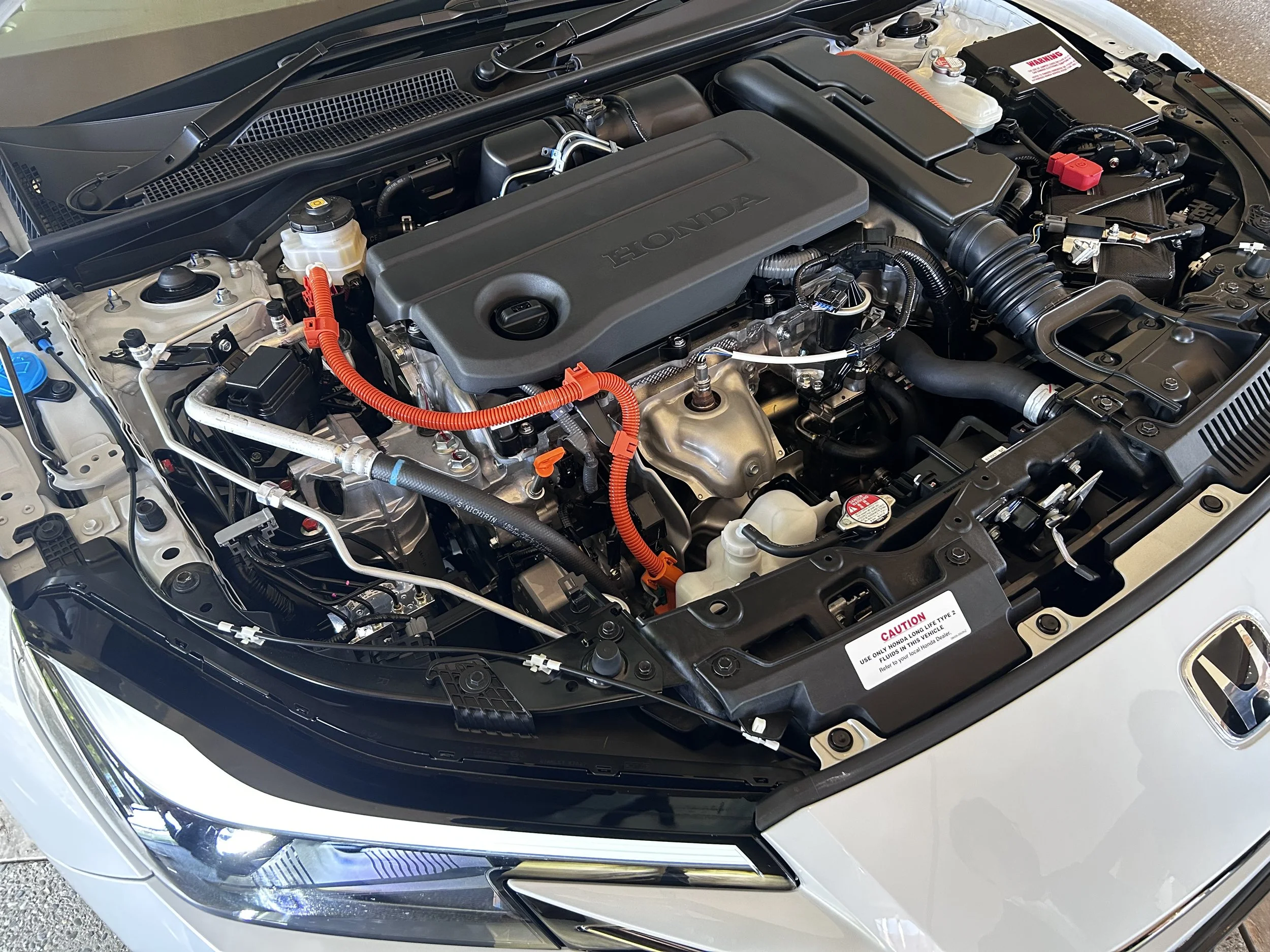
When push comes to shove, the engine is far more to the fore, but even during my first drive I couldn’t ever say the electric side was ever dormant. Anyway, in normal everyday driving the idea of it sipping just over five litres per 100km seems reasonable, which is incredible for anything with performance intent but also reminds why this car can get away with a 40-litre tank.
Whether this is the kind of Prelude anyone expected is a point for debate; it’s certainly a different direction to those that came before in a technical sense, though argument it remains the spirit of its forebears is not without merit.
Even so, while the driving experience promises to be good, it would appear to require a somewhat different approach. What potentially also doesn’t help is that it is now a more central character; by definition a prelude is an introductory event, action, or musical piece that precedes and prepares for a more important one. In the past, that was something like the S2000 or the NSX. But now there’s nothing better.
For many sports coupes, style alone can deliver a sale, and in that respect, the Prelude has every chance of going well.
Honda has cemented itself here as a SUV specialist; the Prelude brings in a level of visual drama that has been sorely absent and will surely be well-received. It’s one of Honda’s most beautiful cars since the original NSX of 1990 and maybe that’ll be enough.
The writer attended as a guest of Honda NZ, with flights, accommodation and a meal provided.