Toyota Hilux BEV first drive: Giant leap best for short adventures
/The electric version of this legendary ute is a technical gem, but demands careful journey planning.
TARDINESS in entering the electric arena is accusation Toyota weathers - but it’s mud that doesn’t stick when it comes to the latest version of make’s famous utility.
The Hilux BEV isn’t the first all-electric tray deck to get here; that title was nabbed by the Geely Riddara RD6 last year. Nor is it the first ‘serious’ ute with a plug. Mains-reliant petrol-electric tech is already onboard the Ford Ranger, GWM Cannon Alpha and BYD Shark 6.
Yet inasmuch as premium price and modest range are tricky buy-in elements with a wholly battery-fed, dual motor drivetrain, employing that tech into entry-level SR cab-chassis, and SR and SR5 Hilux wellsides to complement diesel and mild-hybrid diesel is big news nonetheless.
That this milestone moment rolls out during a high excitement period for Toyota New Zealand - 2026 being the 50th year since a 1968-born nameplate came here - seems particularly fitting.
Toyota Motor Corporation operates in 190 markets, all with different requirements, but we’re a place where Hilux has proven particularly special; 135,000 examples of all generations roaming nationally signal why it has earned icon status.
A night of reflection by Toyota New Zealand during a two day media event reminded it’s been subject to huge marketing effort, notably with big dollar television ads.
Barry Crump, mass high-country owner catch-ups, a chimp on a quest for hokey pokey ice cream and the briefly shown (because it upset international tastes) one featuring singing catch-of-the day prey.
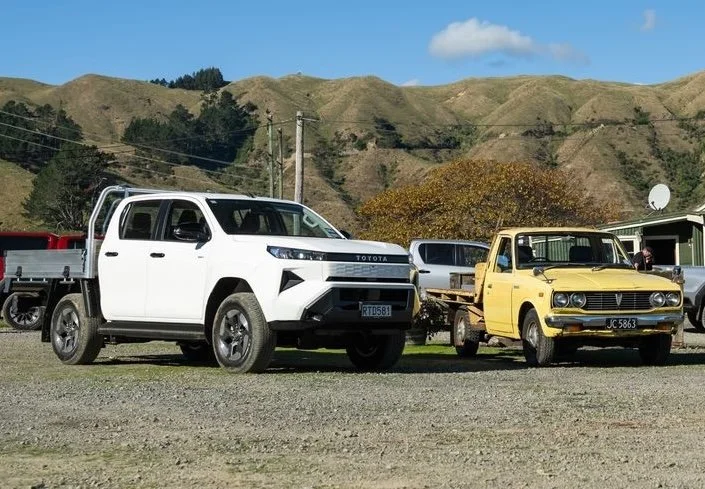
All that feel-good didn’t keep Hilux losing at end of 2014 a never-regained sector leadership to Ford Ranger; a wound Toyota here simply refuses to let heal. They just cannot understand why Ford’s alternate has become a more convenient choice in a changing marketplace.
Even as a bridesmaid, Hilux has enough pedigree standing to hold steadfast as a massive annual volume achiever. It’s hard to see the new generation losing any ground.
How much new territory the BEV might win is something of a conjecture; brands don’t share volume predictions these days and while TNZ has legions of analysts, there being no comment whatsoever about the potential of a pump to plug preference shift was intriguing.
From mood of the launch experience, there’s general sentiment diesel will continue to keep them in the black.
The media event was about the whole generation nine Hilux range, but all were announced in late 2025 and unlike the BEVs, those models are now in public circulation, so no fresh news there.
In synopsis, every version has a facelift, a new interior, more technology, a suspension, brake (rear discs now) and steering (now electric, having been hydraulic) update. A five star ANCAP score for all types announced last December.
For compression ignition models, it’s fundamentally a deep revision. The 2.8-litre engine - with or without 48 volt - and transmissions carry over, with compliance to Euro 6d requirement. Aside from the new Adventure trim, familiar grades continue. Manual versions remain available in some variants, though they are slightly detuned compared to the six speed autos.
Better, then, to focus on the electric, a choice that has never gone beyond concept until now. Easily as well-engineered, highly impressive, the battery choice nonetheless asks a lot of potential owners, starting with the buy-in.
The cab chassis is least expensive at $79,990, but that’s without a tray. Add in that element and it’s conceivably at least lineball with the less pricey of the wellsides, which commands $81,990. The SR5 is a $85,990 ask.
So the premium over the six-strong 2.8-litre turbodiesel family is … considerable. Those start at $49,990 for two-wheel-drive Prerunner with the orthodox 2.8; topping off with a $63,990 4WD Adventure with hybrid assist in automatic.
The electric SR5 is the most expensive Hilux ever sold here, but conceivably that $22k elevation over the Adventure could have been wider. Had Australia market pricing for the very same products transferred, then the best kitted of the most environmentally-friendly type ever would have been very close to directly competing against the category’s thundering antithesis, Ford’s Ranger Raptor V6 petrol.
So there’s that. Then there’s the question convenience of ownership, which requires much more than just deciding who can offer the best body wrap deal after you discover paint choice comes down to just the two hues seen today; Glacier White and Ash (grey)? How much it can take on the back, how much it can tow and how far it can go on a charge require serious consideration, becauseToyota’s first all electric light commercial goes lite on all.
The Hilux BEV features two electric motors, a 82kW and 206Nm unit at the front and a 129kW and 269Nm type at the rear, developing a combined total of 144kW and 468Nm (rather than the 474Nm originally announced overseas).
That’s highly credible, if also down on the turbodiesel’s optimal 150kW and 500Nm outputs, with momentary 12kW/65Nm boost from those with the 48-volt mild hybrid system.
The weak point isn’t with the power plant, but the power supply. Battery size is modest at 59.2kWh due to Toyota quite fairly insisting the BEV had to match the ICE types for robustness. To achieve that meant sticking with tried and true construction.
Let China Inc take risk with a car-like monocoque; Toyota won’t simply won’t go there. Body on frame is a foundation on which Hilux has built a rock-solid reputation, so BEV achieves a rework of a familiar chassis. While the electric installation demanded frame reinforcements, stronger MacPherson strut front suspension, and a De-dion rear leaf spring setup to allow a rear electric motor to be mounted, it is fundamentally true to type.
That approach allowed only so much room between the rails in which to squeeze that lithium ion battery pack. And because only so much can be expected from current cell technology, range is realistically one third that to be expected from a diesel. At best.
Accuracy could become a matter of some controversy because TNZ insists on using a wonky gauge, NEDC. With the preferred WLTP scale, brand-advertised ranges of 315km for the wellside and 245km for the cab-chassis are undone. Those respectively drop to 240km and 180-190km.
TNZ says it has seen around 200kms out of the wellside in mixed driving if just operated at urban pace, that can stretch another 40-50km, it believes.
The media drive amounted to 250 kilometres’ running, spread over two days. With lead and tail vehicles, it was a tightly controlled outing, with speeds kept in careful check, at times below posted limits.
The diesels easily accomplished the whole stint on a tank. Those I checked afterward had at least 335 kilometres’ remaining range showing. Easily enough for a repeat run.
The BEVs were reinstated to 100 percent overnight, a prudence for good reason. At conclusion, battery conditions of individual examples ranged from 47 percent, with 108kms remaining range, down to 37 percent, with 72kms.
The one I drove most got home on 38 percent, with 83kms’ remaining range; not bad as I’d given it some standing starts and also briefly explored the optimal pace potential (145kmh indicated 5kmh above factory claim). Incidentally, there’s no 0-100kmh info for any Hilux, but the diesels are attested to have a 40kmh high top speed.
Payload and towing would also be expected to further hurt range, regardless these are lighter than for diesel Hilux. The BEV limits to 715kg on the deck and braked towing capability is 2000kg, whereas a diesel dual cab will heft no less than 965kg and can now tow 3500kg.
It’s also interesting the BEV's factory tow kit is smaller in tongue and receiver size, so there’s no potential for interchanging to the diesel one.
The limited range reflects sobering realities of what life is set to be with the BEV. With Toyota deep into battery research, not least with solid state, we might well expect an upgrade before it ends production, but for now there are compromises that might well be considered significantly defining issues.
This doesn’t make it a failed exercise by any means. Considering the sum total of its talent, the electric in many ways comes across as being a very positive ideal.
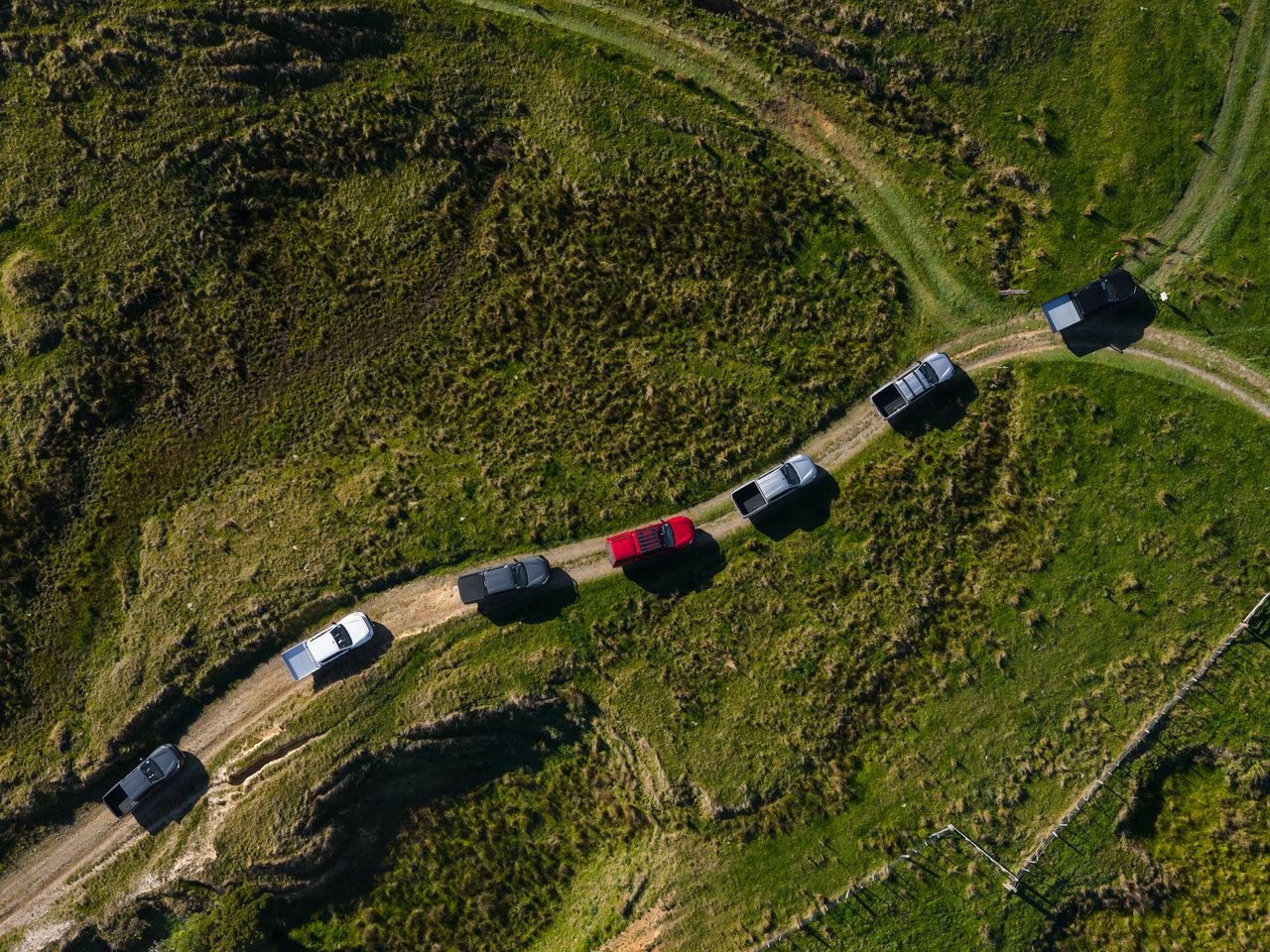
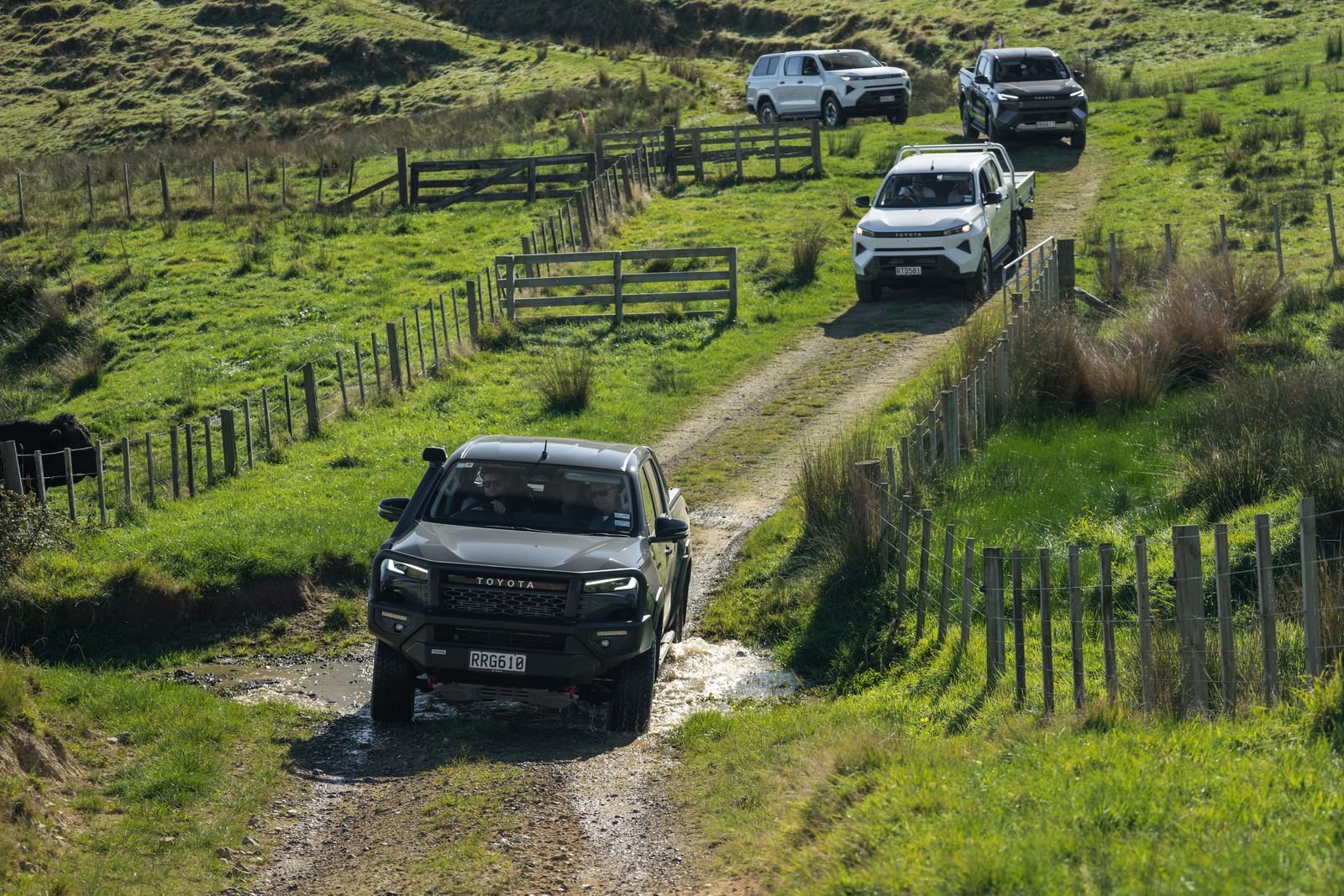
The first day was a 102km around trip between Toyota New Zealand headquarters in Palmerston North to The Heights, a 890 hectare farm outside Shannon, for around 20kms’ off-roading. The second delivered a fully on-seal tour of the Tararua district, covering around 130kms of country roads, again from TNZ HQ and return.
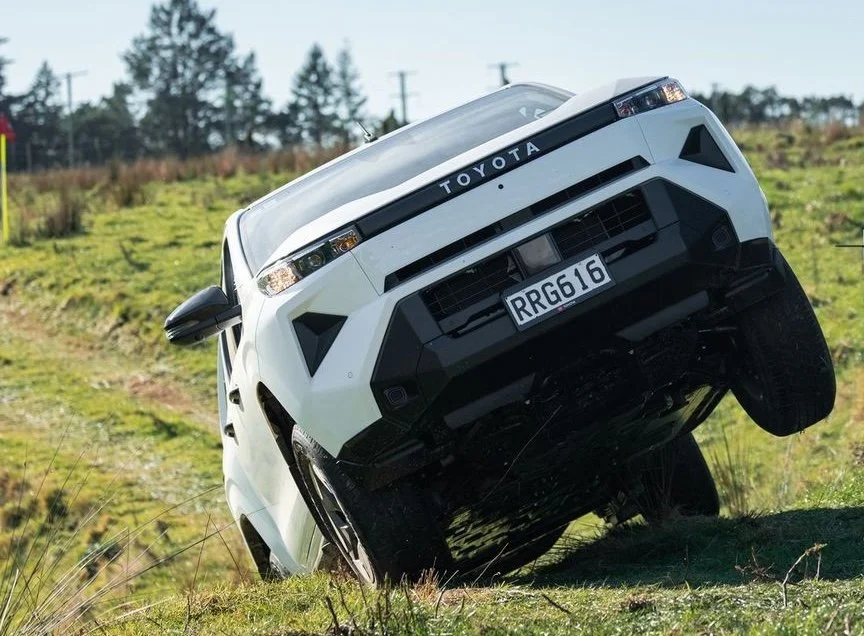
At almost all times, the electric shone. The conditions for off-roading were fairly carefully designed, but for it to be the equal of the diesel in those exercises was impressive, not least because the BEV is on more road-attuned, 17-inch Bridgestone Dueller rubber. Some of the support fleet diesels that also mucked in were on far more bespoke boots, but where they went, the electrics faithfully and flawlessly followed.
Where the BEV really gets ahead is in on-road aptitude. A more settled ride is a 101 electric experience. A lot of that is due to the weight and how low it is set into the platform.
No Hilux is especially light so, although it only weighs in around 200kg more than a SR5 diesel, kerb weights of 2420 to 2455kgs and gross vehicle weights coming in at between 3135-3170kg are an electric burden and remind why they can eat more energy when working.
The BEV, for instance, used eight percent of its battery life just climbing the Pahiatua Track (though it regenerated around three percent heading down the other side).
But compensation also comes from the enhanced kilo count. The ride quality is markedly less choppy than that from a conventional Hilux. That and the all-wheel-drive ingredient add up to big step up for dynamic capability.
The diesel’s suspension has been retuned to improve unladen ride, but it remains old-school ute in how it ride and take bends. There’s pitch, wobble and roll and some porpoising when you get too ambitious in bends.
The electric model sits flatter, maintains a tight, neat line in bends when holding a pace that inevitably triggers the diesel into front end push. It is markedly less flustered by bumps. It’s not car-like, but if you’re more used to that mode of transport, it’s going to seem friendlier.
As much as the the step-off is sharper, the BEV is not a sporty ute. Though the Sport driving mode increases resistance, the steering is not over-imbued with feedback and while the brake performance is measured; it’s a big thing to bring to a halt in a hurry.
Smooth driving is best for it and that likely also prolongs battery performance, though other involvements also colour this.
If distance to empty issues start to crop, using Eco rather than the alternate Normal and Sport programmes will be prudent. Simply turn off the air conditioning makes a huge difference. In the off-roading phase, that instantly added an additional 18 kilometres’ range.
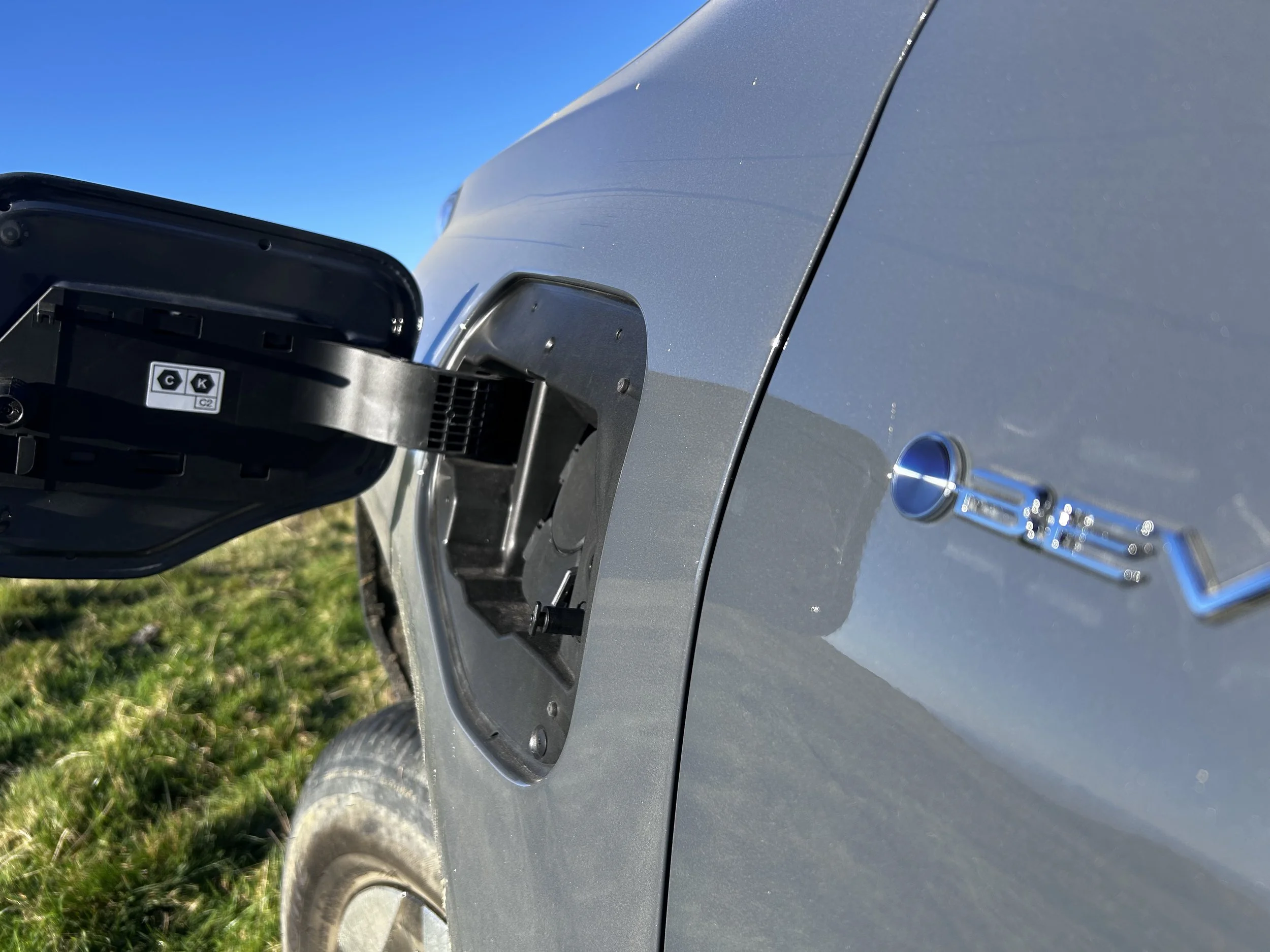
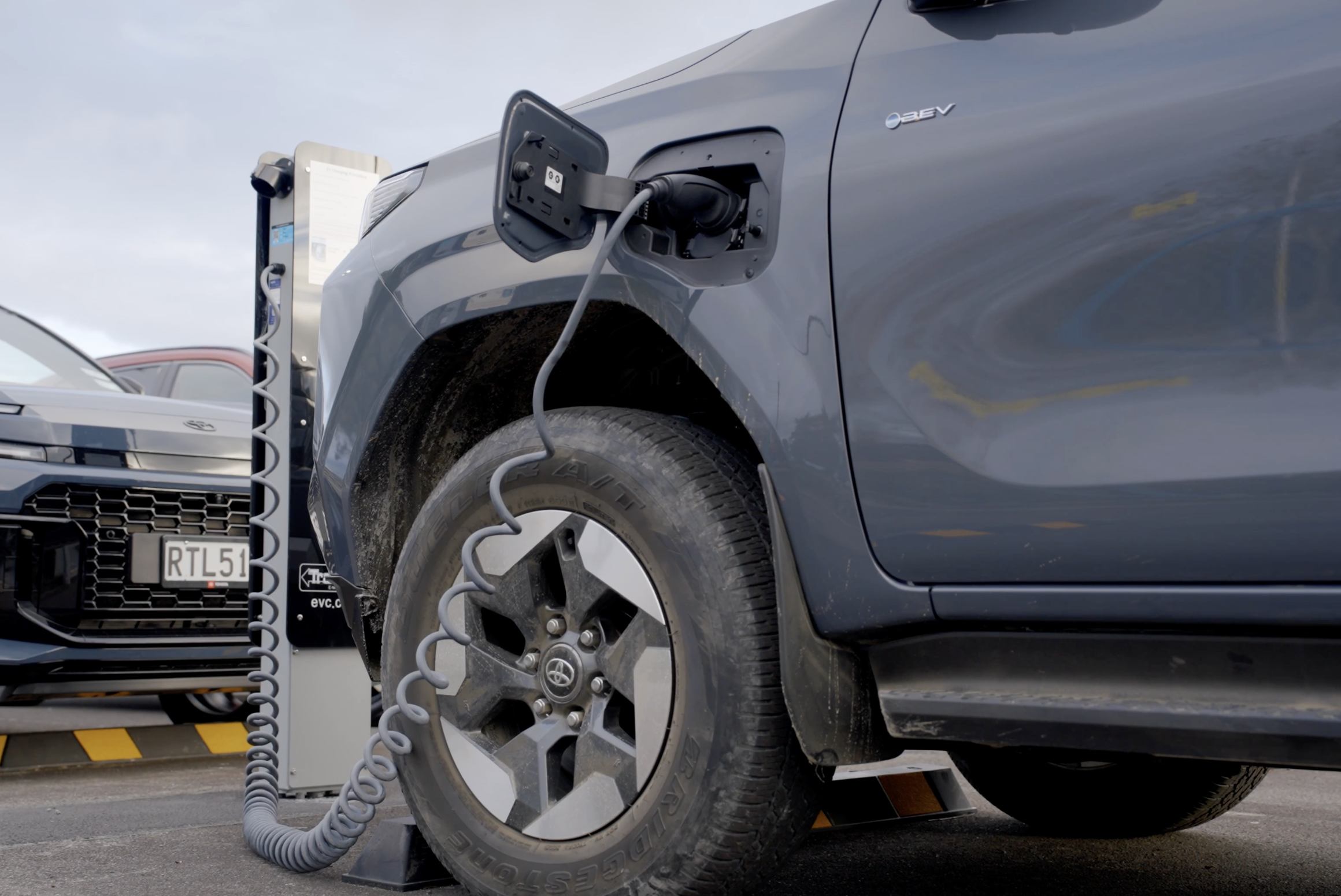
Daily replenishment being very likely puts the spotlight on how it’s set up for recharging. The port is sensibly-located on the left front flank and it’s also great it eschews Japan’s domestically-favoured Chademo for DC-optimised CCS, in this case promising 150kW upload, for 10-80 percent charge in as little as 30 minutes. AC charging also avails, but with 10 to 100 percent taking 6.5 hours, it’s really an overnight thing.
Gaining full appreciation of the engineering brilliance will likely require putting the BEV up on a hoist. The underbody packaging and protection of the battery and drivetrain is said to be something else.
The battery, which actually five 16-cell modules, is not only is very carefully positioned within the protective confines of the chassis, but is also reinforced with added impact-absorbing sections to create something akin to a full body-length sump guard. Basically, if you manage to damage the battery in an accident, chances are the forces would have been so violent as to also bugger the whole vehicle.
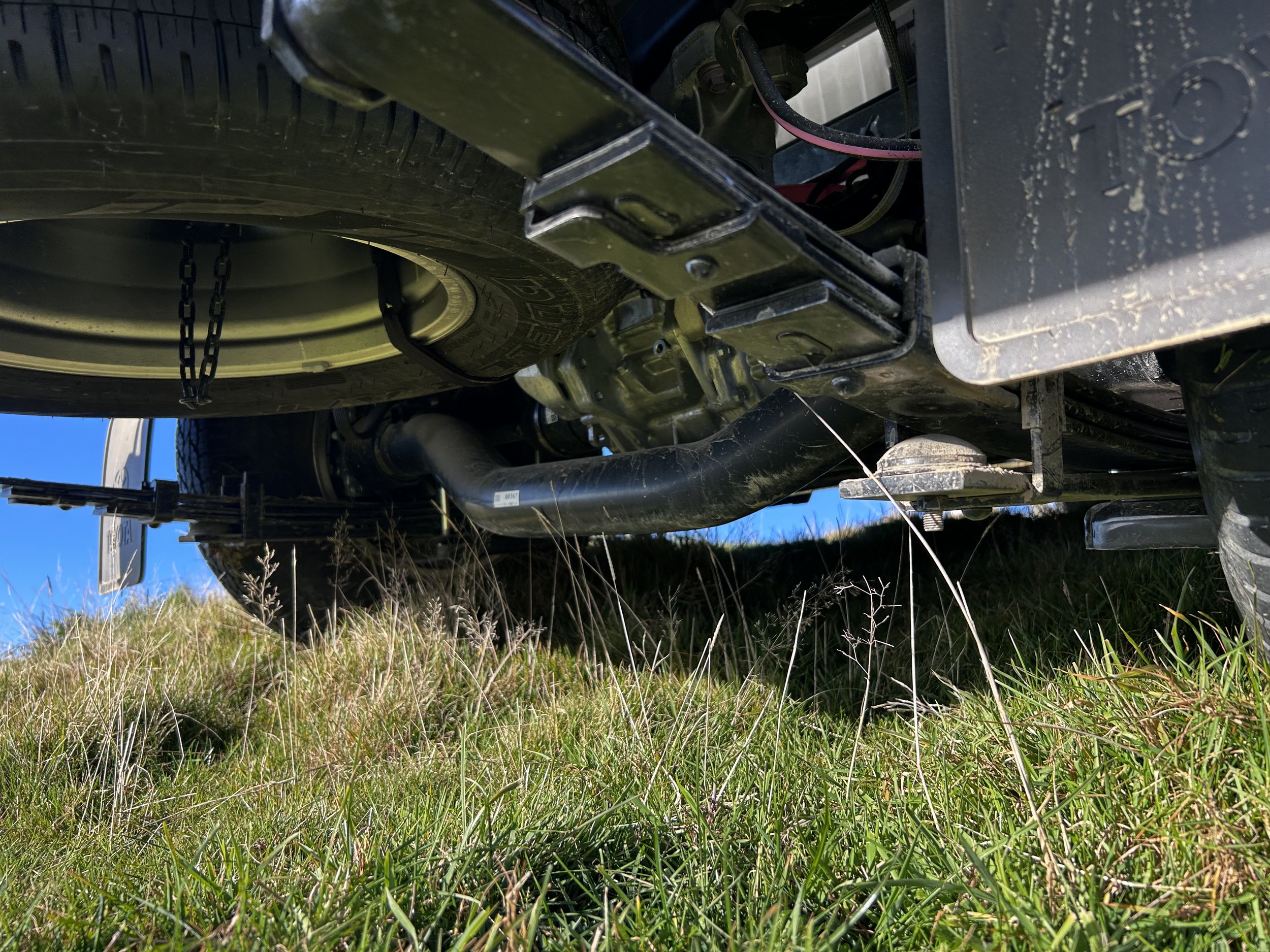
The lowest hanging element underneath is clearly that De Dion suspension, but from our experiences, chances if it ever snagging seem remote. In a diesel, the biggest potential - but also rare - might be to bang a diff. The electric doesn’t have any of that stuff. Hence why it doesn’t have diff locks or low-range gears to deal with.
Instead, the new Multi-Terrain Select six-mode traction control system adjusts the motors’ response to suit different conditions, either automatically or by selecting one of five preset modes for different surfaces.
Old hands will always swear by the low-range transfer case and locking differentials, for good reason. The diesels are brilliant when fully engaged.
But at same token, the electric approach is very adept. The motors have such control over their torque output that the trad mechanical approach won’t seem any better or worse. It’s also easier.
Deciding when to take a diesel out of rear-drive and engage four-wheel-drive is in itself a call that can undo the unwary; working out what situations require low range rather than high, and when to lock a diff also reminds that a level of expertise is expected. You can understand why some drivers who head off seal just occasionally get into trouble.
The BEV is the novice’s friend. It’s simply a case of picking the right mode for the terrain you’re on. Mogul (the primary choice on our day), dirt, sand and rock are disparate in how they tell the AWD system, throttle and steering how they should behave. If you’re unsure, just stick to Auto, which is pretty quick to sort out how to best cope.
So there’s lots of feel-good. But how confident would you be with it?
Unsurprisingly, when it comes to suggesting how the electric Hilux is used, the brand comment is a touch cautious.
While voicing thought that electrification hasn’t changed the mindset, just the power source, Toyota NZ also enforces “the Hilux BEV is not a diesel replacement.
“It’s been designed for fleet, Government and business customers where electrification makes sense” the brand says, and is best “for roles where charging is easy to access and daily travel is typically under 200 kilometres.”
They speak of it working well for infrastructure and construction companies, farmers, horticulturists, trades, eco-tourism and local government contractors operating within “defined areas and where (presumably overnight) charging would take place back at the base or farmyard.”
As logical as those applications are, you’d have to question if many get best benefit from the model’s off-seal talent; most arguably wouldn’t even need all-paw, so it’s interesting Toyota never considered making this in rear-drive only.
Will it appeal to weekend warriors? There’s some shoulder shrugging to that one, but they’ve taken note that while mining companies and government agencies have been the primary target in Australia, over there family customers have placed orders as well.
Clearly, the range limitations will likely keep it from fully exploring to the same degree as the diesel.
Running the outer boundary of that large rural holding; heading into deepest, rugged bush on a hunting expedition (where the advantages of a near-silent drivetrain could be massively beneficial). Yeah, you’d tread cautiously, knowing not only is there no Plan B if the battery exhausts and a massive headache if recovery is required. Electrics are not easily towed.
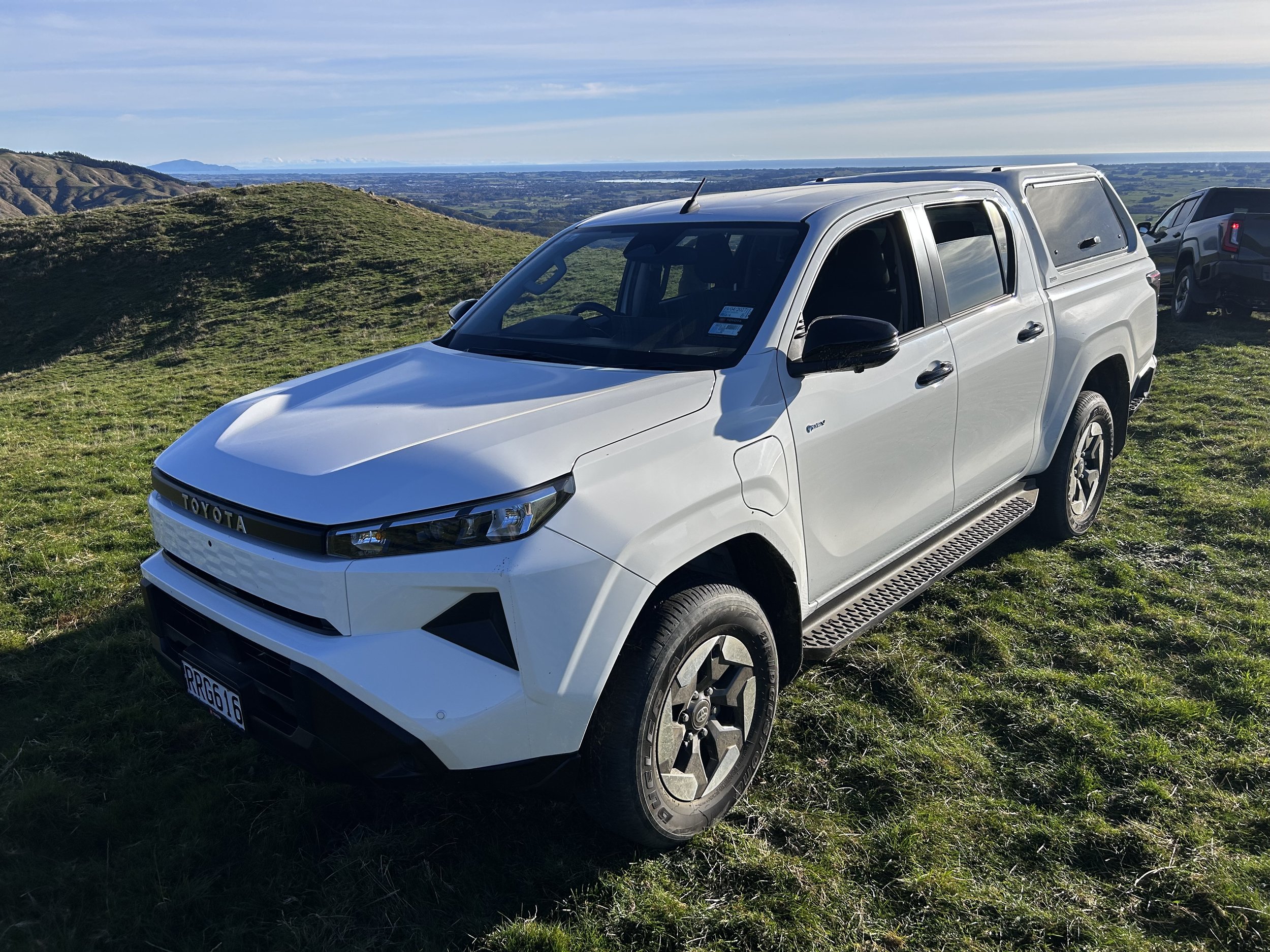
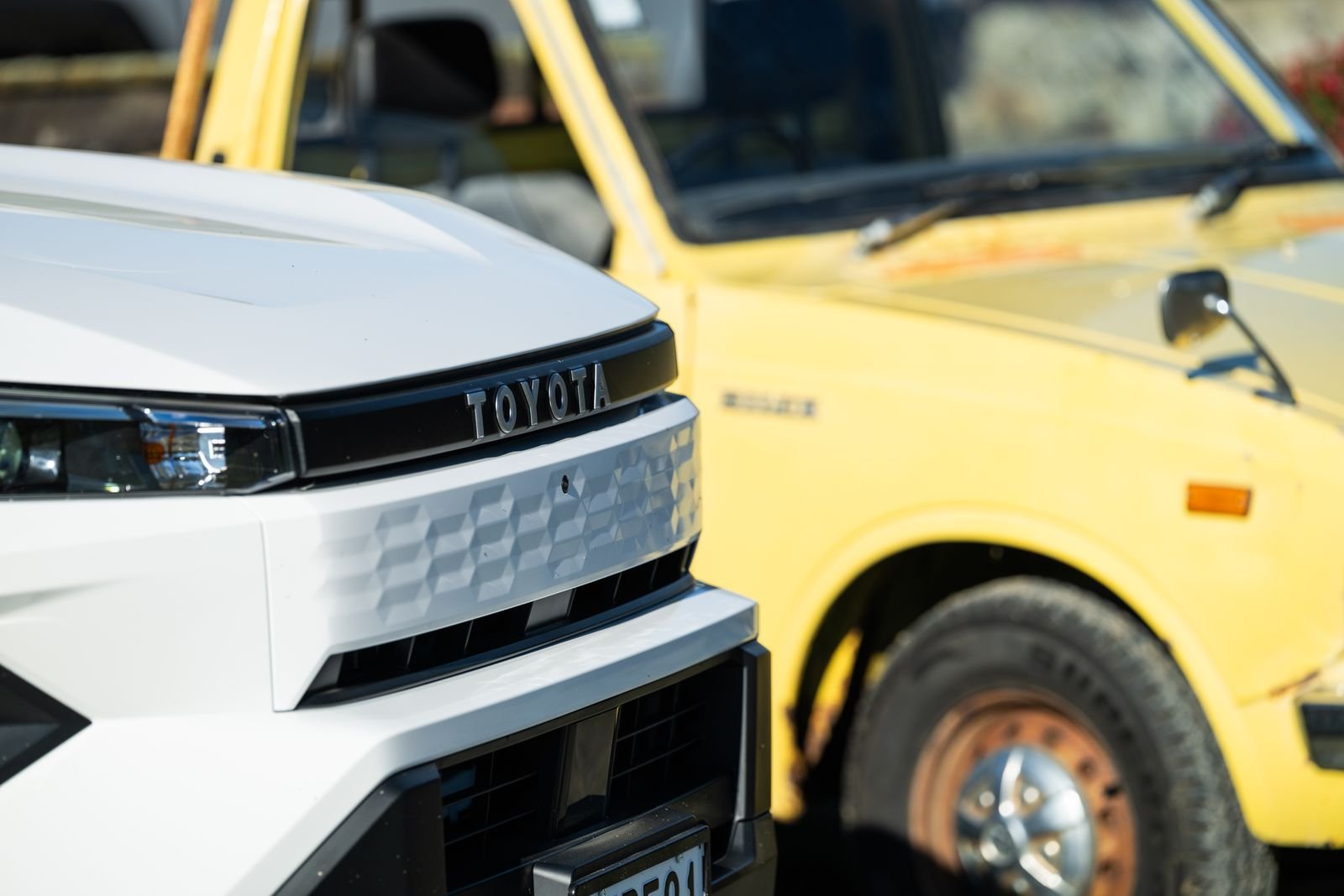
In look, it’s not quite the same as the diesels, but close enough that, from even modest distance, it could well pass muster as just another Hilux at the sale yards.
The grille gets the aerodynamic treatment you’d expect for an EV with a minimum of air intake openings to help it glide through the air more smoothly.
It’s also far more upright; a reinforcement of toughness, the brand suggest. The electrics have a bespoke alloy wheel that is more solid in look for aerodynamic improvement, and it of course has that charging port on the front left flank. The overall body size has changed negligibly, with a 5mm decrease to the 5.3m overall length, and inside they aren’t too different.
In terms of comfort provisions, Toyota could stand accused of being less generous than some rivals, and though standard features of the BEV largely mirror the diesel models, there are differences.
The electric SR adds a 12.3-inch digital driver’s display, body-coloured mirrors and door handles and dual-zone automatic climate control over the diesel SR, though loses four speakers, a wireless phone charger, a leather-look steering wheel and front fog lights.
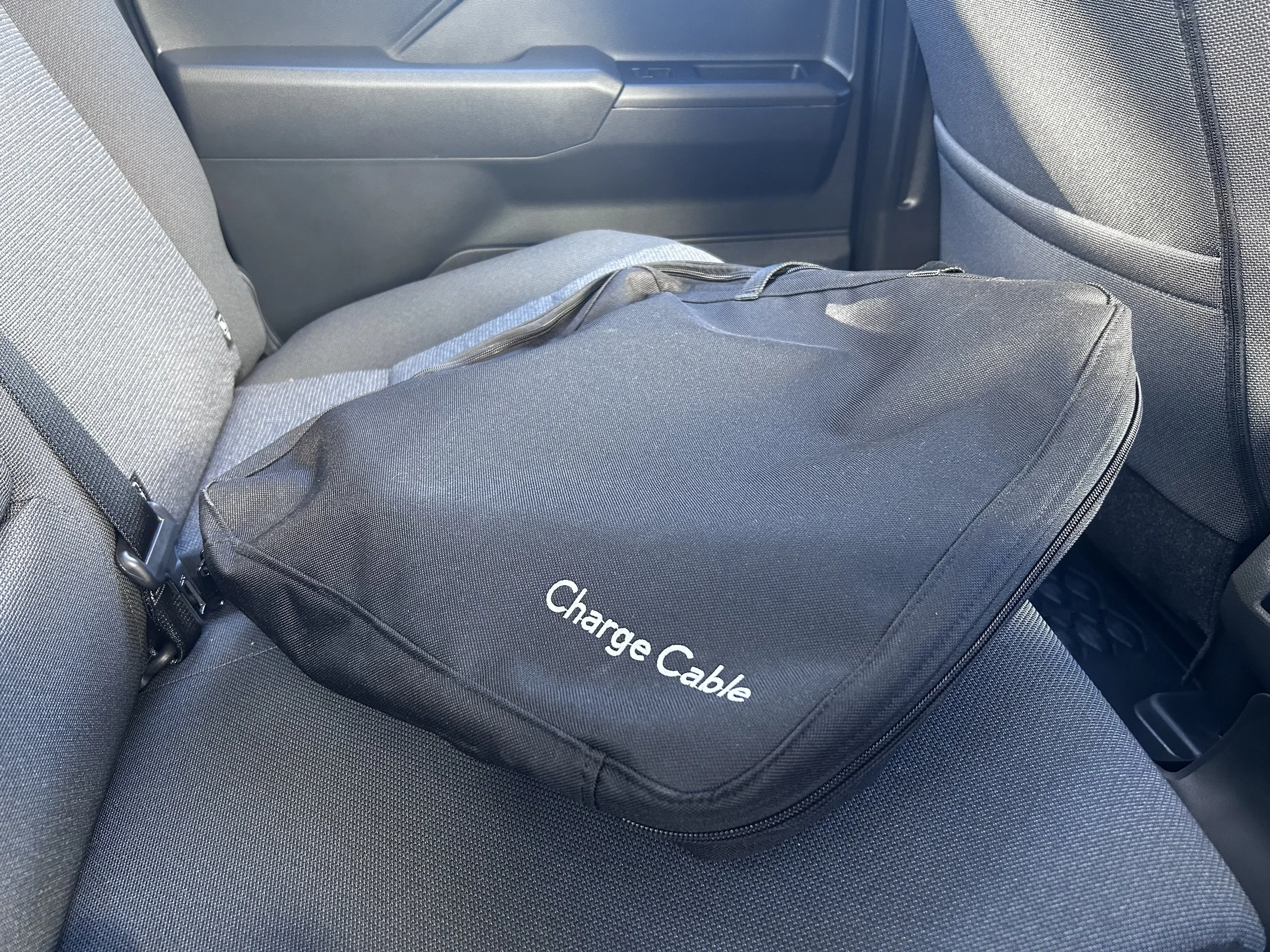
You have to buy into the SR5 to achieve those. The high spec also adds heated seats and a heated steering wheel and an electric drive seat adjustment. BEV buyers also get a charging cable which comes in a bag that, unusually, cannot be stowed out of sight anywhere. Other ute makes put theirs under the rear seat. It’s strange Toyota hasn’t tried to find a better solution.
The cockpit design employs the same workmanlike materials as in the ICE and the layout also delivers some physical knobs and switches. What’s absent is the ICE’s chunky gear selector. No need to bother with one of those with an electric, so a small rocker control will do.
In terms of seat design, they are the same; also identical is the cabin size, which in itself is an interesting story. As much as the external panels fore and aft of the passenger compartment keep changing, that its kept the same door shapes for more than a decade reminds that the central section hasn’t altered. It probably needs to. A lot of utes offer more interior room and, for me, are less awkward to get in and out of.
The message from Toyota here is simple. It’s a story of talent. Electric doesn’t diminish the ability. When it’s out in the rough, it’ll do the job. When its on the road, it has potential to raise the bar. It fully aligns with Toyota’s multiparty approach and feels truly genuine. Just with less stamina.
Still, when the only other full rival, though using a car-like construction, seems to have some off-seal chops and is cheaper, more powerful, can tow 3000kg, takes 1030kg on the deck and, due its 73kWh battery, can achieve 360kms’ WLTP, positive messaging might well be beneficial to the Toyota.
Logically a good reason, then, for why established motoring media were joined, in addition to brand ambassadors Marc Ellis and Matt Watson, by half a dozen social media content creators, some readily acknowledging working ties.
The writer attended as a guest of Toyota New Zealand with meals and a small gift provided.