
Epiq opportunity clarifies with production unveil
/Skoda’s smallest, cheapest electric car has now fully revealed. Has it further raised local interest?
A BABY electric hatch Skoda here has been considering for some time is closer to potential availability, having now entered production.
The Epiq is based on the same MEB plus front-wheel-drive mechanical package as the Volkswagen ID. Polo, the Cupra Raval and the VW ID. Cross.
That means it can pack a 37kWh (net) battery using lithium-iron-phosphate (LFP) chemistry, offering range of up to 315km with a choice of 86kW or 100kW electric motors.
Above those choices, badged Epiq 35 and Epiq 40, respectively, is the (moreEpiq 55, which gets a 51kWh NMC battery, a 156kW electric motor and a range of up to 430km. This model has the fastest 0-100km/h time of 7.4 seconds, while official energy consumption across the lineup is 13.0-13.2kWh/100km.
It could be the model most interesting to Skoda NZ, given convention here among distributors is to try to deliver electrics with ranges above that 400km mark.
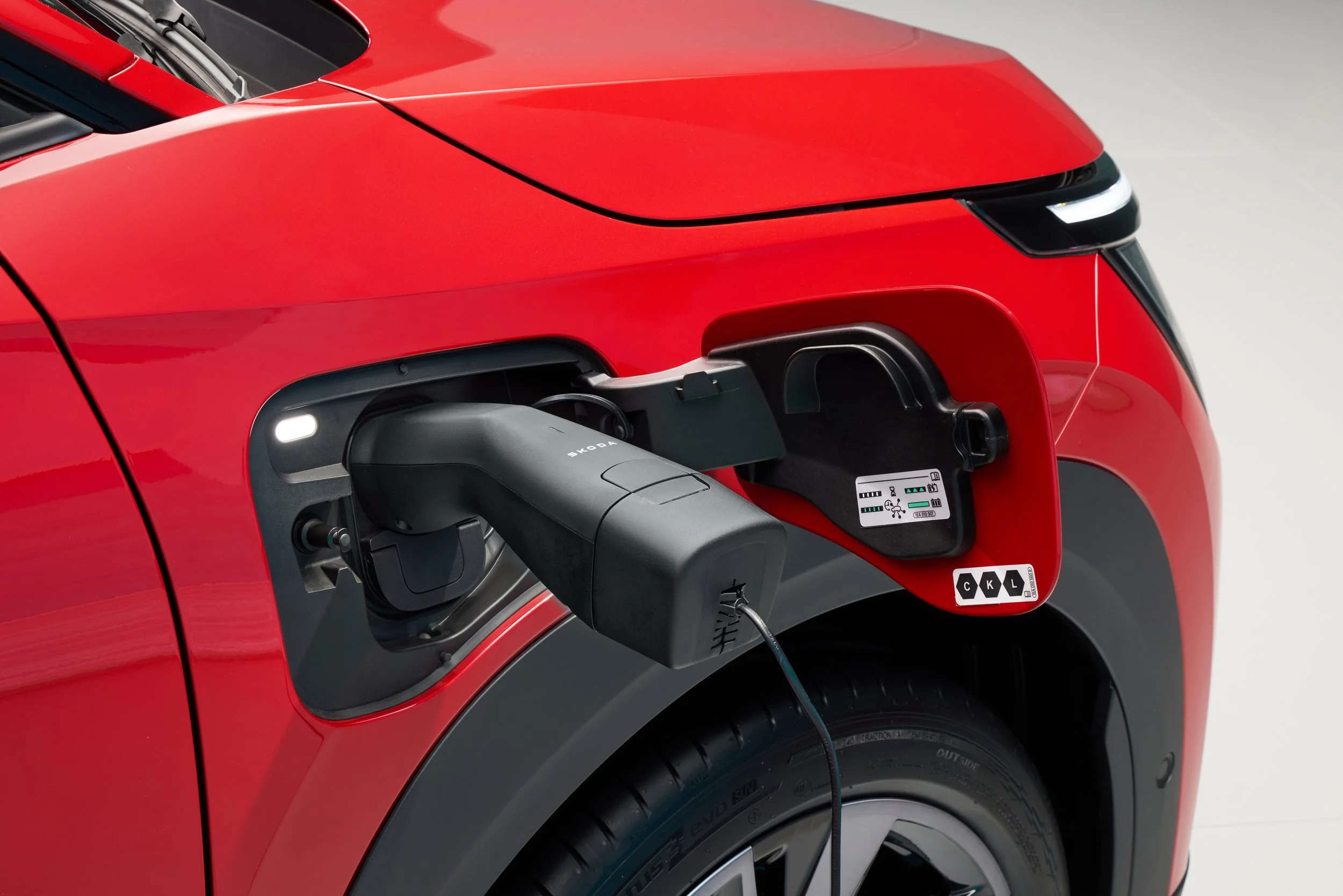
The biggest battery choice is also the one with the most appealing charging rate. It can handle 133kW of DC charge, and that will go from 10-80 percent in just 23 minutes.
Conversely, the 37kWh LFP battery when in the Epiq 35 can only manage 50kW of DC charging power. Skoda doesn't quote a 10-80 per cent charging time for that model. The Epiq 40 will accept 90kW of DC power and go from 10-80 percent in 28 minutes, which is better.
All versions will charge at up to 11kW on three-phase AC outlets.
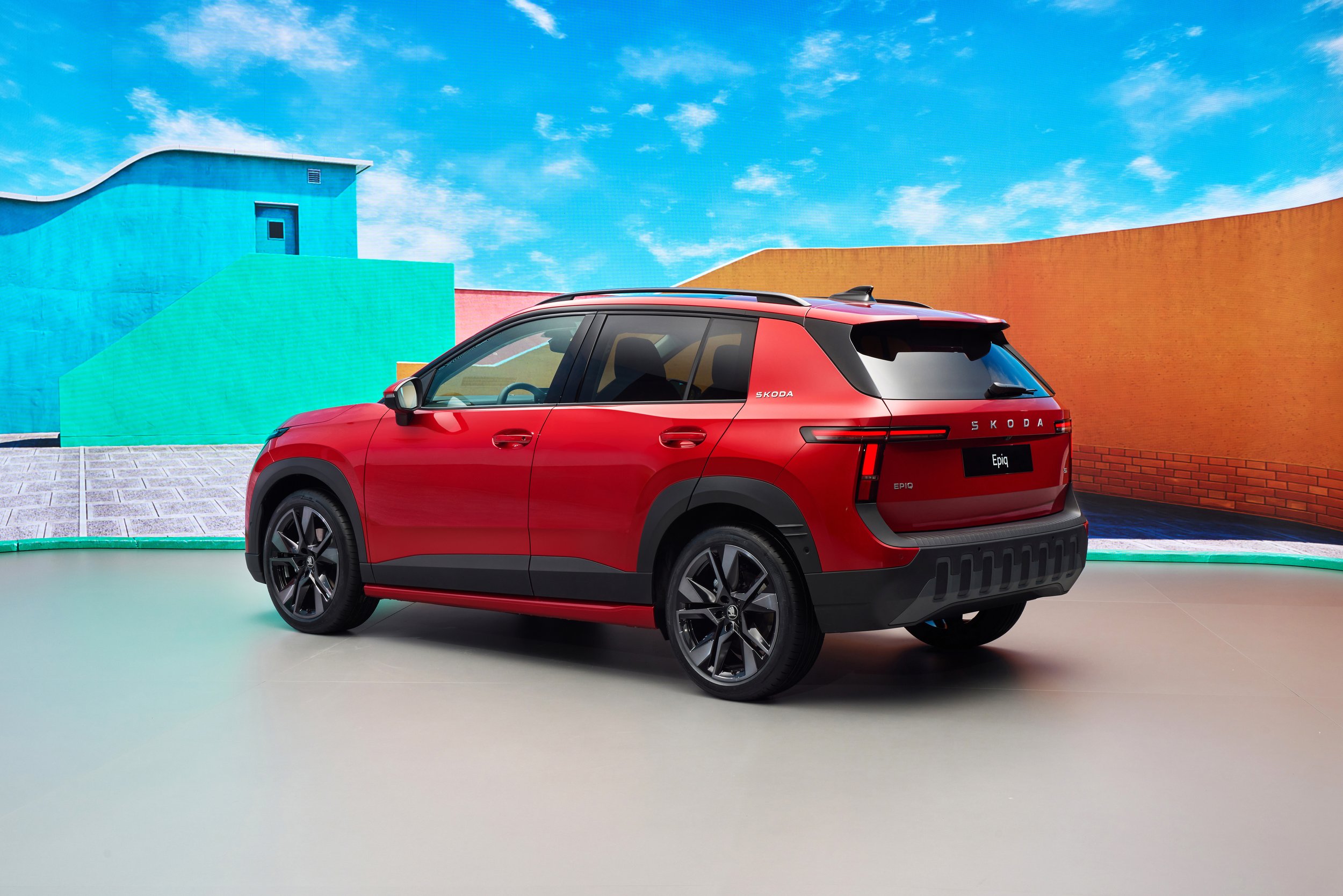
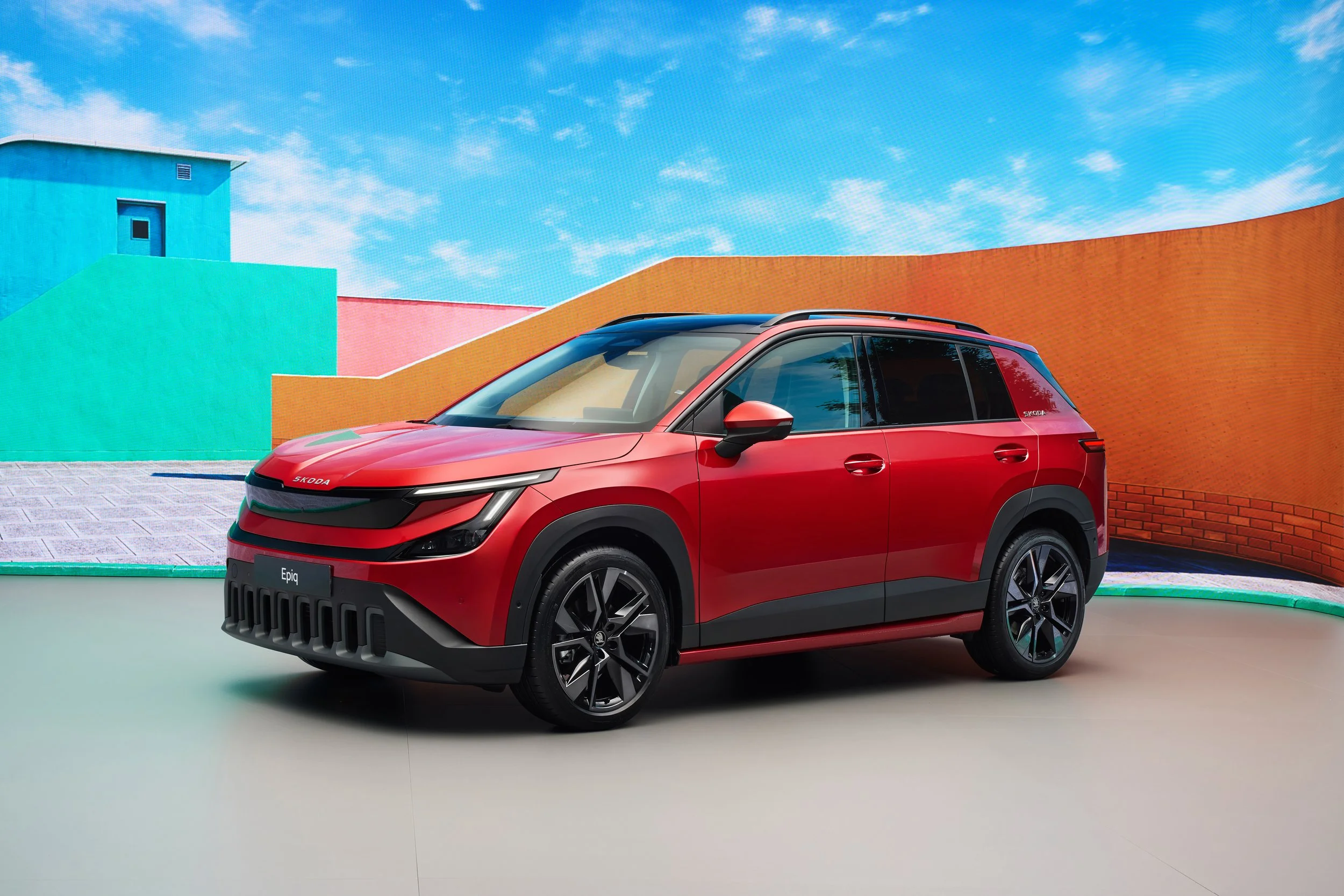
The styling hasn’t diverted very much from the concept; a chunky, but compact, stance remains and it has gained a few more details. One is a wavy styling line that runs through the lower section of the front bumper, which Skoda calls the 'Volcano Line’.
This not only looks good, but also has practical applications, allowing Skoda to have unpainted plastic panelling running around the lower edges. The implication is that this should help cut down on parking dings. It also helps to disguise the neat little 'air curtain' vent which directs some of the airflow through the bumper and around the front wheel, for greater aero efficiency.
The holes in the front bumper serve two purposes. Obviously they allow air in to cool the battery, but they're also included to lend the car more of a rugged off-road aesthetic , regardless that it’s strictly front-drive just now.
With the initial First Edition, a buyer can ask for one or more of those vents colour-coded. The FE is said to be close to the Sportline provision that Skoda NZ favours. This delivers elements such as black badges and a contrast colour line that runs along the tops of the doors.
Skoda’s simply clever idealism also shows with two tiny aero 'flicks' on the back of the rear wheelarches. Those are there to create an airflow effect which helps to stop the rear wheels flicking up stone chips.
The Epiq's nose includes ultra-slim T-shaped LED running lights, with smaller projector LED main beam units tucked in at the base of the ’T'. That’s a new styling feature coming to all Skodas over time.
Of course, this brand sells less on kerbside panache than for practicality. On that note, the boot stretches - across its two levels - to 475 litres, which makes the Epiq one of the roomiest cars in its class.
The adjustable floor, at its highest level, lends a flat load floor, which is handy, and there are useful storage areas to either side. There are bag hooks and a 12-volt socket too, and optionally Skoda will sell you a handy storage bag for your charging cable, just as it also does in the Elroq. Here it clips upright against the back of the rear seat.
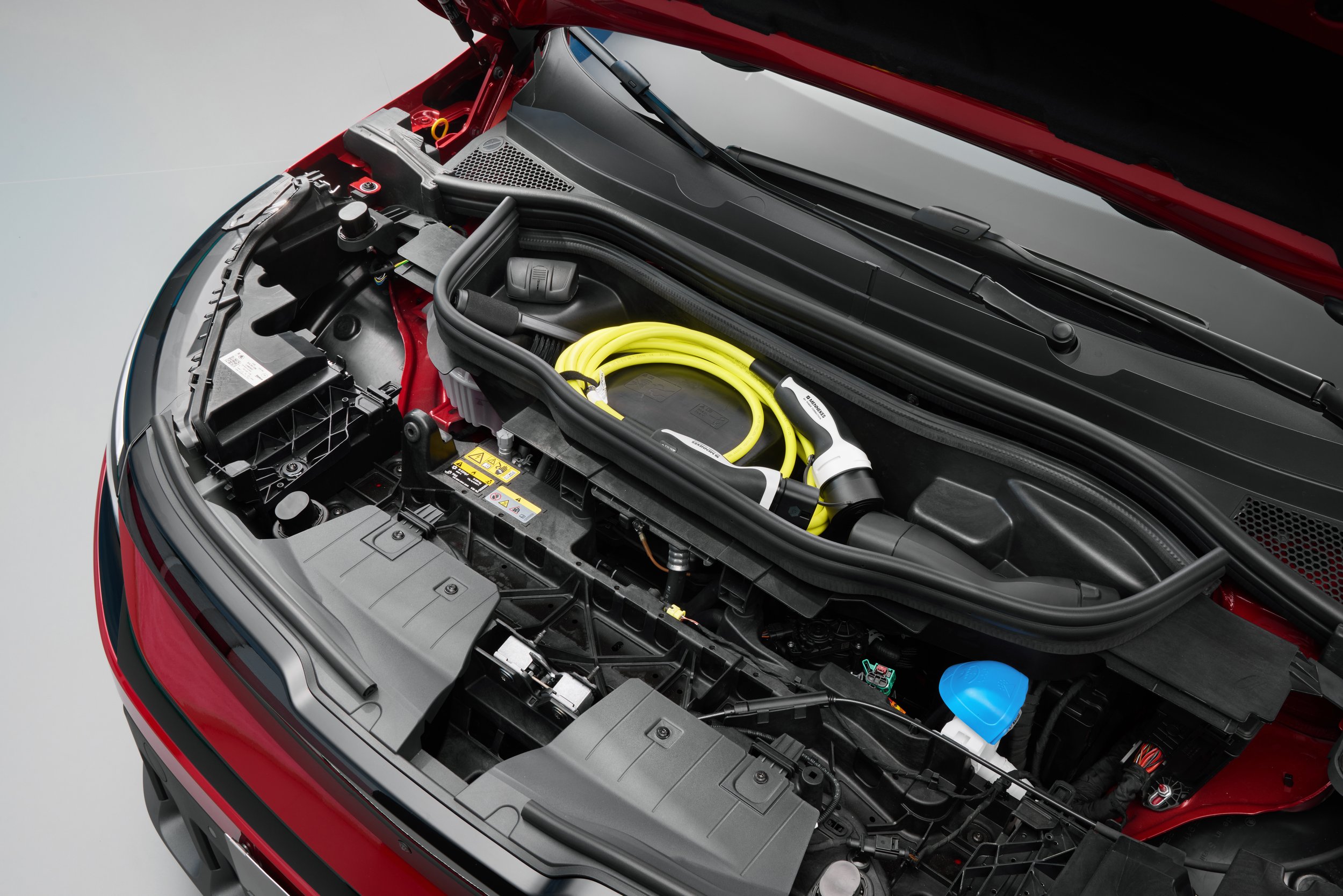
Go for the optional Canton stereo and its sub-woofer accounts for 20 litres of that space. To compensate for that, as there's an optional plastic storage tray that slots into the Epiq's nose, above the electric motor. It’s just big enough to hold a neatly coiled charging cable.
Fold down the back seats and there's 1344 litres of luggage space and the rigid luggage cover has been designed to clip upright against the back seats when you don't want to use it.
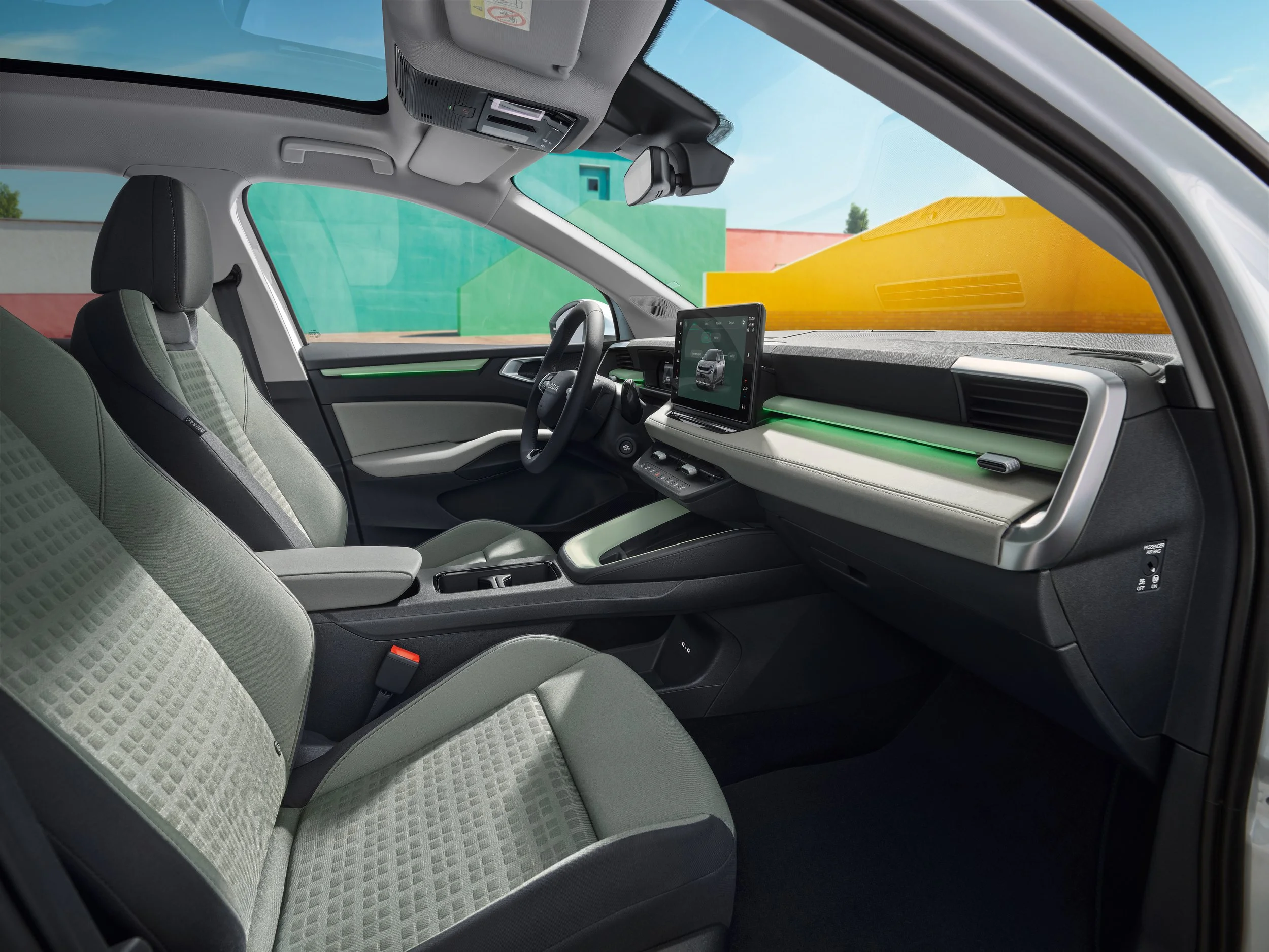
The dashboard is square and horizontal in its style, with a 5.3-inch driver's instrument screen counter-sunk into the dashboard behind either a two-spoke (standard) or three-spoke (Sportline) steering wheel which, gets proper physical buttons instead of haptic touchpads.
The big screen in the centre measures 13 inches across, and it uses a new Google-based operating system. As per the Enyaq and Elroq, there’s a 'slider' touch sensitive bar for stereo volume control. It absents physical buttons for air conditioning and cabin temperature; those are also screen controlled.
With Epiq, the brand is ramping up its recycled and sustainable material count, including a new 'Techtona' material made of recycled plastic, which adorns the dashboard, and all of the seat upholstery is made from recycled PES. Skoda claims that there are 26 litres of storage scattered around the cabin.
And, yes, before you ask, it keeps the the traditional umbrella in the driver's door. But the ice scape has been moved from the fuel filler hatch to inside the boot.
Passing mention of the Epiq came during a Skoda NZ presentation to media in February, but it avoided making any promises about the type’s potential availability.
It said then this year’s focus will be on Elroq and updated Enyaq, but it has always made clear that its electric vehicle ambitions will not always rest on those two products.
In respect to that, it is giving serious considering to the Peaq, a seven seater fully electric equivalent of the Kodiaq, set for production in 2027.
But Epiq offering a more affordable price point for electric vehicle ownership is clearly a draw, as the current price leader is Elroq, which begins at $69,000.