
Ferrari’s first EV: Luce unveils
/Styled by the designer of the iPhone, this quad motor four-door five seater is set to spark up emotions. But are Ferrari’s F1 stars impressed?
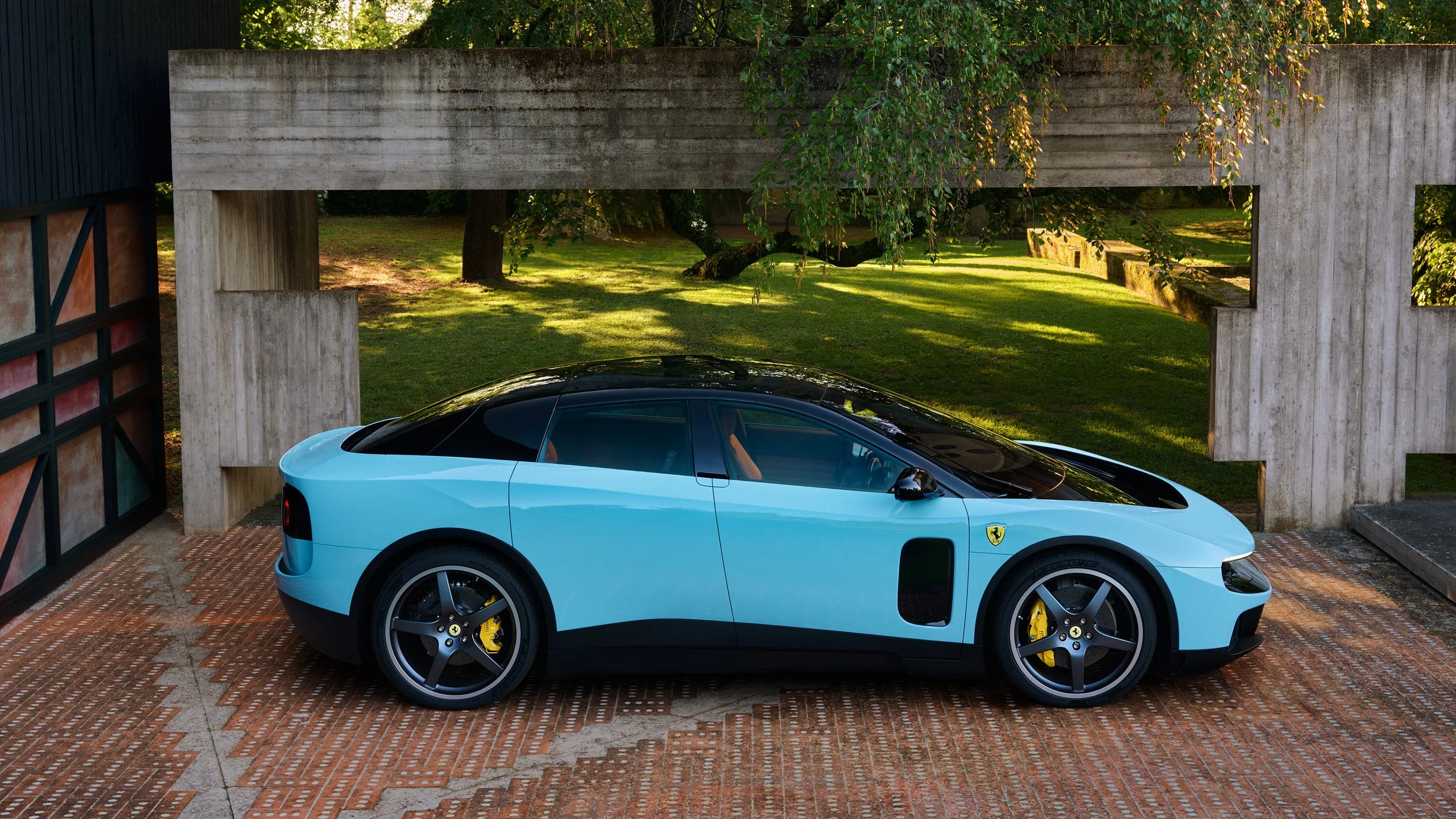
FAT cat Ferrari fans have been treated to an extra-large slice of Maranello pie with the brand’s first electric proving to be hugely portentous - but maybe a bit portly, too.
Fully unveiled today, the Luce - the famous sports car make’s first electric car and first four-door, five-seater in the company’s history - is a big beast in every sense.
A massive count of kiloWatts - a combined 771kW from four independent electric motor, two on each axle - appears to come with an unavoidable affliction of almost all electric undertakings, a significant kilo count.
At 2260kg, the model whose name translates to ‘light’ in English isn’t exactly that.
The Luce clocks in 80kg heavier than Ferrari’s previous lapsed weight watcher, the 6.0-litre V12 petrol Purosangue sports utility, and seems roughly equal on the scales to the new all-electric Toyota Hilux BEV about to release here.
However, in true Ferrari style, there’s more to make it surely the most talked about car of 2026.
It’s setting out to stun with a shape - again forced by the ingredients, notably the large battery - unlike any other Ferrari, plenty of tech and considerable performance, along with a genuinely Green edge.
With a 772kW output and 0-100kmh in just 2.5 seconds, this model meets Ferraristi fascination for speed - but with over 500km of claimed driving range, it also sets out to conform to EV expectations.
The Luce also stands out in having been designed outside of the brand's design studio by industrial design supergroup, LoveFrom, headed by Sir Jony Ive (best known for his work at Apple, where he designed the latest iPhone) and Marc Newson, formerly creative director at Qantas before working with Ive at Apple.
The new EV stands at 1544mm tall and measures 5026mm from nose to tail, meaning it’s lower and longer than the Purasangue.
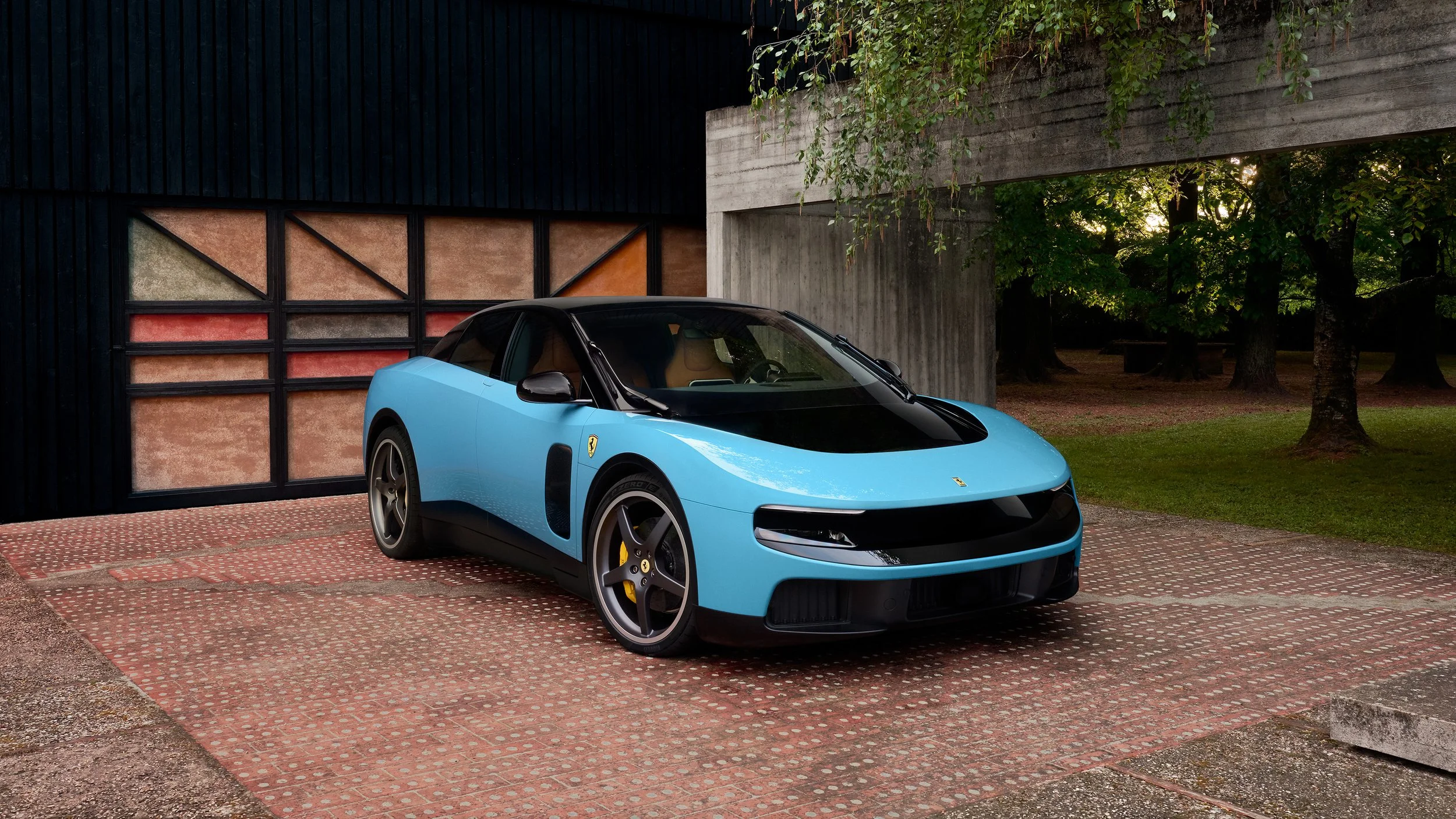
International media at the launch event say a defining feature of the car’s design is its enormous glasshouse that flows uninterrupted from the nose of the car to the bootlid, tucking below the floating aerodynamic wings at both ends.
A huge black panel on the front has been translated as being ta continuation of a similar motif seen on Ferrari F80 and 849 Testarossa supercars.
The Auto Express website notes how the designers have tried to conceal the two large windscreen wipers within the A-pillars.
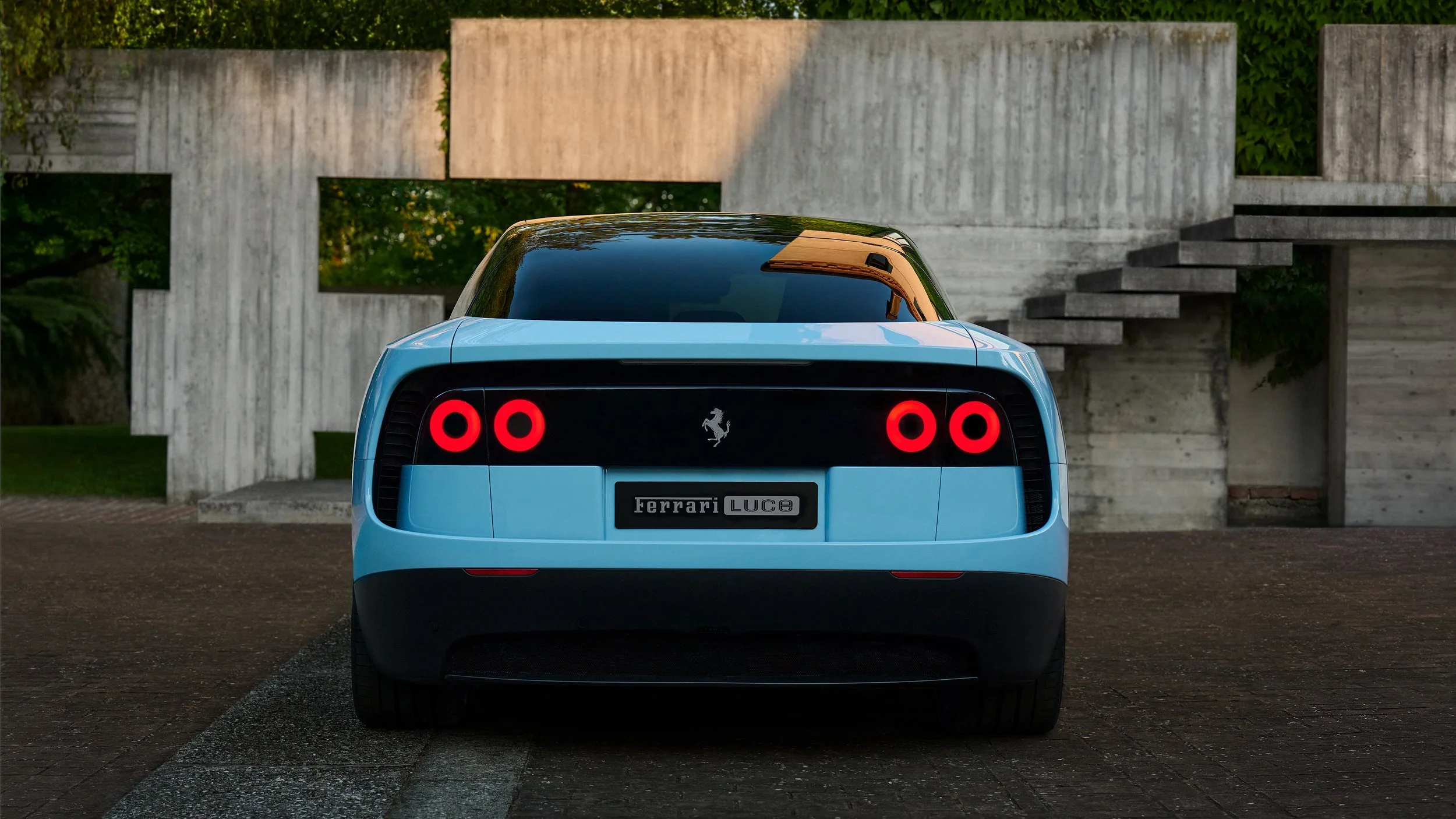
As future-looking as it is overall, there’s room for retro, with the double-round tail-light design. Those are inspired by classic Ferraris like 360 Modena and 458 Italia.
As expected, aerodynamics played a key role in shaping the Luce. All surfaces are smooth and continuous, with no sharp edges or recesses, in order to maximise airflow. It has lowest drag coefficient of any road car made in Maranello.
Another first for Ferrari is the active aerodynamic grille to help with airflow and cooling when needed. The ride height can drop by up to 10mm to maximise efficiency, too. Meanwhile, the Luce has the largest wheels ever fitted to a production Ferrari: 23-inch wheels up front and 24s at the back.
Reaction to the interior has been massively positive; most noters on the ground say it is highly impressive, blending classically-inspired elements and simplicity with modern digital interfaces that, says Auto Express, “look like they’ve been pulled right out of the Apple store.”
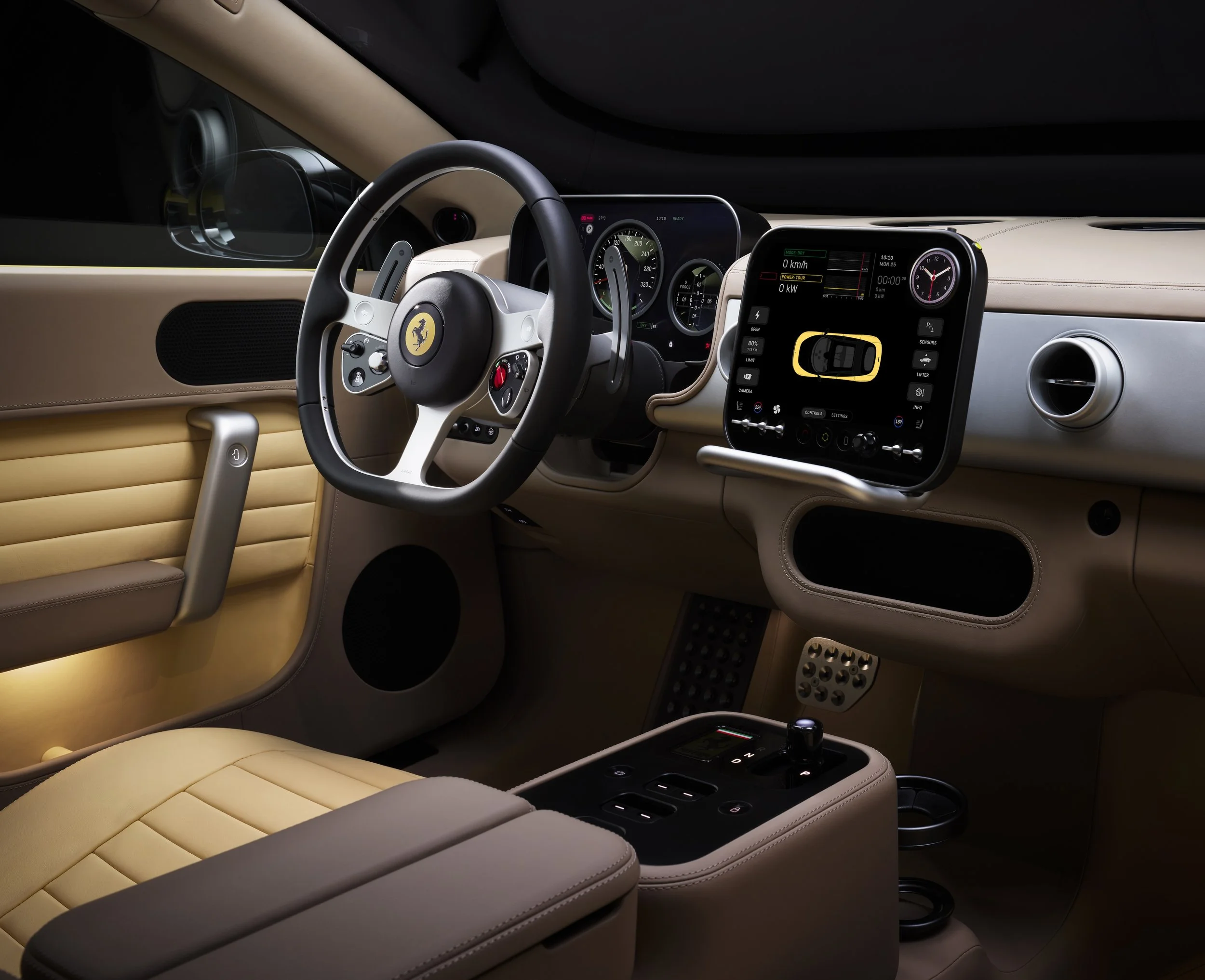
Machined from a single piece of recycled aluminium and hand finished, the three-spoke steering wheel was inspired by the iconic Nardi wheels used in Ferraris back in the 1950s and ‘60s.
Button counts is sparse. The instrument binnacle attached directly to the steering column features OLED screens that create a three-dimensional effect from the driver’s perspective. The instruments are designed to emulate classic rotary dials.
The main centre display is mounted onto the dashboard via a ball-and-socket, allowing the screen to rotate towards either driver or passenger. Underneath sits a palm-rest, to make using it easier while on the move. The display is modest; not for Ferrari something as gauche as a huge central touchscreen.
Virtual gearboxes are a thing for performance EVs; Ferrari joins that trend with what it calls its ‘Torque Shift Engagement’ strategy, which explains why it has paddle shifts.
By pulling on the right-hand paddle, the driver can activate five progressively higher levels of torque and power delivery to produce a similar sensation of acceleration to that in a petrol Ferrari. The left-hand paddle is used in a similar way to replicate the feel of engine braking when slowing down for corners.