
New Q7 reveals with dark heart
/Diesel-centric positioning raises questions about model’s immediate usefulness here.
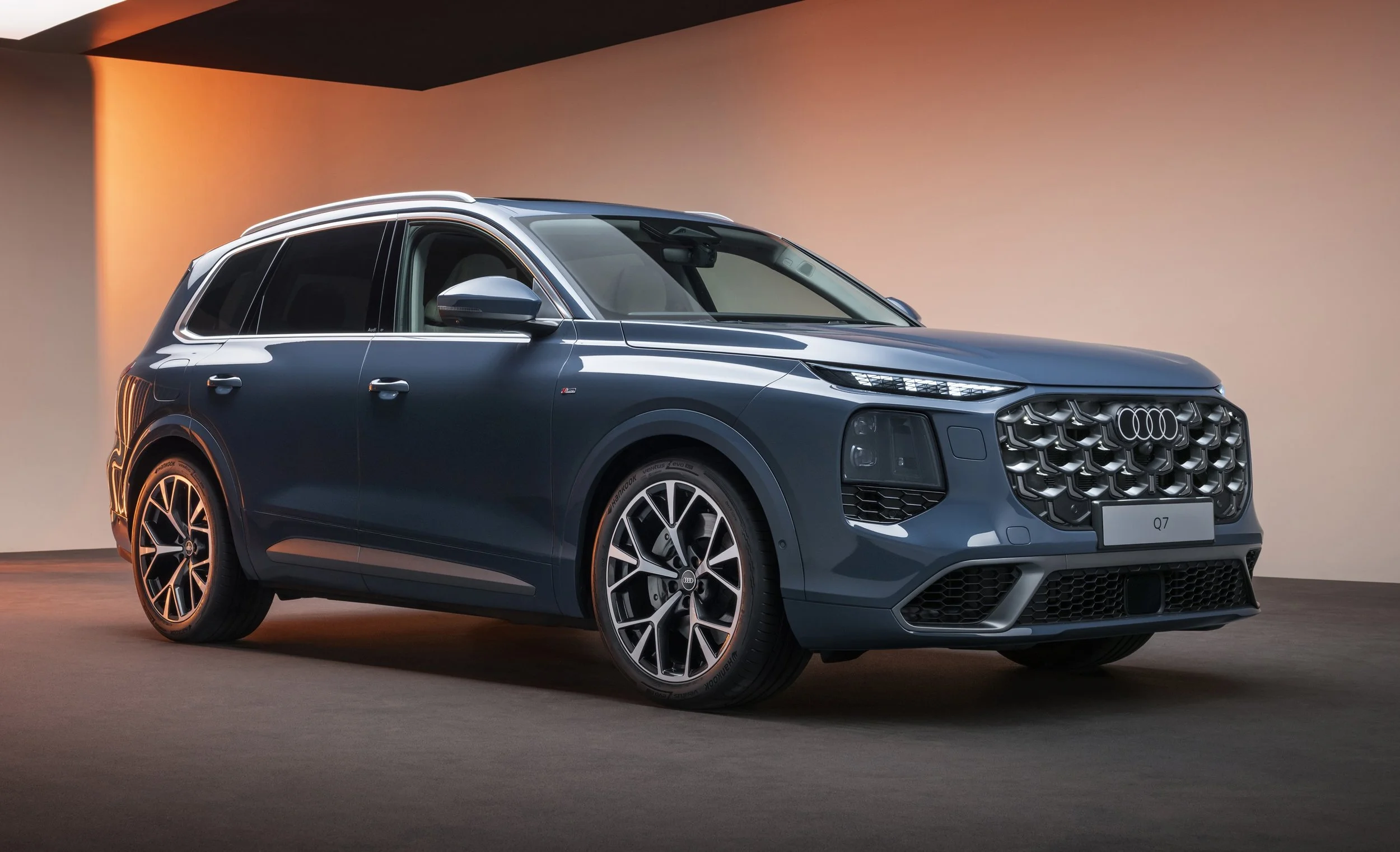
THE covers have come off the new Audi Q7 and it’s kick-ff being purely with diesel powerplants might not be the best news to rev up New Zealand market interest.
While other engines - including four-cylinder and plug-in hybrid petrols - are in development, Q7 will at first come with two variations of a turbocharged 3.0-litre V6 diesel, both equipped with mild-hybrid technology to boost performance and efficiency.
The entry-level engine makes up to 182kW and 500Nm, while the more powerful version sees those outputs rise to 223kW and 630Nm.
In each case, the MHEV (Mild Hybrid Electric Vehicle) tech contributes 18kW and enables short spells of engine-off driving, such as coasting and low-speed parking manoeuvres without the combustion engine being active.
The technology is potentially appealing to Audi NZ, but as much diesel engines were popular in past Q7s, new developments with petrol hybrid now bring identical oomph, equal economy and often better emissions. In addition to the car being subject to Road User Charge, there might be challenge if diesel continues to be expensive than petrol, due to the impact of the Middle East crisis on pump prices and supply.
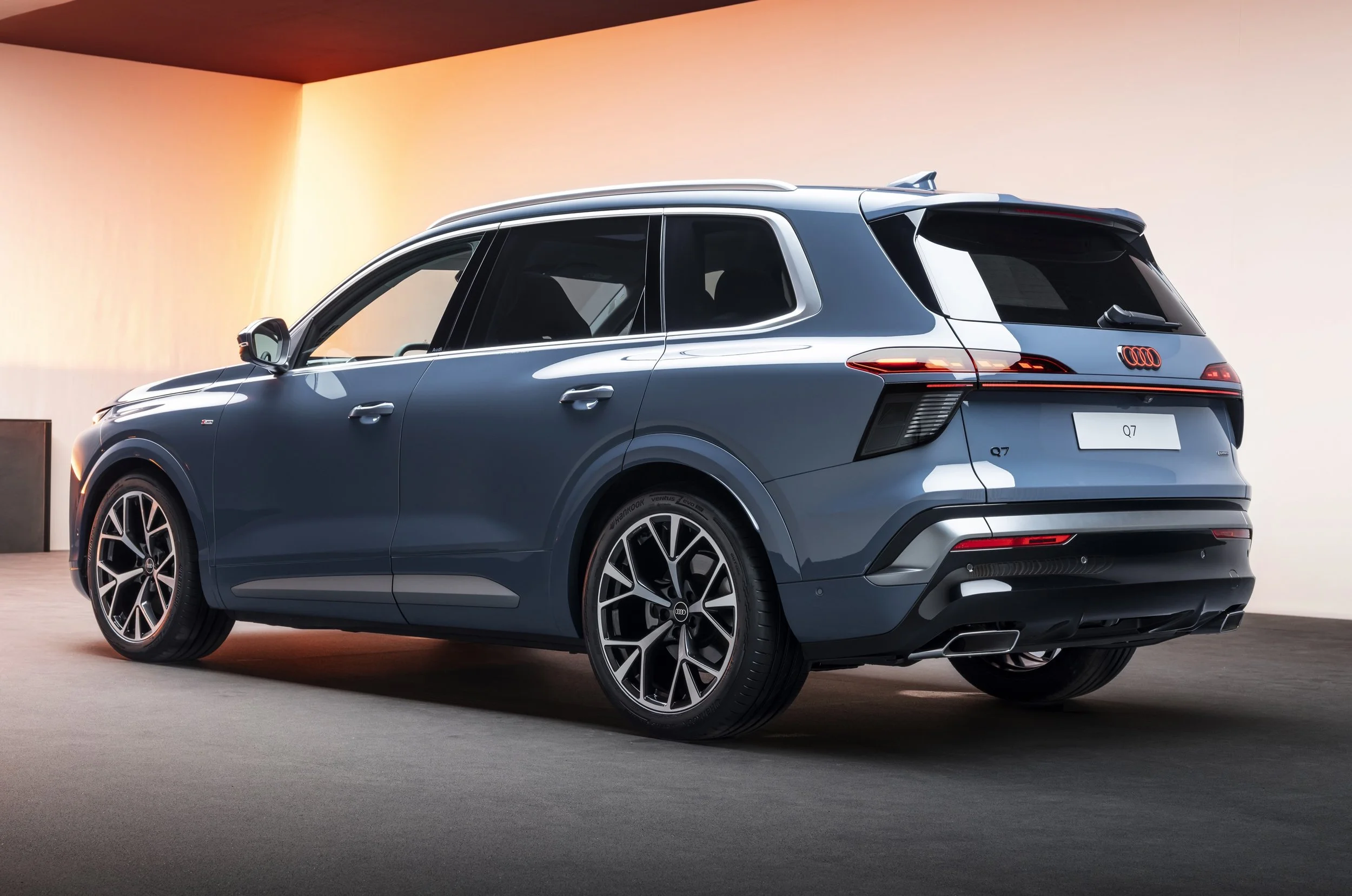
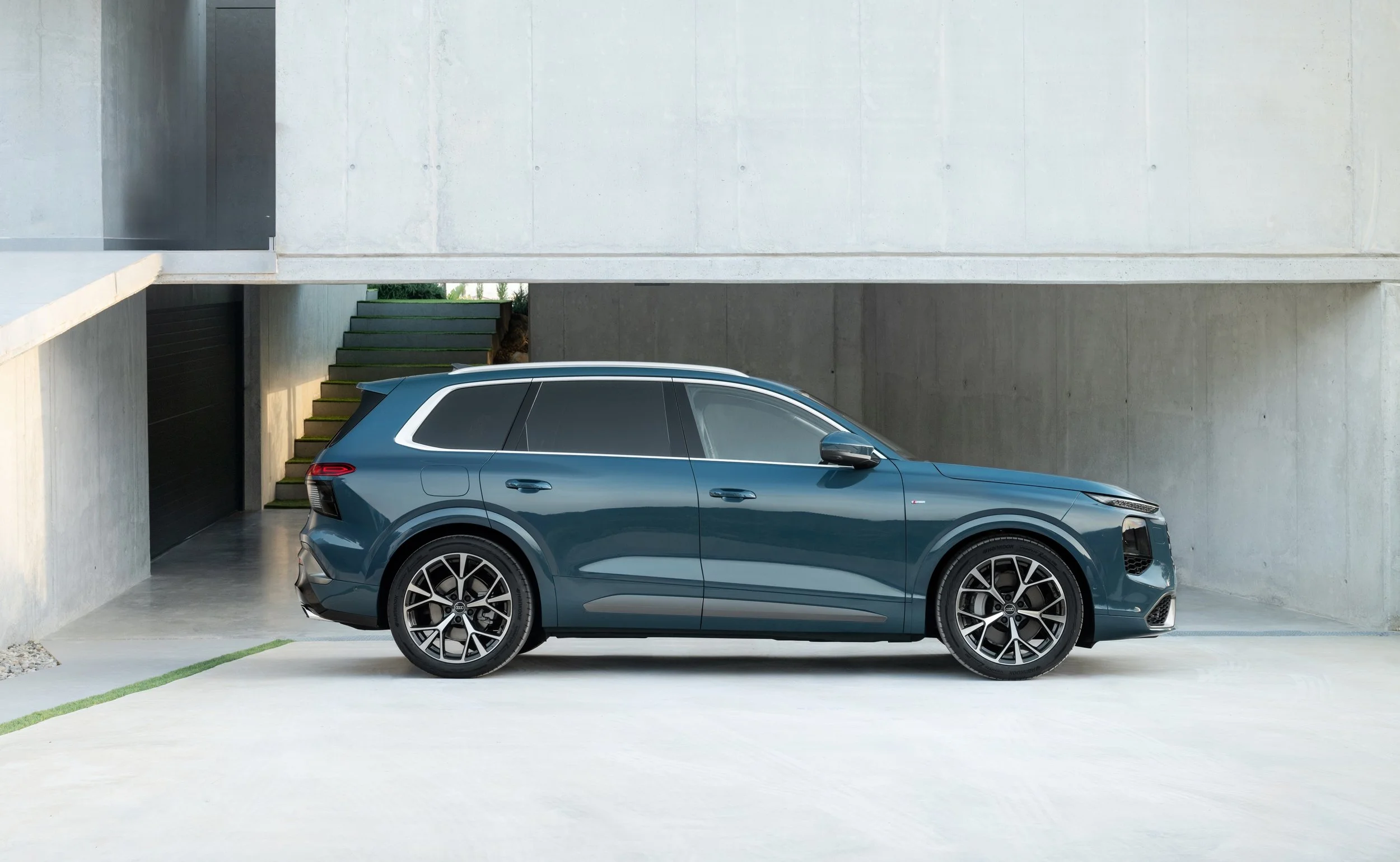
The new car has all the latest styling elements and has become more spacious than its predecessor, but it’s standing as the largest car in Audi’s line-up is set to be short-lived. The new Q9 out next year will be even larger.
As is, the latest Q7 is 5056mm long, 2010mm wide and has a height of 1800mm.
While the external shape is highly familiar, the signature ‘single frame' grille has been enlarged and features subtle lighting to lend a three-dimensional appearance.
The pattern from the slender LED daytime running lights can be chosen by the driver. Also introduced are digital Matrix-LED headlights . These can produce dynamic lighting that shades other vehicles as it drives and can also pick out pedestrians on unlit roads and highlight them for the driver to see.
Some 25,600 micro-LEDs, each measuring half the thickness of a human hair, are individually controlled by the system to produce its most advanced highlight technology to date.
There will be a choice of wheels ranging in diameter from 20 inches up to 23 inches - a first time that such size wheels have been available for the Q7 from the factory.
At the rear, Audi will offer the option of OLED lights, which create a distinctive light design both day and night. Similar to the front DRLs, these OLED units can display multiple designs and can even automatically switch to a static warning signature if another vehicle starts getting too close to the rear of the car.
Audi is also introducing a new safety feature called advanced turn signals. These come as part of a package with the digital Matrix-LED headlights and OLED rear lights and augment the car's existing indicators.
When these are activated, a large warning pattern with arrows in the respective direction is projected onto the ground at the front and rear. These let pedestrians and cyclists know that the car is about to turn.
Getting into the car is made even easier in either of two ways: a new optional automatic door system lets owners open (or close) any of its doors either via the key, through their smartphone app, or simply by pulling the door handle.
An array of sensors behind the bodywork scans the area for any potential obstacles before the door is opened electrically. Once inside, the driver needs only to put their foot on the brake pedal for the door to swing shut.
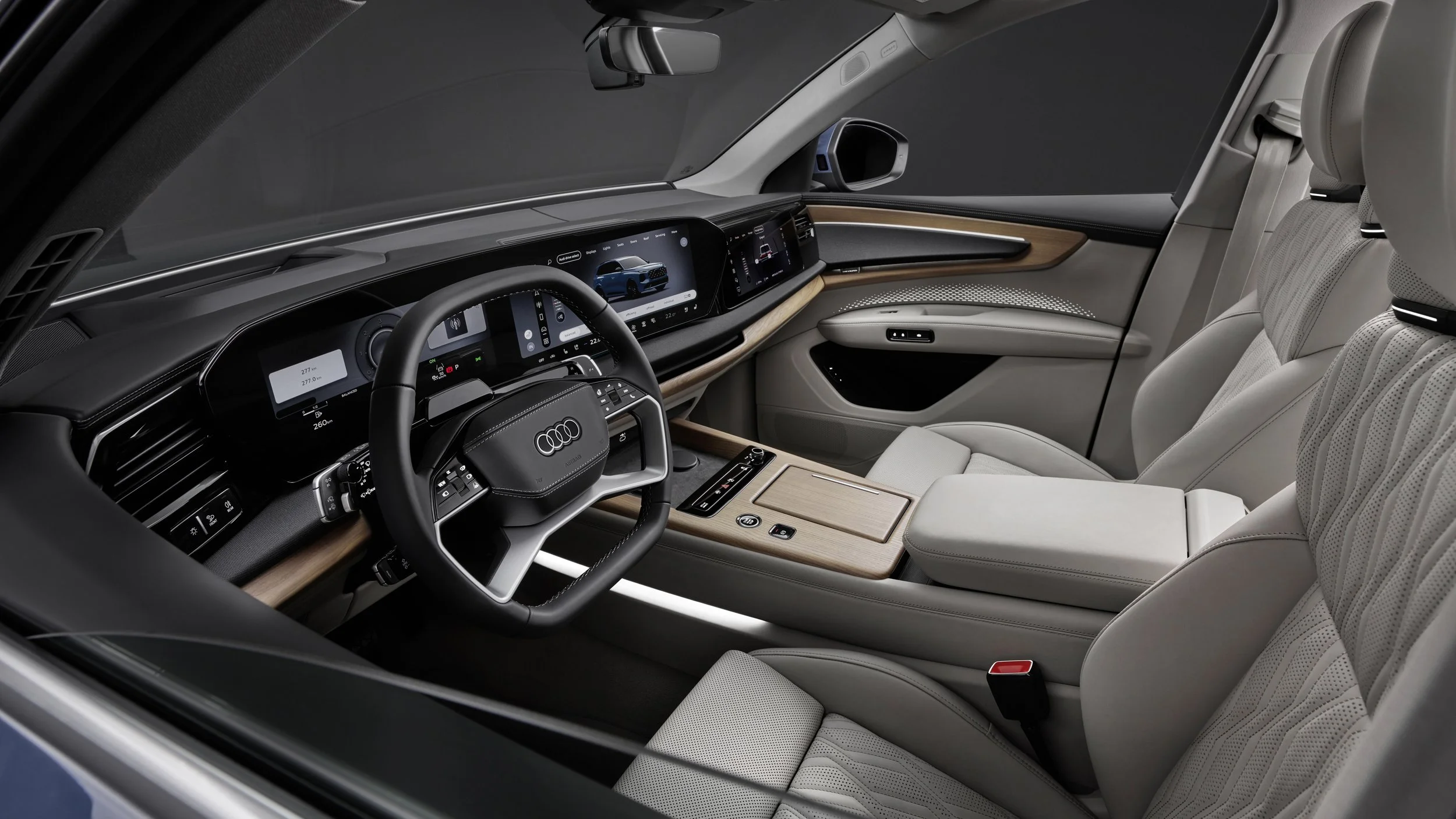
The cabin features an all-digital dashboard with a 12.3-inch instrument display and a 14.5-inch infotainment touchscreen, both housed within a single curved panel. There's also a separate 12.3-inch touchscreen for the front-seat passenger.
A new style of wireless phone charging pad uses a magnetic connection to hold phones in place - there are two of these - and it has the usual large cupholders and plenty of USB charge ports throughout.
A move from glossy black plastic surfaces in favour of more traditional open-pore wood and other premium materials is viewed as being a positive change.
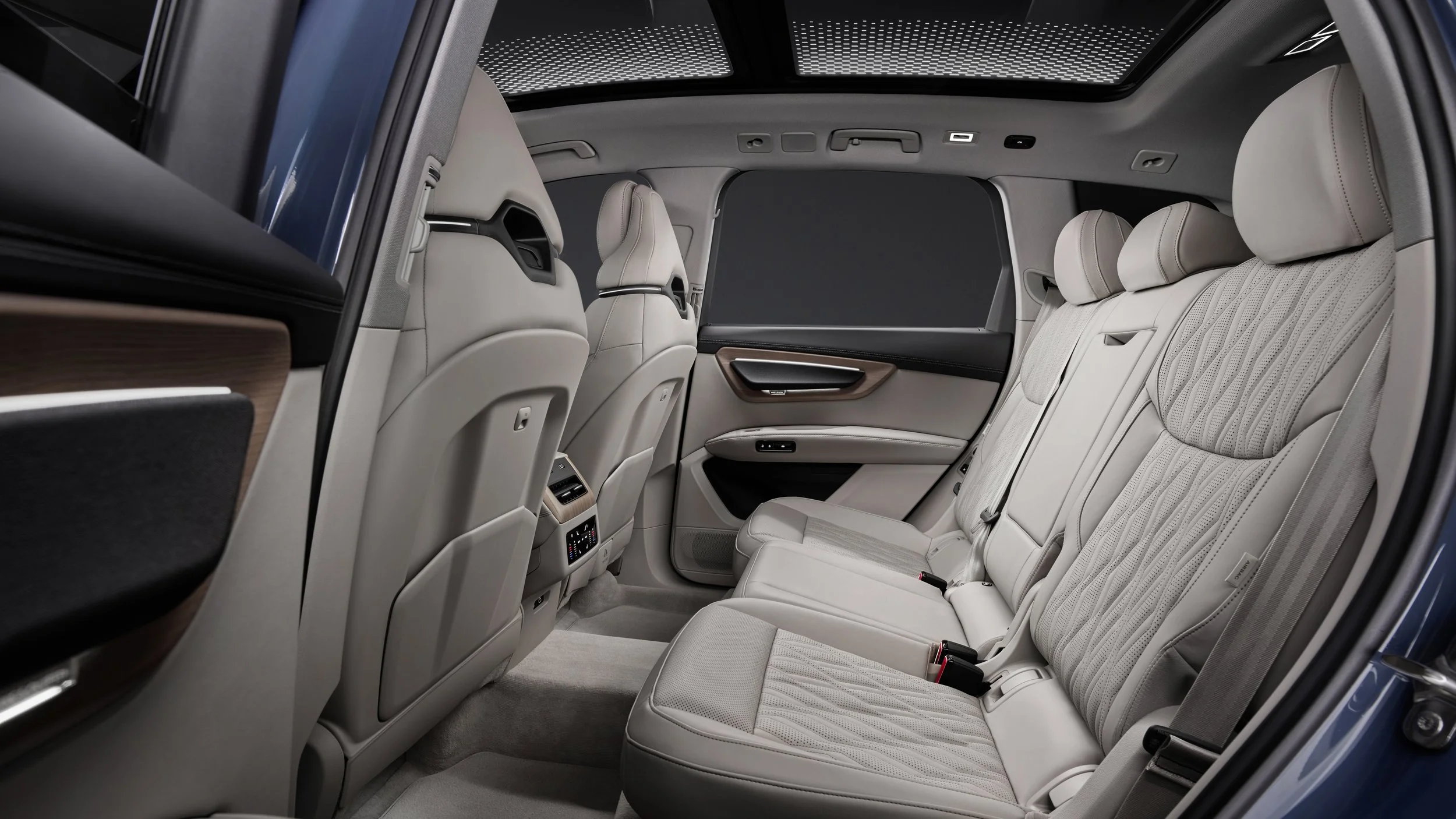
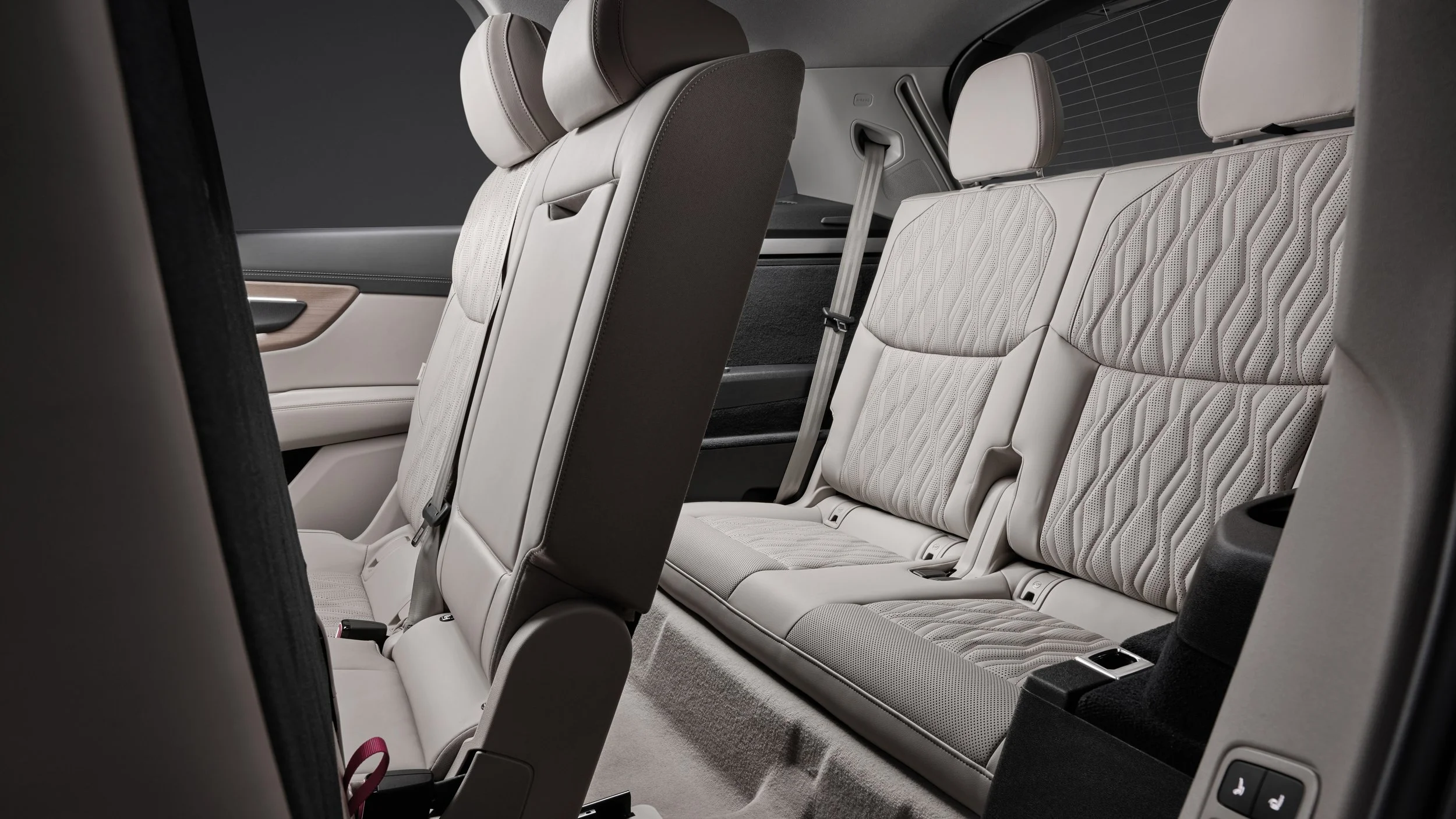
The standard Q7 lands in a five-seat layout, but there will be six- and seven-seat versions. The six-seat layout consists of two captain's chairs in the second row and two smaller seats in the third row.
All rear seats are not only electrically adjustable, but each also carries ISOFIX anchor points.
Luggage capacity is affected by the different seating configurations. the five-seat layout is best, with 806 litres when all seats are in use and 2075 litres when the rear seats are folded.
Drive of course goes to all four wheels via an eight-speed automatic gearbox. The quattro permanent all-wheel drive features a new limited-slip centre differential with preload. Towing capacity is rated at 3500kg for a braked trailer.
As standard, the Audi Q7 comes with steel spring suspension, but buyers can specify one of two adaptive air suspension setups. These can lower the car's height by 62mm to ease ingress and egress. There will also be an adaptive air suspension 'sport' setup that brings ride height down by 30mm to reduce the car's centre of gravity.