
ES goes full electric, but only as flagship
/Two lower spend editions of this low profile but still loved sedan continue in hybrid.
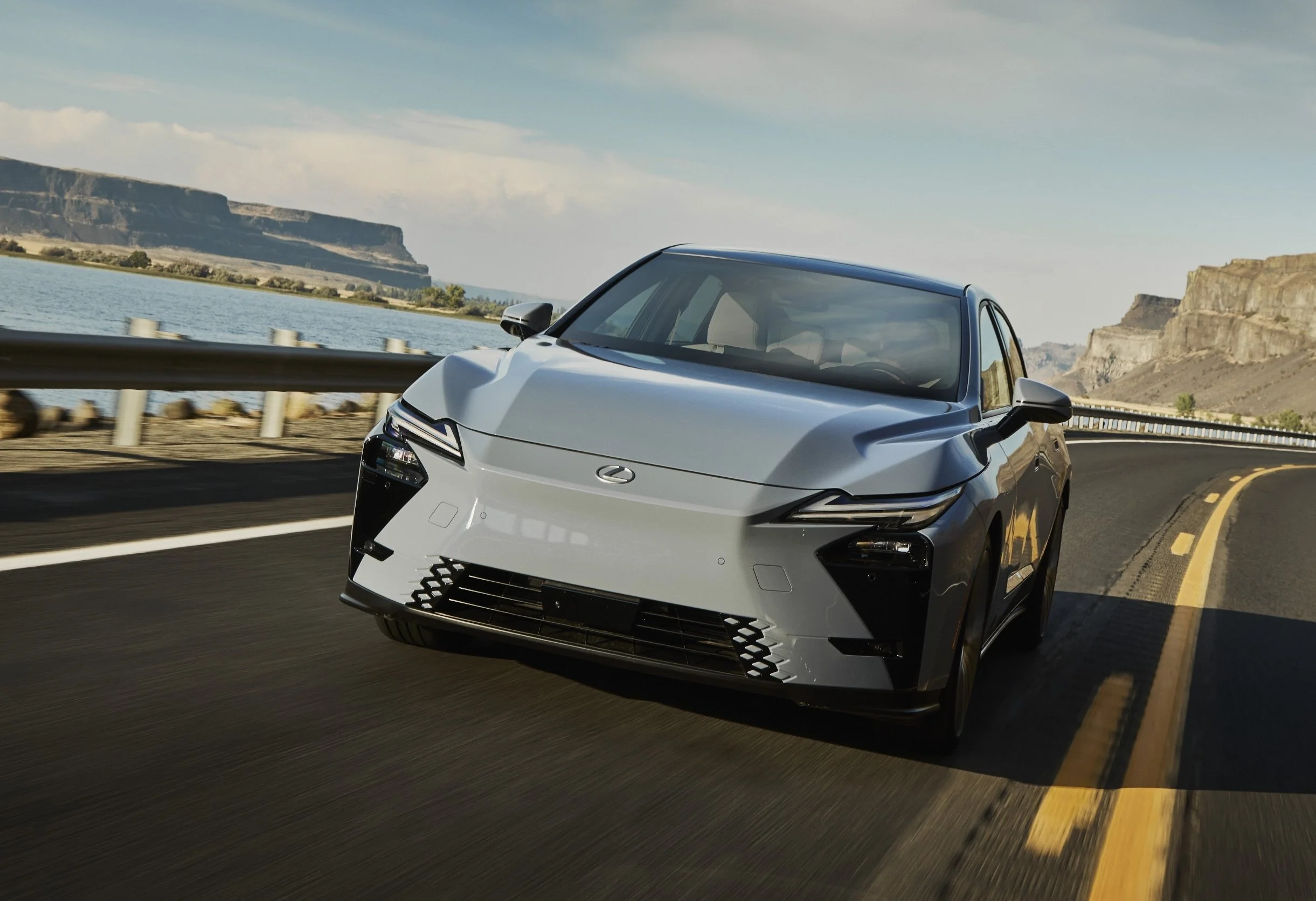
MIGRATION of fully electric drivetrains into Lexus product will continue when the next generation of the ES sedan lands.
Lexus New Zealand has confirmed the five seater sedan will sell here from later this year in three choices.
Two editions of the car are continuing with a hybrid-boosted 2.5-litre four-cylinder petrol powertrain.
The change is at the top, with arrival of a flagship that puts a fully electric, thought to be dual motor, drivetrain into this car for the first time.
Whether that signals an eventual point of difference for the Toyota-badged product from which ES derives has yet to spell out.
But if that does happen, then taxi drivers of the nation might rejoice, because the donor for the latest Lexus sedan is as it has been for all seven previous iterations of ES: The journeyman Toyota Camry. In China a partnership between Toyota and GAC are building a electric sedan of similar size and look to Camry, but specifically for China.
ES prices are out - the 300h hybrid siting at $96,900 in Premium and $104,900 in Limited, and the electric positioning at $109,900.
But Lexus, which bases within Toyota New Zealand’s Palmerston North compound, has yet to fully share what the drivetrains are delivering.
The car is already on sale in the US in a choice of ES350e front-wheel-drive and ES500e all-wheel-drive electric variants, alongside an ES350h hybrid, which is more powerful than the ES300h.
Information shared at Shanghai said the ES300h would produce 149kW in front-drive, which appears to be the Lexus NZ preference, or 182kW in an all-wheel-drive format that might not get here.
The electric comes in a front-driven version, badged ES350e. It makes 165kW.
The dual-motor, four-wheel-drive ES has 285kW. That car seems to badge as 500e in some places, and 550e in others.
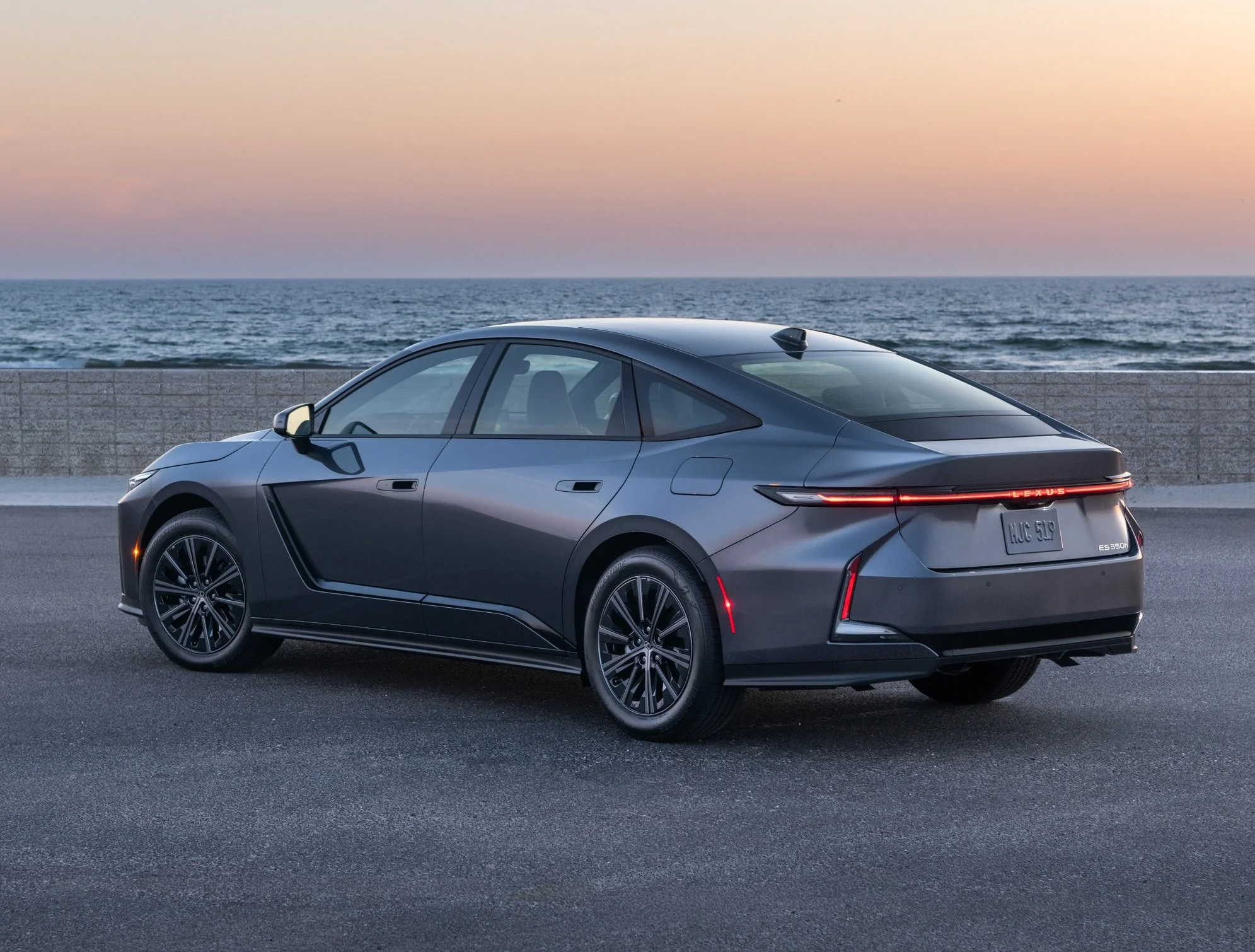
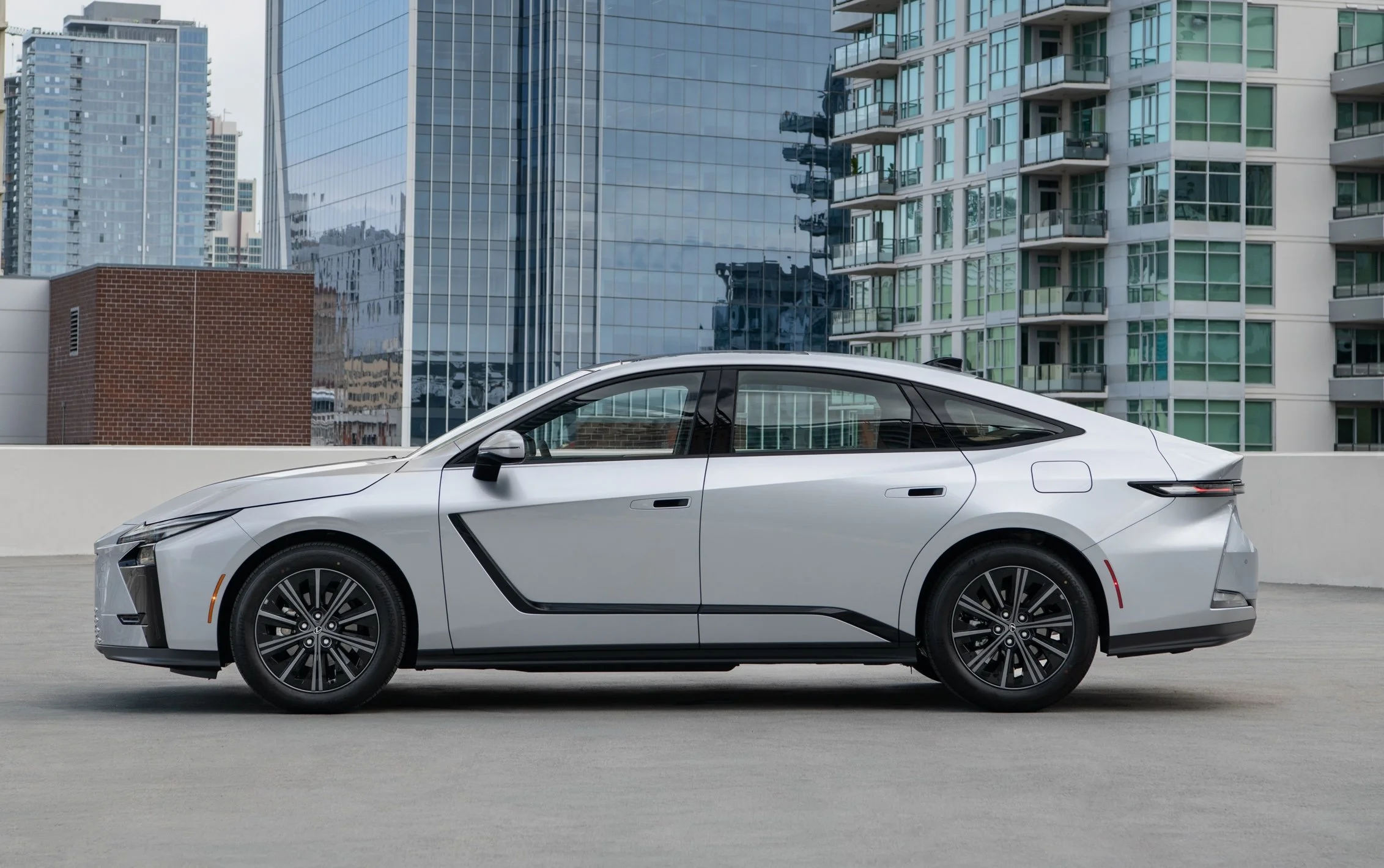
The ES is larger than the predecessor product, noticeably being 165mm longer, to measure 5.14 metres overall, and obviously the styling is all new.
Chassis improvements include increased rigidity, optimised suspension-arm bush characteristics, and rear-wheel steering for the first time in an ES.
The electric edition of this striking design differentiates in the main from having a closed-off front bumper. The hybrid version takes a slim version of the signature spindle grille.
Other new design elements include flush exterior door handles, "L-Signature" headlights and tail-lights, and rear light strip with an illuminated Lexus logo, along with a ‘low centre-of-gravity’ stance.
ES is the first Lexus to have connected services capability, with app-based vehicle functions, which will represent as a catch to high-end cars here from Europe and China.
Specific connected features include remote lock and unlock capability, vehicle status updates, cloud-based navigation and vehicle tracking functionality, helping customers stay more connected to their vehicle wherever they are.
The 500e also has an interactive manual drive, with which the eight-speed virtual gear set-up can be paddle shifted.
Andrew Davis, Lexus New Zealand vice president, says the new model has a much stronger presence on the road than previous generations. It’s also still unmistakably Lexus.
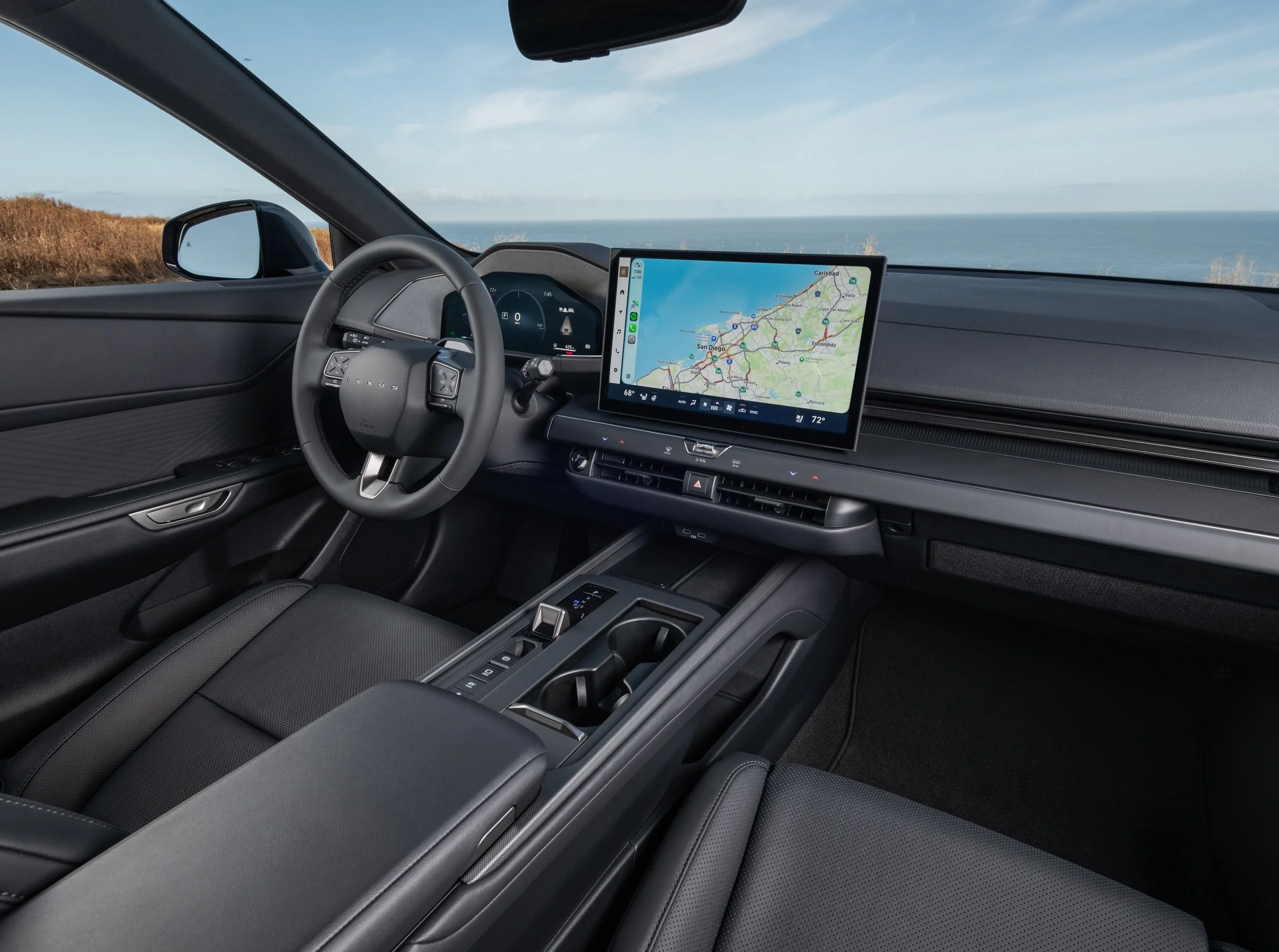
“The cabin remains calm and refined, but there’s a simplicity and openness to the design that gives the car a far more modern feel.”
Sedans are certainly no longer big sellers now, being victims of the swing toward sports utility and crossover cars; in the premium section the leaders remain German cars.
However, Lexus here persists in suggesting the ES deserves consideration and says the previous car has built a loyal following from “customers seeking a more traditional luxury sedan experience.”