
JAC hybrid ute a ‘right time’ power play
/Electric-assisted edition low balls on price for market distributor says is ready for change.
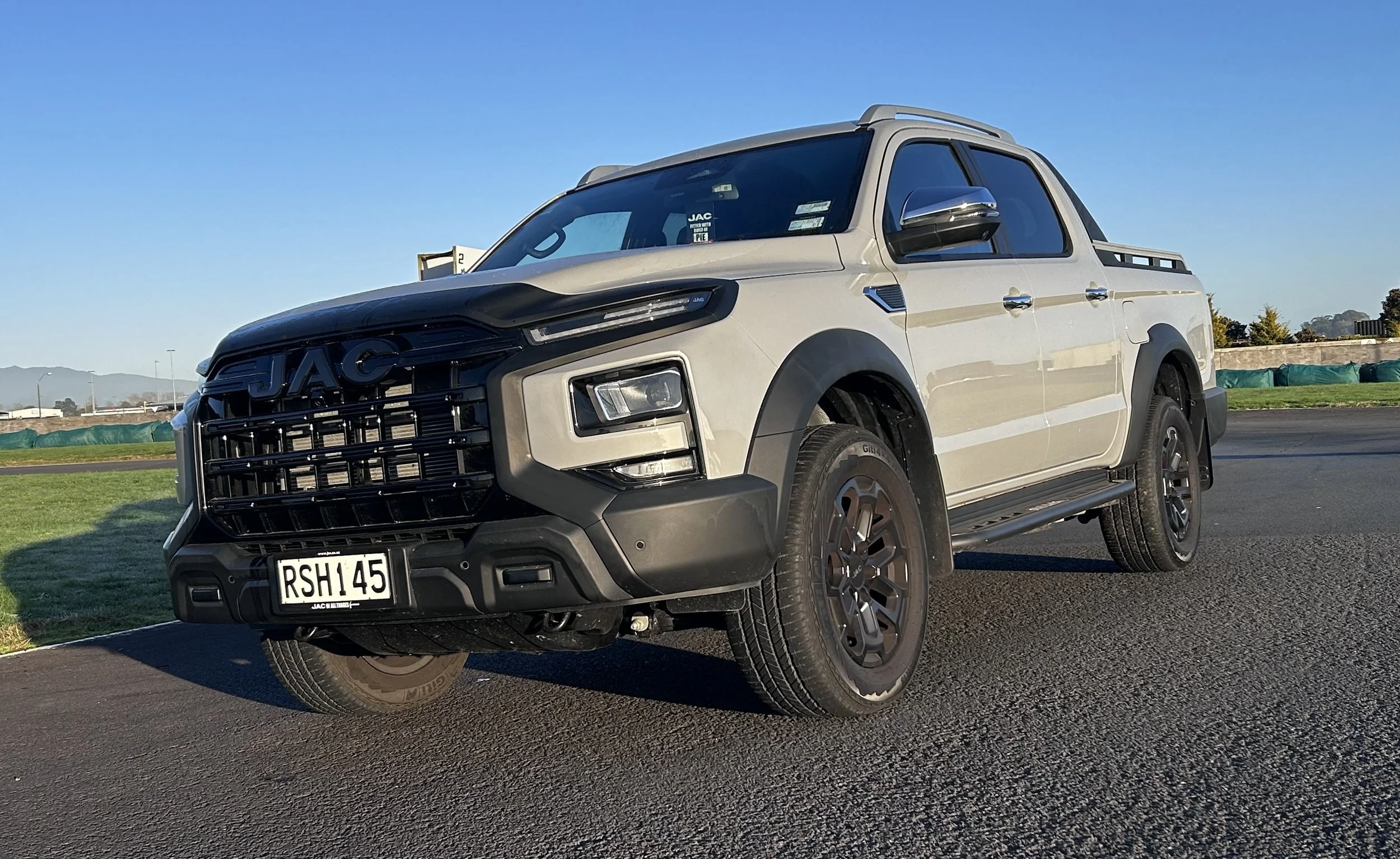
SUSPENSION fine tuning is being undertaken for a JAC that now sets price-leadership among plug-in hybrid utes - and more accurate efficiency figures are also promised.
Those factors aren’t expected to inhibit Kiwi interest in a model the Chinese commercial vehicle specialist today launched, six weeks ahead of planned start to sale.
The battery-enabled version of the T9 ute that debuted at New Zealand’s largest agricultural show, Fieldays, today is expected to be a star performer as fossil fuel price fluctuations cause ute faithful to think again about continued dedication to diesel.
The model’s $59,990 price is the lowest yet being asked for this technology in New Zealand in this format.
The sticker won’t last, being a limited period offer that sites the PHEV $10,000 above where the lookalike diesel sister model placed when it launched a year ago. That type currently sells with $5000 discount.
In specification terms, the T9 PHEV correlates more closely to a leather-added and infotainment-improved $52,990 diesel T9 Black edition, except it goes without a sunroof.
The immediate pricing puts the new edition at advantage to other sector inhabitants the GWM Cannon Alpha PHEV, BYD Shark 6 and Ford Ranger PHEV and JAC says it wants to maintain that edge even if the dollars shift.
JAC New Zealand general manager Andrew Craw (below) has high hopes for the PHEV, which lands either late July, or early August with 100 units in the first consignment.
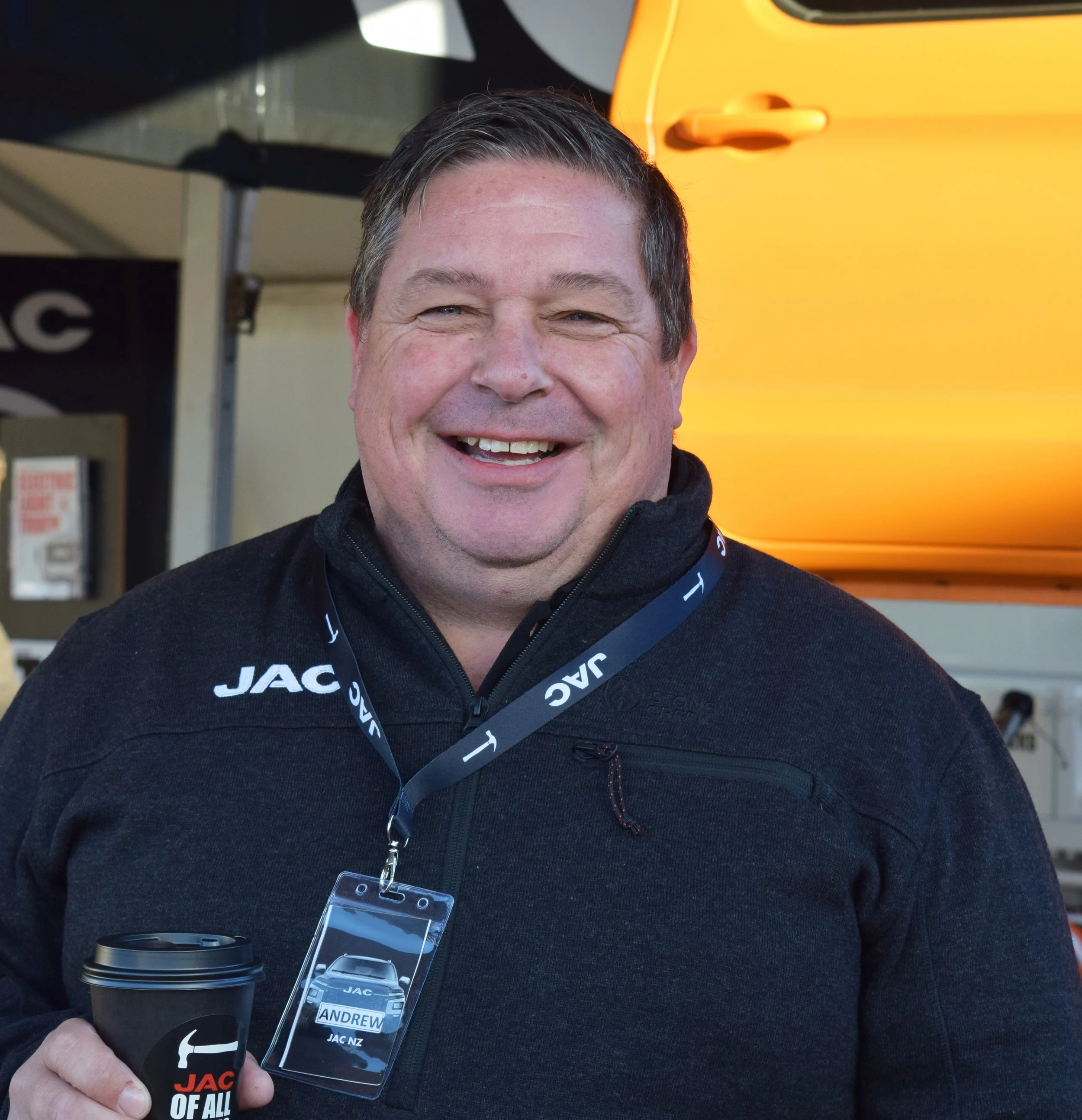
Since beginning business here a year ago, JAC has sold around 200 diesel T9s and Craw says some dealers believe they’ll see one-to-one sales of both drivetrains.
There’s no doubt the interest in all kinds of vehicles with a plug has increased markedly since the Middle East unrest affected pump fuel prices, he says.
“We’ve all seen what's happened … to start with, we probably saw PHEV being 25 percent of our market.”
And now? He suspects that’s too low. Ditto the consignment count.
“New Zealand does still want diesel utes, but I think once they drive this one it will change their mind.”
It also stands up well in comparison against other PHEV utes for drivetrain output, with 360kW and 674Nm overall from the pairing of a 2.0-litre petrol with two electric motors, drawing from a 31.2kWh lithium-iron phosphate battery.
Those are nominated outputs for everyday driving. In theoretical optimal operation, the drivetrain actually peaks closer to 385kW/1000Nm.
The engine in isolation makes 155kW and 370Nm. The electric motors - one midship, the other rear - respectively delivering 130kW/300Nm and 150kW/340Nm.

Either way, it’s way more muscular than the diesel T9, whose turbocharged 2.0-litre four-cylinder creates 125kW and 410Nm.
The PHEV also outdoes the diesel for towing capacity, being rated for 3500kg - a 300kg increase - and though payload capacity goes the other way, with 915kg versus 1045kg, it remains highly competitive. A 550mm wading depth is 150mm short of some, ditto approach and departure angles of 27 degrees and 23 degrees respectively.
The credential of five-star ANCAP matches the diesel and will be shouted about, as it places the model as New Zealand's safest hybrid ute, they say.
The pure electric and overall combined range figures of 100 kilometres and up to 1005km and optimal combined economy of just 1.6 litres per 100km also look impressive.
However, all are destined to tone down once adjusted from the much maligned NEDC scale JAC has used rather than WLTP, a more common, nationally-mandated (but not enforced) schedule that is also less flattering.
JAC staff say all that have from the factory in China is NEDC data.
They also feel it’s okay for them to use NEDC when other brands - not just competitors from China but also Toyota New Zealand (for the battery electric Hilux) - also continue with it.
However they accept WLTP is legislatively preferred and generally delivers results that can be 15-20 percent less appealing.
In that respect, as much as their own efficiency data from driving the T9 PHEV in NZ conditions suggests it is genuinely thrifty, the electric pure outcome they saw fell short 15kms’ short of NEDC and on a Auckland to Whangarei drive the average was one litre per 100km higher.
The PHEV and diesel are very close in external look, but different in cabin treatment and the PHEV runs a four-speed automatic whereas the combustion model has an eight-speed.
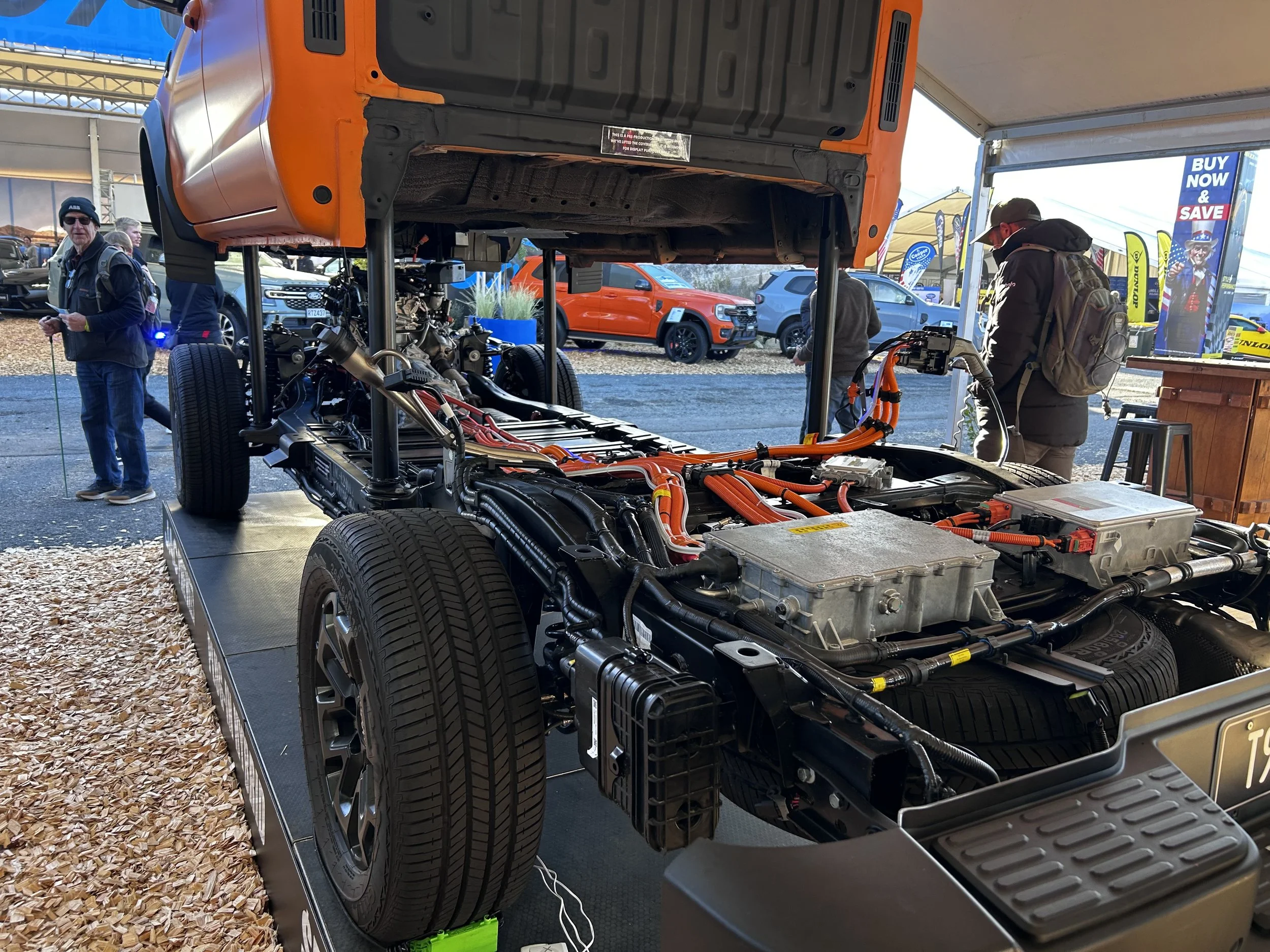
Going to electric assist doesn’t mean divesting essential off-roading ingredients, but its technology is far more complex than the diesel, which is old school with a part-time four wheel drive.
The PHEV’s complexity raises potential for additional time spent thumbing through the handbook to get a full handle on what it does and how.
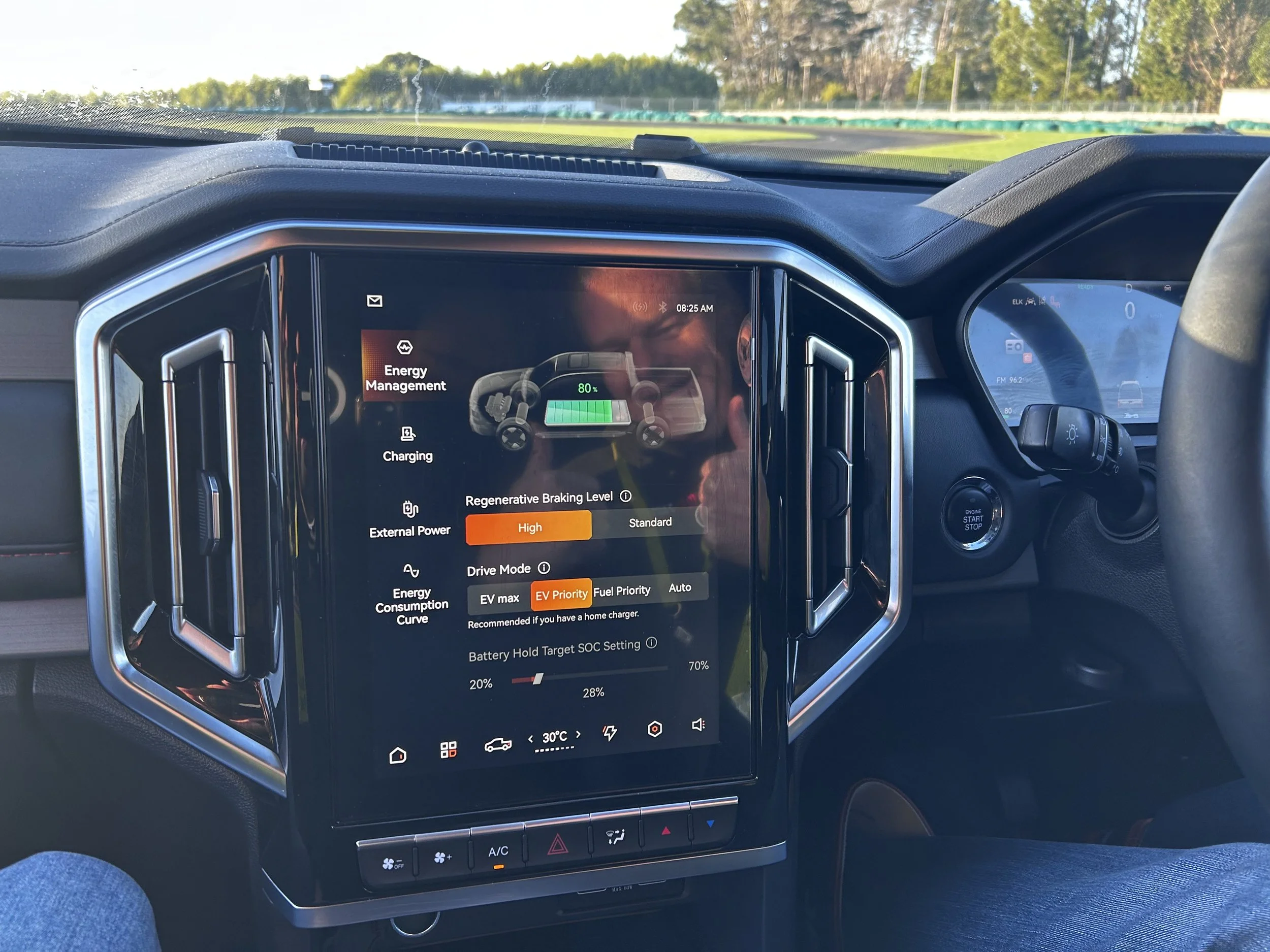
Craw says there are no less than eight different driving modes.
It has front, rear and centre differential locks - but no mechanical connection between the rear motor and the front wheels - dedicated off-road and crawl drive modes, with off-road quick-access buttons to make switching between tarmac and tough terrain straightforward.
Little of that was tested with a quick drive round a kart track within the Mystery Creek precinct.
The few laps were spent trying out the model in its electric-oriented modes; ‘EV priority’ and ‘EV max’, both of which relegated it to purely rear-drive on battery drive in our instance.
It also has ‘fuel priority’ and ‘auto’ settings. All haptic touch, on a big screen.
T9 PHEV arrives with a 360-degree camera and a full suite of safety and driver assist features, while comfort ingredients include premium interior trim and materials and a decent infotainment suite.
JAC showed a prototype of this vehicle at last year’s Fieldays, and consumer expectation was clear, Craw says.
“They wanted a PHEV that works like a proper ute and doesn't cost an arm and a leg. The T9 PHEV ticks every box.”
Regional sign-off required the model to undergo an extensive regional development programme, mainly conducted in Australia and involving factory technicians and specialists from Multimac, a third party global supplier of suspension components.
Subsequent to that, JAC took the prototype driven by media today into different areas of NZ to ensure it stacks up in local conditions.
The Australian effort was more arduous, putting it through more than 50,000km of testing in Australia, centred at the ex-Holden proving ground at Lang Lang, Victoria.
That programme ran for half a year with the vehicle's durability and dynamics, powertrain performance and calibration, towing, and load-carrying capacity assessed and refined. On-road and off-road capabilities, acceleration and braking, and Advanced Driver-Assistance Systems (ADAS) were tested and apparently adjusted.
This process has required an adjustment to the suspension, recommended by Multimac. The prototype didn’t have this, but suggestion is that NZ production models will.
“There are a lot of the reports coming out of Australia and they've all said that it just needs that little bit of a tweak in the rear, which Multimac are doing at the moment,” Craw said.
“We think that is nearly finalised and production is about to start, but we haven't had the final word on exactly what they have done in terms of what they've done to tune that so far.”
He reminded JAC is no newcomer to making tough vehicles. It has been building trucks and vehicles for over 60 years, across multiple platforms, markets and vehicle types.
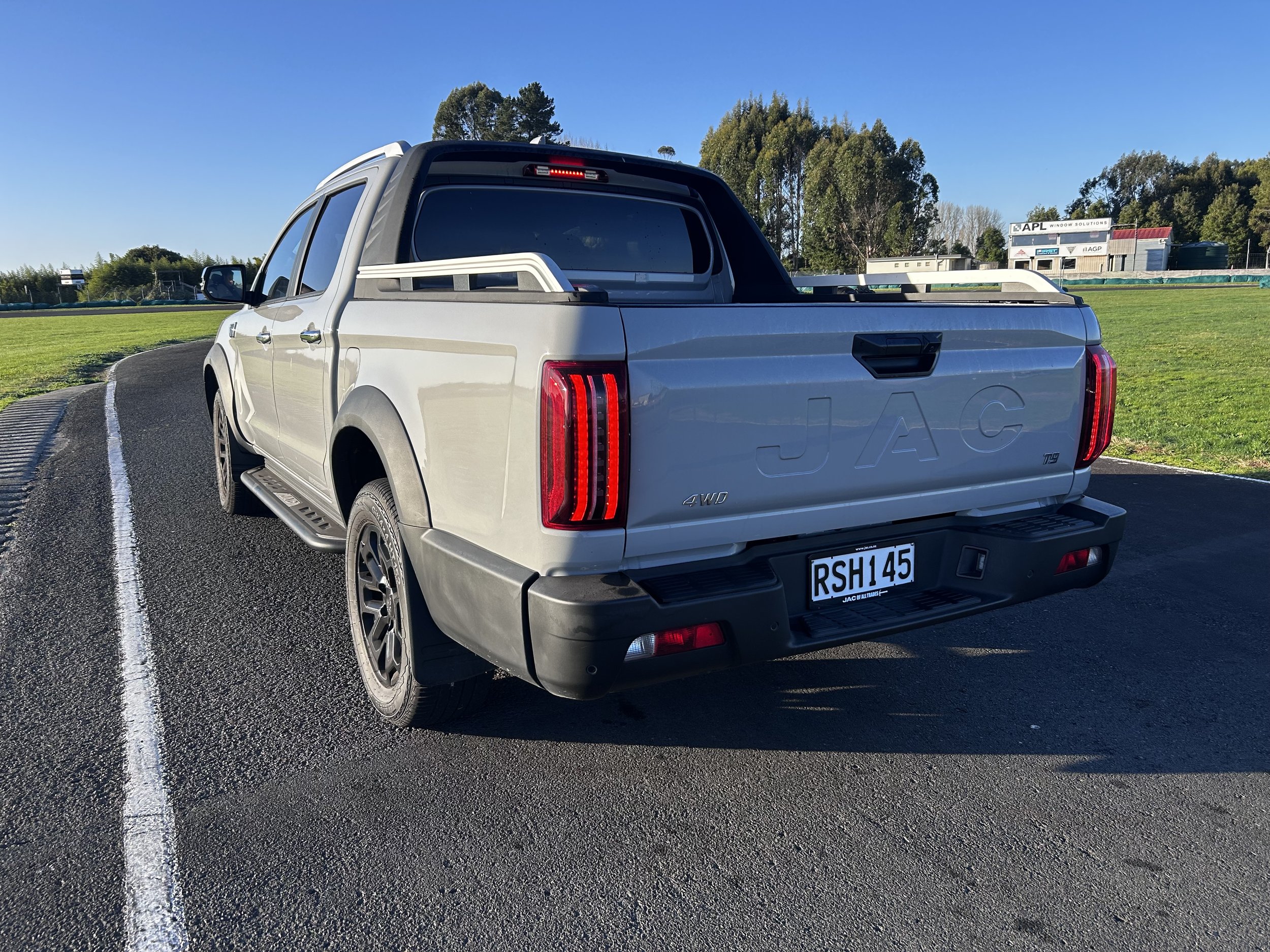
Craw said local timing for another PHEV ute couldn't be better and that’s why it’s kicking in for just under $60k. Where it ultimately might place is not being shared.
“We just want to really get it out there, make our mark,” says Craw.
“Once the customers have driven it, we think that's going to really hit the market. We're very excited about the next few months.”
JAC accepts it is not a big player hence why it is keeping its sales forecasts modest and has chosen just one of four model variants regionally available.
The model here is basically the flagship of the family. In Australia, the entry edition is a low-spec cab-chassis that, if adopted here, would bring down the price considerably.
If it does take off, then the initial consignment can be followed by as many more as the market demands.
We think 100 is a good number to start with and we'll see how we go from there,” Craw says.
“If we need more, we order more.
“As we all know, one thing that the Chinese are good at is fast and they will produce it quickly for us if we need them.”
The writer attended this event as a guest of JAC New Zealand, with accommodation provided.