
Tunland ute returns Foton into NZ play
/Brawny-looking tray deck here in trade and family-themed editions.
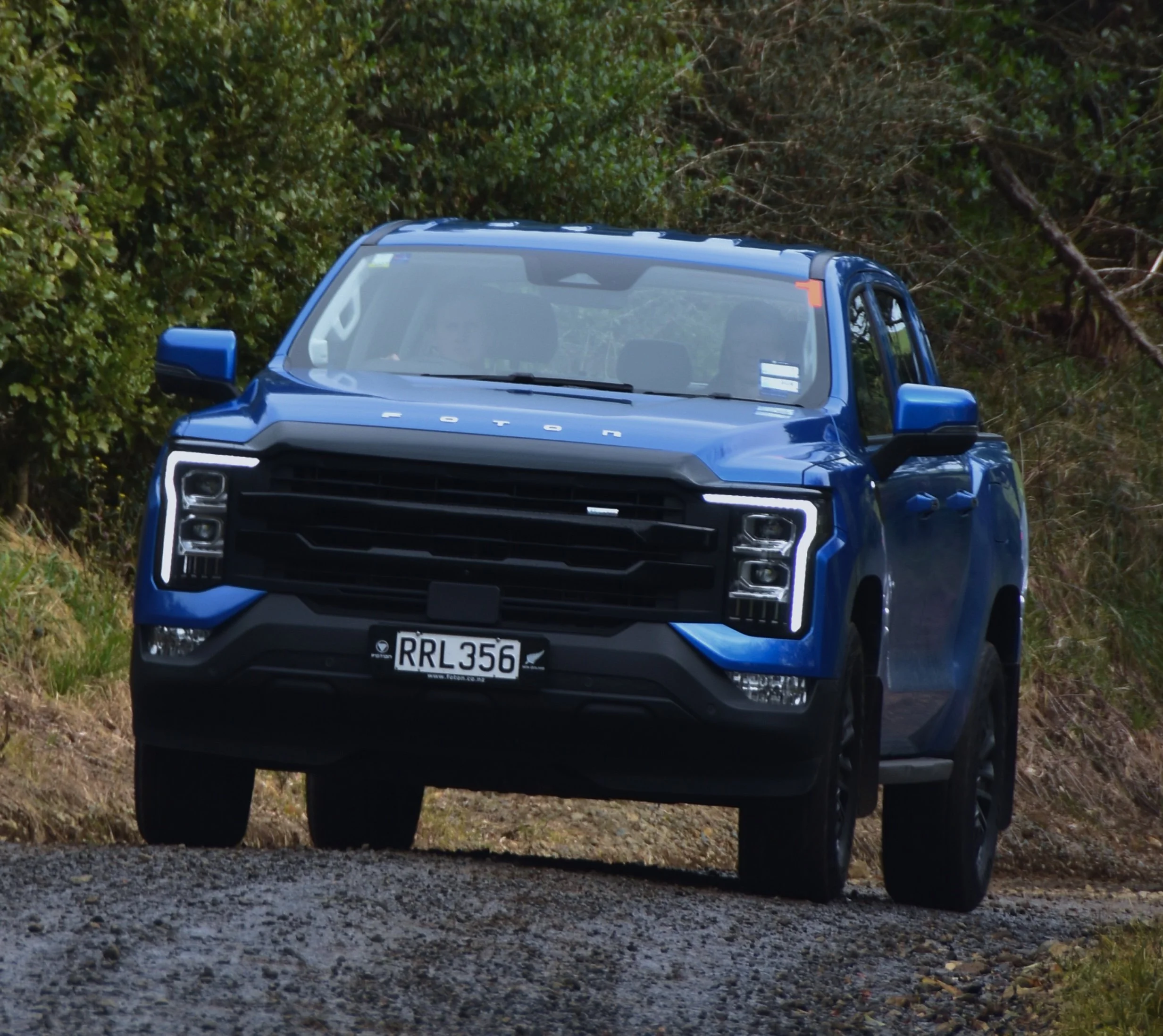
ANOTHER week, another new Chinese ute … but for once not from a new-to-Kiwis Chinese restaurant brand.
In returning to the fray with its first local offering in years, Foton is testing how much choice Kiwis can stand in the already well-stocked and fiercely-competitive one-tonne sector with the launch of its new Tunland ute range.
The Chinese make’s national distributor, Ebbett Group, is taking three editions from a larger regionally-available selection to fill the gap between compact dual-cab utilities and larger full-size pickups.
The hook is one familiar with several other ex-China products of similar look and size already here - notable GWM Cannon and JAC T9. The proposal is you get the muscle and space of a larger workhorse with the efficiency and practicality of a traditional dual-cab for relatively low spend.
Focus on practicality, towing ability, and competitive pricing land with the V7-C that aims especially for trades and fleet operators and provisions in $48,990 rear wheel drive and $51,990 four-wheel-drive.
Above those a V9-S, purely in four-by-four and upgrades from the trades-oriented leaf sprung rear end to a multi-link system. In proposing as a dual-purpose ute for both work and recreational use, it also takes upgraded cabin materials, and additional technology, for $57,990.
Both are powered by a 120kW/450Nm 2.0-litre Aucan turbodiesel engine paired with a 48-volt mild-hybrid system and ZF eight-speed automatic transmission, with optimal economy of 8.1 litres per 100km claimed.
The engine capacity, type, transmission choice and Tunland’s physical dimension means it might well compare to the JAC T9 that makes 125kW/410Nm in diesel (and 360kW/674Nm in petrol PHEV), GWM Cannon diesel (134kW/480Nm), Mitsubishi Triton/Nissan Navara diesel (150kW/470Nm), Ford Ranger 2.0-litre diesel (125kW/405Nm) and Toyota Hilux (150kW/500Nm). The Chinese products price closely, the Japanese and Ford models less so.
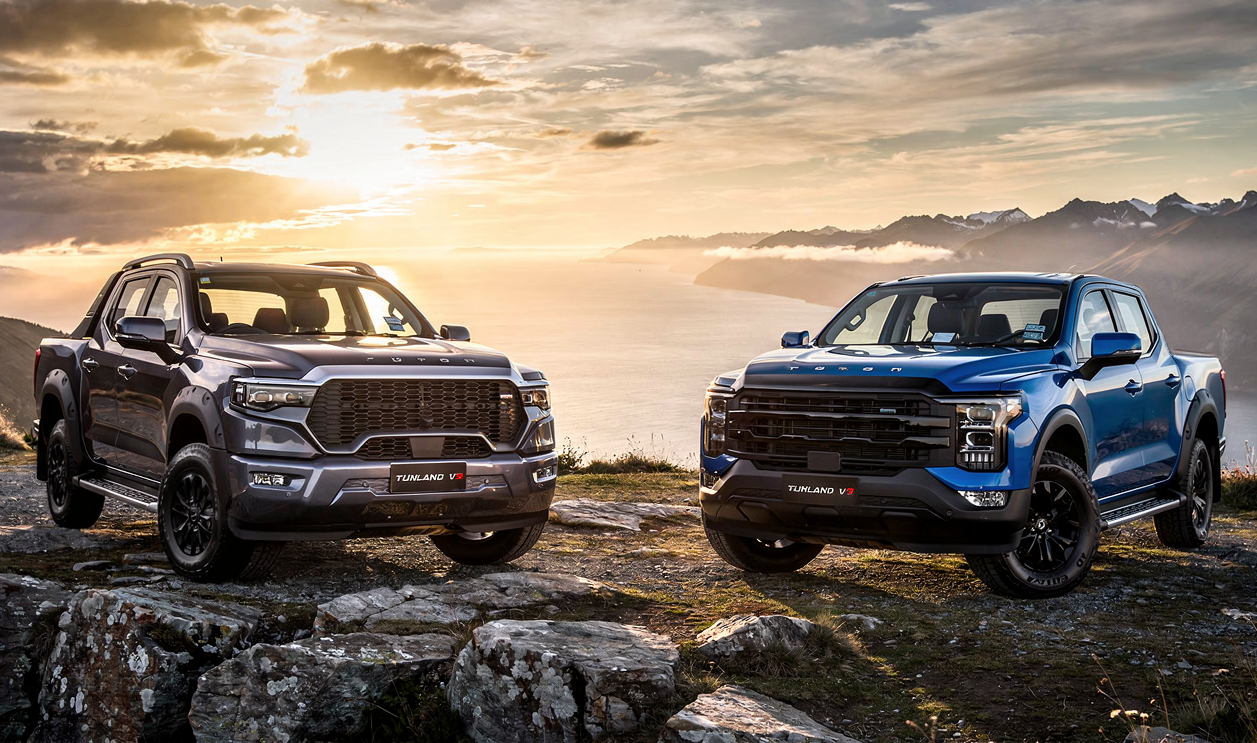
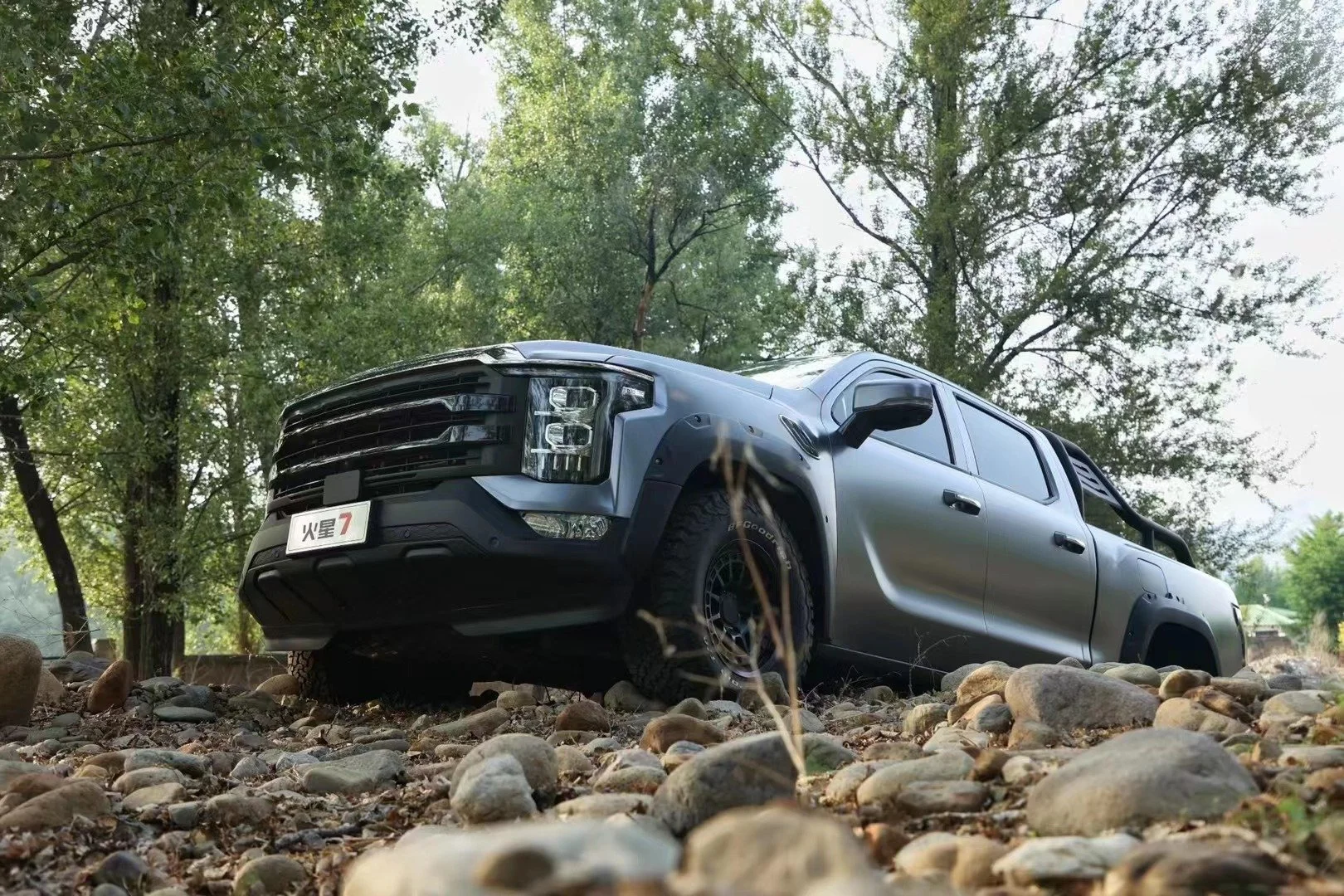
Visually, the variants are distinguished by their front-end designs. The V7 adopts a square, utility-style grille with horizontal bars, while the V9 features a wider hexagonal grille and smoother detailing intended to appeal to lifestyle buyers.
All Tunland formats here can tow up to 3500 kg and carry a payload of one tonne.
Aside from the addition of a BorgWarner part-time 4WD system with selectable modes, the V7-C four-wheel-drive differs from the rear-drive in having additional drive modes, a rear differential lock and all-terrain tyres.
The 240mm of ground clearance, 28-degree approach and 26-degree departure angles, and a chassis drawing on Foton’s global truck-building pedigree, the brand proposes the Tunland combines commercial-grade toughness with SUV-like comfort.
Regional testing occurred in Australia, with the products taking on on sealed and unsealed roads, steep inclines, and challenging off-road terrain.
Inside, both versions share a modern cabin layout, headlined by a 12.3-inch digital instrument cluster and a 14.6-inch central touchscreen.
Physical controls remain for key functions, while cabin noise suppression and wide seating dimensions are designed to improve comfort.
Standard safety features across the range include Autonomous Emergency Braking (AEB), Lane Keep Assist (LKA), and Blind Spot Monitoring (BSM).
A seven-year unlimited kilometer warranty and seven-year roadside assistance package.
Foton New Zealand has been the NZ distributor for Foton commercial vehicles since 2016.
The company is a subsidiary of the Ebbett Group, which established in 1928, and operates from a automotive distribution facility in Burbush, Hamilton.
This complex contains the Foton New Zealand national headquarters, parts distribution centre and training facility.
Foton Motor Company founded in 1996, with its headquarters in Beijing. It designs and manufactures trucks, buses, vans, sport utility vehicles and construction machinery.