
Story of extremes: MMNZ’s amazing display Tritons
/Visitors to the recent Fieldays at Mystery Creek might have spotted two special project utes on the Mitsubishi Motors’ NZ zone. Here’s the background story to those amazing Kiwi builds.
ADDING more ‘titan’ to the Triton - that’s one way of looking at the reason behind development of two special Kiwi-crafted display versions of Mitsubishi’s ute.
There’s also another: Mitsubishi Motors’ New Zealand employs some creative people.
A couple of pre-production - so, none-saleable - examples of the one-tonner at the make’s Porirua headquarters were gathering dust.
A few beers, some big ideas? However it played out, they got to work with the spanners in their free time.
The result? You’re looking at them here.
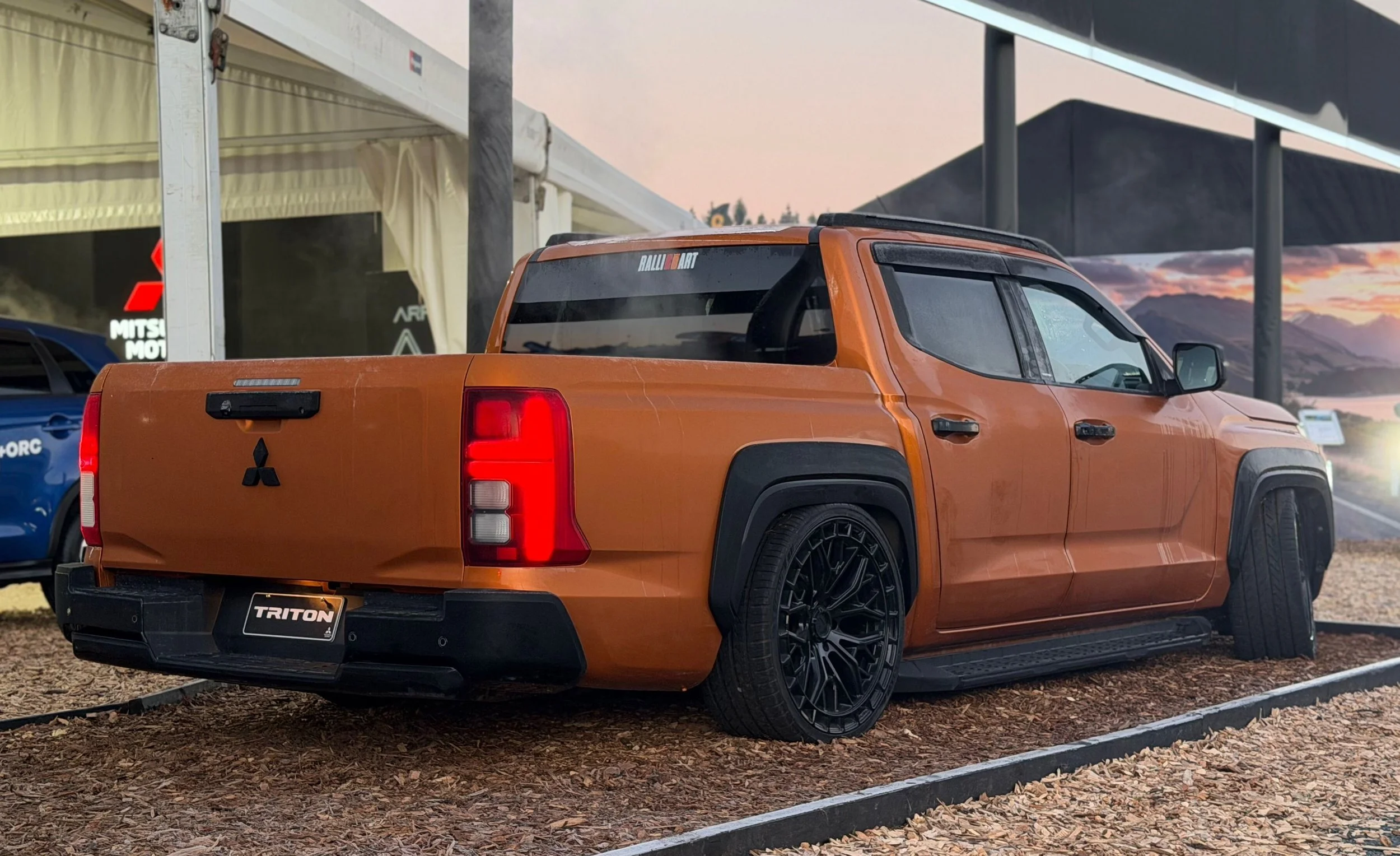
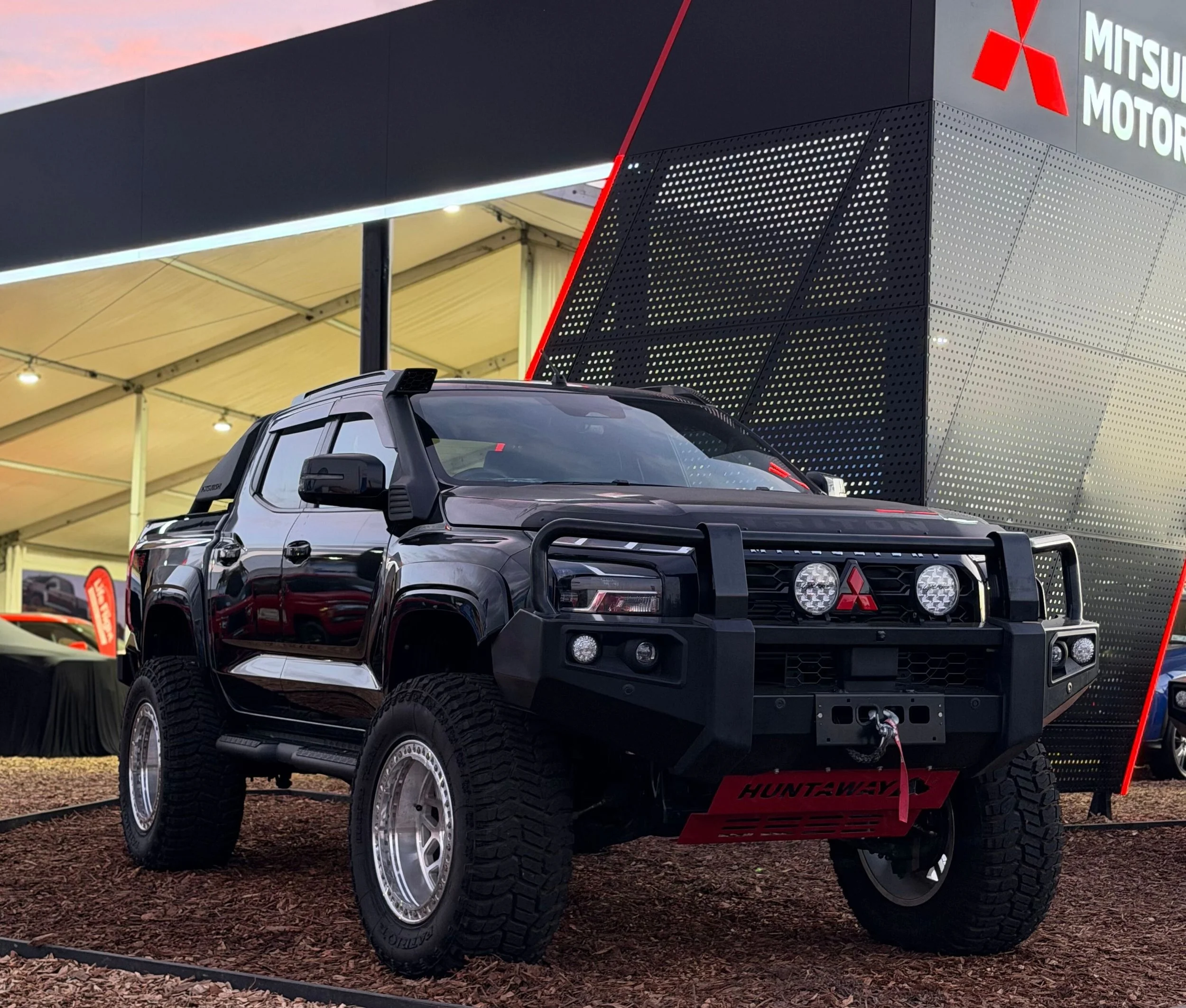
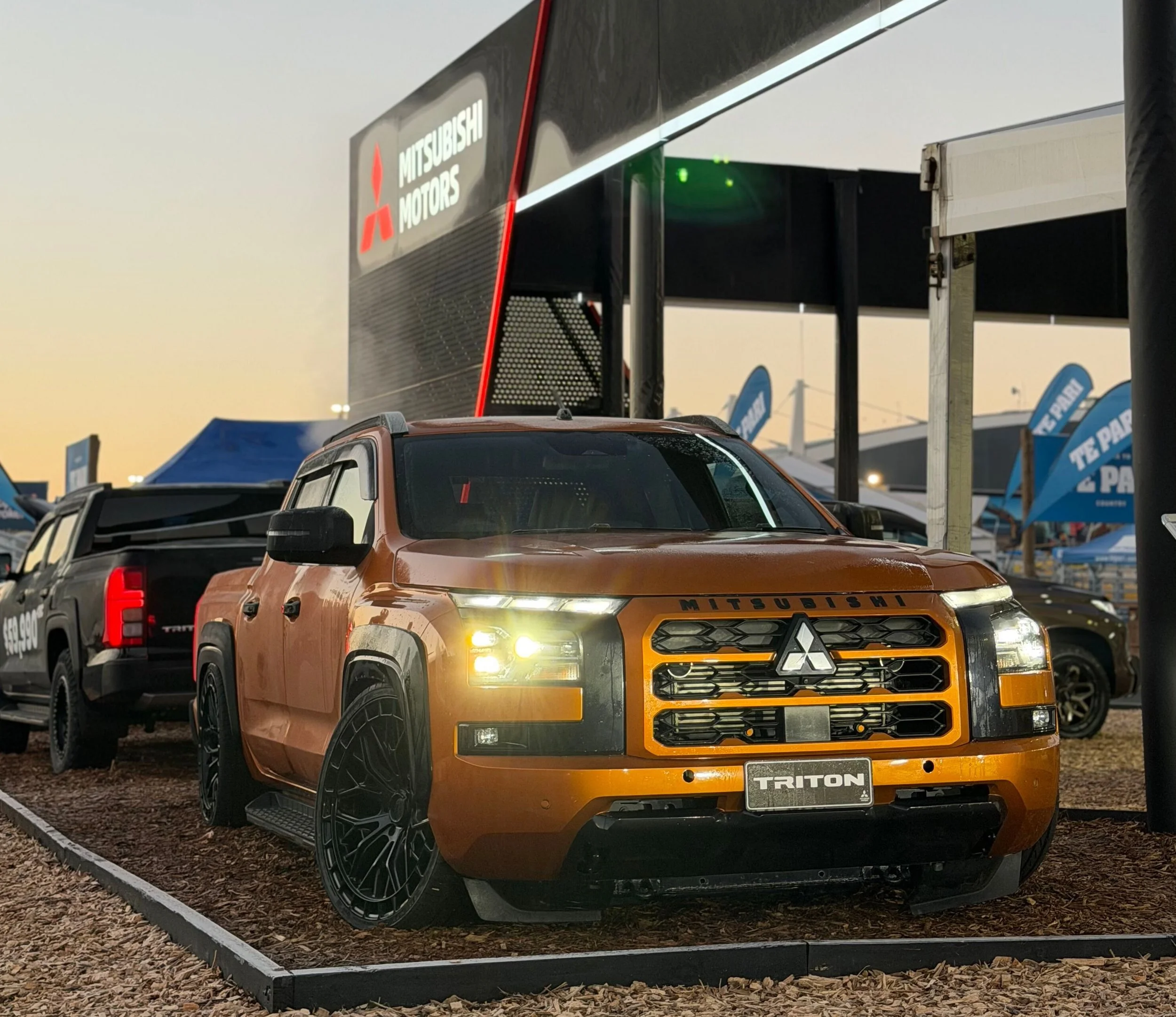
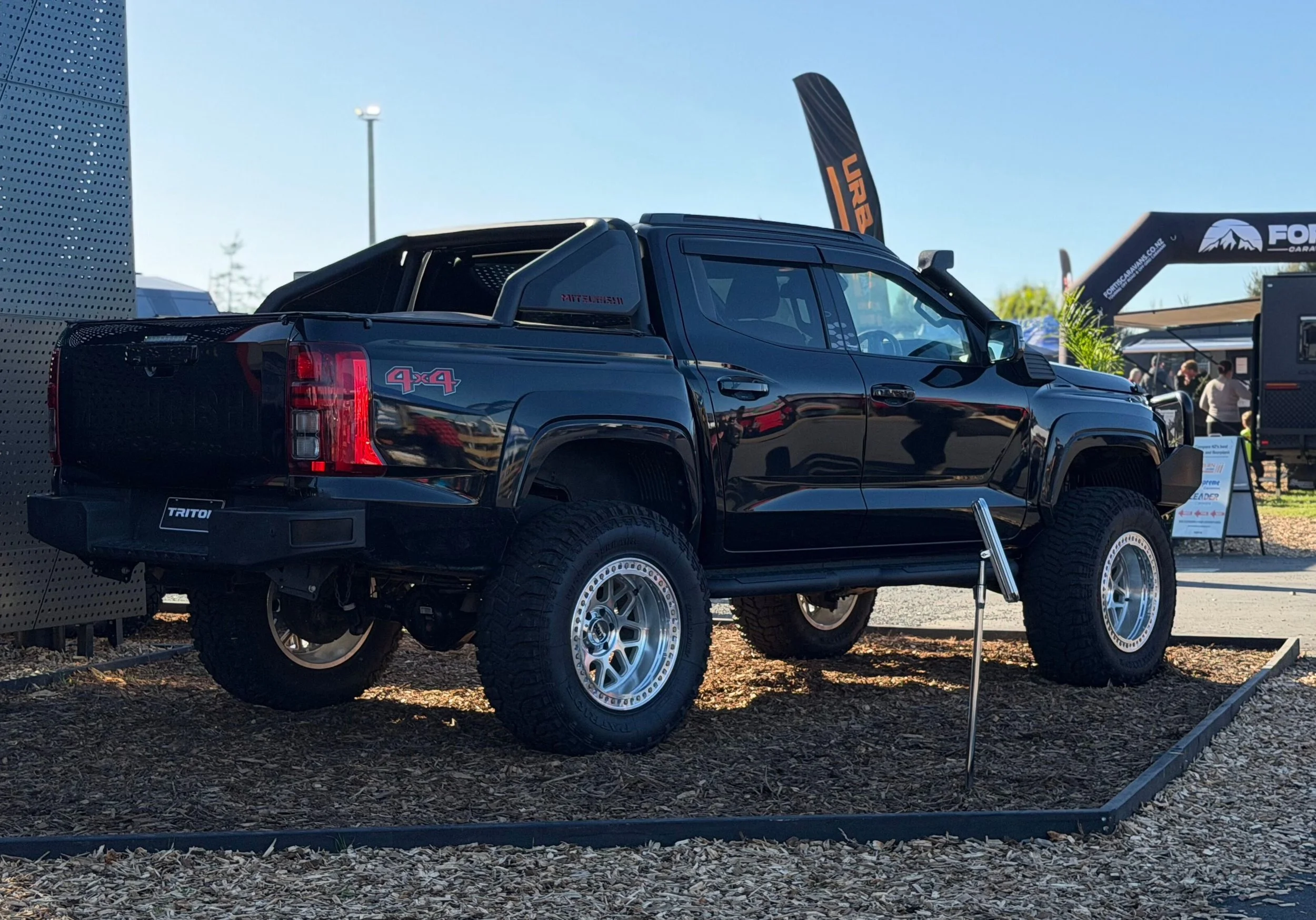
A low-rider street truck concept with its ground clearance all but eliminated. And an exaggerated off-roader, with over-sized wheels and an enhanced ride height. plus a heavy-duty bulbar, a baseplate, winch and snorkel.
Management liked and allowed them into public gaze, most recently at last month’s Fieldays at Mystery Creek, where they drew a lot of attention and admiration.
We talked to Nathan Thomas, head of after sales at Mitsubishi Motors New Zealand, about the projects.
He said achieving pre-production vehicles ahead of the model’s actual launch is a normal process for the brand.
“Having early access allows our team to complete testing, accessory development, marketing activities, and filming well before customer vehicles arrive,” Thomas explained.
As pre-production models, they cannot be road registered. And since they’d fulfilled their original purpose?
MMNZ’s crew of automotive technicians are highly skilled and passionate enthusiasts. They had an idea …why not create a couple of creative showcase projects. Whenever time and budget allow.
So were born what are referred to in-house as the ‘orange Triton – lowered build’ and the ‘black Triton - lifted build.’
Each has been explained by Thomas.
“The orange Triton has been engineered to sit as low as practically possible while wearing 22-inch wheels.
“Achieving this stance required extensive chassis, suspension and body modifications.”
At the rear, the differential was relocated by removing the original leaf spring mounts and re-welding them beneath the differential housing.
This repositioned the differential from below the spring pack to above it, while a further 50mm (two-inch) lowering block reduced the ride height even more.
Up front, a custom coil-over suspension package was developed, leaving approximately 38mm of suspension travel.
“The larger wheel package also required significant body modifications. The inner guards and wheel arches were reshaped to provide adequate clearance, while two openings were cut into the tray—one to clear the differential and another for the exhaust.”
That sounds extreme; were they strictly necessary” As it happens, perhaps not. “They were included as a creative design feature.” Certainly, it’s an arresting element.
Can the lowered one be driven? Actually, yes.
“Additional chassis work included a small C-notch for differential clearance and modifications to one of the crossmembers to ensure the vehicle could be driven safely at its dramatically reduced ride height.”
So how about the lifted build?
“The black Triton takes the opposite approach.
“Built to maximise off-road presence, it features 20-inch wheels wrapped in massive 37-inch tyres, requiring extensive modifications to accommodate the oversized wheel and tyre package.”
Do go on.
“The suspension has been raised by approximately 63mm (2.5 inches) using a combination of lift blocks, raised shackles, upgraded rear springs and front strut spacers.”
How did they maintain correct suspension geometry?
“The front control arms were modified, with every effort made to ensure the finished result retained a factory-quality appearance.”
A further two-inch/50mm body lift provides the additional clearance required, while the front chassis has also been modified to improve tyre clearance at full steering lock.
If you like the look of the front protection bar, side steps, rear bumper replacement, sports bar and tonneau cover? Good news. They’re all genuine Mitsubishi Motors New Zealand accessories available off the shelf.
These trucks are continuing their display tour and could well end up spending time in a showroom near you. But don’t pester the salespeople about chance of buying in.
They’re too extreme: “Specific modifications would not comply with LVVTA certification requirements and therefore cannot be road registered.”
Their job is purely to inspire, Thomas says.
“These Tritons were never intended to become production vehicles.
“They are one-off display builds designed to demonstrate what’s possible and inspire Triton owners to personalise their own vehicles using Mitsubishi Motors New Zealand’s extensive range of genuine accessories and approved aftermarket suppliers.”
They showcase the creativity and technical capability of the MMNZ team while highlighting the endless opportunities available for customers to legally customise their own Triton, Thomas says.
He’s delight they have generated plenty of discussion and whether it’s for or against doesn’t really matter.
“Everyone has an opinion—and that’s exactly what makes projects like these worthwhile.
“Our team enjoys following the conversations, theories and even the misinformation shared across social media, while the feedback we receive from customers at events often sparks ideas for future creations.”
Thanks to Alice Heyward for the brilliant photos.