
We are family - why GT40 reunion matters to NZ
/Three Ford race cars that delivered one of the most famous finishes in history being back together for good is also a fantastic new chapter for a Kiwi motorsport story.
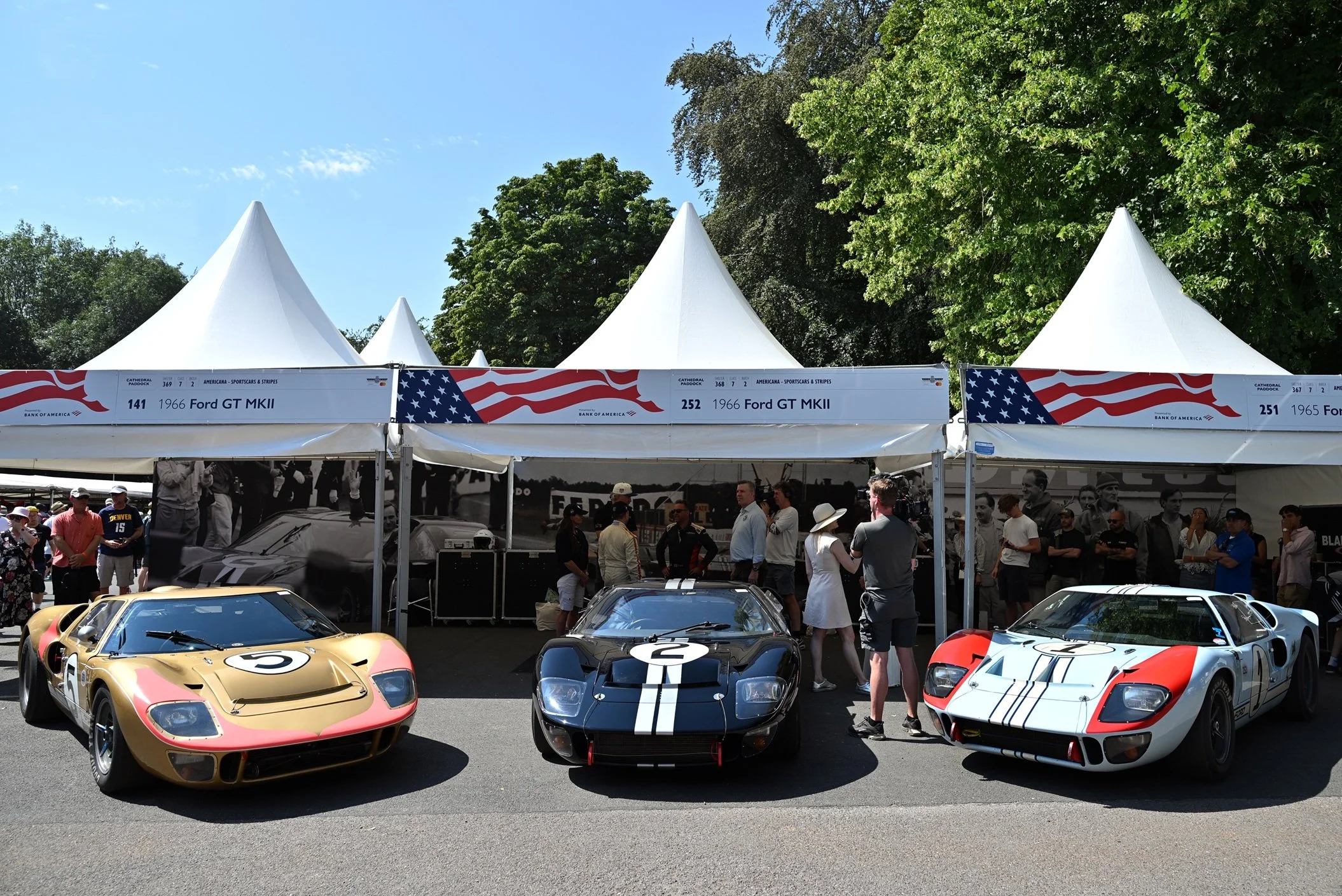
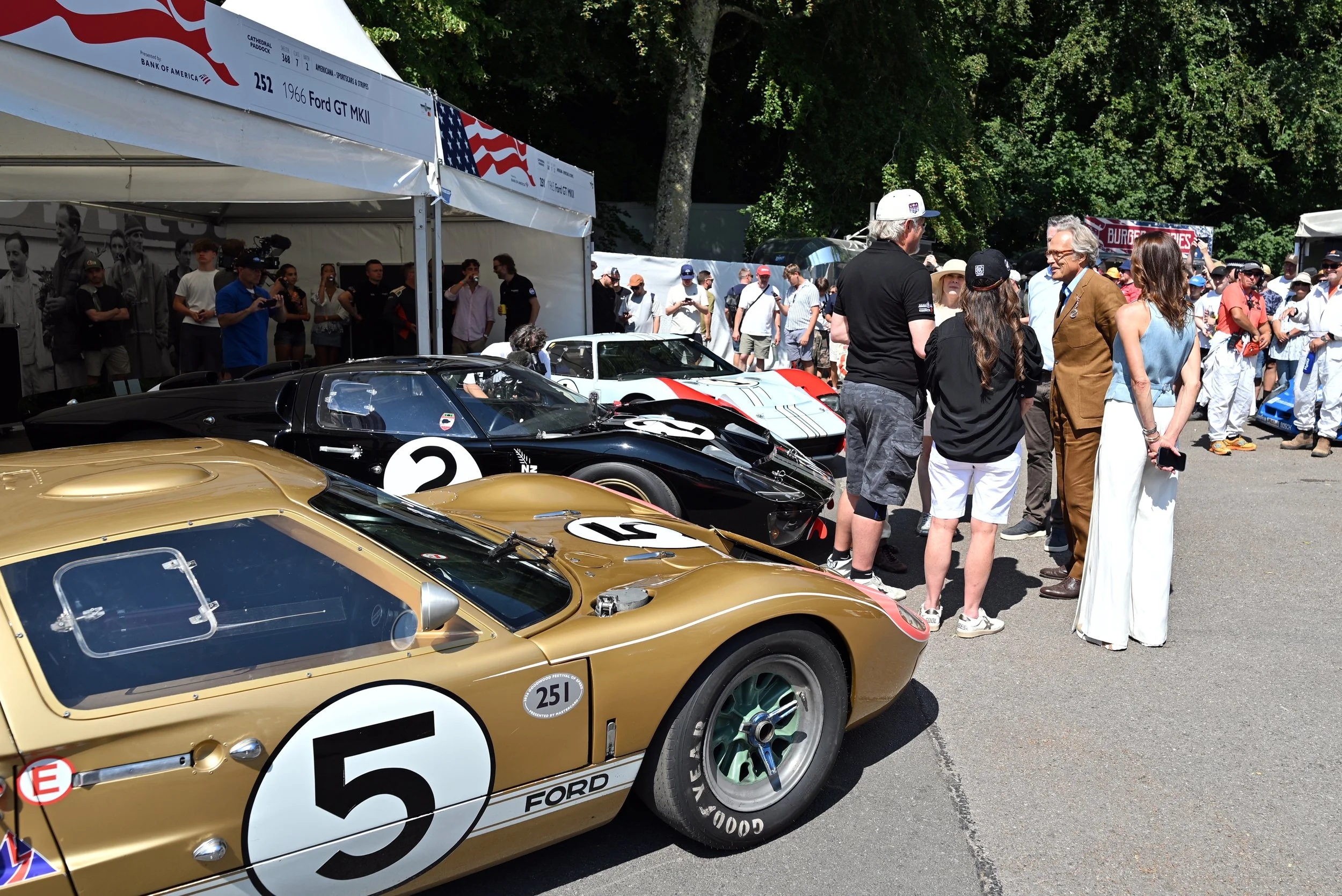
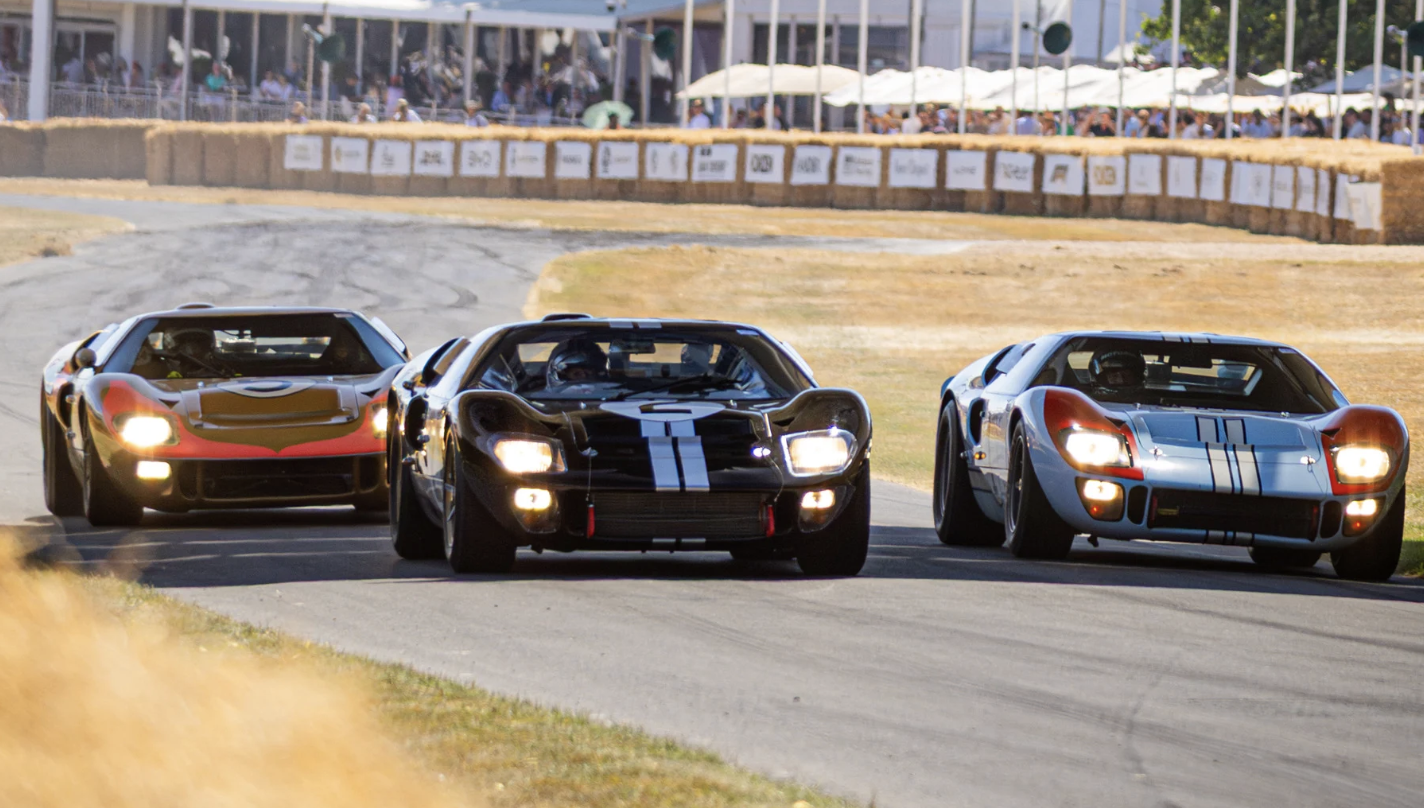
THREE classic racing cars running in a cluster, the black slightly ahead of the blue and the gold, just as they had back in the day.
The sight of those GT40s at the famous annual ‘festival of speed’ meeting held on Goodwood Estate, England, this year was one to savour.
Famous Fords recreating one of the most famous race finishes ever.
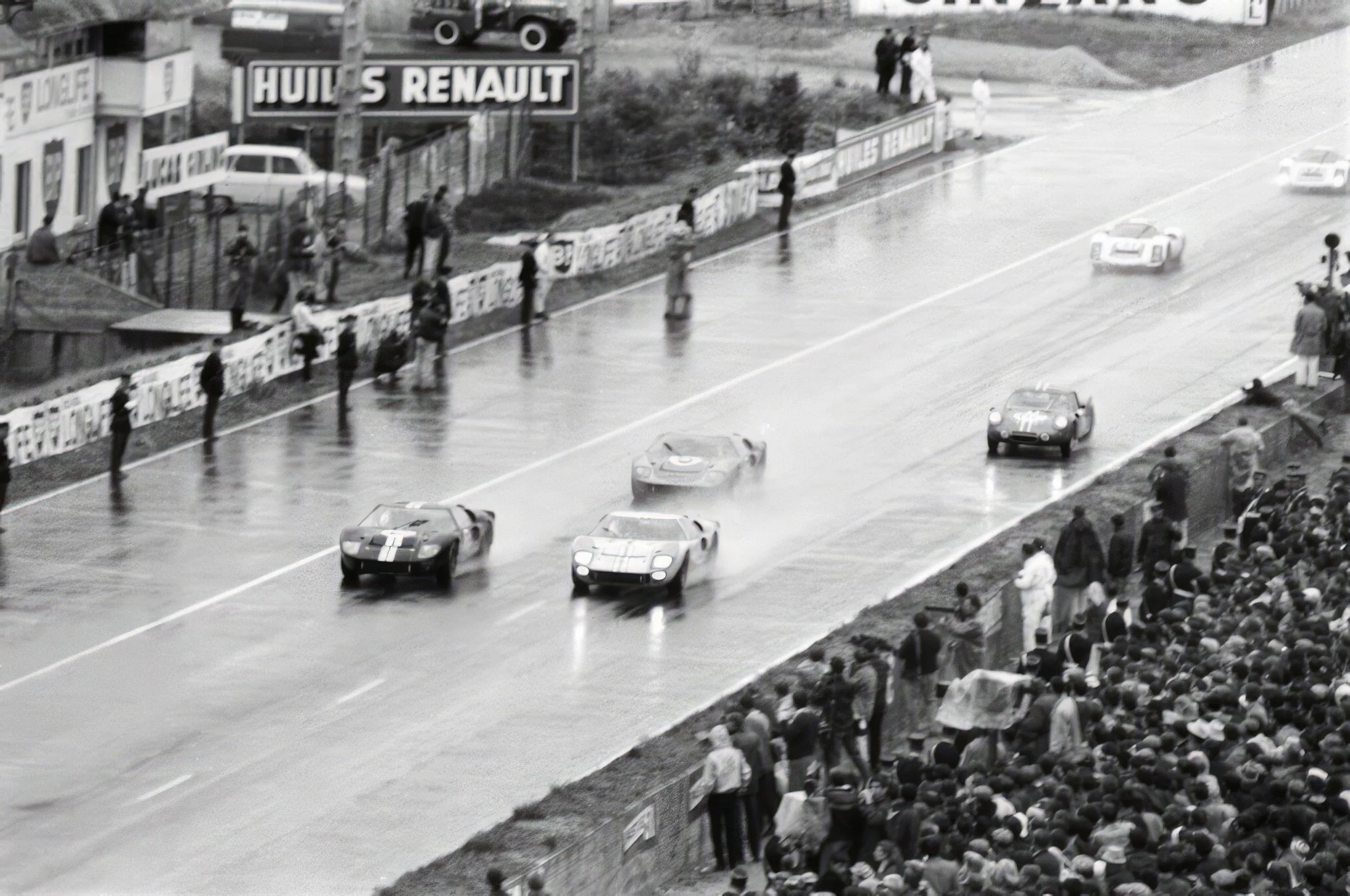
On its third attempt at winning the Le Mans 24 Hours, Ford finally topped rival Ferrari in 1966 — and in compelling style.
The sight of the three low-slung coupes responsible for that feat together again for a run across four days (July 9-12) up the driveway of Lord March’s historic West Sussex estate was really just as remarkable as the outcome on that wet afternoon in France so long ago.
That it remained almost as much a New Zealand moment? Also a special thing.
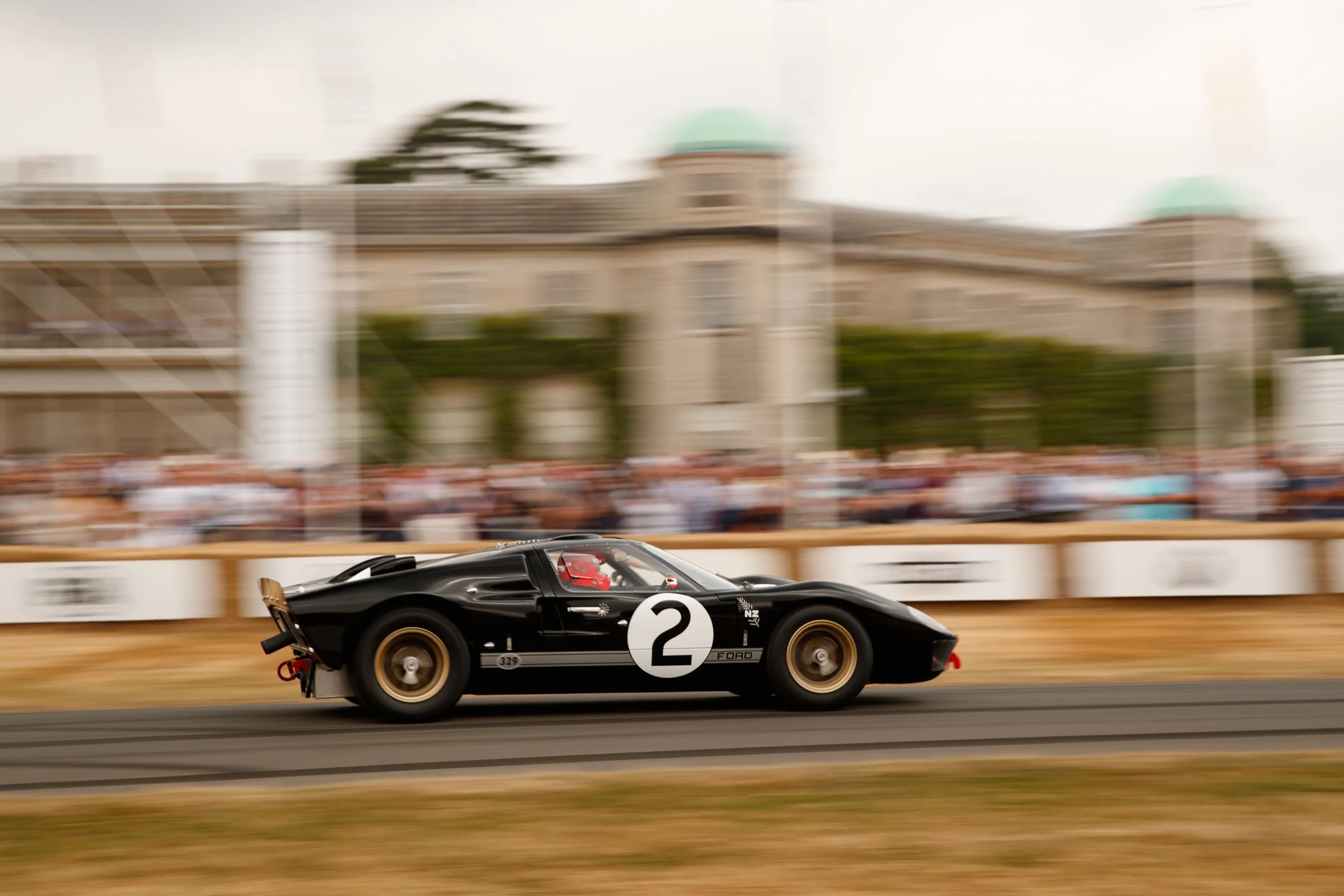
For our current Kiwi in Formula One, Liam Lawson, driving the winning Chris Amon/Bruce McLaren black ‘No.2’ GT40 was clearly a emotional experience.
Of a number of special Ford competition cars entrusted to the Racing Bulls drivers in the iconic hillclimb, this one was most special.
Speaking immediately afterward, and noting his hands were “still shaking”, Lawson remarked: "Very, very special, obviously a lot of New Zealand history in this car…
“I didn't expect to come here and drive it, I saw it today and I asked, I said 'can I please (drive it), that would be really really special' and the owner was kind enough to let me drive it, so very very special.” (see video below).
One can imagine what pride Chris’s son Alex, resident in the United Kingdom and attending the weekend, must have also felt as those Mark II GT40s thundered, as a group and singly, up Lord March’s driveway.
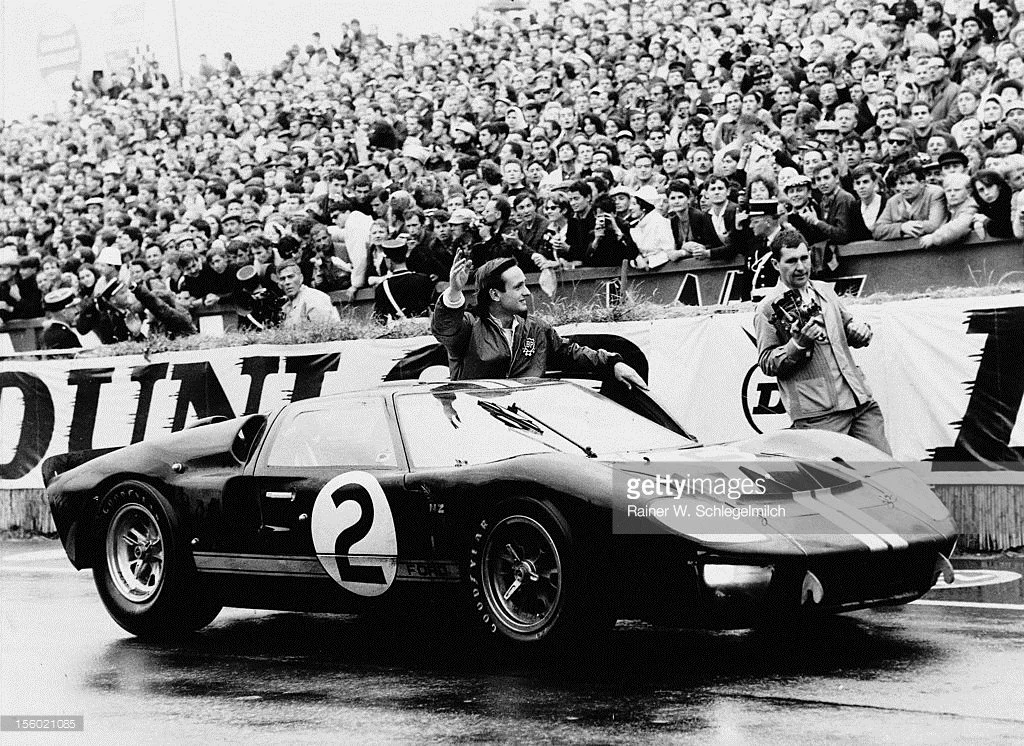
Each run lending time to reflect on their original drivers, all gone but not forgotten. McLaren, tragically taken at age 32 in June 2, 1970. Denis ‘Denny’ Hulme - our only Formula One world champion - lost at 56 in 1992, also at the wheel of a racing car. Amon, the great escapee from so many close calls in competition whose race was finally run in 2016 at age 73.
That they never reunited with the cars that lent Ford an underdog victory that forever altered the course of international sports car racing seems a shame. But there’s also great relief, surely, that the cars themselves are at last together, under ownership dedicated to ensuring that’ll always be so.
Last weekend was the third occasion for the seven litre V8 coupes that most famously brought the ‘trio at the top’ together to be corralled. Fittingly, the first post-victory reunion was back at Le Mans, in 2016, for the 50th anniversary of the trouncing.
Amon was invited, but his health didn’t allow travel. Alex was his stand-in then, as well, so he and his wife got to enjoy the full force of Ford’s VIP hospitality; luxury travel and a chateau included.
Ford also went big in 1966. Twenty tons of spares and equipment were flown from New York to Paris. Ford had more than 100 crew members there.
For good reason. Rivalries have shaped the history of motorsport, but few have been so significant than the war that broke out between Ford and Ferrari in the 1960s.
The 1966 showdown in France was the third year of Detroit’s seek-and-destroy mission and it had become a do-or-die pitch with the GT40. Not having a single one finish in 1964 and 1965 had been a major embarrassment for the Blue Oval.
This time the boss, Henry Ford II, made his expectations clear. Key architects of the effort were told to deliver … or else. The ‘Deuce’ attending the race added to the pressure.
No fewer than eight GT40s started, three apiece from Shelby America and Holman and Moody, Alan Mann Racing the remaining two.
The Shelby team was the de facto works entry, but ultimately it didn’t matter who got the win. This was about more than being the first American constructor to win here. The main driver was revenge.
The GT40 programme was all about beating Ferrari. When Henry’s bid to buy Enzo’s outfit was spurned, the company raised hell. The company that made Anglias and Cortinas thought only of humbling the fabled supercar manufacturer on the track.
Having done so, you’d think it would have whipped at least the winning car into its collection. In fact, for various reasons, most political, it did not show any interest in their post race futures, not just after the race but for decades on.
There has been all sort of speculation why. Much centres on this having been less of an all-American effort that the brand’s marketers really needed for stirring up road car sales back home.
The use of a car that, at heart, was a British Lola with a V8 and the reliance on so many foreign drivers who were far from being household names Stateside rankled some.
Those factors weighed into a return in 1967 with the Mark IV ‘J-car’, similar in general look to its forbears but so much bulkier. Designed and developed in Detroit, driven by A J Foyt and Dan Gurney. It won easily, never raced again and today is a star exhibit at the Henry Ford museum in Detroit.
Anyway, what does seem apparent is that none of the 1966 cars, least of all those that filled the podium places, were of historical relevance to the brand then. Or for a long time since.
All three have great survival stories, but none moreso than the Amon/McLaren car.
If not for some remarkable efforts by independent enthusiasts, the most valuable of them all, the black No.2 with its hand-painted silver Kiwi emblem, could have easily been lost decades ago. How it survived is a miracle.
Announcement just before last weekend that the cars have come together under stewardship of the Miller Family Automobile Foundation, which centres on a collection of the late Larry H. Miller, is therefore fantastic relief.
The foundation first acquired GT40 chassis P/1015, the predominantly sky blue car which prior to being runner-up at Le Mans had won that year’s Daytona 24 Hours - Shelby test driver Ken Miles then sharing with Lloyd Ruby - in 1999.
It snared P/1016, in its distinctive Kandy Gold, in 2018. That car was believed to be the only GT40 Mk II that ever raced with the unusual PowerShift automatic transaxle. Amon did much of that testing. It gained a regular T-44 manual four-speed for the race in France, where in qualifying and practice it was the fastest of Holman-Moody’s entries, earning ninth on the starting grid.
Acquisition of P/1046 to complete the set occurred far more recently.
The car had been in the stewardship of another noted collector and motorsports entrepreneur Rob Kauffman, who in turn bought it from another American, George Stauffer, whose tenure dated back to 1983. Stauffer had in 1994 invited Amon to drive the car in the US, but work commitments kept our hero from doing so.
Though Kauffman can take credit for brining P/1046 back to exact race state, Amon had no doubt that Stauffer was a bone fide hero of the car’s survival story.
The car could easily have been lost. Immediately after Le Mans, it became Shelby’s main test vehicle, then was handed over to Holman and Moody, which subsequently put it through a major refit.
The tail was shortened 21 centimetres, the instrument panel totally altered, water pipes rerouted and the centre tunnel removed. It then became the first GT40 to be fitted with a full roll cage.
For 1967, the car was repainted. Silver with black stripes seemed an unlucky scheme. First time out, at Daytona, it crashed. And that was the end of its racing career. It was parked up as a source of spares.
A Florida collector bought what had been reduced to a stripped chassis. It then went to a man in Cleveland who had one of Holman and Moody’s crew chiefs build it up as a luxury road car, in metal flake gold and black trim. The conversion included incorporating a common tech today that was a huge novelty then. A closed circuit rear-view television camera broadcasting to a small screen in the dash.
The next owner, a New Yorker, was more of a purist. He ordered the car rebuilt to standard Mk2 trim. But the restoration was still incomplete when it sold on in 1980 to another American, who shipped it to a warehouse in Belgium. It remained crated for three years.
That’s where Stauffer located it. How he knew it was there is a mystery; it was basically then a bare shell with few identifying marks to its history. But Stauffer could see enough to know he had the most valuable GT40 of all. He then had it restored to as close as anyone could remember how it first appeared on the track, making contact with Amon to pick his memory.
Having all three cars under one stewardship is a magnificent tribute to what remains one of the defining moments in automotive competition.
In speaking to his role. Kauffman said: “Chassis P/1046 represents one of the most iconic moments in motorsports.
“It was a privilege to have been a custodian of this extraordinary automobile. Having all three cars together will emphasise their historical achievement for future generations to enjoy and appreciate.”
At Goodwood, family and foundation representative Greg Miller, emphasised that the intent is to preserve, research and publicly exhibit the three Le Mans podium finishers while supporting educational initiatives that celebrate automotive innovation, competition history and the individuals, like Carroll Shelby, whose vision and determination created the GT40 legend.
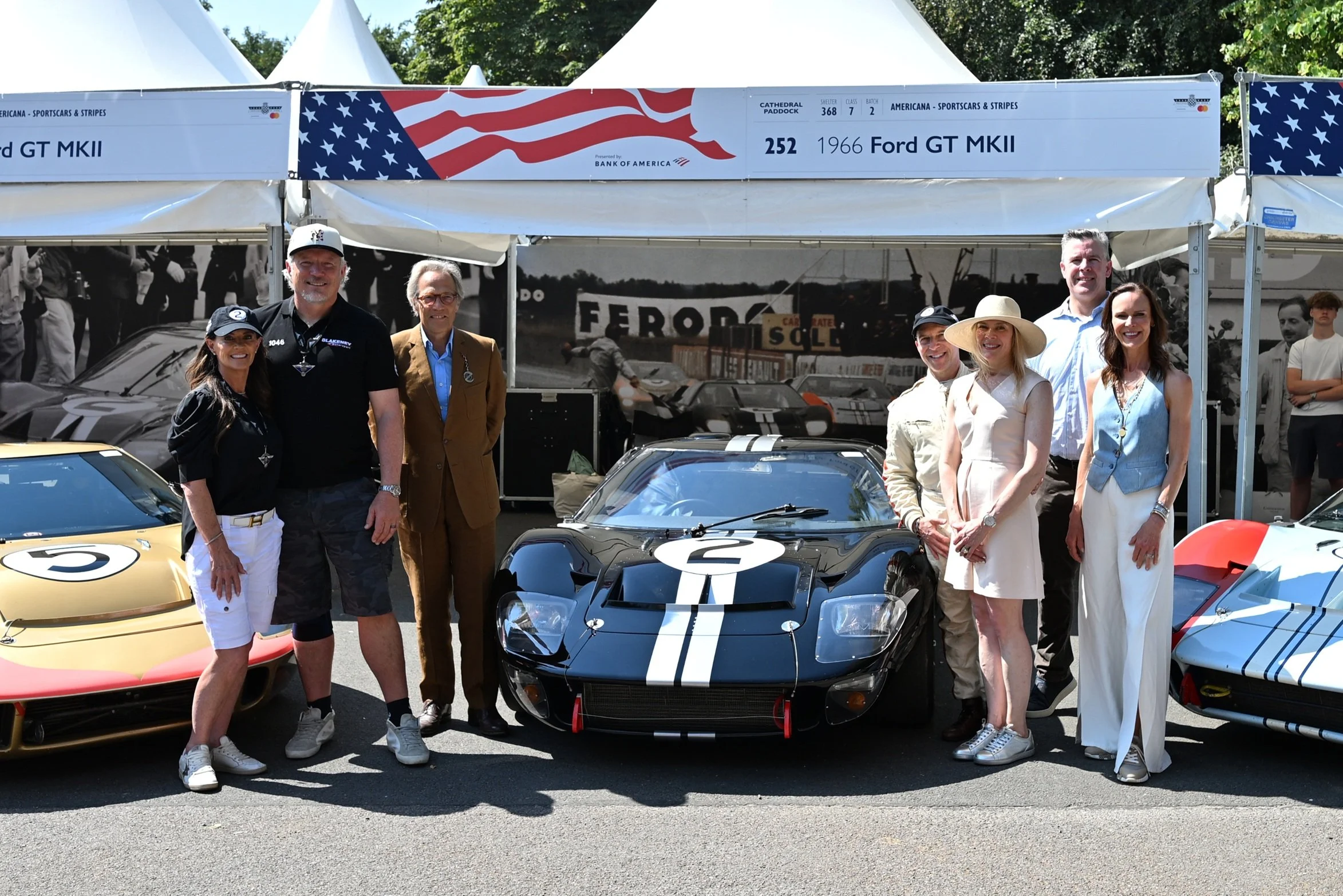
“Few moments in motorsport history carry the significance of Ford's victory at Le Mans in 1966," said Miller.
“To be entrusted with the care of chassis P/1046 is both an honour and a responsibility.
“Reuniting the first-, second-, and third-place GT40s from that historic race creates a once-in-a-generation opportunity to preserve and share an unparalleled chapter of automotive and racing history with enthusiasts around the world.”
The GT40s will next attend Goodwood Revival in the UK summer, September 18-20.
Doubtless that will present another round of animated discussion about which of the driver pairings deserved the win.
It’s well told that, by orchestrating - with agreement of the race organisers - a photo finish with the leading cars, Ford also created a controversy, very much re-ignited by the ‘Ford versus Ferrari’ book that led to a more recent Hollywood blockbuster.
Was Ken Miles robbed? The 2019 film and preceding book are carefully fact lite.
In a 1995 interview with me, Amon was never in doubt that he and McLaren were bone fide victors.
Although team-mates in a wide sense, the pairings had not gone into the event with any combined strategy in mind, he recalled for NZ Autonews magazine. As with all races, it was every man for himself.
The dead heat had been sorted by Ford hours before race-end, but with no radio comms, the fresh drivers for the final stints knew before those handing over. Amon handed over to McLaren, Hulme to Miles.
Accounts of what ensued as the instruction was shared differ. Some say Miles objected to a contrived finish as unfair, but as a dutiful employee, acquiesced.
The idea of Miles having been given a “slow down” order so that the Kiwis could catch up was hotly disputed by Amon. If anything, the reverse made more sense, because for all that night, the black car had consistently been the fastest GT40.
“I don’t know what their strategy was, but we certainly caught them up a lot during the night.”
What was clear, if just to those in the pits as the race entered its final phase, was that after first agreeing a dead heat could be arranged, the race stewards then got cold feet.
It was in the last hour that they told Ford such a finish was no longer possible, Amon said.
The new view: Should cars finish side-by-side, total distance would decide.
Miles and McLaren were on the same lap, but Miles had been second-fastest in practice, Mclaren fourth. So advantage to the Kiwis.
Did the drivers themselves know of this final decision? Not according to Amon. He said the emphasis was simply on getting the car home. The Kiwis’ were dealing with a sticking throttle on a wet and oily track. Plus, tiredness was a factor as neither had slept.
And yet, as much as the instruction had been to go easy … well, racers are always racers. Amon tacitly agreed with a Hulme observation during that time that “the starting position hassle was academic as Bruce speeded up at the very end and was a car-length ahead of Ken at the finish.”
Noted Amon in 1995: “It seemed to me he (McLaren) was making bloody sure he got across the line first. I will always say that our car crossed the line first.
“At the same time you could equally say that Ken Miles backed off, too. He was a complicated personality, Ken, and there could have been something going on there.”
At least there was no argument about the Ronnie Bucknum and Dick Hutcherson paired Holman and Moody car that completed the podium. Though tight behind for the photo, they were in fact 12 laps down.
Such is the focus on the finish controversy that what it often over-looked is how close the Kiwis came to disaster in the first part of the race.
Since 1964, McLaren was tyre testing for Firestone. The money funded his entire operation. Come Le Mans ’66, Ford was contracted to Goodyear.
“But Bruce and I were the exception … our cars ran Firestones,” Amon said.
When the race started, it was drizzling intermittently. P/1046 started on an intermediate, with a defined tread pattern; better suited to a wet track. When a dry racing line emerged, the tyre couldn’t handle it and began to delaminate.
“We had three stops in 90 minutes.” At the third stop, when the car was well down the field, McLaren came in, and instructed Amon to take over. “Bruce said ‘you drive, I’m going to make some decisions.’”
He met with the Firestone people, explained that they had to allow a switch to the Goodyears, which were performing well, or run risk of failure. But it was their money, their call. Firestone agreed to the change.
Recounted Amon: “It was a huge decision … if we’d continued on the Firestones, we’d have never finished the race … bits were coming off at 200mph.”
By then, they were well down the field. From then on, they would have to push hard. It was risky; the cars then were far more less robust than today’s machines, but the only choice. The “Go like Hell” title of AJ Baime’s famous book? It’s reputedly the instruction McLaren gave to his friend.
“Because of the tyre problem, Bruce pretty much said ‘we’ve got nothing to lose’ … we probably went a lot harder without being stupid … we wanted to finish the damn thing.”
That pace, and the Ferrari challenge slowly falling apart, brought them back into contention come daylight. By 9am, they were leading, though the Miles/Hulme car subsequently took that back two hours on. Until the final lap.
Less successful than McLaren and Hulme in the Formula 1 championship - never once winning from 96 Grand Prix starts - Amon took years to reconcile that his most celebrated moment would come in sports cars. As proud as he was of that victory, he’d always hoped for better success from single seaters.
Even so, he understood the magnitude of the achievement. Le Mans has always been the hardest of all endurance races. Amon never finished another.
And it took until 2017 for the ‘Kiwis win Le Mans’ headline to be repeated.
When Brendon Hartley and Earl Bamber, who grew up in regions adjacent to Amon’s childhood home in the Rangitikei, won for Porsche, one of the world's best known drivers in the 1960s and 70s was truly delighted.