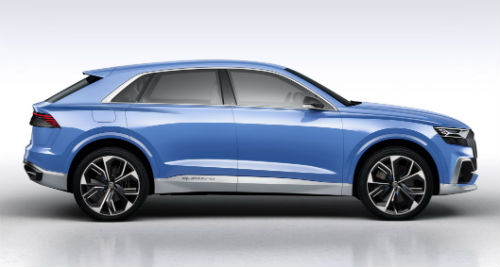
Q4 e-tron on target for NZ

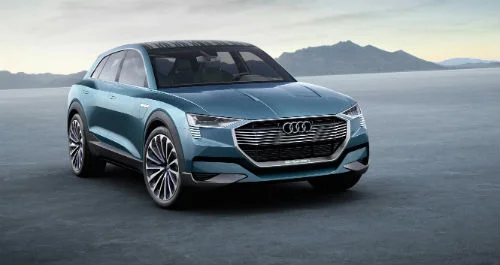
Here it is, the Audi electric going for mass appeal.

A203306_overfull.jpg

“WE are still discussing the car but our desire is to take it as it will become a volume seller here.

“I have seen the vehicle as a concept and I know it will work and become a mainline seller here.”

So, there you have it. The viewpoint from Audi NZ boss Dean Sheed, in respect to the latest electric from Ingolstadt unveiled to the world today, could surely not be plainer.

 As soon as the Q4 e-tron hits the production line – at the moment, that’s timed for late this year, pesky Covid-19 allowing - he’ll be booking it a ticket to our market and making arrangement for it to achieve permanent residency, with intent to have it fully settled in by early 2022.

And why not? The car’s credentials are really quite impressive, and not just because of the cited potential range of 500km.

In addition to being Audi’s seventh EV it is also the first on the MEB platform, the structure upon which all key VW Group electric vehicles already signed off for NZ introduction are based. VW’s impending ID family, starting with the ID3 hatch and a close-following ID4 crossover, the SEAT El-Born and Skoda Enyaq are all close cousins.

When you think Q4, it’s times two. A more orthodox hatch – subject of a preview last year - and now the car revealed today, a rakish, coupe-style Sportback offshoot, which is the one that especially has Sheed’s attention.

A203302_overfull.jpg

He suggests the cars each “sit nicely between the Q3 and Q5 exterior dimensions (German logic) and the Sportback denotes the coupe style to the body – think the latest Q3 SUV to the Q3 Sportback.”

By the time Q4 arrives, Audi will have already enlarged its electric family beyond the e-tron SUV that has been on sale for almost a year, and a Sportback coming on sale in late September, to include S versions of those cars – coming in the third quarter of next year - plus the e-tron GT. 

The last is basically a sister ship to the Porsche Taycan and potentially the most exclusive Audi EV here until 2025, when the so-called A9, a new flagship model being developed by an in-house working group called Artemis, arrives.

The S variants of e-tron have just been unveiled in Europe and will certainly add fizz to the category. As the first production electric cars to feature three electric motors they pump out around 372kW, which translates to a 0-100kmh time of 4.5 seconds and top speed of 210kmh. It’s the second fastest S model Audi makes, beaten only by the petrol-gulping S8 sedan.

Anyway, Audi’s incoming EV imprint is something of a mass attack, and even though it’s not one specifically aimed at the mass market – that’s a turf VW, Skoda and SEAT will be focussing on – it will be expected to be Ingolstadt’s highest volume EV for the foreseeable future. 

Rivals will be other plush electric SUVs such as the Tesla Model Y and Volvo XC40 Recharge. Undoubtedly the BMW i4 will also be considered a foil.

A203301_overfull.jpg

So, anyway, with the timelines all sorted, potential Kiwi customers have a good year to consider which version they might prefer – one with, as Audi AG puts it, “the versatility and robustness” of the classic SUV or the dynamic elegance of the Coupe variant. 

Either way, the dimensions are almost identical. With an exterior length of 4.6 metres and a height of 1.6m, the Sportback is 1cm longer and flatter than the hatch. They’re identical for width (1.9m) and wheelbase (2.77m).

They also have the same drive technology, comprising two electric motors mobilising 225kW of system output, transferring via quattro all-wheel drive (which, in EV terms, means each wheel set having an electric motor to drive it) or, optionally, via the rear wheels alone, in which case there’s just a single electric motor.

The all-paw edition is designated the performance format, but that’s not going to make it a threat to any of Audi’s petrol-dedicated RS cars. 

Perhaps the inevitable S variants will zap things up all the more, but at present with Q4 e-tron quattro zero to 100kmh occurs in 6.3 seconds and, as on the other MEB cars, top speed is restricted to 180kmh. 

The electric motors are fed by an 82 kiloWatt hour battery that takes up almost the entire space in the underbody area between the axles. A range of “over 450 kilometres” assessed under the worldwide harmonised light vehicle (WLTP) process is claimed for the quattro and just over 500km for the rear-drive. Audi sees this as setting a benchmark in its class.

Even though it’s dual motor, in most cases, the quattro mainly uses its rear electric motor, a permanently excited synchronous motor, in order to achieve the highest efficiency. For reasons of efficiency, the drive torque is generally distributed with a rear-axle bias. 

Audi says if the driver demands more power than the rear electric motor can supply, the electric all-wheel drive uses the front asynchronous motor to redistribute the torque as required to the front axle. “This also happens predictively even before slip occurs in icy conditions or when cornering fast, or if the car understeers or oversteers.”
A203307_overfull.jpg

The electric motor in the rear end has an output of 150 kW and torque of 310Nm. The front motor supplies the front wheels with up to 75kW and 150Nm. The system output is 225kW. The battery is charged with a maximum of 125 kilowatts so therefore takes little more than 30 minutes to reach 80 percent of the total capacity, assuming with direct charge replenishment.

The compact electric product line also features a sophisticated recuperation strategy, “leaving out no possibility for optimising its range” according to the factory bumpf. “The complex thermal management of the drive and battery, which involves a CO2 heat pump, also contributes to this.”

It says a key factor for the car’s sporty character and outstanding transverse dynamics is the low and central position at which the drive components are installed, not least that 510kg battery. 

A203303_overfull.jpg

“The high-voltage battery system is optimally matched to the dimensions of the Audi Q4 Sportback and is located between the axles in the form of a flat, broad block beneath the passenger compartment. The centre of gravity … is therefore at a similar level to that of a sedan with a conventional drive system. 

“Axle load distribution is perfectly balanced at almost 50:50. The front wheels of the Q4 Sportback e-tron concept are guided on a MacPherson axle with adaptive dampers. In the rear, there is a multi-link axle with separate springs and adaptive dampers.” 

Ingolstadt is really chirpy about the Sportback styling, particularly in respect to how the silhouette slopes downward to the back in a subtle and dynamic curve, part of the effort to achieve an impressive aero of just 0.26 Cd. 

“The roof line transitions into the significantly inclined D-pillars and ends in a horizontal spoiler at the level of the lower window edge. As a result, the future Audi Q4 Sportback appears much longer than its sister model, the Q4 e-tron concept.” It’s impossible for Audi not to mention any new design without claiming reference to the legendary original quattro of 1980. With the Q4 e-tron the lineage expresses in those prominently modelled wheel arches.

As much as the Sportback is being pushed as the prettier thing, it is hardly calling the more orthodox alternate a mutt. “The widened features of the Q4 e-tron and Q4 Sportback are designed to be highly organic and flowing, and they add a characteristic touch to the side view.”

 It is confident no-one will be troubled understanding how these two models belong to the same e-tron family. Likewise, neither will there be any misunderstanding to them being battery-fed, claiming “it will take no more than two glances to see that this is an electric Audi.” Oh yes, and you’re correct in assuming these cars run on 22 inch hoops. 

Of course, so slinky is all well and good, but what of interior space? Well, that the cars present in four-seater format suggests compromise has been unavoidable. Yet Audi also proposes that the 2.77m wheelbase and the lack of a transmission tunnel deliver enough pluses for it to offer “unsuspected spaciousness and comfort, especially in terms of legroom at the front and even more in the rear.” They’ve also meted it an interior colour scheme to accentuate impression of it being less than of a cocoon; so, dark hues are restricted to the carpets and upper section is lighter hues, with the headlining, window pillars and the upper section of the door rail and dash panel fitted with white and beige microfiber textiles.

The latter also reflects a sustainability priority: The floor covering is made of recycled materials and, instead of chrome-plated metal decor frames, the surfaces are covered with a high-quality multi-layer paint finish. Seats are upholstered in Alcantara material rather than leather here.

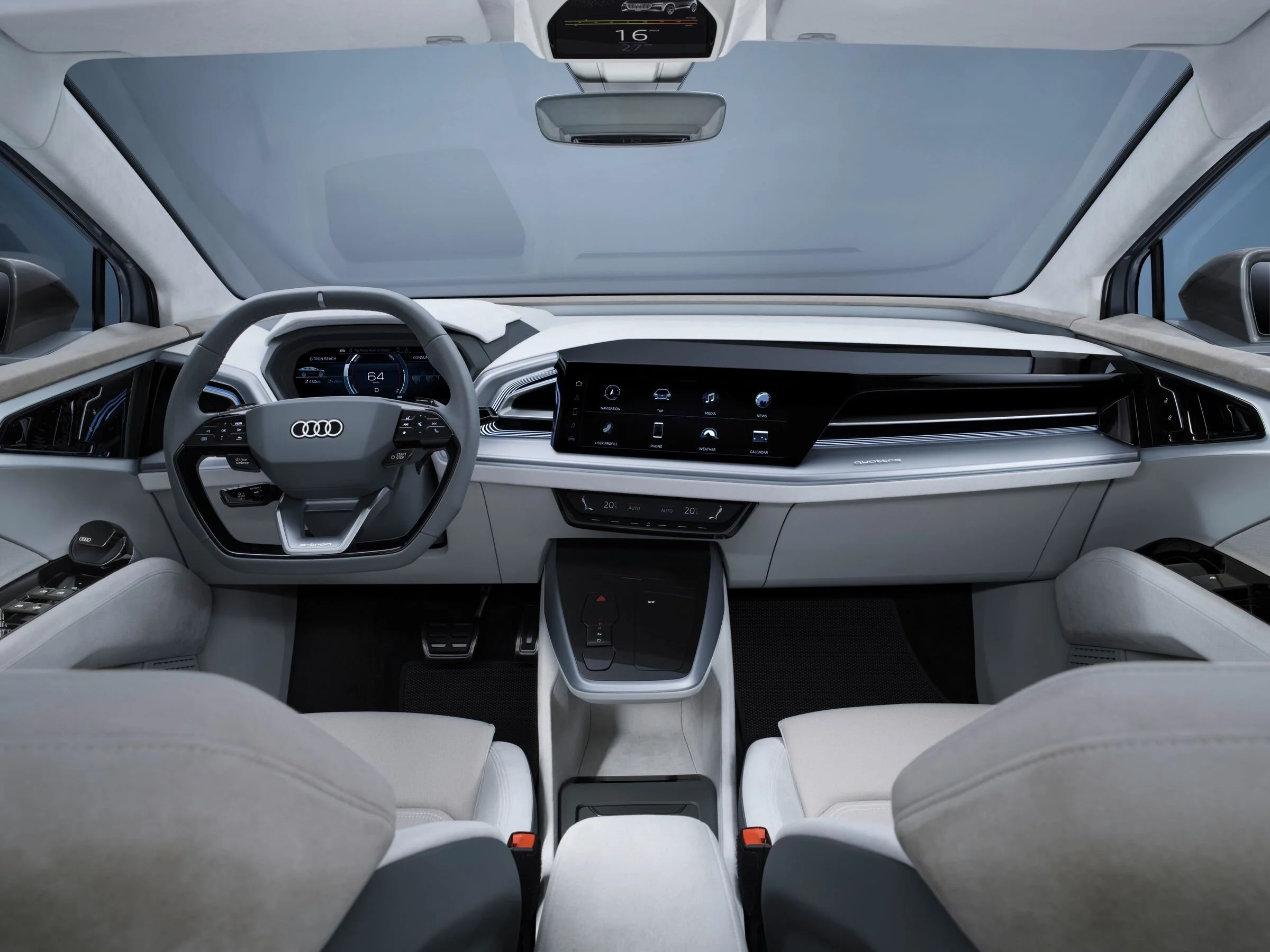
As expected, the Q4 follows in the e-tron SUV’s tyre tracks in making full use of Audi’s virtual cockpit tech; core display elements for speed, charge level, and navigation are located behind the steering wheel but there’s also the new feature of a large-format head-up display with an augmented reality function. It can display important graphical information, such as directional arrows for turning, directly on the course of the road.

Control panels designed as touch elements on the steering wheel spokes can be used to select frequently used functions. In the middle above the centre console, there is a 12.3-inch touchscreen via which the infotainment and vehicle functions are displayed and operated, with ventilation controls below.

As the centre console does not need to account for a gear lever or hand brake, it becomes a stowage compartment that includes a cell phone charging cradle. A horizontal area into which the selector button for the transmission mode is integrated also serves as a cover for the front section of the console.


S editions enhance e-tron spark

Audi’s big electric breakthrough is about to achieve extra sizzle.
The e-tron S is the first three-motor electric car.

The e-tron S is the first three-motor electric car.

TWENTY percent of annual volume, perhaps even more at the start.

That’s the prediction Audi New Zealand boss Dean Sheed has expressed for a pair of more potent editions of the all-electric e-tron sports utility. 

Just unveiled on its home turf and set to come on sale in the third quarter of next year, the e-tron S variants are hotted-up versions of the 55 quattro five-door wagon that has been here since last July plus a more rakish Sportback landing in September.

A thorough rework of the standard cars has been required to earn a performance badge that’s historically been the preserve of fizzed-up petrol product sitting one step below the ultimate RS cars.

To achieve the right performance edge, these are the first production electric cars to feature three electric motors. 

Whereas the current e-tron 55 has an electric motor on each axle, the S versions maintain a single up front and has two on the rear.

The full output is around 372kW – against around 300kW for the e-tron 55 on sale here at the moment - and while the top speed is just 210kmh, the step-off is far more … well, electric.

A cited 0-100kmh time of 4.5 seconds places the e-tron S as the second fastest S model Audi presently makes, beaten only by the petrol-gulping S8 sedan. 

Also, as today’s video shows, that oomph out back allows it to doing something else special: It’s an e-tron that’ll drift. 

The cars’ international unveiling this week has prompted the national distributor to speak about its own plans.

Sheed says it is still too early to discuss price in part because local market content has yet to be decided. In the first right-hand-drive market, the United Kingdom, the models place around $20,000 above NZ specification e-tron 55s.

However, he already has no doubt that the S variants will be well placed to lend significant additional zap to the e-tron 55’s sales impact, which in itself has been satisfactory, with 130 registered to date.

The just-landed entry $119,900 e-tron 50 variant, which reduces from a 91kWh battery to a 71kWh unit and drops in range to 305km, is expected to elevate that count and keep Audi in tune with its forecast. More improvement will come with the Sportback releasing in September.

Even so, it’s the S editions that seem set to be the powerbrokers – they’ll achieve two in every five sales almost off the bat, he says, so keeping step with a ratio that also occurs with the S petrol cars. So, hardly niche.

As for e-tron’s overall status? Well, it’s still something of an outsider in terms of what it achieves for overall Audi volume, though that’s simply down to historic perception about electric cars, Sheed believes. 

the e-tron sportback, landing in september, is also achieving S treatment.

the e-tron sportback, landing in september, is also achieving S treatment.

However, there’s positivity the message is getting through and transition occurring.

“EVs are still an education,” he concedes, but acceptance of the path car makers are taking and the sustainability advantages is increasing.

“There is a strong mental shift in respect to EVs in the market … you will see the mainstreaming of EVs over time with or without Government support.” 

Meantime, the e-tron S is expected to be seen as a more powerful alternate to the Jaguar I-Pace and Tesla Model X Long Range, which it matches for acceleration. 

With the S, only the rear motors are used in normal driving, the front motor being reserved for hard acceleration and if the wheels start to lose traction. 

The two rear motors can send varying amounts of power to each wheel as needed, and Audi says the ‘S’ versions are more rear-biased than regular models. 

orange highlights are not mandatory

orange highlights are not mandatory

The extra performance only slightly affects range. Audi says the e-tron S and e-tron S Sportback manage 358 and 363km respectively on a full charge, whereas the 55 quattro versions offer just over 400kms.

S-specific adaptive suspension is fitted, which can adjust the ride height by up to 76mm to best suit the seven driving modes on offer.

As with other e-trons, the ‘S’ variants can replenish off 150kW fast chargers; that kind of hit will restore the battery to 80 percent in around half an hour. 

Thanks to wheel arch extensions, the e-tron S pair are 5cm wider than standard, while S styling touches like aluminium mirror caps and extra trim are fitted.

Automatically opening grilles and vents, which remain closed until they’re needed to improve efficiency. UK models are fitted with 21-inch alloy wheels as standard; 22s being available as an optional extra. It’s hard to imagine the NZ spec coming with anything less.

The local distributor’s desire to deliver plenty of spec is going to be easily achieved with the S. 

The model takes electrically adjustable sports seats upholstered in upmarket Nappa leather and a brushed aluminium trim finisher, with a carbon-fibre version on the options list. The Virtual Cockpit digital display is standard alongside online navigation, and as with the 55 quattro a head-up display and cameras instead of wing mirrors can be specified.


Future TT has promise, current has done its dash

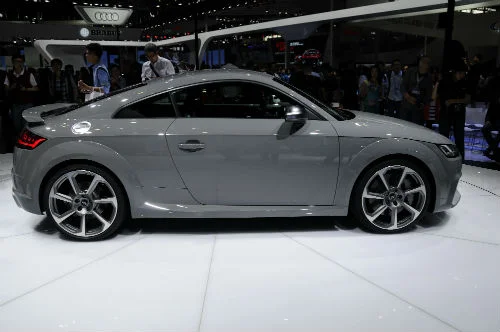
The TT as we’ve known it is now a memory – the one that might be next is an exciting thought for Audi NZ.

Still hankering for a TT? Sorry, this one has done its dash in NZ.

Still hankering for a TT? Sorry, this one has done its dash in NZ.

LAST chance to see has already gone – but, assuredly, if the TT returns in the form it is predicted to adopt, as an electric car, the local distributor will be interested.

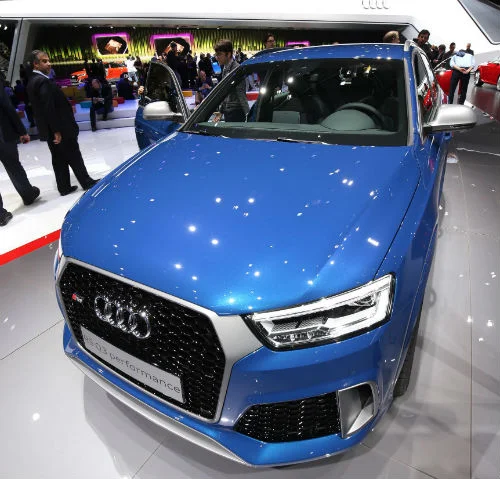
This today as Audi New Zealand has confirmed it has bypassed opportunity to resume selling the TT, preferring instead to focus on the new-generation RSQ3 models set to release imminently in Sportback and continued hatchback formats. 

General manager Dean Sheed says it was a tough call to determine to keep the car that when released originally in 1998, was a global styling bombshell.

But fact is that TT volume was down to a trickle when the car was withdrawn from global production last year, a victim of Volkswagen Group having been defeated in its bid to get all its products homologated in time to meet a rigorous World new Worldwide Harmonised Light Vehicle Test Procedure emissions deadline.

Withdrawing certain models was the only option; cars lacking WLTP compliance could not be sold anyway (in Europe at least) and the maker would have faced hefty fines as well.

That issue has now been resolved for the TT, which has been reissued in a smartened format, headed again by a sharp-looking RS flagship, that in all likelihood will present as the final run for the car in a fossil-fuelled format.

And then? Well, it’s really not shock-horror news any more that there’s supposedly a new TT on the drawing board set to be energised in a totally different, future-ready way.

five cylinder fun can still be had … in the new RSQ3

five cylinder fun can still be had … in the new RSQ3

Audi – and the wider car world of course – is going all-in on electric. And future E-tron models won’t restrict to the sports utility range we presently see. 

Talk about the successor to the TT we have now being re-energised into a fully electric sports weapon for its fourth-generation dates back to May of 2019, when then Audi boss Bram Schot announced that “in a few years, we will replace the TT with a new emotive model in the same price range … with an electric car.”

Just recently, a new report claims the car will ride on the Volkswagen Group’s MEB platform that debuted last year with the ID.3. The final shape is still under wraps and there’s even been talk that it could re-emerge in an SUV-ish format rather than as it is now.

Sheed was cautious when asked if he knew anything about the e-TT, saying: “I haven’t seen the model you refer to, although it’s been talked about in the media.

“You know our customers and we love performance cars (Audi Sport) and electric powertrains, so naturally I would entertain the concept when it was available – the decision will be the same as today, a hot SUV or a hot sportscar, market size and consumer preference.”

The ‘if’ and ‘when’ of an electric TT will doubtless clarify once Audi gives out some signs about how much longer the current car, with its evocative five-cylinder petrol engine, will live. Potentially it’s not for much longer given this generation shape hit the street in 2014.

Audi’S e-tron family plan is cemented - and an all-electric sports car would seem logical.

Audi’S e-tron family plan is cemented - and an all-electric sports car would seem logical.

It’s also prudent to bear in mind that Audi’s grand plan is to sell one million electrified cars each year by the middle of the next decade, which is quite a lot of electrified cars to sell by 2025.

Of course, that ideal was explained prior to coronavirus, so perhaps the delays and financial walloping the illness has inflicted on the global car trade, and national economies, might slow things down a bit. Yet, at the end of the day, the future will inevitably continue to head away from oil because … well, it’s a finite fuel, remember.

In the here and now, you’d have to think the conventionally powered model would be hardly set to leave the scene quietly.

With 294kW and 480Nm, that 2.5-litre five-cylinder turbocharged engine is a forceful involver; a true celebration of the five-pot fury whose family line runs right back to those original Ur Quattro rally scene changers. The new RS is claimed to accomplish 0-100kmh in 3.7 seconds, which makes it half a second faster in that sprint than the (much more expensive) Porsche 718 Cayman GT4.

Potentially, then, knowing that the ‘final fling’ editions aren’t officially coming here might bolster the residual values of previous RS, which held a recommended retail of $149,500. That car became unavailable around mid-2019.


RS rush kicking in from August

Coronavirus has slowed but not stymied intent to deliver the updated RS4 and RS5.

the rs5 updates start at the front

the rs5 updates start at the front

THIRD and fourth quarter arrival scheduling has been confirmed respectively two RS models especially popular with Kiwis.

The timings for the RS5 Sportback and RS4 Avant wagon has been shared along with a novel invitation to media. 

The liftback will be here for public consumption from August – though a solitary press car comes next month - while the load-all is even later.

Those timings also come with suggestion the $157,900 Sportback could be in more limited supply, at least initially, than the $153,500 wagon, whose production availability is described in a communique as being “much better. 

A spokeswoman later communicated that RS5 supply will be down to “a handful” on first arrival, but with steady stock later.

Supply constraints are hardly unusual with the RS models but, of course, the situation has become massively exacerbated by the global coronavirus pandemic, which caused car plants in Europe to close as early as March. However, Audi has since slowly resumed production from mid-April.

If not for that, the cars could conceivably have been coming out around now. NZ’s status as a high-level and easily-pleased RS fanbase usually ensures we get to the top of the list for right-hand-drive production, which appears to have just begun when the Covid-19 crisis hit.

the rs4 has been notified as a Q4 arrival

the rs4 has been notified as a Q4 arrival

Audi NZ has listed the RS4 for some weeks but only provisioned the RS Sportback specification sheet yesterday with an invitation for NZ media to participate in a media question and answer session running from an RS skunkworks in Germany tomorrow morning.

The programme requires an early start – it’s at 4am, our time – but live attendance has been excused, with participants being allowed to submit up to three questions via a provisioned URL.

It sounds like fun, as it involves racing driver Frank Stippler and Rolf Michl, head of sales and marketing for Audi Sport GmbH, and is tagged as being an interactive test drive from the Nurburgring racing circuit, where the Audi Driving Experience Centre bases and cars are tested.

Provision of the RS5’s local market detail comes three months after Audi Germany released the images of the refreshed RS5 seen today. It comes with confirmation that focus will restrict simply on the five-door shape, with Audi NZ saying is has no intentions for the two-door Coupe.

This will also be a busy week for RS information sharing, with the local operation saying it will have more to share about the RS6 and RS7 later this week.

The RS5 Sportback in the image showcases the most expensive of the 20-inch alloy wheel styles; those matt bronze hoops are $4000 a set, as opposed to $1000 to three other styles in alloy. In its standard form, the new RS5s ride on 19-inch wheels wrapped in 265/35 rubber.

cabins come in for some revision

cabins come in for some revision

The flash rims a trifling splurge compared to some other options, all the same. The most expensive enhancements are carbon ceramic brakes, at $16000, and a carbon styling pack, valued at $13k.

The incoming editions are mechanically unchanged, for the most part, from the pre-facelift models that have been here since 2017 and 2018.

So, the same 2.9-litre biturbo V6 is pressed into service, the maximum power's still 331kW and the torque still peaks at 600Nm, from 1900 to 5000rpm, and it’s all driving all four wheels through quattro four-wheel drive with a rear-axle 'Sport' differential and an eight-speed Tiptronic automatic gearbox.

Yet that transmission has been recalibrated to improve shift times, while the quattro system is also given a bit of a rework, though it continues to favour a 40:60 front-to-rear-torque split, sending as much as 85 percent of torque to the back axle when required. Zero to 100kmh times range from 3.9 to 4.1 seconds.

What’s obviously changed is some of the styling. The refresh delivers a revised front end, which features reshaped air intakes and an enlarged grille for a more aggressive look. Audi says that the three implied air vents above the grille are inspired by the 1984 Audi UR Quattro. There are new lighting signatures at both ends and altered bumpers, too.

The dynamic handling system picks up two driver customisable modes (RS1 and RS2) in addition to the comfort, auto, and dynamic modes. 

engine outputs don’t alter

engine outputs don’t alter

Nappa leather seats, a head-up display, and a even sportier suspension package with hydraulic roll and pitch stabilisation are on the menu.

The 12.3-inch 'Virtual Cockpit' dashboard has been refreshed, as have the graphics on the 10.1-inch infotainment touchscreen.

This RS4 is 45kg lighter than pre-facelift car, supposedly through a reduction in sound-deadening. The adaptively damped suspension has been reworked, too, to enhance ride comfort.

If the standard RS concoct doesn’t seem fiery enough, then perhaps ABT Sportsline, a motor racing and auto tuning company that mainly deals with Audi and the related primary Volkswagen Group brands, can help.

Abt Power S has delivered a rework package for the  2.9-litre biturbo V6 that bumps up the power to 395kW and torque to 680Nm. 

A kit that is cited as being specific to the RS4 – though surely it would work for the RS5 as well - liberates this sort of punch through an Abt Engine Control (ABT) high-tech unit, an additional water-cooler package and a revised air intake cover. You can even go further by adding an optional Abt intercooler to the mix, though it’s potentially more for well-being as Abt says it won’t change the wallop.

Abt doesn't say what this sort of hike in power does for 0-100kmh times, but pundits reckon it is reasonable to expect it to be as fast, or maybe even faster, than its larger RS6 sibling, which'll run 0-100kmh in a claimed 3.6s.

Want to know more about the Abt partnership and the work undertaken with the RS4? Watch this video.