‘Closed for business’: New car industry appeals for help

April’s new vehicle sales count provides dramatic proof the Covid-19 pandemic has the new vehicle industry reeling.

IMG_4804.jpeg

COVID-19 has swung a near-knockout blow to New Zealand’s new vehicle industry, with April recording a more than 90 percent fall in vehicle sales.

In stark contrast to April last year when a record 10,640 new vehicles were registered, the national Coronavirus lockdown is the reason behind just 1039 vehicles being registered last month, with the top-selling model, Kia’s Seltos, registering 95 of those.

Now, the organisation representing the country’s new vehicle industry says it needs help – and it is demanding the Government fast-track introduction of a series of policies to achieve this.

“The Government can play a decisive role in lessening the economic pain we are feeling,” says Motor Industry Association chief executive David Crawford.

The organisation wants deferral of introduction of any feebate scheme, replaced instead with incentives for the purchase of fuel-efficient vehicles.  Feebates  are a combination of fees imposed on larger gas-guzzling vehicles and rebates offered to purchasers of smaller and fuel-efficient vehicles.

“Prior to the pandemic, the MIA supported in principle the adoption of a feebate scheme. However, given the degree of fiscal impact the pandemic is causing, we believe this policy needs immediate review,” says Crawford.

The MIA also wants the Government to accelerate the uptake of plug-in vehicles  across the Government fleet.

“To date, uptake of plug-in vehicles by government agencies has been less than modest at best. The MIA calls on the Government to increase departmental budgets to permit departments to increase their uptake of BEVs and PHEVs,” says Crawford.

Financial incentives should also be introduced to remove from the national fleet vehicles older than 20 years, and/or where their exhaust emission standards are the equivalent of Euro 3 or less, Crawford says. He adds that this vehicle scrappage would be in line with the country’s new road safety strategy and the Government’s climate change objectives.

 “We all know we have an old fleet, with numerous polluting and unsafe cars roaming our roads,” he says.

Crawford describes April’s new vehicle scene as “closed for business” other than for the supply of essential vehicle and three business days at the end of the month for contact-less sales.

That distributors were able to sell as many as they did was testament to their determination to partially re-open for business while maintaining strict health and safety process,” he says.

Overall, new vehicle registration were down 90.3 per cent in April – sales of passenger vehicles and SUVs dropped 89.6 per cent, and commercial vehicle sales were down 91.4 per cent.

So dramatic was the fall in registrations, that some highly unusual sales results were recorded by the MIA.

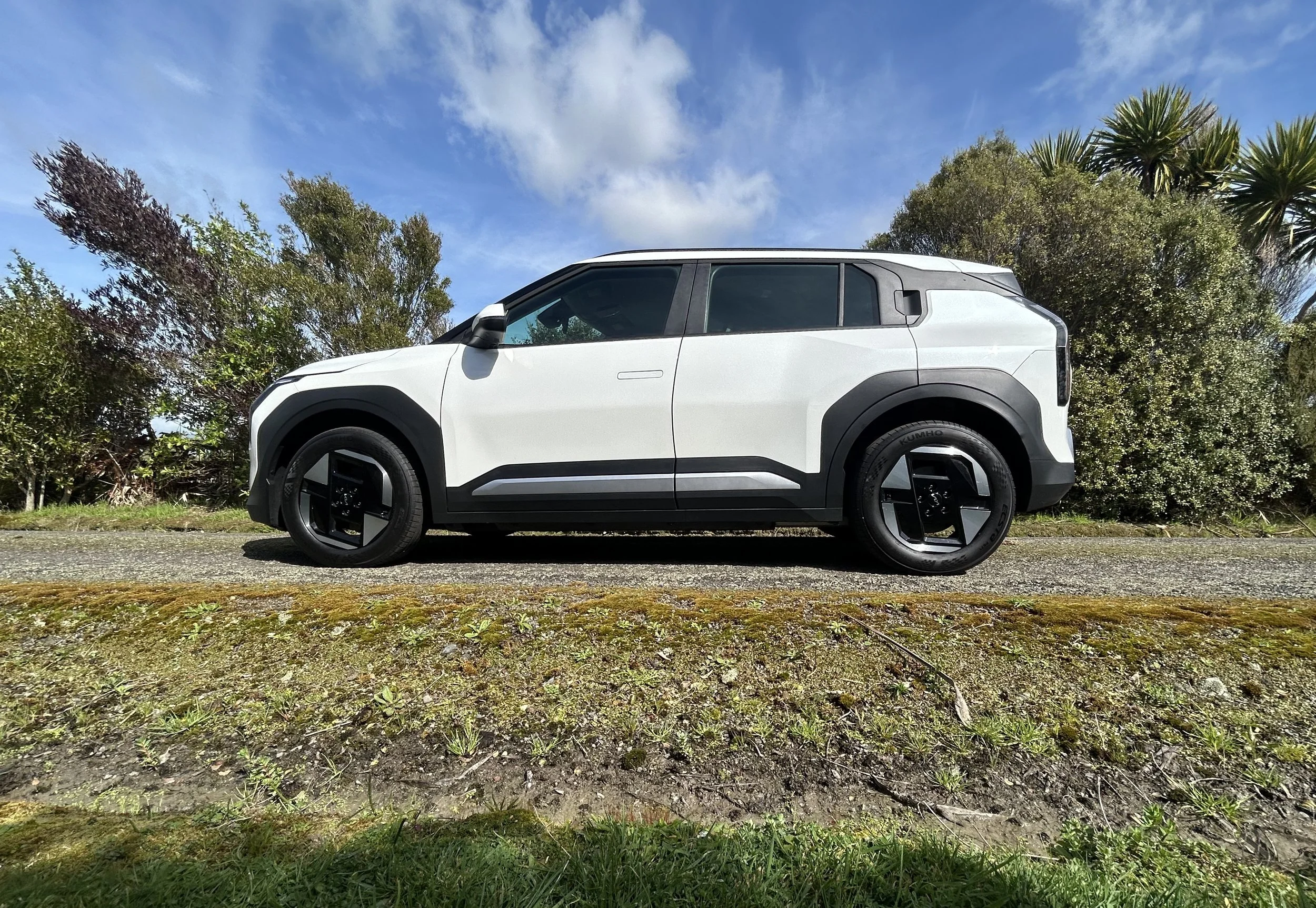
Market leader for the very first time was Korean brand Kia, which achieved a 16 per cent share with 169 sales, including 95 Seltos small SUVs, 24 Rio hatchbacks, and 22 Sportage compact SUVs.

The Seltos was also easily the top-selling passenger vehicle, with the Suzuki Swift hatch and the pint-sized Suzuki Jimny SUV in second and third places. 

And in the commercial sector it was the Toyota Hilux ute that was top model with 59 sales, followed by the Holden Colorado that is on runout prior to the Australian brand exiting the New Zealand market at year’s end.  And Ford Ranger – which has dominated the light commercial market for several years – was in third place with a mere 29 sales. 

And here’s a stark illustration of the state of New Zealand’s rental industry: whereas usually monthly vehicle registrations number in the hundreds, in April there were just two – and they were both Isuzu N-Series trucks.

 Covid Countdown:  April’s 10 Best-Selling Vehicles

Kia Seltos                     95

Toyota Hilux                 59

Holden Colorado          38

Suzuki Swift                  35

Ford Ranger                  29

Suzuki Jimny                 28

Kia Rio                          24

Holden Commodore     23

Kia Sportage                 22

Toyota Hiace                21


Covid-19: How's post-Level Four life for distributors?

How’s our new car market doing – and what’s the sentiment about an environment in which coronavirus and its after-effects seem set to imprint for a long time? The big names of the industry speak.

NT-SportsPurpose-ScrambleApril2018-6011.jpg

TODAY’s move to Level Three precautions allows for improved business opportunity; parts supply will resume, service bays will reopen and, yes, you might even be able to buy a new vehicle.

Yet everything still requires care and consideration. While less restricted than Level Four, the next step down still demands every contactless interactions. Restrictions will still apply with Levels Two – the next step, potentially coming after May 18 if all goes well – and One, though those are definitely more welcoming.

With this in mind, the distributors here – leading distributors were invited to offer thoughts, pertinent to their brands, in respect to this question:

“What are the challenges and potential opportunities as you see them that will arrive in a Level Three Covid-19 new vehicle market. Is that a level at which you can begin to restore your business and, if not, what condition would be required?”

Neeraj Lala, chief operating officer, Toyota New Zealand.

Reason for inclusion? Market leader.

IMG_5404.jpeg

Toyota will continue to provide our customers with an exceptional customer experience under Level Three.

Twenty-four months ago, we revolutionised our business to a new model, and both fleet and private customers have enjoyed the new experience. Under Level Three, our haggle-free pricing for private and fleet customers of various fleet sizes, means the car buying experience is easier as you don’t need to negotiate a price over email or phone.

We have also been operating flexible test drives for the same period which means customers have the flexibility to collect a vehicle and enjoy the experience with their bubble without any face-to-face contact and safe distancing on collection. 

We have expanded our service to offer a home delivery with strict health and safety and social distancing options. Every vehicle collected from a Toyota Store, either for servicing or a new or used vehicle sale, will meet the strict sanitisation guidelines we have put in place to keep everyone safe. 

Our website will provide customers with an easy booking system for test drives and servicing, and live chat to assist those customers who require extra support. In terms of vehicle ownership, our servicing facilities have been organised to comply with alert level 3 standards and will continue to provide their high level of friendly service, looking after all Toyota customers.

Neeraj.jpg


Reece Congden, head of marketing and corporate affairs, Mitsubishi Motors NZ.

Reason for inclusion? Top electric vehicle volume, wide product portfolio

As New Zealand moves to Level Three, the automotive industry will continue to face severe trading conditions.

While it is a return to work in part, it has yet to be fully understood how effective contactless sales will be for a high involvement product like cars.

MMNZ have been undertaking extensive work while we have been under Level Four restrictions, to ensure that our business is not only 100 percent compliant, but also that our dealer partners are ahead of the curve. 

Our investment in digital platforms and engaging customer-facing content has us well placed to start making the transition to contactless sales - even if it’s only a temporary move.

Reece Congdon.jpg

Having said that, car sales is a ‘people business’ and our dealers are an active part of their local communities, so how Kiwis respond to being asked to purchase a car from their living room will be a point of great interest for all brands.

One of Mitsubishi’s key strengths is our high-performing dealer network. We are supremely confident that they will adapt and fight for their slice of whatever pie is available under Level Three. When you match that with the value-focused offers we currently have in the market, we believe that we’re as well placed as any brand to rebound strongly.

(One initiative from MMNZ has been to produce three awareness videos relating to sales and servicing interactions under level Three. No lockdown regs were breached by the way: The NZ operation reached out to friends in Australia, with content shot across the Tasman). 

Simon Rutherford, managing director, Ford New Zealand

Reason for inclusion? Light commercial dominance with Ranger ute 

There certainly will be challenges - for everyone. We are effectively operating in a constrained environment; our showrooms are closed, sales, service and parts operations will be contactless.

We are also operating new systems and process with strict controls and rules around sanitation, social distancing and contact tracing to keep customers and our staff as safe as possible – all this in a market that looks like it has stepped back to 2008 - 2009.

We and our dealers are pretty adaptable and satisfied that the measures and capabilities we have put in place to conduct business in a Covid-19 safe way at Level Three will protect and support our customers and employees.

We see more opportunity than challenge and we are not going to let a crisis go to waste. We see Level Three as a level at which we can only begin to restore our business. We really need to move to a Level Two and beyond quickly, as unfortunately there has already been significant impact. 

Simon Rutherford with RTR car.jpeg

The road to recovery in a lower market in a high cost of capital business presents a longer term challenge.

The conditions that are really required are for the broader economy and the industry to be supported with “back to work” domestic stimulus packages to get people spending and investing and so the industry can continue to contribute to GDP and be an engine room of recovery. 

Longer term, the opening up of borders and in turn strengthening tourism and hospitality will be key.

As regards to our operations in Level Three? On the vehicle sales side of the business, selling and delivering in a “contactless” and remote fashion is nothing new for us – we do this under normal business circumstances for new and used vehicles, for different customers in different segments of the market - from retail to fleet, government and rental and across our network to support nationwide deliveries. The opportunity we have had is to get better and more efficient at operating in this way. We have been operating on-line sales in Level Four. Now we can deliver those vehicle in a contactless manner. 

Our on-line and contactless capabilities are much fitter now and we will continue to pursue improved capabilities as we go forward. Although this is just one of the ways we can conduct business and support the varying needs of our customers, it will not be the only way we transact business. We will certainly be exercising that capability more than we were.

IMG_5412.jpeg

In addition we anticipate that there will be a demand bias towards our top performing Ranger and Transit commercial vehicles as our primary industries and construction sectors lead our economic recovery and the need for moving goods remains.

Separate from our special offers we have also launched a peace of mind finance programme that offers a nil deposit plan and the first three months paid for by Ford and a further three months deferral option for customers if they want to take that up. This is designed to give our customers peace of mind as we all try and climb out of this challenge together. This in addition to the help we are offering existing customers financing through MyFordFinance.

On the service and parts side of the business, many of our dealers already offered pick-up and delivery services ahead of Level Four.  All 31 dealers within our national dealer body will be supporting the new pick-up and delivery service we are launching. We will have nationwide coverage for that. 

We have implemented robust hygiene and social distancing measures alongside contact tracing and will maintain this also when we get to level Two, when customers can enter our premises. At that point we will also have point-of-sale that will help orientate customers to social distancing and hygiene enablers we will provide.

Dean Sheed, General manager, Audi New Zealand

Reason for selection? Prestige sector giant. 

The opportunity that moving to Level Three provides is a partial move back to a full business for all our dealers nationwide. 

I say partial because it’s a move to contactless business across the operation, working within the Government/Worksafe health and safety guidelines and maintaining a major focus on keeping our staff and customers safe and supported as we transition back to normality.

Partial business also means some form of revenue to support the decimated financial results of March and April for both ourselves and our dealer partners. 

The businesses will be focussed on the physical servicing of customers’ cars and the ongoing virtual customer discussions in other areas of the business.

Dean Sheed.jpg

The challenges are clearly the new modes of doing business under the umbrella of Level Three: Stricter controls of cleaning and sanitisation across each business, contactless servicing, contact tracing of everyone within the business and the use of personal protective equipment by our team. All within the new health and safety guidelines implemented by the dealerships.

We are allowed to deliver presold cars to customers which must be handled according to the new protocols as well which will assist in driving some vehicle sales volume under Level Three.

This volume is likely to remain small until Level Two and only with Level One will all facets of the dealerships resume some form of normality.

Restoring the businesses fully will happen over time - many months - as the demand side of the car market is restored through normal purchasing by private and business customers. The economy needs to restore itself on the demand and supply side.

If you have been thinking of buying a new vehicle, now is a great time to purchase given solid inventory and very motivated dealers nationally.

Greg Leet, General manager Volkswagen NZ.

Reason for inclusion? Dominant European marque

It certainly won’t be normal trading and I’m certain we will all be in that position. Likewise, we will all be thinking that the safety of our customers and our staff will remain paramount.

We have been doing a lot of work with the dealers in respect to their ability to comply to Level Three trading conditions regarding personal protective equipment, sanitation and contactless services. Our dealers are well up to speed with that.

What kind of level do we need to get to before we contemplate normality? I think we need to be well out of Level One. Even the two levels below Three will still have social distancing, will still have people with very heightened levels of awareness around hygiene and sanitation. So while some of those will be relaxed from a Governmental view, I think society will remain pretty in tune going forward. 

greg leet.jpg

There will be sectors of business that, I think, will be in a strong position after lockdown. There will be businesses that will be severely impacted. The tourism sectors will be under immense pressure. But I think industries like food supply and any essential services are going to be still very active.

Purely from a volume perspective, our forecast for the balance of the year would still have passenger at roughly two-and-half times our light commercial volumes.

We’re predicting anywhere between a 30 to 40 percent drop in the market. In a global sense, some markets are more severely impacted than that, and some might well be less impacted.

There are times when a car will be seen as a luxury. But we also see possibility that customers might decide to buy a new vehicle with the money they might have previously have kept aside for an overseas trip. They potentially might well want to travel, but locally, and that might involve a new car.