Kia Tasman TXS roadtest review: Rough see, smoother sailing
/If you can weather the styling storm and focus on the design, then the Tasman imparts as a very credible concept. But maybe that’s a big ‘if’.
How much: $62,690
Powertrain: 2151cc four cylinder turbodiesel, 154kW/440Nm, eight speed automatic, four-wheel-drive.
How big: 5410mm long, 1930mm wide, 1870mm high, 3270mm wheelbase.
We like: Impressive handling and ride; well-sorted interior; thoughtful design touches; refined powertrain.
Not so much: Doesn’t look good from any angle; questionable headlight performance; lack of side steps; less grunt than some.
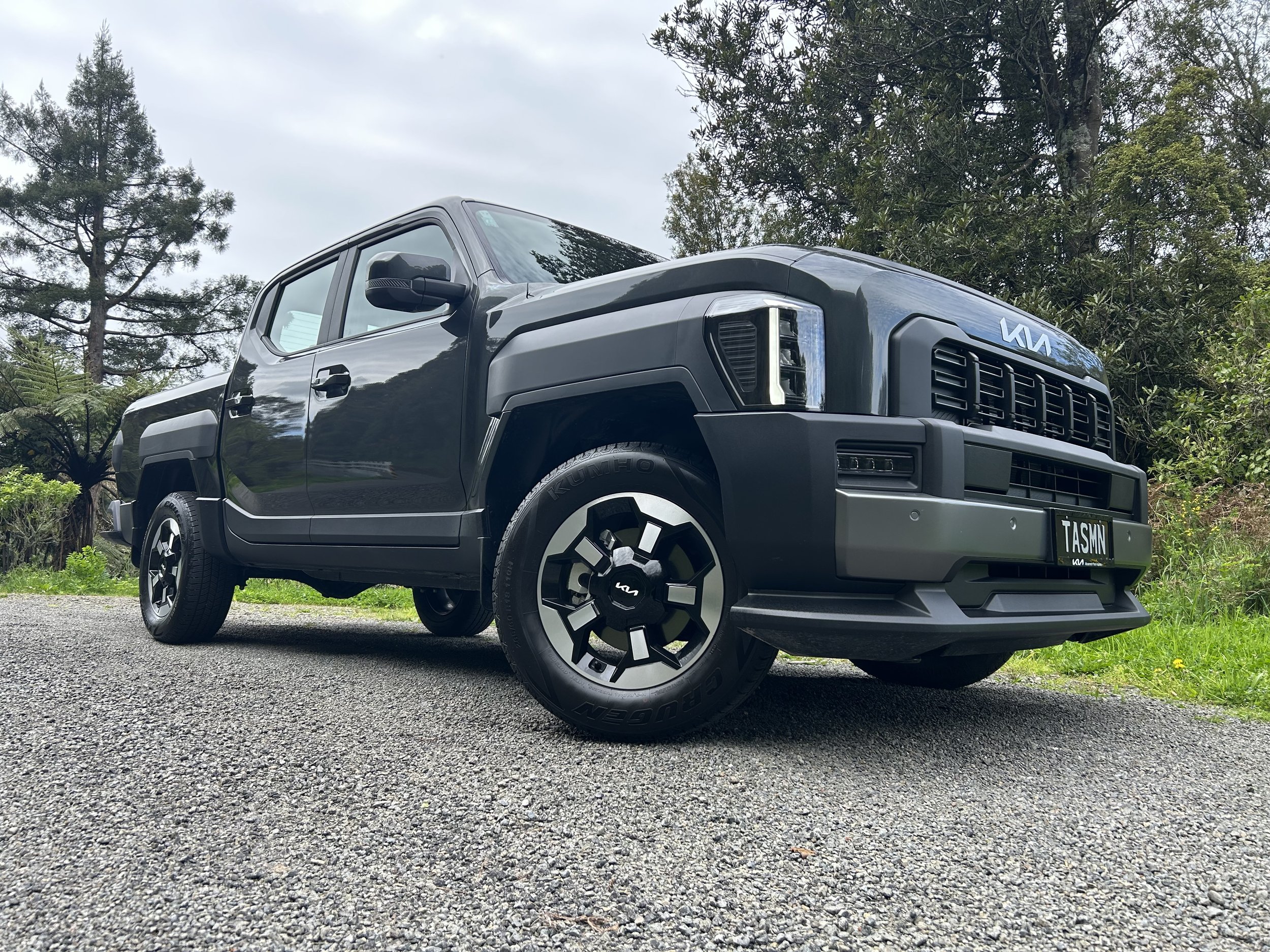
IF ever anyone needed reminding how design and styling are two different things, here it is: Kia Tasman.
More than a year since the international unveiling, it’s questionable time has softened the blow. The big question still hangs: Did it really need to be so confrontational?
The maker unequivocally says ‘yes’. Kia global design boss Karim Habib’s strong defence of going in boots and all on this unforgivingly utilitarian and boxy styling bases on several considerations.
Although this is their first ute for public consumption, Kia has history of making small and medium trucks, including some equally brutal-looking product for South Korea’s military. So there’s that. Beyond, his people were also committed to wheel out an industrial design exercise absolutely built on function. You’d have to say they’ve done that.
Design-wise, it works. Truly, so much about the packaging is clever and thoughtful. And when most utes on the road today look exactly the same, it’s arguably quite prescient for Kia to come up with something that emphatically steps clear of adopting almost all the regular cues.
But in doing so … well, if you’ve seen it, so you know. Risking being consistently told it’s a visual munter is one cross to bear. Another might be trying to explain why it has no obvious continuity with any other Kia. How many people are really up for that? Frankly, it became tiresome for me during the single week of use.
Absolute facial improvement would at the least require re-locating the lights inboard, though simply gas-axing off the nose would be better. Think about adding a bullbar; that doesn’t less then brutality, but certainly adjusts the visual impact. If Kia hasn’t already done it for you, have the wheel arch flares body-coloured.
Also, seriously consider a light colour to a dark one. As much as that tan-beige in the palette is very much from the pages of Janes’ big book of ‘Russian military trucks of the Cold War-era’, it somehow suits. Over to you to add some stencilled markings.
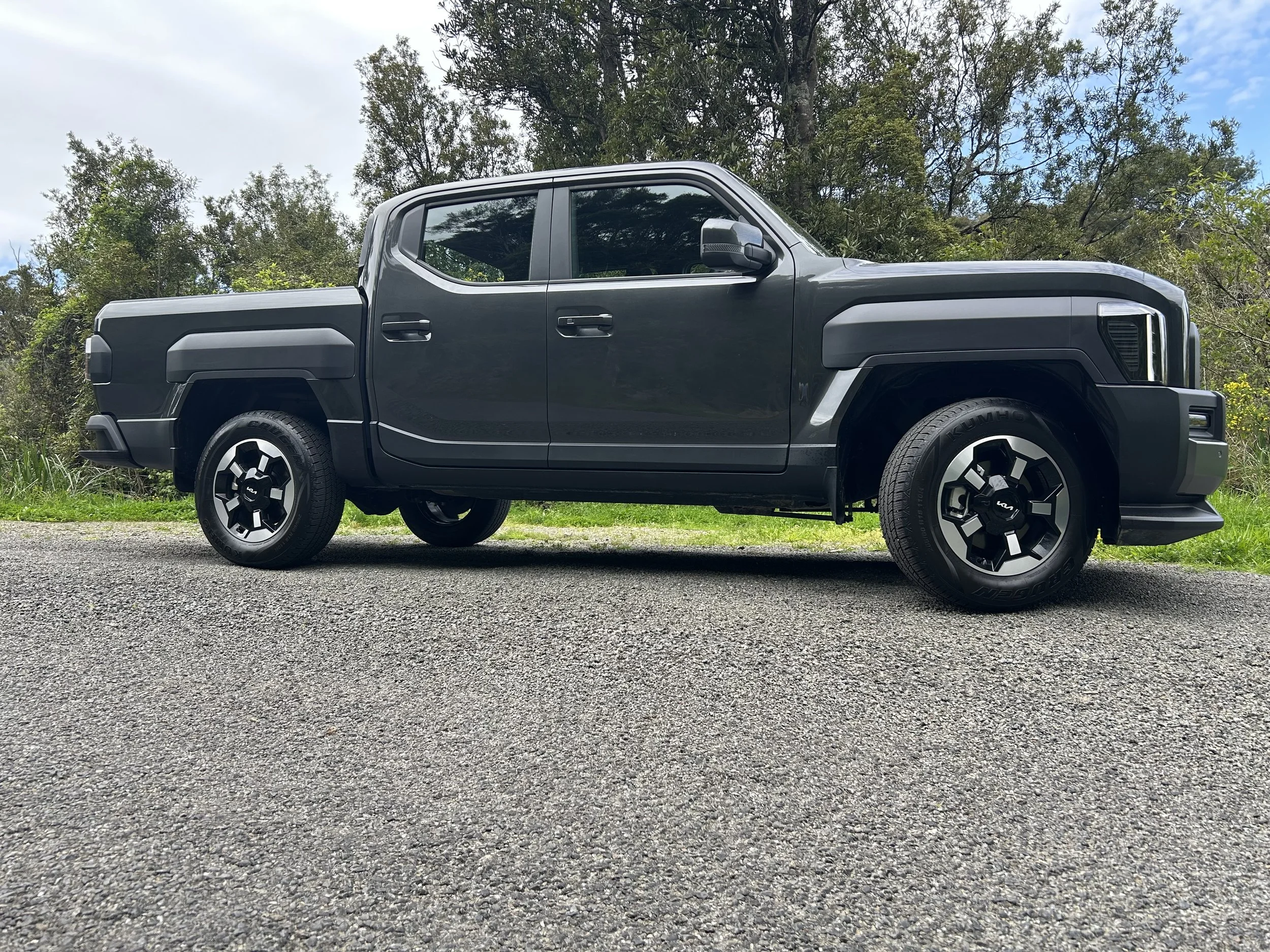
Even with those ideas, it’s still likely to stay controversial. As much as there’s merit to putting on a brave face, you wonder if those who forecast customer taste could really be stretched this far are now in different careers.
But it is what it is, and moving on from that, it is at least fair to point out that it does what it sets out to do.
Utes are supposed to be practical, robust and, in dual cab five-seater format as here, up to being as useful in a car-replacement role as their traditional load-hefting duty.
Pitching in with three body styles - the family-focussed dual cab pick up formats here already, the basic single- and dual-cab editions for worksites and farms yet to come - across five model grades, all - for now - with a single engine with eight-speed automatic gearbox, Tasman is a big effort to jemmy ute fans out of their Rangers, Hilux, Tritons and the China-made offers, notably from JAC, LDV and GWM.
It’s a well-engineered piece of kit, clearly more car-like than some, but generally not lacking in the core competencies you’d expect out of any one-tonne.
Sure, the engine could do with a bit more torque and I’m concerned about the headlamp performance, plus the pricing of the top edition seems a touch ambitious.
But, nonetheless, the six years’ development - and the four years of pitching prior to that out of Australia to get a green light from Seoul - are not in vain.
It likely has a solid future even if, quite remarkably, sister make Hyundai doesn’t seem to want part of it. Rather than develop their own version of Kia’s effort, they’re partnering up with GM for a wholly different model. Interesting.
While Kia obviously threw away the styling tips guide, they did at least follow form in respect to basic engineering. Suspension is independent at the front with double wishbones and coil springs, while the rear is a traditional leaf arrangement.
Braking is all disc, unlike some segment rivals that continue to offer a disc/drum combination.
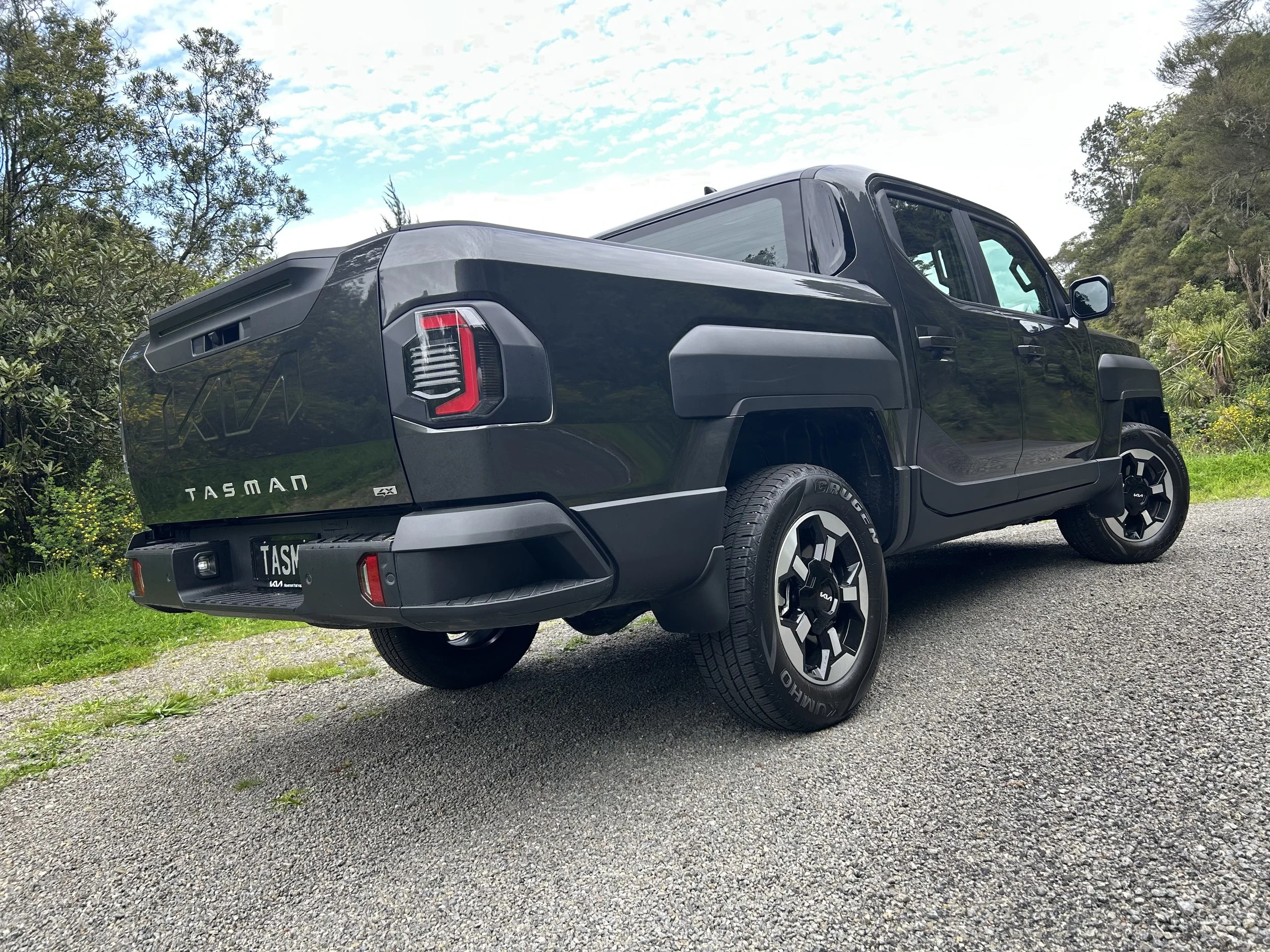
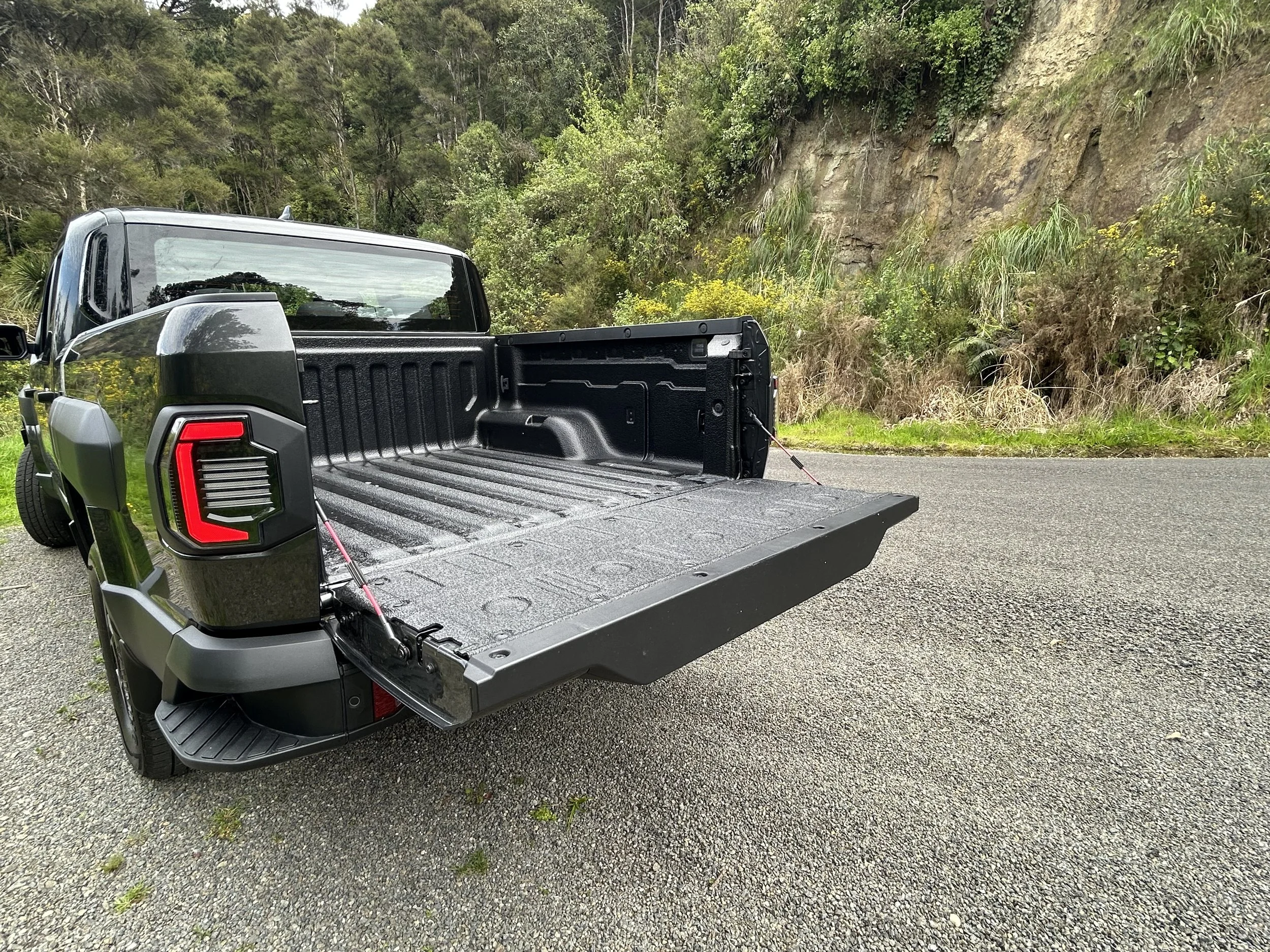
The load bed dimension is up to snuff, with a generous l1512mm in length, 1572mm in width, and 540mm in height, with Kia quoting a VDA capacity of 1173 litres.
The TXS is a mid-family choice; siting $10,000 above the entry TX and $4k beyond the TXR, but flying in clear air below the $69,690 X-Line and $79,690 X-Pro formats.
It is the cheapest of the three versions that are surely likely to be used less as an outright workhorse than as a family friendly all-rounder.
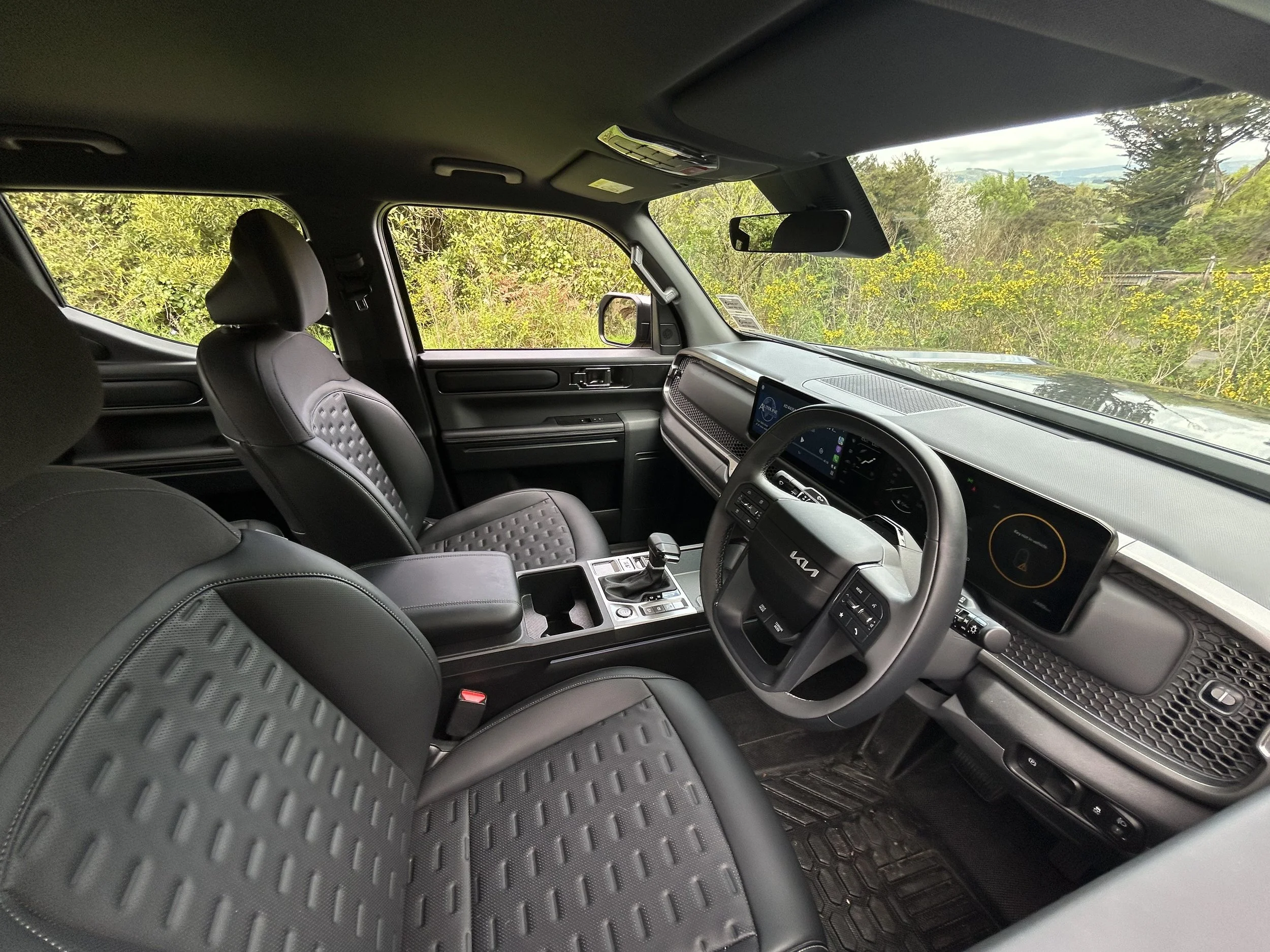
It has a reasonable count of car-like appointments with a wireless smartphone charging pad, dual 12.3-inch instrumentation and infotainment screens, and a separate 5.0-inch screen for climate control functions. Over-the-air software updates are also part of the deal.
The driving position delivers a steering column with manual reach and rake adjust and a steering wheel that is ovoid, more to be on trend than for function, as it still manages to block out much of the ventilation control panel.
Otherwise it is mainly ergonomically sound, the switches and controls are generally well located and attention to detail is good.
The cabin is decently sized, with good seat comfort. Legroom in the back is a bit tight if you have tall occupants up front, yet it’s not a squeeze.
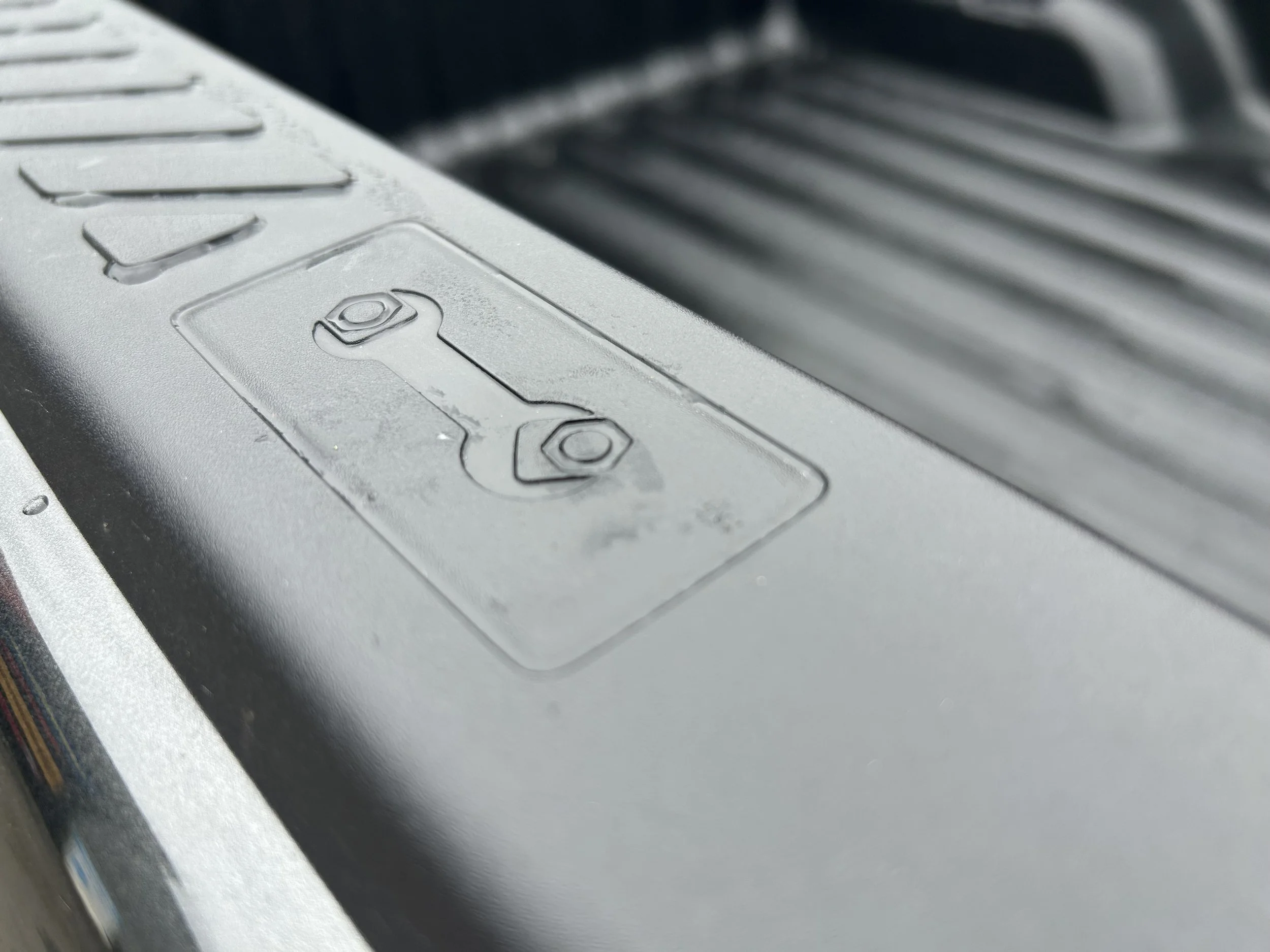
A nicely-damped tailgate, steps at the rear corners of the tub, both first seen on the Ranger, and some impressively tough-looking tie down anchors are positives, also the power socket in the wellside.
That no Tasman comes standard with side steps might seem a bugbear, because it’s a bit of a climb into the cabin even for the tall. Buying any sort of sports bar in the cargo box will also be an after-market expense. There are 45 specific Tasman accessories.
A shame only the top grade editions achieve the wheel arch locker box; it’s too small to be all that useful, but is a nice thing to show off.
What sorts all utes is how well they meet fundamental consumer expectations. What’s the go if asked to tow, tote and tackle gnarly Kiwi conditions?
I’d say the Tasman conceivably stands a fairy decent chance of acquitting well. But some of that opinion is based on gut feel rather than hard-out certainty, because of the test vehicle’s specification and how it provisioned.
Towing is a great way of sussing a ute’s mettle. Tasman is built on a ladder-frame chassis and braked capacity is listed at 3500kg (as per most in the segment). An integrated trailer brake controller is standard. But a towing fixture is an extra. The press example lacking this seemed a poor decision. So that box remains unchecked, more’s the pity.
Any getting a grip of off-road aptitude was limited in part by a Kia NZ request that, due to the press fleet being on a very tight turnaround, “please keep the truck on the road - or very light off road duties if it's to venture anywhere off the beaten track.”
Realistically, there was no chance of serious off-road adventuring, given the TXS isn’t the variant most crafted for absolute beyond-seal hardiness.
Good points are that ground clearance is listed at 252mm - pretty decent for any ute, as you’re reminded whenever egressing the cabin (it’s quite a climb for the less than lanky) - and water fording 800mm.
Limiting factors are the factory tyres and it lacking the differential locking and a full suite of off-road assists, including that useful new-age tool, a frontal ground-view camera. For that stuff, you need spend up on X-Line and Pro-X.
There’s also that big plastic bib spoiler to consider. The latter is needed to optimise pedestrian protection, a high priority with our national independent safety auditor, ANCAP. It worked: They gave it a five-star.
But that accreditation is just for the ‘bib’ models; the X-Line and X-Pro that do without - because it would impede them achieving the best off-road approach angles for climbing steep slopes - also go without an ANCAP score.
That likely doesn’t make them less safe in event of a smash, but it’s also pretty obvious that a device designed to flick pedestrians onto the bonnet in event of contact stands chance of being knocked around if you are negotiating rough ground. There’s no obvious way to remove it easily for excursions, so you either steer carefully or simply steer clear.
Anyway, while all this didn’t inhibit me taking it to a farm, which it jogged around quite nicely, sticking to formed tracks seemed prudent. That kept me from trekking mud inside. The cloth trim and nice carpets seem more suited to surviving the school run that resisting icky sludge.
Out in the general roadscape, Kia’s locally tuned suspension programme provides generously; it sits with Ranger in provisioning a driving feel that will appeal to those who prefer passenger product to trucks.
While the Tasman isn’t an SUV, its dynamic qualities are surprisingly close. It holds the road well.
Unladen ride quality is usually a weak point for utes; choppiness is generally unavoidable when a rear end is set up to take load. But Kia has found a way to circumvent that; it is not quite limo-serene, but neither does it jiggle and dance as readily as many when the tray is empty. Conversely, when weight is aboard, it doesn’t feel the burden.
Use of position sensitive dampers enables even temperament even in hard cornering; the steering has a natural feel and it doesn’t buck or shimmy under simulated emergency stopping.
As always, you do need to take care in the wet, but it doesn’t present any nasty surprises. The traction and stability control systems are largely unobtrusive and challenging to find to fault with.
You might come to conclusion that Kia’s decision to restrict this model to 17-18 inch wheels (depending on variant, this one being on 265/60 R18 footwear) is a bit underwhelming in respect to the look.
I wouldn’t disagree and neither does the franchise closest to where I live; they’ve been divesting their stock of the rims and tyres chosen by the factory in favour of after-market choices they argue are more visually appropriate. I don’t disagree in respect to how they lift the look for the better; Kia’s alloy wheel stylings on the truck are weak. But having briefly driven one, I’d also say there’s a trade-off on ride quality and overall refinement.
As much as it is a bit narrow and the tread pattern seems more risk-prone to being muck-affected than a more off-road-sorted choice, the OEM Kumho Crugen rubber does seem well-suited to seal and gravel, alike. This and the mechanical refinement will be appreciated for distance driving; everything points to that being a task the Tasman is better sorted for than many utes.
There’s no escaping the safety and driver assistance technologies required to achieve a five-star ANCAP rating. Many are annoyingly interventionist, forcing deactivation with each ignition cycle. Such is life.
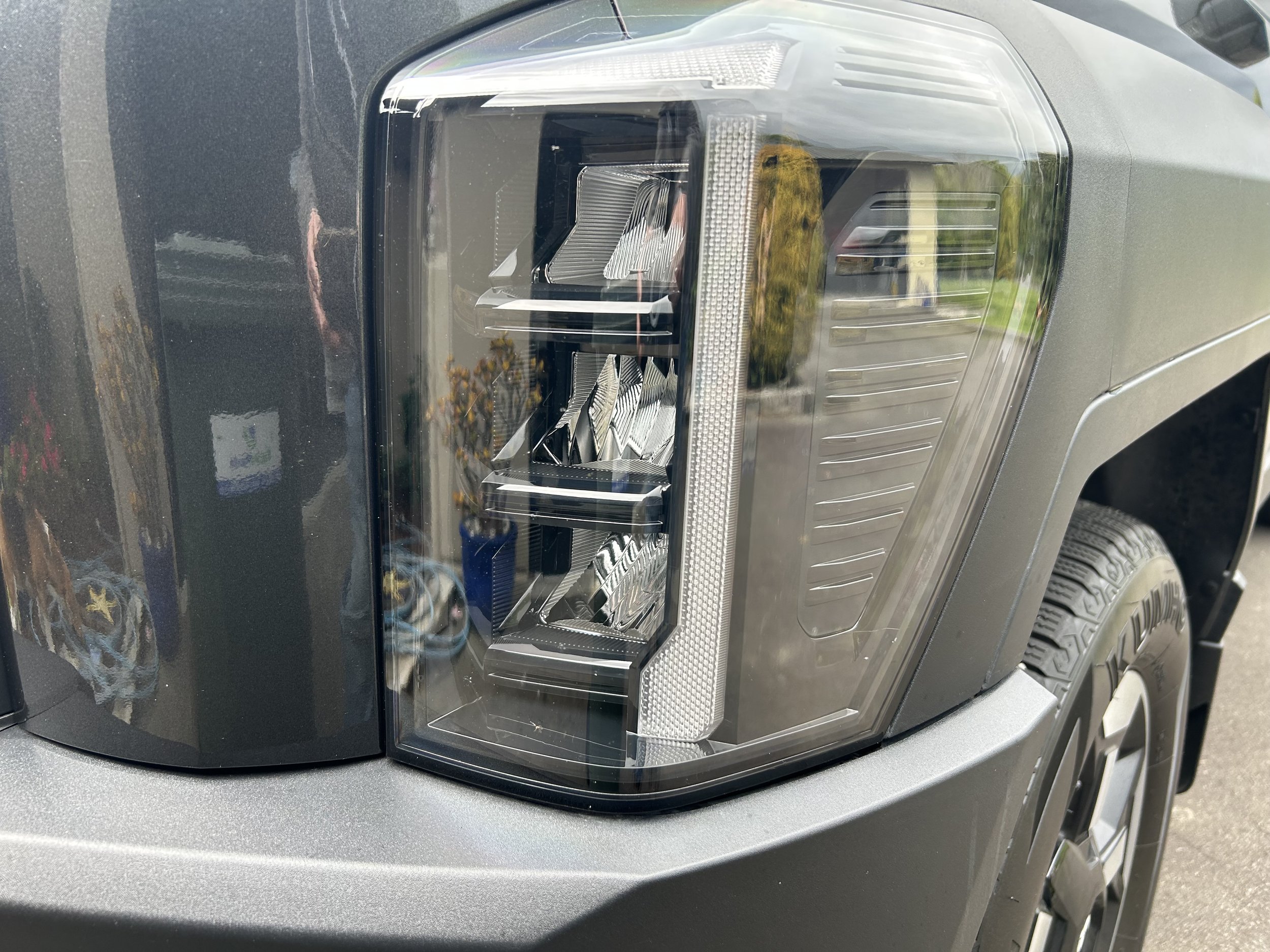
The vertical lighting that lends to that very unique face is not just for show; these are the main lights. The orthodox looking lamps integrated into the front wheel arches are for fog.
The lamp’s inner design is extremely intricate, and involves three LEDs either side. The top two suffice for low beam, a third joins in for high. Illumination in either setting is not fantastic. If in a low-lit 100kmh zone you might be wishing for a better spread and reach. Consideration to adding after-market accessories might be worth exploring.
The other issue for the headlight arrays is that, by being located right on the front corners, they seem highly susceptible to coping damage when off-roading in places where bush-bashing has a literal meaning.
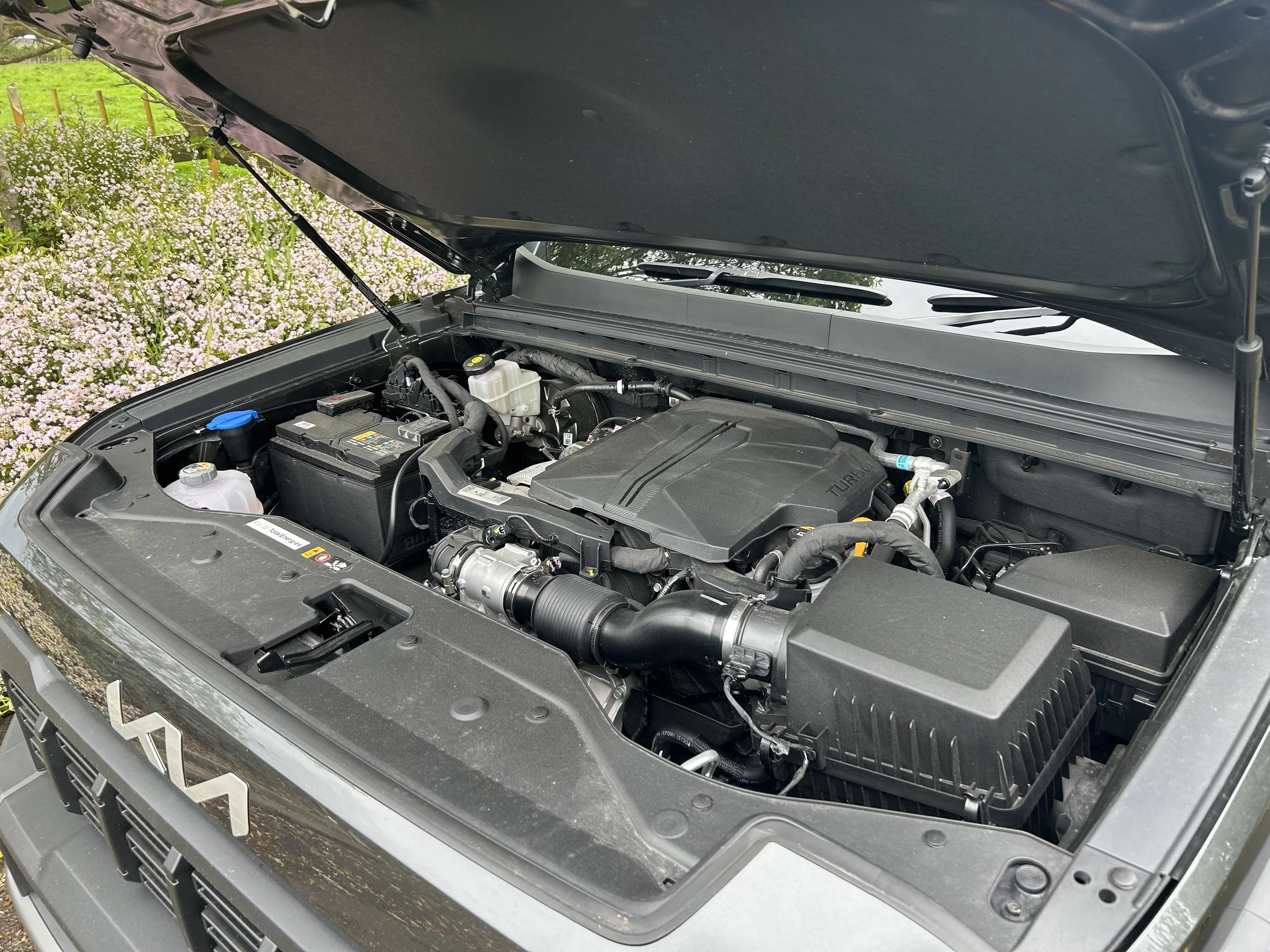
Kia slotting in the 2.2-litre four-cylinder was a no-brainer. This is an engine Hyundai Motor Company has used for years in all its sports utility wagons, it has quite a history and is well-regarded for having impressive refinement and good economy.
Fuel consumption is listed at 8.1 litres per 100km on the ADR combined cycle while the fuel tank holds 80 litres.
Whether it is totally up to this new task is an interesting one. They’re certainly put in the hard years to attune it to the role, right down to concocting a heavyweight cooling package.
So, generally speaking, I’d say yes - but I’d also suggest that, ultimately, how it acquits will depend on the operational intent.
That it offers 3kW/10Nm more than the V8 that until recently ran in the Toyota LandCruiser 70 Series’ is a boastfulness that doesn’t paper over that torque outputs are weaker here than from many rival utes.
The spread of gear ratios assists in maintaining smooth power delivery across the rev range. There’s minimal step-off lag and it doesn’t shirk when hoofed for overtaking. But if you are using it properly as a ute, it could turn out to be one of those engines that is more set to thought of as sufficient rather than a sizzler.
Going diesel is a ‘safe’ start move, because it’s still the fuel that is the life blood of this sector.
But the brand has flagged that hybridisation is the next step, ahead of a switch to plug-in power, and for that to happen, it will need to consider a petrol engine as the base.
At time of test there was a flurry of reporting that Kia has nailed down a 2.5-litre petrol-hybrid powertrain that has just gone into a popular Hyundai, but overseas, with intent to add it in 2026.
Tasman is already offered with a 2.5-litre turbo-petrol in other markets, producing 207kW and 421Nm. That engine was ruled out for Australia - and, because of that, for NZ as well - in the face of impending emissions regulations both countries will adopt at end of this year.
The new hybrid petrol is a development, adding in a dual motor ingredient. A P1 motor is responsible for engine start-up and battery charging; it also contributes to the acceleration. A P2 motor, also in the transmission, is then responsible for performance and regen-braking.
Complex? Yes, but it makes more power and torque yet promises to be more efficient than the diesel, with 6.6L/100km on the combined cycle quoted in respect to its application in the Santa Fe SUV.
Kiwis are starting to show interest in that kind of technology, and perhaps it’ll be another useful edge over the opposition.
In a category when two brands hold the majority of share, and everything else is being fought over by a whole lot of others, the Kia needs to be noticed.
Moreso than ‘seen’, perhaps, because any decision-making based on the look alone is likely to go badly.
The kindest sentiment I heard about the test example was that it looked like a life-sized Lego.
How much substance there is to talk of a major reshape being already under way for introduction ASAP has yet to be proven, but I wouldn’t be surprised if that occurred. Even achieving a touch of continuity with other Kias would be a start.
Utes are popular, but the sector is saturated; choice is diverse, but old favourites still rule. None of the four in September’s top 10 were fresh entrants.