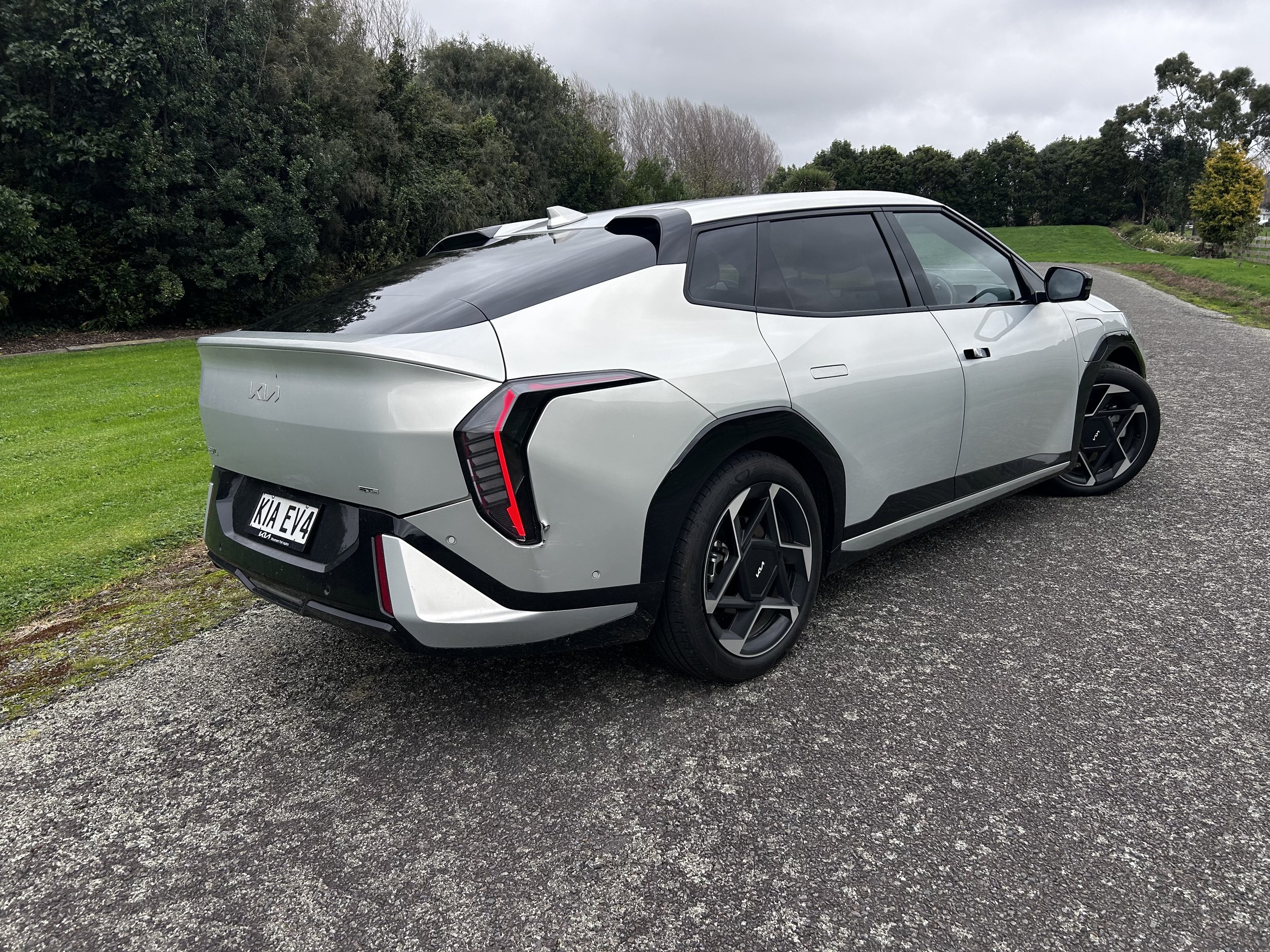
Hyundai Ioniq 5 Series II Active road test review: Quietly plugging on
/Four years on from introduction, this part hatch, part family SUV remains an icon of sensible EV tech.
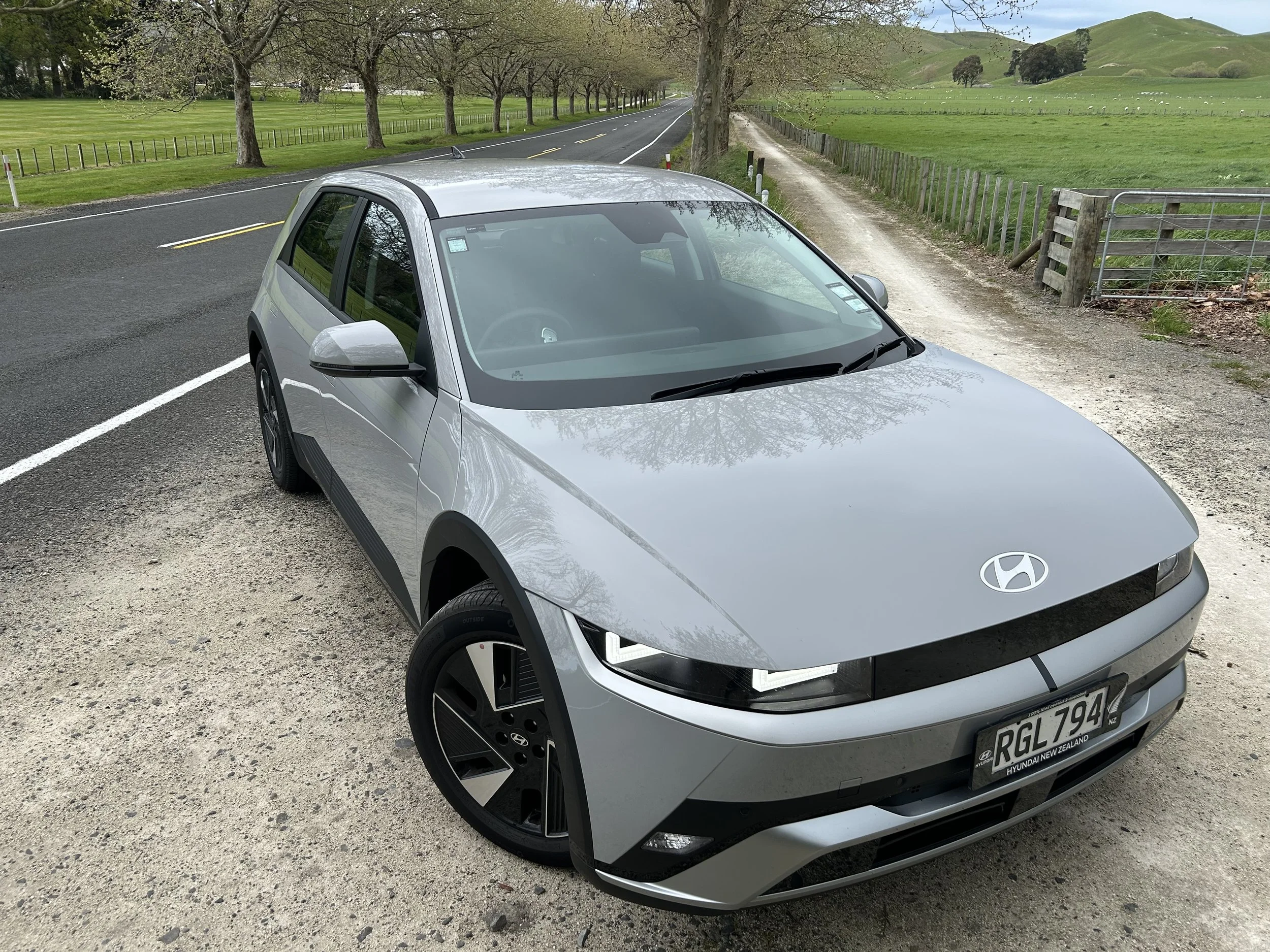
Price: $89,990.
Powertrain: Single electric permanent magnet synchronous motor; 168kW/350Nm; rear-wheel-drive; single speed, 84.8kWh lithium-ion polymer battery with water cooling.
Dimensions: Length, 4635mm; width, 1890mm; height, 1600mm.
We like: Improved range; smart specification; more fluent ride quality; gaining rear wiper.
Not so much: Rear hatch hefty and latch location is awkward.
ONE of those small things that potentially weighed against it always achieving a wholly satisfied buyer has been remedied with a mid-life refresh of the Hyundai Ioniq 5.
Though my voice was among many calling for inclusion, realisation this Series II now provisions a feature that perplexed in its absence from the original did not come straight away. I guess because it is such a fundamental.
It was only toward the end of a day that started out sunny then turned to shower did it twig.
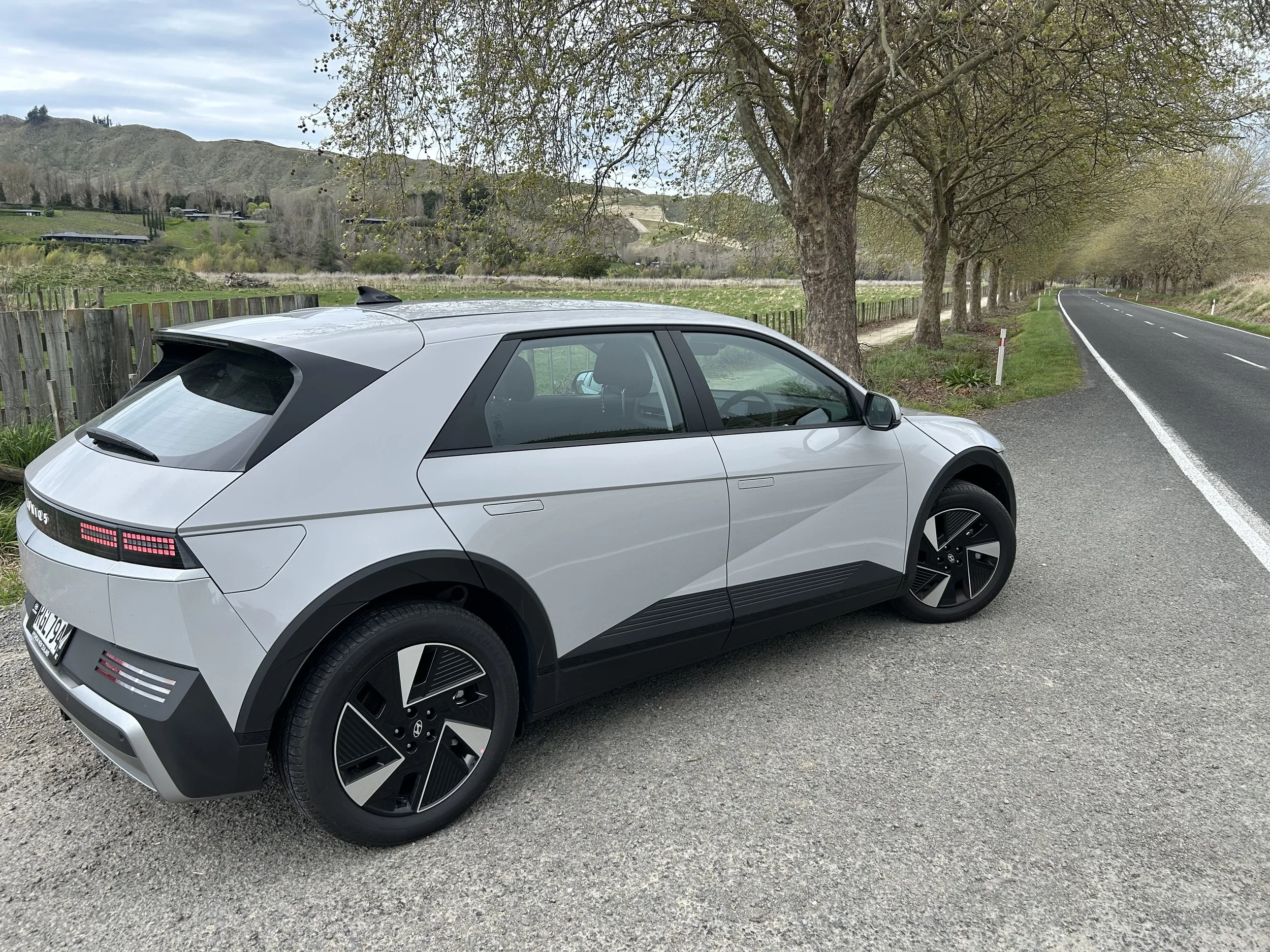
The rear screen had, of course, obscured. It tends to in this model once the road gets wet. But now, it’s easy to restore rearward visibility. You just swivel click the wiper arm.
This car now has a rear wiper.
So hooray for that.
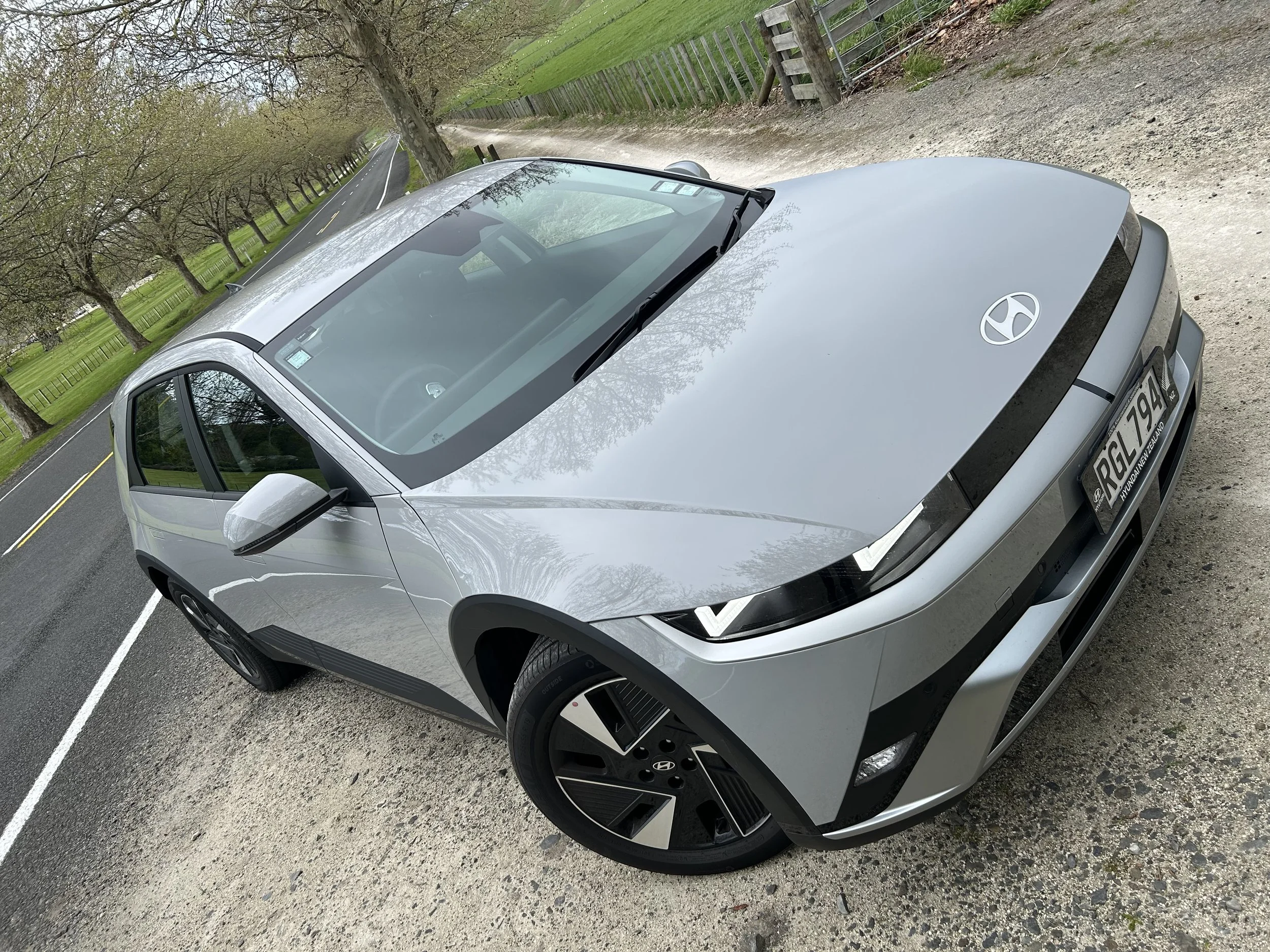
Hooray, also, for other improvements. Ostensibly, save for clearly picking up a new wheel styling, the refreshed model looks like the same car that been around for four years.
In driving aptitude, it has changed. Or, more accurately, refined. Updates to the suspension and structural components see to it becoming smoother and less resonant across all surfaces; it’s also less rattled by gravel.
There is also improvement to the sense of refinement; the Ioniq has always been a quiet car, well-insulated from extraneous noises. It also all the moreso now. And it goes further through gaining a bigger battery.
All this really should make a difference to how it is considered by electric aficionados, but in this climate, who can really tell? Electric interest at the moment just isn’t as strong as it was. As strong as it should be.
Personally, I’d suggest those who liked it before will find reason to like it even more, now.
But then, I’ve always held this model in high regard, as the first in the Korean manufacturer's next generation of electric cars, it really made huge impression.
The prescience of a larger-than-it-looks crossover built on a new dedicated EV platform, with high-voltage battery technology to allow super-fast charging remain obvious.
Almost ahead of its time when new - insofar that the charging infrastructure then wasn’t as useful to it at first as it is now - it still stands tall in a far more complete and complex sector now, with cutting-edge technology still uncommon in its class.
Securing the only national motoring award considered wholly without commercial involvement, the New Zealand Car of the Year as decided by the NZ Motoring Writers’ Guild, was a shoo-in.
That was back in 20211 when electric vehicles were very much on a roll. For this car to be the third electric in a row to nab the national title was a strong message about how the market was shifting back then.
Ioniq 5 also being the first winner to be available under the Government’s Clean Car scheme, with the entry edition being eligible for a $8650 rebate, was also celebrated.
The Guild’s decision proved prescient. In 2022, this car also scooped big global awards - design of the year, best electric and world car of the year. Sales here took off. The future looked bright. And it was, until … well, surely you know what’s happened since the end of 2023?
Ioniq 5 positioning has changed since. The turmoil’s of 2024 triggered discounting; once that stock was cleared, Hyundai New Zealand’s entire electric line up was rationalised. To their credit, even when sales were declining, they went ahead and released the family star, the astounding Ioniq 5 N. On the other hand, that the Ioniq 9 still remains absent seems telling.
Still, at a time when EV sales now are still only slowly picking up, that they’ve kept commitment to supply the volume-generating ‘Five’ in its mid-life facelift format is a plus.
So, now it’s a new chapter. Battery size and ranges all increase, the styling has revised and, yes, prices have been pushed around.
Sensibility and pragmatism often drive electric car purchasing. With that in mind, the edition on test seems a good consideration, though the price it commands also requires careful thinking.
In the old days, the best buy was that $79,990 rear drive because it got a rebate. However, that versions wasn’t the best Ioniq 5. The trim was in keeping with the price and because it had a 58kWh battery, the range wasn’t dramatically good.
That cheapest choice is a stronger position now, with a 63kWh battery, but it still seems logical to aim higher if you can, though not as high as was once the case.
Back when this shape was new, anyone chasing best range from the available choices really had to gravitate to the rear drive Elite, which eked an unsurpassed 481 kilometres return from a 72.6kWh battery. The catch? It left just 410 change from a $100k outlay.
Better news, now, for those who prioritise range above all else. The model on test is also single motor rear-drive, it is has the same torque and 8kW more power than the previous Elite.
But in now feeding off an 84kWh battery, the WLTP-attested driving range now stands at 570km. And the sticker is $10,000 lower.
So what’s the catch? The clue is in the model designation. What’s on test here is an Active, the trim level that sites below that for the Elite.
Most obviously, instead of full leather you get wool yarn and eco-processed leather for the seat upholstery. Some other appointments also go by the wayside.
Still, overall, it’s hardly a big downgrade. One strength of Ioniq 5 is that across all its versions, the interior is clean and feels high-quality.
Still holding true now is comment made back when this car entered the market. Namely, if you had never been in a higher grade, you wouldn’t know you were missing out. It remains a highly comfortable, fully competent and solidly furnished car.
A roomy one, as well. Four years on, you still find yourself getting used to the size. I’d forgotten how difficult it is to comprehend this until you see one in the metal, glass and plastic. In pictures the five-door design looks to be a ‘regular’ hatchback, but in reality it's much larger; wider than a Tucson medium SUV and longer than the previous generation Santa Fe, which was a seven seater.
It’s still a magnet for a diversity of opinion. Some see it as daring, some not. But it shouldn’t be cursorily dismissed, because it is brimming with interesting details.
But space continues to be a sales pitch, and why not? Thanks to the distance between the front and rear axles and the flat floor, it’s an airy zone inside; plenty of area in which to stretch out front and rear and soaring head room, too.
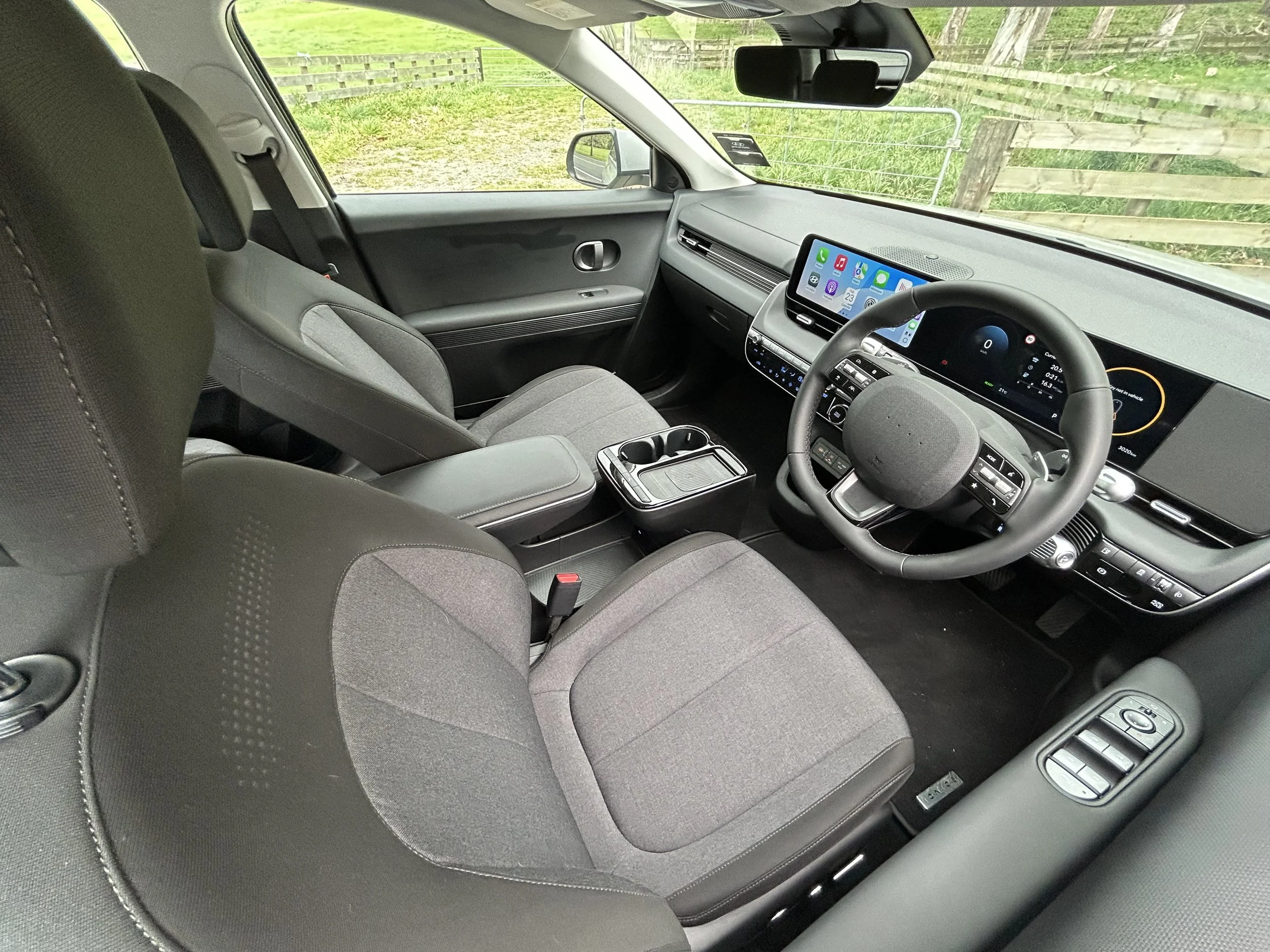
The minimalist approach to all the controls engenders sense of the massiveness of the environment.
The interior still feels as modern as you'd expect, with twin digital screens for driving information and media or navigation. The operability for these has been simplified a touch and seem more intuitive.
The displays are also beautifully crisp and connectivity is improved by AppleCarPlay and Android Auto now being wireless; a much neater integration than the previous tether-required arrangement. You can still cable link your phone if needbe - it has ports for Africa - or alternately just use the handy wireless charger.
It’s not only the attention to detail and design execution; there’s an air of perceived quality.
A three spoke steering in place of the original two-spoke one makes no difference in practical sense, but just looks smarter. Perhaps because so many other makers have followed suit, the drive selector, a thick stalk on the right, doesn’t confuse me as it is used to.
Back when this car was fresh, I’d occasionally either mistake it for the indicator wand or twist it the wrong way when seeking Reverse or Drive. Not now.
Boot space is generous, if not quite segment-leading, at 520 litres with the rear seats in place, rising to 1580L with them down.
But in any version of Ioniq 5, extra boot space can be freed up by sliding the rear seats forward and passengers can also alter the angle of the backrests for comfort. Meanwhile, the rear seat backs fold down to form a flat surface with the main boot floor.
The parcel shelf is usefully retractable, giving you the opportunity to hide contents. A colleague with kids says it can make installing top tethers for child seats a touch finicky. It also has a handy 57 litre storage space under the bonnet for small items.
Setting speed records is clearly not the priority for any of the mainstream Ioniq 5s; that’s very much the job for the N car.
This example reminded that the everyday model is about imparting as a cocoon of calmness. It does this brilliantly. It also has more of driver-centric feel to it now.
With the original car, the steering didn’t provide more feedback and the suspension wasn’t always in tune with surface condition; it was one of those curious cars that had you wishing it was firmer in some circumstances yet softer in others.
This time? Hyundai hasn’t been too specific about the updates to the suspension and structural components it says have been effected to improve refinement and driving feel, but they’ve certainly done the job. It just feels more driver-connected and seems more rewarding as result.
As with all current electric cars, you cannot escape that it is heavy, just under two tonnes. But this mass is low down between the wheels and the Ioniq 5 handles well, with little body lean in corners; it’ll just flow through those so long as you don’t fall into the trap of rushing too hard into them. That’s when you learn how good the brakes are. The N is still the one for absolute fun, but at this level you get a good balance of comfort and fun.
The electric car world has changed a lot since this car introduced, but all in all, it continues to impress as much as it did when first met. That’s quite an achievement, given the pace of advances by so many involvers. And also its maker.
Seoul is on a real roll; it makes clear that ‘as good as it gets’ is not enough. And yet, thus car, the first big effort, still stands as one of its best.