Suzuki Fronx road test review: One for the B team
/Not the most flairful car from this brand, nor the most fun. But its fundamentally functional and should be cheap to run.
SMALL crossovers and sports utilities are everywhere these day; keeping the Suzuki Fronx from being just another face in that crowd is it arriving as something ‘new’ to an existing fanbase.
Baleno is a car lost to Suzuki’s history. It left the local scene three years ago and has never had a direct replacement until now. In the interim, Suzuki had been vague about what would coming, if anything was coming at all.
But most Baleno drivers kept a level of faith any cargo cultist would be proud to hear of.
Baleno-ists basically went into hibernation, retained the cars they had, quietly confident Suzuki would see them right. First shipment of Fronx was largely spoken for before it landed.
Even though Suzuki NZ says Fronx isn’t a direct replacement for that previous car, the fact that used stock is suddenly rich with dated, low mileage and undoubtedly carefully loved Balenos is surely no coincidence.
Fronx factors that correlate with what has been previously presented are easy to list. As with the old choice, the new is again offering buyers something larger and rather more spacious than the smaller and mostly cheaper Swift. It is thrifty, handily sized for the urban centric duties most likely to be a priority and relatively easily fathomed in respect to its operability.
As much as the look and technology ingredients are somewhat more modern, that side of things is kept in careful check. Look in vain for genuine flashes of the ingenuity and creativity. There is really nothing in this car that stands out, little here that hasn’t already provisioned to other Suzukis or rivals.
It slipping in as a new, yet familiar, consideration is true to Suzuki credo. With rare exception - the upcoming electric Vitara arriving next year, the utterly eccentric yet chic Cappuchino two-seat convertible of the 1990s - all its cars tend to be careful progressions of those they replace.
If there’s drawback to this approach, it might be sense from those outside the fan fold that it’s a new choice arriving with a foot too firmly in the past.
This is a period in which when car development is racing at incredible pace. For decades, the accepted development time for a new car was five to seven to years. Now some makes in China are boasting about how their creations were but sketches 24 months ago.
There’s risk in moving too fast. On the other hand, might Suzuki’s tendency for careful methodology also leave it struggling to keep up with the latest?
A friend who knows cars, but is not familiar with Suzuki product, asked in all seriousness if this one had landed midway through its product cycle. In a way, that’s not entirely wrong. Fronx launched in India, where global production is handled, at the start of 2023.
Still, Suzuki clearly understands its customers for this kind of car. That it's conceivably not the best of its type to drive, nor absolutely the nicest to sit in, might not factor as reasons to dismiss it. Rational merits might well overpower emotional shortcomings.
With Fronx, one curiosity is that it is the car as you see it at the kerbside is a bit more chic and cheery than the one you slip into to drive.
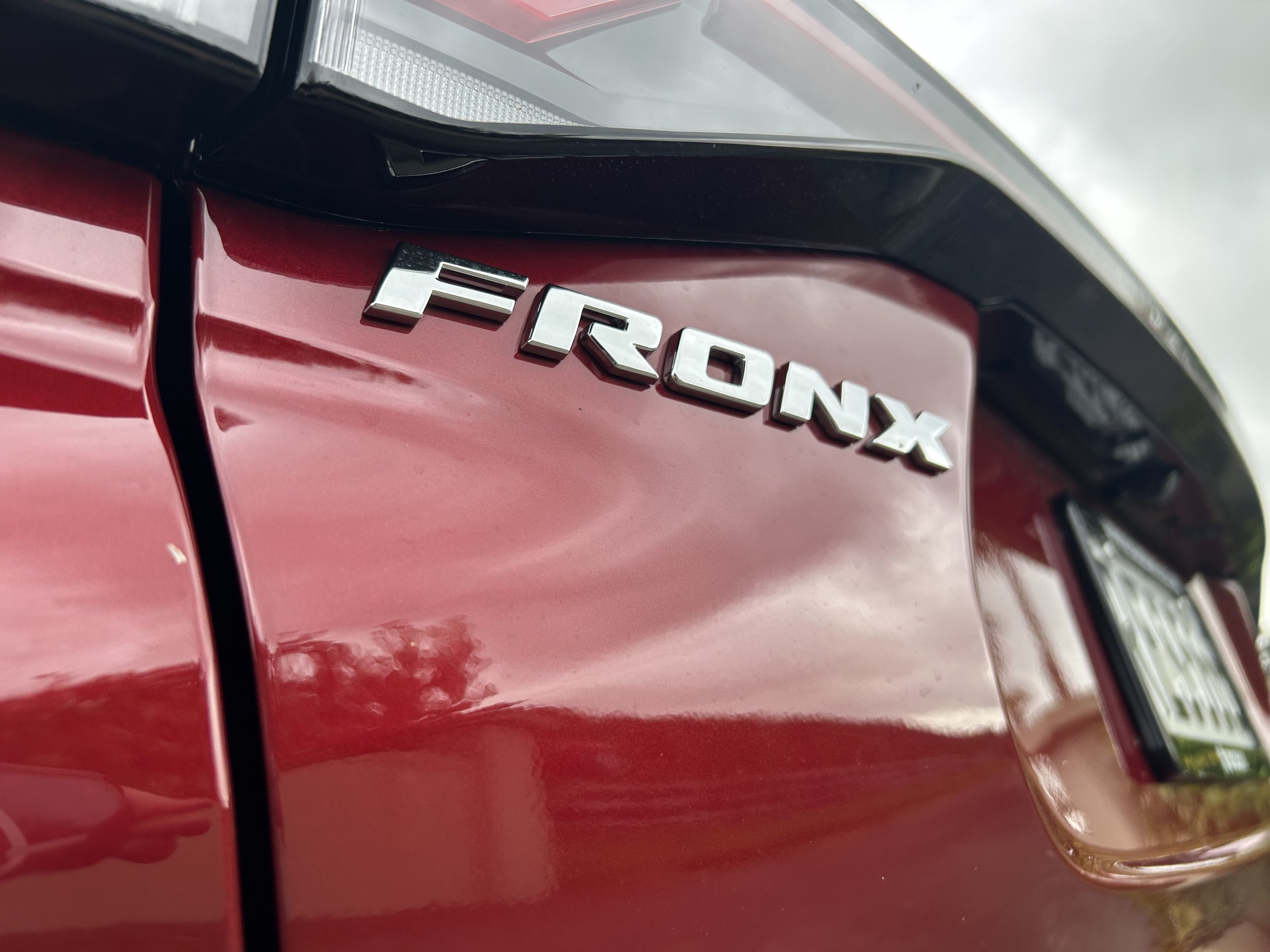
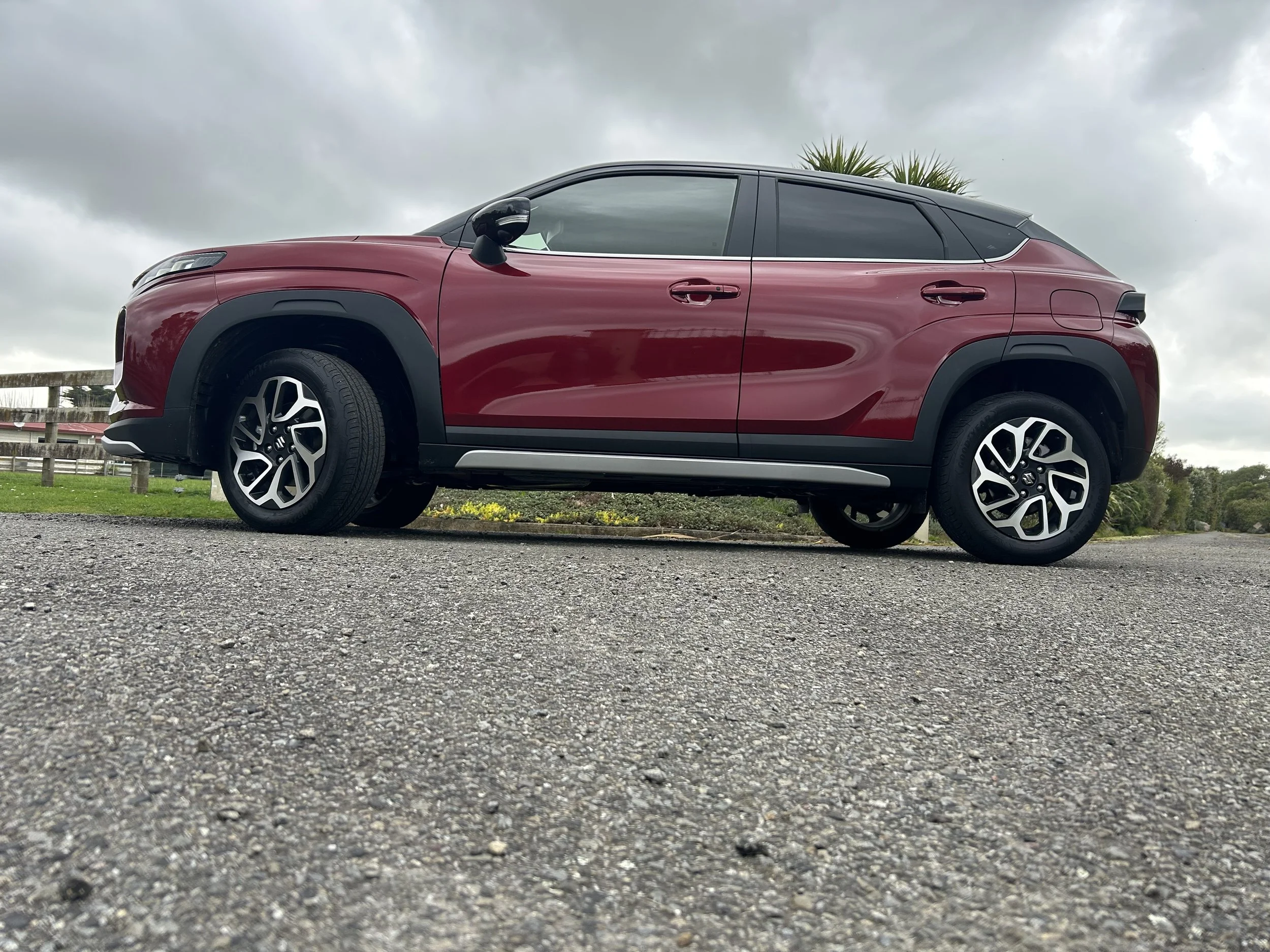
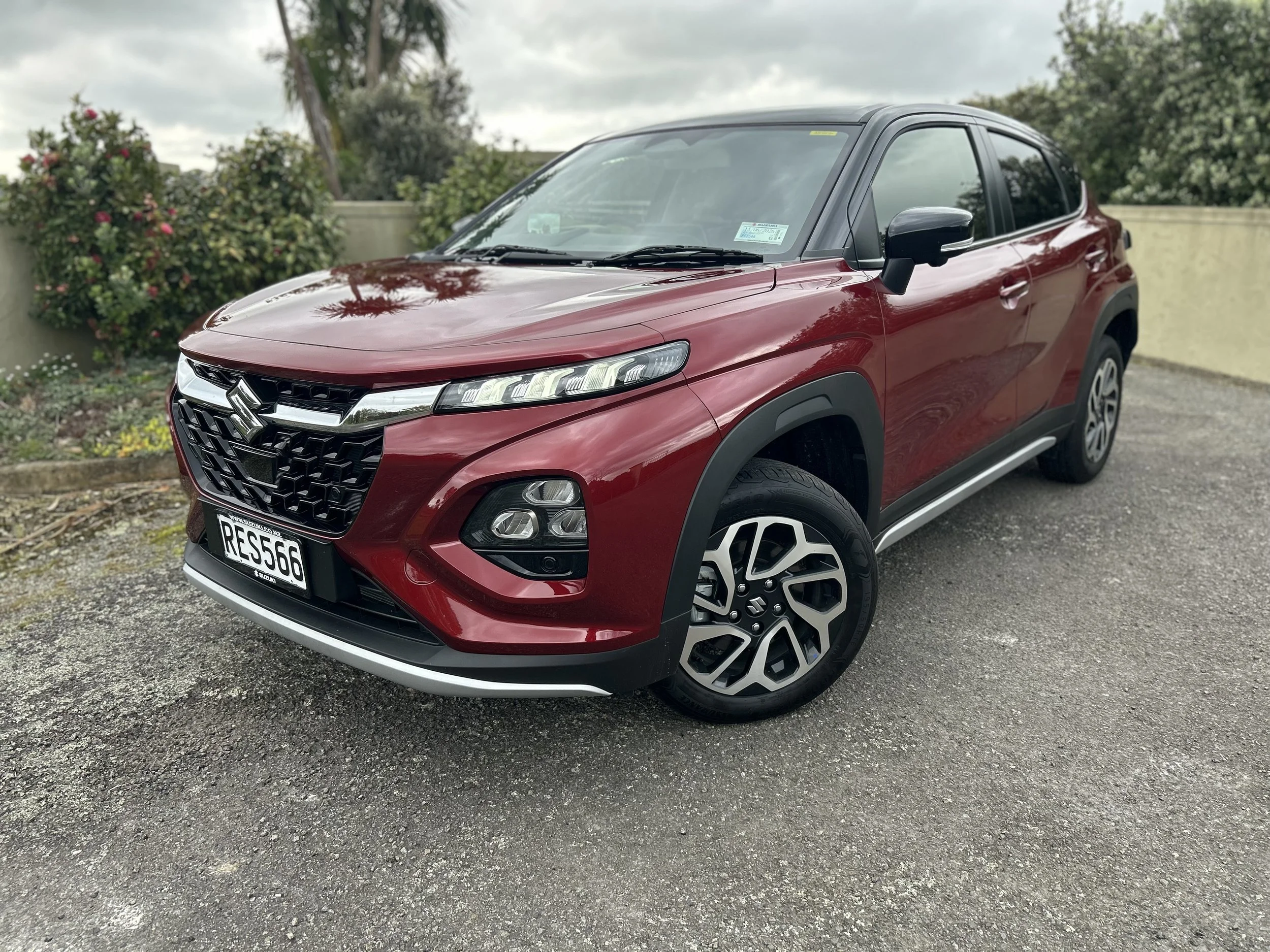
The exterior styling is best demonstration of Suzuki becoming more bold it how it wants to be seen by the rest of the world. It’s a lot less nondescript than Baleno, with a strong profile. The nose and rear are nicely rendered, the stance confident.
There’s less to get excited about when slipping inside. Hardly any effort seems to have gone into making the cabin a classy environment.
As much as implementation of a haptic screen brings it into this current decade, the displays directly ahead of the driver seem to have been up-cycled from the previous one.
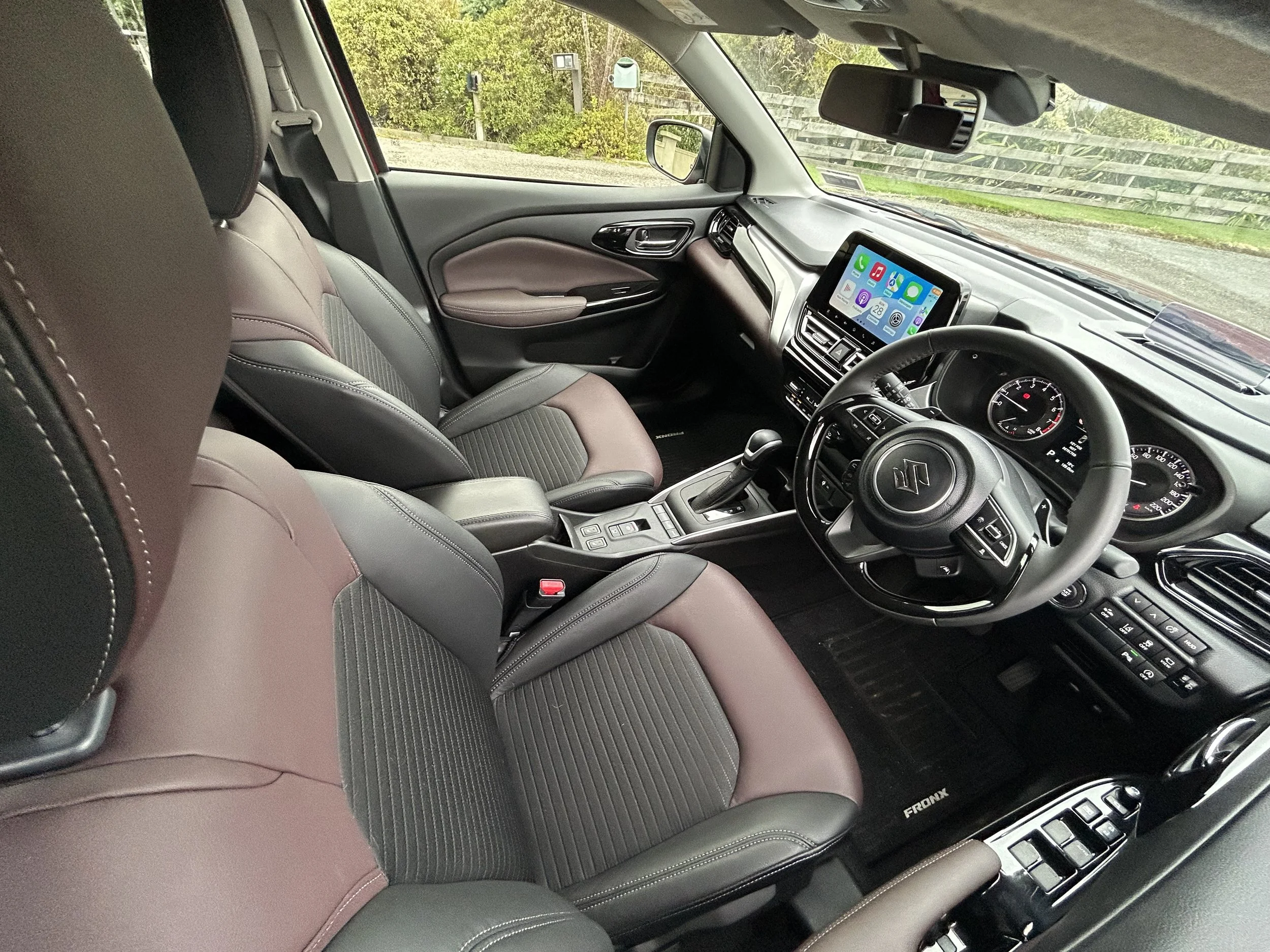
Suzuki has a thing for using hard, shiny plastics which manage to feel robust and a bit cheap all at once. That’s not to suggest abject shoddiness - everything is bolted together with meticulous precision - but some panels and the headlining feel flimsy and it’s more about delivering solid functionality than feeding delusions of grandeur.
There's nothing wrong with a bit of down-to-earth durability, but when China Inc is now-producing cars in this price sector with much more flair (and every latest convenience), Suzuki nowadays stands risk of being considered a bit fuddy duddy.
Some people like this. They could well be the same audience that keeps gravitating to an obvious competitor, the Mitsubishi ASX, which really IS an old design, heading toward 17 years’ service, yet still doing well. On the other hand, if they also consider something like a Kia Seltos or the Chery Tiggo 4, then they might find more modernity.
With Fronx, just the provision of dull trim colours seems to give impression they’re happy to serve an older crowd. The faux leather black and burgundy trim is certainly an interesting choice, but far from the most vibrant.
Specification-wise, it goes for a younger crowd. In addition to that 9.0-inch touchscreen, it gets a flip-up head-up display, wireless charging, wireless Android Auto and Apple CarPlay, front and rear parking sensors, a 360-degree camera, and an electric handbrake — a Suzuki first.
The big central screen is the big modern touch; though slightly low-resolution, it works quite well and it’s helpful you can bypass Suzuki's own software with your phone. In front of the driver, there's a pair of clear, plain analogue dials.
Given the car’s relatively pert dimensions, it’s pleasing to discover that the cabin doesn’t too badly for occupant space, not just up front but also in the back.
As a tall person, I had to have the driver’s seat pushed well back, but while that reduced legroom in the rear seats, it din’t make it impossible for a couple of adults, who had no complaints about the headroom, either. Fitting three across the rear bench would be a squeeze but not an utter impossibility.
The design of the boot is less impressive. Baleno in its own right was marked down as adequate in offering 355 litres. Fronx having an even more constrained 308 litres with the seats in place, and 605 with them dropped, is about equivalent to what some other compact cars now offer in true boot space alone.
Fronx does have a false floor, with another space below, and at the launch no-one seemed sure if the volumes of those areas was counted or not. It’s quite useful having a floor base that can be set to a lower level or used as a separate compartment.
It lacks a spare wheel, regardless that there seems to be allowance for one. Instead, the cavity is taken up by a large polystyrene insert that holds a small pump and some gunk, but also has a cut out into which you could conceivably put more stuff.
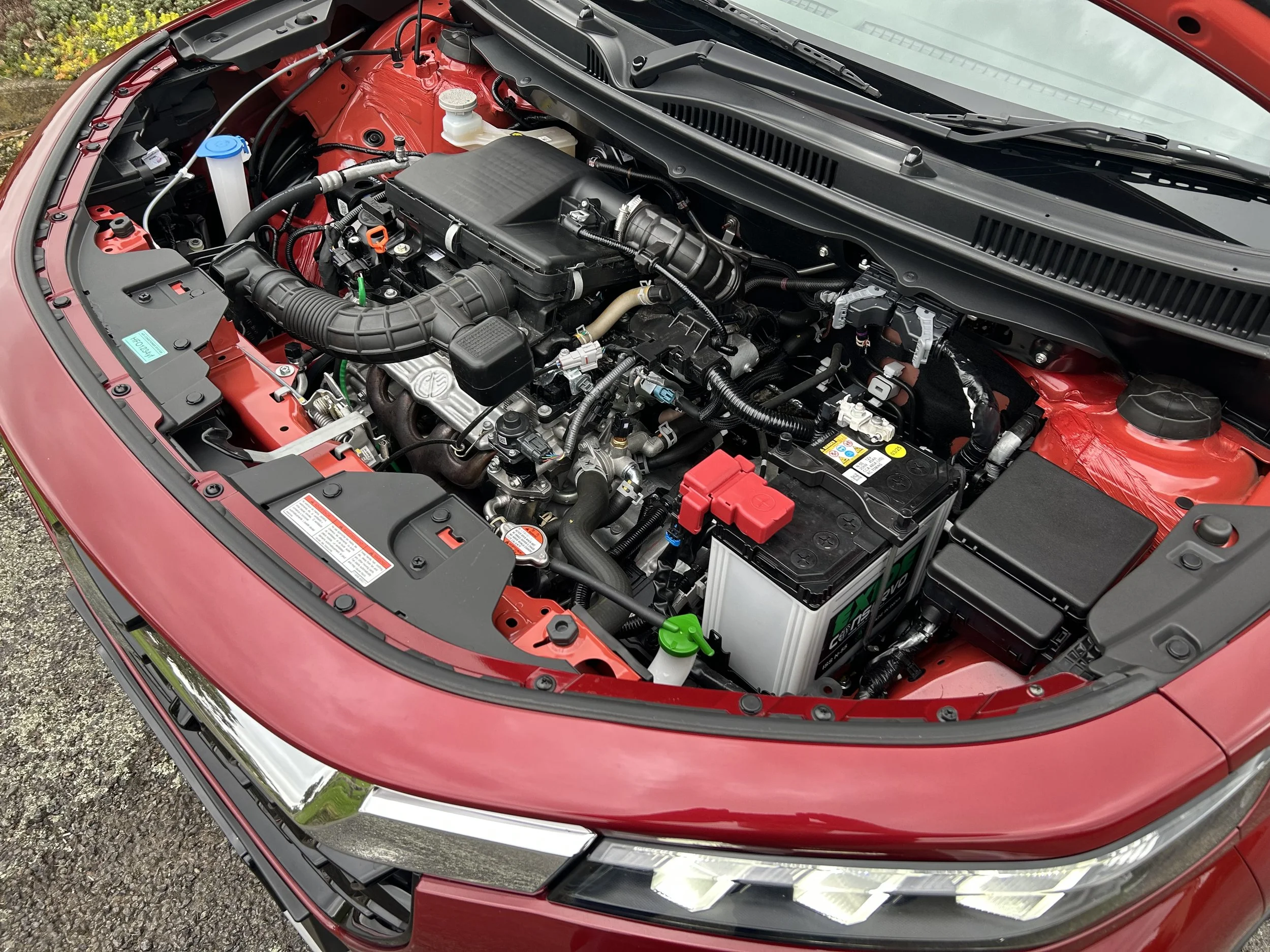
Speaking of capacity, there’s the engine. A 1.5-litre four petrol is a large-ish power plant by Suzuki standards and also for this platform, with previous incumbents being a 1.0-litre triple turbo and a normally-aspirated 1.4.
Married to a six-speed automatic, this elevates to being a mild hybrid, using a 12-volt system with integrated starter generator. This allows the electric motor to start the engine and assist it during acceleration, Suzuki vows up to 55Nm additional torque is in store.
If it is, then that extra zest is carefully quarantined, because this example was disappointing in its overall performance. Suzuki engines are generally quite enthusiastic, and certainly Baleno got a ripper with that three-pot Boosterjet engine. Unfortunately, this one has little of that mojo.
I’d found that at launch, but thought then it was an outcome of the cars used then being very fresh from the boat. The tester arrived in what I would have thought was fully seasoned state, but just didn’t feel much better.
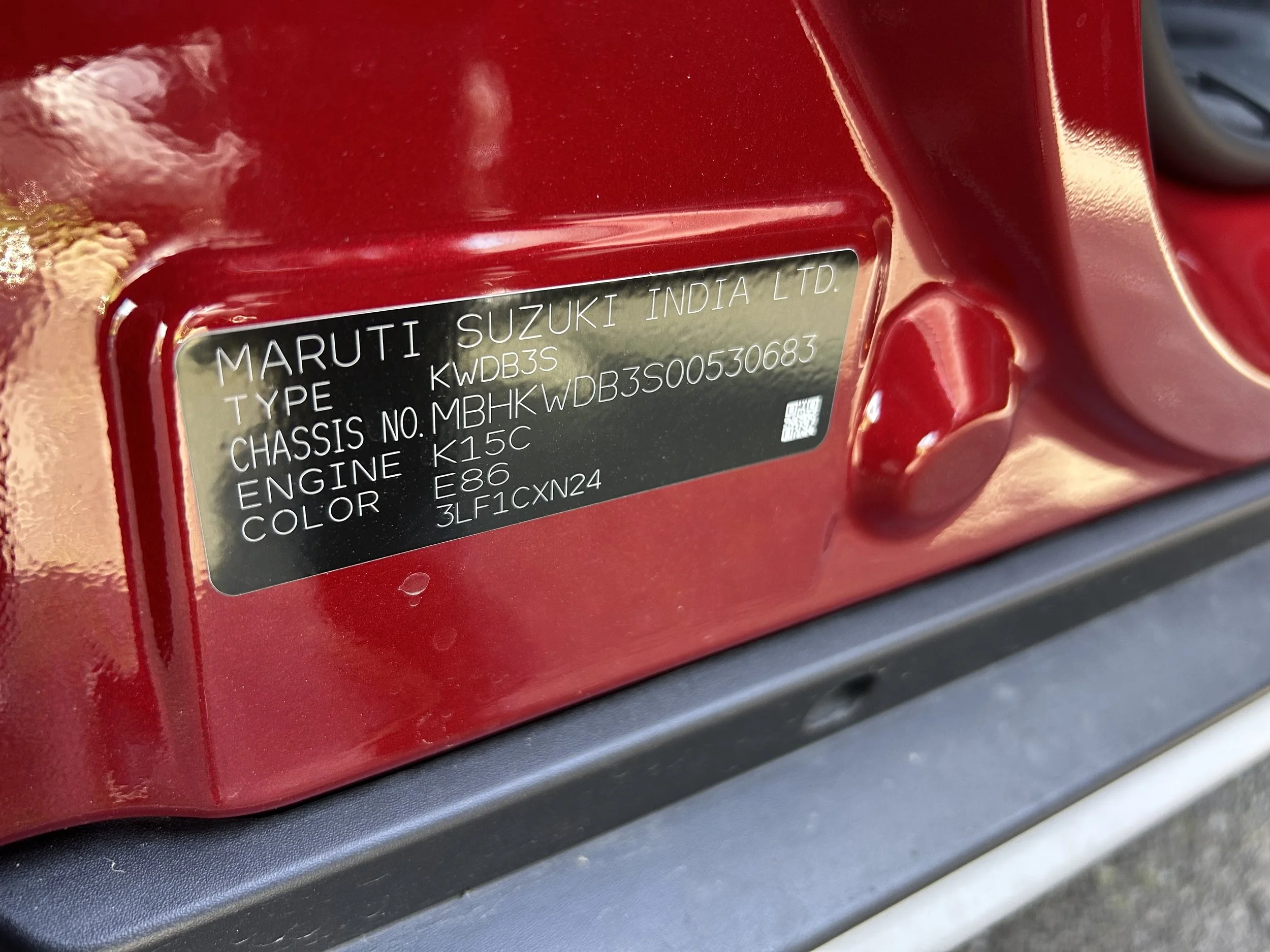
Off-line pick up was languid, it very often suffered for puff on inclines and wasn’t particularly reactive to throttle input when passing opportunities arose in the 100kmh zone.
If this is a representative state, then it’s not as good as the Swift’s engine, which is quieter, smoother and more keenly responsive.
Rowing the 1.5 along in the manual mode didn’t make much difference; ironically, it’s easy to inadvertently engage in that function, as the selector is a straight up-down shift, on which Drive is the second lowest setting, with ‘M’ immediately below.
There’s no real detente between either, so it’s easy to take that step too far. If you do go into manual, the box hasn’t functionality to self-sort itself in a higher gear once revs start racing. It’s all up to the driver.
Given that the test example also had a ragged edge at idle and on occasion seemed on point of stalling before returning to more even beat, I wondered if perhaps it was being treated to a bad dose of fuel.
It could also be a factor that comes from Fronx being the first ISG-meted Suzuki to specifically marry to a 91 octane-friendly engine.
That factors in to why the car didn’t continue with the Baleno’s star powertrain, a 1.0-litre turbo triple, whose plus point of producing 6kW and 33Nm more was offset by requirement for 95 octane or higher.
Suzuki attests the 1.5 will also be peppier on the top shelf stuff. That wasn’t verified here, as it provisioned with a tank full of 91 that was still far from exhausted on return, a status which in turn shows that brand sentiment of it being tangibly more frugal is probably correct.
The limited zest didn’t keep it from being handy around town, where it is more in its element, the light steering making easy work of manoeuvring and the decent all-round visibility appreciated.
However, even at these modest speeds, you soon notice the standard of road surface doesn’t have to deteriorate very much before the ride quality follows suit. It’s one of those cars in which you learn to watch out for ruts and ridges.
It doesn’t get any better once you escape the city limits, and it's only once you’re on decent main roads or motorways it smooths out again.
The handling isn’t particularly sharp, either; there’s nothing here to encourage you to press on, which is sharp contrast to what you find with a Swift. Fronx responds better to a more restrained style of driving.
Refinement could be better; noise from the 195/60 R16 was pretty rampant on coarse chip. But that's also the price you pay for a small, low weight car.
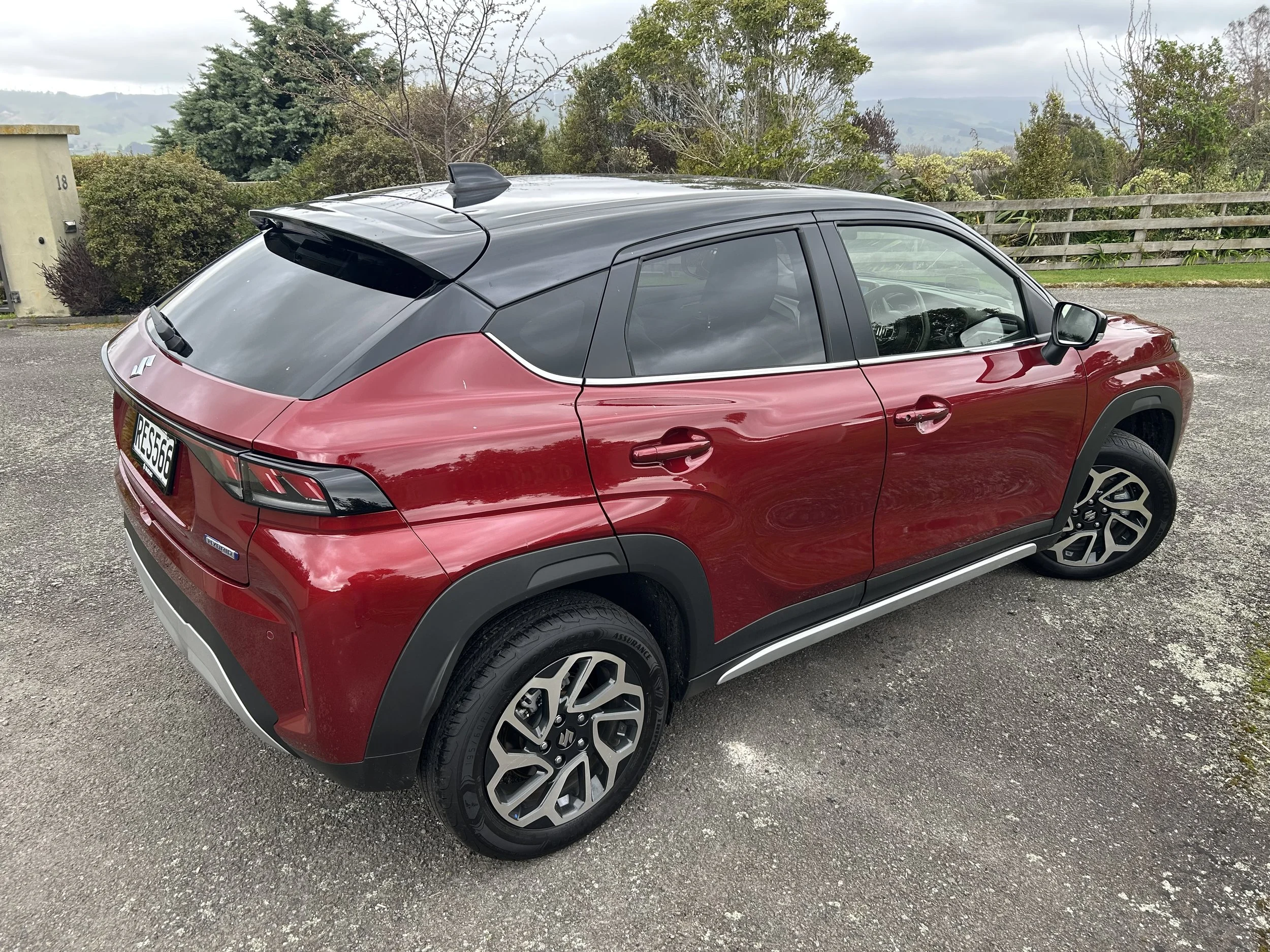
All this reinforced initial launch exposure impression that its a solid journeyman job; a car in which value and low-cost operability are prioritised pretty obviously.
Driver assist and passive and active safety features tick off all the fundamentals of traffic sign recognition, radar cruise control, blind-spot monitoring, traffic sign recognition, eight airbags and automated emergency braking.
Crash worthiness assessment by nationally-recognised auditor, Australasian New Car Assessment Programme has yet to occur. Potentially, it’ll be a 2026 candidate now. Suzuki has been knocked around a bit by ANCAP - it must have been relieved when the Swift’s original one star was recently reconsidered to three.
Prolonged involvement by and large reinforced first impression that the Fronx is challenged to blow anyone's socks off with performance, styling, and dynamics. But it seems a sensibly thought-out machine, well-made, likely to be hugely reliable and frugal. plenty of buyers for this kind of product will say it's kind of hard not to appreciate all that.