MG Cyberster road test review: The gene pull
/Back in Blighty days, two-seater sports cars were all the go for this brand. Look where that history has taken them to.
How much: $130,000.
Powertrain: Dual electric synchronous motor; 375kW/725Nm combined; four-wheel-drive; single speed, 77kWh ternary lithium battery.
How big: Length, 4535mm; width, 1913mm; height, 1329mm.
We like: That it exists; sizzling straight line pace; guaranteed conversation starter.
Not so much: Could stand more development; lacks corner conquering chutzpah.
HOW often do you meet a car that has no rival?
Just for now, the MG Cyberster is in a class of one. No other brand of historic sports car renown has put a electric two-seater into full scale production. Yet.
MG might feel chuffed that next into the zone is a very famous brand; not really a direct competitor but certainly another with pukka heritage.
Porsche’s Boxster and Cayman are electric next year. Originally, those 718 models were committing completely, a big element of Weissach’s plan to wholly quit fossil fuels by 2030. They’ve since softened. The electric versions are still a go, but now those cars are continuing in petrol as well.
Porsche ultimately reckoned the risk was too great, pointing to
slower-than-forecast demand for electric cars, sliding sales in China, cost pressures related to US tariffs.
MG is perhaps made of sterner stuff. The Cyberster family has no petrol bloodline. But more Cyber cars are planned to join the roadster here in two forms, the as-tested dual and a $20,000 cheaper single motor format.
General pitch with EVs is that, once you’re tried, you never want to go back. MG calls Cyberster the future of motoring. It’s a big call, even for a make that has been famous for its curvaceous open-topped sports cars. So what to make of it: Brave or bonkers? In reality, it’s a bit of both.
While a big deal, this car is also a rare sight. Registrations’ data at time of writing indicates 10 have been plated since it availed 11 months ago. The dealership through which handover occurred is one of the brand’s biggest and most active regional sites. This exercise lent its first chance to see, and experience, a Cyberster.
How this car came about is one of those ‘right place, right time’ stories. SAIC, the Chinese state-owned maker, still plays on its British heritage. Old MG is tied to roadsters; ‘new’ MG needed one.
This actual car pitched as a styling muse; everyone hoped the boss would like it - he did - No-one anticipated him demanding it reach production. What you see is almost completely what he saw. Public availability occurred just 14 months after it revealed at the 2023 Shanghai motor show.
The pace of car development moves fast in China. A year in locally, already one or two elements are showing age. If they started again, it would have sharper, larger screens and smarter software. It must be the last ‘new’ MG demanding tethered rather than wireless CarPlay.
It’s packed with numerous driver assist and accident avoidance technologies required to achieve a decent crash test result (though, at the moment, it’s unrated by Australasian and European NCAP). MG has latterly been among brands that, as result of feedback, has sought to detune its alerts so they don’t sound off for silly reasons, but unfortunately the Cyberster still seems to among those still at state of frenzy. No surprise that it landed with a tape over the sensor that continually checks on driver alertness. I removed it … then, after half an hour of high annoyance, restored it.
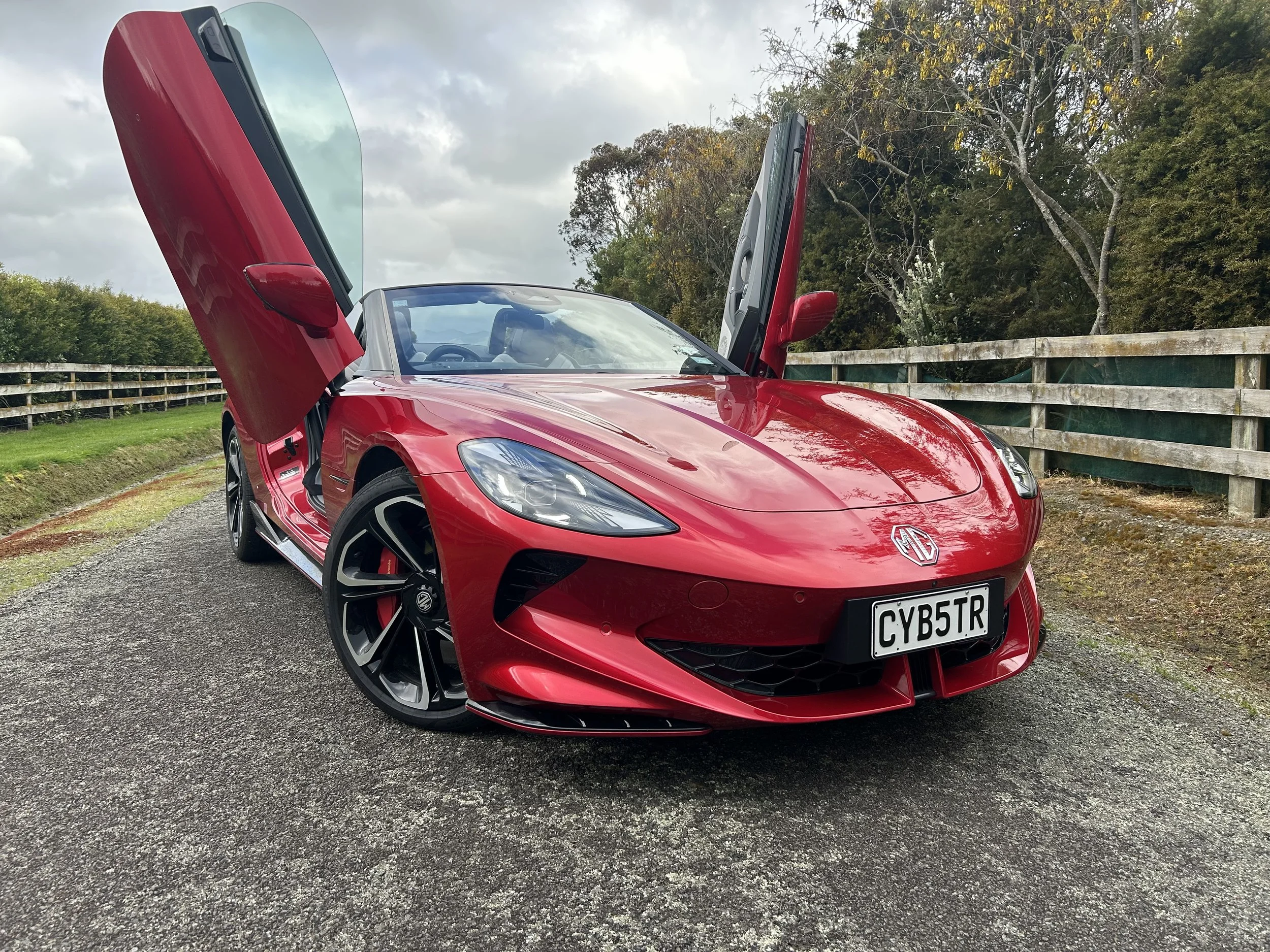
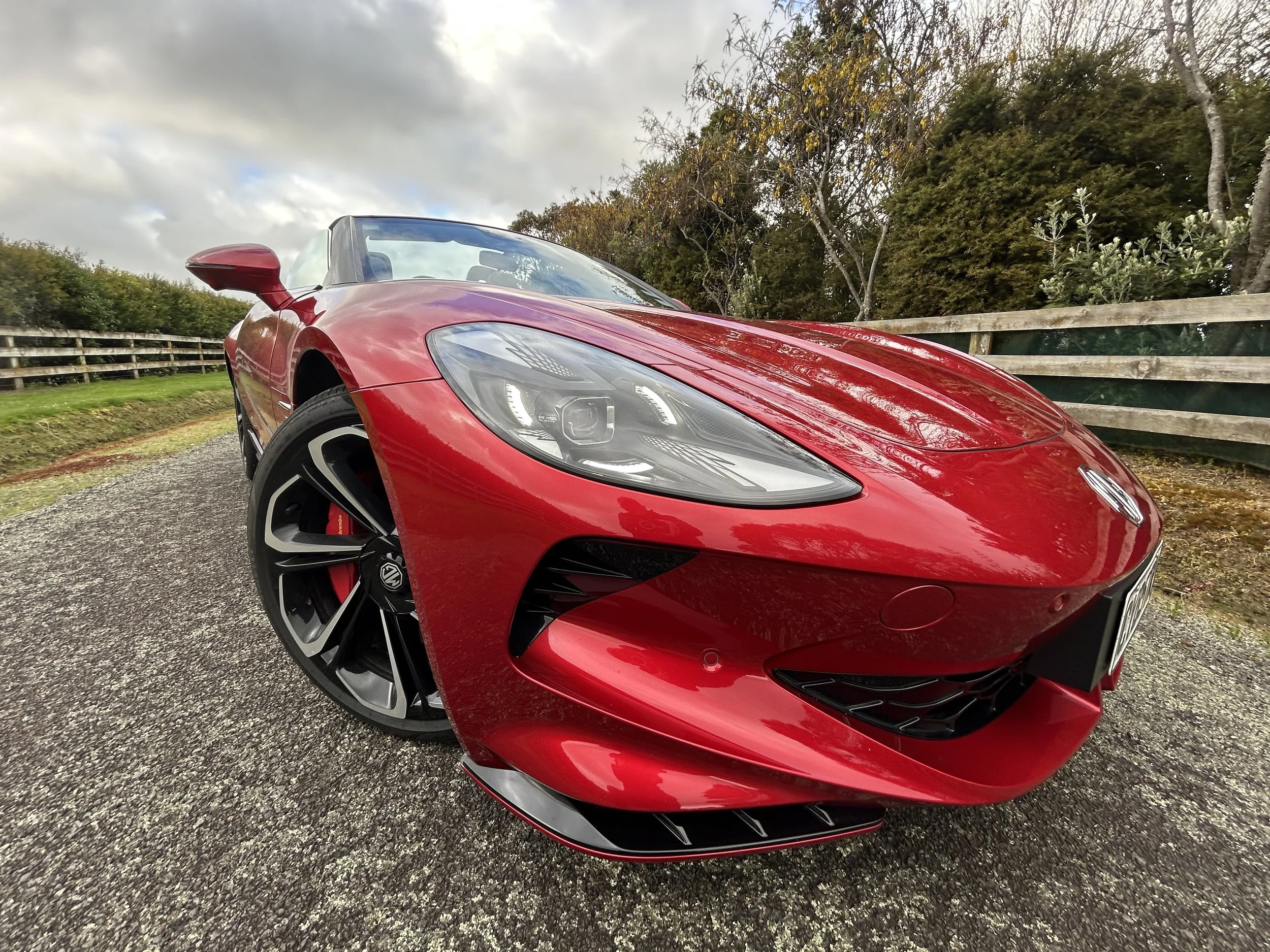
Regardless, the design is impossible not to notice. You might debate how much is fully fresh. Another British make in this game also favours the long bonnet, set-back cockpit and short bootlid approach. Some might think it curious just the roof shape seems to relate to the last modern MG roadster under old management, that MGF.
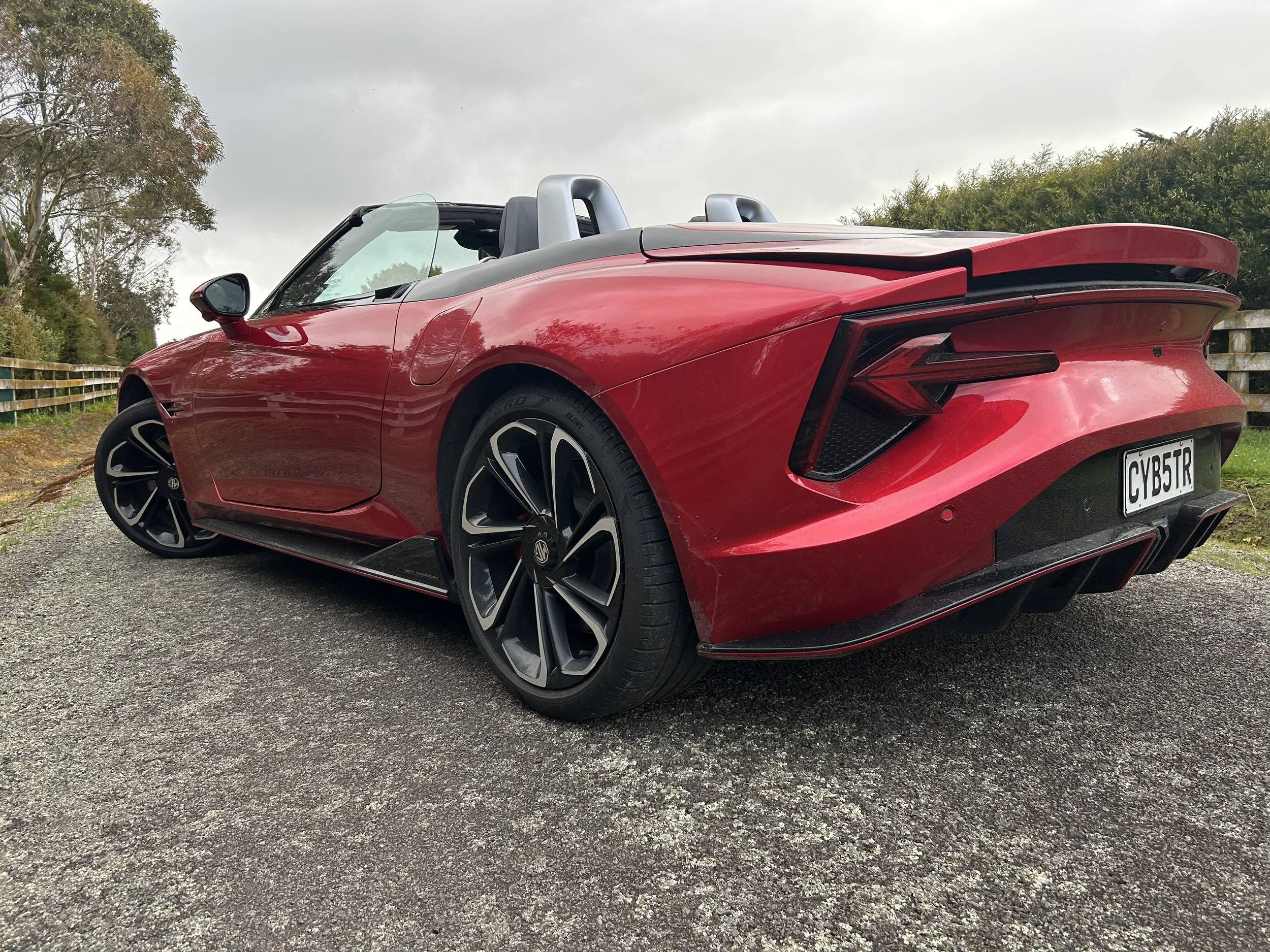
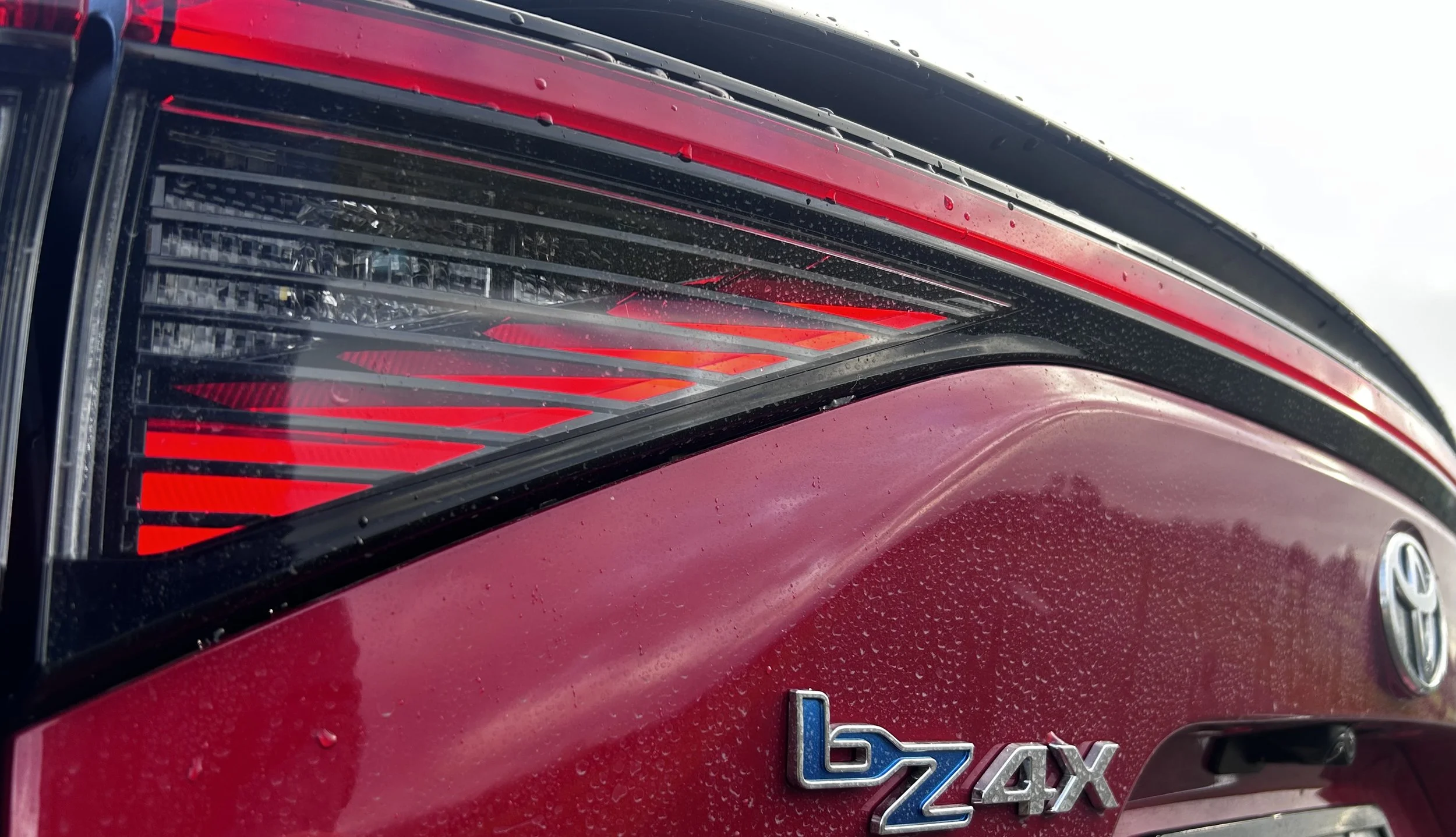
The tail lights incorporating big arrows that point in the direction of the indicators seem a bit Nintendo trite, and of course those electric, Lamborghini-style scissor doors are a total extravagance.
But it’s a good-looking car, less Gotham-esque in actual representation than it looks in imagery; even when its wings are at full vertical salute.
So that’s one strength. The other is the performance. A top speed of 200kmh does seem a disappointment given the quoted horsepower but, believe me, the alacrity to and beyond the legal limit from a standstill more than makes up.
All electric cars have nifty step off, but the Cyberster is among the year’s true electric shocks. In effecting 0-100kmh in 3.2 seconds, you don’t get the aural drama of a trad supercar, but it certainly has ability to leave owners of many of those kinds of cars speechless.
Simply starting from a standstill in a standard driving mode, no foot on the brake, simply squish the throttle is a mild approach, but is still pretty ferocious. Supersport/Track mode with launch control is the wild side. It’s full out lung-crushing, gut-punching,skull snap brutal. Surely few will seek seconds.
Is that enough? Plenty of American muscle cars have successfully sold solely on high-octane looks and launch, but MG history demands more. And … well …
That it sits relatively low to the ground, has decent Pirelli P-Zero rubber and arrives with dynamics fettled by Marco Fainello, a Formula One chassis tuner who helped Michael Schumacher to several of his world titles when with Ferrari, is useful credibility. Yet if you’re looking for an electric equivalent of an MCX-5, best keep saving for that Porsche.
Two factors. It’s not small. And, at 1985kg, it’s not light. Three times the kilo count of the first Midget and K3 models MG kicked off with in 1924. Twice as heavy as the latest MX-5; the car that - ahem - nabbed the MG B's title as the world’s best-selling two-seat sports car; also a product whose every gram was sweated over by Mazda. You get the sense MG wasn’t so zealous.
Roll on sold state batteries. The MG’s current kind are heavy and their hugeness is betrayed by the exaggerated width, wheelbase and the slightly high (for a sports car) cabin floor height. Mind you, the car as a whole has a heftiness to it’s look. And those doors? Try lifting one. On top of that, the electric mechanisms that do that job must surely add to the scale count.
But anyway. It’s solid. The inevitable is that as much as it has decent grip, good traction and sweet steering, country roads aren’t the best playground. Anything fully twisty and sinuous gives the suspension and brakes a lot to deal with. It squirms when pushed and, even if you slip back to adopting slow in, fast out of corners, with sprinting just on the bits between the bends, there’s still pitch under power and braking. This is presumably why MG talks up this being a GT experience.
Focus being on cruisy comfort rather than corner carving is disappointing, but everything works better when you dial back. The three-level (coasting, strong and one-pedal) regenerative braking gets a chance to bring the speed down more gradually and though Comfort doesn’t alter the shocks, they have a chance to cope with chop. Plus it improves efficiency, as the car regresses to the rear motor. It’’s still feisty enough to deliver rear-wheel scrabble if you hoof too hard out of intersections, mind.
True roadster fans need little excuse to drop their tops, and doing so in the Cyberster is made easy by the roof programmed to lower in just over 10 seconds at the push of a button, including when on the move so long as you’re going slower than 50kmh.
It’s a quiet cabin with the snug-fitting and well-insulated roof up; conversely, go alfresco at 100kmh and you might find it surprisingly wind-in-the hair; a trick with any ICE convertible is to turn up the heat to create a cocoon of warm air; not as easily achieved in an AC-reliant EV, so you’re pleased both chairs, and the steering wheel, have a heating function; on all but blazing summer’s days, you might need it.
NZ (or at least this car) seems to miss out on the factory wind blocker comprising a clear plastic insert that mounts between the rollover bars avails overseas. Without it, the trick of having the side glass up reduced some wind swirl, but not a lot. And as much as there’s no engine noise, there is enough wind and tyre roar to drown out the eight-speaker Bose stereo.
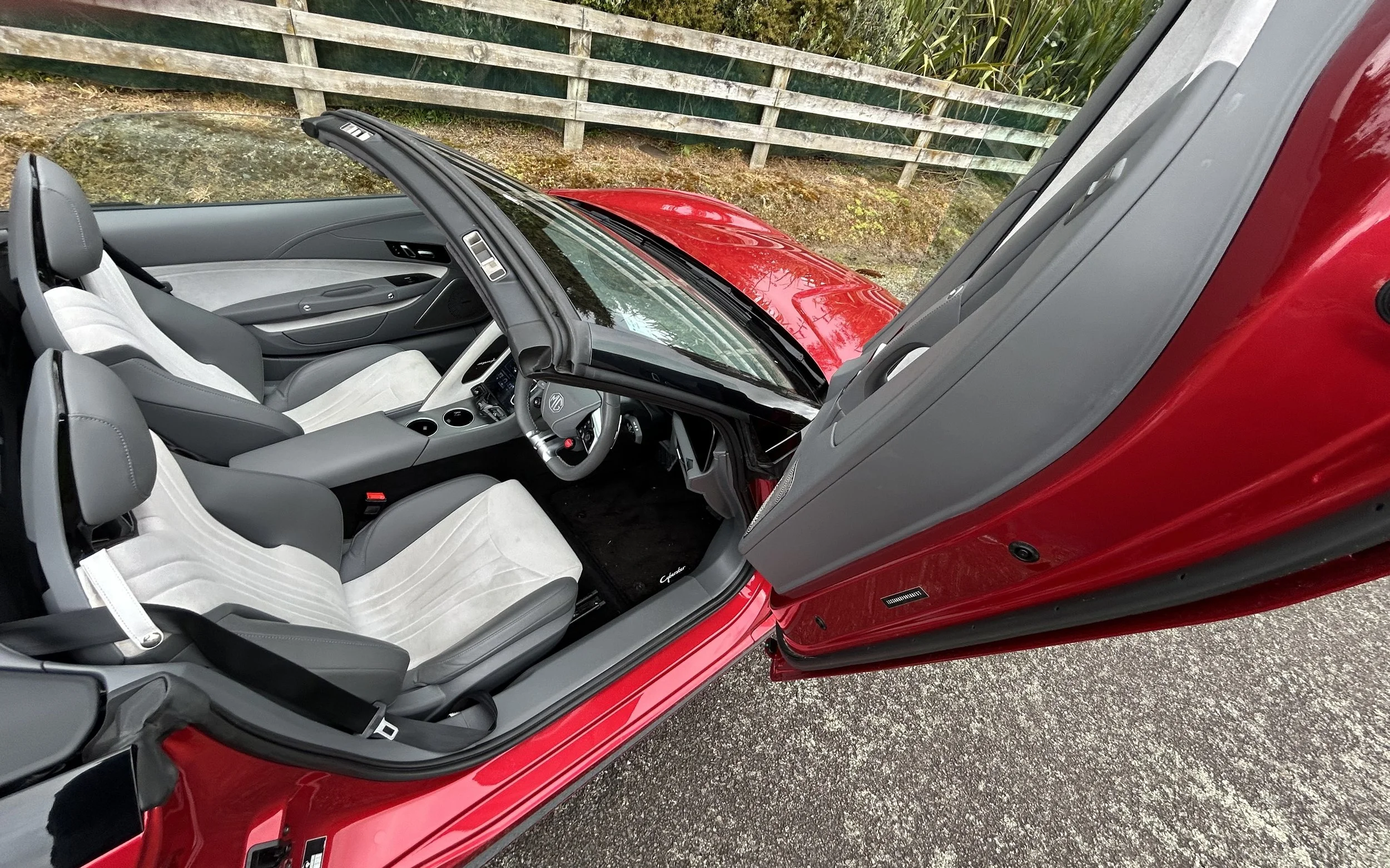
Every drive begins and ends with a show; the electric-driven door opening and closing is an artistry, albeit one that isn’t super-fast. Access and egress isn’t too awkward, and sensors prevent the doors opening if objects or people are too close.
The doors have two sets of buttons, those on the door tops for external opening, another on the base on the inner panel for closing (though still awkward for shorties to reach). Or you can use the remote; that’s more fun if someone’s showing interest and they don’t know who’s driving it. Come facelift time, they might work out how to remotely operate the roof with the fob, too.
The cabin treatment is MG familiar, but embellished, notably with a higher screen count; four in all, three in front of the driver.
Even though it’s a pity some ‘metal’ bits are wrought in plastic, stylistically it all looks very plush and glam; with decent equipment. Interestingly, in that respect, all that seems to separate the single and dual motor choices are the wheel sizes; 19s on the entry, 20s here.
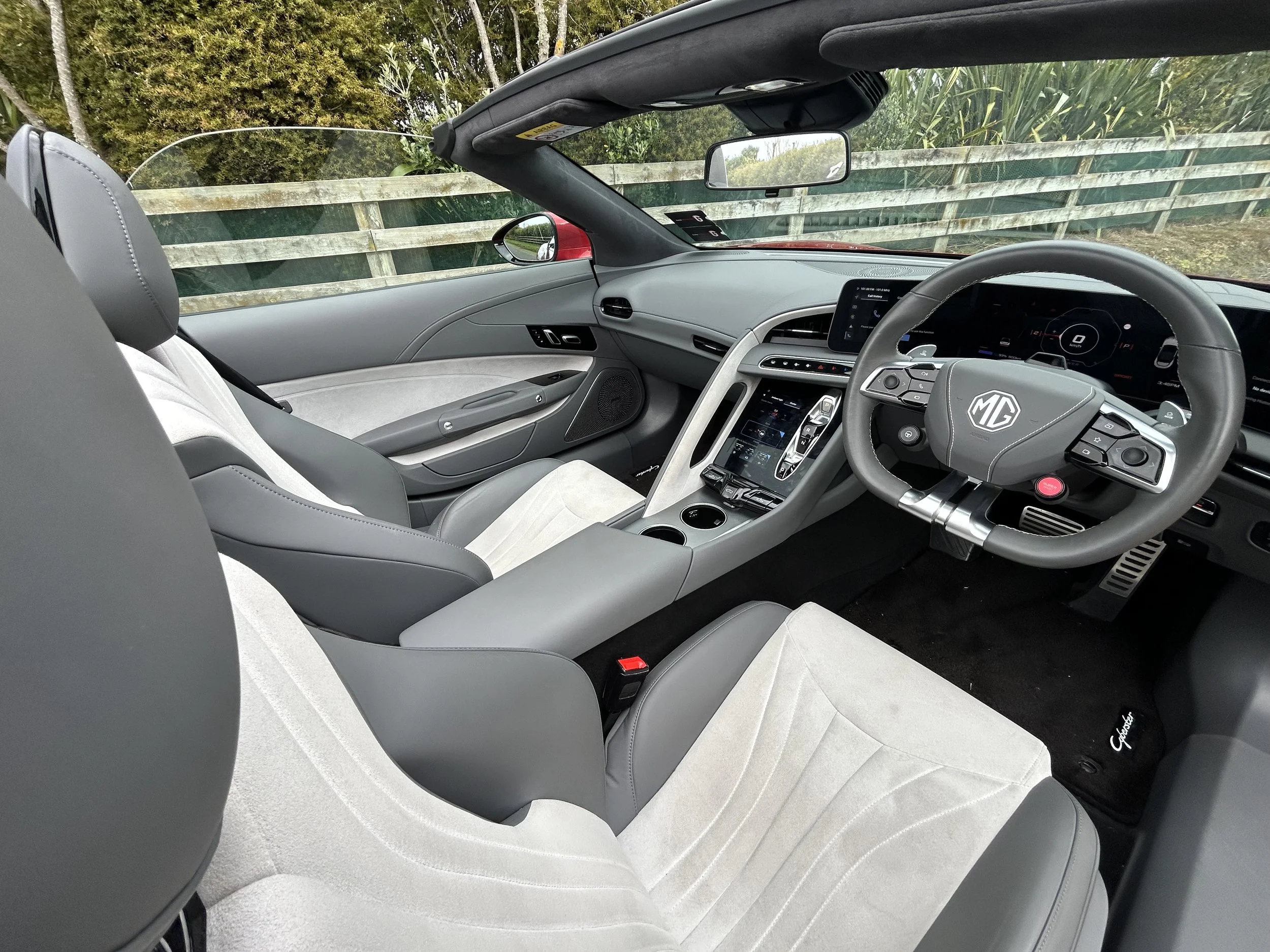
Don’t misconstrue the elaborate steering wheel paddles. There’s no Hyundai N-style pseudo-manual gears involvement for a driver here. The left is for changing the retardation rate, the right for flicking through drive modes.
Ergonomically it leaves something to be desired. Those who hold simple is best will see that ideal totally tested by the utterly overwrought Drive/Reverse/Park selector system, and more.
MG’s usual steering wheel controls are in place; you can be working those fragile-looking thumb scrollers hard to work through various menus and settings. And will discover quite soon it’s a finicky operability. Accessing some displays that are hard to read at a glance; assuming you can get a clear view. I couldn’t, having found that with the ideal driving position was one that sacrificed view of all the displays to varying degree.
When I say ‘ideal’, it wasn’t really. The Cyberster’s seats are brilliant in shape and the trim, a combo of synthetic leather and a suede-effect material, is smart; six-way electric adjustment for lumbar on both is great.
But what you’d think would be a 101 of of roadster design, a low seating position, isn’t achieved. Common feedback from occupants of all sizes was that the seat base was 5cm higher than it needs to be. As a tall person, my eyeline was almost level with the top of the windscreen so as well as squinting to read the instruments, I was stooping too.
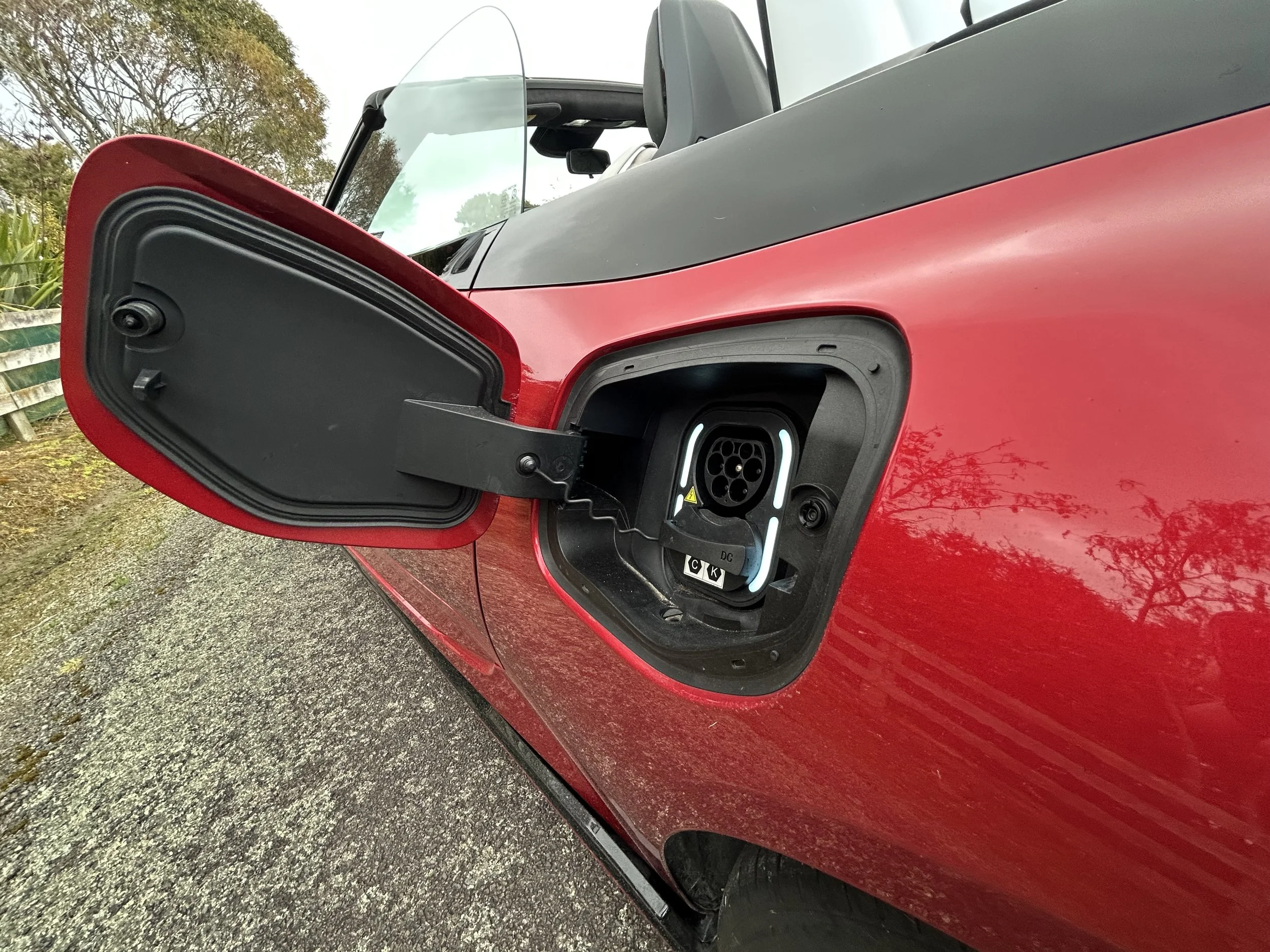
Roadsters aren’t expected to be primary choices for long drives, but if you had to, it wouldn't bet be the worse, because there’s reasonable stowage room - the boot is compact, but making up for the lack of a funk is some good storage behind the seats - and though official range of 443km from the 73kWh (useable) battery would be brutalised if you pushed on, at least 380kms might otherwise seem possible. Fast DC charging at 144kW is reasonable, but AC charging limited to 7kW is a shame when others manage 11kW.
So it’s a sports car … but aside from the berserk sprint ability, not a really sporty car. Porsche assures its products are dedicated to enthusiast feel. So let’s hope MG snaffles up and breaks down a battery Boxster to see how Porsche achieves a result beyond the Cyberster in its current form.
Still, for all its foibles and flaws, this model demands recognition for being a bold step. Not truly great, but at least it’s a start.
MG has committed to a Cyber model family; the brutalist Cyber X electric crossover seems set to come, but before that we could see the fixed-roof Cyberster GTS revealed as a running prototype at last year's Goodwood Festival of Speed in the United Kingdom.
MG confirmed at the 2025 Shanghai motor show that a production version is inbound. There’s conjecture it could reveal in celebration of the 60th anniversary of the original MG B GT, this month.